


























Trump taps Rep. Wesley Hunt as U.S. ambassador to Saudi Arabia
The congressman previously served as a military diplomatic liaison in the kingdom; it’s unclear whether the Senate will be able to process his nomination before the end of the current Congress
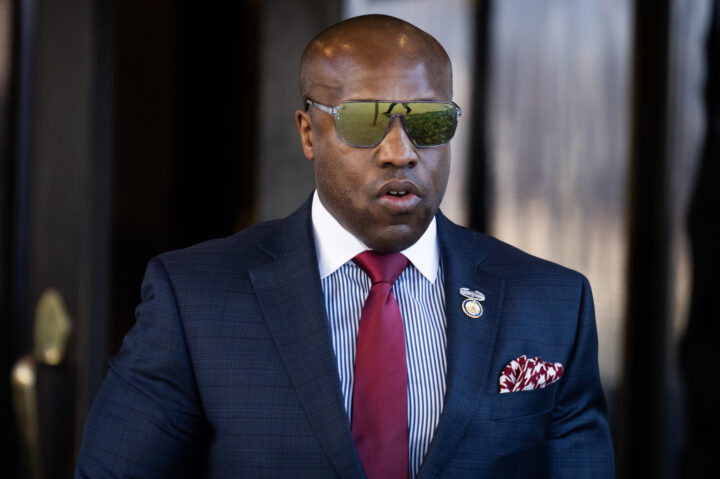
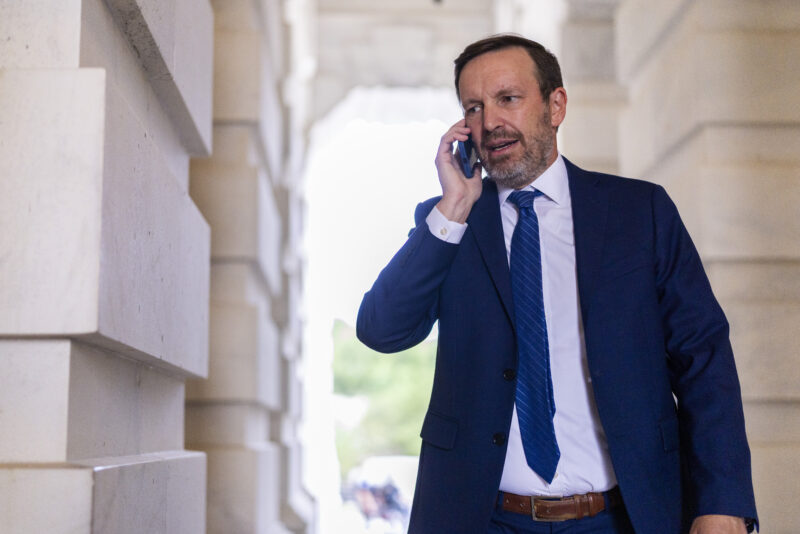
Tom Williams/CQ-Roll Call, Inc via Getty Images
Rep. Wesley Hunt (R-TX) leaves a meeting of the House Republican Conference at the Capitol Hill Club on Wednesday, January 22, 2025.


 Add JewishInsider on Google
President Donald Trump on Monday informed the Senate that he plans to nominate Rep. Wesley Hunt (R-TX) as the U.S. ambassador to Saudi Arabia, moving toward filling one of the numerous Middle East ambassadorship posts that have sat vacant since the start of his second administration.
Hunt, a former Army officer and Apache helicopter pilot, served two deployments in Saudi Arabia as a military diplomatic liaison. He is serving his second term in the House, but lost a primary bid for Texas’ Senate seat earlier this year.
“It is the honor of a lifetime to accept President Trump’s nomination to serve as the next United States Ambassador to the Kingdom of Saudi Arabia,” Hunt said in a statement on X. “Having served in the region both in combat as an Army officer and for two years as a diplomatic liaison in the Kingdom, I understand the strategic importance of the partnership between the United States and Saudi Arabia and the profound responsibility of this position.”
Hunt said in 2022 during a virtual event with AIPAC that Israel is the “one true ally” of the United States in the Middle East, while noting that many of 9/11 hijackers, as well as Osama Bin Laden himself, were from Saudi Arabia.
“I learned a lot about what our interests need to be and who we need to be in the business of supporting for the future, because that’s our one true ally in the region,” Hunt said at the event.
Addressing the then-fledgling Abraham Accords, Hunt was supportive but cautious. “Some of these countries are bad actors. They’re rogue nations, some of them,” he continued. “Just because we have something set up like the Abraham Accords — which I think is good for the entire world, especially for the region — we cannot let our guard down.”
He recently joined a letter calling for a Department of Justice investigation into efforts by an official in New York City Mayor Zohran Mamdani’s administration to meet with the Iranian ambassador to the United Nations.
Hunt has been a co-chair of the Congressional Caucus on Black-Jewish Relations.
But he was one of just 21 House members who voted last year against a resolution expressing support for the State Department’s global guidelines on combating antisemitism. Antisemitism envoy Ambassador Yehuda Kaploun has been working to tackle antisemitism in Saudi Arabia, including stripping antisemitic content from the country’s school curricula.
During the AIPAC event, Hunt also described himself as the “energy congressman of the world,” given that he represents the offices of many major energy companies in Houston, making it part of his job to defend the energy industry — also a major industry for Saudi Arabia.
It will be logistically difficult for the Senate to consider Hunt’s nomination before the midterm elections, and with a slew of previous nominees still under consideration, it’s unclear whether the Senate will be able to process Hunt’s nomination before the end of the year. Should Democrats retake the upper chamber, Hunt’s confirmation would be more difficult.
The nomination comes at a highly sensitive time in the U.S.-Saudi relationship, as the two countries move toward a nuclear deal that would reportedly allow for nuclear enrichment inside Saudi Arabia, which is set to be reviewed by Congress in the coming months.
Saudi Arabia is also at a major crisis point with the Iran-backed Houthi terrorists in Yemen as hostilities have flared after several years of quiet. The Houthis this weekend seized critical port cities and islands along the coastline of the Red Sea and launched missiles from Iraq that disabled the pipeline that Saudi Arabia had been using to bypass the Strait of Hormuz.
President Donald Trump said he doesn’t plan to intervene, despite reported Saudi pleas.
The kingdom has also recently been recalibrating its regional position, with Saudi Arabia moving away from normalization with Israel, experiencing tensions with its regional rival the United Arab Emirates, forming new ties with Turkey and Pakistan and again allowing the promotion of Islamist extremism.
More Stories
CAMPAIGN OFFENSIVE
Rogers calls El-Sayed ‘threat to our national security’ in new ad
museum moment
Elisha Wiesel: U.S. Holocaust Museum has ‘unique responsibility’ to counter genocide claims against Israel

Doha’s Darling
Murphy, Qatar’s ‘reliable ally’ in the Senate, huddles with emir and chief Qatari negotiator in Doha
Daily Overtime
Slotkin sees no ‘Jewish vote’ in Michigan
CATCHING HEAT
Pro-Israel Democrats blast Mamdani for Oct. 7 anniversary statement
BUSY IN BEIRUT
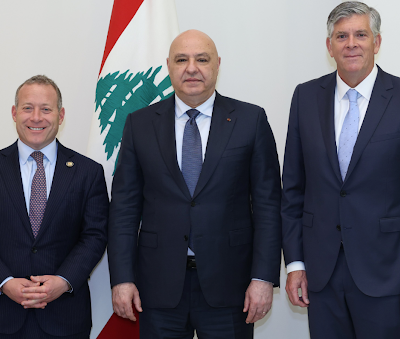
Reps. Gottheimer, LaHood visit Lebanon, meet President Aoun
Please log in if you already have a subscription, or subscribe to access the latest updates.
 Continue with Google
 Continue with Apple