












Syrian president blames Israel for diplomatic difficulties, rejects Trump push to send forces into Lebanon
President al-Sharaa said Damascus and Jerusalem ‘reached 90% of agreements’ but that Israel withdrew from the negotiations
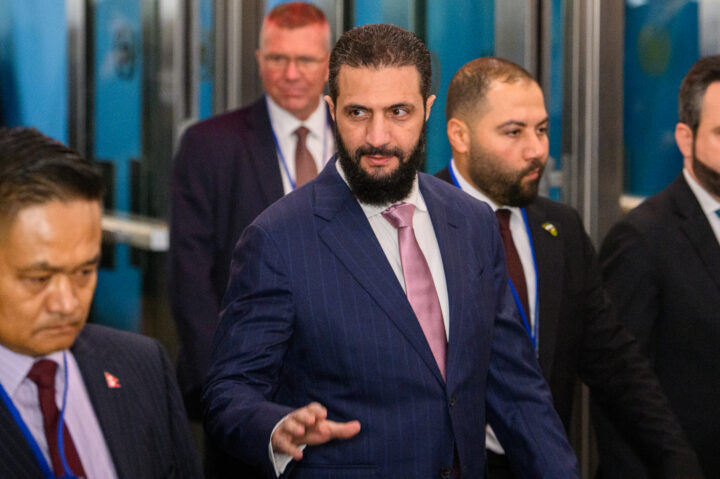
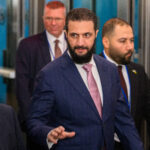
Alexi J. Rosenfeld/Getty Images
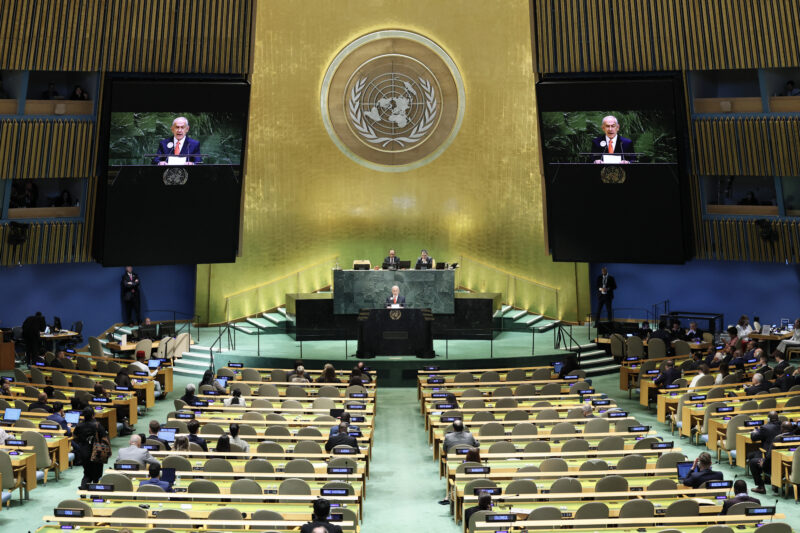
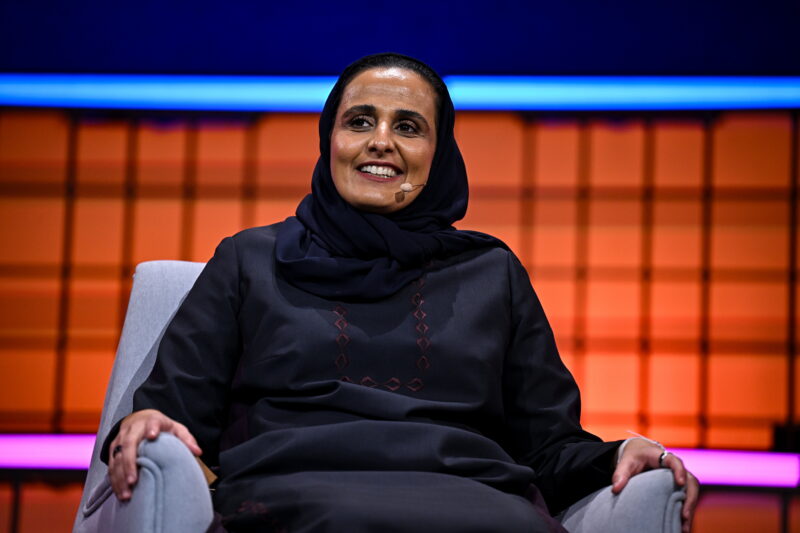
Syrian President Ahmad al-Sharaa arrives during the 81st session of the United Nations General Assembly at U.N. Headquarters on September 22, 2026 in New York City.


 Add JewishInsider on Google
Syrian President Ahmad al-Sharaa blamed Israel for the difficulties in the bilateral relationship between Damascus and Jerusalem, and said that Israeli operations inside Syria and elsewhere in the region are making Israel less safe.
Al-Sharaa also rebuffed President Donald Trump’s call for Syrian forces to move into Lebanon to help combat Hezbollah and the U.S.’ 2019 recognition of Israeli sovereignty over the Golan Heights.
The Syrian president, speaking through a translator at an Atlantic Council event on Tuesday during the United Nations General Assembly in New York, described Israel as the aggressor in the relationship, explaining that it has repeatedly attacked Syria and detained Syrians despite Damascus’ willingness to engage in diplomatic talks. He argued that Israeli policy toward Syria and other countries destabilizes Israel’s neighbors and is thereby making Israel less safe.
He said that Syria seeks mutual respect and economic and trade relations with its neighbors, including Israel, but that Israel has been unwilling to carry talks through to their conclusion.
“There were several sessions of negotiations with Israel, and we almost reached 90% of agreements. But at that point, Israel will withdraw from the agreement for different reasons that they put in place,” al-Sharaa said, adding that “we are still engaging in this track.”
Israel has described its military moves as necessary to protect Druze and other minorities inside Syria who have been attacked by government-aligned forces, protect against threats to Israel that could emanate from Syria and prevent Turkish military advances toward Israel.
Al-Sharaa said that he would not yet commit to lasting peace with Israel, and that Syria “can’t talk about peace if the rights of Syrians are usurped.”
Al-Sharaa said the diplomatic talks with Israel were aimed at first ensuring an Israeli withdrawal from the positions it has taken inside Syria since December 2024 during the fall of former Syrian President Bashar al-Assad, with later steps focused on a broader security arrangement and, subsequently, a lasting peace.
He said that, while he understands and condemns the impact of the Oct. 7, 2023, Hamas attacks on Israel on “some of the innocent people,” Israel cannot shape its foreign policy based on those attacks.
“It’s not appropriate that what happened on the 7th of October set the policy for Syria. This is not logical, and this brings more security threats,” he said, also condemning Israeli operations in Gaza.
Al-Sharaa described Israel as the outlier when his government maintains strong relationships with the United States, United Kingdom, Gulf states, Iraq and Lebanon.
He unequivocally rejected the idea of ceding Syrian sovereignty over the Golan Heights, and said he has raised the issue with Trump. The U.S. recognized Israeli sovereignty during Trump’s first term.
“Golan Heights is owned by its own people. So, it’s neither the Syrian president or the American president or any other person to abandon them or to give them up to others,” he said.
He said that he has told Trump that the U.S. has no authority to cede the Golan Heights to Israel, and has joked that Trump should give New Jersey to Israel instead, since it is full of Democrats who did not vote for Trump.
Asked about the prospect of Syrian forces inside Lebanon — something Trump has proposed as a substitute for Israeli or Lebanese government efforts to combat Hezbollah — al-Sharaa said that Syria “has its own problems and challenges” even as instability in Lebanon impacts Syria directly.
At the same time, he said that Syria is trying to provide other assistance to empower the Lebanese government and institutions.
Al-Sharaa downplayed his past ties to al-Qaida, including his past pledge of allegiance to the group and its leader, dismissing it as a long-ago issue. He emphasized that he took up arms in response to grievances with the Assad regime in Syria, but also stopped short, when asked twice by moderator Brett McGurk, of directly renouncing that past oath to al-Qaida.
Al-Sharaa appeared to reject the idea, at least in the short term, of welcoming a U.S. military presence or training to assist the Syrian military, arguing that his goal is to have no foreign military bases inside Syria.
He emphasized that the current government has successfully shrunk the number and scope of Russian military bases inside Syria and said they are no longer permitted to launch operations against other countries.
But he took a different approach toward Turkish military bases, saying that the Syrian parliament will need to discuss and offer an endorsement of and legal status to such outposts. He said that Syria would consider military training arrangements with various other countries in the longer term.
He also said that he was open to standing for election as president when the country calls national elections, if he believes the country needs him to remain in charge.
More Stories
Daily Kickoff
Deep-dish dog whistle
TAKING HEAT
Colby back in Capitol’s crosshairs
ON THE HILL
House passes Iran war powers resolution with record seven Republican supporters
MICHIGAN MANEUVER
After holding out for weeks, Michigan AG Nessel endorses El-Sayed
Daily Kickoff
El-Sayed, behind closed shul doors

ON THE HILL
House passes Iran, Russia sanctions bill, over objections from leading Democrats
Please log in if you already have a subscription, or subscribe to access the latest updates.
 Continue with Google
 Continue with Apple