




















































Pro-Israel Democrats walking a fine line on U.S. operation in Iran
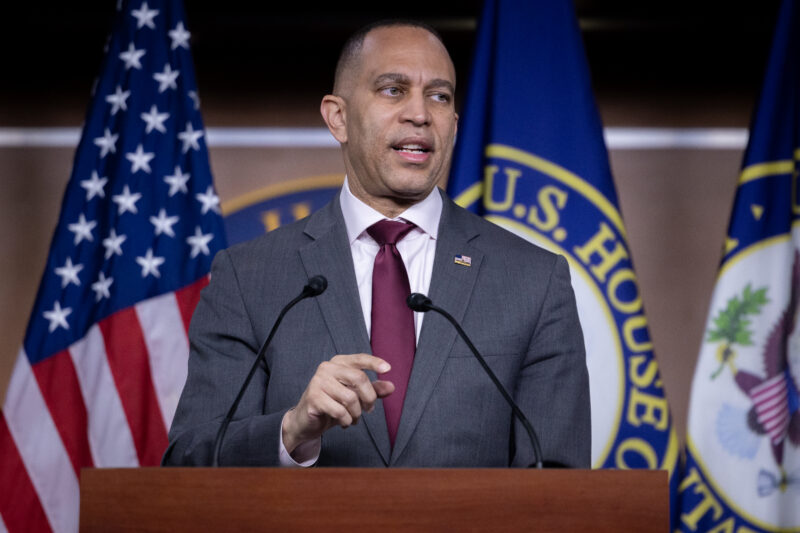
Rep. Debbie Wasserman Schultz said she would likely have voted to authorize force against Iran if the administration had approached Congress properly before launching the war
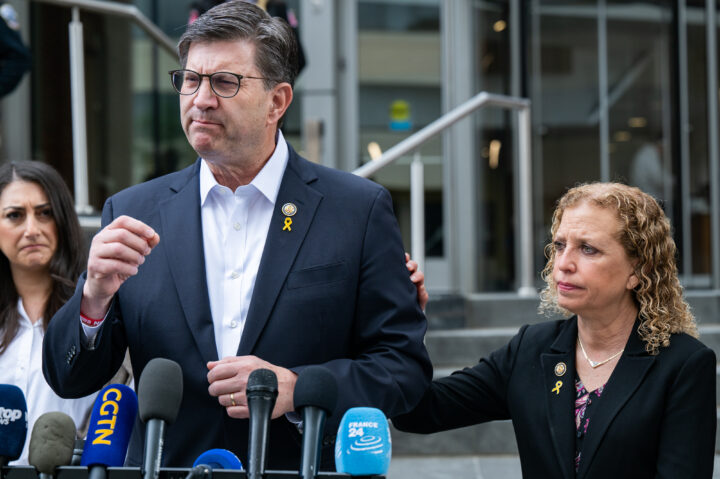
Annabelle Gordon/Bloomberg via Getty Image
Rep. Brad Schneider (D-IL) and Rep. Debbie Wasserman Schultz (D-FL), during a news conference in Washington, DC, US, on Thursday, May 22, 2025.


 Add JewishInsider on Google
Remarks by pro-Israel stalwarts Reps. Debbie Wasserman Schultz (D-FL) and Brad Schneider (D-IL) on a Jewish Democratic Council of America webinar on Wednesday highlighted the delicate line that some pro-Israel Democratic lawmakers are walking on the war in Iran.
Wasserman Schultz and Schneider, along with some of their Democratic colleagues, are longtime Iran hawks and have previously supported many of the stated aims of the war, but express deep skepticism of how the Trump administration is handling the operation and its decision not to seek congressional authorization.
Both Democrats voted for a war powers resolution last week that sought to bring an immediate halt to the war.
Wasserman Schultz said that, in addition to legal and constitutional concerns, Trump made a “colossally stupid” decision in not coming to Congress because some lawmakers, including her, might have voted to support an operation against Iran if presented with the proper intelligence and a clear plan.
“I can tell you assuredly: had I been presented with an Authorization for Use of Military Force, that made sense, and that we were properly briefed, and there was a demonstrative, imminent threat — which we have really yet to be shown — I am someone on our side of the aisle that likely would have voted for an AUMF if all of those things were in place,” Wasserman Schultz said. “Instead, [President Donald Trump] has blown an opportunity to go in in the most prepared way.”
By sidestepping Congress, the administration left the U.S. unprepared for the implications and blowback from the war, Wasserman Schultz said, highlighting, among other issues, the administration’s failure to evacuate American citizens from the region before the war started.
“I am so frustrated because I think everyone on this call knows how dangerous, deeply evil Iran is as a regime,” Wasserman Schultz said. “I have been careful about just blanket-ly condemning everything [Trump is] doing here, but most certainly, the way that we got into this was really unacceptable, and my constituents are very concerned.”
While Wasserman Schultz said she supported diplomacy with Iran, she also expressed skepticism about its chances for success, explaining that the Iranian regime would likely have sought to string the U.S. along until Trump left office, buying time to continue building its nuclear and missile programs.
Schneider said he believes strongly that the U.S. needs to address the threat from Iran, as well “help the people of Iran free themselves” from the regime, but added that “the Constitution is clear” that only Congress can declare war, and the administration has still not clearly identified an imminent threat that would have allowed it to legally take action unilaterally. He also said he does not trust the administration to properly carry through the mission without oversight.
“We can agree on the objectives in confronting Iran. We have no idea what the goals of this war are, or the strategy for achieving those goals, or the endgame that is trying to be ultimately accomplished that would bring the war to an end,” Schneider said. “My biggest fear is Trump … declares victory and goes home with Iran’s regime still in place, the nuclear program not completely defeated, [the] ballistic missile program damaged but not eliminated.”
He said that he’s afraid that, if the administration doesn’t set clear objectives, it will stop the war prematurely and ultimately leave the Iranian regime “more entrenched, feeling more powerful.”
The Illinois congressman speculated that Iranian leadership, by gathering in one central location, could have “present[ed] an opportunity that was too good to pass up” in launching the war but said that the administration still hasn’t properly articulated to lawmakers its thinking and strategy, so he does not know if that is the case.
Schneider said that an ideal outcome would require removing Iran’s enriched uranium from the country, which would necessitate international inspectors and a diplomatic settlement.
“There is no military solution to get us where we ultimately need to be. It has to be a political solution,” he said. “The military action always needed to be on the table to help us achieve that political solution. But with this President, I think it’s more ready, fire, aim, as opposed to ready, aim, fire.”
Schneider also called for Secretary of Defense Pete Hegseth to be removed from his job, saying Hegseth has failed to prepare for easily anticipated Iranian responses like mining the Strait of Hormuz, or to ensure proper oversight to prevent civilian casualties.
Wasserman Schultz said that she would consider a supplemental funding request if and when the administration presents one, emphasizing that she wants to ensure U.S. troops have the resources they need because “it’s not their choice to be there,” even if she doesn’t fully agree with the administration’s approach.
Wasserman Schultz added that she’s concerned that the war is “compromising our ability” to protect the U.S. from Russia and China.
Asked about a supplemental request, Schneider emphasized that U.S. servicemembers have his strong support and are “doing their job, they’re succeeding, and we should all pray for the success of their mission and their safe return.”
But he said he’s disappointed with the political leadership in the administration, particularly its distribution of online videos intermixing footage from the war with movie clips and video games, even as U.S. servicemembers have been killed and injured. “No one should take glee in the killing of the enemy. It is a necessary act that is advancing our interests.”
JDCA itself also seems to be striking a delicate balance.
The group’s CEO Halie Soifer said JDCA agrees with the need to stop Iran’s missile and nuclear programs, but emphasized that Trump is going around Congress and that, while some Democrats might “support, perhaps, some of the short-term tactical gains” some also “believe the administration is lacking a long-term strategy for success in Iran.”
Schneider and Wasserman Schultz were also critical of comments by Secretary of State Marco Rubio suggesting that Israel had effectively dragged the U.S. into the war. Rubio has said those comments were mischaracterized. Both criticized that framing of the conflict as incorrect and as potential fodder for increased antisemitism.
“The president said it himself: He was not compelled, he may have compelled Israel,” Schneider said.
But he added, “in the end, it doesn’t really matter,” predicting a similar rise in antisemitism as occurred around the 1973 Yom Kippur War — launched by Egypt — when people in the U.S. blamed Jews and Israel for rising gas prices.
“Because this administration did not have that conversation with Congress and, through Congress, with the American people, people are going to look for scapegoats,” he said. “And when folks are looking for scapegoats, Jews are almost always one of those targets.”
Wasserman Schultz said that Rubio’s comments were “unbelievable” and “dangerous.”
“It is incredibly dangerous for Jews worldwide, and … unacceptable for him to have basically set it up that, ‘Well, we had to do this because it’s the Jews’ fault,’” Wasserman Schultz said. “Once it’s said, the impact — it remains.”
Speaking broadly, she said that the picture presented to lawmakers in a classified setting was “more subtle.”
More Stories

HILLTOP FORECAST
Democratic foreign policy veterans preview party’s shifts on Middle East policy
CAMPAIGN CALCULUS
El-Sayed focuses on attacking Israel in closing stretch of the campaign

Presidential Prelude
Josh Shapiro launches federal PAC in potential signal of 2028 plans
analysis
Is Israel’s anti-Netanyahu bloc fracturing?

PRAIRIE STATE PRIORITIES
Illinois Democrats spend big for anti-Israel candidate running for state Senate

FIRING FALLOUT
Hillels of Georgia claims fired Emory rabbi not ‘truthful or transparent’ during hiring process
Please log in if you already have a subscription, or subscribe to access the latest updates.
 Continue with Google
 Continue with Apple