


















Fatema Al Harbi on joining Noa Tishby’s campus tour to combat extremism in the Middle East
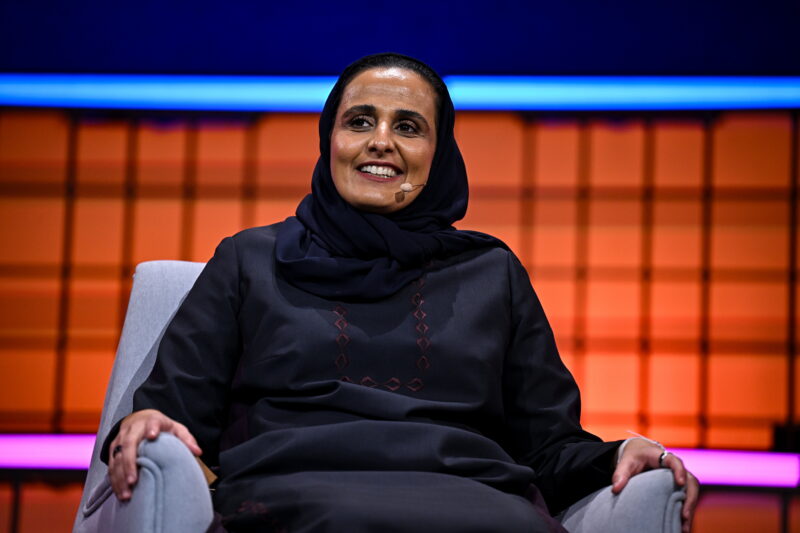
Al Harbi, the Gulf affairs director for a UAE group building bonds between young Israelis and Gulf leaders, is spreading her message alongside Tishby on several college campuses
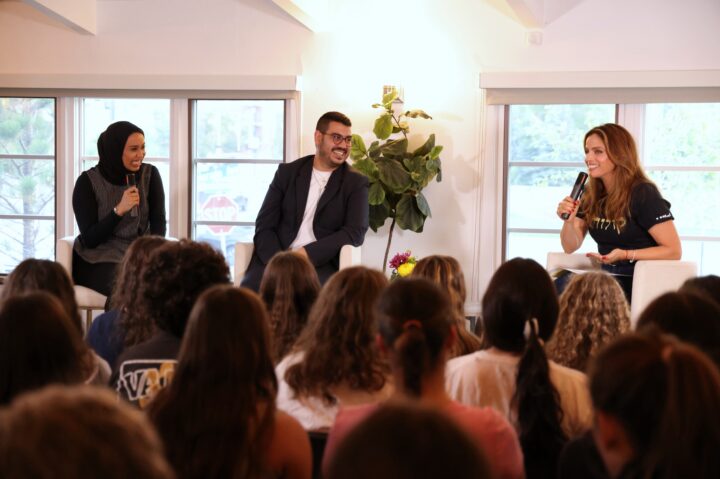
Courtesy
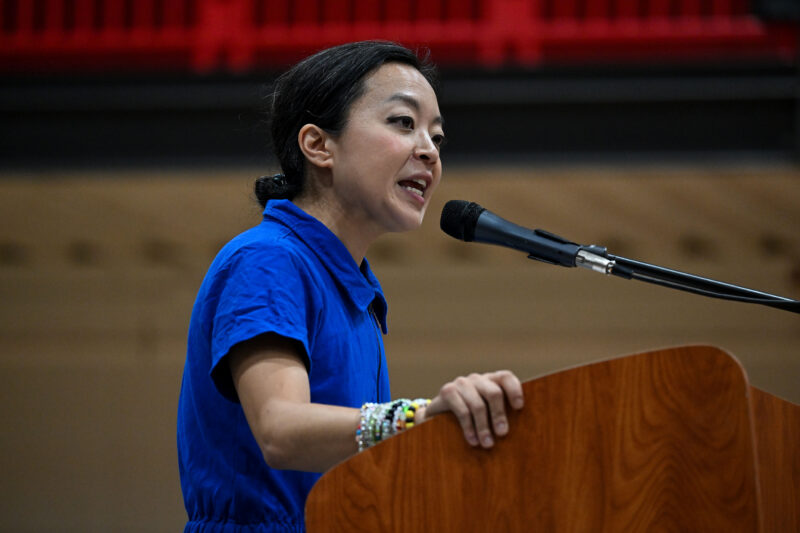
Fatema Al Harbi, Jonathan Elkhoury and Noa Tishby


 Add JewishInsider on Google
Growing up in Bahrain, Fatema Al Harbi absorbed years of anti-Israel propaganda, but she says the mood in her home country has since shifted markedly, with ordinary citizens no longer seeing Israel as the Middle East’s foremost threat — a distinction they now assign to Iran.
Now serving as Gulf affairs director for Sharaka, a United Arab Emirates-based organization that aims to develop bonds between young Israeli and Gulf leaders, Al Harbi’s journey from Israel critic to advocate is central to her pitch as she joins a four-day cross-country campus speaking tour that kicked off on Monday.
The tour, which also features Jonathan Elkhoury — a Lebanese-born Christian and LGBTQ+ activist whose family fled Hezbollah rule for Israel — and Israeli-American activist Noa Tishby, is being produced by Tishby’s nonprofit, Eighteen. The interfaith trio is scheduled to address students at University of Colorado Boulder, Emory University, the University of Texas and Florida International University.
Al Harbi spoke with Jewish Insider on Tuesday, the sixth anniversary of the signing of the Abraham Accords, about her experience as a Bahraini Muslim woman publicly supporting Israel, and how the regional landscape has shifted since the historic signing.
Jewish Insider: Why did you decide to do this tour, and did you have any reservations? What do you see as your specific role in the tour’s lineup — what can you speak to that Jonathan and Noa can’t? What do you think is most important that American students understand?
Fatema Al Harbi: I didn’t have any [doubts] about joining. It’s the opposite, I was really excited to be part of this. In the end, we are [all] fighting against loud, extremist voices so we have to come together. I have to speak for my region. So many voices are taking over our region — impacting our country in a bad way. It’s important to have a platform to speak up and show the reality myself, as a Muslim, as an Arab, about what’s going on in the region. This is important to share, especially across campuses.
I’m going to speak about my story: growing up and how I was impacted by propaganda against Israel and Jews. Most Arab countries 20 years ago were affected by Islamism and propaganda from Al Jazeera. Today, nobody trusts [Al Jazeera] in Bahrain, and also it’s banned.
I had so much curiosity about Israel. Seeing the country changed my mind [about the views I grew up learning].
[Today] so many people are aligning with political Islamism and it’s affecting America but also affecting us back home.
JI: The tour stop at Emory lands on the Accords anniversary — how do things look different now than the signing day in 2020?
FAH: Things are so different. Six years ago, the Abraham Accords weren’t very popular at home. Now [support] grew. I’m not saying there’s 100% approval, but it grew. Everyone wants our country to choose peace over anything else.
JI: How would you characterize the dynamics within the Gulf Cooperation Council right now on the question of normalization with Israel — is there a shared view among the Gulf states, or are you seeing divergence?
FAH: Of course there are different opinions. There are a lot of opinions towards normalization but in the end, the GCC always comes together. There is always a meeting point.
JI: Saudi Arabia remains the biggest question mark in the region. Do you think it is moving toward eventual normalization, or has it been pushed to a more hard-line stance post-Oct. 7?
FAH: It’s a tricky question. I think it’s a matter of when, not if. Saudi Arabia was coming closer to normalization but unfortunately after Oct. 7, it was pushed back and you could feel it. Things are changing now, for example, the war we are experiencing. Saudi Arabia is getting attacked from Iran and also from the Houthis. The attacks could change a lot in the region, not just for Saudi Arabia but for all GCC countries. I think one of those things will be normalization with Israel.
I think we’ll have to wait and see what will happen in the next few months, or even years.
JI: Bahrain was hit by Iranian missiles amid the recent escalation. Has that changed how ordinary Bahrainis view the relationship with Israel?
FAH: [In the past] many people came to me after speaking about the Abraham Accords and normalization with Israel and [voiced] a lot of opposition. They said the enemy of the Middle East was Israel. Now after seeing the war — the moment Iran had the chance to attack us in Bahrain, they did — so many people are coming to me saying they realize the enemy of the Middle East is actually not Israel, it’s Iran. Our country, our economy, everything has been affected [by Iran].
JI: What does day-to-day life look like for you as a Bahraini woman who’s publicly aligned with Israel? Has your outspokenness changed how you’re received in your community? What about across the Gulf more broadly?
FAH: Thankfully, I live in a very safe country with strong laws that do not tolerate hate. [Even for] online attacks, I could take them to court or to the police. So the good thing is that not a lot has changed for me in Bahrain. I’ve lived a normal life since the Abraham Accords and until now. The only thing that changed is how people perceive the Abraham Accords, which is a recent change because of the war.
JI: Do you think your neighbors truly share your views on Israel, or are they afraid to speak up because of legal implications?
FAH: I think it is mostly because of the laws. But most Bahrainis are very kind-hearted. They don’t have loud violence or hatred. If someone wants to show their hatred, they will find a well-mannered way to do it. We’re an island; people are more chill than in other countries.
More Stories
analysis
Netanyahu’s U.N. visit presents test for Mamdani and NYPD
Holding firm
Suozzi says he won’t bend on Israel as Democratic colleagues shift

AID CONVERSATION
GOP Reps. Kustoff, Goldman say Republicans want to see U.S. aid to Israel continue
Democracy Deficit
New report warns civics education crisis is fueling antisemitism, eroding support for Israel
ON THE HILL
Senate Republicans urge Saudi response to Houthi attacks
delay deja vu
Department of Education again delays report on foreign funding to universities
Please log in if you already have a subscription, or subscribe to access the latest updates.
 Continue with Google
 Continue with Apple