


















El-Sayed met with Temple Israel rabbis in closed-door sit-down
The previously unreported Jewish outreach comes as Democrats worry about El-Sayed’s struggles to expand support beyond his base
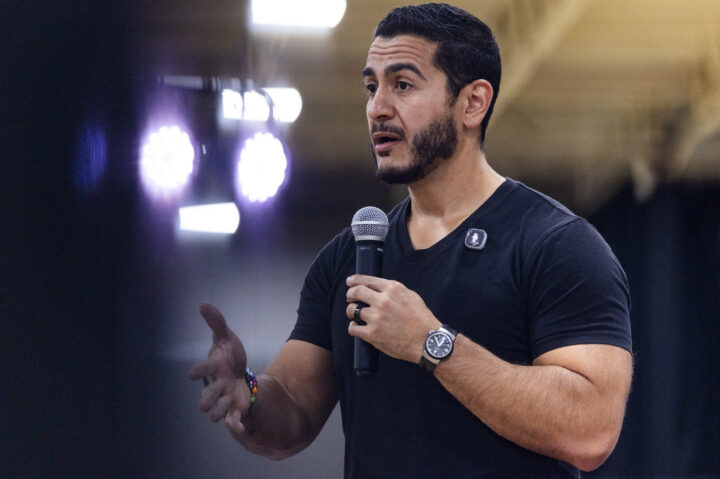
Emily Elconin/Getty Images
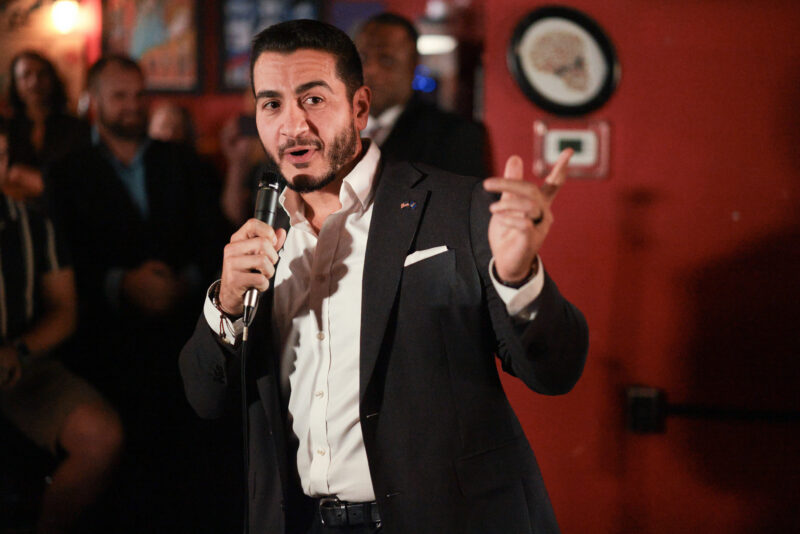
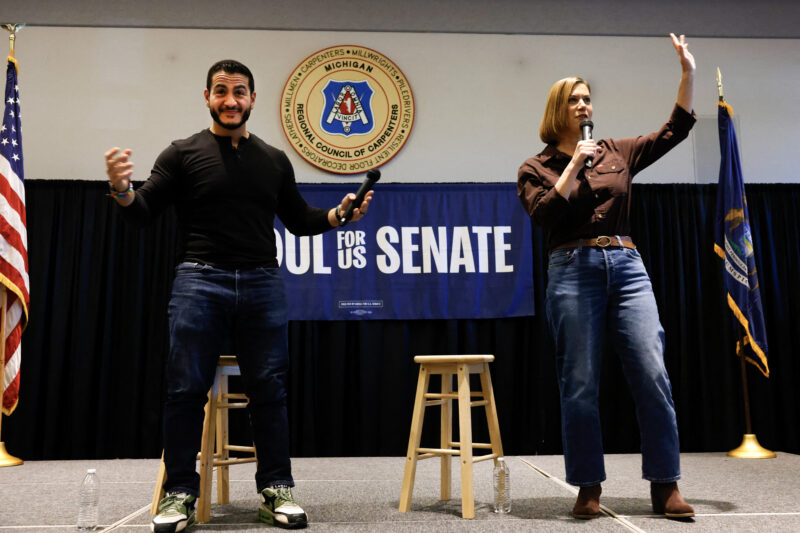
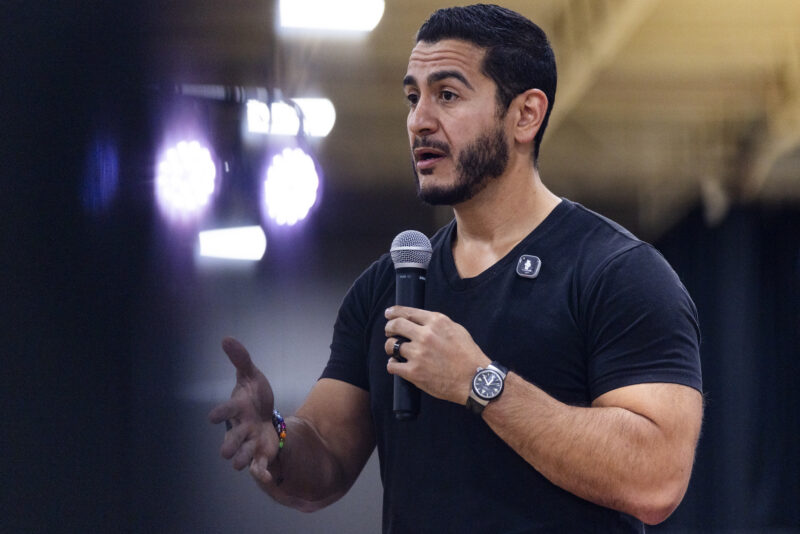
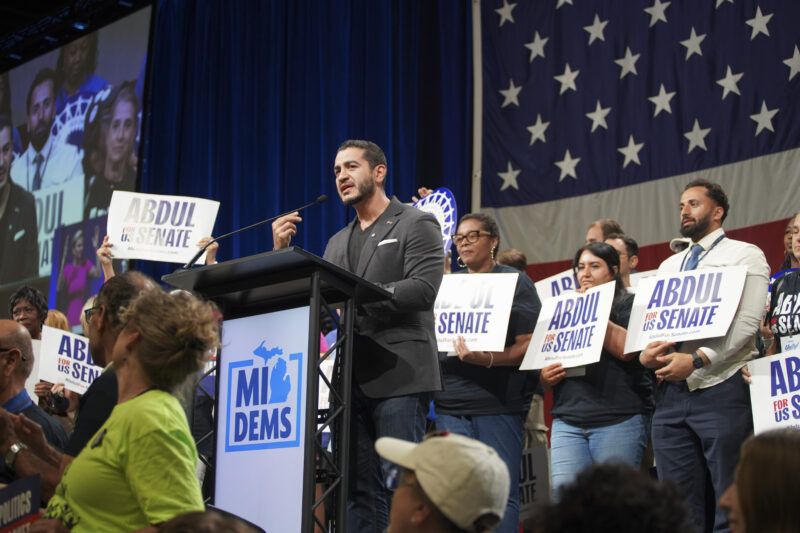
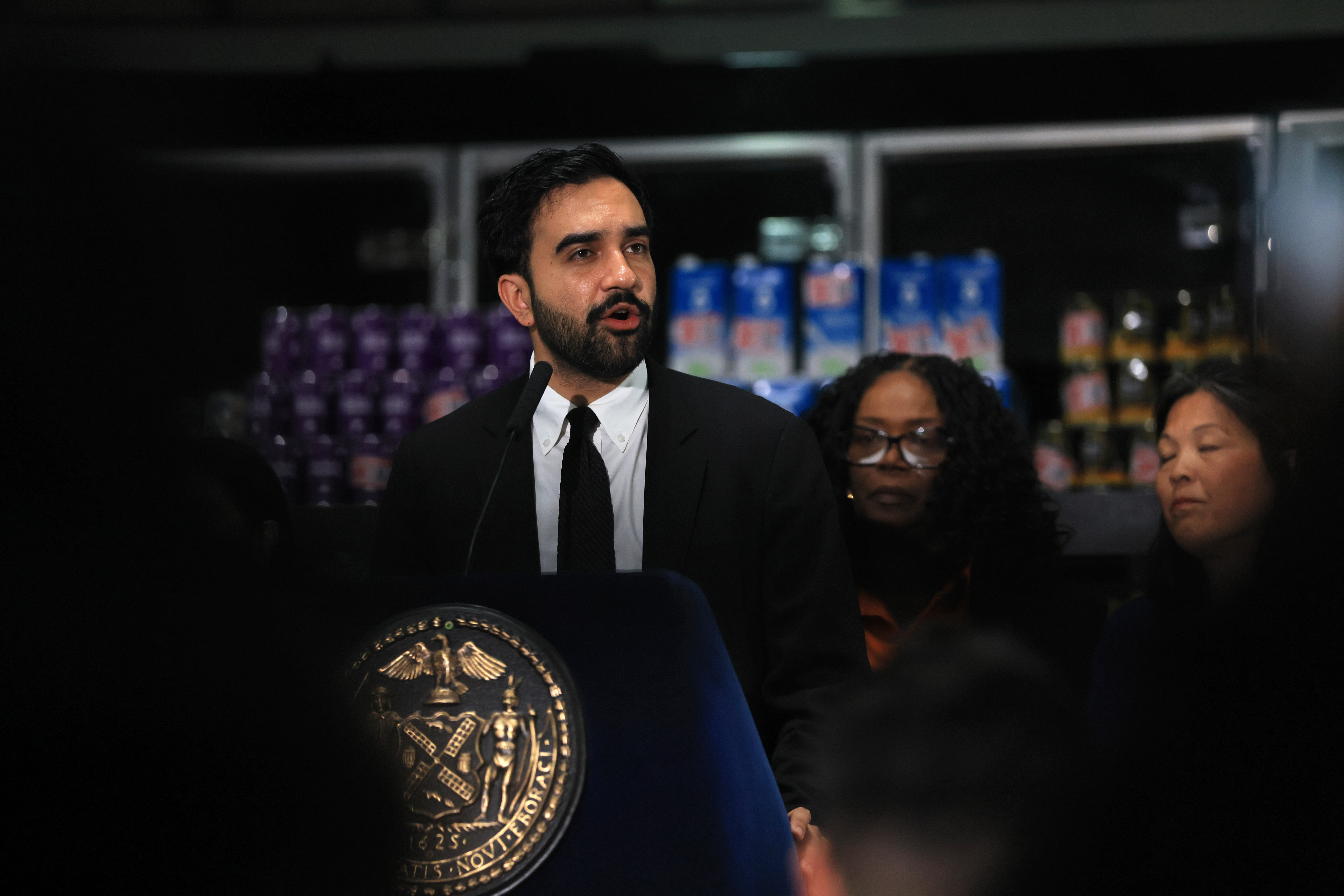
Democratic candidate for U.S. Senate Abdul El-Sayed answers questions from attendees during a town hall event on September 3, 2026 at the Oakland Expo Center in Waterford, Michigan.


 Add JewishInsider on Google
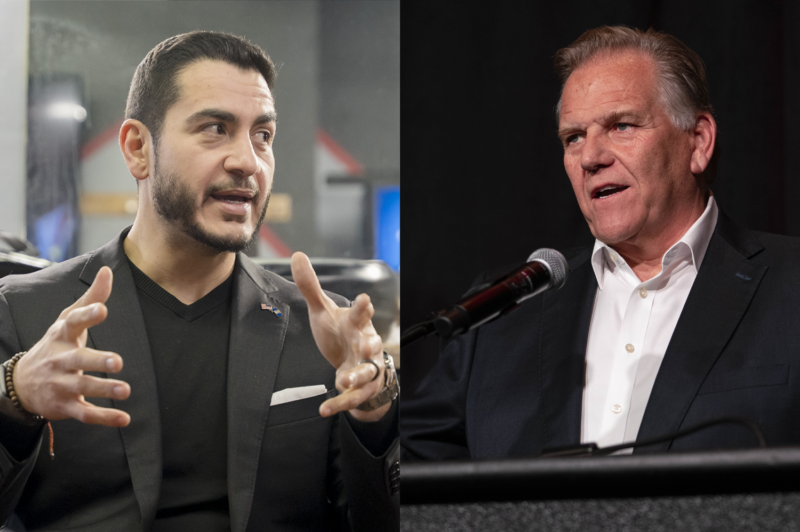
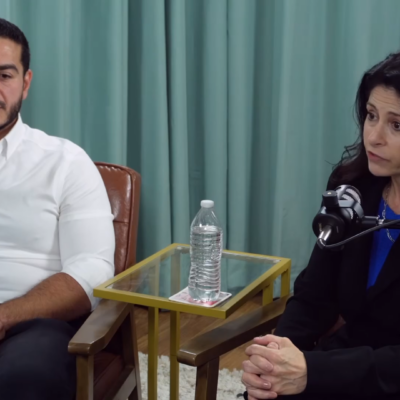
In the most significant sign of his efforts to make inroads with skeptical Jewish voters in Michigan’s Senate race, Abdul El-Sayed, the Democratic nominee, recently met with rabbis at Temple Israel for a closely guarded conversation, according to two people familiar with the meeting.
Two rabbis who were said to have participated in the conversation, details of which were unclear, declined to comment when reached on Wednesday. El-Sayed’s campaign did not respond to a request for comment.
The meeting came after El-Sayed apologized last month to Jewish Democrats for his equivocal response to the March terrorist attack against Temple Israel, a prominent Reform synagogue outside Detroit, which he had downplayed with the explanation that “hurt people hurt people.”
The covert nature of the meeting, which neither party has publicized, underscores the sensitivities felt among some Jewish leaders who have remained wary of publicly associating with El-Sayed because of their continued discomfort with his positions on Israel and remarks about antisemitism.
One rabbi at Temple Israel joined a rally last month at which Vice President JD Vance laid into El-Sayed while touting his Republican rival, former Rep. Mike Rogers (R-MI) — who has successfully courted some Jewish Democratic voters. Vance mentioned the rabbi in his speech, but not by name. A Jewish leader confirmed that a Temple Israel rabbi participated in the event.
Despite the unusual show of resistance, El-Sayed has, following his apology as well as a vow to hire a Jewish campaign liaison, made some inroads as he seeks to ease tensions with Jewish voters in the final stretch of a closely contested election.
He has since won endorsements from several progressive Jewish leaders including former Sen. Al Franken (D-MN). Former longtime Rep. Sander Levin (D-MI), in a statement on Tuesday, backed El-Sayed in spite of what he called “significant disagreement” over the nominee’s hostile approach to Israel — concerns about which some Jewish voters in Michigan have dismissed in recent opinion articles. While Levin held a pro-Israel record during his time in the House, his son Andy was highly critical of Israel while in Congress and ended up losing to Rep. Haley Stevens (D-MI) in a hotly contested 2022 primary.
Meanwhile, Sen. Elissa Slotkin (D-MI), who is one of the most prominent Jewish leaders in Michigan, is now urging fellow caucus members to rally behind El-Sayed after remaining neutral in a heated primary where Stevens, a vocal supporter of Israel, was narrowly defeated.
Still, it remains to be seen if such inroads will result in meaningful support for El-Sayed on Election Day, as he faces opposition from some Jewish voters who say he has fallen short of addressing major differences in a race that continues to stir up raw feelings.
Some Jewish holdouts in the state, for instance, have expressed their dissatisfaction with his apology over his comments on the synagogue attack. El-Sayed said he had “made a mistake” and asked “for forgiveness,” even as he also clarified that there was “opportunity for context later on,” a caveat some Jewish leaders interpreted as a sign he only regretted the timing of his sentiments rather than the message.
Halie Soifer, CEO of the Jewish Democratic Council of America, suggested in a statement on Wednesday that her group would not be endorsing El-Sayed, who has refused to acknowledge Israel’s right to exist as a Jewish state while failing to explicitly disavow Hasan Piker, an antisemitic steamer featuring in GOP attack ads and with whom El-Sayed campaigned ahead of the August primary..
“We have not endorsed El-Sayed” and “do not endorse all Democrats,” Soifer told Jewish Insider, even as she rejected crossing party lines to support Rogers — which she called “a vote to enable Donald Trump’s agenda.”
The Michigan Democratic Jewish Caucus, for its part, has yet to confirm whether it will back El-Sayed after he appeared at its summer fundraising event to offer his apology. Jessica Alexander, the caucus chair, told JI on Wednesday that members would be releasing a statement soon explaining their approach to the race that could help decide control of the Senate next year.
For now, “people are looking to learn more” about El-Sayed’s views and “are still struggling” with how they will vote, Alexander said, noting those “making decisions in the affirmative are just being quiet about it.”
“It’s this really strange space of liminality,” she said of the calculus facing Jewish Democrats. “Everyone wants different assurances — and I’m not sure if you get those in political races, ever.”
While El-Sayed has yet to name a Jewish liaison, Alexander said she was asked to participate in the interview process and had spoken with about five candidates, whom she declined to name. She told JI that she had not yet been informed of a final decision.
David Hecker, a Jewish union leader in Michigan, also took part in the interviews, he confirmed to JI Wednesday. “The key is having conversations with Jews who haven’t decided how they’re going to vote,” he explained of the liaison role. “With many there are going to be disagreements,” he added, while counting himself among them.
“His domestic policies I’m pretty much on board with,” Hecker said of El-Sayed. But, he added, “I’m a Zionist” and “I disagree with his perspective on what needs to happen in the Middle East.”
Still, “I appreciate how much he’s thought about it,” Hecker clarified.
Earlier this month, a coalition of rabbis and other Jewish leaders across the state launched a petition campaign to pressure El-Sayed to affirm a series of “nonnegotiable” commitments on a range of Jewish issues, arguing that failing to do so would jeopardize Jewish support for Democrats. The petition did not mention El-Sayed by name but was clearly aimed at him.
Among the demands were support for “Jewish sovereignty in Israel”; Jewish safety, including for Zionist Jews; and “full participation in American political life” for Jews.
But two Jewish leaders who signed the petition told JI Wednesday they had not had the chance to speak with El-Sayed and did not feel he had demonstrated his commitment to their requests.
Rabbi Aaron Starr of Congregation Shaarey Zedek in Southfield, Mich., who serves as the president of the Michigan Board of Rabbis, said he appreciated how in the past couple of weeks El-Sayed “has moderated his previously offensive and inflammatory rhetoric.”
“His callous words and violent tone, though, remain hard to forget — and probably foolish to forget,” he added. Now, “El-Sayed has become adept at talking around our concerns,” he continued. “Nevertheless, he is silent with regard to our right to define our own identities as American Zionists” and “Israel’s right to exist as a Jewish state,” among other key issues.
Joan Lowenstein, the Jewish caucus endorsement chair who also signed the petition, said she was unconvinced El-Sayed had meaningfully evolved in his stances on Israel since the primary. “He still will not say ‘Israel,’” she observed. “He says ‘Holy Land.’”
Even though El Sayed has condemned antisemitism and affirmed his commitment to Jewish safety, some critics have raised concerns that his rhetoric and alliances with extreme figures such as Piker have helped contribute to rising antisemitism on the far left, which has made a growing number of Jewish Democrats feel alienated in a party they have long called home.
A co-founder of “Jews for Abdul,” a loose coalition of Jewish activists, voiced reservations last month over El-Sayed’s approach to Israel, saying in a private call he could “do a better job” toning down his rhetoric on accusations of genocide in Gaza and his opposition to U.S. funding for the Jewish state, including defensive aid.
El-Sayed has said privately that he “is not going to change his position on Israel at all,” according to a source informed of such remarks. “He is who he is,” the source told JI.
Despite the hesitation among some Jewish voters with weeks remaining until the November election, one Jewish leader in Michigan who does not support El-Sayed predicted that the Democratic nominee “is on track to be elected narrowly but solidly,” citing unfavorable polling for Republicans nationally.
“I think the Jewish vote being split is not enough to cost him the election,” the Jewish leader said about El-Sayed on the condition of anonymity. (Michigan is home to some 130,000 Jews.) “Trump’s continued chaos is really causing a lot of people to swallow hard and just hold their nose and vote the entire Democratic ticket.”
More Stories
HATE MAIL
Son of GOP challenger to Gov. Wes Moore called Jews ‘pedophiles’ and ‘Satan worshipping scum’
EMBASSY COMMEMORATION
Deputy national security advisor emphasizes shared civilizational fight at Oct.7 anniversary event
TORAH AND TAXES
First female Haredi candidate promises reform to ultra-Orthodox politics
Arrivederci, Reggio
Jewish preschool educators forced to condemn Israel to attend Reggio Emilia conference
Daily Overtime
Nessel feels the heat over El-Sayed support

EXCLUSIVE
Bipartisan House resolution honors pilot, passengers who stopped FlyDubai hijacking
Please log in if you already have a subscription, or subscribe to access the latest updates.
 Continue with Google
 Continue with Apple