






















Pentagon’s stricter grooming standards could impact Orthodox Jewish servicemembers
A new memo announced an end to most religious exemptions allowing troops to maintain beards and long sideburns
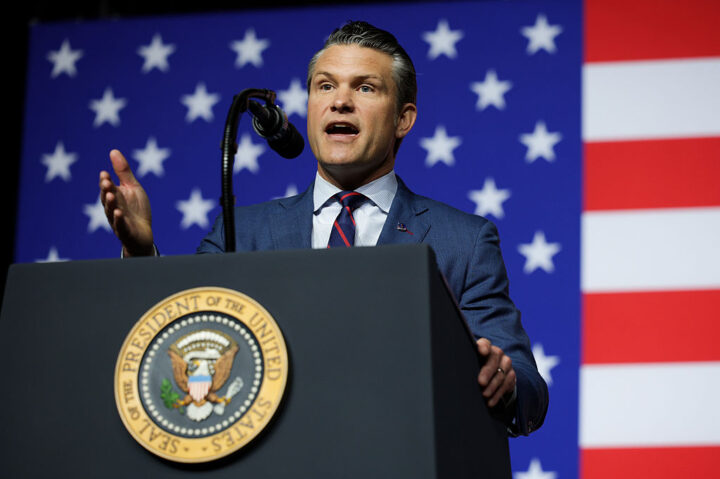
Alex Wong/Getty Images
Secretary of Defense Pete Hegseth speaks to senior military leaders at Marine Corps Base Quantico on September 30, 2025 in Quantico, Virginia.


 Add JewishInsider on Google
“No more beardos,” Secretary of Defense Pete Hegseth declared during his lengthy speech to top military commanders in Quantico, Va., last week, announcing new, stricter grooming policies for U.S. servicemembers, which had been gradually loosened in recent years to allow more soldiers to maintain beards and other facial hair.
“The era of rampant and ridiculous shaving profiles is done,” Hegseth continued. “Simply put, if you do not meet the male-level physical standards for combat positions, cannot pass a [physical training] test or don’t want to shave and look professional, it’s time for a new position or a new profession.”
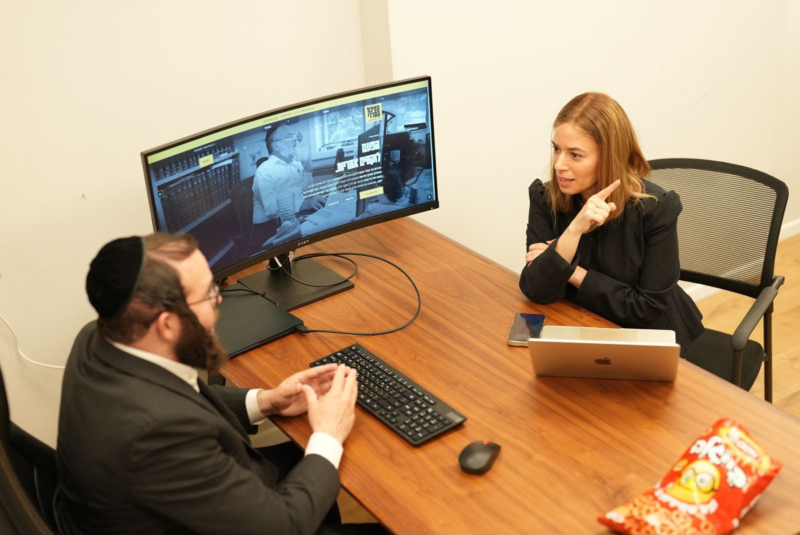
The new rules, circulated in a memo to military members, would end most existing religious exemptions allowing troops to maintain beards, returning to pre-2010 standards — when the military first granted an exemption to a Sikh soldier to maintain a beard in uniform. The regulations would present a potential obstacle to Orthodox Jewish servicemen who maintain beards. The policy also prohibits sideburns below the ear openings, potentially impacting servicemen who wear peyot.
Religious facial hair waivers will be “generally not authorized” under the new policy, and will require “individualized reviews” with “documentation demonstrating the sincerity of the religious or sincerely held belief … sufficient to support a good faith determination by the approving authority,” according to the memo. They will only be authorized in “non-deployable roles with low risk of chemical attack or firefighting requirements.”
The policy cites the need for military personnel to be able to wear protective breathing equipment that may not seal safely in the presence of facial hair. Repeated non-complicance may lead to individuals being separated from the military.
“The military obviously has its need for discipline and uniform adherence,” Rabbi Levi Shemtov, the executive vice president of American Friends of Lubavitch (Chabad), told Jewish Insider. “At the same time, it has been, and we hope it will continue to be, cognizant that certain individuals, for them to serve and accommodation will be necessary, and as in the past, if everything else about that particular person adheres to military standards, then they should get the dispensation they need.”
“The military has shown an ability to balance its requirements with enabling Jewish personnel to serve with distinction. I hope they can do [so in] this case as well,” Shemtov added.
Rabbi A.D. Motzen, national director of government affairs at Agudath Israel of America, told JI that his group is also tracking the issue.
“If the new religious exemption procedures make it more difficult for soldiers or chaplains to maintain beards or sideburns that conform with their religious beliefs, it is a matter of concern for us,” Motzen said. “Agudath Israel has championed religious freedom in many settings including the military and has fought for those rights on the local, state and federal levels and in the courts. We have fought for the rights of Jews as well as members of other faiths such as Sikhs. We hope that this administration, which strongly supports religious freedom, will clarify the new guidelines and ensure that the same religious liberty principles will be applied to the new grooming guidelines.”
Reps. Jerry Nadler (D-NY) and Brad Schneider (D-IL), the co-chairs of the Congressional Jewish Caucus, released a joint statement on the new policy with the chairs of the Congressional Asian American Pacific Caucus and the Congressional Black Caucus.
The statement calls Hegeth’s comments “appalling” and an “insult to the millions of Sikh, Jewish, Muslim, and Christian Americans who have answered the call to serve.” The lawmakers said that any attempt to “eliminate or stigmatize beard accommodations … risks marginalizing communities that have long faced discriminatory grooming standards in the military.”
“Time and time again, these brave men and women have shown that they can practice their faith while serving honorably and effectively,” the statement continues. “Freedom of religion is a fundamental right that our nation’s servicemembers defend and have the right to exercise themselves. Religious accommodations for beards, which were permitted under the first Trump presidency and repeatedly upheld by the courts, must remain in place.”
The Democratic lawmakers said that the administration must offer further clarity on how they will uphold religious liberty for servicemembers.
The policy is also expected to impact servicemembers granted medical waivers to maintain beards due to a skin condition that disproportionately affects Black men.
More Stories
OBAMA BOOST
Obama to campaign with Abdul El-Sayed at rally with Michigan Dems
DOHA DEALINGS
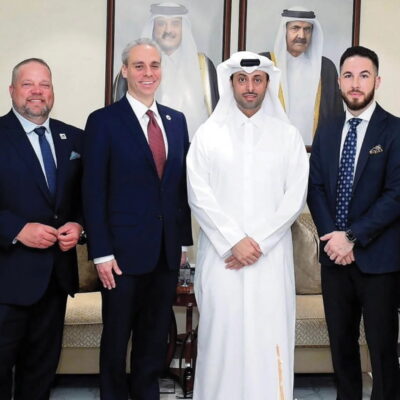
Moskowitz challenger visited Qatar in 2024, photographed with Qatari official
EXCLUSIVE
Colorado senators introduce bill to expand federal security grant program
PHONE A FRIEND
AOC launches campaign blitz for El-Sayed across Michigan
KINGS COUNTY KERFUFFLE
Treasurer for anti-AIPAC PAC behind effort to unseat Brooklyn Republicans
POLICY PIVOT
On Oct. 7 anniversary, senior Democrats call for changes in U.S.-Israel policy
Please log in if you already have a subscription, or subscribe to access the latest updates.
 Continue with Google
 Continue with Apple