


























Somaliland president discusses expanded military cooperation with U.S. officials
Citing the threats posed by the Houthis, Abdirahman Mohamed Abdullahi said Somaliland is 'the safest way to world trade, to maritime security, against piracy'
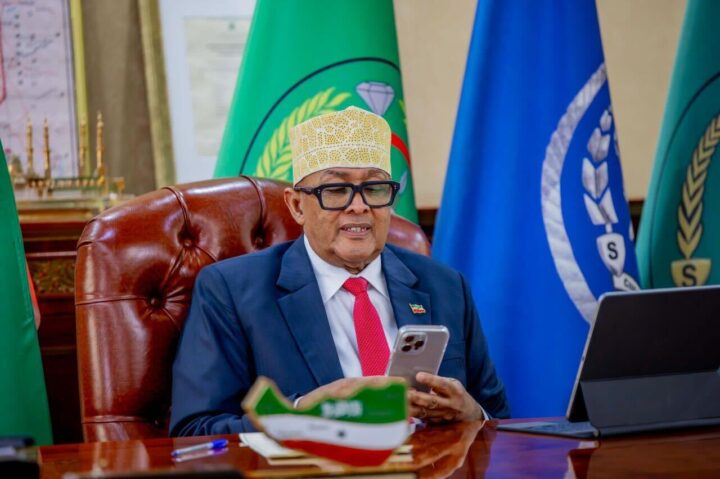
Amos Ben-Gershom/GPO
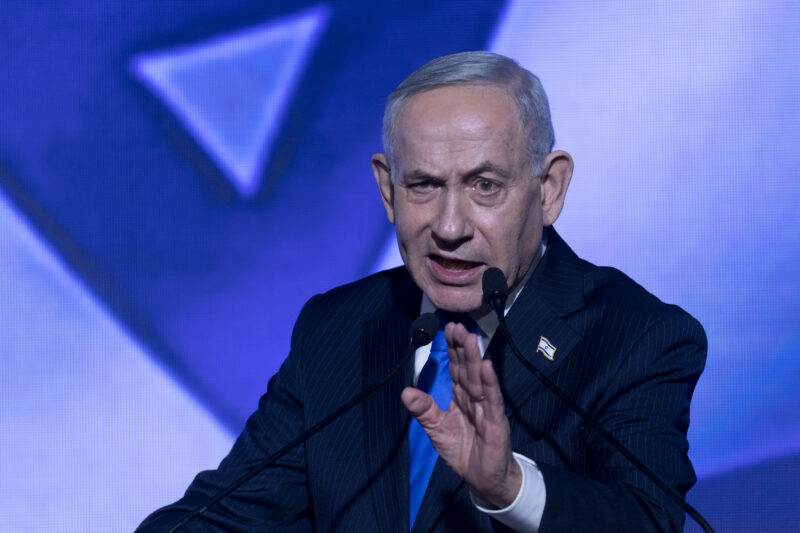
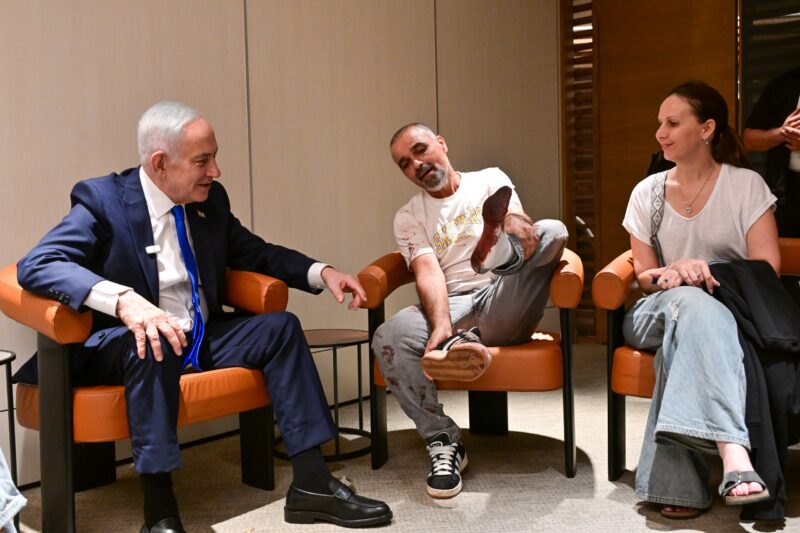
Somaliland President Abdirahman Mohamed Abdullah speaks to Israel Prime Minister Benjamin Netanyahu, Dec. 26, 2025


 Add JewishInsider on Google
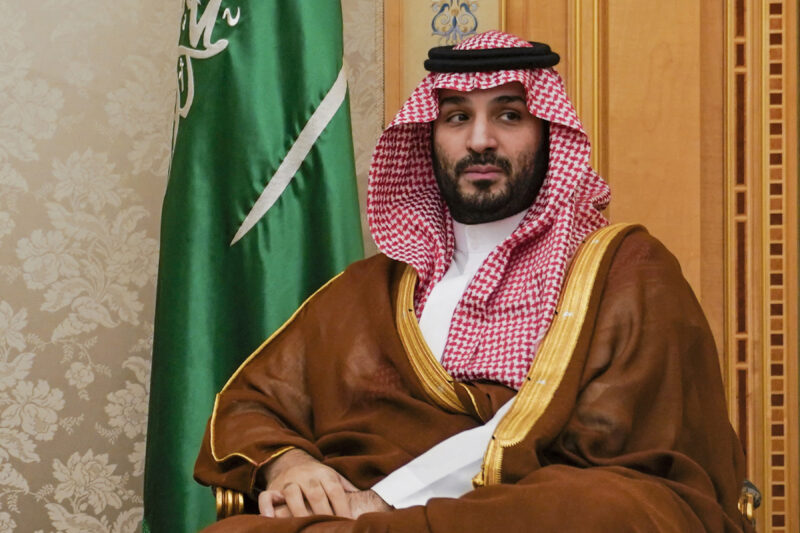
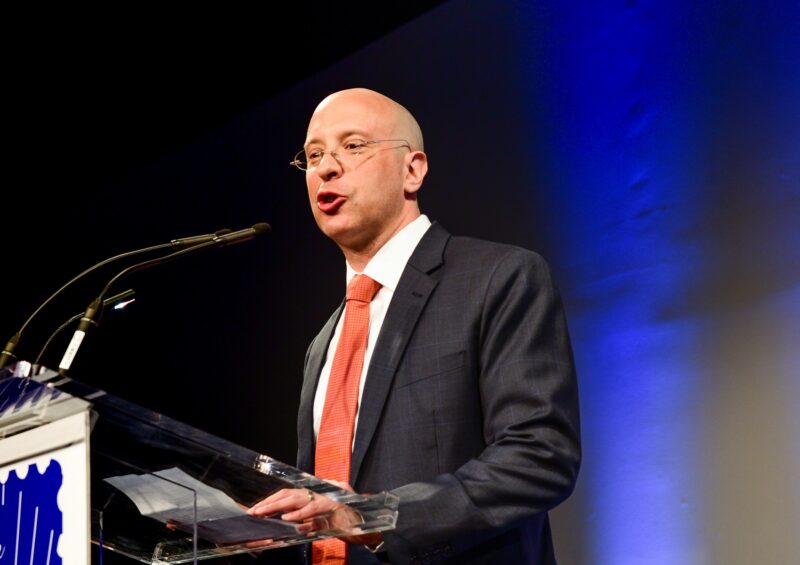
Abdirahman Mohamed Abdullahi, the president of Somaliland, the pro-Western region that broke away from Somalia, discussed deepening partnerships with the U.S., including expanded U.S.-Somaliland military cooperation, during a visit last week to Washington, D.C.
Israel was the first state to recognize Somaliland’s independence last year, more than three decades after the region declared independence, though the U.S. has maintained direct and indirect relationships with the government, based in Hargeisa.
The territory in the Horn of Africa is located along the Gulf of Aden and is seen as a potential site for an American or Israeli military base in the Horn of Africa, particularly in light of the growing Houthi control over the Bab al Mandeb Strait, a key passageway through the Red Sea, in recent weeks.
Abdullahi told reporters at a media briefing on Friday that he met with representatives of the State Department, Pentagon, Treasury and Department of Energy as well as at least one representative from the National Security Council.
“We had [with] all of them fruitful conversations. Short of recognizing Somaliland, we feel that there is progress in our conversation, and we shall continue that conversation,” Abdullahi said. “In the meantime, we understand that our cooperation [in] different sectors, will increase and will expand, and we hope that some American presence will be in Somaliland in the near future.”
Somaliland is pushing for the U.S. to open a consulate in Hargeisa and expand its military presence on the ground. The two countries have an existing counterterrorism and national security cooperation program, which includes U.S. officers training Somaliland’s counterterrorism forces.
Bashir Goth, the head of Somaliland’s mission to the United States — its de-facto ambassador — told reporters that Pentagon officials said they plan to increase the size of the U.S. training force in Hargeisa. More broadly, he described the trip as the best series of meetings that a Somaliland president has had in Washington.
Abdullahi said that State Department officials said they would consider opening a consulate in Hargeisa but did not make any commitments.
Asked about his conversations with U.S. officials about potential cooperation in counter-Houthi operations, Abdullahi broadly pitched Somaliland and its port at Berbere as a haven of stability in the region and the Horn of Africa that the U.S. could utilize.
“In general, we gave an offer to the United States [of] partnership in security — whether it’s counterterrorism, maritime security, protection of of ships in the area. We have 850 kilometers of seashore [on the] Gulf of Aden,” he said. “We know that there is a problem in Hormuz, and now … in Bab al Mandeb. So Somaliland is the safest way to world trade, to maritime security, against piracy. Our waters have been free of piracy and terrorism for the last 30 years.”
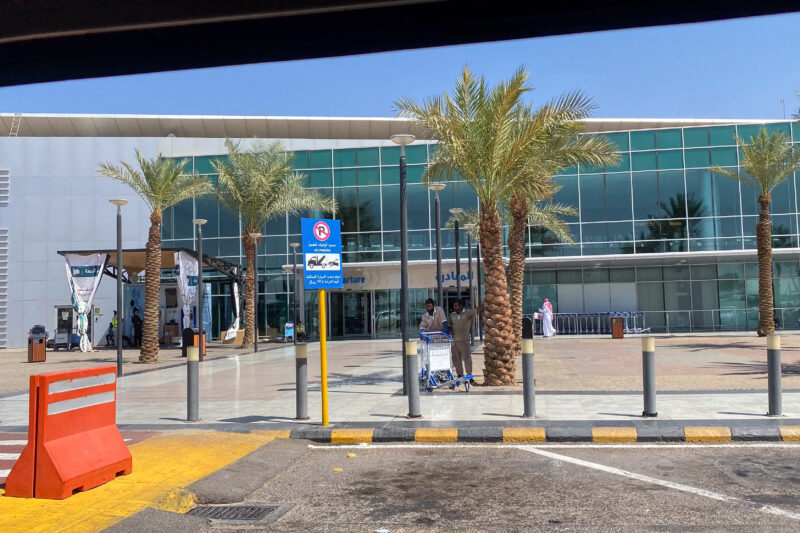
Abdullahi described Berbere as an attractive site for foreign powers, including the U.S. and Israel, with what was once the longest runway in Africa and a large and efficient port. He said that military officials from both countries have visited Berbere, but said they do not currently maintain a presence there.
He expects Somaliland-Israel security cooperation to begin by the end of the year, with a focus on training Somaliland’s military and police. He said an Israeli military presence in Somaliland is a possibility in the future but not in the near term.
Abdullahi said that some U.S. companies would prefer to operate out of Berbere than Djibouti, which currently hosts the largest U.S. base in Africa. He described Berbere as “the most efficient port in the region” but acknowledged that infrastructure investment is necessary to build out railways to make the port more interconnected with the region — also likely a necessity for a U.S. military base.
China has offered assistance to build such infrastructure — as it did in Djibouti — but Abdullahi said that Beijing attached untenable conditions, including Hargeisa’s rejection of Taiwan.
Somaliland is also working to shift its electric generation away from its current diesel-powered grid toward solar and other energy sources. Somaliland had managed to bring down electricity costs significantly under Abdullahi’s leadership, but they are poised to skyrocket as a result of the Iran war. The government is currently subsidizing energy costs at $20 per barrel of oil, which Abdullahi said may be unsustainable.
At the same time that energy costs have spiked, Somaliland’s tax revenue has plummeted by nearly 50% as a result of a precipitous decline in shipping through Berbere because of the Iran war and the closure of the Strait of Hormuz. Import taxes were the government’s primary source of revenue.
Abdullahi said that Somaliland is not in direct conflict with either the Yemeni government or the Houthis, but predicted that the Houthis’ recent gains along the Red Sea will have further impacts on the trade moving through the region and through Berbere.
Abdullahi accused Somalia, Djibouti and others of working to undermine Somaliland’s stability.
During his time in Washington, Abdullahi met with several lawmakers, including Sen. Ted Cruz (R-TX), Capitol Hill’s most vocal advocate for the U.S. to recognize Somaliland, Sen. Mike Rounds (R-SD) and several House members.
Abdullahi is pushing for the U.S. to consider legislation to allow Somaliland direct access to the international financial system and to differentiate between Somaliland and Somalia in travel advisories.
He also visited multiple think tanks, including the Hudson Institute and Foundation for Defense of Democracies, met officials from the American Jewish Committee and was hosted by Israeli Ambassador to the U.S. Yechiel Leiter.
According to the AJC, the group discussed “developments in the Horn of Africa, regional security, the democratic country’s strategic importance, and Somaliland’s growing relationship with Israel” and the “significance of Israel being the first UN member state to officially recognize Somaliland as an independent and sovereign state, as well as opportunities for deeper cooperation between Somaliland and Israel.”
Leiter said in a statement, “The relationship between Israel and Somaliland has moved beyond formal recognition and official meetings, toward a relationship characterized by the warmth and friendship associated with our nations.”
“Somaliland is a rising strategic partner, and an important voice in the crucial conversations regarding maritime security in the Middle East and the Horn of Africa,” Leiter continued. “Israel is proud to be committed to this new and growing partnership, to ensure a better future for both our countries and the region.”
Abdullahi made his first state visit to Israel, where the two countries agreed to cooperate in economic, agricultural, water, health and security matters. So far, Israel is training 50 engineers in Somaliland on water projects and will begin work on water projects including a desalination plant in Berbere. Ten children suffering from heart problems have also been transported to Israel for treatment.
Abdullahi said he’s hoping to see expanded investment by Israelis and American Jews in Somaliland.
More Stories
BACK FROM THE GULF
Sen. Murphy accuses admin of ‘active cover-up’ of Iran war, vows to leverage funding to end war
Daily Overtime
Trump rules out pre-midterm Iran strikes

CAMPAIGN BLITZ
AIPAC’s super PAC wades into Michigan Senate race

Daily Overtime
Jewish leaders press Miliband on U.K. antisemitism

EVENT RESCHEDULED
State Department to hold Oct. 7 commemoration event on Wednesday

PROBLEMATIC POST
Paxton senior advisor endorsed antisemitic slur on social media
Please log in if you already have a subscription, or subscribe to access the latest updates.
 Continue with Google
 Continue with Apple