






























J Street contends with challenges to its dogma on Iran at national conference
URJ’s Rabbi Rick Jacobs: ‘America’s Jewish congregations are diverse, filled with good, moral people who differ on complex issues’

Michael Brochstein/Sipa via AP Images
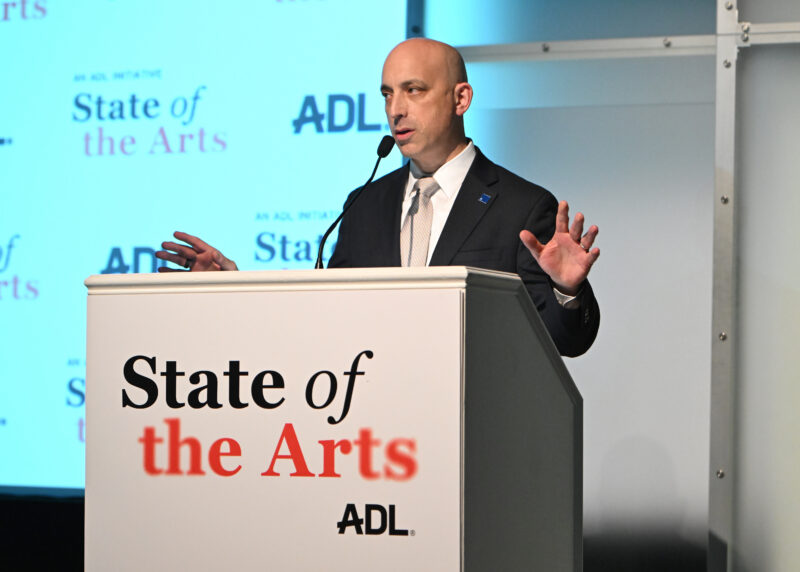
J Street President Jeremy Ben-Ami speak at the 2022 J Street National Conference held at the Omni Shoreham Hotel in Washington, D.C.


 Add JewishInsider on Google
When more than 1,500 people gathered in Washington this weekend for J Street’s national conference, the progressive Israel advocacy group’s first major convening in four years, the gathering was billed as an opportunity to reflect on building regional peace in the Middle East in the aftermath of the Gaza war.
Instead, a major U.S. and Israeli military operation against Iran that began Saturday undercut the group’s pledge to focus on peace between Israelis and Palestinians and came to dominate the discussion. J Street quickly came out against the attacks.
The first speaker on the conference’s main stage on Sunday took an unusual departure from J Street’s dogma on diplomacy by noting that the organization’s positions are not the only ones that should be taken seriously in the Jewish community.
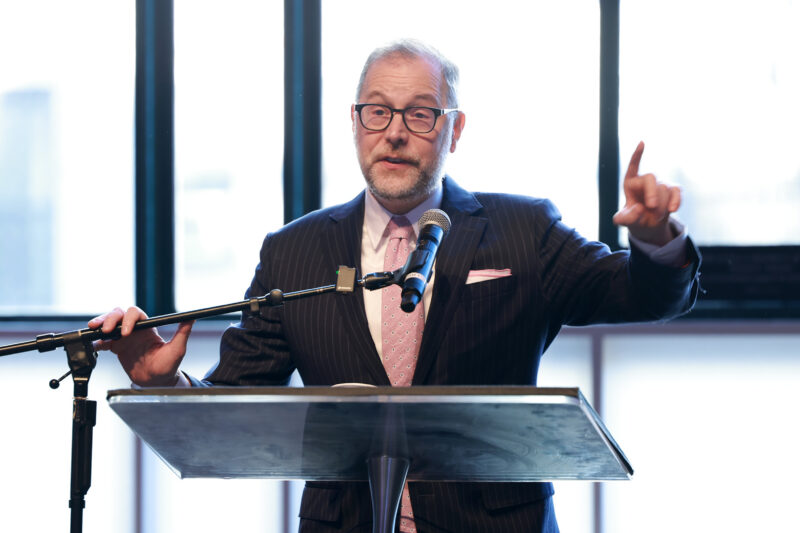
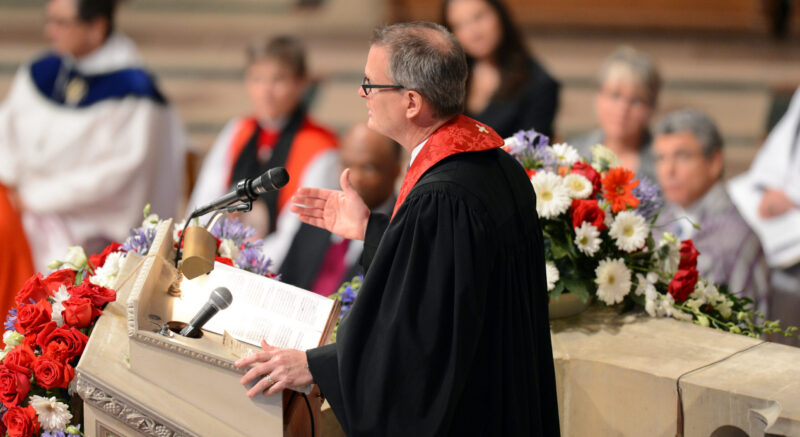
Rabbi Rick Jacobs, the president of the Union for Reform Judaism, kicked off the conference program by noting that J Street’s position, one of stark opposition to the attacks, sits alongside the views of others in the Jewish community who have cheered U.S. and Israeli military strikes seeking to bring about regime change in Iran.
“I’m certain that many in this gathering agree, as a matter of principle and foreign policy, with the J Street statement,” Jacobs said. “Many in our congregations might also agree. But America’s Jewish congregations are diverse, filled with good, moral people who differ on complex issues, as those raised by the Iran attacks.”
J Street’s leaders often make the case that greater nuance and complexity is required within the U.S. Jewish community, particularly making space for left-wing views on Israel within mainstream Jewish groups. Jacobs was making the argument in reverse: that people could also support the attacks in good conscience, and that neither view is superior.
“There are many in our congregations, in the Jewish community at large and in the broader American public who want to seek regime change for the sake of the people of Iran, for eliminating threats to America’s and Israel’s security, and to enhance stability in the region, who may well recognize that war is surely not the remedy for every global conflict, but feel there are times when military force is justified and believe a case can be made,” Jacobs continued.
Later, J Street President Jeremy Ben-Ami clarified where the group stands but said there is room in the organization for people who disagree.
“I made very clear J Street’s adamant and clear opposition to this war. It is a war of choice. It is a war without clear objectives. It is a war without a plan to achieve those unclear objectives. It is a war without constitutionally required congressional approval, and it is a war without public consent,” Ben-Ami said. “It is clear that in this room there is a mix of opinions. Not everyone in J Street would agree with the clear, articulated opposition to the war that I laid out.”
Sen. Chris Van Hollen (D-MD) called the war “dangerous” and said it would make Americans less safe. British human rights lawyer Phillippe Sands compared the attack on Iran to Russia’s invasion of Ukraine. On the other hand, former Israeli Prime Minister Ehud Olmert said Iran “needs to be punished.” In a video message recorded before the attacks began, Yair Golan, the leader of Israel’s liberal Democrats party, said that if war with Iran starts, “let us defeat those who seek our destruction.” Both Olmert and Golan are fierce opponents of Israeli Prime Minister Benjamin Netanyahu.
But while the convention main stage offered some room for nuance on Iran, most speakers were otherwise aligned on J Street’s messaging — that Israel’s government, led by Netanyahu, is not doing enough to make peace with Palestinians or to rein in violent settlers in the West Bank, and that the U.S., meanwhile, is not doing enough to safeguard Palestinians or provide oversight of Israel’s use of its military aid.
“There can’t be a continuing blank check when the Netanyahu government is operating in violation of American law, which they have repeatedly, or in violation of international law,” Van Hollen said.
Later in his speech, Jacobs, the URJ president, said the U.S. Jewish community must also learn to accept diverging opinions on Israel.
“It does not make one love Israel any less to be pained by the loss of life and suffering among innocents, and we must learn how to work amidst difference. Our Jewish community will not be safe only with more cameras and security protocols. Does anti-Zionism spill over into antisemitism? Yes. But not always,” Jacobs said.
J Street also plans to use the conference to spotlight its growing political influence in the Democratic Party, with a fundraiser on Sunday evening for North Carolina Senate candidate Roy Cooper, the former governor. Attendees will also be able to join a phone bank for Evanston, Ill., Mayor Daniel Biss, who is running for Congress in a contentious Democratic primary in Illinois where Israel has become a key issue.
Other congressional speakers slated to address the conference on Monday include Sens. Brian Schatz (D-HI), Chris Murphy (D-CT), Adam Schiff (D-CA) and Tim Kaine (D-VA), as well as Reps. Nancy Pelosi (D-CA), Sean Casten (D-IL), Madeleine Dean (D-PA) and Sara Jacobs (D-CA). The executive director of the House Majority PAC, a Super PAC that supports Democratic congressional candidates, will be at the conference meeting with top J Street donors.
More Stories
REGGIO REGRETS
Reggio Emilia mayor walks back anti-Israel litmus test for preschool educators
DAYLIGHT DEBATE
Brett McGurk pushes back on former Biden WH colleagues who called for greater pressure on Israel
Daily Overtime
Dublin hotel dumps antisemitism conference
ON DEFENSE
El-Sayed dismisses half-sister’s comments about family’s Muslim Brotherhood ties as ‘hearsay’
BIBI BOOST
Netanyahu bloc gains on Gadi Eisenkot’s opposition in latest Israeli polls

PACKED PEWS
Scholten, Gottheimer and Bret Stephens join Dan Senor before packed Michigan crowd
Please log in if you already have a subscription, or subscribe to access the latest updates.
 Continue with Google
 Continue with Apple