

















Lawmakers alarmed by Barrack’s Turkey tilt in his Middle East diplomacy
Barrack, the U.S. ambassador to Turkey, plays an outsized role in setting foreign policy in the region, lawmakers and experts say
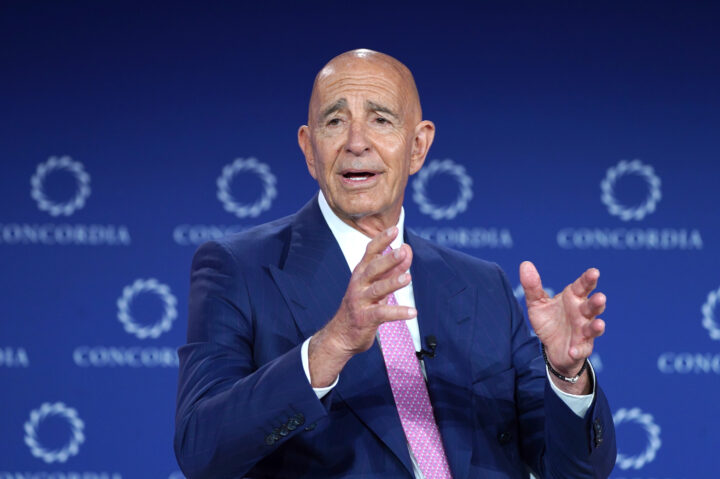
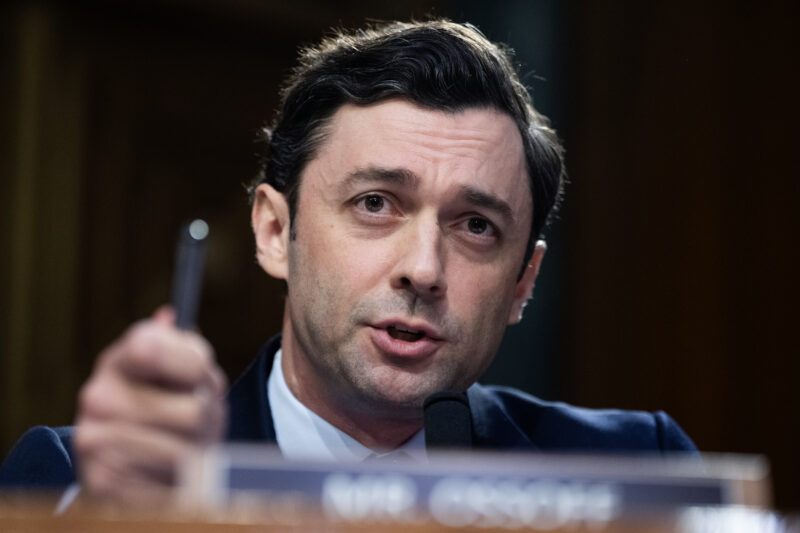
Leigh Vogel/Getty Images for Concordia Annual Summit
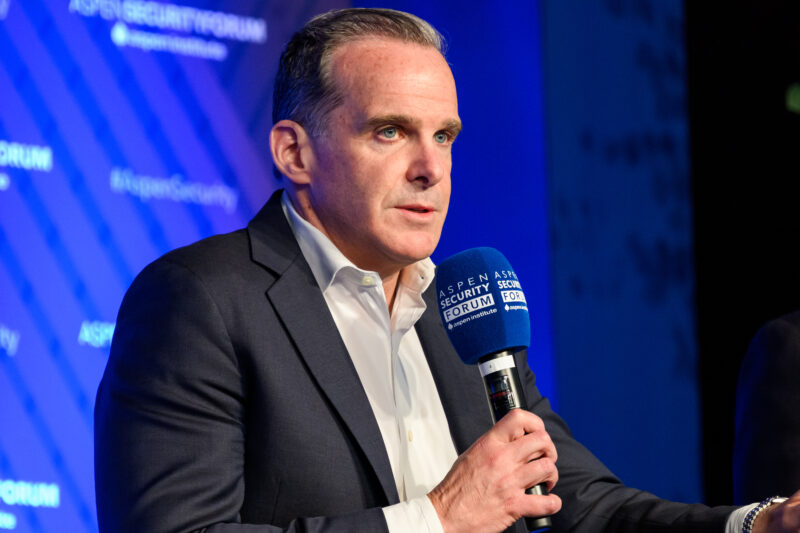
U.S. Ambassador to Turkey Tom Barrack speaks during the 2025 Concordia Annual Summit on September 24, 2025 in New York City.


 Add JewishInsider on Google
Simmering frustrations among lawmakers with U.S. Ambassador to Turkey Tom Barrack — who also serves as special envoy to Syria and manages a wide remit in America’s Middle East policy — have recently emerged with force, as multiple lawmakers tell Jewish Insider they have concerns about the U.S. envoy’s expansive role.
Barrack’s critics see the envoy pushing U.S. policy in concerning directions, toward an overly close relationship with Turkey despite the country’s overt anti-Israel posture and regional ambitions and, most recently, as a key enabler of the Turkish-backed Syrian government’s offensive against U.S.’ longtime Kurdish allies in the Syrian Democratic Forces.
Over the course of months, the envoy has also made comments that have concerned lawmakers, including questioning Israel’s status as a democracy, downplaying the threat from Hezbollah and supporting a Turkish role in the International Stabilization Force in Gaza, despite Turkey’s long record of hostility to Israel.
A Republican senator, granted anonymity to speak candidly, told JI last week that Barrack’s role in U.S. policy in the region makes them “nervous.”
“He’s running a Turkish line, and there are very legit[imate] concerns” about his role and influence, the senator said.
A senior Senate Democrat involved in foreign policy issues also said he had concerns about Barrack, suggesting the envoy was pursuing personal business interests through his post.
“Barrack is clearly knowledgeable about the region, he’s clearly energetic and engaged. But that’s the only good I can say. I have real concerns about his motives and the consequences of his actions,” the Democratic senator said.
“That’s something I really worry about. When the president himself is among the most corrupt in American history, we can’t be surprised when the people he puts in positions of power conduct themselves in the same way, but it’s really dangerous,” the lawmaker added. “We’re losing our reputation as a good partner, a reliable ally and a country committed to supporting anti-corruption efforts.”
Asked about Barrack’s role in the administration, Sen. Richard Blumenthal (D-CT) told JI, “I’m hopeful that the interests of the Kurds will be protected. America needs to stand up to the Turks where necessary and insist that those rights be adequately represented.”
Lawmakers’ concerns have become public at a series of hearings on the Hill in recent weeks.
At a House Foreign Affairs Committee hearing on Syria last week, Rep. Josh Brecheen (R-OK), a leading skeptic among House Republicans of repealing U.S. sanctions on Syria, said he feels that Barrack’s dual role as ambassador to Turkey and Syria special envoy is hampering the U.S.’ ability to take a tougher stance with Syria.
“[Barrack] has to maintain a good relationship with Turkey. Would we not be well-served for someone to be specific to Syria, whether it be an envoy specific to Syria or an ambassador — how would that not help us to make sure that Tom Barrack can maintain a good relationship with Turkey but we’d have somebody to play hardball with Syria?” Brecheen said.
Brecheen said he’s worried that Turkish President Recep Tayyip Erdoğan seeks to reestablish the Ottoman Empire and that Syrian President Ahmed al-Sharaa is deceiving the U.S. and still maintains a jihadist ideology. He said current U.S. policy appears to be facilitating Turkish and Russian interests.
Nadine Maenza, the former chair of the U.S. Commission on International Religious Freedom, who testified before the committee, responded that she shares Brecheen’s concerns.
“It’s been very difficult to have him have both hats on, and I think we’ve seen that with the State Department not having a role to play in Syria policy and waiting for Barrack to make decisions,” Maenza said. “I don’t think that serves the president well, if his goal is peace and stability in the Middle East.”
At another House Foreign Affairs Committee hearing earlier this month, Rep. Brad Sherman (D-CA) highlighted Barrack’s past comments on Hezbollah, which he said “have often sent the wrong signals.” David Schenker, a senior fellow at The Washington Institute for Near East Policy who served in the first Trump administration, also repudiated Barrack’s comments.
Barrack has faced criticism off the Hill in conservative circles as well: a Wall Street Journal editorial last month blasted his “not-so-excellent Syrian adventure,” characterizing the ambassador as overly close with Turkey and pushing an anti-SDF policy in the administration.
Responding to the editorial, former Sen. Rick Santorum (R-PA) blasted Barrack for having “betrayed [the Kurds], Christians in Syria and our country for Turkey.” “His behavior is a disgrace. He should be recalled,” Santorum added.
Former National Security Advisor John Bolton — who has since come under fire by President Donald Trump — said last year that Barrack has been “publicly making excuses for al-Sharaa’s reluctance to open full diplomatic relations with Israel. It is not generally a U.S. ambassador’s job to justify another country’s actions. He should be warned about the symptoms he is displaying.”
Conservative commentator Mark Levin similarly criticized Barrack last summer for rebuking Israel’s attacks on Syrian government-aligned forces carrying out massacres of Druze and other minority groups.
His concerns were echoed by right-wing influencer Laura Loomer, who said that Barrack’s “delusions that he can play nice with [al-Sharaa], who is literally ISIS, is going to continue to destabilize the Middle East and get more innocent non-Muslims killed,” describing Barrack’s approach to Syria as completely wrong-headed.
“I have heard from different sources that [the Turks] perceive Tom Barrack to be their man, and this is the first time in a long time they feel that they have a U.S. envoy that’s essentially on their side, if you want to use that terminology, and is basically positioning Ankara to really realize a lot of their policy goals, their geostrategic goals,” Sinan Ciddi, the director of the Turkey program at the Foundation for Defense of Democracies, told JI.
Barrack, while being “a problematic actor,” is also “deeply influential,” Ciddi said, characterizing him as one of the two most influential figures in the U.S.’ regional policy alongside White House Special Envoy Steve Witkoff. Like Witkoff, Barrack is a longtime friend and business associate of Trump.
“He is making moves, he’s implementing policies as special envoy and as ambassador that I think present deep risks and and could have potentially detrimental consequences, because it’s going to alienate the United States at the least, but at worst, they could really inflame a considerable number of situations that we’re active looking at,” Ciddi said.
He raised concerns about three particular policies that Barrack has appeared to promote: providing Turkey with advanced F-35 fighter jets despite U.S. sanctions, bringing Turkey into the International Stabilization Force in Gaza and pushing for an influential role for Turkey in Syria and a favorable stance toward the new Syrian government.
He said that Barrack and the Trump administration more broadly appear to view Turkey as a partner that they can cooperate with on goals including stabilizing Syria and Gaza.
Israeli officials, however, view the situation in a very different light, and “feel that through Barrack’s adventurism, what we are seeing are dangerous moves to position Turkey in the Levant and the Middle East as an aggressive actor,” Ciddi said. “They feel that Turkey is, through Barrack, finding a means and opportunity to weaken Israel.”
Ciddi warned that Turkey having any role in the stabilization force in Gaza would be “fundamentally very, very dangerous” given Turkey’s friendliness with Hamas and hostility toward Israel. And he said that providing Turkey with the advanced F-35 jets would be “deeply problematic” given its close relationship with Russia, along with various other issues, a dynamic that has troubled lawmakers and European allies.
Ciddi also said that Barrack’s public comments, or lack thereof, about Turkey’s closeness with Hamas and Iran, about Hezbollah and about Israel’s status as a democracy should be concerning for “all the countries that have signed up to the Abraham Accords, or any country in the region that’s taking a position against jihadist movements and Salafist movements.”
Michael Makovsky, the CEO of the Jewish Institute for National Security of America, told JI that, “half the things the guy says I can’t understand, and the other half I don’t agree with.” Makovsky said he’s been particularly troubled by Barrack’s influence on Syria policy, seemingly pushing the U.S. toward support for al-Sharaa.
“I think that’s been a big mistake,” Makovsky said, criticizing the “betrayal of the Syrian Kurds, which I found rather obscene” and emphasizing that the Kurds had been a critical ally of the U.S. in the fight against ISIS. He noted that al-Sharaa remains aligned with jihadists who have carried out massacres of Syrian minority groups.
“We’re all in on [al-]Sharaa, and I think that’s partly because Trump met him and likes him, but even before that, it’s because this is what Barrack wants,” Makovsky continued. “He seems to often reflect exactly the Turkish view, and I don’t think the Turkish view on Syria aligns with our own interests at all.”
He said that he was also troubled by Barrack’s claim that Israel is not a democracy, saying that it was a poor message from a U.S. official and suggested that he does not properly understand the region.
Congressional correspondent Emily Jacobs contributed reporting.
More Stories
HISTORY LESSON
Brett McGurk’s fact check of former Harris advisor Phil Gordon on hostage negotiations
FOLLOW THE MONEY
Brandeis Center, FDD urge federal court to allow disclosure of campus foreign funding data
DRAWING A LINE
British PM rules out partnership with Greens over ‘Zionism is racism’ motion
UNLOCKING THE KEYSTONE
RJC drops $400,000 to boost Brian Fitzpatrick in Pennsylvania swing district
PENSION POLITICS
Former NYC comptroller denounces Levine’s decision not to reinvest in Israeli bonds

SMITHSONIAN STUDY
Commission studying potential Smithsonian Jewish museum holds first meeting
Please log in if you already have a subscription, or subscribe to access the latest updates.
 Continue with Google
 Continue with Apple