









































Trump weighs military action in Iran as Board of Peace summit convenes in Washington
The gathering, ostensibly focused on the disarmament of Hamas and the establishment of a peace-aligned administration in the Gaza Strip, comes as the U.S. moves dozens of fighter jets and support aircraft to the region
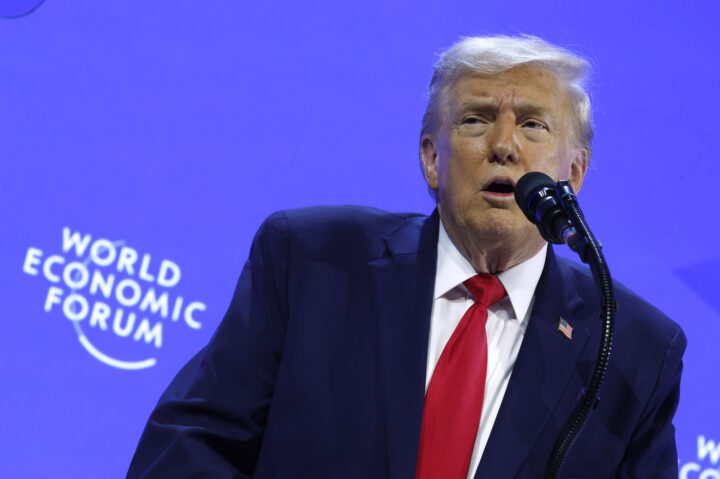
Chip Somodevilla/Getty Images
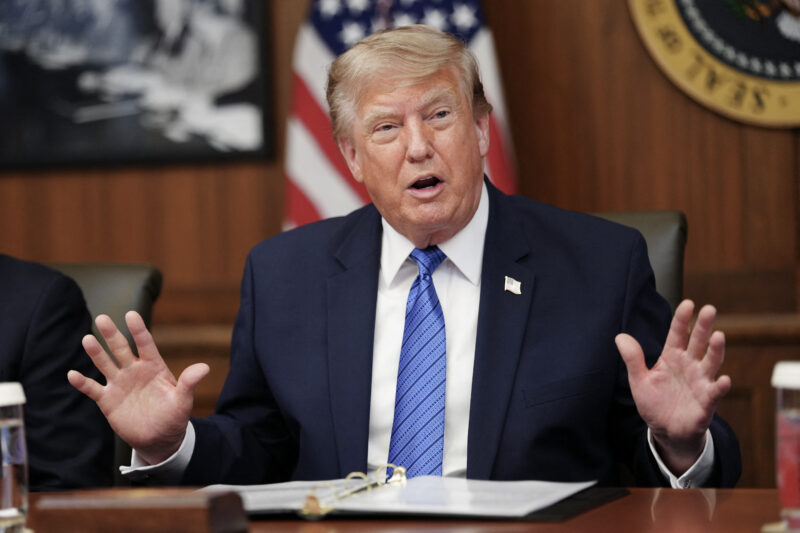
U.S. President Donald Trump gives a speech at the World Economic Forum (WEF) on January 21, 2026 in Davos, Switzerland.


 Add JewishInsider on Google
High-level foreign officials, top diplomats and heads of state will gather in Washington today for the first in-person convening of the Trump administration’s Board of Peace — as U.S. military assets flow into the Middle East and President Donald Trump mulls a potentially weekslong sustained military campaign in Iran.
The gathering, ostensibly focused on the disarmament of Hamas and the establishment of a peace-aligned administration in the Gaza Strip, comes as the U.S. moves dozens of fighter jets and support aircraft to the region — reportedly the largest buildup in military air power since the 2003 invasion of Iraq.
It’s a split screen befitting the president — who said at his inauguration last year that his “proudest legacy will be that of a peacemaker,” and who has claimed success in negotiating an end to numerous conflicts, as well as the release of the remaining Israeli hostages from Gaza last year — even as the U.S. has used force to enact political change, such as in Venezuela.
But a U.S. operation in Iran would differ significantly from what took place in Venezuela last month. In the place of ousted President Nicolás Maduro is Delcy Rodríguez, the former vice president who is now working with the Trump administration. No such natural successor to Iranian Supreme Leader Ayatollah Ali Khamenei exists. Behind the supreme leader is a laundry list of equally — if not more — radical hard-liners eager to take the ailing Khamenei’s place. Reza Pahlavi, the son of the deposed shah of Iran, who has spent most of his life living in exile, has sought to return to Iran to usher the Islamic Republic into a new democratic era — but does not appear to have the on-the-ground support as well as enough legitimacy among Iran’s vast diaspora community.
The Trump administration continues to signal publicly that it wants to find a diplomatic resolution to the situation in Iran, with White House Press Secretary Karoline Leavitt saying as much at yesterday’s press briefing.
But the White House is continuing to move forward with preparations for a military confrontation, which could include anything from targeted strikes on Iran’s nuclear facilities to a move toward regime change. Trump met on Wednesday with Secretary of State Marco Rubio, White House Special Envoy Steve Witkoff and Jared Kushner to discuss options for Iran.
Rubio is set to travel to Israel on Feb. 28, an announcement that could signal that strikes are not imminent — or that could be a ruse by the administration.
Recall that in June, Trump gave Iran a two-week deadline to resume talks, choosing to strike the country’s nuclear facilities just three days later.
Meanwhile, Russian Foreign Minister Sergey Lavrov — whose country is participating in military exercises with Iran’s Islamic Revolutionary Guard Corps today in the Strait of Hormuz — warned against renewed strikes targeting Iran.
Iran is also preparing for a potential military conflict, fortifying its nuclear sites and reviving a chain of command that empowers lower-level military officials.
A month ago, as the world teetered on the edge of another U.S.-Iran military confrontation, diplomacy won out, and the parties agreed to talks. Now, Washington and Tehran — as well as Jerusalem — find themselves again on the brink. The next big decision belongs to Trump.
More Stories

analysis
Pappas wins New Hampshire Senate nomination over anti-Israel Dem activist
ON THE HILL
Senate Republicans urge Saudi response to Houthi attacks

Norm-alizing?
Norm Eisen’s alliances with Israel critics raise eyebrows within Jewish community
analysis
Netanyahu’s U.N. visit presents test for Mamdani and NYPD
Please log in if you already have a subscription, or subscribe to access the latest updates.
 Continue with Google
 Continue with Apple