
























Anticipation in Israel and around the world as hostage-release talks reach the end zone
Israeli media reports have said that Hamas could begin freeing hostages as early as Saturday, without the mass propaganda events that marred previous hostage releases
Liri Agami
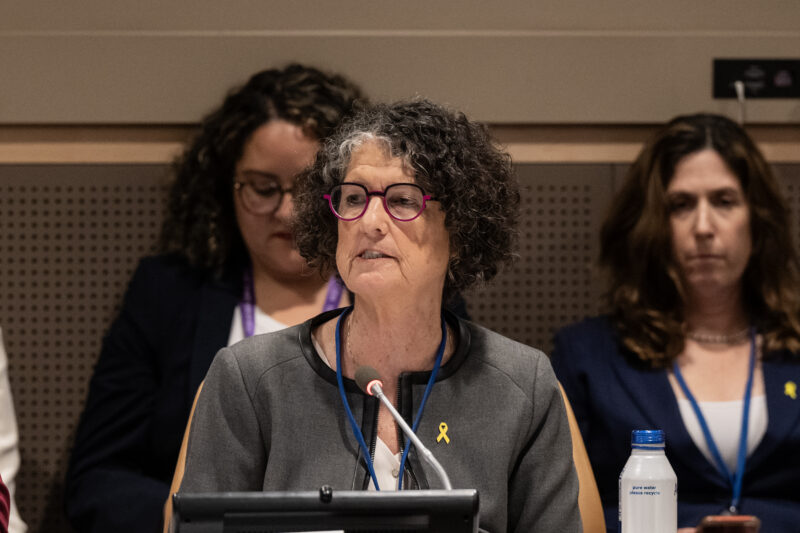
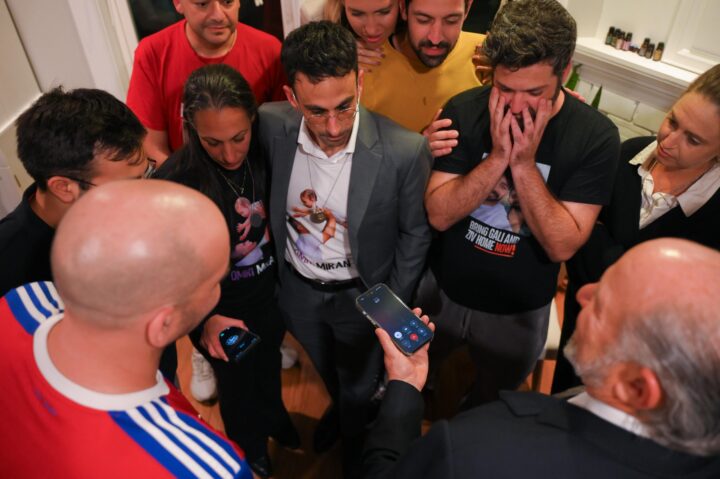
Former hostages and hostage families, meeting with Commerce Secretary Howard Lutnick, speak to President Donald Trump following Trump's announcement that Israel and Hamas had reached an agreement to free the hostages.


 Add JewishInsider on Google
It’s a “morning of historic and momentous news,” as Israeli President Isaac Herzog put it on Thursday, when Israelis woke up to learn that a deal had been reached to free the remaining hostages in the coming days and halt the fighting in Gaza.
The sides are expected to officially sign the deal in Egypt today, and Israel’s Cabinet is set to vote at 11 a.m. ET on the exchange of the 48 hostages, 20 of whom are thought to be alive, for close to 2,000 Palestinian prisoners. The IDF said it began preparing to withdraw from parts of Gaza as part of the deal.
Hamas is expected to release the Israeli hostages first. Only when Israel is satisfied that the terrorist group has freed everyone it can find — including the remains of about 28 Israelis who were killed — will Palestinian prisoners be released. The swap comes with caveats: Hamas says it is unable to locate some of the bodies, and about 250 of the Palestinian prisoners set to be released are serving life sentences for terrorist offenses, though Israel insisted that high-profile detainees — such as Second Intifada mastermind Marwan Barghouti — will not be part of the deal.
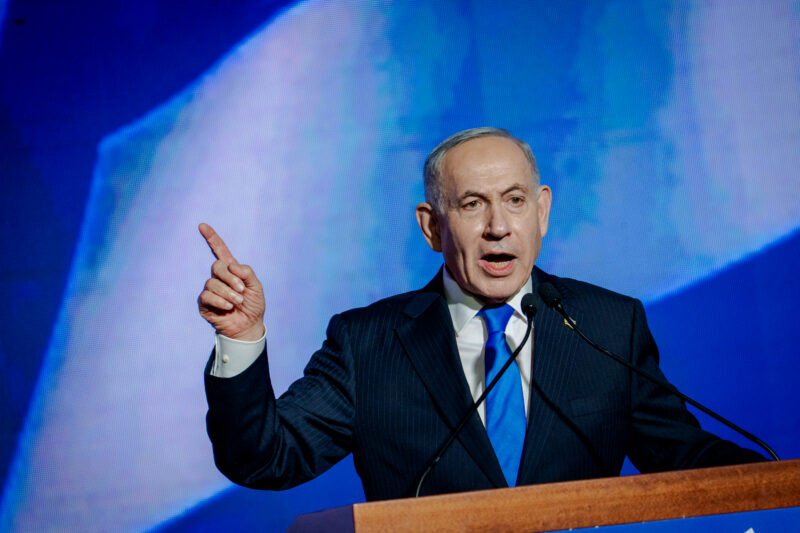
The deal is expected to pass easily in the Cabinet, with Israeli Prime Minister Benjamin Netanyahu’s Likud party holding the majority of the seats. National Security Minister Itamar Ben-Gvir, who expressed opposition earlier this week to President Donald Trump’s plan to end the war, was unusually quiet on Thursday morning, while Finance Minister Bezalel Smotrich said he would not vote in favor.
Trump said in an interview with Fox News that all of the hostages “will be coming back on Monday. … As we speak, so much is happening to get the hostages freed.”
Israeli media reports have said that Hamas could begin freeing hostages as early as Saturday, without the mass propaganda events that marred previous hostage releases.
Israeli Ambassador to the U.S. Yechiel Leiter made clear that only the first phase of the deal had been agreed on, and the end of the war can only come after it is implemented.
“We hope it leads to a complete cessation of hostilities and a rebuilding of Gaza for the sake of the Gazans and for the sake of Israel, but it’s the first stage, and we’ve got to see the first stage implemented completely,” Leiter told CNN.
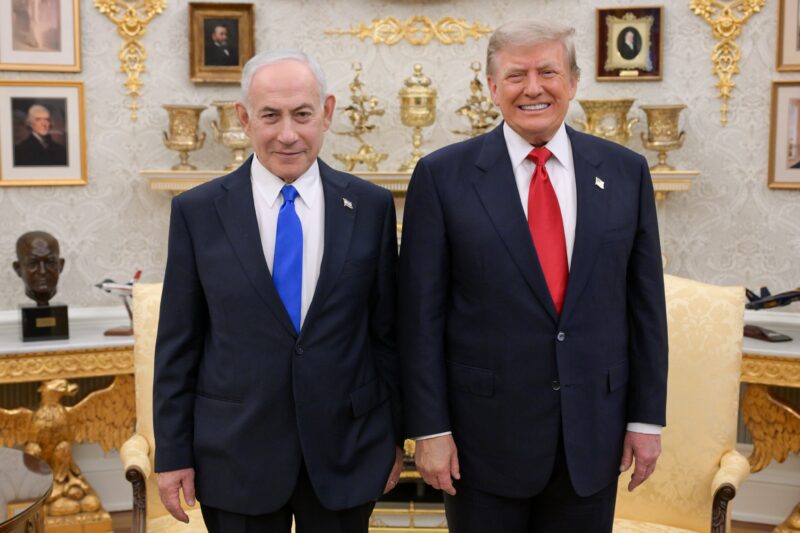
Trump is expected to fly to Israel over the weekend to celebrate the release of the hostages and address the Knesset, following an invitation from Netanyahu. The Hostages Families Forum invited Trump to meet with families and give an address in Tel Aviv’s Hostages Square during his trip. U.S. Special Envoy Steve Witkoff and Trump’s former Middle East advisor, Jared Kushner, are expected to arrive in Israel later Thursday.
“We can finally breathe again, embrace those we feared we would never hold, and bring to dignified burial those we have lost. … We simply need the opportunity to look you in the eye and express what words alone cannot fully convey: that you gave us back our families, and with them, our hope,” the hostage families’ group wrote to Trump.
A delegation of released hostages and hostages’ relatives were in Washington, meeting with Secretary of Commerce Howard Lutnick, when the deal was announced. With the president on Lutnick’s speakerphone, members of the group thanked the president for his efforts.
The Tikvah Forum, made up of more hawkish hostage families, said that the news “gives us hope. We are full of hope that … we will merit to embrace our loved ones soon. Thank you to everyone who acted to bring them all back, especially our brave soldiers.”
Opposition leader Yair Lapid called for Trump to be awarded the Nobel Peace Prize, echoing a recent call from hostage families who nominated the president for the award.
Earlier in the week, senior figures from several of the countries involved in the talks headed to Egyptian resort town Sharm el-Sheikh to close the deal, including Witkoff, Kushner, Israeli Strategic Affairs Minister Ron Dermer, Qatari Prime Minister Sheikh Mohammed bin Abdulrahman al-Thani and Turkish Intelligence Minister Ibrahim Kalin.
Negotiators hammered out the details of the first phase of Trump’s 20-step deal — the hostage release — along with Israel’s initial lines of withdrawal. According to the plan Trump announced last month, Israel would only withdraw from Gaza City in the first stage, but subsequent Israeli media reports indicate that Jerusalem agreed to a withdrawal from parts of Khan Younis, as well.
The talks in Egypt began after Hamas stated last week that it was willing to exchange the hostages for Palestinian prisoners. The terrorist group rejected other components of the Trump plan, such as laying down its arms and the demilitarization and deradicalization of Gaza, yet Trump said he views Hamas as “ready for a lasting peace.”
Netanyahu said in a subsequent statement that this was a new concession from Hamas in that they agreed to free the hostages “while the IDF remains deep within the [Gaza] Strip.” The Trump plan would also have the IDF remain in a buffer zone along Gaza’s perimeter, including the Philadelphi Corridor between Gaza and Egypt.
Other issues under negotiation include who will be part of the temporary technocratic administration governing Gaza and the “Peace Board” led by Trump, with former British prime minister Tony Blair taking part, as well as, potentially, Apollo Global Management CEO Marc Rowan.
More Stories
SCOOP
AIPAC to end candidate endorsements, PAC contributions to allies
analysis
Is Israel’s anti-Netanyahu bloc fracturing?

PANEL PUSHBACK
Jewish groups raise alarm over anti-Israel sessions at American Studies Association conference
CHAIN REACTION
Bank of Israel rejects Netanyahu’s suggestion to circumvent sanctions with cryptocurrency
CALLING IT OUT
Rep. Don Bacon blasts Dan Osborn over ‘anti-Jewish’ ad
ECONOMIC ANGST
Netanyahu predicts end of U.S. military aid, calls for plan to circumvent potential sanctions
Please log in if you already have a subscription, or subscribe to access the latest updates.
 Continue with Google
 Continue with Apple