





















































AJC plans ‘diplomatic marathon’ amid U.N. General Assembly in New York
The group plans to discuss a range of subjects including U.S. allies’ decision to sanction Israel
Aryeh Schwartz/AJC
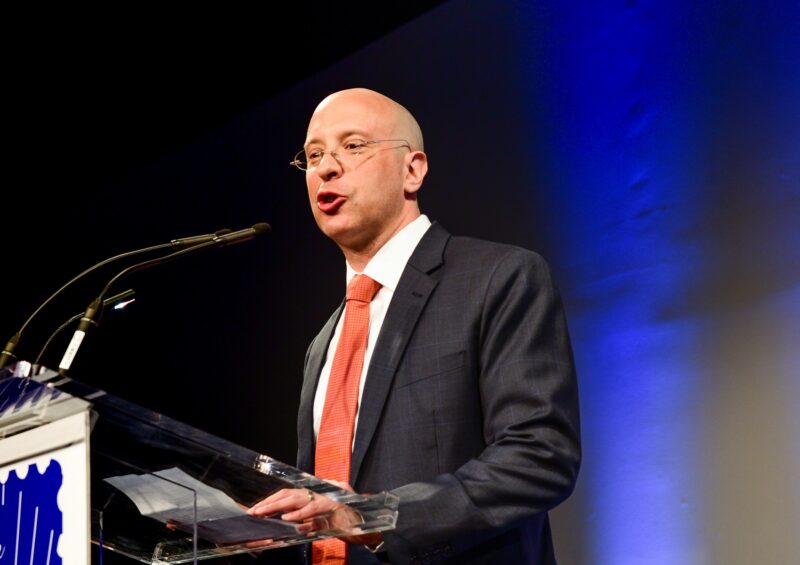
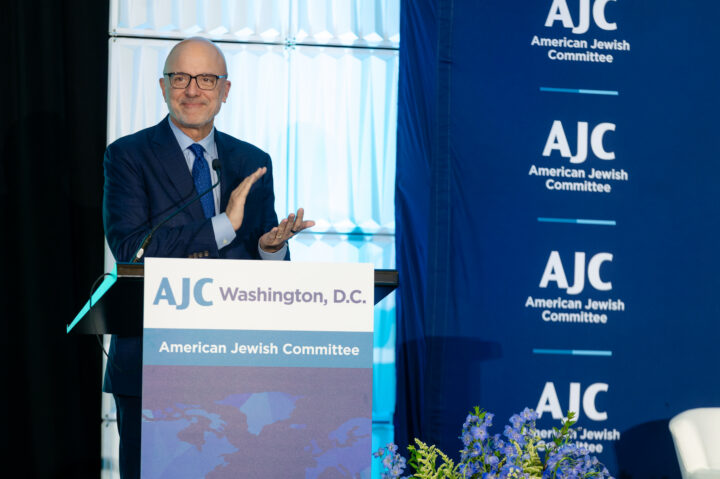
Ted Deutch


 Add JewishInsider on Google
This week’s upcoming United Nations General Assembly gathering in New York City will serve as the backdrop for a “diplomatic marathon” by the American Jewish Committee’s leadership to meet with representatives and leaders of more than 50 countries — a tradition the AJC has carried on for decades.
On the agenda are a range of subjects, including confronting close U.S. allies that have recently decided to impose sanctions on what they deem to be Israeli-occupied territories, including West Bank settlements as well as east Jerusalem and the Golan Heights.
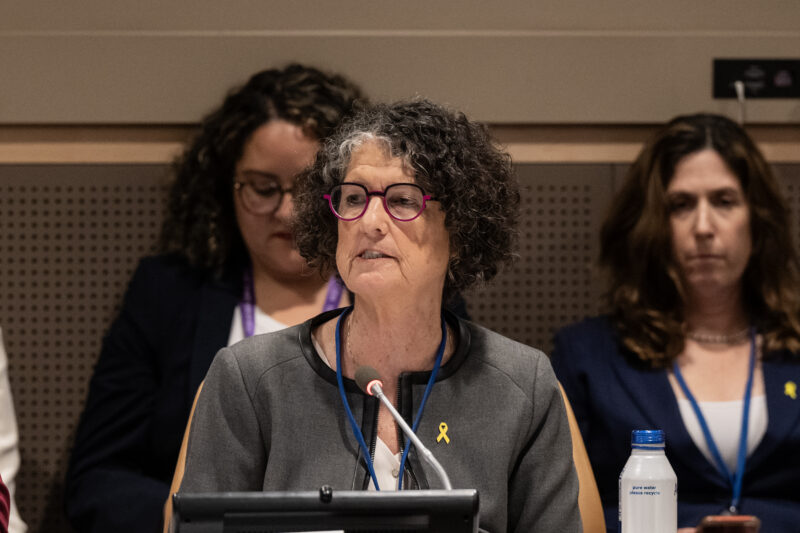
“This is an opportunity to have really meaningful conversations with friends who are standing firmly with us and understand the challenges that Israel faces and are supportive,” AJC CEO Ted Deutch said in an interview at the group’s offices in Washington. “And then we’ll have conversations with countries who have been taking challenging positions, and we have very frank conversations as we will this year in particular when we meet with our friends from the U.K. and Canada and Australia and France.”
He argued that those conversations are critical to discuss the countries’ decisions to impose sanctions on what they deem to be occupied territories, a move he said “damages the prospects for peace” and “plays into the hands of extremists who wish to drive a wedge between Israel and her democratic allies.”
“Democratic allies should be coming together, not drifting apart. Israel is a democratic ally of these countries that plays a critical role in the Middle East’s stability,” Deutch said.
He said AJC had similar “difficult conversation[s]” around U.S. allies’ decision to recognize a Palestinian state. “That’s not just meant to be critical, but actually, to help them understand why this is a bad decision.”
In meetings with Germany and other European allies, Deutch said he also plans to discuss the rise of the far-right AfD party and the risk that “rising extremism” across Europe poses to the Jewish community. More broadly, AJC will discuss antisemitism and efforts to fight it and foster Jewish life around the world.
He said that every country that has a Jewish community has a role in making sure that Jewish communities can gather together without fear, but also that the responsibility extends beyond governments alone.
“We also think it’s important for countries to recognize that this is not something that governments can do on their own, that across the country there are roles for each part of society to play in combating antisemitism in ways that don’t just protect Jews but strengthen everyone’s ability to fully participate in those societies … because it’s consistent with who these countries are in maintaining pluralistic democracies,” Deutch added.
He said conversations with global leaders will also touch on issues within the United Nations itself and its bias against Israel. He said that Francesca Albanese, the U.N. special rapporteur for the Palestinian territories who has faced repeated accusations of antisemitism from various nations, “makes a mockery of the system as a whole.”
He said AJC also plans to press countries to designate the Islamic Revolutionary Guard Corps and its proxies as terrorist organizations, and to continue to support both international and country-by-country sanctions on Iran.
“Let’s also continue to remember what Iran represents and why the world should stand against it, and come together around all of the ways that it can,” Deutch said. “While [it is] appropriate for Congress to have that debate [about military action], Iran is a threat and continues to be a threat, we need to continue to remind people of that.”
Deutch said AJC will have “frank conversations” with countries about the situation in Gaza, while also emphasizing that Hamas has not fulfilled its obligation to disarm under the U.S.’ 20-point peace plan, which is a mandatory step for the peace process to move forward.
“We have to shift the focus back to how to make that happen, and it does start with disarming Hamas,” he said. “It shouldn’t be difficult for the world to rally around the idea that this terrorist group that committed the Oct. 7 attacks should no longer be allowed to be an armed organization that poses a threat. We’ve seen what happens when that was allowed in the past.”
But he said it’s also important to provide support and encouragement and express appreciation to those countries that have continued to stand with Israel and the Jewish community. The week will include meetings with various countries across South America, where AJC is working to promote ties with Israel as well as opportunities for expanding and deepening the Abraham Accords.
Deutch said that AJC will be engaging with some states that could join the Abraham Accords, and will emphasize that they face a shared threat from Iran, as has been demonstrated in recent days by the Houthi attacks on Saudi Arabia.
“The Abraham Accords represents the alternative to that, and represents an opportunity for greater security and greater economic integration and more and better opportunities for the people of the region,” Deutch said.
During the UNGA, AJC will also discuss both internally and externally efforts to engage more deeply with Africa, working to provide opportunities for African countries to experience Israeli innovation and technology and see Israel for themselves.
Deutch and AJC additionally plan to push to strengthen the transatlantic alliance and support Ukraine’s defense. AJC will also host a reception with Jewish community members and diplomats, where the group will award Nickolay Mladenov, the high representative of Gaza for the Board of Peace, with the Madeline and Bruce M. Ramer Award for Diplomatic Excellence.
Both at home and abroad, Deutch said that leaders need to understand and call out efforts to deny Israel’s right to exist, and to understand that such rhetoric “put[s] the Jewish community at risk” and that “engaging in age-old antisemitic conspiracy theories” must be confronted.
Efforts by some political actors to bar Jews and supporters of Israel from the “political mainstream … aren’t just calls that affect the Jewish community, that threaten the Jewish community,” but also “undermine our democracy.”
Standing up to that rhetoric “matters to the future and security of democracies around the world,” well beyond the Jewish community itself, he said.
He called on members of Congress and other leaders to show greater courage and leadership in the face of harassment, bullying and threats that have been directed at supporters of Israel in Washington, and which some members say have led their colleagues to soften their support for the Jewish state.
“That’s what the Jewish community has been facing, and for the Jewish community and for supporters of Israel, the response is not to cower. That’s what the antisemites want. What the anti-Israel forces want,” Deutch said.
“For our leaders — I get it. I was a member of Congress. I dealt with people chasing me around with bullhorns, yelling names at me. I understand what that’s like, and I get that there are threats. That should embolden them, embolden members, embolden leaders to stand up against that,” he said. “Members of Congress aren’t mushy about anything, and they shouldn’t be mushy when it comes to standing up against antisemitism and efforts to undermine Israel’s right to exist.”
More Stories

Daily Overtime
Mamdani resists DSA over Tisch tensions

VEEP'S VIEW
Harris says Biden should have done more to stop Israel’s ‘horrific conduct’ in Gaza

EVENT RESCHEDULED
State Department to hold Oct. 7 commemoration event on Wednesday

PENSION POLITICS
Former NYC comptroller denounces Levine’s decision not to reinvest in Israeli bonds

ACCUSATION AFTERMATH
El-Sayed denies Muslim Brotherhood ties after Rogers debate claim
analysis
Could these two small parties be Israel’s kingmakers?
Please log in if you already have a subscription, or subscribe to access the latest updates.
 Continue with Google
 Continue with Apple