
























































Most Middle East scholars say U.S. academia has lost its way since 9/11, survey finds
Nearly three-quarters of respondents told the Association for the Study of the Middle East and Africa that American universities are less equipped to pursue truth than they were 25 years ago

Marcus Brandt/picture alliance via Getty Images
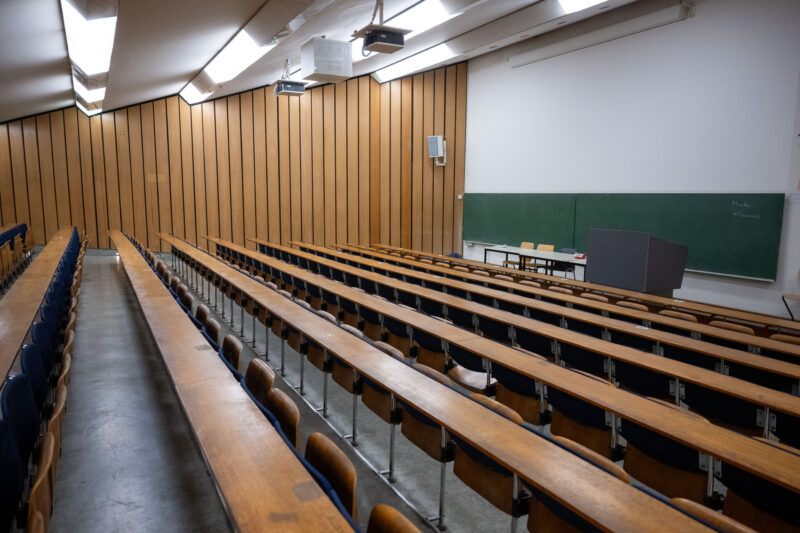
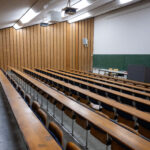
View of the large lecture hall on April 1, 2026.


 Add JewishInsider on Google
A new survey of 470 Middle East scholars finds that nearly three-quarters believe American academia is less equipped to pursue truth than it was at the time of the 9/11 attacks, while two-thirds lack confidence that their students understand the attacks and say American academia has provided cover for ideologies, regimes or groups hostile to the United States.
The findings, released this week by the Association for the Study of the Middle East and Africa ahead of the 25th anniversary of 9/11, reflect what ASMEA’s executive director, Asaf Romirowsky, described as a broader failure by American universities to maintain objectivity and intellectual rigor in the quarter century since the attacks.
“American universities have allowed their Middle East scholars to abandon any pretense of objectivity, exchanging the free and unfettered pursuit of ideas for an increasingly dogmatic worldview that praises and supports not America but its deadliest opponents and their murderous ideologies,” Romirowsky told Jewish Insider.
The survey, conducted Aug. 6-28, found that 71% of respondents believe American academia is either “much worse equipped” or “somewhat worse equipped” today than it was 25 years ago to pursue truth-seeking as its central mission.
Romirowsky said the findings were particularly notable because they cut across different types of institutions and levels of seniority, “from public and private universities alike, from junior faculty to professors emeritus.”
The survey also asked scholars about their students’ understanding of 9/11. Sixty-six percent either strongly or somewhat disagreed with the statement that they were confident their current students had a firm understanding of the events leading up to the attacks and could correctly identify the core reasons for the attack and its perpetrators.
For Romirowsky, the findings are particularly concerning given the role Middle East scholars were expected to play in helping Americans and policymakers understand the region after 9/11.
“In the 25 years since 9/11, we desperately needed scholars to help us make sense of the Middle East and guide us towards policies that best serve America’s interests and national security concerns,” Romirowsky said in a statement accompanying the survey. “Instead, we were met with zealotry that discarded facts and observable reality in favor of anti-American sentiments and commitments.”
The survey also found that 65% of respondents agreed that scholarly or public commentary within academia since 9/11 has sometimes provided “intellectual cover or legitimacy” for ideologies, regimes or groups hostile to the United States.
The concerns extended to scholars’ own experiences in academia. Respondents who had spent fewer than 10 years in academia were significantly more likely than those with 40 or more years of experience to report recent self-censorship and the existence of a departmental orthodoxy. Younger scholars were also significantly less likely to believe academic decisions were based on merit.
Romirowsky said the findings should prompt a broader effort to restore confidence in higher education. “We need to rebuild trust with our institutions,” he said, arguing that universities should focus on their traditional academic mission rather than positioning themselves as institutions responsible for directly solving political and societal problems.
“Universities are not governments or NGOs in the business of directly solving problems,” Romirowsky said. “Academia cannot and should not ‘improve the world’ as such but rather preserve, critique and expand knowledge.”
“The ultimate tasks are cultivating civility, character, and citizenship among students, making them mindful of their responsibilities towards one another and the republic,” he added.
More Stories
HILLTOP FORECAST
Democratic foreign policy veterans preview party’s shifts on Middle East policy
analysis
Democrats hope to ride a historic Senate wave, but face several speed bumps
POLL POSITION
U.S. experts split on Netanyahu’s prospects ahead of Israel’s election
AID ARGUMENTS
Michael Oren, Jonathan Schanzer split over when Israel should move past U.S. aid
analysis
Playing to the cameras in the West Bank
SCOOP
Chabad holding 250 menorah lightings in all 50 states to commemorate Chanukah, America’s 250th birthday
Please log in if you already have a subscription, or subscribe to access the latest updates.
 Continue with Google
 Continue with Apple