






















































Supreme Court to hear case of man blocked from holding minyan in his home
Daniel Grand is suing the city of University Heights, Ohio, in a case that has attracted attention from the federal government, Republican lawmakers and Jewish groups

Getty Images
United States Supreme Court


 Add JewishInsider on Google
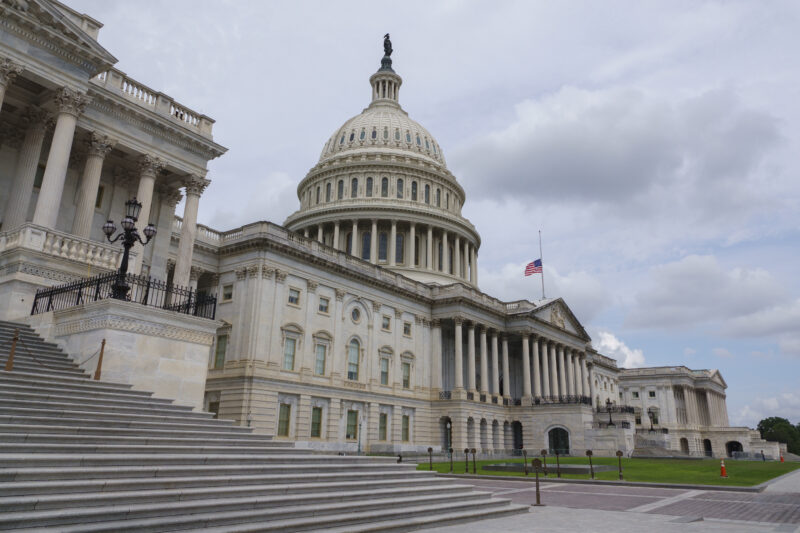
The Supreme Court is set to hear a case this winter brought by a man whose hometown sought to block him from holding a minyan in his residence, a case that Jewish community advocates argue could have profound implications for religious Jews as well as those of other faiths.
Daniel Grand, an Orthodox Jewish man, sought to organize a weekly minyan on Saturdays in his home in University Heights, Ohio, because he lives far from any Orthodox synagogue and it was impractical for him to walk to services. But the city issued a cease-and-desist, including a threat of fines or prison time, demanding that he stop holding the services and apply for a permit to operate his home as a synagogue.
Grand applied and paid for the permit and an attorney, but ultimately withdrew the application, in part because he learned he would not be able to continue to live in his home if the permit were granted and he faced what his attorneys described as obstruction by then-Mayor Michael Brennan.
At issue in this case is whether Grand had standing to sue the city before fully seeing through the permitting process; lower courts have ruled that he needed to have the permit rejected before filing suit. Grand, unusually, filed his petition for the Supreme Court to hear his case himself, without a lawyer, at which point the high court took the case up and will hear it on Dec. 9.
Grand’s attorneys argue that the city’s initial decision to block Grand from holding the minyan was sufficient to create standing for him to sue, and that the harm to him has continued since then. The city alleges that Grand is attempting to force the Supreme Court to “serve as a local planning commission” and assess its local zoning ordinances.
Grand alleges, per a brief filed by his lawyers, that he has faced a “torrent of harassment and religious discrimination” and surveillance by the city and Brennan personally.
The City of University Heights declined to comment on pending litigation. Brennan, citing the advice of legal counsel, also declined to comment and referred Jewish Insider to his attorney, who likewise declined to comment.
Upon being asked by another resident to put a stop to the minyan, the brief states, Brennan personally called to tell Grand he was barred from holding “any type of religious gathering” in his house without a permit and threatened criminal charges. Grand’s attorneys allege that Brennan remained personally involved in a campaign to harass him.
Brennan also allegedly turned the hearing for his application into a “public spectacle,” ordered police to monitor Grand’s home for signs of religious gatherings and urged neighbors to do the same. One neighbor installed multiple security cameras recording Grand’s home, footage from which was reviewed by Brennan and city officials, and the city threatened Grand when he attempted to block the cameras.
The city also launched a criminal investigation and charged him with what his attorneys characterize as “spurious” violations, as well as stopping trash pickup from his home.
Some of the public opposition to Grand’s efforts to hold a minyan has appeared overtly antisemitic: One letter to the city about the case complained, “I am not Jewish and I do not want our neighborhood labeled as Jewish.”
The city’s current mayor, Michele Weiss, is the first Orthodox Jewish woman elected mayor anywhere in the United States and the city has the largest concentration of Orthodox Jews in Ohio.
Solicitor General John Sauer, joined by other Justice Department officials including Assistant Attorney General for Civil Rights Harmeet Dhillon, filed a “friend of the court” brief on behalf of the U.S. government in support of Grand.
It argues that the past precedent has been interpreted and applied incorrectly, and that Grand is eligible to apply for legal relief.
“[The city’s] demands succeeded, leading petitioner to cancel his prayer group and imposing an objectively reasonable chill on religious exercise,” Sauer’s brief continues, further criticizing the permitting process that Grand was compelled to engage in, including paying to hire a lawyer. “So long as respondents’ actions continue to inflict an objectively reasonable chill on petitioner’s religious exercise, he can seek prospective relief today.”
Ten Republican senators and more than 40 GOP House members signed a brief supporting Grand, including House Speaker Mike Johnson (R-LA), Senate Judiciary Committee Chairman Sen. Chuck Grassley (R-IA) and House Judiciary Committee Chairman Rep. Jim Jordan (R-OH).
The brief from congressional Republicans highlights Congress’ 2000 passage of the Religious Land Use and Institutionalized Persons Act (RLUIPA), which aims to prevent discrimination in zoning laws against individuals and religious institutions, including to protect private in-home prayer gatherings. They argued that RLUIPA, which Grand alleges the city violated, was written specifically to allow individuals like Grand to file suit.
“This case shows just how far local governments are willing to go in riding roughshod over Free Exercise rights — including putting Mr. Grand, an observant Orthodox Jew, to the choice of being punished for praying in his home without a permit or moving out of his home entirely to obtain the required permit,” the brief reads. “No American should ever be forced to make such a choice. … The Court should reverse and restore the promise of RLUIPA to safeguard the religious liberty of all Americans.”
Numerous Jewish organizations including Agudath Israel of America, the National Jewish Advocacy Center, National Council of Young Israel, Coalition for Jewish Values, the Louis D. Brandeis Center for Human Rights Under Law, the Orthodox Union, the American Association of Jewish Lawyers and Jurists (AAJLJ), as well as groups representing a host of other religions, have filed briefs in support of Grand.
“Where a municipality or other government agency has either zoning laws or other regulatory regimes that allow them enormous, unbridled, standardless discretion to either grant or deny permits for various kinds of activity, there is an enormous risk, well illustrated by this case, that’s going to be weaponized against vulnerable minorities,” Richard Rosen, senior vice president for legal advocacy at the Brandeis Center, told JI.
He alleged that the “evidence is overwhelming that the city acted with antisemitic animus,” pointing to the appeals from neighbors to the mayor and public antisemitic comments by certain residents. Rosen argued that the permitting requirement, in and of itself, represented a violation of the First Amendment that entitled Grand to sue without any further action.
Nathan Diament, executive director of the OU Advocacy Center, told JI that the case raises profound concerns for observant Jews, if municipalities are able to ban any religious gatherings in private homes.
“Just think about an unfortunate situation where somebody is sitting shiva, where you’re not allowed to leave your home as a mourner,” Diament said. “Now we’re going to say, ‘You have to get a permit from the locality in order to have a shiva minyan’? That would be insane.”
Daniel Kaminetsky, general counsel for Agudath Israel, likewise warned that a failure by the court to “correct this wrong” could jeopardize Jews’ ability to pray in the way they see fit.
“Where does it end? Where does it stop? Can the government tell me I can’t have 10 people over for a barbecue and make a bracha?” Kaminetsky said. “That is what we see as being a very slippery slope and a very dangerous path to go down.”
He said that Grand “has been injured in that he has not been able to pray in the way he deems appropriate … and every weekend that goes by is another injury for him because … the city’s not allowing him to do that.”
Kaminetsky argued that there is no compelling city interest in preventing Grand from holding the minyan, and that claims that the minyan would create significant traffic or noise were nonsensical given that it would take place on the Sabbath, during which Orthodox Jews do not drive or use other electronics.
Diament further argued that, if Grand were required to go through a complete permitting process before he could file suit, he could be trapped indefinitely with an unresolved permit application with no legal recourse.
Jewish community advocates supporting Grand highlighted that there are a slew of examples of municipalities using zoning laws to attempt to restrict or prevent Jews from living or worshipping in their communities.
According to Arthur Traldi, chair of AAJLJ’s amicus committee, there’s empirical evidence that Jewish and Muslim communities “are particularly likely to be targeted, to need access to the courts because they want to do something like what Grand was doing — they want to pray at home with their friends.”
He added that Jews and other religiously observant communities “will be watching closely to see what the court decides and how it affects the future of the right to worship freely in your home.”
Agudath Israel filed its brief jointly with groups representing the Catholic and Baptist communities. Kaminetsky said that the joint brief highlights that, while the communities may have different theologies, “we have a lot of common ground … on issues that are common to us that we need to fight for.”
Rosen said that a ruling for Grand might lead other municipalities to reconsider their permitting regimes preemptively, in order to avoid future legal action.
Diament predicted that the Supreme Court is likely to rule in such a way that scales back but does not completely overturn the past precedent that lower courts have said requires Grand to complete the permitting process before suing.
More Stories

Daily Overtime
Barrack says Iran-backed threats are ‘not America’s job’

SCOOP
Former Haley Stevens campaign chair and prominent Democratic fundraiser says he plans to vote for Rogers
Regional Responsibility
Amb. Tom Barrack: It’s ‘not America’s job’ to combat Iran-backed threats in the Middle East
DEBATE DIGS
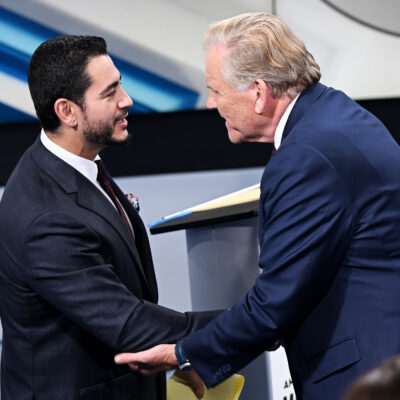
Rogers describes El-Sayed as a national security threat in final Michigan Senate debate
SANCTIONS SUPPORT
Lander endorses settlement sanctions bill while on West Bank trip
CHAIN REACTION
Bank of Israel rejects Netanyahu’s suggestion to circumvent sanctions with cryptocurrency
Please log in if you already have a subscription, or subscribe to access the latest updates.
 Continue with Google
 Continue with Apple