





















Right now, this looks more like the party of Sanders, Mamdani and AOC
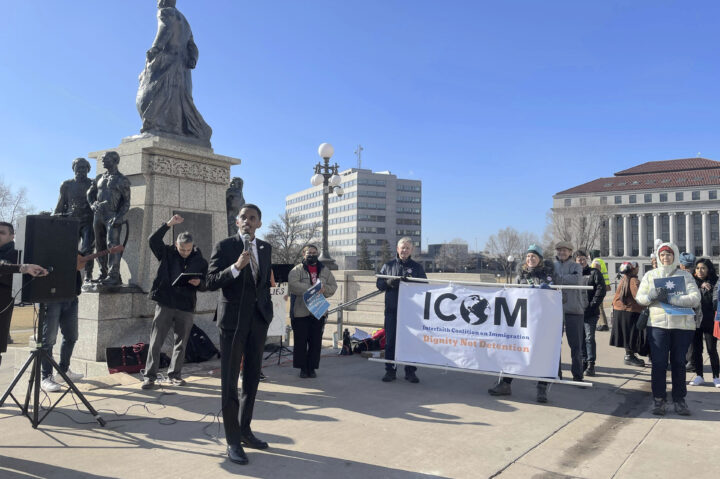
Trisha Ahmed/AP Photo
Minnesota Sen. Omar Fateh, of Minneapolis, speaks in front of the state capitol building in St. Paul, Minn., on Monday, Feb. 12, 2024.


 Add JewishInsider on Google
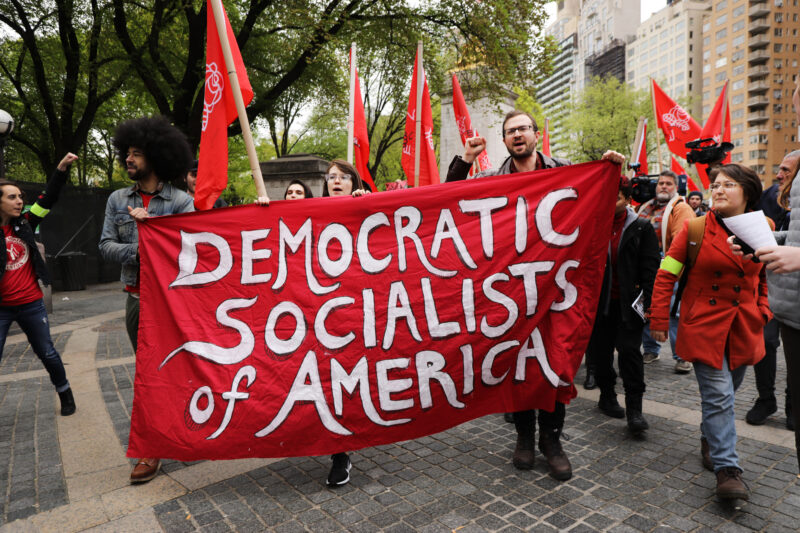
Based on the latest wave of Democratic primary results, it’s looking more likely that the hard-left “resistance” faction of the Democratic Party, which was muted in the aftermath of the 2024 election, is reasserting itself in a consequential way — especially in the deep-blue cities that make up much of the party’s voting base.
Democratic socialist Zohran Mamdani’s come-from-behind victory in the New York City mayor’s primary was a major wake-up-call for party leadership. His success came after a surge of progressive discontent with the Democratic establishment, a sentiment fueled by the Trump administration’s aggressive (and at times, unlawful) deportation push, the imposition of tariffs and the general sense that party leaders in Washington weren’t doing everything they could to oppose President Donald Trump’s polarizing policies.
The reason the Democratic Party brand is polling at historic lows is because a sizable share of younger, progressive voters are expressing their discontent with their own party leadership — even as most still plan to vote Democratic in a general election. We’re seeing the growth of the left-wing faction within the party, in real time.
The fact that Mamdani’s radical views on the economy, crime and antisemitism did little to dissuade a critical mass of rank-and-file Democrats is a sign of the changing mood of the party.
That same dynamic that drove New York City Democrats was apparent in the first round of results in Seattle’s local primaries Tuesday night.
In the early returns from the city’s all-party primary, moderate incumbents — serving as mayor, city attorney and council president — were all trailing left-wing challengers. The moderate city officials were elected in 2021, largely as a backlash to the crime, homelessness and disorder in the city under progressive leaders.
In the most high-profile race, Mayor Bruce Harrell is trailing progressive activist Katie Wilson, 46-45%. “Wilson’s campaign generated new excitement when Zohran Mamdani, a Democratic Socialist, won the mayoral primary in New York City in June,” Seattle’s NPR affiliate reported.
In Washington, the primary results aren’t determinative; the top two vote-getters compete against each other in the general election. But they suggest moderates will be facing an uphill battle against left-wing insurgents.
The same dynamic is at play in Minneapolis, where conventionally liberal Mayor Jacob Frey decisively lost the Democratic Party endorsement to a democratic socialist state senator, Omar Fateh.
Frey still can win reelection in November, when all candidates appear on the general election ballot regardless of party, but the rebuke from the Democratic delegates is another sign that the party is facing a revolt from its left-wing activists.
Right now, this looks more like the party of Bernie Sanders, Mamdani and AOC. Those are the candidates that are energizing the grassroots and driving social media engagement— especially when it comes to the party’s urban voters.
These results send a strong signal that the Democratic Party vibes have shifted. In the first few months of Trump’s second term, party leaders were desperately trying to distance themselves from the ideological baggage of the left. More recently, they’re coming to terms with the possibility that the left is taking over the party.
A board member of his local Jewish community relations council board, Grayzel is running to succeed Rep. Mikie Sherrill (D-NJ)
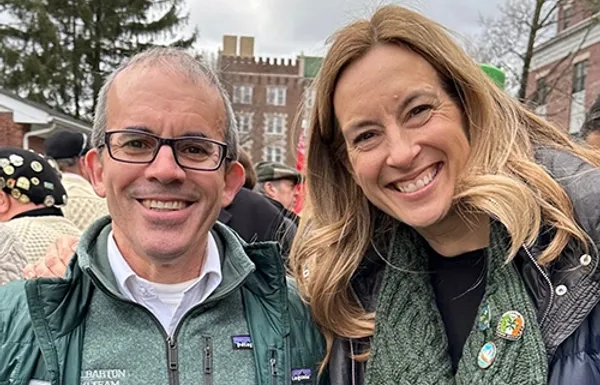
Jeff Grayzel campaign website
Jeff Grayzel and Rep. Mikie Sherrill (D-NJ)
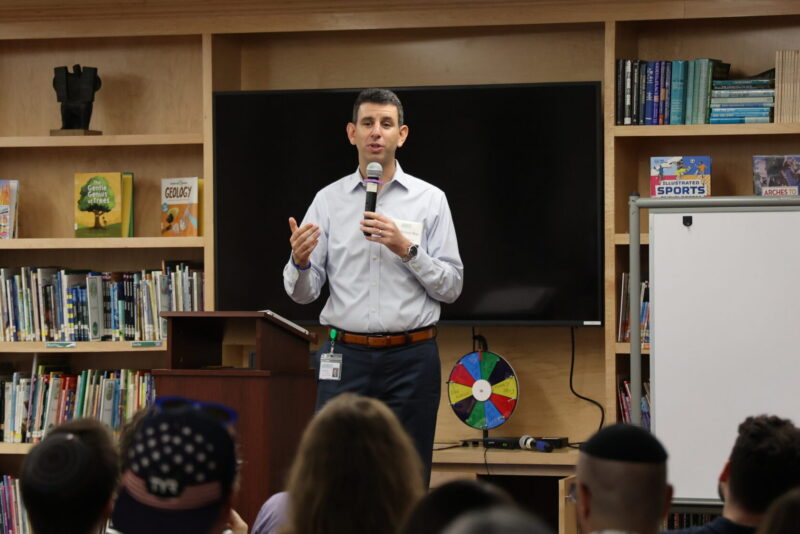
Democrat Jeff Grayzel, a leader in northwest New Jersey Jewish communal organizations and deputy mayor of Morris Township, N.J., formally launched his congressional campaign this week, running as a staunchly pro-Israel candidate in the seat that will be vacated by Rep. Mikie Sherrill (D-NJ) if she wins the state’s gubernatorial race.
“I am a proud Jew and a proud Zionist, and I plan to run this race for Congress as such, as a proud Jew and as a proud Zionist. I am not going to shy away from it and everybody will know,” Grayzel said in an interview with Jewish Insider last week. “I think we need leaders that are going to be more bold in addressing antisemitism in our country, and we need leaders who are going to push harder for a comprehensive solution in the Middle East, so that Israel can once and for all live in peace.”
He formally filed to run for the seat, in the 11th Congressional District, on Tuesday, but has been publicly exploring a run for over a month. Grayzel said he will not run against Sherrill should she lose the gubernatorial race.
Grayzel, a two-term former mayor, is a board member of his local Jewish community relations council, chairs the local federation’s Jewish civic leadership initiative, is a founding member of its “community leaders against hate” program, is a member of his synagogue board and is a member of the Jewish Museum in New York City.
He said that the genesis for his campaign came in part during a talk at the Jewish Museum by Rabbi Elliot Cosgrove of Park Avenue Synagogue. Cosgrove discussed the story of Purim and the way that Esther, its main protagonist, stepped up to change history.
“Rabbi Cosgrove challenged the audience of over 200 people to find a space in their life — because Jews are under attack on every front … to find a space in their life big or small where you have the opportunity to step into a moment where you can make a difference,” Grayzel said. “I used that as a calling for me to run for Congress.”
The House candidate described the Senate Democrats who voted last week to halt certain arms sales to Israel as “short-sighted” about “what Israel’s partnership in a big, broad sense means to our country, and the importance of having Israel as a continued ally.”
He said that it also “saddens” him as an American and a Democrat to see the Democratic Party moving in an anti-Israel direction.
“I’m going to go to Washington to try to steer the Democratic Party back to center,” Grayzel said — on a variety of issues. “Part of that is steering the Democratic Party back to understanding how important Israel is.”
He said that the U.S. should never condition aid to Israel or other allies.
“Hamas is evil, and they weaponized human suffering and continue to use civilians as human shields. And we wouldn’t be in the current mess if they hadn’t started the war and taken hostages, and if they released the hostages, we could come to a ceasefire,” Grayzel said. “They’re weaponizing their people, they’re weaponizing the food, and it’s a total tragedy.”
Grayzel said that his most central focus regarding the ongoing conflict in Gaza is freeing the hostages. He says he frequently wears hostage dog tags and a hostage ribbon pin, and that every discussion he has about Israel “starts with bringing the hostages home.” He called for more pressure on Hamas and its backers.
He said that it’s important to focus on the fact that the war began and continues because of Hamas, that the war cannot end until the hostages are released and that Hamas’ attacks on Israel date back well before Oct. 7, 2023.
“Hamas is evil, and they weaponized human suffering and continue to use civilians as human shields. And we wouldn’t be in the current mess if they hadn’t started the war and taken hostages, and if they released the hostages, we could come to a ceasefire,” he continued. “They’re weaponizing their people, they’re weaponizing the food, and it’s a total tragedy.”
He said that the Israeli government has also failed in living up to the highest moral standards in providing humanitarian aid in Gaza. “We can’t let the situation in Gaza degrade to the point that we’ve let it degrade to. … It is clear that the people of Gaza are under duress. They’re not in their homes, they’re living in tents, and they’re hungry.”
But, he reiterated, “there’s going to be no end to this until the hostages are home.”
He said that his criticisms of Israel and Prime Minister Benjamin Netanyahu do not negate the fact that he still “love[s] Israel, because I think that healthy democracies and healthy relationships in general require that we speak out when we think something is wrong.”
He said that, despite his differences with Netanyahu, he believes that the prime minister deserves credit for Israel’s transformation into a leading global economy, though he added that Netanyahu’s current coalition is “disastrous.”
While in college, Grayzel studied abroad at the Hebrew University of Jerusalem and interned at Israel Aircraft Industries.
Grayzel said that, despite his disagreements with President Donald Trump, Trump deserves credit and gratitude for moving the U.S. Embassy in Israel to Jerusalem, for the Abraham Accords, for using U.S. assets to defend Israel from Iranian attacks and for ordering strikes on Iran’s nuclear facilities.
“When they do things right, we need to acknowledge that they do things right,” Grayzel said. “I stand firmly behind President Trump’s order to bomb the Iranian nuclear facilities.”
He described the U.S. and Israel as having done the “dirty work for the rest of the world to literally save Western civilization” from the threat of an Iranian nuclear weapon.
Grayzel said that, in the long term, he wants to see a regional peace plan to address conflicts throughout the region, including those between Israel and Iran and the Palestinians. He said he wants to see Saudi Arabia join the Abraham Accords and become “part of the solution” between Israel and the Palestinians. He said that comprehensive regional and global negotiations are necessary to permanently resolve the conflict.
He added that unilaterally recognizing a Palestinian state, as some U.S. allies plan to do, is not a real solution.
He also called for “maximum pressure” on the Iranian regime until it changes course, noting that the Iranian people are also victims of the regime’s governance.
Grayzel said more broadly that transitioning toward a sustainable energy economy will undermine U.S. adversaries like Russia and China, which rely heavily on oil and oil revenues. He said he also sees oil money as driving global Islamist radicalization efforts and as fueling antisemitic protests in the United States, including through funding anti-Israel Middle Eastern studies programs at U.S. colleges and universities.
“This is what’s funding all of this chaos around the world,” Grayzel said. “If we can reduce the demand for oil, we will reduce the dollars that these countries have to fund the terror. … [The world] will be a cleaner place, but it will also be a safer place when we are on clean energy.”
Grazyel said that the current antisemitism crisis in the United States is particularly personal to him because his son was a Columbia University student.
“I really think Columbia needed to be hit over the head. It’s unfortunate they were not listening to … parents, all of the communal organizations in New York City … none of it moved the needle, none of it. And it just continued on, day after day with no change,” Grayzel said. “Something needed to happen. And President Trump took the action. Whether he went too far, I think we’ll wait to see what happens. … But something needed to give with these universities.”
“He had to run a gauntlet to get onto campus,” Grayzel said. “Oftentimes, campus was shut down and he couldn’t go to the library. He had to endure the shouting and screaming and try really, really hard not to internalize it. But he had friends that would come home crying every day. They had cry sessions back in the dorm for these kids who just couldn’t take it anymore.”
He said he’s also been disturbed by antisemitism on campus at Rutgers, the New Jersey state university.
In contrast to many Democrats, Grayzel offered some praise for the actions the Trump administration had taken toward Columbia.
“I really think Columbia needed to be hit over the head. It’s unfortunate they were not listening to … parents, all of the communal organizations in New York City … none of it moved the needle, none of it. And it just continued on, day after day with no change,” Grayzel said. “Something needed to happen. And President Trump took the action. Whether he went too far, I think we’ll wait to see what happens. … But something needed to give with these universities.”
He said he’s hopeful that Trump does not use such actions “as a cudgel in another way” and that Jews will not take the blame for universities losing funding. He said he does not believe in defunding universities permanently, in dismantling the Department of Education or in defunding scientific research at universities and elsewhere.
“I think we need to lean further into what our universities can do for us, but [they have] to be safe spaces for everybody,” he continued.
Grayzel testified before the New Jersey state legislature in support of legislation codifying the International Holocaust Remembrance Alliance’s working definition of antisemitism, a bill which has become a point of division among some Democrats.
“Synagogues being desecrated. Jews being attacked. This isn’t just happening in far away places. It’s happening right here and right now in New Jersey. This is not the vision of America that our country’s founders, many of whom came from this great state, had in mind,” Grayzel told the legislators. “We are on the precipice, and we must move quickly to ensure that New Jersey and all of America remain a place where all forms of hate are quickly and loudly condemned.”
He said that passing the bill would be the first step to send a message “that hate has no home in New Jersey.”
Grayzel told JI he wants to work with colleagues in Washington who don’t have sizable Jewish constituencies to help them better understand the challenges that Jewish Americans are facing, “to try to personalize the situation and make it feel real for them.”
“We need to condemn the phrase, ‘globalize the intifada,’” Grayzel said, calling the phrase “clearly hate speech.” “For [Mamdani] not to condemn that in a city that contains so many Jews is very, very scary.”
“I think there needs to be a lot more bridge-building across the parties … on issues that affect all of us, and antisemitism is one of them,” he said. “It’s personal for me. I’m not just talking as a Jew who sees other Jews under attack. My family’s been under attack.”
Grayzel also said he’s been concerned by New York City Democratic mayoral candidate Zohran Mamdani, noting that what happens in New York City has a “profound impact” on the Jewish community in northern New Jersey.
“We need to condemn the phrase, ‘globalize the intifada,’” Grayzel said, calling the phrase “clearly hate speech.” “For [Mamdani] not to condemn that in a city that contains so many Jews is very, very scary.”
He added he’s concerned Mamdani’s refusal to forcefully condemn such rhetoric will create permission for other candidates to follow in his footsteps.
Grayzel argued that the 11th District special election — which would happen if Sherrill wins — will be one of the first major bellweathers of the Democratic Party’s direction after the New York City mayoral race. He said he hopes the upcoming elections will show there’s “space in the Democratic Party” for moderates like himself and Sherrill who will stand up against antisemitism.
He would likely face stiff competition in the race — Chatham Borough Councilman and Iraq veteran Justin Strickland has already filed to run, former Rep. Tom Malinowski (D-NJ) has expressed interest in the race, and a slew of others are also seen as potential candidates
Grayzel was the first Democrat to win a local government race in his town since the early 1970s, and said he first ran for office because he was “pissed off” and believes that “it’s imperative for you to be part of the solution if you want to complain.”
Democrats gained control of the city council in 2018, and Grayzel became mayor, which he said showed him “how much good you can do when you’re in a position of power.” He later ran, unsuccessfully, for state Senate in 2021. Now he says he sees an opportunity in Congress that he doesn’t want to let pass.
Outside of Israel and antisemitism, Grayzel said he anticipates leveraging his experience as an engineer to focus on building an innovation economy in the United States, which he said includes improving education and infrastructure. He said he wants to “[build] bridges” and be a “problem solver” in Washington.
He said he also wants to work toward immigration reform and find a way for long-term immigrants who have been living law-abiding lives in the country for years to receive permanent status. He said he wants to push Republicans to handle the immigration issue “in a humane way.”
Grayzel said that his focus on immigration is also derived from his Jewish values and the Jewish-American immigrant experience.
A poll conducted by the Democratic polling firm GQR found Zohran Mamdani, the Democratic nominee, winning only 37% of Jewish voters
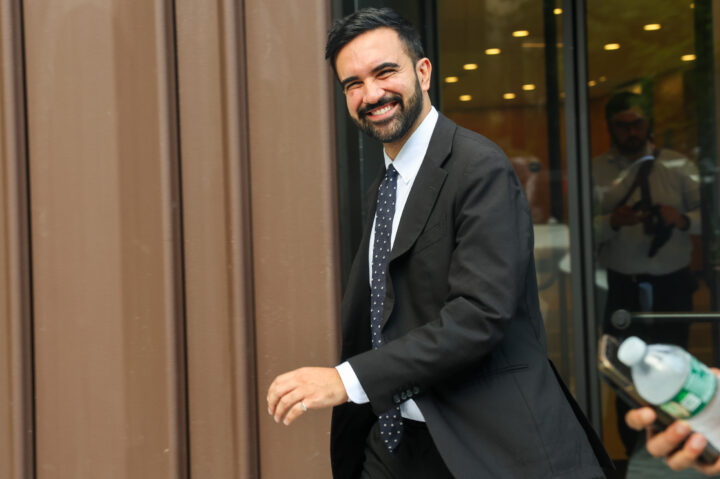
Spencer Platt/Getty Images
Democratic socialist candidate Zohran Mamdani, who won the Democratic primary for mayor of New York City, attends an endorsement event from the union DC 37 on July 15, 2025, in New York City.
A new poll of New York City Jewish voters commissioned by the pro-Israel New York Solidarity Network underscores the presence of a cohesive constituency opposed to Zohran Mamdani’s candidacy to become New York City mayor — but also illustrates some of the divisions preventing the city’s Jewish community from speaking with a loud, united voice.
The poll, conducted by the respected Democratic polling firm GQR, found Mamdani, the Democratic nominee, winning only 37% of Jewish voters, with 25% backing Mayor Eric Adams, 21% supporting former Gov. Andrew Cuomo and 14% preferring Republican nominee Curtis Sliwa. The results show that even though most Jewish voters identify as Democrats, a clear majority won’t support the Democratic nominee because of his record on issues of concern to the Jewish community — in a city where registered Democrats outnumber Republicans 6-to-1.
Adams performs particularly well among Orthodox Jews, winning 61% of their vote, while Cuomo leads among Conservative Jewish voters with 35% support. But among unaffiliated and Reform Jews, Mamdani leads with a near majority of the Jewish vote.
Asked if Jewish voters were pro-Israel, two-thirds (66%) responded in the affirmative, while 31% said they weren’t. That’s a slightly larger share of non-Zionist Jews than we’ve seen in national polling. Nearly two-thirds (63%) also said that the “globalize the intifada” rhetoric that Mamdani has defended is antisemitic, with just 27% disagreeing.
Just over half of Jewish voters in New York City (51%) believe Mamdani is antisemitic; 42% of respondents disagree.
The results illustrate the long-standing dynamic of the general election: Mamdani’s political standing is unusually weak as a Democratic nominee, but he continues to benefit from the divided field of opponents — and lack of a coherent strategy to go after the front-runner.
The fact that there isn’t a consensus Mamdani alternative within the Jewish community at this late stage demonstrates the hands-off approach to the race outside groups have taken, despite the very real fears many hold of what a Mamdani mayoralty would look like.
‘Every time a vote like this comes around, there is a break in trust and that becomes harder to restore,’ an Atlanta-area rabbi said, though the senator maintains some supporters
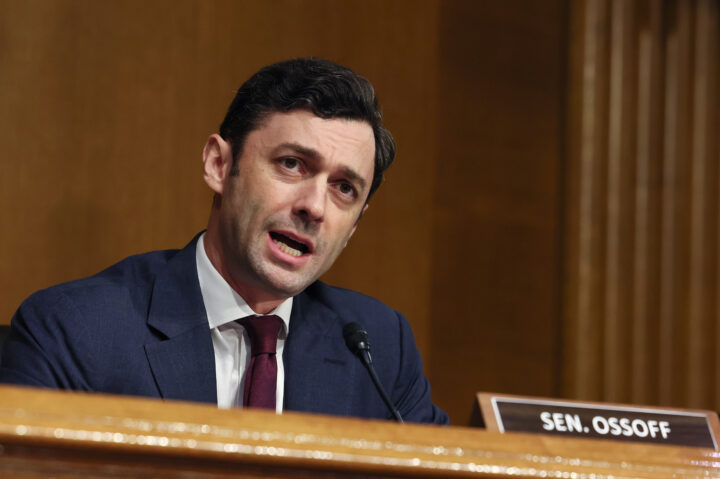
Jemal Countess/Getty Images for Breakthrough T1D)
Sen. Jon Ossoff (D-GA) questions witnesses during a hearing held to examine a future without Type 1 Diabetes with a focus on accelerating breakthroughs and creating hope at the Dirksen Senate Office Building on July 09, 2025 in Washington, DC.
Sen. Jon Ossoff’s (D-GA) vote Wednesday night, with a majority of Senate Democrats, in favor of a resolution to block a shipment of automatic weapons to Israel is fueling renewed frustration with the senator within the Georgia Jewish community, setting back efforts by the senator to repair ties with Jewish voters who objected to similar votes last December.
Ossoff’s relationship with Georgia’s sizable Jewish community could be a critical deciding factor in his reelection campaign next November — with a tight margin of victory expected in the swing state, significant changes in Jewish voting patterns could help decide the election.
The Georgia senator alienated many in the Jewish community by voting in December for two of three resolutions to block aid shipments to Israel. In subsequent months — after a group of Jewish donors expressed support for Republican Georgia Gov. Brian Kemp as a potential challenger — Ossoff reached out to Jewish community leaders and groups to work to repair ties, with some success.
Many leaders said at the time that he was making progress but had more work to do to fully regain their trust. Those efforts hit a stumbling block in June after Ossoff — whose second child had just been born — took nearly a week to comment on the war between Israel and Iran.
Ossoff said, of his votes on Wednesday, that he had voted for the resolution to block the automatic weapons to send a message to the Israeli government objecting to the humanitarian crisis in Gaza, as well as due to concerns that the weapons would be provided to police controlled by Israel’s national security minister, Itamar Ben-Gvir, a controversial figure even in pro-Israel circles.
He said he voted against a second resolution blocking a sale of bombs and bomb guidance kits, because those weapons are necessary to strike targets throughout the region attempting to launch missiles and rockets at Israeli civilians. Ossoff had similarly opposed a resolution on bombs and guidance kits in November, while voting for two other resolutions to block other weapons transfers.
Norman Radow, a major Democratic donor in Georgia who spoke to Ossoff on Wednesday evening after the votes, told Jewish Insider, “I’m disappointed with him and he knows it. And I think he knows that a vast majority of the Jewish community feels the same way.”
Radow said that Ossoff’s justifications for his vote on the assault rifles resolution didn’t hold water for him and his logic was “sophomoric.” The Democratic donor said he’d argued to the senator that Ossoff had overstated the extent of violence in the West Bank and of starvation in Gaza.
And he said he told the senator that non-binding efforts condemning Hamas and its backers are ineffectual, as compared to the real impacts that cutting off military supplies to Israel would have.
He indicated he appreciated the senator’s call.
“I’m disappointed in his behavior, but I can’t say it’s a surprise. We’ve seen this before,” Cheryl Dorchinsky, the founder of the grassroots Atlanta Israel Coalition, said. “It’s insane to me that anyone would think that voting against weapons to Israel during a war is a good idea, regardless of who’s in power.”
She said she feels adrift from both political parties. “When people that I see going into politics as having hopefully an interest in doing the right thing fail us as a people, it just kind of breaks my heart,” Dorchinsky said. She argued that Israel should not be a partisan issue, and blamed “bad actors” trying to turn it into one.
“While I wish [Ossoff] would have voted against both of [the resolutions], I’m very pleased he voted against [the one on bombs and bomb guidance kits],” Dov Wilker, who serves as the regional director of the American Jewish Committee in Atlanta, said. Wilker also said he was “disappointed” that the state’s other senator, Sen. Raphael Warnock (D-GA), had voted for both of the resolutions.
Another Jewish Democratic donor in Georgia said, “The yes vote with Sanders, who only wants to destroy the U.S.-Israel relationship, is concerning [and] emboldens the terrorists to continue to reject the ceasefire that was agreed to by Israel. It’s exactly what Hamas wants.”
Rabbi Joshua Heller of Atlanta’s Congregation B’nai Torah told JI that, while he does not endorse candidates, he’s heard in conversations that “a lot of folks who had previously been strong supporters of [Ossoff’s] in the Jewish community are not happy about the stands that he has taken.”
Heller said that, in conversations with him about such positions, Ossoff and his staff have highlighted actions he has taken in support of Israel, “and that is true, but every time a vote like this comes around, there is a break in trust and that becomes harder to restore.”
He said that in conversations with Democratic Jewish voters, many onetime Ossoff supporters are “having second thoughts, at this point,” and that there is a real “challenge in his relationship with a lot of folks in the Jewish community right now.”
“No Jewish community is monolithic, but I definitely see a lot of folks in the community who are troubled by this,” Heller said.
Ossoff still maintains supporters in the Jewish community who back his stance on this week’s resolutions.
Beth Sugarman, a prominent J Street member in Georgia, told JI, “The Jewish community has diversity of opinions, but the people I know think Jon Ossoff is thoughtful and represents us well and his statement and split vote was a good reflection of where the community is. The senator’s statement and split vote was thoughtful and exactly what the community believes.”
J Street supported both of the resolutions to block aid.
Cary Levow, a supporter of pro-Israel causes and candidates, said, “I support Senator Ossoff and know of other Jewish Georgians who understand that Jon’s approach to the Gaza humanitarian issue is genuine.”
“Senator Ossoff has voted for over $20 billion in aid to Israel, has family living in Israel and has spent a significant amount of time in the country,” Levow continued. “I think Jon has represented the Jewish community well and I have zero concern about a senator who is critical of how [Israeli Prime Minister Benjamin Netanyahu] Bibi is waging this war.”
Larry Auerbach, a Georgia lawyer and Ossoff supporter, said, “Senator Ossoff has done what the vast majority of Georgia’s Jewish community has asked him to do to represent us well by standing up for protecting the Israeli people’s security and saying that the extremists in the Netanyahu administration can’t continue like this.”
National Republicans see Ossoff’s positions as an opening to peel off Jewish voters in the upcoming senatorial election. The National Republican Senatorial Committee, which has seized on Ossoff’s November votes to block aid to Israel, again slammed him on Wednesday.
“Jon Ossoff is a radical leftist who time and again refuses to stand with Georgia’s Jewish community,” NRSC spokesperson Nick Puglia said in a statement. “He’d rather please the pro-Hamas extremists in his party than stand with Israel and Jewish Georgians. In 2026, voters will send him packing.”
Radow, the Democratic donor, argued that Ossoff’s votes were “bad politics,” though he said he’s not sure any of the current or prospective Republican candidates can beat Ossoff.
“He’s kowtowing to Bernie Sanders — that does not win elections in Georgia,” Radow said. “The only thing that Jon’s got going for him right now is the Republican field of candidates is pretty weak. … I want him to win, and he’s not winning my vote right now, and he’s not going to win a lot of people’s votes supporting Bernie resolutions.”
He said that whether he ultimately supports Ossoff next year will depend in part on which Republican ultimately ends up as the nominee against him.
“It’s certainly going to be an interesting race, and my vote is still up for grabs,” Radow said. “I’m not going to be a knee-jerk Democrat on this issue.”
He urged Ossoff, going forward, not to show public daylight with Israel, “stop playing secretary of state” and keep disputes with the Israeli officials behind closed doors. And he called on the senator to consult with Jewish community members before critical votes like this one, rather than reaching out afterward to explain his votes.
Dorchinsky said that she would “never say never to anything,” when asked if Ossoff could win her support at this point, and that she’ll “be paying attention” and make her final decision when she’s in the voting booth next year.
“He has a responsibility to represent us all, and if he actually started to, I would be thrilled. As of right now, I’m clearly not,” Dorchinsky said.
A Jewish leader in Georgia agreed that a key deciding question for wary Jewish voters will be who the Republican Party nominates to run against Ossoff in 2025.
The leader told JI he thinks that Ossoff’s vote for the assault rifles resolution could help him “thread the needle” more easily than other resolutions and represented a more “considerate” approach, given the Ben-Gvir connection. “I think the majority of American Jews are not fans of Ben-Gvir,” the Jewish leader said.
“I think that if he is consistent with his messaging around the specific nature of why he voted against the assault rifles, I think it’ll help people that are more on the fence with him, but want to vote for him — versus those that are just against him,” the leader said.
But, the leader continued, “that doesn’t mean everyone’s going to buy it,” and noted that many members of the community are unhappy with the vote.
They said the vote is particularly “not going to help” Ossoff among Jewish community members upset by his delay in commenting on the Iran war, “but those that were able to give him some grace that he finally said something — this will help them.”
Heller was more skeptical that Ossoff’s vote-splitting approach would satisfy anyone, saying he thinks the strategy won’t help Ossoff with supporters of Israel who don’t believe in stopping weapons shipments nor with opponents of Israel who believe in cutting off all aid to Israel.
Israel announces new aid measures and temporary ceasefires while defending its broader war strategy
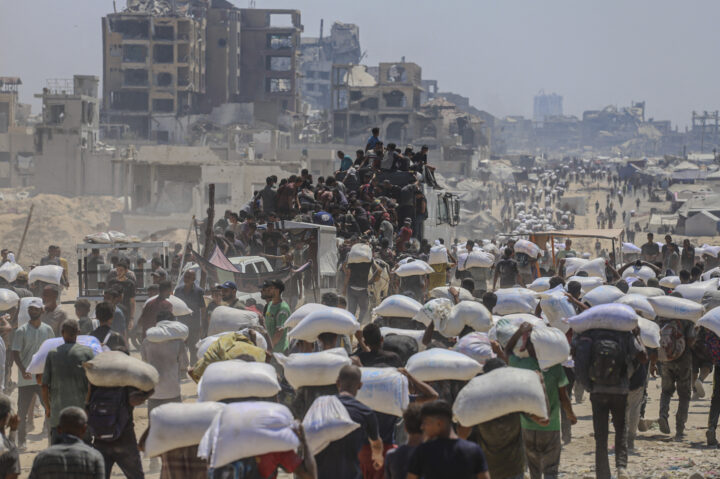
Ramez Habboub/Abaca/Sipa USA via AP Images
Palestinians carry humanitarian aid received through the Zikim crossing as they return to their families near the Al-Sudaniya area in northern Gaza, on July 27 2025 amid the beginning of airdrop operations.
In Israel’s effort to conduct a pressure campaign on Hamas to oust the terror group and release the remaining hostages held in Gaza, it has found itself instead on the receiving end of another global pressure campaign.
Facing mounting pressure amid a worsening humanitarian crisis in Gaza, Israel over the weekend announced a series of measures aimed at alleviating the widespread malnutrition and security issues in the enclave, including temporary ceasefires, aid airdrops, facilitating a massive increase in Gaza’s water supply and establishing designated humanitarian corridors — even as the IDF called claims of starvation in Gaza “a false campaign promoted by Hamas” and Israeli Prime Minister Benjamin Netanyahu denied that there was starvation in Gaza.
The crisis hit a fever pitch over the weekend as opposition to Israel’s efforts and limits on aid — first put into place in March as a pressure tactic to push Hamas to release the remaining hostages — surged to the highest levels of government around the world.
Dozens of countries called for an end to the war, a restoration of the flow of humanitarian aid into Gaza and the immediate release of the hostages. The shift in the political dynamic extended to Capitol Hill, where Democratic legislators, including many who have been strong supporters of Israel, expressed their concerns over Israel’s approach to the worsening humanitarian crisis in Gaza.
That backdrop led to a late-night announcement from the IDF’s on Saturday: “In accordance with directives from the political echelon and following a situational assessment held this evening, the IDF has begun a series of actions aimed at improving the humanitarian response in the Gaza Strip, and to refute the false claim of deliberate starvation in the Gaza Strip.”
On Israel’s most-watched news channel, Channel 12, journalists Almog Boker and Amit Segal described the move as a victory for Hamas after a successful propaganda campaign that captivated global opinion.
But not everyone agreed. On the same network, anchor Yonit Levi said, “It’s time to understand that this is not a failure of public diplomacy, but a moral failure.”
Domestically, the resumption of aid has the potential to cause divisions within Netanyahu’s coalition, whose right-wing members have in the past threatened to leave the coalition over moves that have been seen as concessions to Hamas.
Israeli National Security Minister Itamar Ben-Gvir and Finance Minister Bezalel Smotrich — both vocal opponents of allowing aid into Gaza — were excluded from a phone call on Saturday during which the decision was taken to increase aid. According to Ben-Gvir, an official from the Prime Minister’s Office claimed he had been left out to avoid forcing him to violate Shabbat — which Ben-Gvir denied, saying he was “available on Shabbat for any event or important security consultation.”
Smotrich, for his part, reportedly said overnight that he will not quit the government over the decision.
Addressing the move on Sunday during a visit to an Israeli Air Force base, Netanyahu defended the decision, calling it a continuation of existing policy. He said that while continuing efforts to defeat Hamas and release the hostages, “we will need to continue to allow the entry of minimal humanitarian supplies. We have done this until now.”
Amid the cacophony of criticism, Israel has largely stayed in the good graces of the White House. President Donald Trump on Sunday said that “Israel is gonna have to make a decision” about what to do with Hamas. “I know what I’d do, but I don’t think it’s appropriate that I say it.” U.S. Ambassador to Israel Mike Huckabee slammed the United Nations, The New York Times and Hamas for the humanitarian crisis, saying that their “lies & propaganda destroyed cease-fire deal, tried to discredit safe and functioning GHF effort, emboldened Hamas & will result in this complete balagan! Most sad for hostage families-grief prolonged.”
The U.N. World Food Program, which has not shied away from criticizing Israeli government actions, praised the influx of aid, saying the agency has “enough food in – or on its way to – the region to feed the entire population of 2.1 million people for almost three months.”
But while the most immediate concerns are being allayed, Israel will have to face another crisis of its own making — attempting to restore its standing with many of its traditional allies.
Indeed, when Rep. Ritchie Torres (D-NY), a pro-Israel stalwart, is sounding an alarm about his own frosty relationship with the Israeli government, it’s a glaring red flag about the state of Israel’s public diplomacy.
The Pennsylvania governor told JI: ‘When supporters of yours say things that are blatantly antisemitic, you can't leave room for that to just sit there’

Andrew Harnik/Getty Images
Pennsylvania Gov. Josh Shapiro greets the crowd before the start of a campaign rally at Temple University on August 6, 2024 in Philadelphia, Pennsylvania.
LEWISTOWN, Pa. — Inside a coffee shop in this small town of 8,500 people, hundreds of miles from the bustle of Manhattan, Pennsylvania Gov. Josh Shapiro made his first public comments about Zohran Mamdani, criticizing the New York City Democratic mayoral candidate for not taking a stronger stand against “extremists” who have made “blatantly antisemitic” comments.
“He seemed to run a campaign that excited New Yorkers. He also seemed to run a campaign where he left open far too much space for extremists to either use his words or for him to not condemn the words of extremists that said some blatantly antisemitic things,” Shapiro told Jewish Insider in an interview on Wednesday.
Shapiro’s comments come as Mamdani, who defeated former New York Gov. Andrew Cuomo in the Democratic primary last month, continues to face backlash for declining to condemn the phrase “globalize the intifada.” (Mamdani told business leaders last week that he would “discourage” use of the slogan.)
National Democratic figures have struggled to figure out how to respond to Mamdani’s come-from-behind victory and to assess what the election of a self-proclaimed democratic socialist as the Democratic nominee for mayor of the largest city in the country means for the future of the party.
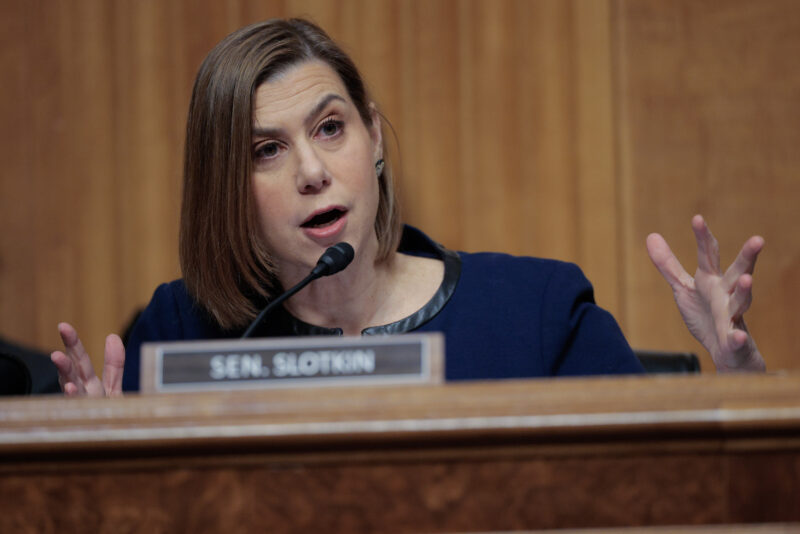
Neither Senate Minority Leader Chuck Schumer (D-NY) nor House Minority Leader Hakeem Jeffries (D-NY) have endorsed Mamdani, while some progressive leaders — such as Sens. Chris Murphy (D-CT) and Bernie Sanders (I-VT) — have embraced him. Sen. Elissa Slotkin (D-MI), another swing-state Democrat, said on Wednesday that Mamdani’s victory is a “message” that “cost of living and the economy is the driving issue for the average person.”
Democratic National Committee Chair Ken Martin, when asked about Mamdani’s handling of the “globalize the intifada” slogan, said earlier this month that he did not agree with everything Mamdani has said, but that the Democrats are a “big tent” party. Martin later clarified that he found the “intifada” phrase “reckless and dangerous.”
Widely viewed as a possible 2028 presidential candidate, Shapiro has steered clear of weighing in on a number of divisive national issues, preferring instead to focus on Pennsylvania, where he maintains a 61% approval rating. But on Wednesday, he offered a sharp message to Mamdani.
“I’ll say this about Mamdani or any other leader,” Shapiro said. “If you want to lead New York, you want to lead Pennsylvania, you want to lead the United States of America, you’re a leader. I don’t care if you’re a Republican or Democratic leader or a democratic socialist leader. You have to speak and act with moral clarity, and when supporters of yours say things that are blatantly antisemitic, you can’t leave room for that to just sit there. You’ve got to condemn that.”
At a moment of declining support for Israel within the Democratic Party, the Jewish governor told JI that he stands by his pro-Israel bona fides.
“I think one of the things that always strengthened Israel was the fact that the relationship America had with Israel was not even bipartisan, but somewhat nonpartisan. Figuring out ways to build bridges between the parties, between people of different walks of life, to support Israel, I think is important,” he noted. “I think just in general, across the board, I want to see more support for Israel, for a Jewish state. That doesn’t mean that one can’t be critical of Israeli policy.”
There is more that politicians on both sides of the aisle need to do to maintain support for Israel and the U.S.-Israel relationship, Shapiro said, though he added that “the majority of that work is going to happen in Washington.” He declined to specifically address Democrats’ views on Israel or polling that showed a massive drop in Democratic support for Israel since 2023.
“I don’t do foreign policy in Pennsylvania in my role as governor, but I do think it is important to repair that relationship,” Shapiro said. “I am concerned that support for Israel in the United States broadly is down compared to what it was a decade ago.”
It isn’t only American leaders who need to work to strengthen ties between Israel and the U.S., Shapiro said. He placed some of the blame on Israeli Prime Minister Benjamin Netanyahu.
“I think if you care about the future safety and security of Israel, and you’re the leader of Israel as Netanyahu is at present time, you’ve got to find ways to build bridges to people in both parties, to leaders in both parties,” said Shapiro, who has long been a critic of Netanyahu’s leadership. But he asserted that opposition to Netanyahu as prime minister should not be equated with opposition to the existence of a Jewish state.
“There are policies of the Netanyahu government that I don’t support. I’ve been very vocal about that. But there’s a difference between not supporting the policies of whoever’s in charge at a particular time, and the underlying notion of a Jewish state of Israel,” said Shapiro. “I do think it is important to strengthen people’s understanding of Israel and the relationship America should have with Israel and to strengthen that bond.”
Shapiro, one of the most prominent Jewish politicians in the country, has been on the receiving end of antisemitic smears over his support for Israel. In April, the governor’s mansion in Harrisburg was set ablaze in an arson attack just hours after Shapiro and his family had hosted a Passover Seder.
Police said the alleged perpetrator was motivated by anti-Israel animus, but Shapiro has repeatedly declined to characterize the incident as antisemitic in nature, saying that doing so would be “unhelpful” to prosecutors who have not brought hate crime charges.
Shapiro told JI the arson attack left a profound impact on him, both personally and religiously. It brought him closer, he said, to “my faith and my spirituality.”
“It made me believe even more, not just in my God, but in the power of prayer,” said Shapiro. “It’s given me a deeper, spiritual connection of my faith and a deeper connection to people of other faiths.”
The progressive lawmaker eked out a victory in a politically evolving district that swung heavily to Trump. Now she’s facing a highly touted GOP challenger
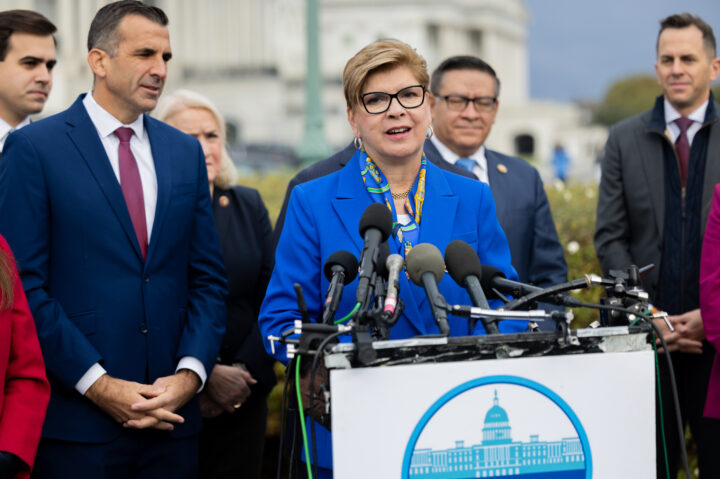
Nathan Posner/Anadolu via Getty Images
Rep.-elect Nellie Pou (D-NJ) speaks during a press conference introducing new members of the Congressional Hispanic Caucus in Washington, DC on November 15, 2024.
Rep. Nellie Pou (D-NJ) starts out her first re-election campaign at a crossroads: Running in a historically deep-blue district that President Trump surprisingly carried, she’s caught between her background as a liberal leader and the pressures of a purple district that could pull her toward the political middle to preempt Republican opposition.
Pou — who has never faced such a competitive general election in her political career — has generally leaned left while keeping a relatively low profile on the Hill. She joined the Congressional Progressive Caucus and stuck with the majority of her party on many key votes, including some pertaining to antisemitism and Israel that divided the Democratic caucus. She now faces a well-credentialed GOP challenger — Clifton, N.J., councilmember Rose Pino — as the Republican Party hopes to keep her urban north New Jersey district on its target list.
Despite representing a district with a sizable Jewish population, she didn’t join many of the moderates in her party in voting for a Republican-led resolution last month condemning the antisemitic attack in Boulder, Colo., urging stronger enforcement of immigration laws and supporting Immigration and Customs Enforcement.
The Boulder resolution split the Democratic caucus, with 75 lawmakers voting for the resolution and 113 voting against it. Some Democrats objected to the immigration-related language.
Pou, and nearly all other Democrats, voted in favor of a second resolution condemning a series of recent antisemitic attacks without that language.
“Congresswoman Pou believes that the rise of antisemitism in the United States and across the world is alarming and unacceptable. That’s why Congresswoman Pou voted in favor of a resolution on the House floor fully condemning antisemitism,” Pou spokesperson Mark Greenbaum told Jewish Insider. “And it’s why she is using her position on the Homeland Security Counterterrorism and Intelligence Subcommittee to demand increased funding for law enforcement to keep our Jewish communities safe and greater federal grants for synagogues and schools to upgrade their security.”
Pou also voted earlier this year against sanctioning the International Criminal Court, another vote that split House Democrats. Forty-five Democrats supported the sanctions.
But she has joined other efforts to support Israel and the Jewish community during her tenure, including signing a letter urging prompt federal approval of additional flights by Israeli airlines between the U.S. and Israel and calling for $500 million in funding for the Nonprofit Security Grant Program in 2025.
Pou’s district, New Jersey’s 9th, has both significant Jewish and Palestinian constituencies. Rep. Bill Pascrell (D-NJ), Pou’s predecessor who died in August 2024, faced a primary challenge from Prospect Park, N.J., Mayor Mohamed Khairullah, who focused his campaign squarely on criticizing Pascrell’s support for Israel.
Pou was tapped by New Jersey Democratic leaders to replace Pascrell on the ballot after the congressman died during the election cycle — and they assumed she would face little opposition in future elections.
Pou’s district was considered a safe Democratic seat before the election, and Trump’s performance came as a surprise to Democrats, leaving Pou, the former majority leader in the state Senate, on guard as she prepares to defend her seat next year.
Pou told the New Jersey Globe she takes political pressures into consideration on divisive votes, “But I also think it’s [about] doing the right thing.”
“Politics is very important, and I would love to make sure I have the opportunity to return back to Congress,” Pou said. “But I also think that we are here to do a job, and that we should be doing it with the right reasons in mind.”
Pino, a leading GOP recruit, announced her campaign on Thursday. Pino is a longtime local official and the child of Ecuadorian immigrants. Pou herself is the first Latina woman from New Jersey to serve in Congress. The district has a sizable Hispanic population.
Republican Billy Prempeh, whom Pou beat by five percentage points in the 2024 election, is also running again. Prempeh was endorsed by the New Jersey chapter of the Council on American-Islamic Relations last year and supported cutting off U.S. aid to Israel to stop the war in Gaza; opposed Israeli strikes on Gaza, saying in part, “I’m not dying for Israel”; and opposed the Antisemitism Awareness Act.
Andre Sayegh, the mayor of Paterson, N.J., who called his city “the capital of Palestine in the United States of America” and has been critical of Israel, is a potential primary challenger to Pou.
Pou’s re-election campaign raised $500,000 in the second quarter, reporting $780,000 on hand.
Trump won the district by a point, after President Joe Biden won it by nearly 20 points in 2020. Pou’s margin of victory was also substantially smaller than Pascrell’s in previous races, and Republicans see her as a top target in 2026.
“Nellie Pou went to Congress pledging to be a friend of Israel and the Jewish community, but that was a pledge she never intended to keep,” National Republican Campaign Committee spokesperson Maureen O’Toole said. “The truth is, Pou is backed and bankrolled by rabid antisemites, and her vote … makes it clear that she stands with them. Nellie Pou won’t be sitting in her Trump-won district much longer.”
The Democratic Congressional Campaign Committee pushed back, noting her vote in favor of the second antisemitism resolution that passed the House nearly unanimously.
“Congresswoman Nellie Pou has been outspoken on combatting antisemitism and joined Republicans and Democrats in voting for a bipartisan resolution to condemn the horrific attack in Boulder, Colorado,” a DCCC spokesperson told JI. “Nellie is working hard to lower costs and deliver for New Jersey’s 9th District, which is exactly what her constituents elected her to do.”
The DCCC spokesperson also highlighted Pou’s work in supporting police funding and opposing the GOP reconciliation bill.
The terror group has once again ramped up its attacks on international shipping in the Red Sea two months after reaching a ceasefire with the U.S.

Tom Williams/CQ-Roll Call, Inc via Getty Images
Senate Armed Services Committee Chairman Roger Wicker (R-MS) arrives for a confirmation hearing in Dirksen building on Tuesday, May 13, 2025.
A top Senate lawmaker indicated on Thursday that he’s open to resumed U.S. involvement in the campaign against the Houthis, amid a ramp-up of the group’s attacks on commercial shipping in the Red Sea and Israel that comes two months after the U.S. and the Houthis reached a ceasefire that ended the American bombing campaign against the group.
The Iran-backed Yemeni terrorist group has attacked and sunk two cargo ships passing through the Red Sea this week, killing several members of the ships’ crews and wounding and kidnapping others. The Houthis have also launched new strikes on Israel.
“The Houthis need to be totally eliminated,” Sen. Roger Wicker (R-MS), the chair of the Senate Armed Services Committee, told Jewish Insider. “They have no purpose other than to kill free people.”
Asked if the U.S. should become involved directly against the Houthis again, Wicker said, “I wouldn’t rule that out.”
Sen. Mark Kelly (D-AZ) told JI that if the Houthis continue to block Red Sea shipping, “we’ve got to figure out a path forward on how to respond. It can’t be a long-term thing for ships to go around the Horn of Africa.”
Sen. James Lankford (R-OK) said he wouldn’t, at this point, discuss possible American action, but emphasized that any Houthi activity has Iran’s hand behind it.
“The Houthis have decided the war against Israel is not over, and that doesn’t happen without Iranian support,” Lankford said, noting Iran’s assistance in providing intelligence, training and arms to the Yemeni terror group. “That would tell me Iran’s not done with their acts of terrorism in the region. … We have to decide, and Israel has to make a determination — as they have, of late — to be very, very clear. And Israel has carried out additional strikes on the Houthis to try to make that stop.”
Sen. Mike Rounds (R-SD) said, “I’m not sure what our interests are there right now, but most certainly, we have told them in the past that if they want to have a ceasefire, we’ll support a ceasefire. If they want to get back in the middle of it, I suspect that the administration may very well have a response to that.”
He said that he couldn’t discuss the possibility of a U.S. response without having been briefed on the situation.
Sen. Ted Budd (R-NC) said he would need to think further about what circumstances would require American intervention.
“You’ve seen their main source, of Iran, be taken offline,” Budd told JI. “It remains to be seen what Iran is going to do in connection with the Houthis, but they’re a malevolent force that needs to be dealt with.”
Asked for comment on whether the Houthis’ strikes violated the group’s ceasefire with the U.S. or what might prompt further American action against the terrorist organization, the White House referred JI to a State Department press release condemning the attacks.
“These attacks demonstrate the ongoing threat that Iran-backed Houthi rebels pose to freedom of navigation and to regional economic and maritime security,” State Department spokesperson Tammy Bruce said. “The United States has been clear: we will continue to take necessary action to protect freedom of navigation and commercial shipping from Houthi terrorist attacks, which must be condemned by all members of the international community.”
The ADL accused the nation’s largest teachers union of pushing a ‘radical, antisemitic agenda on students’
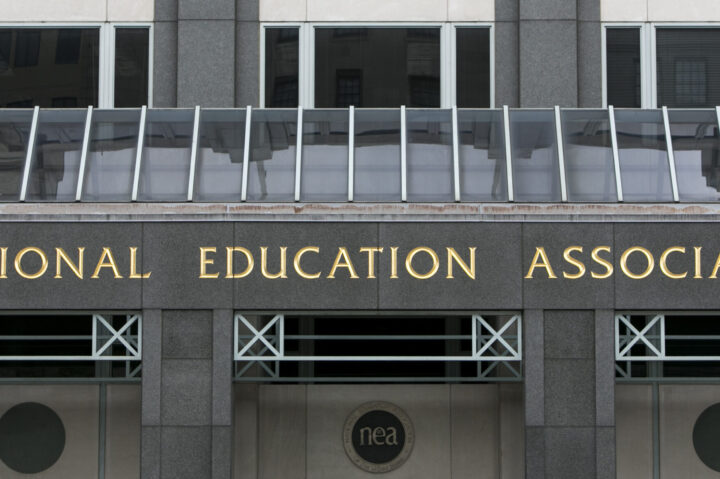
Kristoffer Tripplaar/Sipa via AP Images
A logo sign outside of the headquarters of the National Education Association (NEA) labor union in Washington, D.C. on July 11, 2015.
A grassroots campaign urging educators to stop using teaching materials from the Anti-Defamation League reached the highest levels of K-12 education over the weekend.
Inside a packed conference hall in Portland, Ore., the thousands of delegates who make up the governing body of the National Education Association — the largest teachers union in the country — passed a measure that bars the union from using, endorsing or publicizing any materials from the ADL.
In the moments before the vote, several Jewish delegates spoke passionately in opposition of the measure.
“I stand here and ask you to oppose [the measure] to show that all are truly welcome here,” a teacher from New Jersey said, according to audio of the closed-door meeting obtained by Jewish Insider.
Another Jewish teacher quoted NEA Executive Director Kim Anderson from her keynote address earlier in the weekend. “This union has your back,” Anderson told the more than 6,000 assembled delegates.
“Does that include stopping Jewish hate, antisemitism? Some of our members don’t feel they are safe,” the Jewish teacher said during Sunday’s debate.
The vote occurred by voice. The margin was so close that delegates had to vote three times as the chair considered whether the loudest cheers were in support of the measure or in opposition, but, ultimately, it still received the backing of more than half the delegates. It now heads to the NEA’s nine-member executive committee, which gets the final word on whether the measure will be put into effect. (The passage of the anti-ADL measure was first reported by the North American Values Institute.)
The episode garnered criticism from Jewish teachers and allies. NEA’s national leadership has not yet weighed in on the measure.
“At a time when incidents of hate and bias are on the rise across the country, this action sends a troubling message of exclusion and undermines our shared goal of ensuring every student feels safe and supported,” a spokesperson for the NEA’s Jewish affairs caucus said in a statement to JI. The caucus said its members plan to continue using ADL materials in their classrooms.
The ADL slammed the vote, calling it “profoundly disturbing that a group of NEA activists would brazenly attempt to further isolate their Jewish colleagues and push a radical, antisemitic agenda on students,” according to an ADL spokesperson.
Staci Maiers, an NEA spokesperson, declined to comment on the specific measure. “NEA members will continue to educate and organize against antisemitism, anti-Muslim bigotry and all forms of hate and discrimination,” Maiers told JI in a statement. “We will not shy away from difficult or controversial issues that affect our members, our students or our schools.” (The NEA assembly also adopted a measure pledging to highlight Jewish American Heritage Month each May.)
The NEA’s adoption of a measure targeting the leading Jewish civil rights organization may be an escalation, but it is only the most recent example of antisemitism — and divisive politics surrounding the war in Gaza — spilling into K-12 education, and teachers unions in particular.
Since the 2023 Hamas attacks, Jewish parents have raised concerns about discrimination against Jewish students and about the increasingly frequent use of anti-Israel materials in classrooms. Last week, for instance, the parents of an 11-year-old sued their child’s Virginia private school, alleging school administrators ignored antisemitic harassment directed against her for months.
The NEA’s vote on the anti-ADL measure grew out of a campaign called #DropTheADLFromSchools, which began with an online open letter and gradually garnered the support of some of the country’s most powerful local unions, including United Teachers Los Angeles, which represents 35,000 LA teachers.
In March, UTLA president Cecily Myart-Cruz wrote a letter asking the superintendent of the LA Unified School District and the LAUSD school board to stop using ADL materials and “refuse to contract or partner” with the ADL, because of its “focus on indoctrination rather than education.” (An LAUSD spokesperson said no action had been taken in reference to the letter.)
Last year, the NEA joined a campaign to pressure then-President Joe Biden to halt all U.S. military aid to Israel. The Massachusetts Teachers Association, an NEA affiliate, has encouraged members to introduce anti-Israel materials into classrooms.
Last week, the largest teachers union in California published a letter urging state senators to vote against a bill focused on fighting and preventing antisemitism.
“While we share the same overarching goal of the AB 715 author and sponsors of combating antisemitism, we have serious reservations about the proposed methods for achieving it,” wrote Seth Bramble, legislative relations manager of the California Teachers Association, a 300,000-member affiliate of the NEA. “We are also concerned with academic freedom and the ability of educators to ensure that instruction include perspectives and materials that reflect the cultural and ethnic diversity of all of California’s students.”
In May, the state assembly voted unanimously to approve the bill, which was co-sponsored by the Jewish, Black, Latino, Native American and Asian American and Pacific Islander legislative caucuses. The legislation would create a statewide antisemitism coordinator in the state’s Education Department and strengthen anti-discrimination protections, while providing additional guidelines to keep antisemitism out of teaching materials.
But the bill’s fate is now in jeopardy as senators face pressure from one of the state’s most powerful unions to reject it. The California Senate’s education committee is set to vote on the bill on Wednesday. State Sen. Sasha Renée Pérez, the Los Angeles-area Democrat who chairs the committee, did not respond to a request for comment about whether she plans to vote for the bill.
State Sen. Scott Wiener, a Democrat from San Francisco and the co-chair of the legislative Jewish caucus, said it is “frustrating” seeing the CTA oppose the bill instead of collaborating with its authors.
“We need, as a matter of state policy, to be very, very clear that antisemitism will not be tolerated in California public schools,” Wiener told JI. “I was really disappointed to see CTA’s letter which basically says, ‘Oh, we hate antisemitism, but we can’t possibly do anything meaningful about it.’” (A CTA spokesperson did not respond to a request for comment.)
More than two dozen California Jewish groups released a statement on Monday slamming the CTA, saying that advocates for the bill have already put its passage on hold for more than a year to try to negotiate with the union. The sponsors pivoted from an earlier version of the bill — which was intended to root out antisemitism in the state’s ethnic studies curriculum — at the urging of the CTA.
“We call on the legislature to stand firmly in support of California’s Jewish students and move the bill forward,” wrote the Jewish organizations, including the ADL, StandWithUs, American Jewish Committee and the Jewish federations in Los Angeles, San Diego, San Francisco and several other communities.
Jewish community activists plan to spend the next two days lobbying for passage of the bill. Jay Goldfischer, a teacher in Los Angeles County, is traveling to Sacramento to urge lawmakers to vote for it.
“Jewish students across California are being silenced. Many are afraid to walk into their schools, unsure if they’ll be targeted for who they are,” Goldfischer told JI. “As a CTA member, I am personally disappointed that CTA doesn’t feel Jewish students are worth protecting.”
Jackson Karki was named as a county chair for the Upper Peninsula counties of Baraga, Delta, Gogebic, Houghton, Keweenaw and Marquette
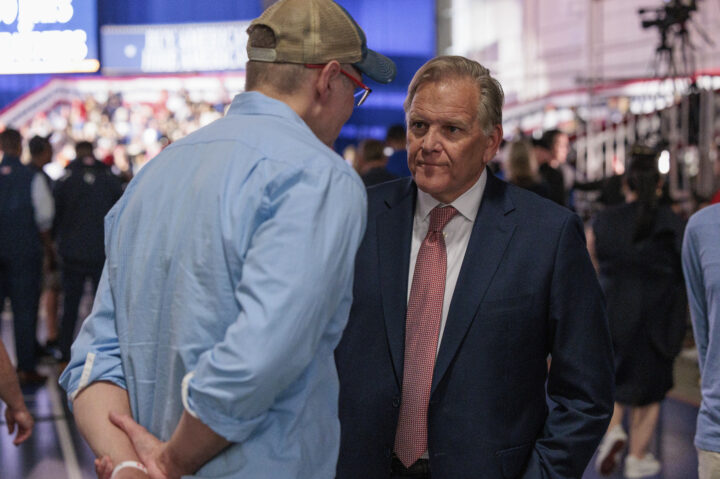
Andrew Roth/Sipa USA via AP Images
Republican Michigan Senate candidate Mike Rogers attends President Donald Trump's rally in Warren, Mich., on April 29, 2025.
Former Rep. Mike Rogers’ (R-MI) Senate campaign recently named a conservative influencer with an extensive history of anti-Israel posts as county chair for his campaign in five counties — but Rogers distanced himself from the volunteer’s views on the Middle East in an interview with Jewish Insider.
Rogers’ campaign announced on X on June 16 that it had named 100-plus county chairs across the state. Among those, Jackson Karki was named as a county chair for the Upper Peninsula counties of Baraga, Delta, Gogebic, Houghton, Keweenaw and Marquette. Karki on both his own X account and an alternate account, Red Lion Politics, has a history of anti-Israel commentary that has veered into antisemitic tropes.
The Red Lion Politics account identifies Karki in its bio as the account owner, and both accounts identify their owners as being from Marquette, Mich.
On Red Lion Politics, Karki has claimed at various points over the past several years that “Israel controls us” and “the Republican Party is owned by the Israel lobby,” he has called for the U.S. to “stop being suckers for Israel please” and asked, “When we will we have a president or politician that’s not in love with Israel?”
He has also said repeatedly that he does not support Israel — often adding that he does not support Palestine or Iran either — and said that “we should cut military ties and funding to Israel, whose actions often don’t align with our values or interests.” He has called for cutting off ties to various other U.S. allies as well, including Ukraine.
The Red Lion Politics account also declared that, “Some Zionists hold beliefs that clash with my Christian faith, including views that disparage Jesus Christ, making it impossible for me to blindly support Israel’s government or its policies.”
During the recent Israel-Iran war, Karki declared at various points, “If Israel attacks Iran without our consent they would’ve lost all my respect I had left for them,” “Warned you all to stop supporting Israel and Palestine. We shouldn’t be giving them the time of day” and “we ain’t praying for Israel or Iran,” while also declaring, “Israel is gonna be fine. They have nothing to fear.”
Karki’s anti-Israel commentary has extended to his personal account, saying “Republicans need to stop shilling for Israel” and “stop shilling for Israel.” Just months before those posts, in 2021, however, he posted “I stand with Israel!”
Karki could not be reached for comment.
In an interview with JI, Rogers emphasized that Karki is just one of thousands of volunteers who have worked with his campaign.
“When you’re in a state like Michigan, you’re going to have people who want to help you for a whole host of reasons. And it doesn’t mean that they’re going to agree with me 100% or I may agree with them 100%,” Rogers said. “We had Muslim volunteers, we had Chaldean volunteers, we had Sunnis and Shia volunteers. We had a huge Jewish coalition.”
“This is not a paid person. He’s a volunteer, and he wants to make a change for the larger representation of his views, which he believes that I’m that guy to do that,” Rogers continued. “Obviously I disagree with many of his comments there, but he’s also engaged in the debate that’s happening very robustly on the Republican side.”
Rogers emphasized that he is a staunch supporter of Israel and strongly supports the U.S. operations against Iran, adding that the U.S. can be “engaged in the world without being entangled in the world.” And he said he does not hide his views from any of his supporters, even when they see issues differently.
Rogers worked aggressively during his previous Senate campaign in 2024 to appeal to Michigan’s sizable Jewish community, particularly those who were disaffected with the Democratic Party’s positions on Israel — while at the same time reaching out to Muslim and Arab constituencies that held negative views towards Israel.
He said that any volunteers, in their activities for the campaign, “are representing my views and my position, not representing their views and their position.” He described the county chairs as points of contact for others to talk to about getting yard signs or literature or volunteering with the campaign.
“If you go through every list of every candidate, I’m sure there’s people that disagree with every candidate they’ve handed out literature for,” he said.
The former Pima County supervisor has struggled to articulate her approach to Israel as she faces Daniel Hernandez, who identities a pro-Israel progressive

Adelita Grijalva campaign page
Adelita Grijalva
The latest Democratic primary battle between the left and center where Israel has emerged as a point of division is playing out in a special House election in Tucson, Ariz., later this month, as five candidates vie to replace former longtime Rep. Raul Grijalva (D-AZ), who died in March.
The July 15 primary in Arizona’s dependably blue 7th Congressional District has kept a relatively low profile, even as it features ideological tensions over Middle East policy that could hold implications for the party’s increasingly fractious approach to Israel in the lead-up to next year’s midterm elections.
Adelita Grijalva, 54, a former Pima County supervisor, is viewed as the heavy favorite to win the seat in what is expected to be a low-turnout race, owing in part to her significant name recognition in the area represented by her late father for over two decades.
She has also consolidated endorsements from top establishment Democrats, including Sens. Mark Kelly (D-AZ) and Ruben Gallego (D-AZ), while securing the backing of progressive leaders such as Reps. Alexandria Ocasio-Cortez (D-NY) and Sen. Bernie Sanders (I-VT), among other high-profile critics of Israel in Congress.
But her limited record of commentary on Israel has raised questions among pro-Israel activists rallying behind one of Grijalva’s chief primary rivals, Daniel Hernandez, a former state lawmaker who identifies as a pro-Israel progressive and claims support from Rep. Ritchie Torres (D-NY) and the political arm of Democratic Majority for Israel.
The 35-year-old Hernandez, recently named the board chair of the Zionist LGTBQ organization A Wider Bridge, has pitched himself as a “consistent champion” of pro-Israel causes, in contrast with the late Grijalva, who during his long tenure embraced hostile positions toward Israel — most prominently when he joined a small handful of House Democrats to oppose additional funding for Israel’s Iron Dome missile-defense system in 2021.
Like her father, the younger Grijalva appears more skeptical of Israel amid its war in Gaza, even as she has yet to publicly clarify her own views on a range of key issues, such as continued U.S. security aid to Israel, which has faced vocal resistance from some of her supporters on the left.
Grijalva called for a ceasefire between Israel and Hamas 10 days after the Oct. 7, 2023, attacks. In her role as a county supervisor, she also reluctantly voted for a resolution that condemned Hamas, while voicing frustration that she “couldn’t talk about peace and humanitarian aid” for Gaza.
More recently, Grijalva has struggled to clearly articulate her approach to Israel and the broader Middle East, suggesting in a recent discussion with a progressive organization that speaking candidly about her views could draw outside spending from pro-Israel advocacy groups such as AIPAC, which has targeted Israel critics in Democratic primaries, into the race.
“The frustration for me, and it will always be, I think, is that there were some things that my dad could get away with that a lot of these organizations that come in and try to influence races and stuff, he predated them,” Grijalva explained during a Zoom call in May with Progressive Democrats of America, an anti-Israel group that is backing her campaign.
Her father, who died at 77, “was like this mountain in the middle, like no one’s moving him one way or the other,” she continued on the call, some portions of which were recently reviewed by Jewish Insider. “But I do think that in this environment, when we are not in normal times and you can’t negotiate with terrorists, there is a difference here, where walking in, I know it’s going to be a different experience for me than it was for my dad.”
A spokesperson for AIPAC said on Wednesday that the group is “not involved” in the race. DMFI PAC, which has also engaged in several House primaries in recent cycles, has so far refrained from investing in the race, despite backing Hernandez. The group did not respond to a request for comment about its plans for the final days of the election, now less than two weeks away.
Elsewhere in the Zoom discussion, Grijalva dodged a question about her position on sending U.S. arms to Israel amid its war against Hamas in Gaza, which she called an “atrocity,” while echoing a section on her campaign site calling for “an immediate release of the remaining hostages in Hamas captivity” and “rapid and complete restoration of humanitarian aid into the Gaza Strip” to set “the foundation for a two-state solution.”
“The surest way to bring them home, defeat Hamas and begin the process of rebuilding Gaza for the Palestinian people,” Grijalva said on the call, “is through a long-term, just and peaceful resolution, which the United States has a responsibility to work towards.”
Still, she suggested that U.S. involvement in the ongoing conflict “has not been helpful at all,” and vaguely argued that “the United States has been a part of interfering with this process and trying to aid in different ways.”
Pro-Israel activists in Arizona, none of whom would agree to speak on the record over concerns of antagonizing a likely future member of Congress, have voiced apprehension about Grijalva’s comments on Middle East policy, pointing to a lack of general clarity on major issues.
During a Zoom conversation this week with the Arizona Democratic Party Jewish Caucus, for example, Grijalva was asked about her “understanding of the term ‘intifada,’” a recent subject of heated debate as Zohran Mamdani, the far-left Democratic nominee for mayor of New York City, has faced backlash for doubling down on defending calls to “globalize” the Palestinian uprisings against Israel — which critics have interpreted as stoking violence against Jews.
Grijalva, who has condemned recent antisemitic attacks, indicated that she was unfamiliar with the term, according to a brief recording of the Zoom discussion shared with JI on Wednesday. “I don’t really know in this case what that means,” she said in response.
Grijalva’s campaign did not respond to a request for comment.
Limited public polling on the primary has shown Grijalva leading the field, which includes Deja Foxx, a 25-year-old political influencer who says she has raised $500,000 as her campaign has continued to gain some traction. On Wednesday, Foxx notched an endorsement from David Hogg’s political action group, which said “she has translated her story to represent a new vision of generational change that speaks truth to” President Donald Trump’s “cruel policies.”
An internal poll commissioned by Foxx’s campaign and publicized earlier this week reportedly showed her in second place behind Grijalva with 35%, marking a major improvement over her standing in a previous survey, released in April, where she claimed 5% of the vote.
Foxx has rarely addressed developments in the Middle East, but she has indicated that she would be among the more outspoken critics of Israel if elected. In a video she shared on social media late last month, Foxx is seen addressing voters about the war in Gaza, arguing that “this is the issue that has politicized my entire generation.”
“We have watched devastation unfold on our screens as we have come of age,” she said in her remarks, while adding, “I want to be really clear that in one of the richest countries in the world, it is unconscionable that we send money abroad for weapons that disproportionately hurt women and children and families when families right here do not have food or insurance or housing.”
Jose Malvido Jr., a longshot candidate who has appeared in debates, has for his part repeatedly called Israel’s military actions in Gaza a “genocide,” an accusation his opponents have at least publicly avoided.
In perhaps a rare moment of unity on Middle East policy, both Grijalva and Hernandez have suggested that they would support an impeachment inquiry on Trump’s unilateral decision to strike Iran’s nuclear facilities last month. Foxx forcefully condemned the attacks, saying that the U.S. “should not be dragged into another endless war by a reality TV president.”
Mike Noble, a pollster and political analyst in Arizona, said Grijalva is “in the driver’s seat” as the primary enters its final stretch, noting it is “her race to lose.” Foxx, he speculated, could potentially peel support from Grijalva’s progressive base, but said it is unlikely that even a split vote would amount to a meaningful change in the outcome. “I’m less bullish on Hernandez,” he told JI, even as he acknowledged that the former state lawmaker could “pull off some votes.”
Grijalva’s ambiguous comments addressing Israel, meanwhile, do not appear to have tangibly stunted her path to the nomination — particularly as recent political developments have shown that embracing firm pro-Israel positions may no longer be as strong a prerequisite for a winning Democratic campaign amid declining voter sympathy for the Jewish state.
Pro-Israel activists are also preparing for a Grijalva victory, while continuing to voice reservations over the direction she will take on key Middle East policy issues if she is elected to succeed her father in the House.
No such questions surround Hernandez, said Alma Hernandez, his sister and a top campaign surrogate, who is an outspoken defender of Israel in the state Legislature.
“His record speaks for itself,” she told JI, saying that he “will always fight for what’s right and bring principled leadership to Congress.”
The senator apologized to Mamdani in a private phone call after saying in an interview that he had made ‘references to global jihad’

Kevin Dietsch/Getty Images
Sen. Kirsten Gillibrand (D-NY) speaks during a press conference at the U.S. Capitol on September 15, 2022, in Washington, D.C.
Sen. Kirsten Gillibrand (D-NY) apologized to Zohran Mamdani for recently saying that he had made “references to global jihad,” as New York Democrats continue to weigh their response to the 33-year-old democratic socialist’s stunning upset in New York City’s mayoral primary last week that sent shockwaves through the party establishment.
The senator, who is among several Democratic leaders who have so far refrained from endorsing Mamdani in the general election, claimed in a radio interview last week that the Democratic nominee had made comments that are alarming to Jewish voters in New York, alluding to his controversial defense of calls to “globalize the intifada,” a phrase critics interpret as provoking violence against Jews.
“They are alarmed by past positions, particularly references to global jihad,” Gillibrand said in the interview on WNYC. “This is a very serious issue because people that glorify the slaughter of Jews create fear in our communities. The global intifada is a statement that means ‘destroy Israel and kill all the Jews.’”
While a spokesperson for Gillibrand, whose comments drew backlash, soon clarified that she “misspoke in that instance,” her team added on Tuesday that the junior senator had also privately apologized to Mamdani on Monday night, according to a readout of their call first shared with Politico.
The senator “apologized for mischaracterizing Mamdani’s record and for her tone on the call,” the readout stated, adding Gillibrand “said she believes Mr. Mamdani is sincere when he says he wants to protect all New Yorkers and combat antisemitism.”
The news of her apology came shortly after Mamdani had formally clinched the Democratic nomination on Tuesday, in a resounding, 12-point victory over former New York Gov. Andrew Cuomo, his chief rival in the Democratic primary, who had already conceded.
Mamdani, who significantly expanded his initial seven-point lead on election night, won 56% of the vote in the third and final round of ranked-choice tabulations, with Cuomo in second place at 44%, according to the New York City Board of Elections results.
“I am humbled by the support of more than 545,000 New Yorkers in last week’s primary,” Mamdani said in a statement. “This is just the beginning of our expanding coalition to make New York City affordable. And we will do it together.”
Mamdani has been seeking to shore up support from Democratic leaders as he prepares for a fall general election against Eric Adams, the incumbent mayor running as an independent; Curtis Sliwa, the Republican nominee; and Jim Walden, an attorney also running as an independent. Cuomo will also be on the November ballot on an independent line, but has not yet indicated if he will mount a campaign.
Even as Mamdani has claimed backing from a growing number of state and local party leaders, federal lawmakers have largely been hesitant to fully embrace him, as he has continued to decline invitations to condemn the phrase “globalize the intifada,” an issue that has dogged his campaign in recent weeks.
Gillibrand, for her part, said in the radio interview last week that she had spoken with Mamdani about Jewish security concerns, and that he had agreed to work with her to “protect all residents” amid rising antisemitism.
“These are things that I think are important to New Yorkers, and I will work with him when he gets elected, if he gets elected, to make sure everyone is protected,” she said.
Rep. Robin Kelly (D-IL) and Lt. Gov. Juliana Stratton are also competing to succeed retiring Sen. Dick Durbin
Alex Wong/Getty Images
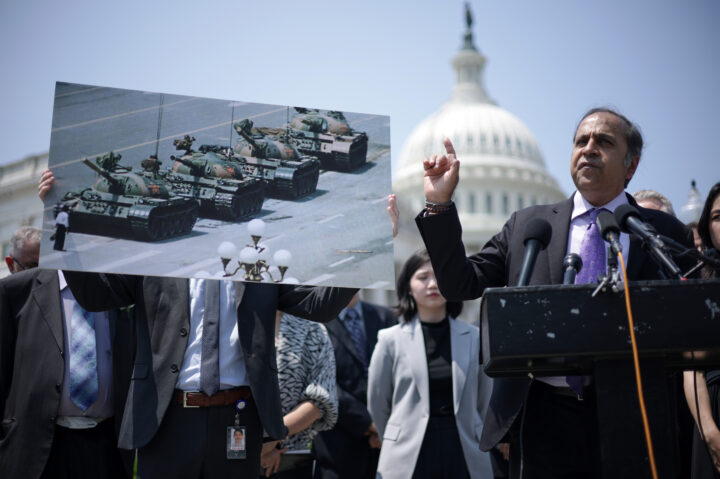
Rep. Raja Krishnamoorthi (D-IL) speaks next to the famous tank man photo during a news conference in front of the U.S. Capitol to commemorate the 36th anniversary of the Tiananmen Square protests and massacre on June 4, 2025 in Washington, DC.
As he competes for Illinois’ open Senate seat, Rep. Raja Krishnamoorthi (D-IL) is hoping that the state’s sizable Jewish community, concentrated in the Chicago area, will help him chart a path to victory in the Democratic primary.
Analysts see the Jewish vote as potentially up for grabs in the election to succeed retiring Sen. Dick Durbin (D-IL), which pits Krishnamoorthi against Rep. Robin Kelly (D-IL) and Lt. Gov. Juliana Stratton. Krishnamoorthi, a suburban Chicago lawmaker seen as more moderate than his challengers in the race, says he’s best positioned to claim that lane.
“I think Jewish Americans are just like everyone else, first of all, and they care about the full range of issues that all voters care about,” Krishnamoorthi said, when asked by Jewish Insider in a recent interview why the Jewish community should back him.
“However, I do think that they have a desire for a strong U.S.-Israel relationship,” Krishnamoorthi continued, “and I don’t think there’s anybody else with the track record in this race that I possess, showing strong support for that relationship, but also knowing why that relationship needs to continue to be strong on a bipartisan basis, and we need to take this out of politics.”
On a series of key votes on Middle East and antisemitism issues since the Oct. 7, 2023, Hamas-led attacks in Israel, Krishnamoorthi has sometimes voted against legislation supported by Jewish and pro-Israel groups, but his record on those issues has been stronger than Kelly’s. On several occasions when the two have voted differently, Krishnamoorthi has sided with positions supported by leading Jewish and pro-Israel groups.
Krishnamoorthi was endorsed by AIPAC in his 2024 reelection race; Kelly was not.
The Illinois Senate hopeful took a mildly critical position, however, on the U.S. strikes against Iran’s nuclear program. “Iran cannot have a nuclear weapon. Cannot,” Krishnamoorthi said, while adding that the President Donald Trump “cannot take unilateral military action in Iran without congressional approval,” calling for a diplomatic solution to the conflict.
Several days later, Krishnamoorthi said in a letter to the president that conflicting reports about the strikes’ effectiveness “are deeply alarming and require further evaluation from the intelligence community,” and condemned the administration for reported plans to limit intelligence-sharing with Congress.
The Illinois congressman said in a CNBC interview the morning following Israel’s initial strikes on Iran that he “can understand why the Israelis would take action, especially when Iran is so intransigent at the bargaining table,” noting the International Atomic Energy Agency’s findings of Iranian malfeasance.
Krishnamoorthi went on to say that he is “100% in favor of a strong U.S.-Israel relationship” but also is “hoping we can de-escalate a little bit for a second, maybe give Iran a chance to come back to the negotiating table and make sure that we protect our U.S. troops and interests in the region.” He said he believed it was not too late for an agreement.
He characterized Iran as desperate for sanctions relief, adding that “there has to be a verifiable way that we know that their nuclear program is dismantled,” and that a deal should also address Iran’s other malign activities, such as its support for the Houthis.
Krishnamoorthi spoke to JI days after an antisemitic extremist attacked a hostage awareness march in Boulder, Colo., and after he joined 74 other Democrats — less than half of the caucus — in voting for a Republican-led resolution that condemned the attack while also praising Immigration and Customs Enforcement. Kelly voted against that resolution.
“I think there’s been a rise in antisemitism in this country … and I don’t think we have done enough to stem the rise. And I wanted to send a very clear message that this is intolerable,” Krishnamoorthi said, of his vote. “I also think that people need to understand that antisemitism is kind of the canary in the coal mine for a host of other ills that accompany it. If we don’t stamp this out with one voice, it’s not going to go away.”
Asked about the fact that the Boulder attacker, the Capital Jewish Museum shooter and the arsonist who attacked Pennsylvania Gov. Josh Shapiro’s home all cited the war in Gaza as the motivation for their actions, Krishnamoorthi said that leaders need to be mindful of the role their rhetoric can play in driving a nationwide surge of political violence.
“I think that what you say is important because it could potentially ignite violence. Politically violent rhetoric can then lead to violence,” Krishnamoorthi said. “We should, as politicians, as elected officials, be very careful with what we say about the conflict, any conflict — that goes for what’s happening in Gaza, but it really goes for what happens anywhere.”
He cited the phrase, “from the river to the sea” as one slogan that “to a lot of people … is code for potentially taking violent acts against a certain people.”
To address the antisemitism crisis in the United States, Krishnamoorthi said that Congress needs to move beyond nonbinding resolutions to binding legislation. He noted that he was a lead sponsor of the 2023 Hate Crimes Commission Act, which was supported by some Jewish groups, that would study the rise of hate crimes and issues of underreporting and provide recommendations on how to prevent hate crimes.
Krishnamoorthi voted in favor of the Antisemitism Awareness Act, which Kelly opposed. He opposed some resolutions the House has voted on regarding antisemitism since Oct. 7, 2023, voting “present” on a resolution describing anti-Zionism as antisemitic, and against a resolution calling for college presidents to resign after their testimony before the House Committee on Education and the Workforce.
On the former, he said he’d heard from Jewish and other constituents “that there’s a difference between being against Zionism and being against Jewish people” and that he didn’t “want to necessarily broaden the definition so much that people could not somehow be critical of the policies of Israel, and if they were, would be called antisemitic, because it turns out that a lot of Jewish Americans told me that they fell in that category.”
On the latter, he said that he thought the college presidents’ testimony was “terrible” and “unacceptable” but felt that government intrusion into private universities or other organizations’ hiring decisions “opens a Pandora’s box of potentially really bad outcomes.”
Looking at the ongoing war in Gaza, Krishnamoorthi said that the immediate goal should be to reach a ceasefire and hostage-release deal as soon as possible, and to work in the long term toward a two-state solution. He said that a Palestinian state must be peaceful and cannot be led by Hamas.
“The good news is there’s a lot of other neighbors that are willing to help fund this type of situation, if we would just like keep our eyes on the prize,” he said, “because ultimately, what we want to see is the Abraham Accords fully blossom into full recognition of Israel by her neighbors, including Saudi Arabia and all the Gulf states and the Palestinian state being funded by them, and then real trade and other commercial ties binding the region.”
He said he’s been particularly impressed by Jordan’s King Abdullah II in annual meetings between the Jordanian monarch and the House Intelligence Committee.
“When you have people like that — he’s literally putting his life on the line every day for this vision — then I have hope,” Krishnamoorthi said. “But getting there is obviously a huge challenge. But we have to kind of seize this moment.”
On the Intelligence Committee, Krishnamoorthi said he sees on a daily basis the value of the U.S.-Israel relationship, which provides “remarkable intelligence sharing” and innovative defense technologies that help protect U.S. personnel and interests.
He voted in favor of supplemental U.S. aid to Israel last year, and said he would not support legislation like that pushed by Sen. Bernie Sanders (I-VT) and other Senate progressives that seeks to block various arms transfers to Israel. He noted that all U.S. arms sales are already subject to conditions, that placing additional “onerous conditions” on aid to Israel to defend itself would not be consistent with U.S. interests.
Rabbi Barry Axler, a Chicago-area supporter of Krishnamoorthi who is co-chairing a fundraiser for the Jewish and pro-Israel community, told JI that Krishnamoorthi is a longtime friend of the Jewish community and hopes it will stand behind him.
“Of the three candidates running here, he’s the strongest by far for Israel, and I’m getting behind him as best as I can,” Axler said. “One is Robin Kelly, who … has not been the best friend of our community, of Israel. The other one is the lieutenant governor, Stratton, and she’s got no background at all with us.”
“Even if the other two had more or less strong records on Israel, Raja’s been there before and we just can’t abandon him,” Axler continued.
He said that Krishnamoorthi has told him that his family has strong ties to the Jewish community, having sent his children to a local Jewish Community Center preschool.
“He said, ‘Every Friday they used to come home and sing ‘Shabbat Shalom’ — but I put my foot down when they wanted to build a sukkah,’” Axler recounted.
Adams would have to win over most New York City Republicans while remaining competitive with Democrats and winning over independents who weren’t eligible to participate in the Democratic primary

Yuki Iwamura-Pool/Getty Images
Democratic mayoral candidate Zohran Mamdani
Mainstream political and business leaders in New York City, including the organized Jewish community, will soon need to decide whether to coalesce against far-left presumed Democratic mayoral nominee Zohran Mamdani — by rallying behind the candidacy of scandal-plagued Mayor Eric Adams despite his significant political baggage.
Adams, who is running as an independent in the race, appears to be the only alternative candidate capable of putting together a campaign rallying anti-socialists across the city to stop Mamdani. It won’t be easy, given Adams’ own low approval ratings and record of alleged corruption, but the makings of an anti-Mamdani coalition are there — at least on paper.
For Adams to win plurality support in a general election, it would require most Republicans to put partisanship aside and vote for Adams to stop the socialist, and hold onto most of the Black, Jewish voters and moderate Democratic voters who voted in large numbers for former New York Gov. Andrew Cuomo in the primary. Adams benefits from the name recognition of incumbency, and the potential to receive support from outside centrist groups spending on his behalf.
Keeping a bipartisan coalition of that nature will be challenging, especially given the mayor’s own unpopular record. It would require a number of lucky breaks, from Cuomo opting not to run in the general election (he appears to be staying on the ballot without an active campaign) to Republicans effectively nudging their voters to back Adams when there’s a Republican already on the ballot. But if the campaign is less about Adams and more about stopping left-wing radicalism on crime, the economy and antisemitism, it’s not implausible to see a campaign coalescing around a “block socialism, vote Adams” type of message.
Here’s the political math: Adams would have to win over most New York City Republicans — President Donald Trump won 30% of the citywide vote in 2024 — while remaining competitive with Democrats and winning over independents who weren’t eligible to participate in the Democratic primary.
An Emerson College poll conducted amid Mamdani’s surge in late May offers some empirical evidence that such a coalition has an outside shot at victory in a general election, with a broader, more-moderate electorate. The survey found that with Mamdani as the Democratic nominee, he leads with 35%, Republican Curtis Sliwa finishes with 16%, Adams holds 15% and independent Jim Walden tallied 6%.
Put together the Sliwa, Walden and Adams votes, and you’ve got yourself a competitive race.
There’s already a lot of rumbling that Trump administration officials, eager to see Sliwa off the ballot, are looking at offering him a job in the administration to help nudge GOP voters into the Adams column to stop Mamdani. But Sliwa has given every indication so far that he’s not dropping out, which would force Republican leaders to more subtly nudge GOP partisans towards Adams.
The big red flag for anti-Mamdani moderates? Adams’ favorability rating in the same poll was a dismal 19%, with 69% viewing him unfavorably. That said, given the changed nature of the contest, the perception of Adams could change amid the shifting strategic environment. He’s already running a more energetic campaign than Cuomo did in the primary. (And it’s a safer bet to hope Adams’ numbers improve as an anti-Mamdani vehicle than betting on a total outsider with minimal name ID to play that role, as a few business leaders have suggested.)
There is some precedent for mainstream forces working to block a far-left or far-right candidate after an unexpected primary outcome. One of the most recent examples is socialist India Walton’s out-of-nowhere upset against Buffalo Mayor Byron Brown in a 2021 Democratic primary. Many analysts attributed her victory to a left-wing surge; it turned out to be a mirage of a low-turnout election before a broader array of voters really had a chance to scrutinize her record and background. Brown easily won the general election — as a write-in candidate.
There’s also former Sen. Joe Lieberman winning as an independent in 2006 after losing the Democratic primary, with Republicans signaling to their voters to back the senator over the also-ran GOP nominee on the ballot. And there’s the 1991 Louisiana governor’s election where scandal-plagued Democratic Gov. Edwin Edwards beat David Duke, whom Republican voters knowingly nominated. Edwards’ slogan? “Vote for the Crook. It’s Important.”
To be sure, any anti-Mamdani effort will be something of a long shot. Mamdani is now winning support from elected New York Democratic leaders all too willing to accommodate his radical record, and he generated strong turnout in the primary that underscores his natural charisma and strength as a politician. He’s got more starpower than many of the other aforementioned extreme nominees.
But if Jewish leaders believe Mamdani would pose a serious threat to Jewish life and safety in the city if elected, you’d expect they would make every effort to stop his candidacy — especially since there’s a chance, albeit a small one, that his momentum could be stunted as his record draws closer attention.
GOP operatives told JI they expect Mamdani to prominently feature in future ads and broader messaging targeting Democrats nationwide

Kevin Dietsch/Getty Images
U.S. Sen. Steve Daines (R-MT) questions U.S. President-elect Donald Trump’s nominee for Secretary of State, Sen. Marco Rubio (R-FL) during his Senate Foreign Relations confirmation hearing at Dirksen Senate Office Building on January 15, 2025 in Washington, DC.
Republican campaign operatives say they intend to tie vulnerable Democratic candidates to Zohran Mamdani, the presumed winner of New York City’s Democratic mayoral primary, over his far-left policies.
Mamdani’s victory on Tuesday evening was met with surprise and intrigue within GOP campaign circles, with operatives saying his win provides an opening to force Democratic candidates to say on-record if they align with the 33-year-old democratic socialist’s vision for the nation’s biggest city and long history of anti-Israel activism. GOP operatives told Jewish Insider they expect Mamdani to prominently feature in future ads and broader messaging targeting Democrats nationwide.
“Socialist Zohran Mamdani has demonstrated he’s proudly antisemitic and anti-Israel, supports criminals over law-abiding citizens, and wants to crush New Yorkers with even higher costs. Mamdani is dangerously wrong, and Republicans will make sure that every single voter remembers that House Democrats are still too cowardly to condemn him,” Maureen O’Toole, a spokeswoman for the National Republican Congressional Committee, the House Republicans’ campaign arm, told JI.
The NRCC has already seized on Mamdani’s candidacy to attack vulnerable swing district New York Democratic Reps. Laura Gillen and Tom Suozzi — both of whom distanced themselves from Mamdani on Wednesday.
“If Republicans, in such a public fashion, nominated someone so fringe and so extreme and so outside of the mainstream, there would be calls for condemnation. There would be calls for Republicans to denounce them,” a GOP campaign official, speaking on condition of anonymity, said of how the party will respond to Mamdani’s political ascent. “We’d like there to be calls to separate themselves from Democrats.”
Sen. Steve Daines (R-MT), who chaired the National Republican Senatorial Committee last cycle, said Republicans should amplify Mamdani as the new face of the Democratic Party.
“It’s a reflection of how crazy the Democrats have become that they would nominate, the left would nominate that kind of candidate. It’s a frightening development,” Daines told JI.
Daines’ view is shared by several senior GOP campaign operatives, all of whom believe Mamdani can be presented to voters as the new figurehead of the Democratic Party.
“From a political standpoint, this takes the party’s most polarizing progressive and puts them on a national stage. It’s a big opportunity for us. There’s gonna be massive ramifications on the national level. It’s a real gift for Republicans,” a longtime GOP campaign operative told JI.
Officials familiar with GOP strategy in House and Senate races predicted Suozzi, Gillen and Reps. Pat Ryan (D-NY), Josh Riley (D-NY) and Nellie Pou (D-NJ) would be targeted with ads tying them to Mamdani, given the proximity of each of their districts to the city.
Republicans are also likely to single out Minnesota Lt. Gov. Peggy Flanagan, who is running to replace retiring Sen. Tina Smith (D-MN), and Adbul El-Sayed, a candidate running for the Democratic nomination to replace outgoing Sen. Gary Peters (D-MI), as being aligned with Mamdani on policy.
“I think Democrats have a real issue on their hands. What will we be talking about for the remainder of this New York election and going into the next year? We’ll be asking if a socialist can lead the Democrat Party, if a socialist can be the next face of the party,” a Republican official involved in Senate races said.
“We’re going to be profiling these candidates like they’re AOC and Ilhan Omar, people that align more closely with Mamdani. We’re not going to be talking about the moderates in the Democrat Party anymore, we’re not even talking about Democrat leadership,” the official said. “We’re going to talk about the most radical and fringe members of the party. I think you’re going to see some lifeblood pumped into the campaigns of some Republicans as a result.”
New York City Democrats knew Zohran Mamdani refused to condemn ‘globalize the intifada’ rhetoric. They voted for him anyway.

Michael M. Santiago/Getty Images
State Assemblyman Zohran Mamdani, with his mother, Mira Nair, left, his wife, Rama Duwaji, and his father, Mahmood Mamdani celebrate on stage during an election night gathering at The Greats of Craft LIC on June 24, 2025 in the Long Island City, Queens.
When Joe Biden announced his presidential campaign in 2019, he stated explicitly, in a slickly edited campaign video, that one of the issues motivating him to reenter politics was fighting antisemitism and hate. He specifically mentioned the violent Unite the Right rally in Charlottesville, Va., in 2017 and the white nationalist protesters who were “chanting the same antisemitic bile heard across Europe in the ‘30s.”
One of Biden’s former high-level aides pointed out to Jewish Insider how different that rhetoric was from the position staked out by Zohran Mamdani, the upstart New York assemblyman who won a surprise victory in the New York City mayoral Democratic primary on Tuesday.
In the closing days of the campaign, Mamdani, who began his activism journey as a Students for Justice in Palestine leader at Bowdoin College, defended the term “globalize the intifada” as an expression of Palestinian rights. Mamdani’s defense of the phrase was strongly criticized by Jewish groups across the ideological spectrum, who view the phrase as a call to violence. While Mamdani has pledged to keep Jewish New Yorkers safe, he has not acknowledged their concerns about his invocation of a phrase tied to a violent, yearslong Palestinian uprising.
“Biden was elected running a campaign in 2020 premised on combating antisemitism. That was the animating feature that got him into the race. So the politics of this have really moved,” said the former White House official. “This is all about language and people using their microphones, and the fact that someone could feel empowered to double down on these ideas and win a mayoral race in New York City, that doesn’t happen by accident. It takes years of moving the goalposts on this language, on what it means to be antisemitic in America in 2025.”
This Biden administration staffer, who requested anonymity for fear of professional backlash, is one of many Jewish Democrats questioning where their party is heading after a dynamic young socialist with radical anti-Israel politics is on track to become mayor of the largest city in America, which has the largest Jewish population outside of Israel. Coupled with Democrats’ reluctance to offer support for President Donald Trump’s targeted strikes on Iranian nuclear sites, which drew support from major Jewish groups, Mamdani’s ascension has some pro-Israel Democrats concerned about the future of their party.
Put more bluntly by another senior Biden administration official: “I feel like a person without a party,” they told JI.
Those two voices, who served at high levels of the Biden White House, are part of a small cadre of disillusioned former Biden staffers who want to see a more vocally pro-Israel tack from the Democratic Party’s current leaders, although they aren’t yet willing to say so publicly with their names attached. But their frustration represents a simmering undercurrent of concern among Jewish Democrats that has started to spill into the open after Mamdani’s victory.
Lawrence Summers, an economist who served as treasury secretary under President Bill Clinton and director of the National Economic Council under President Barack Obama, said in a post on X that he is “profoundly alarmed” about the future of the Democratic Party and the country “by yesterday’s NYC anointment of a candidate who failed to disavow a ‘globalize the intifada’ slogan and advocated Trotskyite economic policies.”
Some prominent Jewish Democrats acknowledged Mamdani’s shortcomings but tempered that concern by noting that voters were likely drawn in by his economic messaging, not his anti-Israel stance, and by the presence of a scandal-plagued rival in Andrew Cuomo, who ran a lackluster campaign.
“I think it is very disheartening that he was not able to say the phrase ‘globalize the intifada’ feels very threatening to Jews. I find that very distressing, but I don’t think that that’s the issue that the majority of New Yorkers were voting on,” said former Rep. Kathy Manning (D-NC), the board chair of Democratic Majority for Israel. “I don’t see it as a referendum on, people don’t care about antisemitism.”
Halie Soifer, CEO of the Jewish Democratic Council of America, expressed concern that New York Democrats elected a candidate “whose views on Israel deeply concern many American Jews.” But, she argued, “Democratic leadership and the vast majority of our elected officials stand with Jewish Americans on the range of issues of importance to Jewish voters.”
Mamdani’s election came days after a watershed foreign policy moment, in which Trump ordered American strikes on several Iranian nuclear sites. Democrats, even many moderates, responded by criticizing Trump for his unilateral action without consulting Congress, with many — including House Minority Leader Hakeem Jeffries (D-NY) — failing to even acknowledge the threat Iran posed to Israel and the U.S.
“I think overwhelmingly, Democrats have not done a good job, and the proof is in the pudding, that even staunch Democrats who would never consider supporting Donald Trump or ever vote for a Republican are just really pained by what feels like a refusal to even acknowledge the seriousness of the threat of the Iranian nuclear program,” said Amanda Berman, CEO of Zioness, a progressive pro-Israel organization. Manning said she “would have loved to see not just my [former] colleagues but newscasters acknowledge that Iran is a bad actor.”
Wary Jewish Democrats are keeping a watchful eye on how party leaders handle Israel- and antisemitism-related issues.
“While I believe the majority of Democrats are pro-Israel economic moderates, we will see if our party leadership capitulates to the party’s most radical anti-Israel wing in the city with the most Jews in the world,” Esther Panitch, a Democratic state representative in Georgia and the only Jewish politician in the Georgia Statehouse, told JI on Wednesday. “I’m not optimistic at this moment, given that they have welcomed non-Democrats DSA [Democratic Socialists of America] and WFP [Working Families Party] into the tent.”
Senate Minority Leader Chuck Schumer and Jeffries, both of whom live in New York City, each congratulated Mamdani with social media posts on Wednesday, although they did not outright endorse him.
Sara Forman, the executive director of New York Solidarity Network, which promotes pro-Israel candidates in local races in New York, called Mamdani’s election “a seismic change” for Democratic politics in New York. Far-left activists, she said, are now firmly inside of the party apparatus in the city, and she pledged to stick around and work to make sure the party is not represented by those activists.
“I am not advocating Jews leaving the Democratic Party,” Forman told JI. “One of the things that I’m going to work on, and I’ve been working on, is getting people to join me in the chorus and to not sit back and watch the car accident happening in front of their eyes, but instead, speak up. Speak out. Don’t surrender.”
According to Bradley Tusk, a venture capitalist and longtime political operative who served as former New York City Mayor Michael Bloomberg’s 2009 campaign director, the challenge for Democrats is how to overcome the most ideological voters who turn out to vote in primaries.
“It wasn’t that he was this candidate who had all these interesting, exciting affordability ideas, but also happened to be anti-Israel. The anti-Israel was a big part of what allowed him to succeed,” Tusk told JI. “I think structurally, we have put ourselves in a bind where, when the Democratic Party is only decided by small ideological actors who vote in primaries, and that group tends to lean much more into anti-Israel, antisemitism, the Democratic Party is pretty stuck.”
The stunning rise of the 33-year-old democratic socialist with a long history of anti-Israel activism sent shockwaves through New York City’s political establishment
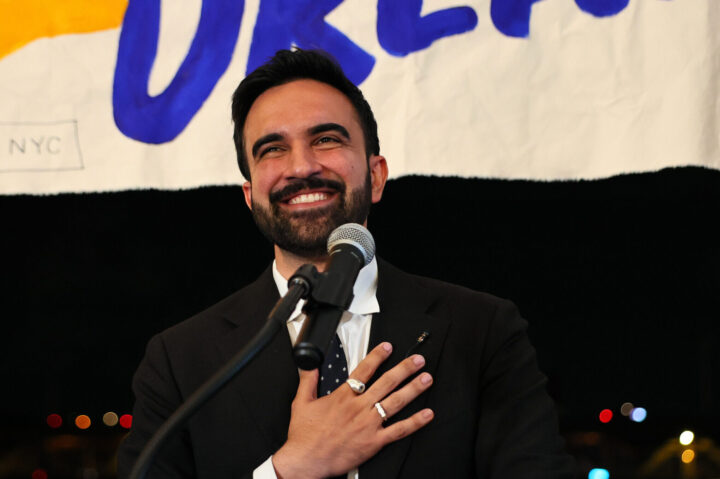
Michael M. Santiago/Getty Images
New York mayoral candidate, State Rep. Zohran Mamdani (D-NY) speaks to supporters during an election night gathering at The Greats of Craft LIC on June 24, 2025 in the Long Island City neighborhood of the Queens borough in New York City.
Zohran Mamdani’s presumed victory over Andrew Cuomo in New York City’s Democratic primary for mayor on Tuesday evening marks an extraordinary upset that until recently seemed all but unthinkable for the far-left state assemblyman from Queens who entered the race last October with virtually no name recognition.
The stunning rise of the 33-year-old democratic socialist with a long history of anti-Israel activism sent shockwaves through New York City’s political establishment and is already reverberating beyond the Big Apple, raising questions over the ideological direction of the Democratic Party as it has struggled to land on a cohesive messaging strategy to counter President Donald Trump.
With the midterms looming, Trump’s allies are already reportedly preparing to link Mamdani’s radical politics to the broader Democratic brand.
Meanwhile, in a place home to the largest Jewish population of any city in the world, Mamdani’s path to the nomination is also contributing to a growing sense of political homelessness among Jewish Democrats who voiced discomfort with his strident criticism of Israel and refusal to condemn extreme rhetoric such as “globalize the intifada,” a slogan that critics interpret as fueling antisemitism.
Cuomo, the scandal-scarred former governor of New York, leaned into his support for Israel and raised alarms about the rise of antisemitism as he courted Jewish voters. But his message ultimately failed to resonate over Mamdani’s sustained focus on affordability, including calls to “freeze the rent” that galvanized younger voters who turned out en masse.
While the final primary results are unlikely to be fully counted until next week because of the city’s ranked-choice system, Mamdani, with nearly 44% of first-place votes, held a commanding seven-point lead over Cuomo on Tuesday night — forcing the former governor to deliver a concession speech earlier than most had expected.
“Tonight was not our night,” Cuomo said at his election night watch party in Manhattan. “Tonight was Assemblyman Mamdani’s night.” He said he had called Mamdani to congratulate him for “a great campaign” that “touched young people and inspired them and moved them and got them to come out and vote.”
“He deserved it,” Cuomo concluded. “He won.”
Mamdani, for his part, said in his own speech that he would “be a mayor for every New Yorker,” and sought to assuage voter concerns about his views on Israel and the Middle East. “There are millions of New Yorkers who have strong feelings about what happens overseas. Yes, I am one of them,” he said, adding, “You have my word to reach further, to understand the perspectives of those with whom I disagree.”
Mamdani’s insurgent victory five months into President Donald Trump’s second term was reminiscent of then-upstart Rep. Alexandria Ocasio-Cortez’s upset primary victory over then-Rep. Joe Crowley in the spring of 2018, one of the seminal moments that year of the political backlash to Trump. It was an early signal that the party, even as it elected a number of moderate lawmakers in that year’s Democratic wave, was moving inexorably leftward in reaction to a Trump White House.
Even as Mamdani is poised to win the Democratic nomination, the two-term state legislator is facing a potentially messy general election that Cuomo could enter on a separate ballot line. The former governor indicated on Tuesday that he would “take a look” at the race and would “make some decisions” but gave no clear confirmation of his plans.
As Cuomo mulls his decision, it remains unclear who will emerge as a moderate standard-bearer in the November election, though the primary results were sure to be an encouraging turn for Eric Adams, the embattled mayor running as an independent — and whose team was hoping for a Mamdani victory.
The crowded general election also includes Jim Walden, a centrist independent, and Curtis Sliwa, the Republican nominee, raising the specter of a fractured vote that could help propel Mamdani to Gracie Mansion.
Given that possibility, one Jewish leader in New York City recently speculated to Jewish Insider that Republicans would choose to unite behind Adams over Sliwa, “because then you have a real chance of winning.”
One Democratic strategist predicted that if Mamdani wins, some Jewish residents will move out of the state
Yuki Iwamura-Pool/Getty Images
Democratic mayoral candidate Zohran Mamdani
As the closely watched Democratic primary for mayor of New York City wraps up today, many Jewish and pro-Israel activists are now confronting a mounting sense of alarm that Zohran Mamdani, a far-left assemblyman from Queens, could win the nomination, propelling a fierce critic of Israel to the general election — and, potentially, Gracie Mansion.
In a city home to the largest Jewish community outside of Israel, Mamdani’s rise has fueled anxiety among Jewish leaders — particularly as his hostile positions toward Israel have hardly dented his standing in a competitive race that has narrowed to a two-person matchup.
Even if Mamdani does not win, Jewish Democrats uncomfortable with his strident criticism of Israel and alleged insensitivity to rising antisemitism fear that his surging campaign could end up alienating Jewish voters who have long called the party home.
“The Jewish community is going to face a real shock if Mamdani gets the nomination,” Mitchell Moss, an urban policy professor at New York University who is backing Cuomo, said in an interview with Jewish Insider on Monday. “A lot of people have come to realize that anti-Israel sentiment has metastasized into antisemitism.”
The Tik Tok-savvy Mamdani, a 33-year-old democratic socialist, has largely polled in second place behind his chief rival, former New York Gov. Andrew Cuomo, though a poll released by Emerson College on Monday showed Mamdani narrowly prevailing.
Cuomo’s campaign, for its part, has dismissed the survey as an outlier and cited other polls showing him with a more robust lead in the crowded race to unseat Mayor Eric Adams, who is seeking reelection as an independent. Fix the City, a pro-Cuomo super PAC that has slammed Mamdani’s approach to Israel in several attack ads, also released a new poll Monday that found Cuomo with a comfortable, 24-point lead over Mamdani in the final round of voting.
While support for Israel had once been viewed as a prerequisite for any winning campaign in New York City, Mamdani’s bid has tested that proposition. He has suggested he is uninterested in visiting Israel if elected, breaking with long-standing precedent, and has declined to acknowledge Israel’s right to exist as a Jewish state.
The two-term state lawmaker, who has endorsed boycotts targeting Israel, has said he would divest from Israel as mayor and promised to arrest Israeli Prime Minister Benjamin Netanyahu for alleged war crimes if he were to enter the city. Perhaps most controversially, Mamdani has drawn scrutiny for defending calls to “globalize the intifada” — a slogan that critics interpret as stoking violence against Jews.
Despite backlash, Mamdani doubled down on that defense during a radio interview on Monday, saying the phrase “has a variety of meanings to a variety of people.”
Many Jewish and pro-Israel activists in New York City have found his response alarming. “No matter what the outcome tomorrow, the fact that Zohran has been able to capture the attention of so many people who are really blind to his antisemitic tendencies really says something about the state of our electorate right now,” Sara Forman, who leads a pro-Israel super PAC that has urged voters to rank Cuomo first and to exclude Mamdani entirely, told JI.
Mamdani’s “foreign policy stances are isolating Jews and freezing us out from our political home base in the Democratic Party,” Forman said in an interview on Monday. “If the Democratic Party doesn’t wake up and start speaking to its core constituencies of Blacks, Jews and Latinos, we’re going to find our party rebuilt in someone else’s image.”
Hank Sheinkopf, a veteran Democratic strategist, predicted a Mamdani victory could end up pushing “more Jews nationally into the Republican column” and said Orthodox Jews might choose to relocate to South Florida and New Jersey. “Whether he wins or loses,” Sheinkopf said, the contours of the race have sent a concerning message that he characterized as “Jews don’t matter.”
Mamdani has rejected accusations of antisemitism, saying his opponents have weaponized such charges to score “political points.” He has said he is sensitive to rising antisemitism across New York City and has vowed to increase funding to counter hate crimes by 800%.
Early voting tallies have suggested that Mamdani has galvanized his base of younger supporters who are enlivened by his calls to “freeze the rent” and to deliver free buses as he has emphasized a message of affordability.
Cuomo, meanwhile, is depending on strong turnout from Black, Latino and Orthodox Jewish voters who have long been part of his core coalition. The former governor has locked up major endorsements from a range of key Orthodox leaders in Williamsburg and Borough Park, a Hasidic enclave in Brooklyn where he spent time on Sunday rallying a community that could deliver thousands of votes in a close election.
One Satmar leader in Williamsburg told JI that he is expecting solid turnout from New York City’s largest Hasidic voting bloc, predicting up to 8,000 votes for Cuomo, who has worked to mend relationships with Orthodox leaders that soured over his crackdown on religious gatherings during the COVID-19 pandemic.
The Cuomo campaign believes polls are missing the Orthodox vote, which could make the difference in a close election, according to an advisor who said that turnout from the community has been encouraging. “But what else are they missing is the question,” the advisor told JI on Monday, speaking anonymously to address the race.
Still, some Orthodox leaders remain on edge as Mamdani has continued to defy the odds over the course of the campaign. “He has really excited his base,” said one Orthodox leader in Brooklyn. “I am very fearful that he could actually make it, especially on ranked choice.”
Cuomo, who has won endorsements from Rep. Jim Clyburn (D-SC) and former President Bill Clinton in recent days, has also struggled to overcome his own vulnerabilities in the race, including accusations of sexual misconduct that forced his resignation from office in 2021. He denies the allegations and said he regrets stepping down.
In the final days of the election, the former governor — who has called antisemitism “the most important issue” and touted his staunch support for Israel — has insisted that his decades of government experience make him better suited to handle threats from Iran after the U.S. bombing of its nuclear sites over the weekend.
“Who do you want in charge in that situation?” he said of possible Iranian retaliation for the attacks. “Who’s handled situations like Hurricane Sandy and COVID and terrorist threats? This is not a job for on-the-job training.”
As for the bombing itself, Cuomo backed the effort to eliminate Iran’s nuclear capabilities, but he took issue with President Donald Trump’s decision to do so unilaterally without first consulting Congress — underscoring another key difference with Mamdani on Middle East policy.
Mamdani criticized the attack on Iran as “the result of a political establishment that would rather spend trillions of dollars on weapons than lift millions out of poverty, launch endless wars while silencing calls for peace, and fearmonger about outsiders while billionaires hollow out our democracy from within.”
The other candidates in the crowded primary, including Brad Lander, the city comptroller, and Adrienne Adams, the City Council speaker, have struggled to gain traction, polling has indicated.
Regardless of the primary result, which is unlikely to be confirmed for several days because of the ranked-choice system, both Mamdani and Cuomo could run in the general election on separate ballot lines, a possibility neither candidate has ruled out.
“This is a prelude to November,” said Moss, the urban policy professor, envisioning a high-stakes general election. “If Mamdani wins in New York,” he warned, “you can say goodbye to the Democratic Party for a long time.”
The Queens assemblyman and New York City mayoral candidate refused to condemn the phrase as example of antisemitism on the left
Yuki Iwamura-Pool/Getty Images
Democratic mayoral candidate Zohran Mamdani
Zohran Mamdani, a leading candidate in next Tuesday’s New York City mayoral primary, refused to condemn calls to “globalize the intifada” during a new podcast interview with The Bulwark released on Tuesday, arguing the phrase is an expression of Palestinian rights.
In an exchange about antisemitic rhetoric on the left, Mamdani was asked by podcast host Tim Miller to share his thoughts on the phrase, which has been invoked at anti-Israel demonstrations and criticized as an anti-Jewish call to violence.
“To me, ultimately, what I hear in so many is a desperate desire for equality and equal rights in standing up for Palestinian human rights,” said Mamdani, a far-left assemblyman from Queens who has long been an outspoken critic of Israel. “And I think what’s difficult also is that the very word has been used by the Holocaust Museum when translating the Warsaw Ghetto Uprising into Arabic, because it’s a word that means struggle,” he said, apparently referring to the U.S. Holocaust Memorial Museum in Washington.
He added that, “as a Muslim man who grew up post-9/11, I’m all too familiar in the way in which Arabic words can be twisted, can be distorted, can be used to justify any kind of meaning.”
“I think that’s where it leaves me with a sense that what we need to do is focus on keeping Jewish New Yorkers safe,” Mamdani continued, after noting that antisemitism is a “real issue” he plans to address if elected mayor. “The question of the permissibility of language is something that I haven’t ventured into.”
Mamdani, who is polling in second place behind former Gov. Andrew Cuomo, has faced criticism over his approach to Israel during the campaign. He has declined to acknowledge Israel’s right to exist as a Jewish state and said he would divest from Israel if elected, among other comments and actions that have raised alarms among many Jewish voters.
Cuomo, who has deemed rising antisemitism “the most important issue” in the race, has for his part denounced calls to “globalize the intifada,” saying that such phrases are “giving license to come after Jews.”
Earlier this month, the UJA-Federation of New York and other local Jewish groups called on all candidates running for mayor “to unequivocally condemn dangerous rhetoric — such as ‘globalize the intifada’ — that has inspired deadly acts against Jews, most recently in Colorado, Washington, D.C., and Pennsylvania.”
Sherrill, a pragmatic suburban lawmaker and military veteran, will face Republican former state Rep. Jack Ciattarelli in the November general election

AP Photo/Heather Khalifa
Rep. Mikie Sherrill, D-N.J., greets people during a "Get Out the Vote" rally, Saturday, June 7, 2025, in Elizabeth, N.J.
Rep. Mikie Sherrill (D-NJ) comfortably prevailed in New Jersey’s Democratic gubernatorial primary last night, translating strong fundraising and backing from numerous party leaders into a double-digit margin of victory in the six-candidate field. With most of the ballots tallied, Sherrill won just over one-third of the Democratic vote.
Sherrill, a pragmatic suburban lawmaker and military veteran, will face Republican former state Rep. Jack Ciattarelli in the November general election. Boosted by President Donald Trump’s endorsement, Ciattarelli easily won the GOP nomination.
Sherrill continues the trend of moderate-minded candidates prevailing in recent Democratic primary fights. Three of her Democratic opponents ran to the congressman’s left, with left-wing Newark Mayor Ras Baraka even getting arrested at a federal immigration facility. That activist messaging didn’t end up winning him much traction in the race.
Baraka’s anti-Israel record and past praise of Louis Farrakhan concerned Jewish leaders, but he ultimately finished well behind Sherrill, in second place with 20% of the vote.
Rep. Josh Gottheimer (D-NJ) ran to the center in the race, spent heavily and worked hard to win over the significant Jewish vote in the state, landing key endorsements from several Orthodox groups. But aside from handily winning his home county of Bergen, he struggled to make inroads in other parts of New Jersey, tallying 12% of the vote. (In Ocean County, where the congressman picked up a key endorsement of the Lakewood Vaad, he lagged in third place.)
Sherrill has compiled a largely pro-Israel record during her time in Congress, and called for more action against antisemitism in the aftermath of the murder of Israeli Embassy staffers outside the Capital Jewish Museum. But she hasn’t been as outspoken as Gottheimer on issues affecting the Jewish community, and declined interview requests from Jewish Insider during the last month of the campaign to more fully discuss her views on antisemitism.
Ciattarelli also spoke out against antisemitism on the campaign trail, and touted his visit to Israel last summer as he campaigned in Lakewood.
The November general election will offer the first test of whether Trump’s significant gains in the Garden State in last year’s presidential election will hold now that he’s been in office for months — or whether there’s an emerging backlash to his polarizing governance. Trump only lost the once solidly-blue state to then-Vice President Kamala Harris by six points, a much narrower margin than Democrats anticipated.
Ciattarelli ran against outgoing Gov. Phil Murphy, a Democrat, in 2021, and also ran a surprisingly competitive race against the incumbent, losing by just three points.
John Sullivan worked closely with the Israeli government on counterterrorism operations from 2017-2020

John Sullivan campaign page
John Sullivan
John Sullivan, who recently joined the increasingly crowded Democratic primary race to face Rep. Mike Lawler (R-NY) next November, brings unique pro-Israel bona fides to the race, even among a field of candidates vowing support for the Jewish state: From 2017-2020, Sullivan was the top FBI intelligence official living and working in Israel, liaising with the Israeli government on counterterrorism operations.
Those three years, Sullivan told Jewish Insider in an interview in May, gave him on-the-ground experience combating Hamas and Hezbollah and protecting both Israeli and American citizens. He said he’s seen and experienced firsthand the threats posed by both terror groups.
“Working really closely with the Israelis to do everything possible to keep Israel safe was a key part of my life and my work for three years while I was overseas,” Sullivan said. “Israel has a very special place in my family’s heart.”
He described his time in Israel, where said he worked closely with Israeli authorities and saw firsthand how his work could stop attacks and keep people safe, as some of “the best experience that I had in my career.”
“It’s the kind of work where you can see that you’re doing something good to help another country. Israel in particular has so many enemies in the Middle East … and so to be there and to be fighting for them and doing whatever I could to keep them safe was really something that I take with me, and was really inspiring,” Sullivan said.
Sullivan said he also appreciated getting to live in and be part of the Israeli culture and community. He and his husband adopted their son while living in Israel, and Sullivan said that raising a young child in the country showed the “compassion and the community” that the country has fostered.
“You get to know the community, get to know the people, and get to understand sort of just how important Israel is, not only for the United States, for our security, but also for the world, because having a strong democracy, who can be a great ally of the United States and who we support, as we should — It’s just so important to have that kind of land there, and that country there, who share our ideals and the democracy in the Middle East,” Sullivan said.
He said that for the first 18 months after he adopted him, Sullivan’s son experienced Israeli traditions and heard both English and Hebrew. Sullivan has remained in touch with the Israeli nanny who worked for the family — ultimately giving him a direct connection to the Oct. 7, 2023, Hamas attack.
The nanny, Sullivan explained, attended the Nova music festival.
“We have to also allow Israel to defend itself and make sure that there’s no outside threat coming from terrorist organizations, including Hamas and their operatives,” Sullivan said.
“She was WhatsApp messaging us that night, when it was happening, asking to see our son because she wanted to say goodbye,” Sullivan said. “I was trying to think of all of the training that I had done to make sure that she was being safe … Seeing that tragedy both on the news but then through a person that you care about who is experiencing it directly really shows the hatred that exists in parts of the world for the Jewish community.”
Addressing the ongoing war, Sullivan described a ceasefire deal to free the hostages as important, but emphasized that Israel must continue to be able to protect itself, noting that Hamas fighters and leaders continue to hide in tunnels underneath schools and hospitals in Gaza.
“We have to also allow Israel to defend itself and make sure that there’s no outside threat coming from terrorist organizations, including Hamas and their operatives,” Sullivan said.
He said Israel should have significant influence in how Gaza is rebuilt and in working to ensure that Gaza is “more democratic and more aligned with Israel and America’s values” going forward, and that Hamas cannot have a role in governance in Gaza.
Sullivan praised Israel’s operations in southern Lebanon to dismantle Hezbollah’s infrastructure.
Asked about a two-state solution, Sullivan said that such a resolution should be the U.S.’ ultimate goal, but “at the same time, we need to give Israel the ability to make the decision for themselves” and that Israel must feel that any outcome is in its best interests and will protect its security.
He added that Iran and its proxies should be “choke[d] off.” Sullivan described the negotiations that the Trump administration has pursued as “the right start,” though he said he was worried about the lack of experience of some of the U.S. officials involved in leading those talks.
Sullivan said one of his frustrations with the original 2015 nuclear deal was that it released significant funding and provided sanctions relief for Iran, giving it more ability to fuel regional terrorism. He argued that relief should not have come until later in the deal’s implementation, once Iran had made more progress in dismantling its nuclear infrastructure and shown it would cooperate with international inspections.
He said that regional terrorism should be addressed in any new deal with Iran. He said a new deal with Iran should also include unfettered access for inspectors to Iran’s nuclear program or, barring that, full dismantlement of Iran’s nuclear enrichment capabilities. Iran, he said, is not “a fair partner and somebody who’s really truly focused on playing by the rules”
Sullivan’s other work at the FBI included tackling gangs and cartels and pursuing those involved in the Jan. 6, 2021, attack on the U.S. Capitol and other domestic terrorism cases, including an incident in which individuals called bomb threats into Jewish institutions around the country.
“I will call out antisemitism whenever it exists, and I’ll call on the law enforcement community — knowing the tools and the abilities they have — to, while respecting First Amendment rights, do everything to make sure Jewish people here in America, Israelis in Israel are feeling safe and have the ability to go about their day freely being protected … without the fear of harassment or being targeted simply based on their religion and their culture,” Sullivan said.
“We have people in Congress who often will try to say something that’s kind of middle-of-the-road [on antisemitism]. With me, you’ll never have to worry about that,” Sullivan said.
He said that while it’s important to protect First Amendment rights, his law enforcement career taught him that there are limits to such speech and that threats to Jewish people’s safety and security require a response. He said, as an example, that campus protests cheering on Hamas make Jewish students feel unsafe and have crossed into antisemitism.
“I will call out antisemitism whenever it exists, and I’ll call on the law enforcement community — knowing the tools and the abilities they have — to, while respecting First Amendment rights, do everything to make sure Jewish people here in America, Israelis in Israel are feeling safe and have the ability to go about their day freely being protected … without the fear of harassment or being targeted simply based on their religion and their culture,” he continued.
Sullivan suggested that the Trump administration is not as focused on the issue as it claims to be, characterizing its moves to deport student visa holders over alleged anti-Israel activity as “actions more targeted on immigration and veiled in [combating] antisemitism.”
He said that there are “a lot better ways to go about fighting back against antisemitism.”
Sullivan spoke to JI prior to the recent antisemitic terrorist attacks in Washington, D.C. and Boulder, Colo.
Sullivan said that Trump’s decision to pardon all of those involved in Jan. 6 on his first day in office, administration officials’ moves to force out other top FBI officials and other policies convinced him to resign his post at the agency and speak out publicly against the administration. He accused the administration of jeopardizing counterterrorism efforts through its actions at the FBI.
Outside of national security policy, Sullivan said that the administration’s tariff policy and other economic moves are making life less affordable for his and other families, another motivating factor for his run.
He accused Lawler of masquerading as a moderate while actually backing the Trump administration’s policies, pointing to Trump’s endorsement of Lawler for reelection.
Sullivan, one of six Democratic candidates who’ve already joined the race, argued that his national security and law enforcement experience protecting U.S. citizens will help distinguish him from the field. He said his work inside the federal government showed him the good that the federal government can do for the American people.
While Sullivan’s particular experience is unique, each of the candidates running in the district, which is home to a significant Jewish population, has highlighted their support for Israel, and many are speaking in similar terms about combating antisemitism. One of the other candidates in the race, Cait Conley, also has experience working on national security issues and in the Middle East.
Lawler, for his part, has focused on building and maintaining strong relationships with the Jewish community in the district. His strong support among Jewish voters helped him win re-election in 2024; he is one of only three House Republicans to win a district that Kamala Harris carried in the presidential election.
NYC mayoral candidate Zohran Mamdani said a trip to Israel is not necessary to support Jews but said in 2020 he would ‘coordinate a trip with other legislators to Palestine’
Yuki Iwamura-Pool/Getty Images
Democratic mayoral candidate Zohran Mamdani
In his campaign for New York City mayor, Zohran Mamdani, a far-left Queens state assemblyman polling in second place behind former New York Gov. Andrew Cuomo, has indicated he would not visit Israel if he is elected, saying he does not believe that such a trip is necessary “to stand up for Jewish New Yorkers.”
“I believe that to stand up for Jewish New Yorkers means that you actually meet Jewish New Yorkers wherever they may be, be it at their synagogues and temples or their homes or on the subway platform or at a park, wherever it may be,” Mamdani, a fierce critic of Israel, reiterated in comments at a mayoral forum hosted by several progressive Jewish groups on Sunday night.
By contrast, in a 2020 Zoom discussion with the Adalah Justice Project, a pro-Palestinian advocacy group, Mamdani said he was planning to organize a trip to the Palestinian territories, suggesting that he would make an exception for an issue he has upheld as one of his top causes during his tenure in Albany.
“Once COVID is over, I am planning on finding a way to coordinate a trip with other legislators to Palestine,” Mamdani said at the time. “We’ll figure that one out. I’ll probably get to the border and get turned away, but at the very least I’m going to organize it and go myself.”
It is unclear if Mamdani organized such a trip. His campaign did not immediately respond to a request for comment on Monday.
The comments, however, broadly underscore how Mamdani’s past remarks on the Israel-Palestinian conflict have become a source of growing tension as he confronts basic questions on the issue during his mayoral campaign.
Several of Mamdani’s Democratic opponents in the June 24 primary have said they would visit Israel if elected — in keeping with a long-standing tradition for New York City mayors who represent the largest Jewish community outside of Israel. Cuomo, who is leading the primary, has vowed it would be his first trip abroad, as have other candidates.
Mamdani, for his part, has suggested he would not visit any foreign country as mayor, saying he would instead “stay in New York City,” as he confirmed at the first mayoral debate last week. “My plans are to address New Yorkers across the five boroughs and focus on that,” he said.
During the mayoral forum on Sunday evening, he also raised doubts about whether he would be able to enter Israel at all, citing Israeli legislation barring non-citizen backers of the Boycott, Divestment and Sanctions movement from visiting the Jewish state.
Despite his long-standing support for BDS, Mamdani, who has faced scrutiny for declining to acknowledge Israel’s right to exist as a Jewish state, did not provide a direct answer about whether he would continue to endorse the movement as mayor when asked at the forum, saying only that he would seek to “bring New York City back into” compliance with international law.
“I think ultimately, the focus of our mayor should be on the issues of New York City at hand,” he insisted, even as he had argued in the Zoom conversation five years ago that BDS is a salient “local” issue and said that mayoral candidates should be pressured to join the movement to boycott Israel.
Elsewhere in that discussion, Mamdani voiced hostility to resolutions in the state Legislature to “disavow BDS” or “stand in solidarity with Israel,” which he dismissed as promoting Israeli interests.
“They use all of these hasbara propaganda talking points in the resolutions,” Mamdani said, using the Hebrew word for Israeli public diplomacy. “That is one place to fight is to stop such resolutions from being passed, to pass different kinds of resolutions.”
Mamdani has faced scrutiny for not signing on to several resolutions commemorating the Holocaust and honoring Israel during his tenure in office. He has defended his decision as consistent with what he now describes as a general policy against joining any such measures.
“In January, I told my Assembly staff not to co-sponsor any resolutions that were emailed to our office,” Mamdani said in a video last month. “It had nothing to do with the content of the resolution. But I understand this has caused pain and confusion for many.”
He said he had “voted every year for the Holocaust Remembrance Day Resolution, including this year, to honor the more than 6 million Jewish people murdered by the Nazis.”
The New Jersey Democratic congressman is counting on winning a significant share of the state’s 600,000 Jewish voters in next month’s primary

Tom Williams/CQ-Roll Call, Inc via Getty Images
Rep. Josh Gottheimer, D-N.J., leaves the U.S. Capitol after the House passed the One Big Beautiful Bill Act on Thursday, May 22, 2025.
As Rep. Josh Gottheimer (D-NJ) works to come from behind in the closing weeks of the New Jersey Democratic gubernatorial primary, the veteran congressman is counting on support from the state’s sizable Jewish community to launch him to victory in the June 10 election.
“It’s a key part, a critical part of the coalition,” Gottheimer told Jewish Insider on Monday. “These off-year primaries are — despite what we’re all working to do — it’s always a lower turnout in the off years. And I’d say the Jewish community is very engaged, and I think they play a really important role in the election.”
He argued that he has an extensive record both in office and before his time in Congress fighting antisemitism and supporting the U.S.-Israel relationship, and has forged deep bonds with the Jewish community, particularly at a time when it has been subjected to increased antisemitism.
“I think that [the Jewish] community around the state recognizes that,” Gottheimer said. “I think I’ve made a very strong case of why I’d be an excellent governor for the Jewish community, and for all communities.”
Gottheimer recently picked up the endorsement of the Lakewood Vaad, an influential group of rabbis in one of the state’s largest Orthodox Jewish communities, which urged both Democrats and unaffiliated voters to vote for Gottheimer in the Democratic primary. The endorsement came comparatively early for the Vaad, which in the past has endorsed candidates as late as on Election Day.
As of last week, Lakewood had more than 20,000 unaffiliated Orthodox Jewish voters, in addition to nearly 3,000 Orthodox voters registered as Democrats, according to Shlomo Schorr, the director of legislative affairs for Agudath Israel of America’s New Jersey office. In surrounding communities in Ocean County where the Vaad’s sphere of influence extends, there are 3,500 Orthodox Democrats and 2,250 unaffiliated Orthodox voters, Schorr said.
“It’s a three-part punch: it’s Lakewood coming out early, it’s Lakewood saying to the Democrats they should vote for Josh and it’s them saying [to] the unaffiliated who have the ability to show up that day and declare as a Democrat that they should as well show up for Josh,” a Gottheimer-backing New Jersey strategist said.
Even as Gottheimer has lagged behind other opponents, such as Rep. Mikie Sherrill (D-NJ), the establishment favorite in the race, in the limited public polling available, one Gottheimer advisor suggested that current polling could be missing the preferences of the Orthodox community.
“Orthodox communities such as the Vaad are generally missed as a part of traditional polls because the community is not inclined to participate in traditional opinion polling,” the advisor told JI. “If you wanted to look for a hidden vote that wouldn’t be counted, there’d certainly be evidence that that is one.”
The New Jersey strategist predicted that the Lakewood endorsement would produce a “domino” effect: as the largest Jewish community in the state, Lakewood turning out for Gottheimer could drive turnout among other New Jersey Jewish communities, signaling “that Josh has a viable path to victory and to win.” Some other Jewish community leaders, including a Jersey Shore-based Sephardic Orthodox group, have also endorsed Gottheimer.
If those communities turn out in force for Gottheimer, it could total between 30,000 and 50,000 votes, the strategist said, which “is enough to — 100% — win that election.” They continued, “Josh’s path to victory is Bergen County turning out and the Jewish community turning out.”
Gottheimer also emphasized to JI that he’s been speaking to Jewish communities throughout the state for months, and has won endorsements from mayors and other local officials in areas with large Jewish communities statewide, both Orthodox and non-Orthodox.
“We have very big support — I’ve spent a lot of time — because I think the Jewish community wants somebody who’s going to stand up and fight antisemitism and hate, who’s going to make sure we teach children in K-12 about the Holocaust, about what happened on Oct. 7 [2023], actual facts, and who’s going to be a nationwide leader on these issues,” Gottheimer said.
“A lot of Jewish voters feel abandoned, and they want someone who’s going to be a champion of them and of the community,” Gottheimer said.
Schorr said the Vaad is anticipating that it can convince not only Democrats but an even more significant number of unaffiliated voters in Lakewood and beyond to pull the lever for Gottheimer in a race that is expected to be fought on the margins.
Along with its endorsement, the Vaad is spending heavily on ads and get-out-the-vote efforts to help raise awareness around the primary, for which early voting begins next Tuesday and ends on Sunday.
Schorr, who clarified that he was not involved in the endorsement discussions and that his own group is not taking sides in the race, acknowledged that the Vaad’s endorsement could “heavily tilt” the election. But he said the late push may face some logistical hurdles with just weeks remaining until the primary.
“There’s not that much time,” he told JI on Tuesday. “Their struggle will be to get people to turn out for the Democratic candidate.”
Livingston, N.J. Mayor Ed Meinhardt, a former synagogue president who has endorsed Gottheimer, said he expects the Jewish community in his town and surrounding areas — including two large Orthodox congregations — to support Gottheimer, adding that Gottheimer’s “path to victory very much goes through the Jewish population of western Essex” County.
Sherrill represents Livingston and other areas of Essex, and local observers expect her to carry a significant share of the Jewish vote in her congressional district.
“I think what Congressman Gottheimer is doing is taking the vote away from Congresswoman Sherrill,” Meinhardt said. “I believe what Congressman Gottheimer is doing is actually splitting the vote and taking the vote away from her and putting it back into his camp … That’s why he’s spent so much time in this area.”
Another local source familiar with the race said that “given the way the numbers are looking, having the Jewish community come out and vote would appear to be a boon for [Gottheimer], and if the Jewish community doesn’t come out and vote for him, it’s going to hurt.”
The source said that the Jewish community in New Jersey — totaling more than 600,000, making it the largest non-Christian religious community in the state — could be enough to swing the race if Jewish voters show up in force and if Gottheimer is able to turn out and unify Jewish voters statewide, outside of his existing Bergen County constituency.
“There’s 120,000 people in Lakewood, so let’s say they could deliver 40,000 votes, give or take, maybe less … but there’s enough there that if the entire community came out and voted for one candidate, there’s a good chance that candidate’s going to win,” the source said.
David Bercovitch, the co-founder of a new political advocacy group called Safeguard Jewish South Jersey, which has endorsed Gottheimer, said the congressman “has garnered the support of so many in the Jewish community because he embodies the values of everyday New Jerseyans.”
“He is a strong advocate on the issues of concern for the Jewish community, as his track record in Congress shows,” Bercovitch told JI. “I believe many will be surprised by the results on June 10 in large part because of his tremendous advocacy for the Jewish community.”
In the GOP primary, the Vaad also endorsed Jack Ciattarelli, a former state assemblyman who won Lakewood in his previous bid for governor in 2021, even as Gov. Phil Murphy, a term-limited Democrat, had notched the coalition’s backing at the time.
The race, which pit a centrist challenger against a far left incumbent, serves as a harbinger for several upcoming competitive Democratic primaries

Allegheny County
Corey O’Connor
Corey O’Connor prevailed in his bid to oust Mayor Ed Gainey of Pittsburgh in the Democratic primary on Tuesday, dealing a major blow to the activist left in a city where progressives had until recently been ascendant.
O’Connor, the Allegheny County controller and a centrist challenger, defeated Gainey, the first-term incumbent aligned with the far left, by a significant six-point margin, 53-47%, on Tuesday evening with most of the vote counted.
“We built this campaign with and for the people of this city, neighborhood by neighborhood,” O’Connor said in a social media post on Tuesday night. “I’m proud to be your Democratic nominee for Mayor. I’m ready to get to work, and I’m grateful to have you with me as we take the next steps forward, together.”
The primary, which drew national attention in the final weeks, grew increasingly acrimonious — featuring particularly sharp divisions over Israel as well as antisemitism that served as a prelude for the sort of intra-Democratic clashes poised to emerge in several races for federal office next year.
During his tenure, Gainey, who had likewise unseated an incumbent when he was elected as Pittsburgh’s first Black mayor four years ago, drew frequent criticism from the city’s Jewish leaders over his alleged lack of outreach and for a record of offensive commentary on Israel’s war in Gaza, among other issues.
O’Connor, for his part, touted his long-standing ties to Pittsburgh’s sizable and politically active Jewish community, while reiterating his support for Israel and condemning rising antisemitism during the campaign.
Previously, O’Connor, the son of a former mayor of Pittsburgh, served on the City Council representing the heavily Jewish neighborhood of Squirrel Hill — where he was also raised.
O’Connor will face Tony Moreno, the Republican nominee, in the November election, but the race is not expected to be competitive as Pittsburgh is a heavily Democratic city.
The ads, running in both Yiddish and English, urge the GOP congressman to oppose cutting Medicaid funding

Courtesy House Speaker Mike Johnson (R-LA)
House Speaker Mike Johnson (R-LA), center, met in June 2024 with Hasidic leaders in New Square and Monsey, N.Y., alongside local GOP Rep. Mike Lawler (R-NY), right.
A new campaign is targeting Hasidic and Orthodox Jewish voters in Monsey, N.Y., with ads calling on voters to contact Rep. Mike Lawler (R-NY) to oppose proposals cutting Medicaid funding. But the group behind those ads has its own checkered history with Jewish community issues.
The ads, which are running both in Yiddish and English in local Jewish community publications, direct viewers to a website to send a form email to their lawmakers, identifying themself as a member of the Jewish community and opposing cuts to Medicaid programs as particularly harmful to local Jewish communities. Republicans have said such cuts are likely as part of the upcoming budget reconciliation bill.
The campaign largely targets Lawler, who represents many of the Hasidic communities in Rockland County and has been fending off accusations from Democrats and liberal groups that he is backing cuts to Medicaid. He has pledged that he will “never cast a vote that takes Medicaid away from eligible recipients who rely on this vital program,” but instead wants to crack down on fraud within the program.
One of the groups behind those advertisements, healthcare union 1199SEIU, has a history of anti-Israel activism.
In December 2023, the group called for an immediate ceasefire in Gaza, while also condemning the Oct. 7, 2023, Hamas terror attacks and calling for the unconditional release of hostages. It suggested both Israel and Hamas had committed war crimes.
In October 2024, the group called for an arms embargo on Israel, saying, “the Netanyahu government has used the October 7 atrocities to justify inexcusable destruction and killing in Gaza, creating an unprecedented humanitarian catastrophe in the region.”
It also condemned Israeli operations in Lebanon, while also accusing both Israel and Hezbollah of war crimes.
The national SEIU umbrella organization has criticized crackdowns on antisemitic activity on college campuses.
In their individual capacity, 1199SEIU staff and members have signed on to statements accusing Israel of genocide and supporting the Boycott, Divestment and Sanctions movement targeting Israel. Some leaders inside the national SEIU organization expressed support for Hamas.
A Lawler spokesperson suggested that it’s hypocritical for the group to attempt to appeal to the Jewish community given its history of Israel criticism.
“We strongly condemn SEIU1199 for targeting Hasidic and Orthodox Jewish voters in Rockland with blatantly false ads,” a Lawler spokesperson said in a statement. “The irony of SEIU1199 attempting to appeal to Jewish voters while having a history of supporting the Boycott, Divestment, and Sanctions (BDS) movement, supporting pro-Hamas encampments on our universities, and pushing for an arms embargo on Israel is comical. SEIU1199 should immediately retract these advertisements and issue an apology.”
1199SEIU did not respond to a request for comment.
State Sen. Laura Fine is emerging as a pro-Israel front runner, among other Jewish candidates

State Sen. Laura Fine/Facebook
State Sen. Laura Fine
The next big intra-Democratic primary battle over Middle East policy is shaping up on the North Shore of Chicago in one of the most heavily Jewish House districts in the country, where longtime Jewish Rep. Jan Schakowsky (D-IL) said on Monday that she would not seek reelection.
Her widely anticipated retirement announcement had set off a behind-the-scenes scramble among several potential candidates eyeing the coveted open seat in Illinois’ deep blue 9th Congressional District, which includes part of Chicago and northern suburbs such as Evanston and Skokie.
The first major Democratic candidate to enter the race, Laura Fine, a Jewish state senator, launched her campaign on Tuesday morning and is emerging as a pro-Israel favorite in the developing primary, as she prepares to face several opponents who have been openly hostile to the longstanding U.S. alliance with Israel or drawn backlash from Jewish leaders over their approach to key issues involving Middle East policy.
In an interview with Jewish Insider on Monday, Fine touted her pro-Israel platform and described herself as a staunch defender of the Jewish state who has long been outspoken against rising antisemitism fueled by Hamas’ Oct. 7, 2023, terror attacks and the ensuing war in Gaza.
Calling Israel “one of America’s most important allies and the only democracy in the Middle East,” Fine said the country “was brutally attacked on Oct. 7 — and has every right to defend itself against the ongoing attacks.” The remaining hostages held in Gaza, she emphasized, “need to come home, now.”
“It’s frustrating that this conflict continues to rage,” she said of the Israel-Hamas war, advocating for a “negotiated, two-state solution that brings peace to both Israelis and Palestinians.”
Fine also backed continued security assistance to Israel that has faced opposition from some House Democrats and said that the U.S. needs to “work to safeguard Israel from the threat of Iran” — which is now in talks with the Trump administration over its nuclear program.
The 58-year-old state lawmaker, who served in the state House before rising to the Senate in 2019, is a co-chair of the legislative Jewish Caucus and calls herself a “proud Jewish woman,” noting that her bat mitzvah was held in Israel. “I have been on the front lines of the fight against antisemitism,” she told JI, pointing to her efforts to provide increased security funding to Jewish institutions as well as state grant money to the Illinois Holocaust Museum and other places.
“First and foremost, I’m really tired of Israel being used as a political football to score points,” Fine said, even as she stressed a commitment to fighting anti-Jewish harassment seen at Northwestern University in her own district.
Still, Fine said that she was unfamiliar with a key piece of federal legislation called the Antisemitism Awareness Act, which has remained stalled in the Senate even as it has been championed by leading Jewish advocacy groups. “That is something I will look into,” she said of the bill aimed at addressing the surge of antisemitic activity on college campuses in the aftermath of Hamas’ attacks. “I have been really focused on fighting antisemitism in Illinois.”
Meanwhile, Fine voiced skepticism of the Trump administration’s efforts to deport foreign students and strip colleges and universities of federal funds in the name of combating antisemitism. “First and foremost, I’m really tired of Israel being used as a political football to score points,” she said, even as she stressed a commitment to fighting anti-Jewish harassment seen at Northwestern University in her own district.
As the primary to succeed Schakowsky continues to take shape, Fine is expected to face Daniel Biss, her predecessor in the state Senate who is now mayor of Evanston, a progressive stronghold. During his 2017 campaign for Illinois governor, Biss, who is Jewish, faced scrutiny from Jewish community leaders over choosing a running mate who endorsed the Boycott, Divestment and Sanctions movement against Israel.
While he ultimately dropped his running mate amid the widespread backlash, the initial blunder could resurface as a potential red flag among pro-Israel activists assessing the race in its early stages. Biss did not respond to a request for comment on Monday about his plans for the race.
Like Schakowsky, Biss, 47, is more ideologically aligned with the left-leaning Israel advocacy group J Street, according to people familiar with his views on Middle East policy. The organization, which has embraced increasingly adversarial positions toward Israel in recent years, frequently feuds with AIPAC, the pro-Israel lobbying group whose political arm is currently monitoring the race but has “not yet made a decision” regarding an endorsement, according to a spokesperson.
Fine said that she has met with AIPAC as well as Democratic Majority for Israel, whose political arm has also played an active role in recent Democratic primaries where divisions over Israel have featured prominently. A spokesperson for DMFI PAC did not respond to a request for comment on its own plans.
Even before Schakowsky revealed that she would retire on Monday, the 14-term congresswoman had drawn a challenger to her far left, Kat Abughazaleh, a social media influencer of Palestinian descent who is making her opposition to Israel a central element of her long-shot campaign. In one fundraising text sent by her campaign, for instance, the 26-year-old political newcomer accused “Democratic leadership of caving to the pro-apartheid lobby,” while adding she “won’t vote to send unrestricted military aid to our ‘allies’ when the bombs are killing children and civilians.”
In previous online posts, Abughazaleh has described Israel a “genocidal apartheid regime” and invoked a phrase, “from the river to the sea,” that is widely interpreted as a call for Israel’s elimination as a Jewish state.
“I don’t know her, and we obviously disagree on some pretty critical issues,” Fine said of her rival on Monday. “I’ve been very clear today where I stand. I’m not going to attack my opponents. I’m focused on telling my story.”
“What does it mean, within American Jewry, where you stand on Israel — where you stand on American domestic issues?” Manny Houle, a pro-Israel strategist who is advising Danny Goldberg on a potential campaign told JI. “I absolutely believe that that will play out in the primary — from outside money into the district.”
While Abughazaleh, a recent transplant to the district, is not regarded as a serious candidate given her lack of experience and incendiary rhetoric, one Democratic campaign strategist who has worked in Chicago suggested that she could gain traction if the primary field attracts more established figures who end up splitting the vote.
In addition to Biss, the primary could also draw state Reps. Hoan Huynh and Daniel Didech as well as Danny Goldberg, an assistant state’s attorney in Cook County. Manny Houle, a pro-Israel strategist who is advising Goldberg on a potential campaign, said the likely preponderance of Jewish candidates in the race could provide an opportunity to engage in a lively debate about key issues relating to Israel and other communal concerns.
“What does it mean, within American Jewry, where you stand on Israel — where you stand on American domestic issues?” Houle, who has previously served as a progressive outreach director for AIPAC in the Midwest, told JI. “I absolutely believe that that will play out in the primary — from outside money into the district.”
With Schakowsky now preparing to leave the stage after more than a quarter century in Congress, pro-Israel leaders in Chicago and beyond are eager to support a new candidate who is more aligned with their views, as the outgoing progressive lawmaker has embraced more critical positions toward Israel amid its war in Gaza.
“For more than two decades, Congresswoman Schakowsky has been one of the most fearless and effective progressive voices in Washington,” Fine said. “I will try to make her proud by carrying her vision forward as we continue to fight for dignity, fairness and opportunity for all.”
David Rosenberg, the president of CityPAC, a pro-Israel advocacy group in Chicago that has met with Fine to discuss her campaign, said he has been disappointed by Schakowsky’s approach to Middle East policy, which has included calls to cut off aid to Israel.
The open-seat primary, he told JI on Monday, “presents a unique opportunity to hopefully see someone more supportive on our issues in her old seat.”
Speaking with JI, Fine, for her part, expressed appreciation for Schakowsky’s legacy, even as she acknowledged the two “won’t agree on everything.”
“For more than two decades, Congresswoman Schakowsky has been one of the most fearless and effective progressive voices in Washington,” Fine said. “I will try to make her proud by carrying her vision forward as we continue to fight for dignity, fairness and opportunity for all.”
The longtime Illinois senator was first elected to Congress as a staunchly pro-Israel Democrat, but turned critical of Israel in recent years

Nathan Posner/Anadolu via Getty Images
Senator Dick Durbin (D-IL) speaks at a press conference with other members of Senate Democratic leadership following Senate policy luncheons in Washington, DC on March 4, 2025.
Sen. Dick Durbin (D-IL), the Senate Democratic whip, announced on Wednesday that he will not seek reelection to a sixth term, setting up a competitive primary contest to fill his seat and his leadership role.
Durbin, 80, the second highest ranking member of his conference and the top Democrat on the Senate Judiciary Committee, is the fifth Senate Democrat to retire this year, joining Sens. Gary Peters (D-MI), Tina Smith (D-MN), Jeanne Shaheen (D-NH) and Michael Bennet (D-CO).
“The decision of whether to run for re-election has not been easy. I truly love the job of being a United States Senator. But in my heart, I know it’s time to pass the torch. So, I am announcing today that I will not be seeking re-election at the end of my term,” Durbin said in a statement and video posted to social media.
Durbin, who was first elected to Congress in 1982 as a stalwart supporter of Israel, has grown more critical of the Jewish state in recent years. He joined the left-wing faction of his party that supported Sen. Bernie Sanders’ (I-VT) resolutions to cut off some arms sales to Israel over the last year. He also drew criticism for sidestepping the fight against antisemitism, avoiding holding Senate Judiciary Committee hearings that focused on the plight of Jewish students facing discrimination on campuses.
The news of Durbin’s decision to step aside sets up several contests to replace him, both for his Senate seat and in his several leadership positions in the Senate Democratic Conference.
Sens. Cory Booker (D-NJ) and Brian Schatz (D-HI) are among the names being floated for Durbin’s whip role. Others in leadership who could be interested include Sens. Amy Klobuchar (D-MN), Tammy Baldwin (D-WI), Catherine Cortez Masto (D-NV) and Chris Murphy (D-CT), all of whom currently serve in leadership.
Sen. Sheldon Whitehouse (D-RI) is the top contender to succeed Durbin as the ranking Democrat on the Judiciary Committee. Whitehouse is currently the No. 2 Democrat on the committee, and has previously challenged Durbin for the top spot.
While Illinois is a solidly Democratic state, the battle to succeed him is likely to expose divisions within the Democratic Party between moderates and progressives, and potentially showcase the fractures over Israel within the party.
Rep. Raja Krishnamoorthi (D-IL), a top fundraiser and pragmatic lawmaker, is viewed as a leading candidate for the seat. Rep. Lauren Underwood (D-IL), Rep. Robin Kelly (D-IL) and Illinois Lt. Gov. Juliana Stratton have also been named in news reports as potential candidates.
Shabbos Kestenbaum: ‘Whether it be the right or left, I will never attend an event with an antisemite’

Anna Moneymaker/Getty Images
Political commentator Tucker Carlson speaks alongside former President Donald Trump during a Turning Point Action campaign rally at the Gas South Arena.
Shabbos Kestenbaum, a Jewish activist who has emerged as a surrogate at Trump campaign events for speaking out against antisemitism within the Democratic Party, backed out of former President Donald Trump’s Madison Square Garden rally on Sunday over Tucker Carlson being granted a speaking slot.
Kestenbaum, a recent Harvard graduate who spoke at the Republican National Convention in support of Trump’s 2024 bid, told Jewish Insider he decided against participating in the event over Carlson’s attendance.
Kestenbaum said he was in discussions with the Trump campaign about speaking at the rally, but that the plans were scrapped to make room for speeches from Carlson, Elon Musk and House Speaker Mike Johnson (R-LA), among others.
“I believe President Trump, through the advocating for the Antisemitism Awareness Act, Title VI of the Civil Rights Act protections, Abraham Accords, and other measures, is the best choice for American Jewry,” Kestenbaum told JI in a statement on his decision. “I will be voting for him and will continue to make the argument for him to moderate and liberal Jewish voters as the election closes.”
“I also believe that Tucker Carlson is a dangerous antisemite who has no business in electoral politics. I will continue to call out far-left and far-right antisemitism. Whether it be the right or left, I will never attend an event with an antisemite,” he added.
The Trump campaign did not respond to JI’s request for comment on Kestenbaum’s withdrawal from the event over Carlson. Trump and his running mate, Sen. J.D. Vance (R-OH) have stood by the conservative commentator despite his decision to host Holocaust denier Darryl Cooper on his popular podcast last month.
At the Madison Square Garden rally, which featured a litany of derogatory and bigoted remarks towards minorities, Carlson mocked the media attention to Vice President Kamala Harris’ racial identity: “She’s just so impressive as the first Samoan Malaysian, low-IQ, former California prosecutor ever to be elected president,” Carlson said.
Carlson has emerged as a valued adviser to the Trump campaign, and will be hosting Trump as a featured guest as part of his cross-country speaking tour on Thursday in Glendale, Ariz. Carlson was given a primetime speaking spot on the final night of the Republican National Convention, and was feted in Trump’s presidential box in Milwaukee.
Carlson also lobbied Trump to choose Vance as his running mate; the senator appeared on his podcast after the much-maligned episode with Cooper. Vance was the guest at Carlson’s Sept. 21 stop in Hershey, Pa. on his nationwide tour.
Jewish Insider’s features reporter Matthew Kassel contributed to this report.
The far-right provocateur, who traffics in antisemitic tropes and Holocaust denial, was set to appear in Nashville with Donald Trump Jr.

NASHVILLE, TENNESSEE - OCTOBER 12: Kanye West and Candace Owens attend the "The Greatest Lie Ever Sold" Premiere Screening on October 12, 2022 in Nashville, Tennessee. (Photo by Jason Davis/Getty Images for DailyWire+)
Candace Owens, a far-right pundit who has frequently broadcast antisemitic commentary, is no longer attending an event sponsored by the Trump campaign later this week, a source familiar with the event confirmed to Jewish Insider on Tuesday — after her scheduled participation faced backlash from conservative critics and Jewish allies of the former president.
Owens, 34, had been scheduled to appear with Donald Trump Jr. on Friday in Nashville, Tenn., for an event that will coincide with the annual Bitcoin Conference, according to an online promotional flier that listed her as a guest of the event until Tuesday afternoon, when her name was suddenly removed.
The inclusion of Owens — who has engaged in Holocaust denial and amplified blood libel in her commentary — had become a headache for former President Donald Trump on Tuesday, as his campaign privately faced pressure to remove her from the event.
Shabbos Kestenbaum, a recent Harvard graduate who voiced support for Trump’s policies to combat antisemitism during a speech at the Republican convention in Milwaukee last week, told JI earlier on Tuesday that Owens “is not merely intellectually challenged, but a Hitler-loving antisemite who should play no role in normative politics or the Republican Party.”
“It is simply outrageous, inexcusable, and deeply antisemitic that anyone in Trump’s orbit would associate with her,” Kestenbaum, who until recently identified as a progressive Democrat, told JI, adding that he “will continue to call out the far left and the far right for their antisemitism.”
In recent months, Owens has delivered a string of virulently antisemitic statements on Jews, Israel and the Holocaust. In one commentary on YouTube earlier this month, she called Holocaust education a form of Soviet indoctrination while also casting doubt on infamous Nazi doctor Josef Mengele’s experiments at Auschwitz, which she dismissed as “bizarre propaganda.”
In response to backlash over her comments, Owens shot back at what she called the “Zionist media” for trying to censor her. “The reason why this particular episode is so detrimental to Zionism,” she wrote on X, “is because they have polluted American minds to believe that we must defend Israel out of morality and the evils of the Holocaust.”
“It is inexplicable to me how you stand by Israel, stand against antisemitism, and stand with the execrable Candace Owens,” Danielle Pletka, a senior fellow at the American Enterprise Institute, said in an email to JI. “She is a Holocaust denier, an antisemite, and a loathsome bigot.”
Owens has also blamed rising antisemitism on “political Jews,” alleged that “secret Jewish gangs” are terrorizing Hollywood, liked a tweet claiming that Jews are “drunk on Christian blood” and defended Nick Fuentes, a prominent white nationalist and Holocaust denier.
John Podhoretz, the editor of Commentary and a conservative critic of Trump, said the Owens event presented what he viewed as the campaign’s “first serious internal test” after the GOP convention in Milwaukee last week, where several speakers who have advanced antisemitic rhetoric were elevated to prime-time roles.
“That is, whether or not Candace Owens ends up on that stage on Friday,” he said in an interview with JI. “If she does, then it will demonstrate that it is a far less disciplined and far more chaotic effort and organization than it appears to have been over the last six or seven months, and morally, will represent an absolutely horrific stain,” which be said would be “completely self-inflicted.”
In an email to JI on Tuesday afternoon, Mitchell Jackson, who claimed to be a spokesperson for Owens, said it “was never announced Candace was hosting an event with the” Trump campaign.
While Owens has long drawn controversy for promoting conspiracy theories, she has more recently faced criticism for advancing antisemitic commentary in the wake of Hamas’ Oct. 7 attacks.
In March, Ben Shapiro’s Daily Wire announced that it had ended its relationship with Owens, who had served as a weekday host for the conservative media outlet.
The far-right commentator has downplayed the Holocaust, advanced blood libel and defended antisemitic voices like Nick Fuentes in recent months

NASHVILLE, TENNESSEE - OCTOBER 12: Kanye West and Candace Owens attend the "The Greatest Lie Ever Sold" Premiere Screening on October 12, 2022 in Nashville, Tennessee. (Photo by Jason Davis/Getty Images for DailyWire+)
Donald Trump Jr. is set to headline a Trump campaign fundraiser on Friday in Nashville, Tenn., that will feature Candace Owens, the far-right pundit who has frequently advanced antisemitic commentary.
Owens, a fervent supporter of former President Donald Trump, has in recent months amplified the ancient blood libel against Jews, downplayed the Holocaust and defended Nick Fuentes, a prominent white nationalist, among other incendiary remarks.
In March, the 34-year-old conspiracy theorist parted ways with Ben Shapiro’s Daily Wire — where she had served as a weekday host — amid mounting tensions over her increasingly antisemitic rhetoric and fierce criticism of Israel in the wake of Hamas’ Oct. 7 attacks.
Trump Jr.’s scheduled appearance with Owens on Friday appears to underscore the influence he is now exerting on his father’s campaign — as Trump’s daughter and son-in-law, Ivanka Trump and Jared Kushner, have played a less prominent role with the former president’s campaign after previously serving as top advisers in his administration.
The former president’s eldest son also played a key part in persuading Trump to choose Sen. J.D. Vance (R-OH) as his running mate, in an effort to anoint an ideologically aligned successor.
Despite her extreme commentary, Owens has continued to find a place in Trump’s GOP, which elevated several speakers who have espoused antisemitic rhetoric during the Republican National Convention last week in Milwaukee.
In addition to Owens, the event on Friday will include David Bailey, the CEO of Bitcoin Inc., and Camryn Kinsey, a former Trump administration official who will moderate a panel discussion on the future of cryptocurrency and other topics.
The July 26 fundraiser, according to an online flier, is sponsored by the Trump campaign as well as a digital token called MAGAA — or Make America Great Again, Again — which describes itself as “the only crypto token that generates money to push conservative messaging and pro-Trump adverts.” It will be held on Friday evening at 7:30 p.m. on the rooftop lounge of the Westin Nashville.
The event, with tickets running as high as $5,000, will coincide with the annual Bitcoin Conference that kicks off in Nashville on Thursday, and where Trump is expected to give remarks. The former president is reportedly holding a separate, high-dollar campaign fundraiser on Saturday.
The Trump campaign did not immediately respond to a request for comment.
The House majority whip spoke with JI as he prepares for a weekend of campaigning in Ohio’s heated special election

Lance Cheung
U.S. Congressman Jim Clyburn (SC) introduces Agriculture Secretary Tom Vilsack at the U.S. Department of Agriculture's (USDA) Strike Force for Rural Growth and Opportunity event held at Voorhees College in Denmark, SC, on Tuesday, March 26, 2013.
With just over one week remaining until the closely watched special election in Ohio’s 11th Congressional District, prominent Democratic lawmakers are descending on the Cleveland area as the race that has come to represent a high-stakes showdown between moderates and progressives enters the final stretch.
Rep. Alexandria Ocasio-Cortez (D-NY) visited the district on Saturday, drumming up support for Nina Turner, a former Ohio state senator and staunch progressive who had been leading the Democratic primary field in recent months. Sen. Bernie Sanders (I-VT), for whom Turner worked as a 2020 presidential campaign surrogate, is expected to make an appearance next weekend.
So, too, is Rep. Jim Clyburn (D-SC), the powerful House majority whip who will be campaigning for Shontel Brown, a Democratic Party establishment favorite and a Cuyahoga County party chair, before voters head to the polls on August 3. The South Carolina congressman, 81, endorsed Brown in late June, upping the ante of an election that is largely split along generational as well as ideological lines.
Brown had been trailing Turner before Clyburn backed her. “When I first got the frantic call, they told me she was polling at about 15, 20%,” the South Carolina congressman said in an interview with Jewish Insider on Friday. “If it means anything,” he recalled concluding, “it means I need to up my involvement, and so I think that’s why I did.”
Since then, Brown has been gaining momentum, with additional support from outside independent expenditures as well new endorsements from pro-Israel Democrats in Congress. Earlier this month, the influential political arm of the Congressional Black Caucus threw its support behind Brown, who, like Turner, is Black.
“I was pleased that they did,” Clyburn, who is a member of the CBC, remarked, while adding that he had no involvement in the endorsement process because he does not sit on the PAC’s board. “I didn’t play a role in it.”
Either way, Clyburn’s high-profile endorsement seems to have opened up a plausible path to victory for his preferred candidate in the final weeks of the race. A mid-July survey commissioned by Democratic Majority for Israel, which is backing Brown, put the Democratic congressional hopeful at 36% among likely voters, just five points behind Turner. An independent poll from early July, conducted by TargetPoint Consulting, had both candidates tied at 33%.
Clyburn, who is credited with clinching the nomination for President Joe Biden in last year’s presidential primaries, expressed optimism that his endorsement of Brown would have a similar impact. “I hope so,” he told JI. “I also hope that people know that she is a good person who would make a great congressperson.”
“I’ve always found her very pleasant to work with,” said Clyburn, adding that he had campaigned with Brown in previous races. “I’ve been involved with her for some time now,” he noted. “This is not my first involvement.”
The 15-term representative, who has locked horns with the far left over issues like defunding the police and Medicare for All, rejected calls that he stay out of the open-seat race to succeed former Rep. Marcia Fudge (D-OH), now secretary of housing and urban development in the Biden administration.
“I saw something the other day from one of Ms. Turner’s supporters saying I need to stay out of their district,” Clyburn told JI, referring to comments made by Juanita Brent, an Ohio state representative who is supporting Turner. “But the same person welcomed Bernie Sanders into the district. I want her to explain to me why — what’s the difference — why I cannot be — this Black guy who’s been coming in and out of that district for 25 or 30 years — since Arnold Pinkney ran Carl Stokes’s campaign?”
“She says to me I should stay out of the district and then she welcomes Bernie Sanders into the district,” Clyburn repeated. “Somebody’s got to explain that to me.”
Brent and the Turner campaign did not respond to requests for comment.
While Clyburn has emphasized that he simply favors Brown over Turner, other dynamics also appear to be at play as the race has taken something of a nasty turn in recent weeks. Last month, Turner appeared at a town hall at which the rapper Killer Mike described Clyburn as “stupid” for endorsing Biden last cycle.
“I think it’s incredibly stupid to not cut a deal before you get someone elected president and the only thing you get is a federal holiday and nothing tangible out of it,” the rapper said, referring to the newly adopted Juneteenth holiday.“You can talk about it,” Turner said, nodding in agreement.
Clyburn stepped into the race shortly after the event. “They called me dumb,” he said, taking the insult in stride. “I smiled and said, well, I was called dumb or stupid.”
Still, he couldn’t help offering his own sharply worded retort in the interview with JI. “I understand that Nina said, when I endorsed Joe Biden, she said I was going to be made to pay for that,” Clyburn said. “I’d like to know how I’m going to get paid.”
“I don’t know why it’s necessary for all this acrimony to exist,” Clyburn said. “Just be who you are and let other people do what they want to do. I just think it doesn’t make a whole lot of sense to make these kinds of inflammatory statements. I don’t do it.”
Clyburn demurred, however, when asked whether he envisioned collaborating with Turner if she wins the election. “That would be up to her,” he said. “I work very well with Bernie Sanders. I endorsed Joe Biden, and it didn’t stop me from working with Bernie Sanders. I do.”
The majority-Black 11th district is home to a sizable Jewish community, support from which has been building for Brown. The first-time congressional candidate is actively engaged in Jewish outreach, and has earned support from groups like the Jewish Democratic Council of America, Pro-Israel America and DMFI.
Brown’s views on Israel align with the mainstream Democratic wing of the party, while Turner argues in favor of conditioning aid to the Jewish state.
Clyburn said the candidates’ contrasting foreign policy approaches also factored into his endorsement. “I think Shontel would be a moderating voice,” the congressman said, in House disputes over the Israeli-Palestinian conflict, which have become increasingly contentious following May’s violent conflict in Gaza.
“My view when it comes to foreign aid is that no two requests are the same,” he said, “and I think that all requests ought to be based upon existing relationships as well as future consideration for whatever the relationship might be.”
“I think that this country and its allies have got to really be very, very careful in its national and international relationships,” Clyburn said. “This so-called rightward movement that seemed to be taking hold in this country is not limited to this country. We see this stuff popping up all around the world, and so the interest that we have in maintaining the forward movement in this country toward a more perfect union and in Israel to a peaceful and secure existence in the Middle East — these are interests that ought to be complementing each other and ought not to be competing against each other.”
“It’s important for us to make sure that we maintain those relationships politically and personally,” he added.
Clyburn characterized himself as a Truman Democrat. “It was Truman that recognized Israel, and he did so against some pretty forceful advice, just like he integrated the armed services against some pretty forceful advice,” he said.
“I grew up in a Christian parsonage, and my father was a fundamentalist minister,” Clyburn said. “I tell people all the time, my dad preached as much, let’s say as often, from the Old Testament as he did from the New Testament, and I grew up with a healthy respect for the Jewish faith.”
The congressman had yet to see a finalized campaign schedule when he spoke with JI. But he said his plans for the upcoming weekend in Cleveland include meeting with faith leaders as well as Black fraternities and sororities in the district. He was also tailoring his schedule, he said, to accommodate Jewish community members and Seventh-day Adventists who observe the Sabbath on Saturdays.
“I’m very sensitive about that,” he noted.
Ohio Senate hopeful looks to jump-start campaign with help from pro-Israel stalwarts including former U.S. Amb. to Israel David Friedman

Chris Maddaloni/CQ Roll Call via AP
In this 2016 photo, Ohio Republican Senate candidate Josh Mandel, the current state treasurer, makes a stop on his "Noble County Commit to Mitt Early Vote Express Bus Tour Stop" at the courthouse in Caldwell.
Josh Mandel, a Republican Senate candidate in Ohio, is holding a high-profile virtual fundraising event on Monday alongside several pro-Israel heavyweights including former U.S. Ambassador to Israel David Friedman, billed as a “special guest” on the invitation for the May 10 event.
Elan Carr, the Trump administration’s special envoy to monitor and combat antisemitism, who is one of 15 hosts, shared the invite in a Wednesday morning tweet. “Amb. Friedman and I, with leaders from across the country, are proud to support front-running US Senate candidate Josh Mandel,” Carr wrote. “48th Treasurer of Ohio, US Marine, Iraq War veteran, and my good friend, Josh is a true patriot and great leader for our country.”
Other hosts include Sandy Perl, a partner at Kirkland & Ellis LLP in Chicago; Jon Diamond, president of Safe Auto Insurance in Columbus; former AIPAC President Howard Friedman; Michael Tuchin, a partner at KTBS Law LLP in Los Angeles; author and businessman Seth “Yossi” Siegel; and Phil Rosen, a partner at Weil, Gotshal & Manges LLP in New York.
The fundraiser suggests that Mandel is likely to receive some significant support from prominent members of the pro-Israel community as he struggles to gain traction in the crowded field of candidates vying to succeed outgoing moderate Sen. Rob Portman (R-OH). Former GOP state party chair Jane Timken, tech executive Bernie Moreno and businessman Mike Gibbons have entered the race in recent months, and more are expected to join as election season heats up.
“Josh is a proud American, Marine, Jew and Zionist,” Scott Guthrie, a spokesman for Mandel, told Jewish Insider on Wednesday when asked about the upcoming benefit. “He is grateful to have the support of so many American patriots who have fought for a strong U.S.-Israel relationship. He also feels blessed to have evangelical Christian Zionists across Ohio supporting his campaign for U.S. Senate.”
Still, Mandel appears to have had some trouble courting contributors, despite early favorable polling from the conservative Club for Growth, which endorsed him. Recent filings from the Federal Election Commission revealed that Mandel’s campaign lost money in the first quarter of the year. In April, sources told Axios, Mandel crashed a Palm Beach donor retreat hosted by the Republican National Committee, but was escorted from the event because his name was not on the invitation list.
Mandel has emerged as a polarizing figure as he seeks to channel former President Donald Trump, who remains popular among Republican voters in Ohio and has yet to make an endorsement in the race. In March, Mandel’s Twitter account was briefly suspended after he posted an inflammatory poll asking whether “Muslim Terrorists” or “Mexican Gangbangers” would be “more likely to commit crimes.”
The tweet drew widespread condemnation, including from a Jewish community member in Columbus who, in a Cleveland.com guest column, castigated Mandel’s “reprehensible rhetoric” as “no different than the way people used to talk about Jews.”
Recently, Mandel has somewhat softened his rhetoric, presenting himself as a more traditionally conservative man of faith in his first TV ad, released at the end of March during Passover.
“This time of year we celebrate that God is always in control,” Mandel said in the 30-second spot over soft piano accompaniment. “I’m Josh Mandel, and I personally know that’s true. You see, my grandma was saved from the Nazis by a network of courageous Christians who risked their lives to save hers. Without their faith, I’m not here today.”
“I’m Josh Mandel and I approve this message, because in dark times like this past year, faith is our brightest light,” he concluded.
Mandel ran unsuccessfully against Sen. Sherrod Brown (D-OH) in 2012. He mounted a second challenge in 2018 but withdrew from the race. From 2011 to 2019, he served as Ohio’s state treasurer, overseeing record investments in Israeli bonds.
In a February interview with JI, shortly after he announced his candidacy, Mandel emphasized a deep personal connection with the Jewish state.
“I’m raising my three kids to be proud Americans, proud Jews and proud Zionists,” he said, adding: “I’m also proud to have many cousins who live throughout Judea and Samaria, and I believe that Jews have the biblical right to live, build and prosper in every corner of Judea, Samaria and the entirety of Israel.”
The housing expert and all-around policy wonk is hoping his 'campaign of ideas' will set him apart in a crowded field

Courtesy
Shaun Donovan
On paper, Shaun Donovan seems to stand out as an eminently qualified candidate for New York City mayor. The 55-year-old housing and urban development expert with two master’s degrees is a policy wonk who held top jobs in the Obama White House and Bloomberg mayoral administration, and in conversation, he projects an air of academic forbearance reminiscent of his former bosses.
In his 200-page campaign policy book, released last month, Donovan lays out his painstakingly detailed and rather creatively rendered plan for New York City as it emerges from the ravages of the pandemic, calling for equity bonds of $1,000 for every child and envisioning a plan to engineer a series of “15-minute neighborhoods” in which “a great public school, fresh food, rapid transportation, a beautiful park and a chance to get ahead” are all within walking distance.
On Tuesday, Donovan announced a new initiative, “70 Plans in 70 Days,” in which he will lay out one new policy proposal every day until the Democratic primary on June 22 — a meticulous approach he is hoping will set his candidacy apart from the crowded field as a “campaign of ideas.”
“The plan for New York City is the best expression of that, and I really do have the boldest, most comprehensive ideas about the future of this city,” Donovan boasted in a recent interview with Jewish Insider. “But I also have the deepest experience in government to be able to ensure that those ideas can make a real difference in people’s lives.”
Donovan’s proposals have, appropriately enough, earned plaudits from serious policy experts in New York.
“I’ve been impressed with Shaun Donovan’s focus on getting New Yorkers back to work,” said Eli Dvorkin, editorial and policy director for the Center for an Urban Future. “He has identified a number of strong models that New York City can build on — from apprenticeship programs to nonprofit tech training — and made it clear that he would invest heavily in skills-building infrastructure. That’s what the city will need to rebound from the current crisis and build a more equitable economy in the future.”
But it remains to be seen if Donovan has the wherewithal to pull off an upset. Several analysts who spoke with JI described the mayoral hopeful as a “talented” individual, while also observing that, despite his policy chops, voters don’t seem to be rallying behind him.

Shaun Donovan, secretary of the Department of Housing and Urban Development, testifies at a Senate Homeland Security and Governmental Affairs subcommittee hearing on Nov. 6, 2013. (J. Scott Applewhite/AP)
“Shaun Donovan is a tremendously talented public servant,” said David Greenfield, the CEO of the Met Council and a former city council member. “The challenge that he faces is that he’s always sort of been in the background and therefore doesn’t have the same political profile as some of the more active and better-known political candidates, many of whom have either held office or run for higher-profile office before.”
Polling suggests as much. Donovan seems to be lagging significantly behind the apparent frontrunners in the race, including Andrew Yang, the charismatic former presidential candidate; Eric Adams, the brash Brooklyn borough president; and Scott Stringer, the seasoned city comptroller.
But Donovan remains uncowed, citing another set of statistics that he claims supports his case. “I wouldn’t trade my place in this race with anyone,” he said. “I think it’s reflected in polling that New Yorkers want change and they want experience at this moment, and I really believe I’m the only candidate that represents both of those in the sense that nearly every other candidate is, in some way, part of the status quo.”
Donovan, of course, isn’t exactly a fresh face in New York City government, though it has been some time since he was on the scene enacting what experts characterized as meaningful change.
From 2004 to 2009, he served as former Mayor Michael Bloomberg’s housing commissioner, creating the city’s first inclusionary housing program offering “density bonuses to developers who agree to set aside units as affordable,” according to Ingrid Ellen, a professor at New York University who specializes in housing.
“He left a legacy of improving the lives of so many people who don’t have the means to get habitable housing,” said Rabbi David Niederman, president and executive director of the United Jewish Organizations of Williamsburg, who worked with Donovan on issues of affordable housing back in the aughts.
“I worked extremely closely with mayors across the country and saw, again and again, that particularly at a time when our national politics could be divisive and dysfunctional, mayors really touch people’s lives.”
Following his tenure in city government, Donovan accepted an appointment from former President Barack Obama to helm the Department of Housing and Urban Development, during which time he helped lead a revitalization task force in the wake of Hurricane Sandy, among other things.
“I worked extremely closely with mayors across the country and saw, again and again, that particularly at a time when our national politics could be divisive and dysfunctional, mayors really touch people’s lives,” said Donovan, who went on to lead the Office of Management and Budget under Obama. “They are close to the ground. They are the leaders that can make the most difference in the day-to-day lives of New Yorkers and people in their communities.”
In conversation with JI, Donovan, who was raised on the Upper East Side, emphasized his family’s own personal connection to New York as an explanation for why he is now mounting a mayoral bid.
His father, Michael Donovan, an advertising executive, had Jewish, Catholic and Protestant grandparents, and was “beaten up as a child because of that,” Donovan said. Michael, who was born in Panama and grew up in Costa Rica, “had a deep connection to his Irish roots, but also a sense of being an outsider,” Donovan added. “He came to the U.S. to go to school like so many immigrants, and then came to New York to find opportunity, and found it.”
“I would say my entire family owes everything to New York in a fundamental way,” Donovan elaborated. “But at the same time, I also grew up in New York in the 1970s and ’80s. I saw homelessness exploding on the streets. I saw the South Bronx and so many other communities around the city struggling, even burning to the ground, and that really lit a fire in me to go to work on behalf of this city that I love.”

Shaun Donovan
“My platform is really about repairing and rebuilding the city but also about reimagining it as a city that works for everyone,” said Donovan, who advocates for investments in bus rapid transit as well as keeping libraries open 24 hours a day, seven days a week, so New Yorkers will have increased access to broadband.
But getting elected and implementing such policies is in many ways a more challenging task than earning an appointment to public office, particularly in New York, where many prominent figures have tried and failed to do so, including Joe Lhota, Richard Ravitch and Daniel Patrick Moynihan.
“This is a longstanding challenge,” said Mitchell Moss, a professor of urban policy and planning who directs the Rudin Center for Transportation Policy and Management at New York University. “It’s not unusual that people who succeed in appointed life can’t make it in New York City politics.”
Donovan seems intent on proving that he will be an exception to the rule. In the first TV ad of the race, released in February, he painted himself as a veteran of the Obama administration with ties to the current president, Joe Biden — though such appeals appear largely to have gone unnoticed as other candidates gain traction.
“I would say my entire family owes everything to New York in a fundamental way.”
“Donovan’s going to have to do something creative over the next couple of months to be able to catch people’s attention and be, if not their number one choice, their second or third,” said Jake Dilemani, a managing director in Mercury’s New York office.
Donovan is now mounting an aggressive TV ad blitz as he seeks to earn name recognition in the new ranked-choice voting system, buoyed by $2 million in independent expenditures from his father. “I am following the law,” Donovan said of his father’s super PAC contributions in an interview with WNYC host Brian Lehrer on Tuesday. “There are dozens of these groups supporting many different candidates who are running, and I don’t coordinate with any of them.”
In the end, Donovan, who has staked out a position, for better or worse, as one of the brainiest candidates in the race, wants to focus on the ideas. “I think, especially in this moment of crisis, New Yorkers are really hungry for a mayor who has the boldest ideas about how we rebuild our health and our economy, how we make this a more equitable city.”
“Shaun Donovan is very smart, very capable and very knowledgeable about New York City,” Moss acknowledged. But in the highly competitive mayoral race, he said, “It’s not enough to be smart.”
The city councilmember has emerged as an unlikely yet high-profile COVID-19 public health resource as he pursues higher office

Courtesy
Mark Levine
Before the pandemic, Mark Levine, a Democratic New York City councilmember who represents Upper Manhattan, was widely viewed as an ambitious lawmaker with a strong progressive bent. Beginning in 2014, his first year in office, Levine helped revitalize the council’s Jewish caucus into an activist vessel focused on matters impacting the Jewish community and beyond, while sponsoring historic legislation guaranteeing free legal representation for low-income tenants facing eviction.
But over the past year, Levine’s profile has risen dramatically as he has become one of New York’s most trusted public health resources on all matters COVID-19 — an unlikely role for the councilmember, who chairs the city’s health committee but has no experience in medicine. When the pandemic tore through New York last March, however, Levine emerged as an early, outspoken and sobering voice of reason, urging caution, championing science and, when appropriate, dispensing nuggets of restrained optimism from his widely followed Twitter feed — earning praise from one colleague as “the Anthony Fauci of the New York City Council.”
As the vaccine rollout continues apace, Levine’s social media presence has transformed into a veritable catalogue of available appointments as he seeks to ensure that residents across communities — particularly those that are underserved — schedule a time to get the shot.
“His platform has become one of the most important to follow for up-to-date information around vaccine access,” said Dara Kass, an associate clinical professor of emergency medicine at Columbia University Medical Center, lauding the councilmember’s steadfast effort to publicize city resources while advocating for real-time change when certain approaches proved ineffective. “I have seen him absolutely shine as a leader through this pandemic.”
David Greenfield, the Met Council CEO who worked closely with Levine during his time as a city councilmember from 2010 to 2017, said his former colleague “has attracted a citywide following” thanks to his work during the pandemic. “That has made him tremendously popular even outside of Manhattan.”
That reputation will no doubt serve Levine well as he now competes in the Democratic primary for Manhattan borough president, which will be held on June 22. While there is no public polling on the race, Levine is one of the most recognizable candidates in a crowded field that includes fellow Councilmember Ben Kallos, New York State Senator Brad Hoylman and former congressional candidate Lindsey Boylan.
“I’m going to be a public health warrior for the rest of my life,” Levine said in a recent interview with Jewish Insider. “As borough president, I will fight really hard for a full and just recovery from this pandemic.”
The 51-year-old councilmember announced his candidacy in January of 2020, just before the first confirmed coronavirus case was documented in New York, and has since raked in endorsements from a number of prominent city figures, including City Comptroller Scott Stringer, who is now running for mayor, Rep. Adriano Espaillat (D-NY), former Rep. Charles Rangel (D-NY) and former City Council speaker Melissa Mark-Viverito.

Mark Levine
Though Levine was initially somewhat cavalier about the emerging pandemic, denouncing COVID-19 “fear mongering” in an early-February Twitter message featuring photos of an appearance at the crowded Lunar New Year Parade in Chinatown, his rhetoric shifted significantly when he and his wife, Ivelisse Suarez, contracted the virus. “It undoubtedly makes it more real and gives me authority to say that this is anything but just like the flu,” he said. “I see my role, as standing up for science, for equity, for compassion.”
As he takes stock of the pandemic, which has claimed tens of thousands of lives and shuttered untold numbers of small businesses in New York, Levine sees an opportunity in the wake of such devastation to advance sweeping change. Recovery, he argues, will need to address the glaring inequalities laid bare by the virus. He calls for “unprecedented investment” in universal healthcare as well as an expansion of the city’s parks system and renewed investment in mom-and-pop stores and the arts. “I’m running for borough president to take on the fight for our comeback,” he said.
Whether he will be in a position to enact such priorities as Manhattan borough president, a role that is largely viewed as ceremonial, depends on how effectively he can wield the limited number of responsibilities that fall under his purview. Levine, for his part, believes he’s up to the task. “I think the office is incredibly important, now more than ever, to lay out a bold agenda for this borough, and to use the many levers of the office to enact it,” he said, citing his ability to introduce legislation, appoint community board members and make recommendations around zoning, land use and preservation.
“I’m going to be a public health warrior for the rest of my life. As borough president, I will fight really hard for a full and just recovery from this pandemic.”
“What it really all adds up to is a very powerful platform for organizing, and this is how I’ve led in the council,” Levine asserted. “As one member in a body of 51, I don’t have absolute power, but we enacted right to counsel for tenants, really historic legislation, because I led a three-year organizing campaign. I think that my record as chair of the Jewish caucus proves that I can take on a role that has been seen as ceremonial and use it to organize for impact.”
Greenfield backed up that view. “I would say that he has tremendously impressive organizing skills,” the Met Council CEO said of Levine. “He really has a unique ability to bring people together, and his reign as the chair of the Jewish caucus was a very inclusive one where everybody, regardless of their background, felt welcome.”
Throughout his four years leading the caucus, Levine worked to address Jewish poverty, foster intergroup relations with other minority communities and raise awareness around antisemitism, which he personally experienced during his campaigns for City Council in 2013 and 2017. He also visited Israel on a delegation of council members. “We came under attack for that,” Levine recalled. “There’s a real double standard. There’s been delegation trips to Russia and Turkey and China that led to not a peep of protest. But our trip to Israel certainly, unfortunately, did.”
Over the summer, Levine spoke out against a questionnaire distributed by the New York City chapter of the Democratic Socialists of America asking that local candidates pledge not to visit Israel if elected. “I think it would be absurd to say that I couldn’t travel to visit my cousins,” said Levine, who has family in Israel and is fluent in Hebrew. He began learning the language in his 20s after visiting the Jewish state a number of times, and views it as “a central part” of his Jewish identity.

Mark Levine
Yiddish is on his to-do-list. “I wish I knew more,” he told JI. “The pandemic disrupted it.” Still, Levine said he has been working with a group of activist parents to create a dual-language Yiddish public school program as part of what he describes as his passion for dual-language education. “I fight hard for government communication to be more available in Yiddish,” Levine said, charging that the city’s failure to develop strong ties with Orthodox communities in New York “really hampered the public health effort” during the pandemic.
The Orthodox community has been “scapegoated in often ugly, vicious terms” throughout the course of the virus, Levine said. “I remember last March being asked by a reporter whether I thought there was something unique about Jewish ritual that makes us more vulnerable to the coronavirus,” he added. “So I’ve been outspoken about both the need for the city to be better about building ties to the community and pushing back against the kind of vicious scapegoating that has been an unfortunate feature of the last year.”
The Chicago-born politician, who grew up in Maryland, lives in Washington Heights with his wife and two sons, and attends Hebrew Tabernacle Congregation, a Reform synagogue. He first ran for City Council in 2001 and was long active in local Democratic politics before he assumed office seven years ago. “A phrase which motivates me every day when I get out of bed to do this work is tzedek tzedek tirdof,” Levine said, referring to a line from Deuteronomy that translates to “Justice, justice you shall pursue.”
“It’s the pursuit of justice,” he said, “which our sages have taught us is such an essential value.”
“He’s not afraid to stand up for the Jewish community and for Israel,” said Greenfield. “I think that positions him well not just for Manhattan borough president but for future citywide office.”
“A phrase which motivates me every day when I get out of bed to do this work is tzedek tzedek tirdof.”
But as Levine prepares for the June election, he swats away any speculation of that kind, even as his newfound status as a de facto public health ambassador has likely introduced him to a number of voters who were unaware of him before the pandemic. “I’ve got my hands full with this race, and being borough president would be a dream job,” he said. “So no plans beyond that.”
He is also, of course, still busy raising awareness about the virus — a job he envisions folding into the borough presidency in one form or another if he is elected. “These are going to still be urgent matters come January 2022,” said Levine, who is hopeful that the city will soon emerge from dormancy as New Yorkers get vaccinated. Still, “it will be, undoubtedly, a main focus for me as borough president for years.”
“It’s been a year-long fight, and I have seen clear communication as just a pillar of the public health response,” he told JI. “This fight is not over.”
The former assistant district attorney calls for a renewed focus on law and order

Courtesy
Liz Crotty, one of eight Democratic candidates running for Manhattan district attorney, occupies something of a rarefied lane: She is the only avowed centrist in a field crowded with progressives who have pledged to reshape the office in dramatic fashion.
While some candidates brandish do-not-prosecute lists, Crotty argues that it is not in the job description to decide which crimes should be ignored. Where many of her opponents emphasize the need for increased police accountability, Crotty calls for more cops on the subways as well as a renewed focus on law and order. And while Crotty believes that “restorative justice” is in some cases a viable alternative to incarceration, she is not nearly as gung-ho about the concept as several others in the race.
“I thought that there was a real voice missing in this race as someone who’s a 21-year practitioner on both sides of the courtroom and really standing up for the good things that the DA’s office does,” Crotty, a former assistant district attorney who now practices criminal defense law, said in a recent interview with Jewish Insider. “I really saw a lack of a voice for the everyday, ordinary New Yorker who wants to ride the train and feel safe.”
Lest she be branded as a conservative in overwhelmingly blue Manhattan, Crotty, 50, was quick to make clear that she is “a lifelong liberal Democrat” and that she wears that designation as “a badge of honor,” while cheekily adding: “The only time I voted Republican was not for [New York City Mayor Bill] de Blasio, so that’s the kind of Democrat I am.”
Whether Crotty prevails in the upcoming election will, in several respects, function as a barometer of voters’ priorities for the next district attorney, who is poised to lead one of the most high-profile prosecutors’ offices in the country. Last year’s widespread protests against systemic racism — many of them in Manhattan — sparked a nationwide reckoning over criminal justice reform at the same time that violent crime spiked across New York City.
The recent DA race in Los Angeles may function as something of an early test case for how Manhattanites will weigh such concerns. In November, George Gascón, the godfather of the so-called progressive prosecutor’s movement, unseated the incumbent Democrat, Jackie Lacey, after she was targeted by Black Lives Matter activists for her failure to prosecute police officers.
In the Manhattan race, however, candidates have no incumbent to compete against as Cyrus Vance, Jr., prepares to step down at the end of the year after more than a decade in office. Not that he has avoided criticism from many candidates in the race, thanks in part to his decision not to pursue investigations into powerful New York figures like Harvey Weinstein and former President Donald Trump’s children.
The June primary includes a diverse field of candidates, including former federal prosecutors Tali Farhadian Weinstein and Alvin Bragg, former district attorneys Diana Florence and Lucy Lang, former public defender Eliza Orlins, state Assemblyman Dan Quart and civil rights attorney Tahanie Aboushi.
Crotty, for her part, isn’t eager to praise the outgoing DA. But even as her views are, in many respects, out of step with her opponents, she believes she is walking a path Manhattanites will appreciate.
“A lot of people in this race are speaking to a national, progressive platform, and not a localized, ‘what is going on here in Manhattan’ platform,” she said. “All politics are local, and I think they should speak to the problems that we’re seeing in New York — especially, since COVID, crime has risen, and I think we have to really speak to it. Being honest about what we’re seeing and what’s going on is more important than a political point of view.”
A New York native, Crotty attended Fordham University School of Law and then went on to serve as an assistant district attorney under Robert Morgenthau, whose emphasis on prosecuting white-collar criminals she vows to revive.
After six years, she left the office to work at Kreindler & Kreindler, an aviation law firm in New York, and then started her own boutique criminal law practice, Crotty Saland PC, with Jeremy Saland, a former fellow assistant district attorney.
“There is no candidate that has done what she has, both served as a Manhattan prosecutor and been in the trenches on the other side as a defense attorney in the courts,” Saland said of his partner in an interview with JI. “I know Liz as somebody who is not just prone to getting along nor is she prone to some gimmicky slogans about justice. She’s done it, she’ll do it and she’ll believe what is right not just based on her own gut but based on facts, based on realities.”
“All politics are local, and I think they should speak to the problems that we’re seeing in New York — especially, since COVID, crime has risen, and I think we have to really speak to it. Being honest about what we’re seeing and what’s going on is more important than a political point of view.”
Crotty takes a measured approach to many of the hot topics in the race. She rejects calls to defund the police, for instance, while pointing out that it also isn’t within the district attorney’s purview to implement such changes. “The police play a vital role in the running of New York City,” she said. “Now, can the police do a better job? Sure, who couldn’t?”
“Police need to be trained longer and better and paid more, and I think that that’s what we need to be working on,” she added. “They are a stakeholder in the criminal justice system because they make arrests and then we decide what — or not — to prosecute from there. But it starts with an arrest. So I’m not willing to give up on the idea that police can do better.”
As for whether she will seek fewer prosecutions on, for example, drug possession, as some candidates have promised, Crotty was consistent.
“The legislature is the one who decides what laws there should be and should not be, and as a constituent, I’m very happy they legalized marijuana,” she said, adding her belief that misdemeanors shouldn’t always lead to a criminal record or jail time. “But I think you definitely have to hold people accountable.”
That view applies to hate crimes, which have recently seen an uptick in New York. Though Crotty sees an upside to restorative justice, which seeks a form of mediation between victim and offender, “part and parcel of restorative justice is the defendant understanding that they did something wrong,” Crotty told JI.
“I think a lot of hate crimes, some of them do come from ignorance, and I think you have to look to education,” she said. “But I think you have to really say, ‘Listen, we’re going to hold people accountable, especially in hate crimes, and especially in antisemitism.’”
“It’s not like we can’t be fair, and it’s not that the district attorney’s office can’t do better. But I understand that public safety in every neighborhood should be the priority of the next DA.”
But above all, Crotty vowed to prosecute violent crime in Manhattan, an approach she says she wouldn’t necessarily have prioritized if she were running for the office a year or two ago.
“The 2019 platform for district attorney is way different than the 2021 platform for district attorney because crime has shifted,” she said, “and I think we have to be responsive to that.”
She believes reducing crime will take a multi-faceted approach that goes beyond the DA’s jurisdiction. “What is the mayor’s next plan for homelessness, for mental health services?” she said. “These are the things that are going to drive whether or not people get arrested.”
Ultimately, Crotty is confident her message will resonate because of her status as the race’s only self-identifying moderate. “The everyday, average New Yorker wants safety, and I think that I’m the candidate who’s been talking about it from the beginning, and I’ve never wavered,” Crotty said. “It’s not like we can’t be fair, and it’s not that the district attorney’s office can’t do better. But I understand that public safety in every neighborhood should be the priority of the next DA.”
“I’m actually running to prosecute crimes.”
The veteran congresswoman has plenty on her plate for her final six months in office

Brookings Institution
Rep. Nita Lowey (D-NY)
In November 1988, a 51-year-old upstart Democratic candidate named Nita Lowey overcame the odds to defeat two-term Republican incumbent Rep. Joseph J. DioGuardi in a nail-biter of a congressional election. Lowey’s upset, all those years ago, feels reminiscent of the current political moment, as establishment players face stiff competition from progressives.
Last August, Lowey got a taste of that dynamic when Mondaire Jones, a 33-year-old attorney, announced he would challenge Lowey in the Democratic primary. Two months later, Lowey declared that she would not seek re-election. The congresswoman has said she made her decision independent of Jones, who is now poised to succeed her. But the timing may have been significant: Rep. Eliot Engel (D-NY), who serves in a neighboring district and entered Congress in Lowey’s class, appears to have fallen to a left-leaning challenger in the June 23 primary.
Lowey, for her part, is sanguine about the recent primary election in her own district, the results of which have not yet been officially called. “Whoever wins, I wish them well,” she told Jewish Insider in a phone interview. “I just would hope that they would continue a legacy that, to me, is very important: helping people.”
As she prepares to retire at the end of her term, Lowey, 83, reflected on her decades-long run serving the northern suburbs of New York City.
“It’s been an extraordinary opportunity for me,” said the congresswoman, who represents the 17th congressional district, which includes portions of Westchester and all of Rockland County.
That is, of course, an understatement. Throughout her 32 years in office, Lowey has established herself as a formidable presence in Washington, having ascended to the upper ranks of the House Appropriations Committee, which she now chairs along with its subcommittee on State, Foreign Operations, and Related Programs.
“She was a powerhouse,” said Howard Wolfson, a Democratic strategist who worked for Lowey in the early 1990s as her chief of staff and press secretary and in the early 2000s when she served as the first chairwoman of the Democratic Congressional Campaign Committee. “I learned an enormous amount from her — about how she operated, how she built coalitions, how she was able to work with people from both sides of the aisle, how she used her charisma and her energy and enthusiasm.”
“She wanted to make a difference,” Wolfson added. “She was there to legislate.”
In her conversation with JI, Lowey rattled off a number of achievements, such as her advocacy on behalf of public television, abortion rights, food allergy labeling, gender equity in preclinical research and environmental protections for the Long Island Sound.
Her work advocating for pro-Israel causes, she said, is a part of her legacy she views as particularly important. “The work that I’ve done regarding the Israel-United States relationship almost makes me feel as [though] I’m carrying on l’dor v’dor, the tradition,” said the Bronx-born Lowey, who is Jewish and has long felt a kinship with Israel.
“I think it’s very important to continue that relationship,” said Lowey, adding her concern that partisan politics have, more recently, interfered with bipartisan support for the Jewish state.
Lowey recalled the time in 2015 that Israeli Prime Minister Benjamin Netanyahu — who she refers to using his nickname, Bibi — appeared before Congress to deliver a controversial speech that was highly critical of former President Barack Obama’s support for the Iran nuclear deal.
“I called Bibi on the phone and I said, ‘Your coming here without a bipartisan invitation is a mistake,’” she said. “‘I will make sure that you get another invitation, but please, you’ve got to keep Israel a bipartisan issue.’ He came anyway. He didn’t listen to me.”
The congresswoman is also worried about possible annexation of parts of the West Bank, which Netanyahu has said could happen as soon as this month. “I have many concerns about the annexation,” she said. “This expansion would put an end to a two-state solution, in my judgement.”
Still, Lowey spoke affectionately of Netanyahu, whom she has known for decades. Earlier this year, she traveled to Israel as part of a bipartisan congressional delegation commemorating the 75th anniversary of the liberation of Auschwitz.
“It was a very emotional — a very emotional time — for me,” said Lowey, who remembers chatting with the prime minister about her first trip to Israel as a member of Congress, during which they rode a helicopter together around the country. “It was just the two of us,” she remembered, “flying over and understanding what this issue was all about.”

Rep. Charles Rangel (D-NY), U.S. Secretary of Labor Tom Perez, Rep. Nita Lowey (D-NY) and Rep. Jerrold Nadler (D-NY) appear at an event in New York in May 2014. (Gary He/ U.S. Department of Labor)
Constituents in Lowey’s district, which includes a sizable Jewish population, are more than grateful for her commitment to their needs.
“She’s always available, which is always so special,” said Elliot Forchheimer, CEO of the Westchester Jewish Council. “People appreciated being able to hear from her and being able to have a quick conversation with her, which she would take back to her office and down to Washington as needed.”
Debra Weiner, who is active in the Westchester Jewish community, said Lowey’s voice will be “sorely missed” after she steps down. “A big hole will be left both in our Westchester community here and certainly representing us in the United States Congress.”
“Many of us felt that she was very much one of us,” said Michael Miller, executive vice president and CEO of the Jewish Community Relations Council of New York, recalling that Lowey would wear a Lion of Judah pin indicating her annual support for the United Jewish Appeal.
Lowey’s decision to work on the foreign operations subcommittee, Miller added, made her their “go-to person.” Miller also noted that Lowey had helped procure federal security funding for nonprofit religious organizations as the country saw an uptick in incidents of antisemitic violence.
“We owe her a tremendous debt of gratitude,” Miller said.
Jackie Shaw, executive director of the Interfaith Council For Action in Ossining, was equally appreciative of Lowey’s service.
“Through Nita Lowey’s hard work and dedication to underserved communities, IFCA was able to receive funding to address critical housing needs,” Shaw said in an email. “With these funds, IFCA was able to continue its mission of providing safe, quality affordable housing. Nita’s leadership will be sorely missed.”
In a statement, Rep. Rosa DeLauro (D-CT), echoed that sentiment. Lowey’s “career is marked by her fierce advocacy for working families and steadfast desire to give underrepresented communities a seat at the table,” she said, adding, “I will miss seeing her in the halls of Congress.”
Lowey looks back on her tenure in Congress with a strong sense of accomplishment, but pointed out that nothing came without a fight.
“I was one of a small group of women when I got to Congress,” the 16-term congresswoman said. The number of female representatives who now serve in the House, Lowey told JI, gives her faith that the country will be well-served as she prepares to retire. “They come to me and want to learn from me, but I’m continuing to learn from them as I try to help them adjust to this important responsibility.”
More broadly, Lowey emphasized the work she has done since 1989 for constituents in need. “I’m very proud of all the casework we’ve done just helping people,” she told JI. “There are so many thousands of people who have benefited because of the great casework we do in my district office.”
Not that she has any plans of becoming complacent in her final six months in office.
Rabbi Steven Kane, who works at Congregation Sons of Israel in Briarcliff Manor, said he spoke with Lowey just last week about a $100,000 grant his synagogue had received for security upgrades. Though Lowey is in her final term, Kane marveled at the fact that she had made the decision to personally inform him of the grant.
“We were very fortunate to have her,” he said.
Lowey has also been working to pass the bipartisan Middle East Partnership for Peace Act, which, she said, creates joint economic ventures between Israelis and Palestinians as well as “people-to-people” programs — all with the intention of encouraging a “strong foundation,” as Lowey put it, for a two-state solution.
The act, she seemed to suggest, would be one of the crowning achievements of her legacy. “I want to get all these things done before I leave,” she said. “So I’m working very hard.”

Wikimedia Commons
Valerie Plame
Former CIA operative Valerie Plame’s congressional bid hid a snag on Saturday when she came in fifth with just 5.2% of delegates at the Democratic Party of New Mexico’s pre-primary convention. She needed at least 20% of delegates to automatically qualify for the primary ballot.
Down but not out: Plame, who was famously outed as a covert CIA officer in 2003, could still appear on the ballot, but needs to submit a larger number of voter petition signatures within 10 days of the convention.
Background: Plame is running in New Mexico’s third congressional district, in the northern portion of the state, which includes Santa Fe. The seat is currently held by Democratic Rep. Ben Ray Luján. Luján is running for the Senate seat held by Sen. Tom Udall (D-NM), who is not running for reelection.
Overpowered by less-funded competitors: Two candidates, attorney Teresa Leger Fernandez and Sandoval County treasurer Laura Montoya, made the delegate cutoff, with Fernandez picking up 41.9% of delegates and Montoya claiming 20.47%. Plame’s disappointing showing comes despite her national media profile and her fundraising haul of more than $1 million — more than 1.5 times what Fernandez has raised. Montoya trailed even further behind, with just over $28,000 raised.
Race will likely remain crowded: There are seven Democratic candidates hoping to make the June 2 primary ballot. Most of them, including Plame, said that they already have the signatures to make the ballot, despite failing to qualify at the convention.
Accusations of antisemitism: Plame faced accusations of antisemitism in 2017 after she shared an article on Twitter entitled “America’s Jews are Driving America’s Wars” from the Unz Review, which defends conspiracy theories. Plame initially defended sharing the article, telling critics to “calm down,” claiming she didn’t endorse the post and encouraging people to “put aside your biases and think clearly.” She later apologized, saying she didn’t carefully read or consider the article before sharing it. But Twitter users found she’d shared other Unz articles over the course of several years, including “The Dancing Israelis,” which recounted an antisemitic 9/11 conspiracy theory, and “Why I Still Dislike Israel,” which Plame praised as “well put.”
Plame’s defense: Plame told The New York Times that she is “of Jewish descent,” although she was raised Lutheran, and said she’d started attending services at Temple Beth Shalom, a synagogue in Santa Fe in the “aftermath” of her controversial tweet. The synagogue’s principal rabbi said she’d been coming to services for several years, but a synagogue board member told the New York Times she’s not on the membership list.
Demographics not on her side: New Mexico’s third district is 41% Hispanic and 19% Native American, leading many to see Plame — who is white and moved to New Mexico in 2007 — as an outsider, according to the NYTimes. Voters also told the NYTimes she doesn’t speak Spanish and struggles to properly pronounce Spanish words and surnames. Her perceived outsider status is likely to hurt her in some regions, where ethnic and regional divides shape voting patterns, pollster Brian Sanderoff told The Washington Post. “I reject the notion that you have to be born in a place to love it or to want to serve,” Plame told the Post. “But if people aren’t going to vote for me because of that, then I’m never going to change their mind.”
Trump's 'policies have frankly made us less secure,' says Gina Ortiz Jones

Gina Ortiz-Jones
Gina Ortiz Jones is hoping that two years will make all the difference. The former Air Force intelligence officer and former advisor to the Executive Office of the President on economic and national security issues is aiming to win the chance in today’s Democratic primary to try and flip Texas’s 23rd Congressional District come November.
Flashback: In 2018, Ortiz Jones narrowly lost 49.2% to 48.7% — a margin of 926 votes — to incumbent GOP Rep. Will Hurd. This time, Hurd is not seeking re-election in the district, which includes much of southwest Texas.
The incumbent: Hurd, a moderate Republican and the only black Republican in the House of Representatives, has held the seat since 2015. He has frequently voted against his party on key issues like LGBT rights, gun control and the repeal of the Affordable Care Act. “I think Will Hurd would agree I have the stronger chance this time, that’s why we scared him out of this race,” Ortiz Jones told Jewish Insider.
Money lead: In terms of fundraising, Ortiz Jones holds a towering lead over her four Democratic primary competitors. She’s raised nearly $2.7 million so far, compared to just over $16,000 by the next largest Democratic fundraiser.
Healthcare focus: Ortiz Jones said that healthcare is “by far the number one issue” in her district, because of rising costs, fear in the Hispanic community about seeking out healthcare services, poor infrastructure and lack of medical personnel. She said she supports a public option for health insurance.
Looking south: Ortiz Jones — whose district includes a significant stretch of the U.S.-Mexico border — lambasted President Donald Trump’s border wall. “His policies have frankly made us less secure,” she said. “This president finds it okay to declare a fake national emergency so he can steal from the military to build a wasteful wall — it’s abhorrent and it’s a waste of resources.”
On immigration: “I look forward to making sure that we’ve got national security and foreign policies that reflect our values and actually keep us safe,” she said. While it’s important to secure the border, “we can also treat people with humanity and with respect, she added. Ortiz Jones also characterized immigration as “an opportunity… [and] an economic imperative,” which could help address issues like the dearth of medical workers in her district, and she said foreign policy programs could help address the economic and security issues in the countries from which immigrants are fleeing.
Israel: Ortiz Jones said she supports a two-state solution, and expressed support for the U.S.-Israel alliance. “They’re a key partner — will always be. I think, though, a two-state solution does the most to respect both sides’ rights to self-determination and security.”
Trump’s intelligence community: Ortiz Jones was particularly critical of Trump’s decision to appoint Ambassador to Germany Richard Grenell as acting director of National Intelligence, and of the perceived politicization of the U.S. intelligence apparatus. “The fact that you would appoint a partisan hack part-time to lead the world’s most powerful intelligence community, most capable intelligence community, suggests that there’s not nearly sufficient respect for the sacrifice that those men and women make, to be able to ensure that our national security leaders have the information they need to keep our country safe,” she said. She added that she’s concerned that allies may become wary of trusting the U.S. and sharing their intelligence.
General election: Politico and the Cook Political Report have predicted that, with Hurd’s retirement, the district now leans Democratic, meaning that Ortiz Jones has a shot at winning in November if she emerges victorious from today’s Democratic primary.
Campaign spox says Booker is “focused” on strategically directing resources

Mark C. Olsen
U.S. Sen. Cory Booker addresses family, friends, elected officials, and New Jersey National Guard leadership during the farewell ceremony for more than 180 New Jersey Army National Guard Soldiers from Alpha and Charlie Companies, 2nd Battalion, 113th Infantry Regiment, at the Prudential Center, Newark, N.J., Feb. 4, 2019.
Cory Booker’s presidential campaign hit another road bump on Tuesday when the New Jersey senator failed to qualify for the ballot in Vermont.
Vermont requires candidates to gather 1,000 signatures to appear on the ballot — a relatively low threshold. In addition to Booker, Senator Michael Bennet of Colorado and former Congressman John Delaney of Maryland did not reach the threshold. Former HUD Secretary Julian Castro did not initially qualify, but was granted an extension.
The Booker campaign still has a robust ballot-access program in other states. However, Vermont presents unique political challenges. Candidates need to receive at least 15% of the vote in the state to receive delegates to the Democratic National Convention in Milwaukee.
Julie McClain Downey, a spokeswoman for the Booker campaign, told Jewish Insider, “We are focused on using our campaign’s resources in the most efficient and effective way possible to win the Democratic primary and go on to defeat Donald Trump. In this case, given Vermont’s 15% threshold requirement to receive delegates, we have decided to direct our efforts elsewhere to best achieve our goals and objectives.”
In 2016, Senator Bernie Sanders swept his home state with 86.1% of the vote and won all 16 of Vermont’s delegates. His popularity in the Green Mountain State has not diminished.In the Republican presidential primary, former Congressman Joe Walsh of Illinois also failed to qualify for the ballot.
Longshot campaign loses two top staffers days after Iowa director steps down

Michael Brochstein/Sipa USA
Former U.S. Representative John Delaney (D-MD) speaking on the Soapbox at the Iowa State Fair in Des Moines, Iowa on August 9, 2019.
Two top staffers on John Delaney’s presidential campaign have officially cut ties with the former Maryland congressman.
Jewish Insider has learned that campaign manager John Davis and communications director Will McDonald are no longer with the campaign. Davis had previously stepped down as campaign manager in August in order to become a senior advisor for Delaney’s Iowa state operation, but has now left the campaign entirely.
The two departures come only days after Monica Biddix, Delaney’s Iowa state director, left the campaign. She was succeeded by Brent Roske, who previously led Marianne Williamson’s efforts in the Hawkeye State.
Despite launching his campaign more than two years ago, Delaney has been unable to catch fire, despite extensive barnstorming in both Iowa and New Hampshire. A former CEO, Delaney spent millions of dollars of his personal fortune to fund his presidential ambitions and ran his first television ad in Iowa in January 2018, more than two years before the caucus.
However, the former three-term Maryland congressman, who has run as the most moderate Democrat on the field, has yet to see a payoff from his years of campaigning. He did not qualify for the September presidential debate and will not appear in October’s debate.
Delaney tried to stand out in the first two debates by criticizing Medicare for All and the leftward drift of the party. However, the former congressman has failed to garner much support and slipped below the 1% mark in Real Clear Politics’ composite polling average of Iowa.
Presidential candidate woos small but important bloc of Jewish Iowans before the caucuses

Photo courtesy of Ben Jacobs
Cory Booker’s presidential campaign is reaching out to Jewish voters in Iowa and other key primary states in an innovative way.
The New Jersey senator sent out Rosh Hashanah cards to over 30 Iowans and a broader group of supporters and friends across the country, wishing them “Shana Tova” in advance of the Jewish New Year. Set against a background of pomegranates, a fruit traditionally linked to Rosh Hashanah, Booker wishes recipients “a sweet new year filled with health, happiness and peace.”
David Adelman, a prominent Iowa lawyer and Democratic activist, received one of the cards himself. Adelman, who has not decided who he’ll be voting for in February, told Jewish Insider that it was “a nice touch and a nice gesture.”
He did not remember gestures like this during past caucuses, but noted that he received a Rosh Hashanah card from Hillary Clinton during the 2016 general election. He also recalled spotting singer Carole King, who was in Des Moines as a surrogate for John Kerry’s presidential campaign, at Rosh Hashanah services in 2004.
Jeff Link, a top Democratic operative in Iowa, noted that there “certainly has been outreach” to the Jewish community in past cycles. He hearkened back to a candidate forum at a Des Moines synagogue in 1988. Although Jews make up just 0.2% of the Hawkeye State’s population, Link said the Jewish community is still an important one for candidates to woo. “You have a lot of opinion leaders, influential Democrats and community leaders in that group, so I think it’s numerically not the biggest interest group in the state, [but] I think it’s important and influential,” said the veteran Democratic operative.
Booker himself has had a long interest in and affinity with Judaism. The New Jersey senator led the L’Chaim Society at Oxford while studying there in the early 1990s. He showed off his knowledge of Hebrew earlier this year during a CNN town hall and has long been a strong supporter of the alliance between the United States and Israel.
The cards come as Booker’s campaign has been struggling in the polls. The New Jersey senator announced on Saturday that if his campaign didn’t raise $1.7 million by the end of September, he would have to consider dropping out of the race.
In a statement, Booker’s Iowa state director Mike Frosolone told JI, “it’s very important to us that every faith and community in Iowa knows that they have an ally in the Cory 2020 campaign. Rosh Hashanah brings an excellent opportunity for us all to celebrate and be thankful for the blessings of the last year, and we wanted our friends in the Jewish community to know we are thankful for them.”
Please log in if you already have a subscription, or subscribe to access the latest updates.
 Continue with Google
 Continue with Apple