













































The London Jewish community I grew up in no longer feels safe
Some will say the writing was on the wall, but there is a difference between knowing something is possible and watching it become real
JUSTIN TALLIS/AFP via Getty Images
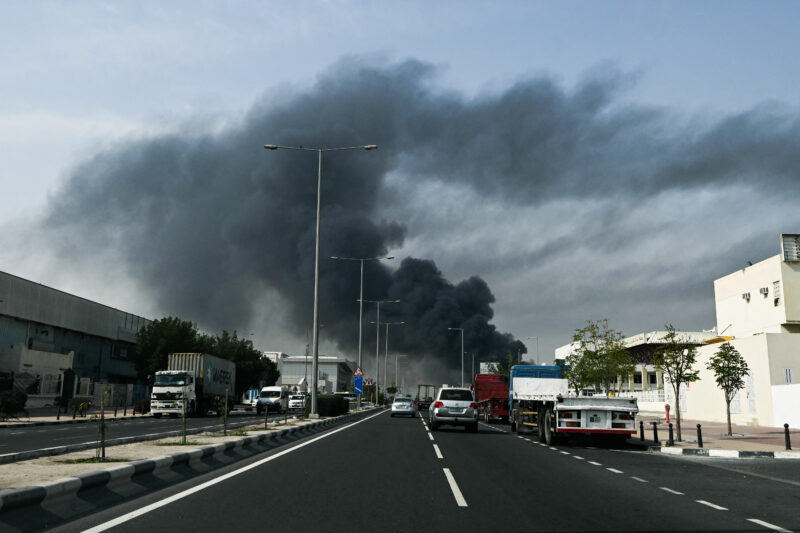
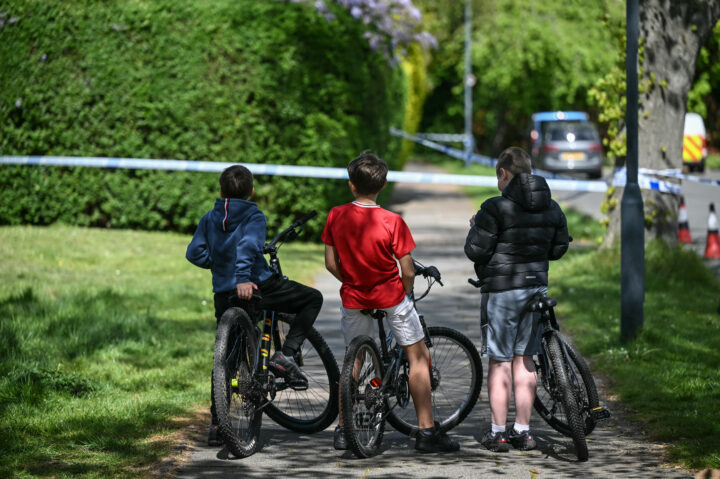
Children look at an area cordoned off by police, near the Kenton United Synagogue in Harrow, north-west London on April 19, 2026, the scene of an arson attack overnight.


 Add JewishInsider on Google
Kenton — a suburb of northwest London that doesn’t ordinarily get international attention — has become one of the epicenters of the wave of antisemitic attacks sweeping England against Jewish individuals, synagogues and other institutions of Jewish life. It also happens to be where I grew up.
Last month, its synagogue was firebombed, causing some damage to the premises. Thankfully, no one was hurt. It is just one of the many incidents of antisemitic vandalism, harassment and violence across the U.K. that have made Jewish life all the more precarious in what was, previously, seen as a safe, close-knit Jewish community.
I moved to Israel as an adult, and have spent years covering the country as a journalist, most recently as Jewish Insider‘s Israel editor. In that time, the check-in calls have mostly gone one way, with friends from the U.K. touching base after terror attacks and through wars in Israel.
That dynamic has shifted in recent weeks. In a jarring role reversal, I have found myself checking up on Jewish British friends amid an alarming escalation of antisemitic attacks in London.
Some will say the writing was on the wall, but there is a difference between knowing something is possible and watching it become real.
The numbers tell a stark story: Jews make up less than 0.5% of the U.K. population, yet government statistics released in Oct. 2024 found they accounted for a third of all religious hate crimes, amid a spike in antisemitism following the Oct. 7, 2023, Hamas attack on Israel and the ensuing war in Gaza. The most recent Home Office data shows Jewish people experienced the highest rate of religious crime: 106 religious hate crimes per 10,000 Jews — compared to 12 per 10,000 Muslims, who faced the highest absolute number of such crimes but constitute a far larger share of the population. And these statistics were published prior to the accelerated frequency of attacks in the past weeks.
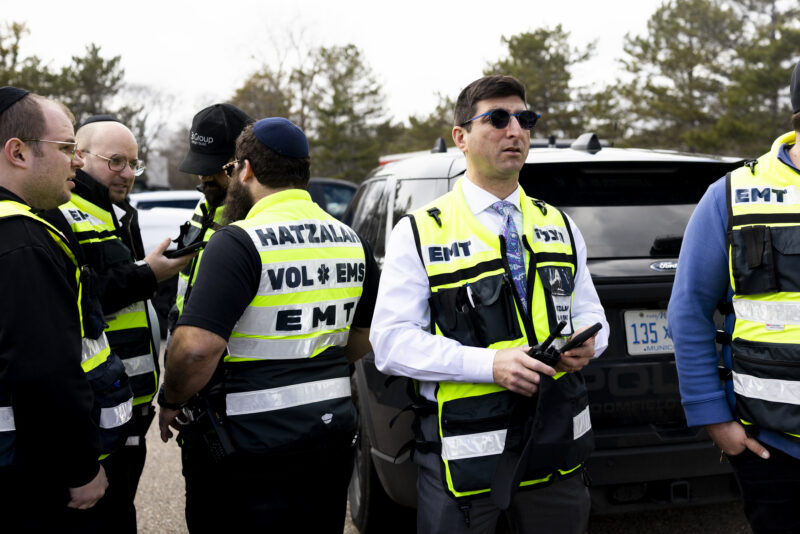
Two weeks ago, it was the firebombing of Kenton United Synagogue — a place I spent many happy moments with childhood friends — one of a string of such attacks on Jewish targets in Finchley, Watford and Hendon, all familiar names to Jewish Londoners. An Orthodox Jewish man was verbally abused and threatened while he was getting about his work in Slough. The situation escalated further on Wednesday, when two Jewish men were stabbed in Golders Green, a suburb of London with a large Jewish population.
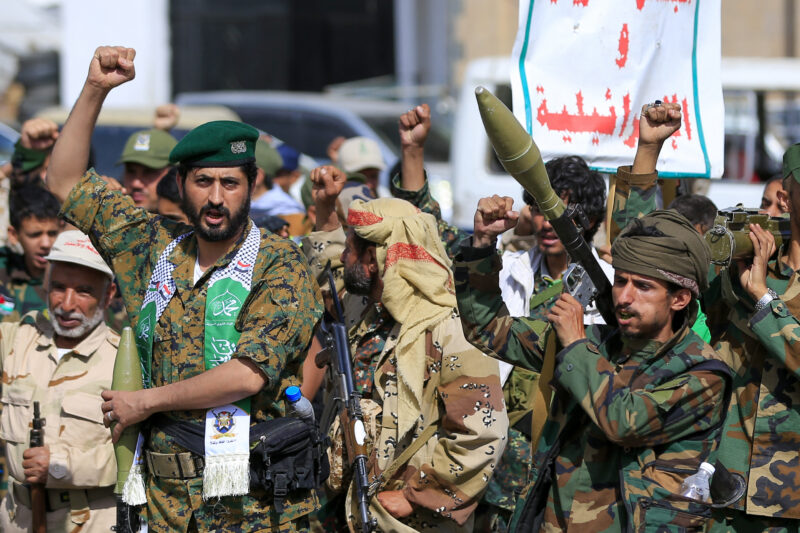
Police are investigating whether Iranian proxies are behind the spate of attacks, which began after Israel and the U.S. launched a war against the Islamic Republic at the end of February. Several of the attacks have been claimed online by Harakat Ashab al-Yamin al-Islamia, a terrorist group linked to Iran, which has also claimed responsibility for similar attacks in Belgium and the Netherlands. “I’ve spoken previously about the Iranian regime’s use of criminal proxies, and we’re considering whether this tactic is being used here in London,” Deputy Assistant Commissioner Vicki Evans said last month. Home Secretary Shabana Mahmood said on Thursday, after the group claimed responsibility for the Golders Green stabbing attack, that authorities were investigating whether that claim is credible or “opportunistic.”
On Thursday, the British government appeared to finally shift into a higher gear. The national threat level was raised to “severe,” U.K. Prime Minister Keir Starmer announced several new policies aimed at protecting British Jews, and the government pledged £25 million (about $34 million) for increased security around synagogues, schools and community centers. For many Jews these steps were welcome — but long overdue.
Meanwhile, Jewish Brits are rattled by the frequency and sense of normalization of the attacks.
“The climate here means there are so many people who are suitable for recruiting and radicalizing,” one fellow former Kenton resident, who now lives in another London suburb, told me. “And these attacks are becoming so normal. I am getting scared that the genie is out of the bottle and I am not sure how it is going to go back.” Another friend spoke of a “back-up plan” to living in Britain, while a mother of two described the fear she feels during pickup and dropoff at the Jewish school her daughters attend.
“At the moment, people across the Jewish community are waking up and almost expecting to find there’s been yet another attack,” Justin Cohen, news editor and co-publisher of the U.K.’s Jewish News, told me. “And this has now been going on for several weeks.”
“We’ve literally got to the stage where if there’s not an attack, there’s almost an element of surprise and relief,” Cohen said. “Most British Jews could never have imagined we’d have got to this stage.”
Of the U.K.’s recent move toward designating the Islamic Revolutionary Guard Corps as a terrorist organization, Cohen remarked, “if it was the case that that could be done now, then it also could have been done many, many months ago, when the Jewish community has been warning about this for a long, long time.”
The Jewish newspaper’s front cover made waves on Wednesday, with a collage of platitudes from British politicians surrounding an image of the stabbing in Golders Green, with a banner headline reading “Bull$#@#bingo”.
“After each attack we hear the same words from politicians and other well-meaning figures: clichés like, ‘we’re all in this together,’ ‘thoughts and prayers,’ ‘an attack on Jewish communities is an attack on us all,’” Cohen said. “And while these words are welcome and indeed necessary, it’s time the government and all the authorities go so much further. Words are simply not good enough — and we said that after the arson attack on the ambulances, just down the road from the stabbings.”
“But since then, we’ve not seen further emergency action. The only way this is going to be addressed is by getting ahead of the curve and really addressing the underlying issues at play here,” Cohen continued. “That’s not to say this is going to be easy and there’s no one solution, but emergency, unprecedented action is the only thing that can possibly help address the situation.”
“Otherwise, our front page that has made such an impact and has been felt so deeply by the Jewish community this week, will be out of date by next week and something even worse, sadly, could happen,” Cohen said.
More Stories
COMMUNITY VOICE
Coalition of Michigan Jewish leaders sets out ‘nonnegotiable’ demands for El-Sayed, Democrats
Pappas romps, ‘shill for AIPAC’ smear flops
YE SAYER
Blakeman-backed House candidate defended Ye’s antisemitic rants

Daily Overtime
Miznon’s U.S. Open upset

Daily Overtime
Israel hits back at U.K. sanctions
Clinton’s Critique
Hillary Clinton: U.S. should take a ‘very tough position’ with Israel if Netanyahu reelected
Please log in if you already have a subscription, or subscribe to access the latest updates.
 Continue with Google
 Continue with Apple