






























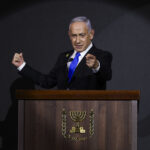









Iran war is ‘not over,’ Netanyahu tells ’60 Minutes’
‘We've degraded a lot of it. But all that is still there, and there's work to be done,’ the Israeli prime minister told CBS
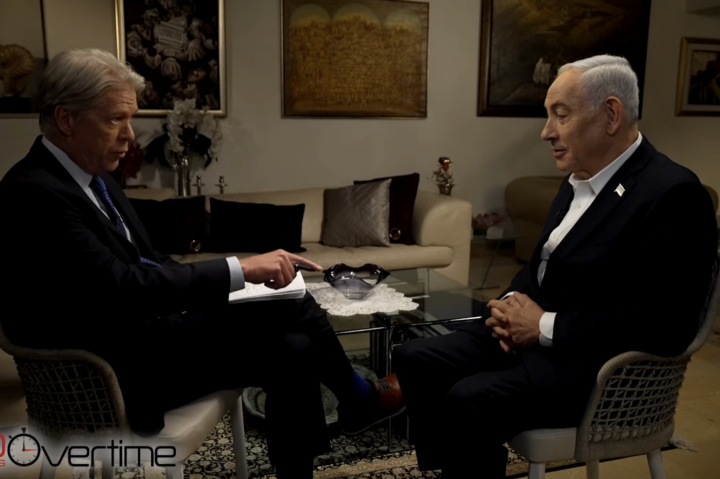
Screenshot
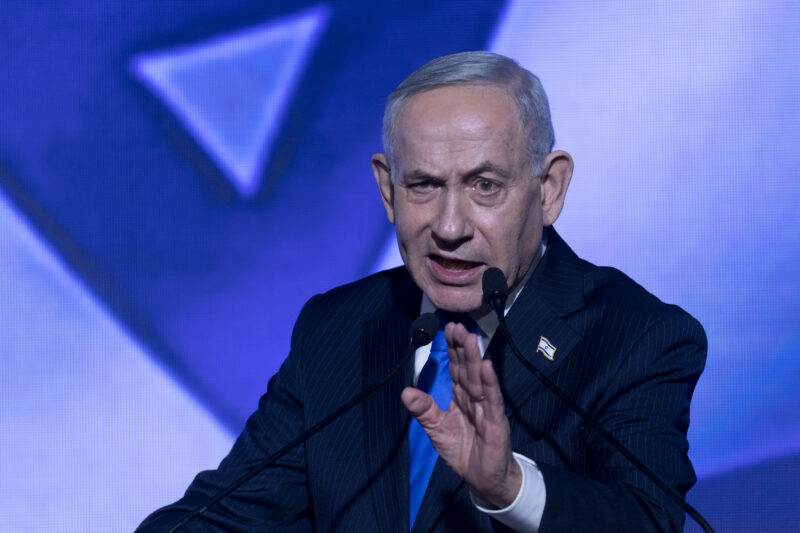
Israeli Prime Minister Benjamin Netanyahu in CBS “60 Minutes” interview with Major Garrett


 Add JewishInsider on Google
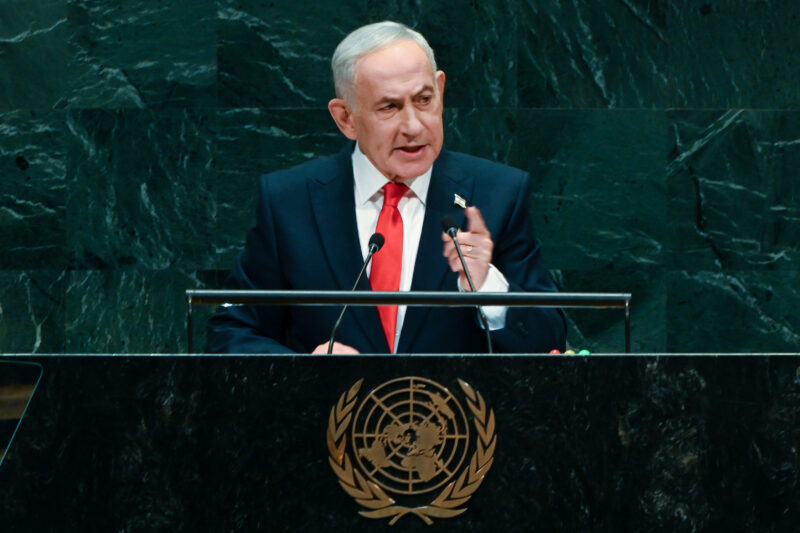
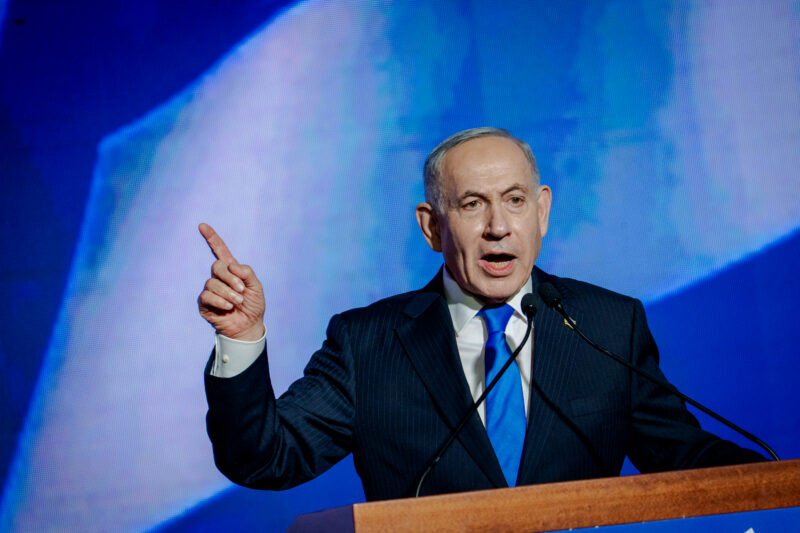
Israeli Prime Minister Benjamin Netanyahu said in a CBS “60 Minutes” interview on Sunday that the war against Iran is not yet over, in spite of the weekslong ceasefire and assertions by the U.S. administration that the operations that began in February have concluded.
In the interview with Major Garrett, Netanyahu also reiterated his call to end direct U.S. financial aid for Israel over the next 10 years.
Netanyahu said that, while the joint U.S. and Israeli operations in Iran accomplished much, the war is “not over,” with nuclear material still in Iran, and certain Iranian enrichment sites, proxies and ballistic missile efforts surviving.
“We’ve degraded a lot of it. But all that is still there, and there’s work to be done,” he said, adding that any diplomatic agreement with Iran should address all of those areas. Netanyahu said that he would be happy to see an agreement, if it covers those areas, but that both Israel and the United States are prepared to re-engage militarily if it does not.
The Islamic Republic regime, he added, is at its “weakest point” but “it’s not over.” Asked whether there is anyone on the Iranian side capable of negotiating a durable deal, Netanyahu declined to disclose his views publicly, but said he had shared his opinion with Trump.
Netanyahu denied reports that he had assured Trump prior to the beginning of the war that the Iranian regime would fall.
“[We] both agreed that there was both uncertainty and risk involved,” Netanyahu said. “And I remember … I said, and he said that there’s danger in action, in taking action. But there’s greater danger in not taking action.”
Addressing a question about the physical condition and influence of Iran’s supreme leader, Ayatollah Mojtaba Khamenei, who was reportedly seriously wounded at the beginning of the war and has made no public appearances since, Netanyahu said, “I think he is alive.”
“What his condition is, it’s hard to say,” Netanyahu said. “You know, he’s holed up in some bunker or in some secret place and he’s, I think he’s trying to exert his authority. I don’t think he has the same authority that his father had … that’s also creating the disruptions in the regime.”
Asked whether the U.S. and Israel had underestimated the likelihood that Iran would close the Strait of Hormuz, he said that they came to understand the issue over the course of the war. But he argued that Tehran’s decision to close the Strait has proven costly for Iran, in light of the U.S.-imposed blockade.
He also declared that Iran would have had a nuclear weapon now, or within two months, if Israel and the U.S. had not carried out their operations in 2025 and 2026.
“The most pointed success is knocking out 20 top nuclear scientists who were working on the atomic bombs to be used against Israel, America and anyone else,” Netanyahu said.
🇮🇷WATCH: Iran might already have a nuclear bomb, had Israel not launched its two military operations, Israeli PM Netanyahu said on his "60 Minutes" CBS interview.
— Jewish Insider (@jewishinsider) May 11, 2026
Read more here: https://t.co/ABBvkCPGHp pic.twitter.com/chDlNiYKeB
“I think taking out that amount of know-how — it doesn’t eliminate the know-how but it sets them back,” he continued. “Does it mean that they can’t produce a device? No. But it means that if they planned this arsenal of nuclear atomic bombs that they thought they’d have by now — that’s gone, that’s been pushed back, and it’s important they don’t have an atomic arsenal. But they would have had it and we would have faced certain death. So the greatest accomplishment is we’re alive.”
Netanyahu recounted conversations in 2016 and 2024 with Trump in which Trump expressed concern about Iran’s nuclear program. Asked why the U.S. had not acted militarily until 2025, Netanyahu said that Trump had been hopeful that sanctions imposed in his first administration would stop Iran’s nuclear program, but they did not fully do so.
Netanyahu reiterated his call to draw down and ultimately end direct U.S. financial support for Israel over the next decade — despite tensions that his stance has caused with supporters of Israel on both sides of the aisle. He also said he wants to begin drawing down financial support now, rather than waiting for the next Congress, adding that “it could go down very fast.”
Israeli PM Benjamin Netanyahu: "I want to draw down the American support to Israel to zero."
— Jewish Insider (@jewishinsider) May 11, 2026
In a "60 Minutes" CBS interview, Netanyahu reiterated his call to end direct U.S. financial aid for Israel over the next 10 years.
Read more here: https://t.co/4AXZP3RyUc pic.twitter.com/3NI5nWNW47
He said that the future of the relationship should be focused on joint projects equally funded by both Israel and the United States, from which the two countries would share equally. Such a system is how missile defense funding is currently provided, among other projects, but that funding has also come under attack by some in the U.S.
Netanyahu blamed social media, and the manipulation of American social media users by hostile foreign actors using bot farms, for cratering support for Israel among the American people.
“While they’re attacking us with the equivalent of F-35, we’re trying to fight them with a Polish cavalry,” Netanyahu said. “So I think we have to engage on that front, not by censorship but by finding ways that are applicable to democracies. … We have a problem. I recognize it. And we have to get our act together.”
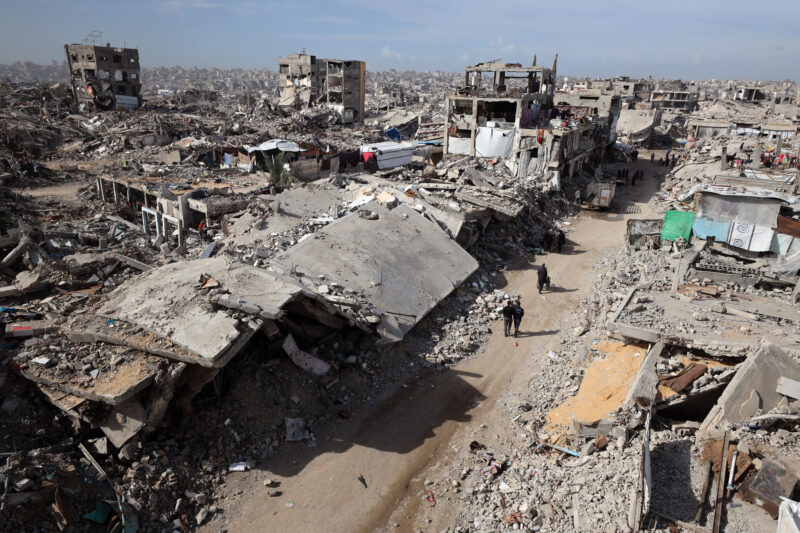
Asked about Gaza, Netanyahu said that Hamas still must be disarmed, demilitarized and deradicalized, and that he has asked the U.S. to provide names of countries that are willing to send in their own troops to carry out that effort, given that Hamas has reneged on its ceasefire obligations. He suggested that Israel may ultimately need to carry out that mission itself.
“If it comes down to us, then we’ll have to do it, but we’ll choose the time and the circumstances in which to do it because we’ve got a few other things,” he said. “But we are not going to let Hamas ever threaten Israel again.”
The Israeli prime minister said that Israel had destroyed more than 90% of Hezbollah’s missile and rocket stockpile, but that the group still maintains thousands of such weapons. He said that an invasion of Lebanon was necessary to prevent a repeat of the Oct. 7, 2023, Hamas incursions into Israel from Israel’s north.
Asked about Russian and Chinese support for Iran during the current war, Netanyahu largely dodged the question. He argued that an emboldened Iran is not in China’s best interests, and said that Russian military support to Iran has “not been a big issue” — while declining to comment on intelligence support, which Moscow has reportedly provided Tehran in the form of targeting data for missile and drone attacks throughout the region.
Jewish Insider’s Israel editor Tamara Zieve contributed to this report.
More Stories

Gaza Grift?
Department of Justice operation targets Hamas network of fake charities
EXCLUSIVE
Colorado senators introduce bill to expand federal security grant program

CAMPAIGN TRAIL
‘There is no Palestinian nation,’ Ofer Winter says as party dips in polls
OBAMA BOOST
Obama to campaign with Abdul El-Sayed at rally with Michigan Dems

SCOOP
Rep. Lawler urges Treasury to reopen investigation into Swiss bank’s Nazi ties

Daylight Between Them
Trump, Cotton feud over daylight saving time legislation
Please log in if you already have a subscription, or subscribe to access the latest updates.
 Continue with Google
 Continue with Apple