




































Democratic leaders sound concerned note about party’s pro-Israel creds at JDCA summit
JDCA’s top activists made clear this week that a major concern is making sure pro-Israel Jews continue to be welcome in the party
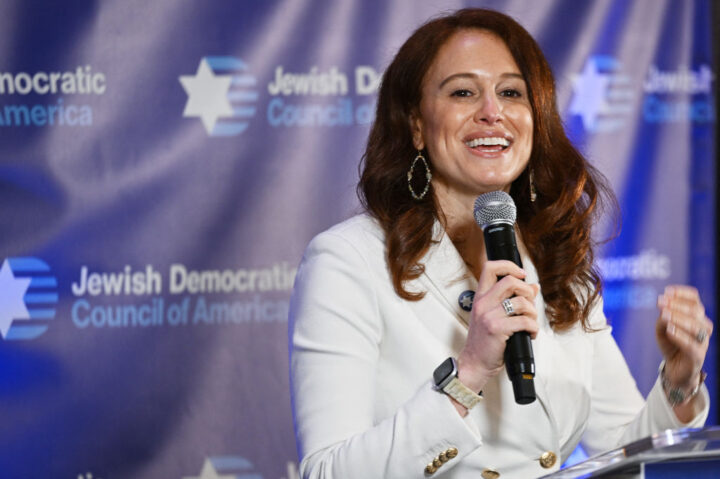
MANDEL NGAN/AFP via Getty Images
Jewish Democratic Council of America CEO Halie Soifer in Washington on May 24, 2023.


 Add JewishInsider on Google
When a group of Jewish Democratic activists and donors convened in Washington this week for the annual leadership summit of the Jewish Democratic Council of America, the message seemed to be one of defiance: defiance against President Donald Trump, to be sure, but also a defiant attitude pushing back against some of the recent shifts within the party.
JDCA’s primary objective is to elect Democrats. But as more Democrats have taken positions critical of or outright hostile to Israel, JDCA’s top activists made clear this week that another major concern is making sure pro-Israel Jews continue to be welcome in the party.
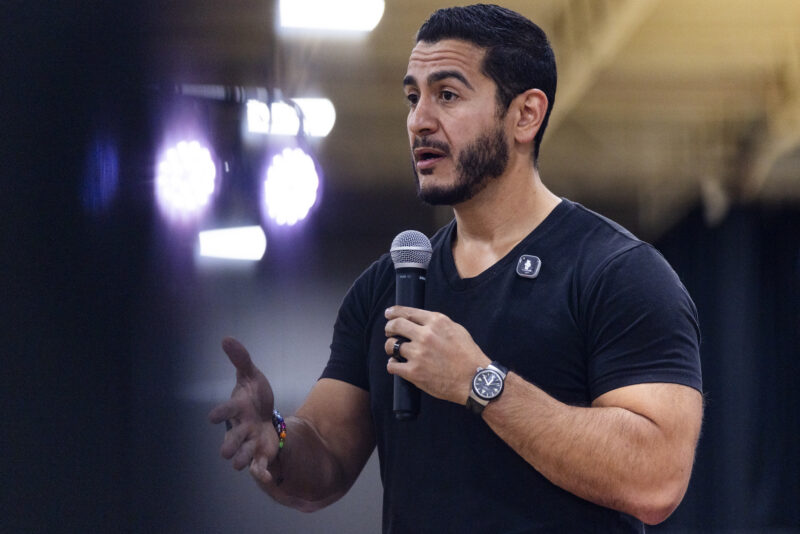
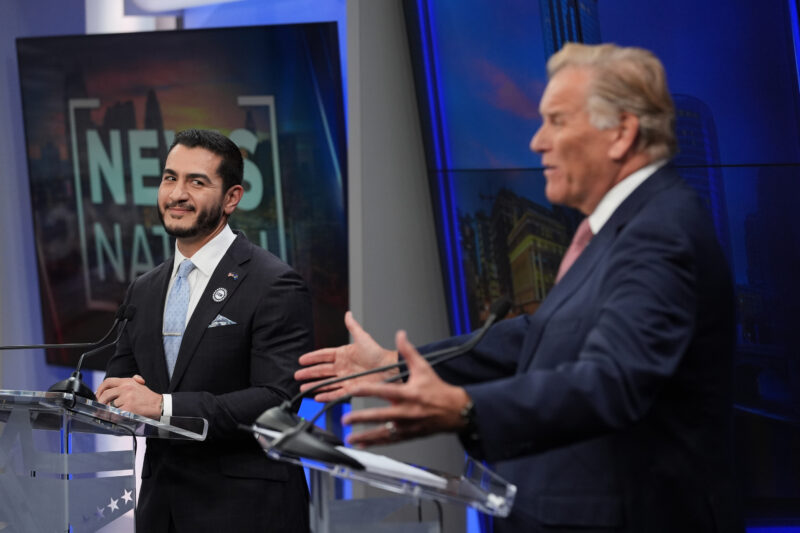
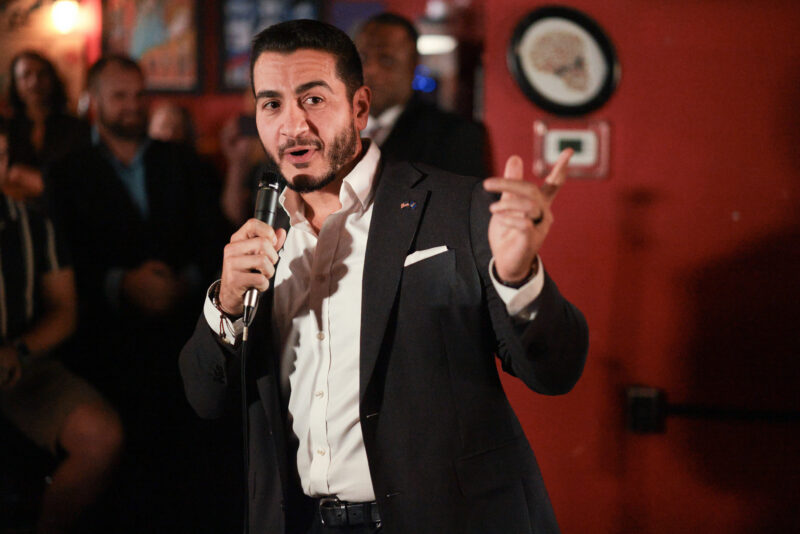
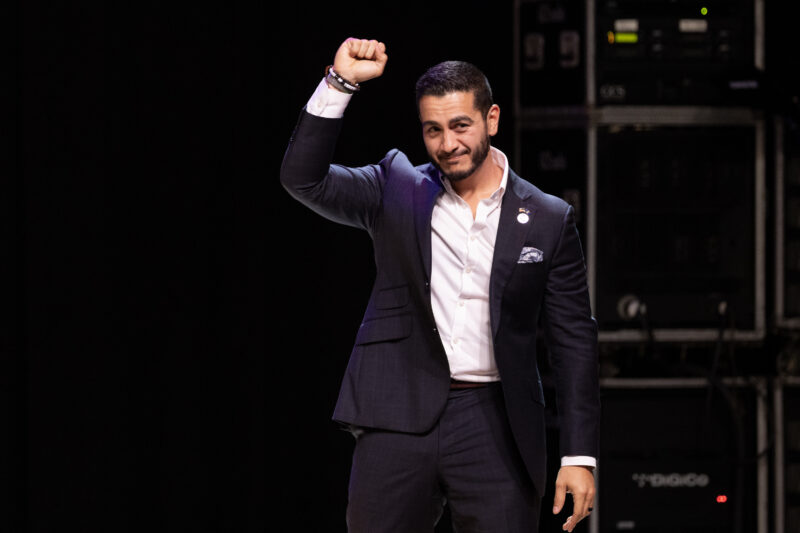
“We are fighting to ensure that the views and values of Jewish Americans continue to find their political home in the Democratic Party in Michigan and beyond, and we have work to do,” Halie Soifer, the group’s CEO, said on Tuesday night. She noted that the JDCA hopes to help defeat Michigan Senate candidate Abdul El-Sayed, a far-left candidate who appears to be rising in the polls.
“It’s clear there’s one candidate whose views are antithetical to ours, and we want to ensure he’s defeated,” said Soifer, though she did not name El-Sayed directly. JDCA has not endorsed either of his opponents, state Sen. Mallory McMorrow or Rep. Haley Stevens (D-MI).
“We at JDCA only support Democrats, but we do not support them all,” Soifer told the summit. “We understand it’s not just about electing Democrats. It’s about electing Democrats who align with us, and this includes efforts to ensure that candidates who have espoused anti-Israel and/or antisemitic views are defeated before November.”
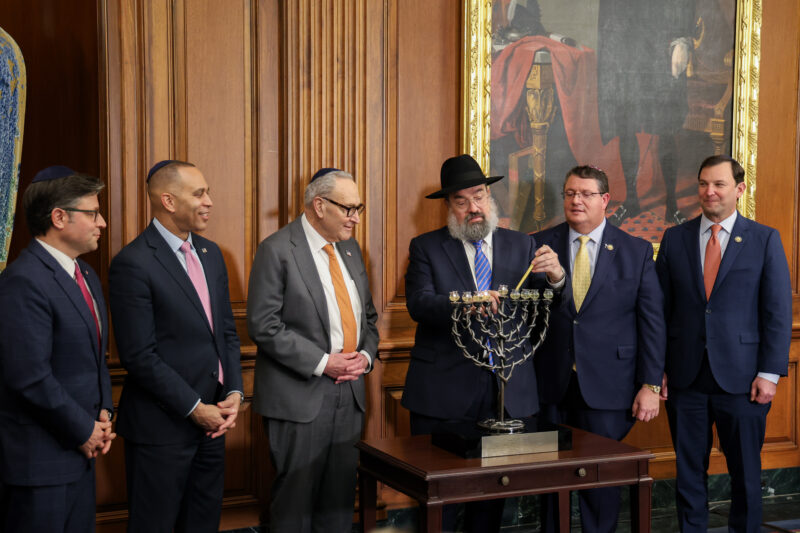
Over the two-day gathering, a parade of high-profile speakers from Democratic leadership — Senate Minority Leader Chuck Schumer (D-NY) and House Minority Leader Hakeem Jeffries (D-NY), along with Reps. Nancy Pelosi (D-CA) and Steny Hoyer (D-MD), respectively the former House speaker and majority leader — addressed the convening. Their appearances seemed designed to affirm that Democrats remain pro-Israel and committed to fighting antisemitism.
“We have to decisively confront antisemitism from wherever it comes from,” said Jeffries. “I will always hold firm in my support for the State of Israel as a Jewish and democratic state and eternal homeland for the Jewish people.”
Schumer did not specifically discuss Israel but raised concerns about the increasing use of the word “Zionist” as a slur.
“I’ve long said we must fight antisemitism wherever and whenever it appears, even if it’s in our own party. I’ll continue to do so,” said Schumer. “Today, antisemitism takes all different forms: Holocaust denialism, conspiratorial delusions of Jewish or Zionist control of the world, replacing the word ‘Jewish’ with the word ‘Zionist’ to demonize Jewish communities.”
The outgoing Democratic leaders were not as sanguine, instead offering a note of caution about how the dynamic towards Israel has shifted within the Democratic Party.
“Always, but right now, we really have to work together to make sure that support for Israel is, without question, bipartisan,” Pelosi said. “It doesn’t mean we don’t have our differences of opinion … but it should not weaken the fact that we have bipartisan support. That has always been the tradition, and we must make sure we get through this place where we are, where there may be some doubt in people’s minds as to whether that is a value.”
Pelosi is retiring at the end of this year, as is Hoyer, who was even more blunt: “How many of you have been anxious yourselves about rhetoric heard from some Democratic officials and candidates? We ought to be,” he said.
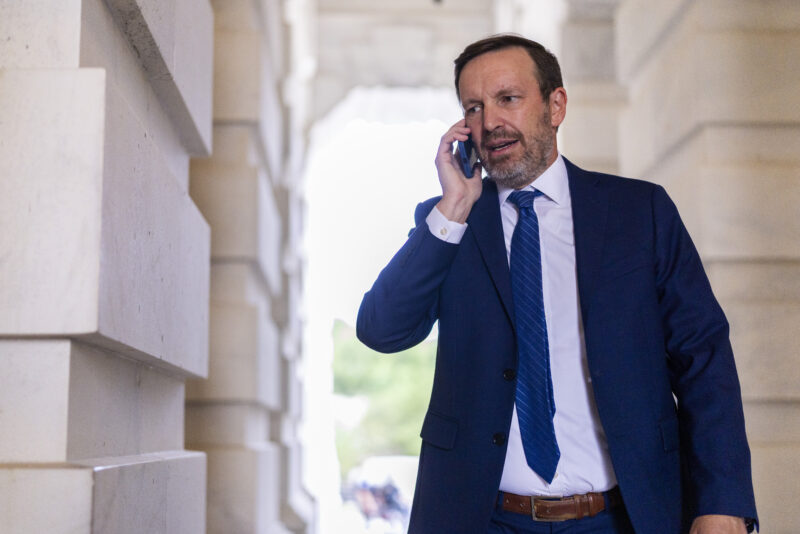
Speaking to reporters on Wednesday, Sen. Chris Coons (D-DE) said he hoped to prove that Sen. Bernie Sanders (I-VT) does not speak for the party on matters related to Israel, though he noted with worry that Sanders’ attitude — one that is deeply critical of Israel — appears to be on the rise.
“It’s clearer and clearer to me that there is real alarm about a fundamental break between Democrats as a party and Israel as a nation, and I’m going to do everything I can to resist and oppose that break, while criticizing [Benjamin] Netanyahu and his values and decisions,” said Coons. “I’m trying to be an effective and engaged voice with a perspective that you just heard and not have Bernie Sanders be the only senator whose perspective and attitude is heard across the country.”
Forty Senate Democrats voted last month for a Sanders-authored resolution attempting to block some arms sales to Israel, a record high. Coons said he knows those senators still support Israel’s right to exist, but cautioned that being too critical of Netanyahu can give cover to people who are actually anti-Israel.
“I strongly support Israel’s right to exist, its right to be a Jewish homeland and a democracy, and its value to the American people as a partner and ally,” said Coons. “I think we are at risk of some of my colleagues, in trying to send a message to Netanyahu or in opposition to his policies and stances, to be misunderstood as abandoning that commitment.”
Coons said that on the campaign trail, and on recent trips around the country, he hears “profound concern about where’s the Democratic Party going on Israel.” Some Jewish politicians who addressed the JDCA summit expressed a deeper sense of unease and discomfort about their Jewish identity, against the backdrop of rising antisemitism.
Sen. Elissa Slotkin (D-MI), who spoke at a cocktail reception Tuesday evening, talked about how challenging it is to be a Jewish elected official in the current environment.
“It has become deeply, deeply complicated to be a Jew in America,” said Slotkin. “There’s not a single day that goes by for myself representing the state of Michigan that I am not feeling torn.”
Minneapolis Mayor Jacob Frey delivered a jolt of energy to the room with an impassioned speech about his community’s support for immigrants in the face of ICE enforcement activity, which resulted in the killing of two American citizens by ICE agents in his city in January. When a JDCA member asked him for advice on how to respond to others in the Democratic Party who have made anti-Zionism a political litmus test, he expressed concern.
“It has been deeply concerning for me personally, as a proud Jew,” Frey said. “I am a great supporter of the endurance of our American Republic, a big believer that America should continue to exist, and an adamant opponent of Donald Trump. The same thing can apply to Israel.”
Ultimately, though, the gathering was a political pep rally — a chance for Democratic activists and donors to hear from politicians at all levels of government and gin up excitement ahead of this year’s midterm elections. Everyone who addressed the gathering all but guaranteed that Democrats would take back control of the House and Senate.
The conversations seemed meant to ressure Jewish Democrats about both the party’s fortunes for November and its treatment of pro-Israel Jews. One JDCA activist described the group’s work as “grasstops,” which was demonstrated by the appearances from top party leaders.
But the anti-Israel sentiment that has steadily grown within the party over the past three years is not coming from party leaders; it is driven by far-left activists. Whether JDCA has a plan to counter that grassroots energy remains to be seen — and the answer will only come at the ballot box later this year.
More Stories
analysis
Is Israel’s anti-Netanyahu bloc fracturing?
UNLOCKING THE KEYSTONE
RJC drops $400,000 to boost Brian Fitzpatrick in Pennsylvania swing district

Super Ball
Robert Kraft’s Blue Square gala pulls in $32 million as NYC’s Waldorf glows blue

UNHOLY ALLIANCE
New El-Sayed ad features Tucker Carlson, far-right podcaster’s attack on Mike Rogers
TEXTBOOK TEST
Syrian textbooks under al-Sharaa deny Israel’s right to exist and promote antisemitism, report finds

Daily Overtime
Deadlocked dash to Israeli elections
Please log in if you already have a subscription, or subscribe to access the latest updates.
 Continue with Google
 Continue with Apple