
































Trump caught between Iran and a hard place ahead of Xi meeting
While emerging technologies will be a major topic of conversation during the three-day trip, most eyes — and markets — are on the tenuous ceasefire between the U.S. and Iran
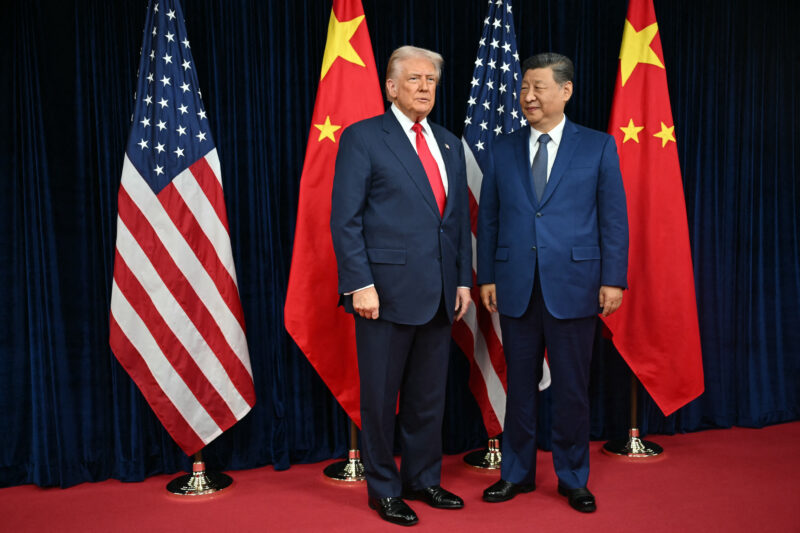
ANDREW CABALLERO-REYNOLDS/AFP via Getty Images
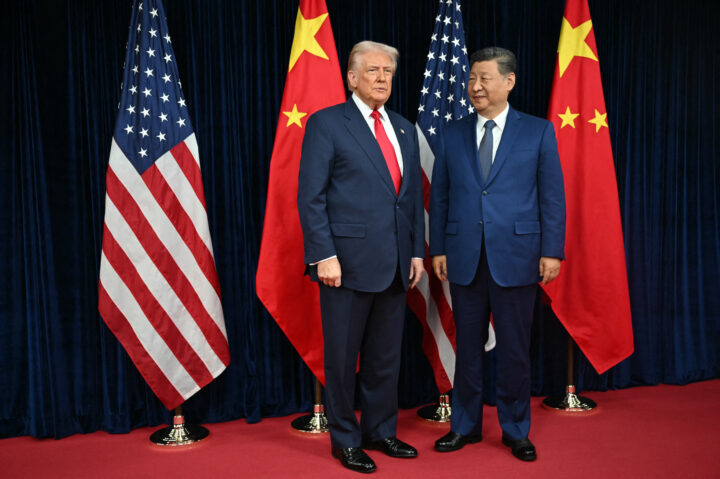
President Donald Trump (L) and Chinese President Xi Jinping arrive for talks at the Gimhae Air Base, South Korea, on October 30, 2025.


 Add JewishInsider on Google
There will be a number of items on the agenda when the two most powerful men in the world — President Donald Trump and Chinese President Xi Jinping — meet in Beijing tomorrow, chief among them tech and AI. The president is bringing with him a roster of top business leaders, including Elon Musk, Nvidia’s Jensen Huang, Apple’s Tim Cook, Goldman Sachs’ David Solomon, Meta’s Dina Powell McCormick, BlackRock’s Larry Fink and Blackstone’s Stephen Schwarzman.
And while emerging technologies will be a major topic of conversation during the three-day trip, most eyes — and markets — are on the tenuous ceasefire between the U.S. and Iran.
“We have a lot of things to discuss,” Trump told reporters before departing for China. “I wouldn’t say Iran is one of them, to be honest with you, because we have Iran very much under control.” Nonetheless, the president said, “We’re going to have a long talk about [Iran]. I think he’s been relatively good, to be honest with you.”
Beijing has, after all, been playing a major role in the U.S.-Iran conflict — even if it has done so from the margins: serving as the largest importer of oil from the Islamic Republic in violation of U.S. sanctions, meeting with top Iranian officials (including last week’s sit-down between Xi and Iranian Foreign Minister Abbas Araghchi) and transferring weapons to Iran through third countries.
Indeed, the summit, delayed from earlier this year due to the war, comes amid reports of a U.S. intelligence assessment that Iran has restored access to 30 of its nearly three dozen missile sites, and days after Washington rejected an Iranian response to a U.S. proposal that fell short of the Trump administration’s demands.
China’s interest isn’t purely power-driven: it’s also economic. Being able to purchase Iranian oil at steeply discounted prices — owing to Tehran’s global economic isolation — has meant that China has not felt the same financial pressures as the West.
Trump, who has spent much of his second term welcoming leaders to Washington, will be on Xi’s home turf, face-to-face with a leader who is opting not to use his leverage to push Iran into making concessions. The longer the uncertainty continues, the more restless even the president’s most fervent supporters will get — especially with the midterms approaching.
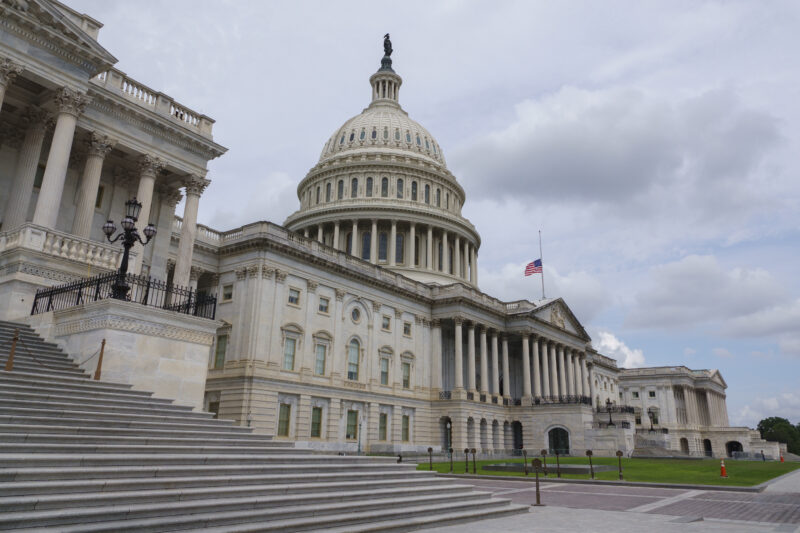
That dynamic is already beginning to play out on Capitol Hill. Yesterday, JI reported on divisions among Republican senators over whether the U.S. should reengage militarily with Iran, while last week, Rep. Tom Barrett (R-MI), who is facing a tough reelection battle in his swing district, became the first GOP lawmaker to introduce an authorization for use of military force in Iran.
All of that is good for Xi, and gives him little incentive to use China’s economic and diplomatic leverage over the Islamic Republic, which while knocked down a few pegs, has managed to maintain control despite the severe blows it has been dealt.
The Iranian regime has been able to survive in large part because it knows how to play the long game: to drag out negotiations, give breadcrumbs instead of the whole loaf and wreak just enough havoc to serve as a disruptor without prompting massive retaliation. It has enough to survive, for now.
Xi finds himself in a similar dynamic: unbound by pending elections, unaffected by rising energy costs and distanced from military action in the Middle East, Beijing is — unlike Trump — does not need a quick resolution to the conflict.
More Stories
CATCHING HEAT
Pro-Israel Democrats blast Mamdani for Oct. 7 anniversary statement

NO COMMENT
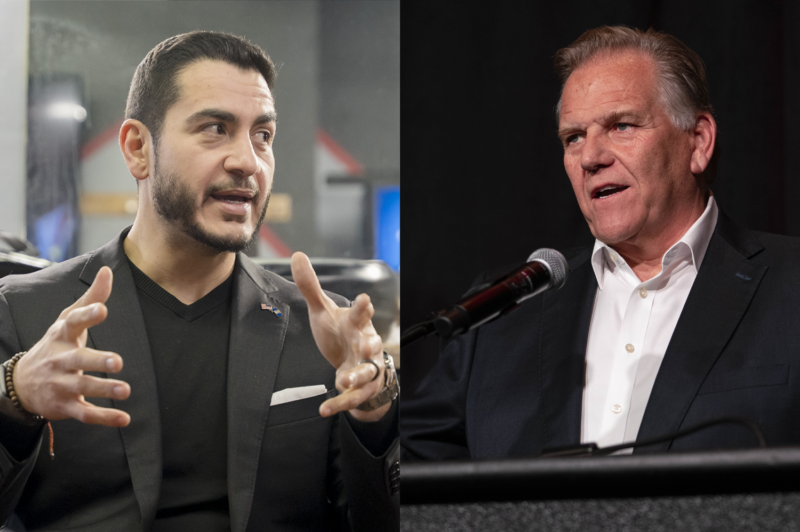
Rogers honors Oct. 7 anniversary and bashes El-Sayed, as El-Sayed remains silent

EMBASSY COMMEMORATION
Deputy national security advisor emphasizes shared civilizational fight at Oct.7 anniversary event
NEXT CHAPTER
After years of hostage advocacy, Kibbutz Be’eri survivor turns toward the future
EXCLUSIVE
Colorado senators introduce bill to expand federal security grant program

TORAH AND TAXES
First female Haredi candidate promises reform to ultra-Orthodox politics
Please log in if you already have a subscription, or subscribe to access the latest updates.
 Continue with Google
 Continue with Apple