














Jewish leaders cheer Northwestern’s appointment of Mung Chiang as president
FDD’s Rich Goldberg, a Northwestern alum: ‘Purdue and Chiang have strong reputations for defending freedom of expression while not tolerating antisemitism’
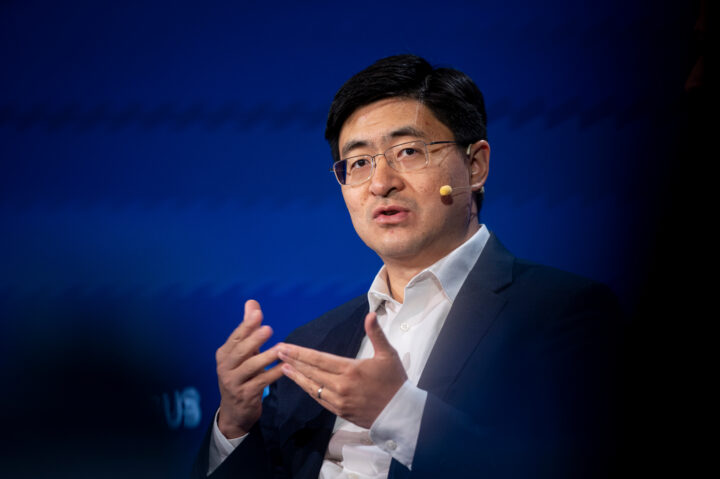
Al Drago/Bloomberg via Getty Images
Mung Chiang, then-president of Purdue University, speaks during the Chamber of Commerce's Global Aerospace Summit in Washington, D.C. on Sept. 10, 2025.


 Add JewishInsider on Google
Northwestern University’s Jewish community is celebrating the appointment of Mung Chiang as the school’s new president, optimistic that the supportive environment he fostered for Jewish students during his tenure as president of Purdue University will help combat the antisemitism seen at Northwestern in recent years.
“Purdue and Chiang have strong reputations for defending freedom of expression while not tolerating antisemitism,” Rich Goldberg, a senior advisor at Foundation for Defense of Democracies who holds bachelor’s and master’s degrees from Northwestern, told Jewish Insider.
But Goldberg added that Chiang, who has been president of Purdue since January 2023, has enjoyed “a university culture and state leadership that looks very different from what he will find in Evanston, Illinois.” Under Chiang’s leadership, Purdue avoided much of the campus unrest seen at other schools following the Oct. 7, 2023, terrorist attacks.
The appointment comes as Northwestern navigates the fallout from a turbulent chapter with antisemitism in recent years.
In November, the Illinois school reached a $75 million settlement with the Trump administration to restore federal funding that was frozen months earlier over allegations that administrators failed to address campus antisemitism.
Chiang, who assumes the role on July 1, “will need a new board chairman and other fresh faces who will have his back to fully enforce the federal settlement,” said Goldberg.
Michael Schill, Northwestern’s former president, announced his resignation last summer amid a series of controversies during his brief tenure.
When anti-Israel encampments emerged on college campuses across the country in spring 2024, Schill, who is Jewish, became the first university president to strike a deal with demonstrators. The deal allowed the students to avoid disciplinary action taken and acceded to several demands of the protesters, which drew strong condemnation from many Jewish leaders at the time.
In an August interview with the House Committee on Education and Workforce, Schill sounded unfazed to hear that a Palestinian professor he hired as part of the deal with encampment protesters had once met with slain Hamas leader Yahya Sinwar.
At the time of Schill’s resignation, Jewish alumni expressed optimism that his departure, and the House interview being made public, would lead Northwestern leaders to make reforms. Henry Bienen, who served as Northwestern president from 1995-2009, assumed the role of interim university president in September. Bienen previously established Northwestern’s Qatar campus, which has faced scrutiny for faculty ties to Hamas.
Northwestern Hillel said it “congratulates Northwestern University on the appointment of Mung Chiang as the University’s next president. We are deeply grateful to Interim President Henry Bienen for his leadership and partnership, and we’re especially appreciative of his support for students and campus life during this period of transition.”
Hillel at Purdue University declined to comment on Chiang’s record with the Jewish community.
The Coalition Against Antisemitism at Northwestern, a coalition of Northwestern students, faculty, parents and alumni, said in a statement that it “welcomes President-elect Chiang at a pivotal moment for Northwestern and higher education more broadly.”
Chiang “arrives with a reputation for academic excellence, technological innovation, institutional leadership, and support for free expression and open inquiry,” said CAAN.
CAAN called on Northwestern’s new leadership to “ensure equal treatment and civil rights protections for Jewish, Israeli, Zionist students and faculty” and to “reinforce academic neutrality and viewpoint diversity.”
At the same time, it said, “Northwestern’s challenges are significant and will require sustained leadership, transparency, and institutional courage. Federal scrutiny, governance failures, campus polarization, and concerns involving antisemitism did not emerge overnight, and meaningful reform will require more than symbolic change.”
More Stories
speaking out
In open letter, dozens of retired U.S. military leaders reject genocide allegations against Israel

Doha’s Darling
Murphy, Qatar’s ‘reliable ally’ in the Senate, huddles with emir and chief Qatari negotiator in Doha

Daylight Between Them
Trump, Cotton feud over daylight saving time legislation
Cross-Party Call
JCPA urges candidates in both parties to reject antisemitism ahead of midterms

SCOOP
Rep. Lawler urges Treasury to reopen investigation into Swiss bank’s Nazi ties
Life after captivity
The Siegels lost their home and community on Oct. 7. Now they’re finding their way forward
Please log in if you already have a subscription, or subscribe to access the latest updates.
 Continue with Google
 Continue with Apple