











































Global pressure campaign forces Israeli shift on Gaza aid
Israel announces new aid measures and temporary ceasefires while defending its broader war strategy
Ramez Habboub/Abaca/Sipa USA via AP Images
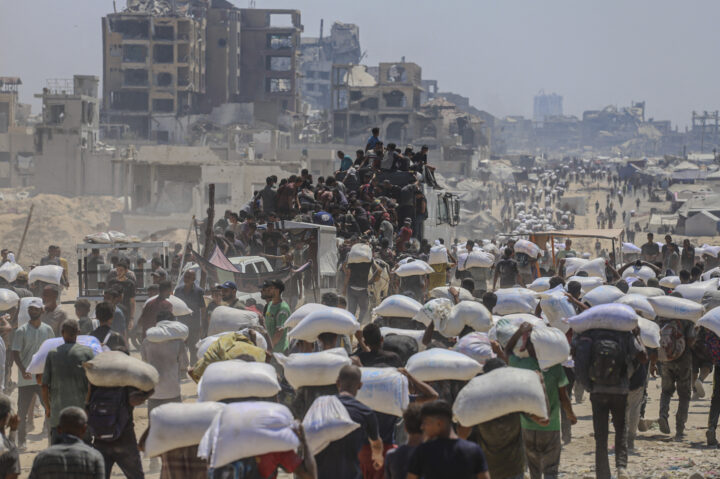
Palestinians carry humanitarian aid received through the Zikim crossing as they return to their families near the Al-Sudaniya area in northern Gaza, on July 27 2025 amid the beginning of airdrop operations.


 Add JewishInsider on Google
In Israel’s effort to conduct a pressure campaign on Hamas to oust the terror group and release the remaining hostages held in Gaza, it has found itself instead on the receiving end of another global pressure campaign.
Facing mounting pressure amid a worsening humanitarian crisis in Gaza, Israel over the weekend announced a series of measures aimed at alleviating the widespread malnutrition and security issues in the enclave, including temporary ceasefires, aid airdrops, facilitating a massive increase in Gaza’s water supply and establishing designated humanitarian corridors — even as the IDF called claims of starvation in Gaza “a false campaign promoted by Hamas” and Israeli Prime Minister Benjamin Netanyahu denied that there was starvation in Gaza.
The crisis hit a fever pitch over the weekend as opposition to Israel’s efforts and limits on aid — first put into place in March as a pressure tactic to push Hamas to release the remaining hostages — surged to the highest levels of government around the world.
Dozens of countries called for an end to the war, a restoration of the flow of humanitarian aid into Gaza and the immediate release of the hostages. The shift in the political dynamic extended to Capitol Hill, where Democratic legislators, including many who have been strong supporters of Israel, expressed their concerns over Israel’s approach to the worsening humanitarian crisis in Gaza.
That backdrop led to a late-night announcement from the IDF’s on Saturday: “In accordance with directives from the political echelon and following a situational assessment held this evening, the IDF has begun a series of actions aimed at improving the humanitarian response in the Gaza Strip, and to refute the false claim of deliberate starvation in the Gaza Strip.”
On Israel’s most-watched news channel, Channel 12, journalists Almog Boker and Amit Segal described the move as a victory for Hamas after a successful propaganda campaign that captivated global opinion.
But not everyone agreed. On the same network, anchor Yonit Levi said, “It’s time to understand that this is not a failure of public diplomacy, but a moral failure.”
Domestically, the resumption of aid has the potential to cause divisions within Netanyahu’s coalition, whose right-wing members have in the past threatened to leave the coalition over moves that have been seen as concessions to Hamas.
Israeli National Security Minister Itamar Ben-Gvir and Finance Minister Bezalel Smotrich — both vocal opponents of allowing aid into Gaza — were excluded from a phone call on Saturday during which the decision was taken to increase aid. According to Ben-Gvir, an official from the Prime Minister’s Office claimed he had been left out to avoid forcing him to violate Shabbat — which Ben-Gvir denied, saying he was “available on Shabbat for any event or important security consultation.”
Smotrich, for his part, reportedly said overnight that he will not quit the government over the decision.
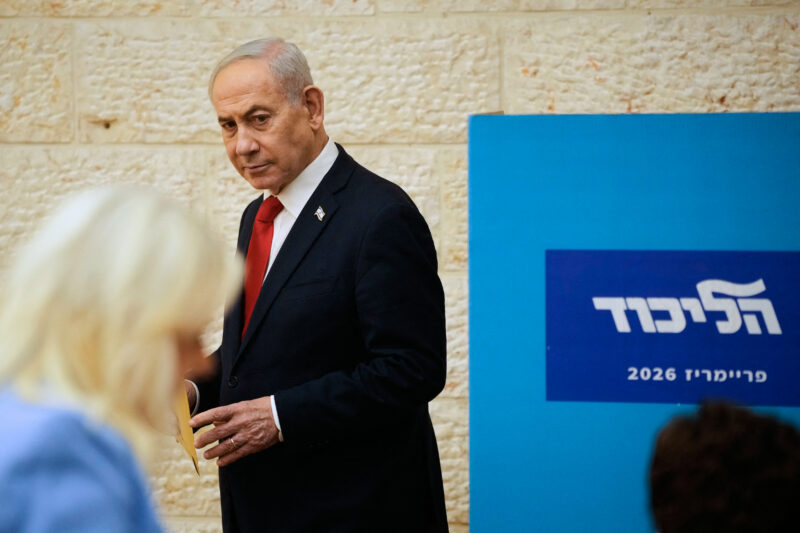
Addressing the move on Sunday during a visit to an Israeli Air Force base, Netanyahu defended the decision, calling it a continuation of existing policy. He said that while continuing efforts to defeat Hamas and release the hostages, “we will need to continue to allow the entry of minimal humanitarian supplies. We have done this until now.”
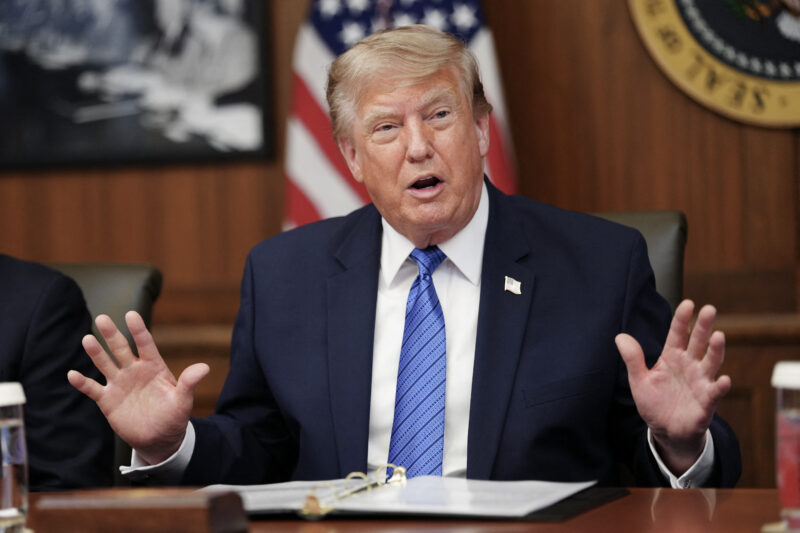
Amid the cacophony of criticism, Israel has largely stayed in the good graces of the White House. President Donald Trump on Sunday said that “Israel is gonna have to make a decision” about what to do with Hamas. “I know what I’d do, but I don’t think it’s appropriate that I say it.” U.S. Ambassador to Israel Mike Huckabee slammed the United Nations, The New York Times and Hamas for the humanitarian crisis, saying that their “lies & propaganda destroyed cease-fire deal, tried to discredit safe and functioning GHF effort, emboldened Hamas & will result in this complete balagan! Most sad for hostage families-grief prolonged.”
The U.N. World Food Program, which has not shied away from criticizing Israeli government actions, praised the influx of aid, saying the agency has “enough food in – or on its way to – the region to feed the entire population of 2.1 million people for almost three months.”
But while the most immediate concerns are being allayed, Israel will have to face another crisis of its own making — attempting to restore its standing with many of its traditional allies.
Indeed, when Rep. Ritchie Torres (D-NY), a pro-Israel stalwart, is sounding an alarm about his own frosty relationship with the Israeli government, it’s a glaring red flag about the state of Israel’s public diplomacy.
More Stories
BEHIND THE VEIL
Senators urge administration to declassify information on Saudi nuclear deal

ANCHOR POINT
Erielle Reshef’s journey from Israeli TV to MS NOW

Daily Kickoff
Deep-dish dog whistle
Daily Kickoff
El-Sayed, behind closed shul doors
ON THE HILL
Senate Republicans urge Saudi response to Houthi attacks
NUCLEAR NEWS
House Democrats introduce resolution to block Saudi nuclear deal
Please log in if you already have a subscription, or subscribe to access the latest updates.
 Continue with Google
 Continue with Apple