


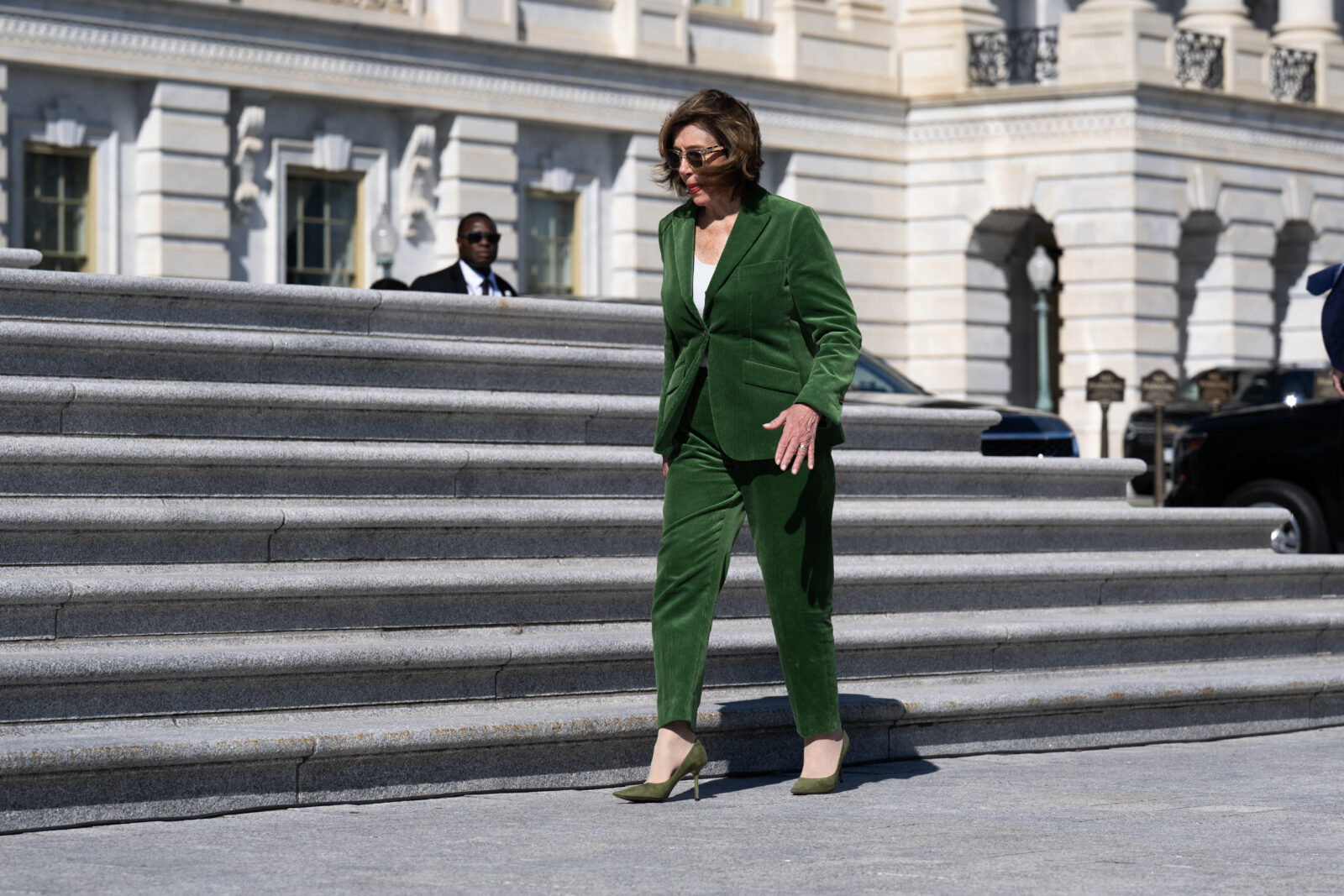
ROBERTO SCHMIDT/AFP via Getty Images
Race to replace Pelosi offers early test of whether progressive Jews welcomed on the left
State Sen. Scott Wiener has called Israel’s actions in Gaza a genocide and is open to conditions on offensive aid to the Jewish state, but is still derided as a ‘Zionist’


 Add JewishInsider on Google
A solemn California state Sen. Scott Wiener looked directly into the camera.
He was recording a video to “clarify” whether he believed Israel had committed genocide in Gaza. Four days earlier, he wavered on that question in front of a live audience during a candidate forum for the race to fill the seat of Rep. Nancy Pelosi (D-CA) in California’s 11th Congressional District.
Both of his opponents had quickly answered “yes,” that Israel had committed genocide. Wiener did not answer “yes” or “no,” drawing loud jeers.
“For many Jews, associating the word genocide with the Jewish State of Israel is deeply painful and frankly traumatic,” Wiener said in the follow-up video. Wiener grew up in a Conservative family in New Jersey, supports a two-state solution to the Israeli-Palestinian conflict and has long been a critic of the government of Israeli Prime Minister Benjamin Netanyahu. “We all have eyes,” he continued, “and we see the absolute devastation and catastrophic death toll in Gaza.”
Referring also to what he described as “genocidal statements” from Israeli officials, he said the Israeli government had “tried to destroy Gaza and to push Palestinians out. That qualifies as a genocide.”
The striking about-face, which drew swift rebukes from mainstream Jewish organizations in the Bay Area, was indicative of the immense pressure on Wiener, a gay, progressive Jew who has often been assailed as a “Zionist” by the far left in San Francisco, but who is also harshly critical of the Israeli government’s policies.
One of Wiener’s top challengers for the San Francisco seat, Saikat Chakrabarti, is running a well-funded campaign closely aligned with the anti-Israel left, embracing some of the most extreme voices in that camp.
The race has become somewhat of a proxy battle in the war for the identity of the Democratic Party, where describing Israel’s war in Gaza as a genocide, supporting arms embargoes to Israel and attacking Zionism as a racist ideology have become much more common since the Oct. 7, 2023, Hamas terrorist attacks and the subsequent war in Gaza. The outcome of the race to succeed Pelosi will help answer an important question: Can a progressive candidate still win in a deep-blue district like San Francisco without fully embracing the politics of the anti-Zionist left?
The race is by most accounts a three-way contest between Wiener, Connie Chan, a progressive member of the San Francisco Board of Supervisors who has the backing of major labor organizations but has struggled to compete in fundraising, and Chakrabarti, a wealthy tech entrepreneur who entered progressive politics working for Sen. Bernie Sanders (I-VT) during his 2016 presidential bid and later served as Rep. Alexandria Ocasio-Cortez’s (D-NY) chief of staff.
Chakrabarti has attacked Wiener for being too supportive of Israel, describing him as “horrible on Palestinian rights” in an interview with Zeteo’s Mehdi Hasan.
Wiener had already been sharply critical of Israel’s tactics in Gaza prior to the controversy in January. He had called for a ceasefire early in the conflict, and has described Israel’s actions as a “moral stain” and “indefensible.”
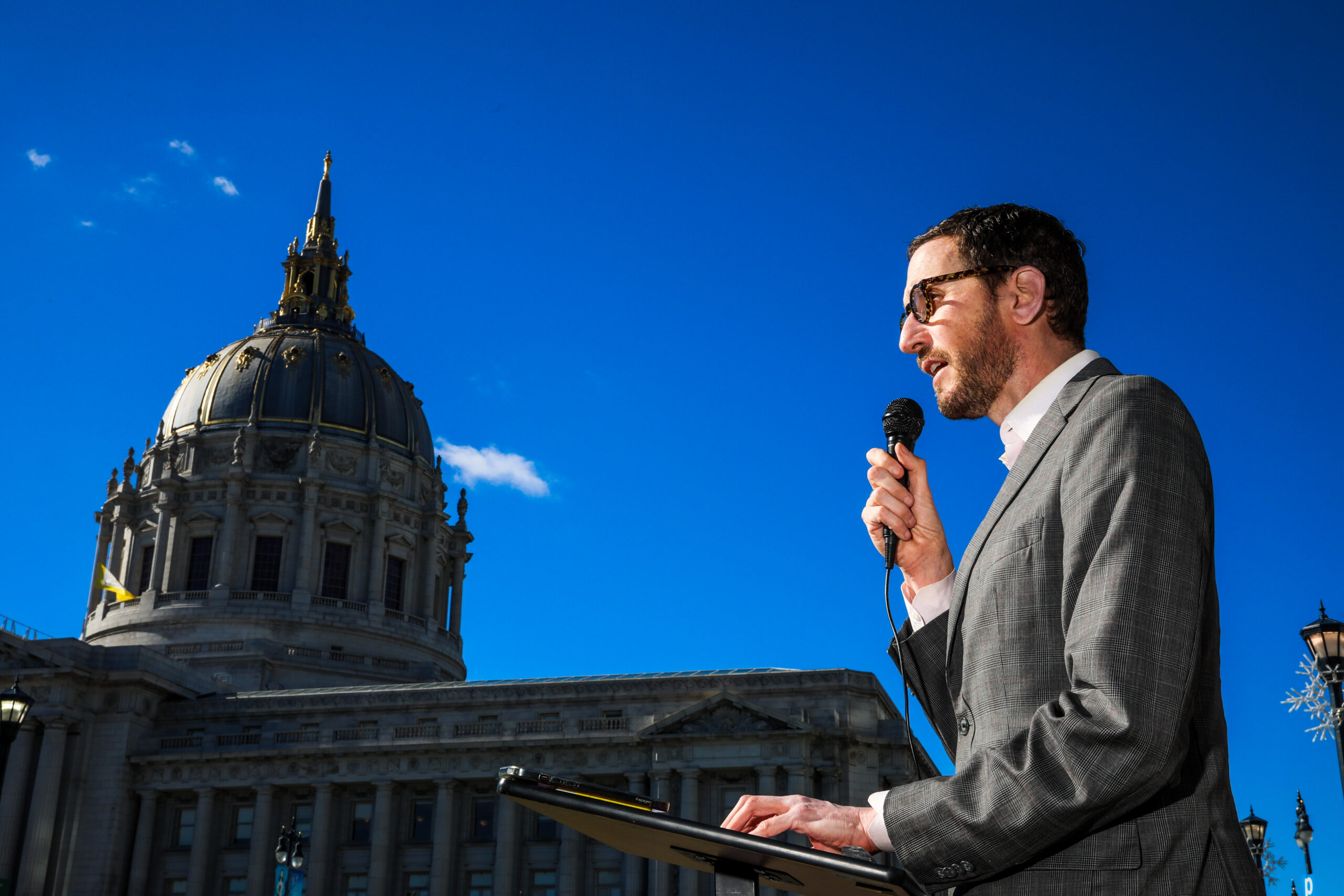
Amid the controversy of his embrace of the term genocide and the ensuing fallout with mainstream Jewish community organizations in the Bay Area, Wiener stepped down as co-chair of the California Legislative Jewish Caucus.
Chakrabarti, for his part, has raced to the left of Wiener and embraced far-left streamer Hasan Piker as a prominent campaign supporter, appearing on Piker’s stream and inviting Piker to campaign with him at a rally in San Francisco last week.
Earlier this spring, in a video the Chakrabarti campaign published on social media, the candidate and Piker sat down for dinner in San Francisco so Chakrabarti could make his pitch to Piker’s audience of millions of mostly young viewers. Behind them sat a poster showing the outline of the map of Israel, the West Bank and Gaza — the entire map filled in with the colors of the Palestinian flag.
“There’s this massive change moment. There’s a bunch of popular outrage,” Chakrabarti said in between bites of food. “We could channel that into an actual political revolution.”
As a wealthy former tech entrepreneur who has poured millions into his own campaign, Chakrabarti might seem like an unusual candidate for that role. But he is banking on enthusiasm from the progressive left in an insurgent campaign for a seat that has not been vacant for a generation.
He is described as a “centimillionaire” in the local press and was an early employee at Stripe, the payment processing company. But his campaign has touted his progressive bona fides as a co-founder of Justice Democrats, the organization built to recruit and elect progressives.
Ocasio-Cortez has repeatedly declined to endorse her former top staffer, dealing a blow to his efforts to consolidate the left behind his campaign.
Jewish community leaders have at times described the race in stark terms, painting Chakrabarti as a threat.
Speaking about what he called the “extreme story” that Chakrabarti is telling voters, Tyler Gregory, CEO of the local Jewish Community Relations Council, said, “this is more than a policy difference [in the] race at this point. There is someone scary, who is actually going to undermine Jewish safety if elected.”
The Chakrabarti campaign did not respond to an emailed list of concerns raised by Jewish groups.
Polling shows Chakrabarti making inroads but lagging behind Wiener. An EMC Research poll conducted in early May and commissioned by a pro-Wiener super PAC showed Wiener at 38%, Chan at 22% and Chakrabarti at 21%. Polls sponsored by Chakrabarti’s campaign, however, show a much slimmer margin; one conducted in early April by Data for Progress had Wiener only leading Chakrabarti by five points, 33-28%.
The top two vote-getters, regardless of party, will move to a runoff in November, meaning the race is unlikely to be decided until the general election.
Close observers of San Francisco politics say the race reflects political divides that have long been salient in the city, but have intensified in recent years amid widespread dissatisfaction on issues such as street crime, public drug use, homelessness and disorder more broadly.
Chakrabarti is “running against the establishment, when people feel like it’s not working for them,” said Gregory. “San Francisco has been tacking to the middle in recent cycles,” Gregory added, pointing to the 2024 election of Daniel Lurie to be the city’s mayor and the 2022 recall of progressive prosecutor Chesa Boudin.
“Are we in an anti-establishment cycle, or are we in a moderate cycle?” Gregory said. “We’ll find out.”
Chakrabarti’s campaign has decisively outspent his opponents, according to the most recently available campaign filings, though Wiener has also raised millions of dollars. As of the most recent filing deadline, the Chakrabarti campaign raised about $5.2 million, of which $4.82 million came via a loan from the candidate himself. Wiener’s campaign had raised about $3.5 million as of the last filing deadline, but had only spent around $900,000 relative to Chakrabarti’s nearly $5 million. Chan’s campaign was lagging with just $459,000 in money raised.
Chakrabarti opposes all U.S. military funding to Israel, including for the Iron Dome missile-defense system, and said during a candidate forum that he supports “breaking the Israel lobby’s hold on our government.” For his part, Wiener said he supports funding for Iron Dome but also would support congressional efforts to block the sale of offensive weapons to Israel.
Chakrabarti also opposes a new California law aimed at combating antisemitism in K-12 schools that critics, including anti-Zionist activists, say infringes on the free speech of teachers. Chakrabarti has attacked Wiener for being an outspoken supporter of the measure, describing it as a Trump-like effort to tamp down on pro-Palestinian speech.
Wiener called AB 715, which establishes a statewide antisemitism prevention coordinator and seeks to curb teacher activism in the classroom after the proliferation of anti-Israel material across California, “a big step for the Jewish community.”
Raising concerns among Jewish community groups, Chakrabarti enthusiastically accepted an endorsement from the Arab Resource and Organizing Center Action, the political arm of the city’s most prominent anti-Zionist activist group, which helps organize rowdy anti-Israel protests in the Bay Area.
“In Congress, I look forward to working with AROC Action as we fight to end our country’s complicity in genocide and apartheid and pursue a just future for all,” Chakrabarti’s campaign wrote on Instagram last month.
Mail-in voting has already begun for the open primary, which takes place on June 2.
Among Wiener’s campaign supporters are wealthy tech and venture capital figures including Garry Tan, CEO of the prestigious VC firm Y Combinator, Yelp co-founder Jeremy Stoppelman and tech investor Chris Larsen.
Political insiders in the city say that Wiener will almost certainly be among the top two vote getters and advance to the general. Chan is popular with a number of established progressive institutions. Chakrabarti’s success will depend in part on whether he is able to get out voters who have not consistently participated in midterm elections.
Wiener “has a very strong base of frequent voters, in the LGBTQ community, in the YIMBY community, and with the majority of moderate — by San Francisco standards — voters in the city,” said Sam Lauter, a political strategist with BMWL public affairs and a Democratic activist who sits on the board of the Democratic Majority for Israel.
“Connie Chan has a passionate base within the politically engaged progressive community,” he added. “The unions, for example.” He added that he expects Chan to have considerable support from the Chinese American community.
Chakrabarti’s support “seems to be coming from people who haven’t, to date, frequently turned out to vote. Progressives who aren’t in tune with the established progressive community,” he said.
“Having said that, he certainly has increased his name recognition significantly with his personal spending,” Lauter added. “I think he has a very good shot of being in the final two.”
Among Chakrabarti’s top aides is the consultant and activist Nadia Rahman, an outspoken anti-Zionist who serves as the campaign’s political director. Rahman, who publishes a stream of harsh critiques of Israel, Zionism and Zionists on her social media feeds, attributed the Democrats’ loss in the 2024 presidential election to what she described as the party’s refusal to “break from genocide, militarism and imperialism.” She recently reposted an X post stating that “Zionism is racism,” and in another post criticized how “entrenched Zionist ideology is in many California state legislators.”
Wiener is endorsed by the state’s Democratic Party and has been a fixture in San Francisco city politics since his election to the city Board of Supervisors in 2010. Still, he has not won the endorsement of Pelosi, who appeared at a Chan fundraiser but has declined to endorse anyone.
On Jewish support after Wiener’s genocide statement, Gregory said donors fell into three camps. Some continued to back Wiener without hesitation. Others “needed to take a beat and process what happened.” The third group “hasn’t come around,” but Gregory added, “I’m becoming more and more confident they are going to come home” to Wiener.
Gregory added of Chakrabarti, considering the tendency for left-wing candidates to turn out low-propensity voters, “Our community would be foolish to underestimate him.”
Please log in if you already have a subscription, or subscribe to access the latest updates.
 Continue with Google
 Continue with Apple