








































Iran bets on delay as Trump mulls reopening military options
Trump told Axios on Sunday that 'the clock is ticking' for Iran and the U.S. to reach an agreement to end the war
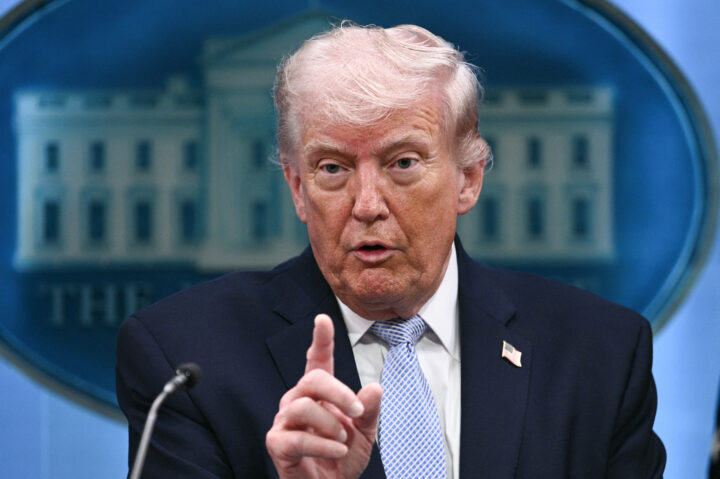
Brendan SMIALOWSKI / AFP via Getty Images
US President Donald Trump speaks about the conflict in Iran in the James S. Brady Press Briefing Room of the White House on April 6, 2026, in Washington, DC.


 Add JewishInsider on Google
For the last two weeks, a resumption of hostilities with Iran seemed unlikely, with the U.S. uninterested in sparking renewed fighting against the Islamic Republic in advance of President Donald Trump’s summit with Chinese President Xi Jinping — whose country is a key trade partner of Iran.
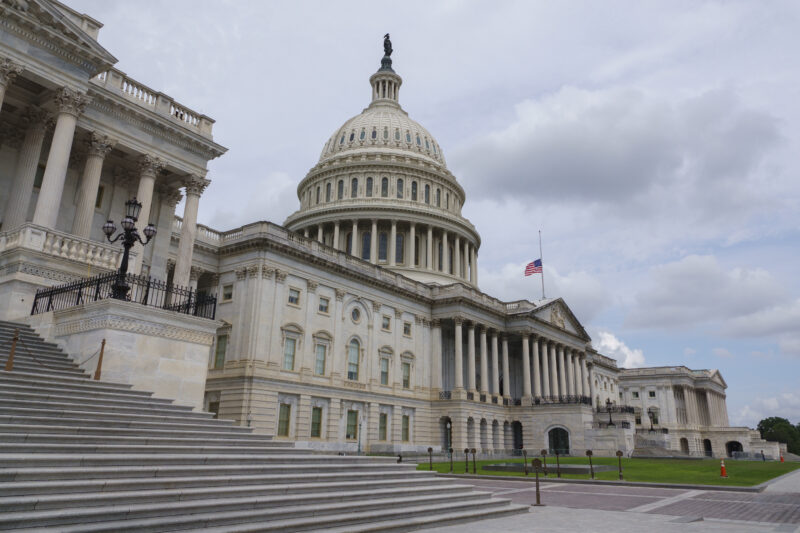
But with the president back in Washington, the administration appears to be reopening military options — even as Iran continues to drag out tensions by offering what U.S. officials have said were unacceptable proposals to end the war. That extends to Congress, where Democrats on both sides of Capitol Hill are expected to introduce new war powers resolutions this week in an attempt to constrain the administration’s actions in the Middle East.
Trump told Axios on Sunday that “the clock is ticking” for Iran and the U.S. to reach an agreement to end the war. After rejecting Iran’s previous response to a U.S. proposal, Trump said that Tehran has to get to “where we want them to be,” or else “they are going to get hit much harder.”
A decision on whether to return to active fighting could come as soon as Tuesday, when Trump is set to hold a Situation Room meeting to discuss options. After returning from Beijing, the president met on Sunday with Vice President JD Vance, Secretary of State Marco Rubio, White House Special Envoy Steve Witkoff and CIA Director John Ratcliffe.
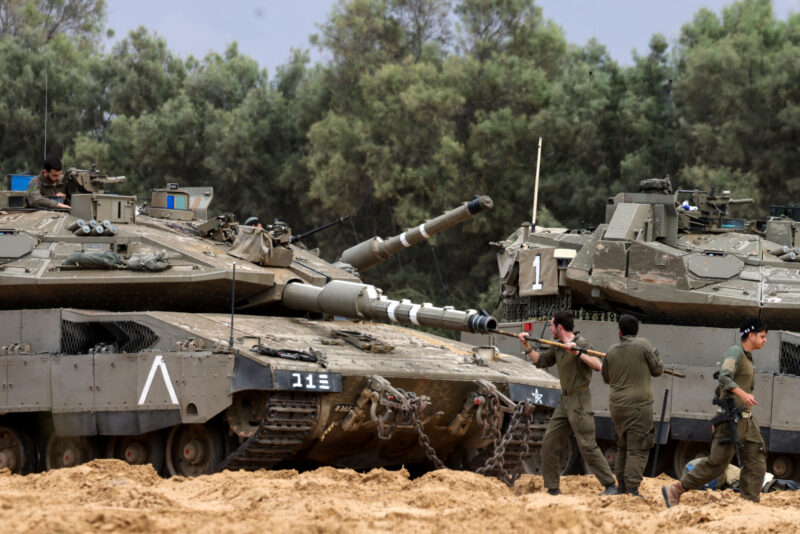
In Israel, preparations are being made for a possible return to war. Channel 12 quoted a senior Israeli official on Friday saying that the country is “preparing for days to weeks” of renewed fighting.
Even as the tenuous ceasefire has held, the United Arab Emirates — which during the active hostilities took the brunt of Iran’s attacks — has continued to face drone attacks. Emirati officials are investigating a fire near Abu Dhabi’s Barakah Nuclear Power Plant that broke out on Sunday after a drone entered the UAE from its western border and struck a generator near the facility.
The Islamic Republic’s ongoing strikes targeting the UAE — and its clashes with the U.S. Navy in the Gulf — play into a broader Iranian strategy to slow-walk negotiations as it continues to destabilize the region. Few doubt Iran’s capacity — even after six weeks of active fighting — to hit the U.S., the UAE, Israel or other U.S. assets in the region, but doing so would likely prompt a severe U.S. response and collapse the tenuous ceasefire, dragging Iran into a renewed conflict as it works to recoup its heavy losses from the U.S. and Israeli bombing campaigns.
It’s a strategy underscored by Iran’s seizure last week — the same day that Trump and Xi met — of a boat belonging to a Chinese security firm. While disruptive, no one aboard the vessel was killed or injured, and China is unlikely to retaliate for the incident. But analysts told The Wall Street Journal that the move was likely an effort by Tehran to send a message to Beijing. Chatham House’s Sanam Vakil told the WSJ that Iran’s apprehension of the boat “is a way to remind the Chinese who is in control of [the Strait of] Hormuz and they shouldn’t even think of providing their own security.”
Foot-dragging talks while making minimal concessions has served Iran well through multiple U.S. administrations, and allowed the Islamic Republic to retain control through rounds of active fighting while preserving its military and diplomatic leverage. Now, with Tehran appearing to bet that the outcome of the midterms could provide a more favorable environment in Washington and constrain the Trump administration’s ability to escalate, the question will be if Iran will slow-walk its way to November — or whether the clock has run out.
More Stories

PACKED PEWS
Scholten, Gottheimer and Bret Stephens join Dan Senor before packed Michigan crowd
NUCLEAR NEWS
Senate expected to vote on Saudi nuclear deal before end of year

booking bias
Irish Jewish leader says Dublin hotel canceled guest rooms for conference on fighting antisemitism
PEACH STATE PUNCHES
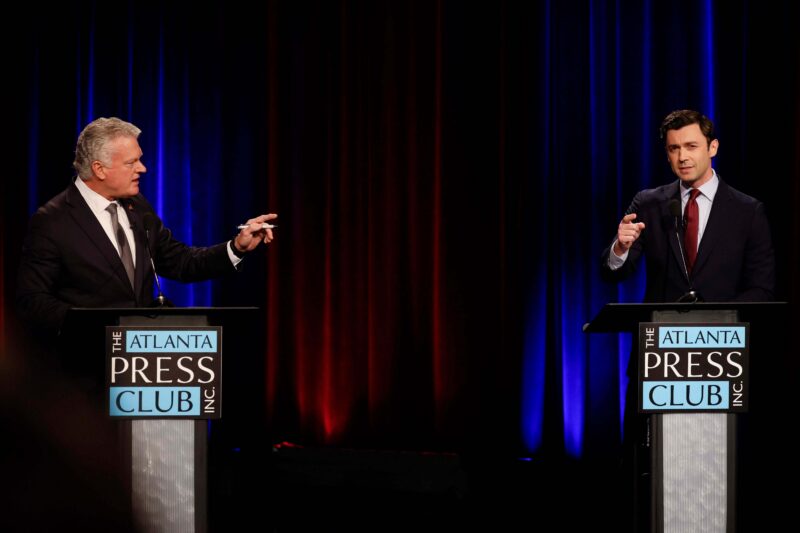
Rep. Mike Collins ducks question about white nationalist influencer son-in-law at Senate debate
analysis
MBS bet Saudi Arabia’s future on economic transformation. The Houthis are testing that wager

Presidential Prelude
Josh Shapiro launches federal PAC in potential signal of 2028 plans
Please log in if you already have a subscription, or subscribe to access the latest updates.
 Continue with Google
 Continue with Apple