






























After campus chaos, university leaders focus on rebuilding trust
According to several university presidents who gathered last week at the Milken Institute Global Conference in Los Angeles, the task before universities is to win back the trust of skeptical Americans
GETTY IMAGES
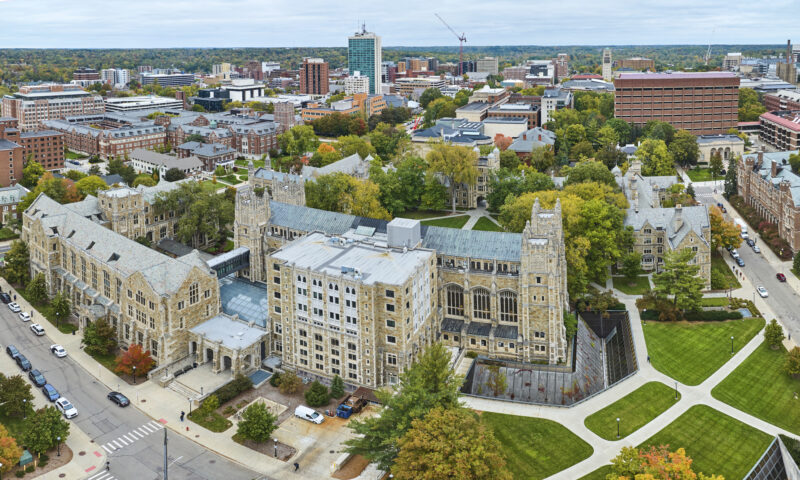
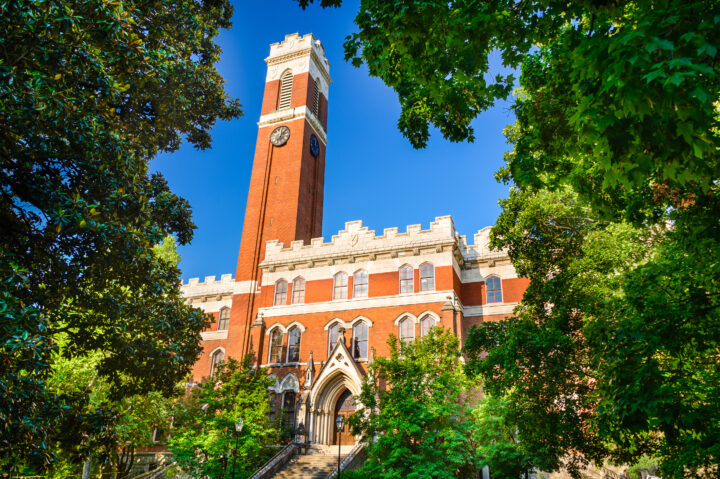
Campus of Vanderbilt Unversity in Nashville, Tennessee.


 Add JewishInsider on Google
Over the last two years, the second semester of the academic year at American universities coincided with crisis and chaos.
In 2024, it was anti-Israel encampments overtaking campus quads across the country; last year, it was threats from the Trump administration to slash hundreds of millions of dollars in funding and ban foreign students.
By comparison, the spring of 2026 has been relatively smooth sailing for research universities, even with a bit of hubbub over graduation speakers scrutinized for their stance on Israel and Gaza at a few schools, including the University of Michigan and Georgetown Law.
But it’s not that things have gone back to the pre-Oct. 7, pre-Donald Trump normal. University administrators have just gotten better at managing an ambient sense of friction: Conflict between university leaders and activist faculty and students is still bubbling under the surface, and the threat of funding cuts at the federal level lingers.
According to several university presidents who gathered last week at the Milken Institute Global Conference in Los Angeles, the task before universities is to win back the trust of skeptical Americans.
“The world of higher education, I think, is still in turmoil,” Vanderbilt University Chancellor Daniel Diermeier told Jewish Insider in an interview at the Milken confab. “I think the time when a university does say that’s all overblown and everything is great, that’s over. At least the vast majority of university presidents know that there are challenges, and they want to take them on.”
While the leaders of many elite universities struggled to respond to anti-Israel activism that at times veered into antisemitism and violence, Diermeier was one of a handful of leaders at elite universities in 2023 to speak clearly about what constituted acceptable protest and what violated school rules. He has also been a forceful advocate for institutional neutrality, a position that many of Vanderbilt’s peer institutions — such as Harvard, Stanford and Columbia — have since adopted in the wake of that heady year.
“My sense is that higher education is moving overall,” said Diermeier. “You feel there is momentum there. … It’s gratifying to see that this is happening, and it must happen, because fundamentally we need to regain the trust of the American public.”
For American Jews, the post-Oct. 7 campus chaos has led some to rethink the kind of institution they want to attend.
“As a professor, as an educator, one of the most tragic dimensions of what’s happened on campus is it’s introduced this wedge between American Jews and the university,” Steven Weitzman, director of the Center of Advanced Judaic Studies at the University of Pennsylvania, said at a panel on antisemitism at Milken. “That relationship has been so important for Jewish success and also for the success of the university.”
That wedge has benefitted schools like Vanderbilt and Dartmouth College, each of which have pitched themselves as places where a multiplicity of voices can be found, without the disruptions that have plagued peer institutions.
“We have a culture that is very committed to creating an educational environment where these different voices can be heard, and where you don’t have to justify all the time that you went on a Birthright trip,” said Diermeier.
Dartmouth College President Sian Beilock started at the university in September 2023, and she said she has observed “a more robust, vibrant Jewish presence on our campus” since then. “It feels like something special is happening,” she told JI in an interview at Milken.
Both Beilock and Diermeier touted their cooperation with the campus Chabad and Hillel organizations. Earlier this month, the student government at The New School in New York City voted to defund and sever ties with Hillel over its connections to Israel. (The administration rejected the measure.) Beilock called the development “concerning,” and Diermeier said it is “awful.”
“It would never be tolerated for any other group. It is exactly what’s wrong. At that point, you are violating the fundamental principles of an institution,” Diermeier said. “They are terrible developments and it shows us that we still have a lot of work to do.”
Like Vanderbilt, Dartmouth took on the tumult of the post-Oct. 7 era forcefully and directly. Beilock said she was always clear about the university’s mission in a way that some of her colleagues at other schools were not, though that is beginning to change.
“We’ve called balls and strikes, and I actually think it’s led to a campus where we have some of the most diverse views portrayed on campus in a way that’s more respectful,” Beilock said. “I see a shift in presidents understanding that it’s important to call out the mission of an institution, to be clear about that, and important to ensure that people who are both receiving our education and benefiting from the impact, whether it’s our doctors or discoveries, see the power in what we do.”
In other words: universities need to do a much better job of telling their stories, and not acting like their worth is self-evident. Trust in higher education was higher last year than in 2023 or 2024 — 42%, according to a Gallup poll in 2025, up from 36% — but still down from 57% a decade before. University of Southern California President Beong-Soo Kim said at a Milken panel about the future of higher education that the problems facing the academy connect to a broader loss of public trust.
“There’s a larger breakdown in trust in other institutions, not just higher education, and I think that that’s something important to understand,” Kim said. “I think that there’s an opportunity for partnership among universities, between universities and the government, and the private sector.”
Making change on that front requires humility, a quality that is not always present among elite institutions.
“I think there’s a lot of institutional rigidity to prevent that from happening,” said Eric Gertler, CEO of U.S. News & World Report, which publishes annual college rankings.
Rebuilding that trust runs through Washington, university leaders have begun to realize. Prominent universities are building out satellite campuses — and lobbying shops — in the nation’s capital.
Diermeier and Beilock told JI that they have each decided to engage with Washington more than ever, including by traveling to the city regularly for meetings with members of Congress and administration officials. Vanderbilt and Dartmouth have for now managed to avoid the most severe of the civil rights investigations or funding cuts coming from the Trump administration, but shifts in funding priorities from the federal government still impact the schools.
“I spent a lot of time in D.C. in the last year. I’ve probably been there close to a dozen times, and I plan to continue it. It’s more than I did before, but really important,” Beilock said. “I think we have to be clear to our representatives what the value of the government-university partnership is and how important it is not to lose it. And part of that, to me, is being clear where we can do better.”
More Stories

SHOW OF SOLIDARITY
Jewish leaders offer support to Hindus amid rising threats to faith communities
CAMPUS CLASH
Georgetown Law student association denounces Ted Cruz staffer over Muslim Brotherhood lecture
PRAIRIE STATE PRIORITIES
Illinois Democrats spend big for anti-Israel candidate running for state Senate

STARS, STRIPES AND SEATS
Meet the Americans hoping to secure a seat in the next Knesset

ECONOMIC ANGST
Netanyahu predicts end of U.S. military aid, calls for plan to circumvent potential sanctions
SPEAKING OUT
Jewish groups call for apology after educators asked to condemn Israel to attend Italy trip
Please log in if you already have a subscription, or subscribe to access the latest updates.
 Continue with Google
 Continue with Apple