









































New Jersey rabbis, lay leaders urge action from Gov. Sherrill on antisemitism legislation
The letter warns that New Jersey ‘cannot lag behind in equipping our state to confront rising antisemitism’
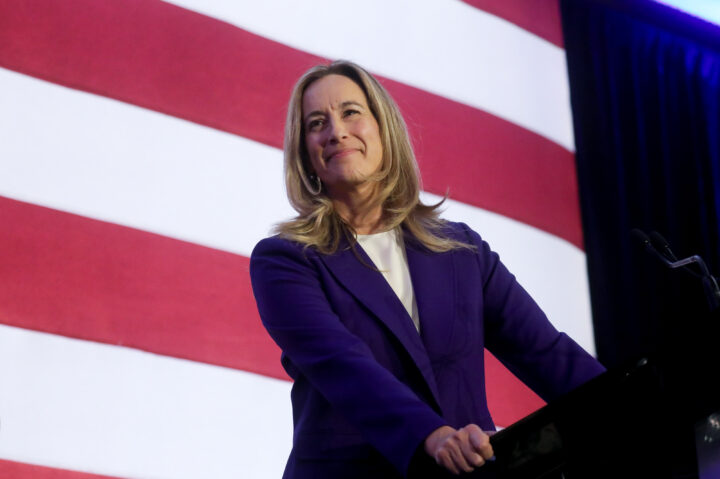
Michael Nagle/Bloomberg via Getty Images
New Jersey Gov. Mikie Sherrill during an election night event in East Brunswick, New Jersey, on Nov. 4, 2025.


 Add JewishInsider on Google
More than 2,000 New Jersey rabbis and lay leaders signed a petition to New Jersey Gov. Mikie Sherrill and state lawmakers urging them to take prompt action to implement the International Holocaust Remembrance Alliance’s working definition of antisemitism in the state.
Legislation on the issue picked up broad support in the New Jersey Statehouse last year, but was ultimately halted by then-Gov. Phil Murphy and other state Democratic leaders over concerns that the bill — while enjoying support from a majority of assemblymembers — would require some Republican support to pass, and that voting for the measure could fuel progressive primary challenges to some Democratic members.
“We were deeply dismayed that legislation to adopt the IHRA definition was recently shelved for political reasons, despite broad support in the legislature and clear evidence of rising antisemitism,” the letter, which was organized by the Jewish Majority, reads. “At a moment when Jewish communities seek protection and clarity, this delay sends a troubling message about whether Jewish safety is prioritized.”
The letter argues that the IHRA definition is a “practical necessity” and that, given its substantial Jewish population, the state “cannot lag behind in equipping our state to confront rising antisemitism.”
The bill has been reintroduced in the current legislative session, but one Jewish leader said it does not appear that it has much momentum or institutional backing at the moment, or that the state of play has substantially changed since Murphy’s term ended and the new governor came into office.
Sherrill, a Democrat, had previously expressed support for the IHRA legislation.
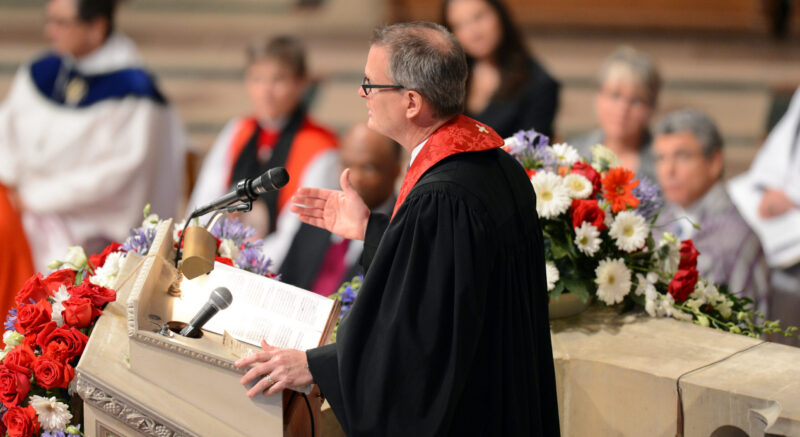
Rabbi David-Seth Kirshner of Temple Emanu-El in Closter, N.J., who was one of the driving forces behind the petition, said he was “really furious” when Murphy “played a game with this legislation,” calling it “strange and uncharacteristic” from a leader who was once a “fierce advocate of the Jewish community.”
Kirshner said that, given New Jersey’s large Jewish population, it should have been among the first states to adopt IHRA, rather than lagging behind more than 35 other states. He said that he and other leaders in the state want to support the effort to pass and implement IHRA in any way they can.
He said he would also like to see Sherrill act on the issue through an executive order — even one that is time-limited to allow the Legislature to pass the IHRA bill. He said he would have liked her to implement such an order on her first day in office.
“This is not complicated, and the idea that the governor’s office or that any of our legislators want to complicate this process is a passive-aggressive form of continued antisemitism,” he said.
Rabbi Matthew Gerwitz of Temple B’nai Jeshrun in Short Hills, N.J., another organizer of the petition, said that New Jersey Jews need to “find all ways and operate at all levels” to address rising antisemitism in the state, and not let it become normalized, lest they “end up contributing to our own downfall and demise.”
“[The governor has] expressed her support of us. And this is part and parcel of supporting Jews right now, is making sure that every legal, ethical, communal device is put into place, so that we can feel protected during a time where [antisemitism] has become … normalized,” Gerwitz said.
He said that the Jewish community felt like it had the “rug pulled out from under our feet during a perilous time for Jews” by Murphy.
Gerwitz said that he has no issue with an executive order, as long as it has teeth, but said that he wants to ultimately see legislation passed, so that the state government speaks in one voice on the issue.
“I would like to see the stamp of approval from the Assembly, from the state Senate and from the governor to say every single branch of this government is going to be behind you … the way they should be behind any group that is feeling persecuted,” he said.
Rabbi Samuel Klibanoff of Etz Chaim in Livingston, N.J., inside Sherrill’s former House district, who also helped lead the petition, said it was a “great show of unity amongst the rabbis, because [it’s] not that often that you see a Conservative, Reform and Orthodox rabbi do something together.”
“I hope that [Sherrill] will [act on] her conviction and not party lines or party pressure or whatever it might be,” Klibanoff said. “I just hope she’ll do the right thing, and not play politics with this.”
He said it’s important to bring renewed attention to the issue, and that the longer the bill takes, the longer the Jewish community is left in peril.
Jonathan Schulman, the executive director of Jewish Majority, described the petition as a follow-on and expansion to a previous letter from around 100 rabbis in the state urging passage of the IHRA legislation, explaining that rabbis had heard interest from their congregants about joining the effort as well.
He said he’s hearing widespread support among local leaders for a stopgap executive order, which he said would also create political cover for Democratic lawmakers to “finally be able to vote their conscience and support legislation like this.”
More Stories
EXCLUSIVE
Colorado senators introduce bill to expand federal security grant program

PHONE A FRIEND
AOC launches campaign blitz for El-Sayed across Michigan
BACK FROM THE GULF
Sen. Murphy accuses admin of ‘active cover-up’ of Iran war, vows to leverage funding to end war

Go Blue, but blue and white?
Michigan Hillel’s break with Israel advocacy groups raises questions about where it stands
SEEDS OF PEACE
Slotkin defends El-Sayed, says not all Jewish voters have the same priorities
CITY HALL CRITICISM
Mamdani’s Oct. 7 statement assailing ‘genocide in Gaza’ provokes outrage from Jewish groups
Please log in if you already have a subscription, or subscribe to access the latest updates.
 Continue with Google
 Continue with Apple