



































Hussain Abdul-Hussain’s long, strange trip from Israel critic to making ‘The Arab Case for Israel’
Lebanese-Iraqi writer and analyst Hussain Abdul-Hussain discusses Hezbollah, Lebanon’s future and the personal journey that transformed him from an anti-Israel youth into a prominent Arab advocate for normalization and peace with Israel
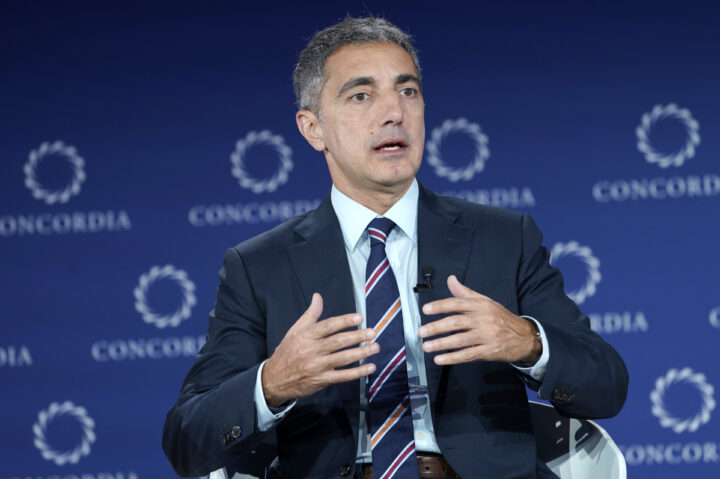
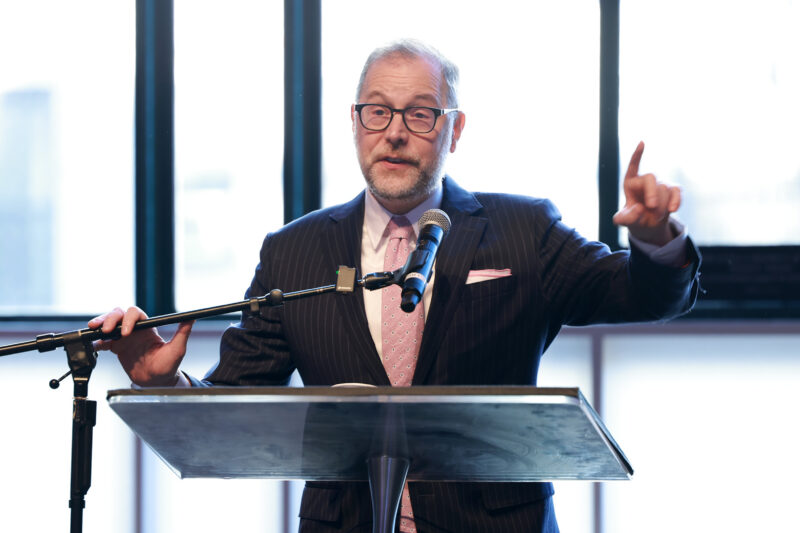
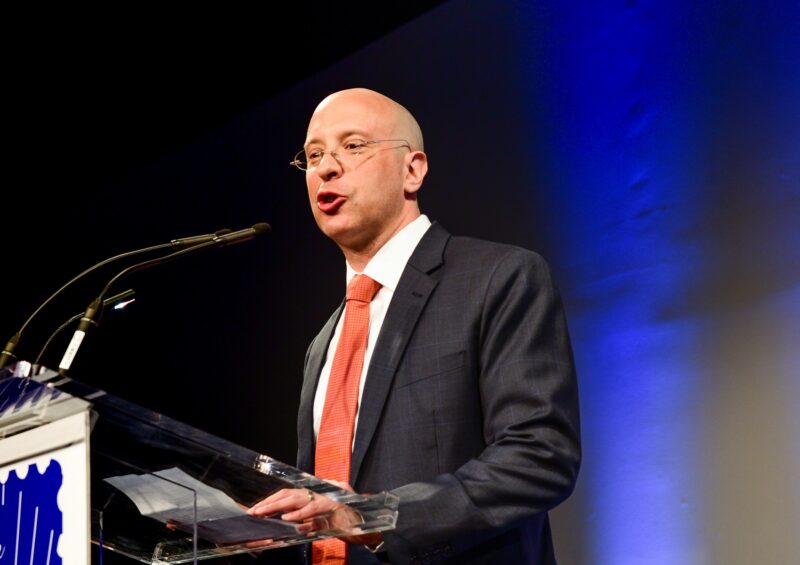
John Lamparski/Getty Images for Concordia Annual Summit
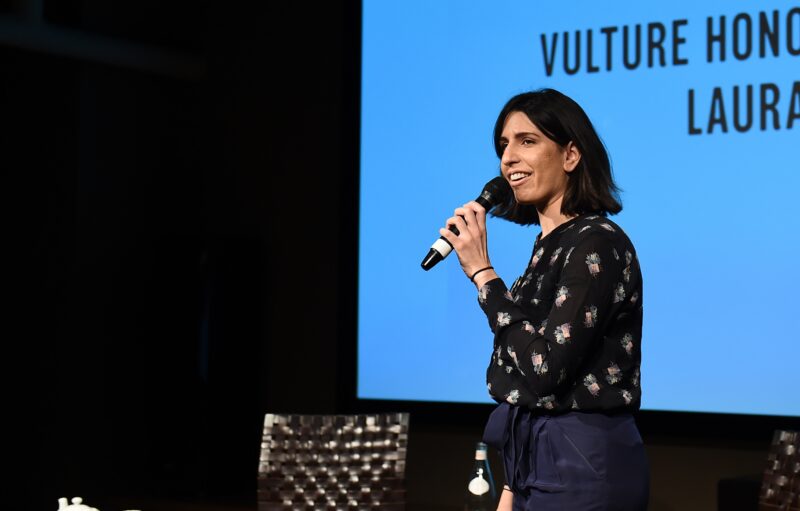
Hussain Abdul-Hussain, research fellow at the Foundation for the Defense of Democracies, speaks onstage during the 2025 Concordia Annual Summit at Sheraton New York Times Square on September 23, 2025.


 Add JewishInsider on Google
Writer and researcher Hussain Abdul-Hussain has an unusual story: A Shia Muslim raised in Iraq and Lebanon and taught to hate Israel and the West, he is now a research fellow at the Foundation for Defense of Democracies living in Washington, and the author of a book called The Arab Case for Israel.
It was his years in Lebanon that gave him unique insight into the country’s political workings, which now play a major role in its tenuous ceasefire with Israel.
“Lebanon was a thriving state when the Arabs were fighting Israel state-to-state, when it was a symmetric military-to-military war,” Abdul-Hussain told Jewish Insider’s Lahav Harkov and Misgav Institute for National Security and Zionist Strategy Executive Director Asher Fredman on the “Misgav Mideast Horizons” podcast this week.
“What happened is that, after 1967, when the Arab armies were defeated, the Arabs switched from military-to-military to asymmetric war, with armed factions like Hamas, or the PLO before Hamas, or Hezbollah [against Israel],” he said. “They decided when to fight, how to fight, where to launch attacks, and these were in Jordan and Lebanon. … Jordan decided [to say] ‘We are a state and we will not allow these armed factions to run our affairs’ … They ejected them in 1970. Lebanon, unfortunately, came under enormous pressure from all kinds of Arab capitals. … Everyone forced Lebanon to accept [PLO leader Yasser] Arafat and his armed factions to operate out of Lebanon and launch attacks on Israel.”
“Since then, the Lebanese state has not been able to restore its sovereignty to pre-1969 days,” Abdul-Hussain argued. “After Israel ejected Arafat in 1982, Hezbollah inherited the mantle. … We have an issue of chronic weakness of the Lebanese state facing armed factions.”
Lebanese President Joseph Aoun is “probably the only elected Lebanese official to state on the record that Hezbollah is treasonous and wages war on behalf of Iran,” Abdul-Hussain said. In addition, there were reports as talks began last month that Aoun would be willing to meet with Israeli Prime Minister Benjamin Netanyahu.
However, Aoun said more recently that Lebanon would not be able to negotiate with Israel until its fight against Hezbollah ended.
“Hezbollah and Iran don’t want any kind of direct talks with Israel,” Abdul-Hussain pointed out.
Egypt and Saudi Arabia, he noted, have also been advising the Lebanese government not to negotiate normalization, a topic that was one of Israel’s conditions for entering the talks.
Riyadh’s motivation, according to Abdul-Hussain, is for Arab states to line up behind the Gulf state and wait for it to make peace with Israel — a move that Saudi Arabia has conditioned on the creation of a pathway to Palestinian statehood.
“This is leverage for the Saudis; it’s not in the interest of Lebanon,” Abdul-Hussain said. “These are factors that come in so the Lebanese state remains weak and unable to take on Hezbollah.”
Abdul-Hussain credited the Trump administration for “giving Lebanon more attention than any administration since the early days of Ronald Reagan. … I’m happy that someone sees Lebanon as it is, not as we imagine it to be or just dismiss it and say ‘This is too complicated for us and we’re not going to go into it.’”
That attention is “a golden opportunity … to help disarm Hezbollah and live at peace with Israel, Syria, Turkey, Iran, everybody else,” he said. “If the Lebanese don’t grasp it, I’m not sure there will be another opportunity in the coming future.”
Abdul-Hussain said that Aoun’s recent message that he will not shake hands with Netanyahu at the outset of negotiations does not diminish the major step he took toward peace talks with Israel.
“For a Lebanese president to say that we are parting ways with the Arab League and Saudi Arabia and that we are ready to shake hands with the Israeli prime minister if there is an agreement – that is huge,” he said.
As for France, which has often intervened on matters related to Lebanon, but is not involved in the talks with Israel, Abdul-Hussain said, “France has not paid a penny to Lebanon in a long time … but for some reason they keep sitting at the table deciding Lebanon’s fate. My guess is that they enjoy the spotlight.”
The French and the Saudis try to intervene in Lebanon “for their own ego,” Abdul-Hussain argued, but France is “more dangerous,” because it “tries to curry favor with Iran by taking Hezbollah’s side in Lebanon. The French would tell the Iranians, ‘Listen, we will not go against Hezbollah … [or] whatever Hezbollah policy. But keep in mind that when the time comes and there are no sanctions and you need to give contracts away, the French took your side. The French do this all the time. They did it with Saddam Hussein.”
A more recent example Abdul-Hussain cited was when the United Arab Emirates and Bahrain brought a draft resolution to the U.N. Security Council stating that the Strait of Hormuz is an international waterway and countries should be able to use military force to open it; “The French took the side of the Chinese, Russians and Iran” against it, he said.
“Why would France do that?” he said. “OK, you don’t like Trump, you don’t want to open your airspace to Trump. But if you are about international law, this is as [legitimate] as it can get. So what do the French do? They hedge against the West. … and this is what they’re doing in Lebanon.”
Abdul-Hussain said he was “thrilled” to hear Israeli Ambassador to the U.S. Yechiel Leiter say that he “would like to keep the French as far away as possible from pretty much everything, but particularly when it comes to peace negotiations.”
Abdul-Hussain’s book, The Arab Case for Israel, was published in February and features not only his arguments in favor of supporting Israel, but how he came to hold such views after receiving an anti-Israel education.
“My dad is from Iraq, from Baghdad, and my mom is from Baalbek in Lebanon,” Abdul-Hussain recounted this week. “I grew up in both countries. After second or third grade, we left Iraq permanently, during the war with Iran. … Of course, the 1980s in Lebanon is when Israel invaded [Lebanon] and when Hezbollah was being put together, and the days of the civil war.”
Abdul-Hussain recalled growing up in Iraq “shouting slogans against Khomeini and against Israel, and then … [in] Lebanon shouting pro-Khomeini slogans against Saddam Hussein, but still against Israel.”
He attended the American University in Beirut, where he was exposed to less conservative Muslim ideas of “all kinds, Marxist, socialist, anarchist, you name it” but still anti-Israel.
Abdul-Hussain became a reporter at the now-defunct Daily Star, a leading English-language newspaper in Lebanon, rising to the position of managing editor.
When Israel withdrew from southern Lebanon in 2000, Abdul-Hussain was covering the events and drove to the border.
“At the time, the border was just a flimsy barbed wire. You could see Israelis on the other side, and I stood there and I watched Israeli families in Metula and all these towns … mothers driving their children to school, men working the fields, some guy driving a tractor. This was the first time that I saw Israelis as humans … as people like us, and this made me so curious,” he recalled.
Abdul-Hussain was able to pick up Israeli radio stations from Lebanon, and began to learn Hebrew in that way, because “If you lived in Lebanon, you had no access to anything Israeli. The only access you had is anti-Israel books by Edward Said, [Norman] Finkelstein, [Noam] Chomsky. You can buy Mein Kampf anywhere.”
Listening to Israeli radio, Abdul-Hussain found that “These guys are not really obsessed with killing all the Arabs and taking all the land and establishing Greater Israel from the Nile to the Euphrates and all the conspiracy theories that I had learned.”
In 2004, he moved to Washington to work for the newly-founded Al Hurra, the U.S.-backed Arabic language news channel meant to support the spread of democracy in the Middle East, and has lived in the U.S. ever since.
“After I came to the U.S., I had unlimited access to everything Hebrew and Jewish and Israeli and I understood this is a totally different story from the one I was taught,” he said.
Abdul-Hussain makes the case that “Whatever happened in the past, whatever injustice has befallen the Arabs and the Palestinians, moving on and seeing Israel as an asset is much more in the Arab interest than trying to wind the clock back to a time when Israel didn’t exist.”
“I show the numbers, the receipts as we say here in Washington,” he added. “Look at the Abraham Accords countries and their trade and economy. Look at the cold peace with Egypt and Jordan and their trade and economy, which is much less than the Abraham Accords countries. Then, look at Lebanon and Syria, who are still at war and miserably behind the others.”
Abdul-Hussain pointed at a trend by which “The more peaceful you get with your surroundings, the better your economy thrives and blooms. This is the idea of the book.”
More Stories

Presidential Prelude
Josh Shapiro launches federal PAC in potential signal of 2028 plans
meeting minutes
Huckabee met secretly with Netanyahu’s top rival, Gadi Eisenkot
HISTORY LESSON
Brett McGurk’s fact check of former Harris advisor Phil Gordon on hostage negotiations
TEXAS TALK
Talarico accuses Netanyahu of imposing ‘collective punishment’ in Oct. 7 response
SPENDING SCRAPPED
GOP leadership super PAC cancels spending plans against Rep. Landsman
DIPLOMATIC PUSH
Miliband agrees to host international antisemitism meeting at urging of J7 Task Force
Please log in if you already have a subscription, or subscribe to access the latest updates.
 Continue with Google
 Continue with Apple