








































House hearing spotlights antisemitism from healthcare unions
A cardiology fellow lamented that his union is engaging in systemic discrimination against Jews and Israelis, while he’s forced by federal law to help fund it
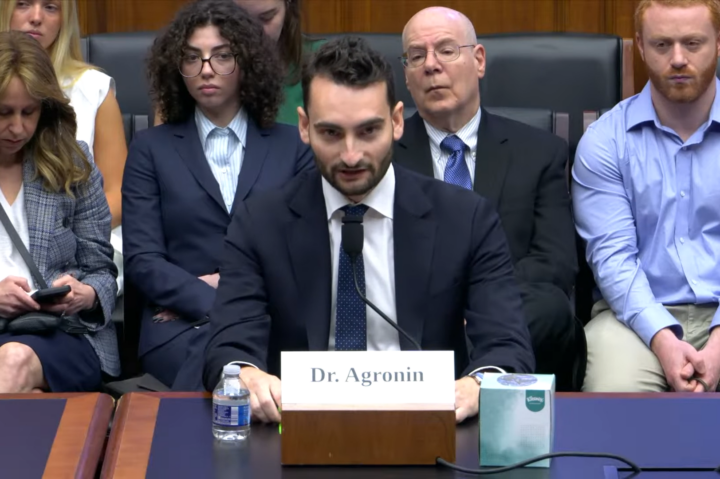
SCREENSHOT
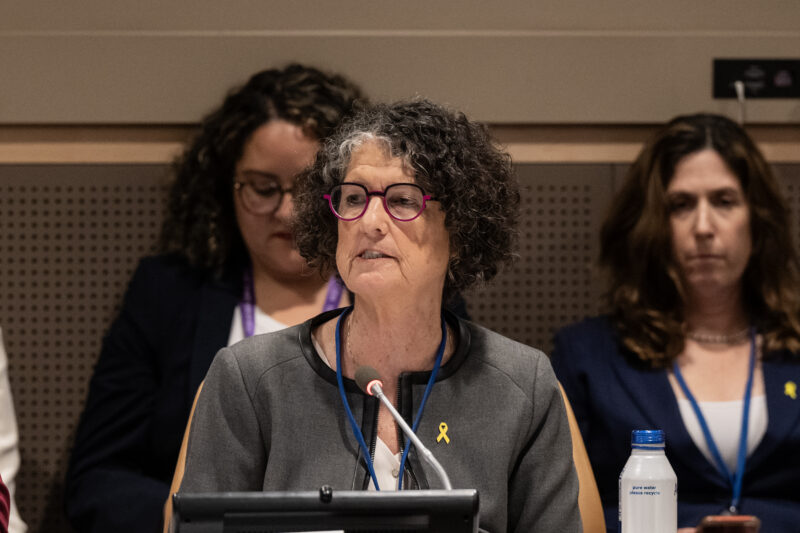
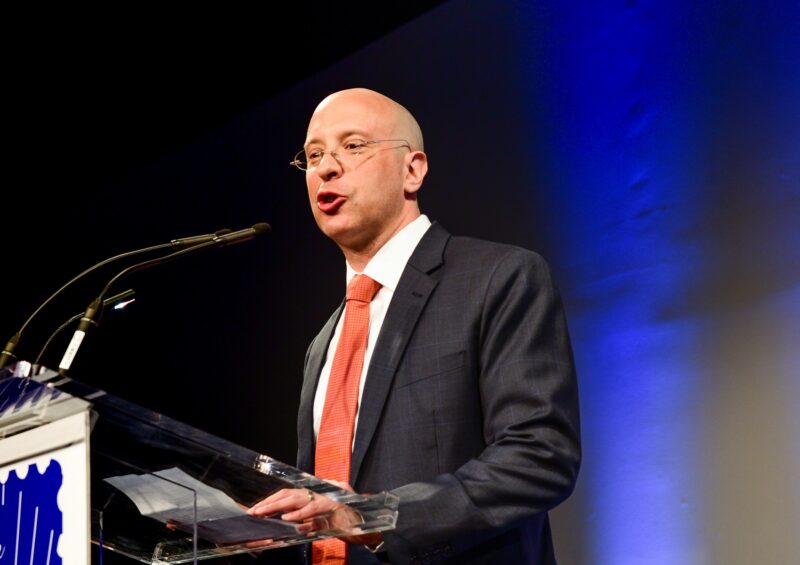
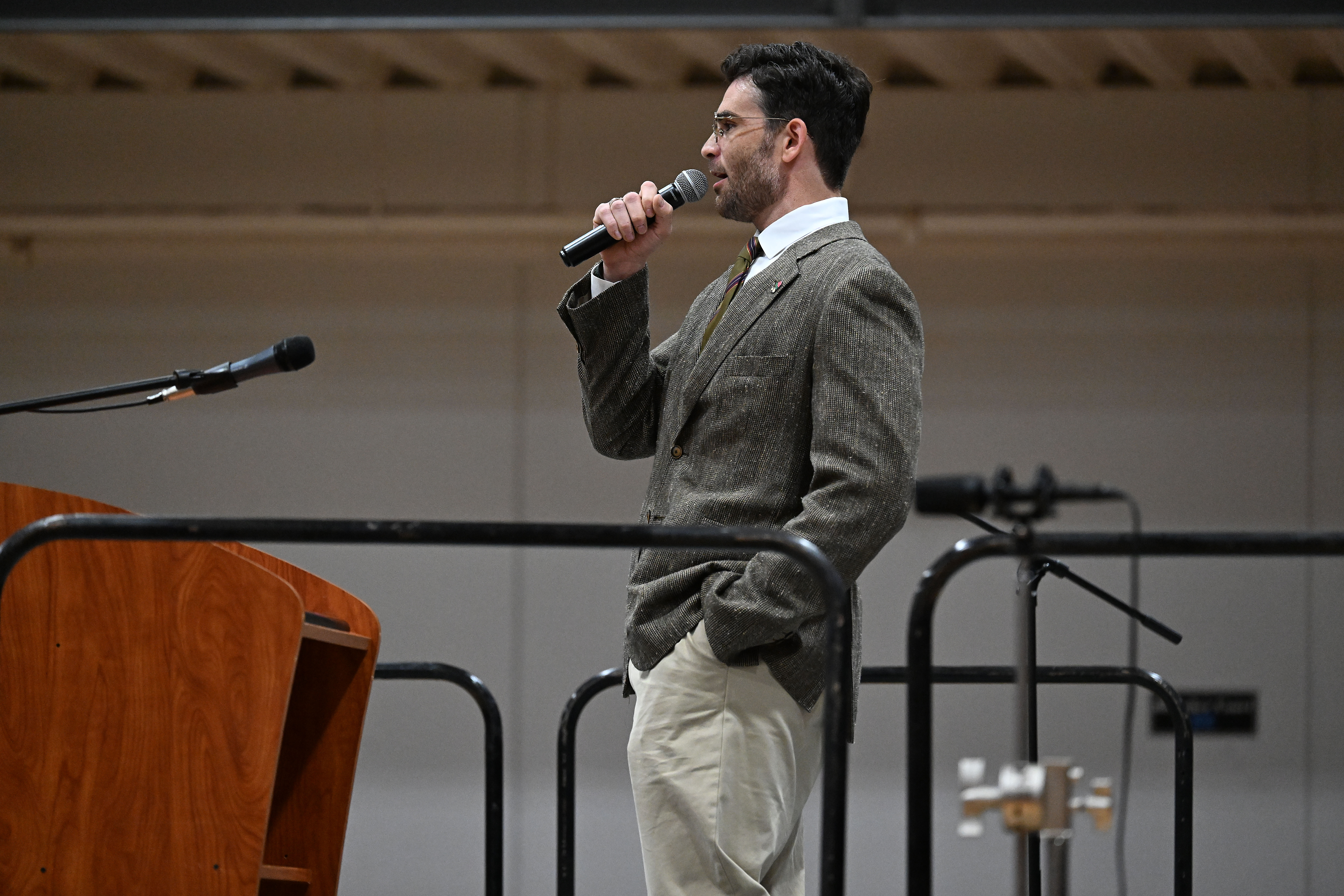
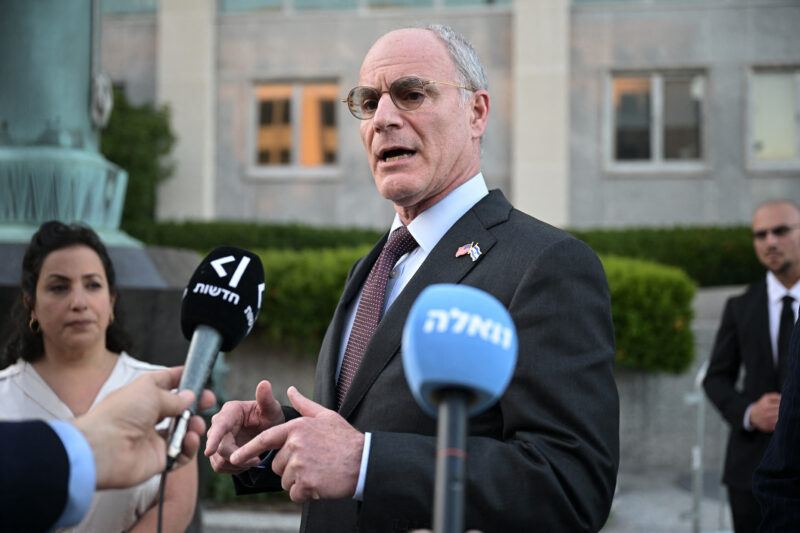
Dr. Jacob Agronin speaks at the House Education & Workforce subcommittee hearing on May 20, 2026.


 Add JewishInsider on Google
Speaking at a House Education & Workforce subcommittee hearing on Wednesday, a doctor accused his union of engaging in systemic discrimination against Jewish and Israeli health providers, supporting terrorist sympathizers and making “its obsession with a single geopolitical conflict a defining future of its identity” — all while he’ll be forced by federal law to fund it.
Dr. Jacob Agronin, a cardiology fellow at a major medical institution in Philadelphia, testified alongside several other experts on antisemitism at a hearing focused on anti-Jewish hate in the medical field — which both Jewish medical providers and patients report as a growing problem since Hamas’ Oct. 7, 2023, attacks on Israel.
The hearing focused in particular on the role of healthcare worker unions, such as the Committee of Interns and Residents, of which Agronin is set to be a member, in spreading antisemitism and their failures to stand up for Jewish union members.
CIR has adopted a series of resolutions condemning Israel for genocide and calling for divestment from Israel, including “human capital.” The organization has also offered its institutional support for a physician who expressed support for Hezbollah and for anti-Israel Columbia University activist Mahmoud Khalil.
“CIR has formally recommended that hospitals exclude my Israeli colleagues from employment, and then compels dues from those same colleagues to fund that position,” Agronin said. “If any employer in this country adopted that policy, we would call it what it is: discrimination.”
He said that members of the union feel afraid to speak out. Agronin also emphasized that his salary, which will help fund the union, comes in part from Medicare graduate medical education funding.
Eveline Shekhman, the CEO of the American Jewish Medical Association, said that her organization is encountering a new era in which “Jew hatred hides behind the guise of anti-Zionism.”
“We are seeing calls to fire Jewish doctors, the praising of terrorist groups in and outside of clinical settings, the refusal to treat patients because of their faith, national origin or Zionist identity, and the demand that Jewish colleagues renounce Israel as a condition of workplace acceptance,” Shekhman said. “This is antisemitism, this is discrimination, and it is a distraction. It has no place in medicine.”
Any disruption to the clinical environment can impact patient care, she said.
She added that employees should be able to rely on their unions to support them when their employers fail to do so in such an environment, but that many unions themselves “have created an environment where Jewish professionals no longer feel welcome” and where they are forced to fund such activities with which they disagree.
In addition to CIR, Shekhman said the National Nurses Union has also been advancing anti-Israel activity, including providing a guide for members to bring anti-Zionism into the clinical setting, where Shekhman argued such activity is irrelevant and has no place.
Deena Margolies, an attorney for the Louis D. Brandeis Center for Human Rights Under Law, said that efforts like these from healthcare unions place Jewish and Israeli professionals “in an impossible position: The union that is supposed to represent them is also helping to create the hostile work environment they must endure.”
“Antisemitism can be dressed as labor solidarity or political language, but the effect is the same. Jewish and Israeli healthcare professionals and patients are treated as morally suspect and unable to participate fully yet equally in clinical settings,” she continued.
Agronin told Jewish Insider after the hearing that there is a “fairly silent majority” that opposes the actions the union is taking but is afraid of backlash if they speak out.
Shekhman told JI that she appreciated that all of the lawmakers expressed concern about the trend of antisemitism in healthcare, and said that that is a promising sign of possibilities for progress going forward.
She said that lawmakers’ support can be helpful when working with institutions to address these issues, and said that the hearing can be the first of “a lot more conversations that need to be had.”
Agronin emphasized that “it’s not just a Jewish issue. This is really an issue that affects all Americans.”
“This is discrimination, as it would be for any other group of people by race, sexual orientation, national origin, anything,” he said. “None of us want to be forced to pay even a single dollar to this organization, especially when it … certainly doesn’t serve our interests — actually quite the opposite. So, I’d hope that there’s some solution to have an option for those that want nothing to do with unions.”
Throughout the hearing, Democrats questioned the motivation of the inquiry, accusing Republicans of weaponizing antisemitism as a cudgel against union organizing generally.
“It is irresponsible and unproductive to take the words and actions of a few and broadly categorize labor unions as fostering discrimination,” Rep. Mark DeSaulnier (D-CA), the ranking member of the subcommittee, said.
Jamie Beran, the CEO of the progressive Jewish group Bend the Arc, testified that antisemitism in the healthcare setting is “heartbreaking” and “leaves many Jews feeling isolated and unsure who to trust.” But she also attacked the Trump administration and descriptions of labor unions as institutionally antisemitic.
“The Trump administration is using Jewish safety as a pretext for policies that endanger our neighbors and our democracy, and as a Jewish leader, that angers me,” she continued. “Unions and professional organizations are engaged in the same debates happening across America. These disagreements are not inherently illegal antisemitism or harassment. … [T]o smear the institutions themselves as antisemitic because of what some members say is politically motivated. It’s gross governmental overreach to constitutionally protected speech among adults.”
Beran also condemned the administration for cutting funding for the Department of Health and Human Services’ Office of Civil Rights, and for restricting abortion access.
Shekhman and Agronin insisted to JI after the hearing that the issue should be a nonpartisan one, and that they’re not targeting unions broadly. Shekhman emphasized that it’s a “patient care crisis issue” that impacts all Americans, regardless of their background. And Agronin said he did not believe that similar behavior would be tolerated if other groups were being targeted.
Shekhman said she did not have the opportunity during the hearing to emphasize the “true impact of BDS on healthcare overall” — including a loss of access to research, technology and collaboration across a range of different areas, as well as losing the support of Israeli physicians.
She said that lawmakers and the public may not understand the scope and volume of the problem: in the past two weeks AJMA received 26 incidents of various natures, from a car being vandalized with a swastika in a hospital parking lot to a kippah being knocked off. And, she continued, most of the victims are afraid to discuss the issue publicly.
Agronin said that CIR’s protestations that it is anti-Zionist rather than antisemitic are a ruse, and that “anti-Zionism is 1940s Jew hatred that’s rebranded for the 21st century.”
More Stories
EMBASSY COMMEMORATION
Deputy national security advisor emphasizes shared civilizational fight at Oct.7 anniversary event

Doha’s Darling
Murphy, Qatar’s ‘reliable ally’ in the Senate, huddles with emir and chief Qatari negotiator in Doha
exclusive
Second local Jewish Democratic official endorses Republican Lawler, citing Israel and antisemitism
SEEDS OF PEACE
Slotkin defends El-Sayed, says not all Jewish voters have the same priorities

Arrivederci, Reggio
Jewish preschool educators forced to condemn Israel to attend Reggio Emilia conference

CAMPAIGN TRAIL
‘There is no Palestinian nation,’ Ofer Winter says as party dips in polls
Please log in if you already have a subscription, or subscribe to access the latest updates.
 Continue with Google
 Continue with Apple