














































Former Virginia governor, on panel with Rahm Emanuel: ‘This was a moment for us to address something that has been festering for 50 years’

Patrick T. Fallon/AFP via Getty Images
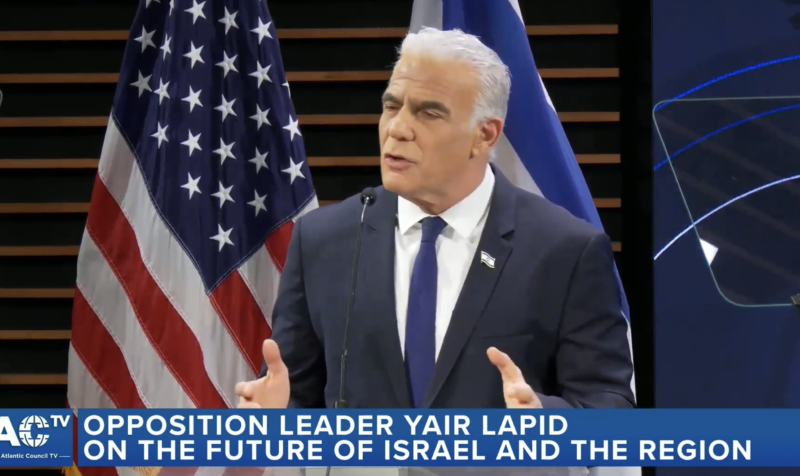
Former Virginia Gov. Glenn Youngkin (R) and U.S. Ambassador to Japan Rahm Emanuel speak during the 29th annual Milken Institute Global Conference at the Beverly Hilton in Beverly Hills, California on May 5, 2026.


 Add JewishInsider on Google
LOS ANGELES — Amid declining public support for the U.S. military action against Iran, Virginia’s former Republican governor, Glenn Youngkin, defended President Donald Trump’s Middle East policies in a Tuesday address at the Milken Institute Global Conference in Los Angeles.
“I believe what has been briefed out: that the need to intervene immediately was real, and therefore this was a moment for us to address something that has been festering for 50 years and that has been the bane — the bane of safety and the bane of the entire region for 50 years,” said Youngkin, who held office until January. “I support us solving this now.”
Youngkin was speaking on a panel at the Beverly Hills convening with former Chicago Mayor Rahm Emanuel, a Democrat, both of whom are considered potential future presidential candidates. Youngkin stood by his support for Trump’s war against Iran even amid conversation about the growing number of younger Americans, Republicans included, who are questioning Trump’s more interventionist approach to global conflicts.
“We have seen a decimation of their military capabilities,” Youngkin said of Iran. “We should drive this to its finish.”
Emanuel has amped up his criticism of Israel in recent months. He argued on Tuesday that eroding American support for Israel can be traced back to Israeli Prime Minister Benjamin Netanyahu’s 2015 speech to Congress, when he bypassed President Barack Obama, angering many Democrats. But Emanuel also noted that even Republicans are less sympathetic to Israel than they used to be.
Youngkin, however, maintained that supporting Israel is the right thing to do.
“Who do we stand with? I think we should stand with Israel. I just do,” he said.
The move came just hours after Secretary of State Marco Rubio lauded the launch of the short-lived Project Freedom
Win McNamee/Getty Images
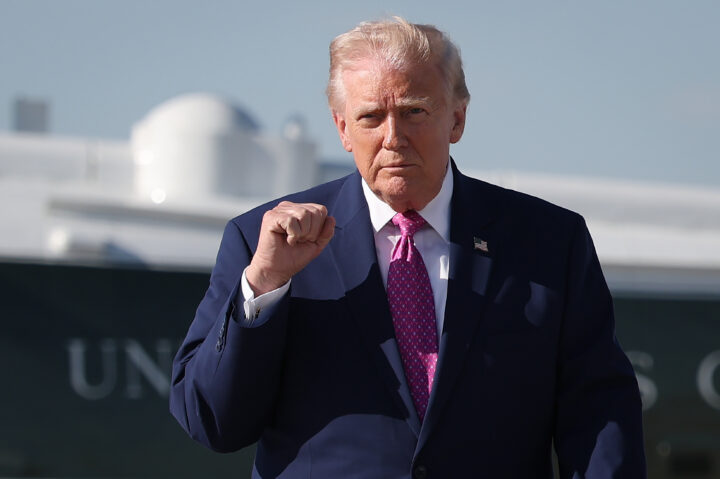
President Donald Trump walks toward reporters before answering questions prior to boarding Air Force One on April 10, 2026 at Joint Base Andrews, Maryland.
President Donald Trump announced on Tuesday that he was temporarily pausing “Project Freedom,” the three-day-old operation aimed at reopening the Strait of Hormuz to commercial traffic, at the request of Pakistan and due to progress in negotiations — hours after Secretary of State Marco Rubio heralded the start of the operation.
The president wrote on Truth Social on Tuesday evening that all elements of Project Freedom, a U.S. mission to escort commercial vessels safely through the Strait of Hormuz, “will be paused for a short period of time” in order to see if a “[peace] agreement can be finalized and signed.”
The U.S. blockade of Iranian ports, however, “will remain in full force and effect,” Trump noted.
The president said that the decision had been made “based on the request of Pakistan and other countries” as well as due to the “great progress” made toward “a complete and final agreement with representatives of Iran.”
The comments came a few hours after Rubio held a lengthy press conference at the White House, where he repeatedly insisted that the U.S. had completed Operation Epic Fury, the administration’s name for the war in Iran, and was now solely focused on Project Freedom, as well as diplomatic efforts.
“Operation Epic Fury has concluded. We achieved the objectives of that operation. We’re not cheering for an additional situation to occur. We would prefer the path of peace. What the president would prefer is a deal,” Rubio said. “He would prefer to sit down and work out a memorandum of understanding for future negotiations that touches on all the key topics that have to be addressed. That’s the route he prefers.”
“That is, so far, not the route that Iran has chosen,” he continued. “And so the result has been that the United States has to do something about the fact that we’re the only nation on earth that can do anything to open up a lane within the Straits of Hormuz to get product and to rescue these people that are trapped in there, and that’s what we’re undergoing now,” Rubio said of launching Project Freedom.
The nation’s top diplomat emphasized on multiple occasions that any future U.S. attacks on Iran should be viewed with a different lens than prior instances of fighting.
“What’s really important for you to report and for everyone to understand is this is not an offensive operation — this is a defensive operation. What that means is very simple: There’s no shooting unless we’re shot at first,” Rubio said.
He also acknowledged that any peace agreement with Iran would need to address its nuclear enrichment, and allow for the U.S. or others to remove any enriched material currently in Iranian facilities buried in the U.S. and Israeli strikes in June of last year.
“As far as the negotiation is concerned, I think the president’s been clear that part of the negotiation process has to be not just the enrichment, but what happens to this material that’s very deep somewhere that they have still have access to if they ever wanted to figure it out,” he added. “That has to be addressed, and that’s being addressed in the negotiation.”
The secretary of state could not say if the president had followed through on his public musings to send weapons to Kurdish groups and Iranians looking to take up arms against the regime, but again tried to create distance between any prior offers and Project Freedom.
“I think what the president is expressing is the desire that he wishes the Iranian people had an ability to fight back against some of these things that are happening to them,” Rubio said. “And I would view that as distinct and separate from the specifics of this operation that was ongoing before it concluded, and certainly different from the operation that’s going on now.”
Plus, Adam Hamawy defends terror ties

Selçuk Acar/Anadolu via Getty Images
Anti-Israel demonstrators gather at 'No Settlers on Stolen Land' protest against a Nefesh b'Nefesh event at the Park East Synagogue in Manhattan in November 2025.
This P.M. edition is reserved for our premium subscribers like you — offering a forward-focused read on what we’re tracking now and what’s coming next. Please don’t hesitate to share your thoughts and feedback by replying to this email.
📡On Our Radar
Notable developments and interesting tidbits we’re tracking
Defense Secretary Pete Hegseth insisted at a press conference this morning that the ceasefire with Iran is not over, despite repeated violations by both sides in recent days. “Ultimately, this is a separate and distinct project,” Hegseth said of the new U.S. mission to escort commercial shipping vessels through the Strait of Hormuz, “and we expected there would be some churn at the beginning.”
Joint Chiefs Chairman Gen. Dan Caine said similarly that even though Iran has fired on commercial vessels nine times, seized two container ships and attacked U.S. forces more than 10 times since the ceasefire began, that is all “below the threshold of restarting major combat operations”…
Can there be a ceasefire without a war? Secretary of State Marco Rubio claimed at his own press conference in the afternoon that Operation Epic Fury, as the Iran war was called, is finished, and the U.S. has moved onto Project Freedom in the strait, only hitting Iranian targets in response to attacks from Tehran.
President Donald Trump similarly downplayed the war effort, calling it a “skirmish” and telling reporters in the Oval Office that Iran still “wants to make a deal.” Meanwhile, Iran shot ballistic missiles, cruise missiles and drones at the UAE for the second day in a row, the Emirati Defense Ministry said…
A majority of Israelis believe that ending the war with Iran under the current conditions would undermine the country’s security, Jewish Insider’s Matthew Shea reports: 64% of Jewish Israelis said ending the war in its current state is “only slightly or not at all aligned” with Israel’s security interests, in a new poll by the Israel Democracy Institute. Nearly half of Arab Israelis (48.5%) said the same…
Incoming Israeli Air Force chief Maj. Gen. Omer Tischler, who assumed his role today, said at his handover ceremony that the IAF is “closely monitoring what is happening in Iran, and are prepared to take the entire Air Force eastward, if we are required to do so”…
Thirty House Democrats sent a letter to the Trump administration urging it to publicly acknowledge Israel’s nuclear weapons program, which neither Israeli nor U.S. officials have ever confirmed publicly.
The lawmakers, led by Rep. Joaquin Castro (D-TX), a vocal Israel critic, said the threat of nuclear warfare has escalated amid the Iran war: “The risks of miscalculation, escalation, and nuclear use in this environment are not theoretical,” they wrote. “Congress has a constitutional responsibility to be fully informed about the nuclear balance in the Middle East, the risk of escalation by any party to this conflict, and the administration’s planning and contingencies for such scenarios”…
Israeli Prime Minister Benjamin Netanyahu met with Board of Peace head Nickolay Mladenov in Jerusalem today, along with U.S. Ambassador to Israel Mike Huckabee, Board of Peace advisor Aryeh Lightstone, Netanyahu advisors Caroline Glick and Ophir Falk, venture capitalist Michael Eisenberg and tech entrepreneur Liran Tancman.
Mladenov said in a statement that the discussion was “positive and substantive” and the parties “reaffirmed our commitment to the full implementation” of the 20-point Gaza peace plan…
U.K. Prime Minister Keir Starmer, convening an emergency summit with Jewish, business, education and government leaders at 10 Downing St., called for a whole-of-society approach to combating antisemitism as the country’s Jewish community has been repeatedly targeted by violent attacks.
Starmer said officials are investigating whether Iran is behind the recent events, announced universities will be required to produce reports on antisemitism on campus and called for the government’s Arts Council to “claw back” funding from organizations that engage in antisemitism…
Tonight, the radical PAL-Awda group is planning a protest outside Park East Synagogue in Manhattan to disrupt a reported Israeli real estate event — Jewish New Yorkers will be watching to see how the protest is handled by city leaders as opposed to the group’s last demonstration outside the same synagogue in November, when protesters harassed attendees and chanted “death to the IDF” and “globalize the intifada.”
Similar to his stance on November’s protest, New York City Mayor Zohran Mamdani’s spokesperson told far-left Drop Site News the mayor is “deeply opposed” to the real estate event, which he said is promoting settlements that are “illegal under international law and deeply tied to the ongoing displacement of Palestinians.” Still, Mamdani’s administration said it has “also been clear that we are committed to ensuring safe entry and exit from any house of worship.”
Assemblymember Micah Lasher, who is running for New York’s 12th Congressional District, condemned the planned protest, saying its purpose is “to create fear in the hearts of Jewish New Yorkers,” while expressing optimism that the NYPD will “make sure that a protest does not turn into a gauntlet of hate through which Jews must pass”…
New Jersey congressional candidate Adam Hamawy, a trauma surgeon who has made criticism of Israel central to his campaign, defended his yearslong relationship with the “Blind Sheikh,” who was convicted of terrorism for his role in the 1993 World Trade Center bombing: Hamawy’s campaign told Politico that reporting on the candidate’s testimony in defense of Omar Abdel-Rahman at his trial are “guilt-by-association attacks on Muslim and Arab candidates”…
A new poll of the Texas GOP Senate runoff from the University of Houston’s Hobby School of Public Affairs found the race neck-and-neck just three weeks from Election Day: Attorney General Ken Paxton polled with a three-point lead over incumbent Sen. John Cornyn (R-TX), with 7% of likely runoff voters still undecided…
The Washingtonian released its list of Washington’s 500 most influential people of 2026, including: AIPAC’s Elliot Brandt, J Street’s Jeremy Ben-Ami, the Hudson Institute’s Michael Doran, the Center for International Policy’s Matt Duss, the Anti-Defamation League’s Aykan Erdemir, the Washington Post’s David Ignatius, Qatar lobbyist Jim Moran, the Quincy Institute’s Trita Parsi, the American Jewish Committee’s Julie Fishman Rayman, the Washington Institute’s Dennis Ross, New Jewish Narrative’s Hadar Susskind and SKDK’s Jill Zuckman…
⏩ Tomorrow’s Agenda, Today
An early look at tomorrow’s storylines and schedule to keep you a step ahead
Keep an eye out in Jewish Insider for a look at the latest front in the campus anti-Israel movement: student activists targeting Hillel, the world’s largest Jewish campus organization.
The Manhattan Institute will host its Alexander Hamilton Award Dinner, honoring former Sen. Ben Sasse (R-NE), who is suffering from terminal pancreatic cancer, and Jeff Yass, founding partner of Susquehanna International Group.
The Stephen Wise Free Synagogue will host a Democratic candidate forum for New York’s 12th Congressional District featuring Alex Bores, Micah Lasher, Jack Schlossberg and George Conway.
Stories You May Have Missed
RAHM UNBOUND
How Rahm Emanuel is recalibrating on Israel ahead of 2028
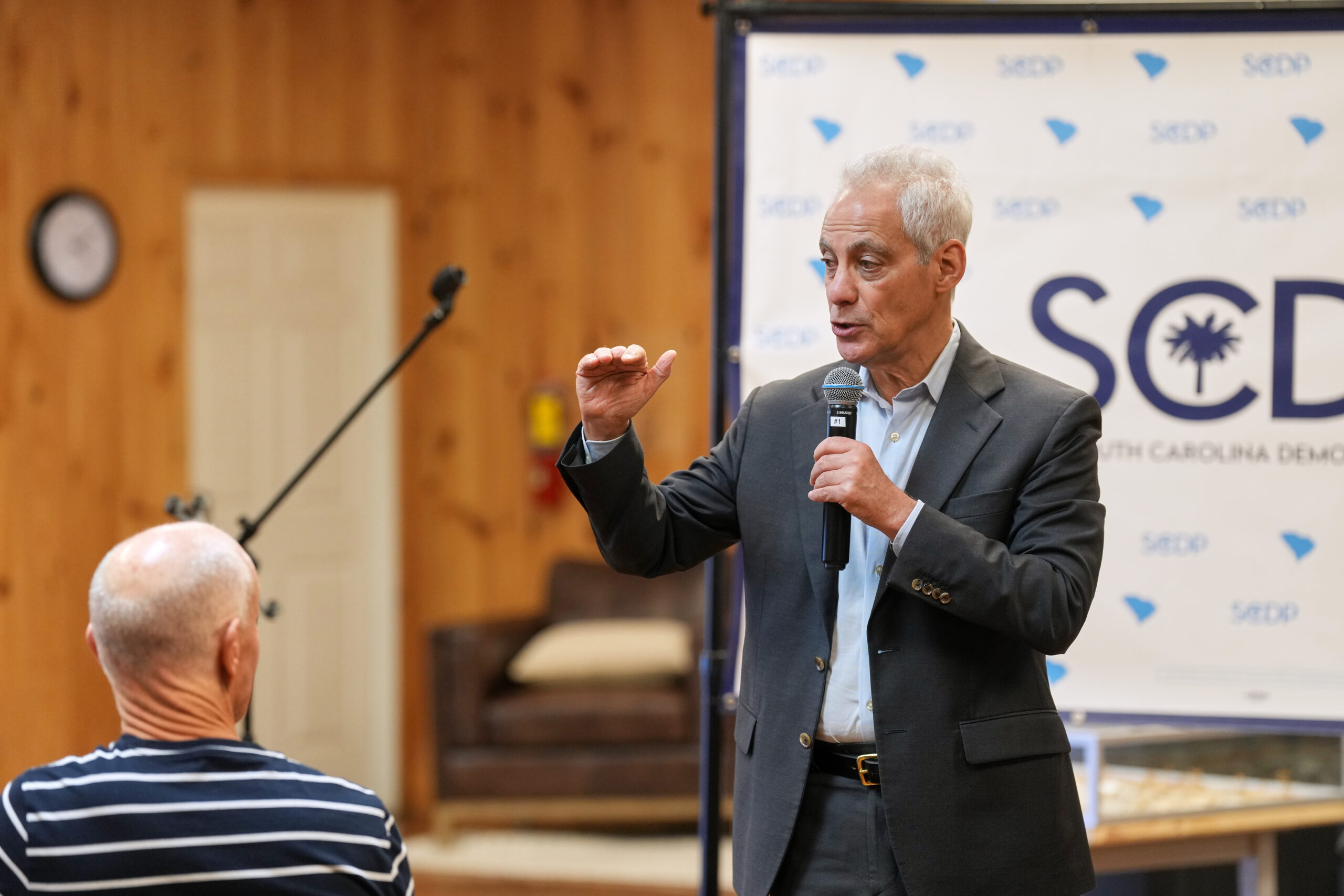
In an interview with Jewish Insider, Emanuel outlines his views amid changing winds in a Democratic Party increasingly antagonistic to the pro-Israel perspective that had long been central to his identity
FAMILIAR FACE
Direction of Dem policy group raises red flags after hiring of new leader with history of anti-Israel activism
National Security Action named Maher Bitar, a former Biden official and Students for Justice in Palestine student activist, as its new leader
Hegseth said the numerous recent violations were expected as the U.S. launched its mission to escort ships through the Strait of Hormuz
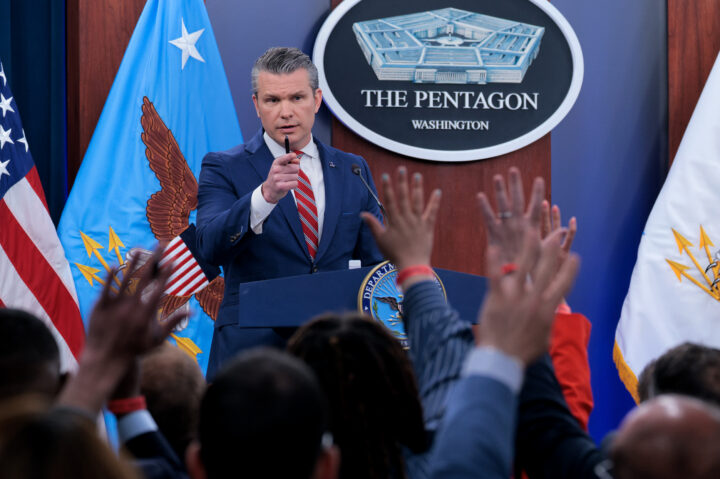
Chip Somodevilla/Getty Images
Secretary of Defense Pete Hegseth calls on reporters during a press briefing at the Pentagon on May 05, 2026 in Arlington, Virginia.
Defense Secretary Pete Hegseth said on Tuesday that the ceasefire between the U.S. and Iran was still in effect, despite numerous ceasefire violations by both sides in recent days.
“No, the ceasefire is not over,” Hegseth said during a press briefing at the Pentagon alongside Chairman of the Joint Chiefs of Staff Gen. Dan Caine. “Ultimately, this is a separate and distinct project,” Hegseth said of the new U.S. mission to escort commercial shipping vessels through the Strait of Hormuz, “and we expected there would be some churn at the beginning, which happened, and we said we would defend and defend aggressively, and we absolutely have.”
“Iran knows that, and ultimately, the president is going to make a decision whether anything were to escalate into a violation of a ceasefire. But certainly, we would urge Iran to be prudent in the actions that they take, to keep that underneath this threshold,” the defense secretary continued.
President Donald Trump announced on Sunday that U.S. forces would ensure the Strait of Hormuz is reopened to commercial traffic by escorting vessels and deflecting missile and drone attacks from Iran. Referring to the operation as “Project Freedom,” Trump warned on Monday that Iran would be “blown off the face of the earth” if the regime attempted to interfere.
Hegseth continued, “This is about the straits. This is about freedom of navigation. This is about international waterways. This is about free flow of commerce, all the things that happened before and that only Iran is contesting. So right now, the ceasefire certainly holds, but we’re going to be watching very, very closely.”
Caine said similarly that even though Iran has fired on commercial vessels nine times, seized two container ships and attacked U.S. forces more than 10 times since the ceasefire began, that is all “below the threshold of restarting major combat operations.”
Hegseth was pressed by reporters whether Trump was considering seeking congressional authorization to continue military operations in Iran, as many lawmakers believe the president has run out the 60-day clock for a war launched without congressional approval.
“Our view is … that ultimately, with the ceasefire, the [60-day] clock stops. If it were to restart, that would be the president’s decision. That option is always there, and Iran knows that, and that’s why their choices on freedom are important,” Hegseth said. “The president retains the opportunity and the capabilities — more capabilities than we have at the start of this — to restart major combat operations if necessary.”
Asked about alleged assertions by Israeli Prime Minister Benjamin Netanyahu and Mossad Director David Barnea that Israel would not abide by or participate in the ceasefires in Iran or Lebanon, Hegseth rejected claims that Israel was forcing the American president’s hand.
“I will say those questions are based on the false premise that somehow President Trump is being pulled in by Prime Minister Netanyahu to any of these actions,” Hegseth told reporters. “President Trump has led at every step of this based on his view of American interests and America First, and we’re grateful that Israelis have been very capable partners at many steps of this.”
“They may have some objectives at times that are slightly different than ours, but there’s only one hand on the wheel ultimately directing this, whether it’s Project Freedom or previously Operation Epic Fury, and it’s President Trump,’ he continued. “So we’re grateful for their input, their insights, the existential nature of the threat they face from an Iranian bomb, the capabilities that they can bring to that, but ultimately the coordination will happen with the leadership of President Trump.”
64% of Jewish Israelis said in a new IDI survey that ending the war under its current conditions is not in the best interest of Israel’s security

Alexi J. Rosenfeld/Getty Images
People take shelter in an underground bomb shelter amid reports of incoming missiles on February 28, 2026 in Tel Aviv, Israel.
A majority of Israelis believe that ending the war with Iran under the current conditions would undermine the country’s security, according to a new poll from the Israel Democracy Institute.
The survey, conducted between April 26-30, over two weeks into the ceasefire between the U.S. and Iran, found that 64% of Jewish Israelis said ending the war in its current state is “only slightly or not at all aligned” with Israel’s security interests. Nearly half of Arab Israelis (48.5%) said the same.
Despite ongoing U.S.-Iran negotiations and a fragile ceasefire, most Israelis expect a return to further escalation. Overall, 62% of respondents said they believed a return to widescale conflict was likely, including roughly two-thirds of Jewish respondents (64%) and 52% of Arab respondents. Since the survey was conducted, the ceasefire has grown more precarious, with both sides alleging violations.
In the first week after Israel and the U.S. launched joint strikes on Iran’s top officials, 80% of Israelis — including 93% of Jewish Israelis — said they supported the war against Iran.
The latest survey also points to shifting perceptions of U.S. influence over Israeli decisionmaking. A majority of Jewish Israelis now believe the Trump administration exerts greater influence over Israel’s defense policy than the Israeli government itself, with that share rising from 45% in October 2025 to 56.5% in the newest survey. Over the same period, the percentage of Jewish Israelis who see their own government as the primary decisionmaker in its military actions dropped from 24% to 15%.
Among Arab Israelis, views moved in the opposite direction: The share who believe the U.S. holds greater influence fell from 39.5% to 25.5%.
Meanwhile, the survey revealed pessimistic attitudes as they relate to U.S.-brokered talks between Israel and Lebanon, including the ongoing ceasefire. Nearly 80% of Jewish Israelis believe there is a fairly low to very low likelihood of reaching a “stable diplomatic defense arrangement with the Lebanese government, that will include the disarming of Hezbollah.” Among Arab Israelis, 45% believe the likelihood of a deal between Beirut and Jerusalem is fairly high to very high.
The poll also pointed to deepening concern among Israelis from across the political spectrum over the recent decline in positive attitudes toward Israel in the U.S., with a majority of respondents — 72% — calling the decline “somewhat or very worrying for Israel.” The survey reported no difference in this issue among Jews and Arabs.
The poll surveyed a representative sample of Israeli adults, including 601 Jewish respondents and 150 Arab respondents.
Monday’s Iranian missile fire came amid ramped-up rhetoric from both Tehran and Washington over the closure of the Strait of Hormuz
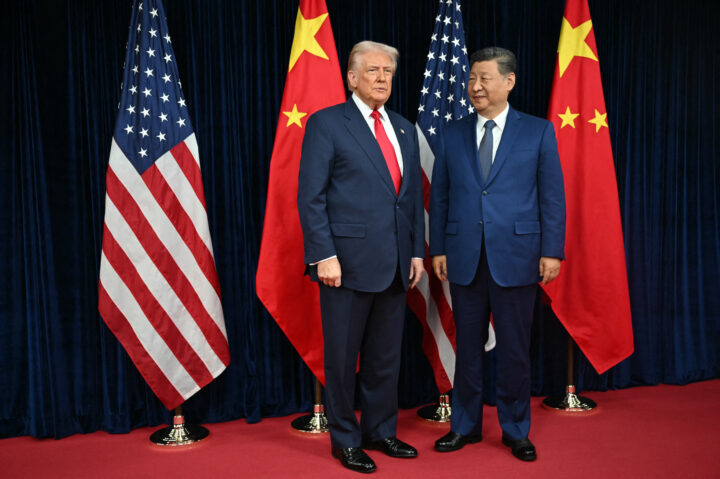
ANDREW CABALLERO-REYNOLDS/AFP via Getty Images
US President Donald Trump (L) and China's President Xi Jinping arrive for talks at the Gimhae Air Base, located next to the Gimhae International Airport in Busan on October 30, 2025.
The tenuous ceasefire between the U.S. and Iran came close to collapsing overnight after the Islamic Republic fired 15 missiles and four drones at the United Arab Emirates. The question now is whether hostilities will resume in the coming days — just before next week’s major summit between President Donald Trump and Chinese President Xi Jinping, slated to take place in Beijing.
Monday’s Iranian missile fire came amid ramped-up rhetoric from both Tehran and Washington over the closure of the Strait of Hormuz, and as the U.S. launched “Project Freedom” to assist vessels attempting to transit through the waterway. One of the drones fired yesterday by Iran hit the UAE’s Fujairah Oil Industry Zone, sparking a fire that injured three Indian workers.
Iran’s attack on the UAE was widely condemned, with Saudi, Qatari, British and Indian officials denouncing the renewed strikes.
CENTCOM head Adm. Brad Cooper touted the initial success of the Project Freedom naval effort, which on its first day protected two U.S.-flagged ships traveling through the strait. It’s unclear the degree to which the endeavor will help with the resumption of normal activities in the waterway, which normally sees some 120 vessels passing through each day.
Later Monday, two U.S. naval ships came under heavy fire from Iran as they navigated through the passage. Iran claimed to have hit a warship, which CENTCOM denied. Trump told Fox News’ Trey Yingst that Iran would be “wipe[d] off the face of the earth” if it targeted ships being escorted through the strait. The Wall Street Journal reported that the president “for days has toggled between two competing impulses: severely punishing Iran for failing to abandon its nuclear work, and avoiding a significant escalation that could draw the U.S. deeper into a Middle East conflict.”
Iranian Foreign Minister Abbas Araghchi, for his part, criticized Project Freedom — which he referred to as “Project Deadlock” — claiming that Pakistan-brokered talks between Washington and Tehran “are making progress” and warning that the U.S. and the UAE “should be wary of being dragged back into quagmire by ill-wishers.”
Pakistani Prime Minister Shehbaz Sharif condemned the strikes on the UAE — albeit without mentioning Iran. “It is absolutely essential that the ceasefire be upheld and respected,” Sharif posted on X, “to allow necessary diplomatic space for dialogue leading to enduring peace and stability in the region.”
Secretary of State Marco Rubio is expected to address the situation with Iran when he speaks to reporters from the White House briefing room at 3 p.m. on Tuesday, the first press briefing since White House Press Secretary Karoline Leavitt went on maternity leave.
Later this week, Rubio is set to head to the Vatican to meet with Pope Leo XIV amid tensions between the Holy See and the Trump administration over the pontiff’s comments on the war in Iran. It’s unclear if the trip will still happen if the situation in the Gulf further devolves.
The bigger question is what will happen next week, when Trump is slated to meet with China’s Xi Jinping in Beijing — a summit already delayed once due to the war. Over the weekend, Beijing told Chinese firms to ignore U.S. sanctions on five Iran-linked oil refiners in the country.Beijing has attempted to play both sides of the conflict, encouraging Iran to pursue diplomacy while also providing the Islamic Republic with commercial support for use in the event of a resumption of hostilities. Should the summit take place, all eyes will be on Xi to see if he attempts to play Trump, as well.
U.N. Ambassador Mike Waltz told JI, ‘once we've cut off any other path’ for the terror group, ‘I think they have no other choice’
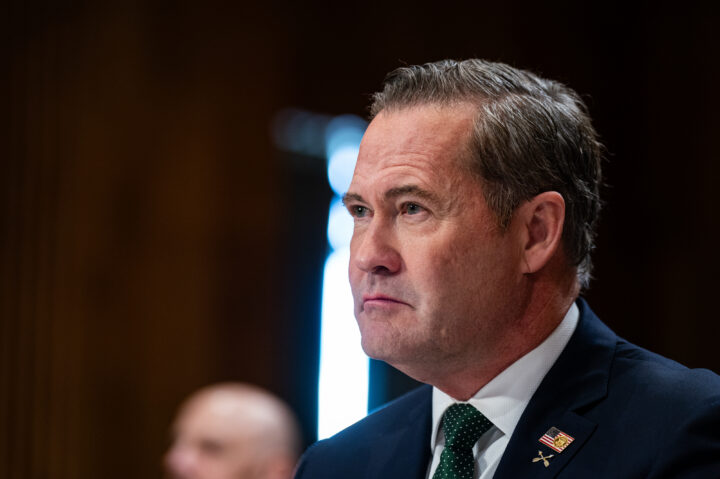
Al Drago/Bloomberg via Getty Images
Mike Waltz, U.S. ambassador to the United Nations, during a Senate Foreign Relations Committee hearing in Washington, DC, US, on Wednesday, April 15, 2026.
LOS ANGELES — While the world’s attention has been fixed on Iran, U.S. Ambassador to the U.N. Mike Waltz and a team of American bureaucrats have spent the last few months quietly working to turn President Donald Trump’s Board of Peace into a fully functioning entity.
The fledgling international organization — billed by some as an alternative to the U.N., although Waltz insists there is room for both — has the astronomically large task of governing and rebuilding Gaza. Waltz is bullish on the possibility that the morass of Gaza can be worked out peacefully, with enough buy-in from countries who are willing to finance the creation of a new governing and police structure in Gaza.
“The contributions keep coming in for both the international stabilization force and the new police force. That training is standing up in both Egypt and Jordan. It’s going to take time, but all of those pieces are moving forward,” Waltz told Jewish Insider during an interview on Monday at the Milken Institute Global Conference in Los Angeles.
One lingering challenge to Waltz’s premise of a peaceful Gaza is Hamas’ grip on power, which remains a huge variable in a plan that is largely contingent upon the U.S. and Israel’s defeat of Hamas. The terror group still controls large swathes of Gaza, even if not all of it. It will be loath to hand over that power willingly. Waltz swore that Hamas “will never again rule Gaza,” whether as a result of “diplomatic action or military action.”
“I wouldn’t expect a terrorist organization like them to just roll over and hand over everybody, but once we’ve cut off any other path for them, then I think they have no other choice,” said Waltz.
Hamas, he argued, will not put down its arms unless compelled to do so. If Hamas feels squeezed enough — if the U.S. has enough leverage — then the group will have no choice but to give in, according to Waltz.
“At the end of the day, Hamas has a choice to make. Those negotiations are going on as we speak. [Nickolay] Mladenov laid out a demilitarization plan, a plan to decommission their weapons,” Waltz said, referring to the Bulgarian diplomat who heads the Board of Peace. “I’m going to remain optimistic, as horrific an organization that Hamas is.”
The deck is now stacked against Hamas, Waltz argued. He pointed to the Gulf states and Arab nations that are members of the Board of Peace — places like Turkey, Egypt, Jordan, Saudi Arabia and the United Arab Emirates — to signal that Hamas is deeply isolated.
“They really have no option,” said Waltz. “They’re either going to do this the easy way or the hard way. And let’s all pray they do it the easy way.”
Still, he acknowledged that the group’s hold on power remains strong.
“I think they’re [Hamas] unfortunately still exerting control over portions, but we’ve also seen pushback from local tribes, local families,” Waltz said of Hamas. He noted that the Board of Peace-affiliated National Committee for the Administration of Gaza has plans to take over government services. But that will be only in the parts of Gaza not controlled by Hamas.
The South Carolina senator’s comments came after Tehran struck the UAE on Monday — the first such attack since the ceasefire took effect

Photo by Kevin Dietsch/Getty Images
Sen. Lindsey Graham (R-SC) speaks during a news conference at the U.S. Capitol on July 30, 2021 in Washington, DC.
Sen. Lindsey Graham (R-SC) said he would support “big, strong and short” U.S. military action against Iran following Tehran’s latest strikes on the United Arab Emirates on Monday — the first such attack on the critical American ally since the fragile U.S.-Iran ceasefire took hold in early April.
On Monday, Iran launched 15 missiles and four drones at the UAE and targeted key infrastructure and maritime assets. Authorities in Fujairah reported a fire at the Fujairah Oil Industry Zone after a suspected Iranian drone strike.
Additionally, the U.K. military’s Maritime Trade Operations Center said it received reports of a commercial vessel on fire off the UAE coast and warned nearby ships to keep a “safe distance.” The UAE’s Ministry of Foreign Affairs also condemned an Iranian drone attack on a tanker belonging to the state-owned ADNOC energy company as it attempted to pass the Strait of Hormuz as an “act of piracy.”
Graham, a staunch ally of President Donald Trump and supporter of the war effort, said that Iran’s “attack against UAE’s vital infrastructure and continued attacks on international shipping … justifies a big, strong and short response to inflict further damage on Iran’s war machine” in a statement on X.
“A forceful response on behalf of our ally, UAE, will reinforce that America is back as a reliable ally, helping to further wash away the damage caused by the Biden administration on this front,” Graham continued. “The UAE has been a champion ally in this fight, doing everything that’s being asked of them and beyond. Iran’s recent brazen attack against the UAE tells me a lot about who’s in charge in Iran and the chance of a diplomatic solution any time soon.”
Trump has said the U.S. would help guide and protect commercial ships navigating the strait in what he called “Project Freedom,” telling Fox News on Monday that Iran will be “blown off the face of the earth” if it tries to interfere – while also writing on Truth Social that Iran has already done so.
U.S. Ambassador to the U.N. Mike Waltz said on Monday that Washington is working with Bahrain and other Gulf allies to draft a U.N. Security Council resolution aimed at “holding Iran to account” for its actions in the Strait of Hormuz.
Plus, NYC Jews ring alarm bells after vandalism

Amirhossein KHORGOOEI / ISNA / AFP via Getty Images
Vessels are pictured anchored in the Strait of Hormuz off Bandar Abbas in southern Iran on May 5, 2026.
This P.M. edition is reserved for our premium subscribers like you — offering a forward-focused read on what we’re tracking now and what’s coming next. Please don’t hesitate to share your thoughts and feedback by replying to this email.
📡On Our Radar
Notable developments and interesting tidbits we’re tracking
The ceasefire between the U.S. and Iran appears to be on its last legs: Iran opened fire on U.S. warships and commercial vessels today, CENTCOM head Adm. Brad Cooper said, and shot several missiles and drones at the UAE for the first time since early April — some missiles were reportedly intercepted by the Iron Dome system Israel deployed to the country at the beginning of the war, while one drone sparked a fire at the Fujairah oil complex.
The UAE also condemned an Iranian drone attack on an oil tanker affiliated with the state-owned Abu Dhabi National Oil Company in the Strait of Hormuz, calling it an “act of piracy”…
Signaling a possible return to hostilities, President Donald Trump told Fox News Iran will be “blown off the face of the earth” if it fires on ships being escorted through the strait by the U.S. as part of “Project Freedom” (which he said on Truth Social this afternoon has already happened).
CENTCOM, meanwhile, announced it had assisted two U.S.-flagged merchant ships in successfully transiting the Strait of Hormuz as of this morning…
Trump’s allies largely continue to stand behind the war effort: Sen. Lindsey Graham (R-SC) called for “big, strong and short” strikes on Iran in defense of the UAE, while Pershing Square CEO Bill Ackman called the war “a very good one” that will resolve shortly with “a resolution that is going to be very, very favorable.”
Asked about the impact on investing in the region, Ackman told CNBC the Middle East “has been reset in a very positive way,” with an expansion of the Abraham Accords and a “peace dividend” likely to come…
A small group of Senate Republicans are working on an Authorization for the Use of Military Force to receive a vote in Congress if military operations in Iran do pick back up, Semafor reports, as many lawmakers agree that Trump has run out the 60-day clock for a war launched without congressional approval (some Republicans believe the clock has been paused during the ceasefire). The AUMF would “likely limit ground troops and provide for a finite period of conflict,” according to the outlet…
The Democratic Congressional Campaign Committee added eight more candidates to its “Red to Blue” program, a move that could offer additional resources to the campaigns, including several in competitive Democratic primaries, as the party seeks to shore up its strongest candidates and flip the House amid a poor national environment for Republicans.
The new recruits include union leader Bob Brooks in Pennsylvania’s 7th District as well as Bexar County sheriff’s deputy Johnny Garcia in Texas’ 35th — Garcia is facing Maureen Galindo, who has espoused a range of antisemitic conspiracy theories, in a runoff later this month…
Rep. Nancy Pelosi (D-CA) endorsed Rep. Al Green (D-TX) in his runoff later this month against Rep. Christian Menefee (D-TX), Green announced today. Jewish leaders have been optimistic about unseating Green in the member-on-member race — a consequence of Texas’ redistricting process — as Green has grown increasingly hostile to Israel in the wake of the Oct. 7 attacks.
The reported endorsement marks an improvement in the lawmakers’ relationship: Green and Pelosi had clashed during her time as House speaker over Green’s effort to impeach Trump…
Members of the Democratic National Committee are considering ways to limit Chair Ken Martin’s influence, The Bulwark reports, after his appearance on the “Pod Save America” podcast last week where he defended his decision not to release the “autopsy” report of the 2024 election and as members worry the organization is struggling to remain relevant and fiscally sound…
Politico details the Republican campaign to persuade Sen. John Fetterman (D-PA) to switch party affiliations and help keep Democrats from retaking the Senate in the midterm elections — despite Fetterman’s insistence that he will never renounce the Democratic Party…
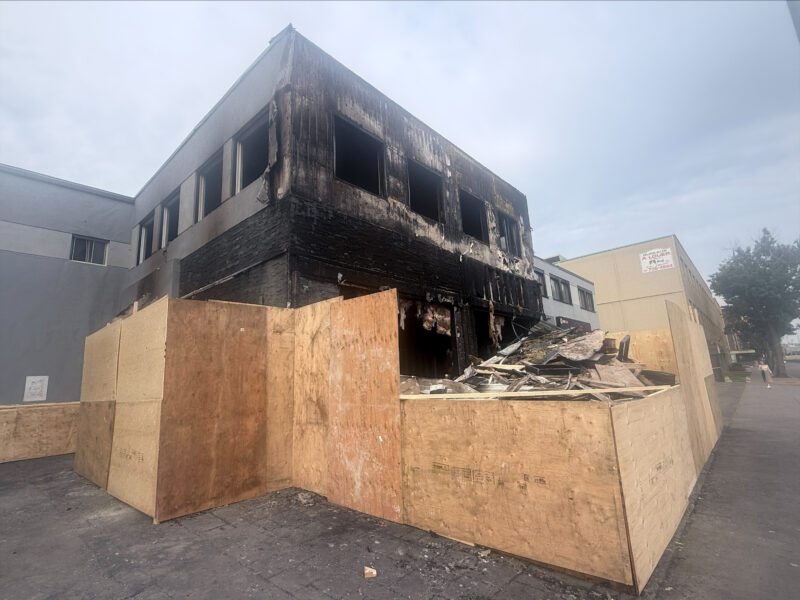
Multiple Jewish homes, a synagogue and a Jewish center in Queens — which contains a preschool — were vandalized with swastikas and other antisemitic graffiti overnight, leaving Jewish residents questioning their safety amid a spate of antisemitic incidents, Jewish Insider’s Haley Cohen reports. The NYPD is searching for at least four individuals responsible for the vandalism, according to New York City Council Speaker Julie Menin.
“I have a Jewish community that is seriously questioning whether it is still welcome in this city,” said Democratic state Assemblymember Sam Berger. Mark Treyger, CEO of the Jewish Community Relations Council of New York, said, “This is not normal and we need city leaders to act now”…
New York magazine spotlights the race for New York’s 12th District and the personas of its four front-runners — social media guru Jack Schlossberg, establishment operative Micah Lasher, AI critic Alex Bores and reformed Republican George Conway — as each seeks to represent one of the wealthiest, oldest, most educated and most densely populated congressional districts in the country…
⏩ Tomorrow’s Agenda, Today
An early look at tomorrow’s storylines and schedule to keep you a step ahead
Keep an eye out in Jewish Insider for comments from U.S. Ambassador to the U.N. Mike Waltz on Iran and the Board of Peace, as JI’s Gabby Deutch spoke with him on the sidelines of the Milken Conference in Los Angeles.
Trump announced Defense Secretary Pete Hegseth and Joint Chiefs Chairman Gen. Dan Caine will hold a press briefing in the morning, amid cracks in the ceasefire with Iran.
The James W. Foley Legacy Foundation, which advocates for American hostages and journalists abroad, will honor Bar Ben Yaakov and Matan Sivek of the Hostages and Missing Families Forum as well as Qatari minister Mohammed Al-Khulaifi at its annual Freedom Award gala at the National Press Club in Washington, hosted by CBS’ Margaret Brennan.
The Manhattan Jewish Historical Initiative will induct honorees into its Jewish Hall of Fame in a ceremony at Bryant Park: Inductees include Ari Ackerman, philanthropist and co-owner of the Miami Marlins; New York City Council Speaker Julie Menin; singer-songwriter Melissa Manchester; and Ariel Zwang, CEO of the American Jewish Joint Distribution Committee.
CNN will hold a primary debate for California’s crowded gubernatorial race including Republicans Chad Bianco and Steve Hilton and Democrats Xavier Becerra, Matt Mahan, Katie Porter, Tom Steyer and Antonio Villaraigosa.
Vice President JD Vance is expected to appear at a campaign event for Rep. Zach Nunn (R-IA) in Iowa after several postponements — the event, which had been dubbed “Top Nunn” in reference to the “Top Gun” movies, had originally been scheduled for mid-March but drew criticism when several servicemembers from Nunn’s district were killed in the U.S. war with Iran.
Stories You May Have Missed
RESOLUTION REJECTED
New School rejects student government vote to cut ties, defund Hillel

Hillel called the vote ‘deeply painful and antisemitic’; the New School said it would ensure the student government ‘acts within its actual purview’ moving forward
CAMPAIGN CONTROVERSY
Far-left Pa. candidate pushed Bondi Beach conspiracy theory
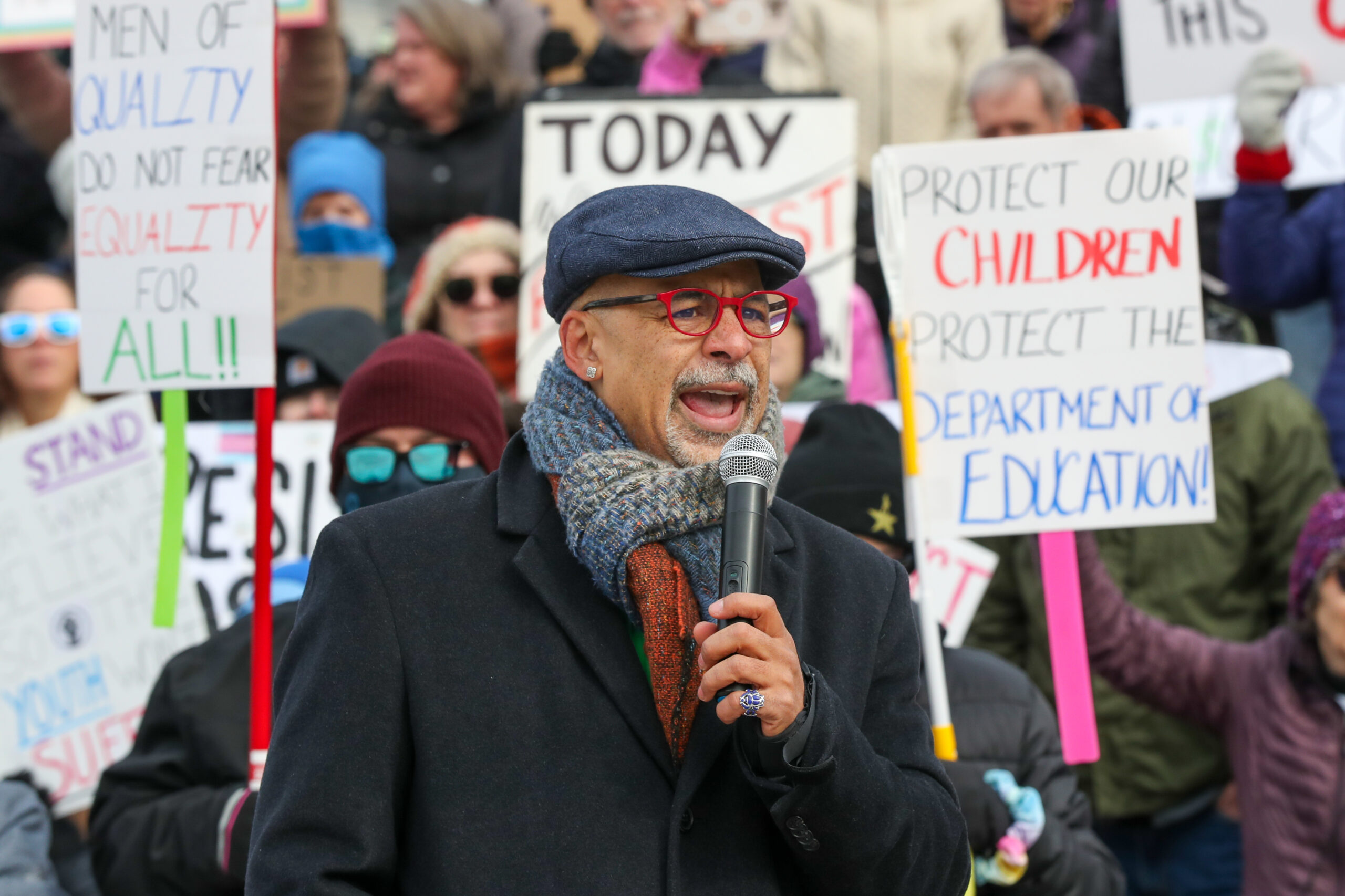
Chris Rabb, the DSA-endorsed House candidate in a Philadelphia congressional race, blamed the Sydney Hanukkah attack on ‘Zionists’
Plus, Milken's Global Conference kicks off
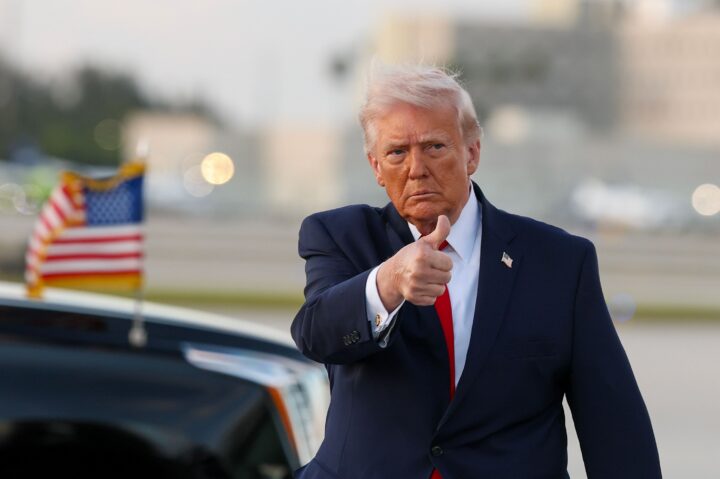
Tasos Katopodis/Getty Images
U.S. President Donald Trump waves to the media after walking off of Air Force One at Miami International Airport on April 11, 2026 in Miami, Florida.
Good Monday morning.
In today’s Daily Kickoff, we preview this week’s Milken Institute Global Conference in Los Angeles, and look at the state of play in the Middle East as President Donald Trump rejects Iran’s latest proposal to end the war. We have the scoop on a new Title VII complaint filed by the Brandeis Center against the National Education Association, and report on the University of Michigan’s apology after a faculty member bashed Israel while delivering a commencement address during the weekend’s graduation ceremonies. Also in today’s Daily Kickoff: Victor Schwartz, Yael Shelbia and Morgan Ortagus.
Today’s Daily Kickoff was curated by JI Executive Editor Melissa Weiss and Israel Editor Tamara Zieve, with an assist from Danielle Cohen-Kanik. Have a tip? Email us here.
What We’re Watching
- We’re keeping an eye on the launch of the U.S.’ “Project Freedom” effort — announced by President Donald Trump on Sunday — to guide vessels out of the Strait of Hormuz. Iran has since warned the U.S. Navy against entering the waterway. The U.S. military denied a claim earlier today that Iran hit an American warship trying to enter the strait. More below.
- The Milken Institute Global Conference kicked off yesterday in Los Angeles and runs through Wednesday. More below on what to expect at this year’s summit. JI’s Gabby Deutch is on the ground covering the Milken conference — drop her a line if you’re there, too.
- In Washington, U.S. Under Secretary for Public Diplomacy Sarah Rogers is slated to meet this morning with Lior Haiat, the Israeli Ministry of Foreign Affairs’ deputy director-general for North America.
- Tonight in New York, The Jewish Center is hosting a candidate roundtable with Micah Lasher and Alex Bores, two of the candidates vying to succeed Rep. Jerry Nadler (D-NY) in New York’s 12th Congressional District.
- Lag B’Omer begins tonight. In Israel, police are preparing for potential unrest in the vicinity of Mt. Meron, a Hasidic pilgrimage site where thousands have gathered annually for the holiday. Law enforcement scaled back the celebrations out of concern that the site, in northern Israel, could become a target for Hezbollah.
- The Pulitzer Prize Board will announce the winners of the 2026 prizes at 3 p.m. ET.
- A bevy of high-profile guests are slated to attend tonight’s Met Gala, with attendees dressed according to this year’s theme, “Costume Art.” This year marks the first that Jeff Bezos and Lauren Sánchez Bezos are serving as cosponsors and lead chairs of the annual event.
What You Should Know
A QUICK WORD WITH JI’S GABBY DEUTCH
A who’s who of global decision-makers is gathering today at the iconic Beverly Hilton hotel in Los Angeles for this year’s annual Milken Institute Global Conference. Investors, philanthropists and business executives from around the world will hobnob with pro athletes, movie stars and politicians.
The four-day convening is billed as a way for global leaders to address some of the world’s biggest challenges. According to event organizers, this year’s conference is focused on building “a more sustainable, equitable and resilient future” in the face of “recent disruption and innovation.” In other words: What are the most powerful innovators in the world going to do about artificial intelligence?
AI is shaping up to be the buzzword at Milken, just like it is everywhere else right now. Govs. Ron DeSantis of Florida and Gretchen Whitmer of Michigan will each be talking on Monday about developing a competitive workforce. Sens. Bill Hagerty (R-TN) and Mark Warner (D-VA) will speak on a panel with Alphabet President Ruth Porat and Meta President Dina Powell McCormick about disruptions to the American workforce. Perhaps the most anticipated speaker of the day is Nvidia CEO Jensen Huang.
A closed-door session today about ties between Silicon Valley, Washington and the Middle East features UAE Ambassador to the U.S. Yousef Al Otaiba, Israeli-born Silicon Valley investor Elad Gil, Abu Dhabi department of health chair Mansoor Ibrahim Al Mansoori and Jacob Helberg, the U.S. under secretary of state for economic affairs.
UNSTEADY GROUND
Mideast ceasefires shaky on three fronts, as Trump declares Iran’s terms ‘not acceptable’
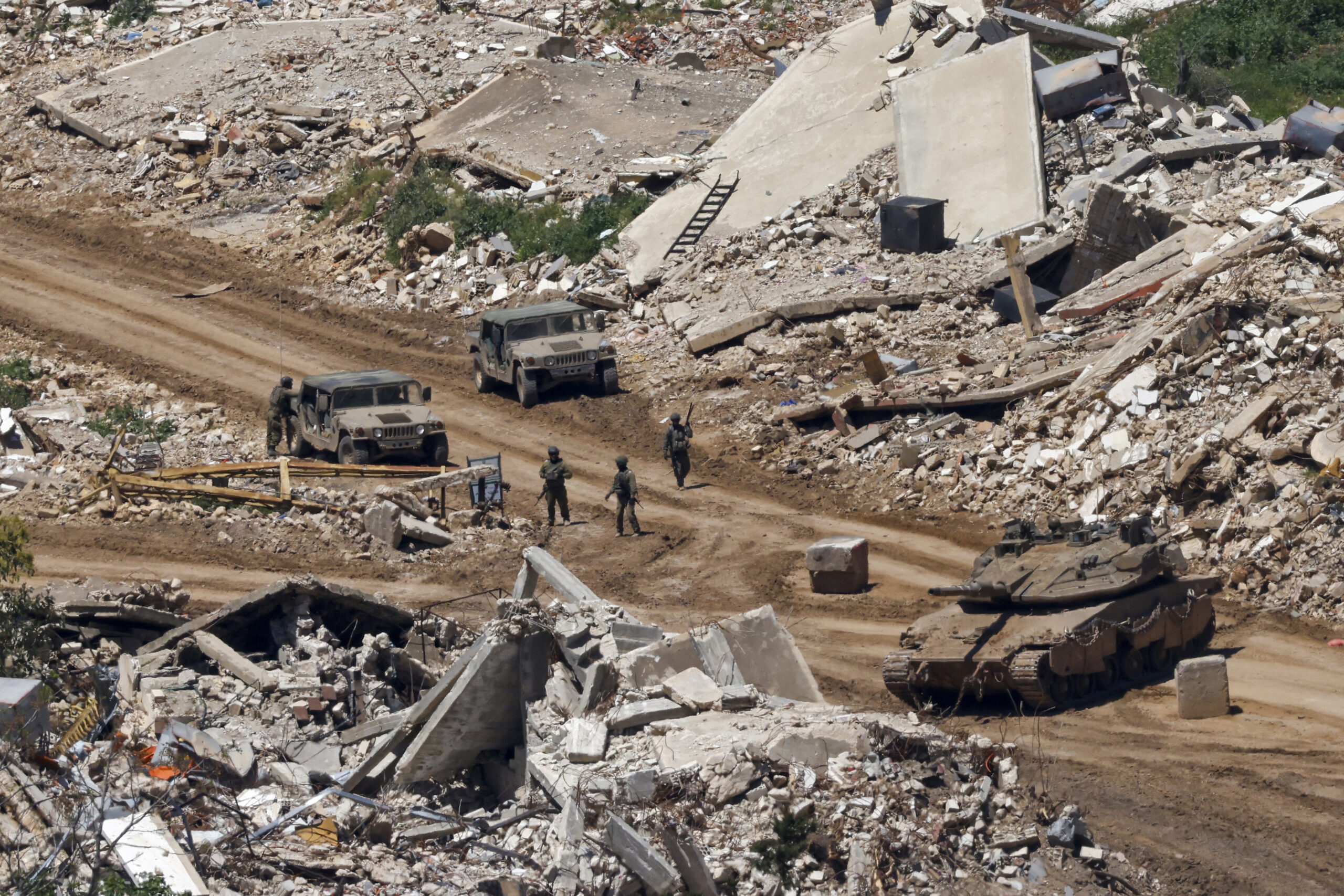
Iran’s latest proposal for a ceasefire is unacceptable, President Donald Trump said on Sunday, as the tenuous ceasefire in Lebanon continued to hold in name only and as Israel weighed whether to resume combat in Gaza, citing Hamas’ refusal to disarm, Jewish Insider’s Lahav Harkov reports. “It’s not acceptable to me,” Trump told Israeli public broadcaster Kan of Iran’s proposed ceasefire terms. “I’ve studied it; I’ve studied everything. It’s not acceptable.”
State of play: Iran submitted a proposal on Thursday that reportedly includes an end to the fighting, after nearly a monthlong ceasefire, and the reopening of the Strait of Hormuz in the next 30 days. Talks about the Islamic Republic’s nuclear plan would only begin after that, with an initial offer of a 15-year pause in uranium enrichment. On Sunday, Trump announced “Project Freedom,” an endeavor by which, he wrote on Truth Social, the U.S. would “guide … ships out of these restricted waterways” in the Strait of Hormuz.
SCOOP
Brandeis Center files Title VII complaint against the National Education Association
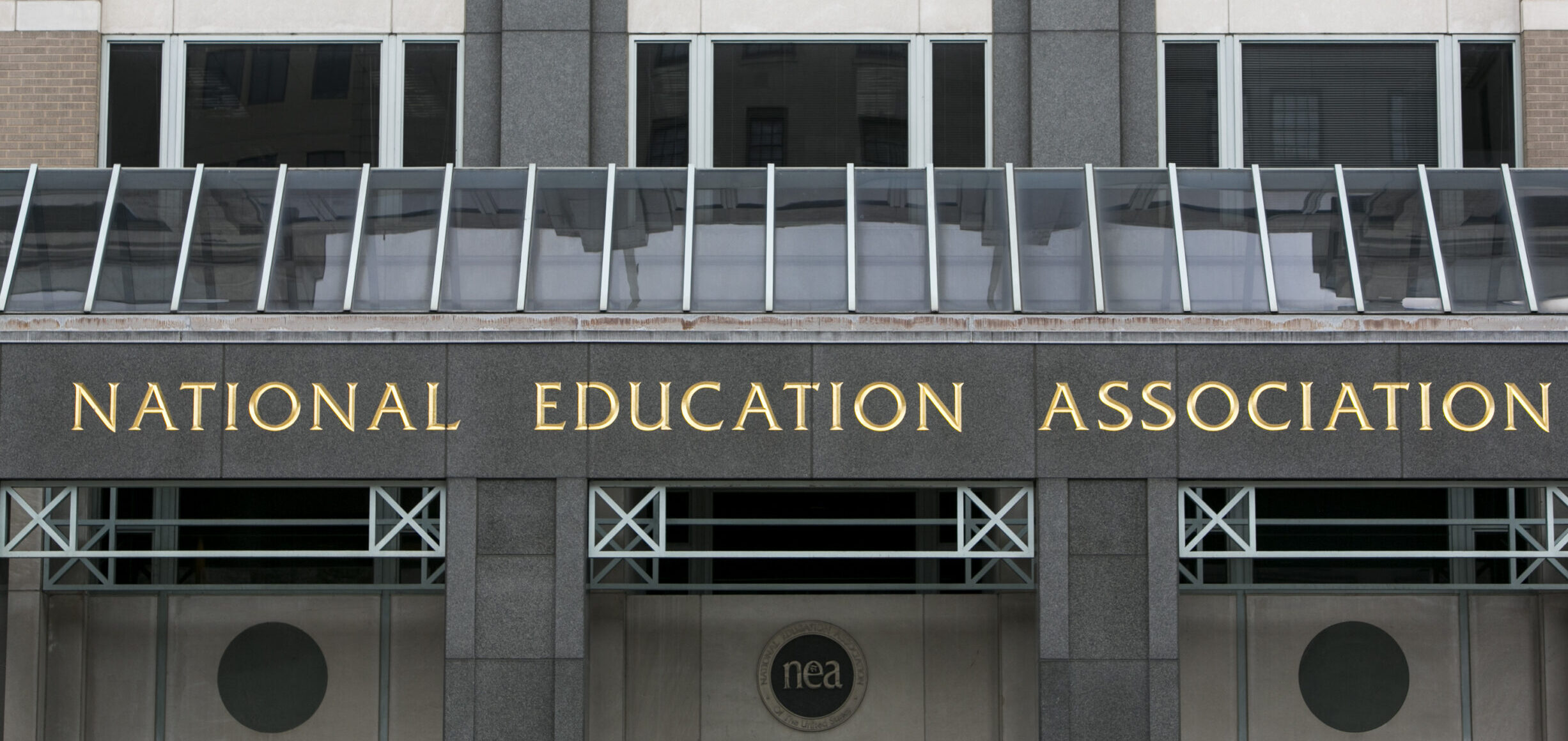
A leading Jewish legal group has filed a bias complaint with the U.S. Equal Employment Opportunity Commission against the National Education Association, alleging the country’s largest teachers’ union violated civil rights law by discriminating against its Jewish members, Jewish Insider’s Haley Cohen has learned.
What it says: The complaint, filed Monday by the Louis D. Brandeis Center for Human Rights Under Law, highlights several incidents in which the NEA — which represents over 3 million educators — allegedly breached Title VII of the Civil Rights Act of 1964, which protects employees, resulting in the spread of antisemitism in K-12 public schools.
RESOLUTION REJECTED
New School rejects student government vote to cut ties, defund Hillel
The New School rejected a student government vote on Saturday to defund and sever ties with the private New York City university’s Hillel chapter, a vote that prompted condemnation from local lawmakers and Jewish groups, while drawing praise from a controversial Muslim advocacy organization, Jewish Insider’s Haley Cohen reports.
Move to cut ties: On Friday, the New School’s student senate approved a resolution to strip funding and cease collaboration with Hillel, the world’s largest Jewish student organization. In a 38-page report, the student organization alleged that Hillel violated international law by running programming in Israel, including Birthright trips and volunteer opportunities with the Israel Defense Forces.
CAMPUS BEAT
University of Michigan apologizes for faculty leader’s anti-Israel commencement speech

The University of Michigan apologized after the outgoing chair of the faculty senate, who has a history of anti-Israel advocacy, delivered an unapproved jab at Israel at a commencement ceremony on Saturday, Jewish Insider’s Haley Cohen reports.
Going off script: Derek Peterson, a tenured professor of history and African studies, praised “the pro-Palestinian student activists who have over these past two years opened our hearts to the injustice and inhumanity of Israel’s war in Gaza,” during his campus-wide commencement address to loud cheering from students. The university’s president, Domenico Grasso, said in a statement later on Saturday that the remarks were “hurtful and insensitive to many members of our community” and noted that Peterson had “deviated from the remarks he had shared before the ceremony.”
CAMPAIGN CONTROVERSY
Far-left Pa. candidate pushed Bondi Beach conspiracy theory
Pennsylvania state Rep. Chris Rabb — a Democrat seeking the Philadelphia House seat of retiring Rep. Dwight Evans (D-PA) — shared an Instagram post blaming the massacre of Jewish Australians at a Hanukkah celebration at Sydney’s Bondi Beach on “Zionists,” the Philadelphia Inquirer reported. In the aftermath of the attack, in which 14 were killed and 40 injured, Rabb’s account shared disinformation insinuating the slaughter was a false flag perpetrated by Israeli interests, Jewish Insider’s Will Bredderman reports.
What it said: “We all know the gunmen were likely Zionists themselves,” read the post, which used an emoji in the place of the word “gun.” Shortly after the attack, the alleged assailants were identified as a father and son whom authorities linked to an offshoot of the Islamic State. A Rabb campaign spokesperson asserted to the Inquirer that the candidate not only did not share the post himself, but that he had “no knowledge” of it, and blamed a former staffer for posting it.
tucker to the times
Tucker Carlson touts relationship with Vance, slams Trump and Rubio in NYT interview

In a wide-ranging New York Times interview published on Saturday, far-right podcaster Tucker Carlson offered an unusually personal defense of Vice President JD Vance, describing him as a close friend while suggesting he is being undermined by hawkish forces inside the White House amid tensions over the administration’s military actions in Iran, Jewish Insider’s Josh Kraushaar reports.
Carlson’s comments: “I couldn’t be a bigger fan of him as a man,” Carlson told Times podcast host Lulu Garcia-Navarro. He added that Vance is “in a tough spot” because his long-held foreign policy views clash with the administration’s decision to attack Iran in February. Carlson took a swipe at Secretary of State Marco Rubio, baselessly alleging that backers of Washington’s top diplomat have been engaging in “nonstop treachery” against Vance. “There are people in the White House who want to hurt JD Vance and have wanted that since the very first day. They were bitter. They wanted Marco Rubio to be the choice as vice president,” Carlson said.
Worthy Reads
Dem Reset on Israel: In The Bulwark, former U.S. Ambassador to Israel Dan Shapiro posits that the Democratic Party’s relationship with Israel has hit the “feeding-frenzy stage” and suggests considerations for the party to weigh as it moves leftward on Israel. “How will Hamas, Iran, Hezbollah, and the Houthis respond to the end of U.S. assistance to Israel? Will it make them less likely to pursue their dreams of Israel’s destruction? Or will they feel emboldened? … Would Arab and Muslim countries considering normalizing relations with Israel be more or less likely to do so if they see the United States pull away? Would Gulf nations still see the United States as their primary security partner as we distance ourselves from Israel?” [TheBulwark]
MBZ Zigs: The Financial Times’ Andrew England looks at how United Arab Emirates President Mohamed bin Zayed is steering the Gulf nation as the region sits at a crossroads that will determine its future. “For MBZ, it is a pivotal moment — a conflict he had long prepared for, but also a test of who among his nation’s traditional allies could be relied upon in a crisis. And the UAE has made clear it believes some have been found wanting. The state has openly criticised what it perceives to be the tepid response of Arab and Muslim partners. … But the war gave it the impetus to act on a threat it had previously only dangled, deepening a festering rift with Riyadh, fuelled by economic competition and conflicting visions of how to manage the region’s crises.” [FT]
The Unity Test: In The Jerusalem Post, William Daroff, the CEO of the Conference of Presidents of Major American Jewish Organizations, considers the challenges facing the American Jewish community. “Institutions were built to sustain a broader communal fabric: federations, schools, synagogues, community centers, and civic organizations grounded in the idea that Jewish continuity is a collective responsibility. That instinct toward unity now faces a real test. … Fragmentation carries risk, especially under external pressure. The strength of American Jewish life depends on the ability to hold differences within a framework of mutual obligation: to argue, even sharply, without losing sight of a shared inheritance and a common future.” [JPost]
Pod Squad: Air Mail’s Alyson Krueger spotlights the use of the “pod” as an alternative to a traditional receiving line during King Charles III’s recent visit to Washington. “A political pod featured Speaker Mike Johnson, Treasury Secretary Scott Bessent, Nancy Pelosi, and Stephen Miller — a seemingly flammable grouping. But John McCarthy, a Democratic strategist and former Biden White House aide, who was also in the pod, saw diplomatic promise in the 25 minutes its members spent waiting as a group. ‘There are not a lot of scenarios where leaders who are Democrats and Republicans are getting together in D.C. right now,’ he says. He thought it created a useful shared experience. ‘You met the King together! Next time you need something across the aisle, you have this interesting life experience that you can draw upon.’” [AirMail]
Word on the Street
National Security Action, the foreign policy group founded by former National Security Advisor Jake Sullivan and Obama administration senior official Ben Rhodes — both of whom remain on the board — has tapped Maher Bitar, the former NSA official who had faced criticism from GOP lawmakers for his alleged “clear bias against and disregard for Israel,” to lead the organization as it wades into the 2028 primaries…
Former U.S. Ambassador to Japan Rahm Emanuel, a likely Democratic presidential candidate, on Friday signaled his backing for Maine Democratic Senate candidate Graham Platner, who has drawn scrutiny over his far-left views and decades-old Nazi tattoo that he recently covered up, Jewish Insider’s Josh Kraushaar reports…
The newly formed Jewish Federation of Annapolis & the Chesapeake is pushing back after Anne Arundel County Executive Steuart Pittman repeatedly declined to include funding for security grants requested by Jewish institutions in his proposed budget, Jewish Insider’s Haley Cohen reports…
Ivanka Trump and Jared Kushner were spotted on Saturday night at the Amex x Carbone Beach pop-up in Miami Beach, Fla., chatting with Carbone owner Jeff Zalaznick, on the sidelines of the Miami Grand Prix…
Israeli model Yael Shelbia and Formula 1 driver Lance Stroll, who have been rumored to be dating since last year, made their F1 debut as a couple at the Miami Grand Prix, where Stroll was racing, on Sunday…
New York magazine profiles wine importer and distributor Victor Schwartz, the lead plaintiff challenging the Trump administration’s tariffs, who scored a 6-3 Supreme Court victory last fall…
Ryan Cohen’s GameStop made an offer to purchase eBay for $56 billion, with the goal of turning the online reseller into an Amazon competitor…
Cornell University President Michael Kotlikoff clashed with students whom he said were engaging in “harassment and intimidation” following an on-campus event on the Israeli-Palestinian conflict; several students surrounded Kotlikoff’s car as he was trying to leave the parking lot and he was filmed backing into a student while another claimed he ran over his foot, but no injuries were reported…
The Washington Post spotlights JoJo and Yoni Kalin, a married couple that witnessed the killings last year of two Israeli Embassy staffers at the Capital Jewish Museum in Washington, and looks at how they have responded in different ways to the rise in antisemitism and anti-Israel sentiment…
A historic Nantucket, Mass., lifesaving station purchased by the island’s Jewish community is set to become Nantucket’s first synagogue in more than four decades…
Australia’s royal commission into the December attack at a Hanukkah party at Sydney’s Bondi Beach held its first public hearing, with members of the city’s Jewish community testifying about their experiences with antisemitism; among those testifying was Sheina Gutnick, whose father was killed in the attack and who warned of the “real-world consequences of hatred”…
The man suspected of stabbing two Jewish men in the London suburb of Golders Green last week was charged with two counts of attempted murder, as well as a weapons charge; Essa Suleiman was also hit with a third charge of attempted murder, for an attack that took place in another part of the city earlier in the day…
A British court found a Kuwaiti asylum-seeker guilty of weapons charges and preparing to conduct a terrorist attack, a year after the man was apprehended outside the Israeli Embassy in London with knives…
Robert Shrimsley, the executive editor of the Financial Times, warns that British Jews are “being forced to live a more fearful and smaller Jewish life” amid ongoing attacks on Jewish communities around the country…
Israel Hayom interviews Morgan Ortagus, who departed the Trump administration earlier this year after working on the White House’s Lebanon portfolio…
The family of journalist Austin Tice, who disappeared in Syria in 2012, said there is new information indicating that Tice is potentially alive and in the hands of Iran’s Islamic Revolutionary Guard Corps…
Pakistan said it assisted in the transfer of 22 Iranians whose ship was seized by the U.S. Navy last month, as a “confidence-building measure” between Washington and Tehran…
The New York Times looks at how China is attempting to benefit from any outcome in the U.S.-Iran conflict, both by encouraging Tehran to come to the negotiating table and providing commercial support to the Islamic Republic in the event of a resumption of hostilities, while also preparing for a summit in mid-May between President Donald Trump and Chinese President Xi Jinping…
The Wall Street Journal profiles Iranian businessman Babak Zanjani, who was released from Iran’s death row last year after facing corruption charges and now helps the Islamic Republic evade sanctions through cryptocurrency networks…
Marc Rod, JI’s senior congressional correspondent, and Olivia Truesdale-Rod, program manager for Former Members of Congress, married on Friday at Meridian House in Washington, D.C., with JI’s D.C. team in attendance. Rabbi Aaron Miller of Washington Hebrew Congregation officiated…
Nick Stewart is departing his role as managing director of advocacy at FDD Action and joining the Trump administration, working in the office of White House Special Envoy Steve Witkoff…
Psychologist and Holocaust survivor Edith Eger, who as a teenager in Auschwitz was forced to dance for Dr. Josef Mengele — and who recounts those experiences in her books — died at 99…
Pic of the Day

The Michael Levin Lone Soldier Center hosted the opening on Friday of an exhibit titled “Plates of Hope and Color” that included 180 original works created by Israeli artists, musicians and “lone soldiers” from around the world with no family in Israel.
Birthdays

Medalist in the women’s halfpipe event at the 2018 Winter Olympics in PyeongChang, South Korea, Arielle Townsend Gold turns 30…
Former chairman and CEO of American International Group, once the largest insurance company in history, then chairman and CEO of the Starr Companies, Maurice Raymond “Hank” Greenberg turns 101… Executive director of the Texas A&M Hillel for 30 years, now a security consultant for the tourism industry, Peter E. Tarlow turns 80… U.S. special envoy for climate change in the Obama administration, now a nonresident senior fellow at the Brookings Institution, Todd D. Stern turns 75… Trustee of the Institute for Islamic, Christian and Jewish Studies, Lee Sherman… Partner at NYC-based Mintz & Gold, he was EVP and general counsel for both the Las Vegas Sands and News Corporation, Lawrence “Lon” A. Jacobs… Northern Virginia-based portrait artist, Ilisa G. Calderon… CEO at Gigawatt Global, Yosef Israel Abramowitz turns 62… Member of the House of Representatives (D-VT), Rebecca A. “Becca” Balint turns 58… Triathlete, she has a Ph.D. from Johns Hopkins and is a winner of international ironman competitions, Joanna Sue Zeiger turns 56… Director of congregational education at NYC’s Park Avenue Synagogue, Bradley Solmsen… Former Florida state senator and state attorney for Palm Beach County from 2013 to 2025, Dave Aronberg turns 55… Chair and director at NYC’s Department of City Planning until last month, Daniel Garodnick… Mechal Wakslak… Executive advisor at Veterans Community Project, he served as the secretary of state of Missouri, Jason Kander turns 45… Chief operating officer at Repair the World, Jessica Chait… Tech entrepreneur, best known as a co-founder of both Vine and HQ Trivia, Rus Yusupov turns 42… SVP at BerlinRosen, Allison Fran Bormel… Chief development officer at Ramah Darom, previously with Americans for Ben-Gurion University and AIPAC, Rebecca Leibowitz Wasserstrom… Script writer at Disney, Steven A. Rosenberg… Adjunct senior fellow at the Center for a New American Security, Shana Mansbach… Manager of public policy and external affairs at Meta / Facebook, Sasha Altschuler… Actor best known for voicing the title character of the animated film “Finding Nemo,” Alexander Gould turns 32… Partner in the client services group at Signum Global Advisors, Elliot Miller… Finance lead at Shopify, Olivia Breuer…
Israel considers response to Hamas refusal to disarm, while Hezbollah vows to thwart any Israel-Lebanon agreement
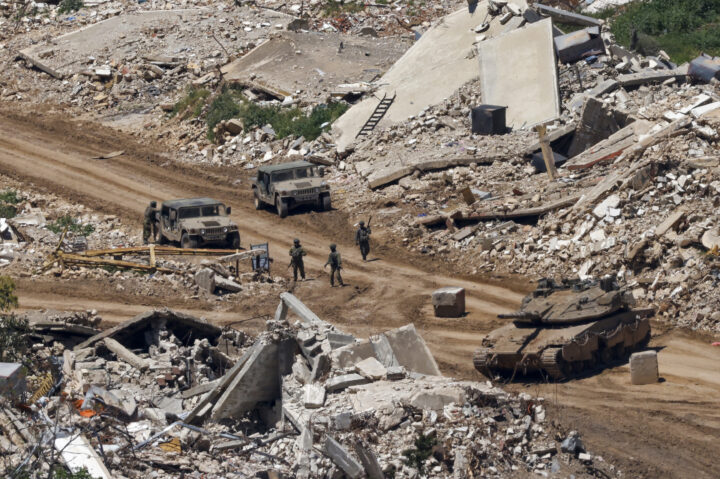
Jalaa MAREY/AFP via Getty Images
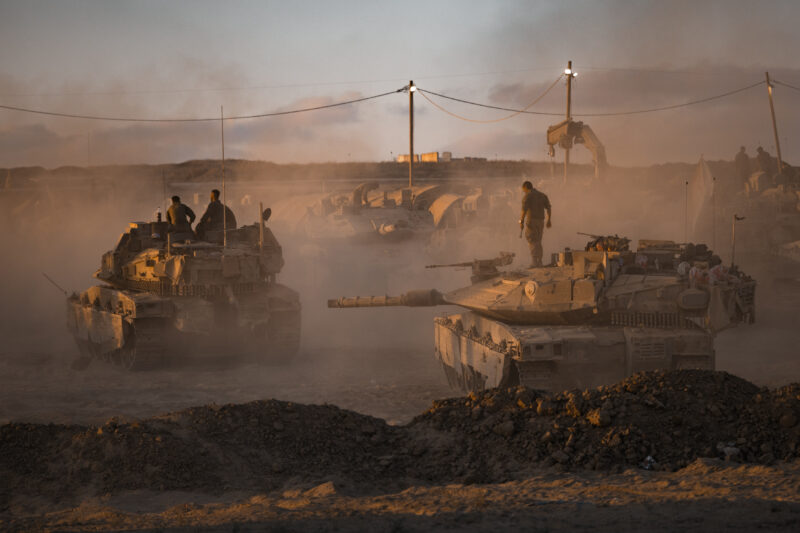
Israeli tanks and military vehicles standing along the road between destroyed houses in southern Lebanon near the border with Israel, on April 29, 2026.
Iran’s latest proposal for a ceasefire is unacceptable, President Donald Trump said on Sunday, as the tenuous ceasefire in Lebanon continued to hold in name only and as Israel weighed whether to resume combat in Gaza, citing Hamas’ refusal to disarm.
“It’s not acceptable to me,” Trump told Israeli public broadcaster Kan of Iran’s proposed ceasefire terms. “I’ve studied it; I’ve studied everything. It’s not acceptable.”
On Saturday, Trump said that he “can’t imagine that [Iran’s ceasefire terms] would be acceptable in that they have not yet paid a big enough price for what they have done to humanity and the world over the last 47 years.”
Iran submitted a proposal on Thursday that reportedly includes an end to the fighting, after nearly a monthlong ceasefire, and the reopening of the Strait of Hormuz in the next 30 days. Talks about the Islamic Republic’s nuclear plan would only begin after that, with an initial offer of a 15-year pause in uranium enrichment.
On Sunday, Trump announced “Project Freedom,” an endeavor by which, he wrote on Truth Social, the U.S. would “guide … ships out of these restricted waterways” in the Strait of Hormuz.
“Countries from all over the world … have asked the United States if we could help free up their ships, which are locked up in the Strait of Hormuz. … Many of these ships are running low on food, and everything else necessary for largescale crews to stay on board in a healthy and sanitary manner. … If, in any way, this humanitarian process is interfered with, that interference will, unfortunately, have to be dealt with forcefully,” the president added.
In response, Iran warned the U.S. Navy not to enter the Strait of Hormuz, saying: “We have repeatedly said the security of the Strait of Hormuz is in our hands and that the safe passage of vessels needs to be coordinated with the armed forces.” Iranian national security official Ebrahim Azizi posted on X that “any American interference in the new maritime regime of the Strait of Hormuz will be considered a violation of the ceasefire.”
CENTCOM said that U.S. military support for the effort will include “guided-missile destroyers, over 100 land and sea-based aircraft, multi-domain unmanned platforms, and 15,000 service members.” However, U.S. officials told The Wall Street Journal that “Project Freedom” was not expected to involve U.S. Navy warships escorting the stranded vessels.
In Israel, proceedings in Prime Minister Benjamin Netanyahu’s ongoing corruption trial were canceled on Monday, following the previous night’s meeting of his “inner cabinet” to discuss matters of national security.
The meeting, of a forum that includes Israel’s defense, foreign, finance and national security ministers, rather than the full Security Cabinet, reportedly convened to discuss resuming the war in Gaza. According to the Trump administration’s plan, Israel would only withdraw from Gaza, allowing reconstruction, after Hamas’ full disarmament, for which an April 11 deadline was set.
Hamas told the Board of Peace on Sunday that it would not give up all of its weapons, offering to further negotiate the matter in the framework of establishing a Palestinian state.
On Saturday, the IDF Spokesperson’s Unit reported multiple incidents in which terrorists crossed the Yellow Line dividing Gaza between Hamas and Israeli control. Soldiers opened fire on the terrorists, killing three and wounding one.
Hezbollah in Lebanon has also said it has no plan to disarm, as exchanges of fire continue between the terrorist group and the IDF, and Israel and Lebanon negotiate a ceasefire and normalization.
A Lebanese lawmaker in Hezbollah’s faction said that the terrorist group is “capable of thwarting all the objectives of these negotiations” between Israel and Lebanon, which include disarming Hezbollah, and “will not implement” their results.
Monday evening marks the start of of Lag BaOmer, a Jewish holiday whose traditions have become entangled in discussions of the security of northern Israel amid ongoing rocket and missile attacks from Hezbollah in Lebanon.
Tens of thousands of Jews, mostly from Hasidic communities, gather each year on Lag BaOmer on Mount Meron to pray at the grave of Rabbi Shimon Bar Yochai. However, the Israel Police has limited outdoor gatherings to 200 in light of fears that the site may become a target. In addition, Israel’s largest civilian disaster took place at the site in 2021, and there were concerns pilgrims may again be trampled by fleeing mobs if missile sirens are sounded. Police remained on alert that some will attempt to circumvent police barriers to visit the site.
Over the weekend, a major restock of over 6,500 tons of munitions and military equipment arrived in Israel from the U.S. over air and sea in a 24-hour period. The cargo included military trucks, Joint Light Tactical Vehicles and more, Israel’s Defense Ministry said.
On Friday, the State Department notified Congress that the U.S. sold 10,000 Advanced Precision Kill Weapon Systems, which turn non-guided rockets into precise weapons, to Israel, the UAE and Qatar for $992.4 million each
In addition, Israel announced on Sunday that it would acquire two squadrons of F-35 and F-15IA jets from the U.S., which Netanyahu said would “bolster Israel’s overwhelming air superiority.”
At the same time, Netanyahu said that Israel is working on greater arms independence and plans to allocate over $100 billion to domestic munition production in the next decade, “ensuring we are not dependent on foreign sources.” He added that Israel will “develop groundbreaking Israeli-made aircraft [that] will change the entire picture.”
Netanyahu also said Israel is working on “a special project to thwart the drone threat.”
“It will take time, but we are on it,” he promised.
Plus, Keir Starmer vows protection for British Jews

Daryn Slover/Portland Press Herald via AP
Senate candidate Graham Platner acknowledges the large crowd that attended Platner's town hall, Sept. 25, 2025, at Bunker Brewing in Portland, Maine.
This P.M. edition is reserved for our premium subscribers like you — offering a forward-focused read on what we’re tracking now and what’s coming next. Please don’t hesitate to share your thoughts and feedback by replying to this email.
📡On Our Radar
Notable developments and interesting tidbits we’re tracking
Maine Gov. Janet Mills, citing financial constraints, dropped her campaign for U.S. Senate this morning, leaving oyster farmer Graham Platner as the Democratic nominee to face off against Sen. Susan Collins (R-ME) in the general election, Jewish Insider‘s Matthew Kassel reports.
Senate Minority Leader Chuck Schumer (D-NY) and Sen. Kirsten Gillibrand (D-NY), the Democratic Senatorial Campaign Committee chair, praised Mills and said they will “work with” Platner to defeat Collins — a tepid endorsement that underscores Democratic leadership’s uncomfortable relationship with the far-left nominee in a state that they have targeted as one of their best pick-up opportunities this cycle…
The Senate rejected Democrats’ sixth war powers effort to force the Trump administration to end the war in Iran. The latest resolution, sponsored by Sen. Adam Schiff (D-CA) and Schumer, failed by a 50-47 vote, with Collins flipping her vote to side with Democrats for the first time…
In testimony before the Senate Armed Services Committee, Defense Secretary Pete Hegseth claimed the 60-day timeline for the administration to seek congressional authorization to continue the war in Iran has been “paused” during the ongoing ceasefire. The White House said separately it is in “active conversations” with lawmakers about the deadline which, under a traditional calendar, is set to occur tomorrow…
President Donald Trump announced the U.S. is “studying and reviewing the possible reduction of troops in Germany,” days after Chancellor Friedrich Merz claimed the U.S. is being “humiliated” by Iranian leadership.
Merz “should spend more time … fixing his broken country … and less time on interfering with those getting rid of the Iran Nuclear threat,” Trump wrote on Truth Social. Germany currently hosts the largest U.S. air base in Europe as well as tens of thousands of U.S. troops…
The House passed a bill to fund most of the Department of Homeland Security, ending the monthslong shutdown a day before the department was set to run out of emergency funds to pay employees.
The bill funds agencies including the Coast Guard, Federal Emergency Management Agency and Transportation Security Administration and includes $300 million in funding for the Nonprofit Security Grant Program, an increase over the $274.5 million allocated for the program last year but still short of requests from the Jewish community of up to $1 billion. Republicans will now attempt to fund immigration enforcement through a separate budget reconciliation process…
Following the stabbing of two Jewish men in a London suburb yesterday, the latest in a series of attacks against London’s Jewish community, British Prime Minister Keir Starmer delivered an address pledging policy changes and a shift in government attitudes toward antisemitic antagonism, JI’s Haley Cohen reports.
Among other policies, Starmer called to prosecute the use of the phrase “globalize the intifada”; introduce legislation to shut down charities that promote antisemitic extremism; prevent “hate preachers” from entering the country and speaking on college campuses; and work to hasten sentencing of perpetrators of antisemitic attacks…
Evanston, Ill., Mayor Daniel Biss, the Democratic nominee for Illinois’ 9th Congressional District, urged the state’s Legislature to reverse a policy he had once supported as a member of the General Assembly — a ban on investing in companies that engage in the Boycott, Divestment and Sanctions movement against Israel. Biss vowed that if elected to Congress, as expected in the deep-blue district, he will oppose similar policies that seek to counteract the BDS movement.
“Whether or not you believe in boycotting Israel or Israeli products from the occupied West Bank, or in boycotts in general, we should all be able to agree that our government must not be wielded to stop people from using their economic agency to advocate for their values,” Biss wrote on Substack…
Former Boca Raton Mayor Scott Singer, a Republican, has shifted his congressional bid from Florida’s 23rd Congressional District to the newly drawn 25th District. The seat is currently by Rep. Debbie Wasserman Schultz (D-FL) but is much more Republican-friendly under the new lines, one of several eliminated districts represented by pro-Israel Democrats. Singer told JI when he was attempting to unseat Rep. Jared Moskowitz (D-FL) in the 23rd that his alignment with the GOP has been shaped by his Jewish faith…
⏩ Tomorrow’s Agenda, Today
An early look at tomorrow’s storylines and schedule to keep you a step ahead
Keep an eye out in Jewish Insider for a look at where British Jews stand as their government signals it will take more seriously the spate of violent attacks targeting their community.
The McCain Institute’s Sedona Forum kicks off in Arizona, with speakers including Sens. Mark Kelly (D-AZ), Ruben Gallego (D-AZ), Sheldon Whitehouse (D-RI) and Peter Welch (D-VT), Reps. Don Bacon (R-NE), Jason Crow (D-CO) and Mike Lawler (R-NY), Arizona Gov. Katie Hobbs, Munich Security Council CEO Benedikt Franke, outgoing World Food Program head Cindy McCain, AFRICOM Commander Gen. Dagvin Anderson, former NATO Ambassador Kurt Volker and Arizona Cardinals owner Michael Bidwill.
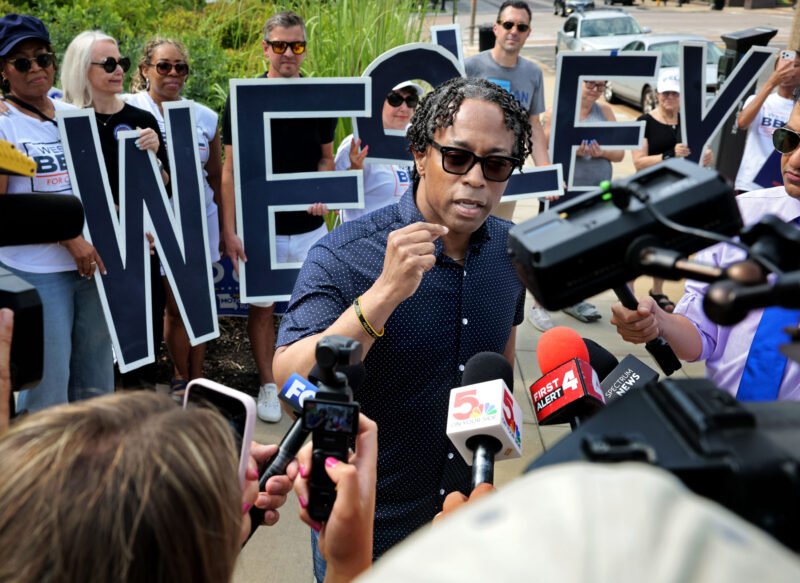
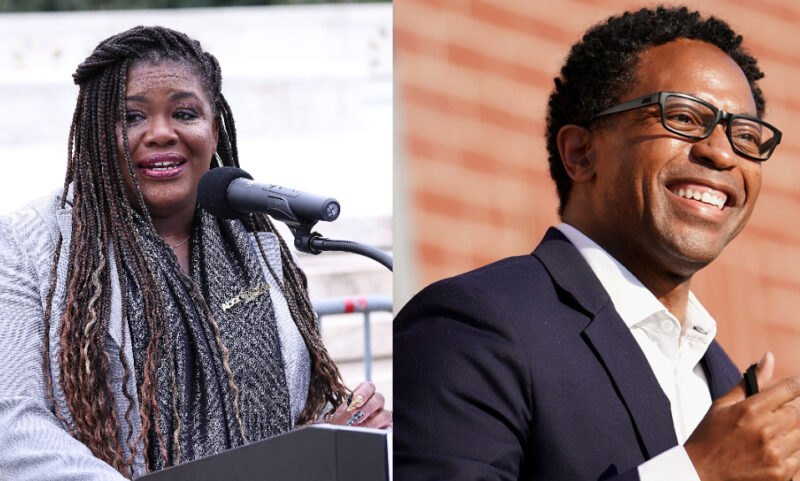
Former Rep. Cori Bush (D-MO) will join far-left influencer Hasan Piker’s Twitch stream in her effort to win back her seat from Rep. Wesley Bell (D-MO).
We’ll be back in your inbox with the Daily Overtime on Monday. Shabbat Shalom!
Stories You May Have Missed
SPECIAL ELECTION SIGNALS
Mamdani bruised but not beaten after City Council candidate loss
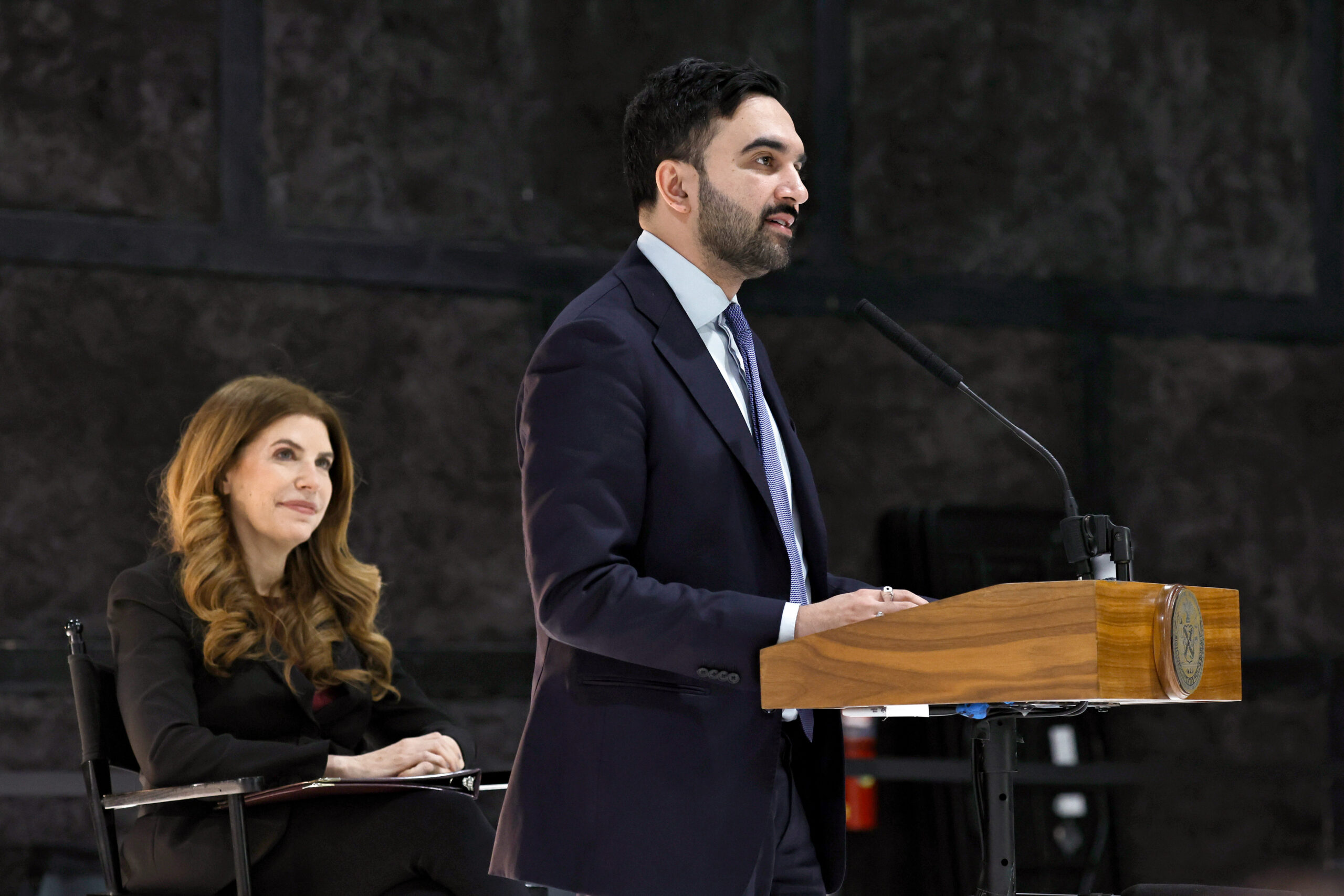
The result of the special election signals Council Speaker Julie Menin’s growing political clout, but doesn’t guarantee an override of Mamdani’s veto of her buffer zone legislation
WAR WEARY
GOP senators express uncertainty about authorizing extension of Iran war
Under the War Powers Resolution, a president cannot sustain military operations for more than 60 days without congressional approval or requesting a 30-day extension
The measure garnered 47 votes in the Senate, with GOP Sen. Susan Collins joining with Democrats for the first time

Kevin Carter/Getty Images
The U.S. Capitol Building is seen at sunset on May 31, 2025 in Washington, DC.
The Senate rejected for the sixth time an effort from Democrats to force the Trump administration to halt the war in Iran — with the vote once again falling largely along party lines.
The vote was the last before the conflict approaches the 60-day mark outlined in the War Powers Resolution of 1973, which requires the executive to seek congressional approval for continuing hostilities or draw down U.S. forces.
“After 60 days of war, it is long past time for Republicans to hold Donald Trump accountable,” Sen. Adam Schiff (D-CA) said in a statement released prior to the vote. “Some of my colleagues have indicated that the War Powers Act’s 60-day mark is the moment they may join our efforts to bring this war to its conclusion. That time has come.”
The latest resolution, sponsored by Schiff and Senate Minority Leader Chuck Schumer (D-NY), failed by a measure of 50-47. Sens. Jerry Moran (R-KS), Patty Murray (D-WA) and Tommy Tuberville (R-AL) did not vote.
Sens. John Fetterman (D-PA), Rand Paul (R-KY) and Susan Collins (R-ME) voted with the opposition party. This was the first time in which Collins sided with the Democrats on the war powers votes.
“As I have said since these hostilities with Iran began, the President’s authority as Commander-in-Chief is not without limits,” Collins said in a statement following the vote. “Further military action against Iran must have a clear mission, achievable goals, and a defined strategy for bringing the conflict to a close. I voted to end the continuation of these military hostilities at this time until such a case is made.”
Collins added that the 60-day war powers deadline is “not a suggestion; it is a requirement.”
Sen. Josh Hawley (R-MO) said he was not surprised by Collins, noting that “she has been saying the 60-day clock is significant for her.”
He added that for him: “We haven’t reached the 60 days. That’s why I voted the way I voted.” However, Hawley said that he wants “to see an end to the war.”
Senate Republicans have told Jewish Insider they expect the White House to abide by the law and provide notification of a 30-day extension to Congress, which is permitted to ensure a safe withdrawal. However, the administration has not yet indicated publicly whether it will seek that extension or continue offensive operations, and Defense Secretary Pete Hegseth claimed at a Senate Armed Services Committee hearing on Thursday that the 60-day clock was “paused” during the ongoing ceasefire.
As the deadline approaches, a growing rift is emerging among Senate Republicans over whether to support an Authorization of Use of Military Force.
“I would hope it wouldn’t come to that,” Hawley said of the White House potentially extending the conflict past the 60-day mark. “I think the administration has tried to remain within the statute.” Hawley has said that should the conflict extend past the deadline with no further action from the White House that he would debate an AUMF, but said he would prefer not to support authorizing a war he wants to see “wind down.”
Hawley said he would “welcome further communication from the White House.”
Sen. Todd Young (R-IN) also said he expects that the White House will “communicate” and “make a very strong legal argument.” He also noted that he believes the administration has “followed the War Powers Act provision so far in a very careful way.”
Young said that should an AUMF be necessary, he could see himself voting for a “properly structured authorization.”
“That’s been my position throughout this exercise,” Young said, referring to the recent slate of war powers votes. “My hope would be that if we went down that road, we’d work with the administration to draft a properly scoped authorization for the use of military force.”
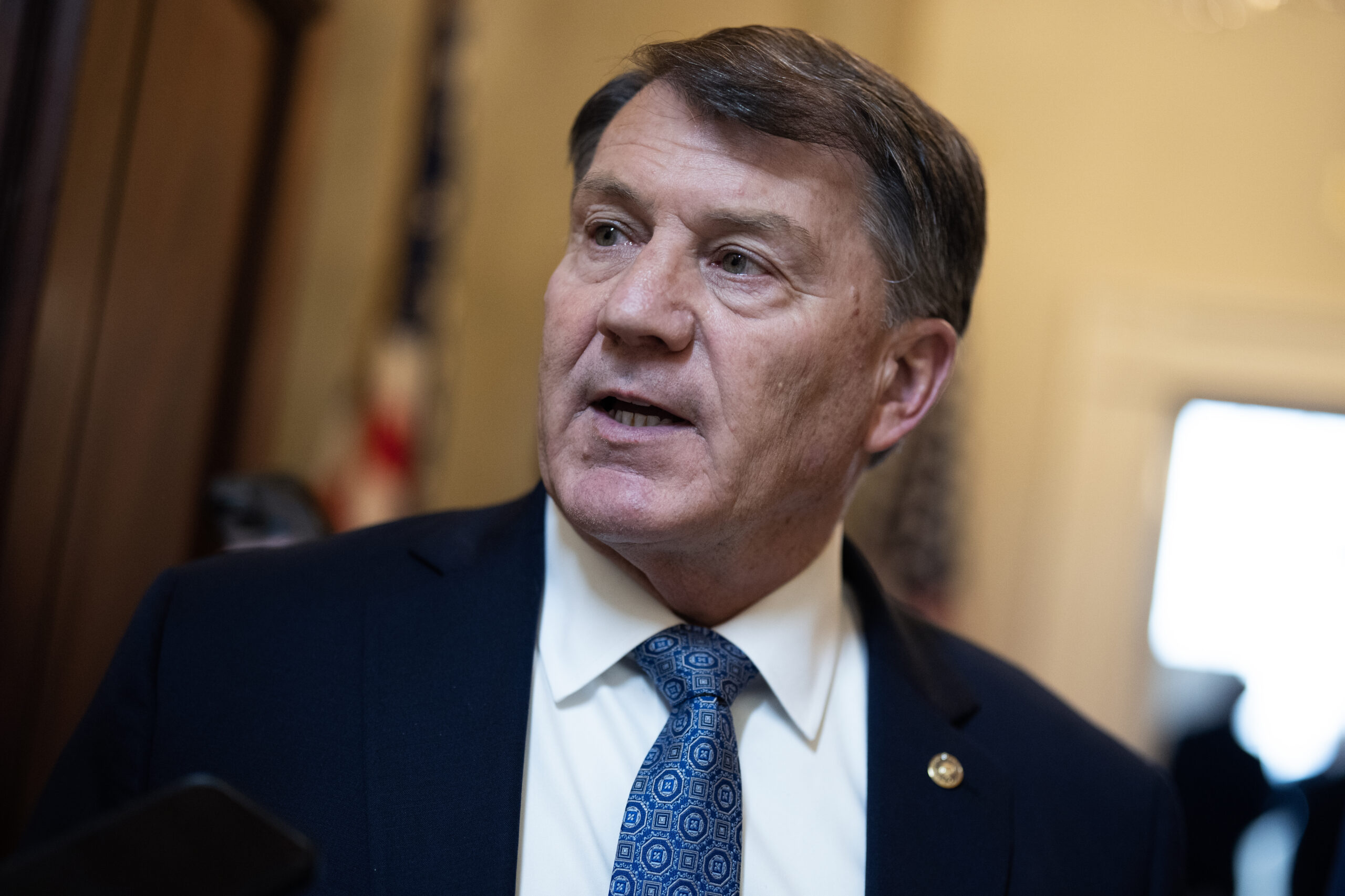
Meanwhile, Sen. Mike Rounds (R-SD) said he is “not ready to commit to anything.”
“I want to make sure that we continue to get classified information on a timely basis from the Pentagon,” Rounds said. “I think today we had a very good classified setting with a lot of good information being provided. I think they [the White House] did a good job of sharing their point of view on it. So we’re moving in a good direction.”
Asked whether he believes anything would change at the 60-day deadline, Rounds replied: “I have no reason to believe that’s the case right now.”
Rounds said he believes a path forward between the U.S. and Iran will be “extremely difficult without regime change.”
“But that doesn’t mean that there isn’t hope for an agreement with this particular regime under very strict observations by outside forces to make sure that they adhere to any agreements we make,” Rounds added.
Sen. Tim Kaine (D-VA) said that while he thinks the current war is “unwise” and “illegal,” he said that if Congress “were to pass an AUMF in both houses it would stop being illegal.”
“I would stop critiquing it as an illegal war if they [Congress] passed an AUMF,” Kaine said.
Kaine said he expects that another war powers vote “will come up right after [Congress adjourns for] recess.”
“I think the testimony this morning shows they [the White House] know they got a 60-day problem,” Kaine said, referring to Hegseth’s remarks at the hearing.
Rounds, who serves on the Senate Armed Services committee, said that he would need to “go back and do a good review of that particular” remark.
“We’re in the middle of it,” Rounds said. “Once I have a chance to actually go through it myself then I’ll have a comfort level. I’m not going to disagree with him [Hegseth] at this stage.”
Under the War Powers Resolution, a president cannot sustain military operations for more than 60 days without congressional approval or requesting a 30-day extension
Tom Williams/CQ-Roll Call, Inc via Getty Images
Sen. Mike Rounds (R-SD) talks with reporters in the U.S. Capitol on Tuesday, March 3, 2026.
Senate Republicans are increasingly skeptical about the future of U.S. military engagement in Iran as the 60-day deadline for the war mandated by the War Powers Resolution approaches.
Under the 1973 law, the president cannot sustain military operations for more than 60 days without congressional authorization or a formal declaration of war, after which U.S. forces must be withdrawn. The White House can request a 30-day extension — with written justification to Congress — should it present “unavoidable military necessity.”
Short of a formal declaration of war, Congress can authorize continued operations through an Authorization for the Use of Military Force (AUMF), similar to that enacted following the 9/11 attacks, which would provide the legal basis for the administration to sustain the campaign.
But the prospects for such a measure remain uncertain, as it would require a high-stakes public vote that could divide Republicans.
With the 60-day deadline approaching this week, GOP lawmakers told Jewish Insider they expect the White House to comply with the statute and notify Congress of a 30-day extension — though they remain uncertain and divided over whether they would support authorizing continued military action.
Sen. Thom Tillis (R-NC) said he will not “quibble” over whether the exact deadline is met, however he stressed that the White House should respect the law on the books.
“I’m not going to quibble over a day or two, but people are saying we don’t know if the War Powers Resolution is constitutional … the reality is it’s on the books, ratified by Congress,” Tillis said. “[The White House should] follow it and at least ask for an extension, and give us clarity on why you need the extension beyond the 60 days. Then it gives them 30 days to be clear on what they need for the appropriations request,” he said, referring to the coming supplemental funding request from the administration.
Tillis did not indicate whether he believed an authorization would be needed, but said he would “support an AUMF that is drafted and supported by Republicans.” He called the recent rounds of war powers votes initiated by Democrats “political theater.”
“They’re not a serious effort to understand the details of what the president wants to accomplish and then provide congressional support to do it,” Tillis said. “I think if we do that, it strengthens our hand in dealing with the murderers posing as the mullahs of Iran.”
Sen. Mike Rounds (R-SD) did not commit to whether he would support an AUMF. He told JI that it will depend on several factors, including an explanation from the White House.
“It’ll depend on the information that they [the White House] provide to us, and we’ll see if they’re actually intending to stay there for an extended period of time, or if they’re going to have boots on the ground, or whether they’re going to be withdrawing from the area based on any kind of peace agreement,” Rounds said.
Rounds said his “expectation” is that the White House will “notify us [Congress] of an additional 30-day extension.”
“We’ve begun the process now of both classified and an open hearing tomorrow,” Rounds said, referring to a Senate Armed Services Committee hearing taking place on Thursday with Defense Secretary Pete Hegseth and Joint Chiefs Chairman Gen. Dan Caine. “So I think now steps will start to happen in terms of a more complete congressional review.”
However, Rounds noted that regardless of where the war heads, he expects that “this chapter in our history has not closed.”
“I suspect we’re still going to have to deal with an Iranian regime, which is a threat to the entire world,” he said.
Tillis said he had not heard anything on the White House potentially asking for a 30-day extension, but said in response to Rounds’ comments that “[Rounds] is on the Senate Armed Services committee, so that’s good news. I would expect Senate Armed Services Committee members to know before me. That’s good.”
Sen. Josh Hawley (R-MO) also did not signal whether he would support an AUMF. While he noted that he believes the White House has “been very careful to follow the war powers framework this whole conflict,” he stressed that he would like to see hostilities wind down and is skeptical of voting for a move that opens up the conflict further.
“Hopefully [there will be] an end to the war,” Hawley said, adding that he hopes “the president and secretary of state will be able to come back to Congress [and say] that they’re working to end the conflict and that active hostilities are over.”
He added that he wants the White House to do something “better than ask for 30 more days.”
“Clearly the president is trying to get to a peace deal here, I mean he says it everyday. It’s clear what he’s trying to do. He does not want to go back,” Hawley said. “We’re not bombing. He has said he doesn’t want to go back to that, which I agree with by the way. So I think we should bring this to a close.” President Donald Trump said on Wednesday that he’s rejecting Iran’s latest proposal to end the war as it omits any concessions on the country’s nuclear program.
Hawley said that Congress “can always debate an AUMF” if the White House doesn’t ask for a 30-day extension, but emphasized that he would prefer to “keep on that track” of winding down the war.
“I don’t really want to authorize a war, I want to end it,” Hawley said. “If we can’t, if the administration doesn’t ask for more time, if there are no additional certifications from them, I think we’re in AUMF territory, which would be kind of unfortunate. I would prefer not to vote to open up a conflict that I think ought to be wound down.”
Sen. John Cornyn (R-TX), meanwhile, said that he would be “open” to supporting an AUMF, but “would be skeptical that it could pass.” He added that Trump is “relying on his own power within the Constitution.”
“We don’t have any American troops on the ground, and I don’t think that’s the president’s idea,” Cornyn said. “I mean, we’ve seriously degraded their ability to threaten their neighbors and that’s a good thing.”
“But unfortunately, it looks like now the supreme leader is out of the picture, that the more radical IRGC elements [are coming to power], which you can’t trust them so I wouldn’t trust any agreement that you might have,” Cornyn added. “I think President Trump ought to finish the job he started and make sure there’s not a threat to us or to the region for the foreseeable future.”
Plus, Trump rejects latest Iran proposal

Chip Somodevilla/Getty Images
Michigan Attorney General Dana Nessel speaks on stage during the third day of the Democratic National Convention at the United Center on August 21, 2024 in Chicago, Illinois. Delegates, politicians, and Democratic Party supporters are in Chicago for the convention, concluding with current Vice President Kamala Harris accepting her party's presidential nomination.
This P.M. edition is reserved for our premium subscribers like you — offering a forward-focused read on what we’re tracking now and what’s coming next. Please don’t hesitate to share your thoughts and feedback by replying to this email.
📡On Our Radar
Notable developments and interesting tidbits we’re tracking
Two Jewish men in a heavily Jewish suburb of London were stabbed this morning in what police have deemed a terrorist incident, Jewish Insider’s Haley Cohen reports. The victims — one in his 70s and one in his 30s — remain hospitalized in stable condition, according to the Metropolitan Police, after the attack shortly before noon in Golders Green.
The suspect, a 45-year-old man who also attempted to stab law enforcement, was arrested on suspicion of attempted murder. The man had “a history of serious violence and mental health issues,” Metropolitan Police Commissioner Mark Rowley said. It’s the latest in a string of violent attacks against Jewish individuals and sites around London in recent months…
President Donald Trump said he is rejecting Iran’s latest proposal to end the war, which included opening the Strait of Hormuz and postponing talks on its nuclear program, telling Axios that he will maintain the U.S.’ naval blockade until Tehran agrees to address its nuclear ambitions.
“The blockade is somewhat more effective than the bombing. They are choking like a stuffed pig,” the president said. Still, CENTCOM has planned a “short and powerful” wave of strikes on Iran to spur progress in negotiations, sources told the outlet…
In a heated and lengthy House Armed Services Committee hearing, Defense Secretary Pete Hegseth repeatedly defended the execution of the Iran war, including the blockade of the Strait of Hormuz and the cost to American taxpayers, and stood by the ouster of several top defense officials under questioning from both Democrats and Republicans. The Pentagon’s chief financial officer, Jules Hurst III, said the Iran war has cost the U.S. “about $25 billion” already, most of it being spent on munitions…
Even as Trump intends to keep the pressure on Iran, the USS Gerald R. Ford aircraft carrier will reportedly leave the Middle East and sail back to Virginia in the coming days after having been deployed for a record 10 months at sea. Two other aircraft carriers are still operating nearby in the Arabian Sea to enforce the blockade…
Israeli Prime Minister Benjamin Netanyahu’s office denied Hebrew media reports that he was planning a visit to the U.S. next week, saying “no such plans are currently in place.” Trump has said he intends to invite Netanyahu and Lebanese President Joseph Aoun to the White House in the near future…
Michigan Senate candidate Mallory McMorrow deleted thousands of old social media posts in which she disparaged the state of Michigan and expressed a range of progressive views, including comparing Trump and his supporters to Nazis, according to a CNN investigation. The state senator is now positioning herself as a more pragmatic candidate…
Two-thirds of Michigan Democratic Party delegates voted for Amir Makled, an attorney who has expressed support for Hezbollah, among other anti-Israel stances, as one of the Democratic nominees for University of Michigan regent at the state party convention earlier this month, according to internal voting records obtained by The Detroit News.
The widespread support for Makled included far-left Jewish attorney general nominee Eli Savit and United Auto Workers President Shawn Fain, but the majority of members of Congress and the state Legislature in attendance voted for unseated Jewish regent Jordan Acker over Makled…
Elected Jewish Democrats are speaking out on the antisemitic vitriol they face on a regular basis: It’s “excruciating and agonizing,” Michigan state Rep. Noah Arbit told The New York Times. “We have never seen anything like this in my lifetime in public office,” Rep. Brad Sherman (D-CA) said.
Michigan Attorney General Dana Nessel shared, “I rarely, if ever, get threats for being gay or for being a woman. They have been fast and furious and nearly always about me being Jewish,” including regularly being called an “AIPAC whore.” Rep. Greg Landsman (D-OH) added, “There are times when it feels like people don’t want you as part of the political system at all”…
Kennedy scion Jack Schlossberg has released his first paid ad in his run for New York’s 12th Congressional District, spotlighting one of his highest-profile endorsees — former House Speaker Nancy Pelosi (D-CA). Even as Schlossberg narrowly leads in several polls of the crowded Democratic primary, the ad is emblematic of the political newcomer’s challenge in the race as he seeks to prove he’s experienced enough to represent the district…
The State Department issued a report to Congress finding that the Palestinian Authority has continued to issue payments and benefits to terrorists and their families in its “pay-for-slay” program “through new mechanisms and under a different name,” despite PA President Mahmoud Abbas having pledged to end the program. PA officials also “continue to fail to publicly condemn acts of violence against U.S. and Israeli citizens in violation of the Taylor Force Act,” the report says…
The Supreme Court issued a ruling today in a Louisiana gerrymandering case weakening a key provision of the Voting Rights Act, limiting when states can draw majority-minority congressional districts. Amid a flurry of mid-decade redistricting already underway, the decision could prompt new map changes and legal challenges ahead of November’s midterm elections and the 2028 cycle…
⏩ Tomorrow’s Agenda, Today
An early look at tomorrow’s storylines and schedule to keep you a step ahead
Keep an eye out in Jewish Insider for a look at how Senate Republicans are approaching the impending 60-day deadline laid out in the War Powers Act for President Donald Trump to seek congressional approval for the war in Iran.
Defense Secretary Pete Hegseth and Joint Chiefs Chairman Gen. Dan Caine will face further questioning at a hearing of the Senate Armed Services Committee on the Pentagon’s 2027 budget, after a similar hearing in the House today.
The Department of Justice will host this year’s federal interagency Holocaust remembrance program, featuring remarks from Holocaust survivor Frank Cohn, U.S. Special Envoy for Holocaust Issues Ellen Germain, Assistant Attorney General Harmeet Dhillon and Under Secretary of State for Economic Affairs Jacob Helberg.
Stories You May Have Missed
NON-NEGOTIABLE VALUES
Politico owner Axel Springer doubles down on corporate principles

‘Nobody should work for Axel Springer despite the essentials or in disagreement with one of the essentials,’ the company’s CEO told Politico staff on Monday
CLAIM OF ANTISEMITISM
Mallory McMorrow reveals Michigan Democratic activist accosted her husband with antisemitic slur
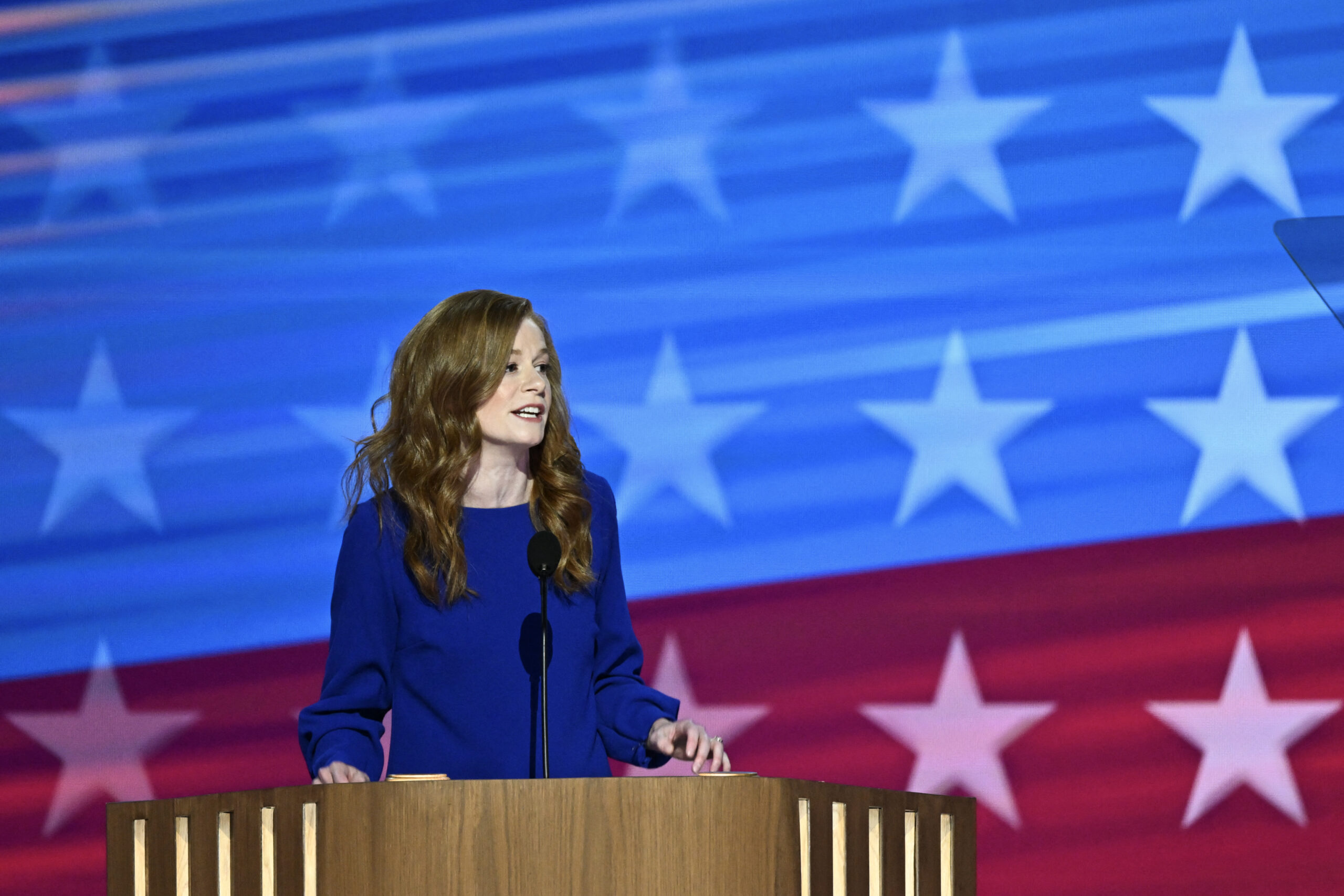
The Senate candidate shared that her husband, who is Jewish, was verbally attacked in front of their 5-year-old daughter
‘Don’t trust, but verify,’ Sen. Blumenthal said of Washington’s discussions with Islamabad

Jacquelyn Martin - Pool/Getty Images
Vice President JD Vance arrives for talks with Iranian officials on April 11, 2026 in Islamabad, Pakistan.
Lawmakers are expressing skepticism over Pakistan’s expanding role in the Middle East, cautiously welcoming its involvement in U.S.-Iran negotiations while questioning its defense aspirations in the region and whether it can truly serve as an impartial intermediary — even as the Trump administration increasingly engages with the country.
Pakistan has taken on a more prominent role in Middle East geopolitics in recent months, deepening defense ties with Gulf states — including signing a mutual defense agreement with Saudi Arabia in September 2025 and nearing a potential security pact with Qatar — while also positioning itself as a key intermediary between Washington and Tehran.
Islamabad’s involvement in the negotiations has helped facilitate a ceasefire between the U.S. and Iran, even as Pakistan has taken steps to support Iran’s economy, including opening transit routes that allow it to import goods amid the conflict.
President Donald Trump has spokenly highly of Pakistani Prime Minister Shehbaz Sharif and maintains close ties with army chief Asim Munir, who nominated Trump for a Nobel Peace Prize for brokering a ceasefire between India and Pakistan in May 2025. Munir has since been invited to a private White House lunch and later to the Oval Office alongside Sharif — part of a longstanding pattern of close ties between U.S. presidents and Pakistani military leadership.
However, Islamabad’s posture toward Israel has not been as warm: Israel and Pakistan do not share diplomatic relations and Pakistan continues to strongly back the Palestinian cause. Islamabad has also refused to recognize or allow its citizens to travel to Israel. In a since-deleted tweet earlier this month, Pakistani Defense Minister Khawaja Asif called Israel “a curse for humanity” and a “cancerous state.”
Sen. Richard Blumenthal (D-CT) said that despite Pakistan’s complicated track record, the U.S. should “welcome” any “constructive role” it is willing to play — while remaining vigilant.
“I think the approach has to be: don’t trust, but verify,” Blumenthal told Jewish Insider. “[Pakistan] has certainly been a somewhat ambiguous force in many ways. They’ve been disruptive to some relationships. They’re a nuclear-armed power, but they are definitely a force, and if they can play a constructive role here we should welcome it. It doesn’t mean that we have to accept their word on everything they do or say.”
Rep. Tim Burchett (R-TN) struck a similarly cautious tone, questioning whether any actor in the region can be considered a truly neutral mediator.
“I’m not sure if anybody over there is an honest broker, to tell you the truth,” Burchett said. “They’ll all side with the winner, and that’ll be us when it’s all over, because they need those American dollars.”
Burchett warned that Pakistan’s growing engagement with Washington “could” strain U.S. ties with India.
“India has been a strong ally of ours, so I think we need to be very careful about that,” he said. “But I think Trump understands that, and he’s going to keep that in mind. Him and [Indian Prime Minister Narendra] Modi are fairly close.”
Rep. Brad Sherman (D-CA) was more critical, arguing that Pakistan’s role stems from its close ties to Iran — a dynamic he said raises concerns.
“[Pakistan has] good relations with Iran, which doesn’t speak well of them,” Sherman said. “I mean, I don’t have any friends of mine who engage in terrorism. So, you make peace with your enemies, not with your friends, so certainly we would like to have more support from Pakistan than we have.”
Sherman also warned that deepening U.S.-Pakistan ties could have consequences for Washington’s relationship with New Delhi.
“If we grow our ties with Pakistan to the point that we’re not calling upon them to clamp down on [hostility toward Israel] and other terrorist groups, then it would [hurt the U.S.-India relationship],” he said. “If it goes to the point that we [the U.S.] forget that there are terrorist groups that are finding haven in Pakistan and that Pakistan should be doing more to clamp down on them, then I will be upset and Modi will be upset.”
He further expressed concern over Pakistan’s expanding defense relationships in the region, cautioning that “you certainly don’t want Pakistan sharing nuclear weapons technology with Saudi Arabia or anyone else.”
Sen. John Cornyn (R-TX), meanwhile, suggested the U.S. may not have a choice as it faces limited options in choosing a mediator. “I don’t think we have a lot of alternatives,” he said. “I don’t think we’re in a position to be too picky in terms of interlocutors. I hope it works.”
Foreign policy experts have also expressed caution over Pakistan’s expanded role and the Trump administration’s apparent friendliness with Islamabad.
“The Trump administration’s Pakistan policy suffers from deep historical amnesia,” said Sadanand Dhume, a senior fellow at the American Enterprise Institute and columnist for The Wall Street Journal. “It appears as though the U.S. has decided to completely ignore decades of painfully learned lessons about Pakistan’s propensity to host anti-American and anti-Israeli terrorists. The Trump administration also risks upturning a robust U.S.-India relationship built over decades by Republican and Democrat administrations alike.”
“Pakistan is one of the world’s most strident critics of Israel,” Dhume added. “Pakistan’s obsessive hatred of the Jewish state masks the Islamic nation’s profound failures, including an inability, so far, to allow democracy to take root and a moribund economy that makes Pakistan one of the poorest countries in south Asia.”
He added that Islamabad’s broadening defense ties are in part due to a growing “insecurity following Israeli strikes on Qatar, and a widespread perception that the Pakistani Air Force performed credibly in a four-day-conflict with India in May 2025.”
Edmund Fitton-Brown, a former British diplomat and senior fellow at the Foundation for Defense of Democracies, noted that Pakistan’s emerging defense alignment in the region is based on its “historically close relationship with all the Arabian Peninsula countries because of geographical proximity, religious compatibility and the complementarity of small, wealthy countries with labor shortages and a populous poorer country that exports labor.”
Fitton-Brown said that “Qatar is especially attractive to religiously conservative Pakistani expats.” He added that the current conflict between the U.S. and Iran has “driven [Gulf Cooperation Council] countries closer to each other” and that Qatar has sought to bring “Saudi Arabia into a Sunni Islamist axis with Turkey and Pakistan.”
Blaise Misztal, vice president of the Jewish Institute for National Security of America, said that the Iran war has underscored certain Gulf states’ vulnerability to conflict despite U.S. security guarantees, presenting a need to seek multiple defense agreements.
He noted that prior to the Iran war, “reports suggested an even bigger agreement lashing Pakistan, Qatar, Saudi Arabia and Turkey all together into a defense pact.”
“The fact that the idea appears to have been revived should be a warning to Washington that all the gains that it had made in demonstrating American strength and resolve and convincing Gulf countries that only the United States can provide for their security are already beginning to evaporate as the region contends with the possibility of Trump cutting a deal that leaves the Iranian regime in place and in control of the Strait of Hormuz,” Misztal said.
The report from the State Department provides the most comprehensive justification yet for the campaign, including that the U.S. had acted at the ‘request of and in collective self-defense of its Israeli ally’
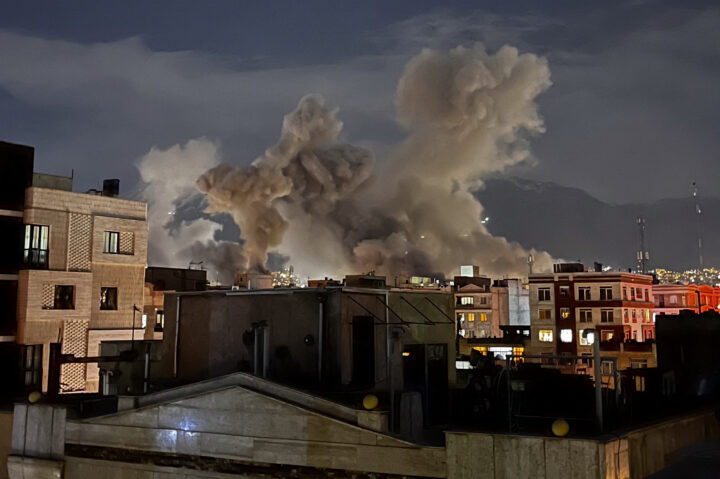
Mowj / Middle East Images / AFP via Getty Images
Plumes of smoke rise following reported explosions allegedly near Iran's Ministry of Intelligence on Araqi Street in Tehran on March 1, 2026.
Nearly two months after the U.S. and Israel jointly launched a military campaign against Iran dubbed Operation Epic Fury, Washington acknowledged in a new State Department memo that its decision to participate in the conflict came — at least in part — at Israel’s request.
The statement, in a document authored by State Department Legal Advisor Reed Rubinstein, notes that defending Israel is just one part of a larger rationale for attacking Iran’s capabilities that Rubinstein says relies on decades of evidence. But it comes after several Trump administration officials pushed back on the narrative that Israel had forced the White House’s hand.
“The United States is engaged in this conflict at the request of and in the collective self-defense of its Israeli ally, as well as in the exercise of the United States’ own inherent right of self-defense,” Rubinstein wrote in the document, dated Apr. 24.
The memo is the most detailed look yet at the Trump administration’s justification for the latest conflict with Iran, which began on Feb. 28. Lawmakers, including leading Republicans, have at times expressed frustration that the administration is not being transparent enough in providing information about the war effort.
There is currently a ceasefire in place as the two countries are engaged in negotiations, although President Donald Trump has threatened to restart military strikes if a deal is not reached.
While Rubinstein writes that Israel requested the U.S. participate in striking Iran, his broader argument is that Iran has demonstrated “malign aggression” against the U.S., Israel and other allies in the region for decades. Therefore, according to Rubinstein, this latest salvo is merely the next stage of a decades-old conflict that began anew last June.
“The operations recommenced in late February were part of an armed conflict with Iran that has been ongoing for years and, at the very least, since June 2025” when the U.S. and Israel struck Iran’s nuclear and military facilities, Rubinstein writes. Since the conflict did not officially end in June — a ceasefire is not the same as a formal agreement to end hostilities — he concludes that it has been ongoing, and the current fighting is just a new phase in the war.
“If a conflict has not ended, then it must be ongoing,” Rubinstein argues.
The memo documents Iran’s extensive history of targeting American forces and assets, including through its proxies like Hamas and Hezbollah. He dates this part of his analysis back to 1979, when the Islamic Republic was created, arguing that the country has been attacking the U.S. and its “interests and its allies” ever since. It was Iran’s “clear pattern of unprovoked aggression and direct and proxy attacks against Israel and the United States” that spurred the U.S. to act last June, he writes.
Rubinstein concludes by pointing out Iran’s response to the U.S. attacks: “wreaking havoc throughout the region.” That, according to Rubinstein, “further underscores the fundamental necessity, utility, reasonableness, and lawfulness of Operation Epic Fury’s mission and goals.”
Vance has struggled to appease a coalition of anti-war critics on the populist right who feel his alignment with Trump’s foreign policy agenda represents not only a betrayal of their values but also the noninterventionist views he long espoused

Chip Somodevilla/Getty Images
U.S. Vice President JD Vance speaks during a Turning Point USA event at Akins Ford Arena at the Classic Center on April 14, 2026 in Athens, Georgia.
As Vice President JD Vance has recently found himself navigating tenuous negotiations between the United States and Iran, his central role in the talks to end the war is highlighting his own vulnerabilities on the domestic front — where he is facing pushback from the isolationist right that is seen as part of his coalition.
In many ways, Vance’s political troubles recall his predecessor, former Vice President Kamala Harris, who in her 2024 presidential campaign drew fierce protests from far-left activists who objected to former President Joe Biden’s support for Israel amid the war in Gaza.
Harris, who has grown more openly critical of Israel since losing the race and leaving office, strained both to articulate a consistent message on Gaza that would satisfy the far and center left and to distance her campaign from an aging, unpopular president whose approach to Israel, according to her recent memoir, was not fully aligned with her own.
Anti-Israel activists continue to insist, even years after the election, that Harris’ association with Biden while he supported Israel’s war against Hamas cost her votes that contributed to her defeat, while pro-Israel Democrats claim she failed to draw red lines around growing extremism within the party that alienated moderates, and is now inflecting the midterm elections. More recently, the former vice president faced anti-Israel hecklers during a book tour last year.
In recent weeks, Vance, who is widely seen as a top 2028 presidential prospect, has likewise struggled to appease a restive coalition of anti-war critics on the populist right who feel his alignment with President Donald Trump’s robust foreign policy agenda represents not only a betrayal of their values but also the noninterventionist views he himself had long espoused.
Last week, in a disruption reminiscent of Harris’ campaign experience, Vance was notably heckled during a speaking appearance at a Turning Point USA event held at the University of Georgia, where an attendee interrupted his comments to accuse the Trump administration of supporting “genocide” in Gaza and “killing children.”
“If you want to complain about what happened in Gaza, why don’t you complain about Joe Biden and the last administration? We’re the administration that solved that problem,” Vance said in response to the heckler, after defending what he called Trump’s “peace agreement in Gaza.”
He also touted his so far unsuccessful efforts to broker a resolution to the Iran war — about which he reportedly voiced resistance behind the scenes before Trump greenlit the campaign in late February — saying he is pursuing the president’s goal to achieve an ambiguously outlined “grand bargain” on nuclear enrichment.
“The United States had never had meetings at that level with the Iranian government in 49 years,” Vance said at the event, days after returning from talks with Iran in Islamabad where he tried and failed to reach a diplomatic agreement.
The vice president was expected on Tuesday to leave for resumed negotiations in the Pakistani capital as a two-week ceasefire was set to soon expire, but his trip was put on hold and the ceasefire extended, raising questions about the prospect of a swift settlement.
While Vance had sought to keep the war at arm’s length in the initial days after the attack on Iran, his high-profile position in the negotiation process has now forced him to identify more closely with the sort of foreign military conflict he had built his political career on opposing.
As a junior senator from Ohio, Vance even wrote in a January 2023 opinion piece that he was supporting Trump’s reelection campaign because the president “started no wars” in his first four years in the White House.
With Trump’s approval ratings trending downward — and as Republicans fret that the war in Iran as well as rising gasoline prices could undercut their chances of holding the House and Senate in the midterms — much is riding on Vance’s efforts to put an end to the conflict as he lays the groundwork for a potential White House bid.
While polling has shown that Trump’s war aims continue to garner widespread backing within his party, including the MAGA wing, independent voters who were a key part of his winning coalition in 2024 are divided, as are younger voters whom Vance has targeted.
In Georgia last week, Vance seemed to acknowledge disappointment among audience members over the war. “I recognize that young voters do not love the policy we have in the Middle East, OK,” he said. “I understand.”
“I’m not saying you have to agree with me on every issue,” he said at the Turning Point event. “What I am saying is: Don’t get disengaged because you disagree with the administration on one topic. Get more involved, make your voice heard even more. That is how we ultimately take the country back.”
Ahead of 2028, Vance is no doubt hoping that his involvement in the Iran negotiations will help yield a deal that satisfies the president and that he can wave before the far-right base he has continued to indulge, even as it has grown increasingly hostile to Jews and Israel.
Meanwhile, Vance has at the same time made some overtures to pro-Israel Republican donors skeptical of his close relationship with Tucker Carlson, a vocal detractor of Israel whose commentary regularly veers into antisemitic rhetoric that the vice president has ignored or downplayed.
But as Harris’ problems demonstrated two years ago, Vance may ultimately find it is not possible to have it both ways.
The results remained unchanged from previous iterations of the vote
Graeme Sloan/Bloomberg via Getty Images
The U.S. Capitol in Washington, DC, US, on Wednesday, April 1, 2026.
For the fifth time, the Senate rejected an effort by Democrats to force the administration to end the war in Iran, with the partisan battle lines on the issue remaining firmly unchanged from previous iterations of the vote.
“Democrats will continue to force votes on war powers resolutions every week until Republicans decide to put the American people over Donald Trump and end this war,” Senate Minority Leader Chuck Schumer (D-NY) said ahead of the vote.
The vote failed 51-46, with Sens. Mark Warner (D-VA), Chuck Grassley (R-IA) and David McCormick (R-PA) not voting, and Sens. John Fetterman (D-PA) and Rand Paul (R-KY) voting with the opposing party.
Democrats have already introduced eight other similar resolutions that will be eligible for votes in the coming days and weeks, giving them plenty of runway to continue such efforts for the foreseeable future.
In the House, Reps. Greg Meeks (D-NY) and Ro Khanna (D-CA) also introduced new war powers resolutions on Iran, after previous efforts narrowly failed. The Congressional Progressive Caucus reportedly plans to force votes on such resolutions frequently next month.
Though they haven’t broken openly with the president, dynamics for at least some Senate Republicans could begin to shift toward the end of the month; under the War Powers Act, the administration can only carry on military operations without congressional approval for 60 days, with an additional 30-day drawdown period.
Though some Republicans have said Congress and the administration should disregard that deadline, others say that some form of action will be necessary at that point, and some hope that the war will be over before then.
Sen. Lisa Murkowski (R-AK) who has been working with other senators on crafting an Authorization for Use of Military Force on the war, told Jewish Insider on Wednesday, “we’ve been having some good conversations, and we’re going to continue them.” She said the goal of the AUMF is to have “greater disclosure, greater transparency” about the war.
Sen. Josh Hawley (R-MO) said earlier this week, ahead of the U.S. extension of the ceasefire, that he believed the president was “trending in a direction of ‘let’s end this without further involvement, including even further strikes’” and said that he hopes the war is over before the 60-day mark.
He told JI that he hasn’t been working with Murkowski on her AUMF, but said that the effort “makes sense since we’re approaching the 60-day deadline.”
Sen. Mike Rounds (R-SD) told JI he would “give the administration the benefit of the doubt that they will respond accordingly, in compliance with that” 60-day deadline “and if not, then we’ll have to have some discussions” around further congressional involvement through an AUMF or other avenue.
Still, other Republicans seem comfortable overlooking the 60-day deadline.
“I think the president has the authority to protect us, so we should let the president protect us,” Sen. Pete Ricketts (R-NE) said.
The president said the military blockade would continue as he gave Iran’s ‘fractured’ government time to present a proposal

Daniel Torok/The White House via Getty Images
President Donald Trump and Secretary of State Marco Rubio (R) sit in the Situation Room as they monitor the mission that took out three Iranian nuclear enrichment sites, at the White House on June 21, 2025 in Washington, DC.
President Donald Trump announced on Tuesday that he was extending the ceasefire with Iran indefinitely until negotiations are complete, reversing course from recent comments that he did not plan to extend the deadline again.
Trump said on Truth Social that he was making the decision at the request of Pakistani negotiators and “based on the fact that the Government of Iran is seriously fractured, not unexpectedly so,” so that Iran’s “leaders and representatives can come up with a unified proposal.”
“I have therefore directed our Military to continue the Blockade and, in all other respects, remain ready and able, and will therefore extend the Ceasefire until such time as their proposal is submitted, and discussions are concluded, one way or the other,” Trump continued.
The news came shortly before the ceasefire was set to expire — Trump had said it would expire Wednesday evening, while Pakistani officials said Tuesday night. Vice President JD Vance had been set to leave for the discussions in Islamabad early Tuesday morning but postponed his trip, instead staying in Washington. Vance, Special Envoy Steve Witkoff and Jared Kushner visited the White House Tuesday afternoon, shortly before Trump made the announcement..
The news represented a stark reversal of Trump’s own comments made earlier Tuesday: Asked on CNBC’s “Squawk Box” if he would extend the ceasefire to allow time for negotiations to continue, Trump said, “Well, I don’t want to do that.”
He said further that he preferred resuming military operations to extending the ceasefire. “I expect to be bombing, because I think that’s a better attitude to go in with, but we’re ready to go. I mean, the military is raring to go.”
A White House official confirmed to reporters early Tuesday evening that, “In light of President Trump’s TRUTH Social post confirming the United States is awaiting a unified proposal from the Iranians, the trip to Pakistan will not be happening today. Any further updates on in-person meetings will be announced by the White House.”
The official did not say that Vance’s trip was canceled, and his spokesperson could not immediately be reached by Jewish Insider to confirm if the vice president was planning to make another trip to Pakistan for talks.
In response to the news, Pakistani Prime Minister Shehbaz Sharif issued a statement thanking Trump for “graciously accepting our request to extend the ceasefire to allow ongoing diplomatic efforts to take their course.”
Sharif referenced “the second round of talks scheduled at Islamabad for a permanent end to the conflict” in his statement, posted to X, though he did not provide a date.
Plus, Dems concerned over fraying Israel-Europe ties
Daniel Torok/The White House via Getty Images
President Donald Trump and Secretary of State Marco Rubio (R) sit in the Situation Room as they monitor the mission that took out three Iranian nuclear enrichment sites, at the White House on June 21, 2025 in Washington, DC.
This P.M. edition is reserved for our premium subscribers — offering a forward-focused read on what we’re tracking now and what’s coming next. Please don’t hesitate to share your thoughts and feedback by replying to this email.
📡On Our Radar
Notable developments and interesting tidbits we’re tracking
President Donald Trump announced this afternoon, with the status of negotiations with Iran up in the air and the expiration of the ceasefire quickly approaching, that he is indefinitely extending the ceasefire at the request of Pakistani negotiators (despite having said, as recently as this morning, that he was not inclined to do so).
“Based on the fact that the Government of Iran is seriously fractured … we have been asked to hold our Attack … until such time as their leaders and representatives can come up with a unified proposal,” Trump wrote on Truth Social. “I have therefore directed our Military to continue the Blockade and, in all other respects, remain ready and able, and will therefore extend the Ceasefire until such time as their proposal is submitted, and discussions are concluded, one way or the other”…
Talks were meant to begin shortly in Islamabad, but Vice President JD Vance’s trip was reportedly put on hold and he remains in Washington. Vance, Special Envoy Steve Witkoff and Jared Kushner were all spotted arriving at the White House for meetings this afternoon.
Iran also had not committed to sending its own delegation — Iranian Foreign Minister Abbas Araghchi accused the U.S. of violating the ceasefire through its blockade of Iranian ports and seizure of an Iranian-flagged cargo ship, calling it an “act of war. … Iran knows how to neutralize restrictions, how to defend its interests, and how to resist bullying,” he wrote…
U.S. forces boarded an oil tanker in the Indian Ocean that had been sanctioned for working with Iran which defense officials said was currently carrying Iranian oil, in a further escalation of the U.S. campaign against Tehran-aligned assets and actors outside of the Middle East.
The Treasury Department also announced sanctions on 14 individuals and entities in Iran, Turkey and the United Arab Emirates for “their involvement in procuring or transporting weapons or weapons components on behalf of the Iranian regime”…
Six weeks after he was announced as Iran’s new supreme leader after the assassination of his father, Mojtaba Khamenei has still not been seen in public, raising speculation he is incapacitated from injuries sustained in a U.S.-Israeli airstrike or has been smuggled abroad…
Senate Foreign Relations Committee Chairman Jim Risch (R-ID) endorsed Sen. Roger Wicker’s (R-MS) view that the U.S. should reconsider its funding for the Lebanese Armed Forces in light of its continued inaction to disarm Hezbollah, in addition to the Lebanese government’s failure to “follow through on long-promised economic reform. The era of complacency & unconditional bailouts must come to end,” Risch said…
Sen. Chris Murphy (D-CT) clarified that his post calling it “awesome” that several Iranian oil tankers had bypassed the U.S. blockade — reporting that has been disputed as Iranian propaganda — was written as sarcasm. “[O]bviously Trump’s bungled mismanagement of this war is not ‘awesome.’ As I have said a million times here, it’s a disaster and he should end the war immediately,” Murphy wrote on X…
Democratic lawmakers are expressing concern over Israel’s fracturing relationship with key European allies, while experts say the shifting dynamics could carry longer-term economic and political risks for Jerusalem, even if Israel weathers threats to unwind largely symbolic defense agreements, Jewish Insider’s Matthew Shea reports.
Among other recent moves, Spain and Ireland led a push today to suspend the EU’s association agreement with Israel. The initiative stalled as member states remained divided on the issue; still, Rep. Josh Gottheimer (D-NJ) called the developments “deeply alarming.”
“NATO allies like Spain, France and Italy are turning their backs on Israel, a key democratic partner that is actively fighting on the front lines against Iran,” Gottheimer said. “Singling out Israel represents a double standard”…
The arsonist who pleaded guilty to attacking a North London synagogue on Saturday night was released on bail by the Westminster Magistrates’ Court today, JI’s Haley Cohen reports. The 17-year-old boy who threw a bottle containing accelerant through the window of Kenton United Synagogue must live and sleep at his home address and not enter any synagogue, the judge said. It was the third such attack on a Jewish institution in London within a week…
Rep. Sheila Cherfilus-McCormick (D-FL) resigned from Congress this afternoon, half an hour before her House Ethics Committee sanctions hearing was due to begin. Having lost jurisdiction in the matter, the committee canceled the hearing…
The Board of Peace is reportedly in discussion with the UAE-owned DP World logistics company about managing supply chains and humanitarian aid in Gaza, including potentially building a new port and developing a free-trade zone, according to Financial Times, as part of the Trump administration’s vision of privatizing much of Gaza’s services and infrastructure…
⏩ Tomorrow’s Agenda, Today
An early look at tomorrow’s storylines and schedule to keep you a step ahead
Keep an eye out in Jewish Insider for a look at how Jewish Democrats in Michigan are making sense of their place in the party in the wake of a state convention where pro-Israel voices were shouted down and a pro-Hezbollah candidate won the party’s nomination for a statewide race.
The House Financial Services Committee will hold a hearing evaluating the effectiveness of U.S. sanctions.
A vote on the fifth Iran war powers resolution in the Senate, expected today, has been pushed to tomorrow.
92NY will host a discussion on the future of New York’s Jewish community with New York City Council Speaker Julie Menin, Manhattan Borough President Brad Hoylman-Sigal and New York City Comptroller Mark Levine.
The New York City Council’s Task Force to Combat Antisemitism will hold its first hearing. The task force was established by Menin in January, shortly after her election, to make recommendations and work towards her five-point plan to combat antisemitism.
Robert Kraft’s Blue Square Alliance Against Hate will host a unity dinner in partnership with the NFL, Hillel International, United Negro College Fund and the Pittsburgh Steelers for Black and Jewish college students from the Pittsburgh area. The event will include a fireside chat featuring Kraft, Pennsylvania Gov. Josh Shapiro and former Pittsburgh Steelers quarterback Charlie Batch.
Washington, D.C., mayoral candidate Kenyan McDuffie will hold a meet-and-greet with young Jewish professionals.
Rep. Elise Stefanik (R-NY) will speak in conversation at Yeshiva University with its president, Rabbi Ari Berman, about her new book, Poisoned Ivies: The Inside Account of the Academic and Moral Rot at America’s Elite Universities.
Stories You May Have Missed
IRON DOME DECISIONS
J Street accelerates leftward shift as progressives move to end Iron Dome funding

J Street’s Ilan Goldenberg said the surge in far-left calls to cut off missile-defense aid ‘stirred up the conversation a little more’ but says the group was moving that way regardless
CAMPAIGN CLASH
Sue Altman accuses challenger in N.J. race of ‘cheerleading’ the ‘deaths of Israeli children’

Adam Hamawy said on Hasan Piker’s show that he does not support Israel’s Iron Dome missile-defense system, arguing that it insulates Israel from the consequences of war
A spokesperson for Murphy said the senator's social media post was 'sarcasm'

Jemal Countess/Getty Images for Fair Share America
Sen. Chris Murphy (D-CT) speaks at the U.S. Capitol on April 10, 2025 in Washington, DC.
Sen. Chris Murphy (D-CT) on Monday appeared to cheer on the reported evasion by more than two dozen Iranian ships of the U.S. maritime blockade of the Strait of Hormuz.
The Connecticut Democrat, one of the most vocal critics of Israel in the Senate, responded on X with a one-word comment — “awesome” — to an unconfirmed report that at least 26 vessels belonging to the shadow fleet, which is overseen by the Islamic Revolutionary Guard Corps, had bypassed the blockade.
A spokesperson for Murphy clarified to Jewish Insider, “The tweet was sarcasm. Chris obviously thinks it’s terrible that Donald Trump continues to mishandle every aspect of a war he started but clearly has no strategy to end.”
Over the weekend, Murphy appeared at the Alex Soros-backed Global Progressive Summit in Barcelona, where he claimed that the U.S. was “in the middle of” a “totalitarian takeover.”
This post was updated at 9:25 a.m. ET on 4/21/2026 to add comment from Murphy’s office.
Plus, Israel-Lebanon talks to continue Thursday
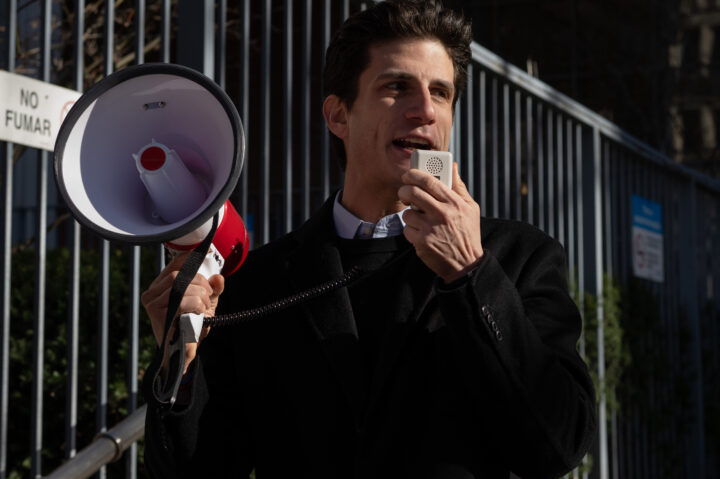
Edna Leshowitz/Getty Images
Jack Schlossberg, grandson of former President John. F Kennedy who is currently running for Congress, on Jan. 12, 2026 in New York City.
This P.M. edition is reserved for our premium subscribers — offering a forward-focused read on what we’re tracking now and what’s coming next. Please don’t hesitate to share your thoughts and feedback by replying to this email.
📡On Our Radar
Notable developments and interesting tidbits we’re tracking
Iranian officials have signaled they will attend talks with the U.S. in Islamabad, Pakistan, this week, with Vice President JD Vance, White House Special Envoy Steve Witkoff and Jared Kushner expected to depart for the meeting tomorrow (despite President Donald Trump’s claim that they were already in transit this morning).
Negotiators are up against a running clock, as Trump said today that his two-week ceasefire with Iran will end “Wednesday evening Washington time” and it’s “highly unlikely that I’d extend it” if no deal is reached…
In a series of heated social media posts, Trump again denied that Israel dragged the U.S. into war with Iran: “[T]he results of Oct. 7th, added to my lifelong opinion that IRAN CAN NEVER HAVE A NUCLEAR WEAPON,” were his motivation, he wrote on Truth Social.
Trump also boasted that the deal under negotiation will be “far better” than the 2015 Iran nuclear deal. “If a Deal happens under ‘TRUMP,’ it will guarantee Peace, Security, and Safety, not only for Israel and the Middle East, but for Europe, America, and everywhere else,” he wrote. Lashing out at the media, Trump insisted, “I’m winning a War, BY A LOT, things are going very well,” claiming the U.S. blockade, “which we will not take off until there is a ‘DEAL,’ is absolutely destroying Iran”…
The State Department confirmed that the U.S. will host the second round of ambassador-level talks between Israel and Lebanon on Thursday, as the 10-day ceasefire between the two countries that began last Thursday, after the first round of talks, continues to hold…
Republican operatives and strategists are growing increasingly concerned that the GOP may lose the Senate in the midterm elections, several told Politico, as rising gas prices and unease around the war with Iran create a poor national environment for Trump’s party.
The New York Times’ Nate Cohn argues that Democrats have a “realistic chance” to flip the four seats they need to win back the chamber because “they’ve recruited unusually strong candidates in three states that supported Mr. Trump three times: North Carolina, Ohio and Alaska.”
“In all three states, the Democrats’ likely nominees are popular recent statewide office holders. They either won their last campaign or were highly competitive in losing re-election under less favorable political conditions. So far, the polls show those Democrats running well ahead of what one might otherwise expect,” Cohn writes…
Kennedy scion Jack Schlossberg’s shifting views on Israel policy and decision to skip two upcoming Jewish community candidate forums are raising eyebrows in New York’s heavily Jewish 12th Congressional District, Jewish Insider’s Matthew Kassel reports.
During a candidate forum at 92NY last week, for example, Schlossberg rejected continued U.S. funding for offensive weapons to Israel amid the war in Iran — even as he emphasized support for boosting the Iron Dome missile-defense system, which he described as a “critical” technology…
Minnesota’s Democratic Party is poised to endorse progressive Lt. Gov. Peggy Flanagan for U.S. Senate at its convention next month, Flanagan’s campaign said, after the lieutenant governor secured support from over 90% of Democratic-Farmer-Labor Party local conventions held statewide. The party endorsement, however, will not determine the nominee, as Democratic voters are set to choose their candidate in the Aug. 11 primary election.
The campaign of Rep. Angie Craig (D-MN), Flanagan’s primary opponent and the favorite of pro-Israel activists, called on the DFL last week to launch a formal investigation into a series of alleged instances of antisemitic activity among its delegates. One instance at a local convention last month reportedly saw an unnamed delegate argue that “we should nuke” Israel…
The Wall Street Journal reports on the growing feud between Defense Secretary Pete Hegseth and Army Secretary Dan Driscoll, which “spilled out into public view on Thursday, when Driscoll described to lawmakers his fondness for the Army’s former top general, Randy George, whom Hegseth fired as the service’s chief of staff on April 2 while Driscoll was on vacation”…
A Washington Post investigation found that, since January 2025, neo-Nazi influencer Nick Fuentes has made nearly $900,000 through paid messages on his livestreams from roughly 11,000 fans. His top 500 donors are responsible for almost half of that amount…
The UAE has asked the U.S. to consider offering it financial assistance amid the war with Iran, as the Gulf country has borne the brunt of Iran’s drone and missile strikes, taking a heavy toll on its oil, economic and tourism industries. Emirati officials raised the idea of a currency-swap line, which would allow Abu Dhabi inexpensive access to U.S. dollars…
European officials hosted two meetings on Gaza reconstruction today — one gathering, led by EU representative Kaja Kallas and Norway, centered on coordinating aid with the U.S.-led Board of Peace, where White House advisor Josh Gruenbaum requested international assistance in rebuilding the enclave. The other forum, led by Kallas and Belgium, focused on a two-state solution and was attended by Palestinian Authority Prime Minister Mohammad Mustafa…
In response to Israeli Foreign Minister Gideon Sa’ar’s condemnation of an IDF soldier found to have desecrated a statue of Jesus in southern Lebanon, Radosław Sikorski, Poland’s deputy prime minister and foreign affairs minister, accused the IDF of committing war crimes.
“Lessons should also be drawn regarding the way they are being trained,” Sikorski wrote on X. “IDF soldiers themselves admit to war crimes. They killed not only civilian Palestinians but even their own hostages”…
Incoming Hungarian Prime Minister Peter Magyar affirmed that his country is bound by rules of the International Criminal Court to arrest those sought under its warrants, including Israeli Prime Minister Benjamin Netanyahu; Magyar said he intends to prevent Hungary from leaving the ICC, a move his predecessor, Prime Minister Viktor Orban, had initiated.
Responding to questions about Netanyahu’s claim that Magyar had invited him to the country for a ceremony marking the 70th anniversary of the Hungarian Uprising, Magyar responded, “Every leader is welcome to attend this important commemoration,” but “we have a legal obligation to enforce the court’s rulings, and I’m sure [Netanyahu] knows this”…
Apple CEO Tim Cook announced this afternoon that he will step down from the helm of the tech giant and become its executive chairman in September. Succeeding Cook is John Ternus, head of the company’s hardware engineering…
⏩ Tomorrow’s Agenda, Today
An early look at tomorrow’s storylines and schedule to keep you a step ahead
Keep an eye out in Jewish Insider for an interview with Rachel Goldberg-Polin on the release of her book, When We See You Again, which debuts tomorrow.
The Senate Committee on Banking, Housing and Urban Affairs will hold a nomination hearing for Kevin Warsh, son-in-law of Jewish philanthropist Ronald Lauder, to be chairman of the Board of Governors of the Federal Reserve. Democrats intend to press Warsh on his personal fortune, which he has only partially disclosed thus far.
The House Ethics Committee will hold a public hearing to determine whether to apply sanctions to Rep. Sheila Cherfilus-McCormick (D-FL), after finding last month that she had committed serious ethics violations and campaign finance misconduct.
The U.S. Helsinki Commission will hold a hearing on Iran’s support for Russia amid its war with Ukraine.
The Senate Foreign Relation Committee’s subcommittee on Africa will hold a hearing on U.S. approaches to counterterrorism on the continent.
Stories You May Have Missed
LATIN LINKS
Milei, Netanyahu launch ‘Isaac Accords’ to encourage Israel, Latin America engagement

An Israeli diplomatic source told JI that Ecuador and Paraguay are expected to join the Isaac Accords
MICHIGAN MOMENT
Michigan Dems nominate lawyer who praised Hezbollah for UMich regent over Jewish incumbent

Platner, in Reddit post on Hamas terrorist attack: ‘From a strictly professional standpoint, this was a damn fine looking and successful raid against a superior opponent’
Plus, Michigan Dems swap Jewish regent for Hezbollah cheerleader
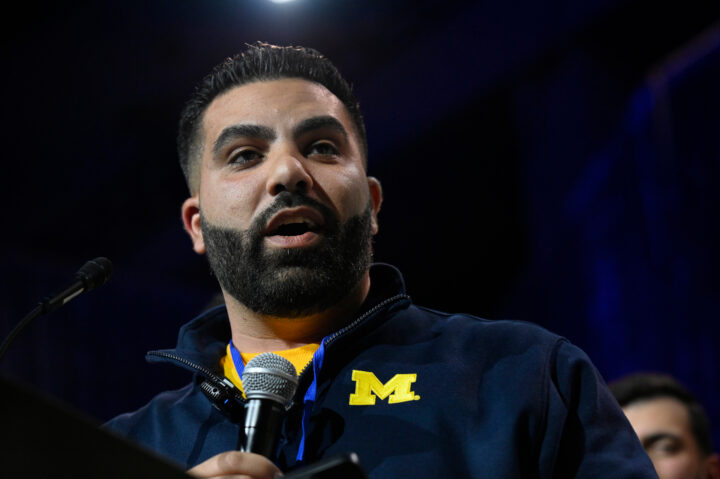
Jose Juarez/AP
Amir Makled, a candidate for the University of Michigan Board of Regents, addresses delegates after winning the party's nomination during the Michigan Democratic Party State Endorsement Convention, Sunday, April 19, 2026, in Detroit.
👋 Good Monday morning!
In today’s Daily Kickoff, we look at deepening concerns among Jewish Democrats over the party’s increasing embrace of terror supporters and antisemitism, and report on recent polling from Israel that indicates a divide in public opinion over the Trump administration-brokered recent ceasefires with Iran and Lebanon. We cover the weekend’s Alex Soros-backed inaugural Global Progressive Summit in Barcelona, and break down the results of last week’s special election in New Jersey’s 11th Congressional District, where progressive Analilia Mejia sailed to victory, despite a lack of support from some of the district’s most Jewish areas. Also in today’s Daily Kickoff: Rabbi Ephraim Mirvis, Raz Hershko and Luke Lindberg.
Today’s Daily Kickoff was curated by JI Executive Editor Melissa Weiss and Israel Editor Tamara Zieve, with assists from Danielle Cohen-Kanik and Marc Rod. Have a tip? Email us here.
What We’re Watching
- Vice President JD Vance is expected to return to Islamabad, Pakistan, this week for a second round of talks with senior Iranian officials amid conflicting reports over the status of the talks, with Iran saying it has not yet decided whether it will send representatives to the negotiations.
- Meanwhile, Tehran threatened retaliation this morning for the U.S.’ weekend attack on and seizure of an Iranian-flagged ship in the Gulf of Oman that had attempted to evade the Navy’s blockade of the Strait of Hormuz.
- Argentine President Javier Milei is in Israel today after arriving over the weekend ahead of events around Israel’s Yom HaZikaron and Yom HaAtzmaut, the country’s back-to-back commemorations of Israel’s fallen soldiers and victims of terror, and its Independence Day. Yesterday, Milei and Israeli Prime Minister Benjamin Netanyahu launched the Isaac Accords between the two countries. Read more about the initiative here.
- Israel will hold official Yom HaZikaron events at the Western Wall this evening and at Mt. Herzl, the country’s military cemetery, tomorrow morning.
- In Washington, Secretary of State Marco Rubio will speak this morning at a State Department ceremony unveiling the portrait of former Secretary of State Mike Pompeo.
What You Should Know
A QUICK WORD WITH JI’S JOSH KRAUSHAAR
Events in recent days may well be marking a tipping point in the decline of the Democratic Party — at least when it comes to its treatment of Jews, on top of its growing hostility toward Israel.
The weekend ended with the news that Michigan Democratic delegates, at their statewide convention Sunday, nominated a Hezbollah supporter, Amir Makled, to the University of Michigan Board of Regents, choosing to oust a Jewish member, Jordan Acker, whose home and car were repeatedly vandalized with antisemitic graffiti and his family threatened.
Acker’s offenses? He backed efforts to hold anti-Israel campus protesters at the University of Michigan accountable for assaulting police and engaging in intimidation of Jewish students, among other instances of student misconduct. He declined to support efforts to divest university funds from Israel, along with other members of the Board of Regents, as a radical faction of students had demanded.
Acker’s non-Jewish Democratic ticketmate, Paul Brown, who also supported discipline against anti-Israel students, wasn’t targeted and was renominated for election. But the Democratic delegates ousted Acker in exchange for Makled, who has posted on social media with comments praising Hezbollah’s leaders and retweeted antisemitic messages from the conspiracy-theorizing influencer Candace Owens.
The results mark a new low for Michigan Democrats. Also over the weekend, Michigan Senate candidate Abdul El-Sayed told CNN that he believes the Israeli government is just as evil as Hamas. Read more here.
In the same interview, El-Sayed also said that Sen. Chris Van Hollen (D-MD) should replace Senate Minority Leader Chuck Schumer (D-NY) as the Democratic leader in the upper chamber, citing Schumer’s continued support for U.S. aid to Israel. Van Hollen is among the most vocal critics of Israel in the Senate.
Michigan is a closely watched bellwether of the direction of the Democratic Party, and the latest developments underscore that a more radical faction of the party appears to be growing. This, in the state where dozens of Jewish preschoolers were nearly killed in a terrorist attack last month by a Hezbollah sympathizer who targeted the state’s largest synagogue.
dem defections
In New Jersey election results, signs of defections among Jewish Democrats
Rep.-elect Analilia Mejia (D-NJ) cruised to victory in last Thursday’s special election for New Jersey’s 11th Congressional District, but the results showed notable defections among Jewish Democrats — an early warning sign for both the left-wing Mejia and her party, Jewish Insider’s Marc Rod reports.
By the numbers: Mejia ran significantly behind other recent Democratic candidates in two municipalities that have traditionally strongly favored Democrats — Livingston Township and Millburn Township — both areas with significant Jewish populations. In Millburn, Mejia lagged 22 percentage points behind former Vice President Kamala Harris’ performance in the 2024 presidential election, and 17 percentage points behind Harris in Livingston.
SPEAKING OUT
John Fetterman blasts party for tolerating antisemitism within its ranks
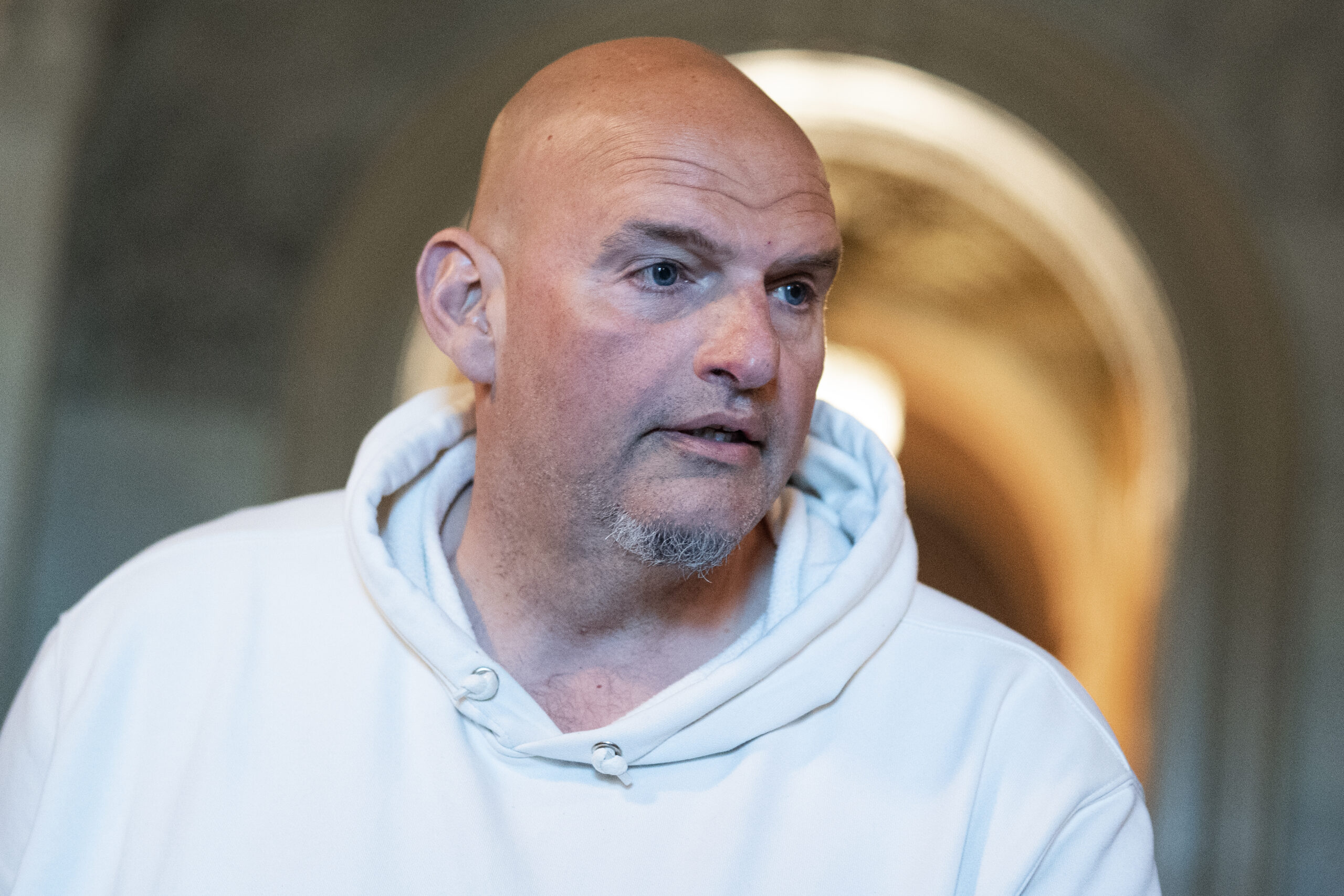
Sen. John Fetterman (D-PA) said on Friday that the Democratic Party “absolutely” has an issue with rising antisemitism, calling out the party’s embrace of candidates including Graham Platner in Maine and Abdul El-Sayed in Michigan while criticizing the recent progressive push to cut off defensive aid to Israel, Jewish Insider’s Emily Jacobs reports.
What he said: The Pennsylvania senator made the comments after being asked on CNN’s “The Arena with Kasie Hunt” if he believed the Democratic Party has a problem with antisemitism. Fetterman argued that the growing support for both candidates in their respective primaries was indicative of a tolerance for antisemitism within the party. “I mean, the guy that’s going to win the primary in Maine has a Nazi tattoo on his chest and now that’s no problem for a lot of voters,” Fetterman said.
IDENTITY CRISIS
Yehuda Kurtzer calls on American Jews to embrace reality of ‘political homelessness’

Amid a surge in antisemitism across the political spectrum, many American Jews have described feeling a growing sense of isolation. But for Yehuda Kurtzer, president of the Shalom Hartman Institute, being “politically homeless” is not a crisis to be solved, but rather a position to be embraced, Jewish Insider’s Matthew Shea reports.
A different perspective: “I don’t think some measure of political homelessness is a fundamentally bad thing,” Kurtzer said on Thursday while speaking alongside Jeffrey Goldberg, editor-in-chief of The Atlantic, at the Capital Jewish Museum in Washington. “I think Americans have become hyper-partisan in ways that reflect that partisan political identity has become part of our identities in ways that are not healthy for Americans.” Kurtzer and Goldberg sat in conversation at an event focused on American Jewry ahead of the upcoming 250th anniversary of the founding of the United States.
the view from israel
Ceasefires deepen Israeli divisions over Trump’s handling of war

A weekend of diplomatic turbulence has deepened fault lines in Israel over the ceasefires in Lebanon and Iran, with public opinion split along political lines over whether President Donald Trump is serving Israeli interests — or overriding them. Trump’s announcement of a ceasefire in Lebanon on Thursday, before any known progress had been made in talks between Jerusalem and Beirut toward dismantling Hezbollah, already made waves in Israel, Jewish Insider’s Lahav Harkov reports.
Tough talk: Israeli Prime Minister Benjamin Netanyahu said on Friday that “we have not yet finished the job,” but said Israel was “provid[ing] an opportunity to advance an integrated diplomatic and military solution with the Lebanese government,” at Trump’s request. Within an hour of the release of Netanyahu’s statement, Trump published a Truth Social post in which he “PROHIBITED” Israel from continuing to bomb Hezbollah targets, adding: “Enough is enough!!!” Shira Efron, a senior fellow at RAND who serves as the think tank’s distinguished chair for Israel policy, told JI that “there is no question that the tone – ‘prohibited’ in upper case, ‘enough is enough’ – struck a sensitive note in Israel, and people are talking about a vassal state.”
Under pressure: Rep. Brian Fitzpatrick (R-PA), a moderate Republican and co-chair of the House Problem Solvers Caucus, introduced a war powers resolution on Thursday that aims to enforce the deadlines for the war in Iran laid out in the 1973 War Powers Act, breaking with all Republicans except Thomas Massie (R-KY) JI’s Marc Rod reports.
ENVOY SPOTLIGHT
U.S. Ambassador to Turkey Tom Barrack faces renewed condemnation for anti-Israel, pro-Ankara comments
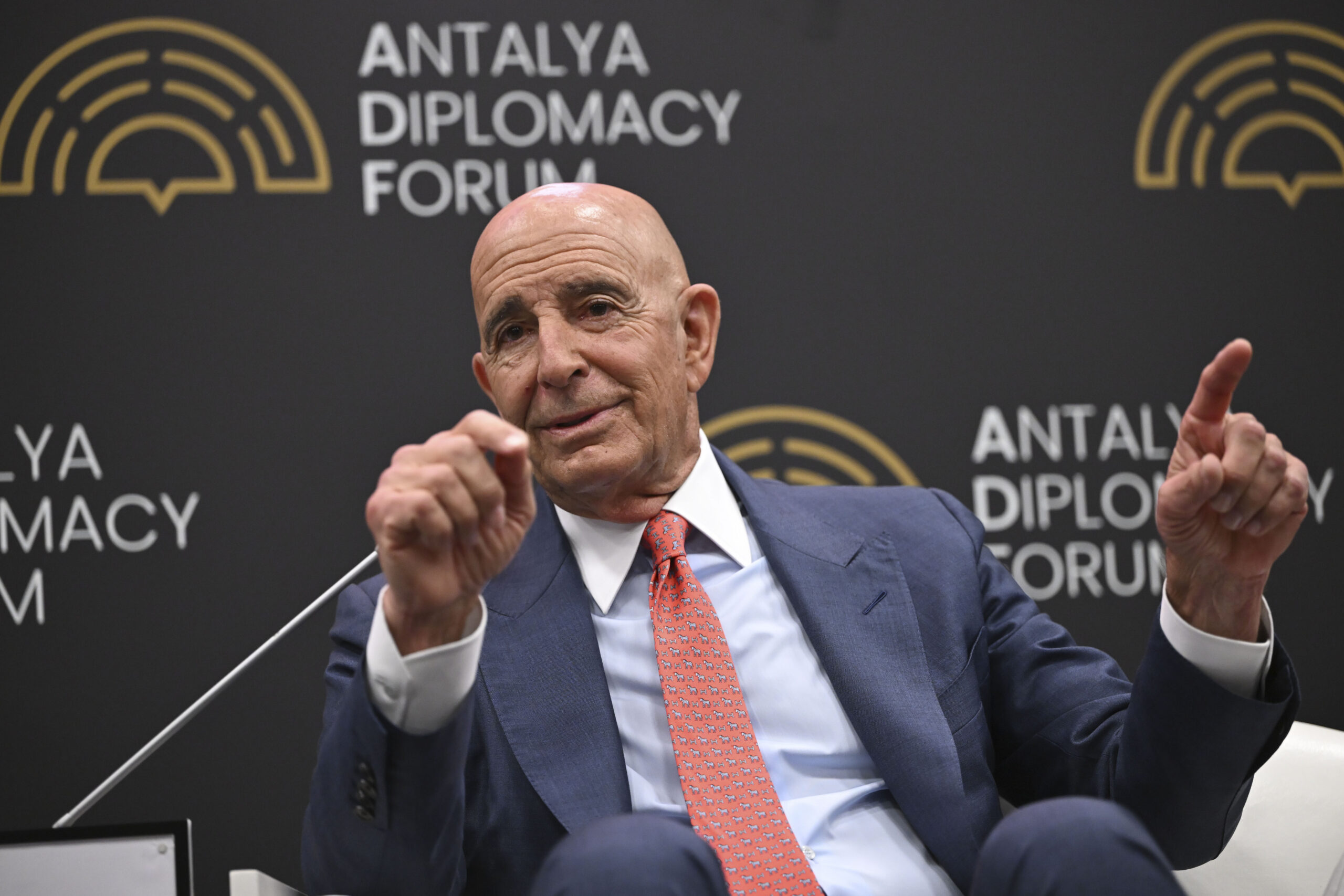
U.S. Ambassador to Turkey Tom Barrack faced fresh condemnation from two Senate Republicans and conservative influencers for a series of comments he made at the Antalya Diplomacy Forum in Turkey this weekend in which he repeatedly criticized Israel and praised Ankara, Jewish Insider’s Marc Rod reports.
Hezbollah hiccups: To comments by Barrack claiming that the current ceasefire in Lebanon “is so delicate because everybody has been equally untrustworthy” — referring to both Israel and Hezbollah — Sen. Lindsey Graham (R-SC) said he “respectfully and strongly disagree[s].” Barrack said at the conference there needs to be “a path with Hezbollah, and that path has to be not killing Hezbollah.” He further dismissed the idea that the Lebanese Armed Forces would act to disarm Hezbollah, as is required under the terms of the current and past ceasefires. “I always get in trouble because Hezbollah, in American parlance, and most of the West, is a foreign terrorist organization. Hezbollah, in Lebanon, is also a political organization,” Barrack added.
UNITING THE GLOBAL LEFT
Chorus of anti-Israel voices gathers at Alex Soros summit in Spain

A range of Israel critics, from Sen. Chris Murphy (D-CT) to Israeli lawmaker Ahmed Tibi, were among those gathered in Barcelona, Spain, over the weekend for the inaugural Global Progressive Summit, backed by left-wing philanthropist Alex Soros. The conference brought together representatives from over 40 countries, offering, according to its website, “a necessary alternative to conservative and far-right forces,” Jewish Insider’s Lahav Harkov reports.
In attendance: Spanish Prime Minister Pedro Sánchez, an outspoken critic of Israel who called on Saturday to downgrade EU-Israel relations, hosted the two-day conference, whose American attendees also included Minnesota Gov. Tim Walz, with Soros. Sen. Bernie Sanders (I-VT), New York City Mayor Zohran Mamdani and former Secretary of State Hillary Clinton sent video messages. South African President Cyril Ramaphosa, whose government petitioned the International Criminal Court to prosecute Israeli leaders, Brazilian President Lula de Silva and U.K. Justice Secretary David Lammy were also in attendance.
Worthy Reads
Dumb and Dumber: The Atlantic’s Yair Rosenberg explores the expanding platforms of influencers and public figures who are uneducated on the issues about which they speak and unchallenged by interviewers. “Talking with Piker about a political coalition to save American democracy without discussing his affinity for China’s rulers is like teaming up with Carlson without interrogating his praise for Russian President Vladimir Putin — or with Donald Trump without examining his outlook toward Israeli Prime Minister Benjamin Netanyahu. And yet, only the debate over the latter tends to happen, such that Israel crowds out all other considerations, including extremely consequential beliefs that can end up going unchallenged.” [TheAtlantic]
It’s All Relative: In The Washington Post, the American Enterprise Institute’s Danielle Pletka raises concerns about the presence of relatives of officials from American adversaries who are living in the U.S., amid an effort to deport some of those family members. “The U.S. is littered with other nepo babies, wives and cousins — what the Iranians and Arabs call aghazadeh and the Russians call mazhor — enjoying the privileges of living in the land of the free, often made possible by the ill-gotten gains of the fam back home. It’s little wonder why they came. … It turns out the easiest route is through higher education, with some institutions explaining outright how F-1 student visa holders can transfer to permanent status upon graduating.” [WashPost]
Dropping the Trump Name: The New York Times’ Eric Lipton spotlights an effort by the wealthy Khayyat family in Syria to influence U.S. foreign policy in Syria through the Trump family’s business dealings. “Such a mixing of personal and diplomatic affairs has long been the norm in Middle Eastern nations, where a small set of players have historically run, and profited from, their dominant role in society. But it has become the way Washington operates in Mr. Trump’s second term, too. … [A friend of Mohamad Al-Khayyat, Syrian American businessman Tarek] Naemo, who is based in Florida and runs an investment firm that he said had done deals with partners including the Qatari Investment Authority, began with his wife to court at least a dozen members of Congress, starting with Speaker Mike Johnson.” [NYTimes]
Word on the Street
President Donald Trump nominated Under Secretary of Agriculture Luke Lindberg to serve as the next head of the World Food Program, following Cindy McCain’s announced departure from the role over health issues…
The New York Times looks at divisions within the conservative campus movement in the wake of Turning Point USA founder Charlie Kirk’s assassination in September, finding that members of some campus chapters and breakaway groups are split “over support for Israel, the showcasing of conspiracy theorists and who is rightfully American,” as well as disagreements over the war against Iran…
Buckley Carlson, the son of Tucker Carlson, departed his role as deputy press secretary to Vice President JD Vance to start his own consulting firm…
Commerce Secretary Howard Lutnick was spotted with Philadelphia 76ers owner Josh Harris as the 76ers took on the Boston Celtics in Massachusetts over the weekend…
Authorities in Los Angeles arrested an Iranian woman with permanent U.S. residency status accused of brokering sales of Iranian weapons to the Sudanese Armed Forces for use in the African country’s yearslong civil war…
A George Washington University alumna is suing the school and her former employer, Ernst & Young, as well as a number of GWU officials, alleging that she faced retaliation and discrimination in the wake of an address she delivered at one of the school’s 2025 commencement ceremonies; her remarks calling for GWU to divest from Israel deviated from those approved by the school…
Rümeysa Öztürk, the Tufts University graduate student who was detained for more than a month by immigration officials for co-authoring an op-ed critical of Israel, is returning to Turkey, having completed her Ph.D. studies at the Boston-area school…
The New York Times reviews When We See You Again, Rachel Goldberg-Polin’s account, which will be released tomorrow, of her life before and after the 2024 death of her son, Hersh Goldberg-Polin, at the hands of his Hamas captors…
Canada’s Centre for Israel and Jewish Affairs, with the backing of more than 80 Jewish groups, is calling on the federal government in Ottawa to increase funding to address “rising security demands” as the country sees a sharp increase in antisemitism…
A French peacekeeper was killed and three others members of UNIFIL, the U.N.’s peacekeeping force in Lebanon, were injured in what France and UNIFIL said was a Hezbollah attack; French President Emmanuel Macron, whose government was sidelined from recent U.S.-brokered talks between the Lebanese and Israeli ambassadors to Washington, called on Beirut to “immediately arrest those responsible and assume their responsibilities alongside UNIFIL”…
An appeals court in France ruled than an Algerian-born nanny who worked for a French Jewish family was not acting out of antisemitism when she poisoned family members, despite having told police, “Because they have money and power, I should never have worked for a Jewish woman; she only brought me trouble”; the woman was sentenced to two-and-a-half years in prison, less than if she was found to have been motivated by antisemitism…
Kanye West’s upcoming concert in Poland, which was slated to take place in June, was called off by organizers, one of whom cited “formal and legal reasons,” weeks after West’s planned concerts in France and the U.K. were also cancelled amid public outcries over his past antisemitic comments…
Helen Mirren, Skylar Astin and Liev Schreiber were among more than 1,000 signatories to an open letter organized by Creative Community for Peace in support of Israel’s continued participation in the Eurovision Song Contest…
U.K. Chief Rabbi Ephraim Mirvis decried the “sustained campaign of violence and intimidation” targeting British Jews amid a series of attacks on Jewish communities around the country…
Mirvis’ statement came shortly before the arrest of two teenagers in connection with an arson attack that caused minor damage to London’s Kenton United Synagogue; British authorities are investigating whether the recent spate of attacks targeting Jewish sites in the country is linked to Iran…
A British court rejected an effort by the International Centre of Justice for Palestinians to issue a summons for a dual U.K.-Israeli citizen who traveled to Israel on Oct. 8, 2023, to rejoin his unit as a reservist in the wake of Hamas’ deadly attacks the day prior…
Sixteen Arab and Muslim countries — including Saudi Arabia, Jordan and Egypt, but excluding Abraham Accords signatories the United Arab Emirates, Morocco and Bahrain — signed onto a Qatar-led statement condemning Israel for appointing former Israeli Ambassador to Kenya Michael Lotem as the country’s first ambassador to Somaliland, four months after Jerusalem recognized the African state…
The New York Times explores the impact of the war in Iran on Qatar and other U.S.-allied Gulf nations, finding Doha [t]rapped between their chief ally and their neighbor” and now being “forced to rethink their security strategies”…
The UAE’s minister of state for international cooperation said that 90% of the sites struck in the Gulf nation by Iran over the course of the recent conflict were civilian infrastructure; Reem Al Hashimy said that approximately 2,800 missiles and drones launched by Iran had hit targets in the UAE…
The governor of the UAE’s central bank, who met last week in Washington with Treasury Secretary Scott Bessent, introduced the possibility of working with Washington to create a currency-swap line as a potential financial backstop should the Gulf state face further economic challenges…
Iran said it executed two people alleged to have collaborated with Israel’s Mossad…
The IDF released a map showing the Lebanese territory under its control as it fights against Hezbollah in the southern part of the country…
IDF spokesperson Lt. Col. Nadav Shoshani said the military was conducting an investigation following the surfacing of a photo in which an IDF soldier is pictured desecrating a statue of Jesus in the southern Lebanese Christian village; Israeli Prime Minister condemned the incident, saying he “was stunned and saddened” and that Israel “express[es] regret for the incident and for any hurt this has caused to believers in Lebanon and around the world”…
Senior Hamas officials confirmed to The New York Times that the terror group was willing to relinquish some of its weapons to the Palestinian administrative committee operating under the Trump administration’s Board of Peace…
Israeli Olympic silver medalist Raz Hershko won gold in her weight class at the European Judo Championships in Tbilisi, Georgia…
Pic of the Day

Yizhar Hess, vice chairman of the World Zionist Organization, hosted a reading on Sunday of Israel’s Declaration of Independence at the egalitarian section of the Western Wall in Jerusalem. Hess was joined by members of the Sydney Jewish community as well as former Israeli hostage Shoshan Haran.
Birthdays

Israeli model, swimwear designer and social media star, Neta Alchimister turns 32…
Stanford University professor and 2020 Nobel Prize laureate in economics, Paul Robert Milgrom turns 78… Chairman of the media networks division of Activision Blizzard, he previously held high-ranking roles at NFL Network, ESPN and ABC, Steve Bornstein turns 74… Philadelphia-based development professional, currently at AJC after a long career for a number of organizations, Andrew Demchick turns 70… Immigrants rights activist and professor at Salem State University, she is the eldest daughter of Noam Chomsky, Aviva Chomsky turns 69… Television and radio host, syndicated columnist and political commentator, Steve Malzberg turns 67… Past president and executive director of the D.C.-based Electronic Privacy Information Center, now at the Center for AI and Digital Policy, Marc Rotenberg turns 66… Author, journalist and former co-host of “The Femsplainers Podcast,” Danielle Crittenden Frum turns 63… Semi-professional race car driver and restaurateur, he was previously CEO, president and chairman of the Trust Company of New Jersey, Alan Wilzig turns 61… Television producer and game show host, known professionally as J.D. Roth, James David Weinroth turns 58… Israeli jazz bassist, composer, singer and arranger, Avishai Cohen turns 56… British film director, Sarah Gavron turns 56… Member of the U.S. House of Representatives, one of four Jewish Republican congressmen, Randy Fine (R-FL) turns 52… VP of government and public affairs at Cleveland-based GBX Group, a historic real estate development firm, Seth Foster Unger… Deputy associate administrator at the General Services Administration, Michael C. Frohlich… Chief philanthropy and leadership officer at the World Jewish Congress, Elliott G. Mendes… President and CEO at the Los Angeles-based Skirball Cultural Center, Jessie Kornberg turns 44… Former general manager of Bird in Israel, he is a nephew of Israel’s past president Reuven Rivlin, Yaniv Rivlin… ESPN sportscaster and former Fox Sports and NFL Network personality, Peter Schrager turns 44… New York-based national security and human rights lawyer, Irina Tsukerman… Co-founder of The Free Press and its head of strategy, Nellie Bowles turns 38… PM breaking news editor at CNN Politics, Kyle Feldscher… Policy advisor and counsel to U.S. Sen. Jack Reed (D-RI), Zachary L. Baum… Systems engineer at Google X, Joseph Gettinger turns 38… Facilitator, coach and workshop organizer, Daniela Kate Plattner… Research analyst at the U.S. Department of State during the Biden administration, David Mariutto… VP at Cedar Capital Partners, Alex Berman… CEO of Social Lite Creative and news anchor on ILTV, Emily K. Schrader… Israeli scientist, engineer and artificial intelligence researcher at Massachusetts Institute of Technology, Dr. Maor Farid turns 34… Working on advertising platforms at Apple, McKenna Klein… Senior associate at LvlUp Ventures, Andrew J. Hirsh… R&B, soul, pop singer and teen actress, at 13 she was the runner-up on the second season of “The X Factor,” Carly Rose Sonenclar turns 27… Diane Kahan…
The most recent poll on the matter, taken before the Lebanon ceasefire was announced, found that 51% of Israelis oppose a ceasefire with Hezbollah and only 29% support it

AFP via Getty Images
A bulldozer clears the rubble from the site of an Israeli airstrike as people return to Beirut's southern suburbs on April 19, 2026.
A weekend of diplomatic turbulence has deepened fault lines in Israel over the ceasefires in Lebanon and Iran, with public opinion split along political lines over whether President Donald Trump is serving Israeli interests — or overriding them.
The most recent poll on the matter, taken before the Lebanon ceasefire was announced and published by Israel’s Channel 12 on Thursday, found that 51% of Israelis oppose a ceasefire with Hezbollah and only 29% support it. Among voters for Netanyahu’s government, 64% oppose a ceasefire and 18% support it. Nearly half (48%) of Israelis do not trust President Donald Trump to consider Israeli interests in negotiations with Iran, while 33% do trust him. Most voters for Netanyahu’s coalition (59%) trust Trump while 24% do not.
Trump’s announcement of a ceasefire in Lebanon on Thursday, before any known progress had been made in talks between Jerusalem and Beirut toward dismantling Hezbollah, already made waves in Israel.
Israeli Prime Minister Benjamin Netanyahu attempted on Friday to draw the same delicate balance as he had regarding Iran the previous week, asserting that Israel has “brought about monumental achievements” in Lebanon, created a buffer zone along the northern border and destroyed much of Hezbollah’s missile stockpile. However, he added, “we have not yet finished the job,” but said Israel was “provid[ing] an opportunity to advance an integrated diplomatic and military solution with the Lebanese government,” at Trump’s request.
Within an hour of the release of Netanyahu’s statement, Trump published a Truth Social post in which he “PROHIBITED” Israel from continuing to bomb Hezbollah targets, adding: “Enough is enough!!!”
Jerusalem reportedly asked the Trump administration for clarifications in light of the strong language in the post, which contradicted language in the ceasefire allowing Israel to act “in self-defense, at any time, against planned, imminent or ongoing attacks.”
Two IDF soldiers were killed in Lebanon over the weekend by explosive devices planted by Hezbollah. The IDF continued striking terror targets in Lebanon, such as “a loaded and ready-to-fire launcher,” saying that “Hezbollah has continued its terrorist activity, in violation of the [ceasefire] agreement.” On Monday morning, IDF Arabic Spokesperson Avichay Adraee urged residents of dozens of areas of southern Lebanon to stay away for their safety.
Trump said in his Friday Truth Social post that “the U.S.A. will get all nuclear ‘dust’ created by our great B2 bombers,” apparently referring to Iran’s stockpile of highly enriched uranium. Yet, Iran has denied any concessions on the nuclear file, and resumed its blockade of the Straits of Hormuz as long as the U.S. continued to block vessels going to and from the Islamic Republic. Israel’s Channel 12 reported that the U.S. and Iran are negotiating a 15-year suspension of uranium enrichment and the conversion of highly-enriched uranium into fuel, rather than removing it from Iran, as well as lifting sanctions.
With the ceasefire in Iran due to end on Tuesday night, Vice President JD Vance is set to travel to Pakistan for a second round of talks on Monday, but Iranian state media has said officials do not plan to attend.
Shira Efron, a senior fellow at RAND who serves as the think tank’s distinguished chair for Israel policy, told Jewish Insider that “there is no question that the tone – ‘prohibited’ in upper case, ‘enough is enough’ – struck a sensitive note in Israel, and people are talking about a vassal state.”
Efron tied Trump’s comments from Friday to those at the end of last year’s 12-day war against Iran, when he said “I’m not happy with Israel … They don’t know what the fuck they’re doing.” She also connected the comments to the pressure Trump has put on Israeli President Isaac Herzog to pardon Netanyahu, who is on trial for corruption charges, as well as Israeli and American flags lining some of Israel’s busiest highways for much of the last two months.
“These are things that make Israelis say, ‘Have we lost our agency?’” she said.
Israelis are also disappointed because they feel the government overpromised to bring security to the residents of the country’s north, Efron said, noting that “it takes a long time to disarm terrorist organizations.”
“There is a sense of confusion as to how the president, who has been so tightly aligned with Prime Minister Netanyahu, could issue a blanket, almost punitive warning to Israel to stop bombing Hezbollah, that had been bombing Israel incessantly with hundreds of missiles and drones,” Dan Diker, president of the Jerusalem Center for Security and Foreign Affairs told JI.
Efron said that the ceasefires are “the package deal. We’re clearly the junior partner here. The U.S. wants us to stop in Lebanon because that’s what’s required to give the Islamabad talks a chance to succeed.”
Dan Diker, president of the Jerusalem Center for Security and Foreign Affairs, called Trump’s remarks “draconian.”
“There is a sense of confusion as to how the president, who has been so tightly aligned with Prime Minister Netanyahu, could issue a blanket, almost punitive warning to Israel to stop bombing Hezbollah, that had been bombing Israel incessantly with hundreds of missiles and drones,” he told JI.
“This is not a ceasefire by Hezbollah,” Diker added. “Israel agreed to back off to see what the Americans would do. We’re in this waiting period.”
Diker argued that Netanyahu “played it extremely well in going with the president, while maintaining very strict red lines about Israel’s demands to continue to be able to defend itself against Iranian aggression and Hezbollah.”
The mandate of negotiations between Israel and Lebanon “is to try to separate Hezbollah from its Iranian patrons and try to coalesce the Lebanese government that had reached out to Israel,” Diker said.
Efron called the negotiations between the Lebanese government and Israel, including possible peace and normalization, “a stab in the eye for the Iranians. It’s not what they want,” but tying a ceasefire in Lebanon to the talks with Iran — or the resumption of fighting with Hezbollah in the event of the war in Iran starting up again — is a “strategic negative … connecting two fronts, which you want to prevent.”
Efron argued that “Trump is doing Israel a favor” in pushing the Lebanon ceasefire, because “there is a declining marginal utility in continuing the military effort beyond what was done at first. … It’s better to try serious negotiations with Lebanon that are required if we are ever to disarm Hezbollah.”
“This has become the war of Hormuz, not what Israel was concerned with. Israel is concerned with three threats,” Shira Efron, a senior fellow at RAND who serves as the think tank’s distinguished chair for Israel policy said, naming Iran’s nuclear weapons, ballistic missiles and proxy war.
Diker, however, said it was unclear whether the Lebanese government would be able to help disarm Hezbollah, pointing out that the Iranian ambassador remains in Beirut even though he was nominally expelled by the government weeks ago. “From a perception standpoint, that tells the whole story,” he said.”
With regard to negotiations with Iran for a longer-term ceasefire, Efron said that “Israel is almost a bystander. Clearly, its positions are factored in, but Israel is not at the table.”
“This has become the war of Hormuz, not what Israel was concerned with. Israel is concerned with three threats,” Efron said, naming Iran’s nuclear weapons, ballistic missiles and proxy war.
“If the reports are accurate, Israel is getting far less than it wanted,” she added. “If the best we get is no enriching uranium for 15 years and some deal about highly enriched uranium, nothing about missiles and proxies, and Iran will get all this money from frozen funds – How is that much better than the [2015 Iran Deal]? … It’s a little too early to say, but if this is the agreement, clearly there will be a sourness on the part of Israel. Even the biggest cheerleaders of this war are not happy about it. … It will be hard to sell to the people as an actual victory.”
Diker said “clearly Israel has not finished the mission to deny the Iranian regime of highly-enriched uranium, ballistic missiles or its proxy strategy. It has not accomplished any of those goals.”
That being said, Israel “achieved Prime Minister Netanyahu’s immediate goal … act[ing] heroically in seriously degrading the Iranian regime’s ballistic capabilities … [and] definitely achieved the goal of preventing an immediate existential threat from being carried out,” Diker said. “Clearly Israel is in a much better position today, having destroyed the majority of [Iran’s] ballistic missiles, which were a shield for the nuclear weapons program.”
From the Iranian perspective, however, the regime “succeeded very consequentially, stood up to the ‘Big Satan’ and ‘Little Satan’ in a six-week war, and they’re still standing,” Diker added. “That, in my assessment, has caused them to act in a far more daring way. That’s why they closed the Strait [of Hormuz] again, because they figured they brought Donald Trump to heel and Israel to heel.”
“I do think they’re overplaying their hand as an apocalyptic jihadistic Islamic regime, because they are driven primarily by ideological religious fervor. They are not primarily rational actors,” he added.
Efron noted that it is “difficult to assess the outcome of war in the short term,” and “Israel may be really happy because in two or three years Iran will be done for.” That being said, Efron said she is “dreading the [regime’s] revenge on the Iranian people.”
Diker said that Israel is still “determined to dismantle this apocalyptic regime … [otherwise] we are going to be in this for another four, five, six years. We can’t afford to allow this window of opportunity to close.” He referred to outgoing Mossad Director David Barnea’s speech at a Holocaust Remembrance Day ceremony last week, in which he said that Israel’s mission in Iran will end “only when this radical regime is replaced.”
“We hope that the president will be in it for the long run,” Diker added.
The swing-district Republican is the first GOP lawmaker other than isolationist Thomas Massie to support constraining the administration’s military operations in Iran
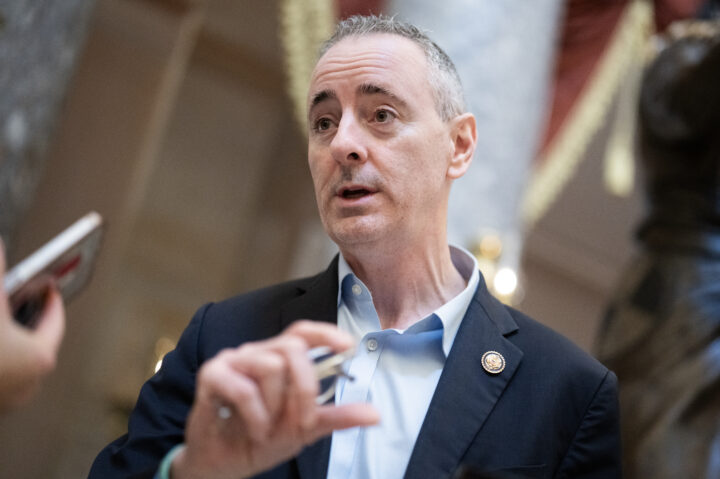
Tom Williams/CQ-Roll Call, Inc via Getty Images
Rep. Brian Fitzpatrick (R-PA) talks with a reporter in the U.S. Capitol's Statuary Hall on Friday, March 27, 2026.
Rep. Brian Fitzpatrick (R-PA), a moderate Republican and co-chair of the House Problem Solvers Caucus, introduced a war powers resolution on Thursday that aims to enforce the deadlines for the war in Iran laid out in the 1973 War Powers Act.
Fitzpatrick is the first Republican — other than isolationist Rep. Thomas Massie (R-KY) — to introduce legislation that would constrain the administration’s ability to act in Iran. The move is a signal that GOP support for the effort could begin to erode if the administration disregards legal limitations on the length of its operation in Iran.
The War Powers Act limits any military operation initiated unilaterally by the executive branch to 60 days, with an additional 30-day drawdown period, unless the operations are subsequently authorized by Congress. The 60-day period will expire at the end of April.
“The War Powers Act of 1973 is the law of the land,” Fitzpatrick said. “This consistent standard must be applied to all past, current, and future administrations when it comes to military hostilities abroad. … This is the law that has applied to past administrations, and it is the law that will apply to current and future administrations. This is the law and, until it is changed, it will be consistently applied and consistently enforced across all administrations and all conflicts.”
Other Republicans, including moderates, have also indicated that they would be uncomfortable with or unable to support any military operations in Iran past the 60-day deadline without additional congressional authorization — though some have said they would support such an authorization.
Yet, others have argued that the limitations in the War Powers Act are not legally binding and say Republicans on the Hill will disregard them.
Running in a highly competitive district, Fitzpatrick’s move could also be a sign of discomfort with the continued war effort among swing-district Republicans ahead of the midterm elections.
The president also denied reports that the U.S. is willing to exchange funds for Iran’s enriched uranium

SAUL LOEB / AFP via Getty Images
Chairman of the Joint Chiefs of Staff Gen. Dan Caine speaks as a map of the Strait of Hormuz is displayed during a press briefing at the Pentagon in Washington, DC, on April 16, 2026.
As the first day of the Israel-Lebanon ceasefire held strong, Iranian Foreign Minister Abbas Araghchi declared the Strait of Hormuz “completely open” for the duration of the 10-day pause in hostilities.
President Donald Trump affirmed the strait is “ready for business and full passage” in a Truth Social post, but said the U.S.’ naval blockade “will remain in full force and effect as it pertains to Iran, only, until such time as our transaction with Iran is 100% complete.”
“This process should go very quickly in that most of the points are already negotiated,” he added, as Trump has indicated U.S. and Iranian negotiators may meet again in Islamabad, Pakistan, over the weekend.
“Iran, with the help of the U.S.A., has removed, or is removing, all sea mines” from the strait, Trump said in another post. “Iran has agreed to never close the Strait of Hormuz again. It will no longer be used as a weapon against the World!” he added later.
Trump seemingly denied an Axios report that the U.S. is prepared to offer Iran the release of $20 billion in frozen funds in exchange for Iran relinquishing its highly enriched uranium, which Trump often refers to as “nuclear dust.”
“The U.S.A. will get all Nuclear ‘Dust,’ created by our great B2 Bombers,” he wrote, but “no money will exchange hands in any way, shape, or form.”
“This deal is in no way subject to Lebanon, either,” he added. “The USA will, separately, work with Lebanon, and deal with the Hezboolah [sic] situation in an appropriate manner. Israel will not be bombing Lebanon any longer. They are PROHIBITED from doing so by the U.S.A. Enough is enough!!!” Trump said.
The ceasefire between Israel and Lebanon, which began at 5 p.m. ET on Thursday, has held as of Friday morning. Israeli Prime Minister Benjamin Netanyahu said in a video statement that, at Trump’s request, Israel will “provide an opportunity to advance an integrated diplomatic and military solution with the Lebanese government.”
Israel has destroyed 90% of Hezbollah’s missile and rocket stockpiles, Netanyahu said in the statement — which was made prior to Trump declaring that Israel is “prohibited” from striking Lebanon — “but I say honestly, we have not finished the job. There are things we plan to do regarding the remaining rocket threat and the drone threat, which I will not detail here.”
And, Netanyahu added, “we have an additional goal, and that is the dismantling of Hezbollah. Therefore, I tell you again in all honesty: This will not be achieved tomorrow. It requires sustained effort, patience and endurance, and it requires wise navigation of the diplomatic field.”
“For the first time in 43 years, representatives of the State of Israel are speaking directly with representatives of Lebanon. The road to peace is still long, but we have begun it. One of our hands holds a weapon; our other hand is extended in peace,” the prime minister said.
Plus, Vance courts pro-Israel donors ahead of 2028

Adri Salido/Getty Images
The Lebanese capital is seen from a viewpoint after U.S. President Donald Trump announced a ceasefire between Israel and Lebanon that would commence at midnight local time on April 16, 2026 in Beirut, Lebanon.
This P.M. edition is reserved for our premium subscribers — offering a forward-focused read on what we’re tracking now and what’s coming next. Please don’t hesitate to share your thoughts and feedback by replying to this email.
📡On Our Radar
Notable developments and interesting tidbits we’re tracking
President Donald Trump announced the start of a 10-day ceasefire between Israel and Lebanon to begin at 5 p.m. ET today, after he held phone calls with Lebanese President Joseph Aoun and Israeli Prime Minister Benjamin Netanyahu earlier in the day.
Trump added that he will be inviting Aoun and Netanyahu to the White House for “meaningful talks,” later telling reporters such a meeting could happen in the “next week or two.”
The text of the agreement released by the State Department indicates the ceasefire is a “gesture of goodwill” on Israel’s part “intended to enable good-faith negotiations” toward a permanent agreement. The temporary pause in hostilities could be extended if Lebanon “effectively demonstrates its ability to assert its sovereignty” and prevent Hezbollah from carrying out attacks against Israel…
Trump again indicated further talks with Iran could take place this weekend and said the two sides are “very close to making a deal,” telling reporters this afternoon that Iran has already agreed to “give us back the nuclear dust,” referring to its highly enriched uranium.
Hours earlier, Secretary of Defense Pete Hegseth warned at a press briefing that U.S. forces are “maximally postured” to return to military operations against Iran if negotiations are unsuccessful, and will look to attack “infrastructure, power and energy”…
The House narrowly voted to block a Democratic resolution to force an end to the war in Iran by a vote of 214-213-1, with all but one of the four Democrats who opposed a similar effort in March changing their votes to support today’s measure, Jewish Insider’s Marc Rod reports.
Reps. Greg Landsman (D-OH), Juan Vargas (D-CA) and Henry Cuellar (D-TX), who voted last month against a similar resolution, flipped their votes to support the war powers effort. But Rep. Jared Golden (D-ME), who is retiring at the end of his term, voted no again. On the Republican side, Rep. Warren Davidson (R-OH), who voted for the war powers resolution last time, switched his vote to “present.” Rep. Thomas Massie (R-KY) was the only Republican who voted for the resolution…
Vice President JD Vance, the first vice president to serve simultaneously as finance chair of his party, is building donor relationships that may prove useful should he choose to run for president in 2028, The New York Times reports, including attempting to woo some pro-Israel donors who have otherwise been wary of his ties to far-right commentator Tucker Carlson.
Among others, Vance has developed relationships with Jewish philanthropists Miriam Adelson, whom he spent New Years Eve with at Trump’s Mar-a-Lago resort, and Paul Singer; has appeared as the guest of honor at a dinner hosted by Palantir and 8VC co-founder Joe Lonsdale; and has been featured at a Republican National Committee event hosted by tech executive Keith Rabois, who is married to Under Secretary of State Jacob Helberg…
With less than six weeks to go until the Texas primary runoff election, Sen. John Cornyn (R-TX) is defending his seat against Texas Attorney General Ken Paxton with a significantly larger war chest: As the first quarter of 2026 closed, Cornyn had more than $8 million in cash on hand (including a small donation from former President George W. Bush), while Paxton had $2.6 million in the bank. Whoever clinches the GOP nomination will face state Sen. James Talarico, who has nearly $10 million on hand…
Josef Palermo, who was the first curator of visual arts and special programming at the Kennedy Center until his dismissal last month, recounts his experience as Trump and the center’s then-President Richard Grenell initiated an overhaul of the building, a process Palermo describes as “cronyism, incompetence, and a series of bizarre moves.”
Palermo recounts an exhibition he organized commemorating the Oct. 7 Hamas attacks in the building’s Israeli Lounge: “Speaking at the opening reception, Grenell warned the mostly Jewish audience that unless donors came forward to sponsor the space and pay for renovation costs, the lounge would be given away to a new donor. … Such a strong-armed fundraising pitch, at an event commemorating a pogrom, struck many of us in the room as inappropriate. I was mortified”…
Asked for his perspective on antisemitic streamer Hasan Piker’s reach on his platform, Twitch CEO Daniel Clancy said at the Semafor World Economy summit in Washington today that “one of the challenges is when you’re livestreaming you say a lot … you might say a lot of things that are over the top. … If you violate [community guidelines] then we take enforcement actions and we suspend you — it’s designed not to kick you off forever.”
“Whenever Hasan has stepped over the line, we’ve taken action … Folks will get worked up from both the right and the left on this because we have also conservative people that are saying certain things that some people don’t like. … In general, we think it is important for us to allow people to express themselves,” Clancy said…
⏩ Tomorrow’s Agenda, Today
An early look at tomorrow’s storylines and schedule to keep you a step ahead
Keep an eye out in Jewish Insider for a temperature check on support for Israel within the Democratic Party, in light of 85% of Democratic senators voting in favor of a Sen. Bernie Sanders (I-VT)-led measure to block military sales to the Jewish state.
France and the U.K. will co-host a conference tomorrow focused on restoring freedom of navigation through the Strait of Hormuz, with leaders from several European, Asian and Gulf countries participating via video.
Michigan’s Democratic Party will hold its endorsement convention on Sunday, where party activists will nominate their two preferred candidates for the University of Michigan’s Board of Regents. The election has reignited the campus’ debate over Israel, as candidate and anti-Israel activist Amir Makled seeks to unseat Jewish regent Jordan Acker, who became the target of antisemitic vandalism and harassment in the aftermath of the Oct. 7 Hamas attacks. (The SEIU labor union recently pulled its endorsement of Makled over his past support of Hezbollah.)
National party leaders including former Vice President Kamala Harris and Sen. Cory Booker (D-NJ) will appear at events in Detroit ahead of the convention.
We’ll be back in your inbox with the Daily Overtime on Monday. Shabbat Shalom!
Stories You May Have Missed
CAPITAL CONTEST
D.C. mayoral candidate Kenyan McDuffie courts Jewish voters as DSA-endorsed rival Lewis George faces communal backlash
‘I didn’t seek, nor would I accept, the endorsement of Democratic Socialists of America,’ McDuffie told JI in an interview
SCOOP
‘I dig it’: Graham Platner praised Hamas tactics in 2014 graphic video of killings of Israeli soldiers
Platner, in Reddit post on Hamas terrorist attack: ‘From a strictly professional standpoint, this was a damn fine looking and successful raid against a superior opponent’
All but one of the four Democrats who had opposed the previous war powers effort flipped their votes in support
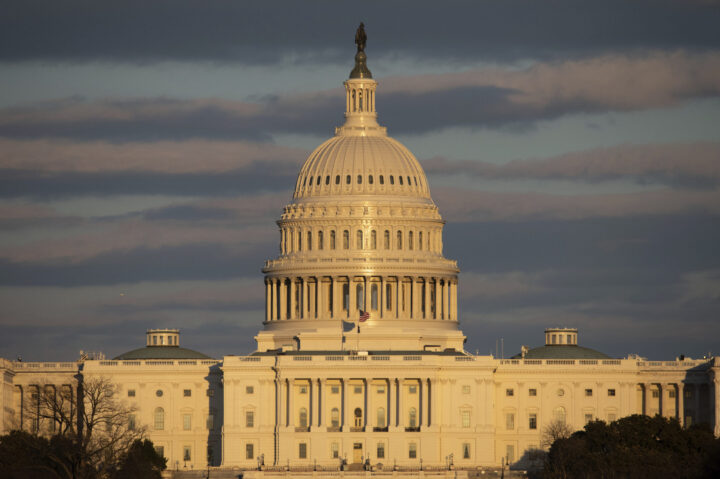
Graeme Sloan/Sipa via AP
The U.S. Capitol Building at sunset in Washington, D.C., on Saturday, March 6, 2021.
The House narrowly voted to block a Democratic resolution to force an end to the war in Iran by a vote of 214-213-1, with all but one of the four Democrats who opposed a similar effort in March changing their votes to support it on Thursday.
Rep. Greg Meeks (D-NY), the top Democrat on the House Foreign Affairs Committee, had held off on calling a vote on the resolution in hopes that he would be able to win over enough Democratic holdouts and Republican defectors to pass the legislation.
Reps. Greg Landsman (D-OH), Juan Vargas (D-CA) and Henry Cuellar (D-TX), who voted last month against a similar resolution, flipped their votes to support the war powers effort. But Rep. Jared Golden (D-ME), who is retiring at the end of his term, voted no again.
On the Republican side, Rep. Warren Davidson (R-OH), who voted for the war powers resolution last time, switched his vote to “present.” Rep. Thomas Massie (R-KY) was the only Republican who voted for the resolution.
A small number of Republicans who have expressed skepticism about the war effort and could have been potential swing votes, including Reps. Lauren Boebert (R-CO) and Nancy Mace (R-SC), did not vote.
Golden said in a statement that the war powers resolution would “weaken our hand” in negotiations with Iran.
“I believe we must maintain a strong negotiation position over Iran’s nuclear program, freedom of movement in the international waters at the Strait of Hormuz, and how to achieve a durable peace between our two nations,” Golden said in a statement.
The defense secretary also alluded to targeting energy infrastructure if Iran doesn’t agree to concessions in order to end the war
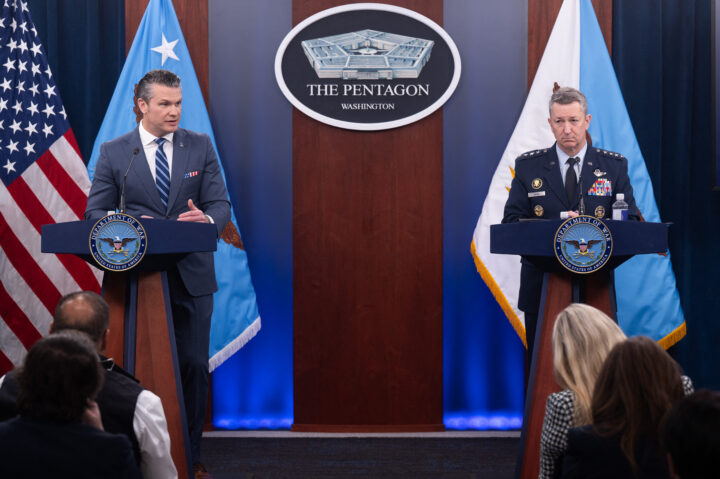
AUL LOEB / AFP via Getty Images
(L/R) Secretary of Defense Pete Hegseth speaks alongside Chairman of the Joint Chiefs of Staff General Dan Caine during a press briefing at the Pentagon in Washington, DC, on April 16, 2026.
Defense Secretary Pete Hegseth warned on Thursday that U.S. forces are “maximally postured” to resume military operations in Iran, and specifically target energy infrastructure, should the country’s current leaders not agree to a negotiated settlement to end the war.
Hegseth made the comments during a press briefing at the Pentagon on Thursday morning alongside Joint Chiefs of Staff Chairman Gen. Dan Caine and Admiral Brad Cooper, the commander of U.S. Central Command. The defense secretary spoke directly to Iranian leadership in his opening remarks, cautioning that while President Donald Trump would “rather not have to” resume operations and go after Iran’s energy industry, the U.S. was prepared to do so if negotiations failed.
“There is an alternative, as our negotiators have said. You, Iran, can choose a prosperous future, a golden bridge, and we hope that you do for the people of Iran. In the meantime, and for as long as it takes, we will maintain this successful blockade,” Hegseth said. “But if Iran chooses poorly, then they will have a blockade and bombs dropping on infrastructure, power and energy.”
Hegseth said that CENTCOM was continuing “to implement an ironclad blockade” and ensuring “that our forces are maximally postured to restart combat operations should this new Iranian regime choose poorly and not agree to a deal. That is what we urge this morning, that this new Iranian regime choose wisely.”
“To the KH [Kataib Hezbollah] leadership and IRGC leadership: We’re watching you. Our capabilities are not the same, our military and yours,” Hegseth said. “Remember, this is not a fair fight, and we know what military assets you are moving and where you are moving them to. While you are digging out — and this is exactly what you’re doing, digging out of bombed out and devastated facilities — we are only getting stronger.”
Caine clarified during his remarks that the U.S. is not blockading the Strait of Hormuz in its entirety; rather, “the U.S. action is a blockade of Iran’s ports and coastline.”
“Let me be clear, this blockade applies to all ships regardless of nationality heading into or from Iranian ports,” Caine said. “Enforcement will occur inside Iran’s territorial seas and in international waters.”
In his message to Iranian leaders, Hegseth emphasized the work U.S. military and intelligence forces have done since the start of the ceasefire to ensure their readiness in the event of diplomatic efforts failing.
“You have no defense industry, no ability to replenish your offensive or defensive capabilities. You only have what you have. You know that and we know that. You can move things around but you can’t actually rebuild. You can dig out for now but you can’t reconstitute,” Hegseth said to the Iranians. “But we can. We are reloading with more power than ever before, and better intelligence, even more importantly better intelligence, than ever before.”
“As you expose yourself with your movement to our watchful eye, we are locked and loaded on your critical dual-use infrastructure, on your remaining power generation and on your energy industry,” he continued. “We would rather not have to do it, but we are ready to go at the command of our president.”
You couldn’t draw up a better test on the degree of Trump’s impact on the Republican Party than examining the results from four states holding highly consequential primaries next month that will be a benchmark of the president’s power
Win McNamee/Getty Images
President Donald Trump walks toward reporters before answering questions prior to boarding Air Force One on April 10, 2026 at Joint Base Andrews, Maryland.
There’s been a lot of debate lately over whether President Donald Trump is losing some of his grip on the Republican Party, amid growing economic concerns and the ongoing military operations in Iran.
While the media coverage has been amplifying any sign of intraparty discontent — to the point that former Rep. Marjorie Taylor Greene (R-GA) is getting strange new respect from some Democrats and mainstream press alike — polls continue to show Trump with widespread backing from within his own party, and especially within the MAGA faction of the GOP.
Ultimately, election results are the best reality check. And you couldn’t draw up a better test on the degree of Trump’s impact on the Republican Party than examining the results from four states holding highly consequential primaries next month that will be a benchmark of the president’s power.
Key races in Indiana, Kentucky, Louisiana and Texas will speak volumes about the president’s ability to shape the GOP agenda for the remainder of his second term — and most consequentially, whether he will be able to maintain a unified front with his party on continuing to pursue military action against Iran.
The biggest intraparty showdown, especially when it comes to foreign policy, is the May 19 primary between Rep. Thomas Massie (R-KY) and military veteran Ed Gallrein. Massie, one of the few anti-Israel Republicans in Congress, is being opposed by Trump but also has a solid base of grassroots support in the northern Kentucky district, which has thus far supported his anti-establishment brand of politics. But Gallrein has proven to be a credible challenger, raising millions and giving Massie the biggest political test of his career.
Trump has spent some valuable political capital to boost Gallrein, including appearing at a recent rally in Massie’s district to promote his challenger. He’s been joined by the Republican Jewish Coalition, which has poured $3.5 million into the race, airing five ads underscoring Massie’s record of breaking with Trump. (Further drawing Trump’s ire: Massie also joined with Democrats in championing the release of the Epstein files.)
It’s never easy to beat a sitting incumbent, but Trump also has an imposing record of winning primaries in which he chooses to engage. If Massie pulls out a victory despite breaking so flagrantly with Trump on a number of key issues, it will be a sign of the president’s diminished political clout.
Another high-profile race where Trump’s engagement in a primary hasn’t yet been definitive: Sen. Bill Cassidy’s (R-LA) uphill fight to win renomination against Trump-endorsed Rep. Julia Letlow (R-LA) and state Treasurer John Fleming. The primary will be held on May 16, with the top two finishers heading to a runoff if no one wins a majority of the vote.
Cassidy, largely because of his vote to impeach Trump in 2021, has long faced challenges with the GOP base. Trump, looking to secure Cassidy’s defeat, backed Letlow earlier this year in hopes she’d consolidate the MAGA vote. But Trump’s endorsement hasn’t translated into a groundswell for Letlow, and the presence of Fleming, a former right-wing congressman, has complicated the political math in the primary.
Cassidy looks like a long shot even if he heads to a runoff, and Letlow holds a narrow lead in the limited public polling of the race. But there’s a chance that Fleming could sneak past Letlow on the primary ballot and face Cassidy in a runoff, blocking Trump’s candidate from the race. If that happened, it would be another sign that Trump’s endorsement doesn’t carry the same weight as it once did.
The first Trump test of the month (May 5) will be in Indiana, where the president is trying to punish certain Republican state legislators for not backing a redistricting plan, championed by the White House, which would have allowed the GOP to gain an additional seat.
Finally, it’s the spring race where Trump has remained on the sidelines that may be a signal of his limited political powers. After Sen. John Cornyn (R-TX) finished ahead of Texas Attorney General Ken Paxton in the state’s primary last month, reports indicated the president was close to endorsing Cornyn for reelection, in an effort to prevent an expensive and competitive general election against Democrat James Talarico.
But amid furious pushback from right-wing activists and polls suggesting that a Trump endorsement wouldn’t have moved the needle that much, the president has not gotten involved in the race. That alone speaks volumes about the limited level of the president’s political capital.
Trump boasts a near-perfect record in GOP primaries throughout his decade-long political career, with the most prominent setbacks being in Georgia (working against Gov. Brian Kemp and Secretary of State Brad Raffensperger in 2022). So if the president’s chosen candidates end up falling short in these key contests, it will be a sign that Republicans may already be preparing for the post-Trump era.
Plus, Senate Dems dominate 2026 fundraising

Kevin Dietsch/Getty Images
Rep. Ilhan Omar (D-MN) speaks at a press conference on committee assignments for the 118th U.S. Congress, at the U.S. Capitol Building on January 25, 2023, in Washington, D.C.
This P.M. edition is reserved for our premium subscribers — offering a forward-focused read on what we’re tracking now and what’s coming next. Please don’t hesitate to share your thoughts and feedback by replying to this email.
📡On Our Radar
Notable developments and interesting tidbits we’re tracking
A war powers resolution brought by Senate Democrats to force an end to the war in Iran was blocked by Republicans yet again this afternoon, the fourth failed attempt mounted by Senate Democrats since the war began in late February, Jewish Insider’s Marc Rod reports.
Nevertheless, top Senate Democrats have said they intend to continue forcing such votes weekly (they have nine more resolutions already filed) in the hopes that more Republicans will change their votes as the war drags on…
Texas state Sen. James Talarico announced he raised $27 million in the first quarter of 2026 in his run for U.S. Senate, a massive haul that his campaign claimed is the largest amount ever raised by a Senate candidate in the first quarter of an election year. Democrats hope the funds will put Texas in play as Talarico seeks to challenge either Sen. John Cornyn (R-TX) or Texas Attorney General Ken Paxton, who are still locked in their own hotly contested primary.
The top Senate fundraisers behind Talarico this quarter were also Democrats: Sen. Jon Ossoff (D-GA) brought in $14 million — breaking the record for first-quarter fundraising in Georgia — former North Carolina Gov. Roy Cooper raised $13.8 million and former Sen. Sherrod Brown (D-OH) raised $12.5 million…
Rep. Tom Kean Jr. (R-NJ) said he raised $1.1 million in this year’s first quarter, bringing his total to $4.4 million raised — more than any other House incumbent or candidate in New Jersey this cycle, according to the New Jersey Globe — as he defends his swing seat from several well-funded Democratic challengers.
But even as he’s pulled in plenty of support, Kean has missed a month’s worth of votes on Capitol Hill due to an unspecified medical issue, with his staff declining to say when he will return…
Rep. Ilhan Omar (D-MN) in an interview on the “Pod Save America” podcast praised former Rep. Marjorie Taylor Greene (R-GA) — once a vocal Omar foe who called for the congresswoman’s deportation while they were both in the House — and far-right influencer Candace Owens over the pair’s break with President Donald Trump, JI’s Marc Rod reports.
“I believe the thing that has been very fascinating, especially about Marjorie and Candace, is that … they’re saying, ‘This action is wrong,’ right? They’re saying, ‘I am done with you.’ We should give them credit for that, the fact that they’ve had this wake-up call to finally seeing this con man, this corrupt, chaotic man for what he is,” Omar said…
Sebastian Gorka, the White House senior director for counterterrorism and a deputy assistant to the president, is reportedly angling for the position of director of the National Counterterrorism Center, which was recently vacated by Joe Kent amid Kent’s opposition to the Iran war. Gorka has been a staunch defender of Trump and backed his war with Iran, as well as repeatedly praised Israel amid its war in Gaza…
Israeli Prime Minister Benjamin Netanyahu spoke with Péter Magyar, the presumptive next prime minister of Hungary, for the first time today, calling the conversation “warm” and saying that Magyar indicated he will continue the close relationship the countries enjoyed under his predecessor, outgoing Prime Minister Viktor Orbán…
New York Gov. Kathy Hochul defended her proposal to bar demonstrations of more than two people from occurring within 25 feet of a house of worship today, JI’s Will Bredderman reports, legislation that has drawn legal scrutiny over its creation of a new felony offense for violators.
“I believe I have the right to protect people’s constitutional right to free exercise of religion,” Hochul told reporters when asked if she had concerns that the legislation might provoke challenges on First Amendment grounds. “So if that means we test it in court, bring it on”…
After holding its final public hearing earlier this week, the White House Religious Liberty Commission is now preparing a set of recommendations to be presented to the president next month. Ambiguity and confusion about the commission’s mandate has left commissioners unsure if they’ll continue to meet — their first year on the panel was marred by the firing of one commissioner over her disruption of a hearing on antisemitism…
Progressive media organization More Perfect Union is launching More Perfect University, an effort aimed at college students to act as an alternative to the conservative Turning Point USA, with a focus on urging young people to share left-wing political and economic messaging through social media. Faiz Shakir, the head of More Perfect Union who is also chief political advisor to Sen. Bernie Sanders’ (I-VT) campaign, said he hopes to jump-start “an economic populist movement for the next generation”…
Duke University’s Students for Justice in Palestine chapter has been suspended as a student group and had its funding frozen after it posted virulently antisemitic imagery depicting Israel and the U.S. as pigs frothing at the mouth on its Instagram page, prompting student complaints to campus administration…
University of Michigan President-elect Kent Syverud announced today he has been diagnosed with brain cancer and will no longer assume the presidency, leaving the future of the school’s leadership in question. Jewish leaders had praised Syverud’s appointment as a positive development for UM, which had seen rampant anti-Israel activity in the aftermath of the Oct. 7, 2023, Hamas attacks…
⏩ Tomorrow’s Agenda, Today
An early look at tomorrow’s storylines and schedule to keep you a step ahead
Keep an eye out in Jewish Insider for a preview of a first-of-its-kind antisemitism conference taking place tomorrow at Harvard, created as an outcome of last year’s settlement of a Title VI lawsuit against the school.
New Jersey’s 11th Congressional District will hold its special election for the remainder of Gov. Mikie Sherrill’s congressional term, where progressive Analilia Mejia is expected to prevail against Republican Joe Hathaway.
The Senate Foreign Relations Committee will hold nomination hearings for John Breslow to be U.S. ambassador to Cyprus, Todd Steggerda to be U.S. representative to the U.N. in Geneva and Preston Wells to be U.S. representative to the International Atomic Energy Agency, among others.
The Shalom Hartman Institute will host a discussion at the Capitol Jewish Museum in Washington with Jeffrey Goldberg, editor-in-chief of The Atlantic, on American Jewry ahead of the 250th anniversary of the founding of the United States.
The House Appropriations Committee will hold a budget hearing on the Department of Homeland Security, including the Federal Emergency Management Agency, which oversees the Nonprofit Security Grant Program.
Stories You May Have Missed
SCOOP
Zohran Mamdani’s video chief lauded Hamas chief Yahya Sinwar

The Oct. 7 mastermind died in ‘heroic’ style, according to Donald Borenstein, director of video for the Mamdani campaign and City Hall
DEM DIVIDES
Inside the DNC working group at the center of Democrats’ Israel fight
The question facing the Middle East working group’s members is whether they will actually be able to agree on anything — or if the group is simply a way to push the issue off until 2028
Even after their fourth failed attempt, Democrats say they intend to continue forcing such votes weekly
Kevin Carter/Getty Images
The U.S. Capitol Building is seen at sunset on May 31, 2025 in Washington, DC.
An effort by Senate Democrats to force an end to the war in Iran was again blocked by Republicans on Wednesday, the fourth such failed attempt mounted by Senate Democrats since the war began in late February.
The measure failed by a vote of 52-47, with all Democrats except Sen. John Fetterman (D-PA) voting for a procedural motion on the war powers resolution, and all Republicans except Sen. Rand Paul (R-KY) voting against it. Sen. Jim Justice (R-WV) was not present for the vote.
Nevertheless, Democrats intend to continue their efforts. They have nine such resolutions that have been filed, and top Senate Democrats said this week they intend to continue forcing such votes weekly, in the hopes that more Republicans will change their votes as the war drags on.
Some Republicans have begun to express hesitation about the war, and top members of the caucus have said they hope it comes to an end soon. But thus far most have not been willing to openly break with President Donald Trump on the effort.
Separately, Sen. Bernie Sanders (I-VT) plans to call up a vote later on Wednesday on a pair of measures to block sales of bombs and bulldozers to Israel, which Sanders has also framed as referenda on the war in Iran. Twenty-seven Democrats have previously voted for such resolutions, and supporters of the effort expect that number to increase this time.
But at least one lawmaker, Sen. Kirsten Gillibrand (D-NY), who introduced a war powers resolution on Iran this week, for future consideration, said that she views the two issues differently.
“I think of them very differently,” Gillibrand told Jewish Insider during a virtual press conference on Wednesday. “I oppose the war in Iran, but I do not believe we should leave an ally who is being attacked without support,” she said, referring to Israel.
The Houthis have spoken openly about their plans to initiate an invasion akin to Oct. 7 through Jordan and Syria
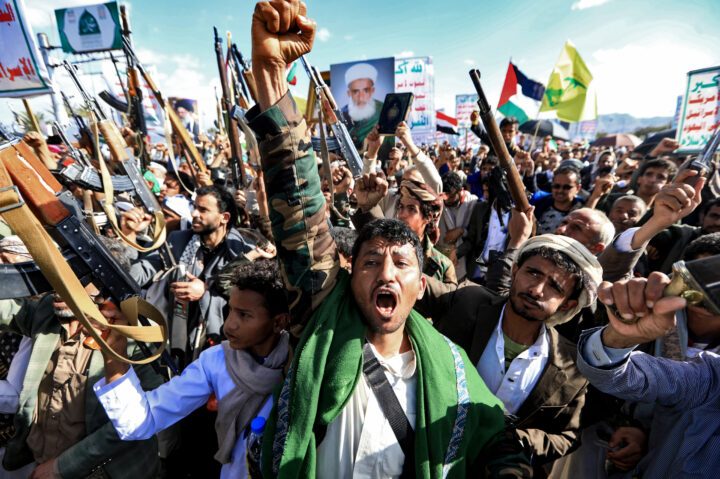
Mohammed HUWAIS / AFP via Getty Images
Supporters of the Iran-backed Houthi movement brandish their weapons as they rally in solidarity with Iran and Lebanon in the Yemeni capital Sanaa on April 10, 2026.
Like a desperate poker player holding an ace in the hole, Iran has a “strategic reserve” if the ceasefire in the war with Israel and the U.S. collapses and fighting resumes: the Houthis, the Tehran-backed Yemeni terrorist group.
How Iran plays the Houthi card has been the subject of concern in Israel, with analysts telling Jewish Insider that everything from a ground invasion from the east — with echoes of Hamas’ Oct. 7, 2023, rampage in southern Israel — to making good on the threat to block the Bab el-Mandeb Strait to further choke off international shipping remains in play.
Yoni Ben-Menachem, a senior Middle East analyst at the Jerusalem Center for Security and Foreign Affairs, told JI that the Houthis planned “to take revenge and bring back their honor” since Israel killed much of their leadership in August 2025.
“They see that Israel’s air defenses are strong, and it’s hard for them to reach military achievements with missiles and drones. They want to surprise Israel, so they are looking at ways to do it on the ground,” he said.
One scenario that Israel has actively prepared for, even before this year’s war with Iran, is a Houthi ground invasion via Syria and Jordan.
The IDF said in September that it has intelligence indicating that the Houthis initiated a training course named “Al Aqsa Flood,” as Hamas called the Oct. 7 attacks. The group planned to take advantage of the instability in Syria and political weaknesses in Jordan to invade Israel from the east, deploying tens of thousands of terrorists on a killing spree, heading toward Jerusalem. In January, the IDF’s Central Command led a training exercise, together with Israeli Border Patrol and police, on how to counter such a scenario.
In addition, the IDF has continued the construction of a security fence along the border with Jordan.
Yossi Mansharof, a lecturer at Haifa University, told JI that the Houthis speak openly about a possible land invasion in their media channels: “They say they intend to invade and … reach Dimona [in southern Israel], conquer [Israeli] towns.”
Mansharof said that while an invasion via the Red Sea and Eilat, at Israel’s southern tip, would be closer to the Houthis’ home base, such a move is “unrealistic; they would have to go undetected by the IDF.”
However, he said, the 186-mile border between Israel and Jordan is particularly porous, and if Hamas could break through the Gaza fence, as it did on Oct. 7, the Houthis may be able to do the same in Jordan. In addition, Iran has long worked to gain a foothold in Jordan.
“Iran is a shared enemy” of Israel and Jordan, Mansharof said. “Iran violates Jordanian sovereignty, and some of the missiles shot at Israel land in their territory. … Iran wants to establish terrorist infrastructure [in Jordan], and King Abdullah has said in Davos and in media interviews that he is concerned about Iran.”
In addition, Mansharof said, the Shi’a militias in Iraq, which shares a border with Jordan, have close ties with the Houthis.
A Houthi attack could also be part of an Iran-led multi-front assault on Israel, which Iranian officials — including a top advisor to Mohammad-Bagher Ghalibaf, Iran’s parliamentary speaker and leader of negotiations with the U.S. — have spoken about for years, Mansharof said.
“They want to advance a mutli-front attack on Israel from all of the axis of resistance arenas,” Mansharof said. “They want to end the story, not just have more rounds of fighting [with Israel]. … A Houthi invasion can be part of that.”
Ben-Menachem argued that a more realistic scenario in the near term is that the Houthis would help the Iranians by blockading Bab el-Mandab, a strait passing from the Gulf of Aden to the Red Sea, to cut off global shipping at a second point while the Strait of Hormuz, which is under Iranian control, remains closed. Saudi Arabia is reportedly especially concerned about this possibility, as the Gulf state uses the waterway to move much of its oil.
The Iranians have been saving the Houthis as their “strategic reserve” in case of renewed fighting with the U.S., Ben-Menachem said, and should the Yemeni terrorists join the war, “their target will be first the U.S. and then Israel.”
“The Iranians see that the most effective move is to pressure the U.S. and harm the world economy,” he said.
Still, Mansharof said, Israel “should not wait for the Houthis to take initiative. Israel needs to choose the timing [for military action], because at some point, the war with the Houthis will resume. … Israel needs to build advanced intelligence capabilities and cooperate with the Americans to create a jumping-off point. … It’s a just war of defense for Israel.”
Jerusalem’s recognition of Somaliland in December could provide Israel with a physical base for such an attack and would “break the supply chain of Iranian aid to the Houthis” from Somalia, which is just across the Gulf of Aden from Yemen, Mansharof noted.
Ben-Menachem said Israel’s announcement last year that it had discovered the Houthis’ plan served to undermine it.
“Israel must repeatedly warn them and say they know what they’re planning. We shouldn’t take it off the agenda, talking about it is part of the deterrence … [The Houthis’] success depends on the element of surprise. If we show that they can’t surprise us, it will lower their motivation,” he said.
The current geopolitical conditions laid the groundwork for yesterday’s State Department summit
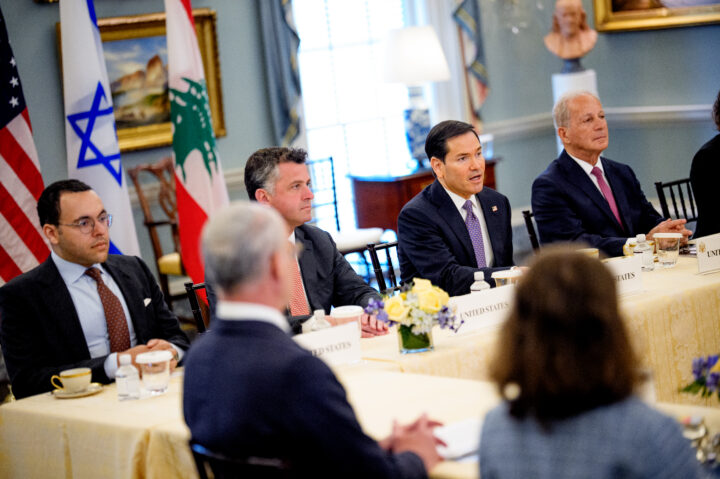
Andrew Harnik/Getty Images
U.S. Secretary of State Marco Rubio (2nd-R), accompanied by U.S. State Department Counselor Michael Needham (C), and U.S. Ambassador to Lebanon Michel Issa (R), speaks as they begin working-level peace talks with Lebanese Ambassador to the U.S. Nada Hamadeh Moawad and Israeli Ambassador to the U.S. Yechiel Leiter at the U.S. State Department on April 14, 2026 in Washington, DC.
A popular “domino effect” meme circulates online every few months, linking slain Hamas leader Yahya Sinwar’s decision to launch the Oct. 7, 2023, attacks — the smallest domino — to a series of major geopolitical shifts across the Middle East. While both simplified and exaggerated, the meme underscores the dramatic reshaping of Middle Eastern power dynamics.
The next domino may be the decades-long fraught relationship between Israel and Lebanon, as Iran’s ironclad grip over the region loosens and its most powerful proxy, Hezbollah, finds itself increasingly weakened and marginalized in Lebanon, where it has for decades played a key role in the country’s politics and military.
Those current geopolitical conditions — Iran at its weakest point in decades, successive levels of Hezbollah leadership removed from power through Israeli military actions, the degradation of Hamas and a new government in Syria that has separated itself from Tehran — laid the groundwork for yesterday’s State Department summit, convened by Secretary of State Marco Rubio, between Israel and Lebanon.
The State Department meeting between the ambassadors from Lebanon and Israel took place as the U.S. navigates stalled talks and a tenuous ceasefire with Iran — which was initially on unstable ground as Iran demanded that Israel cease its targeting of Hezbollah as part of the ceasefire.
A senior Israeli official told Jewish Insider on Wednesday that Iran’s effort to link the two conflicts was “a strategic trap with long-term ramifications.”
“There was real pressure to link the Lebanon front to the Iran ceasefire,” the official said. If President Donald Trump had acquiesced to the Iranian demand to link the two conflicts, the official continued, “We would not be on the path to peace that we’re on now. Keeping the arenas separate ultimately means that the fate of Lebanon is no longer dictated by Iran.”
Former Israeli Prime Minister Naftali Bennett — now mounting a comeback bid ahead of elections later this year — has often used the “Octopus Doctrine” to describe a security approach to tackling Iran’s decades-long control over the region. Cut off the head of the octopus — Tehran — and the tentacles will be easier to tackle, the logic goes.
Israel, having severed the metaphorical octopus’ head on the opening day of the recent war with Iran, is now continuing its work to degrade and dismantle Iranian proxies — a process that began two and a half years ago, triggered by the Oct. 7 attacks.
“One of the most significant developments in the Middle East since Oct. 7 has been the steady dismantling of that axis — separating arenas that sought to bind their fates together,” the senior Israeli official said.
The talks are not without risk. Lebanese Prime Minister Nawaf Salam called off a planned trip to the U.S. over the weekend out of concerns of potential domestic unrest — amid the still very real risk that Hezbollah, albeit weakened, could attempt a power grab in his absence. Recall that in 2005, former Lebanese Prime Minister Rafic Hariri was killed in a car bombing, with a Hezbollah operative convicted by a U.N. tribunal in absentia for the assassination.
The talks were hailed by Israeli Ambassador to the U.S. Yechiel Leiter, who said that the parties “discovered today that we’re on the same side of the equation” and “are both united in liberating Lebanon from an occupation power dominated by Iran called Hezbollah.”
Rubio delivered a measured assessment of the goals of yesterday’s talks: “This is about bringing a permanent end to 20 or 30 years of Hezbollah’s influence in this part of the world,” he said at a roundtable ahead of the meeting. “This will take time, but we believe it is worth this endeavor.”
Beirut has in recent years — and with varying degrees of seriousness and success — worked to disentangle itself from Iran and Hezbollah. Now, the U.S.-Israeli military pressure on Iran, combined with the Trump administration’s zest for dealmaking and the degradation of Hezbollah, could create the right environment to bring peace to the Mediterranean Riviera.
Majority Leader Thune said about a congressional vote to extend the war, ‘hopefully that question won't be a necessary one that we’ll have to answer’

Kayla Bartkowski/Getty Images
Sen. Majority Leader John Thune (R-SD) calls on reporters at the U.S. Capitol on January 14, 2025 in Washington, DC.
Senate Majority Leader John Thune (R-SD) said Tuesday that he’s hopeful that the war in Iran is close to winding down, in advance of a deadline that could require congressional action for the war to continue.
Under the War Powers Act, unilateral military action undertaken by the president without congressional authority is limited to 60 days — with a 30-day extension for draw-down purposes.
Thune emphasized that the administration’s current goal is to reopen the Strait of Hormuz, and that Senate Republicans support efforts to isolate the Iranian regime and their economy.
“We get the strait open again — and that’s sort of their last resort. The military effort here has been extraordinarily successful. This is sort of the last dying gasp of this regime, is to try and shut down the strait,” Thune said in a press conference after a GOP conference meeting. “The administration is making an effort to ensure that it’s open, that there’ll be traffic in and out there. And hopefully that will be successful and we can begin to see this thing wind down.”
Pressed on whether Republicans would be open to voting to continue the war if it extends beyond 90 days, Thune suggested that wouldn’t be necessary.
“At this point, most of us, I believe, feel pretty good about what the American military has achieved there in terms of its objectives,” Thune said. “It’s a hypothetical down the road. … I think the administration has a clear objective, a clear plan, and if they can execute on it, hopefully that question won’t be a necessary one that we’ll have to answer.”
Sen. Mike Rounds (R-SD) said that it’s “not quite time” yet for a full Senate discussion on the war, but said that he does want to see the administration more fully lay out its strategy and plan as the war continues and approaches the 60-day deadline at the end of April.
“We do expect that the administration will be laying out their plan for after the end of seven, eight, nine weeks,” Rounds said. “We have to know what the next steps are, and that’s part of our due diligence that we have to do.”
Sen. Steve Daines (R-MT) said that Republicans did not discuss the possibility of an authorization for the war during their meeting.
Other Republicans have argued that the provision of the War Powers Act that sets out the 60-day deadline, is not enforceable and that Republicans on Capitol Hill are not paying attention to it.
Sen. Lindsey Graham (R-SC) said that the U.S. should “finish the job” rather than extending a ceasefire agreement with Iran if the regime is not willing to agree to U.S. demands, including a permanent end to nuclear enrichment, surrendering all of its already enriched uranium, fully reopening the strait and abandoning its ballistic missile program and support for terrorism.
Senate Minority Leader Chuck Schumer (D-NY) said that Senate Democrats plan to bring forward another war powers resolution to stop the war on Wednesday, and will continue to force votes on similar resolutions weekly until the war ends. For now, most Republicans seem likely to continue to vote against the legislation.
Senate Republicans also indicated that they’re not likely to attempt to include supplemental funding for the Iran war in an upcoming partisan budget reconciliation package, which is focused on border security and immigration funding currently being blocked by Democrats.
Thune, who has said he wants an “anorexic-like” reconciliation package, again indicated on Tuesday at a press conference after a Senate Republican lunch meeting that the package will be tightly “focused” to fund immigration enforcement.
“I think we’re going to do a very skinny reconciliation,” Sen. Roger Wicker (R-MS), the chair of the Senate Armed Services Committee, said when asked about Republicans’ discussions on Iran during the conference meeting.
Sen. John Kennedy (R-LA) said that he has not heard anything about either the timing or the size of the supplemental request the administration plans to submit. Initial reports indicated that the Pentagon wanted to ask for $200 billion, but more recent reports have indicated that the final request will be lower.
Republicans have discussed advancing another reconciliation package before the end of the year, though some members of the conference, like Kennedy, have openly expressed skepticism that such an effort would be possible.
At this point, given the strong and widespread opposition among Democrats to the war in Iran, it’s unclear whether a funding package for the war would be able to clear the 60-vote filibuster threshold necessary for passage in the Senate.
Meeks said he will likely bring up a war powers resolution for a vote this week, and is waiting to see if several of his colleagues will flip their votes in favor

Tom Williams/CQ-Roll Call, Inc via Getty Images
Rep. Gregory Meeks (D-NY)
Rep. Greg Meeks (D-NY) said he’s aiming to call up a war powers resolution this week to force an end to the war in Iran, but that he’s still working to lock down the support of a few wavering Democratic and Republican lawmakers whose support will be necessary to pass the legislation.
Meeks had considered calling up the legislation before Congress’ two-week recess, but ultimately declined to do so, saying he was waiting until the legislation could pass and he didn’t yet have the votes.
“I’m probably going to do war powers this week. I’m still working [on] it. I’m very close,” Meeks told Jewish Insider. “I’ve got just about all of the Democrats — just about — and [some] Republicans. And I have some that are contemplating, but I don’t know what they’re going to do.”
He said that there are a few lawmakers who voted against a previous war powers effort in the House who are talking to him and considering now voting in favor, but haven’t disclosed their final plans to him yet.
Meeks said that he thinks he will get “just about every Democrat … maybe the exception of one.”
Of the four Democrats who voted against a previous war powers effort, two — Reps. Greg Landsman (D-OH) and Henry Cuellar (D-TX) — said that they would vote for the next war powers resolution, and Cuellar affirmed those plans to JI on Tuesday. Reps. Juan Vargas (D-CA) and Jared Golden (D-ME) haven’t announced their plans yet.
Vargas told JI on Tuesday that he has made up his mind, but declined to preview how he plans to vote. Golden, who is not running for reelection, could be the hardest of the four to flip.
On the Republican side, Rep. Lauren Boebert (R-CO), who said she would oppose a supplemental funding request for the war, declined to comment on how she would vote, saying she isn’t currently focused on a potential war powers resolution.
Meeks said that the current ceasefire makes it an important time for Congress to weigh in, and that he may ultimately bring the resolution forward for a vote even if he’s not sure if there are sufficient votes to pass it.
“We don’t know what the president may do or may not do afterwards,” Meeks explained. “I’ve been waiting to get commitments … it may be time for them to get on one side of the fence or the other, as opposed to staying on the fence. I may just do it. I haven’t decided yet, but I may just do it.”
Even if the resolution passes the House, it currently would not pass the Senate and would almost certainly be vetoed by the president. But Meeks argued that passing the resolution in the House would send an important message to the administration anyway.
“I think this is giving a message to the president — and it becomes really important, because the 60 days will be up soon, and they have to come to Congress for the money,” Meeks said, referring to a 60-day deadline for the operation cease or to come to Congress for authorization under the War Powers Act. “And it lets the president know that unless he comes to Congress and lets us know what the plan is, he’s not going to get the money.”
Rep. Don Bacon (R-NE), who has said the administration hasn’t properly articulated its plans and goals for the war to Congress, told reporters he will “support continued operations until we get this job done, or it’s clear to me it’s fruitless.”
“I support the military campaign. I think some of the commentary has not been helpful from the White House, but yes, I think the military has done a great job,” Bacon said, pointing to the destruction of Iran’s leadership and military capabilities.
He said that an Authorization for Use of Military Force would be legally required to continue the war beyond the 60-day deadline — a point that other Republicans have disputed — but said that he would be “inclined to support” such an authorization.
“Maybe not a blanket one, but yes, I think we should finish the job,” Bacon said. “These guys have been our enemy. These guys have been our enemy, they’ve killed young [U.S. troops].”
Jewish Insider’s Washington reporter Matthew Shea contributed reporting.
Plus, positive readouts from Israel-Lebanon talks in D.C.

Stefano Costantino/SOPA Images/LightRocket via Getty Images
Italian Prime Minister Giorgia Meloni addresses the Italian Chamber of Deputies in Rome.
This P.M. edition is reserved for our premium subscribers — offering a forward-focused read on what we’re tracking now and what’s coming next. Please don’t hesitate to share your thoughts and feedback by replying to this email.
📡On Our Radar
Notable developments and interesting tidbits we’re tracking
U.S.-Iran talks could restart in the next two days, President Donald Trump told the New York Post. “[S]omething could be happening over the next two days, and we’re more inclined to go [back to Islamabad, Pakistan]” rather than a different mediating country, he said in an interview today.
Trump also indicated he wasn’t happy with reports that his own negotiating team had offered Iran a 20-year pause on its ability to enrich uranium. “I’ve been saying they can’t have nuclear weapons, so I don’t like the 20 years,” he said…
CENTCOM announced that no ships made it past the U.S. blockade of the Strait of Hormuz in its first 24 hours, and six merchant ships “complied with direction from U.S. forces to turn around”…
Saudi Arabia is reportedly pressuring the U.S. to end the blockade, fearing retaliation and disruption to other trade routes. Iran has threatened to mobilize the Houthis in Yemen to close off the Bab al-Mandeb Strait, which Riyadh utilizes to move its oil exports out of the Red Sea…
European countries are drafting a plan to restore freedom of navigation in the Strait of Hormuz after the war ends, possibly without the participation of the U.S. As part of this effort, French President Emmanuel Macron announced that France and the U.K. will co-host a conference on Friday of “non-belligerent countries ready to contribute” to the “multilateral and purely defensive mission”…
The Treasury Department said it will not renew a waiver set to expire later this week that temporarily lifted sanctions on Iranian oil — the waiver had drawn condemnation from some lawmakers who had worked to institute those sanctions…
Secretary of State Marco Rubio emphasized at the outset of negotiations between Israel and Lebanon in Washington this morning that the talks are a “process” that will “take time,” and that the objective of today’s meeting was to “outline a framework upon which a permanent and lasting peace can be developed” and bring a “permanent end to Hezbollah’s influence” in the region.
The State Department said after the meeting, the highest-level talks between Jerusalem and Beirut in over 30 years, that the sides “agreed to launch direct negotiations at a mutually agreed time and venue,” though it did not indicate when or where further talks may take place. Israeli Ambassador to the U.S. Yechiel Leiter told reporters that the parties “discovered today that we’re on the same side of the equation. That’s the most positive thing we could have come away with”…
Italy is suspending its defense agreement with Israel, Italian Prime Minister Giorgia Meloni said today, declining to renew the agreement “in consideration of the current situation.” Italy had grown critical of Israel’s war in Gaza and has been noncooperative in the war with Iran, reportedly not allowing U.S. aircraft to land at its bases.
Trump railed against Meloni, who has thus far been an ally of his, in an interview with an Italian outlet today, saying he’s “shocked by her. I thought she was brave, but I was wrong,” and claiming she’s “no longer the same person” after she called the president’s attack on Pope Leo XIV yesterday “unacceptable.” “It’s her who’s unacceptable, because she doesn’t care if Iran has a nuclear weapon and would blow up Italy in two minutes if it had the chance,” Trump said…
Hamas has rejected the U.S.-led Board of Peace’s disarmament proposal, according to the BBC. The parties seem to once again be at an impasse, as Hamas tells mediators it will not continue onto the second phase of the ceasefire until it feels Israel has complied completely with the first phase, while Israel says it will not move forward until there is progress on disarming Hamas…
The New York Times details a tense event held by Rep. Mike Lawler (R-NY) in his Hudson Valley-based swing district where the lawmaker was pressed by constituents demanding answers and accountability on the Iran war; it’s seen as a harbinger of the growing discontent some Republicans will have to contend with around the largely unpopular war in the lead-up to the midterms…
The Union for Reform Judaism released a statement yesterday voicing concern about “efforts to single out AIPAC as a particularly malign influence in campaign finance. … [T]he harsh language being used by some to denigrate and vilify AIPAC borders on — and in some cases crosses over into — antisemitism.”
“Until such time as [C]ongress reforms the nation’s broken campaign finance system overall — an effort we would enthusiastically welcome — to single out AIPAC’s activity will continue to raise questions of antisemitic motivation,” the organization wrote, in a sign of how the demonization of pro-Israel donors and groups is raising alarms across the Jewish political and religious spectrum…
California state Sen. Scott Wiener, a progressive Jewish legislator running to fill Rep. Nancy Pelosi’s (D-CA) seat, was accused at a campaign event earlier this week of taking $50,000 from AIPAC by a constituent citing the far-left group TrackAIPAC. “I just want to be clear, I’m not accepting any support from AIPAC,” Wiener responded. “There are people who are gonna list out all my Jewish donors and say that. I’m not taking any support from AIPAC and I support the Block the Bombs Act”…
The Michigan arm of the powerful SEIU labor union announced today that it had rescinded its endorsement of Amir Makled, a candidate for the University of Michigan board of regents, in light of Makled’s deleted social media posts praising the terrorist group Hezbollah, Jewish Insider’s Gabby Deutch reports.
Makled is a Dearborn attorney who represented an anti-Israel protester who was arrested during the 2024 anti-Israel encampments at UM’s flagship Ann Arbor campus. A Detroit News report found that Makled had deleted posts praising Hezbollah’s leaders and retweets of antisemitic messages from the far-right influencer Candace Owens, as he now seeks to unseat Jewish regent Jordan Acker…
The relationship between New York City Mayor Zohran Mamdani and City Council Speaker Julie Menin appears to be growing increasingly acrimonious as Menin publicly distances herself from some of the mayor’s policies, Politico reports, including apparently helping to plan a protest outside Mamdani’s speech marking his first 100 days in office…
France is exploring legal options to bar rapper Kanye West from entering the country to perform at a concert in Marseille in June, after he was similarly banned and prevented from performing in the U.K. earlier this month. “I refuse to let Marseille be a showcase for those who promote hatred and unapologetic Nazism,” the city’s mayor, Benoit Payan, wrote on social media…
⏩ Tomorrow’s Agenda, Today
An early look at tomorrow’s storylines and schedule to keep you a step ahead
Keep an eye out in Jewish Insider for a look into the work of the Democratic National Committee’s Middle East working group, established last summer, including how it’s approaching intraparty divides over Israel policy.
Two of Sen. Bernie Sanders’ (I-VT) three joint resolutions of disapproval seeking to halt $658.8 million in sales of munitions to Israel are expected to receive a vote in the Senate tomorrow. Sanders and other progressive Democrats have forced votes on similar efforts to block arms sales to Israel on three previous occasions since the war in Gaza began, with a majority of the Democratic caucus — 27 lawmakers — voting to block at least one arms sale in July of last year, a significant jump in support from similar efforts in November 2024 and April 2025.
Sen. Tim Kaine (D-VA) told reporters Democrats will likely force a vote tomorrow on another Iran war powers resolution, the third such vote after the previous two failed largely along party lines.
The Senate Foreign Relations Committee will hold a hearing on reforming the U.N. with U.S. Ambassador to the U.N. Mike Waltz and U.S. Representative for U.N. Management and Reform Jeff Bartos.
The Stephen Wise Free Synagogue in Manhattan will host an antisemitism town hall with Senior Rabbi Ammiel Hirsch and Anti-Defamation League CEO Jonathan Greenblatt.
Israel’s Sheba Medical Center will unveil ARC Landing Boston, its first health care accelerator based in the U.S., at an event featuring Democratic Massachusetts Gov. Maura Healey.
Stories You May Have Missed
MINNESOTA MATTERS
Angie Craig calls on Minnesota Democrats to investigate antisemitism ahead of state party convention
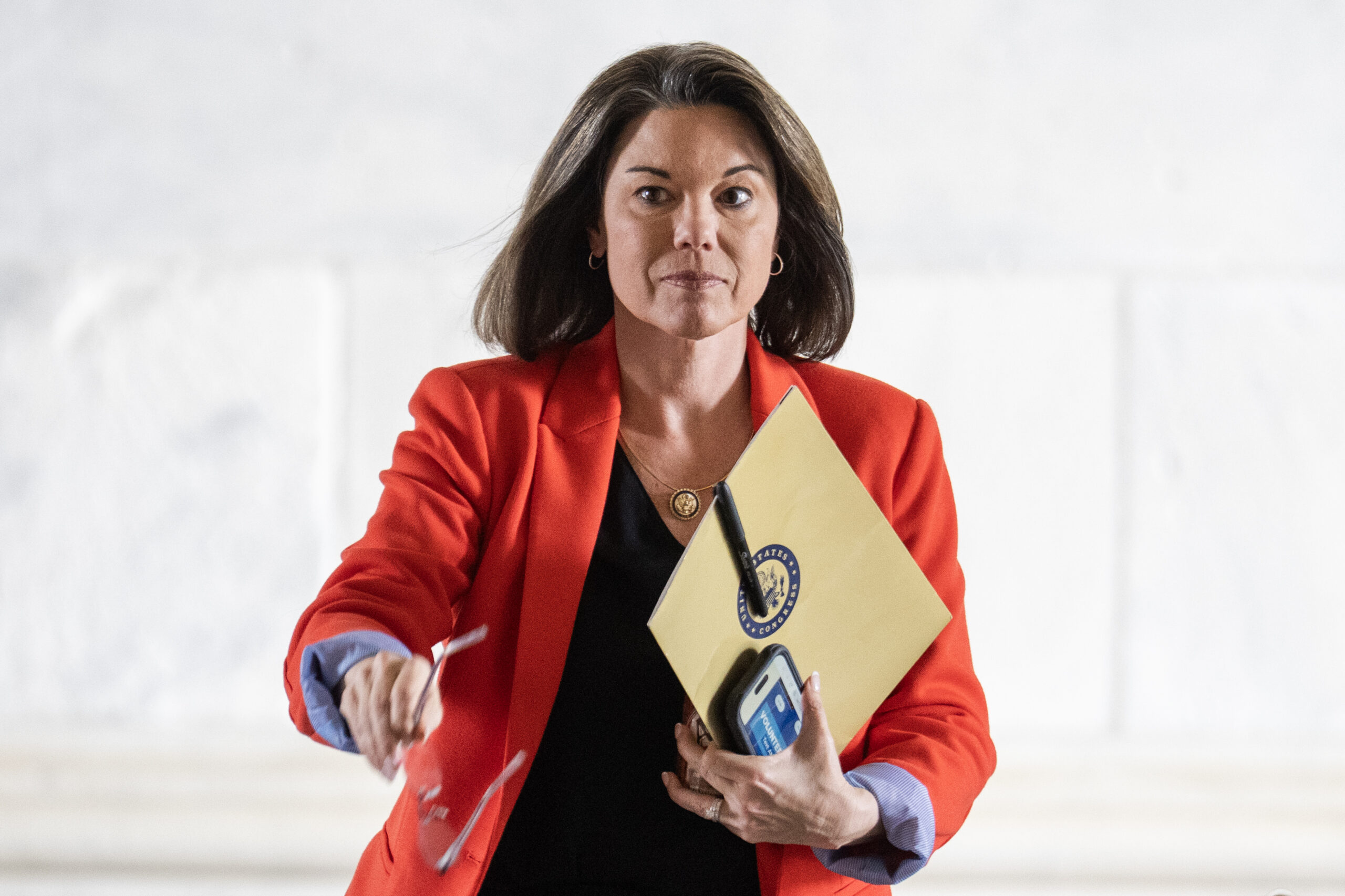
Delegates are expected to take up divisive anti-Israel resolutions at the convention being held next month
HUNGARY FOR MORE
Analysts expect continued pro-Israel slant from new Hungarian government under Magyar

Economic ties and broader European alliances are likely to preserve the bilateral relationship, even as the expected prime minister-elect moves to rejoin the ICC and potentially pivot back towards the EU
Economic ties and broader European alliances are likely to preserve the bilateral relationship, even as the expected prime minister-elect moves to rejoin the ICC and potentially pivot back towards the EU

Min. of Foreign Affairs of Pakistan / Handout /Anadolu via Getty Images
Vice President JD Vance (C) is welcomed by Ishak Dar (R), Pakistan Foreign Minister, and Asim Munir (L), Chief of Army Staff of Pakistan, as the US delegation arrive in Islamabad, capital of Pakistan, for high-stakes talks with Iran to end the Middle East conflict amid the ongoing two-week ceasefire on April 11, 2026.
Senate Republicans maintained the position on Monday that Iran should never be allowed to possess nuclear enrichment capacity, following reports that the administration had proposed a 20-year pause in enrichment — rather than a permanent end to Iran’s enrichment capacity — as part of peace talks in Islamabad over the weekend.
Last year, during diplomatic talks with the regime prior to the U.S. strikes on the Iranian nuclear program, all but one Senate Republican signed a letter arguing that Iran should never have enrichment capacity, a position echoed by a vast majority of House Republicans. The New York Times reported Monday that Iran agreed to halt enrichment for just five years.
Sen. Lindsey Graham (R-SC), who has been a vocal proponent of the war in Iran but has also defended the Trump administration’s diplomatic efforts, said on X that a 20-year pause to Iranian enrichment would not be sufficient.
“If this reporting is accurate, the idea that we would agree to a moratorium on enrichment rather than a ban on enrichment would be a mistake in my view,” Graham said on X. “Would we agree to a moratorium for al Qaeda to enrich? No. The only difference between al Qaeda and the Iranian regime is that one is a Sunni terrorist organization and the other is a Shia terrorist state.”
He said that Iran cannot be trusted and that the U.S. must hold firm to a standard of zero enrichment.
Sen. Pete Ricketts (R-NE), a co-lead of the letter last year, told Jewish Insider that he hadn’t seen the reports about the administration’s negotiating position and declined to comment on it specifically, but said more broadly that he does not believe that Iran has any legitimate need for enrichment.
“There’s no civilian reason for Iran to have an enrichment program,” Ricketts said. “They’re getting their uranium right now for their civilian program from Russia, and the fact that they have admitted they’ve enriched uranium to near bomb-grade potential demonstrates that this is for nuclear weapon production, not civilian use.”
Sen. John Cornyn (R-TX) said that Iran can’t be trusted to “stick with anything they agree to, so you have to understand that going into it.”
“But I agree with the president: no enrichment, no nuclear weapons and open up the Strait of Hormuz.”
Sen. Ted Budd (R-NC) said that “the preference is no enrichment.”
“Iran can never be allowed to have a nuclear weapon. Bottom line, end of story,” Budd said. “The 20-year pause — is that a strategic component to a greater negotiation? I can understand that. … Do they have civilian nuclear power as part of that? Can they be trusted with this current regime? I don’t think so. But again, I’m going to give a lot of leeway to the administration who wants to end nuclear capability for Iran.”
Sen. Rick Scott (R-FL) also said he has not seen the reports, but that “it should be a forever” prohibition on Iranian nuclear enrichment.
Sen. Roger Wicker (R-MS), the chairman of the Senate Armed Services Committee, said that Republicans are set to discuss on Tuesday the best way to approve a supplemental funding request for the war and the proper size of the supplemental package.
Sen. Tommy Tuberville (R-AL) told reporters that he thinks the Iran war funding should be folded into the upcoming reconciliation package — focused on immigration and border security matters — while others maintain it should be a stand-alone bill. Including the Iran funding could make passing the reconciliation package in the House more difficult.
Wicker said, “it’s a matter of vote-counting, largely.”
There are also some apparent disagreements between Republicans about what should happen if the war extends past the 60-day timeline for unilateral executive military action laid out in the War Powers Act.
Sen. John Kennedy (R-LA) said that the War Powers Act deadline may be unconstitutional or unenforceable, but said “there’s nobody walking around here in the Senate going, ‘How many days do we have left?’ Nobody’s paying attention.”
But Sen. James Lankford (R-OK) told reporters, “I’m sure we’ll have some sort of a vote or a statement at that [60-day] point.”
Other Republican senators are taking a firmer stance, rejecting any war operations beyond 60 days without congressional approval.
“Here in America, constitutional limits are in place to temper the president from unilateral authority. I support the president’s actions taken in defense of American lives and interests,” Sen. John Curtis (R-UT) said in a recent op-ed. “However, I will not support ongoing military action beyond a 60-day window without congressional approval.”
And Curtis said he would not support any supplemental funding for the war without congressional authorization.
Plus, Hasan Piker calls Hamas 'orphan children'
Jacquelyn Martin - Pool/Getty Images
Vice President JD Vance arrives for talks with Iranian officials on April 11, 2026 in Islamabad, Pakistan.
This P.M. edition is reserved for our premium subscribers — offering a forward-focused read on what we’re tracking now and what’s coming next. Please don’t hesitate to share your thoughts and feedback by replying to this email.
📡On Our Radar
Notable developments and interesting tidbits we’re tracking
The U.S. blockade of the Strait of Hormuz began this morning, with more than 15 American warships involved in the operation intended to pressure Iran into concessions after this weekend’s failed negotiations.
President Donald Trump said hours later that the U.S. was “called this morning by the right people, the appropriate people, and they want to work a deal.” Mediators including Pakistan, Egypt and Turkey are also reportedly attempting to revive talks between the parties…
One reported sticking point in the negotiations is a U.S. request that Iran agree not to enrich uranium for 20 years. The 2015 Iran nuclear deal was highly criticized for its sunset clauses, which lifted limits on activity including uranium enrichment after 15 years.
Israeli Prime Minister Benjamin Netanyahu invoked a similar timeframe at a Cabinet meeting today, saying he spoke with Vice President JD Vance yesterday who told him that the U.S. aims to ensure “there is no more enrichment in the coming years, and that could be in decades, no enrichment within Iran.”
Sen. Lindsey Graham (R-SC) took issue with the timeline: “If this reporting is accurate, the idea that we would agree to a moratorium on enrichment rather than a ban on enrichment would be a mistake in my view. Would we agree to a moratorium for al Qaeda to enrich? No,” he wrote on X. “No enrichment means no enrichment”.…
Six additional Senate Democrats plan to file new war powers resolutions this week to halt the war in Iran, a move that would allow Democrats to continue forcing votes on the war for the foreseeable future, Jewish Insider’s Marc Rod reports.
Previously, a different group of six Democrats introduced similar resolutions, and Democrats have called up two of them thus far, with plans to call up a third this week. The latest group of lawmakers spans from staunch progressives and critics of Israel to generally more pro-Israel members, including Sens. Jeff Merkley (D-OR), Kirsten Gillibrand (D-NY), Chris Van Hollen (D-MD), Mark Kelly (D-AZ), Raphael Warnock (D-GA) and Andy Kim (D-NJ)…
Citing an “increasingly sour national environment for Republicans,” the Cook Political Report shifted its ratings for four key Senate races in Democrats’ favor: The North Carolina and Georgia races now lean Democratic, the Ohio race is a toss-up and the Nebraska race is likely Republican, rather than solidly. Democrats would need to flip four seats to take back the chamber…
In another heated Senate race where Democrats hope to pick up a seat, former Rep. Mary Peltola (D-AK) raised nearly $9 million in the first quarter of 2026, four times the amount her opponent, Sen. Dan Sullivan (R-AK), pulled in. The GOP super PAC Senate Leadership Fund has pledged to spend $15 million in the race, as polls show Peltola with a slight lead…
In an appearance on the “Pod Save America” podcast released yesterday, antisemitic streamer Hasan Piker said he “stands by” his statement made in January that “Hamas is a thousand times better than a fascist settler-colonial apartheid state,” referring to Israel.
“I would vote for Hamas over Israel every single time,” he said on the podcast, claiming Hamas is “entirely comprised … of orphan children that have had their parents killed by an apartheid state that has been dominating the lives of Palestinians for 80 years at this point. … Hamas’ tactics, which I oppose at times, or its like internal governance issues are secondary to this conversation”…
Sen. Rick Scott (R-FL) called for the federal government to “immediately” pull funding from Yale University over Yale Political Union’s decision to host Piker, who previously suggested that the senator should be killed. Piker is scheduled to speak on campus tomorrow for a debate titled “Resolved: End the American Empire.”
For Scott, Piker’s incendiary language is personal: the streamer was briefly suspended from Twitch last year after urging his followers to “kill Rick Scott.” “An elite private university that hosts an antisemite who says a Senator should be killed, capitalists should be killed, and the U.S. deserved 9/11, shouldn’t get ONE CENT from taxpayers,” Scott wrote on X on Friday…
J Street is seeking to “set the record straight” after the group backed the growing calls among far-left lawmakers to end U.S. support for Israel’s missile-defense systems, including Iron Dome, despite its own criteria for its endorsees stating otherwise.
In a new FAQ, the group called Iron Dome “a critically important defense system” which it “supports and consistently lobbies for.” After the end of the Memorandum of Understanding between the U.S. and Israel, which runs through Fiscal Year 2028, however, “financial subsidies to Israel should be rapidly and responsibly phased out. … Israel should pay for these systems”…
More Jews were killed in antisemitic incidents outside of Israel in 2025 than any year in the past three decades, according to a report from Tel Aviv University. Twenty Jews were killed last year in attacks in countries including Australia, the U.S. and the U.K., while the previous record was set in 1994 with the AMIA bombing, which killed 85 people in Buenos Aires, Argentina…
⏩ Tomorrow’s Agenda, Today
An early look at tomorrow’s storylines and schedule to keep you a step ahead
Keep an eye out in Jewish Insider for a look at a new poll assessing the partisan divide emerging among American Jews over pro-Israel political engagement.
The U.S. Holocaust Memorial Museum will host a Yom HaShoah remembrance event at the Capitol, with a keynote address delivered by Commerce Secretary Howard Lutnick. Other speakers include several Holocaust survivors as well as House Speaker Mike Johnson (R-LA), House Minority Leader Hakeem Jeffries (D-NY), Sen. Kirsten Gillibrand (D-NY) and Reps. Joe Wilson (R-SC) and Lois Frankel (D-FL).
Amid the International Monetary Fund and World Bank Group’s spring meetings being held in Washington this week, Jacob Helberg, under secretary of state for economic affairs, will speak at an event with the Atlantic Council about U.S. economic leadership in the Middle East, including utilization of the India-Middle East-Europe Corridor, which has been floated as an alternative trade route to the volatile Strait of Hormuz.
Stories You May Have Missed
THE VIEW FROM ISRAEL
Israelis uncertain if Iran war made them safer after ceasefire brings combat to an inconclusive halt

After the ceasefire went into effect, there was a pervading feeling in Israel that the war with Iran was not complete, and the return to routine life may be short-lived
COMFORT FOOD
From trauma to table: An Israeli duo uses food therapy and song to foster connection

A traveling program called ‘Soul and Roll’ by singer Hananel Edri and Foodish CEO Merav Oren tells the Jewish story through an immersive culinary and musical experience
The group ranges from pro-Israel Democrats like Sen. Kirsten Gillibrand to anti-Israel members like Sen. Chris Van Hollen
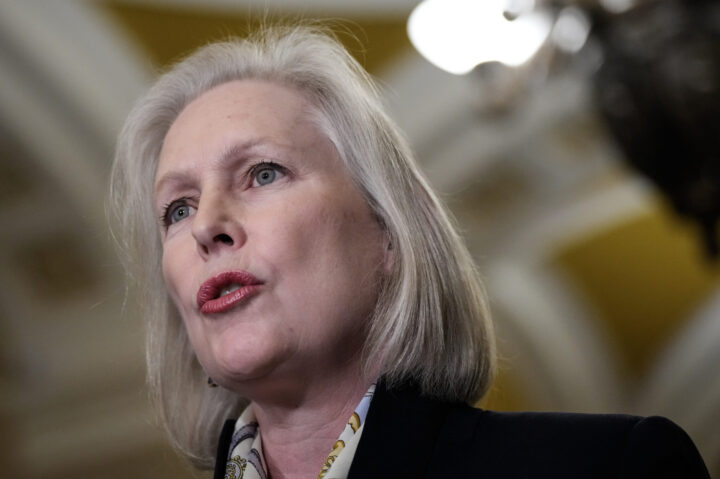
Drew Angerer/Getty Images
Sen. Kirsten Gillibrand (D-NY) speaks at a news conference following a closed-door lunch meeting with Senate Democrats at the U.S. Capitol on October 31, 2023, in Washington, D.C.
A group of six additional Senate Democrats plan to file new war powers resolutions this week to halt the war in Iran, a move that would allow Democrats to continue forcing votes on the war for the foreseeable future.
Previously, a different group of six Democrats introduced similar resolutions, and Democrats have called up two of them thus far, with plans to call up a third this week. So far, the resolutions have all failed along mostly party lines, with all senators remaining consistent in their votes.
The latest group of lawmakers includes Sens. Jeff Merkley (D-OR), Kirsten Gillibrand (D-NY), Chris Van Hollen (D-MD), Mark Kelly (D-AZ), Raphael Warnock (D-GA) and Andy Kim (D-NJ).
The array of lawmakers involved in the latest effort spans from staunch progressives and critics of Israel to generally more pro-Israel members.
“President Trump chose to start a war knowing it was going to raise gas prices on Americans already struggling to get by,” Gillibrand said in a statement. “The president, and his party, just don’t care about anyone other than themselves. They lie, cheat and steal to enrich themselves and leave regular folks with the bill. It is long past time for Republicans in Congress to stand up and do their job.”
House Democrats also plan to call up a war powers resolution this week, which may pass given that some Democrats who previously opposed a war powers effort and a handful of Republicans have indicated they plan to change their votes.
The latest set of six resolutions will not be eligible for floor votes immediately, but Democrats can call up the other four resolutions introduced previously at will. Senate Democrats are also likely to force votes on matters related to the Iran war during the upcoming reconciliation process, which Republicans aim to use to fund immigration enforcement and other priorities.
With polls showing most Israelis opposing Iran ceasefire, Likud drops in three weekend polls, while two others show the current coalition maintaining power

GIL COHEN-MAGEN/POOL/AFP via Getty Images
Israeli Prime Minister Benjamin Netanyahu (L) and Finance Minister Bezalel Smotrich (2nd R) arrive for a cabinet meeting at the Bible Lands Museum in Jerusalem on June 5, 2024.
Amid the ceasefire with Iran, new Israeli polls were split on the outcome for Israeli Prime Minister Benjamin Netanyahu’s Likud party and coalition. Three television polls showed Netanyahu losing significant support as a result of the unpopularity of the ceasefire, while polls from two right-leaning networks projected he would still have a majority in the Knesset to form a coalition.
The election is currently slated for the end of October. Israeli Channels 12, 13 and Kan 11 projected Netanyahu’s coalition would not receive enough votes to stay in power, but they also found that center-left parties — excluding Arab parties, which most Zionist parties have said would not be invited to join their coalition — would not get the 61-seat majority to form a winning coalition.
Channels 14 and i24NEWS news projected that the coalition would be able to remain in power, but with a smaller majority than it received in 2022, as it has consistently received in polling since then.
Netanyahu appeared defensive in a televised statement on Saturday night, during which he argued that the results of the nearly six-week war against Iran had been positive, and the ceasefire may not be final: “There are people who say ‘we have no achievements.’ There are giant achievements.”
“The campaign is not yet over, but even now it can be clearly stated: We have achieved historic accomplishments,” Netanyahu continued. “Iran tried to squeeze us in a stranglehold; Hamas in Gaza, Hezbollah in Lebanon, the Assad regime in Syria, the militias in Iraq, the Houthis in Yemen, Iran itself. They wanted to choke us, and we are choking them. … Those who threatened to destroy us are now fighting for their own survival.”
Netanyahu went on to list the war’s achievements: “We succeeded in crushing the nuclear program, crushing the missile program,” and brought Iran’s regime “to its lowest, weakest level since the establishment of the regime 47 years ago.” He also listed dozens of senior officials and military commanders who had been killed by Israel and weapons sites that had been destroyed.
Still, the prime minister acknowledged that the enriched uranium in Iran must be removed “either … by agreement, or it will come out in other ways.”
Netanyahu also spoke at length about negotiations with Lebanon as the IDF continued operations against Hezbollah. He said the talks would be about the disarmament of the Iran-backed terrorist group and “a real peace agreement” with Beirut.
In polls released the night before, Israeli channels 12 and 13 and public broadcaster Kan found that a narrow majority of Israelis (from 51% to 56%) said they oppose the two-week ceasefire with Iran. In addition, in a poll published Sunday by the Institute for National Security Studies at Tel Aviv University, 61% of Israelis opposed the ceasefire, and less than a third (31%) said they believed that the Iranian regime was significantly harmed in the war.
Elie Pieprz, an international political consultant who has worked on Likud campaigns, argued that Netanyahu doesn’t need the war to come to a conclusively positive end for Israel for him to use it to his political advantage.
“The prime minister has always thrived when something tantalizing is very close, and [he can say] ‘if you just give me another term, I can bring this home,” Pieprz said. “I think regime change [in Iran] is exactly one of those things.”
Conversely, Nilly Richman, a strategist who has worked with President Isaac Herzog and launched Yair Lapid’s Yesh Atid party, told Jewish Insider that “there is no doubt that Netanyahu is stressed, and he is broadcasting it.”
According to Richman, the stress comes from the fact that “the polls aren’t bringing [Netanyahu] to the point he hoped to be in after this war” and that he will have to testify again in the corruption trials against him this week, now that Israel is no longer in a state of emergency.
According to Kan’s poll, the current coalition parties were projected to receive 51 seats, while Zionist opposition parties got 59. Likud received 25 seats, down from 28 in the previous week’s polls, while former Prime Minister Naftali Bennett’s yet-unnamed party was steady at 19.
On Channel 12, Israel’s most-watched news broadcast, Likud was projected to drop to 25 from 27 last week, and Bennett to rise from 20 to 22 seats. The coalition would get 50 seats, and the Zionist opposition 60, according to the poll.
In Channel 13’s poll, the coalition got 54 seats and the Zionist opposition received 55. Likud received 22 seats, up from 25 last week, and Bennett went from 18 to 21.
Newer, more right-leaning channels 14 and i24 News, however, showed Netanyahu would be able to form a majority coalition with his current partners. They did not ask about support for the ceasefire.
In i24’s poll, Likud received 32 seats and former IDF Chief of Staff Gadi Eisenkot’s Yashar Party led the opposition with 14 seats. The coalition would win 64 seats and the Zionist opposition received 45.
Pro-Netanyahu Channel 14, whose pollster, former Netanyahu aide Shlomo Filber, most accurately predicted the results of the last election, found that the right-wing bloc received 66 seats while the Zionist opposition received 42. The poll also gave Likud 36 seats and Bennett’s party 10, with Yashar leading the Zionist opposition with 11 seats.
Filber’s poll was also the only one asking about the Joint List — a bloc of all four Arab parties, which they have said they plan to form — rather than polling them as the two separate blocs they have in the current Knesset – and found that the singular bloc received 12 seats, more than any Zionist opposition party.
Former Defense Minister Benny Gantz’s party did not pass the electoral threshold in any of the polls, while Finance Minister Bezalel Smotrich’s party passed it in the polls from Channels 13 and 14 and i24.
Pieprz said that “polls taken six months out [to the election] are not super-relevant, [though] there is value to tracking polls.”
Richman argued that “polls taken a moment after something happened are meaningless. It takes a moment for everything to sink in.” She also noted that “people want to see what will happen in two weeks,” when the current ceasefire with Iran is due to expire.
However, she pointed to a poll Channel 12 took of residents of Israel’s north as especially significant. Residents of the north are worth about 35 Knesset seats, and continue to be attacked by Hezbollah multiple times a day. The poll found that 70% of them — including a third of those who voted for the coalition in the last election — give the government a bad grade in dealing with their issues. While in 2022, the number of coalition and Zionist opposition voters in the north were about even, the Zionist opposition is now leading in the north by eight points.
Richman estimated that “three to four seats could move between the blocs.”
Much of that movement is from Likud to former Defense Minister Avigdor Liberman’s Israel Beytenu party, which is “on the right, but against Bibi,” Reichman said. She said that Liberman has kept his distance from the center-left and right-wing blocs, saying that he can be part of a coalition without Haredim or Arabs or the left-wing Democrats Party, a claim that appeals to moderate right-wing voters.
Pieprz said that, in line with Liberman’s more independent messaging, he may be signaling that he would be willing to join a coalition with Netanyahu but without Haredi parties, and that Netanyahu may be willing to do that rather than enter another cycle of multiple consecutive elections. “I don’t think Bibi will feel indebted to the Haredim,” he said.
Richman said moderate right-wing voters who don’t want to vote for Netanyahu are not moving toward Bennett, who is hawkish and holds right-wing positions on settlements, the economy and more. “Bennett will have to betray the left so that the right will forgive him” for forming a coalition with left-wing parties and an Arab party in 2021, she argued.
Pieprz said that Bennett is “moving in a downward trend” in the polls, and that “people in the opposition express frustration that he’s not going after voters on the right, and instead trying to concretize a base on the left, creating a problematic dynamic. I don’t think he can maintain it for six months.”
Pieprz noted that there has been a lot of infighting within the Zionist opposition, especially between Eisenkot and Bennett for dominance in the bloc.While calling the infighting “a bad look, they will never win that way,” he said they “have enough time to reconfigure and get on the same page and act in a way that shows the Israeli public that there is a legitimate alternative to Netanyahu.”
He posited that Netanyahu “is in relatively good shape, primarily because there is not a robust and developed opposition. … People supporting the prime minister are pretty solid. It would take a lot to dislodge [their votes]. In the opposition, there is fluidity.”
Pieprz, however, said that Netanyahu “squeezed out a lot of the political benefit of the war itself” — such as passing a budget that will allow his coalition to survive months longer than it may have — “and now he has to frame [the war] properly over the next six months. … He can make that case ‘allow me and the team that got us to this point to push it over the top.’”
Richman noted that the successful attacks on Iran’s nuclear program during last year’s 12-day war did not impact Netanyahu’s political standing much, but projected that after this war, the prime minister is likely to decline further in the polls.
“Bibi built [a monster] that ate him,” she said. “If Iran is so scary … Well, [Israel] attacked Iran and not much happened to us, Israel wasn’t destroyed, so we don’t need [Netanyahu] anymore. It’s like [former UK Prime Minister] Winston Churchill” — who lost an election right after World War II and Netanyahu is known to admire — “Be careful what you wish for, Bibi.”
Trump said the sticking point in talks that ended early Sunday morning was Iran’s refusal to give up its nuclear program
Win McNamee/Getty Images
President Donald Trump walks toward reporters before answering questions prior to boarding Air Force One on April 10, 2026 at Joint Base Andrews, Maryland.
The U.S. will begin blockading the Strait of Hormuz, President Donald Trump announced on Sunday, hours after negotiations in Islamabad, Pakistan, ended without reaching an agreement.
“Effective immediately, the United States Navy, the Finest in the World, will begin the process of BLOCKADING any and all Ships trying to enter, or leave, the Strait of Hormuz,” Trump wrote on Truth Social, adding that “other countries will be involved with this blockade.”
Trump called Iran’s claim that it had lost track of the mines it dropped in the strait “world extortion.”
In addition, the president said that any vessel that pays Iran a toll to enter the strait will be interdicted and that “Iran will not be allowed to profit off this Illegal Act of EXTORTION.”
As to the negotiations, Trump wrote, “There is only one thing that matters, IRAN IS UNWILLING TO GIVE UP ITS NUCLEAR AMBITIONS! … They were very unyielding as to the single most important issue.”
Nuclear power cannot “be in the hands of such volatile, difficult, unpredictable people… IRAN WILL NEVER HAVE A NUCLEAR WEAPON!” Trump added.
He also indicated military action will resume: “At an appropriate moment, we are fully ‘LOCKED AND LOADED,’ and our Military will finish up the little that is left of Iran,” he wrote.
Soon after, Trump told Fox News that the Iranians “haven’t left the bargaining table. I predict they come back and give us everything we want, and I told my people, ‘I want everything. I don’t want 90%, I don’t 95%.’ I told them, ‘I want everything.’ They have no cards. Their navy is gone, their air force is gone, totally gone.”
Earlier Sunday, Vice President JD Vance departed Islamabad after 20 hours of talks with Iranian negotiators.
“The bad news is that we have not reached an agreement, and I think that’s bad news for Iran much more than it’s bad news for the United States of America,” Vance said at a press conference shortly before his departure. “So we go back to the United States having not come to an agreement. We’ve made very clear what our red lines are.”
Vance said he made “a very simple proposal” that was “our final and best offer.” Under the terms of Vance’s proposal, Iran would have been required to make an “affirmative commitment” not to seek a nuclear weapon or the tools to do so. The vice president said the U.S. was leaving its last proposal on the table as he left for Washington: “We’ll see if the Iranians accept it.”
At the same time, he said the U.S. had been flexible and negotiated in good faith.
The vice president did not mention in his press conference Iran’s promise to reopen the Strait of Hormuz during the ceasefire, nor any demands relating to Iran’s ballistic missiles or funding of proxies, and declined to respond to a question as to the status of the ceasefire.
Mohammad Ghalibaf, Iran’s parliament speaker and negotiator with the U.S., wrote on X that his team had “no trust in the opposing side. My colleagues on the Iranian delegation raised forward-looking initiatives, but the opposing side ultimately failed to gain the trust of the Iranian delegation.”
Pakistani Foreign Minister Ishaq Dar, whose country hosted the talks, said it was “imperative” to continue the ceasefire despite the failure of the first round of negotiations to reach a resolution.
Ahead of the talks, Iran released its own ceasefire proposal that included continued control over the Strait of Hormuz, a ceasefire that would include Lebanon and the cancellation of primary and secondary sanctions. Iran also demanded their “acceptance of enrichment” of uranium.
‘We should never, ever be bullied, as maybe President Trump was, by any other world leader,’ the Pennsylvania governor said on the ‘All-In Podcast’

Peter W. Stevenson/The Washington Post via Getty Images
Pennsylvania Gov. Josh Shapiro sits for an interview at the Pennsylvania State Capitol on June 11, 2025.
Pennsylvania Gov. Josh Shapiro accused President Donald Trump of being “bullied” into starting a war with Iran, suggesting in an interview with the “All-In Podcast” that Israel had pressured the U.S. into joining a military campaign against the Islamic Republic.
“America should never be led around by any other nation. It should always be about America’s interests, our national security interests, the interests of expanding freedom and opportunity for the American people,” said Shapiro, who was responding to a question from tech investor Jason Calacanis about whether the U.S. followed Israel into an unnecessary war. “We should never, ever be bullied, as maybe President Trump was, by any other world leader.”
In the interview, Shapiro continued a line of criticism that he has used regularly against Trump’s handling of the war in Iran: that the president doesn’t know what he’s doing and has failed to offer a sufficient explanation to the American public.
“This was a war of choice. The president never defined the objectives. It is clear he doesn’t know how the hell to get out of this,” Shapiro said.
Shapiro’s allegation that Israeli Prime Minister Benjamin Netanyahu had led the U.S. into war with Iran was a rhetorical escalation for the pro-Israel Democrat. While he reasserted the same pro-Israel, anti-Netanyahu argument that he has been making for years now, Shapiro also made clear that it is America’s goals — and not Israel’s — that he cares about.
“I don’t view this issue as a Jewish American,” Shapiro said. “I view this issue as an American, and I view this issue in a way of trying to understand what is the best thing for America, which to me is having peace and stability in the Middle East.”
Even as Shapiro went after Trump for his handling of the war, he offered a word of praise about a different Republican, Sen. Ted Cruz (R-TX), and his approach to antisemitism within his own party.
“I think on the issue of antisemitism, we have got to be in a place where we universally condemn it. And I think what you’re seeing from some folks on the right and some folks on the left is they’ll only call it out if it’s said by a political opponent or someone they disagree with,” said Shapiro. “I frankly respect people on the right like Ted Cruz, who have pulled it out within the Republican Party. I’ve tried to call it out when it rears its ugly head in my party.”
The “All-In Podcast” is hosted by four Silicon Valley investors, including David Sacks, co-chair of Trump’s Council of Advisors on Science and Technology.
Though much change has occurred in the last six weeks, the decisions made in the next two could determine the future of the region for decades to come
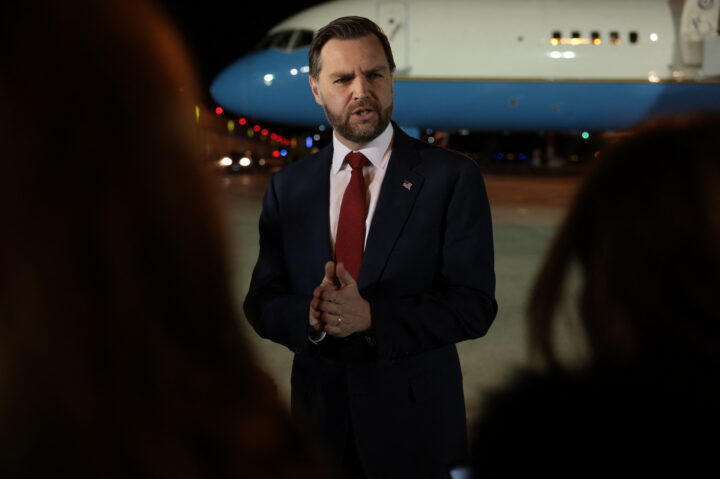
JONATHAN ERNST/ POOL/ AFP via Getty Images
Vice President JD Vance speaks to the media before boarding Air Force Two in Budapest, Hungary, on April 8, 2026.
American and Iranian officials are meeting on Saturday in Islamabad, Pakistan, to begin conversations aimed at ending the conflict that has consumed the Middle East since late February. Though much change has occurred in the last six weeks, the decisions made in the next two could determine the future of the region for decades to come.
The “fog of diplomacy,” as The Washington Post’s David Ignatius put it, has shrouded much of what is known about the talks and their contours. The first 24 hours after the ceasefire was announced saw dueling — and often conflicting — statements, denials and claims about various points, including the inclusion of Lebanon in the agreement, Iran’s “right” to enrich uranium and the status of the Strait of Hormuz, that were proposed and supposedly agreed to by the parties.
Those sticking points deepened in the days between the ceasefire announcement and Saturday’s meeting in Pakistan. On Wednesday, Israel conducted widespread strikes in Lebanon targeting Hezbollah infrastructure and operatives whom the IDF said had embedded in civilian areas, while Hezbollah has launched dozens of missiles into Israel — including one fired at the southern city of Ashdod that also triggered sirens across Tel Aviv and surrounding towns early Friday morning. Meanwhile, Trump on Thursday accused Iran of “doing a very poor job, dishonorable some would say, of allowing Oil to go through the Strait of Hormuz.”
It is against that backdrop that Vice President JD Vance, joined by White House Special Envoy Steve Witkoff and Jared Kushner, will enter into negotiations tomorrow in Islamabad.
In tandem, a separate set of negotiations is slated to take place in Washington early next week, when the U.S. will convene the envoys from Israel and Lebanon for rare direct, public talks aimed at reaching a peace agreement between Beirut and Jerusalem. If reached — and if Lebanon takes meaningful action to demilitarize Hezbollah — Iran could lose its most powerful proxy in the region. Under pressure from Washington, Israel has limited its attacks on Lebanon.
While the inability to agree on the parameters for a ceasefire does not portend well for the ability to secure a more lasting agreement,both sides have a vested interest in reaching an accord that allows both to declare victory. Watching from the sidelines are Israel and the Gulf states, which will not be represented in Islamabad, and will instead have to hope from their respective capitals that the U.S. does not acquiesce to an agreement that emboldens Iran — and leaves the American allies vulnerable.
With the regime still intact — and still pledging destruction — Israel has reason to worry. Iran’s new supreme leader, Ayatollah Mojtaba Khamenei, warned on Thursday night that “we definitely won’t allow the criminal aggressors who attacked our country to go unpunished.”
And even as Pakistan positions itself as a convener, its senior officials make clear it is not hosting talks as an impartial actor. On Thursday morning, Pakistani Defense Minister Khawaja Asif posted on X — and later deleted — that “Israel is evil and a curse for humanity,” adding, “I hope and pray people who created this cancerous state on Palestinian land to get rid of European jews burn in hell.”
With elections in both the U.S. and Israel later this year, both Washington and Jerusalem have a vested interest in U.S. negotiators securing the best possible deal with Tehran. With rising fuel prices, the White House will want to project strength in reopening the Strait of Hormuz, while Israeli Prime Minister Benjamin Netanyahu will need to convince voters that they are safer now than they were a year ago — and that Israel won’t find itself in an ongoing cycle of wars that bring the country to a halt for weeks on end every year.
But the longer-term questions remain. Will Iran, whose nuclear and ballistic missile programs were dealt significant blows, further conceal aspects of both? What degree of threat can Israel live with on its borders? How has the Iranian regime’s survival emboldened its allies in Beijing and Moscow? And what of the Iran-backed Houthis in Yemen, who have largely held their fire over the last six weeks?
Those are questions unlikely to be resolved in Islamabad in the coming days, but they are the ones that Israel and the West will have to grapple with once the dust from this war has settled.
Israelis uncertain if Iran war made them safer after ceasefire brings combat to an inconclusive halt
After the ceasefire went into effect, there was a pervading feeling in Israel that the war with Iran was not complete, and the return to routine life may be short-lived

Alexi Rosenfeld/Getty Images
People run to take shelter as sirens sound during incoming missile fire, without an early warning, from Hezbollah, just after midnight on the third day of the U.S. Israel Iran Ceasefire on April 10, 2026 in Tel Aviv, Israel.
For many Israelis who were awoken by rocket sirens just before 3 a.m. Wednesday, only to see the headline on their phones that a two-week ceasefire between the U.S. and Iran had been reached, the news was met with mixed feelings of relief and concern.
For most Israelis, the ceasefire has brought tangible relief: an end to regular missile alerts, the prospect of uninterrupted sleep (though Hezbollah swiftly shattered that hope for many on Thursday night), and children back in school. Yet for residents of Israel’s north who continue to live under frequent Hezbollah rocket fire, even this fragile respite remains out of reach.
After the ceasefire went into effect, there was a pervading feeling in Israel that the war with Iran was not complete, and the return to routine life may be short-lived. An overwhelming majority of Israelis supported the war a month after its late-February start, and just over half supported its continuation, according to the Israel Democracy Institute. Those views remained relatively steady after Iran stopped shooting missiles: A poll broadcast on Israel’s Channel 13 news on Thursday found that 51% of Israelis opposed President Donald Trump’s agreement to a ceasefire.
Israelis’ support for the war effort despite the challenges on the home front was strong because its aims — eliminating the Iranian nuclear threat and severely degrading the ballistic missile threat — were meant to ultimately make them safer, along with the hope, bolstered by statements from Israeli Prime Minister Benjamin Netanyahu and President Donald Trump, that the mullahs’ regime would be toppled.
Yet, according to the Channel 13 poll, Israelis ranked their sense of security after the war at 5.36 out of 10, and gave Israeli Prime Minister Benjamin Netanyahu a grade of 5.56. Only slightly more Israelis (33%) thought that Israel and the U.S. won the war, as opposed to Iran (28%); a plurality (39%) were not sure.
“Israel did not meet its war aims, and the cost is expected to be high,” Yoav Limor, the main military analyst of Adelson-owned Israel Hayom wrote on Thursday. The Times of Israel’s Lazar Berman lamented that “another war ends without a decisive win.” Even the pro-Netanyahu Channel 14 featured the headline “This is how wars are lost: Stopping a moment before victory” on its homepage, and another, more positive, article about the war’s achievements, still admitted “‘total victory’ was not reached.”
Israeli opposition leader Yair Lapid went as far on Wednesday as to call the ceasefire “a diplomatic disaster at a level that I cannot remember. … Of all possible results, Netanyahu reached the worst.”
Shas leader Aryeh Deri, a Security Cabinet observer and one of Netanyahu’s closest political allies, accused Lapid and others who made similar comments of “acting against the country for narrow, short-term political gain.”
On Wednesday evening, Netanyahu made a live statement to reassure the public.
“Iran is weaker than ever, and Israel is stronger than ever,” the prime minister said. “This is the bottom line … We have set the terrorist regime in Iran back many years. We have shaken its foundations. We have crushed it.”
However, Netanyahu added, “We still have goals to complete, and we will achieve them either by agreement or by the resumption of fighting. We are ready to return to combat at any necessary moment. … This is not the end of the campaign; this is a way station on the way to achieving all of our goals.”
The mixed feelings from the public and the mixed messages from Netanyahu were backed up by experts who spoke to Jewish Insider on Thursday.
Brig.-Gen. (res.) Amir Avivi, chairman of the Israel Defense and Security Forum, told JI that “it’s too early to sum up, because we need to see the results of the negotiations over the next two weeks, and what happens in Iran when the dust settles.”
Brig.-Gen. (res.) Assaf Orion, a senior researcher at the Institute for National Security Studies at Tel Aviv University, said that it is “too early to say” whether Israel is safer now than it was six weeks ago.
“We are at halftime,” Orion said. “The first part was military … but wars are not just a military competition, they are diplomatic and military. …The reality after exhausting the negotiations is how we will judge the war.”
Brig.-Gen. (res.) Amir Avivi, chairman of the Israel Defense and Security Forum, told JI that “it’s too early to sum up, because we need to see the results of the negotiations over the next two weeks, and what happens in Iran when the dust settles.”
That being said, Avivi was confident that Israel is safer than before the war began.
“The last six weeks were a huge drama, a total military defeat of a regional power,” he said. “Iran’s military industry, steel plants, petrochemical plants, navy, were almost entirely eliminated. … Essentially, Israel and the U.S. did whatever they wanted for the past month and a half. They attacked wherever they wanted. If they wanted to turn off the country’s electricity, they could have. … [Iran is] crushed militarily and economically.”
Avivi did not view Israel as having been stopped by the U.S. mid-fight, citing the IDF as saying that they hit all the targets they had defined as important and reached a stage where the remaining targets were energy and economic sites. “That’s why the Iranians broke and wanted a ceasefire,” Avivi said.
“The nuclear project was harmed, but the enriched uranium is still in Iran, and it is unclear if they are closer to giving it up than before,” Brig.-Gen. (res.) Assaf Orion, a senior researcher at the Institute for National Security Studies at Tel Aviv University, said. “That needs either a military solution or a deal, or the situation will get worse. … [Iran] may change its nuclear strategy for the worse, because with fewer capabilities, they are more motivated [to break out to nuclear weapons], and the knowledge and materials remain.”
This was the right time for a ceasefire, Avivi posited, because the fighting had gotten to a point where the remaining targets were Iran’s economic abilities, and the Islamic Republic “basically surrendered,” and decided to agree to the U.S. demand to reopen the Strait of Hormuz without concessions from the U.S.
Orion, however, said that “Israel did very serious damage to Iran [which will last] for many years,” but still viewed the results of that damage as inconclusive.
“The nuclear project was harmed, but the enriched uranium is still in Iran, and it is unclear if they are closer to giving it up than before,” he said. “That needs either a military solution or a deal, or the situation will get worse. … [Iran] may change its nuclear strategy for the worse, because with fewer capabilities, they are more motivated [to break out to nuclear weapons], and the knowledge and materials remain.”
As for Iran’s ballistic missile capabilities, Orion said, “their industry is damaged and unable to produce large quantities … [but] they still retain about half of their capabilities, something like 1,200 missiles and over 200 launchers. It’s clear they can still create the terror effect and harass Israel and neighboring countries. … They can buy [drones] from Russia to threaten the Gulf states.”
A central question pertaining to Iran’s ballistic missiles and other conventional capabilities, Orion said, is what it will rebuild, how quickly and whether China will help Tehran.
Avivi said he views Iran’s ballistic missile strategy as “totally ineffective, influencing nothing … sporadic and not targeted,” and noted that it did not damage Israeli military capabilities, while “every Israeli strike is a death blow to the regime, its industries or senior officials.”
As for regime change, which was not an official war aim, Orion argued that it’s too early to know whether it will happen. “Trump said it already happened, but it’s really just a shift change. The [remaining] people are no less extreme,” he said.
Avivi said that reaching a ceasefire with the regime does not undermine the effort to change it: “The people can still take to the streets, and Israeli and American drones can back them up. This regime will crumble in the end, but it’s a process. It won’t happen in a day.”
One major downside of the war for Israel may be a deterioration in U.S. public opinion towards the Jewish state.
“On the one hand,” Orion said, “Israel proved itself as a military partner with capabilities and prowess to significantly help the U.S. with what it wanted to achieve. Israel was there from day one and took on most of the mission of clearing out Iran’s air defenses … It did a lot of the work when NATO didn’t want to.”
However, Orion pointed to a recent New York Times article that portrayed Israel as “dragging the U.S. into the war, even though it was a presidential decision in the end, contrary to the stances of senior [American] figures and public opinion on the left and right. It will take time to see the aftershocks.”
As to whether the ceasefire will last, Orion said that, while nothing is certain, a ceasefire is generally called when both sides “estimate that conditions would be improved by talking,” and noted that at the outset of the war, the Trump administration said it would likely take four to six weeks.
Avivi said that “Israel and the U.S. now have two weeks to regroup and rearm, which Iran isn’t able to do because it doesn’t have a military industry anymore.”
Iran can spend the ceasefire “taking stock of the disaster that happened to them,” Avivi added.
Sen. Lindsey Graham: ‘I look forward to the architects of this proposal, the Vice President and others, coming forward to Congress and explaining how a negotiated deal meets our national security objectives’

Office of Sen. Lindsey Graham (R-SC)
Sen. Lindsey Graham (R-SC) and Sen. Tom Cotton (R-AR) hold a joint press conference on Iranian nuclear negotiations at the U.S. Capitol on May 8, 2025.
Despite skepticism over the terms and reports of ongoing Iranian strikes, several prominent hawkish Republicans are voicing support for President Donald Trump’s fragile two-week ceasefire agreement with Iran.
Sen. Lindsey Graham (R-SC), among the most prominent backers of the war in the Senate, said in a post on X that a “diplomatic solution to end the reign of terror in Iran is the preferred outcome” but said he has concerns about the supposed 10-point plan presented by Iran, which would require the lifting of all U.S. sanctions on Iran, among other steps.
U.S. officials, including Vice President J.D. Vance, said the U.S. did not agree to that version of the deal, but that at least three versions of the Iranian proposal have circulated. White House press secretary Karoline Leavitt said Wednesday that the original 10-point plan proposed by Iran was “fundamentally unserious” and was “literally thrown into the garbage by President Trump and his team.”
“I look forward to the architects of this proposal, the Vice President and others, coming forward to Congress and explaining how a negotiated deal meets our national security objectives in Iran,” Graham said.
He added that all of Iran’s enriched uranium must be turned over to the United States and that Iran cannot have any enrichment capacity.
“To those who say, Iran needs to save face by having a small enrichment program, I’m not remotely interested in providing face-saving cover to a regime that murders its own people, beats a 16-year-old girl to death for not wearing a headscarf appropriately, and is dripping in American blood,” Graham said.
Sen. Ted Cruz (R-TX) said on his podcast that he believes Trump was prepared to follow through on his threats against Iran, but agreed to hold off in response to Pakistan’s mediation efforts and Iran’s agreement to reopen the Strait of Hormuz as he had demanded.
“Many of the military objectives have been accomplished. The military has been degraded almost out of existence,” Cruz said, though he acknowledged that it doesn’t take much for Iran to disrupt trade in the Strait of Hormuz. “There’s virtually no military left. It’s like four guys with a slingshot sitting on the back of a camel.”
But Cruz said he would be skeptical that the ceasefire would hold if Iran’s attacks on its neighbors continued.
He said his definition of success in Iran would be taking away Iran’s ability to kill Americans and innocent people in the region and its ability to become a nuclear power. He said that full regime change is the responsibility of the Iranian people, not the United States.
Responding to a post by Trump about the agreement and the damage to Iran’s nuclear program, Senate Intelligence Committee Chairman Tom Cotton (R-AR) said, “President Trump has always been crystal clear: there must be no uranium enrichment for Iran. And he’s absolutely right. That was a central flaw in Obama’s disastrous deal. Because the only reason Iran would demand to enrich uranium is to build a nuclear weapon.”
He didn’t address the substance of the ceasefire deal itself.
Sen. Kevin Cramer (R-ND) praised Trump’s execution of the war and the ceasefire, saying that the war had shown that the U.S. is the strongest nation and has the strongest military on the planet.
“He has made it clear – Iran will not get a nuclear weapon. And so, it’s really through his efforts that the U.S. not only secured a temporary ceasefire but more importantly, they obtained a commitment from Iran to reopen the Strait of Hormuz,” Cramer said in a statement. “That has been his short-term goal in recent days, and it’s an important goal that affects a lot of people, not just the United States but our Middle East friends and certainly Europe.”
He called on other allies to step up — and predicted they would following the ceasefire agreement. But he also urged continued caution.
“Now we have to keep our eyes wide open obviously, it’s not like the Iranian regime is good for keeping its word, but in my mind, this is a pretty good breakthrough,” Cramer continued. “I’m grateful for President Trump’s unwavering dedication to defending our country and holding our adversaries accountable, and frankly, holding some allies accountable as well. I certainly hope they learned from this lesson.”
Other senior Republicans haven’t commented on the ceasefire agreement yet.
Off Capitol Hill, some prominent right-wing voices who have had the president’s ear are taking a different view of the deal.
Conservative commentator Mark Levin emphasized that Iran violated the ceasefire deal shortly after it was signed. He accused Iran of trying to use the negotiations to “blackmail us and Israel” to allow Hezbollah to continue its attacks on Israel and divide the U.S. and its allies.
“The 2-week ceasefire is being violated right now by the Iranian-Nazi regime. Missiles are being fired into Israel and perhaps other countries in the region. Are they able to defend themselves?” he said on X. We have the right man as president, and I bet he’s furious about this.”
“But this will be the question throughout — that is, do we expect the Iranian regime to honor a deal, how will we monitor it, and how will we enforce it. These will all be very difficult issues to resolve,” he continued.
Responding to the 10-point Iranian proposal, Levin said simply, “Uh oh.”
Far-right influencer Laura Loomer said on X the deal is “a negative for our country” and “we didn’t really get anything out of it.”
Under the Iran Nuclear Agreement Review Act, passed in response to the Obama administration’s negotiations with Iran in 2015, any agreement pertaining to Iran’s nuclear capabilities must be submitted to Congress for its review, and Congress has the ability to vote to block any such agreement.
In spite of the ceasefire, Democrats are continuing to agitate for Trump’s removal from office and plan to pursue war powers resolutions to force an end to the war.
In a Dear Colleague letter on Wednesday, House Minority Leader Hakeem Jeffries (D-NY) said that Democrats plan to attempt to pass a war powers resolution during a pro-forma session on Thursday by unanimous consent — an effort that is likely to fail.
Jeffries also said that Rep. Jamie Raskin (D-MD), the ranking member of the House Judiciary Committee, and committee Democrats plan to hold a briefing on Friday on “Trump administration accountability and the 25th Amendment” — indicating that the doomed push to remove Trump from office has backing from the top echelons of the Democratic Party.
Senate Minority Leader Chuck Schumer (D-NY) said that Democrats are planning to force a vote on a war powers resolution next week, the fourth since the war began on Feb. 28, when the Senate returns from its own recess.
The new survey, conducted during the Iran war, also found a majority of Republicans under 50 view Israel unfavorably
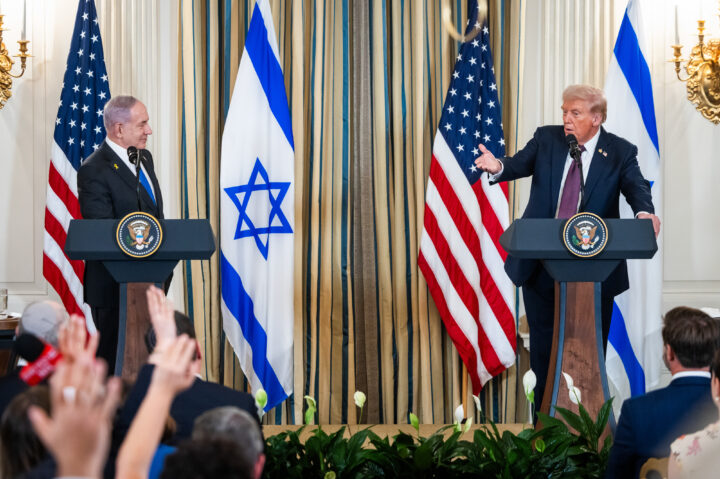
Jim Lo Scalzo/EPA/Bloomberg via Getty Images
President Donald Trump, right, and Benjamin Netanyahu, Israel's prime minister, during a news conference in the State Dining Room of the White House in Washington, DC, US, on Monday, Sept. 29, 2025.
The war in Iran has cost Israel political support in the United States, according to a new Pew Research Center poll, which shows 60% of Americans now view Israel unfavorably, with 37% viewing the Jewish state favorably.
The results not only reflect an overall decline in public support in recent years, but a significant seven-point drop since the pollster’s last survey in 2025, when it found 42% of respondents viewed Israel favorably and 55% unfavorably. The latest poll surveyed 3,507 U.S. adults between March 23-29, during the height of the joint U.S.-Israel military operations.
Perhaps most concerning for the pro-Israel community, the poll found that 57% of Republican respondents under 50 hold negative views towards Israel. That’s in stark contrast to the strong support it receives from older Republicans, with nearly 3 in 4 viewing the Jewish state favorably.
The survey found that positive views of Israel were concentrated among Jewish Americans (64% said they view Israel favorably) and evangelical Protestants (65% said they hold favorable views).
The least supportive religious groups towards Israel were: American Muslims (4% favorability), the religiously unaffiliated (22% favorability), Black Protestants (33%) and Catholics (35%).
The poll also found that Israeli Prime Minister Benjamin Netanyahu continues to get low marks from the American public, with only 27% saying they trusted him to “do the right thing regarding world affairs.” Nearly the same share of voters who viewed Israel unfavorably also held the Israeli prime minister in a negative light.
Pew also asked how important the conflict between Israel and Hamas was to respondents, and 53% rated it as a “very” or “somewhat” important issue. Nearly all Jewish respondents (91%) and 70% of Muslim respondents said what’s happening in the Middle East is of significant importance.
In an interview with the New York Post, the president called the far-right podcaster ‘a low IQ person that has absolutely no idea what’s going on’

Chip Somodevilla/Getty Images
Tucker Carlson speaks on stage on the fourth day of the Republican National Convention at the Fiserv Forum on July 18, 2024 in Milwaukee, Wisconsin.
President Donald Trump hit back at Tucker Carlson on Tuesday after the far-right podcaster used his most recent show to accuse the president of steering the U.S. toward nuclear war with Iran and to suggest, in apocalyptic terms, that Trump might be waging a stealth attack on Christianity.
In a phone interview with the New York Post, Trump described Carlson as a “low IQ” individual who frequently tries to speak with him by phone, adding that he has stopped responding to his calls.
“Tucker’s a low IQ person that has absolutely no idea what’s going on,” Trump told the outlet of Carlson. “He calls me all the time. I don’t respond to his calls. I don’t deal with him. I like dealing with smart people, not fools.”
The remarks came in response to a lengthy monologue Carlson delivered on his Monday podcast. There, Carlson excoriated Trump for issuing an expletive-filled Truth Social post on Easter, in which the president warned that the U.S. was prepared to bomb Iranian power plants and bridges if Tehran did not open the Strait of Hormuz.
Carlson called the post “vile on every level,” particularly for its language on a major Christian holiday, and framed it as the opening move toward nuclear conflict. He speculated that Trump might be pursuing something far larger than conventional military escalation — an effort to provoke Armageddon and undermine Christian faith.
“Is it possible that what you’re watching is a very stealthy yet incredibly effective attack on what, from a Christian perspective, is the true-faith belief in Jesus?” Carlson asked. “Is it possible the president sees this in bigger terms? Sees this as the fulfillment of something? An elevation to some higher office beyond president of the United States?”
“Is it just a conventional escalation ladder in a badly thought out war?” he continued. “Could it be something bigger? Is it possible what you’re watching is a very stealthy yet incredibly effective attack on what, from a Christian perspective, is the true faith: belief in Jesus?”
The former Fox News host then claimed that the reason the president did not put his hand directly on the Bible when being sworn in for his second term last January was because he “rejects” the “limits on human behavior” in the Bible.
Carlson went on to urge Trump administration officials to resign or refuse to obey orders if the president were to order them to strike Iran with a nuclear weapon.
“Those people who are in direct contact with the president need to say, ‘No, I’ll resign. I’ll do whatever I can do legally to stop this because this is insane, and if you give the order, I’m not carrying it out. Figure out the codes on the football yourself,’ because everything hangs in the balance right now,” he explained.
At least 50 House Democrats are calling for Trump’s immediate removal from office
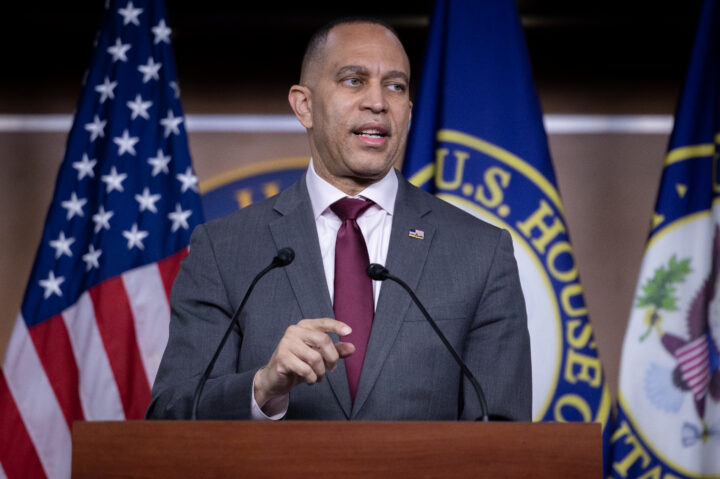
Nathan Posner/Anadolu via Getty Images
House Minority Leader Hakeem Jeffries (D-NY) speaks during his weekly press conference at the U.S. Capitol in Washington, DC on March 19, 2026.
Top Democrats across both chambers condemned President Donald Trump for threatening that “a whole civilization will die tonight” in Iran, with some pushing for Trump’s immediate removal from office over the threat and his conduct of the war.
House Minority Leader Hakeem Jeffries (D-NY) and other members of Democratic leadership including Reps. Katherine Clark (D-MA), Pete Aguilar (D-CA), Ted Lieu (D-CA), Joe Neguse (D-CO) and Suzan DelBene (D-WA), issued a statement calling Trump “unhinged” and saying that he risks bringing the country “into World War III” unless Congress reconvenes to vote to bring the war to an end.
“For years, Republicans have enabled and excused Donald Trump’s deeply dangerous and extreme behavior. Enough is enough,” the leaders said. “Our brave men and women in uniform have been put into harm’s way in the Middle East. Over a dozen have already been killed and hundreds injured. Gas prices are skyrocketing, the cost of living in America is out of control and billions of taxpayer dollars are being wasted on a reckless war of choice.”
In another joint statement, Senate Minority Leader Chuck Schumer (D-NY) and Sens. Chris Coons (D-DE), Jeanne Shaheen (D-NH), Jack Reed (D-RI) and Brian Schatz (D-HI), who are the top Democrats on several relevant committees and subcommittees, similarly condemned Trump’s comments, saying they indicate an intent to commit war crimes.
“This is not strength. Intentionally destroying the power, water, or basic infrastructure upon which tens of millions of civilians depend to punish the very civilians who suffer at the hands of the Iranian regime would constitute a war crime, a betrayal of the values this nation was founded on, and a moral failure,” the lawmakers said. “It’s unconscionable to threaten the lives of so many people — grandparents, children, families — simply because they were born in Iran.”
They said that Trump’s comment “makes Americans less safe, further destabilizes our nation and economy, and puts at greater risk U.S. service members,” as well as makes a diplomatic solution — ”the only viable solution to this war” — harder to achieve.
In a separate statement, Rep. Greg Meeks (D-NY), the ranking member of the House Foreign Affairs Committee, also said that Trump’s threat constitutes a war crime and an illegal action under international law which risks tens of millions of Iranian civilians, and potentially catastrophic after-effects.
“At this critical moment, the United States must pursue immediate de-escalation and a coordinated diplomatic strategy with our allies. We cannot allow Iran to simply reset to a dangerous status quo — but the answer is not to threaten war crimes and isolate us from every partner we need to end this conflict,” Meeks said. Trump’s threat is “recklessness that America and the region will pay for long after this president is gone,” he added.
Rep. Jared Moskowitz (D-FL), who prior to the war was one of the few Democrats who said he would oppose a war powers resolution — though he ultimately voted for it after the war began — demanded that the House immediately reconvene for a war powers vote. Moskowitz’s comments are a sign that Trump’s latest comments have crossed a line even for some of the most hawkish Democrats in the House.
“Speaker Johnson must immediately reconvene the House to vote on a war powers resolution. It’s beyond clear we are at war,” Moskowitz said. “The Speaker’s legacy will be that he made Congress so irrelevant that a president can threaten to wipe out a civilization while Congress is on vacation.”
Jeffries said Democrats plan to bring up another war powers resolution to halt the conflict in Iran, which stands a stronger chance of passing than a previous one, when the House returns from its recess. At least some of the Democrats who voted against the previous resolution are expected to support this one, and a small number of additional Republicans may join them.
Rep. Henry Cuellar (D-TX), one of four House Democrats who voted against the previous war powers resolution on the war in Iran last month, announced he will now support such an effort because the administration has failed to provide adequate answers about its goals and its exit strategy.
“[W]e must be careful with the language we use. Strength and destruction are not the same,” Cuellar added. “When the United States echoes the rhetoric of its adversaries, we risk weakening the values that have long defined our leadership.”
Several Democrats have described Trump’s comments as a threat to commit genocide.
Trump’s threat has also prompted growing calls from at least 70 House Democrats for his removal from office, either through impeachment or the invocation of the 25th Amendment, which allows the involuntary removal of a president from power if he is mentally or physically unfit to govern.
Sens. Ed Markey (D-MA) and Ron Wyden (D-OR) joined those calls.
“Donald Trump is deranged,” Wyden said. “He must be impeached and removed from office. Republicans who don’t stop him will have blood on their hands, and anyone who carries out an order to bomb civilian targets will be complicit in war crimes and will be held accountable.”
Markey called the president “unstable and a clear and present danger, not just to the American people but to the world” and said he “must be removed from office before he causes incalculable and unfathomable harm.” He said that a war powers resolution to stop the war is now insufficient to address the situation.
A small number of Republicans are also airing concerns with Trump’s threat.
Sen. Lisa Murkowski (R-AK), one of the few Republicans who has been openly skeptical of the war effort in Iran, said that Trump’s threat “cannot be excused away as an attempt to gain leverage in negotiations with Iran.”
“This type of rhetoric is an affront to the ideals our nation has sought to uphold and promote around the world for nearly 250 years. It undermines our long-standing role as a global beacon of freedom and directly endangers Americans both abroad and at home,” Murkowski said, calling for deescalation by both Trump and Iran, and insisting that the U.S. must draw a distinction between the Iranian regime and the Iranian people.
Rep. Nathaniel Moran (R-TX) said that, while he has supported the war thus far, “I do not support the destruction of a ‘whole civilization.’ That is not who we are, and it is not consistent with the principles that have long guided America.”
“[W]hat sets America apart is not only our strength, but how we use it. Our nation has always conducted military operations for just causes and through just and moral means. This must continue in the future; otherwise we forfeit our legitimacy to lead the world,” Moran said. “[H]ow we protect the lives of the innocent is just as important as how we engage the enemy.”
Rep. Kevin Kiley (I-CA), who recently left the Republican Party but remains part of the GOP caucus and has generally been hawkish on Iran, said that the U.S. “does not destroy civilizations. Nor do we threaten to do so as some sort of negotiating tactic.”
“Congress has a responsibility to conduct oversight with respect to ongoing military operations and our obligations under both U.S. law and international agreements to which we are a signatory,” Kiley said.
Plus, Sine die dayenu

Mike Stewart/AP
Republican Clay Fuller speaks to supporters after learning he would advance to a runoff election during an election night watch party, Tuesday, March 10, 2026, in Rome, Ga.
👋 Good Tuesday morning!
In today’s Daily Kickoff, we report on President Donald Trump’s doubling down on his threat to strike Iranian power plants if Tehran does not reopen of the Strait of Hormuz by tonight’s 8 p.m. deadline, and look at how Iran’s closure of the key waterway is forcing countries to consider alternatives, such as the proposed India-Middle East-Europe Corridor. We preview today’s special election runoff in Georgia to fill the rest of former Rep. Marjorie Taylor Greene’s term, and report on plans by Texas Democrats to vote on a series of anti-Israel and anti-AIPAC resolutions at their upcoming party convention. Also in today’s Daily Kickoff: Esther Panitch, John Kirby and Bill Ackman.
Ed. note: In observance of Passover, the next Daily Kickoff will arrive on Friday, April 10.
Today’s Daily Kickoff was curated by JI Executive Editor Melissa Weiss and Israel Editor Tamara Zieve, with assists from Danielle Cohen-Kanik and Marc Rod. Have a tip? Email us here.
What We’re Watching
- President Donald Trump’s deadline for Iran to reopen the Strait of Hormuz — or face attacks on its power grids and bridges — expires at 8 p.m. ET. Earlier today, the IDF reportedly warned civilians to stay away from trains, an indication that the Islamic Republic’s infrastructure could be targeted. More below.
- Members of the Democratic National Committee are kicking off a five-day meeting today in New Orleans, where the DNC’s resolutions committee is set to consider resolutions condemning AIPAC and Israel. The resolutions were proposed by a Florida delegate who last year attempted to push through a resolution calling for an arms embargo on Israel. Read more here.
- Voters in Georgia’s 14th Congressional District head to the polls today for the special election runoff to choose a successor to fill out the remainder of Rep. Marjorie Taylor Greene’s (R-GA) term. District Attorney Clay Fuller, a Republican, is the favorite against Democrat Shawn Harris — but will likely need a decisive win today to stave off potential primary challengers in the GOP primary for the regular election later this spring. More below.
- In Michigan, Democratic Senate candidate Abdul El-Sayed and Rep. Summer Lee (D-PA) will hold rallies on the University of Michigan and Michigan State University campuses with far-left streamer Hasan Piker, who is coming under increasing criticism for his antisemitic and anti-American rhetoric.
What You Should Know
A QUICK WORD WITH JI’S JOSH KRAUSHAAR
Today’s special election runoff in Georgia between Republican Clay Fuller and Democrat Shawn Harris to determine the successor to former Rep. Marjorie Taylor Greene (R-GA) isn’t much in doubt. The northwestern Georgia district that Greene represented backed President Donald Trump by 37 points in 2024, one of the largest GOP margins in the country.
What makes the otherwise sleepy contest significant is the potential for the results to indicate if there are any fissures within the MAGA coalition, ones that may represent Republican discontent with Trump’s hawkish turn amid the Iran war. In this race, the margins will be as notable as the winner.
Greene, since leaving Congress, has emerged a loud Republican voice against the Iran war and against Trump’s strong alliance with Israel. Fuller, a military veteran with a background in counterterrorism operations and district attorney for the Lookout Mountain Judicial Circuit, has been a stalwart supporter of Trump’s military operations in the Middle East, and Trump has endorsed him in the race.
Harris, the Democrat, holds foreign policy views closer to the isolationist Greene, attacking the pro-Israel advocacy group AIPAC and describing Israel’s war against Hamas as a “genocide” — views which place him on the left flank of the Democratic Party. This despite Harris’ time serving as defense attache in Israel during his years in the National Guard, work history that he has not publicized during the campaign.
It’s worth noting that Greene, since she was first elected to the seat in 2020, has underperformed Trump’s standing in the district, only winning 64% of the vote against Harris in 2024 — four points below Trump’s 68% showing at the top of the ticket. And since breaking with Trump in his second term, her political standing has taken an even bigger hit.
Greene has not endorsed either candidate in the race.
WAY OF WATER
Strait of Hormuz closure raises opportunities for alternative shipping routes

With Iran’s closure of the Strait of Hormuz roiling energy markets, other countries in the region may begin to pursue alternative routes to transport energy and other goods, but they are far from ready to be put into use, experts told Jewish Insider’s Lahav Harkov this week.
Back in focus: One of the highest-profile routes is the India-Middle East-Europe Corridor (IMEC), proposed by the Biden administration in September 2023 as a route for trade, energy and more; it would go from India, through Saudi Arabia, the UAE, Jordan and Israel, then across the Mediterranean to Europe through Greece. Now that the Iranian threat to block the strait has been realized, IMEC and other alternative routes to ship oil and gas from the Gulf are back in focus. Gabriel Mitchell, an expert on energy security and a visiting fellow at the German Marshall Fund, told JI that “the threat and challenge posed with the Strait of Hormuz has raised questions about East-West shipping, traffic and global energy trade to the maximum.”
TEXAS TURMOIL
Texas Dems to consider resolutions on Israel arms embargo, blasting pro-Israel groups
Texas Democratic Party activists are set to consider a series of resolutions condemning Israel for alleged genocide and pushing for an arms embargo, as well as criticizing pro-Israel involvement in U.S. politics — characterizing it as foreign influence in American elections — and urging penalties for candidates who accept their support, Jewish Insider’s Marc Rod reports.
What they’re doing: One resolution on AIPAC and Democratic Majority for Israel would set as party policy that Texas Democrats should reject campaign contributions, endorsements and other support from pro-Israel groups. Several of the resolutions accuse Israel of apartheid and genocide, and urge Democratic lawmakers from the state and nationally to support a halt to not only U.S. financial aid to Israel but also any shipments of weapons purchased from the U.S. and logistical support provided to Israel until international human rights groups declare that Israel is no longer engaged in apartheid or genocide.
TOUGH TALK
Trump reiterates threats to hit Iran’s economic engine if no deal reached by Tuesday
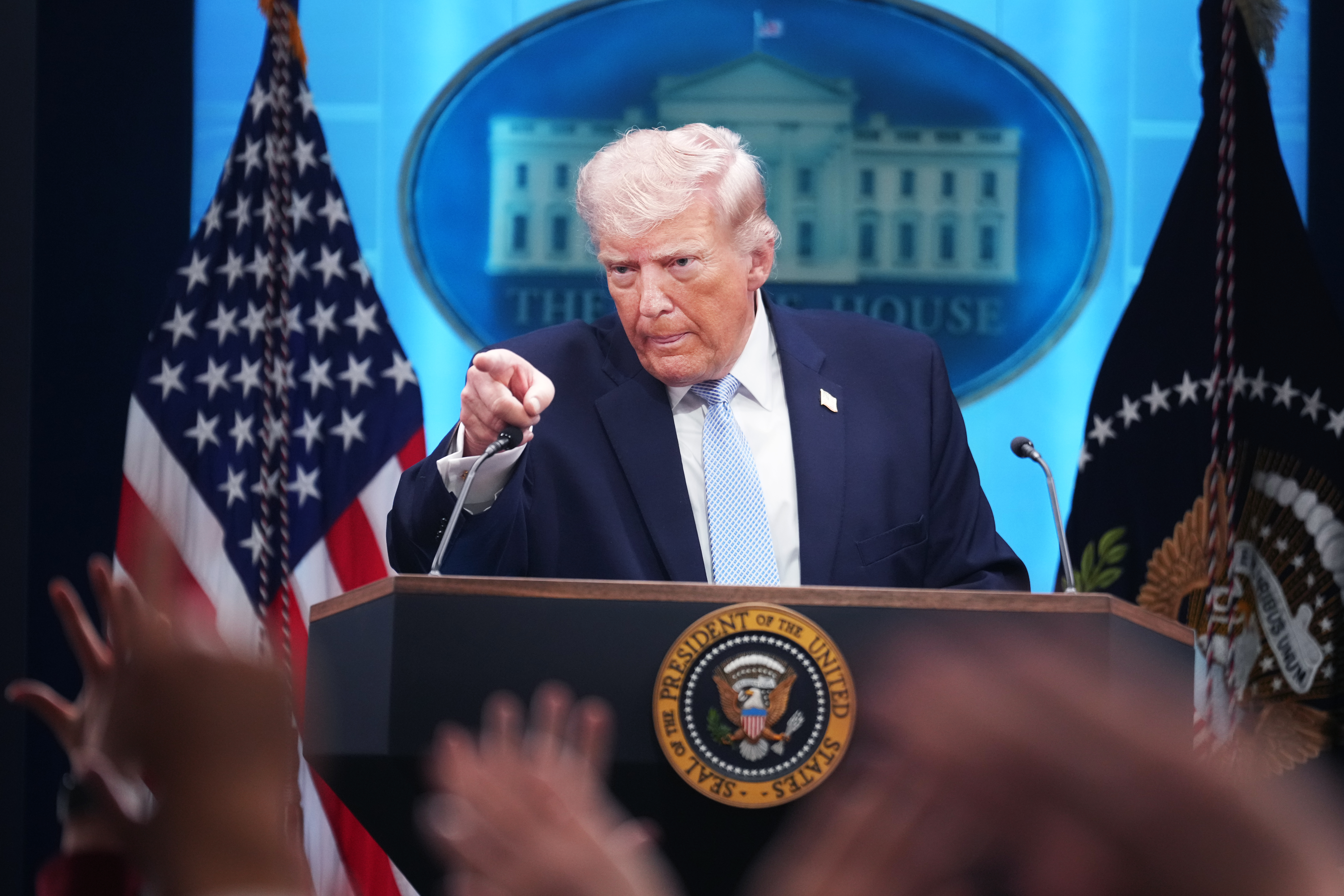
President Donald Trump doubled down on his threats to escalate the war in Iran on Monday if Iranian leaders do not agree to a broad ceasefire deal that includes reopening the Strait of Hormuz by his Tuesday evening deadline, warning that the U.S. would target every bridge and power plant still standing in the country, Jewish Insider’s Emily Jacobs reports.
What he said: Trump took a hawkish posture while speaking to reporters at the White House alongside senior U.S. defense officials about the ongoing war and diplomatic efforts to bring it to a close, warning that the U.S. has a plan to take out Iran’s entire transportation and energy infrastructure within “four hours” if Iran did not make a deal. “I can tell you they’re negotiating, we think, in good faith. We’re going to find out. … After [8 p.m. ET on Tuesday], they’re going to have no bridges. They’re going to have no power plants. Stone ages,” Trump said, referring to the deadline he set for Iran to agree to his terms, which has now been postponed three times.
FACT CHECK
Former intelligence official Joe Kent amplifies false Iranian propaganda about U.S. war

Joe Kent, the former director of the National Counterterrorism Center who resigned over his opposition to the Iran war, shared a post on social media spreading false claims from Iranian state-linked media and Drop Site News that the U.S. was attempting to kill the servicemember whose fighter jet was shot down over Iran over the weekend prior to him being rescued, Jewish Insider’s Matthew Shea reports.
Propaganda post: The initial statement on Saturday from Drop Site, a far-left news outlet sympathetic to Hamas and totalitarian regimes, cited a report by Tasnim News, which is linked to the Islamic Revolutionary Guard Corps, claiming that the U.S. had “lost hope” of recovering an airman whose jet was downed over Iran on Friday and was instead “attempting to kill him.” The post was then amplified by Kent with the message: “Praying for the rescue of our downed pilot & the safe return of our Special Operators going in to get him back. [U.S. Air Force Pararescuemen and Combat Search and Rescue] Air crews are top notch.”
SEDER AT THE STATEHOUS
Georgia politicos gather for first-of-its-kind ‘Sine Die Seder’
On Thursday, a group of Jewish Georgia politicos gathered for a first-of-its-kind-event at the Georgia Statehouse: the “Sine Die Seder,” Jewish Insider’s Marc Rod reports. Organized by state Rep. Esther Panitch, a Democrat and the only Jewish member of the Georgia General Assembly, the event brought together around 30 Jewish staffers, journalists, lobbyists, interns, a former attorney general and more to celebrate Passover on the final night of the legislative session, known as sine die.
In the room: Panitch said that she had asked the House majority leader to cancel the House session on Wednesday, the first night of Passover — and he obliged — but the House was still scheduled to be in session for the second night. “And so I said, ‘Well, we’re going to be at the Capitol on the second night. Why don’t we have a Seder for probably the 10 of us in the building that are Jewish,’” Panitch told JI, referring to herself and a handful of interns, staff and reporters, during the hourlong dinner break during the session. Interest in the event ballooned, with the group ultimately growing to around 30.
NOT CONVINCED
Fox Nation highlights post-Oct. 7 surge in Jewish engagement as part of new series on religion

From mass baptisms to packed pews, a new Fox Nation documentary chronicles a profound spiritual awakening it suggests is sweeping America. The five-part series, “Revival with Lawrence Jones,” includes a spotlight on the renewed embrace of religious identity among Jews following the Oct. 7, 2023, terrorist attacks in Israel, Jewish Insider’s Haley Cohen reports.
Embrace of Jewish life: Episode 3 of the new series, “Jewish Identity,” highlights the record-breaking “Big Shabbat” held in New York City last November. It also features a conversation between “Fox and Friends” co-host Lawrence Jones, the series’ host, and Israeli activist Noa Tishby about her own Jewish identity; and an interview with Rabbi Joshua Davidson, who leads Temple Emanu-El, the oldest Reform congregation in New York City, which organized the “Big Shabbat.” “There’s no question that since Oct. 7 there has been a resurgence of interest in Jewish life and commitment to the organized Jewish community,” said Davidson.
Worthy Reads
Groypers Gripes: The New Yorker’s Antonia Hitchens examines the degree to which the far-right fringe is entrenching itself in Republican politics. “I asked a political consultant in Washington to summarize. ‘Groypers are about demographic change,’ the consultant said. ‘It’s a sovereignty issue. It’s literally, like, “Who runs my f***ing country? Why do all these people get access to my birthright — not just before me but that might be denied to me? Do I get a deal better than somebody who runs across a border?”’ [Nick] Fuentes offers a more concise gloss. ‘There are basically two things that are going on,’ he said recently. ‘White genocide and Jewish subversion.’” [NewYorker]
Everyone’s War: In The Wall Street Journal, Walter Russell Mead posits that “every great and near-great power is adjusting its foreign-policy strategies” in response to the Iran war. “The war shows us all that the security of the Gulf matters to everyone. If at the end of the war Iran retains the ability to close the Strait of Hormuz, every country on earth will need Tehran’s blessing to access vital fuel and supplies. Whatever one thinks of Mr. Trump and his decision to initiate hostilities, a quick and comprehensive American victory offers the best hope for a peaceful future in the Gulf and beyond.” [WSJ]
Mind the Gap: In his Substack “Between Us,” Nadav Eyal considers the disconnect between Israeli and Diaspora Jewry as the two become increasingly distant even as both face steep challenges. “But diaspora Jews represent the ability to survive and flourish over thousands of years, sometimes in difficult conditions, and above all with a remarkable preservation of their identity. They have successfully created communities with thriving institutions based on self-generated investment. The call to recognize the deep and independent value of Jewish life in the diaspora is not a rejection or dilution of the Jewish right to Eretz Yisrael. It is simply a correction of an error — one that Israelis cannot afford to make.” [BetweenUs]
Word on the Street
The Trump administration’s Board of Peace has given Hamas until the end of the week to accept a disarmament proposal, with Nickolay Mladenov, the board’s director-general, warning on X, “He who will not cross the river will drown in the sea”…
The Wall Street Journal looks at Israeli and U.S. efforts to target Iran’s economy as Washington and Jerusalem appear poised to strike key Iranian infrastructure…
Politico profiles Harmeet Dhillon as the Justice Department’s assistant attorney general for civil rights is rumored to be under consideration to replace former Attorney General Pam Bondi or to be tapped for another senior Justice Department role…
Rep. Yassamin Ansari (D-AZ), the first Iranian American Democrat to serve in Congress, announced she was introducing articles of impeachment against Defense Secretary Pete Hegseth over the war in Iran, citing his “reckless endangerment of U.S. servicemembers and repeated war crimes”…
An appellate court reinstated a $656 million judgment against the Palestinian Authority and Palestine Liberation Organization following a 2025 Supreme Court ruling allowing American victims of Palestinian terror to sue the groups under the 1992 Anti-Terrorism Act…
The New Yorker does a deep dive into OpenAI CEO Sam Altman’s professional trajectory and leadership of the artificial intelligence company…
Bill Ackman’s Pershing Square Capital made a bid for Universal Music Group, valuing the company at $63.5 billion; if successful, the acquisition would merge Universal with Pershing Square Sparc Holdings and move its stock listing to the New York Stock Exchange…
The head of the University of Washington’s Middle East Center was removed from his leadership position shortly after sending an email through the center’s listserv criticizing the war in Iran; Aria Fani will continue to hold his position as an associate professor at the school…
A private Catholic school in Fairfield, Conn., said it had disciplined students who were involved in a series of antisemitic social media posts targeting a rival school’s hockey team…
U.K. Education Secretary Bridget Phillipson called on organizers of this summer’s Wireless Festival to drop Kanye West as the concert’s headliner over his past “completely unacceptable and absolutely disgusting” antisemitic comments, as U.K. officials reportedly consider revoking permission for West, who offered to meet with the British Jewish community, to enter the country…
Meanwhile, the festival’s promoter defended West’s “legal right to perform” in the U.K., as Diageo and Anheuser-Busch InBev joined PepsiCo in dropping their sponsorships of the summer concert series…
Ret. Rear Adm. John Kirby, who served as White House national security communications advisor in the Biden administration, is joining MS NOW as a national security analyst…
Pic of the Day
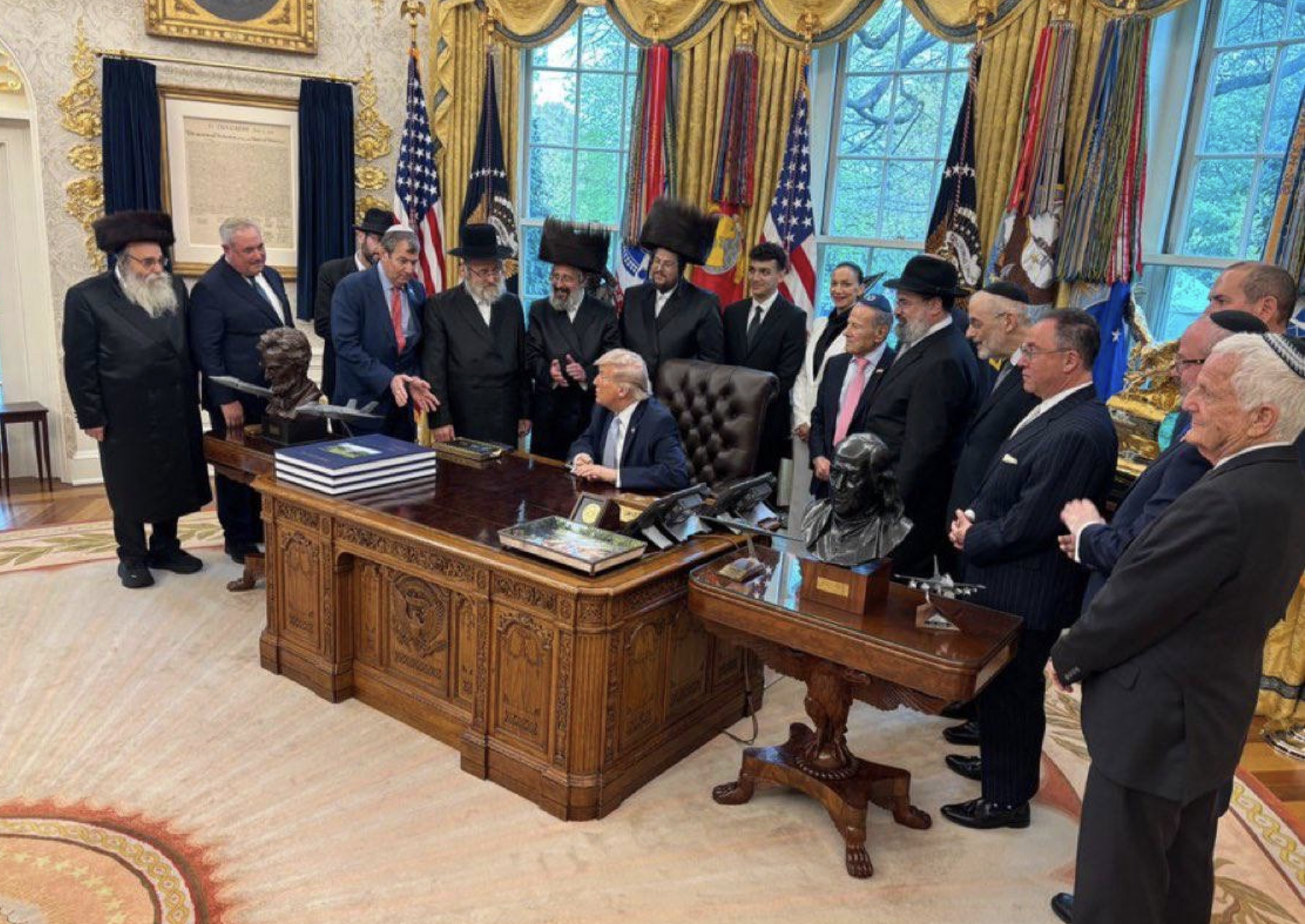
Prominent Jewish figures and senior Trump administration officials gathered at the White House on Monday afternoon for an event hosted by President Donald Trump commemorating the Passover holiday, Jewish Insider’s Emily Jacobs reports.
Administration officials in attendance at the event, which was closed to the press and took place in the Indian Treaty Room, included Commerce Secretary Howard Lutnick; White House Staff Secretary Will Scharf; James Blair, the White House deputy chief of staff for legislative, political and public affairs; Jacob Reses, chief of staff to Vice President JD Vance; Environmental Protection Agency Administrator Lee Zeldin; Martin Marks, the White House Jewish liaison; and Rabbi Yehuda Kaploun, the Trump administration’s special envoy to monitor and combat antisemitism.
Others spotted at the event were Rabbi Moshe Margaretten, president of the Tzedek Association; Matt Brooks, CEO of the Republican Jewish Coalition; William Daroff, CEO of the Conference of Presidents of Major American Jewish Organizations; Jeff Miller, chairman of the United States Holocaust Memorial Council; Jonathan Burkan, United States Holocaust Memorial Council member; Rabbi Levi Shemtov, the executive vice president of American Friends of Lubavitch (Chabad); Paul Packer, the former chairman of the U.S. Commission for the Preservation of America’s Heritage Abroad; Rabbi Chaim Dovid Zwiebel, executive vice president of Agudath Israel of America and Rabbi Meir Soloveichik, member of the Religious Liberty Commission and vice chair of the United States Commission on International Religious Freedom. Read more here.
Birthdays

Professional golfer who joined the PGA Tour in 2015 when he won Rookie of the Year, he has since won four tournaments, Daniel Berger turns 33…
Professor emerita of philosophy at Vanderbilt University, Marilyn Ann Friedman turns 81… President of Yale University for 20 years, then CEO of Coursera, an education-focused technology company, Richard Charles “Rick” Levin turns 79… Consultant on aging, longevity, law and policy, Naomi Karp turns 76… Software engineer at FlightView, Jonathan Ruby… Professor at the University of Wisconsin Milwaukee, he was born in Haifa, Israel, Simon J. Bronner turns 72… Los Angeles-based casting director, Jane Sobo… Former director of project staffing at Tower Legal Solutions in Addison, Texas, Ilene Robin Breitbarth… Former member of the House of Commons of Canada from the Winnipeg area, Martin B. Morantz turns 64… Screenwriter, actress and director, Andrea Berloff turns 52… White House and Congress editor for USA Today, Darren Samuelsohn… Chicago-based progressive activist, he is a co-founder of Project Shema, Oren Jacobson… Principal owner of JRL Strategy, helping expats relocate overseas, Justin Ross Lee… Senior director of communications at Leidos, Gregory Hellman… Reporter covering the White House and Washington for Politico, Daniel Lippman… Executive director of Camp Seneca Lake for the JCC of Greater Rochester (N.Y.), she was previously an associate director of communications at AIPAC, Marissa Wizig Klegman… Managing partner of Reno-based Mazal Capital, David Farahi… Pitcher and first baseman for Team Israel at the 2020 Summer Olympics, Ben Wanger turns 29…
The president said at a lengthy press conference: ‘I can tell you they're negotiating, we think, in good faith. We're going to find out’
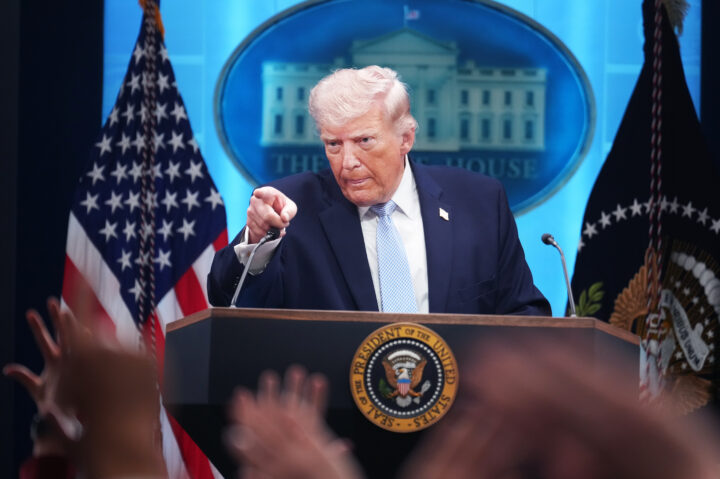
Tom Williams/CQ-Roll Call, Inc via Getty Images
President Donald Trump conducts a news conference in the White House briefing room about the war in Iran on Monday, April 6, 2026.
President Donald Trump doubled down on his threats to escalate the war in Iran on Monday if Iranian leaders do not agree to a broad ceasefire deal that includes reopening the Strait of Hormuz by his Tuesday evening deadline, threatening that the U.S. would target every bridge and power plant still standing in the country.
Trump took a hawkish posture while speaking to reporters at the White House alongside senior U.S. defense officials about the ongoing war and diplomatic efforts to bring it to a close, warning that the U.S. has a plan to take out Iran’s entire transportation and energy infrastructure within “four hours” if Iran did not make a deal.
“I can tell you they’re negotiating, we think, in good faith. We’re going to find out. … After [8 p.m. ET on Tuesday], they’re going to have no bridges. They’re going to have no power plants. Stone ages,” Trump said, referring to the deadline he set for Iran to agree to his terms, which has now been postponed three times.
The president said he extended the deadline from Monday to Tuesday at 8 p.m. ET because he “thought it was inappropriate” to demand a response “the day after Easter.” The comment came hours after telling reporters at the annual White House Easter Egg Roll that the Tuesday deadline was final and unlikely to have any additional extensions.
“The entire country can be taken out in one night and that night might be tomorrow night,” Trump said from the briefing room. “We have a plan, because of the power of our military, [where] every bridge in Iran will be decimated by 12 o’clock tomorrow night, where every power plant in Iran will be out of business, burning, exploding and never to be used again. I mean complete demolition by 12 o’clock, and it’ll happen over a period of four hours if we want it to.”
“We don’t want that to happen. We may even get involved with helping them rebuild their nation. If that’s the case, the last thing we want to do is start with power plants, which are among the most expensive things, and bridges,” he continued. “So do I want to do that? No. Do I want to destroy their infrastructure? No. It will take them 100 years to rebuild. Right now, if we left today, it would take them 20 years to rebuild their country and it would never be as good as it was. The only way they’re going to be able to rebuild their country is to utilize the genius of the United States of America.”
Defense Secretary Pete Hegseth, who took part in the press conference alongside Trump, told reporters on Monday that, “per the president’s direction, today will be the largest volume which strikes since day one of this operation. Tomorrow, even more than today, and then Iran has a choice. Choose wisely, because this president does not play around.”
Trump repeatedly reiterated his commitment to ensuring that Iran can never obtain a nuclear weapon — after saying the country’s nuclear program was “obliterated” last June — and said that any agreement between Iran and the U.S. would need to adhere to his terms, including the reopening of the Strait of Hormuz. “We have to have a deal that’s acceptable to me, and part of that deal is going to be [that] we want free traffic of oil and everything,” the president said.
“They’re not going to have a nuclear weapon,” Trump said of Iran, arguing that his actions were an insurance policy for the U.S. “if somebody that takes my place someday is weak and ineffective, which possibly that will happen, because we had numerous presidents that were weak, ineffective and afraid of Iran.”
The president described the Iranians as “very good bulls*** artists, that’s why for 47 years they’ve been bulls***ing other presidents,” while defending his decision to take military action against the regime.
“I think that 47 years of this stuff is long enough. They’re at the weakest point they’ve ever been,” Trump said, despite Iran’s continued missile strikes across the Gulf and in Israel. “In fact, the biggest problem we have in our negotiations is that they can’t communicate. … They have no method of communication. So we’re communicating like they used to communicate 2,000 years ago with children bringing a note back and forth.”
Plus, Joe Kent amplifies Iranian propaganda
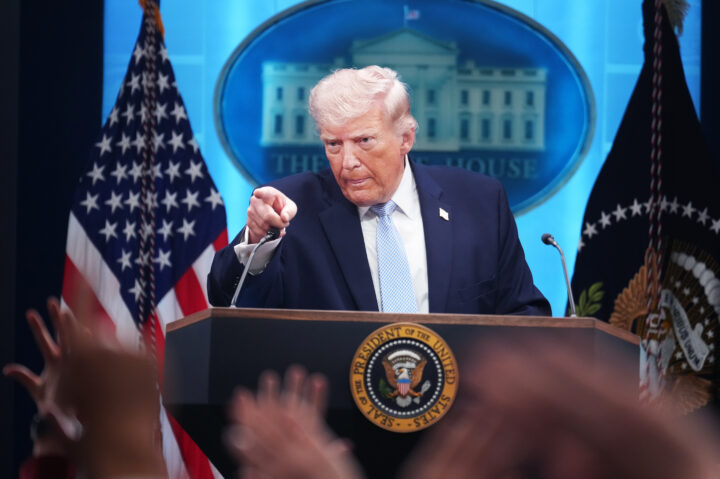
Tom Williams/CQ-Roll Call, Inc via Getty Images
President Donald Trump conducts a news conference in the White House briefing room about the war in Iran on Monday, April 6, 2026.
This P.M. edition is reserved for our premium subscribers — offering a forward-focused read on what we’re tracking now and what’s coming next. Please don’t hesitate to share your thoughts and feedback by replying to this email.
📡On Our Radar
Notable developments and interesting tidbits we’re tracking
Amid reports that Iran has rejected the U.S.’ ceasefire framework, President Donald Trump told reporters Tehran has made its own “significant” proposal, though it is “not good enough.”
Asked if he may push the deadline again for Iran to reopen the Strait of Hormuz or face increased U.S. military action — as he has already done three times — Trump said, “Highly unlikely. They’ve had plenty of time.”
Trump also claimed the U.S. had “sent guns, lot of guns” into Iran. “They were supposed to go to the people so they could fight back against these thugs. You know what happened? The people that they sent them to kept them, because they said, ‘What a beautiful gun. I think I’ll keep it,’” he said…
At a press conference this afternoon, Defense Secretary Pete Hegseth said today would mark “the largest volume of strikes since Day 1” of the Iran war, with more to come tomorrow.
Trump doubled down on his threats, warning that all of Iran “can be taken out in one night, and that night might be tomorrow night.” If Tehran does not acquiesce by his 8 p.m. ET deadline tomorrow, Trump said, “they’re going to have no bridges. They’re going to have no power plants. Stone ages.”
The president also floated the possibility of charging U.S. tolls to ships transiting the Strait of Hormuz once it is reopened and potentially seizing Iran’s oil. Trump and defense officials further detailed the harrowing rescue of a fighter jet pilot, who reportedly treated his own wounds while scaling mountainous terrain to evade capture after being downed over Iran…
Israeli Prime Minister Benjamin Netanyahu said he spoke yesterday with Trump, who thanked him for Israel’s assistance in rescuing the pilot…
Joe Kent, the former director of the National Counterterrorism Center who resigned over his opposition to the Iran war, shared a post on social media on Saturday spreading false claims from Iranian state-linked media and Drop Site News that the U.S. was attempting to kill the servicemember whose fighter jet was shot down over Iran prior to him being rescued, Jewish Insider’s Matthew Shea reports.
The initial statement from Drop Site, a far-left news outlet sympathetic to Hamas and totalitarian regimes, cited a report by Tasnim News, which is linked to the Islamic Revolutionary Guard Corps, claiming that the U.S. had “lost hope” of recovering the airman and was instead “attempting to kill him”…
Rep. Pat Fallon (R-TX), who previously served in the Air Force, predicted that the U.S. will deploy ground troops into Iran: “I just don’t see any other way,” he said on Fox News. “I personally think it’s going to be boots — at least special ops, American special operators — on the ground, with allies in the region and air cover,” he said…
The U.S.-led Board of Peace is pressing Hamas to finalize a Gaza demilitarization agreement by the end of the week, The New York Times reports, which would require the terror group to give up its weapons and maps of its tunnel network in the enclave. Negotiators from both sides are expected to meet in Cairo, Egypt, tomorrow…
Democratic Michigan state Sen. Mallory McMorrow announced she raised more than $3 million in the first quarter of 2026 in her bid for U.S. Senate. “There was not a dime of corporate PAC donations, not a dime of AIPAC donations,” she said in a video. The pro-Israel group was the only organization she named.
While McMorrow’s opponents have not yet publicized their latest fundraising figures, her haul surpassed those of last quarter, when Rep. Haley Stevens (D-MI) led the pack with $2.1 million raised in the final quarter of 2025…
The Senate Leadership Fund, the Senate GOP’s top super PAC, revealed its $350 million plan to retain control of the upper chamber, focusing on defending incumbents in Ohio, North Carolina, Maine, Iowa and Alaska and seeking to flip seats in Michigan, Georgia and New Hampshire.
The funds will largely be used for ad campaigns, with the most money being spent to defend Sen. Jon Husted (R-OH), who must win his first Senate election for the remainder of his term against the likely Democratic nominee, former Sen. Sherrod Brown (D-OH)…
Ukrainian President Volodymyr Zelensky received a grand welcome upon touching down in Damascus yesterday for his first meeting with Syrian President Ahmad al-Sharaa. The two leaders “explored avenues for strengthening economic cooperation and the exchange of expertise,” al-Sharaa said…
Sovereign wealth funds from Saudi Arabia, Qatar and the UAE have signed equity commitments to the tune of $24 billion to back Paramount’s acquisition of Warner Bros. Discovery, The Wall Street Journal reports…
⏩ Tomorrow’s Agenda, Today
An early look at tomorrow’s storylines and schedule to keep you a step ahead
Keep an eye out in Jewish Insider for a preview of tomorrow’s special election runoff in Georgia’s 14th Congressional District, where Republican military veteran and Israel supporter Clay Fuller is expected to win the ruby-red seat of former Rep. Marjorie Taylor Greene (R-GA).
Defense Secretary Pete Hegseth and Gen. Dan Caine, chairman of the Joint Chiefs of Staff, will hold another press briefing on the Iran war tomorrow morning.
Michigan Senate candidate Abdul El-Sayed will host rallies tomorrow at Michigan State University and the University of Michigan with guests including Rep. Summer Lee (D-PA) and antisemitic streamer Hasan Piker, a move which has drawn condemnation from some Democrats and sparked a broader debate about the mainstreaming of Piker within the party.
The Democratic National Committee will begin its five-day meeting in New Orleans tomorrow, where its resolutions committee will consider several resolutions condemning AIPAC and Israel, including calls for conditions on or a suspension of U.S. military aid to the Jewish state.
NATO Secretary-General Mark Rutte will meet with Trump and administration officials in Washington on Wednesday, as the president continues to slam the organization for its refusal to engage in the Iran war.
In observance of Passover, we’ll be back in your inbox with the Daily Overtime on Monday, April 13. Chag Pesach Sameach!
Stories You May Have Missed
ALTERED LIVES
They survived the Temple Israel attack. They can’t escape what followed

The foiled attack at the Michigan synagogue is being called a miracle — but those who were inside now face the lasting impact of trauma and a search for safety
O CANADA
As antisemitic attacks mount, Canadian Jews ask whether they still belong

After a series of targeted attacks in Toronto and beyond, Jewish leaders are raising the alarms on Canada’s failure to properly protect its Jews amid ‘systemic’ antisemitism
The India-Middle East-Europe Corridor, originally viewed as an alternative to China’s Belt and Road Initiative, is being considered as another passage for trade

JULIEN DE ROSA / AFP via Getty Images
A person points at a page on the Marinetraffic website that shows commercial boats traffic on the edge of the Strait of Hormuz near the Iranian coast, in Paris on March 4, 2026.
With Iran’s closure of the Strait of Hormuz roiling energy markets, other countries in the region may begin to pursue alternative routes to transport energy and other goods, but they are far from ready to be put into use, experts told Jewish Insider this week.
One of the highest-profile routes is the India-Middle East-Europe Corridor (IMEC), proposed by the Biden administration in September 2023 as a route for trade, energy and more; it would go from India, through Saudi Arabia, the UAE, Jordan and Israel, then across the Mediterranean to Europe through Greece.
While Iran has threatened to block the Strait of Hormuz and obstruct oil shipping for decades, the Islamic Republic was not the main reason for considering another route of transportation — it was initially conceived as an alternative to China’s Belt and Road Initiative.
But now that the Iranian threat has been realized, IMEC and other alternative routes to ship oil and gas from the Gulf are back in focus.
Gabriel Mitchell, an expert on energy security and a visiting fellow at the German Marshall Fund, told JI that “the threat and challenge posed with the Strait of Hormuz has raised questions about East-West shipping, traffic and global energy trade to the maximum.”
”If you look at it from the perspective of India on one end, Europe on the other and anywhere in between, they are thinking they need to create as much redundancy as possible for commercial shipping for their own economic security,” Mitchell said. “It doesn’t make a difference whether you’re Emirati or Qatari or just an international shipping company with a base of operations in [the UAE’s Port of] Fuajirah, you’re asking the same questions.”
Mitchell said the idea of redundant shipping routes initially came from a desire to lower costs and increase speed of delivery, and grew more popular due to challenges with the Suez Canal during the COVID-19 pandemic. Now, in light of Iran’s obstruction of the Strait of Hormuz, “the argument in favor of IMEC [and] creation of redundancy has increased significantly.”
Increased regional connectivity can “take away Iran’s lever of closing the Strait of Hormuz,” Joseph Rozen, a senior fellow at the Misgav Institute for National Security and the former director for Asia-Pacific in Israel’s National Security Council, told JI. (The writer is a senior fellow at the Misgav Institute.)
Rozen said that “IMEC is a buzzword; the focus needs to be on inter-regional connectivity,” and noted that the Trump administration may be hesitant to adopt a Biden-era initiative, though it seemingly supports increasing connectivity more broadly through the Board of Peace.
Regional connectivity can increase stability and growth, Rozen said, and more countries can be brought in than those initially on board, such as Oman, Iraq, Syria, Egypt and even Gaza.
“The Iran war increased American involvement and its push for connectivity initiatives,” Rozen said. “Before the war [President Donald] Trump expressed interest, but now, the U.S. is more invested, and that encourages countries in the region to invest in regional connectivity if they know there’s an American security umbrella … over their investments and development.”
Rozen argued that existing infrastructure should be improved in the short term. The Saudi and Emirati pipelines combined can only transfer about 8.5 million barrels’ worth of oil per day, 42% of what passed through the Strait of Hormuz each day before the current war with Iran, he said. Another short-term move Rozen proposed is to continue to grant countries waivers to buy Russian gas, though this effort has seen resistance from members of Congress.
Mitchell said that IMEC faced a lot of skepticism when it was proposed, and none of its challenges have been resolved.
The commercial viability of alternative pipelines and routes is in question, Mitchell said: “Who is going to pay? Who is going to secure it? Which available ports will be able to manage that intake?”
Companies may prefer to try to find quick fixes rather than make multibillion-dollar investments that take a decade or more to bring returns, Mitchell argued, and the private sector and states will have to work together to make them viable. “I believe that will tip the scales in favor of these kinds of projects, but which end up getting green lit is yet to be determined.”
Some of the geopolitical challenges have grown more difficult since the Oct. 7, 2023, Hamas attacks on Israel, weeks after IMEC was announced. In addition, Mitchell pointed out that Turkey has obstructed joint energy projects between Israel, Greece and Cyprus in the past decade, demanding to be involved, and would likely do the same with IMEC.
”It’s hard to get everyone involved in one project … It’s hard to say how we are going to set aside our differences for these sets of initiatives … [and] what combination of carrots and sticks will convince people to pursue diversification. … I think in the end the answer will be yes, but it will take time to get there,” Mitchell said.
When Indian Prime Minister Narendra Modi visited Israel earlier this year, IMEC was part of the public conversation, but diplomats from both countries told JI on condition of anonymity that Saudi Arabia was hesitant to proceed because of Israel’s involvement — even though both countries were part of the plan from its inception.
Rozen said that Riyadh and Jerusalem can be part of the same project as long as the focus is on practical steps that serve the Saudis’ interests and not summits and bombastic statements that would “do more harm than good.”
”I understand their interest to maintain a certain kind of rhetoric, but there are other interests,” he said. “The more we advance through channels that are not political and are lower profile … I think the Saudis would be willing to do it. It can happen at any level of IMEC or other connectivity plans, in energy, trade and digital services. Cooperation led by the business sector would not carry the same political baggage … and under the current political circumstances it may be better for it not to be government-led.”
Mitchell also said that disputes between Saudi Arabia and the UAE that surfaced late last year could get in the way of developing IMEC, though in “a situation like now, when everyone is economically bleeding, there should be room for creative solutions.”
Israeli officials have made many positive statements about IMEC and Israeli Foreign Minister Gideon Sa’ar took part in a summit last year with his counterparts from involved countries, but no progress has been made on the ground.
Rozen said that Israel will likely wait to develop the necessary infrastructure “as long as there is no commitment from Arab States, such as Jordan, to invest on their side.” However, he added that, in the interim, Israel can “focus on the technological aspects” of regional connectivity at a lower cost.
Mitchell said the big challenge for Israel is that other countries will be competing to be involved in connectivity projects. Egypt, he said, has been pushing to be the gateway to the Mediterranean, with support from France.
”The argument in Israel’s favor is the security-related coordination [with Arab states] that is happening informally in a lot of ways. We need to concretize that,” he said. “One would assume that Israeli companies would have the opportunity to present their offerings for cybersecurity infrastructure.”
”The real thorn in Israel’s side since Oct. 7 is the diplomatic element. Can Israel manifest any kind of diplomatic initiative or momentum to patch together meaningful cooperation?” Mitchell questioned. “It seems that as of right now, nobody is willing to meet in the middle, which is challenging if you’re Israel, but it’s also challenging for the U.S., which is trying to work with everybody in parallel and has struggled to bring them around the table [together].”
Plus, Ottawa's inaction concerns Canada's Jews
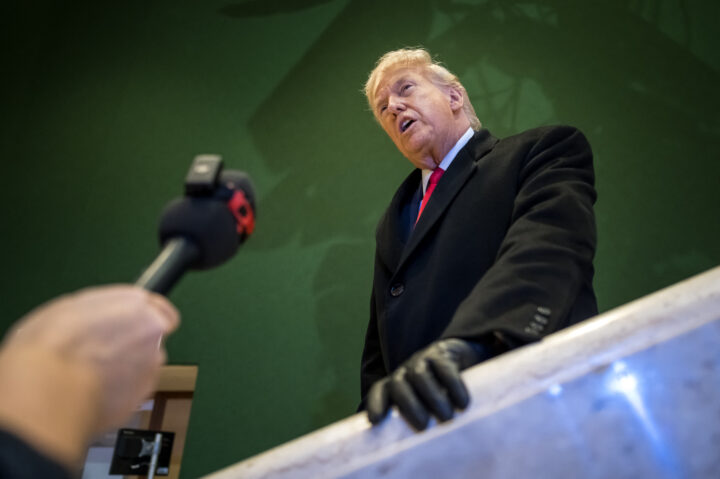
Fabrice COFFRINI / AFP via Getty Images
President Donald Trump as he leaves the World Economic Forum (WEF) annual meeting in Davos on January 21, 2026.
Good Monday morning.
In today’s Daily Kickoff, we look at the state of negotiations between the U.S. and Iran as President Donald Trump issues a new deadline for the reopening of the Strait of Hormuz, and talk to Canadian Jewish leaders about rising antisemitism — and government inaction — that is prompting some Canadian Jews to consider relocating. We report on the White House’s requested budget cuts for FEMA and Justice Department programs, and talk to New Jersey Democratic congressional candidate Tina Shah, who is centering her support for Israel as she mounts a bid to take on GOP Rep. Tom Kean Jr. Also in today’s Daily Kickoff: Harmeet Dhillon, Omer Horev and Rabbi David Wolpe.
Today’s Daily Kickoff was curated by JI Executive Editor Melissa Weiss and Israel Editor Tamara Zieve, with assists from Danielle Cohen-Kanik and Marc Rod. Have a tip? Email us here.
What We’re Watching
- President Donald Trump will hold a press conference at 1 p.m. ET from the White House alongside senior military officials to discuss the weekend operation to rescue a U.S. servicemember whose plane was shot down in Iran. Yesterday, Trump warned that Iran’s power plants and bridges would be targeted on Tuesday over Iran’s continued blockage of the Strait of Hormuz. More below.
- Shortly after the press conference, Trump will deliver a Passover greeting toJewish leaders at the White House.
What You Should Know
A QUICK WORD WITH JI’S MELISSA WEISS
As the U.S. and Israeli war with Iran extends into its sixth week, the next 36 hours may be some of the most pivotal, offering clarity as to whether an end is in sight — or whether an escalation is imminent.
On the table now, according to Axios, is a proposed two-phased ceasefire deal, lasting 45 days, that would immediately reopen the Strait of Hormuz and give negotiators two to three weeks to reach a broader agreement to end the war. As a signal that the U.S. is open to the agreement, President Donald Trump extended by 24 hours the deadline for Iran to reopen the Strait, setting a new deadline of Tuesday night ET.
The core issues remain: Tehran’s closure of the key waterway, and the fate of the country’s enriched uranium. But a deal between Washington and Tehran would include broader issues, including potential sanctions relief in exchange for Tehran’s promise that it will not pursue nuclear weapons. Iran has signaled that it will not reopen the Strait for a temporary ceasefire and is seeking a more permanent resolution.
The president paired threats with optimism, leaning into the current debate with a conflicting mix of tough talk — warning yesterday that strikes targeting Iran’s power plants and bridges would take place on Tuesday in the absence of a deal — and hopes of an 11th-hour diplomatic breakthrough.
A diplomatic agreement would see a winding down of the war that would likely allow Iran to retain some of its ballistic missile capabilities — a compromise that is unlikely to sit well in Israel, which continues to face fire from Iranian forces.
On the other hand, Trump’s threatened destruction of key Iranian infrastructure could further deteriorate conditions in the Islamic Republic, where a regime-imposed internet blackout has ensured minimal on-the-ground reporting on weeks of war. And as always, the president has one eye on the markets, which will open today after the holiday weekend.
The U.S. and Israel have already made serious strategic strides by killing dozens of members of Iran’s senior leadership and severely crippling Tehran’s nuclear program. The question now is whether that will be enough for Trump to declare victory in accordance with the rough timeline he’s given for U.S. operations in Iran — or whether the U.S. will double down on its military operations.
oy, canada
As antisemitic attacks mount, Canadian Jews ask whether they still belong
As Canadian Jewish families began celebrating the holiday of Passover, many found the ancient narrative colliding with a modern reality of rising fear at home amid a wave of antisemitic attacks, highlighting what Jewish leaders describe as “systemic” Jew-hatred in Canada. And it is even leading some Jewish Canadians to consider their own kind of exodus from their country, with one communal leader telling Jewish Insider’s Haley Cohen that “the promise” that Jews could practice their faith openly in the country “has been broken.”
‘Systemic failure’: Canada has experienced some of the most severe manifestations of the global surge in antisemitism since Oct. 7. — with higher rates of antisemitic incidents than other countries but lower conviction rates. “There has been a systemic failure across jurisdictions to face antisemitism,” said Richard Marceau, senior vice president of strategic initiatives and general counsel at CIJA, an agency of the Jewish Federations of Canada. Marceau asserted that Canadian society has “a complete misunderstanding” of what antisemitism is, whether it stems from “the far left, far right [or] Islamic circles.”
budget talk
White House requests budget cuts for FEMA, DOJ programs, boosts defense spending
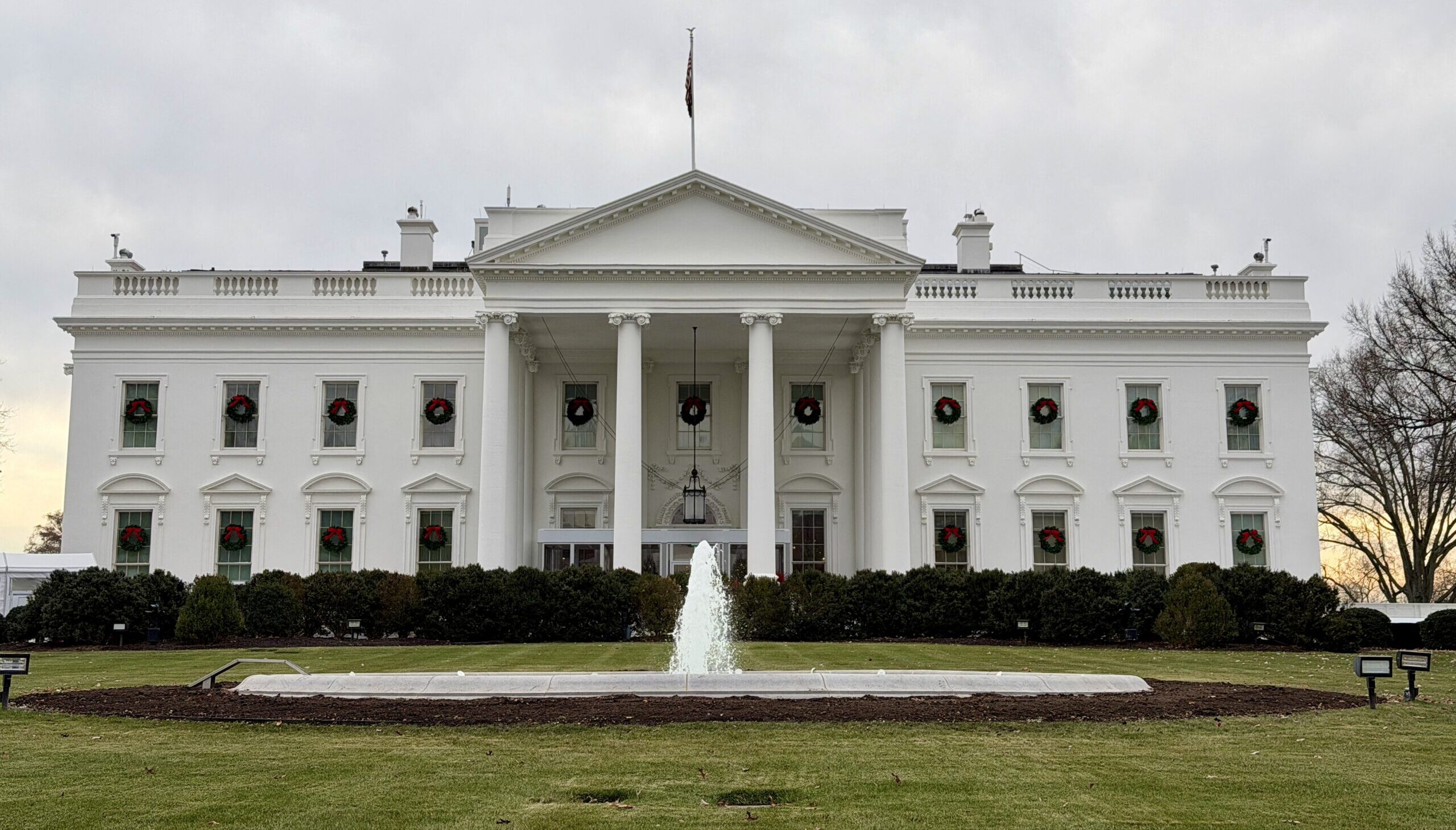
The Trump administration’s 2027 top-line budget request to Congress calls for significant funding increases for the Department of Defense, while pushing for cuts to certain programs at the Federal Emergency Management Agency and the Department of Justice, Jewish Insider’s Marc Rod reports.
Ups and downs: The request urges cuts of $1.3 billion to non-disaster grant programs at FEMA, a category which includes the Nonprofit Security Grant Program, which has been critical to protecting Jewish community institutions and for which both lawmakers and Jewish community groups have sought increased funding, without specifying specific impacts on NSGP. The budget document specifically lambasts FEMA’s “Targeted Violence and Terrorism Prevention” program, which has support from some groups in the Jewish community, as having been “weaponized to target Americans exercising their First Amendment rights.” At the DOJ, the administration again aims to eliminate the Community Relations Service, which has received support from some Jewish community groups in the past.
debate over hate
Analilia Mejia on defensive over Israel record in NJ-11 debate with Republican Joe Hathaway
Joe Hathaway, the Republican nominee in the special election in New Jersey’s 11th Congressional District, repeatedly accused Democratic nominee Analilia Mejia, a progressive organizer, of espousing antisemitism and taking stances that would make the district’s sizable Jewish community unsafe, during their sole debate earlier this week, Jewish Insider’s Marc Rod reports.
What they said: Hathaway, in his opening statement, said that Mejia would “demonize thousands of members of our Jewish community.” The Randolph, N.J., city councilman has leaned into outreach to Jewish voters during the campaign. Though she had described the war in Gaza as a genocide less than a month after the Oct. 7, 2023, Hamas attack, Mejia stopped short of using that word during the debate. Instead, she said that “many individuals are feeling conflicted about what we are seeing in Gaza,” while accusing Israel and its prime minister of having committed war crimes.
shah’s strategy
Tina Shah pitches staunch Israel support in bid to flip NJ-07

Tina Shah is hoping she might have the cure to Democrats’ struggles in New Jersey’s 7th Congressional District. Shah, an emergency room physician and former government official, is running in the Democratic primary to face off against Rep. Tom Kean Jr. (R-NJ), who has proven resilient against repeated Democratic challenges in the purple district, Jewish Insider’s Marc Rod reports.
Standing together: Shah noted in a recent interview with JI that the district is home to a substantial Jewish community, and said that she’s had many conversations with community members about the situation in the Middle East and the Oct. 7, 2023, Hamas attacks, conversations she said have fostered her support for continued, unconditional aid for the Jewish state. “Where I am right now is unequivocally that Israel is our most important ally in the Middle East,” Shah said. “They had a right to defend themselves then, [and] they continue to. I will be the strongest ally to make sure that we continue to build this relationship and support Israel with aid.”
shifting stance
Ruben Gallego says he now opposes funding for offensive weapons for Israel, backs Iron Dome

Sen. Ruben Gallego (D-AZ) said Sunday he now opposes U.S. aid for offensive weaponry for Israel but continued to defend U.S. support for defensive systems like Iron Dome, Jewish Insider’s Marc Rod reports. The new stance from Gallego, who positioned himself as a pro-Israel moderate during his 2024 Senate campaign, highlights the changing currents within the Democratic Party. Gallego also acknowledged in an interview with NBC News that he’s considering a 2028 presidential run.
What he said: Gallego said that he would not support providing Israel with funding for offensive weapons due to disagreements with the country’s military operations in Iran and Lebanon. Gallego, a military veteran, has been among the Senate’s most strident opponents of the war in Iran. But he said he would continue to support aid for missile-defense systems. “Like any other ally in this in this world, I can’t imagine stopping defensive weapons going to any of our friends, because in that situation, if they’re raining down bombs, you’re hitting people that are, especially in Israel, they’re Arabs, Christians, Jews, people that are pro-war, against war. It’s indiscriminatory.”
declined defensive aid
Ro Khanna says he’ll reject Iron Dome funding, joining AOC
Rep. Ro Khanna (D-CA) said on Wednesday that he would reject further funding for Israel’s Iron Dome missile-defense system, echoing a position taken days earlier by Rep. Alexandria Ocasio-Cortez (D-NY), under pressure from some members of the Democratic Socialists of America, Jewish Insider’s Marc Rod reports.
Footing the bill: “The Iron Dom[e]is important & saves lives. Israel should be able to buy it on their own with a $45 defense billion budget,” Khanna said in a post on X, closely following the stance taken by Ocasio-Cortez. “Israel is a first world country, and it can pay for the defensive systems it needs. We should not be subsidizing them, especially given their egregious violations of human rights law. Even Netanyahu has recognized the inevitability of Israel moving away from US aid.”
Worthy Reads
Well-Oiled Machine: The Wall Street Journal’s Greg Ip looks at the Iran war’s impact on the U.S. economy. “[President Donald Trump’s] strategic motives aren’t that different: to deny a hostile power the means to dominate the region, and to protect Israel. Where Trump differs is in the economics. Past presidents believed that the free flow of oil was one of those global public goods that the U.S. was uniquely equipped, even obliged, to safeguard. … Trump’s revamping of the U.S. role in world security and trade now extends to oil. No longer does the U.S. see itself as the guarantor of international stability and norms, but rather as a self-interested actor using control of oil to enhance its own power.” [WSJ]
The Piker Problem: In MS Now, Michael Cohen cautions that far-left streamer Hasan Piker, who has a history of making antisemitic and anti-American comments, is a “political distraction and potential liability” to Democrats as they seek to win back the Senate and House in the midterms. “Indeed, if the paragon of liberal politics — and the person who can attract young voters — is a guy who regularly makes antisemitic statements, blames America for 9/11 and can’t even endorse a Democratic presidential standard-bearer, perhaps the problem is not Piker’s critics, but rather those who feel they must defend him.” [MSNOW]
Man, Oh Man: In The Conversation, Miriam Eve Mora, managing director of the University of Michigan’s Raoul Wallenberg Institute, does a deep dive into the prevalence of antisemitism in the “manosphere” movement. “Antisemitic rhetoric often portrayed Jewish men as feminine or fragile, and inherently different. Those beliefs extended into the most severe antisemitic tropes and beliefs. … Today’s manosphere not only builds on this legacy but also presents something new. Its embrace of antisemitic conspiracy theories allows men who see themselves as victims to explain multiple grievances at once without confronting their own shortcomings.” [TheConversation]
Word on the Street
President Donald Trump is mulling promoting Harmeet Dhillon, the assistant attorney general for the Civil Rights Division at the Justice Department, to a more senior role following the ouster of Attorney General Pam Bondi last week…
Trump is also considering replacing Director of National Intelligence Tulsi Gabbard over her defense of Joe Kent, who resigned last month as the director of the National Counterterrorism Center…
Immigration authorities in Los Angeles arrested the nieces of former Islamic Revolutionary Guard Corps Major Gen. Qassem Soleimani; Secretary of State Marco Rubio said the women’s legal statuses were revoked and they would be deported to Iran…
The U.S. quietly expelled Iran’s deputy ambassador to the U.N. in December, one of several below-the-radar expulsions of diplomats from the Islamic Republic since the fall…
Argentina declared Mohsen Soltani Tehrani, Iran’s chargé d’affaires in Buenos Aires and the most senior Iranian diplomat in the South American country, persona non grata, giving him 48 hours to leave the country…
The New York Times looks at the strategic importance of the string of islands under Iranian control in and around the Strait of Hormuz, as Trump considers whether or not to seize some of the islands…
Israeli rescue services said the bodies of four people — two octogenarians, a man in his 40s and a woman in her mid-30s — were recovered from the site of an Iranian missile strike in Haifa on Sunday…
A drone factory in Petah Tikva, Israel, was destroyed in an Iranian drone strike over the weekend…
Politico reports on changes made quietly by the U.S. Holocaust Memorial Museum during the first year of Trump’s second term, including the removal of online resources about racism in the U.S. and the renaming of a workshop on the “Fragility of Democracy and the Rise of the Nazis” to “Before the Holocaust: German Society and the Nazi Rise to Power”…
NPR’s public editor addressed concerns that the broadcaster’s coverage of last month’s Michigan synagogue attack gave unfair weight to the Lebanon-based relatives of the synagogue attacker, finding that “voices from Temple Israel are absent. I couldn’t find any stories that quote rabbis, congregation members or the families of the children who had to flee the building … NPR or Michigan Public Radio pulled away from the story at Temple Israel too soon”…
Immigration officials detained Salah Sarsour, the head of Wisconsin’s largest mosque, claiming that the Palestinian man, who moved to the U.S. in 1993, lied on his green card application; Sarsour had been convicted by an Israeli court for throwing Molotov cocktails at the homes of IDF soldiers…
Trump made an appearance at the Passover program at the Trump National Doral Miami…
Citadel’s Ken Griffin, Pura Vida Miami CEO Omer Horev and Florida Gov. Ron DeSantis were in attendance at Inter Miami CF’s Nu Stadium debut in South Florida…
A judge in New York ruled that the holding company owned by David Nahmad must restitute an Amedeo Modigliani painting to the descendants of a French Jewish antiques dealer who owned the work before it was confiscated by the Nazis during World War II…
Pepsi announced it will withdraw its sponsorship of this summer’s Wireless Festival as organizers face backlash over the decision to tap Kanye West to headline the festival’s three nights…
Authorities in London arrested four men in connection with the arson attack last month that destroyed several Hatzola ambulances in the heavily Jewish suburb of Golders Green; three of the arrests were made last week, while a fourth suspect was arrested while attending a court hearing for the first three…
The International Criminal Court is moving forward with disciplinary proceedings against the court’s chief prosecutor, Karim Khan, who is facing multiple allegations of sexual harassment; the first complaints about Khan’s behavior toward subordinates came weeks before he announced his intent to seek arrest warrants for Israeli Prime Minister Benjamin Netanyahu and former Defense Minister Yoav Gallant…
European Parliament Member Rima Hassan, a member of the far-left France Unbowed party, is facing charges in Paris that she glorified terrorism on social media after sharing a post about Kozo Okamoto, a Japanese national who took part in a 1972 terror attack at Israel’s Ben Gurion Airport in which 26 people, mostly Christian pilgrims, were killed…
Authorities in the Netherlands are investigating a small explosion outside a pro-Israel center run by a group called Christians for Israel in the city of Nijkerk…
The Wall Street Journal looks at Saudi Arabia’s efforts to scale down its ambitious Vision 2030 project amid budget shortfalls and ongoing political uncertainty in the region…
Former Washington Post Middle East editor Erin Cunningham was named the news director for the Associated Press’ Jerusalem bureau…
Rabbi David Wolpe is joining The Dispatch as a contributing writer…
Israeli writer and poet Tzruya ‘Suki’ Lahav, who briefly played violin with Bruce Springsteen’s E Street Band, died at 74…
Pic of the Day

People participated in a communal Passover Seder on the first night of the holiday in an underground parking lot in Tel Aviv, Israel, that since the start of the war with Iran has served as a community bomb shelter.
Birthdays

Founder and chairman of Cognex Corporation, a provider of machine vision systems, he is a major donor to Technion, Robert J. Shillman turns 80…
Educator often considered the founder of the modern small schools movement, she was a winner of a MacArthur genius fellowship in 1987, Deborah Meier turns 95… Holocaust survivor, she moved to Israel in 1978, visual artist, textile designer and art teacher, Helen Berman turns 90… Professor emeritus of chemical and biomolecular engineering at NYU’s Tandon School of Engineering, Mark Mordecai Green turns 89… Former head of MTV Documentary Films, she has won 32 individual Primetime Emmy Awards, Sheila Nevins turns 87… Academy Award-winning director of many famous films, Barry Levinson turns 84… Santa Monica, Calif.-based poet, critic and teacher, she earned her Ph.D. studying Jewish American literature, Nancy Shiffrin turns 82… Founder and CEO of Emmis Communications, he was the owner of the Seattle Mariners until 1992, Jeff Smulyan turns 79… Political activist, artist and author, she is best known for her speeches at the Republican National Conventions in 1992 and 1996, Mary Fisher turns 78… Former chair of the Federal Election Commission during the Obama administration, she is a lecturer at UC Berkeley Law School, Ann Ravel turns 77… Los Angeles-based playwright, performer and teacher of autobiographical storytelling, Stacie Chaiken turns 72… Senior advisor of the Nellis Corporation and co-chair of the Washington metropolitan area real estate division of AIPAC, Randall J. Levitt turns 72… Movie director, producer, writer and editor, winner of two Academy Awards for best documentary feature, Rob Epstein turns 71… Scholar of piyyut (ancient and medieval Hebrew poetry), head of the Fleischer Institute for the Study of Hebrew Poetry, Shulamit Elizur turns 71… Philanthropist Jeanie Schottenstein… Professor of constitutional law at the University of North Carolina School of Law, Michael J. Gerhardt turns 70… Senior political analyst for CNN and a former senior editor at The Atlantic, Ronald J. Brownstein turns 68… Director, screenwriter and producer of television comedies, Steven Levitan turns 64… Former teacher for 23 years at Congregation Tikvat Jacob in Manhattan Beach, Calif., Deborah Granow… Chair and CEO of the Motion Picture Association, he was previously the U.S. ambassador to France, Charles Hammerman Rivkin turns 64… Reporter for The New York Times covering the Justice Department, Glenn Thrush turns 59… Screenwriter, producer, actor, director, best known for creating the HBO television series “Entourage,” Douglas Reed “Doug” Ellin turns 58… Serial entrepreneur, he has built, operated and sold over $3.3 billion of internet media companies, Richard Rosenblatt turns 57… Israel’s consul general in New York from 2007-2010, now CEO of Israeli private equity fund Amelia Investments, Asaf Shariv turns 54… Founder and chief investment officer of Hong Kong-based Oasis Management Company, he serves on the board of the Ohel Leah Synagogue in Hong Kong, Seth Hillel Fischer… VP of strategic philanthropy and major gifts at the American Jewish Committee, Jay Haberman turns 52… Actor and filmmaker, he is best known for his role on the television series “Scrubs,” Zachary Israel “Zach” Braff turns 51… Teacher of classical mandolin at Bard College, Joseph Brent turns 50… Resident scholar at the American Enterprise Institute since 2019, he is the founding editor of National Affairs, Yuval Levin turns 49… Co-founder and executive editor of Modern Loss and story editor for Chalkbeat, Gabrielle Birkner… Member of the Knesset for Likud since 2019, now serving as the minister of communications, Shlomo Karhi turns 44… Owner-chef of Ramen Hood in Los Angeles, he was the winner of the second season of “Top Chef,” Ilan Hall turns 44… Executive director of the Jack Miller Family Foundation, Jacob Millner… Head coach of the New York Institute of Technology Division II NCAA men’s basketball team, Evan Conti turns 33… Son of Campbell Brown and Dan Senor, Asher Liam Senor turns 17…
The president paired threats with optimism, leaning into the current debate with a mix of tough talk and hopes of an 11th-hour diplomatic breakthrough.
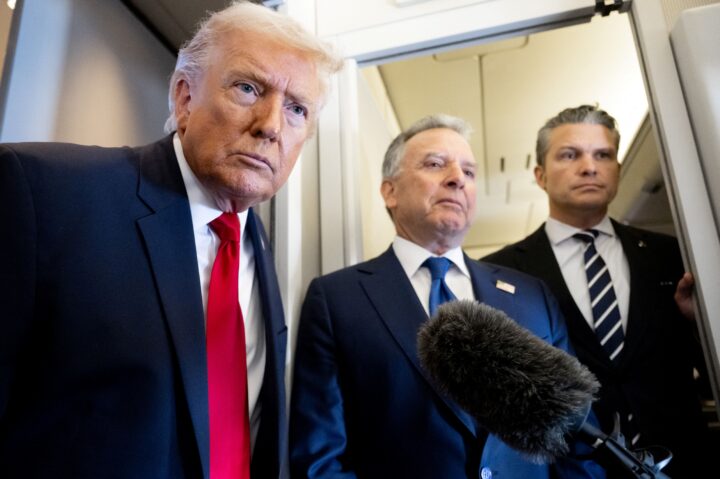
SAUL LOEB/AFP via Getty Images
President Donald Trump speaks with the media as Defense Secretary Pete Hegseth (R) and special envoy Steve Witkoff (C) look on aboard Air Force One during a flight from Dover, Delaware, to Miami, Florida, on March 7, 2026.
As the U.S. and Israeli war with Iran extends into its sixth week, the next 36 hours may be some of the most pivotal, offering clarity as to whether an end is in sight — or whether an escalation is imminent.
On the table now, according to Axios, is a proposed two-phased ceasefire deal, lasting 45 days, that would immediately reopen the Strait of Hormuz and give negotiators two to three weeks to reach a broader agreement to end the war. As a signal that the U.S. is open to the agreement, President Donald Trump extended by 24 hours the deadline for Iran to reopen the Strait, setting a new deadline of Tuesday night ET.
The core issues remain: Tehran’s closure of the key waterway, and the fate of the country’s enriched uranium. But a deal between Washington and Tehran would include broader issues, including potential sanctions relief in exchange for Tehran’s promise that it will not pursue nuclear weapons. Iran has signaled that it will not reopen the Strait for a temporary ceasefire and is seeking a more permanent resolution.
The president paired threats with optimism, leaning into the current debate with a mix of tough talk — warning yesterday that strikes targeting Iran’s power plants and bridges would take place on Tuesday in the absence of a deal — and hopes of an 11th-hour diplomatic breakthrough.
Trump doubled down on both sentiments yesterday in a flurry of interviews with reporters. “If they don’t make a deal, and fast, I am considering blowing everything up and taking over the oil,” Trump told Fox News’ Trey Yingst on Sunday morning. Yet the president said there was a “good chance” that a deal would be reached today — even as he posted “Tuesday, 8:00 P.M. Eastern Time!” on his Truth Social site, a reminder of the new deadline he had set for the Islamic Republic to reopen the Strait of Hormuz.
In comments to The Wall Street Journal, the president said that if the Iranians “don’t come through, if they want to keep it closed, they’re going to lose every power plant and every other plant they have in the whole country.”
Trump made the comments on the heels of the daring weekend rescue of an American weapons system operator who had been shot down inside Iran — the details of which the president is expected to share at an afternoon press conference today alongside senior military officials.
A diplomatic agreement would see a winding down of the war that would likely allow Iran to retain some of its ballistic missile capabilities — a compromise that is unlikely to sit well in Israel, which continues to face fire from Iranian forces.
On the other hand, Trump’s threatened destruction of key Iranian infrastructure could further deteriorate conditions in the Islamic Republic, where a regime-imposed internet blackout has ensured minimal on-the-ground reporting on weeks of war. And as always, the president has one eye on the markets, which will open today after the holiday weekend.
The U.S. and Israel have already made serious strategic strides by killing dozens of members of Iran’s senior leadership and severely crippling Tehran’s nuclear program. The question now is whether that will be enough for Trump to declare victory in accordance with the rough timeline he’s given for U.S. operations in Iran — or whether the U.S. will double down on its military operations.
Plus, judge rules against UPenn in antisemitism investigation
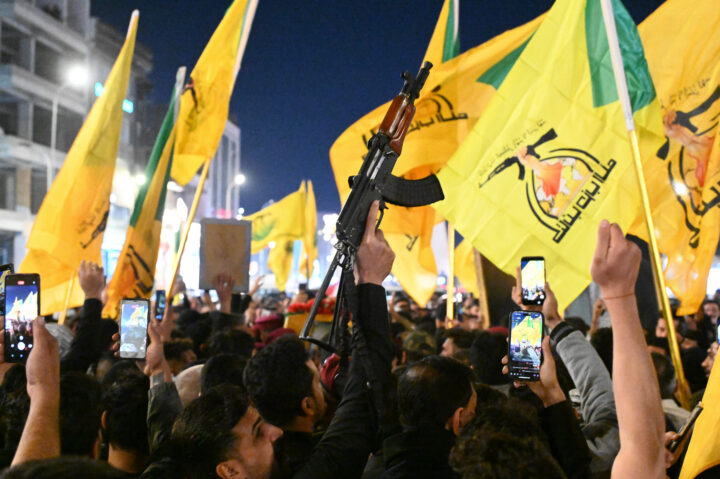
Haidar Mohammed Ali/Anadolu via Getty Images
Mourners carry the coffin of Kata'ib Hezbollah member on March 2, 2026 amid Kata'ib Hezbollah flags.
This P.M. edition is reserved for our premium subscribers — offering a forward-focused read on what we’re tracking now and what’s coming next. Please don’t hesitate to share your thoughts and feedback by replying to this email.
📡On Our Radar
Notable developments and interesting tidbits we’re tracking
President Donald Trump lashed out at European countries this morning for their posture during the war in Iran: He wrote on Truth Social that France is prohibiting planes with military supplies destined for Israel from flying over its territory, calling Paris “VERY UNHELPFUL … The U.S.A. will REMEMBER!”
Trump also named the U.K. among the countries “which refused to get involved in the decapitation of Iran” and are now struggling to acquire fuel due to the effective closure of the Strait of Hormuz. “[G]o to the Strait, and just TAKE IT. You’ll have to start learning how to fight for yourself, the U.S.A. won’t be there to help you anymore, just like you weren’t there for us,” the president warned…
Trump told the New York Post about reports that he’s willing to end the war without reopening the Strait of Hormuz: “I don’t think about it, to be honest. My sole function was to make sure that they don’t have a nuclear weapon. They’re not going to have a nuclear weapon. When we leave the strait will automatically open.”
He similarly said to CBS News about removing Iran’s enriched uranium, “I don’t even think about it. I just know that, you know, that’s so deeply buried it’s gonna be very hard for anybody. … It’s pretty safe. But, you know, we’ll make a determination”…
During a press briefing this morning, Defense Secretary Pete Hegseth revealed that he took a secret trip to the Middle East in recent days to meet with U.S. servicemembers, including Air Force intelligence analysts, Army troops and pilots.
CENTCOM also confirmed that Adm. Brad Cooper visited Israel earlier this week where he met with Defense Minister Israel Katz and Lt. Gen. Eyal Zamir, the IDF’s chief of staff…
Israel is ending all arms purchases from France and “replacing it with domestic Israeli procurement or purchases from allied countries,” the Israeli Ministry of Defense said today, adding that there will be “no new professional engagement with the French military” in the latest rift in the deteriorating relationship between Jerusalem and Paris…
A week after Lebanon declared Iran’s ambassador to Beirut persona non grata and expelled him from the country, the ambassador has still refused to leave the embassy compound, and Iran has stated that the embassy remains open…
China and Pakistan, which has been the intermediary for indirect negotiations between the U.S. and Iran, put forward a ceasefire proposal that would see the immediate cessation of hostilities, the safeguarding of nonmilitary targets and the restoration of transit through global shipping lanes…
American journalist Shelly Kittleson was kidnapped in Baghdad, Iraq, today, according to the Iraqi interior ministry, reportedly by Kataib Hezbollah, the same group that held researcher Elizabeth Tsurkov for over 900 days. Kittleson is a freelance journalist primarily based in Europe who has written for outlets including Al-Monitor and Foreign Policy.
Dylan Johnson, assistant secretary of state for global public affairs, said in a statement that the State Department “is aware of the reported kidnapping” and had “previously fulfilled our duty to warn this individual of threats against them.” Johnson said an “individual with ties” to Kataib Hezbollah “has been taken into custody” in connection with the kidnapping and that the department will coordinate with the FBI to secure Kittleson’s release…
New York City Mayor Zohran Mamdani attended a dinner for Eid last week where he spoke with antisemitic streamer Hasan Piker, a conversation that Piker called “very productive” on a recent Twitch stream.
“No, he did not disavow me,” Piker said in response to a listener’s question. “‘Did you tell him to tune out the bad faith haters?’ I did,” Piker continued. Mamdani appeared on Piker’s Twitch for an interview during the mayoral campaign but has not met with him publicly since…
“Nope,” Rep. Josh Gottheimer (D-NJ) said in response to a video of Sen. Bernie Sanders (I-VT) claiming that, “in many respects,” Piker “is doing a very good job.” “Hasan Piker is a proud antisemite … His voice should have no place in our political discourse and all elected officials should condemn his rhetoric,” Gottheimer wrote…
Michigan Attorney General Dana Nessel, a Jewish Democrat, shared an image of a sign which read, “A Jewish data center has no home here,” displayed outside a town hall she held yesterday urging caution around the approval of data centers. “If you think antisemitism isn’t a problem in Michigan, think again,” Nessel wrote…
A new poll commissioned by former Maine state Sen. Troy Jackson, now a Democratic candidate for governor, found oyster farmer Graham Platner — whom Jackson is backing — nearly 40 points ahead of Gov. Janet Mills in the state’s Senate race (66-28%) among likely Democratic primary voters. The survey was conducted after Mills had started running ads against Platner based on his past controversial statements, a sign that her line of attack may not be persuading voters…
And another poll commissioned by the Senate Majority PAC, a Democratic group, found Texas Attorney General Ken Paxton leading in the heated Republican primary runoff for Senate against incumbent Sen. John Cornyn (R-TX), 47-42%…
A federal judge ruled that the University of Pennsylvania must comply with a subpoena from the Trump administration that seeks information about Jewish university affiliates, which the university had said resembled nefarious efforts by governments over history to gather lists of Jews…
⏩ Tomorrow’s Agenda, Today
An early look at tomorrow’s storylines and schedule to keep you a step ahead
Keep an eye out in Jewish Insider for a report from West Bloomfield, Mich., where JI’s Gabby Deutch sat down with community members still reeling from the attack on Temple Israel earlier this month.
Democrat Analilia Mejia and Republican Joe Hathaway will participate in a debate tomorrow evening ahead of the April 16 special election in New Jersey’s 11th Congressional District, after Mejia eked out a surprise victory in last month’s primary. While this race will decide who serves out the rest of Gov. Mikie Sherrill’s House term, the progressive Mejia is also running essentially unopposed by other Democrats for the full term.
In observance of Passover, we’ll be back in your inbox with the Daily Overtime on Monday, April 6. Chag Pesach Sameach!
Stories You May Have Missed
COMMUNITY TIGHTROPE
In Michigan Senate primary, McMorrow balances Jewish fears and Arab outreach after attack
In an interview with JI, the state senator described herself as someone who supports the U.S.-Israel relationship, but not unconditionally
DECISION TIME
Trump at a crossroads on Iran: Will he or won’t he send in troops?

As the president touts progress in talks with Tehran while escalating military pressure, analysts say the administration is keeping its options open — but will need to make a move soon
Plus, no Modi-Ani for Mamdani
Alex Wong/Getty Images
A visitor holds an AIPAC folder in an elevator in Rayburn House Office Building on March 12, 2024 on Capitol Hill in Washington, DC.
👋 Good Tuesday morning!
In today’s Daily Kickoff, we break down two new polls on American Jewish support for the war in Iran, and report on the Democratic National Committee’s upcoming vote on a resolution condemning AIPAC and Israel. We talk to Sen. Elissa Slotkin about the role of the government in responding to antisemitic attacks, and talk to experts about the Trump administration’s options vis-a-vis a ground operation in Iran. Also in today’s Daily Kickoff: Amb. Charles Kushner, Betsy Berns Korn and Matthew Bronfman.
Today’s Daily Kickoff was curated by JI Executive Editor Melissa Weiss and Israel Editor Tamara Zieve, with assists from Danielle Cohen-Kanik and Marc Rod. Have a tip? Email us here.
What We’re Watching
- Defense Secretary Pete Hegseth and Chairman of the Joint Chiefs of Staff Gen. Dan Caine are holding a press conference on the war in Iran at 8 a.m. ET.
- New York City Mayor Zohran Mamdani is meeting this morning in New York with U.N. Secretary-General António Guterres.
- Elsewhere in New York, Sen. Cory Booker (D-NJ) — on the one-year anniversary of his 25-hour record-breaking speech on the Senate floor — is speaking at Manhattan’s Temple Emanu-El tonight about his new book, Stand.
What You Should Know
A QUICK WORD WITH JI’S JOSH KRAUSHAAR
Two new polls of Jewish voters released this week show broad opposition to the U.S. military action against Iran, with support for the operation highest among those who are the most connected to Israel and those who are most affiliated with Jewish institutions.
A Mellman Group poll on behalf of the Jewish Electoral Institute (JEI) found that 32% of Jewish voters back the current military action against Iran, while 55% disapprove and 13% remain undecided. Support tracked closely along partisan lines, with 83% of Republicans, 49% of independents and 13% of Democrats approving the war.
Among those who said they were very connected to Israel, the poll found nearly two-thirds of Jewish respondents supportive, with just 27% opposed. But among those only “somewhat” connected to Israel, 58% said they disapprove of the war with just 25% approving. Nearly all of those Jewish respondents unconnected to Israel said they disapprove of the military action against Iran.
SINGLED OUT
DNC committee to consider resolutions condemning AIPAC, Israel

The Democratic National Committee’s resolutions committee is set to consider resolutions condemning AIPAC and Israel at its upcoming meeting next week in New Orleans — a sign of the continued and growing discord in the party over Middle East policy. It’s unclear how great of a chance the resolutions stand of passing in their current form, but they are emerging as the AIPAC brand has been tarnished inside the Democratic Party, Jewish Insider’s Marc Rod reports.
What it says: “The use of massive outside spending to support or oppose candidates based on their positions regarding international conflicts or foreign governments raises concerns about undue influence over democratic debate and policymaking, potentially constraining elected officials’ ability to represent the views of their constituents including the American Israel Public Affairs Committee (AIPAC) spending approximately $14 million in a single Illinois Democratic primary,” the resolution, obtained by JI, reads.
COMMUNITY TIGHTROPE
In Michigan Senate primary, McMorrow balances Jewish fears and Arab outreach after attack
In the Democratic primary for U.S. Senate in Michigan, state Sen. Mallory McMorrow appears to be trying to carve out a lane between her opponents Rep. Haley Stevens (D-MI), a moderate pro-Israel stalwart, and public health official Abdul El-Sayed, a far-left candidate. In an interview with Jewish Insider’s Gabby Deutch in a coffee shop near Detroit last week, McMorrow described herself as someone tuned in to the fears of Jewish Michiganders who is also trying to be a bridge-builder to the state’s large Arab community.
Reaching out: Last week, following the attack on Temple Israel earlier this month, McMorrow said, “I made it a point to reach out and talk to not only members in Temple Israel and leaders in the Jewish community, but also leaders out of the Muslim community, particularly over in Dearborn. What I heard independently from both groups is we need to figure out a way out of this, that there is so much hurt and there is so much pain, and this is not sustainable. There is a desire to bring the heat down, but we have to recognize as leaders, we need to create open doors for people to work through their trauma.”
SECURITY MINDED
Slotkin warns U.S. lacks funding to combat antisemitic extremism after Temple Israel attack
Sen. Elissa Slotkin (D-MI) proposed ways for Congress and the federal government to better respond to the threat of violent, antisemitic extremism, during an interview with Jewish Insider’s Gabby Deutch in her Capitol Hill office last week. But even as she discussed ways to take action, she spoke with alarm about the growing prevalence of antisemitism on both sides of the aisle, which she described as out of control. And she was clearly shaken by an attack that was potentially inches away from being much worse.
Soft targets: “I think it could have been one of the worst mass killing events in U.S. history were it not for the private security that happens to be very top-notch there, and everyone doing their jobs almost perfectly,” Slotkin said of the attack on Temple Israel, a Reform synagogue in West Bloomfield Township, Mich. “I think it just has contributed to a feeling for many inside the state that the very things that make Jewish life valuable are becoming the soft targets.”
Terror ties: The FBI determined that the attack on Temple Israel was “a Hezbollah-inspired act of terrorism purposely targeting the Jewish community and the largest Jewish temple in Michigan,” officials said on Monday, JI’s Haley Cohen reports.
decision time
Trump at a crossroads on Iran: Will he or won’t he send in troops?

The Trump administration’s conflicting posturing on the war in Iran — insisting on the one hand that a diplomatic deal is within reach while also threatening to escalate strikes and potentially deploy ground troops — has left experts and former administration officials uncertain about President Donald Trump’s next move, Jewish Insider’s Matthew Shea and Emily Jacobs report. In recent days, the U.S. has amassed over 3,500 more troops in the Middle East, including deploying the USS Tripoli aircraft carrier, which hosts around 2,500 Marines.
Options open: Elliott Abrams, who served as Iran envoy under the first Trump administration and is now a senior fellow at the Council on Foreign Relations, told JI that the president’s decision to move more troops to the region and not exclude ground operations from future military plans is an effort to “keep his options open.” Abrams said, “The massing of ground forces near Iran is both preparation for their possible use and a means of pressuring Iran to make concessions in the negotiations. There is no way of knowing what Trump will do if the negotiations fail.”
WHACK-A-MOLE
Meta removes antisemitic AI account ‘Rabbi Goldman’ after backlash

An AI-generated Instagram account, which featured a fake Orthodox rabbi spreading antisemitic conspiracies to its more than 1.4 million followers, was taken offline over the weekend following major backlash from Jewish groups and one Democratic lawmaker — yet several similar, hate-peddling accounts have emerged with little to no public action from Meta, Jewish Insider’s Haley Cohen reports.
Rabble-rousing ‘rabbis’: An account called “Rabbi Goldman” “uses fake, AI-created authority figures to spread hate” in “a troubling and growing tactic,” according to a report published last week by Combat Antisemitism Movement. Several new Rabbi Goldman accounts started posting similar videos within the past two weeks — two already have followings of 18,500 and 10,000. Both remain active on Instagram and their bios state, “only Backup account for @rabbigoldman” and “old account got banned.” The CAM report identified 12 AI-generated “rabbis” with a combined following of 2.1 million Instagram users, all of which promote classic antisemitic stereotypes.
news to me
Jewish comic Modi drops out of ‘Downtown Seder’ after learning of Mamdani’s attendance
Israeli-American comedian Modi Rosenfeld, known simply as “Modi,” pulled out of a Passover-themed benefit last night after his manager revealed that the entertainer had been “blindsided” with the news that New York City Mayor Zohran Mamdani would participate in the Lower Manhattan event, Jewish Insider’s Will Bredderman reports.
Pulling out: Quoting JI’s initial report on the mayor’s scheduled involvement in the 33rd Annual “Downtown Seder” at impresario Michael Dorf’s venue City Winery, Rosenfeld’s official Instagram account announced the Tel Aviv-born, Long Island-reared performer had withdrawn from the event. “We were not told Mamdani was participating in this event until today,” the post read. “Modi will no longer be attending.”
Worthy Reads
Rahm’s Remedy: In The Wall Street Journal, former U.S. Ambassador to Japan Rahm Emanuel, who is mulling a 2028 presidential bid, argues that Democrats should maximize their potential takeovers of the House and Senate in this year’s midterm elections to put forward a positive agenda in an effort to win back the White House in 2028. “Many presume we will use the power from winning the House and possibly the Senate primarily for retribution and vindictiveness. The implication is that we will tie up the White House, and the Trump administration more generally, in an endless series of investigations. Democrats should play against type, defying the expectation that we’ll embrace gotcha politics. No doubt it’s a target-rich environment. But an excessive focus on Trumpian slime will undermine efforts to promote our positive agenda.” [WSJ]
Seeking Scientists: The New Yorker’s David Kirkpatrick spotlights former CIA operative Kevin Chalker, who claims to have played a key role in U.S. efforts to obtain information about Iran’s nuclear program. “Chalker was asked to come up with a plan to recruit other scientists, and began by reading old cable traffic about how the agency had handled Soviet defectors in the John le Carré days. … Cumulatively, Chalker’s defectors contributed to what several former senior officials told me had been a dramatic leap forward in the U.S. government’s understanding of Iran’s nuclear ambitions in those years. The consequences were manifold.” [NewYorker]
Power of Prayer: Bloomberg’s Ethan Bronner looks at the increasing number of young Israelis who have become more religious since the Oct. 7, 2023, Hamas terror attacks and ensuing wars in the region. “The scene of combat soldiers expressing pious fervor, captured on cellphones and shared widely on social media, would have been unimaginable a decade or two ago, when the infantry still leaned heavily toward secular rather than observant conscripts. ‘The real result of October 7 is Jews becoming more Jewish, people reclaiming their identity,’ says Sivan Rahav-Meir, a popular television news personality.” [Bloomberg]
The Politics of Giving: In The New York Times, Craigslist founder Craig Newmark pushes back on recent criticism from Silicon Valley of the Giving Pledge over complaints that some who sign the pledge have committed their money to left-wing groups. “The truth is that pledge signers can give their money to whichever charitable causes they want. I don’t understand the critics’ logic, but politics and that sort of criticism have never really made much sense to me. I really am a nerd. … I don’t get into fights over what’s woke and what’s not. Because I don’t know the answer, nor do I care. I use the money I made to help people who are trying to make life better for all of us humans.” [NYTimes]
Word on the Street
Washington’s Gulf allies, led by Saudi Arabia and the United Arab Emirates, have reportedly been pushing the White House to continue its fight against the regime in Iran; the countries, which also include Bahrain and Kuwait, are lobbying for a change in Iranian leadership before the end of Western military operations in the country, while Oman and Qatar are pushing a quick diplomatic resolution…
The push from the Gulf comes as President Donald Trump has reportedly told staffers that he was willing to end military operations without Iran fully reopening the Strait of Hormuz…
The U.S. used 2,000-pound bunker-buster bombs to strike a weapons depot overnight in the Iranian city of Isfahan…
An Iranian drone struck a Kuwaiti oil tanker off the coast of Dubai early Tuesday morning, starting a fire on board the fully laden vessel…
NYU closed its Abu Dhabi campus until further notice after Iran threatened over the weekend to attack outposts of American universities in the Gulf…
The Financial Times looks at efforts by Iranian and Iran-linked hackers, many of whom are tied to the Islamic Revolutionary Guard Corps and Iran’s Ministry of Intelligence, to break into U.S. and Israeli tech systems…
Twenty-five Senate Democrats, led by Sen. Raphael Warnock (D-GA) urged the Senate Armed Services Committee to investigate the alleged U.S. bombing of an Iranian girls’ school adjacent to an IRGC base…
Jewish Israelis’ support for the war against Iran dropped by 15 points from the first week of the war, according to a poll released by the Israel Democracy Institute on Monday, Jewish Insider’s Lahav Harkov reports…
Politico reports on deepening concerns over social media posts from Rama Duwaji, the wife of New York City Mayor Zohran Mamdani, praising Hamas and using racist language — including from progressive allies of the mayor, who has defended his wife as a “private person” despite her residence in Gracie Mansion and use of taxpayer funds for police detail and government staff…
A federal grand jury indicted six people on hate crime charges in connection with the 2024 assault of a Jewish student at the University of Pittsburgh…
U.S. Ambassador to France Charles Kushner met in Paris with Israeli pastry chef Tal Spiegel, who with his French business partner is offering kosher pastries at their ABRA Patisserie in the city’s 4th arrondissement…
Canada’s New Democrats party elected former journalist Avi Lewis, who is Jewish and anti-Zionist, as its new leader…
Sysco is acquiring 94-year-old Jewish businessman and philanthropist Nathan Kirsh‘s Jetro Restaurant Depot in a $29.1 billion deal…
The Knesset passed a controversial law on Monday allowing — and in some cases requiring — courts to impose the death penalty on terrorists found guilty of murder; opponents swiftly challenged the legislation in court, with appeals arguing that its designations are vague and discriminatory, Jewish Insider‘s Lahav Harkov reports…
Israel’s Shin Bet said it foiled a West Bank terror plot being directed by a Hamas operative in Turkey who was freed in one of last year’s deals that saw the release of Israeli hostages in exchange for Palestinian prisoners…
Former Egyptian Foreign Minister Nabil Fahmy was nominated to be the next secretary-general of the Arab League; Fahmy’s nomination is expected to be endorsed at the next Arab summit meeting and assume the role in July…
Betsy Berns Korn was nominated to serve a second yearlong term as chair of the Conference of Presidents of Major American Jewish Organizations, effective June 1; Matthew Bronfman was nominated to be the Conference’s chair-elect…
Edward Kaplan, the former longtime head of the Maryland Public Broadcasting Commission, died at 87…
Pic of the Day

New York Gov. Kathy Hochul participated in a mock Seder organized by Teach NYC earlier this week at Yeshivah of Flatbush in Brooklyn. Joining Hochul were Teach Coalition CEO Sydney Altfield, Rabbi Yahel Tsaidi and Yeshivah of Flatbush Executive Vice President Rabbi Jeffery Rothman.
Birthdays
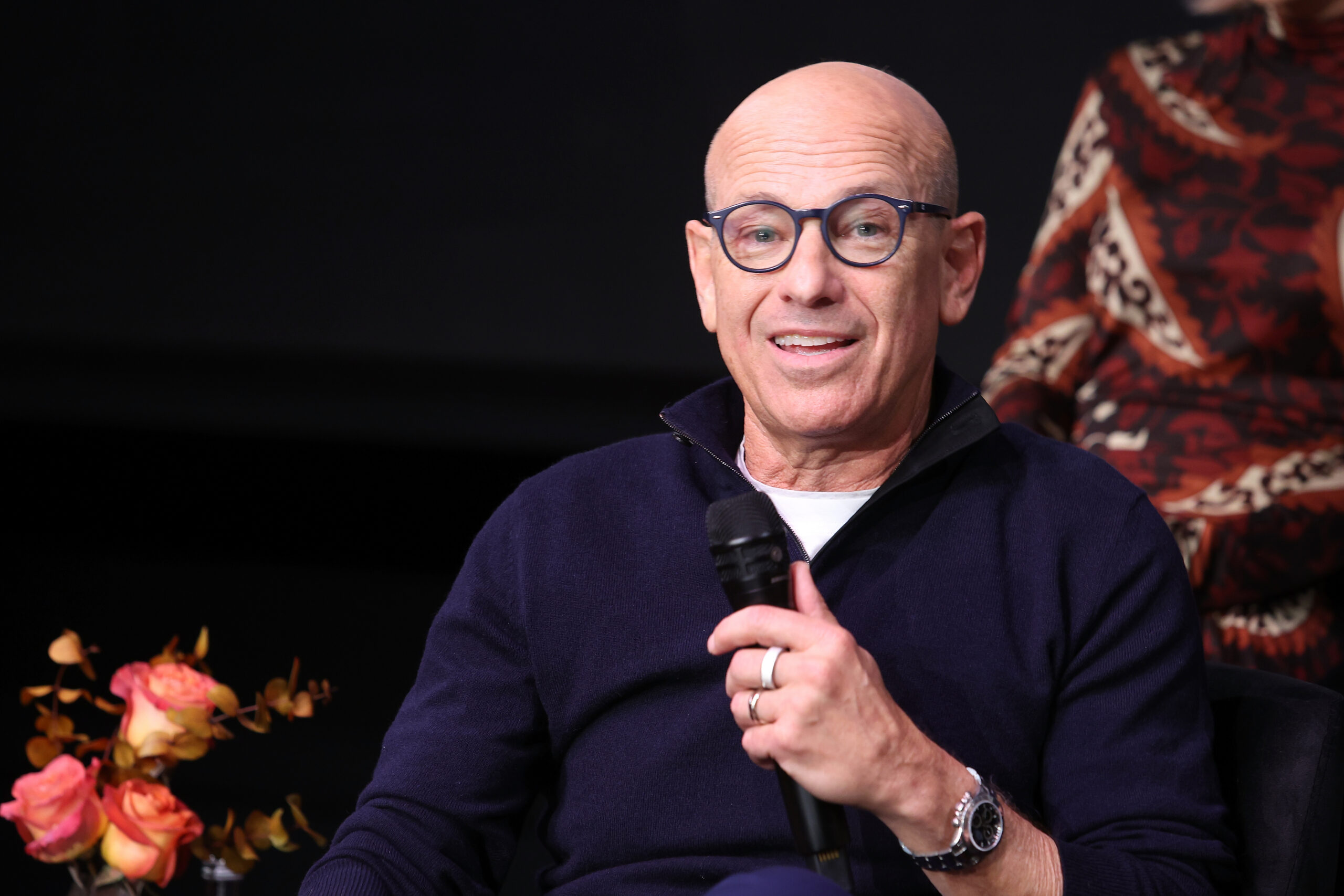
Emmy Award-winning writer and producer (“24,” “Homeland” and “Tyrant”), Howard Gordon turns 65…
Music producer, band leader of the Tijuana Brass, Herb Alpert turns 91… New York Times best-selling novelist, poet and social activist, Marge Piercy turns 90… Democratic congressman from Massachusetts for 32 years, named co-sponsor of the 2010 Dodd-Frank Act, Barnett “Barney” Frank turns 86… U.S. senator for 48 years until 2023, Patrick Leahy (D-VT) turns 86… Former syndicated talk radio host on 400+ stations and conservative political commentator under the name Michael Savage, Michael Alan Weiner turns 84… U.S. Sen. Angus King (I-ME) turns 82… Comedian, actor and professional poker player, he played the named teacher in the 1970s sitcom “Welcome Back, Kotter,” Gabe Kaplan turns 81… Retired professor of special education at Long Island University, Joel E. Mittler… Emmy Award-winning movie and television actress, best known for her role in the sitcom “Cheers” for 11 seasons, Rhea Jo Perlman turns 78… Russian ice dancing coach and former competitive ice dancer, now living in Stamford, Conn., Natalia Dubova turns 78… Chairman of Apple, Inc. since 2011 and CEO of Calico (an Alphabet R&D biotech venture), Arthur D. Levinson turns 76… New Jersey attorney, Steven L. Sacks-Wilner… Scottsdale, Ariz., resident, David L. Freedman… Chairman of Danaher Corporation, he owns a 20% stake in the NBA’s Indiana Pacers, Steven M. Rales turns 75… Israeli singer and songwriter, Ehud Banai turns 73… Former deputy chairman at the Jewish Agency for Israel, David Breakstone, Ph.D. turns 73… Author and advertising executive, Joseph Alden Reiman turns 73… President at the Detroit-based Nemer Property Group, Larry Nemer… Rabbi of Kehillas Ohr Somayach and lecturer at Ohr Somayach Yeshiva in Jerusalem, Rabbi Yitzchak Breitowitz turns 72… Equestrian and 10-time American Grand Prix Association Rider of the Year, she is a 2009 inductee into the International Jewish Sports Hall of Fame, Margie Goldstein-Engle turns 68… Founding director of the Illinois Holocaust Museum and national campaign director of the West Coast and Mountain States for the Jewish National Fund, Rick Hirschhaut turns 66… Consultant for synagogues and teacher at Bruriah High School in Elizabeth, N.J., Judah E. Isaacs… Two-term mayor of Chattanooga, Tenn., until 2021, he is now administrator of the Rural Utilities Service at the U.S. Department of Agriculture, Andy Berke turns 58… Former child actor, now an attorney and celebrity brand consultant, Josh Saviano turns 50… Rabbi of the Ashkenazi Jewish community of Turkey, Menachem Mendel Chitrik turns 49… Chief legal correspondent at MS NOW, Ari Naftali Melber turns 46… Former footballer for Beitar Jerusalem, who has also played for Chelsea, Manchester City and West Ham United in the English Premier League, Tal Ben Haim turns 44… Internet entrepreneur who is the co-founder and former CMO of Tinder, Justin Mateen turns 40… British-French journalist and author, he was a political advisor to the U.K. Deputy Prime Minister David Lammy, Ben Judah turns 38… Jerusalem-born, 2010 contestant on “America’s Next Top Model,” she went on to join the IDF, Esther Petrack turns 34… Agency partnerships lead at Samsung, Howie Keenan… Ice hockey defenseman for the Washington Capitals, Jakob Chychrun turns 28… Talmudic scholar, Avigdor Neuberger… John Jacobson…
Support for the operation is highest among those who are the most connected to Israel and those who are most affiliated with Jewish institutions

Getty Images
A large plume of smoke rises over Tehran after explosions were reported in the city during the night on March 28, 2026 in Tehran, Iran.
Two new polls of Jewish voters released this week show broad opposition to the U.S. military action against Iran, with support for the operation highest among those who are the most connected to Israel and those who are most affiliated with Jewish institutions.
A Mellman Group poll on behalf of the Jewish Electoral Institute (JEI)found that 32% of Jewish voters back the current military action against Iran, while 55% disapprove and 13% remain undecided. Support tracked closely along partisan lines, with 83% of Republicans, 49% of independents and 13% of Democrats approving the war.
Among those who said they were very connected to Israel, the poll found nearly two-thirds of Jewish respondents supportive, with just 27% opposed. But among those only “somewhat” connected to Israel, 58% said they disapprove of the war with just 25% approving. Nearly all of those Jewish respondents unconnected to Israel said they disapprove of the military action against Iran.
Support also was strongest based on those who are more religiously observant. The vast majority of Orthodox Jews (83%) approve of President Donald Trump’s military action, with just 11% opposing. But among Conservative Jews, opinion is more evenly split, with 40% approving and 48% disapproving. And among Reform Jews, support is the lowest, with just 24% approving and 67% disapproving.
There’s also a pronounced gender divide within the Jewish community: 40% of Jewish men support the military action against Iran, with 49% opposing. But among women, only 26% approve of the war in Iran, with 59% opposing.
The poll also found a significant share of Jewish Democrats (28%) and independents (29%) who said they feel “torn” about the war — agreeing that Iran is a threat to peace but disagreeing with Trump’s handling of the operation.
The “torn” constituency, which makes up 23% of the Jewish vote, generally draws from those who said they were opposed to the war in the end. When the “torn” constituency is broken out, there’s a more even divide between those who support the war (31%) and those who oppose it (41%).
The Mellman Group poll surveyed 800 Jewish voters between March 13-22.
A separate poll of Jewish voters, conducted by GBAO for the progressive Israel advocacy group J Street, found a similar response towards the war in Iran: A 60% majority of Jewish voters disapprove of U.S. military action against Iran, while 40% support the war. Of note: A sizable 20% minority of Jewish Kamala Harris voters expressed support for Trump’s military action.
The J Street poll, notably, found higher support for the war among Conservative Jews, with 62% supporting and 38% opposing. It also found moderate Jews nearly evenly split, with 51% of self-described moderates in support, and 49% opposed.
The survey also asked whether U.S. military action makes Israel more or less secure, and found a 45% plurality agreeing that it helped Israel’s defense, with 36% concluding it made Israel less safe. But a 58% majority also said that the war weakened the United States, with only 30% believing it strengthened American national security.
The J Street poll also found that 77% of Jews don’t think Trump has a clear plan and mission for the war in Iran.
And it found that 70% of Jewish respondents said their sympathies are more with the Israelis, with 30% expressing more sympathy with the Palestinians. Asked about Israeli Prime Minister Benjamin Netanyahu, 28% of Jewish respondents said they viewed him favorably, with 66% viewing him unfavorably.
As the president touts progress in talks with Tehran while escalating military pressure, analysts say the administration is keeping its options open — but will need to make a move soon

U.S. Navy via Getty Images
A U.S. Sailor signals the launch of an MH-60R Sea Hawk helicopter, attached to Helicopter Maritime Strike Squadron 70, on the flight deck of the world's largest aircraft carrier, USS Gerald R. Ford (CVN 78), while supporting Operation Epic Fury on February 28, 2026.
The Trump administration’s conflicting posturing on the war in Iran — insisting on the one hand that a diplomatic deal is within reach while also threatening to escalate strikes and potentially deploy ground troops — has left experts and former administration officials uncertain about President Donald Trump’s next move.
The president threatened in a post on his Truth Social platform on Monday morning to “conclude our lovely ‘stay’ in Iran by blowing up and completely obliterating all of their electric generating plants, oil wells and Kharg Island” if current talks fall apart and “the Hormuz Strait is not immediately ‘Open for Business.’”
But he wrote in the same post that the U.S. is engaging in “serious discussions” with Iran’s current leadership, which he described as a “new” and “more reasonable” regime than its predecessor, and said that “great progress has been made.”
Reached for comment, the White House referred Jewish Insider to Press Secretary Karoline Leavitt’s remarks at Monday’s briefing where she defended the president’s approach and repeatedly stated that Trump and his advisors are merely ensuring he has “maximum optionality” as he considers next steps.
“With respect to forces that are on the ground in the Middle East, it’s the job of the Pentagon to create maximum optionality for the commander-in-chief. It does not mean the president has made any additional decisions,” Leavitt said, adding that Trump has “decline[d] to rule … out” the use of ground troops.
On Capitol Hill, there are increasingly evident divides among Republican lawmakers about the prospect of boots on the ground. Some have argued that a ground operation would require explicit congressional authorization, and a number of otherwise-hawkish Republicans are hesitant about, if not outright opposed to, the idea of a ground operation.
In recent days, the U.S. has amassed over 3,500 more troops in the Middle East, including deploying the USS Tripoli aircraft carrier, which hosts around 2,500 Marines. Trump has also threatened to attack Iran’s oil and energy facilities and potentially escalate the war as a result of Iran’s blockade of the Strait of Hormuz — a vital passageway for the global oil trade.
Elliott Abrams, who served as Iran envoy under the first Trump administration and is now a senior fellow at the Council on Foreign Relations, told JI that the president’s decision to move more troops to the region and not exclude ground operations from future military plans is an effort to “keep his options open.”
“The massing of ground forces near Iran is both preparation for their possible use and a means of pressuring Iran to make concessions in the negotiations,” Abrams said. “There is no way of knowing what Trump will do if the negotiations fail.”
The administration is considering multiple options for the use of ground troops, including the seizure of Kharg Island, a vital economic artery for Tehran that accounts for roughly 90 percent of the country’s crude exports.
Cameron McMillan, a senior research analyst at the Foundation for Defense of Democracies, said that targets could also include the “seizure of key terrain — including relevant islands — in and around the Strait of Hormuz and securing Iranian highly enriched uranium.” However, he remained unsure whether the Trump administration would carry out such operations.
“Seizing or destroying the [highly enriched uranium] is a sensible goal if it is militarily feasible without too much risk,” Abrams said. “Taking the targets associated with the strait is, I think, both for bargaining purposes and perhaps meant to be given up only when traffic has moved through the strait freely for some time.”
Jonathan Ruhe, a fellow at the Jewish Institute for National Security of America, said that there are “real reasons to think ground operations could end up taking place.” He said that Iran “refuses to entertain Trump’s demands,” which could compel the administration to use elevated means of force in order to seize Iran’s highly enriched uranium, reopen the Strait of Hormuz or take Kharg Island “or other assets as bargaining chips.”
“The past month reaffirms that standoff air and naval power are insufficient by themselves to neutralize these targets or convince Iran to give them up,” Ruhe said. “Trump’s tendency is to employ the forces that he deploys overseas, as seen in both the Venezuela operation and the start of the current conflict. And there’s an opportunity cost to letting such well-trained U.S. forces idle indefinitely in the Middle East after pulling them from the Indo-Pacific or the homeland.”
Daniel Shapiro, a former U.S. ambassador to Israel under President Barack Obama and deputy assistant secretary of defense for the Middle East under President Joe Biden, said current talks between Washington and Tehran “look like a negotiation going nowhere.” He argued that Trump’s track record of pivoting to military action when diplomacy stalls, along with pressure to decide whether to use forces that cannot remain in the region indefinitely, suggest that ground operations could be looming.
“There is little chance that Iran, despite all punishment it has taken from U.S. and Israeli airstrikes, will make these concessions … If the [current] negotiations falter, it’s not hard to guess which way [Trump] will go,” Shapiro said.
Shapiro said that the current moment has a “similar feel to the military build-up Trump ordered throughout February” before he launched the war at the end of the month. Shapiro cautioned that any use of ground forces would indicate a “longer war” and signal that the objectives of the war are expanding “far beyond what negotiations in February were seeking to achieve.”
“With the ground forces available, they can’t just park in the region for long. Trump will, sooner than later, need to decide whether to use them or send them home,” Shapiro added.
Meanwhile, McMillan cautioned against ground operations, “especially those designed to secure and hold terrain.”
“I do not see any value in employing these forces to seize Iranian territory and would highly caution against ground operations,” McMillan said. “All of the desired objectives — with the exception of securing highly enriched uranium — can be secured through other means with substantially less risk. Seizing tankers is the most obvious if [the administration] is seeking to cut off Iran’s oil revenue.”
He also warned that the current forces being deployed might “not be enough for any large-scale ground operations for any long duration.”
“Simply deploying these units is unlikely to leverage Iran at the negotiating table, as the regime is fighting a total war that it views as existential,” McMillan continued. “Considering the profound impacts of U.S.-Israeli strikes on Iran’s ballistic missile, drone and naval capabilities, as well as its senior leadership, it is unlikely that a few more American battalions in the region will change that view or their will to continue fighting.”
Ruhe noted that Trump could be overlooking the potential costs of ground operations. He said that the president “has not adequately anticipated Iran’s retaliation” and is “discounting the uncertainties and risks of rolling the iron dice with ground operations.”
“And even if Trump is clear-eyed about the risks, he may accept them because getting the highly enriched uranium [HEU] and reopening the strait are such important goals,” he continued. Ruhe noted that such operations would likely be very complex.
“Seizing Iran’s HEU at Isfahan, Kharg Island or beachheads along the strait would be larger and more open-ended than raids on Maduro, al-Baghdadi or Bin Laden, which were in-and-out and occurred in much more tactically permissive environments,” Ruhe said. “Though Iran is being hit hard, it still has much greater military capabilities than ISIS, Venezuela or the Taliban.”
McMillan said that ground operations could also provide Tehran with leverage and risk further expanding the conflict. He also noted that any ground operation designed to seize and hold terrain in Iran is “more likely to become a liability than an asset and would draw the Trump administration closer to the war of attrition that it is trying to avoid.”
“Instead of the U.S. securing leverage, Iran would likely gain significant leverage against the U.S. by being able to employ a greater part of its arsenal against a vulnerable and isolated U.S. troop presence,” McMillan said. “If those troops were to take consistent casualties against threats that could not be removed from the air alone, expanded ground operations in the name of force protection would not be hard to imagine. That would require more forces, more resources and, in turn, likely more casualties.”
However, Richard Goldberg, a former Trump administration official, said that the use of ground operations does not necessarily signal that there will be an expanded presence and scope of U.S. involvement.
“People hear ‘boots on the ground’ and immediately think of Iraq, but we had boots on the ground in Venezuela as well — just in a very different way,” Goldberg said. “The U.S. would not be invading Iran in the sense of Iraq, but you could see a number of contingencies that might require special forces, airborne or marines for narrowly scoped missions with limited objectives, whether that’s securing nuclear material or neutralizing a threat that you can’t neutralize from the air for a variety of reasons.”
“It’s also important to remember that the military is preparing for contingencies, which may or may not ever be needed,” Goldberg added, noting that the U.S. “had Marines off of Venezuela but we didn’t use them.”
Jewish Insider’s senior congressional correspondent Marc Rod contributed to this report.
Plus, one AI rabbi down but more pop up

Emily Elconin/Getty Images
Caution tape near the front entrance of Temple Israel a day after an active shooter incident on March 13, 2026 in West Bloomfield, Michigan.

