






























U.S. lawmakers voice caution on Pakistan’s new middleman role
‘Don’t trust, but verify,’ Sen. Blumenthal said of Washington’s discussions with Islamabad
Jacquelyn Martin - Pool/Getty Images
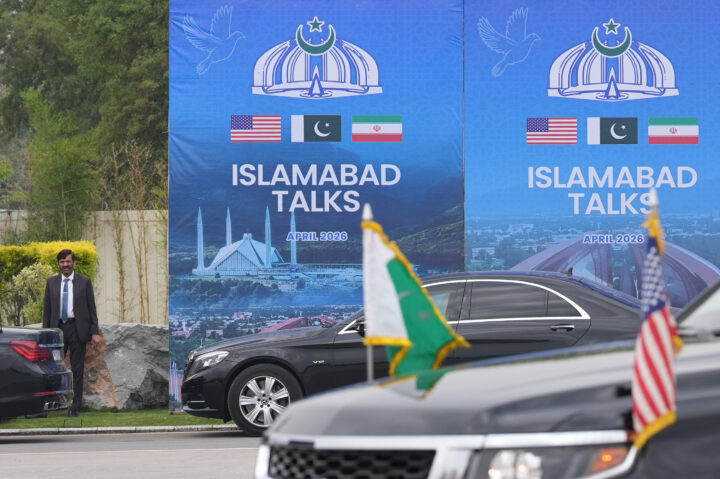
Vice President JD Vance arrives for talks with Iranian officials on April 11, 2026 in Islamabad, Pakistan.


 Add JewishInsider on Google
Lawmakers are expressing skepticism over Pakistan’s expanding role in the Middle East, cautiously welcoming its involvement in U.S.-Iran negotiations while questioning its defense aspirations in the region and whether it can truly serve as an impartial intermediary — even as the Trump administration increasingly engages with the country.
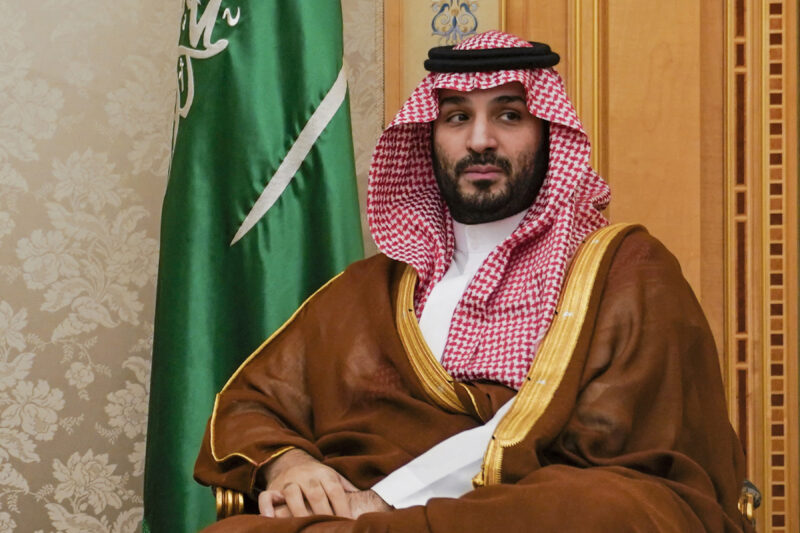
Pakistan has taken on a more prominent role in Middle East geopolitics in recent months, deepening defense ties with Gulf states — including signing a mutual defense agreement with Saudi Arabia in September 2025 and nearing a potential security pact with Qatar — while also positioning itself as a key intermediary between Washington and Tehran.
Islamabad’s involvement in the negotiations has helped facilitate a ceasefire between the U.S. and Iran, even as Pakistan has taken steps to support Iran’s economy, including opening transit routes that allow it to import goods amid the conflict.
President Donald Trump has spokenly highly of Pakistani Prime Minister Shehbaz Sharif and maintains close ties with army chief Asim Munir, who nominated Trump for a Nobel Peace Prize for brokering a ceasefire between India and Pakistan in May 2025. Munir has since been invited to a private White House lunch and later to the Oval Office alongside Sharif — part of a longstanding pattern of close ties between U.S. presidents and Pakistani military leadership.
However, Islamabad’s posture toward Israel has not been as warm: Israel and Pakistan do not share diplomatic relations and Pakistan continues to strongly back the Palestinian cause. Islamabad has also refused to recognize or allow its citizens to travel to Israel. In a since-deleted tweet earlier this month, Pakistani Defense Minister Khawaja Asif called Israel “a curse for humanity” and a “cancerous state.”
Sen. Richard Blumenthal (D-CT) said that despite Pakistan’s complicated track record, the U.S. should “welcome” any “constructive role” it is willing to play — while remaining vigilant.
“I think the approach has to be: don’t trust, but verify,” Blumenthal told Jewish Insider. “[Pakistan] has certainly been a somewhat ambiguous force in many ways. They’ve been disruptive to some relationships. They’re a nuclear-armed power, but they are definitely a force, and if they can play a constructive role here we should welcome it. It doesn’t mean that we have to accept their word on everything they do or say.”
Rep. Tim Burchett (R-TN) struck a similarly cautious tone, questioning whether any actor in the region can be considered a truly neutral mediator.
“I’m not sure if anybody over there is an honest broker, to tell you the truth,” Burchett said. “They’ll all side with the winner, and that’ll be us when it’s all over, because they need those American dollars.”
Burchett warned that Pakistan’s growing engagement with Washington “could” strain U.S. ties with India.
“India has been a strong ally of ours, so I think we need to be very careful about that,” he said. “But I think Trump understands that, and he’s going to keep that in mind. Him and [Indian Prime Minister Narendra] Modi are fairly close.”
Rep. Brad Sherman (D-CA) was more critical, arguing that Pakistan’s role stems from its close ties to Iran — a dynamic he said raises concerns.
“[Pakistan has] good relations with Iran, which doesn’t speak well of them,” Sherman said. “I mean, I don’t have any friends of mine who engage in terrorism. So, you make peace with your enemies, not with your friends, so certainly we would like to have more support from Pakistan than we have.”
Sherman also warned that deepening U.S.-Pakistan ties could have consequences for Washington’s relationship with New Delhi.
“If we grow our ties with Pakistan to the point that we’re not calling upon them to clamp down on [hostility toward Israel] and other terrorist groups, then it would [hurt the U.S.-India relationship],” he said. “If it goes to the point that we [the U.S.] forget that there are terrorist groups that are finding haven in Pakistan and that Pakistan should be doing more to clamp down on them, then I will be upset and Modi will be upset.”
He further expressed concern over Pakistan’s expanding defense relationships in the region, cautioning that “you certainly don’t want Pakistan sharing nuclear weapons technology with Saudi Arabia or anyone else.”
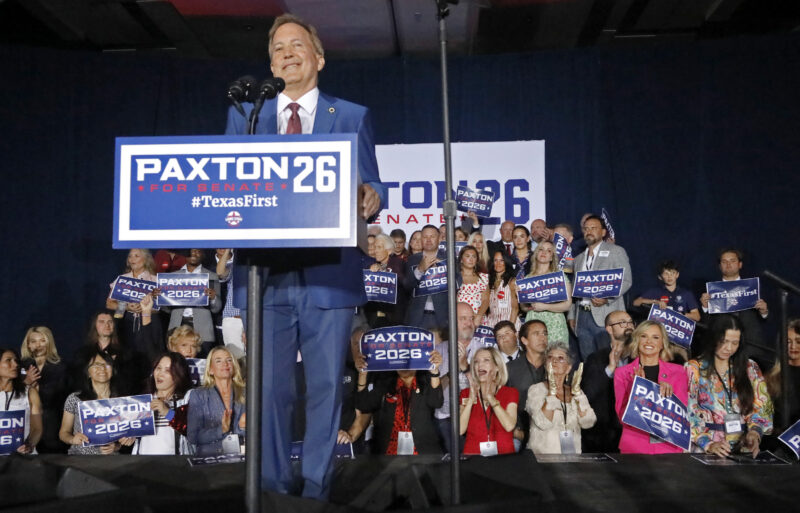
Sen. John Cornyn (R-TX), meanwhile, suggested the U.S. may not have a choice as it faces limited options in choosing a mediator. “I don’t think we have a lot of alternatives,” he said. “I don’t think we’re in a position to be too picky in terms of interlocutors. I hope it works.”
Foreign policy experts have also expressed caution over Pakistan’s expanded role and the Trump administration’s apparent friendliness with Islamabad.
“The Trump administration’s Pakistan policy suffers from deep historical amnesia,” said Sadanand Dhume, a senior fellow at the American Enterprise Institute and columnist for The Wall Street Journal. “It appears as though the U.S. has decided to completely ignore decades of painfully learned lessons about Pakistan’s propensity to host anti-American and anti-Israeli terrorists. The Trump administration also risks upturning a robust U.S.-India relationship built over decades by Republican and Democrat administrations alike.”
“Pakistan is one of the world’s most strident critics of Israel,” Dhume added. “Pakistan’s obsessive hatred of the Jewish state masks the Islamic nation’s profound failures, including an inability, so far, to allow democracy to take root and a moribund economy that makes Pakistan one of the poorest countries in south Asia.”
He added that Islamabad’s broadening defense ties are in part due to a growing “insecurity following Israeli strikes on Qatar, and a widespread perception that the Pakistani Air Force performed credibly in a four-day-conflict with India in May 2025.”
Edmund Fitton-Brown, a former British diplomat and senior fellow at the Foundation for Defense of Democracies, noted that Pakistan’s emerging defense alignment in the region is based on its “historically close relationship with all the Arabian Peninsula countries because of geographical proximity, religious compatibility and the complementarity of small, wealthy countries with labor shortages and a populous poorer country that exports labor.”
Fitton-Brown said that “Qatar is especially attractive to religiously conservative Pakistani expats.” He added that the current conflict between the U.S. and Iran has “driven [Gulf Cooperation Council] countries closer to each other” and that Qatar has sought to bring “Saudi Arabia into a Sunni Islamist axis with Turkey and Pakistan.”
Blaise Misztal, vice president of the Jewish Institute for National Security of America, said that the Iran war has underscored certain Gulf states’ vulnerability to conflict despite U.S. security guarantees, presenting a need to seek multiple defense agreements.
He noted that prior to the Iran war, “reports suggested an even bigger agreement lashing Pakistan, Qatar, Saudi Arabia and Turkey all together into a defense pact.”
“The fact that the idea appears to have been revived should be a warning to Washington that all the gains that it had made in demonstrating American strength and resolve and convincing Gulf countries that only the United States can provide for their security are already beginning to evaporate as the region contends with the possibility of Trump cutting a deal that leaves the Iranian regime in place and in control of the Strait of Hormuz,” Misztal said.
More Stories

UNHOLY ALLIANCE
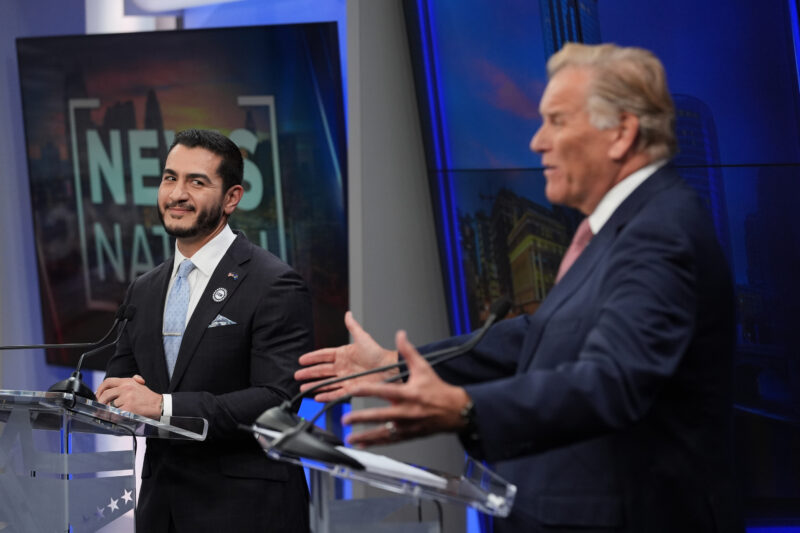
New El-Sayed ad features Tucker Carlson, far-right podcaster’s attack on Mike Rogers
CALLING IT OUT
Rep. Don Bacon blasts Dan Osborn over ‘anti-Jewish’ ad
UNKNOWN HORIZON
Final Israeli polls point to stalemate ahead of Tuesday’s election
ECONOMIC ANGST
Netanyahu predicts end of U.S. military aid, calls for plan to circumvent potential sanctions
WAR WORRIES
Could another war with Iran be the October surprise of the Israeli election?
SCOOP
Chabad holding 250 menorah lightings in all 50 states to commemorate Chanukah, America’s 250th birthday
Please log in if you already have a subscription, or subscribe to access the latest updates.
 Continue with Google
 Continue with Apple