































































Senate rejects Iran war powers resolution for the fifth time
The results remained unchanged from previous iterations of the vote
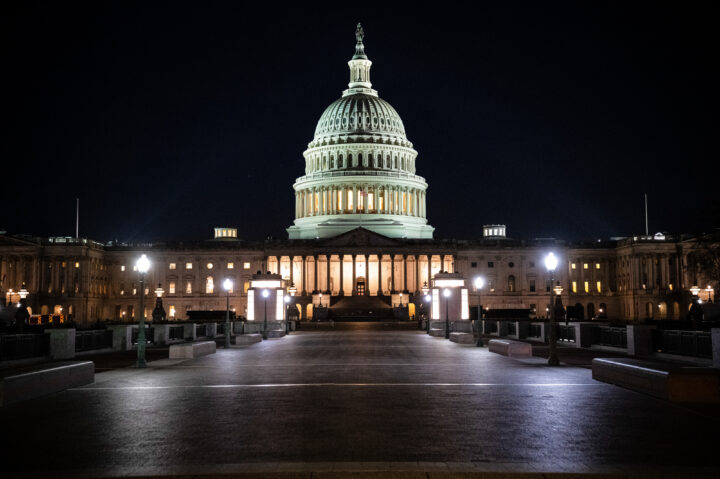
Graeme Sloan/Bloomberg via Getty Images
The U.S. Capitol in Washington, DC, US, on Wednesday, April 1, 2026.


 Add JewishInsider on Google
For the fifth time, the Senate rejected an effort by Democrats to force the administration to end the war in Iran, with the partisan battle lines on the issue remaining firmly unchanged from previous iterations of the vote.
“Democrats will continue to force votes on war powers resolutions every week until Republicans decide to put the American people over Donald Trump and end this war,” Senate Minority Leader Chuck Schumer (D-NY) said ahead of the vote.
The vote failed 51-46, with Sens. Mark Warner (D-VA), Chuck Grassley (R-IA) and David McCormick (R-PA) not voting, and Sens. John Fetterman (D-PA) and Rand Paul (R-KY) voting with the opposing party.
Democrats have already introduced eight other similar resolutions that will be eligible for votes in the coming days and weeks, giving them plenty of runway to continue such efforts for the foreseeable future.
In the House, Reps. Greg Meeks (D-NY) and Ro Khanna (D-CA) also introduced new war powers resolutions on Iran, after previous efforts narrowly failed. The Congressional Progressive Caucus reportedly plans to force votes on such resolutions frequently next month.
Though they haven’t broken openly with the president, dynamics for at least some Senate Republicans could begin to shift toward the end of the month; under the War Powers Act, the administration can only carry on military operations without congressional approval for 60 days, with an additional 30-day drawdown period.
Though some Republicans have said Congress and the administration should disregard that deadline, others say that some form of action will be necessary at that point, and some hope that the war will be over before then.
Sen. Lisa Murkowski (R-AK) who has been working with other senators on crafting an Authorization for Use of Military Force on the war, told Jewish Insider on Wednesday, “we’ve been having some good conversations, and we’re going to continue them.” She said the goal of the AUMF is to have “greater disclosure, greater transparency” about the war.
Sen. Josh Hawley (R-MO) said earlier this week, ahead of the U.S. extension of the ceasefire, that he believed the president was “trending in a direction of ‘let’s end this without further involvement, including even further strikes’” and said that he hopes the war is over before the 60-day mark.
He told JI that he hasn’t been working with Murkowski on her AUMF, but said that the effort “makes sense since we’re approaching the 60-day deadline.”
Sen. Mike Rounds (R-SD) told JI he would “give the administration the benefit of the doubt that they will respond accordingly, in compliance with that” 60-day deadline “and if not, then we’ll have to have some discussions” around further congressional involvement through an AUMF or other avenue.
Still, other Republicans seem comfortable overlooking the 60-day deadline.
“I think the president has the authority to protect us, so we should let the president protect us,” Sen. Pete Ricketts (R-NE) said.
More Stories

SHOW OF SOLIDARITY
Jewish leaders offer support to Hindus amid rising threats to faith communities

HISTORY LESSON
Brett McGurk’s fact check of former Harris advisor Phil Gordon on hostage negotiations
THREAT THWARTED
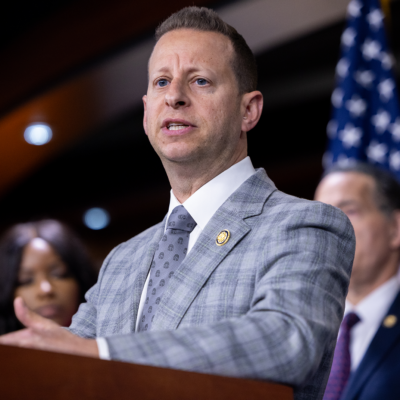
Man arrested in Boca Raton for making death threat against Rep. Jared Moskowitz

STUDENT SAFETY
Federal civil rights complaint accuses Montgomery County, Md., schools of ignoring antisemitic harassment
SUNSHINE STATE RETREAT
House GOP leadership super PAC pulls ad spending against Jared Moskowitz

COMINGS AND GOINGS
Heritage Foundation taps critic of U.S. involvement in Middle East as distinguished fellow
Please log in if you already have a subscription, or subscribe to access the latest updates.
 Continue with Google
 Continue with Apple