









































Trump administration memo details legal case for Iran war, cites Israeli request
The report from the State Department provides the most comprehensive justification yet for the campaign, including that the U.S. had acted at the ‘request of and in collective self-defense of its Israeli ally’
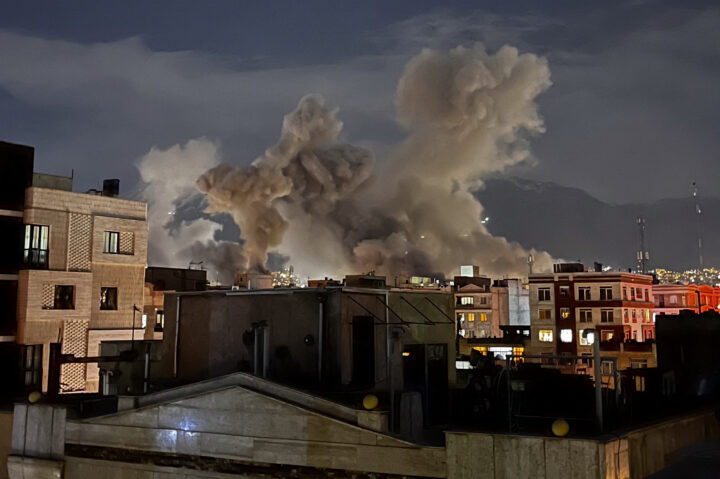
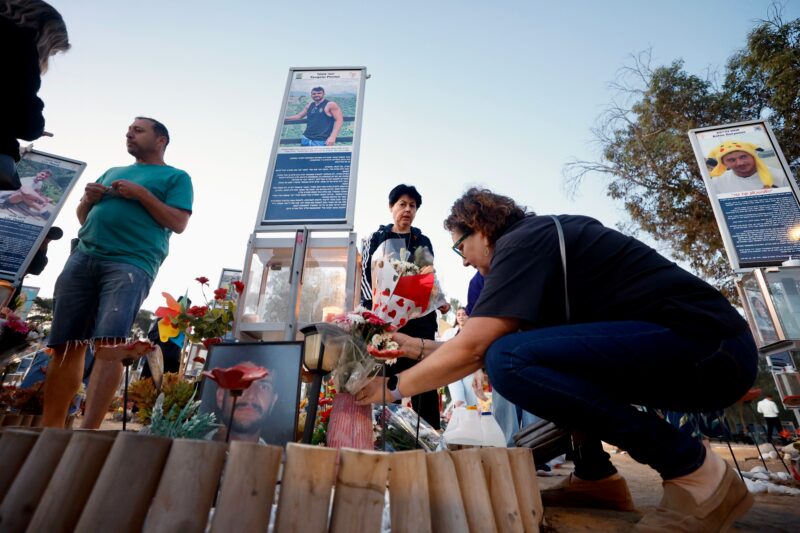
Mowj / Middle East Images / AFP via Getty Images
Plumes of smoke rise following reported explosions allegedly near Iran's Ministry of Intelligence on Araqi Street in Tehran on March 1, 2026.


 Add JewishInsider on Google
Nearly two months after the U.S. and Israel jointly launched a military campaign against Iran dubbed Operation Epic Fury, Washington acknowledged in a new State Department memo that its decision to participate in the conflict came — at least in part — at Israel’s request.
The statement, in a document authored by State Department Legal Advisor Reed Rubinstein, notes that defending Israel is just one part of a larger rationale for attacking Iran’s capabilities that Rubinstein says relies on decades of evidence. But it comes after several Trump administration officials pushed back on the narrative that Israel had forced the White House’s hand.
“The United States is engaged in this conflict at the request of and in the collective self-defense of its Israeli ally, as well as in the exercise of the United States’ own inherent right of self-defense,” Rubinstein wrote in the document, dated Apr. 24.
The memo is the most detailed look yet at the Trump administration’s justification for the latest conflict with Iran, which began on Feb. 28. Lawmakers, including leading Republicans, have at times expressed frustration that the administration is not being transparent enough in providing information about the war effort.
There is currently a ceasefire in place as the two countries are engaged in negotiations, although President Donald Trump has threatened to restart military strikes if a deal is not reached.
While Rubinstein writes that Israel requested the U.S. participate in striking Iran, his broader argument is that Iran has demonstrated “malign aggression” against the U.S., Israel and other allies in the region for decades. Therefore, according to Rubinstein, this latest salvo is merely the next stage of a decades-old conflict that began anew last June.
“The operations recommenced in late February were part of an armed conflict with Iran that has been ongoing for years and, at the very least, since June 2025” when the U.S. and Israel struck Iran’s nuclear and military facilities, Rubinstein writes. Since the conflict did not officially end in June — a ceasefire is not the same as a formal agreement to end hostilities — he concludes that it has been ongoing, and the current fighting is just a new phase in the war.
“If a conflict has not ended, then it must be ongoing,” Rubinstein argues.
The memo documents Iran’s extensive history of targeting American forces and assets, including through its proxies like Hamas and Hezbollah. He dates this part of his analysis back to 1979, when the Islamic Republic was created, arguing that the country has been attacking the U.S. and its “interests and its allies” ever since. It was Iran’s “clear pattern of unprovoked aggression and direct and proxy attacks against Israel and the United States” that spurred the U.S. to act last June, he writes.
Rubinstein concludes by pointing out Iran’s response to the U.S. attacks: “wreaking havoc throughout the region.” That, according to Rubinstein, “further underscores the fundamental necessity, utility, reasonableness, and lawfulness of Operation Epic Fury’s mission and goals.”
More Stories

Daily Kickoff
Barack to 1948
MAIL FAIL
El-Sayed letter to Jewish community on antisemitism fails to reassure skeptics

DFL DISCORD
Amy Klobuchar, Angie Craig condemn Hasan Piker ahead of Minneapolis event with Ilhan Omar

SPEAKING OUT
Jewish groups call for apology after educators asked to condemn Israel to attend Italy trip

analysis
Is Israel’s anti-Netanyahu bloc fracturing?
UNKNOWN HORIZON
Final Israeli polls point to stalemate ahead of Tuesday’s election
Please log in if you already have a subscription, or subscribe to access the latest updates.
 Continue with Google
 Continue with Apple