































































Iran’s ‘Houthi card’: Israel prepares for possibility of ground assault if war resumes
The Houthis have spoken openly about their plans to initiate an invasion akin to Oct. 7 through Jordan and Syria
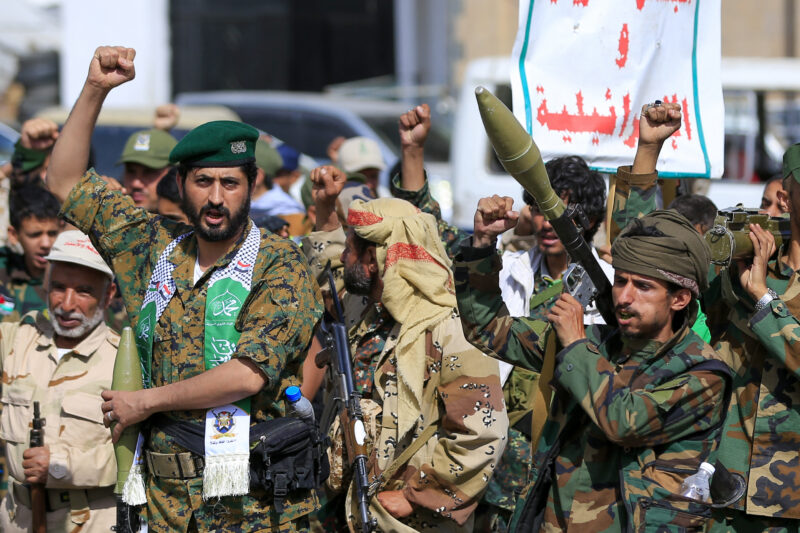
Mohammed HUWAIS / AFP via Getty Images
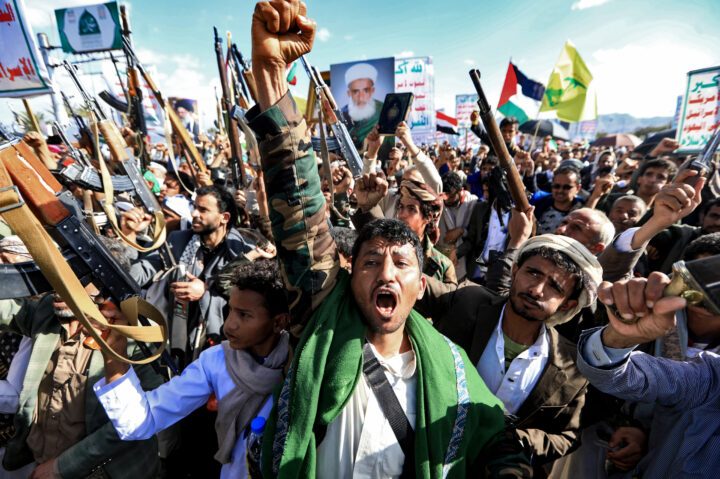
Supporters of the Iran-backed Houthi movement brandish their weapons as they rally in solidarity with Iran and Lebanon in the Yemeni capital Sanaa on April 10, 2026.


 Add JewishInsider on Google
Like a desperate poker player holding an ace in the hole, Iran has a “strategic reserve” if the ceasefire in the war with Israel and the U.S. collapses and fighting resumes: the Houthis, the Tehran-backed Yemeni terrorist group.
How Iran plays the Houthi card has been the subject of concern in Israel, with analysts telling Jewish Insider that everything from a ground invasion from the east — with echoes of Hamas’ Oct. 7, 2023, rampage in southern Israel — to making good on the threat to block the Bab el-Mandeb Strait to further choke off international shipping remains in play.
Yoni Ben-Menachem, a senior Middle East analyst at the Jerusalem Center for Security and Foreign Affairs, told JI that the Houthis planned “to take revenge and bring back their honor” since Israel killed much of their leadership in August 2025.
“They see that Israel’s air defenses are strong, and it’s hard for them to reach military achievements with missiles and drones. They want to surprise Israel, so they are looking at ways to do it on the ground,” he said.
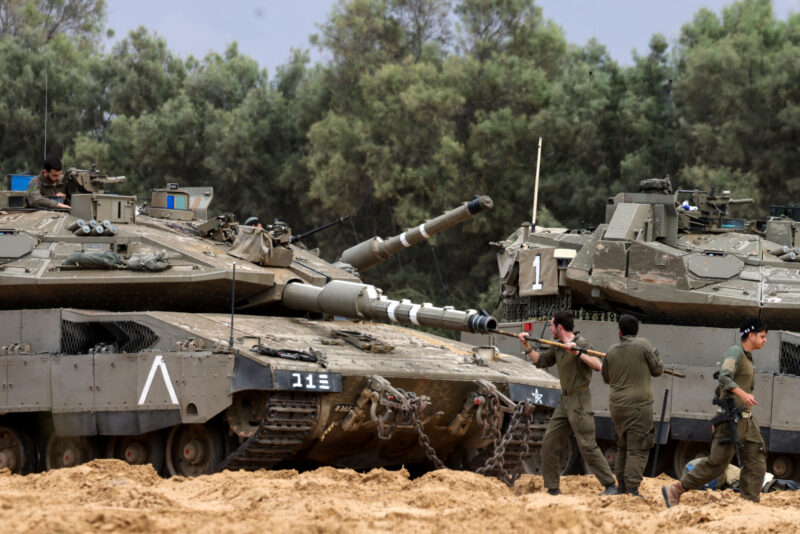
One scenario that Israel has actively prepared for, even before this year’s war with Iran, is a Houthi ground invasion via Syria and Jordan.
The IDF said in September that it has intelligence indicating that the Houthis initiated a training course named “Al Aqsa Flood,” as Hamas called the Oct. 7 attacks. The group planned to take advantage of the instability in Syria and political weaknesses in Jordan to invade Israel from the east, deploying tens of thousands of terrorists on a killing spree, heading toward Jerusalem. In January, the IDF’s Central Command led a training exercise, together with Israeli Border Patrol and police, on how to counter such a scenario.
In addition, the IDF has continued the construction of a security fence along the border with Jordan.
Yossi Mansharof, a lecturer at Haifa University, told JI that the Houthis speak openly about a possible land invasion in their media channels: “They say they intend to invade and … reach Dimona [in southern Israel], conquer [Israeli] towns.”
Mansharof said that while an invasion via the Red Sea and Eilat, at Israel’s southern tip, would be closer to the Houthis’ home base, such a move is “unrealistic; they would have to go undetected by the IDF.”
However, he said, the 186-mile border between Israel and Jordan is particularly porous, and if Hamas could break through the Gaza fence, as it did on Oct. 7, the Houthis may be able to do the same in Jordan. In addition, Iran has long worked to gain a foothold in Jordan.
“Iran is a shared enemy” of Israel and Jordan, Mansharof said. “Iran violates Jordanian sovereignty, and some of the missiles shot at Israel land in their territory. … Iran wants to establish terrorist infrastructure [in Jordan], and King Abdullah has said in Davos and in media interviews that he is concerned about Iran.”
In addition, Mansharof said, the Shi’a militias in Iraq, which shares a border with Jordan, have close ties with the Houthis.
A Houthi attack could also be part of an Iran-led multi-front assault on Israel, which Iranian officials — including a top advisor to Mohammad-Bagher Ghalibaf, Iran’s parliamentary speaker and leader of negotiations with the U.S. — have spoken about for years, Mansharof said.
“They want to advance a mutli-front attack on Israel from all of the axis of resistance arenas,” Mansharof said. “They want to end the story, not just have more rounds of fighting [with Israel]. … A Houthi invasion can be part of that.”
Ben-Menachem argued that a more realistic scenario in the near term is that the Houthis would help the Iranians by blockading Bab el-Mandab, a strait passing from the Gulf of Aden to the Red Sea, to cut off global shipping at a second point while the Strait of Hormuz, which is under Iranian control, remains closed. Saudi Arabia is reportedly especially concerned about this possibility, as the Gulf state uses the waterway to move much of its oil.
The Iranians have been saving the Houthis as their “strategic reserve” in case of renewed fighting with the U.S., Ben-Menachem said, and should the Yemeni terrorists join the war, “their target will be first the U.S. and then Israel.”
“The Iranians see that the most effective move is to pressure the U.S. and harm the world economy,” he said.
Still, Mansharof said, Israel “should not wait for the Houthis to take initiative. Israel needs to choose the timing [for military action], because at some point, the war with the Houthis will resume. … Israel needs to build advanced intelligence capabilities and cooperate with the Americans to create a jumping-off point. … It’s a just war of defense for Israel.”
Jerusalem’s recognition of Somaliland in December could provide Israel with a physical base for such an attack and would “break the supply chain of Iranian aid to the Houthis” from Somalia, which is just across the Gulf of Aden from Yemen, Mansharof noted.
Ben-Menachem said Israel’s announcement last year that it had discovered the Houthis’ plan served to undermine it.
“Israel must repeatedly warn them and say they know what they’re planning. We shouldn’t take it off the agenda, talking about it is part of the deterrence … [The Houthis’] success depends on the element of surprise. If we show that they can’t surprise us, it will lower their motivation,” he said.
More Stories

analysis
From Oct. 7 to FlyDubai, ordinary Israelis keep filling the gaps left by the government
BIBI BOOST
Netanyahu bloc gains on Gadi Eisenkot’s opposition in latest Israeli polls

NO COMMENT
Rogers honors Oct. 7 anniversary and bashes El-Sayed, as El-Sayed remains silent
Daily Kickoff
Three years, familiar fears on 10/7 anniversary
Daily Overtime
Nessel feels the heat over El-Sayed support

TOEING THE LINE
Menin, Levine call for ‘focus’ on Oct. 7 victims — but don’t condemn Mamdani
Please log in if you already have a subscription, or subscribe to access the latest updates.
 Continue with Google
 Continue with Apple