


AFP via Getty Images
Ceasefires deepen Israeli divisions over Trump’s handling of war
The most recent poll on the matter, taken before the Lebanon ceasefire was announced, found that 51% of Israelis oppose a ceasefire with Hezbollah and only 29% support it


 Add JewishInsider on Google
A weekend of diplomatic turbulence has deepened fault lines in Israel over the ceasefires in Lebanon and Iran, with public opinion split along political lines over whether President Donald Trump is serving Israeli interests — or overriding them.
The most recent poll on the matter, taken before the Lebanon ceasefire was announced and published by Israel’s Channel 12 on Thursday, found that 51% of Israelis oppose a ceasefire with Hezbollah and only 29% support it. Among voters for Netanyahu’s government, 64% oppose a ceasefire and 18% support it. Nearly half (48%) of Israelis do not trust President Donald Trump to consider Israeli interests in negotiations with Iran, while 33% do trust him. Most voters for Netanyahu’s coalition (59%) trust Trump while 24% do not.
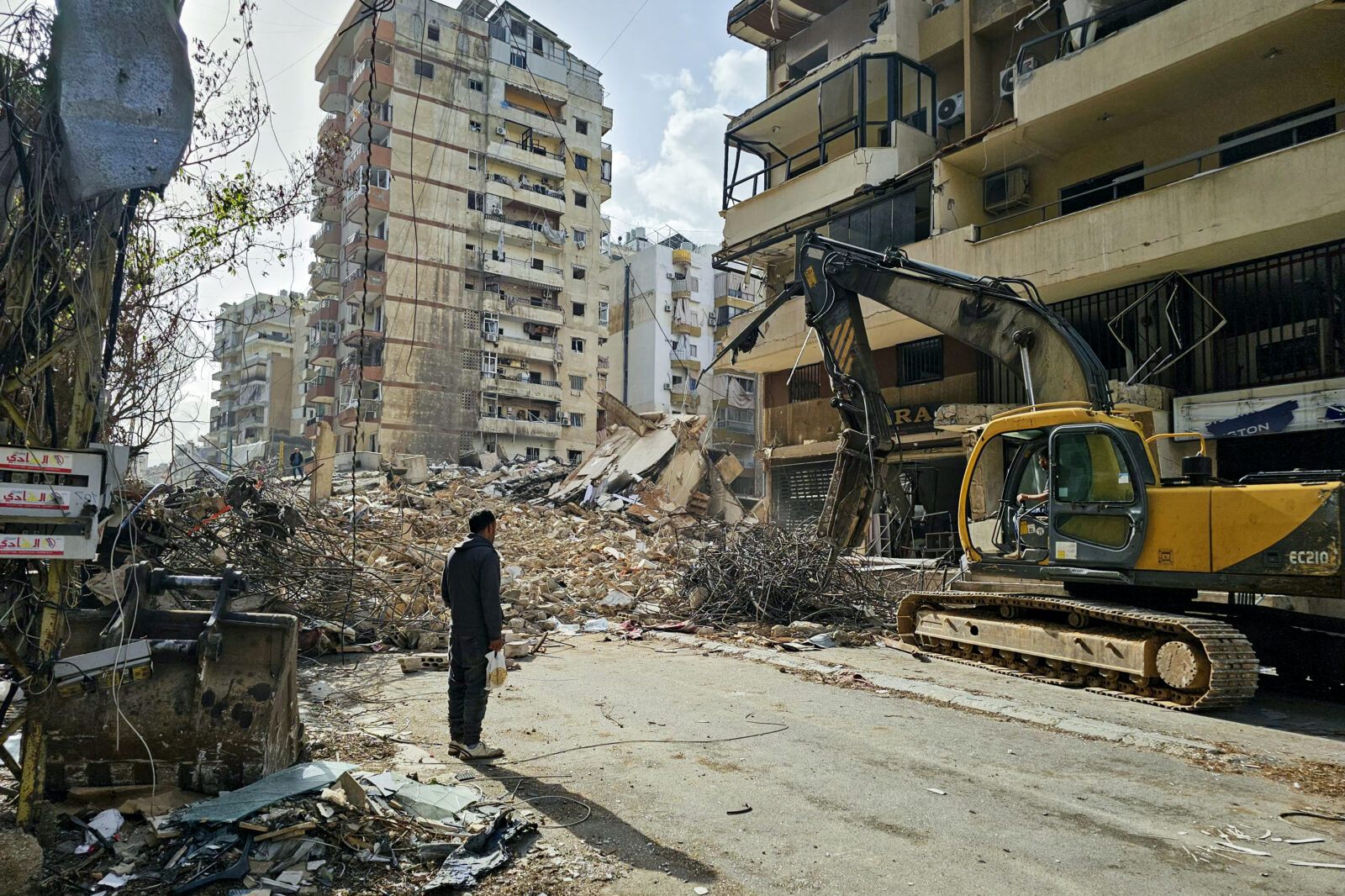
Trump’s announcement of a ceasefire in Lebanon on Thursday, before any known progress had been made in talks between Jerusalem and Beirut toward dismantling Hezbollah, already made waves in Israel.
Israeli Prime Minister Benjamin Netanyahu attempted on Friday to draw the same delicate balance as he had regarding Iran the previous week, asserting that Israel has “brought about monumental achievements” in Lebanon, created a buffer zone along the northern border and destroyed much of Hezbollah’s missile stockpile. However, he added, “we have not yet finished the job,” but said Israel was “provid[ing] an opportunity to advance an integrated diplomatic and military solution with the Lebanese government,” at Trump’s request.
Within an hour of the release of Netanyahu’s statement, Trump published a Truth Social post in which he “PROHIBITED” Israel from continuing to bomb Hezbollah targets, adding: “Enough is enough!!!”
Jerusalem reportedly asked the Trump administration for clarifications in light of the strong language in the post, which contradicted language in the ceasefire allowing Israel to act “in self-defense, at any time, against planned, imminent or ongoing attacks.”
Two IDF soldiers were killed in Lebanon over the weekend by explosive devices planted by Hezbollah. The IDF continued striking terror targets in Lebanon, such as “a loaded and ready-to-fire launcher,” saying that “Hezbollah has continued its terrorist activity, in violation of the [ceasefire] agreement.” On Monday morning, IDF Arabic Spokesperson Avichay Adraee urged residents of dozens of areas of southern Lebanon to stay away for their safety.
Trump said in his Friday Truth Social post that “the U.S.A. will get all nuclear ‘dust’ created by our great B2 bombers,” apparently referring to Iran’s stockpile of highly enriched uranium. Yet, Iran has denied any concessions on the nuclear file, and resumed its blockade of the Straits of Hormuz as long as the U.S. continued to block vessels going to and from the Islamic Republic. Israel’s Channel 12 reported that the U.S. and Iran are negotiating a 15-year suspension of uranium enrichment and the conversion of highly-enriched uranium into fuel, rather than removing it from Iran, as well as lifting sanctions.
With the ceasefire in Iran due to end on Tuesday night, Vice President JD Vance is set to travel to Pakistan for a second round of talks on Monday, but Iranian state media has said officials do not plan to attend.
Shira Efron, a senior fellow at RAND who serves as the think tank’s distinguished chair for Israel policy, told Jewish Insider that “there is no question that the tone – ‘prohibited’ in upper case, ‘enough is enough’ – struck a sensitive note in Israel, and people are talking about a vassal state.”
Efron tied Trump’s comments from Friday to those at the end of last year’s 12-day war against Iran, when he said “I’m not happy with Israel … They don’t know what the fuck they’re doing.” She also connected the comments to the pressure Trump has put on Israeli President Isaac Herzog to pardon Netanyahu, who is on trial for corruption charges, as well as Israeli and American flags lining some of Israel’s busiest highways for much of the last two months.
“These are things that make Israelis say, ‘Have we lost our agency?’” she said.
Israelis are also disappointed because they feel the government overpromised to bring security to the residents of the country’s north, Efron said, noting that “it takes a long time to disarm terrorist organizations.”
“There is a sense of confusion as to how the president, who has been so tightly aligned with Prime Minister Netanyahu, could issue a blanket, almost punitive warning to Israel to stop bombing Hezbollah, that had been bombing Israel incessantly with hundreds of missiles and drones,” Dan Diker, president of the Jerusalem Center for Security and Foreign Affairs told JI.
Efron said that the ceasefires are “the package deal. We’re clearly the junior partner here. The U.S. wants us to stop in Lebanon because that’s what’s required to give the Islamabad talks a chance to succeed.”
Dan Diker, president of the Jerusalem Center for Security and Foreign Affairs, called Trump’s remarks “draconian.”
“There is a sense of confusion as to how the president, who has been so tightly aligned with Prime Minister Netanyahu, could issue a blanket, almost punitive warning to Israel to stop bombing Hezbollah, that had been bombing Israel incessantly with hundreds of missiles and drones,” he told JI.
“This is not a ceasefire by Hezbollah,” Diker added. “Israel agreed to back off to see what the Americans would do. We’re in this waiting period.”
Diker argued that Netanyahu “played it extremely well in going with the president, while maintaining very strict red lines about Israel’s demands to continue to be able to defend itself against Iranian aggression and Hezbollah.”
The mandate of negotiations between Israel and Lebanon “is to try to separate Hezbollah from its Iranian patrons and try to coalesce the Lebanese government that had reached out to Israel,” Diker said.
Efron called the negotiations between the Lebanese government and Israel, including possible peace and normalization, “a stab in the eye for the Iranians. It’s not what they want,” but tying a ceasefire in Lebanon to the talks with Iran — or the resumption of fighting with Hezbollah in the event of the war in Iran starting up again — is a “strategic negative … connecting two fronts, which you want to prevent.”
Efron argued that “Trump is doing Israel a favor” in pushing the Lebanon ceasefire, because “there is a declining marginal utility in continuing the military effort beyond what was done at first. … It’s better to try serious negotiations with Lebanon that are required if we are ever to disarm Hezbollah.”
“This has become the war of Hormuz, not what Israel was concerned with. Israel is concerned with three threats,” Shira Efron, a senior fellow at RAND who serves as the think tank’s distinguished chair for Israel policy said, naming Iran’s nuclear weapons, ballistic missiles and proxy war.
Diker, however, said it was unclear whether the Lebanese government would be able to help disarm Hezbollah, pointing out that the Iranian ambassador remains in Beirut even though he was nominally expelled by the government weeks ago. “From a perception standpoint, that tells the whole story,” he said.”
With regard to negotiations with Iran for a longer-term ceasefire, Efron said that “Israel is almost a bystander. Clearly, its positions are factored in, but Israel is not at the table.”
“This has become the war of Hormuz, not what Israel was concerned with. Israel is concerned with three threats,” Efron said, naming Iran’s nuclear weapons, ballistic missiles and proxy war.
“If the reports are accurate, Israel is getting far less than it wanted,” she added. “If the best we get is no enriching uranium for 15 years and some deal about highly enriched uranium, nothing about missiles and proxies, and Iran will get all this money from frozen funds – How is that much better than the [2015 Iran Deal]? … It’s a little too early to say, but if this is the agreement, clearly there will be a sourness on the part of Israel. Even the biggest cheerleaders of this war are not happy about it. … It will be hard to sell to the people as an actual victory.”
Diker said “clearly Israel has not finished the mission to deny the Iranian regime of highly-enriched uranium, ballistic missiles or its proxy strategy. It has not accomplished any of those goals.”
That being said, Israel “achieved Prime Minister Netanyahu’s immediate goal … act[ing] heroically in seriously degrading the Iranian regime’s ballistic capabilities … [and] definitely achieved the goal of preventing an immediate existential threat from being carried out,” Diker said. “Clearly Israel is in a much better position today, having destroyed the majority of [Iran’s] ballistic missiles, which were a shield for the nuclear weapons program.”
From the Iranian perspective, however, the regime “succeeded very consequentially, stood up to the ‘Big Satan’ and ‘Little Satan’ in a six-week war, and they’re still standing,” Diker added. “That, in my assessment, has caused them to act in a far more daring way. That’s why they closed the Strait [of Hormuz] again, because they figured they brought Donald Trump to heel and Israel to heel.”
“I do think they’re overplaying their hand as an apocalyptic jihadistic Islamic regime, because they are driven primarily by ideological religious fervor. They are not primarily rational actors,” he added.
Efron noted that it is “difficult to assess the outcome of war in the short term,” and “Israel may be really happy because in two or three years Iran will be done for.” That being said, Efron said she is “dreading the [regime’s] revenge on the Iranian people.”
Diker said that Israel is still “determined to dismantle this apocalyptic regime … [otherwise] we are going to be in this for another four, five, six years. We can’t afford to allow this window of opportunity to close.” He referred to outgoing Mossad Director David Barnea’s speech at a Holocaust Remembrance Day ceremony last week, in which he said that Israel’s mission in Iran will end “only when this radical regime is replaced.”
“We hope that the president will be in it for the long run,” Diker added.
Please log in if you already have a subscription, or subscribe to access the latest updates.
 Continue with Google
 Continue with Apple