




















































Trump’s political capital goes to the polls
You couldn’t draw up a better test on the degree of Trump’s impact on the Republican Party than examining the results from four states holding highly consequential primaries next month that will be a benchmark of the president’s power
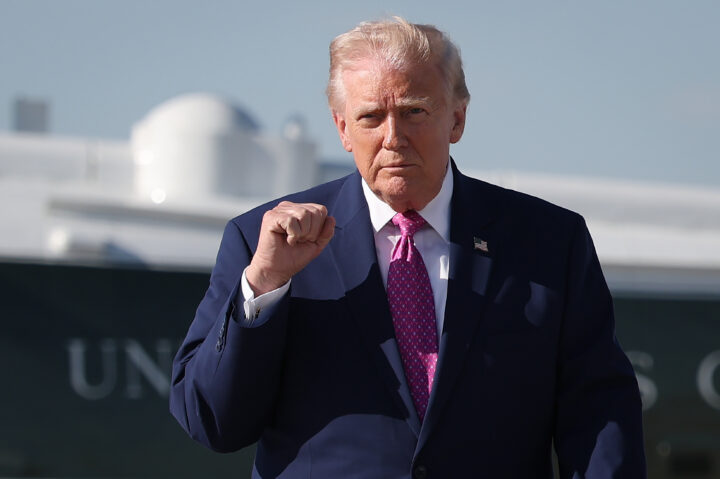
Win McNamee/Getty Images
President Donald Trump walks toward reporters before answering questions prior to boarding Air Force One on April 10, 2026 at Joint Base Andrews, Maryland.


 Add JewishInsider on Google
There’s been a lot of debate lately over whether President Donald Trump is losing some of his grip on the Republican Party, amid growing economic concerns and the ongoing military operations in Iran.
While the media coverage has been amplifying any sign of intraparty discontent — to the point that former Rep. Marjorie Taylor Greene (R-GA) is getting strange new respect from some Democrats and mainstream press alike — polls continue to show Trump with widespread backing from within his own party, and especially within the MAGA faction of the GOP.
Ultimately, election results are the best reality check. And you couldn’t draw up a better test on the degree of Trump’s impact on the Republican Party than examining the results from four states holding highly consequential primaries next month that will be a benchmark of the president’s power.
Key races in Indiana, Kentucky, Louisiana and Texas will speak volumes about the president’s ability to shape the GOP agenda for the remainder of his second term — and most consequentially, whether he will be able to maintain a unified front with his party on continuing to pursue military action against Iran.
The biggest intraparty showdown, especially when it comes to foreign policy, is the May 19 primary between Rep. Thomas Massie (R-KY) and military veteran Ed Gallrein. Massie, one of the few anti-Israel Republicans in Congress, is being opposed by Trump but also has a solid base of grassroots support in the northern Kentucky district, which has thus far supported his anti-establishment brand of politics. But Gallrein has proven to be a credible challenger, raising millions and giving Massie the biggest political test of his career.
Trump has spent some valuable political capital to boost Gallrein, including appearing at a recent rally in Massie’s district to promote his challenger. He’s been joined by the Republican Jewish Coalition, which has poured $3.5 million into the race, airing five ads underscoring Massie’s record of breaking with Trump. (Further drawing Trump’s ire: Massie also joined with Democrats in championing the release of the Epstein files.)
It’s never easy to beat a sitting incumbent, but Trump also has an imposing record of winning primaries in which he chooses to engage. If Massie pulls out a victory despite breaking so flagrantly with Trump on a number of key issues, it will be a sign of the president’s diminished political clout.
Another high-profile race where Trump’s engagement in a primary hasn’t yet been definitive: Sen. Bill Cassidy’s (R-LA) uphill fight to win renomination against Trump-endorsed Rep. Julia Letlow (R-LA) and state Treasurer John Fleming. The primary will be held on May 16, with the top two finishers heading to a runoff if no one wins a majority of the vote.
Cassidy, largely because of his vote to impeach Trump in 2021, has long faced challenges with the GOP base. Trump, looking to secure Cassidy’s defeat, backed Letlow earlier this year in hopes she’d consolidate the MAGA vote. But Trump’s endorsement hasn’t translated into a groundswell for Letlow, and the presence of Fleming, a former right-wing congressman, has complicated the political math in the primary.
Cassidy looks like a long shot even if he heads to a runoff, and Letlow holds a narrow lead in the limited public polling of the race. But there’s a chance that Fleming could sneak past Letlow on the primary ballot and face Cassidy in a runoff, blocking Trump’s candidate from the race. If that happened, it would be another sign that Trump’s endorsement doesn’t carry the same weight as it once did.
The first Trump test of the month (May 5) will be in Indiana, where the president is trying to punish certain Republican state legislators for not backing a redistricting plan, championed by the White House, which would have allowed the GOP to gain an additional seat.
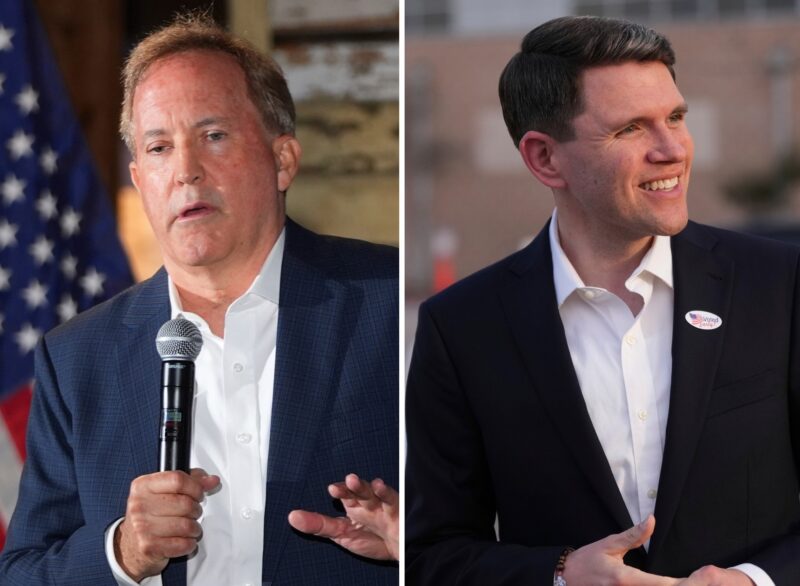
Finally, it’s the spring race where Trump has remained on the sidelines that may be a signal of his limited political powers. After Sen. John Cornyn (R-TX) finished ahead of Texas Attorney General Ken Paxton in the state’s primary last month, reports indicated the president was close to endorsing Cornyn for reelection, in an effort to prevent an expensive and competitive general election against Democrat James Talarico.
But amid furious pushback from right-wing activists and polls suggesting that a Trump endorsement wouldn’t have moved the needle that much, the president has not gotten involved in the race. That alone speaks volumes about the limited level of the president’s political capital.
Trump boasts a near-perfect record in GOP primaries throughout his decade-long political career, with the most prominent setbacks being in Georgia (working against Gov. Brian Kemp and Secretary of State Brad Raffensperger in 2022). So if the president’s chosen candidates end up falling short in these key contests, it will be a sign that Republicans may already be preparing for the post-Trump era.
More Stories
POLICY PIVOT
On Oct. 7 anniversary, senior Democrats call for changes in U.S.-Israel policy

MINORITY PROTECTIONS
House Democrats urge Rubio to respond to Turkey’s crackdown on LGBTQ community

analysis
Chris Murphy’s selective outrage in the Middle East

EXCLUSIVE
Bipartisan House resolution honors pilot, passengers who stopped FlyDubai hijacking
Daily Overtime
Trump says FlyDubai attacker likely linked to Iran

MEDIA MOMENT
New York magazine editor seeks to reassure Jewish leaders but stands by contentious cover issue
Please log in if you already have a subscription, or subscribe to access the latest updates.
 Continue with Google
 Continue with Apple