


































The IDF said it targeted Hamas’ senior leadership amid explosions in Doha

Screenshot/X
Israel strikes Hamas leadership in Doha, Qatar on Sept. 9, 2025.


 Add JewishInsider on Google
Israel conducted a strike against senior Hamas leaders, the IDF said on Tuesday, following reports of explosions in Doha, Qatar.
The operation, whose Hebrew name translates to “Judgment Day,” reportedly targeted Khalil al-Hayya, Hamas’ chief negotiator in hostage and ceasefire talks, and longtime senior Hamas official Khalid Mashaal, as well as Hamas officials Zaher Jabarin and Nizar Awadallah, though reports conflict as to the success of the strike.
Israeli Prime Minister Benjamin Netanyahu and Defense Minister Israel Katz said in a joint statement that the Israeli defense establishment unanimously supported the strike.
“The action is totally justified in light of the fact that Hamas leadership initiated and organized the Oct. 7 massacre and did not stop launching murderous actions against Israel and its citizens since then, including taking responsibility for the murder of our civilians in the terrorist attack in Jerusalem yesterday,” they stated.
President Donald Trump was informed of the strike in advance and supported it, Israel’s Channel 12 reported. Netanyahu’s office said that “today’s action against the top terrorist chieftains of Hamas was a wholly independent Israeli operation. Israel initiated it, Israel conducted it, and Israel takes full responsibility.”
“The IDF and [Israel Security Agency (Shin Bet)] conducted a precise strike targeting the senior leadership of the Hamas terrorist organization,” the IDF Spokesperson’s Office stated. “For years, these members of the Hamas leadership have led the terrorist organization’s operations, are directly responsible for the brutal October 7th massacre, and have been orchestrating and managing the war against the State of Israel.”
The IDF said that it used precision munitions and intelligence to reduce harm to civilians.
Hamas leadership is based in the Al-Qatar neighborhood of Doha, where the explosions took place, according to videos posted on social media.
Qatar said it “strongly condemns” the strike in a statement posted to X by Majed Al-Ansari, spokesman for the Qatari Ministry of Foreign Affairs, which described the operation as “a cowardly Israeli attack that targeted residential buildings housing several members of the Political Bureau of Hamas in the Qatari capital, Doha.”
“This criminal assault constitutes a blatant violation of all international laws and norms, and poses a serious threat to the security and safety of Qataris and residents in Qatar,” he added, and said that Qatar “will not tolerate this reckless Israeli behavior and the ongoing disruption of regional security, nor any act that targets its security and sovereignty.”
The strike took place days after the Trump administration sent a Gaza ceasefire and hostage deal proposal via intermediaries, which Israel accepted and a senior Hamas official based in Istanbul rejected.
Earlier Tuesday, Netanyahu left a hearing in his ongoing corruption trial early due to “an exceptional security matter,” Israeli public broadcaster Kan reported.
In 1997, Israel attempted to assassinate Mashaal, the head of Hamas’ political bureau at the time, in Jordan, but gave Amman the antidote for the poison after then-King Hussein threatened to cancel the peace treaty between the countries.
Plus, Gillibrand cautions Dems over anti-Israel rhetoric
Michael Brochstein/SOPA Images/LightRocket via Getty Images
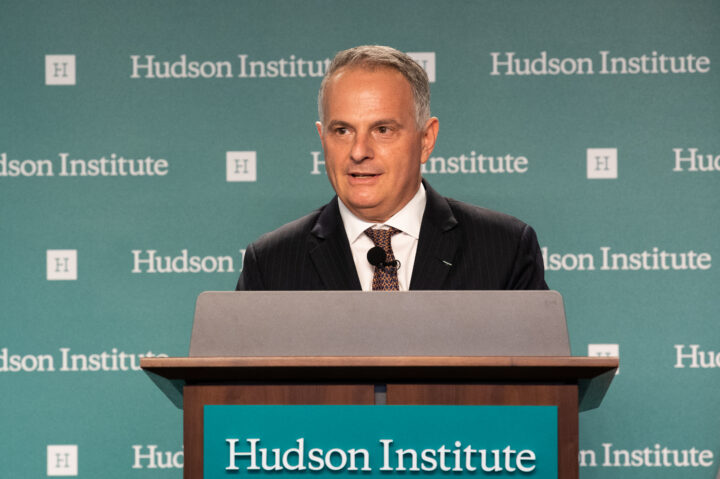
Kenneth Weinstein, President and Chief Executive Officer of Hudson Institute, speaking at the Hudson Institute in Washington, DC.
Good Monday afternoon.
This P.M. briefing is reserved for our premium subscribers like you — offering a forward-focused read on what we’re tracking now and what’s coming next.
I’m Danielle Cohen-Kanik, U.S. editor at Jewish Insider and curator, along with assists from my colleagues, of the Daily Overtime briefing. Please don’t hesitate to share your thoughts and feedback by replying to this email.
📡On Our Radar
Notable developments and interesting tidbits we’re tracking
We’re watching developments in ceasefire and hostage-release negotiations after President Donald Trump called for Hamas to accept the latest U.S.-sponsored deal over the weekend, which would see all the hostages, living and dead, released on the first day of the ceasefire.
Middle East envoy Steve Witkoff and former Trump Mideast advisor Jared Kushner met with Israeli Minister for Strategic Affairs Ron Dermer in Miami today to discuss developments in Gaza, Axios’ Barak Ravid reports.
Hamas had claimed it was ready to “immediately sit at the negotiating table” in response to Trump’s statement, but sources for the terror group told a Saudi newspaper today that a complete hostage release would not be possible immediately, claiming a ceasefire would have to go into effect first to reach all the bodies…
In other national security news, The New York Times spotlights the race between defense firms to develop technologies for a future “Golden Dome” missile-defense system.
“Companies chosen for Golden Dome are likely to become the new cornerstones of U.S. defense, military officials involved in the project said,” and firms including Palantir and Anduril as well as innovative startups have been in discussions with the Trump administration, the Times reports.
Mark Montgomery, senior director of the Center for Cyber and Technology Innovation at the Foundation for Defense of Democracies, said, “There are more than 100 companies out there with a sensor, satellite or other devices they want to sell to Golden Dome. This is the Wild West, and this is a massive opportunity for whoever is selected”…
Diplomatic tensions are rising between Israel and Spain after Spanish Prime Minister Pedro Sanchez announced today that his country would be formalizing an existing de facto arms embargo against Israel and banning anyone who has participated in “genocide” in Gaza from entering Spain as well as ships carrying fuel for the IDF from Spanish ports.
“This is not self-defense, it’s not even an attack — it’s the extermination of a defenseless people,” Sanchez said of Israel’s war in Gaza.
In response, Israeli Foreign Minister Gideon Sa’ar announced that Israel had banned two anti-Israel Spanish ministers from entering the country; Spain then summoned its ambassador in Tel Aviv, all shortly after a young Spanish immigrant to Israel was killed in this morning’s terror attack on a bus stop in Jerusalem…
The U.K. has come to a different conclusion about Israel’s actions in Gaza, according to a letter sent last week by former Foreign Secretary David Lammy before he was replaced in a reshuffling of Prime Minister Keir Starmer’s Cabinet.
Lammy wrote to the chair of the U.K.’s international development committee that the Foreign Office had found in an assessment that Israel was not committing a genocide as it was missing “intent” to do so. It’s the first time the U.K. has said so explicitly, previously holding that the matter of genocide was up to international courts to determine, just weeks before the country is expected to recognize a Palestinian state…
Former Hudson Institute CEO and President Kenneth Weinstein will serve as CBS News’ ombudsman, a new role that oversees editorial concerns from employees and viewers, Paramount announced Monday. Alongside reports that Paramount is expected to purchase Bari Weiss’ Free Press and bring her into an editorial role at CBS, the moves mark a new era for the network that has been accused of systemic anti-Israel bias…
Embracing their anti-Israel bona fides, hundreds of actors, filmmakers and film industry workers recently signed a pledge to boycott Israel, which says it was inspired by filmmakers who refused to screen their films in apartheid South Africa.
The signatories, including Hollywood stars such as Alyssa Milano, Mark Ruffalo, Anna Shaffer, Ayo Edebiri, Cynthia Nixon, Hannah Einbinder and Ilana Glazer, promised “not to screen films, appear at or otherwise work with Israeli film institutions — including festivals, cinemas, broadcasters and production companies — that are implicated in genocide and apartheid against the Palestinian people”…
Sen. Kirsten Gillibrand (D-NY) said in comments to Jewish leaders in New York City today that some of her fellow Democratic lawmakers are inadvertently fueling antisemitism through the rhetoric and slogans they use, Jewish Insider’s Marc Rod reports.
“When they say words like ‘river to the sea,’ whey they say words like ‘globalize the intifada,’ it means end Israel. It means destroy Jews,” Gillibrand said. Intifada, she continued, is “not a social movement. It’s terrorism, it’s destruction, it’s death.”
The New York senator had previously offered strong condemnation of NYC Democratic mayoral nominee Zohran Mamdani for his refusal to condemn the “globalize the intifada” slogan and has not endorsed his bid for mayor…
Mamdani’s opponent, New York City Mayor Eric Adams, meanwhile, officially dropped the ballot line “EndAntiSemitism,” running only on the “Safe & Affordable” line, after the New York City Board of Elections said he couldn’t run on both. Adams’ campaign spokesperson said he intends to pursue legal options over the issue…
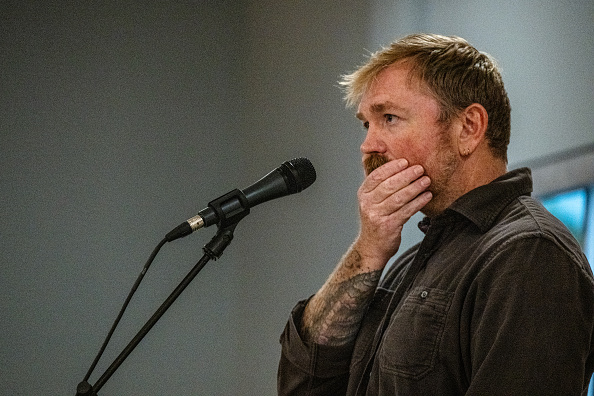
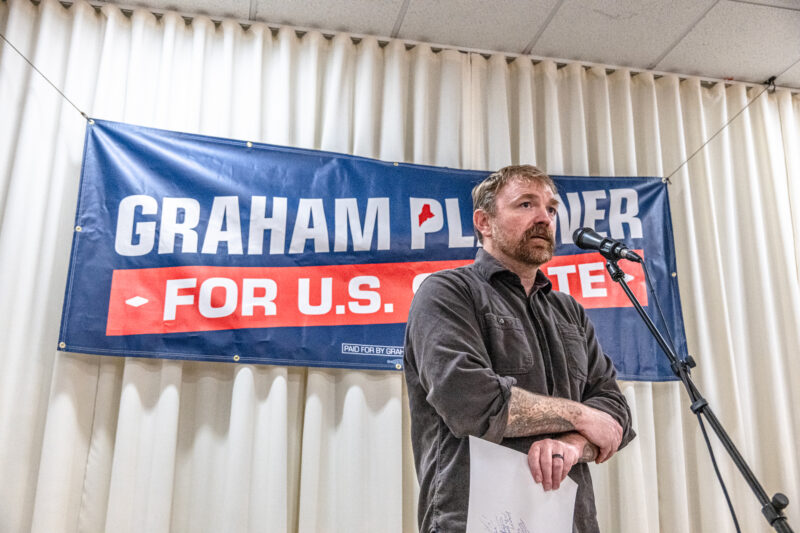
Graham Platner, an anti-Israel Democratic Senate candidate in Maine, wrote in a high school op-ed shortly after 9/11, during the Second Intifada in Israel, that the media provides an “incomplete story” of terrorist acts and writes “incomplete coverage” of the Israeli-Palestinian conflict “where a sometimes-oppressive Israeli state can be, and often is, portrayed as a victim.”
Platner and his co-authors argued in the article in a local Maine outlet, unearthed by the Free Beacon, that ending terrorist acts would be “best achieved by understanding the circumstances under which they were committed”…
⏩ Tomorrow’s Agenda, Today
An early look at tomorrow’s storylines and schedule to keep you a step ahead
Keep an eye on Jewish Insider tomorrow morning for an interview with former Obama speechwriter Sarah Hurwitz, whose new book As A Jew: Reclaiming Our Story From Those Who Blame, Shame, and Try to Erase Us, comes out Tuesday.
It’s a busy week in Washington, where the 2025 MEAD Summit will kick off tomorrow. The high-profile but elusive gathering will bring together top American and U.S. security officials, diplomats, lawmakers, philanthropists, CEOs and journalists. If you’re attending, make sure to say hello to JI’s Josh Kraushaar and Gabby Deutch!
The Iran Conference, hosted by the National Union for Democracy in Iran, will also begin in Washington tomorrow for analysts, policymakers and activists to discuss Iran policy, just two months after U.S. and Israeli strikes decimated Tehran’s nuclear and military infrastructure.
On the Hill, the House Education and Workforce Committee’s Subcommittee on Health, Employment, Labor and Pensions will hold a hearing on “unmasking union antisemitism.”
Virginia’s 11th Congressional District is holding its special election tomorrow to fill the seat of the late Rep. Gerry Connolly (D-VA). James Walkinshaw, Connolly’s longtime former aide, is the heavy favorite to win. Read JI’s interview with Walkinshaw here.
Looking to New York City, The MirYam Institute will hold an international security benefit briefing tomorrow featuring former Israeli Prime Minister Naftali Bennett; nearby, the Soufan Center will begin its Global Summit on Terrorism and Political Violence, meant to honor the memory of 9/11 victims and address emerging global threats.
The Florida Holocaust Museum is reopening tomorrow with a ribbon-cutting ceremony after an extensive period of renovation.
Abroad, the U.S. Embassy in Jerusalem will host its belated July 4 party tomorrow, and the Hili Forum will convene its last day in Abu Dhabi, United Arab Emirates, covering trade, tech and governance. DSEI U.K., a large defense trade show, is starting up in London, where protests are expected against the dozens of Israeli firms that are participating.
Stories You May Have Missed
CANDIDATE CRITIQUE
Lawler challenger Peter Chatzky says Israel violating U.S. arms sales laws
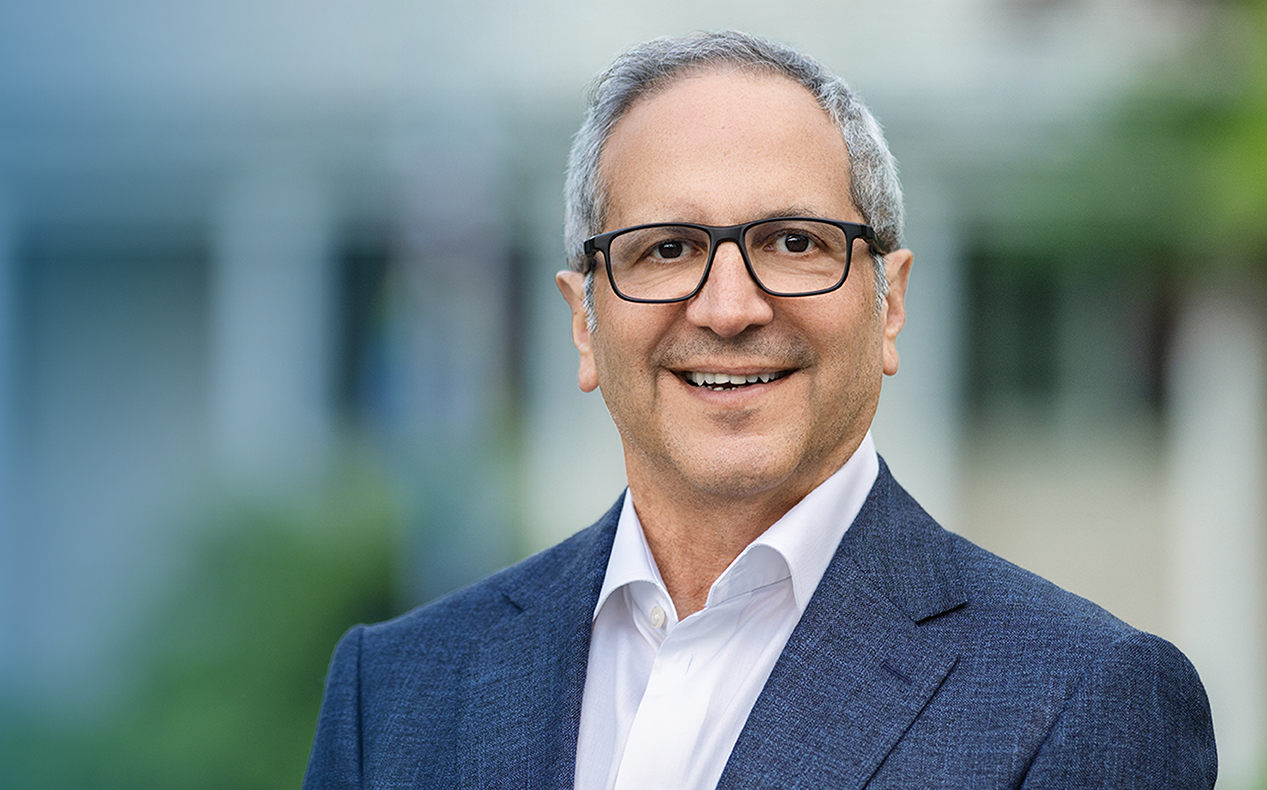
The Democratic candidate also said he does not believe that far-left NYC mayoral candidate Zohran Mamdani is ‘taking actions I would claim to be antisemitic’
ACROSS THE POND
U.K. Cabinet shake-up not likely to change British position on Israel, experts say
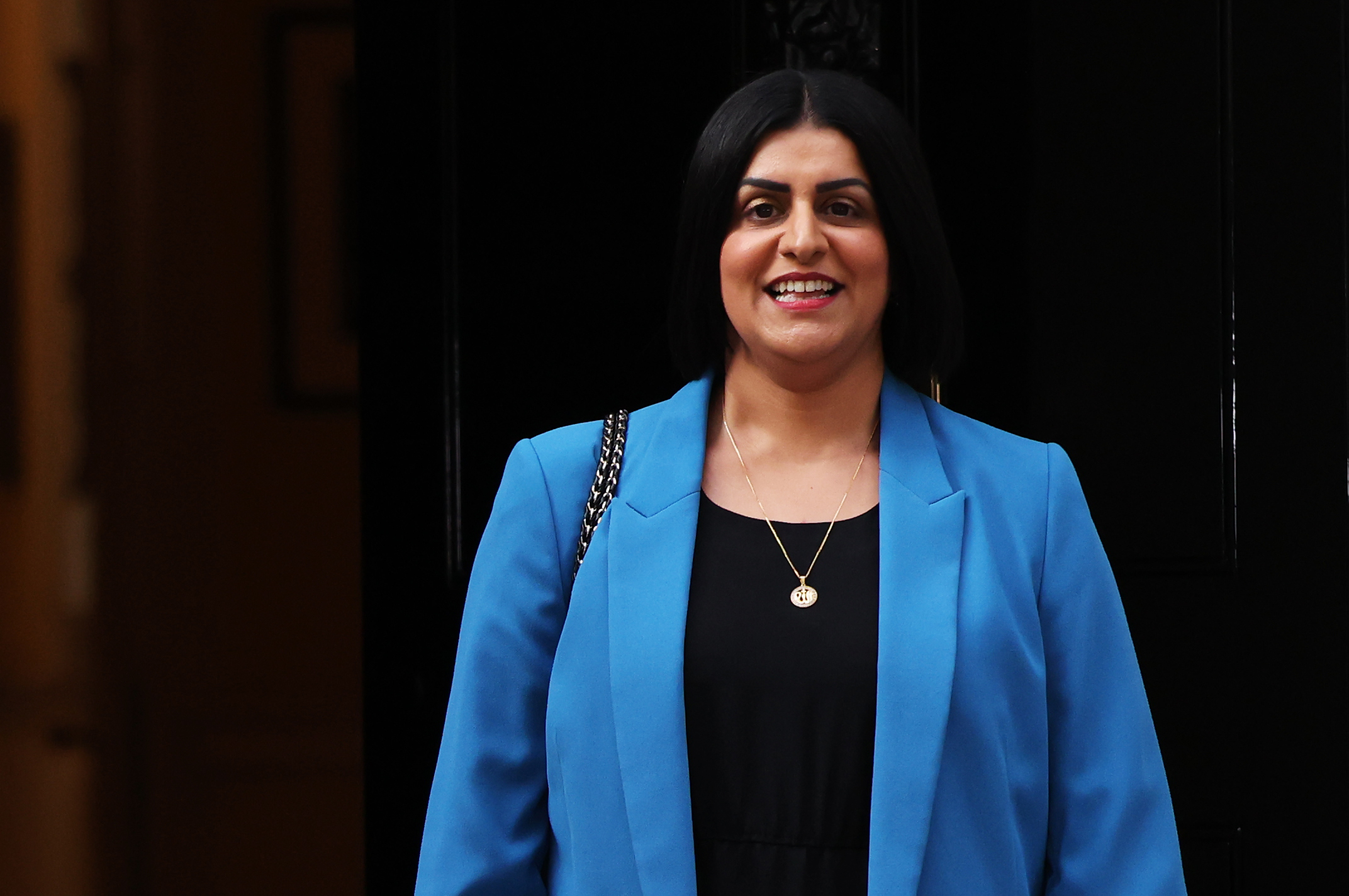
On Sunday, British Jews marched to protest against rising antisemitism in the country
Plus, United resumes Washington, Chicago routes to TLV
Michael A. McCoy/Getty Images
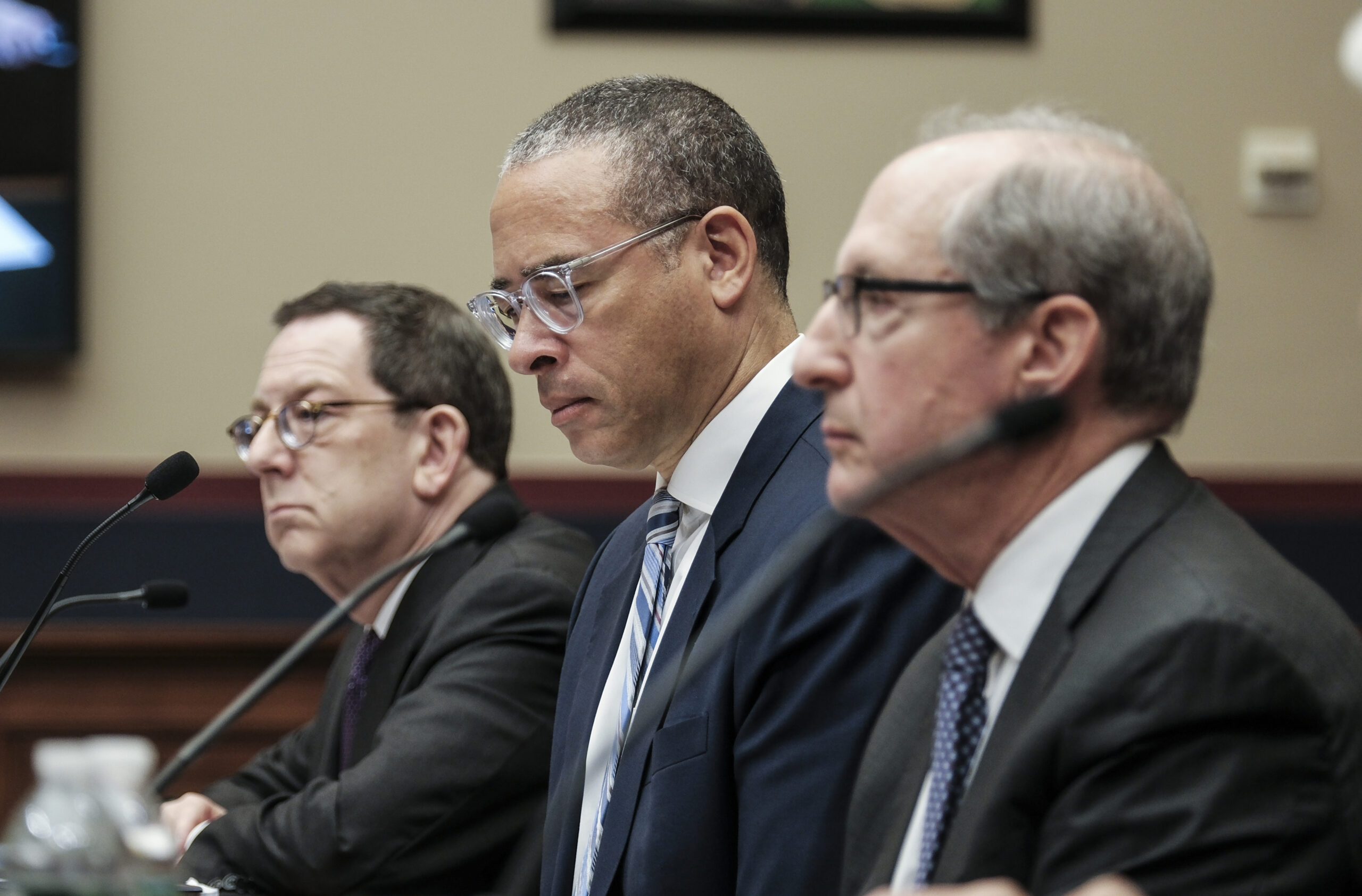
(L-R) Mr. Michael Schill, President, Northwestern University, Dr. Jonathan Holloway, President, Rutgers University and Mr. Frederick Lawrence testify at a hearing called "Calling for Accountability: Stopping Antisemitic College Chaos" before the House Committee on Education and the Workforce on Capitol Hill on May 23, 2024, in Washington, D.C.
Good Thursday afternoon.
This P.M. briefing is reserved for our premium subscribers like you — offering a forward-focused read on what we’re tracking now and what’s coming next.
I’m Danielle Cohen-Kanik, U.S. editor at Jewish Insider and curator, along with assists from my colleagues, of the Daily Overtime briefing. Please don’t hesitate to share your thoughts and feedback by replying to this email.
📡On Our Radar
Notable developments and interesting tidbits we’re tracking
Kicking off the new school year, embattled Northwestern University President Michael Schill announced today he is stepping down as president, remaining in an interim role until his successor is chosen.
Schill’s tenure coincided with a period of antisemitic turmoil on the Chicago-area campus and he was accused of handling the issue poorly, leading some lawmakers to call for his resignation.
A brief recap of Schill’s troubled tenure: He acceded to several demands of an anti-Israel encampment on campus in the spring of 2024, drawing condemnation from Jewish leaders and leading several Jewish members of Northwestern’s antisemitism advisory committee to step down. He then defended the move in a heated House Education and Workforce Committee hearing as being in the interest of Jewish students and was recalled by the committee this spring due to his alleged failure to live up to his own commitments from the previous hearing.
Committee Chairman Tim Walberg (R-MI) said in a statement today that “President Schill will leave behind a legacy of not only failing to deter antisemitism on campus but worsening it. … Northwestern’s next president must take prompt and effective action to protect Jewish students.”
In his resignation announcement, Schill said that “from the very beginning of my tenure, Northwestern faced serious and often painful challenges. … I was always guided by enduring values of our University: protecting students, fostering academic excellence, and defending faculty, academic freedom, due process and the integrity of the institution”…
Columbia University, meanwhile, hired Jonathon Kahn as its senior associate dean of community and culture, a new position created to “build and lead initiatives that cultivate curiosity, civic purpose and meaningful dialogue” and “reimagine what a liberal arts and sciences education can be in the next century,” Jewish Insider’s Haley Cohen reports.
Kahn signed a 2021 letter supporting the Palestinian “indigenous resistance movement” and rejecting “the fiction of a ‘two-sided conflict,’” accusing Israel of carrying out “settler colonialism, apartheid, and ethnic cleansing”…
Secretary of State Marco Rubio called an Israeli proposal by far-right Finance Minister Bezalel Smotrich to annex parts of the West Bank “wholly predictable” in response to European countries’ planned recognition of a Palestinian state.
Rubio said, “We told all these countries. We said, if you guys do this recognition stuff — it’s all fake, it’s not even real — if you do it, you’re going to create big problems. There’s going to be a response from Israel … and it may even trigger these sorts of actions that you’ve seen, or at least these attempts at these actions. So we’re watching it closely.”
Rubio, who was asked about the issue today at a press conference in Quito, Ecuador, continued, “What you’re seeing with the West Bank and the annexation, that’s not a final thing. That’s something that’s being discussed among some elements of Israeli politics. I’m not going to opine on that today.”
“And by the way, let me tell you something. The minute, the day that the French announced their [intent to recognize a Palestinian state], Hamas walked away from the negotiating table. … We also warned that that would happen, and it did. Sometimes, these guys don’t listen,” Rubio said.
The issue of West Bank annexation was due to be discussed in a high-level meeting convened by Israeli Prime Minister Benjamin Netanyahu today but was reportedly removed from the agenda after the UAE warned such a move would be a “red line” for regional normalization…
Israeli officials told The Wall Street Journal that Mossad Director David Barnea and Foreign Minister Gideon Sa’ar have joined IDF Chief of Staff Eyal Zamir in expressing hesitation to Netanyahu over the IDF’s plan to expand its offensive into Gaza City. They have also argued in favor of reaching a partial hostage-release deal with Hamas as an alternative to the comprehensive deal Israel is currently seeking…
A viral accusation that the IDF killed an 8-year-old Palestinian boy at a Gaza Humanitarian Foundation aid site in May was proven false when the boy was found to be alive and safely extracted from the Gaza Strip. The claim had been made by Anthony Aguilar, a former GHF contractor and Green Beret, who repeated the story on far-right and far-left media outlets.
Johnnie Moore, head of the GHF, said in a statement today, “When this lie was brazenly, cravenly shared from the press to the halls of Congress, our team set out to find this little boy — whatever it took.” He attributed the success to “veterans who never stopped working to find him and bring him to safety in the most complex environment imaginable”…
A report by the U.N.’s International Atomic Energy Agency, obtained by the Associated Press, found that, as of one day before Israel’s strikes on Iran’s nuclear facilities began, Iran had escalated its nuclear enrichment and increased its stockpile of near weapons-grade enriched uranium to where it could soon produce at least one atomic bomb…
On the Hill, Sen. Tom Cotton (R-AR) asked the FBI to investigate the Palestinian Youth Movement as a “threat to U.S. national security” after one of its leader, Aisha Nizar, called for Palestinian activists to “disrupt” the supply chain for F-35 fighter jets at the recent People’s Conference for Palestine in Michigan…
Rep. Buddy Carter (R-GA), who is running for Senate in Georgia, filed a resolution today to censure Rep. Rashida Tlaib (D-MI) for “promoting and cheering on terrorism and antisemitism” at the same conference…
Semafor’s David Weigel reports from this year’s National Conservatism conference, which is winding down in Washington today and featured a host of high-level right-wing personalities from Trump administration officials to lawmakers and influencers.
Conference speakers and attendees were jubilant over what they view as conservative successes in President Donald Trump’s second term, but there was one “possible future sore point that conference organizer Yoram Hazony acknowledged openly: Israel.”
“Hazony was upset by the ‘depth of the slander of Jews as a people’ that he saw in corners of the online right. The Israel critics in their fold could make the nationalist ‘revolution consume itself,’ he added, and risk everything,” Weigel wrote…
In long anticipated news, United Airlines announced today it’s restarting direct flights to Tel Aviv from Chicago O’Hare and Washington Dulles in early November…
⏩ Tomorrow’s Agenda, Today
An early look at tomorrow’s storylines and schedule to keep you a step ahead
Keep an eye on Jewish Insider tomorrow morning for reporting on a new cross-faith initiative to address antisemitism led by Robert Kraft’s Foundation to Combat Antisemitism.
This weekend, Sen. Bernie Sanders (I-VT) will be campaigning with New York City Democratic mayoral nominee Zohran Mamdani in the next installment of Sanders’ Fighting Oligarchy tour, after an appearance in Maine last weekend with anti-Israel Democratic Senate candidate Graham Platner.
We’ll be back in your inbox with the Daily Overtime on Monday. Shabbat shalom!
Stories You May Have Missed
ENVOY INTERVIEW
Amb. Leiter: Nature of U.S.-Israel aid may change in coming years
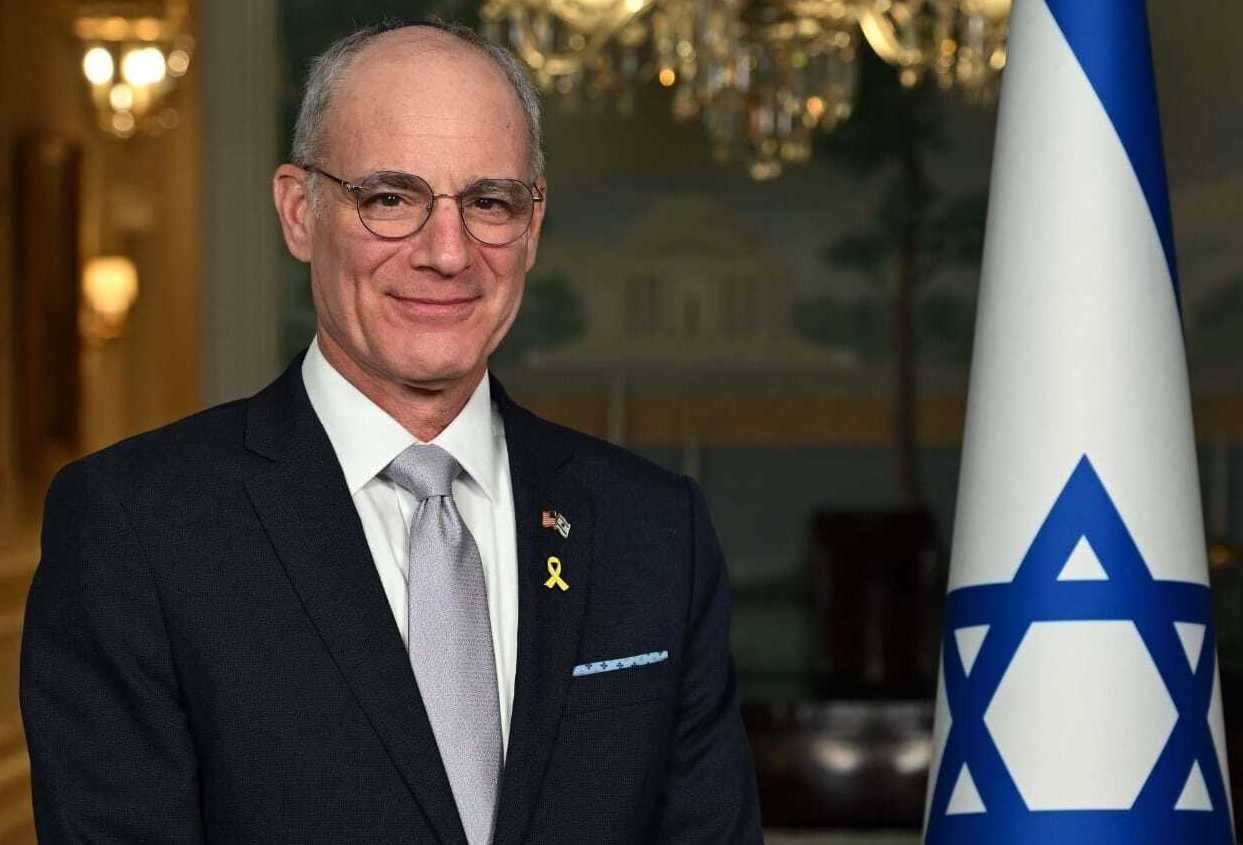
‘It’s a very partisan atmosphere in Washington right now. Strong support for Israel in the [Trump] administration almost drives the Democratic opposition into opposing very close support for Israel,’ the ambassador said
EYE ON ANKARA
Lawmakers take aim at Turkey in 2026 defense bill

House lawmakers introduce series of amendments seeking to place further restrictions on U.S. aid on Ankara over its support for Hamas and hostility toward Israel
Plus, former Sen. Sununu considers a New Hampshire comeback

Yuki Iwamura/AP Photo/Bloomberg via Getty Images
Adrienne Adams, New York City mayoral candidate, from left, Brad Lander, New York City mayoral candidate, Jessica Ramos, New York City mayoral candidate, Zellnor Myrie, New York City mayoral candidate, Andrew Cuomo, New York City mayoral candidate, Whitney Tilson, New York City mayoral candidate, Zohran Mamdani, New York City mayoral candidate, Michael Blake, New York City mayoral candidate, and Scott Stringer, New York City mayoral candidate, during a mayoral Democratic primary debate in New York, US, on Wednesday, June 4, 2025.
Good Wednesday afternoon.
This P.M. briefing is reserved for our premium subscribers like you — offering a forward-focused read on what we’re tracking now and what’s coming next.
I’m Danielle Cohen-Kanik, U.S. editor at Jewish Insider and curator, along with assists from my colleagues, of the Daily Overtime briefing. Please don’t hesitate to share your thoughts and feedback by replying to this email.
📡On Our Radar
Notable developments and interesting tidbits we’re tracking
Advisors to President Donald Trump have discussed giving New York City Mayor Eric Adams and Republican mayoral candidate Curtis Sliwa positions in the president’s administration, sources tell The New York Times, in order to consolidate New York City voters behind former Gov. Andrew Cuomo, running as an independent, as a bid to block far-left Democratic mayoral nominee Zohran Mamdani’s path to Gracie Mansion.
Adams has already been offered a position at the U.S. Department of Housing and Urban Development, Politico reports.
Cuomo told a group of donors last month that he anticipated Trump would get involved in the race and help bolster his prospects…
Turning internationally, Trump appeared to support Israel’s desire for a comprehensive deal to end the war in Gaza, as he posted this morning on Truth Social, “Tell Hamas to IMMEDIATELY give back all 20 Hostages (Not 2 or 5 or 7!), and things will change rapidly. IT WILL END!”
The figure of 20 hostages likely refers to the hostages thought to still be alive; there are a total of 50 hostages being held in Gaza…
U.S. Ambassador to Israel Mike Huckabee held a closed-door briefing for members of the House Foreign Affairs Committee this morning on issues including the hostages and developments in the West Bank, lawmakers told Jewish Insider.
“Given the insistence on the part of the French and other Europeans to recognize a Palestinian state, I thought it was important for my colleagues to have a greater understanding of what we’re actually talking about with respect to Judea and Samaria, or the West Bank, and how it is actually governed post-Oslo,” Rep. Mike Lawler (R-NY), who organized the briefing, said.
Asked whether the group had discussed a potential declaration of Israeli sovereignty in that area, Lawler responded, “No, we had a broad discussion on the entirety of the situation there”…
On the campaign trail, former Sen. John Sununu (R-NH) is considering a bid for Senate to replace retiring Sen. Jeanne Shaheen (D-NH), telling a local outlet he will make a decision by the end of the month.
Sununu would be a formidable candidate in the race, given his name recognition and family connections. (His brother, Chris, served as the state’s popular governor from 2017-2025, and his dad was both the state’s former governor and former President George H.W. Bush’s chief of staff.)
But in a year that’s shaping up to be favorable for Democrats, Sununu would face a challenging race against Rep. Chris Pappas (D-NH), the expected Democratic nominee with a history of winning tough races in a swing district. Pappas launched his candidacy in April shortly after Shaheen announced her retirement…
In academic news, a federal judge ruled today that the Trump administration broke the law in freezing billions of dollars of Harvard’s research funding.
The government had argued that Harvard was no longer deserving of the funds due to antisemitism on campus, but Judge Allison Burroughs wrote, “We must fight against antisemitism, but we equally need to protect our rights, including our right to free speech, and neither goal should nor needs to be sacrificed on the altar of the other … Harvard is currently, even if belatedly, taking steps it needs to take to combat antisemitism and seems willing to do even more if need be.”
The ruling strengthens Harvard’s position in settlement talks with the administration, which were expected to result in a $500 million fine for the university…
After the International Association of Genocide Scholars adopted a resolution accusing Israel of committing genocide, pro-Israel activists made a mockery of the organization by registering to become members online, highlighting that anyone could join the respected academic and professional organization by paying a nominal fee, not necessarily by having recognized expertise.
IAGS took down its member profiles on its website and shut down its X account after the issue was made public…
Yair Rosenberg chronicles the rise of Hitler apologists among far-right media personalities, including Tucker Carlson and Candace Owens, in The Atlantic, highlighting several guests on Carlson’s podcast who have sought to recast Hitler’s actions as misunderstood.
“Carlson and his fellow travelers on the far right correctly identify the Second World War as a pivot point in America’s understanding of itself and its attitude toward its Jewish citizens. The country learned hard lessons from the Nazi Holocaust about the catastrophic consequences of conspiratorial prejudice. Today, a growing constituency on the right wants the nation to unlearn them,” Rosenberg writes…
In a move exciting political junkies and congressional watchers around the nation, C-SPAN announced it will be coming to YouTube TV and Hulu this fall…
⏩ Tomorrow’s Agenda, Today
An early look at tomorrow’s storylines and schedule to keep you a step ahead
Keep an eye on Jewish Insider tomorrow morning for an interview with Israeli Ambassador to the U.S. Yechiel Leiter on the future of U.S. aid to Israel and reporting on a leading Democratic candidate for Senate in Iowa’s support for conditions on Israel’s fight against terror.
Tomorrow, Israeli President Isaac Herzog is set to meet with Pope Leo XIV at the Vatican (after a brief diplomatic kerfuffle over who initiated the meeting) to discuss the hostages and the war in Gaza. Herzog was meant to meet with the pope’s predecessor, Pope Francis, before his death.
Stories You May Have Missed
SUCCESSION IN MANHATTAN
Nadler’s handpicked successor drawing scrutiny over Mamdani endorsement
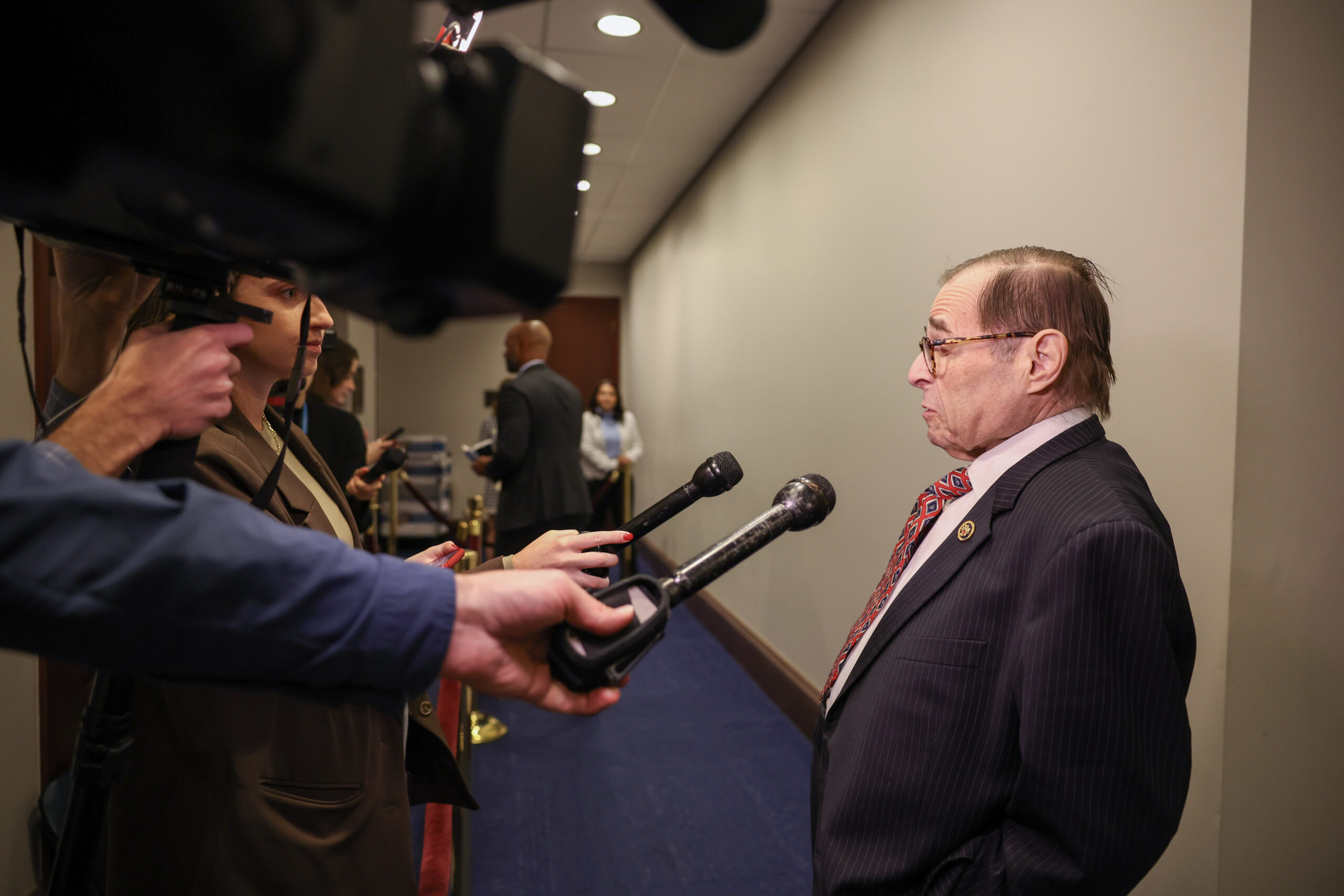
Like the retiring congressman, New York Assemblyman Micah Lasher endorsed the anti-Israel mayoral nominee
MILITARY MUSCLE
China uses WWII memory to project power in military parade and international diplomacy

The parade was an example of how Beijing has used WWII not only to encourage nationalism, but to project power internationally, from Jerusalem to Taipei and beyond
The parade was an example of how Beijing has used WWII not only to encourage nationalism, but to project power internationally, from Jerusalem to Taipei and beyond

Alexander KAZAKOV / POOL / AFP) (Photo by ALEXANDER KAZAKOV/POOL/AFP via Getty Images
Russia's President Vladimir Putin walks with China's President Xi Jinping and North Korea's leader Kim Jong Un before a military parade marking the 80th anniversary of victory over Japan and the end of World War II, in Beijing's Tiananmen Square on September 3, 2025.
China showcased its growing aggressiveness on the world stage in a major military parade on Wednesday, showing off missiles and fighter jets to mark the 80th anniversary of Japan’s surrender in World War II with Russian President Vladimir Putin and North Korea’s Kim Jong Un in attendance.
The parade was an example of how Beijing has used WWII not only to encourage nationalism, but to project power internationally, from Jerusalem to Taipei and beyond.
President Donald Trump pushed back against the spectacle in Beijing, writing on Truth Social that Chinese leader Xi Jinping ought to “mention the massive amount of support and ‘blood’ that the United States of America gave to China in order to help it secure its FREEDOM from a very unfriendly foreign invader. Many Americans died in China’s quest for Victory and Glory. I hope that they are rightfully Honored and Remembered for their Bravery and Sacrifice! …Please give my warmest regards to Vladimir Putin, and Kim Jong Un as you conspire against The United States of America.”
The parade came shortly after China hosted a summit with Putin, Indian Prime Minister Narendra Modi and other Eurasian leaders, deepening ties among major powers not aligned with the West. The attendees issued a communique last week strongly condemning “the military aggression launched by Israel and the United States against Iran” in June.
China has also used World War II and Holocaust terminology in recent weeks as it continues its hostility against Israel, calling Israel’s war a “genocide,” even as the Chinese Embassy in Israel held an event highlighting Beijing’s positioning with the Allies in World War II.
The recent statements reflect a broader double game China has played in its relations toward Israel, consistently showing hostility to Israel on the international stage since the Oct. 7, 2023 Hamas-led attacks, while within Israel, the Chinese ambassador has pursued a friendlier posture.
Last month, Beijing, in a statement from the Chinese Communist Party’s Information Office, accused the U.S. of “serving as an accomplice to the genocide in Gaza.” The statement, Tuvia Gering, a fellow at the Atlantic Council and the Institute for National Security Studies at Tel Aviv University, said, marked the first time an official Chinese document accused Israel of genocide.
Gering told Jewish Insider that “you see the word [genocide] being used more and more by Chinese academics, and they are the ones who help formulate China’s Middle East policy … In recent months, I have been seeing it used much more frequently, as well as other accusations against Israel and Jewish people.”
“From the beginning of the war, there have been comparisons between the Jewish state and Japanese imperialists,” Gering said. “From the Chinese perspective, [Japan] did some of the most terrible things, like what the Nazis did to us. That vile, inhumane violence is ingrained in every child in China’s psyche from a young age.”
The Chinese consul-general in Osaka, Japan, has published posts on X over the course of the Gaza war comparing Israel to Nazis and “a demon … that will even devour a baby,” and saying “we must get rid of it once and for all.” Beijing has not apologized for the diplomat’s statements.
That being said, Gering posited that the use of the word “genocide” was unlikely to reflect a policy shift by Beijing “because of the sensitivity to how the word is being used against China” in relation to its Uyghur minority.

The genocide accusation came in response to the State Department’s report on human rights practices in China in 2024, which opened by stating that “Genocide and crimes against humanity occurred … in China against predominantly Muslim Uyghurs.”
As such, Gering said the use of “genocide” in an official document is primarily meant to target the U.S.
Similarly, Carice Witte, founder of SIGNAL Group, a think tank focused on China-Israel relations, told JI that the statement is an example of Beijing “using Israel as a tool.”
To China, she said, “the Middle East and Israel are much more about great power competition than the local issues.”
“Israel is a very small country that is no longer of great interest to China, and its positions on Israel are not about Israel as much as they are about China’s global interests,” Witte said. “By saying the U.S. supports genocide in Gaza, that is not about Israel, but about the U.S. and the global south. Because so many countries hate Israel, [China] believes that if they criticize Israel, more countries will support them.”
A source involved in China-Israel relations who spoke on condition of anonymity told JI they heard a Chinese diplomat say that “they use the Palestinians to make trouble for the U.S. the way the U.S. uses Taiwan to make trouble for them.”
Ten days after Beijing accused Israel of genocide, the Chinese Embassy in Israel held a ceremony marking 80 years since the end of World War II in the Pacific arena, and honoring “Jakob Rosenfeld, a Jewish doctor whose heroic contribution to the Chinese people’s fight against fascism is a lasting symbol of international solidarity,” the invitation read.
Gering also noted that China has made diplomatic use of the fact that over 20,000 Jews escaped the Holocaust to Shanghai, including, famously, the entire Mir Yeshiva from Lithuania. They fled to an enclave in Japanese-occupied Shanghai that did not require a visa for entry, until 1941, when Japan forced the Jewish refugees into a ghetto and banned Jewish immigration to the city. The only Chinese diplomat known to have played a role in helping Jewish refugees was a representative of the Republic of China, which the Chinese Communist Party that currently rules China later defeated in a civil war.
Like many other countries, including China’s ally Russia, which also holds WWII victory parades, Beijing “employs selective historical memory,” Gering said. “There is a very obvious, explicit utilization of memory … Undermining or silencing the voices of victims of the Holocaust and refugees in Shanghai … When you listen to Chinese ambassadors, you think that there was a unique civilizational benevolence by the Chinese people, who opened their arms when the rest of the world rejected Jews … It’s a complete distortion of the story of the Jewish refugees who lived in squalid conditions.”
Israel generally does not push back against that narrative for “political expedience,” Gering said, explaining that “it is good for soft power to say we share their sentiment of anti-fascism.”
Witte said that China’s politicization of World War II and the Holocaust reflects a broader “two-pronged path. On the one hand, China has a big-picture policy and the Beijing stage is for the track that is harsh on Israel. Local policy, where the embassy is the stage, is the pro-Israel track.”
“Obviously, Beijing is exponentially louder, more recognized and more heard than the embassy,” she added.
Gering pointed out that Chinese Ambassador to Israel Xiao Junzheng, who arrived at his post in December, “emphasizes friendship between Jews and Chinese people, while Chinese propaganda says Israel is committing genocide and compares Jews to Nazis.”
Xiao “has been given a mandate to act like nothing [bad] happened,” Gering added. “He even wrote an article saying not to let the war define the relationship. Even though … [the CCP] legal advisor said the Hamas attack [on Oct. 7, 2023] was A-OK, don’t split hairs, let’s talk about Chinese cars and how many Jews we saved. They’re kind of forgetting about Jews living today.”
**
Gering also expressed concerns about Beijing’s recent use of Nazi terminology to describe the government in Taiwan.
The CCP newspaper, People’s Daily, published an article that compared Taiwan’s President William Lai and the ruling Democratic Progressive Party to the Nazis. The article also described civil society groups seeking to educate Taiwanese citizens to be prepared for possible missile attacks from China and to recognize Chinese propaganda in the media as “Nazi-like.”
The article “even feigns concern for their democracy, which is ironic in a CCP mouthpiece,” Gering said.
Gering expressed concern that the language is similar to that used by Russia in the years before its invasion of Ukraine.
“The denazification card is what Putin’s Kremlin used as a pretext for its invasion and its ongoing war in Ukraine,” Gering noted. “This prompts us to ask if this is a precursor to a People’s Liberation Army [Chinese military] denazification campaign in Taiwan.”
Still, Gering said, Taiwanese politics are very divisive, and opposition politicians have also called the current government Nazis, leading to condemnation by Israeli and German diplomats in Taipei. “That gave a hechsher [kosher certification] for the CCP to use this kind of pernicious rhetoric, as well,” he said.
“In the more immediate term, it’s probably just a tactical way for the CCP to sow division and weaken the Taiwanese leadership and democratic institutions,” he added.
Plus, Platner doubles down on anti-Israel fixation

Mostafa Alkharouf/Anadolu via Getty Images
A general view of Jerusalem on June 13, 2025.
Good Tuesday afternoon.
This P.M. briefing is reserved for our premium subscribers like you — offering a forward-focused read on what we’re tracking now and what’s coming next.
I’m Danielle Cohen-Kanik, U.S. editor at Jewish Insider and curator, along with assists from my colleagues, of the Daily Overtime briefing. Please don’t hesitate to share your thoughts and feedback by replying to this email.
📡On Our Radar
Notable developments and interesting tidbits we’re tracking
Maine Democratic Senate candidate Graham Platner is unusually focused on anti-Israel attacks in his bid to unseat Sen. Susan Collins (R-ME), Jewish Insider‘s Marc Rod reports. Every one of Platner’s active ads on Facebook and Instagram, as well as many of his written advertisements, include a repudiation of AIPAC and around half accuse Israel of genocide…
In another Senate race to keep an eye on, Rep. Ashley Hinson (R-IA) hinted she’ll be running to replace Sen. Joni Ernst (R-IA), who this afternoon officially announced her retirement from the Senate at the end of her current term. Hinson said she would be President Donald Trump’s “strongest ally in the Senate” and “will have an announcement soon”…
Meanwhile in Foggy Bottom, a State Department cable sent to U.S. embassies on Aug. 18 indicated the department has suspended approvals for almost all Palestinians seeking to enter the U.S. on visitor visas, The New York Times reports, shortly before the department revoked visas for Palestinian Authority officials ahead of the U.N. General Assembly meeting in New York this month. The suspension could prevent Palestinians from entering the country for medical treatment, attendance at American universities, business travel and more…
French President Emmanuel Macron and Saudi Crown Prince Mohammed bin Salman announced today that they will co-chair another conference on the two-state solution on Sept. 22 on the sidelines of the UNGA, where several European countries are expected to announce their recognition of a Palestinian state.
Macron called the U.S.’ decision to revoke the visas of PA officials “unacceptable” and said it must be reversed.
Palestinian Vice President Hussein al-Sheikh sent a letter to Secretary of State Marco Rubio similarly asking him to reconsider the revocation of PA President Mahmoud Abbas’ visa to attend the UNGA, arguing it was made on “false pretenses,” according to Axios…
U.S. Ambassador to Israel Mike Huckabee recently told Israeli officials the Trump administration is concerned about the security implications of a potential economic collapse of the Palestinian Authority in the West Bank. “If the Palestinian economy completely collapses, it will not be a victory for anyone. … Desperate people do desperate things,” Huckabee told Israel’s Channel 12…
Rubio is expected to visit Israel the week of Sept. 14 where he will reportedly attend the Sept. 15 inauguration ceremony for the “Pilgrimage Road” at the City of David archeological site, a recently discovered path that led to the Temple Mount during the Second Temple Period. (Read JI’s coverage of the Pilgrimage Road excavation here)…
Also making the long flight, several high-profile venture capitalists, including Palantir co-founders Peter Thiel and Joe Lonsdale as well as Elad Gil and Keith Rabois, were in Israel this past weekend where they attended the wedding of VC investor Zach Frenkel. Some of the attendees reportedly met with Israeli Prime Minister Benjamin Netanyahu while in town…
Michael Velchik, the Department of Justice’s lawyer defending the Trump administration in its battle against Harvard in federal court, called Hitler’s Mein Kampf his favorite book and wrote a paper from the dictator’s perspective during his time as a Harvard undergraduate, which “so unnerved the instructor that he was asked to redo the assignment,” The Boston Globe reports. Velchik said in court in July that Harvard no longer deserved federal funding based on its “wanton” and “deliberate indifference to antisemitism”…
Robert Satloff, executive director of The Washington Institute for Near East Policy, called the International Association of Genocide Scholars’ declaration that Israel is committing genocide in Gaza “one of the most egregious examples of the dereliction of scholarly responsibility in recent history.”
The IAGS resolution, approved by less than a third of its members over the weekend, “reflects not one iota of original or independent research,” Satloff wrote, instead relying on findings from the U.N., Special Rapporteur Francesca Albanese and anti-Israel human rights organizations…
⏩ Tomorrow’s Agenda, Today
An early look at tomorrow’s storylines and schedule to keep you a step ahead
Keep an eye on Jewish Insider tomorrow morning for reporting on China’s shifting rhetoric on Israel amid its aggressive posturing on the international stage, as well as an interview with Rep. George Latimer (D-NY) about his recent trip to Israel with a delegation of freshman Democratic members.
We’re tracking the many potential candidates who may join the race to succeed Rep. Jerry Nadler (D-NY), after he announced his retirement last night.
Though Nadler is expected to support his former aide, state Assemblyman Micah Lasher, as his successor, politicos speculate other contenders for the Manhattan district could include high-profile New Yorkers from Rep. Dan Goldman (D-NY), who represents a neighboring district, to Lina Khan, the former commissioner of the Federal Trade Commission.
Liam Elkind, a 26-year-old Jewish nonprofit leader who launched his bid in July to unseat Nadler in a generational challenge, is also still in the race. Stay tuned to JI for coverage as the field develops.
Tonight, the House Appropriations Committee‘s Labor, Health and Human Services, Education and Related Programs Subcommittee will vote on a funding bill for the Department of Education that includes sweeping new provisions restricting federal funding for universities that fail to address antisemitism but also cuts funding for the Office for Civil Rights.
Also tonight, the Senate will begin the process of finalizing the 2026 National Defense Authorization Act, which may include votes on several amendments relating to Middle East defense programs in the coming days.
Tomorrow, the House Foreign Affairs Committee is holding a members-only virtual briefing with Huckabee focused on the West Bank.
Stories You May Have Missed
MOU MINEFIELD
Negotiations for next U.S.-Israel aid deal faces uphill battle with changing political tides

The next U.S.-Israel memorandum of understanding will need to be secured in a political environment much more hostile to Israel than 10 years ago
WISDOM CARRIED FORWARD
New Humash features Rabbi Sacks’ posthumously published translations

English translation, commentary by former U.K. chief rabbi seeks to ‘make Torah relevant to us today’
Plus, pro-Israel lawmakers criticize Israel on Syria strikes

Anna Moneymaker/Getty Images
Sen. Lindsey Graham (R-SC) in the Senate Judiciary Committee on January 30, 2025 in Washington, D.C.
Good Thursday afternoon.
This P.M. briefing is reserved for our premium subscribers like you — offering a forward-focused read on what we’re tracking now and what’s coming next.
I’m Danielle Cohen-Kanik, U.S. editor at Jewish Insider and curator, along with assists from my colleagues, of the Daily Overtime briefing. Please don’t hesitate to share your thoughts and feedback by replying to this email.
📡On Our Radar
Notable developments and interesting tidbits we’re tracking
A bipartisan group of pro-Israel lawmakers — Sens. Jeanne Shaheen (D-NH) and Joni Ernst (R-IA) and Rep. Joe Wilson (R-SC) — released a statement today criticizing Israeli strikes in Syria overnight.
The lawmakers, who recently returned from Syria, said that the message they heard during their visit “was clear: Syria needs a chance to succeed and move past the violence and strife that consumed the country for over 14 years. Last night’s destabilizing strikes on Syria by Israel make that goal more difficult to achieve.”
“The Syrians are prepared to move forward with Israel to advance peace. It is unclear how long the door to this opportunity will remain open. We call on Israel to seize the moment and immediately cease hostilities,” the group said.
The statement is one of the most public signs yet of friction between even staunch supporters of Israel in Congress and the Israeli government over its approach to the new Syrian government, which has included repeated rounds of strikes on Syrian targets even amid diplomatic engagements. Many U.S. lawmakers, meanwhile, are urging a more optimistic approach.
Syrian state media reported that the strikes also included a ground raid by the IDF near Damascus, which would be the first reported instance of an Israeli ground incursion so far into the country’s territory since the fall of the Assad regime. Syrian forces had reportedly recently uncovered surveillance equipment at a military base in the area…
The IDF also carried out strikes today on Houthi military targets in Sanaa, Yemen, after several Houthi missile and drone attacks on Israel in recent days. Israeli media reported that the strikes, one of which targeted a gathering of top Houthi leaders, may have eliminated the terror group’s minister of defense and chief of staff…
Back in Washington, Israeli Minister of Strategic Affairs Ron Dermer reportedly participated in President Donald Trump’s roundtable on Gaza at the White House yesterday, according to Axios, as he made a last-minute visit to the capital.
A source told the outlet that former British Prime Minister Tony Blair and former Trump Mideast advisor Jared Kushner got the green light from the president to develop a post-war plan for Gaza, though few details were hashed out at the meeting.
Dermer reportedly stressed that Israel doesn’t want to occupy Gaza in the long term and wants to see alternative options for parties that could govern Gaza that are not Hamas. “Dermer’s message was: As long as our conditions are met, we will be flexible about everything else,” the source told Axios…
France, Germany and the U.K. sent a letter to members of the U.N. Security Council this morning announcing they are triggering snapback sanctions on Iran, as anticipated after recent diplomatic talks to roll back the Iranian nuclear program yielded little progress.
The move triggers a 30-day timeline before the sanctions go into effect, during which the European countries said they are open to continuing negotiations with Iran.
Secretary of State Marco Rubio said the U.S. will work with the UNSC to “successfully complete” the reinstatement of sanctions. “At the same time,” he said, “the United States remains available for direct engagement with Iran … Snapback does not contradict our earnest readiness for diplomacy, it only enhances it.”
Iran has threatened previously to withdraw from the Nuclear Non-Proliferation Treaty if snapback sanctions were imposed, which could have wide-ranging consequences, including a potential regional nuclear arms race…
The UNSC was also busy today with a vote to extend the mandate of UNIFIL, the U.N.’s forces in southern Lebanon, whose mission was due to expire on Sunday. The body voted unanimously to extend the mandate one final time until Dec. 31, 2026, when UNIFIL will have one year to withdraw from Lebanon completely.
Dorothy Shea, acting U.S. representative to the U.N., said in a statement supporting the vote, “The United States notes that the first ‘I’ in UNIFIL stands for ‘Interim.’ The time has come for UNIFIL’s mission to end. This is the last time we will support an extension of UNIFIL”…
Sen. Lindsey Graham (R-SC) threatened Norway and its officials with retaliatory tariffs and visa restrictions in response to the decision by Norges Bank Investment Management — the Norwegian sovereign wealth fund — to sell its stake in the American machinery company Caterpillar in response to the Israeli military’s use of its products against Palestinians.
“To those who run Norway’s sovereign wealth fund: if you cannot do business with Caterpillar because Israel uses their products, maybe it’s time you’re made aware that doing business or visiting America is a privilege, not a right,” Graham said on X…
Back in Israel, Prime Minister Benjamin Netanyahu and World Food Program Executive Director Cindy McCain shared a joint statement after meeting in Jerusalem today, where they agreed that “every effort must be made to ensure that humanitarian aid reaches the most vulnerable people where they are, and that humanitarian aid is provided exclusively to civilians”…
Meanwhile, the Boulder chapter of the group “Run for Their Lives,” which hosts weekly marches to advocate for the release of the hostages held in Gaza, announced it will no longer publicly advertise its walking route, after participants faced continued threats and harassment in the wake of a firebombing attack on one gathering several months ago.
In recent weeks, protesters have stalked and shouted slurs at participants, such as “genocidal c**t,” “racist” and “Nazi,” and have threatened organizers’ children, according to the Colorado Jewish Community Relations Council…
No industry is safe: The Wall Street Journal reports on the tech worker “revolt” over Gaza and how companies are responding, including moderating internal message boards by deleting content and closing discussion threads.
Anti-Israel activists have recently escalated their protests against Microsoft, setting up an encampment at the company’s Redmond, Wash., headquarters, occupying President Brad Smith’s office and rowing kayaks up to the waterfront homes of top executives (Microsoft has asked the FBI for help in tracking and combating these activities)…
⏩ Tomorrow’s Agenda, Today
An early look at tomorrow’s storylines and schedule to keep you a step ahead
Keep an eye on Jewish Insider for reporting on the obstacles Israel and the U.S. may face in negotiating a new memorandum of understanding as the current MOU nears its expiration in 2028.
On Monday, Sen. Bernie Sanders (I-VT) will host a campaign event with Graham Platner, the anti-Israel Democrat challenging Sen. Susan Collins (R-ME), as Collins has been facing increasing antagonism from crowds at home.
We’ll be back in your inbox with the Daily Kickoff and the Daily Overtime on Tuesday. Shabbat shalom and happy Labor Day weekend!
Stories You May Have Missed
SULLIVAN SAYS
Jake Sullivan says he now supports withholding weapons from Israel
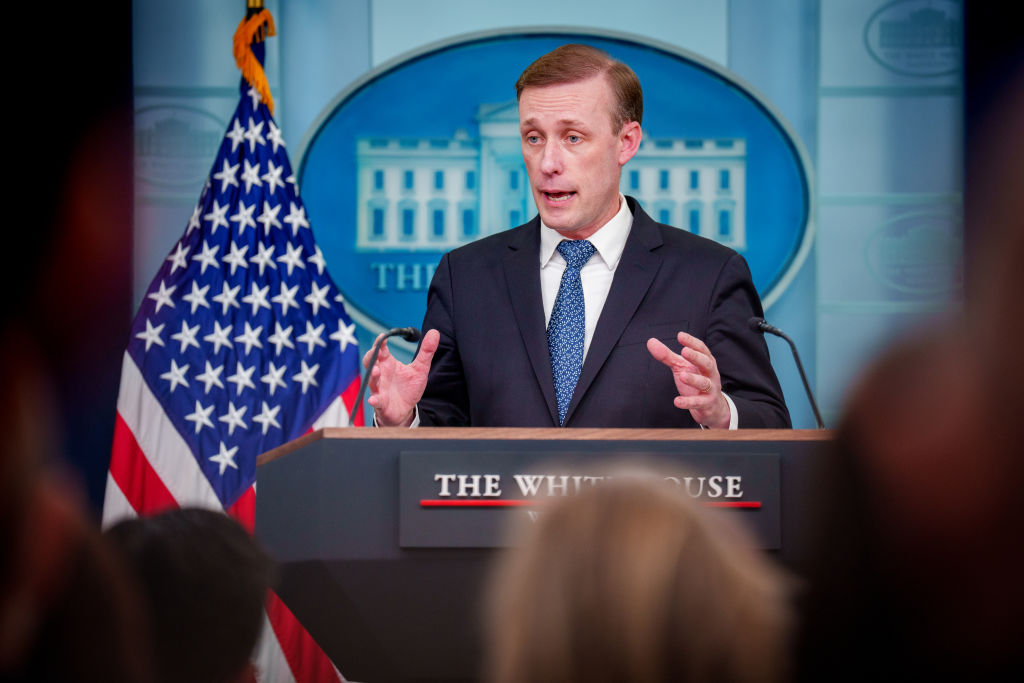
In an interview with ‘The Bulwark,’ the former national security advisor argued that the argument in favor of restricting military aid is ‘much stronger’ than it was a year ago
BELL CURVE
Contentious Wesley Bell town hall portends a potential primary challenge
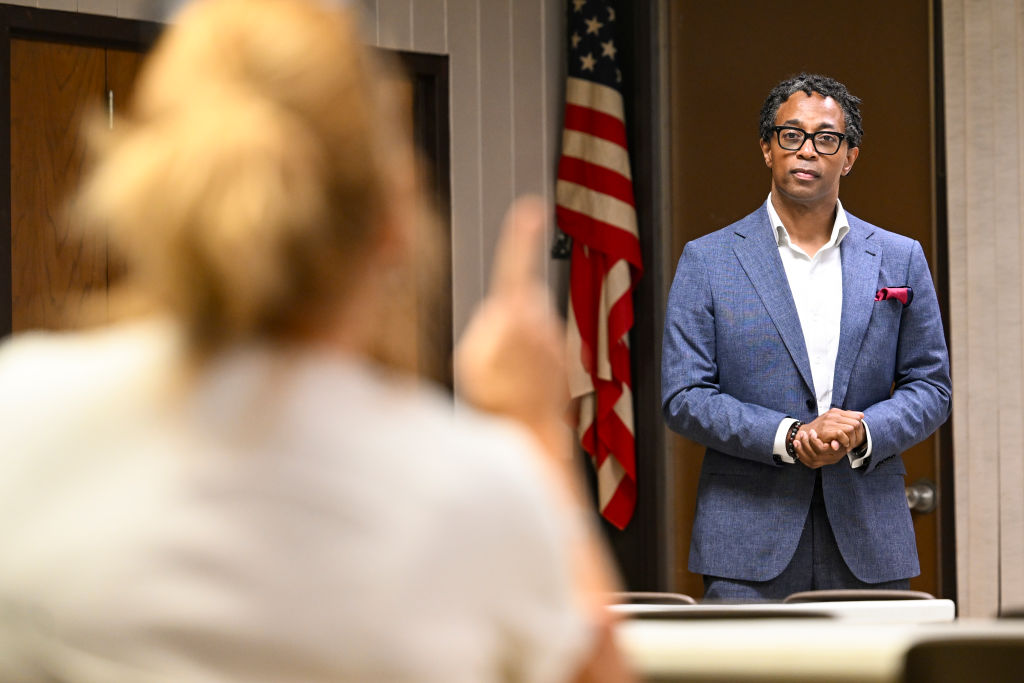
Former Rep. Cori Bush or a political ally could attempt to unseat the first-term congressman
Gor’s isolationist litmus test made it more challenging for mainstream conservatives to serve in the Trump administration
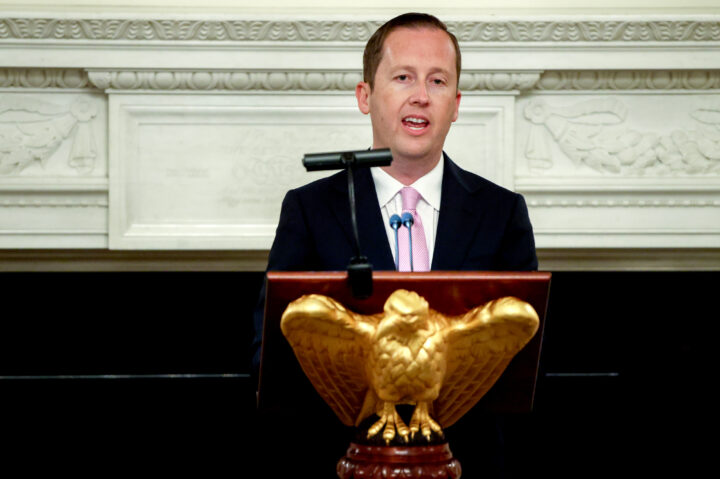
Samuel Corum/Bloomberg via Getty Images
Sergio Gor, director of the White House presidential personnel office, during a Kennedy Center Board dinner in the State Dining Room of the White House in Washington on May 19, 2025.
Sergio Gor’s expected departure from a key role in the White House, where he has vetted thousands of candidates for political jobs as the influential leader of the Presidential Personnel Office, is raising some questions about how his litmus tests and isolationist views will compare to his newly announced replacement, particularly with regard to national security hires.
Gor, 38, was nominated by President Donald Trump last week to be U.S. ambassador to India. If confirmed by the Senate, Gor, who was also tapped as special envoy for South and Central Asian affairs, will leave behind a powerful post at which he built a reputation as an ideological gatekeeper.
Throughout his time in the White House, Gor has drawn attention for his unyielding focus on loyalty to Trump and — more singularly — a fierce commitment to elevating national security and foreign policy hires who share his skepticism of American engagement abroad.
His successor, Dan Scavino, as the White House confirmed this week, is likewise a longtime Trump confidant who now serves as White House deputy chief of staff. But unlike Gor — whose background suggests an interest in imposing ideological litmus tests on job applicants — Scavino, 49, “has no ideology other than Trump,” according to a former top administration official.
Even as Gor has won plaudits from a range of high-ranking officials in the administration, the former official, who spoke anonymously to address a sensitive subject, suggested his approach to the White House role has been driven by his foreign policy worldview as well as his allegiance to the president, a tension that is unlikely to be replicated by Scavino.
“Sergio brought his own world with him to the job, not just Trump’s,” the former official told Jewish Insider on Wednesday. “Loyal to Trump, yes — loyal to a Paul-Tucker-Koch world ideology, I think yes as well,” he added, referring to Gor’s former boss Sen. Rand Paul (R-KY), podcast host Tucker Carlson and the activist network linked with Charles Koch, a leading conservative donor who has opposed Trump.
By contrast, Scavino, a former Trump golf club manager who has previously run the president’s prolific and unfiltered social media, seems to have few, if any, competing interests at stake. “There’s a reason Dan has a seat in the Situation Room when the toughest decisions are made,” the former Trump official elaborated. “Sergio never did. This should be a positive development for vetting and placement.”
It remains to be seen which positions Scavino will still need to help staff when he fully assumes Gor’s duties — especially with “over 95%” of departments and agencies now “filled,” according to a statement from Trump last week, which could not be verified.
“There is much still to be done, and Dan’s leadership will ensure the highest quality, most dedicated workforce ever,” Karoline Leavitt, the White House press secretary, said in a statement, calling Scavino “one of Trump’s most trusted and longest serving advisors.”
In his tenure, Gor, a former top aide to Paul, the libertarian Republican from Kentucky, has helped weaken the National Security Council and worked to install Pentagon officials who have pressed for a reduced U.S. military presence in the Middle East — fueling concerns among pro-Israel leaders who have questioned if such views were aligned with Trump’s approach.
The personnel chief, whose efforts highlighted an intra-party battle between warring traditional and MAGA Republican factions that has recently grown less fractious as the administration has taken shape, also promoted officials affiliated with the libertarian Koch network, in spite of a directive from Trump upon his reelection to avoid “people who worked with, or are endorsed by” the Charles Koch or his political advocacy group.
More recently, Gor has prominently clashed with some top Trump allies, including Elon Musk and Michael Anton, the State Department’s director of policy planning who served as a technical lead amid failed nuclear negotiations with Iran. Anton, who is now expected to leave the administration soon, has reportedly grown frustrated with Gor’s rejections of his proposed hires, among other sources of tension first detailed by Politico on Wednesday.
“He has the power to can people and for them not to get through,” one Trump official who has interacted with Gor and was not authorized to comment on the record said of his current role.
Meanwhile, Gor has advanced some officials widely criticized for espousing racist and antisemitic views, including Darren Beattie, who was fired in Trump’s first term for speaking at a white nationalist event and is now a top official in the State Department.
Beattie’s promotion, along with others who have drawn scrutiny for extreme views, underscores how Gor has been “clearing people who are unclearable,” said a former senior Republican Hill aide, who was granted anonymity in order to speak freely. “Sergio is obviously fine with that,” he said of Beattie’s past comments.
Trump, who in a social media post announcing his nomination last week called Gor’s time in the White House “essential” to upholding the administration’s agenda, said the personnel director would remain in his current role until his confirmation in the Senate, which has not yet scheduled a hearing.
A White House spokesperson confirmed to JI on Wednesday that Gor will stay in his post pending Senate approval for the ambassadorial role, which comes amid growing tensions between the United States and India, a major ally, over Trump’s tariff threats.
As Gor now prepares to leave the White House for a more public role, Danielle Pletka, a senior fellow at the American Enterprise Institute, suggested his approach to hiring ultimately demonstrated how he struggled to evolve with the administration on key issues.
“I think that the Trump administration has settled into a routine, and I think that people who are very ideologically rigid are finding less and less space for themselves,” Pletka told JI. “The president is not an isolationist, and those who are are discovering quickly that he does not appreciate being told how his staff have a stronger America first agenda than he does.”
Plus, Minneapolis shooting echoes Tree of Life

Nicholas Kamm/Getty Images
Ron Dermer speaks at the American Israel Public Affairs Committee (AIPAC) policy conference in Washington, DC.
Good Wednesday afternoon.
This P.M. briefing is reserved for our premium subscribers like you — offering a forward-focused read on what we’re tracking now and what’s coming next.
I’m Danielle Cohen-Kanik, U.S. editor at Jewish Insider and curator, along with assists from my colleagues, of the Daily Overtime briefing. Please don’t hesitate to share your thoughts and feedback by replying to this email.
📡On Our Radar
Notable developments and interesting tidbits we’re tracking
Israeli Minister of Strategic Affairs Ron Dermer made a last-minute visit to Washington today, according to Israeli media, while President Donald Trump convened a meeting on a “comprehensive plan” for postwar Gaza, as Middle East envoy Steve Witkoff told Fox News last night. It’s unclear if Dermer participated in the meeting himself.
Also in attendance at the White House were former British Prime Minister Tony Blair and Trump’s son-in-law and former Mideast advisor Jared Kushner, according to Axios, who have been working with Witkoff on the issue for several months…
Dermer canceled a meeting with World Food Program head Cindy McCain, who is in Israel for the first time since Oct. 7, as he headed to Washington. McCain did meet with IDF Chief of Staff Eyal Zamir and the head of COGAT, the IDF unit that facilitates humanitarian aid in Gaza. Recall that a whistleblower recently alleged that the WFP had rejected security coordination with the IDF, hampering aid distribution efforts in Gaza…
The alleged gunman who opened fire today on a Catholic school in Minneapolis, killing two children and injuring at least 17 people, most of them students at the school, used a gun that had antisemitic and anti-Israel writings across it, according to the Anti-Defamation League.
Unverified images of the alleged shooter’s gun, taken from a video posted to a YouTube account believed to be associated with the shooter, show scrawlings on the gun and related paraphernalia that say “6 million wasn’t enough,” “Burn Israel,” “Israel must fall” and “Destroy HIAS,” a reference to the Jewish refugee organization.
HIAS, which was also invoked by the Tree of Life synagogue shooter in Pittsburgh in 2018, told Jewish Insider that because of the organization’s focus, it is “sadly often the subject of hateful antisemitic conspiracy theories”…
Israeli Foreign Minister Gideon Sa’ar is in Washington today as well, meeting this afternoon with Secretary of State Marco Rubio in Foggy Bottom. Sa’ar said the two had “a productive meeting on mutual challenges and interests for both our nations” and discussed the Iranian nuclear threat in the aftermath of the U.S. and Israeli strikes in June, among other issues…
Rubio held a call with the foreign ministers of France, Germany and the U.K. today, during which all of the officials “reiterated their commitment to ensuring that Iran never develops or obtains a nuclear weapon,” as the European nations gear up to trigger snapback sanctions at the U.N. Security Council in the coming days…
a16z Speedrun, a startup accelerator program backed by the Andreessen Horowitz venture capital firm, is in Israel this week. Last night, the program convened a dinner of 20 budding startup founders from elite IDF units…
Hollywood heavyweights including Brad Pitt and Joaquin Phoenix are joining the production team of “The Voice of Hind Rajab,” a film about the killing of a six-year-old Palestinian girl in Gaza in January 2024. Jonathan Glazer, who made headlines for using his Oscar acceptance speech last year to equate Israel’s actions in Gaza with the Holocaust, is a director of the project…
Variety spotlights a new film in production starring Jon Voight and directed by the controversial Bryan Singer, which a source described as set in the Middle East during the First Lebanon War. “It makes Israel look really bad and could be polarizing,” the source said…
⏩ Tomorrow’s Agenda, Today
An early look at tomorrow’s storylines and schedule to keep you a step ahead
Keep an eye on Jewish Insider tomorrow morning for reporting on how security experts are viewing the threat of Iranian influence and attacks in the U.S. in the aftermath of disturbing revelations of Iranian attacks in Australia, and on how the replacement of Sergio Gor with Dan Scavino as head of the Presidential Personnel Office may impact national security personnel decisions in the administration.
Also tomorrow, the Atlantic Council will host an event in Washington on the “past, present, and future” of the India-Middle East-Europe Economic Corridor, an initiative launched at the G20 Summit in 2023.
Stories You May Have Missed
MINNEAPOLIS MOMENT
Jewish Democrats sound encouraging note on DNC Israel resolution votes

Democratic insiders told JI that DNC chair Ken Martin withdrew his Israel resolution largely to avoid a disruptive floor debate over Israel on Wednesday
THE CENTER SHIFTS
Leading moderate House Democrat calls for ‘leveraging’ arms sales to Israel
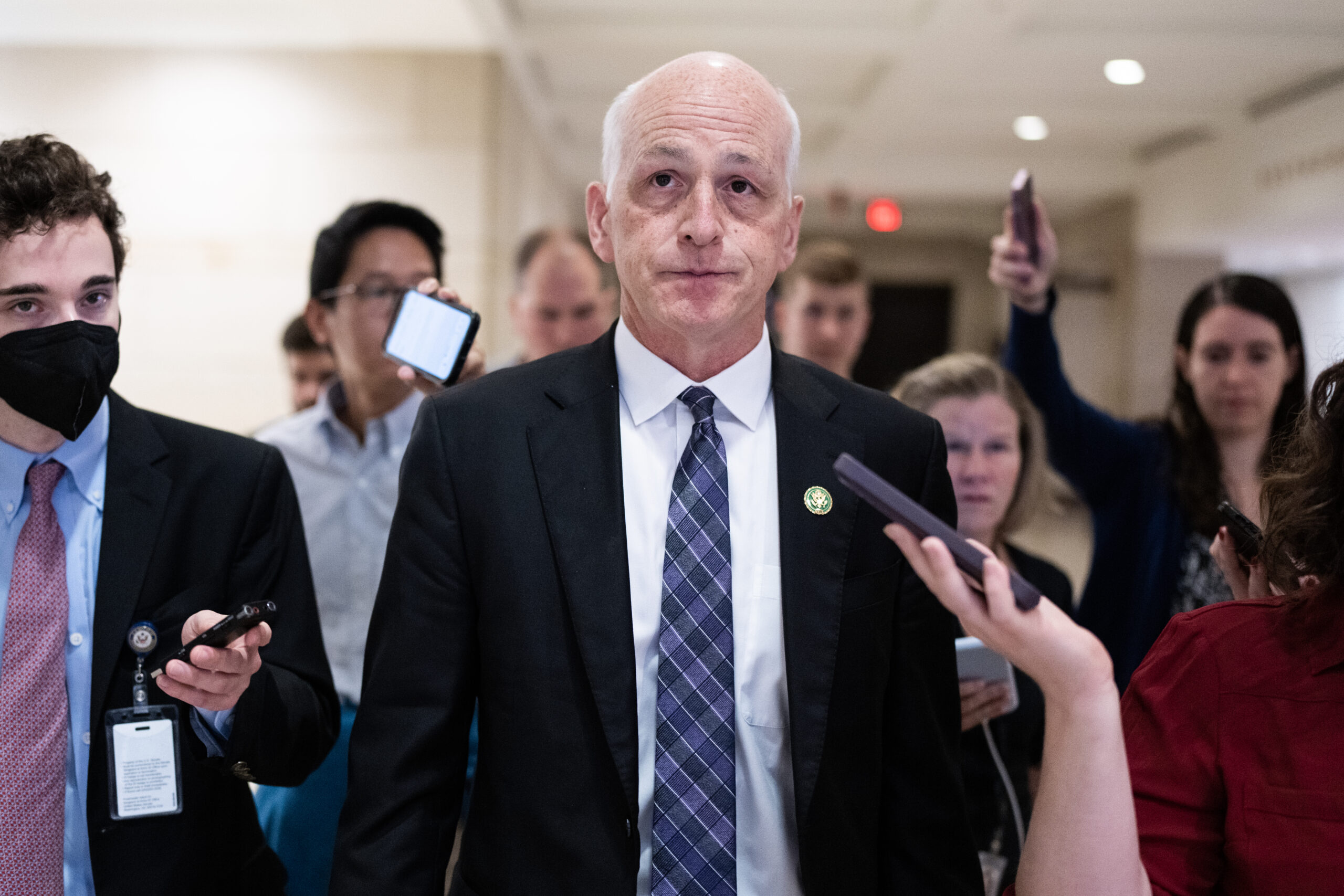
Rep. Adam Smith, ranking member of the House Armed Services Committee, said he recognizes restricting offensive weapons to Israel could ‘embolden Hamas’ but it is ‘time to try something else’
Plus, Qatari editor calls for more hostage-taking
ABIR SULTAN/POOL/AFP via Getty Images
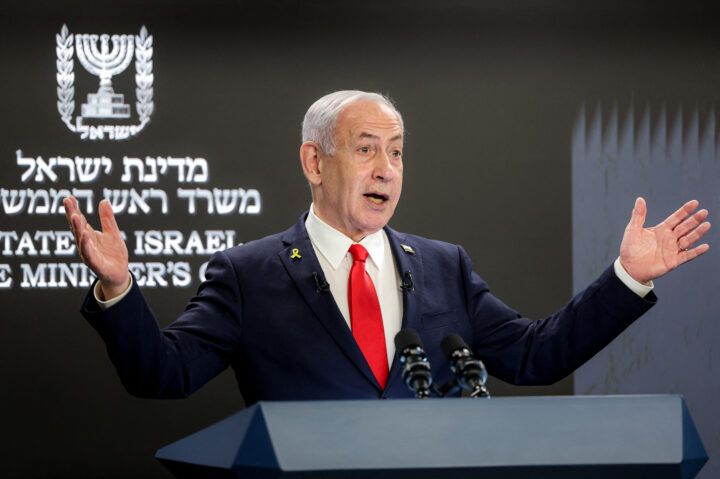
Israel's Prime Minister Benjamin Netanyahu gives a press conference at the Prime minister's office in Jerusalem on August 10, 2025.
Good Wednesday morning.
In today’s Daily Kickoff, we report on yesterday’s votes on Israel-related resolutions at the Democratic National Committee’s summer meeting and subsequent decision to create a task force on the issue, and cover Rep. Adam Smith’s support for leveraging arms sales to Israel. We report on a call from a prominent Qatari journalist tied to the country’s royal family to kidnap IDF soldiers, and report on a push from Jewish groups, led by the Jewish Federations of North America, for the Trump administration to move forward with its nominations for antisemitism envoy and religious freedom ambassador. Also in today’s Daily Kickoff: Avraham Tahari, Jonathan Karp and Shmuel and Anat Harlap.
What We’re Watching
- President Donald Trump will lead a meeting at the White House today focused on winding down the war in Gaza and increasing humanitarian aid to the country. Steve Witkoff, the Trump administration’s Middle East envoy, told Fox News that the administration believes “that we’re going to settle this one way or another, certainly before the end of this year.”
- Israeli Foreign Minister Gideon Sa’ar, who is in the U.S. this week, will meet with Secretary of State Marco Rubio this afternoon in Washington.
- This evening, the Florida Democratic Party Jewish Caucus is hosting a briefing with Rep. Debbie Wasserman Schultz (D-FL).
What You Should Know
A QUICK WORD WITH JI’S JOSH KRAUSHAAR
In the run-up to the U.S. presidential election last year, one common refrain heard in Israeli leadership was to wait out the election in the hope of a friendlier Trump administration taking over.
Increasingly, many pro-Israel voices in the United States are quietly saying the same thing about upcoming Israeli elections, which polls suggest could usher in a more moderate coalition, and diminish the influence of far-right leaders in the current Israeli government.
The possibility of new elections taking place soon, more than any particular shift in military strategy or policy decisions, is looking like the most likely factor that could advance progress in the region.
While Israeli elections are not guaranteed to take place until October 2026, the legislative crisis over Haredi conscription in the IDF is looking like it could collapse Israeli Prime Minister Benjamin Netanyahu’s coalition, and move up the election timetable to as early as next January.
What has prevented elections until now is the fact that all members of the governing coalition are projected to lose seats if elections are held. That most Israelis want new elections is the very reason why they haven’t happened – yet.
Indeed, if elections were held today, Netanyahu would be in serious trouble. A recent poll commissioned by Israel’s Channel 12 found the anti-Netanyahu bloc making up a narrow majority of 61 of the Knesset’s 120 seats, with the current Likud-led coalition sitting at 49 seats, and Arab parties making up the remaining 10 seats.
minneapolis moment
Under pressure from left-wing activists, DNC Chair Ken Martin withdraws Israel resolution
Shortly after members of the Democratic National Committee passed a resolution on Tuesday voicing support for humanitarian aid to Gaza and calling for the release of hostages held by Hamas, Ken Martin, the party chair, announced that he would withdraw the measure, which he had introduced, and instead form a task force to continue discussing the matter, Jewish Insider’s Matthew Kassel reports.
Dem divide: The surprise reversal came even as the DNC, now holding its annual summer meeting in Minneapolis, had voted to reject a dueling and more controversial resolution that had backed an arms embargo as well as a suspension of U.S. military aid to Israel, raising alarms among Jewish and pro-Israel Democrats who rallied behind Martin’s effort, co-sponsored by DNC leadership. “There is a divide in our party on this issue. This is a moment that calls for shared dialogue and calls for shared advocacy,” Martin said after the competing measure had been voted down. He said that he would “appoint a committee or a task force comprised of stakeholders on all sides of this to continue to have the conversation, to work through this, and bring solutions back to our party.”
‘Inside baseball’: Pro-Israel Democrats expressed cautious optimism about the unexpected decision. Despite Martin’s 11th-hour reversal, Halie Soifer, the CEO of the Jewish Democratic Council of America, told JI’s Matthew Kassel she was satisfied with the outcome, noting the DNC also passed a resolution condemning antisemitism that, coupled with its rejection of the arms embargo proposal, “reflects where the party stands” on major issues concerning Israel and the Jewish community. Brian Romick, Democratic Majority For Israel’s president and CEO, said that he viewed the outcome as “a win” for the pro-Israel community, in light of the potential for a more hostile debate. “The bad resolution was rejected and Ken’s compromise resolution also passed the committee,” Romick said. “That all happened publicly” and “reaffirmed where the party stands on Israel,” he said. “Anything else beyond that is just inside baseball.”
the center shifts
Leading moderate House Democrat calls for ‘leveraging’ arms sales to Israel
Rep. Adam Smith (D-WA), ranking member of the House Armed Services Committee, said in a statement on Tuesday that he “believe[s] it is time for the United States government to stop the sale of some offensive weapons systems to Israel as leverage to pressure Israel” into implementing a ceasefire, increasing humanitarian aid in Gaza and stopping the expansion of West Bank settlements, Jewish Insider’s Danielle Cohen-Kanik reports. The Washington state Democrat, who has served his Seattle-area district since 1997, said he changed his position on blocking weapons sales to Israel because the “situation in the Middle East has changed dramatically in recent months.”
Nuanced stance: Smith, a member of the moderate New Democrat Coalition who has played a leading role in Democratic foreign policy, was careful to emphasize that he supports Israel and “recognize[s] both the threats they face and the reality that the actions of Hamas and their supporters have driven this conflict.” He also affirmed that “Yes, the hostages must be returned. It is outrageous that Hamas took the hostages and has continued to hold them.” However, Smith said, “six months of war since the end of the last ceasefire has done nothing to bring the hostages home” and it is “impossible to see how further military action in Gaza could degrade Hamas … further than what has already occurred.”
media mania
Qatari government-aligned newspaper editor called on Hamas to kidnap IDF soldiers

The editor-in-chief of Qatar’s pro-government newspaper Al Sharq called on Hamas “heroes” to kidnap more IDF soldiers in a since-deleted tweet, Jewish Insider’s Haley Cohen reports. “If success is not achieved this time in capturing Zionist soldiers at the hands of the heroes of #AlQassamBrigades, then the second, third, and fourth attempts will succeed, God willing, by adding new rats to the tally held by the heroes of the Brigades,” Qatari journalist Jabar Al-Harmi wrote in Arabic last week.
Propaganda push: Al Sharq, which is published in Doha by a privately held media company founded and owned by Sheikh Khalid bin Thani Al Thani, a member of the Qatari ruling family, is one of the four leading private daily Arabic newspapers in Qatar, all of which have a pro-government bent. Ghaith Al-Omari, a senior fellow in The Washington Institute for Near East Policy’s Irwin Levy Family Program in the U.S.-Israel Strategic Relationship, told JI that the tweet is “not surprising” and comes amid widespread praise for Hamas in Qatari media. “The Qatari media landscape is rife with statements, selective reporting and editorials that support Hamas,” said Al-Omari, former executive director of the American Task Force on Palestine. “Under the guise of supporting the Palestinian people, many Qatari media outlets have been a key vehicle for amplifying Hamas propaganda.”
beirut or bust
Graham advocates for mutual defense agreement with Lebanon during bipartisan visit

Sen. Lindsey Graham (R-SC) championed a U.S. defense agreement with Lebanon during a bipartisan congressional delegation to Beirut on Tuesday, saying it would be the “biggest change in the history of Lebanon,” Jewish Insider’s Danielle Cohen-Kanik reports. Speaking at a press conference alongside Sen. Jeanne Shaheen (D-NH) and Rep. Joe Wilson (R-SC), Graham asked, “How many nations have a defense agreement with the United States? Very few. … The number of nations that America is willing to go to war for is very few. Why do I mention Lebanon being in that group? You have one thing going for you that is very valuable to me: religious diversity.”
Making the case: “Christianity is under siege in the Mideast. Christians are being slaughtered and run out of all over, all over the region, except here. And so what I am going to tell my colleagues is, ‘Why don’t we invest in defending religious diversity in the Mideast? Why don’t we have a relationship with Lebanon where we would actually defend what you’re doing?’” Graham continued. “I think it’s in America’s interest to defend religious diversity, whether you’re Druze or Alawite or a Christian or whatever. The idea that America may one day have a defense agreement with Lebanon changes Lebanon unlike any single thing I could think of,” Graham said.
granite state race
Top N.H. congressional candidate balances support of U.S.-Israel relationship with criticism of Gaza aid strategy
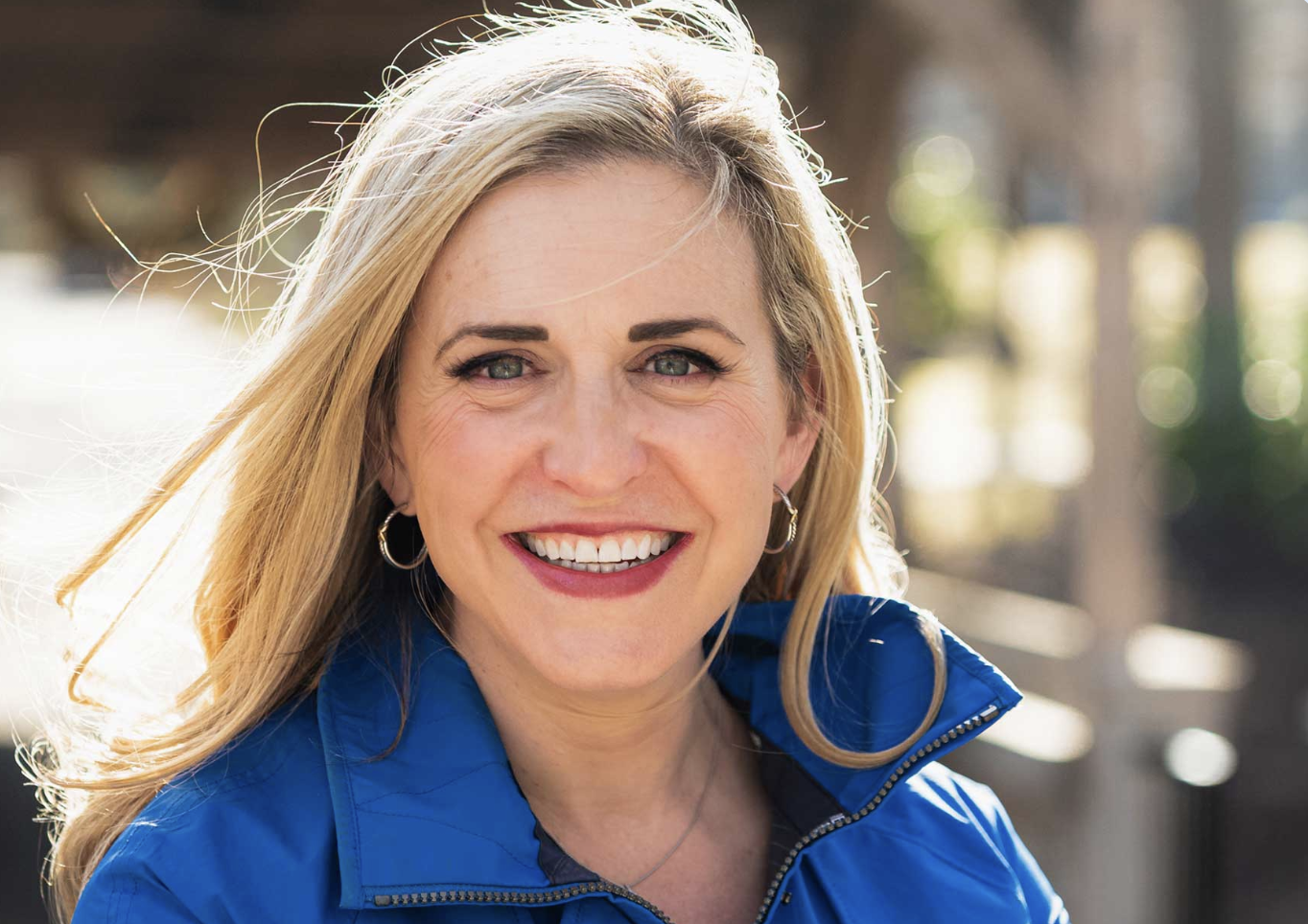
Maura Sullivan, a Marine veteran who served in Iraq and later worked as a senior Defense Department official, is aiming to leverage that experience to win the New Hampshire congressional seat currently held by Rep. Chris Pappas (D-NH), who is running for the Senate. She’s also leaning on “that firsthand perspective, experience and knowledge” as she stakes out her positions on the conflict in the Middle East, she told Jewish Insider’s Marc Rod in a recent interview.
Military mindset: As a Pentagon official, Sullivan, who noted that she’d be seeking a spot on the House Armed Services Committee if elected, said she spent time in the Middle East on “allied reassurance tours,” visiting allies and meeting with top officials to learn about Israel’s challenges and capabilities and “talking about the incredibly important relationship between the United States and Israel and strongly reaffirming the United States commitment” to Israel. “I’ve been very clear since the devastating, absolutely deplorable Oct. 7 attacks that Hamas perpetrated that Israel has the right to defend itself,” Sullivan continued. “I also want to be clear that the conditions in Gaza are inhumane, they’re deplorable and they must be improved immediately. … Hamas can be destroyed and significant aid can be let in at the same time. It’s a false choice to think that those two objectives cannot occur simultaneously.”
scoop
Jewish groups to urge Senate to confirm antisemitism envoy, religious freedom ambassador

Several major Jewish organizations are calling on the Senate to “swiftly” confirm President Donald Trump’s nominees for special envoy to monitor and combat antisemitism and international religious freedom ambassador, Jewish Insider’s Gabby Deutch reports. In April, Trump tapped Rabbi Yehuda Kaploun, an Orthodox businessman and Chabad rabbi who served as a campaign surrogate, to serve as the next U.S. special envoy to monitor and combat antisemitism, and has named former Rep. Mark Walker (R-NC) as the U.S. ambassador-at-large for international religious freedom. Both positions require Senate confirmation, and neither has had a confirmation hearing yet.
‘Utmost importance’: The groups, led by the Jewish Federations of North America, wrote in a letter to Senate Majority Leader John Thune (R-SD) and Senate Minority Leader Chuck Schumer (D-NY) that filling the roles is “of utmost importance in fighting growing antisemitism and ensuring freedom of religion or belief worldwide,” according to a draft obtained by JI. “We dare not delay in filling these critical positions that protect human rights around the world,” the letter states. “To that end we strongly urge you to prioritize filling these positions, sending a powerful signal to governments around the world that the United States upholds our constitutionally guaranteed rights to life and liberty, to freedom of religion and belief, and calls on them to do the same.”
Worthy Reads
The Heck With Hasbara: The Wall Street Journal’s Elliot Kaufman interviews Israeli Foreign Minister Gideon Sa’ar about the diplomatic and public relations hits the country has taken as it nears two full years of war against Hamas in Gaza. “Hamas took over and Israel is still paying the price, in diplomacy and in lives. The logic leads me to the conclusion that whether the Gaza war ends now or in some months seems less important for Israel — and even for its foreign relations — than whether Hamas is left with the ability to draw it into another war a few years on. In general, Mr. Sa’ar says, ‘We need to survive first. After that, there comes popularity and how much we are able to convince others around the world.’ Later, he catches himself, and adds, ‘I’m not saying diplomacy shouldn’t be taken into consideration. I’m the last to say that — I’m foreign minister.’” [WSJ]
Southern Comfort: The Atlantic’s Rose Horowitch spotlights the growing popularity of southern universities among prospective Jewish students, as many of the Ivies and small liberal arts colleges in the Northeast face widespread anti-Israel and at times antisemitic activism. “The line between criticism of Israel and anti-Semitism is nearly always contested; the anti-Israel protest movement on some campuses counts many Jewish students among its ranks. Meanwhile, southern colleges are becoming more popular with northeastern students of all backgrounds. No doubt some Jewish students have opted out of the Ivy League simply because they think the South is the place to be. Even so, an atmosphere of fear has clearly taken hold among many Jewish families. Jewish leaders at Columbia, Harvard, and Yale told me that just about every parent of a prospective student asks if their child will be safe on campus. (Here I will resist the temptation to make any quips about Jewish moms.)” [TheAtlantic]
Crimson Coexistence: In The New York Times, Jacob Miller and Tommy Barone, who served as chairs of the Harvard Crimson’s editorial board during the last academic year, reflect on how they worked to maintain civil discourse in the publication’s pages. “The two of us faced a measure of internal criticism, but we consistently underscored the importance of principled, rational disagreement. Meeting by meeting, the board rallied behind this approach. Disagreeing civilly about big stories — the Israeli-Palestinian conflict, but also D.E.I., free speech and admissions policies — became routine, and we published thoughtful editorials that helped earn back disillusioned readers’ respect. Refined by dissent, our editorials, regardless of their ideological tilt, offered stronger reasoning and more engagement with counterarguments. They passed the test our previous editorials on controversial issues had too often failed.” [NYTimes]
Split With Hamas: In Haaretz, Haisam Hassanein considers the outcomes of the Arab League’s call for Hamas to be disarmed and removed from Gaza. “On paper, this new declaration is historic. But it seems most Israelis don’t even know it exists. If Arab leaders are serious, they can’t stop at communiqués read in Cairo or Riyadh. They have to step into Israel’s conversation. That means Hebrew language interviews, Israeli TV, op-eds in this paper and others. Spell it out directly: Arab states are ready to put money into rebuilding Gaza. They are ready to back one Palestinian leadership. They themselves are also ready to move toward normalization. But all of it hinges on Israel doing its part – stopping the drift into endless conflict and opening a real path toward a two-state solution. That’s the message. And Israelis deserve to hear it unfiltered. Right now, they don’t.” [Haaretz]
Word on the Street
Dan Scavino, the longest-serving aide to President Donald Trump, was tapped to head the White House Presidential Personnel Office, replacing Sergio Gor, who was nominated to be U.S. ambassador to India…
U.S. Ambassador to Turkey Tom Barrack received pushback from Lebanese journalists and commentators after warning journalists at a press conference in Beirut to “act civilized” and not be “animalistic”…
Microsoft is weighing disciplinary measures against employees who, protesting the company’s tech sales to Israel, participated in a sit-in in the office of President Brad Smith at the company’s Washington state headquarters that temporarily locked down the building…
Business executives and Jewish leaders in Chicago are preparing to open a college preparatory Jewish high school in the city’s Lakeshore East neighborhood after purchasing the unfinished building, where construction on another school stalled six years ago…
Police in St. Louis County, Mo., charged an area man with defacing a sign outside the city’s Jewish Student Union, which provides programming and community events to Jewish high schoolers in the city…
The Wall Street Journal spotlights the high-profile, high-stakes divorce proceedings of David Geffen, who did not sign a prenuptial agreement with his now-estranged husband, amid allegations of drug use and unequal power dynamics…
Elie Tahari co-founder Avraham Tahari listed his Alpine, N.J., home for $24.75 million, 15 years after buying the property for $4.25 million…
The Woodstock, N.Y., property that was featured on the cover of Bob Dylan’s “Bringing It All Back Home” sold for $4.6 million…
Simon & Schuster CEO Jonathan Karp is stepping down after five years in the role; Karp will remain at the publisher, overseeing its newly created Simon Six imprint…
In The Wall Street Journal, Tevi Troy reflects on the slow pace encouraged by vacation life…
Norges Bank Investment Management, Norway’s sovereign wealth fund, is ending its investments in Caterpillar as well as five Israeli banks, after its ethics council reviewed the companies’ ties to Israeli construction and Palestinian home demolitions in the West Bank…
Israel said that a strike on the Nasser Hospital in Khan Younis earlier this week that killed 20 people had targeted a camera the army alleged had been positioned by Hamas to observe IDF troop movements…
Israeli Prime Minister Benjamin Netanyahu praised the decision by Australia to expel Iran’s ambassador in Canberra, calling it a positive “first step,” days after he had criticized Australian Prime Minister Anthony Albanese for being “weak” and failing to adequately address antisemitism in the country…
French President Emmanuel Macron doubled down in his support for Palestinian statehood, writing in a letter to Netanyahu, which was published in several European newspapers, that a lasting Israeli-Palestinian peace “is essential to the State of Israel’s security”…
German Chancellor Friedrich Merz said Berlin would not join other foreign powers in recognizing a Palestinian state at the United Nations General Assembly next month; Merz, speaking at a press conference with Canadian Prime Minister Mark Carney, said that Germany doesn’t “see the requirements met” for statehood…
The Financial Times looks at how the 12-day war between Israel and Iran has sparked calls inside Iran for political change…
Philanthropists Shmuel and Anat Harlap made a $180 million donation to the Rabin Medical Center in central Israel, the largest-ever single gift to an Israeli hospital, eJewishPhilanthropy’s Judah Ari Gross reports…
Commentator Batya Ungar-Sargon is joining NewsNation, where she will host an eponymous weekend program…
Jewish communal activist and fundraiser Jacqueline Levine, who was active in the Civil Rights Movement as well as the movement to free Soviet Jewry, died at 99…Physicist Rainer Weiss, who won the Nobel Prize in 2017 for his role in developing a mechanism to predict intergalactic events, died at 92…
Pic of the Day
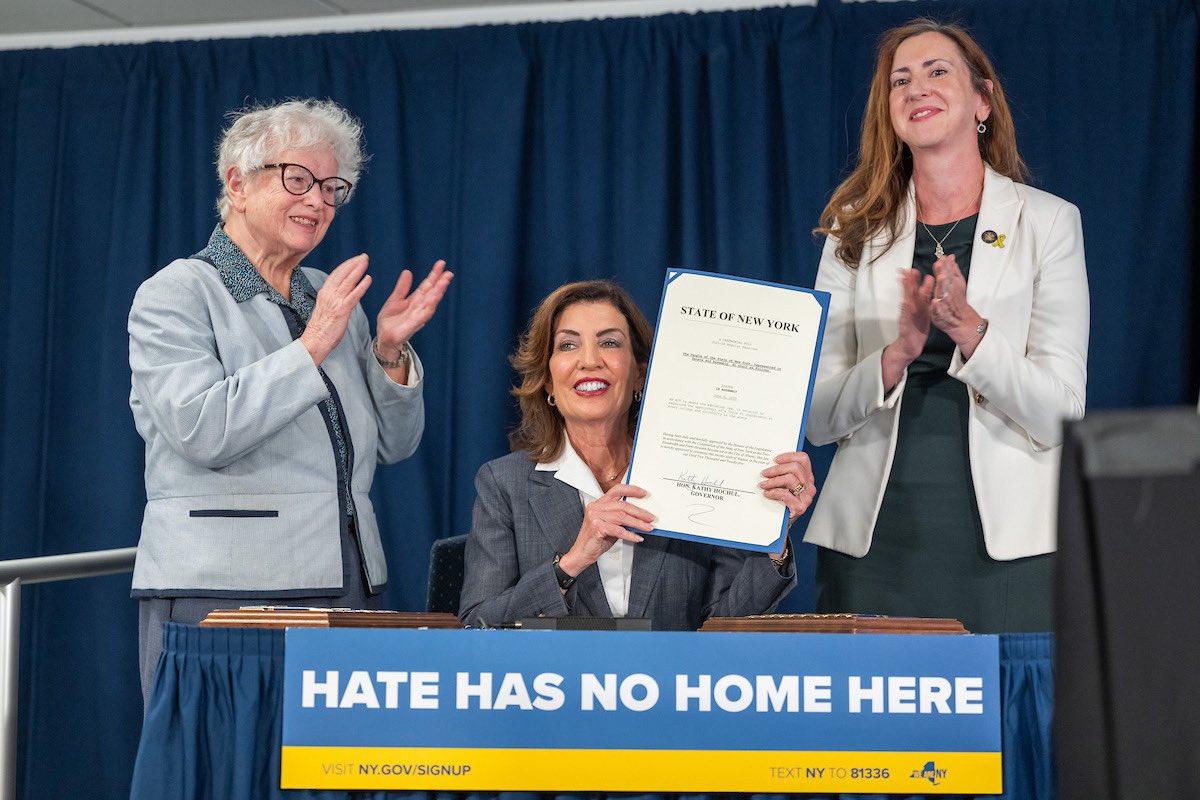
New York Gov. Kathy Hochul (center) signed into law legislation that requires all colleges in the state to designate anti-discrimination coordinators to enforce Title VI of the Civil Rights. Hochul was joined by state Sen. Toby Ann Stavisky (left) and Assemblywoman Nily Rozic (right), who sponsored the legislation in their respective chambers.More on the new law here.
Birthdays

Member of AJR, an indie pop multi-instrumentalist trio, together with his two brothers, Adam Metzger turns 35…
Chatsworth, Calif., resident, Ruth Ann Kerker Hapner… Board chair for North America at the Pardes Institute of Jewish Studies, Mark S. Freedman turns 74… Author, essayist and journalist, Michael Wolff turns 72… President of the Israeli Jewish Congress focused on battling antisemitism, he is a former senator in the Russian Federation, Moshe Shlomo (Vladimir) Sloutsker turns 69… President of Cornell University until June 2024, Martha Elizabeth Pollack turns 67… Governor of New York State since 2021, Kathy Hochul turns 67… Israel’s ambassador to the Czech Republic, Anna Azari turns 66… Vice chairman at IBM and lead independent director on the board of Apollo Global Management, Gary Cohn turns 65… Executive director of J Street Israel, he served as Israel’s consul general to New England from 2006 until 2010, Nadav Tamir… Contributing editor at the National Interest, he is also chairman and CEO of Widehall, Steve Clemons turns 63… Private equity investor and a trustee of the Jewish Federations of North America’s Board, Neil A. Wallack… Israeli-born CEO of Insitro, she was a professor at Stanford for 18 years and a 2004 winner of a MacArthur genius fellowship, Daphne Koller turns 57… Director of National Intelligence throughout the four years of the Biden administration, Avril Haines turns 56… Co-founder of the 2017 Women’s March which she departed citing concerns over antisemitism, Vanessa Wruble turns 51… Managing partner and founder of G2 Investment Partners, Joshua Goldberg… Former director general of the Israeli Ministry of Finance, now CEO of the Strauss Group, Shai Babad turns 49… Mayor of Evanston, Ill., Daniel Kalman Biss turns 48… Senior advisor at the Foundation for Defense of Democracies, Richard Goldberg turns 42… Director of the JCRC at the Jewish Federation & Foundation of Northeast Florida in Jacksonville, Nelson France… Co-founder of theSkimm, Danielle Merriah Weisberg turns 39… Michael Weiss… Director of the Botanical Garden and senior lecturer, both positions at Tel Aviv University, Yuval Sapir… Talia Rubin…
Plus, the clock keeps ticking on snapback sanctions
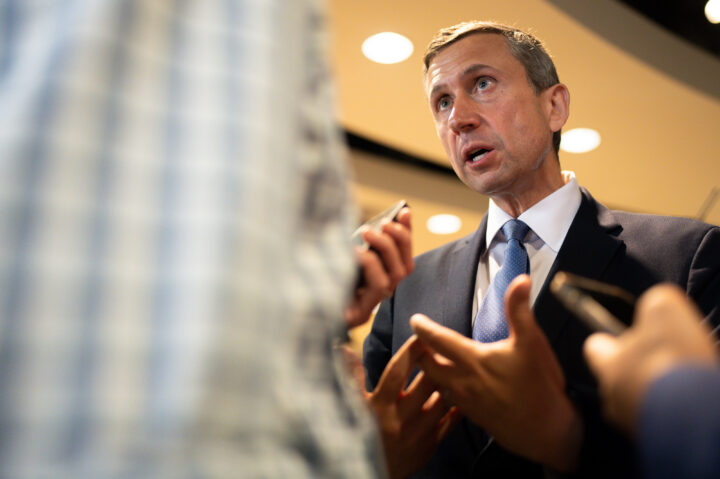
Audrey Richardson/Bloomberg via Getty Images
Ken Martin, chairman of the Democratic National Committee (DNC), speaks to members of the media during a news conference in Aurora, Illinois, US, on Tuesday, Aug. 5, 2025.
Good Tuesday afternoon.
This P.M. briefing is reserved for our premium subscribers like you — offering a forward-focused read on what we’re tracking now and what’s coming next.
I’m Danielle Cohen-Kanik, U.S. editor at Jewish Insider and curator, along with assists from my colleagues, of the Daily Overtime briefing. Please don’t hesitate to share your thoughts and feedback by replying to this email.
📡On Our Radar
Notable developments and interesting tidbits we’re tracking
Shortly after members of the Democratic National Committee passed a resolution today introduced by DNC Chair Ken Martin that voiced support for humanitarian aid to Gaza and a two-state solution, called for the release of hostages and condemned Hamas, Martin announced he was withdrawing the measure and instead forming a task force to continue discussing the issue.
The surprise reversal came after a competing resolution that called for an arms embargo and suspension of U.S. aid to Israel was voted down. Upon huddling with the co-sponsors of the failed measure, Martin said at the meeting of the Resolutions Committee where the votes took place, “There is a divide in our party on this issue. This is a moment that calls for shared dialogue and calls for shared advocacy.”
“And that’s why I’ve decided today, at this moment, listening to the testimony and listening to people in our party, to withdraw my amendment resolution to allow us to move forward in a conversation on this as a party,” Martin continued. He said that he would “appoint a committee or a task force comprised of stakeholders on all sides of this to continue to have the conversation, to work through this, and bring solutions back to our party”…
Overseas, Sen. Jeanne Shaheen (D-NH), Rep. Joe Wilson (R-SC) and U.S. Syria envoy Tom Barrack, ending their visit to Damascus, traveled to Beirut today where they joined Sen. Lindsey Graham (R-SC).
Along with diplomat Morgan Ortagus and U.S. Ambassador to Lebanon Lisa Johnson, the delegation met with Lebanese President Joseph Aoun, Prime Minister Nawaf Salam, Parliament Speaker Nabih Berri and head of the Lebanese Armed Forces Gen. Rodolph Haykal, with whom they discussed U.S. support of the LAF.
Barrack and Ortagus have been shuttling between Lebanon, Syria and Israel over the past several months in an effort to improve security relations in the region.
During a press conference the lawmakers held in Beirut, Graham announced his support for the United States signing a defense agreement with Lebanon, where the U.S. would commit to defending Lebanon militarily.
“How many nations have a defense agreement with the United States? … The number of nations that America is willing to go to war for is very few. Why do I mention Lebanon being in that group? You have one thing going for you that is very valuable to me. Religious diversity,” Graham said.
The South Carolina senator continued, “Christianity is under siege in the Mideast. Christians are being slaughtered and run out of all over the region, except here. So what I am going to tell my colleagues is, ‘Why don’t we invest in defending religious diversity in the Mideast? Why don’t we have a relationship with Lebanon where we would actually defend what you’re doing?’ I think it’s in America’s interest to defend religious diversity.”
Though it’s been discussed in Israeli and American administrations for decades, the U.S. does not have a mutual defense agreement with Israel, another Middle East country with a large Christian population and religious diversity…
Meanwhile, a meeting of the E3 — France, Germany and the U.K. — and Iran in Geneva today ended with reportedly little progress on scaling back the Iranian nuclear program, leaving the European countries to decide if they’ll follow through on a recent threat to reinstate snapback sanctions at the end of the month…
The Norwegian Sovereign Wealth Fund, the world’s largest sovereign wealth fund, announced it’s selling its shares of the U.S. machinery company Caterpillar over Israel’s use of its bulldozers, which the fund said had contributed to Palestinian suffering, as well as its shares in four Israeli banks, including the country’s two largest.
The fund has already liquidated its holdings in over a dozen Israeli companies and cut ties with Israeli hedge fund managers over concerns with the country’s war in Gaza and treatment of Palestinians…
On the Hill, leading Jewish organizations are set to send a letter to Senate leadership today urging the body to confirm the Trump administration’s nominees for special envoy to monitor and combat antisemitism, Rabbi Yehuda Kaploun, and international religious freedom ambassador, former Rep. Mark Walker (R-NC), Jewish Insider has learned. Schumer currently has a hold on dozens of President Donald Trump’s nominees…
⏩ Tomorrow’s Agenda, Today
An early look at tomorrow’s storylines and schedule to keep you a step ahead
Keep an eye on Jewish Insider tomorrow morning for reactions from Jewish Democrats on Martin’s decision to withdraw his resolution at the DNC and an interview with Democrat Maura Sullivan, the Marine veteran and former Defense Department official running to succeed Rep. Chris Pappas (D-NH).
Stories You May Have Missed
PHONE A FRIEND
Bernie Sanders campaigns with Israel critics running for Senate
Vermont’s democratic socialist senator is on a campaign swing as part of his ‘Fighting Oligarchy’ tour
DOWN UNDER DICTATE
Australia expels Iranian ambassador, three diplomats over attacks on synagogue, kosher restaurant
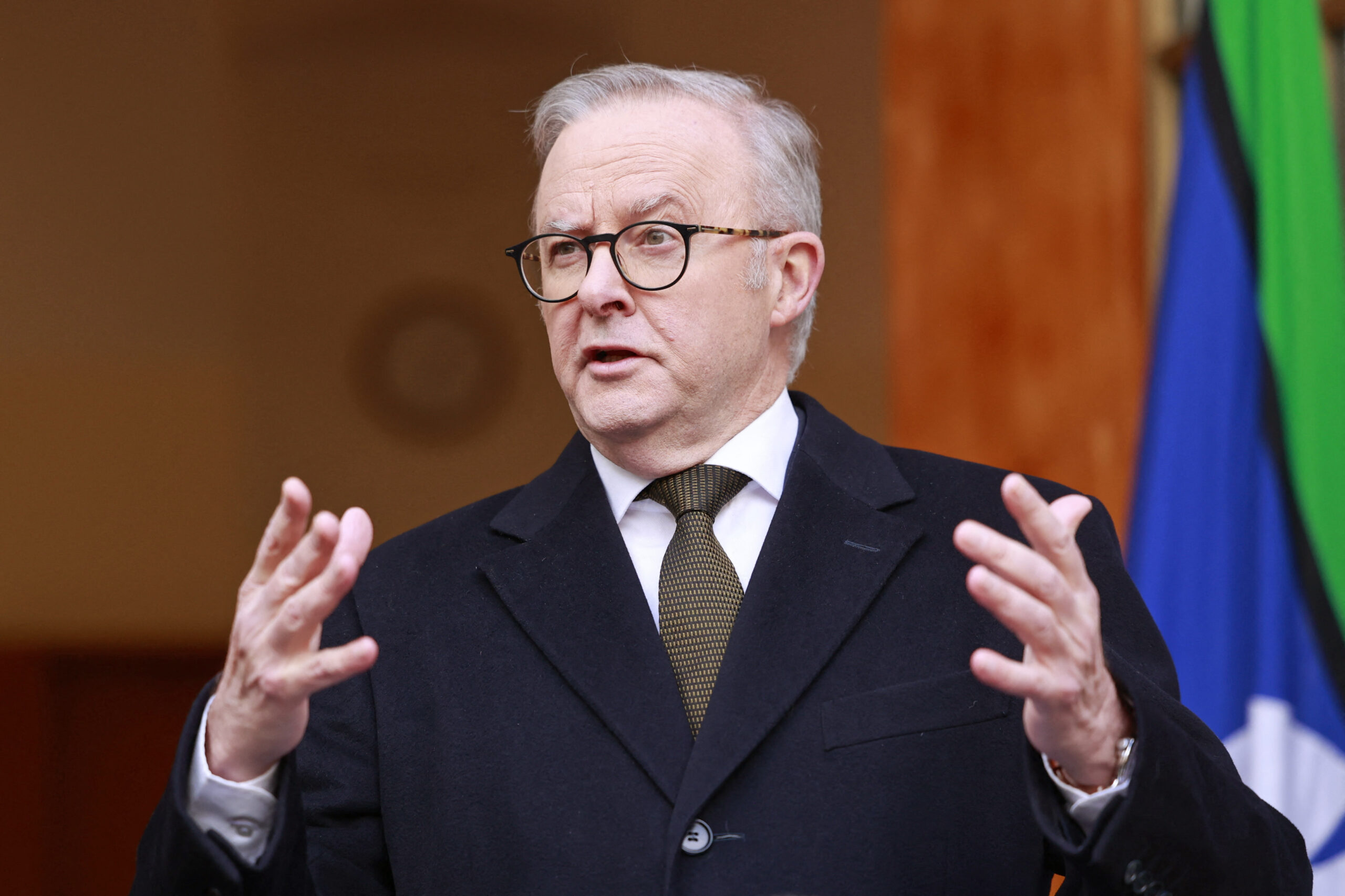
PM Anthony Albanese blasted the ‘extraordinary and dangerous acts of aggression orchestrated by a foreign nation on Australian soil’
Yehuda Kaploun and former Rep. Mark Walker have not yet had committee hearings scheduled

Joe Raedle/Getty Images
President Donald Trump and Rabbi Yehuda Kaploun light a candle during an Oct. 7th remembrance event at the Trump National Doral Golf Club on Oct. 7, 2024 in Doral, Florida.
Several major Jewish organizations are expected to call on the Senate to “swiftly” confirm President Donald Trump’s nominees for special envoy to monitor and combat antisemitism and international religious freedom ambassador.
The groups, led by the Jewish Federations of North America, are writing in a letter to Senate Majority Leader John Thune (R-SD) and Senate Minority Leader Chuck Schumer (D-NY) that filling the roles is “of utmost importance in fighting growing antisemitism and ensuring freedom of religion or belief worldwide,” according to a draft obtained by Jewish Insider. The letter is set to be sent on Tuesday, according to a source with knowledge of the draft.
“We dare not delay in filling these critical positions that protect human rights around the world,” the letter states. “To that end we strongly urge you to prioritize filling these positions, sending a powerful signal to governments around the world that the United States upholds our constitutionally guaranteed rights to life and liberty, to freedom of religion and belief, and calls on them to do the same.”
In April, Trump tapped Rabbi Yehuda Kaploun, an Orthodox businessman and Chabad rabbi who served as a campaign surrogate, to serve as the next U.S. special envoy to monitor and combat antisemitism. In the Biden administration, that role was filled by Deborah Lipstadt, a Holocaust historian at Emory University. In May, the two authored a joint op-ed, with former antisemitism envoy Elan Carr, calling for action after two Israeli Embassy staffers were killed outside the Capital Jewish Museum in Washington.
Trump named former Rep. Mark Walker (R-NC) as the U.S. ambassador-at-large for international religious freedom. Both positions require Senate confirmation, and neither has had a confirmation hearing yet.
“We believe that these ambassador-at-large positions are crucial to protecting vital human rights, promoting religious freedom and vigorously confronting the global surge in antisemitism,” the Jewish organizations wrote.
JFNA CEO Eric Fingerhut told JI on Tuesday that the positions must be filled to help Jewish organizations combat rising antisemitism.
“The 141 Jewish Federations across our system are on the front lines of responding to and combatting antisemitism, and every single day we hear from them about the elevated levels of antisemitism our communities are facing,” Fingerhut said. “The government is a critical partner in our fight against antisemitism, both at home and around the world, so we must make sure that these roles do not remain vacant.”
A spokesperson for Thune did not respond to a request for comment.
A spokesperson for Schumer referred to the hold the Senate minority leader currently has on dozens of Trump nominees, and Trump’s recent message to Schumer to “go to hell” after bipartisan negotiations broke down. The spokesperson declined to comment specifically on Kaploun or Walker.
“President Trump has focused on promoting religious freedom and fighting antisemitism in a historic way,” White House deputy press secretary Anna Kelly told JI in a statement. “He wants all of his nominees confirmed as quickly as possible, including Yehuda Kaploun and Mark Walker, whose roles will be critically important to protecting Americans of faith.”
Current signatories to the letter include the Conference of Presidents of Major American Jewish Organizations, the Anti-Defamation League, the Orthodox Union, the Israeli-American Council, the Zionist Organization of America, Hadassah, American Jewish Committee, Agudath Israel, B’nai Brith International, the Louis D. Brandeis Center for Human Rights Under Law, NORPAC, Combat Antisemitism Movement, Religious Zionists of America and the American Association of Jewish Lawyers and Jurists.
A White House spokesperson did not respond to a request for comment.
This story was updated at 9:35 a.m. ET on Aug. 27, 2025.
Plus, University of Florida's new (interim) leader
ABIR SULTAN/POOL/AFP via Getty Images
Israel's Prime Minister Benjamin Netanyahu gives a press conference at the Prime minister's office in Jerusalem on August 10, 2025.
Good Monday afternoon.
This P.M. briefing is reserved for our premium subscribers like you — offering a forward-focused read on what we’re tracking now and what’s coming next.
I’m Danielle Cohen-Kanik, U.S. editor at Jewish Insider and curator, along with assists from my colleagues, of the Daily Overtime briefing. Please don’t hesitate to share your thoughts and feedback by replying to this email.
📡On Our Radar
Notable developments and interesting tidbits we’re tracking
Israeli Prime Minister Benjamin Netanyahu called an IDF strike today on a Gaza hospital that reportedly killed 20 people, including at least four journalists, a “tragic mishap” that Israel “deeply regrets.”
“Israel values the work of journalists, medical staff, and all civilians,” Netanyahu said in his statement. “The military authorities are conducting a thorough investigation. Our war is with Hamas terrorists.”
President Donald Trump, asked by reporters in the Oval Office this morning about the strike, said he was “not happy about it. I don’t want to see it.” Trump said at a press conference later he believes that in two to three weeks “you’re going to have … a pretty conclusive ending” to the war in Gaza…
Also turning up the pressure on Netanyahu, IDF Chief of Staff Eyal Zamir said Sunday that the IDF has met its objectives in its war in Gaza, “including deeply damaging Hamas,” and “as a result of the military pressure, we created the conditions for the release of the hostages.”
Zamir reportedly advocated for Netanyahu to accept the deal that Hamas said it agreed to last week and reiterated his concern that the IDF’s impending takeover of Gaza City will imperil the lives of the remaining living hostages…
Lawmakers are making the most of their August recess with several in the Middle East this week.
Sen. Joni Ernst (R-IA) met with Netanyahu in Jerusalem today, after several meetings with Qatari officials in Doha last week.
Sen. Lindsey Graham (R-SC) is in Lebanon today, where he visited a memorial at the U.S. Embassy in Beirut for fallen service members, including the 241 Americans killed in the bombing of U.S. Marine barracks by Hezbollah, under the direction of Iran, in 1983.
Meanwhile, Rep. Joe Wilson (R-SC) and Sen. Jeanne Shaheen (D-NH) joined U.S. Syria envoy Tom Barrack in Damascus, where they met with Syrian President Ahmad al-Sharaa to “discuss a bright, unified, and stable future for Syria.”
Wilson and Shaheen also met with Syria’s minister of social affairs and labor, religious clerics and a leader of the Syrian Democratic Forces. Both lawmakers have led efforts in Congress to repeal congressional sanctions on Syria in order to aid reconstruction and stabilization…
Barrack also visited Israel on Sunday and met with Netanyahu, Minister of Strategic Affairs Ron Dermer, Defense Minister Israel Katz and Foreign Minister Gideon Sa’ar to discuss security arrangements between Israel and Syria as well as Israel and Lebanon, according to Axios…
France requested to delay a U.N. Security Council vote on a French proposal to extend the mandate of the United Nations Interim Force in Lebanon until Friday, due to disagreements with the U.S. — which holds veto power — over a sunset date for the extension.
The current French proposal would allow the force to remain in place indefinitely, while the Trump administration wants an extension of only one year before UNIFIL disbands and withdraws from Lebanon, sources confirmed to Jewish Insider. If no consensus is reached, France could request another delay until Aug. 31, when the current mandate expires…
On the domestic front, the University of Florida’s Board of Trustees voted unanimously to appoint Dr. Donald Landry as interim president of the school, after Florida’s Board of Governors rejected Santa Ono, the former president of the University of Michigan, for the job.
Landry, a renowned physician and chair emeritus of Columbia University’s Department of Medicine, will replace current UF interim President Kent Fuchs, who said the process of choosing a new president had become “more challenging” after Ono’s rejection…
⏩ Tomorrow’s Agenda, Today
An early look at tomorrow’s storylines and schedule to keep you a step ahead
Keep an eye on Jewish Insider tomorrow morning for reporting on how the University of Michigan is becoming an epicenter of anti-Israel activism to start the new school year, and Jewish groups’ response to European officials targeting Katharina von Schnurbein, the EU antisemitism coordinator, for her defense of Israel.
Tomorrow morning, the Democratic National Committee’s Resolution Committee is expected to take up two Israel-related resolutions, including an anti-Israel measure that calls for an arms embargo and a suspension of U.S. military aid to Israel. The resolutions will then be brought to the general session on Wednesday. We’ll be paying close attention to how much support that anti-Israel resolution receives.
Also tomorrow, the Treasury Department will officially remove Syria from its sanctions list for the first time since 2005.
Added to our calendar for next week, Sen. Bernie Sanders (I-VT) is slated to appear at a rally with Graham Platner, a Democrat running against Sen. Susan Collins (R-ME), who has emerged as a harsh critic of Israel during his nascent campaign.
Stories You May Have Missed
MAGA MEETS THE HOLY LAND
A trip to Israel becomes a wake-up call for MAGA influencers

One influencer on the delegation organized by Israel365 said he previously believed IDF soldiers were anti-Christian, but ‘they were just kind of like homies’
THE HOT CORNER
Game changer: Kevin Youkilis reflects on Judaism and antisemitism as an MLB all-star

A new web series launched by ADL and Maccabi USA explores ‘how sports can inspire dialogue and challenge antisemitism’
The Israeli prime minister’s statement came after President Donald Trump said he’s ‘not happy’ about the attack

Abed Rahim Khatib/picture alliance via Getty Images
A view of Nasser hospital in Gaza, that was damaged by an Israeli strike on August 25, 2025.
An Israeli strike on a Gaza hospital that reportedly killed 20 people, including four journalists, was a “tragic mishap,” Israeli Prime Minister Benjamin Netanyahu said on Monday, not long after President Donald Trump criticized the attack.
“Israel deeply regrets the tragic mishap that occurred today at the Nasser Hospital in Gaza. Israel values the work of journalists, medical staff and all civilians,” the Prime Minister’s Office said in a statement. “The military authorities are conducting a thorough investigation. Our war is with Hamas terrorists. Our just goals are defeating Hamas and bringing our hostages home.”
Trump told reporters in the Oval Office that he is “not happy” about Israel’s strike on the Nasser Hospital, in the southern Gaza Strip.
“I’m not happy about it. I don’t want to see it,” Trump said, while noting that he did not know the details of the strike.
The president added that he is also committed to getting the remaining hostages out of Gaza, though he expressed doubt that a deal would come through.
“At the same time,” he said, “we have to end that whole nightmare. I’m the one that got the hostages out. I got them out, all of them. [Middle East envoy] Steve Witkoff has been amazing.”
Israel has said that 20 living hostages are still being held in Gaza, but Trump on Monday repeated a claim that the true number is “probably a little bit less than 20, because I think one or two are gone.” Israeli officials have not said that any of the 20 hostages believed to be alive have died recently.
Hamas, Trump said, is unlikely to release the hostages.
“I said a long time ago I’m going to get them out, but when we get down to that final 10 or 20, these people aren’t going to release them, because [Hamas is] dead after they release them,” Trump said. “It’s a nasty situation, very nasty. Horrible thing.”
The Israeli Defense Forces announced that it would conduct an inquiry into the attack. “The IDF regrets any harm to uninvolved individuals and does not target journalists as such. The IDF acts to mitigate harm to uninvolved individuals as much as possible while maintaining the safety of IDF troops,” IDF international spokesperson Lt. Col. Nadav Shoshani said.
Plus, Texans do the electoral shuffle
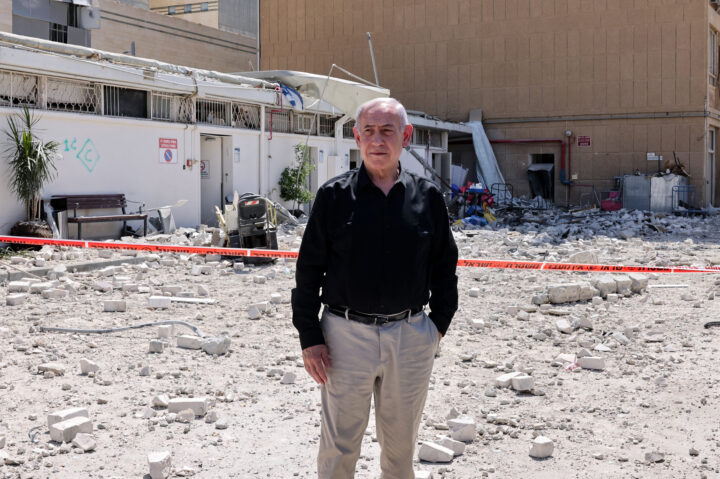
MARC ISRAEL SELLEM/POOL/AFP via Getty Images
Israeli Prime Minister Benjamin Netanyahu stands amid debris outside the Soroka Hospital in the southern city of Beersheba, after it was hit by a missile fired from Iran on June 19, 2025.
Good Thursday afternoon.
This P.M. briefing is reserved for our premium subscribers like you — offering a forward-focused read on what we’re tracking now and what’s coming next.
I’m Danielle Cohen-Kanik, U.S. editor at Jewish Insider and curator, along with assists from my colleagues, of the Daily Overtime briefing. Please don’t hesitate to share your thoughts and feedback by replying to this email.
📡On Our Radar
Notable developments and interesting tidbits we’re tracking
Israeli Prime Minister Benjamin Netanyahu appeared on “Triggernometry,” a conservative podcast based in the U.K., in an episode released yesterday, where he was pressed by co-hosts Konstantin Kisin and Francis Foster about inflammatory comments made by Israeli Finance Minister Bezalel Smotrich about settling Gaza and “things that sound like ethnic cleansing.”
Netanyahu dismissed the comments as democratic disagreements, saying, “In a parliamentary system, people are free to say, sometimes they say things they don’t quite mean. … To the extent that we have these conversations around the Security Cabinet, that is actually not being discussed by these people.”
Netanyahu distanced himself from his ministers who have advocated for reestablishing an Israeli civilian presence in Gaza, clarifying, “It’s not my policy. I don’t intend to build settlements or communities in Gaza, not Israeli ones.”
The prime minister disagreed that the comments from Smotrich may be exacerbating Israel’s “PR problem”: “They ask me, you know, ‘Your minister of finance says this, and what do you say?’ Well, I say I disagree with him, and I say that, you know, he’s entitled to say these things. That’s not ethnic cleansing. It’s a view, a legitimate view, which I happen to disagree with”…
And today, Netanyahu announced that he is working “to approve the plans that the IDF presented” to him and Defense Minister Israel Katz for the impending IDF takeover of Gaza City. “In parallel,” he said, “I have instructed to begin immediate negotiations for the release of all our hostages and the end of the war, on conditions that are acceptable for Israel.”
Netanyahu made no mention of the latest deal reportedly agreed to by Hamas, which only includes the release of some of the 50 remaining hostages…
Israel is also facing increased diplomatic ire over its actions in the West Bank, after Smotrich announced last week his approval of plans to build the E1 settlement, which were previously frozen for decades due in part to U.S. disapproval of its controversial location, which would make a contiguous Palestinian state nearly impossible.
Twenty-two countries, including the U.K., Australia, France and Japan, issued a statement today condemning the move as “unacceptable and a violation of international law,” and the U.K. Foreign Office summoned Israeli Ambassador to the U.K. Tzipi Hotovely in further protest.
Asked about the settlement approval, U.S. Ambassador to Israel Mike Huckabee told the Associated Press that a two-state solution is not a “high priority” for the Trump administration and that there are too many unanswered questions about a potential Palestinian state…
On the campus beat, a New York Times report published yesterday on the hurdles international students are facing entering the U.S. this academic year opened with the line, “Many Iranians are not going to American universities this fall.”
The article, largely sympathetic to the plight of students attempting to enter the U.S., highlighted the revocation of more than 6,000 student visas by the State Department, the majority of which were due to breaking U.S. law and support for terrorism; Secretary of State Marco Rubio’s announcement that the department would review visas of students who participated in disruptive campus anti-Israel protests; and new social media vetting of visa applicants, particularly “for expression of pro-Palestinian sentiment,” as barriers to international student enrollment…
Sen. Joni Ernst (R-IA), on a visit to Doha, met today with Qatari Emir Tamim bin Hamad Al Thani and Prime Minister Mohammed bin Abdulrahman Al Thani. Ernst has previously led efforts to pressure Qatar into forcing Hamas to release the hostages held in Gaza…
In the Lone Star State, Rep. Chip Roy (R-TX), a prominent member of the Freedom Caucus and a thorn in the side of President Donald Trump and House Speaker Mike Johnson (R-LA), announced a bid for Texas attorney general today, seeking to replace Trump ally AG Ken Paxton, who himself is running for U.S. Senate against Sen. John Cornyn (R-TX) in a highly competitive primary.
The Texas game of electoral musical chairs comes as the state is in the midst of a contentious mid-decade redistricting process, which will likely see its Legislature turn even deeper red.
One high-profile Democrat in the Texas Statehouse, James Talarico, was backed by Miriam Adelson’s Texas Sands PAC, Politico revealed today, despite Talarico’s public stance against GOP billionaires‘ influence in politics. The group was his largest donor last year and one of his largest ever…
New York City Mayor Eric Adams, no stranger to scandal, is facing more electoral trouble of his own as he runs for reelection as an independent, facing off against former New York Gov. Andrew Cuomo and Democratic nominee Zohran Mamdani.
Yesterday, reports alleged that Adams’ former advisor and current campaign volunteer, Winnie Greco, surreptitiously gave a reporter an envelope of cash, stashed inside a bag of potato chips. Today, the Manhattan district attorney unsealed four indictments against Adams’ former chief advisor, Ingrid Lewis-Martin, accusing her of receiving more than $75,000 in bribes, and six other individuals, most of whom are associates or supporters of Adams…
⏩ Tomorrow’s Agenda, Today
An early look at tomorrow’s storylines and schedule to keep you a step ahead
Keep an eye on Jewish Insider for reporting on a trip of young MAGA influencers to Israel that changed hearts and minds and an interview with Rep. John McGuire (R-VA) on his reflections from his own recent trip to the Jewish state.
The foreign ministers of Britain, France and Germany will speak with Iranian Foreign Minister Abbas Araghchi by phone tomorrow, sources tell the Substack Diplomatic, to discuss their recent threat to reinstate snapback sanctions on Tehran if it does not sufficiently roll back its nuclear program by the end of this month.
An Iranian delegation will also travel to Vienna tomorrow to meet with the International Atomic Energy Agency, a week after IAEA Deputy Director General Massimo Aparo visited Iran in a bid to restart the agency’s cooperation with Tehran.
On Sunday, the Michigan Democratic Jewish Caucus will host its annual “Summer Simcha” event. Among the attendees will be state Sen. Mallory McMorrow, Abdul El-Sayed and, appearing by video, Rep. Haley Stevens (D-MI) — all of whom are vying for Michigan’s open Senate seat. State Sen. Jeremy Moss, who’s looking to claim Stevens’ seat in the House, and University of Michigan Regent Jordan Acker, who had his home and office vandalized by anti-Israel attackers, will be in attendance. Sen. Elissa Slotkin (D-MI) will also appear by video.
We’ll be back in your inbox with the Daily Kickoff and the Daily Overtime on Monday. Shabbat shalom!
Stories You May Have Missed
MORAN’S MORASS
Qatar’s Washington lobbyist invokes old antisemitic tropes in push for influence

Former Rep. Jim Moran and his team have held dozens of meetings with members of Congress since the Oct. 7 Hamas terror attacks in 2023, mainly to talk about the Qatari role in the Middle East peace process
WEIRDING OUT
Susan Collins hits newly minted challenger over his anti-Israel rhetoric

Democrat Graham Platner entered the race accusing Israel of genocide in Gaza
Plus, Bibi faces coalition chaos

Gage Skidmore
Sen. Amy Klobuchar (D-MN) speaking with attendees at the Moving America Forward Forum hosted by United for Infrastructure at the Student Union at the University of Nevada, Las Vegas in Las Vegas, Nevada.
Good Wednesday afternoon.
This P.M. briefing is reserved for our premium subscribers like you — offering a forward-focused read on what we’re tracking now and what’s coming next.
I’m Danielle Cohen-Kanik, U.S. editor at Jewish Insider and curator, along with assists from my colleagues, of the Daily Overtime briefing. Please don’t hesitate to share your thoughts and feedback by replying to this email.
📡On Our Radar
Notable developments and interesting tidbits we’re tracking
Sen. Amy Klobuchar (D-MN) rebuked antisemitic comments made by Minneapolis mayoral candidate Omar Fateh’s campaign staff in a statement to Jewish Insider today, after initially declining to comment when JI unearthed the statements last week.
Klobuchar’s spokesperson said the senator “strongly and immediately condemned the Hamas terrorist attack, and condemns any statements to the contrary.” She called Fateh’s staffers’ comments “outrageous” and said they “have no place in our politics.”
Klobuchar reiterated her endorsement of Mayor Jacob Frey in the race; Frey’s other supporters, including Minnesota Gov. Tim Walz, and other state Democratic officials have thus far refrained from commenting on the situation…
Staying in the Midwest, protesters interrupted Rep. Wesley Bell’s (D-MO) first in-person town hall last night in St. Louis over Bell’s support for Israel, shouting over the congressman and getting into altercations with police.
In response to a question about “the ongoing genocide in Palestine,” Bell said, “Let’s talk about the word genocide, because we see that differently.” He repeatedly asked protesters to stop shouting and listen.
“There’s a lot of folks who don’t want to have the conversation,” Bell said. “They just want to spew what they think is important, but they don’t want to have an actual debate because these are tough issues. So, now we’re going to have the conversation — whether you like it or not”…
Meanwhile on the campaign trail, Politico reported this morning on Rep. Chris Pappas’ (D-NH) new competitor in the Democratic primary for New Hampshire’s open Senate seat, political activist Karishma Manzur.
Manzur said she would have supported recent resolutions from Sen. Bernie Sanders (I-VT) — which the moderate Pappas said he would have opposed — seeking to block some arms sales to Israel, saying she “will be against any money to any country to kill people” and that the U.S. should take “concrete actions against the harrowing acts of torture of Palestinians” by the IDF …
President Donald Trump called in to Fox News host Mark Levin’s radio show yesterday and said that, at the time of the U.S. strikes on Iran’s nuclear facilities in June, he believed Iran “would have had nuclear weapons in a period of four weeks.”
“If we didn’t [strike Iran], they would probably by this time, just about this time, have a nuclear weapon and they would have used it,” the president said.
Trump also told Levin that the U.S. Air Force pilots who conducted the strikes told him that they and their predecessors had been practicing the flight to Iranian airspace for 22 years…
The New York Times published an analysis on the damage inflicted by U.S. strikes on the Iranian nuclear site Fordow based on the site’s structure and the munitions used…
The State Department responded today to a bipartisan congressional letter led by Pappas last month expressing lawmakers’ concerns that the administration was considering selling F-35 fighter jets to Turkey in a reversal of U.S. policy, which currently bans the sale of the jets in light of Turkey’s purchase of an S-400 missile defense system from Russia.
Paul Guaglianone, senior bureau official in the department’s Bureau of Legislative Affairs, wrote in a letter to Pappas that the “U.S. position on Turkey’s acquisition and continued possession of the Russian S-400 system has not changed, and the requirements for Turkey to acquire U.S. F-35 aircraft are well-known”…
Secretary of State Marco Rubio also announced this morning that the U.S. is sanctioning four additional officials from the International Criminal Court, two judges and two prosecutors, in addition to the four judges sanctioned by the U.S. in June, over the ICC’s continued “efforts to investigate, arrest, detain, and prosecute American and Israeli nationals”…
In Israel, coalition politics are heating up over a potential ceasefire and hostage-release agreement with Hamas, which reports indicate the terror group recently accepted but Israel has not yet responded to.
Israeli media reported that Finance Minister Bezalel Smotrich told hostage families he would resign if Prime Minister Benjamin Netanyahu agreed to a ceasefire, and Minister of National Security Itamar Ben-Gvir is likely to do the same, as he did in January when Israel agreed to a previous ceasefire deal.
Meanwhile, opposition MK Benny Gantz, whose Blue and White-National Unity party is currently hemorrhaging in the polls, is reportedly considering rejoining Netanyahu’s coalition to help bolster support for a deal…
Back stateside, Israeli scholar and dance instructor Yael Nativ is suing the University of California, Berkeley, alleging that the university denied her a teaching position because she is Israeli. Nativ had previously taught at Berkeley and was encouraged to apply to teach another course.
When Nativ’s application was rejected shortly after the Oct. 7, 2023, terror attacks, according to the suit, the dance department chair wrote to her, “My dept cannot host you for a class next fall. Things are very hot right now and many of our grad students are angry. I would be putting the dept and you in a terrible position if you taught here”…
⏩ Tomorrow’s Agenda, Today
An early look at tomorrow’s storylines and schedule to keep you a step ahead
Keep an eye on Jewish Insider tomorrow morning for reporting on Graham Platner, the oyster farmer turned Democratic challenger to Sen. Susan Collins (R-ME), who called AIPAC “weird” in a recent interview.
Tomorrow afternoon, the American Jewish Committee will host a briefing on “Justice for Victims of Hamas’ Sexual Violence: The U.N. Blacklist and What Comes Next,” referring to the U.N.’s recent decision to “blacklist” Hamas as a group that uses sexual violence as a weapon of war.
Stories You May Have Missed
FOREIGN POLICY FEID
Seb Gorka slams Tucker Carlson as ‘Pat Buchanan in a new guise’
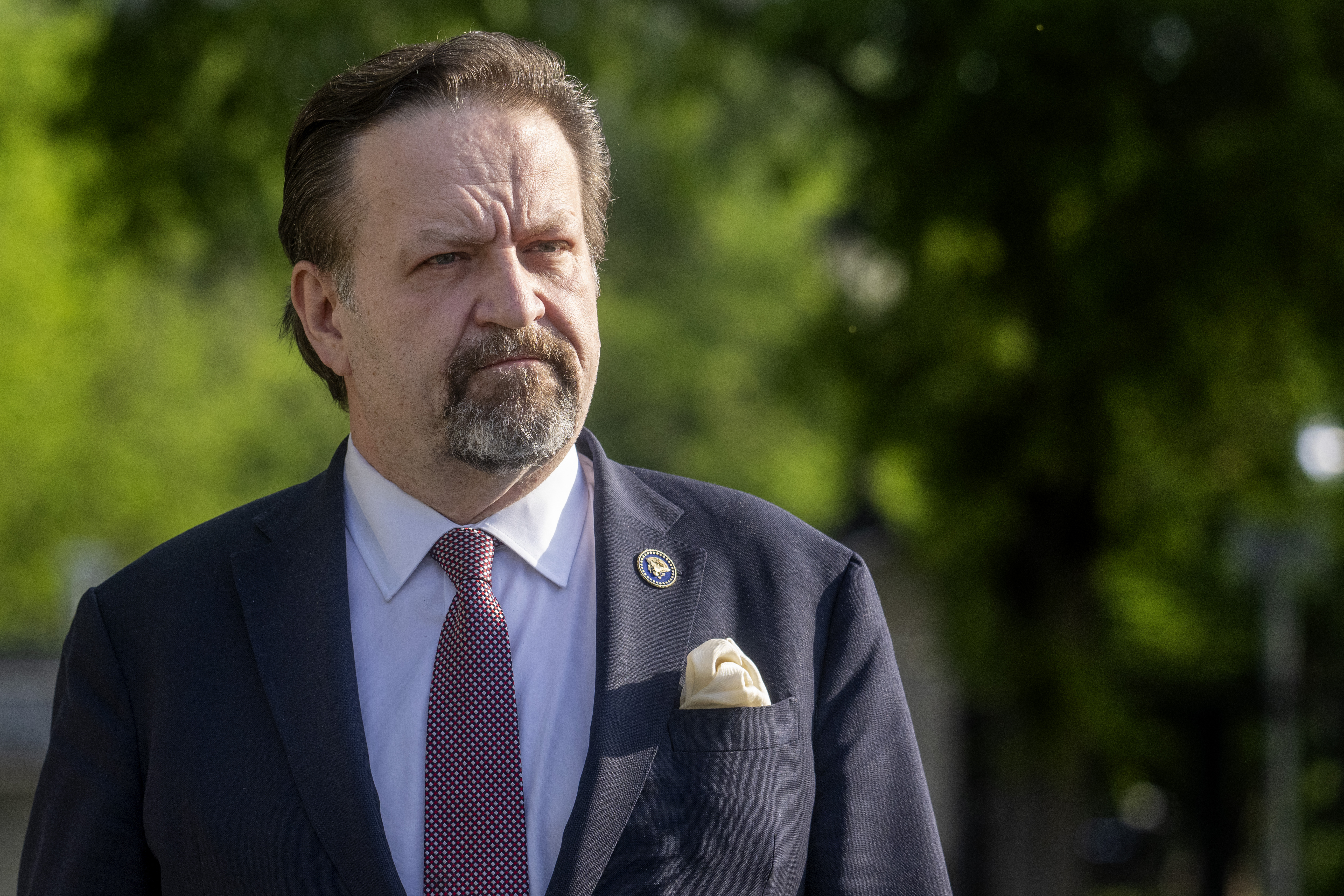
Trump’s senior director for counterterrorism: ‘I was worried by this neo-Buchanan isolationism, but I look at President Trump’s actions, they have no hold on him’
TRIP TALK
Rep. Laura Gillen returns from Israel doubly committed to a strong U.S.-Israel relationship
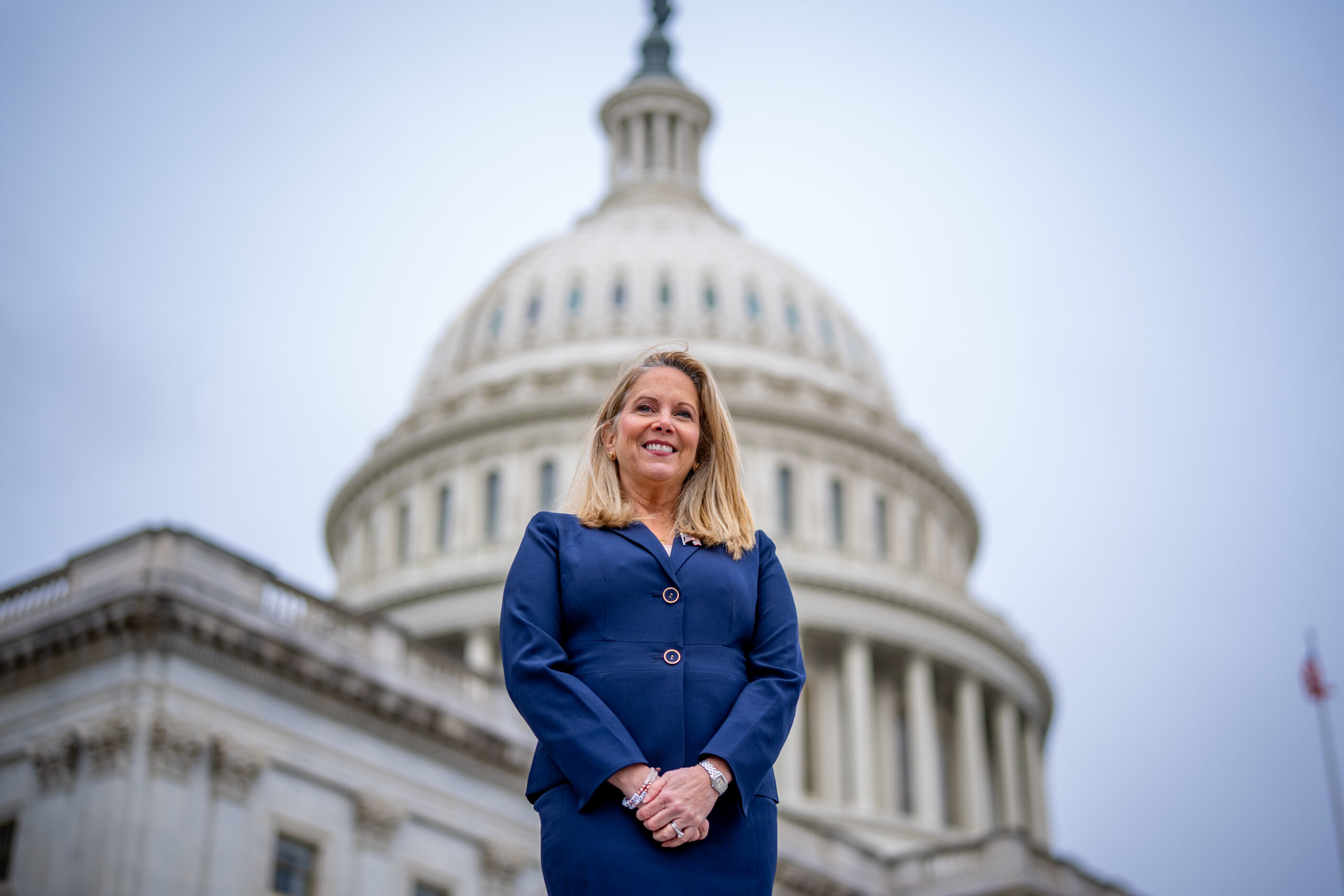
The New York Democrat told JI ‘the majority of people see the value and the special nature of our relationship with our ally Israel’
The president spoke with Fox News host Mark Levin about his administration’s strike on Iran’s nuclear facilities

Tasos Katopodis/Getty Images
President Donald Trump
President Donald Trump said in an interview with Fox News host Mark Levin on Tuesday that at the time of the U.S. strikes on Iran’s nuclear facilities in June, he believed Tehran “would have had nuclear weapons in a period of four weeks.”
Calling in to Levin’s radio show, Trump said that, “if we didn’t [strike Iran], they would probably by this time, just about this time, have a nuclear weapon and they would have used it.”
Trump said that, despite news reports questioning his assessment of the efficacy of the strikes, “it turned out that” the impacts were “even more so than I said. It was obliteration.”
“The Atomic Energy Commission said, this place is gone. [Iran] can maybe start up, but they’re not starting up there,” Trump said of the Iranian nuclear facilities targeted in the operation. The Israel Atomic Energy Commission found that the U.S. strike on the Fordow nuclear facility “destroyed the site’s critical infrastructure” and rendered it “inoperable,” though reports differ on the extent of the damage.
The president told Levin that the U.S. Air Force pilots who conducted the strikes told him that they and their predecessors had been practicing the flight to Iranian airspace for 22 years.
Trump lauded his peacemaking abilities, saying, “I’ve settled six wars and we did the Iran night, wiped out their whole nuclear capability, which they would have used against Israel in two seconds if they had the chance.”
He called Israeli Prime Minister Benjamin Netanyahu a “war hero” and said, “I guess I am, too. … I mean, I sent those planes.”
Trump’s senior director for counterterrorism: ‘I was worried by this neo-Buchanan isolationism, but I look at President Trump's actions, they have no hold on him’
JIM WATSON/AFP via Getty Images
U.S. Senior Director for Counterterrorism Sebastian Gorka walks outside the White House in Washington, DC, on May 7, 2025.
Seb Gorka, the White House senior director for counterterrorism and a deputy assistant to the president, aired his grievances with the anti-Israel faction within the Republican Party on Tuesday, alleging that the wing of the GOP aligned with podcast host Tucker Carlson is “basically Pat Buchanan in a new guise.”
Gorka made the comments in a conversation on counterterrorism and U.S. strategy at the Hudson Institute after being pressed on the foreign policy disputes within the MAGA movement and Carlson’s grievances with President Donald Trump’s decision to strike Iran’s nuclear facilities in June.
Asked by moderator Michael Doran, a Hudson senior fellow and director of the Center for Peace and Security in the Middle East, if he was comfortable addressing the growth of anti-Israel, antisemitic sentiment on right-wing podcasts and social media, Gorka replied, “Yeah, I am, because it bothers me immensely, but I’ve come to a certain realization with regards to that, that this wing of isolationism is nothing new. We had this 100 years ago.”
“This is just a poor, substandard repackaging of neo-Buchananite isolationism,” Gorka said, referencing Buchanan, the former Nixon communications director who became an outspoken critic of Israel. “It’s actually a more shallow version. Pat is far smarter than this version of isolationism.”
Gorka said that he is “actually in a better place with” the onslaught of anti-Israel rhetoric from Carlson’s wing of the party than he was previously, explaining that he realized that most of the rhetoric was coming from “probably half a dozen very loud people on Twitter and Rumble,” the right-wing video platform.
“You get out of the miasma, the cesspit that is social media, and you talk to representative MAGA voters, of the 80 million that put the president back in the White House, they don’t think that we should pull down the shutters on the Pacific and the Atlantic coast,” Gorka explained. “They don’t think that Israel is the reason for Oct. 7. They actually have a very special place in their heart for Israel, and they don’t think that hospitals being bombed in Ukraine is a good thing because somebody offered NATO membership to Ukraine, allegedly, a decade ago.”
“As an immigrant to this country, a legal immigrant to the United States, one of the most trenchant indicative characteristics for me of the American people is common sense. They understand who is responsible for Oct. 7. They understand who [Russian President] Vladimir Putin is. And as such, I was worried by this neo-Buchanan isolationism, but I look at President Trump’s actions, they have no hold on him,” he continued.
Gorka then pointed to the early days of the first Trump administration, alleging that at the time, then-Defense Secretary James Mattis and Secretary of State Rex Tillerson expressed hesitation about moving the U.S. Embassy in Israel to Jerusalem out of fear that doing so would cause a third world war.
Gorka said that Trump told concerned members of his Cabinet at the time that they were going through with the move because, “A) We promised the people of Israel 23 years ago, and we’ve broken that promise every six months of 23 years. B) I promised the American electorate in the campaign. We’re doing it. And C) It’s the right thing to do.” He argued that the “moral clarity” shown by Trump on issues impacting Israel highlighted the contrast between the president and his detractors on foreign policy matters.
Earlier in the program, Gorka told Doran that the president’s approach to the Middle East was heavily focused on combating Iran.
“You need to understand one thing: When the president looks at the region, he doesn’t slice it down into cylinders of excellence. He doesn’t care if you’re the Syrian desk officer or the natural resources expert. He has one overlay for the whole AOR [Area of Responsibility], and that one metric, that one prism, is Iran, and he’s absolutely right,” Gorka said. “Iran is front and center in everything we do in the region, because they remain the greatest state sponsor terrorism, and the world would be a much safer place if that were not the case.”
Gorka noted that when Trump is asked by reporters about anything related to national security, “more than 50% of the time … the president will bring up Iran,” adding that this was “especially” the case “before [Operation] Midnight Hammer, because it really is on his mind that this is the threat. A nuclear Iran, an ideologically Islamo-fascist regime that wishes to acquire the most dangerous weapons in the world, is a threat to all decent peoples.”
Turning his attention to Israel, Gorka argued that the Jewish state’s “post-Oct. 7 operations have rewritten the map of the Middle East for the next 50 to 100 years.” He praised Israel’s military moves in Syria and Lebanon, crediting the IDF with taking down the Assad regime in Damascus and significantly weakening Hezbollah.
As for whether the U.S. will undertake additional operations in the region to target Iranian proxies, Gorka said the “jury is still out on that,” but praised Trump’s strikes against the Houthis.
“We had great success with our operation against the Houthis. Again, it wasn’t well understood by the so-called experts. For the president, the action against the Houthis was about one thing and one thing alone. When we told him there had been 150 attacks against U.S. vessels going through the Straits and that they’d actually fired on naval vessels as well, he said, ‘Well, that will not be allowed to stand.’ It’s not just about U.S. interests [but] about global freedom of maritime transport. So all of these things are connected,” Gorka said of Trump’s motivation to strike the Iran-backed Yemeni terror group.
Gorka also disputed the notion that the president was tied down by ideological labels, but rather that he’s focused on achieving results and fixing problems: “Here’s the trouble for the Beltway with understanding the current commander in chief: there is no ideological taxonomy into which he will fall.”
Plus, Loomer lashes out
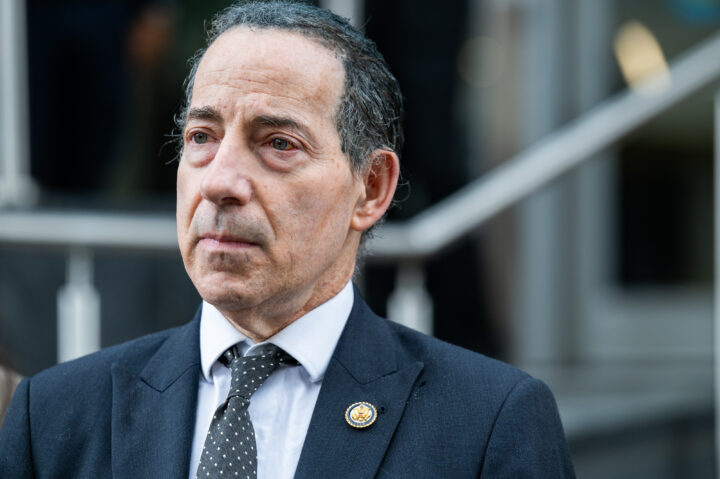
Annabelle Gordon/Bloomberg via Getty Images
Rep. Jamie Raskin (D-MD) during a news conference in Washington, D.C., on Thursday, May 22, 2025.
Good Tuesday afternoon.
This P.M. briefing is reserved for our premium subscribers like you — offering a forward-focused read on what we’re tracking now and what’s coming next.
I’m Danielle Cohen-Kanik, U.S. editor at Jewish Insider and curator, along with assists from my colleagues, of the Daily Overtime briefing. Please don’t hesitate to share your thoughts and feedback by replying to this email.
📡On Our Radar
Notable developments and interesting tidbits we’re tracking
Ron Halber, CEO of the Jewish Community Relations Council of Greater Washington, called Rep. Jamie Raskin’s (D-MD) decision to co-sponsor legislation severely restricting U.S. aid to Israel “extremely disappointing,” telling Jewish Insider today that he had a “very honest and frank conversation” with the congressman, whom he considers a friend.
Halber framed his concerns with Raskin, a prominent progressive Jewish lawmaker, within the broader trend of the Democratic Party moving away from its long-standing support for Israel. “It’s difficult when two-thirds of our community is voting for a political party whose base is hostile to Israel,” he remarked.
“Once the war comes to an end, the whole Jewish community is going to have to re-strategize,” Halber said.
The JCRC of Greater Washington CEO said he had asked Raskin to remove himself as a co-sponsor of the bill and instead issue a statement conveying his concerns with Israel’s war in Gaza. “If he doesn’t, we will be disappointed, but that’s his decision to make and he has to live with the ramifications of his decision”…
Speaking this morning at a briefing co-hosted by the American Jewish Congress and World Zionist Organization, U.S. Ambassador to Israel Mike Huckabee sounded a cautious note on the current ceasefire negotiations with Hamas, as reports indicate the terror group has accepted a Qatari- and Egyptian-backed proposal.
“Whether or not [Hamas is] serious about bringing this to a close, all I can tell you is I hope so. But what’s happened before, even when they say they are thinking seriously about bringing this to a conclusion, making a deal, they always add one or more things that are completely unacceptable, bring those to the table, then it all starts over again,” Huckabee said.
Israel has yet to respond to the proposal and White House Press Secretary Karoline Leavitt said at a press briefing today that the U.S. “continues to discuss” it…
Huckabee and his wife, Janet, hosted U.S. Ambassador to France Charles Kushner and his wife, Seryl, in Jerusalem tonight…
Israeli Defense Minister Israel Katz met with Lt. Gen. Eyal Zamir, the IDF’s chief of staff, today to approve the IDF’s plans to take over Gaza City. Israeli officials said Gazans will have until Oct. 7 to evacuate the city, to coincide with the second anniversary of Hamas’ attacks, at which point the IDF offensive will begin. It remains to be seen if a ceasefire and hostage-release deal will be reached before then…
The Israeli government also voted today to approve a $9 billion increase to the country’s budget for the year, including $473 million for humanitarian aid for Gaza…
In other negotiation news, Israeli Minister for Strategic Affairs Ron Dermer is scheduled to meet this evening in Paris with Syrian Foreign Minister Asaad al-Shibani and U.S. Ambassador to Turkey and Syria envoy Tom Barrack to discuss security arrangements on the Israel-Syria border.
The meeting comes a day after Barrack, while visiting Beirut, said Israel needs to “comply with [an] equal handshake” to the Lebanese government’s commitment to disarm Hezbollah by fully withdrawing its troops from Lebanon…
Back stateside, the president of the American Association of University Professors said in a recent interview, “We believe strongly that no weapons should be sent to Israel, at all. Not defensive or offensive, nothing,” escalating the association’s adversarial stance against the Jewish state…
The New York Times chronicles the Trump administration’s attempts to wrest financial settlements from elite universities, including ongoing negotiations with Harvard and the University of California, Los Angeles, the latter of which may pay the administration upwards of $1 billion, according to a draft agreement…
Media mogul Shari Redstone told the Times that she decided to sell Paramount to Skydance in a recent $8 billion merger in part due to her frustrations over anti-Israel bias at CBS, particularly after the Oct. 7 attacks. “Once that happened, I wanted out,” Redstone said. “I wanted to support Israel, and address issues around antisemitism and racism”…
Rep. Ritchie Torres (D-NY) endorsed New York Gov. Kathy Hochul in her reelection bid today, after initially exploring a run against her and criticizing her tenure…
The Free Press reports on growing frustration with Laura Loomer, a right-wing provocateur and informal advisor to President Donald Trump, inside the White House, with some officials speculating she may be paid or influenced by lobbying firms and business interests.
Loomer lashed out on X, telling Free Press reporter Gabe Kaminsky he should “contact your anonymous White House sources who are so horrified by ‘lobbyists’ and their intentions and ask them how they feel about their friendship with” Jeff Miller, a Republican strategist, board member of the Republican Jewish Coalition and Trump-appointed member of the U.S. Holocaust Memorial Council…
⏩ Tomorrow’s Agenda, Today
An early look at tomorrow’s storylines and schedule to keep you a step ahead
Keep an eye on Jewish Insider tomorrow morning for an interview with top New York Democrat Rep. Laura Gillen (D-NY) on her takeaways from a recent visit to Israel.
This evening, Maryland Gov. Wes Moore, a potential 2028 presidential contender, will speak at D.C.’s Politics & Prose on “the role of states in preserving and advancing U.S. democracy.”
Tomorrow, the historic Sinai Temple in Los Angeles will host a conversation with Ahmed Fouad Alkhatib, the director of the Realign for Palestine program at the Atlantic Council who was born and raised in Gaza. It’s the second event in a series the prominent Conservative synagogue has held about the war in Gaza for its congregants, the first of which was held last month with Gaza Humanitarian Foundation head Johnnie Moore. Read JI’s coverage of Moore’s conversation here.
Stories You May Have Missed
CALIFORNIA COMPETITION
Brad Sherman keeps a wary eye on younger primary opposition

Sherman, a stalwart pro-Israel Democrat, is facing several politically connected Democratic challengers in next year’s primary
CLARK’S CLARIFICATION
AIPAC stands by Katherine Clark as she walks back ‘genocide’ comment
AIPAC said its endorsement is ‘unchanged’ and based on the House minority whip’s ‘long-standing support for the U.S.-Israel relationship’
Plus, Santa Ono lands on his feet

Tom Williams/CQ-Roll Call, Inc via Getty Images
Then-Rep. Ruben Gallego (D-AZ) in Rayburn Building on Capitol Hill on June 9, 2022.
Good Monday afternoon.
This P.M. briefing is reserved for our premium subscribers like you — offering a forward-focused read on what we’re tracking now and what’s coming next.
I’m Danielle Cohen-Kanik, U.S. editor at Jewish Insider and curator, along with assists from my colleagues, of the Daily Overtime briefing. Please don’t hesitate to share your thoughts and feedback by replying to this email.
📡On Our Radar
Notable developments and interesting tidbits we’re tracking
President Donald Trump posted on Truth Social this morning, “We will only see the return of the remaining hostages when Hamas is confronted and destroyed!!! The sooner this takes place, the better the chances of success will be. … Play to WIN, or don’t play at all!”
Hours later, reports indicated that Hamas had accepted a new ceasefire and hostage-release proposal from Qatari Prime Minister Mohammed Al Thani and Egyptian officials in Cairo, after a meeting in Doha last week between Al Thani and Mossad Director David Barnea.
A source told Axios that the deal is “98% similar” to the latest U.S.-backed proposal initiated by Middle East envoy Steve Witkoff.
Though neither American nor Israeli officials have confirmed the news, Prime Minister Benjamin Netanyahu said in a statement this afternoon, “Like you, I hear the reports in the media, and from them you can be impressed by one thing — Hamas is under immense pressure“…
Meanwhile at home, the embrace of anti-Israel actors by the Democratic mainstream continues.
Over the weekend, Sen. Ruben Gallego (D-AZ), a potential 2028 Democratic presidential contender from a swing state, told a local political outlet about New York City Democratic mayoral nominee Zohran Mamdani, “It’s OK to say ‘I disagree with this, this, and this, but I agree with that.’ But the idea that we’re just gonna throw out people that are really bringing in new ideas to the fold, exciting people, just because they’re slightly to the right or to the left of us is dumb.”
It’s a notable marker, a pragmatic lawmaker with national aspirations calling Mamdani — a democratic socialist who has refused to condemn the phrase “globalize the intifada” — “slightly to the left” of the Democratic center.
And this morning, opinion writer Jerusalem Demsas, formerly of The Atlantic, announced the launch of her new liberal media company, The Argument. The publication will feature writings from center-left heavyweights including Derek Thompson and Matthew Yglesias and received funding from similarly aligned investors including Arnold Ventures and Open Philanthropy.
In her announcement video, Demsas said conservatives are “persecuting Americans for exercising their basic freedoms” over news clips covering anti-Israel protest leader Mahmoud Khalil’s detention by the federal government.
The continued embrace of Khalil by Democratic thought leaders and influencers is significant as Khalil has continued to escalate his anti-Israel rhetoric, including in a recent appearance on “The Ezra Klein Show” podcast where he said about the Oct. 7 attacks that “we couldn’t avoid such a moment” and about Hamas’ killing of civilians that “we cannot go and ask Palestinians to be perfect victims”…
Former University of Michigan President Santa Ono announced today that he’s been appointed as the inaugural director of the Ellison Institute of Technology. Ono had been named president of the University of Florida but was rejected in an unprecedented move by the Florida Board of Governors, partially over concerns of his handling of antisemitism and an anti-Israel encampment at the Ann Arbor campus.
Now, Ono will report directly to Larry Ellison, the second wealthiest man in the world, who is the founder of the software company Oracle and a major donor to Jewish and Israeli causes…
The Association of American Geographers is set to consider a resolution on Oct. 3 to boycott Israeli academic institutions, the latest professional association to face calls from its members to do so…
⏩ Tomorrow’s Agenda, Today
An early look at tomorrow’s storylines and schedule to keep you a step ahead
Keep an eye on Jewish Insider tomorrow morning for an interview with Rev. Johnnie Moore, the head of the Gaza Humanitarian Foundation, about the repeated death threats and vandalism he’s faced at his home, and a look at Rep. Brad Sherman’s (D-CA) primary challenge.
Tomorrow afternoon, the Hudson Institute will host a conversation with Sebastian Gorka, deputy assistant to the president and senior director for counterterrorism at the National Security Council, on U.S. strategy on counterterrorism and its impacts on U.S. policy in the Middle East.
Stories You May Have Missed
BACKING THE BLOCK
Raskin backs bill severely restricting U.S. arms transfers to Israel
One of the most visible and well-known progressive Jewish lawmakers in Congress became a cosponsor of the ‘Block the Bombs Act’
CLARK’S BARK
No. 2 House Democrat describes war in Gaza as ‘genocide’
Rep. Katherine Clark is the highest-ranking Democrat to have used the term, even as only a small number of other lawmakers have done so
The GOP nominee said one key to victory is winning over independents and moderate Dems in Rep. Josh Gottheimer’s home base of Bergen County
Mark Kauzlarich/Bloomberg via Getty Images
Jack Ciattarelli, Republican candidate for governor of New Jersey, speaks during an election night event in Bridgewater Township, N.J. on Wednesday, Nov. 3, 2021.
Ever since President Donald Trump ran surprisingly close to Vice President Kamala Harris in New Jersey during last year’s presidential race, Republicans have been looking at the state’s gubernatorial race as a chance to capitalize on the party’s momentum in the blue state.
Jack Ciattarelli, the GOP’s nominee for governor, also came tantalizingly close to defeating Gov. Phil Murphy in the state’s last gubernatorial race. He’s running again, and hoping to get over the finish line against Rep. Mikie Sherrill (D-NJ), in part by courting the state’s sizable Jewish community, which has swung to the right in recent elections.
“People now know, because of the closeness of my race, that we can win. There’s just an attitude change because they feel like the Democrats have really failed them on a number of issues, and antisemitism is one of them,” Ciattarelli told Jewish Insider in an interview ahead of his visit to Israel this week.
Ciattarelli, 63, who built two medical publishing companies in New Jersey while serving as a state lawmaker, said, “I see myself not so much as a politician, but a successful CEO who is looking to be the CEO hands-on governor that we need.”
As part of his Jewish communal outreach, Ciattarelli traveled to Israel on Sunday for a five-day visit, which he organized in a show of solidarity. He also spent time on his visit pursuing opportunities for economic investment from leading Israeli companies in the technology and medical sectors.
“Any students in violation of university policy, I think, should be expelled. Any student that’s broken the law should be arrested, and any student here on an academic visa from another country should be sent back to where they came from if they’re going to engage in that kind of behavior,” Ciattarelli said. “I will pressure our college and university presidents to be working in partnership with me to make sure that kind of behavior isn’t tolerated.”
He told JI that one of his goals with the visit was to boost the state’s economy “by forging a closer economic relationship with a number of nations” that are close U.S. allies. “Israel is first and foremost on the list, but as governor, I will certainly look to Canada, Mexico and India as well to increase our bilateral trade,” Ciattarelli said.
Fighting antisemitism, Ciattarelli said, will be a priority of his if he’s elected. Ciattarelli said he has “made very, very clear” that he supports codifying the International Holocaust Remembrance Alliance’s working definition of antisemitism into state law, will “appoint an attorney general and a superintendent of state police that are both sensitive to the needs and worries of New Jersey’s Jewish community” and will establish an Advisory Council on Jewish Relations to guide him on ways to the best support the community.
“Any students in violation of university policy, I think, should be expelled. Any student that’s broken the law should be arrested, and any student here on an academic visa from another country should be sent back to where they came from if they’re going to engage in that kind of behavior,” Ciattarelli said. “I will pressure our college and university presidents to be working in partnership with me to make sure that kind of behavior isn’t tolerated.”
Ciattarelli described the December 2023 House Education and Workforce Committee hearing, where the presidents of Harvard University, University of Pennsylvania and the Massachusetts Institute of Technology declined to say that calling for the genocide of Jews qualified as bullying and harrassment, as a “watershed moment” that brought the issue of antisemitism to the forefront of Jewish voters’ minds.
“I will do what others have done, including Democratic leaders, and that’s condemning Mamdani, condemning his candidacy, and doing all they can to make sure that a threat to communities such as this is not elected,” Ciattarelli told JI. “There is no space for someone like this in the public sphere, let alone in public office, and I’m going to do everything in my power to protect all 9.3 million citizens here in New Jersey, and particularly members of the Jewish community who feel threatened by a person such as this.”
“They want to see a governor who’s going to demonstrate zero tolerance for antisemitism and call it out for what it is when we see it and hear it,” Ciattarelli said of Jewish voters in the Garden State.
The New Jersey Republican has also sought to tie Sherrill to Zohran Mamdani, the far-left Democratic nominee in New York City’s mayoral race who has resisted condemning “globalize the intifada” rhetoric. Ciattarelli’s campaign cut a digital ad highlighting Sherrill’s nationally televised indecision on whether she would support Mamdani’s mayoral campaign.
“I will do what others have done, including Democratic leaders, and that’s condemning Mamdani, condemning his candidacy, and doing all they can to make sure that a threat to communities such as this is not elected,” Ciattarelli told JI. “There is no space for someone like this in the public sphere, let alone in public office, and I’m going to do everything in my power to protect all 9.3 million citizens here in New Jersey, and particularly members of the Jewish community who feel threatened by a person such as this.”
The race is competitive, with Jewish voters (who make up about 6% of the state’s population) potentially emerging as a swing voting bloc.
“This race is shaping up to be fairly tight, with both candidates making notable outreach efforts to the Jewish community. Jack’s visit to Israel and his strong support for IHRA have had a particularly positive impact,” one Jewish leader in the state told JI.
“Mikie has also engaged significantly, and that effort has been noticed, but concerns remain based on her support of Mamdani in the city and the way she recently framed the call for a ceasefire in Gaza. She still retains goodwill within the Jewish community, but has a long way to go in strengthening trust and confidence,” the leader explained.
A Jewish community leader in Central Jersey, also granted anonymity to speak freely, offered a similar take.
“It’s definitely a race that’s very closely watched in the Jewish community, more than any time in the past, I would say. I think seeing Jack going to Israel, out of all places, just three months before the general election, I think that shows you how important the Jewish vote is going to be this time around, and Jack is losing no time and trying to get the Jewish vote on his side,” the source said.
“I often say that in New Jersey, you have to run for governor as though you’re running for mayor,” Ciattarelli said, adding of his outreach to Democratic and unaffiliated voters, “The biggest compliment I get is when I can come down off a platform or stage, if somebody comes up to me and says, ‘Are you Republican? Are you Democrat?’”
Ciattarelli told JI that he views Bergen County, the state’s most populous county, as a must-win area for his campaign, making the support of Democratic and independent voters necessary in his path to victory. The area, which is represented by Gottheimer in Congress, is also home to around 100,000 Jewish residents, a majority of whom are registered Democrats or independents.
“Bergen County has a greater population than eight states and it’s the key to winning a statewide election. I did very well, just coming a little short in ‘21, but I do sense a change amongst a great number of people who may not have considered me last time, may not have voted last time that are looking to make a change here in New Jersey,” Ciattarelli said.
“I often say that in New Jersey, you have to run for governor as though you’re running for mayor,” he continued, adding of his outreach to Democratic and unaffiliated voters, “The biggest compliment I get is when I can come down off a platform or stage, if somebody comes up to me and says, ‘Are you Republican? Are you Democrat?’”
Since narrowly losing his first campaign for governor, Ciattarelli worked hard to unify the party around his repeat bid, making particular effort to secure support from the MAGA wing of the Republican Party. His efforts paid off in the primary, which he won without much serious GOP opposition.
For her part, Sherrill handily defeated five other Democrats, including Gottheimer, Newark Mayor Ras Baraka,and Jersey City Mayor Steve Fulop, in the Democratic primary.
With that backdrop, both parties are watching the November gubernatorial contest closely to see if the rightward shift in the Garden State has held since Trump took office in January. For his part, Ciattarelli says that while the issues animating New Jersey voters have not changed since his 2021 race, he believes “what is different is the political landscape.”
“The issues I was talking about in ‘21, including antisemitism, have now come to a complete boil. They were simmering back then,” Ciattarelli told JI. “I’m not competing with a pandemic this time around. It’s not easy to campaign when there’s a shelter-in-place order. I’m not running against an incumbent. There’s a lot less indifference.”
As part of his strategy to encourage voters to hit the polls in November, he said he was focusing his messaging around “four issues across the state that are raging that apply to all people”: the affordability crisis, affecting housing and energy costs; public education; public safety; and the overdevelopment of the interior of the state, where suburbs without the infrastructure to become a city are being overinvested in at the expense of New Jersey’s cities.
Regardless of which community he’s engaging with, the New Jersey Republican says the voters he’s spoken to have been more concerned with “how it is I go about solving issues” than national political matters.
“People get excited by ideas. They don’t want to hear the use of polarizing rhetoric. I think they find it a breath of fresh air when somebody stands up and is speaking to the issues and how they’re going to solve them,” Ciattarelli explained, describing this approach as “the secret to the sauce for me in the seven elections I won prior to November ‘21.”
Both parties are also investing heavily as the race emerges as one of the most competitive statewide elections of 2025.
The Democratic National Committee said earlier this month that it would provide more than $1.5 million for Sherrill’s campaign to devote to field staffing and ground game efforts. Greater Garden State, a super PAC connected to the Democratic Governors Association, announced plans in July to spend $20 million on ads for Sherrill. That dollar amount is greater than Murphy and outside groups supporting him spent on ad buys during the entire 2021 general election.
Georgia Gov. Brian Kemp, the chairman of the Republican Governors Association, visited North Jersey earlier this month for a series of fundraising events for Ciattarelli that brought in $1 million.
Plus, NY Dems continue to withhold Mamdani backing

GETTY IMAGES
Three people with backpacks on sidewalk in front of the campus administrative building on sunny day moving away.
Good Thursday afternoon.
This P.M. briefing is reserved for our premium subscribers like you — offering a forward-focused read on what we’re tracking now and what’s coming next.
I’m Danielle Cohen-Kanik, U.S. editor at Jewish Insider and curator, along with assists from my colleagues, of the Daily Overtime briefing. Please don’t hesitate to share your thoughts and feedback by replying to this email.
📡On Our Radar
Notable developments and interesting tidbits we’re tracking
Mossad Director David Barnea was in Doha today meeting with Qatari Prime Minister Mohammed bin Abdul Rahman al-Thani, which Israeli officials downplayed as being unrelated to a ceasefire and hostage-release deal.
However, with Israel’s expanded operations in Gaza not expected to begin for several weeks and a flurry of diplomatic meetings underway (the Qatari PM also met with Middle East envoy Steve Witkoff in Ibiza last weekend), the negotiating parties likely view this time as a last-ditch opportunity to secure a deal…
Axios spotlights a trip of 15 young MAGA influencers to Israel, organized by the advocacy group Israel365, which describes itself as an “Orthodox Jewish institution that believes that Jews and Christians must respect one another,” and partially bankrolled by the Israeli Foreign Ministry.
Even as Israel’s falling public approval in the U.S. is driven by Democrats and to a lesser extent independents, the story notes that the Israeli government “sees shifting attitudes among young Republicans as the more immediate threat”…
In the world of academia: Professors Jon Shields and Yuval Avnur share their findings from a new study on the diversity of thought in college syllabi in the Wall Street Journal.
Drawing on the Open Syllabus Project, which has a database of over 27 million syllabi, they find that Edward Said’s Orientalism — one of the preeminent anti-West and anti-Israel academic texts — is the 16th most assigned text in the database, featured in nearly 16,000 courses in universities around the world.
However, Shields and Avnur find that Orientalism is rarely assigned with any of its critiquing texts, including Sam Huntington’s Clash of Civilizations and Bernard Lewis’ Islam and the West. At just 5% of syllabi, Huntington is assigned alongside Said the most commonly, and similar critics almost never.
The professors conclude with a warning to academics who are shaping the next generation of scholars and thinkers: “More of us should follow the minority of professors who teach the real controversy — not only the dominant texts but also work that is critical of them. … If we shut out the views of half or more of the population, we shouldn’t be surprised when the democratic process leads to the diminution of our subsidies and other privileges”…
Rep. Dan Goldman (D-NY) told Politico this morning that he won’t endorse New York City Democratic mayoral nominee Zohran Mamdani until he takes “concrete steps” to address concerns from Jewish New Yorkers around hate crimes.
Goldman said, “We’ve had a good conversation, and I am pleased in some respects with many of the things he said, and I’m interested to see how he moves forward, and what actions and concrete steps he takes to address the significant concerns of the 1.3 million Jews in New York City who are justifiably and understandably very afraid given the most recent hate crime statistics that came out”…
House Minority Leader Hakeem Jeffries (D-NY) is also still withholding his endorsement from Mamdani, declining to give CNBC a direct answer this morning on if he intends to support the Democratic nominee. He did say that in a “constructive and candid” conversation last month, Mamdani had asked him to help organize meetings with other members of the New York congressional delegation as well as working class communities that Jeffries represents, and that he had assisted Mamdani in doing so…
On the far left side of the American political spectrum, the Democratic Socialists of America adopted a resolution at their National Convention last weekend called “For a Fighting Anti-Zionist DSA,” which makes certain actions in support of Israel — including “making statements that ‘Israel has a right to defend itself’ and making or endorsing statements or legislation equating anti-Zionism with antisemitism” — “expellable” offenses for DSA members.
The DSA did not ultimately debate a resolution censuring Rep. Alexandria Ocasio-Cortez (D-NY) — one of the most vocal anti-Israel members of Congress — over her “tacit support for Zionism” at the convention…
⏩ Tomorrow’s Agenda, Today
An early look at tomorrow’s storylines and schedule to keep you a step ahead
Keep an eye on Jewish Insider tomorrow morning for more reporting on the reaction to former Transportation Secretary Pete Buttigieg’s newly hostile posture towards Israel, which is alarming many mainstream Democrats about the direction their party is headed.
Tomorrow, we’ll be watching the summit between President Donald Trump and Russian President Vladimir Putin taking place in Alaska, which aims to end the war in Ukraine. The conflict, along with the war in Gaza, has plagued Trump since he took office as he’s been unable to fulfill his campaign promise of ending wars abroad.
We’ll be back in your inbox with the Daily Overtime on Monday. Shabbat shalom!
Stories You May Have Missed
ONLINE ARCHIVE
Omar Fateh’s staff defended Oct. 7, denied Israel’s right to exist

The Minneapolis mayoral candidate’s communications manager wrote on social media that Israel ‘must be dismantled’
FAMILY FEUD
DNC confronts anti-Israel push from party delegates
Jewish Democrats are pushing for defeat of a resolution calling for an arms embargo and advocating for a competing, pro-Israel resolution backed by the DNC chair
Plus, Jews across the aisle sound alarm on DNC resolution

Wisam Hashlamoun/Anadolu via Getty Images
Streaks of light from Iranian ballistic missiles are seen in the night sky above Hebron, West Bank, as Iran resumes its retaliatory strikes against Israel.
Good Wednesday afternoon.
This P.M. briefing is reserved for our premium subscribers like you — offering a forward-focused read on what we’re tracking now and what’s coming next.
I’m Danielle Cohen-Kanik, U.S. editor at Jewish Insider and curator, along with assists from my colleagues, of the Daily Overtime briefing. Please don’t hesitate to share your thoughts and feedback by replying to this email.
📡On Our Radar
Notable developments and interesting tidbits we’re tracking
Jewish Insider sat down with the Jewish Institute for National Security of America (JINSA) team in Washington today. They presented findings from a recent trip to Israel and a report on the estimated costs to the U.S., Israel and Iran from the 12-day war between Israel and Iran in June. Several key takeaways:
The U.S. used around 150 THAAD interceptors — approximately 25% of its stockpile — defending Israel from Iranian missiles and drones. Given that the U.S. acquired 11 interceptors in 2024, will acquire 12 in 2025 and is expected to acquire between 25-37 in 2026, it will take years to replenish U.S. capabilities at current production.
Also putting pressure on production, Saudi Arabia inaugurated its first THAAD system from the U.S. last month and is meant to receive hundreds of interceptors in the coming years.
From JINSA’s analysis, it appears that Israel, using its Arrow missile-defense system, shot fewer interceptors per incoming projectile than the U.S. did, suggesting that Israel’s systems may have better interception rates. In addition, Israel’s Arrow system is significantly cheaper to operate, at $2-3 million per interceptor versus THAAD’s $13-14 million.
On Iran’s nuclear and ballistic missile programs, the JINSA team found that rebuilding from the damage inflicted by the U.S. and Israel would be indistinguishable from building them from scratch. More important than Iran’s capability is its psychological fortitude and desire to rebuild its programs, after dozens of top nuclear and military officials were taken out in the span of days…
France, Germany and the U.K. sent a letter to U.N. Secretary-General Antonio Guterres and the Security Council last month announcing their readiness and “unambiguous legal grounds” to reinstate snapback sanctions on Iran if it does not reengage in nuclear negotiations by the end of August.
Iran suspended its negotiations with the U.S. — as well as its cooperation with the International Atomic Energy Agency, the U.N.’s nuclear watchdog — in June following the Israel-Iran war. IAEA Deputy Director Massimo Aparo was in Iran earlier this week for talks on the agency’s relationship with Tehran…
Inside Germany, The Washington Post reports, Chancellor Friedrich Merz is facing backlash from his own center-right party and allies after his Friday announcement that the government plans to suspend weapons shipments to Israel “that could be used in the Gaza Strip,” prompted by Israel’s decision last week to expand the war. It was a major shift for Berlin, as Germany has been one of Israel’s most reliable allies in Europe while its neighbors have turned against the Jewish state over the war in Gaza…
Democratic Majority for Israel weighed in on an anti-Israel resolution being considered by the Democratic National Committee that calls for Democrats to recognize a Palestinian state and for the suspension of all military aid to Israel.
DMFI CEO Brian Romick said in a statement that the organization is “deeply troubled” by the “flawed, irresponsible resolution.” “Shockingly, this resolution does not even mention the barbaric attacks of October 7 nor the terrorist group Hamas at all,” he continued. Matt Brooks, CEO of the Republican Jewish Coalition, applauded DMFI for the statement, saying, “That’s how it should be done”…
⏩ Tomorrow’s Agenda, Today
An early look at tomorrow’s storylines and schedule to keep you a step ahead
Keep an eye on Jewish Insider tomorrow morning for reporting on the extreme anti-Israel views of individuals connected to Minneapolis mayoral candidate Omar Fateh‘s campaign, as well as an interview with Jack Ciattarelli, the Republican gubernatorial nominee in New Jersey, as he spends time in Israel this week.
Nancy Jacobson, a former Democratic fundraiser now the CEO of the independent No Labels organization, and entrepreneurs Irwin Simon and Matthew Rabinowitz will be hosting a fundraiser in New York City for former Gov. Andrew Cuomo this evening, Jewish Insider has learned. The event is anticipated to raise over $200,000 for Cuomo as he continues his campaign for mayor of New York City as an independent.
Stories You May Have Missed
BEHIND THE BILLBOARD
Jay Schottenstein has great genes

The American Eagle CEO is building a legacy in business — and in Jewish giving
CHRISTIAN CONCERNS
Trump-aligned evangelicals push Republicans to call out antisemitism on the right
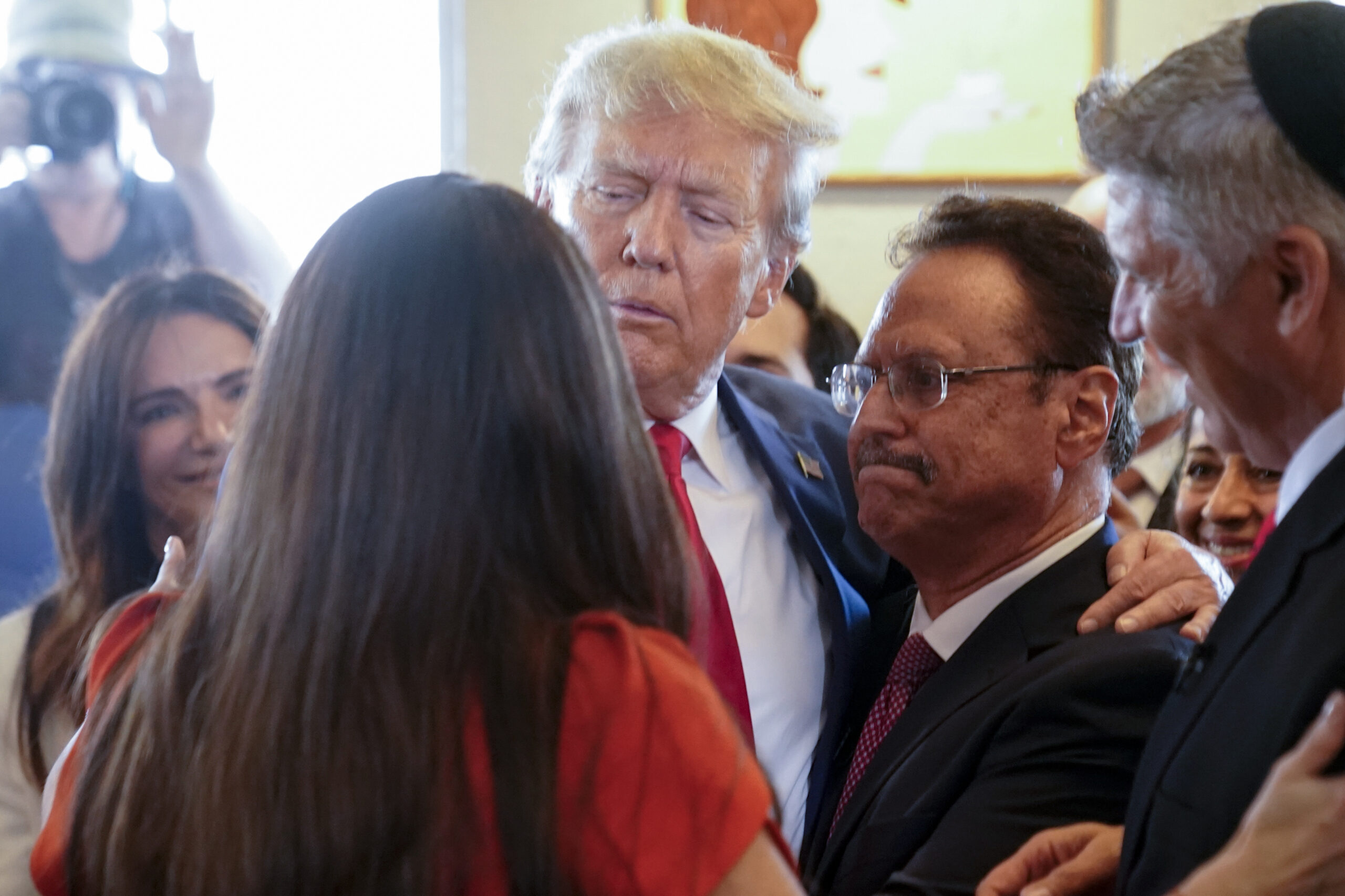
Even as the president has prioritized tackling antisemitism in his second term, leading conservatives are quietly pushing for more engagement against far-right hate
The American Eagle CEO is building a legacy in business — and in Jewish giving
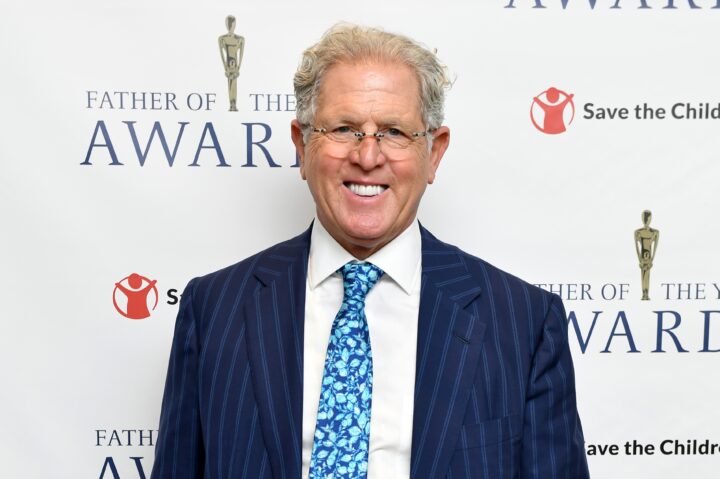
NEW YORK, NEW YORK - JUNE 14: Jay Schottenstein attends the 80th Annual Father of the Year Awards on June 14, 2022 in New York City. (Photo by Noam Galai/Getty Images)
In the recent viral debate surrounding American Eagle’s “great jeans” ad campaign with Sydney Sweeney, which used a double entendre that drew accusations of promoting eugenics, it seemed many critics overlooked that the clothing retailer’s chief executive is a leading Jewish philanthropist who has long been committed to fighting antisemitism.
It was the sort of irony befitting Jay Schottenstein, 71, a mild-mannered billionaire entrepreneur from Columbus, Ohio, who oversees a sprawling business network that, in addition to American Eagle, includes DSW, the designer shoe chain he leads as executive chairman, among other holdings in wine, real estate and furniture.
But outside of philanthropic circles — where he is widely recognized as one of the most consequential sponsors of Jewish causes in the United States and Israel — his relatively private lifestyle has otherwise obscured his long-standing dedication to a range of issues including educational efforts, archeological research and translations of ancient Jewish texts.

“I think most people really don’t know who he is,” said Brad Kastan, a Jewish Republican donor who lives in Columbus and has long been friendly with Schottenstein. “He kind of keeps a low profile.”
Still, Schottenstein, who is Modern Orthodox, remains “accessible,” according to Kastan. The retail mogul, he told Jewish Insider, often can be seen walking to synagogue on Shabbat from his home in Bexley, a Columbus suburb, to attend Congregation Torat Emet, which he has endowed. “Because he’s a proud observant Jew,” Kastan added, Schottenstein “literally walks from Bexley to Ohio State, which has got to be six or seven miles, to go to football games on Shabbos.”
Meanwhile, Schottenstein, whose family is friendly with President Donald Trump, is a major player in Ohio politics, contributing to candidates from both parties, even as he largely favors Republicans. Most recently, he has donated to Vivek Ramaswamy, who is the likely GOP nominee in next year’s Ohio governor’s race.
For years, Schottenstein, who was instrumental in lobbying for legislation to allow Ohio to buy Israel bonds, has been a go-to resource among pro-Israel candidates looking for guidance on key issues about the Middle East. “If you support Israel and you’re running for office and you’re looking for advice or support in the Jewish community in central Ohio,” said Kastan, “you’re going to find your way to Jay’s office.”
The Ohio benefactor has built deep ties to Israel, where the National Campus for the Archaeology of Israel, which is under construction, bears his name. Ehud Olmert, the former Israeli prime minister, has called him a friend, and he was a top contributor to Israeli Prime Minister Benjamin Netanyahu’s 2015 reelection bid. American Eagle also operates dozens of stores in Israel.
Schottenstein, who has said he was in Israel during the Oct. 7, 2023, Hamas attacks, has stepped up his efforts to support the Jewish state in the aftermath of the incursion. He has led donations to victims of the attacks and co-founded a fund to lend financial support to families of IDF soldiers killed in the war in Gaza, among other things.
“You watch what’s going on in Israel, how everyone’s pulling together, and there’s a lot of pain,” Schottenstein said in a podcast interview last year. “I mean, this is real pain to the Jewish people. In my lifetime, I don’t think we’ve ever experienced a war like this — never experienced a time like this. But thank God, we have a strong Israel. We have a strong sense of being.”
Through his foundation, which he leads with his wife, Jeanie, whom he met at Hillel as an undergrad at Indiana University, Schottenstein has supported a growing number of Jewish institutions. These include Chabad, Agudath Israel, Hillel, Hadassah, Yeshiva University and United Hatzalah, the latter of which honored him with a humanitarian award last year.
Howie Beigelman, president and CEO of Ohio Jewish Communities, which represents the state’s eight Jewish Federations and affiliated nonprofit agencies, said that the “Schottensteins broadly are among the most generous and committed givers today,” adding that “their giving also now includes their children and grandchildren in an unmatched dedication to Jewish causes close to home and across the globe.”
Eli Beer, the founder of United Hatzalah, an Israeli emergency medical services volunteer organization, told JI that he has known Schottenstein and his wife for 18 years.
“I can say with certainty that the most important value for them is tikkun olam, repairing the world and making it a better place,” Beer explained. “Eighty percent of our conversations and time together, whether at their home for a weekend or just visiting, revolve around charity and how they can help more people in education, health and even sports, especially those who are underprivileged.”
Howie Beigelman, president and CEO of Ohio Jewish Communities, which represents the state’s eight Jewish Federations and affiliated nonprofit agencies, said that the “Schottensteins broadly are among the most generous and committed givers today,” adding that “their giving also now includes their children and grandchildren in an unmatched dedication to Jewish causes close to home and across the globe.”
“Where they stand out, of course, is in transformation projects that are charitable moonshots,” Beigelman told JI. “But they also work to find leaders they believe in and work with them to ensure the mission and the cause they champion has what it needs to succeed. And despite the reach of their generosity, and the significant amounts, they also remain deeply connected to each cause and each organization.”
Schottenstein, a descendant of Lithuanian immigrants who inherited his family’s retail business in the early 1990s, credits his late father, Jerome, a prominent supporter of Jewish causes, with fueling his continued devotion to philanthropy.
For some religious Jews, the Schottenstein name is all but synonymous with the eponymous, 73-book English translation of the Babylonian Talmud that the family sponsored over 15 years at an estimated cost of $250,000 to produce each volume.
“I think the Schottenstein name, the tradition established by his father and his grandfather, they have established a worldwide brand not just in their stores, but in Torah learning,” Malcolm Hoenlein, executive vice chairman emeritus of the Conference of Presidents of Major American Jewish Organizations, told JI. “In many cases they are models of philanthropy — and really exemplify impact giving.”
Schottenstein, who calls the translation one of his proudest achievements, took over the project from his father when he died in 1992. Published by ArtScroll, it was completed in 2005 and has since “revolutionized the study of the texts,” Malcolm Hoenlein, executive vice chairman emeritus of the Conference of Presidents of Major American Jewish Organizations, told JI recently.
Earlier this year, Schottenstein, speaking at a gathering of the Mesorah Heritage Foundation, which supports ArtScroll, said the organization, where he serves as board chair, had distributed paperback copies of the Talmud to Israeli soldiers fighting in the war. “Nobody could have imagined how the Gemaras would be used, on the battlefield, in tanks, in bunkers, in buildings,” he said in a speech in February. “Every rest period, you’d see guys studying.”
“I think the Schottenstein name, the tradition established by his father and his grandfather, they have established a worldwide brand not just in their stores, but in Torah learning,” Hoenlein told JI. “In many cases they are models of philanthropy — and really exemplify impact giving.”
Schottenstein’s passion for Jewish causes has on occasion intersected with his business. In 2024, for instance, he chose to mark the 30-year anniversary of American Eagle as a publicly traded company on the New York Stock Exchange by blowing a shofar rather than ringing the opening bell. Months before the Oct. 7 attacks, meanwhile, American Eagle placed a mezuzah on the front door of its flagship location in Times Square.
And the fashion company itself has partnered with the Anti-Defamation League on initiatives to help raise awareness about rising antisemitism, an American Eagle spokesperson confirmed to JI.
“My affinity for philanthropy is guided by faith, family and caring for others,” Schottenstein said in a statement to JI on Monday. “One’s value is not determined by possessions, rather by the number of people we have positively impacted. Of all the accomplishments in my life, the most rewarding have been giving back to those who need it most.”
He declined to comment on his company’s recent jeans ads.
Even as the president has prioritized tackling antisemitism in his second term, leading conservatives are quietly pushing for more engagement against far-right hate
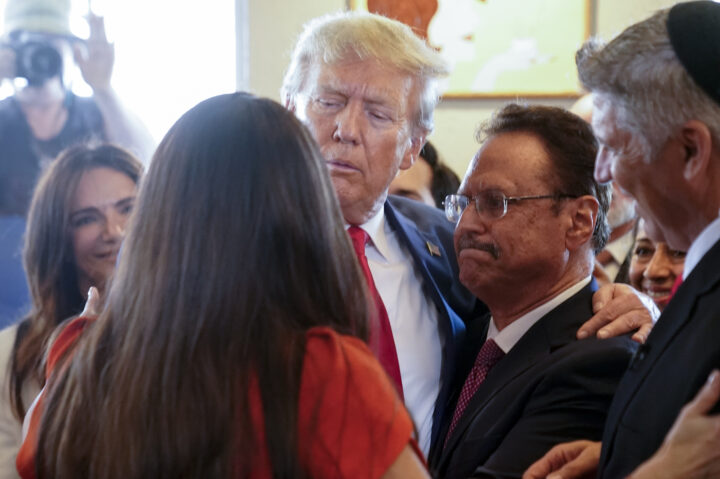
AP Photo/Alex Brandon
President Donald Trump talks with supporters while standing with pastor Mario Bramnick, second from right, at Versailles restaurant on Tuesday, June 13, 2023, in Miami.
President Donald Trump came into office with a promise to make tackling antisemitism a priority of his second term. So far, the focus of that effort has been almost exclusively on addressing left-wing and Islamist antisemitism, primarily tied to anti-Israel extremism — while leaving out antisemitism emerging from the political right.
Now, a group of staunch Trump allies from within the evangelical Christian community is urging Republicans to also focus on countering what they describe as a growing threat of antisemitism from within their own camp. They see prominent MAGA-aligned figures such as podcast hosts Tucker Carlson and Candace Owens platforming overtly antisemitic views, and worry that those voices — with massive social media followings — could play a role in shaping the direction of the Republican Party.
Last month, an organization called the Conference of Christian Presidents for Israel hosted a meeting to discuss the topic at the Family Research Council, a powerful Christian advocacy group. Billed as a “private roundtable for key Christian leaders,” according to the event invitation, it identified right-wing antisemitism as a high-stakes challenge: “It is vital that Christian leaders counter the forces on the right who are demonizing the state of Israel, its leadership and the Jewish people,” stated the invitation, which was obtained by Jewish Insider.
“We’ve been very concerned about the progressive leftist [antisemitism],” Mario Bramnick, a pastor in South Florida who is the president of the Latino Coalition for Israel, told JI on Tuesday. He is also the founder of the Christian Conference, and he organized last month’s event with Luke Moon, the executive director of the Philos Project. “But some of the statements coming out on the right, to me, are possibly more brazen and more troubling and clearly, clearly, do not represent President Trump or his administration,” added Bramnick.
The meeting was attended by Rabbi Yehuda Kaploun, Trump’s nominee to serve as the special envoy to monitor and combat antisemitism, as well as Mark Walker, a former congressman from North Carolina who is Trump’s pick to serve as ambassador-at-large for international religious freedom. Yair Netanyahu, the eldest son of Israeli Prime Minister Benjamin Netanyahu, addressed the group virtually.
“Antisemitism is a bipartisan issue and needs to be condemned anytime, anyplace,” Kaploun told JI. “It is imperative that all parties educate their members about the dangers of antisemitism.”
The Christian group is concerned about a small but growing anti-Israel faction within the Republican Party. In a press release on Tuesday, Bramnick called out Carlson and Owens, as well as two figures who remain close to Trump: Steve Bannon and Rep. Marjorie Taylor Greene (R-GA). A Trump administration spokesperson did not respond to a request for comment on Tuesday.
“It’s almost like we have more of an onus to handle this, because it’s our own camp, our own family. Imagine something goes wrong with someone in your family, you feel more of an obligation,” Bramnick told JI. “Who better than us to be able to handle it?”
Bramnick met last week with Justice Department senior counsel Leo Terrell, the chair of the federal government’s antisemitism task force, to raise the issue of antisemitism on the right.
“They are clearly on this and following it, from my understanding, and wanting to work with us,” Bramnick said. A spokesperson for Terrell did not respond to a request for comment.
The Conference of Christian Presidents has ties to influential conservative groups in Washington. Hours after the meeting at the Family Research Council, the Conference co-hosted an event on the Trump administration’s policies in the Middle East with the Heritage Foundation. The event featured video remarks from U.S. Ambassador to Israel Mike Huckabee and a keynote speech by evangelical leader Rev. Johnnie Moore, executive chair of the Gaza Humanitarian Foundation.
Last year, the Heritage Foundation released a policy document focused on antisemitism, called Project Esther, which identified left-wing antisemitism as the main form of antisemitism in the U.S., without mentioning any issues on the right. An inquiry to the authors of the Project Esther report did not garner a response.
Christians United for Israel, the largest Christian pro-Israel group with more than 10 million members, is not part of the Conference of Christian Presidents for Israel. But Sandra Hagee Parker, chair of the CUFI Action Fund, told JI that the organization agrees with the need to combat antisemitism on the right.
“One cannot be a Christian and antisemitic. The two are mutually exclusive,” Parker said in a statement. “Just as liberals must condemn those who use human rights as cover for their Jew-hatred, conservatives must call out those who drape themselves in the flag or the banner of the cross while bastardizing the former and defiling the latter.”
Republican Jewish Coalition CEO Matt Brooks said antisemitism is “percolating out there at the extreme ends of the far right, well outside of the mainstream of the Republican Party.”
“I don’t know that it’s growing. It’s gotten a little louder,” he told JI. “Our challenge and our effort going forward is to ensure that it doesn’t take hold in the Republican Party as it did in the Democratic Party.”
As his party becomes more critical of Israel, Brown’s views on the Middle East will likely be in the spotlight for his political comeback
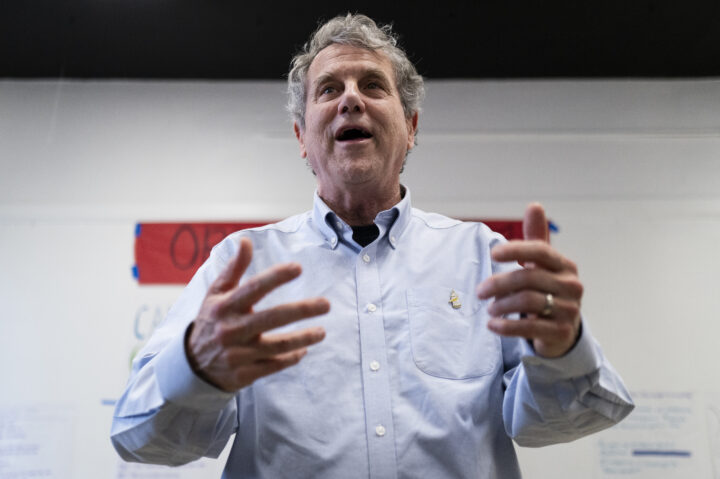
Stephen Maturen/Getty Images
Democratic senate candidate, then-Sen. Sherrod Brown (D-OH), addresses volunteers at a campaign office on November 4, 2024 in Cleveland Heights, Ohio.
Former Sen. Sherrod Brown (D-OH) is set to make a bid to return to the Senate in 2026, according to the Cleveland Plain Dealer.
Brown, who lost his 2024 reelection race by four points to Sen. Bernie Moreno (R-OH), will challenge Sen. Jon Husted (R-OH), who was appointed earlier this year to fill Vice President JD Vance’s seat. President Donald Trump carried the state by more than 11 points in 2024.
The progressive Brown remained relatively popular in the state even as it has trended increasingly red in recent years, and maintained strong ties with the state’s large Jewish community. He had also been floated as a potential gubernatorial candidate in 2026, but was strongly courted by Senate Democrats to make a comeback bid.
In late 2024, Brown voted against Sen. Bernie Sanders’ (I-VT) first efforts to block certain U.S. arms transfers to Israel.
“Senator Brown strongly believes that Israel has a clear and undeniable right to defend itself against Hamas’ brutal terrorism and voted to send military aid to Israel, along with much-needed humanitarian aid to Gaza,” a Brown spokesperson said prior to the vote. “Ultimately, Senator Brown believes that Israel and Hamas must agree to a ceasefire that ends the war, frees the hostages, and delivers desperately needed humanitarian aid to the Palestinian people.”
Numerous Democrats have since shifted their position on the issue, citing the worsening humanitarian situation in Gaza.
In 2022, Brown said that he believed that support for Israel was a majority position in both parties, and that those who opposed the Jewish state were a small group of “outliers,” rejecting the notion that “progressive values” were incompatible with support for Israel.
The former Ohio senator, then the chairman of the Senate Banking Committee, took a relatively hawkish position on Iran last year, pressing the administration, after Hamas’ Oct. 7, 2023, terror attacks, to re-freeze Iranian funds previously released under a deal to free Americans held hostage in Iran.
Brown also called on the Biden administration, in early 2024, to re-impose a Foreign Terrorist Organization designation on the Houthis.
Husted has generally been seen as a moderate and has maintained a pro-Israel record in office, opposing efforts to block weapons transfers to Israel, joining with nearly all other Senate Republicans in demanding full dismantlement of Iran’s nuclear program, supporting American and Israeli strikes on Iran and backing legislation to increase sanctions on Iran.
Speaking at a Senate hearing on campus antisemitism, Husted said that the disruptions in the days after the Oct. 7, 2023 terror attacks appeared coordinated.
For the dozens of universities facing federal scrutiny for their handling of antisemitism, it’s not clear whether there is anything they can do to escape the wrath of the White House — except, perhaps, agreeing to pricey settlements with the Trump administration
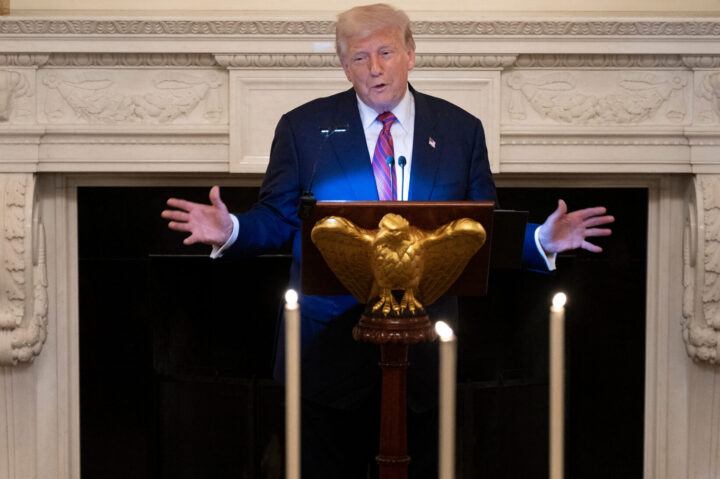
BRENDAN SMIALOWSKI/AFP via Getty Images
US Senator Markwayne Mullin (R-OK) (L) and US Senator John Thune (R-SD) (R) listen as US President Donald Trump speaks during a dinner for Republican US Senators in the State Dining Room of the White House July 18, 2025, in Washington, DC.
Seven months into the second Trump term, it’s clear that many of the country’s top universities are scared of President Donald Trump.
The schools rely on federal funding to power much of the research that has made them into academic powerhouses, so if that funding dries up — a punishment, the Trump administration says, for universities’ failure to deal with antisemitism — their work will be imperiled.
As a result, some universities have taken proactive steps to address antisemitism in the hopes of fending off the ire of the Trump administration. But the White House does not view these actions as good-faith gestures. Instead, the administration is increasingly taking advantage of schools’ acknowledgments of past failings as an admission of guilt — and it is responding in a correspondingly punitive way.
The new chancellor of UCLA took office this year with the stated mission of fighting antisemitism and improving the campus climate following the disastrous 2023-2024 school year that saw violent clashes on the campus. Last month, the university agreed to pay $6 million to settle a lawsuit filed by Jewish students and faculty members who alleged that UCLA permitted antisemitic conduct during the spring 2024 anti-Israel encampment. The chair of the University of California Board of Regents said the settlement was an important step toward fostering “a safe, secure and inclusive environment.”
Yet on the same day UCLA announced the settlement, the Justice Department found UCLA to be in violation of federal civil rights law, stating the school “failed to adequately respond to complaints of severe, pervasive, and objectively offensive harassment and abuse” by Jewish and Israeli students after the Oct. 7, 2023, Hamas terror attacks. And last week, the Trump administration reportedly demanded that UCLA pay an eye-popping $1 billion to settle federal investigations into its handling of antisemitism, race-based admissions policies and transgender issues.
It leaves little incentive for other schools to make reforms to crack down on antisemitism, and risks further polarizing the debate on the subject.
Indeed, Harvard learned a similar lesson earlier this year. In April, the university released a much-delayed report from the school’s task force on antisemitism and anti-Israeli bias, which outlined dozens of instances of antisemitic activity at the school in the year and a half after Oct. 7.
Soon after, the Trump administration relied on the findings in that report to cut another $450 million in grants from the Ivy League university, just days after $2.2 billion in grants were cut. The report “lays bare an appalling reality: Jewish students were subjected to pervasive insults, physical assault, and intimidation, with no meaningful response from Harvard’s leadership,” the leader of the Trump administration’s antisemitism task force wrote at the time.
For the dozens of universities facing federal scrutiny for their handling of antisemitism, it’s not clear whether there is anything they can do to escape the wrath of the White House — except, perhaps, agreeing to pricey settlements with the Trump administration, which Columbia and Brown both did last month. After months of legal maneuvering and negotiating, Harvard may be next: The New York Times reported on Monday that the school is nearing a $500 million agreement with the federal government, to satisfy a demand from Trump that Harvard spend more than double what Columbia agreed to pay.
Ultimately, the end result of all the campus tumult may be that top schools agree to hefty payments demanded by the Trump administration — which may not necessarily correspond with the needed reforms to combat the antisemitism crisis that led the federal government to get involved in the first place.
Plus, Charles Kushner condemns 'vile' Paris vandalism

Mostafa Alkharouf/Anadolu via Getty Images
Israeli army tanks and military vehicles move in the areas near the northern border line of the Gaza Strip in Ashdod, Israel on March 18, 2025.
Good Thursday afternoon.
This P.M. briefing is reserved for our premium subscribers like you — offering a forward-focused read on what we’re tracking now and what’s coming next.
I’m Danielle Cohen-Kanik, U.S. editor at Jewish Insider. I’ll be curating the Daily Overtime for you, along with assists from my colleagues. Please don’t hesitate to share your thoughts and feedback by replying to this email.
📡On Our Radar
Notable developments and interesting tidbits we’re tracking
Just before Israeli Prime Minister Benjamin Netanyahu convened his Security Cabinet to discuss a full IDF takeover of the Gaza Strip, he told Fox News’ Bill Hemmer that Israel “intends to” take over Gaza but “doesn’t want to keep” the territory or “be there as a governing body.” Rather, Netanyahu said, Israel’s ultimate goal is to have a “security perimeter” around the enclave and to “hand it over to Arab forces that will govern it properly.”
Asked if President Donald Trump had given him a “green light” for the plan, Netanyahu said Trump “understands that it’s Israel who’s going to do the fighting” but that the two “haven’t gone into that kind of discussion.” Netanyahu added that the two leaders had agreed to a “humanitarian surge” to take place before what Netanyahu called “our final military action.”
U.S. Ambassador to Israel Mike Huckabee, speaking to Fox later in the day, said that Trump “has made it clear that he respects that Israel has to make the decision that is best for them. … The president is not going to try to second guess what Israel is doing”…
Speaking at a press conference on Thursday regarding the filing of federal hate crimes charges against Elias Rodriguez, the alleged perpetrator of the fatal Capital Jewish Museum shooting in May, U.S. Attorney for the District of Columbia Jeanine Pirro said the indictment “begins the statutory process on whether to seek the death penalty” and that Attorney General Pam Bondi “will determine whether or not to authorize my office to seek death.”
According to the filing, Rodriguez wrote in a document the day before the shooting, “Those of us against the genocide take satisfaction in arguing that the perpetrators and abettors have forfeited their humanity.” Reid Davis, the special agent in charge for the FBI Washington field office’s criminal division, said investigators “believe [Rodriguez] was a lone-wolf actor motivated by anti-Zionist and pro-Palestinian ideology, with the goal of conducting a mass shooting to call attention to his political agenda”…
Former Rep. Abigail Spanberger, the Democratic nominee for governor of Virginia, belatedly acknowledged antisemitic social media posts from state Del. Sam Rasoul, who chairs the Education Committee in the House of Delegates, after her campaign did not respond to multiple requests for comment on the issue from Jewish Insider.
Spanberger told the local political outlet Virginia Scope, “This war continues to unleash heartbreak and tragedy as we witness civilian deaths, starving families, and hostages still held by Hamas. … However, one can and must denounce these tragedies without using antisemitic language, whether intentional or not.” Notably, Spanberger did not specify whether she identified Rasoul’s rhetoric specifically as antisemitic…
Axios scooped the launch of a new podcast from Katie Miller, a former Trump administration aide and Elon Musk staffer married to White House Deputy Chief of Staff Stephen Miller. After ending her tenure at DOGE along with Musk in March, Miller is kicking off “The Katie Miller Podcast,” aimed at conservative women, with an interview with Vice President JD Vance, among others…
David Ellison, CEO of Skydance Media, and George Cheeks, CEO of CBS, attended a morning editorial meeting at CBS News today, shortly after the $8 billion merger between Paramount, the parent company of CBS, and Skydance officially closed, per Puck News. The merger marks the end of a yearslong struggle between controlling shareholder Shari Redstone and other investors as well as Trump, with whom Paramount had to settle a $16 million lawsuit before the FCC approved the deal…
U.S. Ambassador to France Charles Kushner called the vandalization of El Al’s Paris office — which was splattered with red paint and graffiti that read “genocide airline” — “vile,” “cowardly” and “antisemitic.” He called for the French government to “fully prosecute this crime and bring the perpetrators to justice”…
⏩ Tomorrow’s Agenda, Today
An early look at tomorrow’s storylines and schedule to keep you a step ahead
Keep an eye on Jewish Insider for reporting on a new Orthodox Jewish community emerging in the unlikeliest of places, an interview with Rich Goldberg reflecting on his service with the White House National Energy Dominance Council and a dive into how pro-Israel lawmakers are reacting to Netanyahu’s Gaza takeover plans.
Going into the weekend, we’ll be watching the outcome of the Israeli Security Cabinet vote and its ripples in Washington, including in the White House, among Israel’s allies in Congress and within the American Jewish community.
We’ll be back in your inbox with the Daily Overtime on Monday. Shabbat shalom!
Stories You May Have Missed
FLIGHT PATH
From the Strait of Hormuz to the halls of Congress: Rebecca Bennett aims to take on Rep. Tom Kean Jr.

Bennett is a former Navy helicopter and test pilot who served in the Middle East
EXCLUSIVE
How Hamas directs the distribution of cash from aid groups in Gaza: report

A new report from NGO Monitor describes the ‘workaround’ used by international aid groups to continue flow of aid to Gaza despite Hamas involvement
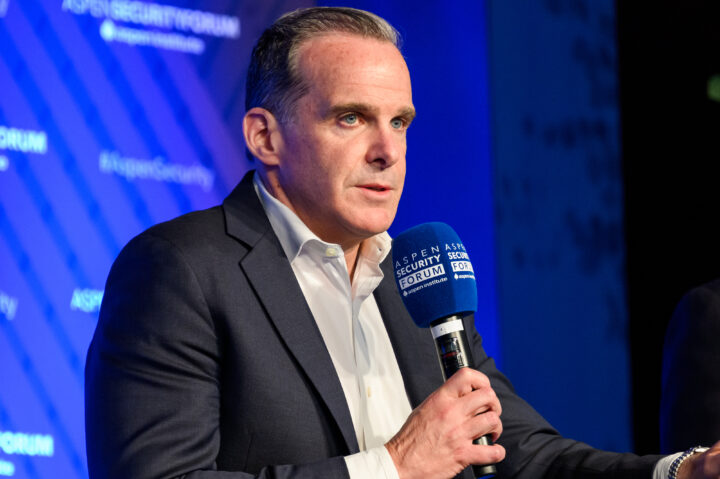
Aspen Security Forum
Former national security official Brett McGurk speaks at the Aspen Security Forum on July 16, 2025.
Good Wednesday afternoon.
This P.M. briefing is reserved for our premium subscribers like you — offering a forward-focused read on what we’re tracking now and what’s coming next.
I’m Danielle Cohen-Kanik, U.S. editor at Jewish Insider. I’ll be curating the Daily Overtime for you, along with assists from my colleagues. Please don’t hesitate to share your thoughts and feedback by replying to this email.
📡On Our Radar
Notable developments and interesting tidbits we’re tracking
Former senior White House official Brett McGurk spoke with The San Francisco Standard about his new venture since leaving the Biden administration — helping companies strike major AI deals around the Gulf.
McGurk said he was influenced to make the jump when Iran launched hundreds of ballistic missiles at Israel in October 2024: “I recall thinking about all the work that went into this moment, from sensitive satellite communications to sensors to interceptors traveling at Mach 5 to take out a ballistic missile. I want to be a part of this era — hopefully to deter any future moments as weapons get better with AI — but also to make sure the United States and our partners are dominant in this space”…
Elsewhere in the region, the Gulf states continue to invest in Syria’s rebuilding, with 12 investment deals worth $14 billion signed in a ceremony on Wednesday attended by President Ahmad al-Sharaa. These include a $4 billion deal to build a new airport in Damascus with Qatari-based energy and construction company UCC Holding — which already struck a deal with Syria to develop power generation projects for $7 billion — and a $2 billion deal with the UAE’s national investment corporation to build a subway system…
In Jerusalem, Israeli Prime Minister Benjamin Netanyahu met last night with a delegation of Republican House members organized by the AIPAC-affiliated American Israel Education Foundation. The Prime Minister’s Office said the group discussed issues including humanitarian aid in Gaza, expanding the Abraham Accords and Israel’s support for the Druze in southern Syria. Netanyahu is expected to meet this week with AIEF’s Democratic delegation as well, even as pro-Israel Democrats have taken a harsher line on the Israeli PM in recent weeks…
Sen. Marsha Blackburn (R-TN) announced today that she’s launching a run for governor of Tennessee, banking on her strong loyalties to President Donald Trump and wide approval around the state to clinch the Republican nomination in the primary a year from today. Blackburn isn’t up for reelection until 2030, and early Senate vacancies tend to set off a scramble: Rep. Tim Burchett (R-TN) already told CNN’s Manu Raju that he’s considering a run for the seat…
The University of Pennsylvania removed the name of longtime donor Stephen Levin from the building he endowed after he told former Penn President Liz Magill he would no longer make contributions to the school based on its handling of campus antisemitism. Levin wrote to Magill in November 2023: “I want my name removed from the building and no longer want to be associated with Penn. Penn is an embarrassment not only to the Jewish community but also has lost its luster as a superb Ivy league school”…
Also in the hot seat, the University of California, Los Angeles officially agreed to negotiate with the Trump administration today, after the Department of Justice sent the school a letter last week laying out its findings of UCLA’s failure to combat antisemitism on campus and suspending $584 million in its federal research funds. UC President James Milliken — who came into his role just days ago on Aug. 1 — said that the funding cuts “do nothing to address antisemitism” and “would be a death knell for innovative work that saves lives, grows our economy, and fortifies our national security”…
Ron Tomer, president of the Israel Manufacturers Association, told The Times of Israel that Israeli exports are expected to take a hit of $2 billion to $4 billion per year due to Trump’s imposition of a 15% tariff on the country, which takes effect on Aug. 7. If the tariffs include the pharma industry and semiconductor parts, 20,000 to 33,000 Israelis could lose their jobs…
The Center for Strategic & International Studies think tank conducted an analysis of satellite imagery of Iranian nuclear facilities as the country begins to repair the damage done by U.S. and Israeli strikes in June. The experts found that “Iran may still have some capacity to rebuild a nuclear program, though it likely would not be on the same scale as previously unless it receives outside assistance”…
⏩ Tomorrow’s Agenda, Today
An early look at tomorrow’s storylines and schedule to keep you a step ahead
Keep an eye on Jewish Insider this week for new reporting on Hamas’ diversion of aid funds; news from the launch of the New York City-Israel Economic Council, an initiative of Mayor Eric Adams and Israeli Economy Minister Nir Barkat; and an analysis on what the results from yesterday’s primary election in Seattle mean for the Democratic Party.
All eyes will be on Israel tomorrow as Netanyahu is expected to convene his Security Cabinet in the evening local time. The cabinet is likely to approve Netanyahu’s plans for a full military takeover of the Gaza Strip, despite reported concerns from IDF Chief of Staff Lt. Gen. Eyal Zamir and other security officials.
Stories You May Have Missed
RASOUL RHETORIC
Virginia Democrat under fire for calling Zionism ‘evil’ while leading Education Committee
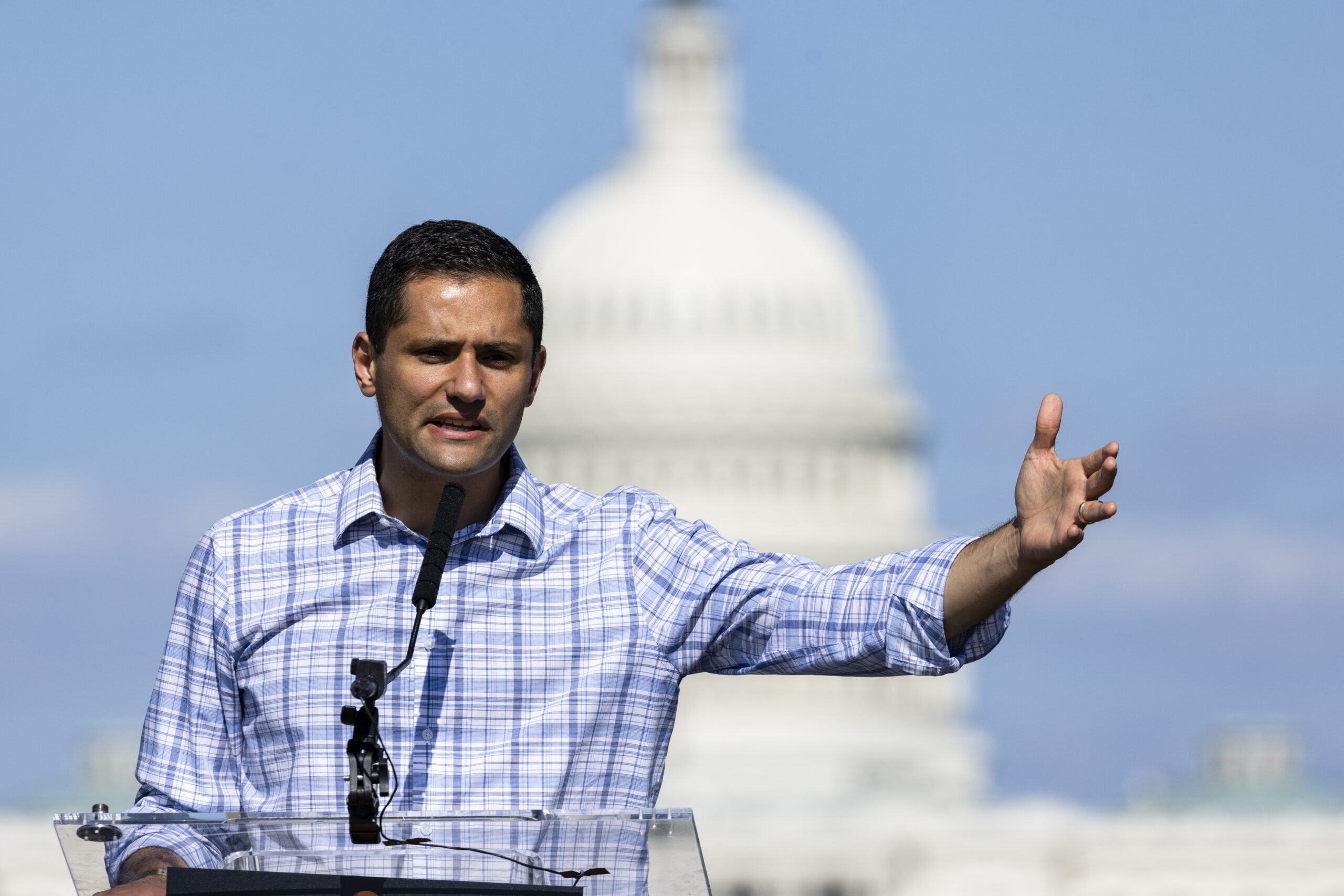
Former Virginia House Speaker Eileen Filler-Corn said Del. Sam Rasoul’s rhetoric is ‘fueling one of the oldest forms of hatred in the world, repackaged in the language of activism’
GARDEN STATE RACE
NJ Jewish leader Jeff Grayzel running for Congress as a ‘proud Jew and a proud Zionist’

A board member of his local Jewish community relations council board, Grayzel is running to succeed Rep. Mikie Sherrill (D-NJ)
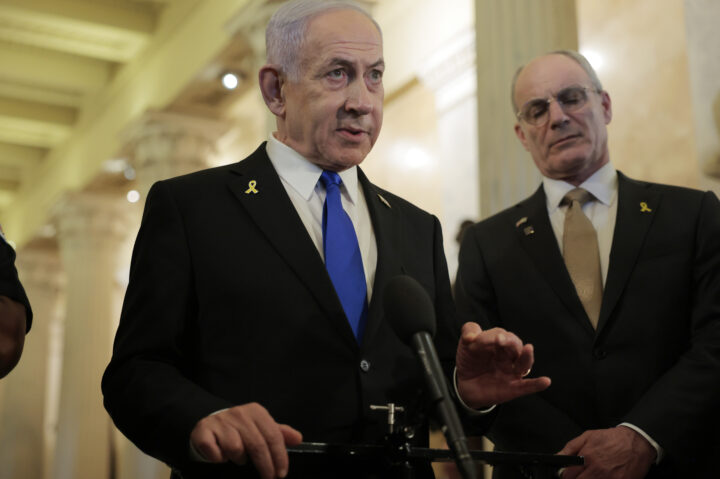
Anna Moneymaker/Getty Images
Israeli Prime Minister Benjamin Netanyahu speaks to reporters after meeting with U.S. Speaker Mike Johnson (R-LA) at the U.S. Capitol on July 8, 2025, in Washington, D.C.
Good Monday afternoon.
This P.M. briefing is reserved for our premium subscribers like you — offering a forward-focused read on what we’re tracking now and what’s coming next.
I’m Danielle Cohen-Kanik, U.S. editor at Jewish Insider. I’ll be curating the Daily Overtime for you, along with assists from my colleagues. Please don’t hesitate to share your thoughts and feedback by replying to this email.
📡On Our Radar
Notable developments and interesting tidbits we’re tracking
There has been a whirlwind of political activity in Israel today, starting with the bombshell news that Prime Minister Benjamin Netanyahu intends to ask the Security Cabinet to approve an expansion of Israel’s war in Gaza, which would see the IDF control all of the enclave.
The move will have reverberations throughout Jerusalem and Washington, from Netanyahu’s own government to hostage families, Capitol Hill and the White House. Officials on both sides of the aisle in the U.S. have been pushing hard for a comprehensive ceasefire and an end to the war — including Middle East envoy Steve Witkoff, who was in Israel just days ago at the behest of President Donald Trump. Stay tuned to Jewish Insider for how this will play out in the coming days…
In other headlines coming out of Israel, the Cabinet voted unanimously this morning to oust Attorney General Gali Baharav-Miara, with whom the current government has been at odds since it was formed, accusing her of political bias.
Shortly after the vote, the Israeli Supreme Court issued an injunction temporarily blocking the firing and ordering the government to continue abiding by Baharav-Miara’s legal opinions until the court issues a final ruling.
It’s the first time an Israeli government has ever voted to oust the AG, and with some Cabinet ministers already boycotting her and pushing back on the court’s decision, Israel could be edging toward a constitutional crisis.
Meanwhile, Likud MK Yuli Edelstein was officially pushed out of his chairmanship of the Knesset Foreign Affairs and Defense Committee today, over coalition disagreements on a Haredi conscription bill. He was replaced by Boaz Bismuth, also from Likud, whom the party hopes will be more amenable to reducing sanctions on Haredim who dodge the draft. Israeli voters across a large swath of the political spectrum, including the Likud base, are on Edelstein’s side of the debate…
Getting a front-row seat to these developments, House Speaker Mike Johnson’s (R-LA) trip to Israel with a House Republican delegation continues today. The group visited the town of Ariel, making Johnson the highest-ranking elected federal official to visit a West Bank settlement. While there, Johnson told a meeting of senior Yesha Council officials that “Judea and Samaria are the front lines of the State of Israel and must remain an integral part of it,” and stopped by Ariel University…
Also in Israel this week are two delegations of freshman House members, one from each caucus, organized by the AIPAC-affiliated American Israel Education Foundation. The Democratic trip is led by Rep. Steny Hoyer (D-MD), the former House majority leader, and Rep. Pete Aguilar, (D-CA), the caucus chair…
Back at home, Conference of Presidents of Major American Jewish Organizations CEO William C. Daroff met with Under Secretary of Defense Elbridge Colby at the Pentagon today. Though Colby had faced criticism around his nomination from pro-Israel circles for his calls to scale back U.S. involvement in the Middle East, Daroff told JI that Colby “expressed a clear and serious understanding of U.S. strategic interests in the Middle East, including the vital importance of deterring Iran, preventing regional adversaries from gaining dominance, and sustaining Israel’s security following the Twelve Day War.” Daroff said he was “encouraged by [Colby’s] principled and grounded approach”…
The Federal Emergency Management Agency said in grant notices made public Friday that states must guarantee they will not engage in boycotts of Israeli companies in order to qualify for a tranche of more than $1.9 billion in natural disaster preparedness grants…
Software analytics giant Palantir topped $1 billion in revenue for the first time, it shared in an earnings report today. The company has secured several large contracts with the Trump administration, including an agreement announced last week for $10 billion over the next decade with the U.S. Army…
Veteran Democratic political strategist Howard Wolfson, an outspoken supporter of Israel and Jewish causes, appeared on Daniel Gordis’ “Israel from the Inside” podcast today with the message that “the war for hearts and minds” in U.S. support for Israel “has been lost.” The former communications director of Hillary Clinton’s 2008 presidential campaign, Wolfson said that he’s “clanging the alarm bell as loudly as I can and hoping that the Israeli public and the decision-makers in Israel understand how far Israel has fallen in public approval in the United States and what the implications of that are.”
“Israel is getting absolutely decimated” in information warfare, Wolfson continued. “And that may not be fair, it may not be accurate, but I think those questions of fairness and accuracy, they’ve become largely irrelevant. It’s not about fairness and accuracy. It’s about effectiveness and about impact.”…
⏩ Tomorrow’s Agenda, Today
An early look at tomorrow’s storylines and schedule to keep you a step ahead
Keep an eye on Jewish Insider this week for a dive into the lessons learned from Israel’s disengagement from Gaza 20 years ago this month, an analysis of what a new poll of New York City Jewish voters means for Zohran Mamdani’s mayoral prospects and a look into the latest fundraising figures from pro-Israel campaign groups.
Tomorrow morning, Israeli Foreign Minister Gideon Sa’ar will meet with American Jewish leaders in New York, JI has learned, and then head to a meeting of the U.N. Security Council on the situation of the hostages held in Gaza. Sa’ar prompted the special session after videos of two hostages — Evyatar David and Rom Braslavski — were released by Hamas and the Palestinian Islamic Jihad, showing the two men looking haggard and severely emaciated.
Stories You May Have Missed
MARYLAND MOOD
Sen. Alsobrooks flip-flops from pledge to maintain aid to Israel during Senate campaign
Many of the state’s Jewish leaders are wary of speaking out against the Maryland Democrat’s votes to block arms sales to Israel
QATAR CALL
Landsman calls on Qatar to detain Hamas leaders until hostages are freed
The Democratic congressman, in a letter rejecting an offer for a staffer to travel to Qatar, said that the kingdom needs to do more to pressure Hamas
The bill includes a total of $80 million in additional funding, as compared to 2025, for several cooperative programs with Israel
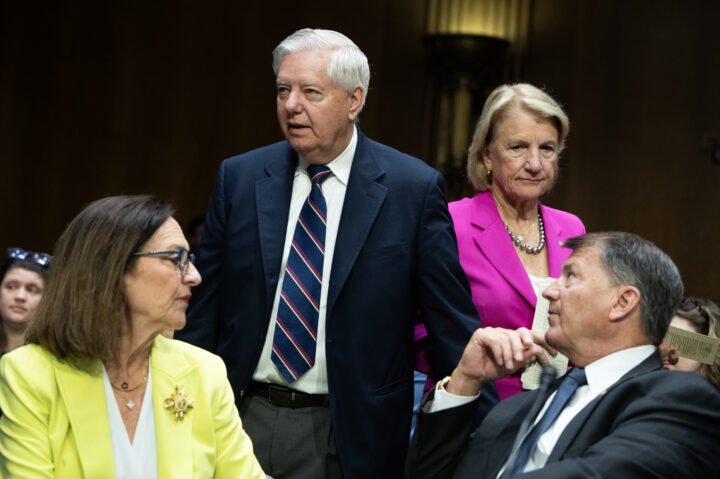
Tom Williams/CQ-Roll Call, Inc via Getty Images
From left, Sens. Deb Fischer, R-Neb., Lindsey Graham, R-S.C., Shelley Moore Capito, R-W.Va., and Mike Rounds, R-S.D., attend the Senate Appropriations Committee markup of the "Department of Defense Appropriations Act, and the Departments of Labor, Health and Human Services, Education, and Related Agencies Appropriations Act," in Dirksen building on Thursday, July 31, 2025.
The Senate Appropriations Committee’s draft 2026 defense funding bill, approved by a broad bipartisan committee vote on Thursday, includes increases to several U.S.-Israel cooperative defense programs.
The bill includes a total of $80 million in additional funding, as compared to 2025, for several cooperative programs with Israel. It offers a total of $75 million for counter drone and missile programs, $47.5 million for cooperative programs in emerging defense technologies like artificial intelligence and $80 million for counter-tunneling programs, according to a summary released by the committee.
The bill includes $500 million for cooperative missile defense programs including Iron Dome, David’s Sling and Arrow provided annually under the terms of the U.S.-Israel memorandum of understanding.
It also offers additional security assistance funding for Bahrain and Jordan.
The committee debated and rejected two amendments by Democrats addressing the administration’s plans to retrofit a gifted Qatari jumbo jet to serve as Air Force One.
Sen. Jeanne Shaheen’s (D-NH) amendment would have prohibited funding to modify or operate the Qatari jet, highlighting security and corruption concerns about the gift; the unclear costs and timeline associated with the retrofit; and comments by the secretary of the Air Force indicating that the administration plans to pull funding from a nuclear missile program to fund the overhaul.
Recent reports suggest that renovations could cost close to $1 billion.
“This jet was just delivered to the Department of Defense. We need to have a classified briefing to understand any proposed modifications and the risk of not applying them,” Sen. Mitch McConnell (R-KY) responded, opposing the amendment. “The aircraft timeline is such that it’s not going to be modified with fiscal [year] [20]26 dollars in any event, making this a poison pill political amendment better suited for the [National Defense Authorization Act].”
President Donald Trump said that the plane could make its first flight in February.
Shaheen withdrew the amendment due to Republican comments that the amendment would kill the defense spending bill.
Sen. Chris Murphy (D-CT) offered a more limited amendment that would have blocked the administration from transferring the plane to a private entity before the end of its useful life, an attempt to head off reported plans to transfer the plane, after Trump’s term, to his presidential library, potentially for his personal use, after his presidency.
Republicans again argued that a full briefing is necessary on the administration’s plans before making any such moves, and that the amendment would kill the defense spending bill.
“To address this claim that’s been made a few times that this is a poison pill, if I understand correctly, that means that the Senate would refuse to fund the Pentagon unless it allows the president to accept a jet from a foreign prince. If that’s true, I’d like to understand why that is the line in the sand that would be drawn,” Sen. Jon Ossoff (D-GA) responded. “The only other argument that I can conceive is that we think the President would veto the entire Pentagon budget unless he’s able to accept a jet from a foreign prince. I’d like to see him make that argument to the American public.”
The committee rejected the Murphy amendment by a party line vote.
Sen. Lisa Murkowski said she opposed the two amendments to ensure the bill as a whole could still pass, but said, “I don’t want my ‘no’ vote to be assumed that I’m OK with where we are with this transfer, that I’m OK not knowing the numbers behind it, that I am perhaps OK with the appearances — because I have concerns about them.”
The Senate bill would provide billions in additional funding for air and missile defense systems and to replenish U.S. stockpiles of air defense interceptors, which saw heavy use during the recent war in Gaza.
“Recent operations in the Middle East illustrate how quickly modern warfare can exhaust our arsenal of critical [interceptor] munitions,” McConnell, who chairs the Defense Subcommittee, said. “The administration’s request did not fully maximize production capacity for certain critical munitions.”
“We made lots of improvements in the [administration’s] request given the challenges with missile stockpiles that we’re seeing in Ukraine and the Middle East,” Sen. Chris Coons (D-DE), the subcommittee ranking member, said. “I can’t explain why the administration didn’t propose to buy every single missile it could on existing production lines and expand others, but it didn’t.”
Generally, lawmakers on both sides of the aisle argued that the administration’s defense funding request was too low, and agreed on a bipartisan basis to propose providing $852.5 billion, 2.6% or nearly $22 billion above the administration’s request and the House’s draft of the bill, which the lower chamber approved last month.
A letter signed by prominent House progressives said such a state ‘will need to fully recognize Israel’ and guarantee ‘the disarmament of and relinquishing of power by Hamas’

Chip Somodevilla/Getty Images
Rep. Ro Khanna (D-CA) leaves the U.S. Capitol on March 13, 2024 in Washington.
Rep. Ro Khanna (D-CA) is circulating a letter to President Donald Trump and Secretary of State Marco Rubio among House lawmakers calling for the United States to recognize a Palestinian state.
Khanna, a prominent progressive voice in the House with aspirations for higher office, has become increasingly vocal in recent weeks about the humanitarian crisis in Gaza and in his criticism of the pro-Israel lobby group AIPAC.
“We are writing to request that the United States officially recognize a Palestinian state, as this tragic moment has highlighted for the world the long overdue need to recognize Palestinian self-determination,” a draft version of the letter obtained by Jewish Insider reads. “Just as the lives of Palestinians must be immediately protected, so too must their rights as a people and nation urgently be acknowledged and upheld.”
The letter had nine co-signatories, in addition to Khanna, as of Thursday evening.
The signatories said they welcome French President Emmanuel Macron’s decision to recognize a Palestinian state, and urged other governments to do the same. The U.K. and Canada said this week that they intend to do so as well, given certain conditions.
“It has long been acknowledged by much of the international community and previous U.S. administrations of both major political parties that a Palestinian state recognized as a full and equal member of the community of nations is necessary to fulfill the legitimate national rights of the Palestinian people and ensure the state of Israel’s survival as the democratic homeland of the Jewish people,” the letter continues.
U.S. policy has long opposed the unilateral recognition of a Palestinian state outside of a negotiated two-state solution between the Israelis and Palestinians.
“A viable Palestinian state will need to fully recognize Israel and adopt a framework to guarantee Israel’s security, including the disarmament of and relinquishing of power by Hamas in order to be broadly embraced by the community of nations,” the letter continues. “We will need to work closely with the Palestinian people, the Palestinian Authority, our Arab allies, and Israel to make this feasible.”
The letter argues that “recognizing Palestinian statehood and obligating Palestinian leaders to abide by the international law binding on states and their governments will make that far more achievable and sustainable than decades of statelessness and repression have.”
The letter has been co-signed by Reps. Greg Casar (D-TX), Lloyd Doggett (D-TX), Veronica Escobar (D-TX), Maxwell Frost (D-FL), Al Green (D-TX), Jared Huffman (D-CA), Pramila Jayapal (D-WA), Mark Pocan (D-WI) and Bonnie Watson Coleman (D-NJ) — all prominent progressive lawmakers in the House — since opening on Tuesday evening.
In a statement to JI, Khanna said, “This is the moment for the United States to officially recognize a Palestinian state. All 22 states in the Arab League this week called for a non Hamas Palestinian state that recognizes Israel.”
He said that his office had begun outreach on the issue this week, but did not plan to send the letter until the United Nations General Assembly in September, when France and others said they plan to formally recognize a Palestinian state. He described the response from his fellow lawmakers as “overwhelming.”
“It’s disappointing someone would leak the letter thinking it would sabotage the effort,” Khanna continued. “But you cannot sabotage an idea whose time has come.”
Khanna said in a memo to colleagues about the letter, “Recognition of Palestinian statehood — alongside continued efforts to secure Israel’s safety and guarantee its future as a democratic homeland for the Jewish people — is essential to achieving peace.”
He continued, “As the devastating toll of the war in Gaza continues to mount, this tragic moment has underscored the urgent need to acknowledge Palestinian self-determination and take meaningful steps toward a just and lasting resolution to the Israeli-Palestinian conflict.”
Previously, a resolution supporting Palestinian statehood, introduced in the House by Green in December 2023, received five co-sponsors — Watson Coleman, Frost, Doggett, Escobar and Rep. Andre Carson (D-IN).
Plus, Trump warns of MAGA shift on Israel

Kobi Gideon (GPO)
Prime Minister Benjamin Netanyahu, meeting in his office with US Special Presidential Envoy to the Middle East Steve Witkoff (Kobi Gideon (GPO)
Good Thursday afternoon.
This P.M. briefing is reserved for our premium subscribers like you — offering a forward-focused read on what we’re tracking now and what’s coming next.
I’m Danielle Cohen-Kanik, U.S. editor at Jewish Insider. I’ll be curating the Daily Overtime for you, along with assists from my colleagues. Please don’t hesitate to share your thoughts and feedback by replying to this email.
📡On Our Radar
Notable developments and interesting tidbits we’re tracking
All eyes were on Jerusalem today, where Middle East envoy Steve Witkoff and U.S. Ambassador to Israel Mike Huckabee met with Israeli Prime Minister Benjamin Netanyahu amid a growing humanitarian crisis in Gaza and stalled ceasefire talks with Hamas. An Israeli official told Axios’ Barak Ravid that the men discussed moving from an “incremental and partial” ceasefire to a comprehensive one, meaning a final deal that would see the release of all the remaining 50 hostages, the disarmament of Hamas and the demilitarization of the Gaza Strip.
Witkoff and Huckabee will travel into Gaza tomorrow to visit humanitarian aid sites and “meet with local Gazans to hear firsthand about this dire situation on the ground,” White House Press Secretary Karoline Leavitt announced in a briefing this afternoon. After their visit, President Donald Trump will approve a “final plan” for food and aid distribution in Gaza.
Trump placed blame for the situation squarely with Hamas this morning, posting on Truth Social, “The fastest way to end the Humanitarian Crises in Gaza is for Hamas to SURRENDER AND RELEASE THE HOSTAGES!!!” That goodwill may not last, though, with one source telling the Financial Times that Trump recently warned a “prominent Jewish donor” that “my people are starting to hate Israel”…
In the same FT article, Amos Hochstein, the former advisor to President Joe Biden and negotiator between Israel and Lebanon during his term, is quoted saying, “Part of being a pro-Israel U.S. president meant stepping in when necessary to save Israel from itself.” On Israel’s wars in the region, Hochstein said, “Israel looks like it’s out of control and needs an American intervention and stop button”…
The State Department announced “sanctions that deny visas” to members of the Palestine Liberation Organization and officials from the Palestinian Authority this morning, over the PLO and PA’s continued “pay-for-slay” policy, glorification of violence “especially in textbooks” and initiation of or support for proceedings against Israel at the International Criminal Court and International Court of Justice.
The move comes in the midst of a spate of Western countries announcing their intent to recognize a Palestinian state in the coming months, signaling Washington is of a very different mind. Israeli Foreign Minister Gideon Sa’ar said the measure by the U.S. “exposes the moral delusion of certain countries that were quick to recognize a virtual Palestinian state while simultaneously turning a blind eye to its support for terror and incitement.” We’re keeping watch to see if the Trump administration moves to pressure countries like France, the U.K. and Canada to reverse course…
One U.S. ally waiting to jump into the fray is Germany, whose foreign minister, Johann Wadephul, just before an official visit in Israel today, said Berlin is not currently considering joining its neighbors in recognizing a Palestinian state, but that the process towards a two-state solution “must begin now.” “If that process continues to be blocked,” he warned, “Germany must consider reacting accordingly”…
The State Department also released a statement today — alongside 13 Western countries including France, the U.K. and Canada — condemning the “growing number of state threats from Iranian intelligence services in our respective territories,” specifically Iran’s attempts to “kill, kidnap and harass” Westerners and “target journalists, dissidents, Jewish citizens, and current and former officials”…
Relatedly, Israel’s National Security Council issued a warning to its citizens in the United Arab Emirates and is reportedly evacuating its diplomats due to increased terror threats targeting Israeli nationals there, in retaliation for Israel’s war with Iran…
The Washington Post today profiled Rachel Accurso, also known as Ms. Rachel, a popular children’s content creator and outspoken critic of Israel, without detailing the anti-Israel activism she’s incorporated into her children’s show and social media content. This month, she drew criticism from Jewish leaders for publishing a video with former UNRWA photographer Motaz Azaiza — who she called her “friend” — who has made numerous social media posts defending Palestinian terrorism, according to Ha’aretz…
The Free Press scooped a potential new lawsuit against Harvard by the Trump administration after the Department of Health and Human Services, which had been investigating the university for antisemitism, found the school in violation of the Title VI of the Civil Rights Act and that it would not “voluntarily comply with its obligations.” HHS referred the case to the Department of Justice, which will decide how to proceed…
In a Thursday afternoon speech at the Heritage Foundation, the Gaza Humanitarian Foundation‘s chair, Rev. Dr. Johnnie Moore, delivered a forceful defense of the beleaguered U.S.-backed aid organization, which nearly all Senate Democrats recently argued has “failed” in its mission and “contributed to an unacceptable and mounting civilian death toll.” Moore contended that GHF’s work shows the Trump doctrine of “peace through strength” in action, as opposed to the efforts of the United Nations, which he called “the press secretary for Hamas.” “American strength serves American values,” Moore said, “not a corrupt international system”…
⏩ Tomorrow’s Agenda, Today
An early look at tomorrow’s storylines and schedule to keep you a step ahead
Keep an eye on Jewish Insider for reporting on the connection between an anti-Israel group at the University of Washington and the proscribed terror group Popular Front for the Liberation of Palestine, and for an interview with James Walkinshaw, longtime aide to the late Rep. Gerry Connolly (D-VA), who’s running for his former boss’ seat. We’ll also continue to cover the fallout from last night’s vote on resolutions led by Sen. Bernie Sanders (I-VT) blocking arms sales to Israel, particularly for Democratic senators with large Jewish constituencies.
We’ll be watching the Witkoff-Huckabee visit to Gaza tomorrow and how their takeaways on the aid crisis translate into a new U.S. plan for food distribution, including involvement from Israel.
We’ll be back in your inbox with the next Daily Overtime on Monday. Shabbat shalom!
Stories You May Have Missed
CULTURE CHIEF
Audrey Azoulay, UNESCO’s leading Jewish lady
A former French culture minister, Azoulay is the first Jewish leader of the controversial U.N. agency
CHANGING OF THE GUARD
Nadler draws primary challenger calling for generational change

Liam Elkind, 26, leads a nonprofit organization to deliver food and medicine to vulnerable New Yorkers
Anti-Israel activists on the left are working to win over Democratic lawmakers to their side — and are finding some unlikely allies moving in their direction amid the sustained pressure

Avi Ohayon (GPO)
Israeli Prime Minister Benjamin Netanyahu and President Donald Trump hold a joint press conference at the White House on February 4, 2025
A new Gallup poll underscores the degree to which Israel’s security is now dependent on support from President Donald Trump and the Republican Party, the Jewish state having drained much of its political capital from both Democrats and independents amid the ongoing war against Hamas in Gaza and the resulting humanitarian crisis.
The numbers are clear: Support for Israel is now becoming a partisan issue after the Jewish state enjoyed decades of bipartisan support in the United States. Anti-Israel activists on the left, looking to exploit the moment, are working to win over Democratic lawmakers to their side — and are finding some unlikely allies moving in their direction amid the sustained pressure.
The data is sobering: Only about one-third of Americans now support Israel’s military action in Gaza, with 60% disapproving. At the beginning of the war, exactly half of Americans supported Israel’s war against Hamas. The drop-off has come entirely from Democrats (36% supported in November 2023, while 8% do now) and independents (47% supported in November 2023 while 25% support now).
Among Republicans, however, support for Israel’s military efforts has remained significant. The exact same share of Republicans who backed Israel’s war against Hamas in November 2023 (71%) continue to support Israel’s efforts today. Trump’s decision to strike Iran’s nuclear facilities has, if anything, bolstered GOP support for Israel and undermined the isolationist and small anti-Israel faction within the party.
Israeli Prime Minister Benjamin Netanyahu’s close relationship with Trump, a partnership that has led to major policy successes, like the successful, coordinated attacks against Iran’s nuclear program, has nonetheless also played a role in the growing partisanship. Netanyahu, for the first time, is viewed unfavorably by a majority of Americans — with Democrats now registering more overt disapproval of the Israeli leader since Trump reentered office.
The Gallup polling shows there was already soft support for Israel among Democrats before the war began, with majorities of Democrats opposed to the Jewish state’s efforts at self-defense just weeks after the Oct. 7 attacks. That said, a clear majority of Democratic lawmakers maintained their support for Israel’s war against Hamas, with only a relatively small faction calling for ceasefires before Hamas’ leadership and terror infrastructure could be degraded.
But there are signs that some of the more mainstream voices are succumbing to the anti-Israel shifts within the party’s base. Over half of Senate Democrats supported a Bernie Sanders-led resolution last night that would block U.S. arms sales to Israel — up from the 15 Democrats who voted for a similar measure back in April. Sen. Elissa Slotkin (D-MI), a pragmatic Democratic senator, who was absent for the vote, sounded open to cutting off “offensive” military aid to Israel. Sen. Angus King (I-ME), a pro-Israel independent who caucuses with Democrats, changed his tune and called for ending all military aid to Israel this week.
What’s alarming is how some of this consuming anti-Israel sentiment among Democrats is showing some signs of evolving into, at least, a tolerance of antisemitism. Pennsylvania Gov. Josh Shapiro received blowback from the left for simply calling out New York City Democratic mayoral nominee Zohran Mamdani over failing to condemn “globalize the intifada” rhetoric. Slotkin felt the need, while on an anti-Israel podcast, to pander that she’s a Jewish senator who wasn’t backed by Jewish groups. Progressive spaces are becoming increasingly inhospitable to Jews, at least those who don’t renounce their support for a Jewish state.
The many liberal-minded, pro-Israel Jewish Democrats have felt increasingly homeless politically as a result of the shifts within the party — and the accommodation of views that, until very recently, have been beyond the political pale. If the party’s reaction to its 2024 defeat is to tack even further leftward and alienate core parts of their coalition, it could well be lurching towards its own McGovern moment in the future.
The House speaker said he wants to see the war in Gaza come to an end soon

Kent Nishimura/Getty Images
House Speaker Mike Johnson (R-LA) does an interview with CNN at the U.S. Capitol on April 17, 2024 in Washington, D.C.
House Speaker Mike Johnson (R-LA) expressed strong concern about the humanitarian crisis in Gaza in an appearance on CNN’s “The Lead” on Wednesday.
Johnson’s comments, made days after President Donald Trump said that there is “real starvation” happening in Gaza, indicate growing concern even among pro-Israel Republicans about the humanitarian situation in Gaza, at the same time that such concerns on the Democratic side have reached new heights.
“I do hope it comes to an end soon,” Johnson said about the war in Gaza, “and we bring an end to this suffering and misery, because it is quite sad and quite alarming to see.”
He said that “we’ve got a humanitarian crisis in Gaza — I mean the pictures tell 1,000 words and it’s heartbreaking.” Israeli Prime Minister Benjamin Netanyahu has said that there is “no starvation” happening in the enclave.
The House speaker said that he wants to see an end to the conflict and peace, adding that “President Trump is using a strong hand to try to forge that, and we’re moving in the right direction.”
He also credited Israel with opening up new channels for aid and noted that the U.S. and its partners are going to work to provide additional aid as well.
Johnson did not mention Hamas, which some supporters of Israel argue should shoulder the blame for any aid shortages and the lack of a ceasefire in Gaza.
Johnson didn’t directly address a question from host Jake Tapper about whether he’s concerned that Israel is at risk of becoming a global pariah.
Plus, Mossad chief spotted in Queens
J. David Ake/Getty Images
The sun flares over the top of the side entrance to the U.S. Treasury Department Building on August 18, 2024, in Washington, DC.
Good Wednesday afternoon,
This P.M. briefing is reserved for our premium subscribers like you — offering a forward-focused read on what we’re tracking now and what’s coming next.
I’m Danielle Cohen-Kanik, U.S. editor at Jewish Insider. I’ll be curating the Daily Overtime for you, along with assists from my colleagues. Please don’t hesitate to share your thoughts and feedback by replying to this email.
📡On Our Radar
Notable developments and interesting tidbits we’re tracking
Israeli Mossad chief David Barnea was spotted at the Lubavitcher Rebbe’s Ohel in Queens, N.Y., this morning…
The Treasury Department just announced sanctions targeting over 115 entities involved in a “shipping empire” run by the son of a senior advisor to Iranian Supreme Leader Ayatollah Ali Khamenei. The administration is calling it a “renewed maximum pressure campaign” and the most significant action taken against Iran since 2018. Read more from JI’s Gabby Deutch here.
The move comes as the potential for renewed nuclear talks between the U.S. and Iran has deteriorated, with President Donald Trump threatening last week to strike Iran again “if necessary”…
We reported earlier today on some telling comments from Sen. Elissa Slotkin (D-MI) on an anti-Israel podcast yesterday, where she said she’d be open to considering cutting off offensive weapons to Israel and claimed she was “the first Jew elected to the Senate that was not endorsed by any Jewish group.” Though she named AIPAC and J Street specifically, she was indeed endorsed by a Jewish group — the pro-Israel Jewish Democratic Council of America — in 2024. Read more from JI’s Emily Jacobs and Marc Rod here.
The comments from the more moderate Jewish Democrat are the latest sign of the shifting rhetoric on Israel — and on associating with pro-Israel groups — within the party…
Also of note for the future of the Democratic Party: Former Vice President Kamala Harris announced today that she won’t run for governor of California to replace term-limited Gov. Gavin Newsom in 2026, leaving open the possibility that she could run for president again in 2028…
The French- and Saudi-sponsored U.N. conference on a two-state solution produced a notable result this week, with dozens of states, including the entire Arab League, signing the “New York Declaration.” The document, along with steamrolling the U.S. and Israel in laying out a plan for Palestinian statehood, condemns the Oct. 7, 2023, Hamas attacks on Israel and calls on the terror group to release the hostages. It’s the first time the Arab League — including Hamas benefactor Qatar — has said anything of the sort. Read more from JI’s Lahav Harkov here.
But a seasoned diplomatic source in Washington told JI it’s ‘too little, too late’ and there’s much more these states could be doing: “While it’s appreciated that all these countries finally, and I mean finally, spoke the truth about Hamas’ evil acts, the statement noticeably avoided discussing the foundational issue of full Israeli integration in the region.” And a Middle East expert told us there’s “much to applaud, much to critique” about the declaration, with “positive aspects” alongside “poison pills”….
Staying in the Gulf, Daniel Silverberg, longtime former national security advisor to Rep. Steny Hoyer (D-MD), appeared on the latest episode of the Middle East Institute’s “Taking the Edge Off the Middle East” podcast, where he argued that Democrats have miscalculated their relationships with the Gulf states.
Silverberg told host Brian Katulis that he wished Democrats would “appreciate that there’s so many dynamic developments” in the Gulf “that are so good for [the U.S.] that it would temper, somewhat, a lot of the criticisms that I’ve seen over the last couple of years.”
Silverberg said he was struck that when UAE National Security Advisor Sheikh Tahnoon Bin Zayed “came to Washington a number of months ago, President Trump brought in, I think, three-quarters of his Cabinet to have a dinner with them. And when I heard that, I was just thinking to myself, damn it, why can’t Democrats play that same game?” He said Democrats thought, “‘You don’t want the U.S. appearing this close to the Saudis or the Emiratis. They have to earn that kind of dinner.’ And in my mind, just do the dinner. Just nourish the relationship.”…
Cybersecurity giant Palo Alto Networks announced today that it will acquire Israeli software company CyberArk for a deal valued at approximately $25 billion. It’s the second largest exit in Israeli history, after Google’s parent company Alphabet bought the Israeli cybersecurity company Wiz for $32 billion, pending regulatory approvals, just months ago…
⏩ Tomorrow’s Agenda, Today
An early look at tomorrow’s storylines and schedule to keep you a step ahead
Keep an eye on Jewish Insider later this week for a profile of Audrey Azoulay, the French-Moroccan Jew heading UNESCO as the U.S. prepares to depart the U.N. cultural agency once again in protest of its purportedly anti-Israel and “globalist” agenda. Of note: Azoulay’s father, André Azoulay, is a close advisor to King Mohammed VI of Morocco.
We’ll also report on Liam Elkind, the 26-year-old Jewish community organizer backed by Reid Hoffman and Dan Doctoroff, launching a generational challenge against Rep. Jerry Nadler (D-NY), co-chair of the Congressional Jewish Caucus, who is 78. And we’ll interview Secure Community Network CEO Michael Masters about his sit-down last week with Homeland Security Secretary Kristi Noem.
This evening, the Senate will vote on two resolutions from Sen. Bernie Sanders (I-VT) attempting to block arms sales to Israel, including one restricting assault rifles from Israel’s police force overseen by far-right National Security Minister Itamar Ben-Gvir. We’ll be keeping tabs on how many Democrats side with Sanders this time — on the resolution targeting the highly controversial Ben-Gvir, Sanders may rally more than the 15 who voted in favor of his last measure.
Middle East envoy Steve Witkoff is expected to land in Israel tomorrow for his first visit in several months, amid rising bipartisan concern about the humanitarian crisis gripping Gaza and a continued stalemate in ceasefire negotiations. We’ll see what message he brings to the Israelis from the White House and what kind of pressure he attempts to exert on Jerusalem, if any, on both issues.
Also tomorrow, the Heritage Foundation will host an event, along with the Conference of Christian Presidents for Israel, called “Peace Through Strength: U.S. Policy on Israel and the Middle East.” They’re featuring speakers including Rev. Dr. Johnnie Moore, head of the Gaza Humanitarian Foundation; U.S. Ambassador to Israel Mike Huckabee; Ellie Cohanim, former deputy special envoy to monitor and combat antisemitism; and Aryeh Lightstone, an advisor to Witkoff.
Stories You May Have Missed
MORE THAN MONEY
Pro-Israel students: University reforms must go beyond cash payments

At the Israel on Campus Coalition’s conference, some students praised Trump’s campus crackdowns — but want lasting changes over financial settlements
BILL BLOCKAGE
Congress gridlocked over legislation to crack down on antisemitism

ADL CEO Jonathan Greenblatt: ‘I’d like to see the extremes marginalized so the vast majority of members of Congress on both sides can get the stuff done that needs to happen’
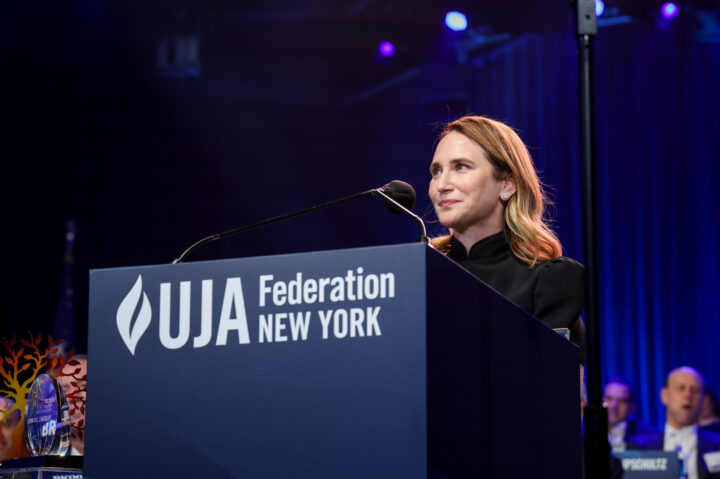
Good Tuesday afternoon,
This P.M. briefing is reserved for our premium subscribers like you — offering a forward-focused read on what we’re tracking now and what’s coming next.
I’m Danielle Cohen-Kanik, U.S. editor at Jewish Insider. I’ll be curating the Daily Overtime for you, along with assists from my colleagues. We hope you enjoy the inaugural edition and would love to hear your thoughts and feedback. Please don’t hesitate to drop us a line by replying to this email.
📡On Our Radar
Notable developments and interesting tidbits we’re tracking
Today, we remember Wesley LePatner, a Jewish philanthropist and Blackstone executive killed in Monday’s shooting at the firm’s Manhattan headquarters. LePatner, 43, served on the boards of the pluralistic Abraham Joshua Heschel School and the UJA-Federation of New York. The federation called LePatner “extraordinary in every way” in a statement, saying she “lived with courage and conviction, instilling in her two children a deep love for Judaism and the Jewish people.” Hindy Poupko, deputy chief planning officer at UJA, said in remarks at the Israel on Campus Coalition’s National Leadership Summit in Washington today that there was a second Jewish victim of the shooting, Julia Hyman. Hyman, a Cornell graduate, worked for Rudin Management in the Midtown skyscraper…
Concerns among Democrats about the humanitarian situation in Gaza and Israel’s role in it are intensifying. On Capitol Hill, the majority of Senate Democrats, led by a group including Senate Minority Leader Chuck Schumer (D-NY) and Sen. Jacky Rosen (D-NV), sent a letter to Secretary of State Marco Rubio and Middle East envoy Steve Witkoff calling the humanitarian crisis in Gaza “unsustainable” and saying that the Israeli- and American-backed Gaza Humanitarian Foundation has “failed” to properly deliver aid…
One Democrat standing up for Israel is Rep. Ritchie Torres (D-NY), who said at the ICC summit today, “We have to remind the world that, despite the amnesia, Hamas was the central cause of the war in Gaza. … Hamas is morally responsible, principally responsible for the war in Gaza.” Read more on Torres’ speech in JI’s Daily Kickoff tomorrow…
Sen. Bernie Sanders (I-VT), who did not sign the Senate Democrats’ letter, jumped into the fray by introducing another resolution to block an arms transfer to Israel — his third since November 2024. In a novel twist, this resolution would block the sale of $1 million worth of assault rifles to Israel’s police force overseen by far-right Minister of National Security Itamar Ben-Gvir, potentially opening the door for more Democrats to vote in favor, given Ben-Gvir’s less-than-favorable reputation within the party…
British Prime Minister Keir Starmer, applying pressure of his own, announced today that the U.K. will recognize a Palestinian state at the U.N. General Assembly in September — matching France’s timeline, announced last week — unless Israel takes “substantive steps to end the appalling situation” in Gaza, reaches a ceasefire with Hamas and commits to reviving the possibility of a two-state solution and not annexing the West Bank. President Donald Trump, who met with Starmer in Scotland yesterday, told reporters that the British PM didn’t discuss the move with him and that he has no view on it, but that the U.S. is “not in that camp”…
On the home front, UCLA settled a lawsuit with Jewish students who alleged that the university permitted antisemitic conduct during the campus’ anti-Israel encampments in spring 2024. According to the agreement announced today, the university cannot allow or facilitate the exclusion of Jewish students, faculty or staff from UCLA programs or campus areas. Notably, the agreement specifies that Jews cannot be excluded “based on religious beliefs concerning the Jewish state of Israel.” Also getting a windfall in the settlement: UCLA agreed to pay over $2.3 million combined to UCLA Hillel and Chabad, the Anti-Defamation League, the Academic Engagement Network and other Jewish organizations combating antisemitism on campus…
⏩ Tomorrow’s Agenda, Today
An early look at tomorrow’s storylines and schedule to keep you a step ahead
Keep an eye on Jewish Insider later this week where we’ll feature an interview with Jeanine Pirro, interim U.S. attorney for D.C., who spoke with JI about the ongoing prosecution of the assailant responsible for the deadly May shooting at the Capital Jewish Museum. We’ll also cover Rep. Mike Collins’ (R-GA) record on antisemitism as he jumps in the race to challenge Sen. Jon Ossoff (D-GA), and report on Harvard’s overtures to the Jewish community while it gears up for a settlement with the federal government.
We’re staying tuned for how President Donald Trump may react as some of the U.S.’ closest allies gear up to recognize a Palestinian state, a policy the U.S. has rejected as unhelpful to peace efforts for decades. Though he said today he has “no view” on the matter, as the U.N. General Assembly nears, will Trump take a tougher line on his European partners?
Stories You May Have Missed
WAIT-AND-SEE APPROACH
New York Jewish leaders reluctant to fight against Mamdani
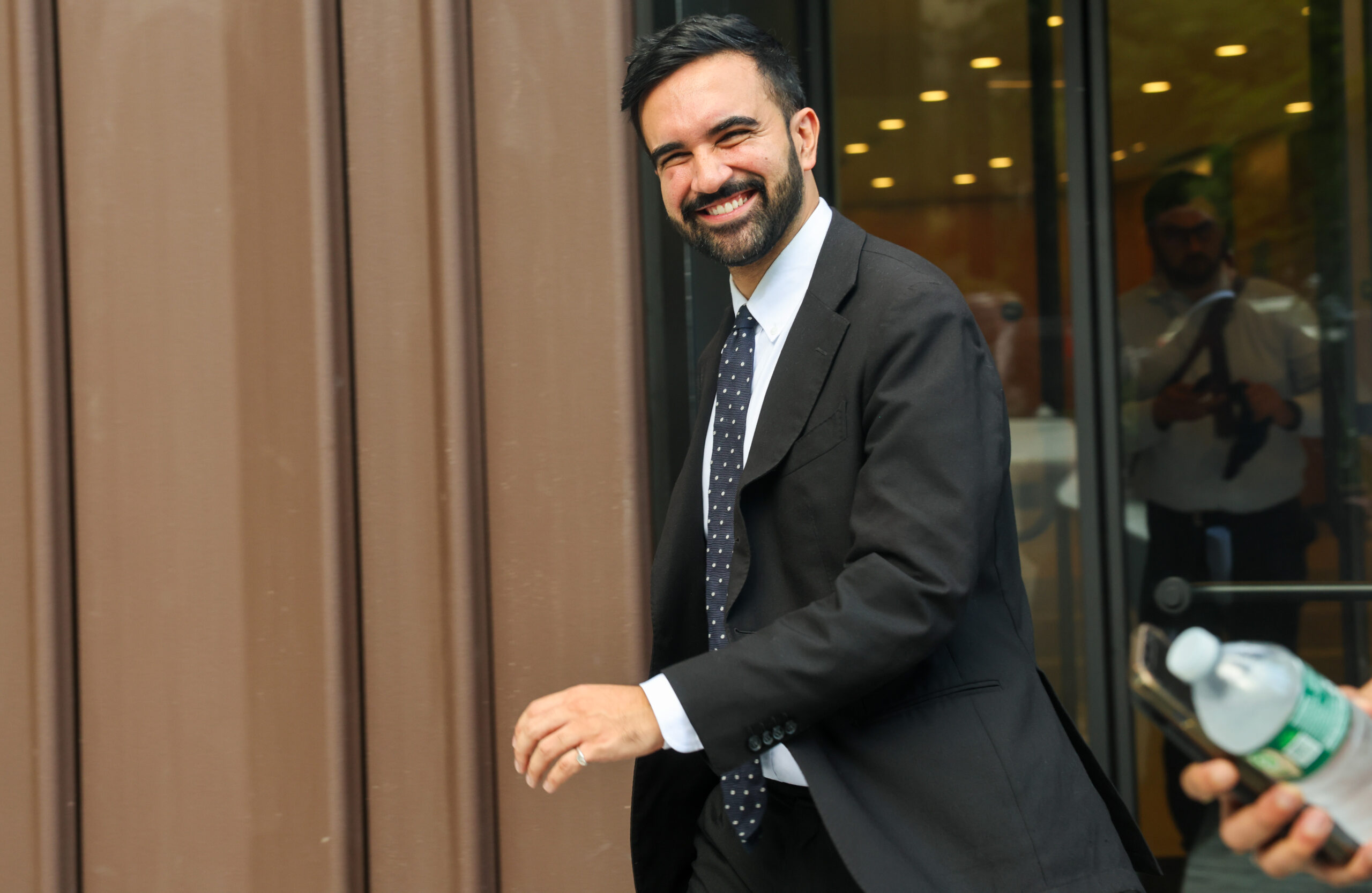
One Jewish political leader: ‘No one thinks it’s going to be good for the Jewish community to be hostile and to be in constant war with the next mayor’
PODCAST POLITICS
Former Obama staffers turned podcasters reemerge to lead anti-Israel chorus

Ben Rhodes and Tommy Vietor shaped the story of the Iran nuclear deal. Now they’re trying to turn Democrats away from Israel
After meeting with U.K. Prime Minister Starmer, the president said the U.S. will be getting more involved in providing aid
Tasos Katopodis/Getty Images
President Donald Trump
President Donald Trump decried the humanitarian situation in Gaza on Monday, telling reporters that he does “not particularly” agree with Israeli Prime Minister Benjamin Netanyahu’s assessment that there is no starvation taking place in the enclave.
“That’s real starvation stuff,” Trump said, following a meeting in Scotland with U.K. Prime Minister Keir Starmer. “I see it, and you can’t fake that.”
Trump said the U.S. will be getting “even more involved” in taking steps toward addressing hunger in Gaza, including by setting up “food centers.” A White House spokesperson declined to comment when asked for specifics about what this plan might entail. Trump said “all of the European nations” would be part of the project.
“We’re going to do it in conjunction with some very good people, and we’re going to supply funds,” said Trump.
Food distribution in Gaza is currently being operated by the Gaza Humanitarian Foundation, which is backed by both the U.S. and Israel. The organization has faced criticism for failing to meet the needs of Gazans, and scenes of chaos at the gates of its distribution centers have spread online.
Without mentioning GHF by name, Trump appeared to take aim at the existing aid mechanisms, saying that the new “food centers” will not have fences to keep people out.
“We’re also going to make sure that they don’t have barriers stopping people here. You’ve seen the areas where they actually have food, and the people are screaming for the food in there, they’re 35-40 yards away, and they won’t let them because they have lines that are set up,” said Trump. “And whether they’re set up by Hamas or whoever, but they’re very strict lines. We have to get rid of those lines.”
Trump blamed Hamas for the failure of recent ceasefire talks and for prolonging the war, including the humanitarian crisis. The president’s comments come after European leaders have pressed Israel to allow a freer flow of humanitarian aid into Gaza.
“We have a good group of countries who can help with the humanitarian needs, which is food, sanitation, some other things. It’s very difficult to deal with Hamas,” said Trump. “Hamas has become very difficult to deal with in the last couple of days, because they don’t want to give up these last 20 [hostages], because they think as long as they have them, they have protection. But I don’t think it can work that way.”
Fifty hostages remain in Gaza, and Israel believes at least 27 of them are dead. The most recent ceasefire proposal would only have seen the release of about half of the living hostages.
Trump also said Iran played a role in the failure of ceasefire talks, saying Iran “interjected themselves in this last negotiation.”
“I think they got involved in this negotiation, telling Hamas and giving Hamas signals and orders. And that’s not good,” Trump said. “For a country that just got wiped out, they’ve been sending very bad signals, very nasty signals. And they shouldn’t be doing that.”
In an interview with JI, Huckabee pinned the humanitarian issues in Gaza on Hamas and the U.N.

Maya Alleruzzo/AP Photo
U.S. Ambassador to Israel Mike Huckabee speaks to journalists with Director General of Soroka Medical Center Dr. Shlomi Codish, left, outside a hospital building that was struck by an Iranian missile, Thursday, June 26, 2025 in Beersheba, Israel.
Since his arrival in Israel in April, former Arkansas Gov. Mike Huckabee has made his mark as the first evangelical U.S. ambassador to Israel — and possibly the most effusive in his remarks about the Jewish state.
That may be why a leaked letter he wrote to Israeli Interior Minister Moshe Arbel last week, expressing “profound disappointment” that an issue delaying work visas for Christian organizations had gone unresolved and suggesting that Israelis may be treated in kind by the U.S., drew so much attention.
A day after the letter leaked, the ambassador visited Taybeh, a Palestinian village in the West Bank where there had been a fire in a field near a church, writing on X that “desecrating a church, mosque or synagogue is a crime against humanity and God,” and “I will demand those responsible be held accountable.” With Taybeh church leaders blaming settlers, Huckabee’s comments were interpreted in many media accounts as doing the same, though he later clarified that he was not attributing the fire to anyone.
But with the visa issue resolved and the world’s attention on the humanitarian situation in Gaza and the latest round of collapsed negotiations for a ceasefire and hostage-release deal, Huckabee was back to standing firmly behind Israel in an interview with Jewish Insider in his office at the U.S. Embassy in Jerusalem on Thursday. With an a guitar hanging on the wall behind him emblazoned with an American flag and President Donald Trump’s slogan “make America great again,” Huckabee pinned the humanitarian issues in Gaza on Hamas and the U.N and the failure of negotiations on Hamas, and was critical of other Western countries that have come out against Israel, accusing them of emboldening the Gazan terrorist group.
The interview has been condensed and edited for clarity.
Jewish Insider: There’s a lot of pressure on Israel over humanitarian aid in Gaza and claims that residents of Gaza are starving. Israel says that they are letting more food in but no one is distributing it, while much of the world doesn’t believe that. I want to ask you: Do you think there is really starvation in Gaza? What is really happening?
Ambassador Mike Huckabee: This very morning, I had a visit from someone who returned yesterday from three days in Gaza. He firsthand went and saw the [Gaza Humanitarian Foundation] feeding sites, talked to people, not only from the staffing and the distribution, but he talked to people in Gaza … He came to the conclusion, first of all, that absolute lies that are being told, not only about GHF and what they’re doing, but are also being told about the deprivation.
There are clearly people who need food and medicine. That’s not a doubt. But the biggest reason that people are not getting the food and medicine they need is that Hamas is doing its best to cause the people to suffer. They want to get the photos of the most disastrous consequences possible.
The photos that I also saw, which were very disturbing but also revealing, [were of] hundreds and hundreds of pallets of food that are sitting out in the sun ready to be distributed, but the U.N. won’t move them. Hundreds of trucks filled with food and medicine, and the U.N. claims that they’re trying to help. No, they’re not. They are as much a part of the problem, if not the biggest part of the problem there is. And this food could be distributed right now, but the U.N. isn’t doing it. The NGOs aren’t doing it, and the World Food Program isn’t doing it, because they just drop it off. Then, basically, they’re waiting on Hamas to come and steal it so [the group] can turn around and sell it to the people that ought to be getting it for free. It is a scam.
It is a disgrace and an outrage that the story that is being told is that GHF is killing people, and they’re not. They haven’t fired one round at anybody … It’s simply not true. It is sadly being reported sometimes because Hamas will release a news story and the Associated Press, CNN, The Washington Post, will gobble it up. They’ll print it without any verification … That’s what Israel is up against. It’s what the U.S. is up against every single day, with really, really horrible misinformation about what’s happening.
JI: Why do you think countries that purport to be friends of Israel and the U.S. — 26 countries signed a letter to Israel about the aid including the U.K., Canada, France — are believing Hamas?
MH: It’s hard for me to understand why they would do that without doing a little better job of verifying the information. If they would, they would have a totally different picture…
The other day there was the story of the 26 countries that came out and did this condemnation of Israel. If you read the news release, it’s all about Israel, all about what they haven’t done right, and a lot of the things in the story are just untrue. The biggest just shocker of it all, was that there was one brief mention of the fact that the war was started by Hamas on Oct. 7, as a passing reference, without really giving the qualifier that this war should have ended on Oct. the 8th, but Hamas doesn’t want it to, and they’re doing everything they can to make sure it doesn’t…
I’ve been shocked that very few other nations and even nonprofit organizations have been willing to stand up and help in the distribution of the food through the GHF, because the whole model was based on … No. 1, get food to people who are hungry, and No. 2, do it in a way that it doesn’t get stolen by Hamas. That’s been accomplished; over 85 million meals now have been served and continues to operate at almost 2 million meals a day.
It hasn’t been perfect. There have been hiccups, but [that happens] when you have that many people coming to a site and trying to get that much food out to people. Heck, you can go to Walmart on Christmas Eve … and it’s bedlam. Sometimes you stand in the long line and sometimes they ran out of what you wanted, but that’s true in the most efficient retailer on the planet. This is being done out in the middle of a desert for heaven’s sakes, and has really worked pretty doggone good.
Well, we just want people to get the truth and to get the food, but we don’t want Hamas to steal it, which is what they have done through the U.N. model, which has been an absolute disaster.
Maybe the U.N. is more interested in preserving the machinery of the U.N. than they are in feeding people. And I know that sounds harsh, but I absolutely am on the record for that, because when I see just thousands of pallets, thousands of tons of food sitting that could be consumed by people, it’s sitting there because the U.N. doesn’t really have any incentive to go out and actually get it to the people. They can just present that ‘We carried X number of trucks in.’ How many people got fed from that? Bigger question is, how many of those trucks or pallets are going to be looted by Hamas, who will then sell it to the people that are hungry?
JI: Do you think that there’s something that Israel needs to be doing differently at this point with regards to humanitarian aid?
MH: Get their message out more strongly. You know, they have a good message about what they’re trying to do. They’re trying to protect the people who are delivering the food. Food isn’t being delivered by the IDF. That was one of the key points; they didn’t want the military giving the food, because there’s a distrust, and we understand that, so we brought our own contractors in. But you can’t give food away in a war zone without having the military who’s prosecuting the war involved, at least on the perimeter, so that they can make sure that there’s a secure route in and a secure route out … Israel has a much better story to tell than the world is hearing, and it’s very frustrating, especially when so-called allies are attacking Israel and not even really mentioning Hamas.
JI: Hamas is degraded, but it’s still a force in Gaza and it’s still holding hostages. We’re talking a day after Hamas essentially rejected the temporary ceasefire and hostage deal being offered. But there was talk before that of turning the proposed 60-day ceasefire into a permanent one, even though Hamas has not been eliminated. How does the Trump administration see things going forward?
MH: The president has said repeatedly, without any equivocation, that Hamas can’t stay, and they can’t govern. … And frankly, it’s the right message. They can’t stay, they can’t govern. It would be like saying the Nazis can stay in Germany after World War II and have a hand in governing the future; nobody would have thought that was a good idea … Hamas built tunnels bigger than the London Underground so they could kill Jews. It’s a horrible, horrible story, and people need to put the blame where it falls, and that’s on Hamas and not on Israel.
JI: The negotiations seem to have reached a dead end. What more do you think that could be done to get the hostages home?
MH: If everyone in the world puts enough pressure on Hamas and says it won’t be just Israel and the U.S. coming to get you, it’ll be the whole world coming to get you. It’s like in the movie “Tombstone” and Wyatt Earp says, “I’m coming for you, and hell is coming with me.” That’s the kind of message that we need to say. The problem is Israel has made concession after concession. They have made offer after offer. The U.S. has intervened time and time and time again and gone to, I don’t know how many different talks, meetings and negotiations, but every time you will hear “we’re close,” we think we’re about there, and then Hamas changes all the conditions at the last minute, or just outright rejects them…
[On Wednesday, Hamas] went back to a position that [it] had abandoned in the past. So when there’s not a good faith negotiation going on, and then you have to ask: Whoever thought there was going to be? These are the people that murdered pregnant women in front of their families, and that raped women in front of their children. When people do things like that, these aren’t people you sit down and work out a negotiation to buy a home from or sell a car to. So, while everybody has hopes that this is going to end and soon, all the hostages returned and Hamas is gone, it’s up to Hamas whether or not that’s going to happen.
JI: Do you think the letter from the 26 countries emboldened Hamas to harden its position?
MH: That’s the real tragedy. It’s not just that they’re condemning Israel, but by condemning Israel and barely mentioning Hamas, they’re empowering Hamas to just keep hanging on.
There needs to be a collective across-the-whole-globe condemnation of Hamas with this clarity of message that what they’ve done is evil and holding hostages for nearly 700 days can’t be justified under any conditions … The families who have been put through a living hell over this deserve to be relieved.
JI: What about the Qataris? Do you think that the U.S. is doing enough to put pressure on them? It seems that they are doing everything they can to try to stay on President Trump’s good side.
MH: One thing they could do — if that’s their goal, to be in the president’s good graces — would be to be key in bringing this to a resolve. And I hope they do. I hope they use every influence they have, and they truly have some. I mean, they’ve been housing some of the Hamas leaders since all of this started. And Al Jazeera, which is one of the most despicable propaganda machines in the world, is financed by them…
I’ll leave [the details] to the headquarters in Washington, but nobody would be disappointed if [Qatar] did more.
JI: There’s also President Trump’s plan to to turn Gaza into a ‘riviera.’ There has not been a lot of progress. Where do things stand? Is the U.S. asking any countries to accept Gazan refugees?
MH: I think it’s more of an Israeli mission to make that decision. What the president has said is U.S. policy is that people who are there who want to leave should be free to leave. They shouldn’t be forced to leave and face expulsion, but neither should people be forced to stay. It ought to be an individual, personal decision on the part of the people who are right now living in what is anything less than an ideal circumstance.
JI: So you’re saying the U.S. is not involved in trying to find countries that will accept them?
MH: It’s not something that has been shared with me as to being an immediate issue. I know that there is definitely talk that this would be a great opportunity for people to have a fresh start that has been discussed at both the U.S. and Israeli levels. And I think everybody thinks that would be a wonderful thing if people had that option, and if countries were willing to say, “Hey, we’d love to have people come and be part of our labor force and immigrate to our country.” But I don’t know that there’s any specific plans that the U.S. has made on that…
The U.S. took a position several months ago when the president said … ’We’ll just take [Gaza] over. Immediately, within 24 hours, you had four or five Gulf countries saying, “Oh no, no, we want a piece of it. We’ll help govern.” People who don’t understand the president and how he works probably didn’t get it that the whole point was to force people to pony up and get in the game, and that’s exactly what happened…
What he does want to do is to see that these people have a chance for a better life, economically, and just from a security standpoint, they’re never going to have it under Hamas … Who runs [Gaza in the future]? Good question. Maybe it comes to the place where there’s a number of Middle Eastern countries that come and really make a partnership and a coalition and invest the money to rebuild it and give people an opportunity to have a decent and deserved life.
JI: There have been terrible clashes and massacres of the Druze minority in Syria in recent weeks. It seems from U.S. Ambassador to Turkey Tom Barrack, who’s also envoy to Syria, that the Trump administration still wants to give new Syrian President Ahmed al-Sharaa a chance. Is that causing friction with Israel, which tried to stop the violence against the Druze with airstrikes?
MH: Right now, the ceasefire has held for two days, which doesn’t seem like a lot of time, but in Syrian time, that’s a lot of time. There were some horrific things that have happened, especially to the Druze. The Israelis were very bold in standing up for the Druze and showing their support … literally going in and trying to help them with supplies and standing up assistance in every way they could. I thought it was an admirable thing, because the Druze have stood with Israel.
The head sheikh of the Druze community [Muwaffaq Tarif] was sitting right where you are on Tuesday afternoon. We had a very candid meeting about the situation they faced. They’re deeply grateful for Israel’s support. It did mean a lot to them that they weren’t just left hanging…
I’ve had several conversations with Ambassador Barrack over the course of the last week and before. It’s a fragile situation. Nobody’s going to deny that al-Sharaa is not exactly the person the U.S. would have picked … but he’s who we got.
What the president [Trump] did was, I think, bold, but also brilliant, at a time when al-Sharaa realized he doesn’t have the military or economic capacity to make Syria viable. He’s got to find a partner. He’s like the kid that goes to the prom and doesn’t have a date. Somebody’s going to go over there and say, “Would you dance with me?” Do we want it to be Iran, Russia, China? Absolutely not. President Trump comes in and says, “You can dance with me, but if you do, terrorism has to go away.” We can’t have these relationships with bad guys and remilitarize Syria and turn it into another nightmare like Assad. [Al-Sharaa] wisely decided that that was a better partnership than any offer he had. That’s where we are now.
Everybody has anxieties about where this could go, but we also are in a place where it could turn the corner, go very well, and we could see normalization between Syria and Israel, and that would have looked really unthinkable two years ago.
JI: You don’t think that the last couple weeks have taken a Syria-Israel agreement off the table?
MH: No, I don’t at all. I think it showed some of the challenges that we face. A lot of things happened because of misunderstanding and lack of communication. When [the Syrian military] went south of Damascus with artillery and tanks, it looked like they were getting ready for a military operation. They should have better communicated to the Israelis [and said,] “This is not a threat to you. We’re not moving this equipment in there because we’re going to come across the border.” You know, everybody should have talked to each other better.
JI: But Israel wants that part of Syria, the south, entirely demilitarized. Do you think that’s something that Syria would agree to?
MH: Yes, I do. You want Syria to have some security forces, you’ve got to have that, but they don’t need a full-scale military with an air force and all the others. I think there are regional interests that would help provide a level of security for them that does not require the standing up of a navy and army … The ideal is to help them to become stable economically.
JI: There was reporting after the Israeli strikes in Syria that some people in the Trump administration called Netanyahu a madman and asked, “What country are they going to bomb next?” Does that ring true to you?
MH: I think that people who know don’t talk, and people who talk don’t know … I hate this kind of stuff where a person pretends that he knows something and blabs it out. The president has been very clear, again, without equivocation, that he and [Netanyahu] are very close friends. I saw with my own eyes and was in the room when there was an extraordinary level of camaraderie and cooperation … For all this talk about how there’s this terrible clash and all I would say, look at what is on the record, what is sourced with firsthand source, and dismiss the nonsense that people say … I discount it as somebody who’s trying to be important when they’re not that important.
JI: Still, it seems like there’s a kernel of truth to there being some sort of push and pull within the Trump administration, and even more so within the broader Republican Party, about foreign policy and how to relate to Israel. Do you think this is going to be a problem for Israel?
MH: I really don’t see that. I mean, are there moments where Israel and the U.S. will disagree? Of course, [it] happens in partnerships, whether you’re in business or in marriage. I’ve been married 51 years. I guarantee you, my wife and I have had disagreements, sometimes, some pretty strong ones. She would tell you that she’s right and I’m always wrong. That’s part of the way we’ve stayed together 51 years. But it doesn’t mean that you don’t love each other and that you don’t stay together.
It’s part of the process of being adults that you hash out your differences. So I don’t have any doubts that there are times they may have a conversation that they’re not on the same page … I haven’t been privy to those, but that would be normal.
JI: We’re coming out of a complicated week for Israel and Christians. There was an issue with work visas for people working in Christian organizations. How is that going to work going forward?
MH: It really wasn’t a big issue, except within that one area. And fortunately, we have it all resolved, and everybody’s happy … Really the new arrangement is the old arrangement, and that was that the process through which people would be granted visas coming to teach or to be a part of a Christian organization. It’s been handled the same exact way for decades, and we were very clear. We didn’t want anything new … Just do what you’ve been doing. It’s been working very well. There have been no problems with it. And then all of a sudden, in January, before I came, apparently there was a change in the way it was processed, and it was creating an enormous level of bureaucratic problems for the organizations, and they were frustrated, and it involved deep investigations and a lot of paperwork and cost…
So we had a meeting with a minister. Thought it went well and thought everything was resolved. The problem continued to happen. So if we would call with one specific case, it would get resolved, but then another one would come up, and then another … So I sent a letter. It was terse, but I felt it was an honest assessment of, look, we thought this was fixed. It isn’t. Here’s the problems it’s causing. We did not leak the letter, but it got leaked. I don’t know who sent it out, but that’s beyond the point. It resulted in immediate attention…
The point that I was making was that at a time when Israel needs all the friends it can get, and some of the best friends you have, the evangelical Christians in America, you really don’t want to tell them they’re not welcome, and that’s the message that’s being sent … We have to get it fixed. So we did, so everybody’s happy.
JI: By unfortunate coincidence, this was the same week where an IDF shell hit the church in Gaza, and then there was a fire near a church in Taybeh that Palestinians blamed on Israel.
MH: I think that it was unfortunate they were all happening at the same time, but they’re totally separate and not tied together in any way. The State of Israel didn’t do anything in Taybeh. And you know, [the shelling of] the Church of the Holy Family was a horrible thing, but to their credit, [the IDF] admitted that it was a terrible mistake and they apologized for it. It’s not something you would ever want to see happen. But Israel doesn’t get enough credit for owning up to a mistake when they make one and trying to make it right, and I appreciate that about them.
JI: You hear these voices of people saying Israel is going to lose Christian support. And there are polls that show young evangelical support for Israel in decline. Do you think that Israel needs to be doing something differently or reaching out more?
MH: I think there is some lessening of the support … There are several things at play. One is the advent of a lot of Middle Eastern studies on college and university campuses, highly funded by Gulf states that are pouring billions of dollars into these programs, and they’re somewhat indoctrinating influences … That’s part of it, and a lot of it is that maybe there’s just not a good historical context for some of the younger people that they don’t know.
I’m convinced that one of the most important things people can do is to come to Israel and see for themselves. Don’t even take my word for it. You just come. That’s what I’ve been doing for 52 years. When I tell people my views of Israel, I tell them, look, it’s not something I read in a book or watched on a documentary or listened to some people give lectures. I’ve been coming here for 52 consecutive years. I’ve watched this country develop and grow and change … which I think had more credibility than just “I was at a march somewhere in Palo Alto [Calif.] and carried a sign for a few blocks. That’s something I hope happens more and more. The Jewish community has Birthright that brings a lot of young Jewish people here. There’s now an organization called Passages, and it’s bringing a lot of Christian kids here. I think that’s the most wonderful thing that can happen.
JI: Is the Trump administration still trying to negotiate with Iran? The Europeans said they will snap back sanctions if there isn’t an agreement by the end of August, and an Israeli official recently said the U.S. was hoping they would do it sooner. Is that true?
MH: I don’t know whether there’s any U.S. policy on hoping it would come sooner. Frankly, I’m just glad to hear the Europeans stand up for something that is right for a change. You know, they’ve been beating up Israel instead of Hamas for a while, and it’s kind of refreshing for them to realize that Iran’s playing games, and they’re still beating their chest and making threats that make no sense in light of what they’ve just been through.
In “Monty Python and the Holy Grail,” King Arthur cuts off [the Black Knight’s] arm, then his other arm, and then his legs. And the guy says, “‘tis but a scratch.” I mean, that’s Iran. They got their arms and legs cut off, and they’re hollering, “Just a scratch, you didn’t get me’” … And you just want to say to them, “Did you not get the message? You just got your brains kicked out, and this would be a good time for you to experience a little humility and recognize you’re never going to have a nuclear weapon. Everybody’s telling you this, even Europe is telling you this. They’re about to put sanctions on you because of it, and this might be a good time to reassess your aspirations to be a nuclear-weapon country.” So I’m grateful that Europe is talking this way, and if they do it in August, wonderful. That’s better than not doing it at all. And maybe — probably not, but maybe — Iran comes to [its] senses.
JI: You recently made an appearance in the courtroom for [Israeli Prime Minister Benjamin] Netanyahu’s trial with a Bugs Bunny doll. Was that something that the president wanted you to do, or was that your idea? Some Israelis are concerned that the country or the judiciary could be penalized over Netanyahu’s trial the way President Trump threatened to raise tariffs on Brazil over the corruption trials against former President Jair Bolsonaro. Is that a possibility?
MH: I have not heard anything like that … [Trump] had two very significant, substantial statements about the trials here because he himself has been put through an extraordinary level of lawfare. It’s just been shocking as an American citizen, to watch this, where they try to file charges, both civil and criminal, anywhere they can find a court that’ll take him, New York, the District of Columbia, Georgia, Florida…
I think what he’s trying to say is that if you’re going to want to change the government, do it at the ballot box. You don’t do it in the courtroom. What he saw happening to the prime minister here, he saw as a mirror reflection of what was going on there [in the U.S.]. And it’s not so much that it’s an accusation about the courts or their integrity here, but the act of prosecuting and the tenacity of prosecution while a prime minister is going through the middle of two wars and trying to get hostages released.
As far as my being there, I hadn’t seen a circus in a long time, so I decided to go.
Pou is one of the few House Democrats representing a district that President Trump carried in 2024
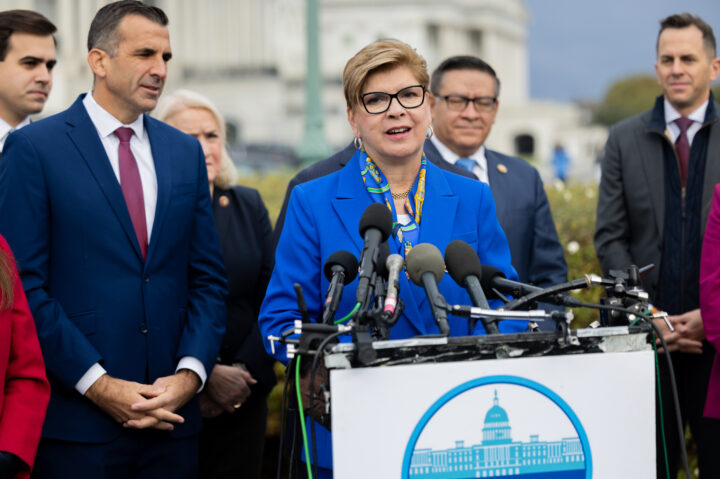
Nathan Posner/Anadolu via Getty Images
Rep.-elect Nellie Pou (D-NJ) speaks during a press conference introducing new members of the Congressional Hispanic Caucus in Washington, DC on November 15, 2024.
The leading Republican candidates in a New Jersey swing district that President Donald Trump narrowly carried in 2024 hold questionable track records on Israel and antisemitism as the GOP targets the district in the midterms next year.
Rosemary Pino, the Clifton, N.J., City Council member who recently entered the race against Rep. Nellie Pou (D-NJ), posted a video last month from a Palestinian flag-raising event in Clifton where speakers accused Israel of genocide.
“The Palestine Flag Raising event was more than a gathering. To everyone who showed up, spoke up, and raised their voices alongside the flag thank you. Your presence matters. Your solidarity matters,” Pino wrote in a Facebook post she shared alongside clips from the event.
The event, hosted by the Palestinian American Community Center in Clifton, included denunciations by several speakers of Israel, and featured a condemnation of the Trump administration’s deportation policies that it says are aimed at combating antisemitism.
Speakers accused Israel of “genocide” in Gaza and of deliberately manufacturing a famine in the territory, which a speaker described as a “war crime,” and called for “no money for wars.”
Another speaker at the event condemned the Trump administration’s detention of Columbia University anti-Israel activist Mahmoud Khalil, saying, “His story is a reminder that this system seeks to fracture us and oppress and repress our people. It’s part of a broader system designed to criminalize dissent, fracture our communities and punish those who resist it.”
Pino said in a statement to Jewish Insider, “The City of Clifton conducts more than a dozen flag raisings every year. As a Councilwoman, I attend as many of the flag raisings as I can. I attend the flag raisings to show that I care about the various communities in our city, not as a political nor ideological statement.”
“I support the State of Israel, its right to exist, and its right to defend itself,” she added. “I believe that what happened on October 7th was a horrific and evil terrorist act by Hamas. Israel is a strong ally of the United States, and I believe we must maintain that alliance, not cut it.”
Pino continued, “Like President Trump, I support a ceasefire and an end to the hostilities in Gaza. I support a two-state solution where Hamas’s rule of terror ends. I support ensuring humanitarian aid is made available to those who need it. I believe President Trump is working to bring lasting peace to the region, and I support those efforts.”
The PACC organization has a long record of anti-Israel activity. The group sent a bus of community members to protest Israeli Prime Minister Benjamin Netanyahu’s 2024 speech to Congress, which devolved into violence and vandalism of D.C.’s Union Station, and the group’s magazine published a poem in its March 2024 issue advocating for a free Palestine “from the river to the sea” — a call for the elimination of Israel.
The flag-raising event Pino attended did not, however, include some of the eliminationist anti-Israel and anti-American rhetoric and slogans that have proliferated at other pro-Palestinian events in the past two years, and speakers also called for peace, justice and security for all, and recited the Pledge of Allegiance.
In 2023, Pino, as a member of the city council, also expressed concerns about legislation that would have adopted the International Holocaust Remembrance Alliance’s working definition of antisemitism in Clifton, highlighting concerns from the Arab-American community, according to contemporaneous news reports.
The resolution was ultimately tabled and never passed the city council. Pino also argued against assigning the resolution to be discussed by the Civil Rights Committee, which she chaired, saying the committee was too new at the time and not “equipped to handle this,” adding that “it’s only right that we not pawn it off to the committee.”
Pino told JI, “I strongly condemn antisemitism in all shapes and forms.”
“At the time, there were concerns in the community regarding the [First] Amendment implications of that specific resolution. Although that particular resolution did not pass, the Civil Rights Committee did, in fact, take up the issue,” she continued. “The Committee, and subsequently the City Council, passed a resolution which explicitly condemned antisemitism and called for renewed efforts to combat it in the City of Clifton.”
The 9th Congressional District has significant Jewish and Palestinian populations, making Israel policy and antisemitism potentially critical flashpoints in the upcoming race. It is also an unexpectedly competitive battleground, swinging from backing President Joe Biden by 19 points in the 2020 presidential election to narrowly backing Trump four years later.
Pou is one of only 13 House Democrats representing a district that Trump carried in 2024.
The other Republican candidate in the race, Billy Prempeh, who was the 2024 GOP nominee, was endorsed by the New Jersey chapter of the Council on American-Islamic Relations last year, supported cutting off U.S. aid to Israel to stop the war in Gaza, opposed Israeli strikes on Gaza and opposed the Antisemitism Awareness Act.
Mayor Andre Sayegh, a potential primary challenger to Pou, also attended the flag-raising event, and delivered a speech.
Pou is a supporter of Israel, though she has a mixed voting record in the House on issues related to Israel and antisemitism.
Press Secretary Karoline Leavitt: ‘In both accounts, the president quickly called the prime minister to rectify those situations’

ANDREW CABALLERO-REYNOLDS/AFP via Getty Images
President Donald Trump (R) meets with Israel's Prime Minister Benjamin Netanyahu in the Oval Office of the White House in Washington, DC, on February 4, 2025.
White House Press Secretary Karoline Leavitt said on Monday that President Donald Trump was “caught off guard” by recent Israeli actions in Syria and Gaza, noting that he had called Israeli Prime Minister Benjamin Netanyahu to air his concerns.
Leavitt made the comments after being asked if the president had “expressed his frustration” with Netanyahu directly over the fatal attack on the Holy Family Catholic Church, the only Catholic church in Gaza, and the IDF’s move to strike government buildings in Damascus, Syria’s capital, last week during sectarian clashes that drew in Syrian government forces and left more than 1,000 people dead. The strikes on Syria came as the Trump administration has thrown its full support behind the new government and urged Israel to normalize relations with the war-torn country.
“The president enjoys a good working relationship with Prime Minister Bibi Netanyahu and stays in frequent communication with him. He was caught off guard by the bombing in Syria and also the bombing of the Catholic Church in Gaza,” Leavitt told reporters outside the White House.
The White House press secretary went on to note that Trump and Secretary of State Marco Rubio stepped in to prevent an escalation in Damascus and to demand answers on the church strike.
“In both accounts, the president quickly called the prime minister to rectify those situations, and we saw Secretary Rubio intervene when it came to Syria. We saw a deescalation there. And as for the bombing of the Catholic church in Gaza, the prime minister did put out a statement saying this was an accident and they deeply regretted that action on behalf of the State of Israel following his conversation with the president,” Leavitt explained.
The strike on the church killed three and injured 10, including a priest.
Leavitt later added when asked about the church bombing, “The president’s message on this conflict we’ve seen in the Middle East taking place for far too long, that has become quite brutal, especially in recent days, you’ve seen reports of more people dying. I think the president never likes to see that. He wants the killing to end.”
Earlier Monday, U.S. Ambassador to Turkey Tom Barrack, who is also serving as special envoy to Syria, criticized Israel’s actions in the country, telling the Associated Press that Jerusalem’s intervention in Syria “creates another very confusing chapter” in the region and “came at a very bad time.”
“The United States was not asked, nor did they participate in that decision, nor was it the United States’ responsibility in matters that Israel feels is for its own self-defense,” Barrack told the outlet of Israel’s strikes on Syria.
Barrack conceded that “both sides did the best they can” in negotiations leading up to the ceasefire he announced between Israel and Syria over the weekend, praising the two countries for trying to find common ground on issues such as the transfer of Syrian forces and military equipment from Damascus to Sweida, where members of the Druze religious minority have been under frequent attacks from Sunni Muslim Bedouin tribes.
According to a new poll, Republicans remain the strongest advocates of a muscular American role in world affairs, with 52% supporting America taking a leading role and 47% opposed
BRENDAN SMIALOWSKI/AFP via Getty Images
US Senator Markwayne Mullin (R-OK) (L) and US Senator John Thune (R-SD) (R) listen as US President Donald Trump speaks during a dinner for Republican US Senators in the State Dining Room of the White House July 18, 2025, in Washington, DC.
A newly released CNN poll, conducted this month, illustrates the resilience of a hawkish DNA within the Republican Party and among its voters even amid the rise of an isolationist strain that has sought to gain influence in the GOP during President Donald Trump’s second term.
The poll asked respondents: “Do you think the United States should or should not take the leading role among all other countries in the world in trying to solve international problems?” Overall, 43% took the more active approach, while 56% took a more isolationist view.
Republicans, however, remained the strongest advocates of a muscular American role in world affairs, with 52% supporting America taking a leading role and 47% opposed. By contrast, just 42% of Democrats and 39% of independents shared the more hawkish worldview.
Notably, the shift in more isolationist sentiment was almost entirely driven by Democrats and independents since the last CNN survey in March, which found majority support for significant American global engagement. In the March survey, a 57% majority of Democrats preferred more American involvement in the world, a number that dropped 15 points in the last four months. The Republican share of those preferring American engagement remained steady at 52%.
The results from the CNN polls suggest there’s a more committed core of Republican-voting hawks that is more resilient than the shifting political winds, whereas the Democratic foreign policy worldview appears more dependent on partisanship and what’s happening in the news at the time.
In March, at the time of the first CNN poll, Democrats showed a surge of support for foreign engagement — in large part, because they were responding to the hostile reception Trump delivered at the time to Ukrainian President Volodymyr Zelensky, who was seeking American military aid to his country. Back then, Trump wrongly blamed Zelensky for causing the war, and attacked him as a dictator in the run-up to the ugly confrontation at the White House. It was the high point of isolationism in Trump’s second term — and prompted an uptick of hawkishness among Democrats.
But since then, Trump has sharpened his rhetoric against Russian President Vladimir Putin and agreed to send Ukraine offensive weapons, in a reversal of his previous reluctance. He also decided to strike Iran’s nuclear facilities despite alarmism from an isolationist faction within his party, which turned out to be a major military (and political) success.
A recent Echelon Insights survey underscored that Trump’s hawkish turn has broadened and deepened support for strongly supporting American allies within the party. A clear 49-36% of Trump voters, asked if they supported continuing to give weapons to Ukraine, said yes. When informed that it was Trump’s decision to aid Ukraine further, nearly two-thirds of Trump supporters embraced the decision.
The actions on Capitol Hill are consistent with the polling. When Rep. Marjorie Taylor Greene (R-GA) proposed a series of amendments cutting off aid to foreign allies, the vast majority of Republicans voted against them. Even on her proposal to cut military aid for Ukraine, 141 of the 217 House Republicans took the pro-Ukraine side.
And when Greene proposed to block missile defense funding that the U.S. gives to Israel, only one other Republican, Rep. Thomas Massie (R-KY), joined her. Indeed, there were more Democrats who joined with MTG (four) than Republicans — in a sign of the “horseshoe theory” of the far left and far right uniting in their extremism.
Trump’s decision to strike Iran’s nuclear program appears to have created a momentum shift within the party, pushing back the faction of isolationists seeking to gain influence in the administration but also building support for a familiar brand of muscular engagement that has defined the party for generations.
The event, which is drawing some of the world’s leading tech and energy moguls, aims to turn Pennsylvania into an AI hub

Kayla Bartkowski/Getty Images
President Donald Trump attends the NCAA Division I Wrestling Championship with Sen. Dave McCormick (R-PA) on March 22, 2025 in Philadelphia, Pennsylvania.
PITTSBURGH — A who’s who of U.S. and Gulf officials and some of the world’s leading tech and energy investors are en route to Pittsburgh ahead of Sen. Dave McCormick’s (R-PA) first-ever innovation summit on Tuesday, where he and President Donald Trump will announce $70 billion in investments aimed at turning Pennsylvania into a hub for artificial intelligence and new energy technologies.
More than 60 CEOs and scores of top energy and AI investors are slated to be at the freshman senator’s inaugural Pennsylvania Energy and Innovation Summit at Carnegie Mellon University, home to one of the world’s most advanced AI programs. Among the CEOs expected to appear are BlackRock’s Larry Fink, Palantir’s Alex Karp, Bridgewater’s Nir Bar Dea, Anthropic’s Dario Amodei, Amazon Web Services’ Matt Garman, Bechtel’s Brendan Bechtel, Chevron’s Mike Wirth, GIC’s Lim Chow Kiat, Brookfield’s Bruce Flatt, CPP Investments’ John Graham, EQT’s Toby Rice and ExxonMobil’s Darren Woods. (McCormick’s wife, Dina Powell McCormick, is on the ExxonMobil board of directors.)
Others on the guest list include Ruth Porat, Alphabet’s president and chief investment officer; Raj Agrawal, global head of real assets at KKR; and Khaldoon Khalifa Al Mubarak, managing director and group CEO of Mubadala Investment Company.
Gov. Josh Shapiro, a Democrat, and Sen. John Fetterman (D-PA) will both be in attendance, with Shapiro taking part in a midday panel discussion alongside McCormick titled, “Investing Big in Pennsylvania: A Case Study.” Several state legislators and members of Pennsylvania’s congressional delegation — including Rep. John Joyce (R-PA) of the House Energy Committee and GOP state Sen. Kim Ward, president pro tempore of the body — are also participating.
At least seven senior Trump administration officials are expected in Pittsburgh for Tuesday’s gathering, including White House Chief of Staff Susie Wiles, Treasury Secretary Scott Bessent, Interior Secretary Doug Burgum, Commerce Secretary Howard Lutnick, Energy Secretary Chris Wright, EPA Administrator Lee Zeldin and White House AI and crypto czar David Sacks.
McCormick told Jewish Insider in March that organizing this summit was a focus of his early work in the Senate, which he said involved “thinking about big opportunities to change the trajectory of Pennsylvania.” He pointed to “the intersection of artificial intelligence and energy” and potential areas of growth in the state for the defense industry.
“We’ve got a huge opportunity in defense. The defense budget is going to increase. Pennsylvania has an enormous opportunity to be key to shipbuilding with our shipyard, robotics with Pittsburgh AI and manufacturing of weapons and ammunition,” he said at the time.
Another reason for the summit was to help make Pittsburgh and the Keystone State more competitive with neighboring states in what McCormick described to The Wall Street Journal this month as a “data-center arms race” that pits parts of Pennsylvania against Northern Virginia and areas of Ohio, including Columbus.
“We haven’t been competing adequately. For God’s sake, Columbus? What’s Ohio got on Pennsylvania?” McCormick asked, referencing Google’s announcement in June of a $2.3 billion in data centers based in Columbus and surrounding Lancaster and New Albany.
The two leaders were in New Jersey on Sunday for the match between Chelsea FC and Paris Saint-Germain

Robbie Jay Barratt - AMA/Getty Images
President Donald Trump and first lady Melania Trump with FIFA President Gianni Infantino during the FIFA Club World Cup 2025 final match between Chelsea FC and Paris Saint-Germain at MetLife Stadium on July 13, 2025 in East Rutherford, N.J.
President Donald Trump and Qatari Emir Sheikh Tamim bin Hamad Al Thani both attended the FIFA Club World Cup 2025 Final match on Sunday between Chelsea FC and Paris Saint-Germain, the latter of which is owned by Al Thani, at MetLife Stadium in New Jersey, where the two leaders were reportedly planning to meet.
Bishara Bahbah, the national chair of Arab Americans for Trump who is facilitating talks between Hamas and Israel for the Trump administration, said ahead of the match that the two leaders planned to meet to discuss ceasefire and hostage-relief efforts.
Others spotted at the match included Jared Kushner, the president’s son-in-law and architect of the Abraham Accords, New England Patriots owner Robert Kraft and White House Middle East envoy Steve Witkoff, who told reporters ahead of the game that he planned to meet with Qatari officials on the sidelines of the match in East Rutherford.
Witkoff’s meetings come as indirect negotiations in Doha, Qatar, between Israel and Hamas to reach a temporary ceasefire remain stalled. Witkoff had initially planned to travel to Doha last week to participate in talks, but the trip was postponed as negotiators remain deadlocked over a series of issues, including Israeli control over key corridors in the Gaza Strip.
Trump and Al Thani last met in May in Doha during the president’s trip to the Middle East that also included stops in Saudi Arabia and the United Arab Emirates.
The GOP lawmakers’ comments come after the president, taking a tougher line against Putin, overruled top Defense Department officials

BRENDAN SMIALOWSKI/AFP via Getty Images
US Under Secretary of Defense for Policy Elbridge Colby (R) and US Secretary of Defense Pete Hegseth look on during a meeting with Foreign Affairs Minister of Peru Elmer Schialer and Defense Minister of Peru Walter Astudillo at the Pentagon in Washington, DC on May 5, 2025.
Senate Republicans on Tuesday emphasized that Trump administration officials need to follow the president’s lead on foreign policy, after President Donald Trump publicly overrode a Defense Department-instituted halt on weapons for Ukraine.
The public back-and-forth indicated discord between the president and the Pentagon. Trump on Tuesday appeared to suggest he was out of the loop about the Ukraine military freeze; when a reporter asked him who had ordered the halt, Trump responded, “I don’t know, you tell me.”
Top Pentagon policy official Elbridge Colby reportedly led the move, citing a review allegedly showing U.S. missile defense interceptor shortages. Secretary of Defense Pete Hegseth approved the decision without informing the White House, CNN reported, and Trump did not specifically direct him to halt the weapons transfers. Politico reported that a series of other unilateral moves by Colby have surprised and frustrated Trump administration officials and U.S. allies.
Trump’s own policy on Ukraine as it defends itself against Russian aggression has been inconsistent since taking office, but in recent months he has grown publicly frustrated with Russian President Vladimir Putin’s approach to the war. Trump is now also backing a bipartisan Senate sanctions bill targeting Russia, according to the bill’s lead sponsor, Sen. Lindsey Graham (R-SC).
Republican hawks on Capitol Hill praised Trump’s decision to reinstate U.S. aid to the country, with several warning Pentagon officials against working at cross purposes with the president, though they declined to directly address the behind-the scenes machinations.
“Policy on defense and otherwise, it’s clear, is set by the president, it’s not set by his underlings,” Sen. John Kennedy (R-LA) told Jewish Insider, adding that he thinks that Trump’s own position on the issue has hardened because “President Trump is rapidly becoming fed up with President Putin and starting to see him for what he is, which is a pirate and a liar” who only responds to pressure.
Kennedy denied that the Pentagon had been at odds with Trump, however, adding, “Whether you like it or dislike it, the people who generally get crosswise with the president that work for him only do it one time.”
Sen. Thom Tillis (R-NC) told JI, “Generally speaking, I don’t think [Trump] likes people getting out ahead of him. So they need to coordinate that. I assume they did, it could have just been one situation, but you need to coordinate with the president.”
Tillis added that “anything that cuts short or challenges Ukraine’s resupply and support is a bad idea, and it’ll be a disastrous mistake.”
Sen. Mike Rounds (R-SD) told JI, “I’m in favor of additional aid for Ukraine. Whether it is simply a matter of having the Department of Defense get very clear orders from the president, or if it’s a matter of clarifying for the rest of the world to hear that we’re not walking away from Ukraine, I think it’s a very important message to send.”
Sen. Mitch McConnell (R-KY), the former Republican Senate leader, offered the most pointed criticism of those in the administration who have advocated for cutting off aid to Ukraine.
“This time, the President will need to reject calls from isolationists and restrainers within his Administration to limit these deliveries to defensive weapons,” McConnell said in a statement. “And he should disregard those at DoD who invoke munitions shortages to block aid while refusing to invest seriously in expanding munitions production. The self-indulgent policymaking of restrainers — from Ukraine to AUKUS — has so often required the President to clean up his staff’s messes.”
According to Politico, Colby independently ordered a review of the AUKUS submarine pact with the U.K. and Australia, which also surprised other elements of the Trump administration.
Sen. Roger Wicker (R-MS), the chair of the Senate Armed Services Committee, declined to comment on “palace intrigue” and said he was “just glad to see Washington, D.C., on a bipartisan basis moving in the right direction in favor of the good guys.”
“Facts become clearer, and more and more people, including the president and members of the administration, are coming to the realization that Putin wants nothing but conquest, and if he gets it in Ukraine, he won’t stop there,” Wicker told JI. “So it’s just a matter of the truth coming to light.”
Sen. Ted Budd (R-NC) suggested that the change had come about as a result of new information, rather than discord within the administration.
“Well, I think all of us have the right to change your mind when you have new information, so he’s not happy with the situation,” Budd said. “Again, I think all of our hearts are supportive of Ukraine. We want to make sure they have the right leadership, and transparency that they’re doing the right thing. So I think he’s making the right decision with the information that he’s given in real time.”
Sen. Markwayne Mullin (R-OK) said he wasn’t familiar with the exchange between Trump and the Pentagon, but noted concerns about U.S. stockpiles.
“I don’t know what the back-and-forth is,” Mullin said. “I know what we’re trying to do right now is build up our stockpiles, because we let things get pretty low with some of our missile systems, but I haven’t heard the back and forth between Trump and the Pentagon.”
Among Democrats, Sen. Jeanne Shaheen (D-NH), the ranking member of the Senate Foreign Relations Committee, called out Colby and Hegseth by name.
“I am pleased that President Trump appears to have reversed course on the dangerous and shortsighted decision made by Secretary Hegseth and Under Secretary Colby to continue critical assistance to Ukraine,” Shaheen said in a statement. “Unfortunately, last week’s decision sent exactly the wrong message. And it came with a tragic human cost.”
Analysts outside the administration emphasized that Trump’s policy is his own and hard-liners inside the Pentagon should be mindful that their views are not necessarily the same as Trump’s.
“I think over the last few years, it has been very, very clear that the only person who speaks for President Trump is President Trump,” Carrie Filipetti, the executive director of the Vandenberg Coalition and an official in the first Trump administration, told JI. “There are a lot of people, specifically within the Pentagon, that are much more ideological, who have assumed that President Trump shares their ideology, when really President Trump has always been much more flexible and responsive.”
Filipetti added that, from her experience in the first Trump administration, the president could get frustrated when officials “tried to speak for him” or “got over their skis and assumed that they knew the direction he was going in.”
She said that the administration’s recent moves, as well as some of Trump’s hawkish policies dating back to his first administration, show that the calculated use of force and economic power are key to Trump’s foreign policy.
“This is really a vindication of what Trump has always said was America First, which includes the willingness to use force if he can see how it will prevent a longer-term conflict,” Fillipetti explained. “Right now, I think the people who have pushed for a more hawkish policy are gaining more influence, partially because they’re proving that the goal was never to start wars. The goal was to end wars by using force and strength as a deterrent.”
Heather Conley, a nonresident senior fellow at the American Enterprise Institute and the former president of the German Marshall Fund, said it seemed clear that the Pentagon had not coordinated its moves with other parts of the administration or Congress, catching the White House off-guard.
“I think this was probably a very important lesson that the senior leadership in the Pentagon learned: that there’s no independent review, that these things are all connected and are all highly political and need to be coordinated with the White House, and Congress, most certainly, as well,” Conley said. “I think this will be a reinforcing lesson for the Pentagon to not get ahead of the president.”
Referencing Colby specifically, Conley said, “He may have very strong views about what is needed, but the president is shaping this policy, he’s shaping it every hour and every day, and that means it’s moving very quickly. … [Administration officials] have to be in alignment for there to be success. And they also may not be able to pursue their own independent view of where things should go.”
Conley said that the capability review that prompted the cutoff was necessary — given proper coordination — for any administration, in light of the multiple draws on American weapons reserves.
She said that the situation highlights the need for the U.S. to significantly accelerate its missile-defense production capacity and find ways to prompt Ukraine to expand its domestic production capacity, explaining that the U.S. lacks the ability to produce sufficient interceptors to cover Ukraine, the Middle East and potentially Taiwan.
Conley also noted that this isn’t the first time the Pentagon has appeared to be acting out of step with the White House, pointing to moves by Hegseth on Ukraine policy dating back to February.
Administration spokespeople have denied any discord or lack of coordination within the administration.
Kingsley Wilson, the Pentagon’s press secretary, told CNN in a statement that said in part, “Secretary Hegseth provided a framework for the President to evaluate military aid shipments and assess existing stockpiles. This effort was coordinated across government.” White House press secretary Karoline Leavitt said that Trump “has full confidence in the secretary of defense.”
The Department of Defense and National Security Council did not respond to requests for comment.
Jewish Insider’s congressional correspondent Emily Jacobs contributed reporting.
Memos from former Christie and Cuomo aide Maria Comella urged the former VP to more vocally call out the far-left elements of her party to win the election

Anna Moneymaker/Getty Images
Vice President Kamala Harris speaks alongside Democratic vice presidential candidate Minnesota Gov. Tim Walz at a campaign rally at the Fiserv Forum on August 20, 2024 in Milwaukee, Wisconsin.
In the closing weeks of former Vice President Kamala Harris’ presidential run last year, her campaign solicited guidance on how to win over the moderate and persuadable Republican voters she would need to defeat Donald Trump.
One of the chief ways she could do that, according to a memo from political strategist Maria Comella, would be to tout her support for Israel — and make clear she disagreed with people in the Democratic Party who compared Israel to Hamas.
“It is wrong to draw moral equivalency between a terrorist organization in Hamas and the State of Israel. No terrorist organization should be celebrated. Our support for Israel and her right to self defense should not be questioned,” Comella, a close advisor to former New Jersey Gov. Chris Christie, a Republican, and a onetime chief of staff to former New York Gov. Andrew Cuomo, a Democrat, wrote in one of four memos she sent to the Harris campaign in the fall.
The memos were published by Politico and reported in a new book about the 2024 race by the political journalists Josh Dawsey, Tyler Pager and Isaac Arnsdorf. The authors wrote that Comella did not feel her ideas were taken seriously. (Comella did not respond to a request for comment on Tuesday.)
The messaging on Israel was part of a broader pitch by Comella for Harris to gain legitimacy with moderate swing voters by demonstrating a willingness to “call out your own party when it matters.”
She could also do this, Comella argued, by drawing a contrast with the far left about the importance of America’s role in the world.
“Trump wants us to act like just any other country with no special role in the world while too many on the far left don’t want to acknowledge the fundamental goodness of our country and its people,” wrote Comella, who also advised Harris to make clear that Democrats who use hateful language to describe Trump voters are not being helpful.
In another memo, Comella described a “persuasion campaign that needs to be waged” to win over anti-Trump Republicans, anti-incumbent independents and Republicans who are “soft or still skeptical” of Trump. She advised Harris to draw a greater distinction between herself and former President Joe Biden.
The ad, airing on broadcast TV in the Washington area, says the U.S. strikes on Iran ‘made the world safer … Only President Trump had the courage to stop them’

Ethan Miller/Getty Images
President Donald Trump is introduced at the Republican Jewish Coalition's Annual Leadership Summit at The Venetian Resort Las Vegas on October 28, 2023 in Las Vegas, Nevada.
The Republican Jewish Coalition is launching a new television ad buy in the Washington area timed to coincide with Israeli Prime Minister Benjamin Netanyahu’s visit this week praising President Donald Trump’s decision to support Israel in striking Iran’s nuclear program.
The 30-second spot, titled “Peacemaker,” will air on Fox News, Fox Business Network and Newsmax through the end of this week, after the conclusion of Netanyahu’s U.S. visit.
“President Trump’s strike on Iran’s nuclear weapons facilities made the world safer. For decades, Iran has waged war on America, even plotting to assassinate President Trump. Their goal: death to America, destruction of Israel, terror. Only President Trump had the courage to stop them,” the narrator says in the ad.
RJC’s national political director, Sam Markstein, told Jewish Insider, “Certainly, eliminating or obliterating Iran’s nuclear weapons program should go down as one of the great peacemaking actions ever taken by any president.”
“If you believe in Western civilization, if you believe in America, if you believe in support for Israel, all the things that generations of our people have cared about, there’s no question that this action taken by Donald Trump will be heralded by generations to come. It really is hard to quantify how important and legacy defining this will be — not just for the president himself, but for our country and for Israel,” Markstein said.
Markstein said the organization created the ad “specifically to align with the prime minister’s trip to Washington,” which is Netanyahu’s third visit since Trump began his second term. The frequency in visits, Markstein argued, serves as evidence of “how the cooperation is so intertwined and how the relationship [between the U.S. and Israel] has been strengthened so quickly at this decisive time in history.”
Plus, NEA nixes collaboration with the ADL
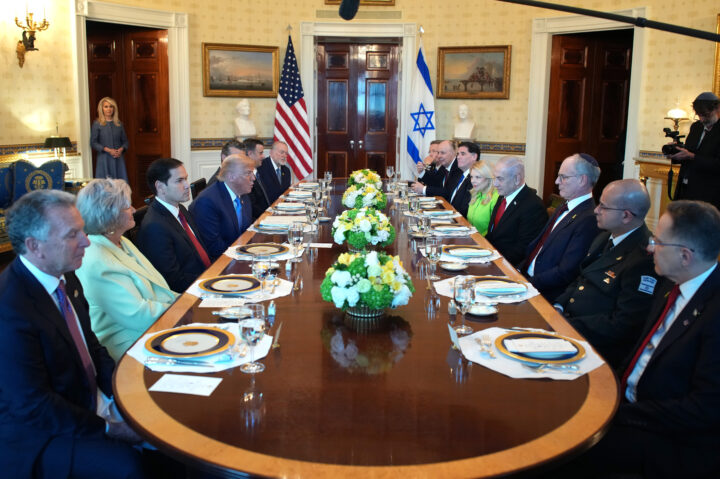
Andrew Harnik/Getty Images
President Donald Trump hosts Israeli Prime Minister Benjamin Netanyahu for a dinner in the Blue Room of the White House on July 7, 2025, in Washington, DC. Trump is hosting Netanyahu to discuss a potential ceasefire agreement to end the fighting in Gaza.
Good Tuesday morning.
In today’s Daily Kickoff, we report on last night’s meeting between Israeli Prime Minister Benjamin Netanyahu and President Donald Trump, and cover the National Education Association’s recent passage of a measure banning coordination with the Anti-Defamation League. We look at concerns from Jewish community security groups and congressional Democrats over plans to shrink the Department of Homeland Security’s Office of Intelligence and Analysis, and spotlight Pepperdine University’s new Middle East policy graduate program, which is being launched in partnership with The Washington Institute for Near East Policy. Also in today’s Daily Kickoff: Sam Altman, Effie Phillips-Staley and Amb. Tom Barrack.
What We’re Watching
- Israeli Prime Minister Benjamin Netanyahu’s Washington trip continues today. He’s slated to meet with Vice President JD Vance, and will head to Capitol Hill later this morning for meetings with House and Senate leadership, including Senate Majority Leader John Thune (R-SD), Senate Minority Leader Chuck Schumer (D-NY) and House Speaker Mike Johnson (R-LA).
- Elsewhere on the Hill, the Senate Armed Services Committee’s subcommittees continue their markups of the NDAA.
- In Sun Valley, Idaho, the annual Allen & Co. gathering formally kicks off today. Look out for the paparazzi photos of vest- and fleece-wearing tech and media moguls arriving at the Sun Valley Lodge.
What You Should Know
A QUICK WORD WITH JI’S MARC ROD
Israeli Prime Minister Benjamin Netanyahu’s third visit to Washington since the start of the Trump presidency kicked off Monday with closed-door meetings with President Donald Trump, Secretary of State Marco Rubio and Middle East envoy Steve Witkoff.
Trump and Netanyahu were on warm terms during remarks to the press ahead of their dinner. Netanyahu offered effusive praise for Trump for the U.S. strikes on Iran’s nuclear facilities and said he nominated Trump for a Nobel Peace Prize, as well as following Trump’s lead in expressing openness to the new Syrian government.
Trump, for his part, deferred to Netanyahu on a question about a two-state solution. “We’ll work out a peace with our Palestinian neighbors, those who don’t want to destroy us,” Netanyahu said. “I think the Palestinians should have all the powers to govern themselves, but none of the powers to threaten us. That means that certain powers like overall security will always remain in our hands. Now that is a fact and no one in Israel will agree to anything else because we don’t commit suicide.”
White House Press Secretary Karoline Leavitt told reporters earlier in the day that Trump’s “utmost priority … is to end the war in Gaza and return all of the hostages” and that Trump and Netanyahu would discuss “peace in Gaza and ending that conflict.”
But that agenda item saw little discussion in Trump and Netanyahu’s public remarks. Asked about talks with Hamas, Trump instead spoke about Iran.
A senior Israeli official in Netanyahu’s delegation told reporters following the Trump-Netanyahu meeting that a deal to end the Gaza war is not on the table because “Hamas is not responsive to the conditions that would allow a comprehensive agreement,” such as demilitarization for Gaza and exile for remaining Hamas leaders, the senior official explained. Without those conditions, “Hamas could do [the Oct. 7, 2023, attacks] again.” More on this from JI’s Lahav Harkov here.
At the same time, the differences between the two leaders’ comments on potential further strikes on Iran indicated a possible point of friction in the future.
Asked about further strikes, Trump said he “can’t imagine wanting to do that” and maintained that Iran’s nuclear program had been “knocked out completely.” Trump added, “I think they want to make peace and I’m all for it,” while also suggesting that there is no need for negotiations or a deal, saying “What’s the purpose of talking?” He said that the U.S. is “ready, willing and able” if further strikes are necessary, “but I don’t think we’re going to have to be.”
SPECIAL RELATIONSHIP
Trump-Netanyahu bromance returns with Nobel Peace Prize nomination
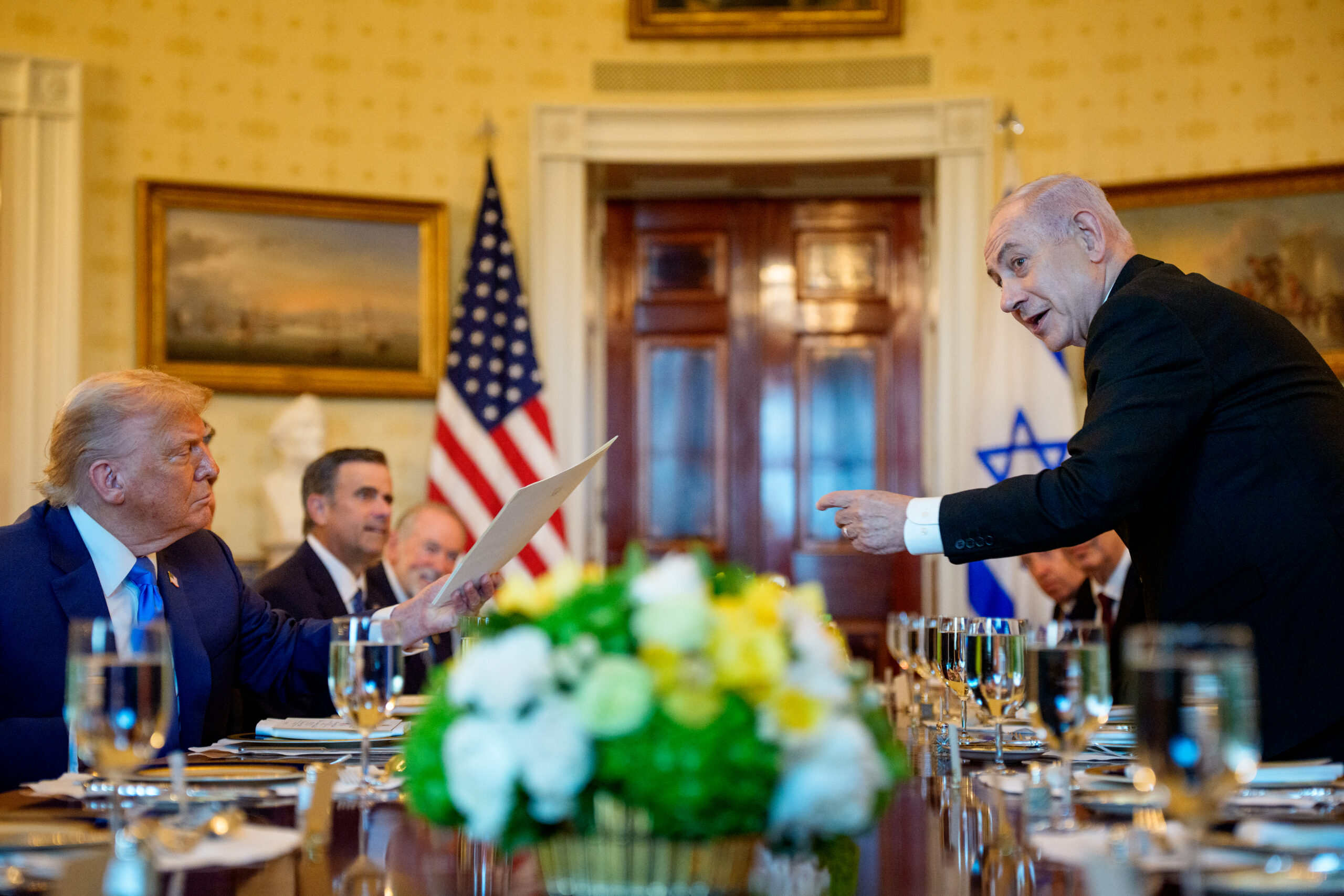
Israeli Prime Minister Benjamin Netanyahu greeted President Donald Trump in the White House Monday evening with effusive warmth, expressing the “appreciation and admiration” of Israel, the Jewish people and “the leadership of the free world” for the U.S.’ recent bombing campaign against Iran’s nuclear facilities. He also offered Trump an avenue toward his elusive goal: receiving a Nobel Peace Prize, Jewish Insider’s Gabby Deutch reports.
Prize goals: “He is forging peace as we speak, in one country and one region after the other. So I want to present you, Mr. President, the letter I sent to the Nobel Prize Committee,” Netanyahu announced, saying it would be a “well-deserved” honor for Trump. “Coming from you in particular, this is very meaningful,” Trump said. “It’s a great honor.”
Notable quotable: U.S. Ambassador to Turkey Thomas Barrack, who is serving as special envoy to Syria, said on Monday that Hezbollah could have a future in Lebanese politics, despite the organization’s designation by the U.S. State Department as a Foreign Terrorist Organization, Jewish Insider’s Jake Schlanger reports. “Hezbollah is a political party. It also has a militant aspect to it,” Barrack said at a press conference on Monday morning in Beirut, following a meeting with Lebanese President Joseph Aoun. “Hezbollah needs to see that there is a future for them, that the road is not not harnessed just solely against them, and that there’s an intersection of peace and prosperity for them also.”
EDUCATION CONSTERNATION
As teachers unions target ADL and oppose antisemitism bill, Jewish educators sound the alarm
A grassroots campaign urging educators to stop using teaching materials from the Anti-Defamation League reached the highest levels of K-12 education over the weekend. Inside a packed conference hall in Portland, Ore., the thousands of delegates who make up the governing body of the National Education Association — the largest teachers union in the country — passed a measure that bars the union from using, endorsing or publicizing any materials from the ADL, Jewish Insider’s Gabby Deutch reports.
School ties: The NEA’s adoption of a measure targeting the leading Jewish civil rights organization may be an escalation, but it is only the most recent example of antisemitism — and divisive politics surrounding the war in Gaza — spilling into K-12 education, and teachers unions in particular. Just this week, the largest teachers union in California, a 300,000-person NEA affiliate, published a letter urging state senators to vote against a bill focused on fighting and preventing antisemitism. In May, the state assembly voted unanimously to approve the bill. But the bill’s fate is now in jeopardy as senators face pressure from one of the state’s most powerful unions to reject it.
Case closed: Barnard College reached a settlement on Monday in a lawsuit brought by Jewish students which claimed that the school violated Title VI of the Civil Rights Act of 1964 by failing to address antisemitism, Jewish Insider’s Haley Cohen reports.
campus competition
Pepperdine, Washington Institute launch Middle East policy graduate program

As the federal government continues its battles with dozens of colleges over campus antisemitism, the field of Middle East studies has been particularly scrutinized for advancing a one-sided, anti-Israel curriculum contributing to a rise of hostility towards the Jewish state in the classroom and beyond. Aiming to address that bias, Pepperdine University’s School of Public Policy will launch a new Middle East Policy Studies master’s program this fall. The tuition-free, fully accredited, two-year master’s program on Pepperdine’s D.C. campus is a partnership with The Washington Institute for Near East Policy. It will be funded solely by American citizens — unlike many similar university programs that take foreign funds, Jewish Insider’s Haley Cohen reports.
Seeking balance: The program comes as critics of the field have long alleged that it imparts to students a one-sided history of the Middle East in which Israel is a perpetual villain, particularly since the Oct. 7, 2023, Hamas terrorist attacks. “We wouldn’t be in these conversations had it not been revealed what’s been happening on college campuses since Oct. 7,” Pete Peterson, dean of Pepperdine’s public policy school, told JI.
WORKFORCE WORRIES
Jewish groups, congressional Democrats raise concerns about DHS intelligence cuts

Jewish community security groups and congressional Democrats are raising concerns about the Department of Homeland Security’s plans to slash 75% of the staff for the department’s Office of Intelligence and Analysis (I&A), Jewish Insider’s Marc Rod reports.
What they’re saying: I&A plays a role in collecting and disseminating to local law enforcement and private partners intelligence to counter threats including terrorism and foreign adversaries. But the office has also faced criticism from various fronts in recent years. “Hollowing out the office risks leaving the homeland dangerously exposed to these threats, especially at a time when the FBI’s budget is being substantially reduced,” top congressional Democrats said. A coalition of Jewish groups said, “We are deeply concerned that any wholesale changes to the operations of I&A will have an adverse effect on countering antisemitism and ensuring the safety of the Jewish community in the United States.”
HUDSON VALLEY SHOWDOWN
Effie Phillips-Staley plays to progressive base as she targets Rep. Mike Lawler

Effie Phillips-Staley, running on a progressive platform in the crowded Democratic field looking to unseat Rep. Mike Lawler (R-NY) in a swing congressional district, is taking a firm stance against the U.S. and Israeli strikes on Iran’s nuclear program, even as she has expressed concern about Iran’s nuclear ambitions, Jewish Insider’s Marc Rod reports.
Positioning: “For the leader of the free world to decide to strike Iran based on Fox News coverage and without deliberation or the approval of Congress is alarming and unprecedented,” she said in a statement to JI on Monday, a position shared by many congressional Democrats. “We cannot have a nuclear armed Iran under any circumstances and Congress must hold this President accountable by upholding the War Powers Act and requiring a full diplomatic process.” Despite her criticisms of the Iran strikes, Phillips-Staley has otherwise not embraced elements of the left-wing policy agenda that have alienated Jewish voters.
Blast from the past: Former Rep. Sean Patrick Maloney (D-NY) is mulling entering the crowded Democratic primary in New York’s 17th Congressional District after falling short in his 2022 matchup against Lawler.
legal case
New legal report by Israeli NGO finds systematic use of sexual violence by Hamas on Oct. 7
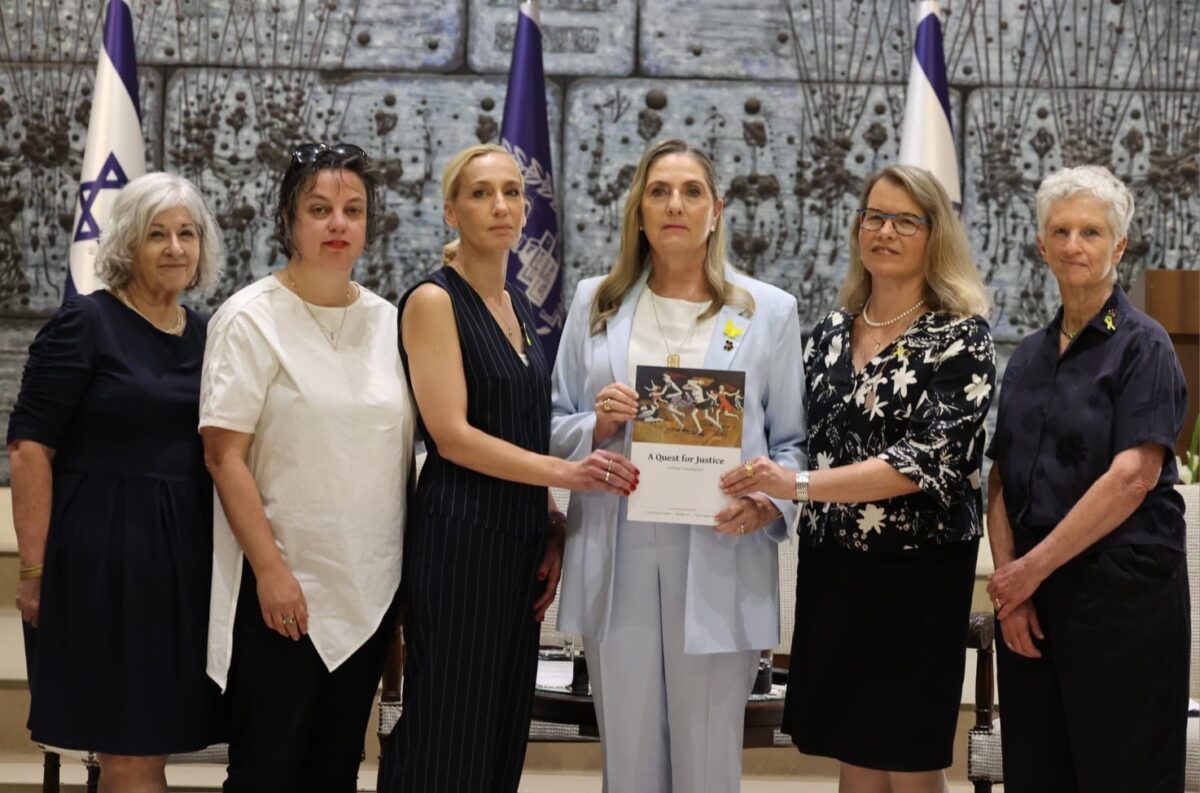
A report released by The Dinah Project on Tuesday that seeks to “set the record straight” on the sexual assaults that occurred during the Oct. 7, 2023, Hamas attacks on southern Israel found that the terror group systematically used sexual violence as a tactical weapon of war, acts that the report argues constitute crimes against humanity. The study, which was led by legal and feminist experts and has been compiled into a book, offers a new evidentiary and legal framework to prosecute such crimes as its authors call on international bodies to hold the perpetrators accountable, Jewish Insider’s Tamara Zieve reports for eJewishPhilanthropy.
The painful truth: The 80-page report, “A Quest for Justice: October 7 and Beyond,” is described by its authors as the most comprehensive legal analysis to date of the sexual and gender-based crimes committed during the-Hamas led attacks, and afterwards against hostages in captivity. It argues that the acts of sexual violence committed constitute crimes against humanity and that the acts were not isolated, but deliberate, widespread and systematic. The authors call for the development of a new legal protocol to handle cases of sexual violence in armed conflicts. The report was presented on Tuesday to Israeli First Lady Michal Herzog at a press event at the President’s Residence in Jerusalem. “The report presents the truth as it is — shocking, painful, but necessary. On behalf of all those who were affected, we are committed to continuing to fight until their cry is heard everywhere and until justice is done,” Herzog said.
Read the full story here and sign up for eJewishPhilanthropy’s Your Daily Phil newsletter here.
Worthy Reads
Bringing Harvard to Heel: The New York Times’ Stephanie Saul and Steven Rich look at how Harvard’s fiscal ties to China, which boosted its giving to the school following the 2008 recession that significantly impacted Harvard’s financial stability, have contributed to the Trump administration’s legal battles targeting the Ivy League school. “Now Harvard’s ties with China are coming back to haunt the university. Those connections were forged when Harvard was more financially vulnerable and when much of the foreign policy establishment believed that higher education could play a part in pushing America’s democratic ideals to China and the rest of the world. But American foreign policy has turned sharply hawkish against China, and even though Harvard has steadily reduced its ties there, the Trump administration has made the relationship another line of attack in its broader effort to bring the university to heel.” [NYTimes]
What Mamdani Means: The Wall Street Journal’s Gerard Baker considers how New York City Democratic mayoral nominee Zohran Mamdani’s primary success underscores the present political climate that allows more extreme positions and views to take hold. “But while we may mock the radicalism of Mr. Mamdani and his fellow socialists seemingly on the rise in the Democratic Party, I see in the man’s appeal, his evident popularity among a certain type of young voter especially, more signs of the continuing crack-up of American politics. Many Republicans like to think that the extremism represented by the likes of Mr. Mamdani and Rep. Alexandria Ocasio-Cortez is a signal of the Democrats’ growing irrelevance and unelectability. But his ascent — provisional though it may still be — is more likely a reflection of the fissures that continue to stretch our national cohesion than some proof of the marginalized nature of Donald Trump’s opponents.” [WSJ]
Alarmed in Algeria: The Financial Times’ Heba Saleh and Leila Abboud report on how the shifting dynamics and power structures across the Middle East and North Africa — including Israel’s warming ties with Morocco — have affected Algeria. “Algerian leaders feel surrounded by hostile forces, with Morocco, Israel and the United Arab Emirates all increasing their influence in the region, analysts say. Algiers has also fallen out with France, the former colonial power and a key partner. … Staunchly pro-Palestinian Algiers has been particularly riled by the Moroccan normalisation deal with Israel, which was the price Rabat paid for US recognition of its sovereignty over Western Sahara. It is also wary of Israeli-Moroccan military co-operation.” [FT]
Word on the Street
President Donald Trump overruled Pentagon policy chief Elbridge Colby in calling for a restoration of weapons to Ukraine, one week after the Defense Department announced a holdup of arms earmarked for the country; “We have to, they have to be able to defend themselves,” Trump said in his Monday meeting with Netanyahu…
The Senate Foreign Relations Committee will hold a confirmation hearing next week for former National Security Advisor Mike Waltz, the Trump administration’s nominee to be U.S. ambassador to the U.N.…
The U.S. revoked the Foreign Terrorist Organization designation of Hay’at Tahrir al-Sham, the militant group led by Syrian President Ahmed al-Sharaa that overthrew the Assad regime last year…
Syrian media reports that Syrian President Ahmed al‑Sharaa met an Israeli official on Monday in Abu Dhabi during his official visit to the United Arab Emirates; the reports named Israeli National Security Advisor Tzachi Hanegbi as the official, but Hanegbi is said to be in Washington as part of Israeli Prime Minister Benjamin Netanyahu‘s delegation…
The IRS, in a new court filing, said it will allow places of worship to endorse political candidates, exempting them from a law prohibiting tax-exempt organizations from engaging in political activity…
eJewishPhilanthropy’s Nira Dayanim looks at how Jewish organizations in central Texas are mobilizing to assist in relief and recovery efforts following storms and flash floods that have killed more than 100 people across the region…
A federal court in Massachusetts heard opening arguments on Monday in a lawsuit brought against the Trump administration by two faculty associations over the government’s targeting of noncitizen U.S. residents who have espoused or engaged in anti-Israel activity that could be seen as supporting Hamas…
The Wall Street Journal reports on the support that New York City Mayor Eric Adams is receiving from city real estate executives following Democratic mayoral nominee Zohran Mamdani’s victory over former Gov. Andrew Cuomo last month…
OpenAI CEO Sam Altman described himself in a recent social media post as “politically homeless”; addressing Mamdani’s recent suggestion that billionaires shouldn’t exist, Altman said he would “rather hear from candidates about how they are going to make everyone have the stuff billionaires have instead of how they are going to eliminate billionaires”…
Mubadala Capital, a subsidiary of Abu Dhabi-based sovereign wealth fund Mubadala Investment Company, hired Ophir Shmuel as its new head of business development, The Circuit reports…
U.K.-based American stand-up comic Reginald Hunter appeared in a London court to face charges for sending offensive, antisemitic messages on multiple occasions to an organizer of the city’s hostage-awareness events…
Five IDF soldiers were killed and more than a dozen injured when an explosive detonated in the northern Gaza city of Beit Hanoun; four of the soldiers killed were members of the army’s Haredi “Netzah Yehuda” battalion…
Iran has expelled more than 800,000 Afghans since March, the majority of whom were forced to leave the country in the last five weeks amid a crackdown on undocumented individuals in the Islamic Republic…
Two people were injured and two others are missing following a Houthi attack on a Liberian-flagged ship transiting through the Red Sea; the attack came a day after the crew of a second Liberian-flagged vessel was forced to abandon ship following an attack believed to have been conducted by the Houthis…
Psychoanalyst Dr. Anna Ornstein, who as a teenager survived the Holocaust and would go on to pioneer a school of thought in her field that prioritized empathy, died at 98…
Playwright Ronald Ribman died at 82…
Pic of the Day

Imams and Muslim community leaders from France, Belgium, the Netherlands, Italy and the U.K. visited Israel’s Yad Vashem Holocaust Memorial Museum in Jerusalem on Tuesday as part of a trip focused on coexistence that also included a meeting with Israeli President Isaac Herzog.
Birthdays
Israeli film director, producer and researcher, Eyal Boers turns 50…
Retired in 2016 after 26 years as executive director of the Baltimore Jewish Council, Arthur “Art” Abramson turns 77… Democratic candidate for president of the U.S. in 2020 and 2024, Marianne Deborah Williamson turns 73… Mayor of Farmington Hills, Mich., until 2023, she is a former member of the Michigan House of Representatives, Vicki Barnett turns 71… Attorney and Democratic politician from Texas, Barbara Ann Radnofsky turns 69… Attorney and a former U.S. ambassador to Belgium in the Obama administration, Howard Gutman turns 69… Partner of the global law firm Dentons, when he was elected attorney general of Georgia in 2010 (and reelected in 2014) he became the first Jewish person to win statewide office in Georgia, Samuel Scott Olens turns 68… Former member of Knesset who had served as Israel’s foreign minister, justice minister, agriculture minister and housing minister, Tziporah Malka “Tzipi” Livni turns 67… Retired rabbi at Temple Emanuel in Beaumont, Texas, Rabbi Joshua Samuel Taub… Co-president of Rochester, N.Y.-based Hahn Automotive Warehouse, he is on the board of governors of the Jewish Federation of Greater Rochester, Eli N. Futerman… SVP and COO of New York’s Jewish Communal Fund, Marina W. Lewin… Former Washington bureau chief of the Jewish Telegraphic Agency, Ron Kampeas turns 65… Consultant strategist, policy advisor and writer, he served as corporate counsel to Allstate Insurance for 28 years, Steven Richard Sheffey turns 65… Writer, television producer, ventriloquist and puppeteer, Mallory Hurwitz Tarcher Lewis turns 63… Managing partner at DGA’s Albright Stonebridge Group, Dan K. Rosenthal turns 59… Former ice hockey player, her three sons were seventh, first and fourth picks overall, respectively, in the 2018, 2019 and 2021 NHL Drafts, Ellen Weinberg-Hughes turns 57… Higher education reporter for The Wall Street Journal, Douglas Belkin… New York City comptroller, Brad Lander turns 56… Managing director of investor relations for Harbor Group International, Meir Raskas… EVP of the Atlantic Council, Jenna H. Ben-Yehuda… Atlanta-based educator, activist and writer, Robbie Medwed… Sports journalist, known for his coverage of mixed martial arts and professional wrestling, Ariel Jacob Helwani turns 43… Senior legal counsel at Horizons Law and Consulting, Alon Sachar… Policy and communications consultant, Stefanie Feldman… Diplomatic correspondent at the Jerusalem Post and i24NEWS, Amichai Stein…
Netanyahu, Trump project unity in D.C., but diverging views on Iran, Gaza hint at future fault lines
Differences between the two leaders’ comments on potential further strikes on Iran indicated a possible point of friction in the future

Andrew Harnik/Getty Images
President Donald Trump, seated next to Secretary of Defense Pete Hegseth, hosts Israeli Prime Minister Benjamin Netanyahu for a dinner in the Blue Room of the White House on July 7, 2025, in Washington, DC.
Israeli Prime Minister Benjamin Netanyahu’s third visit to Washington since the start of the Trump presidency kicked off Monday with closed-door meetings with President Donald Trump, Secretary of State Marco Rubio and Middle East envoy Steve Witkoff.
Trump and Netanyahu were on warm terms during remarks to the press ahead of their dinner. Netanyahu offered effusive praise for Trump for the U.S. strikes on Iran’s nuclear facilities and said he nominated Trump for a Nobel Peace Prize, as well as following Trump’s lead in expressing openness to the new Syrian government.
Trump, for his part, deferred to Netanyahu on a question about a two-state solution, “We’ll work out a peace with our Palestinian neighbors, those who don’t want to destroy us,” Netanyahu said, while adding that in any future peace agreement, “the sovereign power of security, always remains in our hands.”
White House Press Secretary Karoline Leavitt told reporters earlier in the day that Trump’s “utmost priority … is to end the war in Gaza and return all of the hostages” and that Trump and Netanyahu would discuss “peace in Gaza and ending that conflict.”
But that agenda item saw little discussion in Trump and Netanyahu’s public remarks. Asked about talks with Hamas, Trump instead spoke about Iran.
At the same time, the differences between the two leaders’ comments on potential further strikes on Iran indicated a possible point of friction in the future.
Asked about further strikes, Trump said he “can’t imagine wanting to do that” and maintained that Iran’s nuclear program had been “knocked out completely.” Trump added, “I think they want to make peace and I’m all for it,” while also suggesting that there is no need for negotiations or a deal, saying “What’s the purpose of talking?” He said that the U.S. is “ready, willing and able” if further strikes are necessary, “but I don’t think we’re going to have to be.”
Netanyahu seemed somewhat less certain that Iran’s nuclear and ballistic missile programs had been permanently stopped, even as he called the strikes a “historic victory.” “When you remove a tumor, that doesn’t mean that it can’t come back,” the Israeli prime minister said. “You have to constantly monitor the situation to make sure that there’s no attempt to bring it back.”
The two leaders downplayed another potential test of U.S.-Israel relations, the potential election of Democratic nominee Zohran Mamdani, who has pledged to arrest Netanyahu — following the International Criminal Court’s warrant against him — as mayor of New York City. Netanyahu dismissed the notion as “folly.”
Trump interjected that he’d “get him out of there” and suggested that he could use federal funding to force Mamdani to “behave.” Both men also said that Mamdani’s election is not guaranteed.
Trump also said that he would send more weapons, particularly defensive weapons, to Ukraine, shipments reportedly halted as a result of a push by top Pentagon official Elbridge Colby. Hours later, the Pentagon confirmed it would send additional defensive weapons to Ukraine.
It’s another sign that Trump’s instincts on foreign policy don’t always line up with those of vocal isolationist members of his team. Colby also reportedly resisted moving U.S. systems and personnel, including missile defense platforms, from Asia to the Middle East.
Today, Netanyahu heads to Capitol Hill, where he’s set to sit down with House Speaker Mike Johnson (R-LA) and a group with Senate leaders including Majority Leader John Thune (R-SD), Minority Leader Chuck Schumer (D-NY) and Senate Foreign Relations Committee Chairman Jim Risch (R-ID).
Most House members will likely not be in town to meet with the Israeli leader this week, with the House out of session. The Israeli prime minister will return to the Capitol on Wednesday for one-on-one meetings with several close allies in the Senate.
The Israeli prime minister also expressed an openness for a new relationship with Syria after Trump removed sanctions on the country
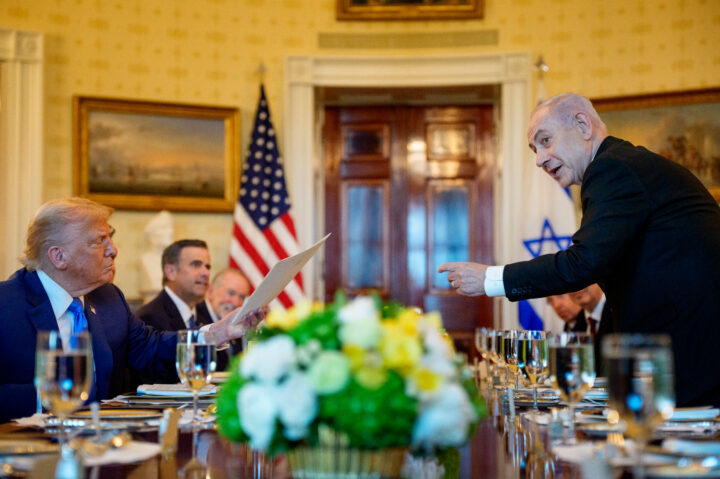
Andrew Harnik/Getty Images
Israeli Prime Minister Benjamin Netanyahu hands off a letter he sent to the Nobel Peace Prize committee to nominate U.S. President Donald Trump for the Nobel Peace Prize during a dinner in the Blue Room of the White House on July 07, 2025 in Washington, DC.
Israeli Prime Minister Benjamin Netanyahu greeted President Donald Trump in the White House Monday evening with effusive warmth, expressing the “appreciation and admiration” of Israel, the Jewish people and “the leadership of the free world” for the U.S.’ recent bombing campaign against Iran’s nuclear facilities.
He also offered Trump an avenue toward his elusive goal: receiving a Nobel Peace Prize.
“He is forging peace as we speak, in one country and one region after the other. So I want to present you, Mr. President, the letter I sent to the Nobel Prize Committee,” Netanyahu announced, saying it would be a “well-deserved” honor for Trump.
“Coming from you in particular, this is very meaningful,” Trump said. “It’s a great honor.”
Similar exchanges of flattery are not an unusual occurrence in the Trump White House. But the warmth and back-slapping present a marked shift even from Netanyahu’s last visit to Washington in April — when he sought to head off U.S. tariffs and urge Trump not to make a nuclear deal with Iran — and a sign of how much has changed in the last three months.
In April, Netanyahu avoided reporters’ questions about Iran. This time, he and Trump took a victory lap together after a 12-day war in which Israel, with key support from the U.S., exacted significant damage on Iran’s nuclear program.
“It was an amazing job,” Trump said of the American bombers’ attacks on three nuclear sites in Iran. “This stopped a lot of fighting. When that happened, it was a whole different ballgame.”
Asked whether he would support additional strikes on Iran, Trump said that he “can’t imagine wanting to do that,” saying that he thinks Iran wants peace.
“They want to meet. They want to work something out. They’re very different now than they were two weeks ago,” Trump said. He ceded the floor to Netanyahu when a reporter asked if the war between Israel and Iran was over.
“I think the partnership between Israel and the United States, the partnership between President Trump and me, produced a historic victory. It’s an incredible victory,” Netanyahu said. He likened Iran to a tumor, noting that doctors must still check in on cancer patients after a tumor has been removed.
“You have to constantly monitor the situation to make sure that there’s no attempt to bring it back,” Netanyahu said. “This has already changed the face of the Middle East, but it’s not over.”
Taking cues from Trump, Netanyahu offered tentative hope for a new relationship with Syria. Israeli leaders, including Netanyahu, have been cautious when considering how to deal with Ahmed al-Sharaa, the new president of Syria. Trump, meanwhile, has expressed optimism about al-Sharaa and moved to remove sanctions on Syria. The Trump administration on Monday removed Hayat Tahrir al-Sham, a group previously led by al-Sharaa, from its list of foreign terrorist organizations.
But on Monday, Netanyahu said there is an “opportunity to explore” with the new government in Israel’s northern neighbor — and gave Trump some credit for it.
“I think this presents opportunities for stability, for security and eventually for peace,” said Netanyahu. “I think that opportunity has been opened by the president and by the changed security situation, which we brought about with the collapse of the Assad regime.”
Trump and Netanyahu did not share much publicly about the recent reports suggesting a ceasefire deal between Israel and Hamas is under consideration.
When asked if he thinks there can be a two-state solution, Trump again handed the mic to Netanyahu.
“You have the greatest man in the world to answer that age-old question,” said Trump. Netanyahu said no.
“We’ll work out a peace with our Palestinian neighbors, those who don’t want to destroy us, and we’ll work out a peace in which our security, the sovereign power of security, always remains in our hands,” said Netanyahu. “People will say, ‘It’s not a complete state, it’s not a state, it’s not that’ — we don’t care. We vow never again.”
Plus, Ireland draws Risch’s ire

Avi Ohayon/PMO
Good Monday morning.
In today’s Daily Kickoff, we preview Israeli Prime Minister Benjamin Netanyahu’s meeting with President Donald Trump that is slated for this evening, and talk to former Rep. Mike Rogers, who is mounting a Senate bid in Michigan, about the Trump administration’s approach to Iran. We also interview the chancellors of Washington University and Vanderbilt about their approaches to antisemitism and anti-Israel activity on campus, and look at the regional effects of the deepening relationship between Israel and Azerbaijan. Also in today’s Daily Kickoff: Sen. Jim Risch, Yoram Hazony and Dennis Ross.
What We’re Watching
- If it’s the week after July 4, all eyes are turning to Sun Valley, Idaho, for the annual Allen & Co. leadership retreat, which is set to kick off tomorrow. Attendees this year include Mark Zuckerberg, Jeff Bezos, Andy Jassy, Sam Altman, Barry Diller, Alex Karp, Evan Spiegel, Ynon Kreiz, Charles Rivkin, David Zaslav, Brian Grazer, Bob Iger, David Ignatius, Bari Weiss, Senate Minority Leader Chuck Schumer (D-NY), Mike Bloomberg, Govs. Wes Moore and Glenn Youngkin, Jeffrey Katzenberg and Casey Wasserman.
- Israeli Prime Minister Benjamin Netanyahu will meet with President Donald Trump this evening at the White House. Earlier in the day, Netanyahu will meet at the Blair House, where he is staying, with Secretary of State Marco Rubio and Middle East envoy Steve Witkoff to prepare for his sit-down with the president.
- Elsewhere in Washington, the Senate Armed Services Committee’s subcommittees will hold markups on the National Defense Authorization Act.
- Leaders from the BRICS alliance wrap up their two-day summit in Rio de Janeiro today. Absent from the gathering of officials from Brazil, Russia, India, China and South Africa was Chinese President Xi Jinping, while Russian President Vladimir Putin, who has largely curbed his travel abroad since Russia’s invasion of Ukraine, addressed the gathering by video.
What You Should Know
A QUICK WORD WITH JI’S MELISSA WEISS AND LAHAV HARKOV
When Israeli Prime Minister Benjamin Netanyahu sits down with President Donald Trump today, one question will be on observers’ minds: What will each walk away with?
Netanyahu appeared to come away empty-handed from his April meeting in Washington, after the U.S. imposed tariffs on Israel, among other countries. Weeks later, Trump skipped Israel on his first trip abroad, while visiting three other countries in the region.
Few knew at the time about Netanyahu’s plans to take on Iran. Following last month’s joint U.S.-Israel military effort to degrade Iran’s nuclear program and military infrastructure, relations between the two leaders have improved to such a degree that last week Trump called twice for an end to the legal proceedings against Netanyahu. A post-strikes-on-Iran victory lap is top of the public agenda for Netanyahu’s White House visit today, while Trump’s other goals, as they relate to Israel, remain works in progress.
The White House wants to wind down the war in Gaza, as Trump has said many times in recent months. After the American bunker busters dealt Iran the final punch that Israel pushed for, the president has newly gained leverage to push Netanyahu to end the war in Gaza — a move the Netanyahu government has thus far resisted until it has achieved its goal of “total victory” against Hamas. Trump told reporters on Sunday night that “there’s a good chance we have a deal with Hamas during the week pertaining to quite a few of the hostages.”
ROGER THAT
Michigan Senate hopeful Mike Rogers underscores his support for Trump’s strikes on Iran’s nuclear program
Former Rep. Mike Rogers (R-MI), making his second bid for Michigan’s Senate seat, is leaning into his support for the Trump administration’s decision to strike Iran’s nuclear program on the campaign trail, Jewish Insider’s Marc Rod reports.
Iran angle: Rogers emphasized, in an interview with JI last week, that he has long been suspicious and concerned about Iran’s nuclear program and other malign activities dating back to his time as the chairman of the House Intelligence Committee in the early 2010s, when he had access to highly classified information. “I couldn’t have supported [the operation] more,” Rogers, who served in the House from 2001 to 2015, said. “I was for all of this when it wasn’t very cool to be for all of this. The former lawmaker said he believes that Iran was much closer to a nuclear weapon than many believe, noting that its development of advanced supercomputers would likely have allowed it to reliably simulate a nuclear weapons test, an undetectable alternative to actually testing a nuclear bomb.
Bonus: Rogers’ Senate campaign recently named a conservative influencer with an extensive history of anti-Israel posts as county chair for his campaign in five counties — but Rogers distanced himself from the volunteer’s views on the Middle East in an interview with Jewish Insider’s Marc Rod.
CAMPUS BEAT
Vanderbilt, WashU leaders pitch Jewish students on a winning post-Oct. 7 strategy

Many universities are still navigating the post-Oct. 7 maelstrom, trying to handle competing concerns from students, parents, alumni and faculty — all while facing civil rights investigations by the federal government. In March, Education Secretary Linda McMahon wrote a letter to 60 schools under investigation for antisemitic discrimination, including Harvard, Yale, Northwestern, Stanford and Princeton. Vanderbilt University and Washington University in St. Louis were not on the list. That presents an opening for them to reach Jewish students with concerns about what they’re seeing elsewhere, particularly as the Jewish student populations at many top universities have shrunk. Vanderbilt Chancellor Daniel Diermeier and WashU Chancellor Andrew D. Martin talked to Jewish Insider’s Gabby Deutch about why they’re pushing back against “creeping politicization” on college campuses.
Political play: The two university leaders have joined together in something of an informal pact — a joint effort to promote principled leadership in higher education, presenting their two schools as a refreshing counterweight to the dysfunction plaguing higher-ranked competitors like Harvard and Columbia. Martin and Diermeier see themselves and their institutions as the stewards of a forward-looking case for higher education at a time when the institution is under attack, both from Washington and from Americans, whose trust in higher education has plummeted. It’s not just about values: It’s a savvy political move. After all, both Vanderbilt and WashU would be in trouble if federal research dollars stopped flowing to the schools, or if President Donald Trump made the call that they could not admit international students, as is the case with Harvard.
BAKU BUSINESS
With gas deal, Israel-Azerbaijan ties grow, sparking Iran’s ire

Following the Israel-Iran ceasefire and amid questions about the extent of the damage Israel and the U.S. inflicted on the Islamic Republic’s nuclear program, an important piece of news flew under the radar: Azerbaijan’s national energy company, SOCAR, finalized its purchase of a 10% stake in Israel’s Tamar gas field. The deal and its timing amid hesitation from other countries that have considered investing in Israel, reflect a growing strategic partnership between Jerusalem and Baku — one that has garnered increasing pressure from Iran toward Azerbaijan, Jewish Insider’s Lahav Harkov reports.
Details: The day after the ceasefire between Israel and Iran was announced toward the end of last month, Union Energy, owned by Israeli businessman Aharon Frenkel, received the final approval from Israel’s Petroleum Council and Competition Authority to sell half its shares of the gas field in the Mediterranean, which provides 60-70% of Israel’s electricity each year, to Azerbaijan’s SOCAR. Chevron owns 25% of the Tamar field and the UAE’s Mubadala sovereign wealth fund owns an 11% stake. Azerbaijan supplies as much as two-thirds of Israel’s oil, and Israel was the largest supplier of arms to Azerbaijan from 2016-2020. Israel continued to sell drones and missiles to Baku during its war with Armenia over the disputed Nagorno-Karabakh region in 2020, as well as satellites and a missile-interception system in 2023, during another war between Azerbaijan and Armenia.
DUBLIN WARNING
Risch threatens economic consequences if Ireland continues ‘antisemitic path’

Irish Foreign Minister Simon Harris urged the U.S. to end the war in Gaza at the American Embassy in Dublin’s Fourth of July party, days after the chairman of the Senate Foreign Relations Committee, Sen. Jim Risch (R-ID), warned that the U.S. may reconsider its economic ties with “antisemitic” Ireland. Harris, who is also Ireland’s deputy prime minister and defense minister, began his speech by focusing on the close relationship between the U.S. and Ireland, according to Dublin-based The Journal, before pivoting to the war in Gaza, Jewish Insider’s Lahav Harkov reports. Harris said at the event on Thursday that his country “want[s] the bombs to stop, the killing to stop … because the cry of a child is the same in any language.”
U.S.-Ireland tensions: “It compels us to provide comfort and protection from harm. As human beings in positions of power, we can no longer bear the heartbreaking cries of the children of the Middle East,” Harris added. “And I join, I know, with everyone here in urging everybody involved to support and engage in efforts underway to reach agreement on a new ceasefire and hostage release agreement, to redouble those efforts and to end the violence once and for all.” U.S. Ambassador to Ireland Ed Walsh did not applaud the remarks, The Journal reported. Harris has previously called Israel’s war against Hamas terrorists in Gaza a “genocide.” Earlier last week, Risch posted on X that “Ireland, while often a valuable U.S. partner, is on a hateful, antisemitic path that will only lead to self-inflicted economic suffering.” The post came after Harris introduced legislation to ban trade with Israelis operating in the West Bank and parts of Jerusalem.

