















Qatar emerges stronger as Washington’s go-between with Iran
Qatar’s once-quiet intermediary role is now not only public, but a key element of the infrastructure supporting the new regional dynamics
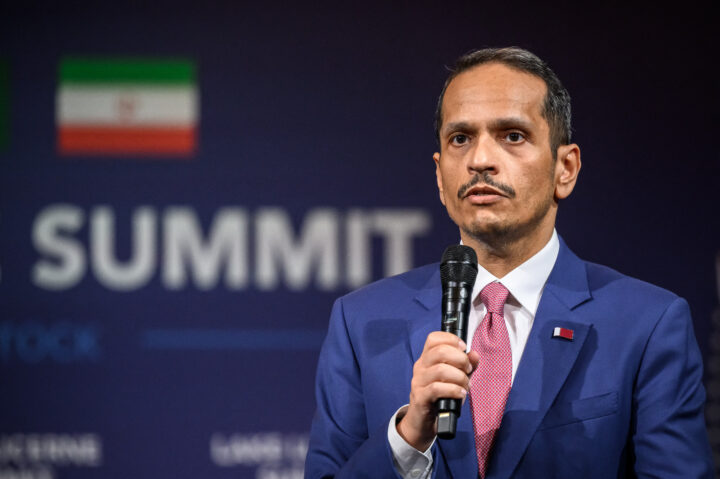
Fabrice Coffrini / POOL / AFP via Getty Images
Qatar's Prime Minister Sheikh Mohammed bin Abdulrahman bin Jassim al-Thani speaks prior to a quadrilateral meeting between the United States, Iran, Pakistan and Qatar at the Burgenstock luxury hotel complex overlooking Lake Lucerne, Switzerland, on June 21, 2026.


 Add JewishInsider on Google
As diplomacy between the U.S. and Iran continues following the adoption of the memorandum of understanding between the two countries last week, Washington is again leaning on Qatar to serve as a critical interlocutor, further cementing Doha’s standing as an intermediary despite the significant setbacks sustained by the Gulf state during the recent war with Iran.
In an interview with UnHerd that was published on Thursday, Vice President JD Vance, traveling back from the Iran talks in Switzerland earlier this week, said that Doha would serve as the location for CENTCOM to meet with Islamic Revolutionary Guard Corps officials — despite the IRGC’s designation as a foreign terror organization by the U.S. (a move undertaken by President Donald Trump in his first term).
“One of the things we wanted to come out [of the negotiations] with” was a “channel on the Iranian side” to seek conflict resolution, Vance told UnHerd aboard Air Force Two. “Which we did. They were like, ‘OK, fine, we’ll send somebody from the IRGC to go hang out in Doha with somebody from CENTCOM,’ and that’s how we’re going to settle a lot of these disputes,” he said.
Doha has long played a role in the back-channel communications between the U.S. and adversaries. But Vance’s comments underscore the degree to which Qatar’s once-quiet intermediary role is now not only public, but a key element of the infrastructure supporting the new regional dynamics.
The close relationship between Washington and Doha was on full display during the Switzerland talks. On Sunday, Qatari Prime Minister Sheikh Mohammed bin Abdulrahman Al Thani posted a photo of himself with Vance and Jared Kushner as the three huddled around a laptop. “Live from Lucerne, work continues” with Vance and Kushner, Al Thani wrote in separate English and Arabic posts.
Earlier this week, the White House leaned on Al Jazeera, the Qatari-owned media outlet, to deny a report that Vance had been snubbed by the Iranians at a press conference following talks in Switzerland — a signal that Washington is increasingly treating Qatari institutions as useful and legitimate when its message is being amplified.
Qatar wasn’t affected by the war in the same way as the UAE, which faced more missile fire than any other country in the region, including Israel. But it also wasn’t immune from Iranian attacks. Early in the war, Iranian missiles targeted the Gulf state’s Ras Laffan gas complex, causing some $20 billion in annual revenue loss and damage that is estimated to take five years to fully repair.
The strike on Ras Laffan came in spite of a secret effort by Qatar, first reported by The Washington Post, to press Iran not to target the facility. In exchange, the Post reported, Doha offered to use its leverage to halt gas production and send oil costs up — moves intended to increase pressure on the U.S. and Israel to wind down the war quickly.
Qatar has long tried to play to all sides in conflicts even as it serves as a mediator — despite the inherent risks. It was an Iranian strike on the U.S. base in Qatar last June that marked one of the final salvos of the 12-day war. Months later, five Hamas members and a Qatari security guard were killed in an Israeli strike on a building used by Hamas for its senior officials who live in Doha.
Doha’s strategy over the last two decades of investing anywhere and everywhere has largely paid off (though not through sports prowess, as evidenced by the Qatari team’s World Cup loss to Bosnia and Herzegovina on Wednesday). In this next phase, Qatar will continue to seek to play a key role in Iran talks and the implementation of any agreements — ensuring that the Gulf state has significant buy-in in shaping the future of the region.
More Stories
DIPLOMATIC PUSH
Miliband agrees to host international antisemitism meeting at urging of J7 Task Force

GOING GLOBAL
Israeli, Lebanese leaders expressed interest in Michigan Senate race, Sen. Lankford says
ACCUSATION AFTERMATH
El-Sayed denies Muslim Brotherhood ties after Rogers debate claim

booking bias
Irish Jewish leader says Dublin hotel canceled guest rooms for conference on fighting antisemitism
EMPIRE STATE FEUD
Mamdani rips Blakeman’s claims he wouldn’t protect Jews as ‘directly racist’
IN THEIR MEMORY
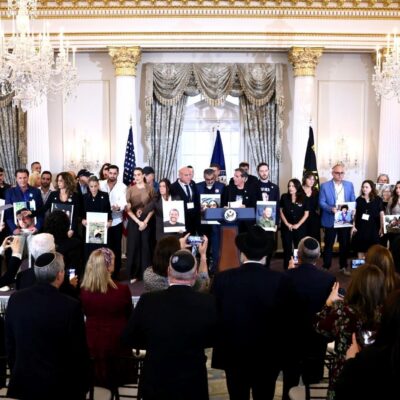
Administration officials join bereaved families for Oct. 7 commemoration event
Please log in if you already have a subscription, or subscribe to access the latest updates.
 Continue with Google
 Continue with Apple