






































New York’s primaries will test the limits of anti-Israel politics
The main difference between the three candidates backed by most Democratic leaders and Mamdani’s favored challengers is the challengers’ hostility to Israel
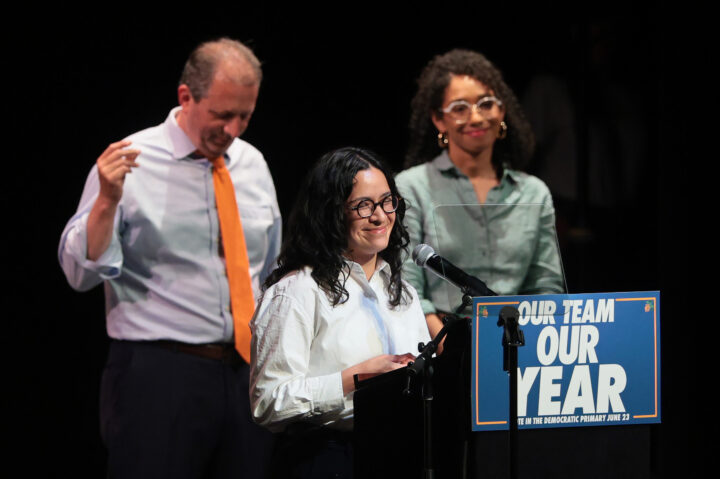
Michael M. Santiago/Getty Images
Congressional candidate Claire Valdez speaks during a Get Out the Vote (GOTV) rally at Kings Theater on June 18, 2026 in New York City.


 Add JewishInsider on Google
2026 has been the year of the democratic socialist, with numerous far-left, anti-Israel candidates winning mayoralties and congressional primaries in cities up and down the Northeast corridor, from New York to Washington, D.C — and beyond.
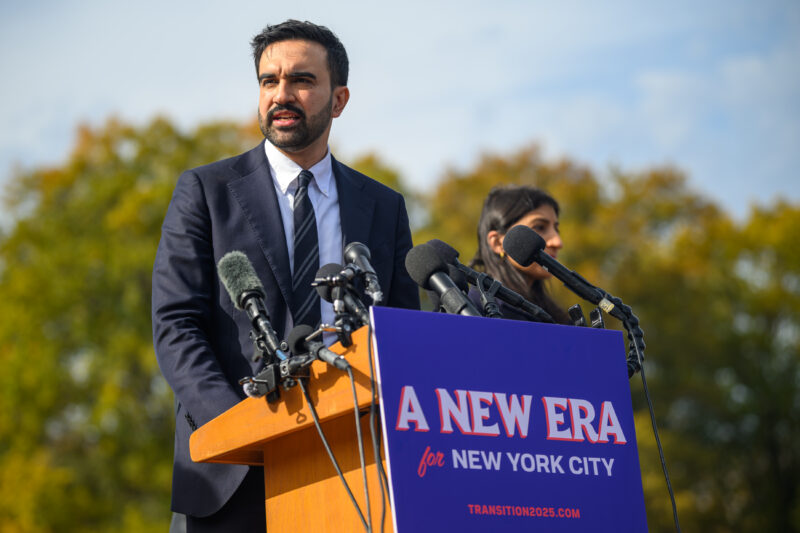
Zohran Mamdani, the New York City mayor who proved that radicalism can win hearts and minds among voters in deep-blue jurisdictions, is now trying to utilize valuable political capital by electing three like-minded congressional candidates in primaries in the Big Apple on Tuesday — backing two challengers running against well-funded incumbents, and a third against a well-established progressive borough president.
The outcomes of these three races will go a long way in determining whether Democratic Party voters still draw any red lines around candidates holding views and values that fall outside the party mainstream.
Let’s be clear: The main difference between the three candidates backed by most Democratic leaders and Mamdani’s favored challengers is the challengers’ hostility to Israel.
Mamdani handpicked Darializa Avila Chevalier, a doctoral student with no obvious congressional credentials who protested against Israel the day after it suffered the worst terror attack in its history, to run against Rep. Adriano Espaillat (D-NY), the head of the Congressional Hispanic Caucus and a progressive supporter of the Jewish state.
Avila Chevalier has a laundry list of recent social media posts in which she called for abolishing the police and voiced anti-American and pro-Russian sentiments, while sharing a post saying “Israel doesn’t exist.” That hasn’t disqualified her, in the eyes of a critical mass of the district’s voters.
Mamdani recruited state Assemblywoman Claire Valdez to challenge Brooklyn Borough President Antonio Reynoso, despite the latter’s backing from party leaders. Valdez, a sculptor, has made her opposition to Israel a central part of the race, even falsely accusing AIPAC of being involved in the race when the outside spending against her came from a major teachers’ union. Reynoso, who has been a vocal critic of Israel, hasn’t made the Middle East a central part of his candidacy.
And Mamdani convinced former City Comptroller Brad Lander to run against pro-Israel Rep. Dan Goldman (D-NY), even working to clear the field of other challengers who threatened to split the anti-Israel vote against Goldman. Despite calling himself a progressive Zionist, Lander spent his final debate attacking the congressman for not calling Israel’s war against Hamas in Gaza a genocide and for supporting aid to the Jewish state.
As JI’s Will Bredderman has documented, all three of Mamdani’s picks have made their opposition to Israel a major part of their closing messages. And while polls show Goldman as the underdog in a progressive district, the other two races are highly competitive. Outside groups representing mainstream forces have mobilized on behalf of Espaillat and Reynoso in the final weeks of the race, giving them a fighting chance to prevail.
There’s no doubt that pro-Israel forces within the Democratic Party are facing uphill challenges, especially in deeply progressive districts where voters are increasingly open to far-left candidates. The outcome in New York’s primaries this week will indicate whether the establishment has the ability to slow down the radicals’ momentum.
More Stories
Life after captivity
The Siegels lost their home and community on Oct. 7. Now they’re finding their way forward
speaking out
In open letter, dozens of retired U.S. military leaders reject genocide allegations against Israel
CAMPAIGN BLITZ
AIPAC’s super PAC wades into Michigan Senate race
Mayor Unmoved
Mamdani brushes off pro-Hamas heckling at Oct. 7 vigil
CITY HALL CRITICISM
Mamdani’s Oct. 7 statement assailing ‘genocide in Gaza’ provokes outrage from Jewish groups

education consternation
Department of Education accuses colleges and universities of hiding foreign funding ties
Please log in if you already have a subscription, or subscribe to access the latest updates.
 Continue with Google
 Continue with Apple