


































Human rights orgs have routinely ignored complaints of antisemitism for years, per new report
The report draws on interviews with more than 70 current and former employees of groups such as Human Rights Watch, Amnesty International and Doctors Without Borders
DAVID GRAY/AFP via Getty Images
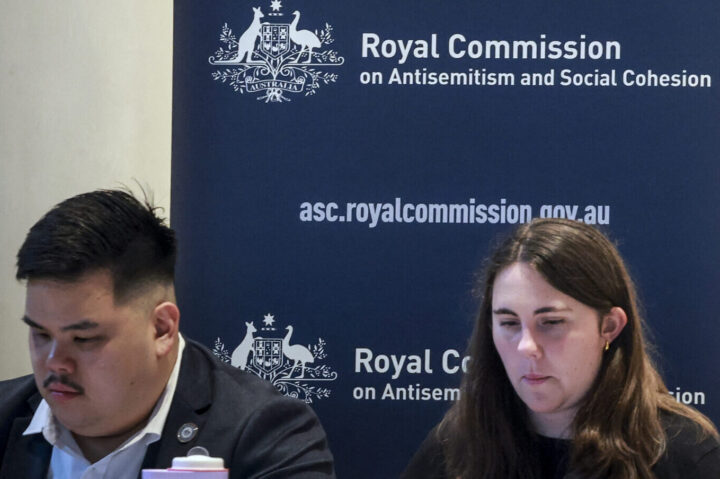
Officials can be seen outside the venue of the Royal Commission on Antisemitism and Social Cohesion in Sydney on May 25, 2026.


 Add JewishInsider on Google
The human rights nonprofit sector has systematically ignored or suppressed employee complaints of antisemitism for years, according to a new report published on Wednesday by EiGHT, an organization based in Israel that was created after the Oct. 7, 2023, Hamas terror attacks to provide oversight of humanitarian NGOs.
The 63-page report was submitted to Australia’s Royal Commission on Antisemitism and Social Cohesion, which was formed after the Bondi Beach terror attack last December, as well as several United Nations bodies. It draws on interviews with more than 70 current and former employees of organizations such as Human Rights Watch, Amnesty International, Doctors Without Borders and Greenpeace. It alleges that the organizations’ biased treatment of Israel contributed to a hostile work environment for Jewish and Israeli employees.
“One of the rationales for the report was to give voice to victims, essentially, along the lines of human rights work that I edited every single day for 14 years,” EiGHT’s executive director, Danielle Haas, who was a senior editor at Human Rights Watch until 2023, told Jewish Insider. “It’s just a shame and shocking that the victims should be coming now from within the human rights and humanitarian world itself.”
The report is focused primarily on the treatment of employees within the sector, rather than research and output related to Israel and the Palestinian territories, though it argues that the two are linked — and that the wholesale adoption of anti-Israel narratives by these NGOs contributes to the hostile atmosphere facing Jewish employees. For instance, employees alleged that if they asked questions about an organization’s approach to Israel, they often faced pushback. One Australian employee of a global NGO claimed they were fired after raising questions about the quality of the group’s work on Israel.
“When the leadership is demonstrating utter disregard for Oct. 7 victims or for Jewish lives lost, it only follows logically that those underneath them will too,” Haas said.
The report paints a picture of institutional leadership that is resistant to both external and internal criticism.
“Documented complaints about hostile behavior related to Jews, Israel, or Israelis, and professional standards failures connected to Israel work have consistently failed to produce meaningful consequences,” the report states.
Most of the testimonies in the report are anonymous. Even the organizations described in many complaints are often kept anonymous, with language in some instances referring to sources only as “an employee at a global NGO.” Haas said this was due to fear of retaliation.
“What is truly disturbing is how fearful people are to speak openly, and I find that incredibly disturbing, that adult professionals in their field should repeatedly say that they don’t want to speak out because of fear of professional retaliation,” said Haas.
Complaints of antisemitism were often redirected into conversations about Israel, according to the report. An Amnesty International employee in Australia said that after the Bondi Beach attack, there was a tendency “to frame efforts to address antisemitism as attempts to restrict criticism of Israel.”
Haas said the report’s findings do not mean “human rights should be abandoned,” and she does not think the field is fundamentally biased or irrelevant. But she does not see the institutions named in the report as willing or even open to change.
The EiGHT report follows a survey from last year that found that 55% of Jewish workers at human rights NGOs have either experienced or witnessed antisemitic incidents at a current or former workplace. That survey was conducted by OLAM, a network of Jewish employees working in the field.
“Are these organizations lost causes?” Haas asked. “I think to some extent, very regrettably, they are, insofar as change can only happen when management is interested and takes necessary steps to rectify problems. One of the points the report makes is that there’s been an absolute lack of interest, in marked contrast to how they’ve dealt with issues and discrimination raised by other minority groups.”
Spokespeople from Human Rights Watch, Amnesty International, Doctors Without Borders, Greenpeace, UNICEF, the International Committee of the Red Cross, Plan International and Save the Children — all of which had current or former staff members interviewed for the report — did not respond to requests for comment.
Natalie Fath, global director of communications at Mercy Corps, a humanitarian aid NGO, told JI that the organization “reject[s] any characterization that suggests we value the lives or suffering of one population over another.”
“Mercy Corps’ communications are guided by our humanitarian mandate to protect human life, alleviate suffering and uphold the dignity of all people affected by conflict,” Fath said.
More Stories
CANDIDATE CALCULATIONS
Vulnerable Republican candidates urge end to Iran war

Daily Overtime
U.S. clears F-35s for Riyadh

analysis
Attack on Ambassador Leiter’s son casts pall over Netanyahu’s abbreviated UNGA visit

BOOKSHELF
In new book, Zibby Owens weaves memoir with a reckoning of Jewish life after Oct. 7
Daily Overtime
Amb. Leiter’s son seriously wounded in terror attack

Schmear campaign
Politico picks Yom Kippur to attack Huckabee’s observant Jewish aide
Please log in if you already have a subscription, or subscribe to access the latest updates.
 Continue with Google
 Continue with Apple