















































Majority of U.S. Jews say they experienced antisemitism in the last year in new survey
The study by Combat Antisemitism Movement, conducted in May, found that the more visibly Jewish a person is, the risk of facing antisemitic hate rises significantly

Hannes P Albert/picture alliance via Getty Images
A participant with a kippah stands in front of a menorah.


 Add JewishInsider on Google
As the U.S. celebrates its 250th anniversary this weekend, a new study by Combat Antisemitism Movement reveals a stark reality for American Jews: 57% reported experiencing antisemitism — frequently manifesting online — in the past year.
Conducted by Ira Sheskin, director of the Jewish Demography Project at the University of Miami and administered by the National Opinion Research Center at the University of Chicago, the survey — which polled 1,060 Jewish American adults over three weeks in May — found that antisemitism is causing them to actively alter everyday behavior.
A clear majority of respondents (58%) said they felt less safe as Jews in the U.S. than a year ago.
Over one-third (38%) of Jewish American respondents now conceal items that identify them as Jewish, with 32% avoiding posting identifying information online and 23% reporting that they skip Jewish events out of fear.
Even as the number of antisemitic incidents in the U.S. declined by a third last year, according to the Anti-Defamation League’s 2025 audit, the overall global increase in attacks on Jews that came after the Oct. 7, 2023, Hamas terrorist attacks and ensuring war in Gaza continues to have lasting ramifications —- and may even be getting worse for some, according to the CAM survey.
Much of the antisemitism reported was experienced on the Internet, with 59% of respondents saying they had seen antisemitic content directed at someone else online. Only 10% reported being the personal target of online antisemitism.
But the more visibly Jewish a person identifies, the more antisemitism they report facing: 46% of Orthodox Jews and 44% of those active in Jewish communal life reported experiencing antisemitism, compared with 17% of those not involved.
Other forms of antisemitism respondents said they faced over the past year included anti-Jewish vandalism (36%), slurs from colleagues or neighbors (36%) and being socially excluded (14%).
Only 8% of respondents reported being physically threatened or attacked, though 40% also noted that a non-Jewish person had expressed solidarity with them.
“These findings are a stark reminder that antisemitism is a lived daily reality for Jewish Americans,” said Alyza Lewin, CAM’s president of U.S. affairs . “The more openly Jewish you are, the more likely you are to experience antisemitism. Unsurprisingly, as a result, Jews are changing their behavior and thinking twice about how openly Jewish to be.”
“One of the unique aspects of antisemitism is that it manifests as a horseshoe,” said Aaron Keyak, a former U.S. deputy special envoy to monitor and combat antisemitism and CAM’s special representative on international affairs. “As it gets more and more extreme on the left and on the right, the antisemites come to converge on their views of Jews — even though they disagree about every other policy and political issue.”
The survey also revealed strong Jewish communal backing for the International Holocaust Remembrance Alliance’s working definition of antisemitism. Upon reading it, 71% of those polled found it accurate, and over two-thirds supported its adoption by institutions.
More Stories

BIBI BOOST
Netanyahu bloc gains on Gadi Eisenkot’s opposition in latest Israeli polls

IN THEIR MEMORY
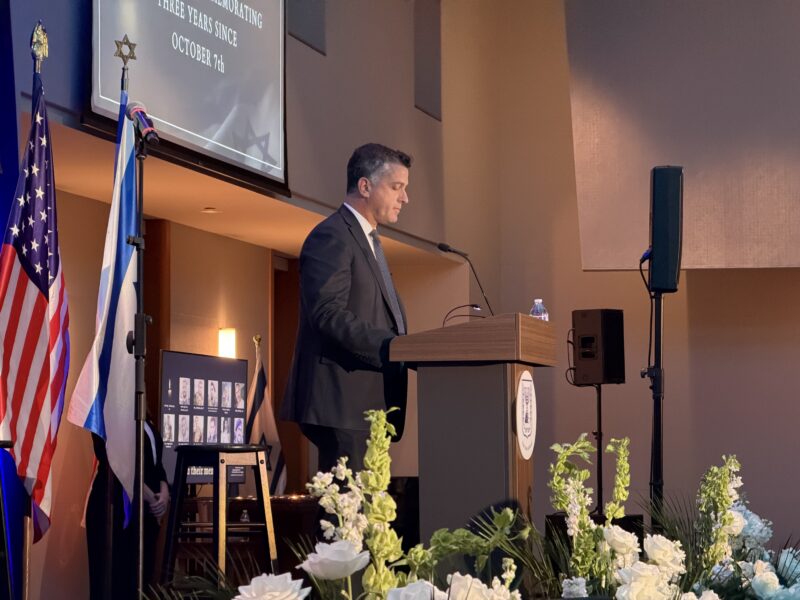
Administration officials join bereaved families for Oct. 7 commemoration event

CAMPAIGN BLITZ
AIPAC’s super PAC wades into Michigan Senate race
Daily Overtime
Mamdani resists DSA over Tisch tensions

CONTROVERSIAL COCKTAIL
Busboys and Poets CEO Andy Shallal adds ‘Free Palestine’ drink to menu, alienating Jewish patrons

PEACH STATE POLITICS
Ossoff defers to ICC on Israel genocide accusations, but says IDF violated int’l law
Please log in if you already have a subscription, or subscribe to access the latest updates.
 Continue with Google
 Continue with Apple