






























































The limits of partisan loyalty: Graham Platner and the politics of character
The unfolding situation in Maine comes amid a broader trend in American politics in which immoral or questionable behavior by one’s peers has at times been ignored or obfuscated to serve a perceived 'greater good'
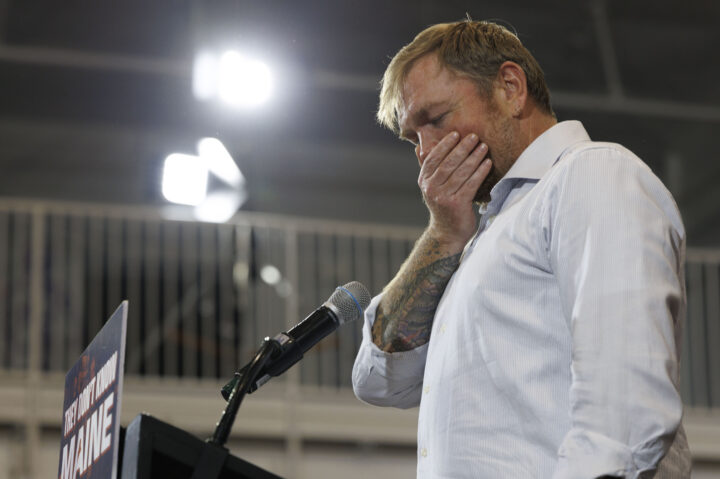
(CJ Gunther/Getty Images)
Democratic U.S. Senate candidate Graham Platner speaks at his Primary Election event on June 9, 2026 in Blue Hill, Maine.


 Add JewishInsider on Google
When an ex-girlfriend of Graham Platner told Politico in a story published on Monday that the Maine Democratic Senate candidate had raped her in 2021 after entering her home while heavily intoxicated, she said she did so because the response to a recent New York Times report on Platner’s past dubious behavior had focused on discrediting Lyndsey Fifield, one of the women who featured prominently in the story, over her ties to the GOP.
Jenny Racicot, a Democrat, hadn’t wanted to go public with the rape accusation (which she had shared off-record with the Times), in part because she and Platner were largely politically aligned. “One of the reasons I didn’t come forward sooner was, the huge moral conflict that I had between supporting his politics, but not supporting him as a person,” Racicot told Politico. “My part of the story [in the NYT] was just a read-over,” Racicot said. “And the story was Lyndsey, and the accusations of her being politically motivated.”
The unfolding situation in Maine comes amid a broader trend in American politics in which immoral or questionable behavior by one’s peers has at times been ignored or obfuscated to serve a perceived “greater good” of electing a political ally despite their failing moral standards.
In recent years, both major parties have increasingly tolerated conduct that would have once been considered disqualifying — even as the #MeToo movement briefly changed the nature of the discourse. Similar arguments have surfaced across political controversies over the last decade (including against President Donald Trump), with supporters of embattled candidates and officials insisting that policy positions outweigh personal conduct and dismissing allegations as politically motivated.
In a short span of time, the 2017 rallying cry of “Believe women” gave way to “Believe women whose politics align with ours” — a mindset that extended to the widespread denial of Hamas’ sexual violence during the Oct. 7, 2023, terror attacks and against the Israeli hostages kept in captivity in Gaza.
But yesterday’s Politico report, which prompted calls from Platner’s most prominent backers — including Rep. Ro Khanna (D-CA) and Sens. Elizabeth Warren (D-MA) and Ruben Gallego (D-AZ) — for him to end his bid, may mark the point at which previous defenses of the Maine Democrat become politically untenable.
Since shortly after the launch of his campaign, Platner — a virtual unknown before last summer — has faced numerous controversies, from his tattoo of an SS totenkopf to Reddit comments praising Hamas tactics to the revelation that he exchanged inappropriate messages with numerous women despite being married. The Wall Street Journal reported last month that Platner’s vetting process — normally a weeks-long process — took place in a matter of days, expedited by Platner’s top strategist and done at a fraction of the cost of a standard background check, which likely would have flagged at least some of these issues.
Yet none of those allegations proved politically fatal — and Platner ended up winning the Democratic primary with 72% of the vote. Platner’s defenders echoed the rhetoric of many of Trump’s early backers: that the party establishment had targeted him, that the media had unfairly covered the incidents and that a candidate’s positions, rather than their personal lives, should be on the ballot.
Unlike Trump, who was weeks away from his 2016 presidential victory when the infamous “Access Hollywood” tape leaked, Platner had only recently clinched his party’s nomination after Gov. Janet Mills ended her bid. He can still be replaced on the ballot, provided he exits the race by next Monday, though any new candidate will face a much more difficult battle against Sen. Susan Collins (R-ME) in what had been the Democrats’ best hope for a pickup and control of the Senate.
Now, the question is whether American politics still has a meaningful threshold beyond which partisan leanings give way to concerns about character and ethics — or whether that threshold has simply become much higher than it once was.
More Stories
CAMPAIGN OFFENSIVE
Rogers calls El-Sayed ‘threat to our national security’ in new ad

analysis
Sounds of silence: Texas Dems decline to speak out against Piker before his UT event

CAMPUS IN FOCUS
Federal commission highlights campus antisemitism concern, rebukes WH response

MEA CULPA
Montgomery County schools superintendent admits missteps on antisemitism, pledges action

PARTY OUTREACH
DNC bids to reengage Jewish voters with new constituency council ahead of 2028

BILL TABLED
Senate Judiciary Committee cancels planned markup of buffer zone bill
Please log in if you already have a subscription, or subscribe to access the latest updates.
 Continue with Google
 Continue with Apple