

























































Trump’s Turkey bet is Israel’s headache
The potential for the sale — one that strikes at the heart of Israel's qualitative military edge in the region — is fueling anxiety in Israel
(Win McNamee/Getty Images)
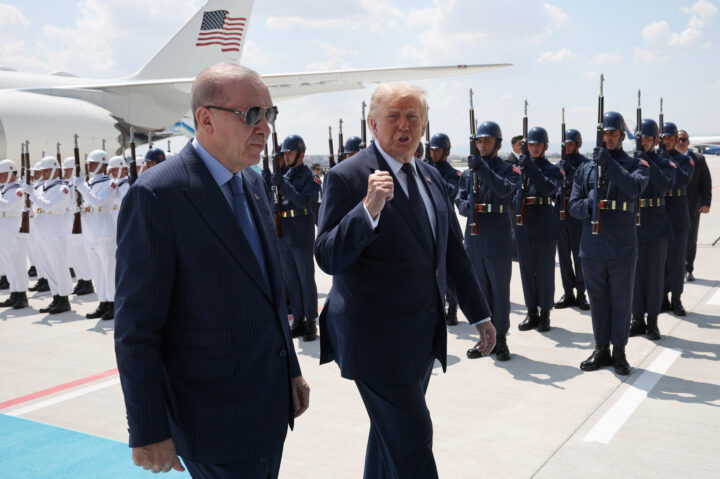
U.S. President, Donald Trump (R), speaks to Turkish President, Recep Tayyip Erdogan, as he arrives at Etimesgut Air Base for the annual NATO Summit on July 7, 2026 in Ankara, Turkey.


 Add JewishInsider on Google
Is President Donald Trump about to throw Israel under the … fighter jet?
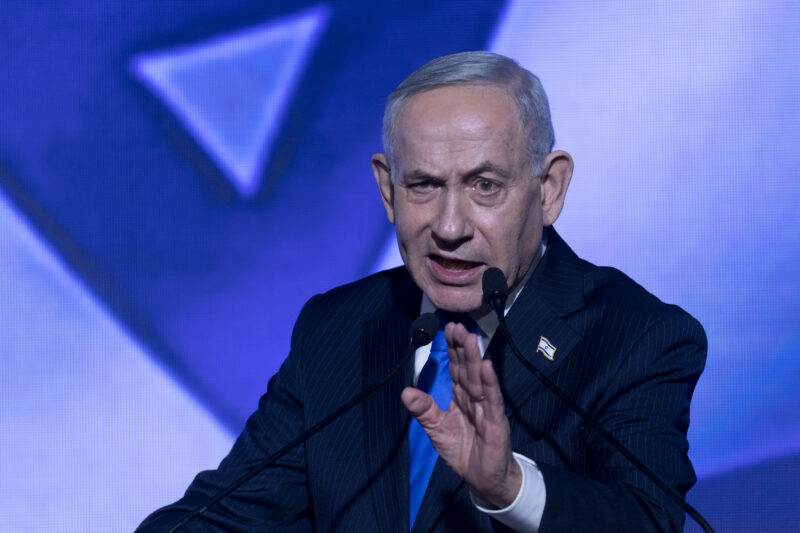
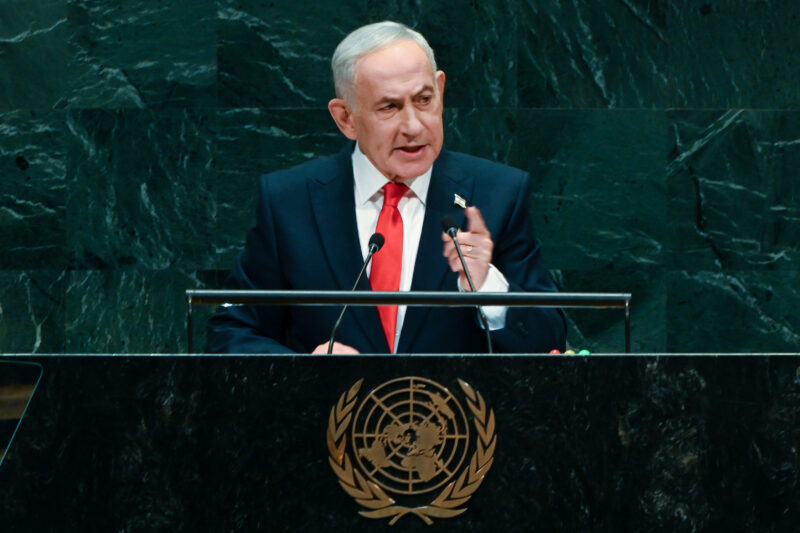
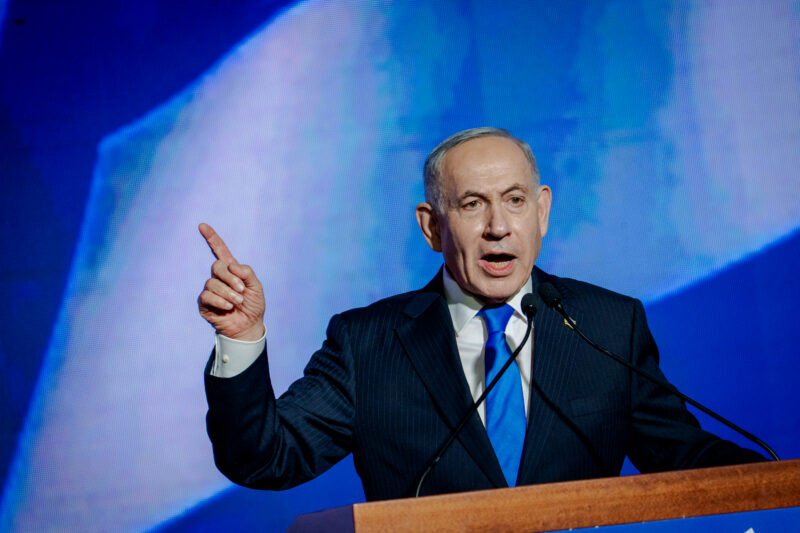
The F-35 may be a stealth jet, but the Trump administration’s likely sale of the highly sophisticated planes to Turkey is creating a very out-in-the-open rift between Jerusalem and Ankara. It pits two strongmen of the type that Trump purports to admire — Israeli Prime Minister Benjamin Netanyahu and Turkish President Recep Tayyip Erdoğan, both of whom are vying to be a kind of Mideast “favorite son” to the mercurial American president — against each other.
The potential for the sale — one that strikes at the heart of Israel’s qualitative military edge and could tilt the balance of power in the region — is fueling anxiety in Israel. So much so that Netanyahu took to Fox News on both Sunday and Monday to detail Turkey’s long anti-Israel “rap sheet.” And this comes after harsh words by both Trump and Vice President JD Vance about Israel’s isolation on the world stage.
Israeli foreign policy analysts are also raising red flags. “Defining [Turkey] as an enemy would be a mistake, but it is clearly a rival that openly acts against the State of Israel and promotes a vision that includes Israel’s destruction,” Avner Golov, vice president of national security consulting firm MIND Israel and former senior director at the Israeli National Security Council, told JI.
The relationship between the two regional superpowers, however, hasn’t always been this strained. Just three years ago, Netanyahu met with Erdoğan on the sidelines of the U.N. General Assembly, and the two leaders were planning reciprocal visits. But about a month later, Hamas launched the Oct. 7 attacks against Israel and regional dynamics were rocked with the multifront war that followed.
Turkey has repeatedly claimed that Israel was committing genocide in Gaza, and the rhetoric only escalated, followed, eventually, by action. Last week, after years of deliberation, Israel officially recognized the Armenian genocide, a move that deeply displeased Ankara. Then came the Trump administration’s moves to allow Turkey back into the F-35 program, which deeply troubled Israeli decision-makers.
In his comments to Fox, Netanyahu listed Jerusalem’s grievances against Turkey, including: supporting Hamas; failing to assist in the struggle against Iran (even though in 2022, the Mossad and the Turkish MIT, headed then by Hakan Fidan, now the foreign minister, thwarted an Iranian cell actively targeting Israeli citizens); occupying half of Cyprus and even threatening to conquer Jerusalem. Netanyahu then delivered his punch line: “They are not like us. We, Israel and the U.S., share the same values.”
But the potential F-35 fighter jet sale is a complex one for Israel. Turkey was actually part of the program once before, but was expelled from it during the previous Trump administration over its purchase of a Russian air-defense system.
“Turkey used to be our friend, we used to train together, so they were not part of our demand within the framework of the Qualitative Military Edge,” a former Israeli Air Force planner told Jewish Insider. “And here we find ourselves in a problem: Turkey was a member of the project, and we are not” — though Israel has received F-35s despite not being an official partner.
“The Turks were thrown out of the project,” the former planner said, “because of internal matters between them and the U.S. But Turkey is very hostile to us, and it is not good for it to receive such an advanced system whose greatest advantage is the richness of the image that the pilot himself has in the cockpit.”
According to Golov, “In practice, Turkey is leading a Muslim Brotherhood camp that combines military power, diplomatic influence alongside Qatar, nuclear capabilities through Pakistan and a drive to establish a presence on Israel’s borders in Egypt, Jordan and Syria. It is also leading the delegitimization campaign against Israel in the West. Preserving Israel’s military superiority vis-à-vis the Turkish threat is therefore a critical Israeli interest, both in order to restrain Erdogan and, in my view, to pursue diplomatic superiority.”
Israeli officials believe that the die has been cast, and the deal will move forward. Does this mean there will soon be a Turkish F-35? Not necessarily. There is still a long way to go, but Israel is banking on two things: first, that Congress will raise objections, as lawmakers have already begun to do, and second, that the highly complex bureaucracy inherent in the stealth fighter jet program will run its course and delay the matter further.
Dan Shapiro, former U.S. ambassador to Israel, thinks that even after Turkey acquires the F-35, Israel and its air force will be years ahead. “As the United States insists that NATO allies do more to provide for their own security, it will be more difficult to deny a key NATO partner top-line U.S. equipment. So an F-35 sale to Turkey is increasingly likely,” he told JI.
“Rather than try to block it,” Shapiro continued, “Israel should focus on the understandings the United States should seek to ensure Turkish capabilities do not pose a threat to Israel’s security. Israel will be more than a decade ahead of any Turkish F-35 capability. But to ensure Israel stays ahead and can maintain access to this capability, Israel needs to take into account the totality of its relationship with, and standing in, the United States.”
The harsh, even painful words from Vance regarding Israel’s current standing in the world, and his assertion that Trump remains the only one by Israel’s side, spark exactly that anxiety. If this is what Trump is doing now, by likely allowing the sale of the F-35, what will come next? Israel, for now, is left with the question of how it maintains the sense that, ultimately, the Jewish state is the “model ally” for the United States, regardless of the political climate in Washington.
More Stories
exclusive
Gottheimer urges DOJ to investigate N.J. city for antisemitic discrimination
PHOTO OP
Letitia James opponent met with Black Hebrew Israelite group

SEEDS OF PEACE
Slotkin defends El-Sayed, says not all Jewish voters have the same priorities

MEA CULPA
Montgomery County schools superintendent admits missteps on antisemitism, pledges action

Daily Kickoff
Israelis land in Saudi, miraculously
EARLY ADOPTER
El-Sayed accused Israel of genocide before Gaza ground war began
Please log in if you already have a subscription, or subscribe to access the latest updates.
 Continue with Google
 Continue with Apple