






















































Israel’s Iran playbook: watch, wait, warn
Israeli officials have increasingly indicated that Jerusalem is ready to return to military action if it determines that circumstances demand it
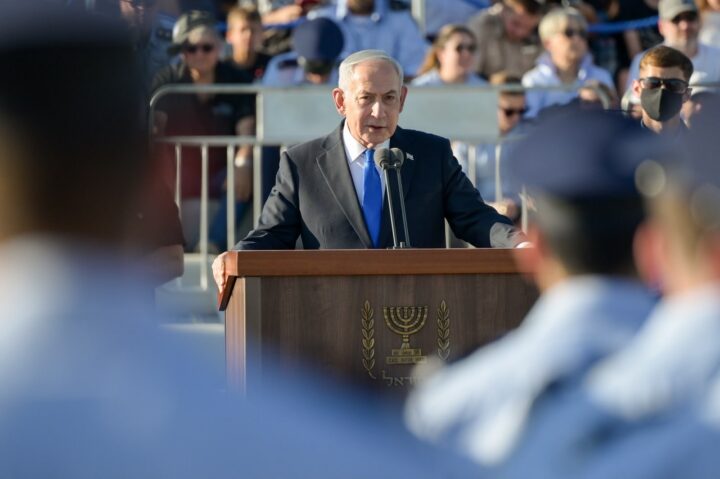
Ma'ayan Toaf (GPO)
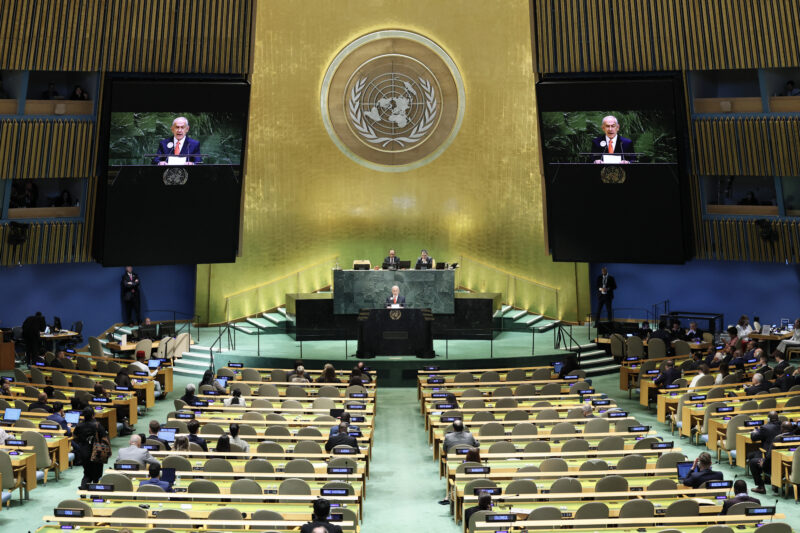
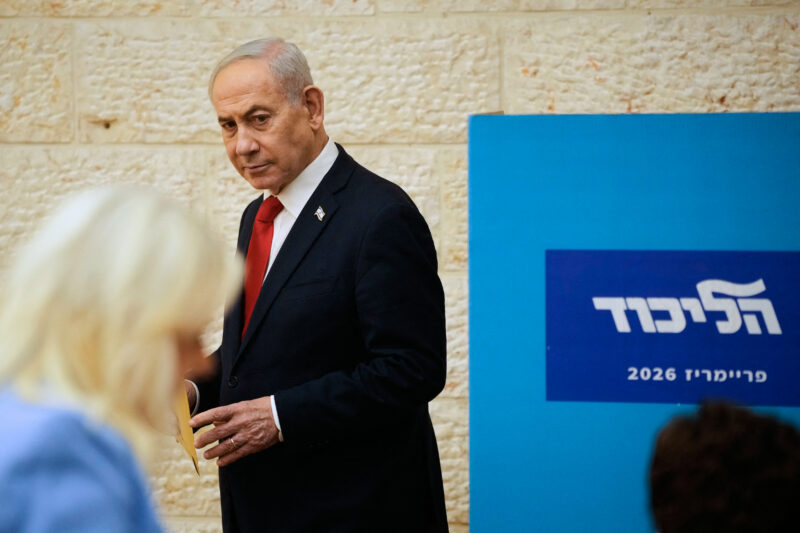
Israeli Prime Minister Benjamin Netanyahu speaks at the graduation ceremony of the IAF pilots' course, July 9th, 2026


 Add JewishInsider on Google
After several days of watching from the wings as the United States has conducted strikes against Iran, Israeli officials have increasingly indicated that Jerusalem is ready to return to military action if it determines that circumstances demand it.
Israeli Ambassador to the U.S. Yechiel Leiter told CNN on Thursday that Jerusalem is “supportive of the position of the United States” and would “fly alongside U.S. aircraft” if called on to do so.
At an Israeli Air Force graduation ceremony the same day, Defense Minister Israel Katz said the IDF is prepared to “regain air superiority and carry out ‘blue-and-white’ [Israeli] strikes in Iran to remove threats — even for a third time,” warning that it would be with “even greater force” than before. Meanwhile, IDF Chief of Staff Lt. Gen. Eyal Zamir told graduates that “on the drawing board are new plans. Major operations are still expected to lie ahead of us. Be prepared.”
Prime Minister Benjamin Netanyahu reinforced that message in his remarks at the ceremony. While celebrating the outcome of Operations Rising Lion and Roaring Lion, he made clear that Israel does not view the conflict with Iran as settled. “Our policy is clear: With an agreement or without an agreement, Iran will not have nuclear weapons,” Netanyahu said. He added: “The war is not yet over. Alongside old challenges, new ones are emerging. Axes fall, and axes rise. We are turning our attention to this. We are prepared for any scenario.”
Security analysts say the messaging reflects a desire to preserve military pressure without committing to another immediate campaign. Yoni Tobin, a senior political analyst at the Jewish Institute for National Security of America, told Jewish Insider, “While Israel isn’t exactly clamoring for more combat with Iran, particularly after nearly three years of multifront war, it is certainly ready for it.” Tobin noted that “Israel will likely feel comfortable acting against Iran if the United States does so as well, and if the two countries are aligned on objectives and strategy.”
David May, a senior research analyst at the Foundation for Defense of Democracies, said the memorandum of understanding “should be seen as part of the process of ending the fighting between the United States and Iran, not the final agreement.”
“Washington needed the Strait of Hormuz opened urgently, but Iranian provocations have prevented the strait’s return to normal. Iran has always tried to cheat on the margins of deals with the United States — even with favorable agreements — to test American resolve,” May continued. “With the terms of the MOU so favorable to Iran, Tehran would have been wise to abide by the deal but didn’t, thanks in part to internal divisions. The renewed fighting will hopefully lead to the MOU being scrapped and replaced by a more reasonable peace agreement.”
“Israel has enjoyed the relative quiet and is feeling a bit shaky over its exclusion from ceasefire talks,” May posited. “But open conflict with the Islamic Republic remains a likely possibility.”
At the same time, the current situation may be more complicated than the public rhetoric suggests. Ran Zimmt, director of the Iran and Shiite Axis research program at the Institute for National Security Studies, wrote in an op-ed for Ynet that both Washington and Tehran would prefer to avoid a return to full-scale war.
“In this reality, the most likely scenario at this stage appears to be a continuation of the current situation: not a full-scale war, but also not a long-term diplomatic arrangement,” Zimmt wrote. “From Israel’s perspective, this reality seemingly has clear advantages. The military option remains on the table, and Iran does not enjoy a broad package of economic benefits that could strengthen the regime and allow it to invest significant resources in rebuilding its power.”
Zimmt warned, however, that while the status quo “may be preferable in the short term,” it does not “provide a stable solution, but at most a temporary pause,” during which Iran can rebuild its military capabilities.
More Stories

Daily Kickoff
Iran’s Claude cover

BEAN SET MATCH
Miznon’s green beans are the surprise ace of the U.S. Open

SELF-SCRUTINY
Most Middle East scholars say U.S. academia has lost its way since 9/11, survey finds

Daily Kickoff
Longhorns lock horns over Piker
Clinton’s Critique
Hillary Clinton: U.S. should take a ‘very tough position’ with Israel if Netanyahu reelected
FLAGGING FICTION
Blinken denies report he delayed Hamas offer to free hostages
Please log in if you already have a subscription, or subscribe to access the latest updates.
 Continue with Google
 Continue with Apple