
































How Hoyer’s team helped pro-Israel allies organize against left-wing opposition
In throwing his support behind Adrian Boafo, Hoyer is using his connections to party leaders and ties with pro-Israel groups to boost his hand-picked choice to the nomination for a safely blue seat
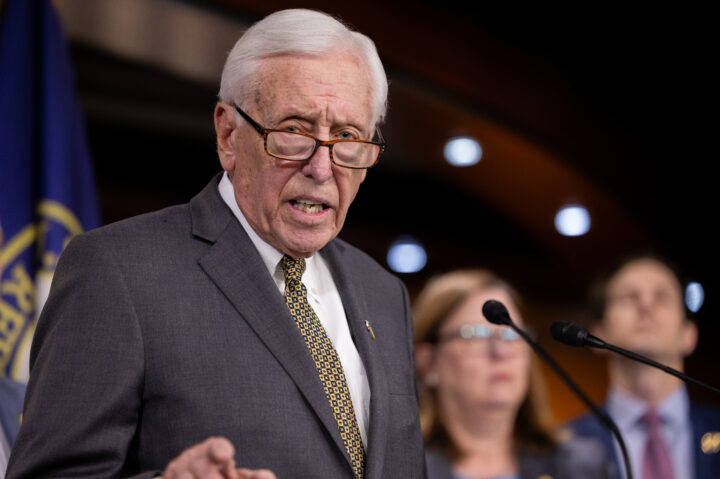
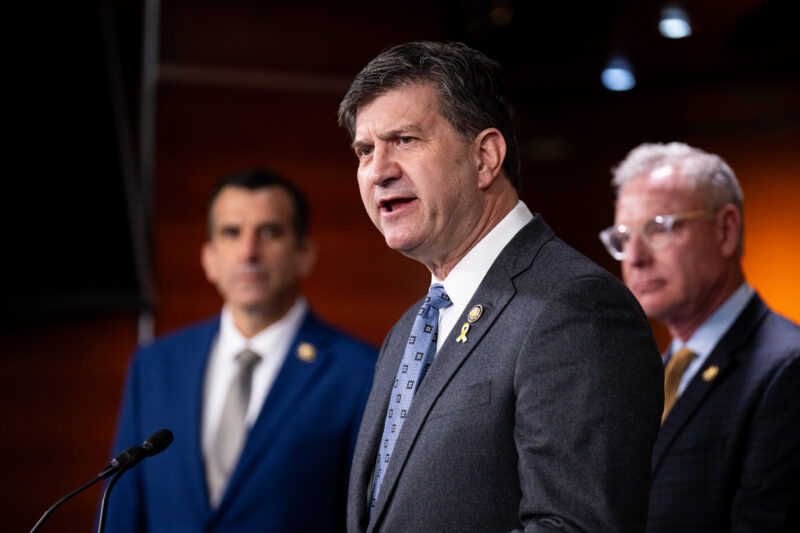
Nathan Posner/Anadolu via Getty Images
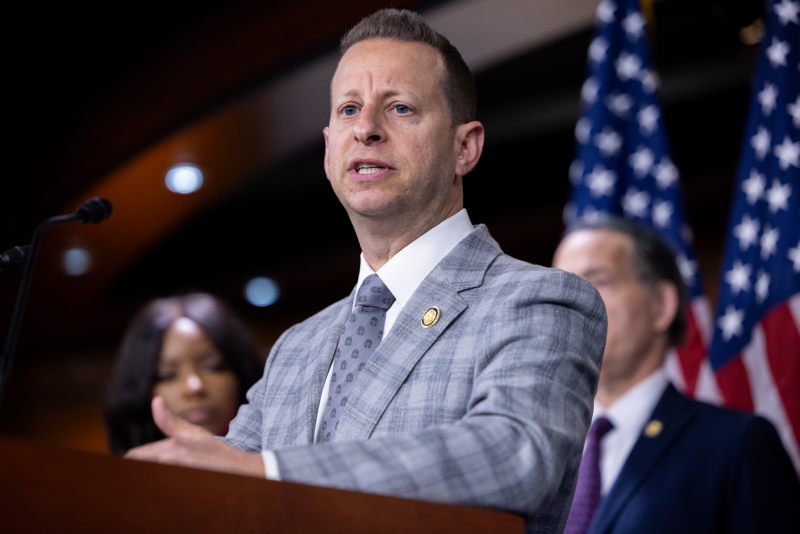
Congressman Steny Hoyer (D-MD) speaks at a press conference in Washington, DC on February 24, 2025.


 Add JewishInsider on Google
As Rep. Steny Hoyer (D-MD) prepares to step down at the end of his current term, the former Democratic House majority leader is staking his pro-Israel legacy on a little-known candidate who he hopes will uphold his long-standing commitment to maintaining a close relationship with the Jewish state.
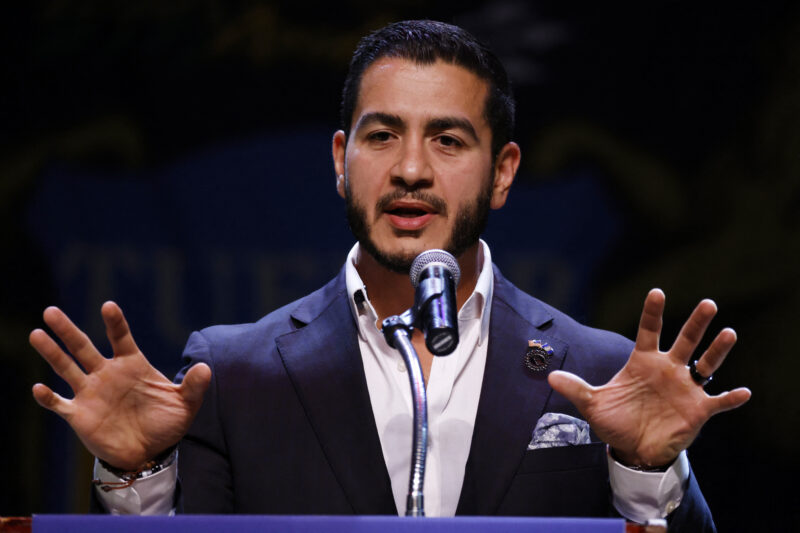
In throwing his support behind Adrian Boafo, a 32-year-old Maryland state delegate who is among nearly two dozen Democratic candidates running in Maryland’s 5th Congressional District primary on Tuesday, Hoyer, 87, is using his connections to establishment party leaders and ties with pro-Israel groups to boost his hand-picked choice to the nomination for a safely blue seat.
United Democracy Project, AIPAC’s super PAC, has emerged as the biggest spender in the race, investing more than $5.7 million as part of an aggressive effort to promote Boafo launched by Hoyer and his allies.
The well-funded foray is a useful illustration of the degree to which planning and organization helped put Boafo in contention for the seat Hoyer has held for 45 years, in contrast with recent primaries where UDP and other pro-Israel advocacy groups have been relatively cautious with their engagement while being outflanked by the far left.
A UDP source, granted anonymity to speak candidly about the race, said polling showed Boafo was not in the lead when Hoyer endorsed him in January. “It’s a super close race that could go either way,” the source told Jewish Insider on Monday, stressing a high level of undecided primary voters. “Many candidates are in contention.”
One Jewish Democrat in Maryland told JI that Hoyer “put a heavy finger on the scale” in the race, calling in “chits” with influential Democratic officials who gave endorsements to Boafo, such as Gov. Wes Moore and Sen. Angela Alsobrooks (D-MD) — both of whom are featured in UDP’s ad blitz that began late last month.
Boafo also gained support from Democratic Majority for Israel’s super PAC led by Brian Romick, a former longtime senior aide to Hoyer. The group backed him on its first slate of non-incumbent endorsements not long after Hoyer had expressed his preference in the race. Boafo is a former campaign manager for Hoyer.
In New York City’s closely watched primaries on Tuesday, meanwhile, UDP and DMFI PAC have largely been absent from key races where far-left challengers are threatening to unseat pro-Israel incumbents. Polling has indicated that Rep. Dan Goldman (D-NY) is facing long odds against Brad Lander, a former city comptroller, while Rep. Adriano Espaillat (D-NY) hopes to fend off Darializa Avila Chevalier, a democratic socialist insurgent with a long record of anti-Israel activism.
Both Lander and Avila Chevalier have been buoyed by endorsements from New York City Mayor Zohran Mamdani — who is using his own early political capital on a risky gambit to help lift a slate of candidates that has angered the Democratic establishment.
Mamdani has also joined forces with the Democratic Socialists of America’s New York City chapter, which is flexing its local organizational muscle to help Avila Chevalier and Claire Valdez, a state assemblymember who is facing off against Brooklyn Borough President Antonio Reynoso, a progressive backed by retiring Rep. Nydia Velazquez (D-NY).
Even as far-left super PACs like American Priorities, a new group created to counter AIPAC’s spending in Democratic primaries, have been surging money into New York City, UDP has remained on the sidelines — with the exception of money it recently funneled to a pro-Espaillat super PAC disclosed in campaign filings late last week. Still, the pro-Israel group has not been directly engaged in New York City, despite its historic support for Goldman and Espaillat.
UDP has reason for caution, as AIPAC’s brand has become toxic among a growing number of Democrats who have vowed to reject its support and view it as a noxious presence in contested primaries.
Pro-Israel activists speculated UDP chose to stay out of a crowded House contest in New Jersey this month featuring some credible moderate candidates because it had earlier bungled its involvement in another race in the state with an aggressive spending strategy that inadvertently helped elevate a far-left Israel critic to a seat in the House.
In the June primary, some Jewish leaders in New Jersey questioned if UDP’s lack of involvement had helped the nominee, Adam Hamawy, avoid credible opposition — even as he faced scrutiny over his past ties to a radical Muslim cleric convicted of terrorism.
Now, however, UDP is embracing a more proactive approach in Maryland as it seeks to push Boafo past the finish line on Tuesday, in a maneuver suggesting that it is comfortable courting a moderate voter base that Hoyer has represented as a staunch supporter of Israel as well as a close AIPAC ally.
While UDP has faced backlash from the left, the response has been largely reactive. In recent weeks, for instance, the group has drawn criticism from Sen. Chris Van Hollen (D-MD), a vocal detractor of Israel, who has accused AIPAC and crypto-linked interests in the race of “trying to buy” the seat, which extends southward from the eastern Washington suburbs of Prince George’s County. Van Hollen has not made an endorsement in the race.
Meanwhile, three Democratic primary candidates, including Capitol Police officer Harry Dunn, former Prince George’s County Executive Rushern Baker and businesswoman Quincy Bareebe, teamed up to decry the flood of outside spending that is shaping the race.
“Special interests don’t spend money out of civic goodwill,” Baker said last week. “They spend the kind of money that we see because they expect someone to work for them.”
Dunn, who faced opposition from UDP in a separate race last cycle, has claimed Boafo is “benefiting from the MAGA donors who fund AIPAC.”
In an unusual move, UDP released an ad last week seeking to counter the negative attention in which Hoyer himself spoke in a direct-to-camera appeal.
“You’ve probably seen the attacks on Adrian Boafo,” Hoyer said. “Let’s get something straight. Adrian is a man of deep integrity. He has the courage to stand up to any special interest. I trust him. You can, too.”
For his part, Boafo pledges on his campaign site to “strengthen the U.S.-Israel alliance and ensure” it “has the security assistance it needs to defend itself,” but has distanced himself from UDP, saying in response to Van Hollen’s remarks “that big money has no place in politics.”
His comments illustrate how even as AIPAC seeks to build new relationships amid declining support from Democratic members, its preferred candidates are — at least publicly — keeping the group at arm’s length.
If Boafo prevails in Tuesday’s primary, though, his victory could also help AIPAC to reset the narrative, while providing the group with a potential blueprint for engagement in future races as it seeks to fend off the anti-Israel left.
More Stories
TOUR TROUBLE
Macklemore dropped from Ed Sheeran’s U.S. tour after venues refuse to host him over anti-Israel activism
scoop
Tenney calls on Treasury to weigh anti-boycott penalties for U.K., countries sanctioning Israeli settlements

Democracy Deficit
New report warns civics education crisis is fueling antisemitism, eroding support for Israel

Daily Overtime
Miznon’s U.S. Open upset
analysis
Pappas wins New Hampshire Senate nomination over anti-Israel Dem activist
CAMPUS CAUCUS
Gottheimer, Stefanik launch caucus to combat antisemitism on college campuses
Please log in if you already have a subscription, or subscribe to access the latest updates.
 Continue with Google
 Continue with Apple