

















Trump-Netanyahu bromance returns with Nobel Peace Prize nomination
The Israeli prime minister also expressed an openness for a new relationship with Syria after Trump removed sanctions on the country
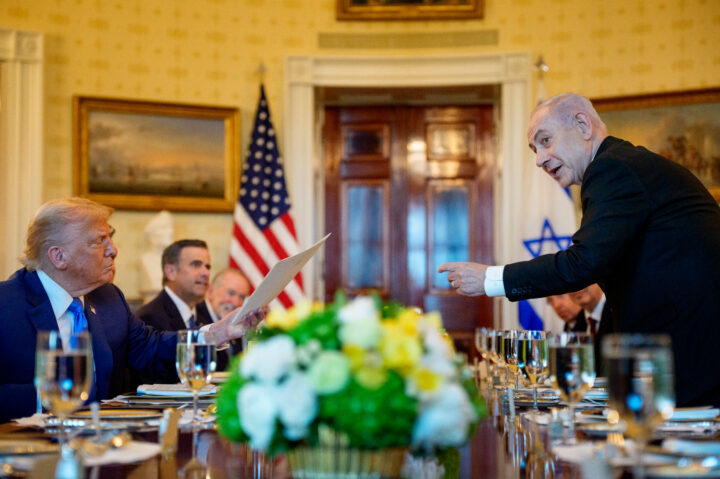
Andrew Harnik/Getty Images
Israeli Prime Minister Benjamin Netanyahu hands off a letter he sent to the Nobel Peace Prize committee to nominate U.S. President Donald Trump for the Nobel Peace Prize during a dinner in the Blue Room of the White House on July 07, 2025 in Washington, DC.


 Add JewishInsider on Google
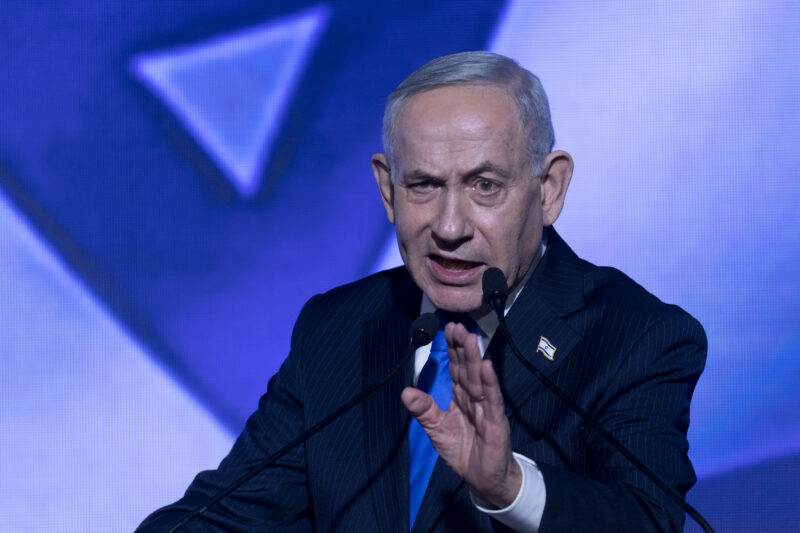
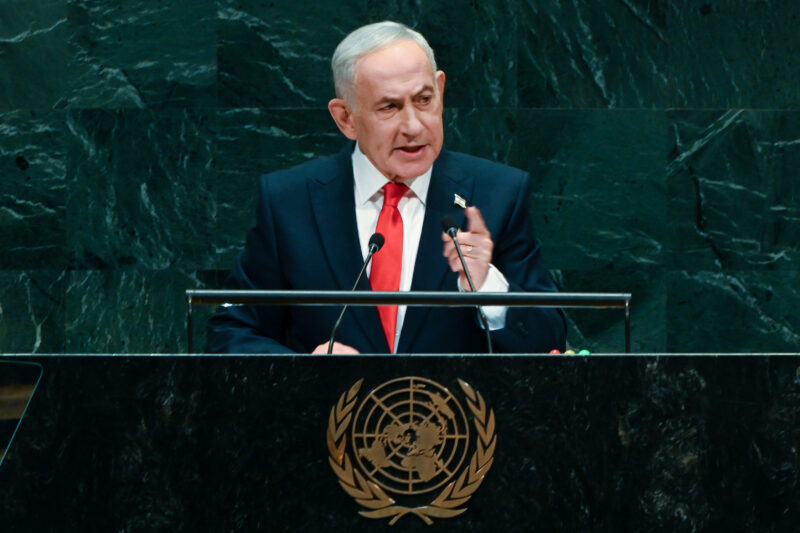
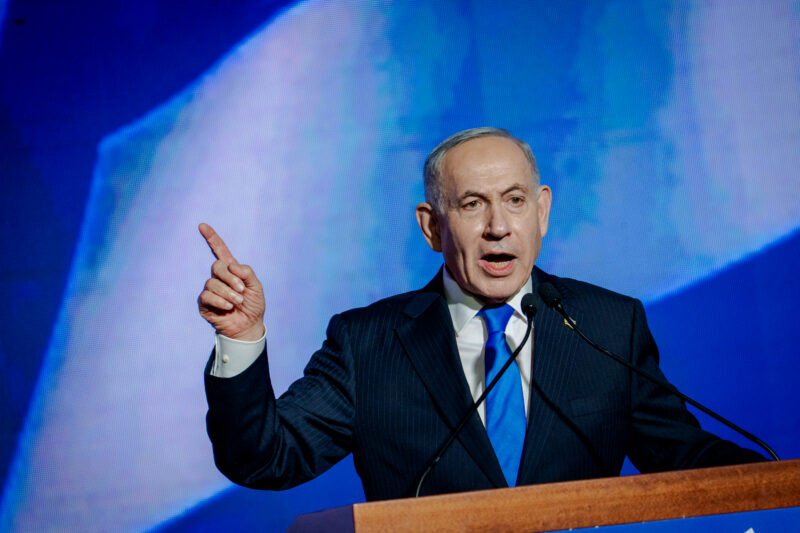
Israeli Prime Minister Benjamin Netanyahu greeted President Donald Trump in the White House Monday evening with effusive warmth, expressing the “appreciation and admiration” of Israel, the Jewish people and “the leadership of the free world” for the U.S.’ recent bombing campaign against Iran’s nuclear facilities.
He also offered Trump an avenue toward his elusive goal: receiving a Nobel Peace Prize.
“He is forging peace as we speak, in one country and one region after the other. So I want to present you, Mr. President, the letter I sent to the Nobel Prize Committee,” Netanyahu announced, saying it would be a “well-deserved” honor for Trump.
“Coming from you in particular, this is very meaningful,” Trump said. “It’s a great honor.”
Similar exchanges of flattery are not an unusual occurrence in the Trump White House. But the warmth and back-slapping present a marked shift even from Netanyahu’s last visit to Washington in April — when he sought to head off U.S. tariffs and urge Trump not to make a nuclear deal with Iran — and a sign of how much has changed in the last three months.
In April, Netanyahu avoided reporters’ questions about Iran. This time, he and Trump took a victory lap together after a 12-day war in which Israel, with key support from the U.S., exacted significant damage on Iran’s nuclear program.
“It was an amazing job,” Trump said of the American bombers’ attacks on three nuclear sites in Iran. “This stopped a lot of fighting. When that happened, it was a whole different ballgame.”
Asked whether he would support additional strikes on Iran, Trump said that he “can’t imagine wanting to do that,” saying that he thinks Iran wants peace.
“They want to meet. They want to work something out. They’re very different now than they were two weeks ago,” Trump said. He ceded the floor to Netanyahu when a reporter asked if the war between Israel and Iran was over.
“I think the partnership between Israel and the United States, the partnership between President Trump and me, produced a historic victory. It’s an incredible victory,” Netanyahu said. He likened Iran to a tumor, noting that doctors must still check in on cancer patients after a tumor has been removed.
“You have to constantly monitor the situation to make sure that there’s no attempt to bring it back,” Netanyahu said. “This has already changed the face of the Middle East, but it’s not over.”
Taking cues from Trump, Netanyahu offered tentative hope for a new relationship with Syria. Israeli leaders, including Netanyahu, have been cautious when considering how to deal with Ahmed al-Sharaa, the new president of Syria. Trump, meanwhile, has expressed optimism about al-Sharaa and moved to remove sanctions on Syria. The Trump administration on Monday removed Hayat Tahrir al-Sham, a group previously led by al-Sharaa, from its list of foreign terrorist organizations.
But on Monday, Netanyahu said there is an “opportunity to explore” with the new government in Israel’s northern neighbor — and gave Trump some credit for it.
“I think this presents opportunities for stability, for security and eventually for peace,” said Netanyahu. “I think that opportunity has been opened by the president and by the changed security situation, which we brought about with the collapse of the Assad regime.”
Trump and Netanyahu did not share much publicly about the recent reports suggesting a ceasefire deal between Israel and Hamas is under consideration.
When asked if he thinks there can be a two-state solution, Trump again handed the mic to Netanyahu.
“You have the greatest man in the world to answer that age-old question,” said Trump. Netanyahu said no.
“We’ll work out a peace with our Palestinian neighbors, those who don’t want to destroy us, and we’ll work out a peace in which our security, the sovereign power of security, always remains in our hands,” said Netanyahu. “People will say, ‘It’s not a complete state, it’s not a state, it’s not that’ — we don’t care. We vow never again.”
More Stories
BACK FROM THE GULF
Sen. Murphy accuses admin of ‘active cover-up’ of Iran war, vows to leverage funding to end war
CATCHING HEAT
Pro-Israel Democrats blast Mamdani for Oct. 7 anniversary statement
Daily Kickoff
Mamdani meets the vigil-antis
Daily Overtime
Slotkin sees no ‘Jewish vote’ in Michigan
LESSONS LEARNED?
Three years after Oct. 7, Israel’s security is ‘much better,’ but risks loom
POLICY PIVOT
On Oct. 7 anniversary, senior Democrats call for changes in U.S.-Israel policy
Please log in if you already have a subscription, or subscribe to access the latest updates.
 Continue with Google
 Continue with Apple