





























The conservative senator told a group of pro-Israel advocates that they should address the issue of Iranian nuclear dismantlement in meetings with Trump administration officials

Gabby Deutch
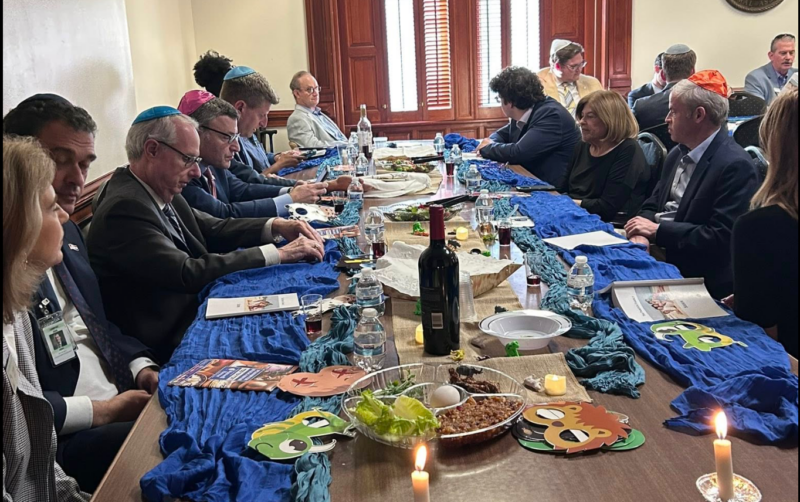
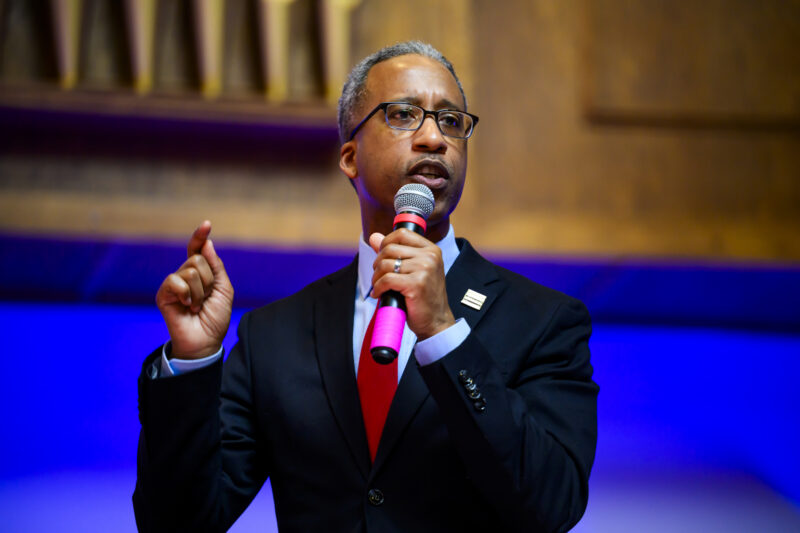
Sen. Ted Cruz (R-TX) speaks at a NORPAC advocacy event in Washington on May 20, 2025.


 Add JewishInsider on Google
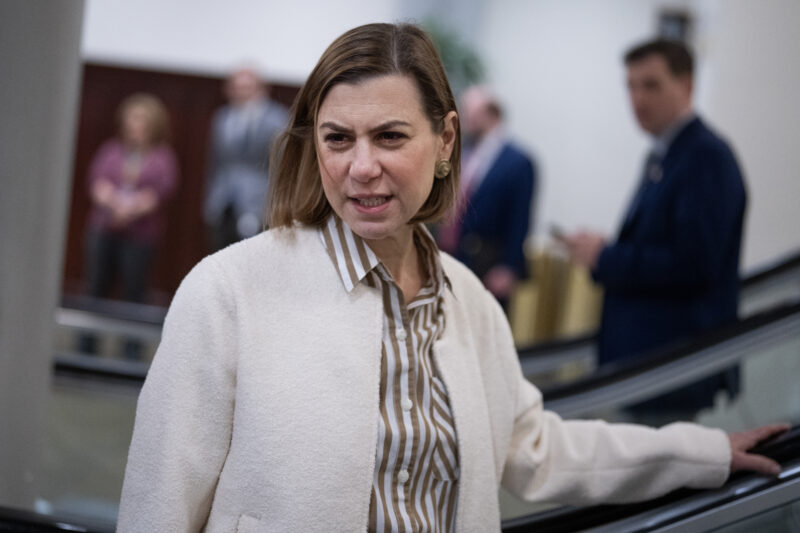
Sen. Ted Cruz (R-TX) said on Tuesday that he is concerned about the views of some of the officials in the White House shaping President Donald Trump’s Iran policy, marking the most critical comments yet from the hawkish senator about Trump’s approach to Iran.
He urged members of NORPAC, a pro-Israel advocacy organization, to raise the issue in their meetings with anyone in the Trump administration.
“We need clarity with the Trump administration, and as NORPAC talks to the administration, I would say, I worry there are voices in the administration that are not eager to hold up the president’s red line of dismantlement,” Cruz said at NORPAC’s annual Washington lobbying mission, referring to mixed messaging from some U.S. officials on the acceptable contours of a potential new nuclear agreement with Iran.
Cruz, a staunch opponent of the 2015 Iran nuclear deal negotiated by the Obama administration, has not formally come out against Trump’s negotiations with Iran, although he said in his remarks that he has “more than a little skepticism” that “this threat can be dealt with diplomatically.”
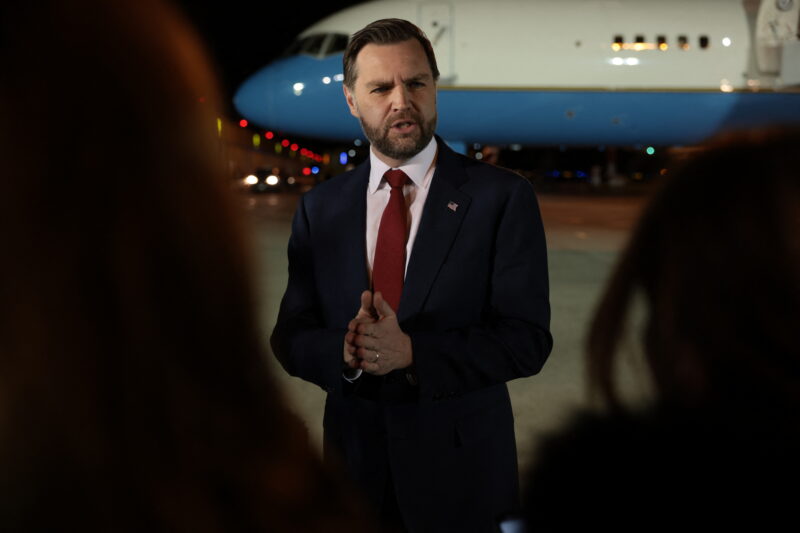
But in recent weeks, Cruz has challenged one talking point on the negotiations made by officials including Vice President JD Vance, Middle East envoy Steve Witkoff and Secretary of State Marco Rubio — that Iran should be allowed to maintain a civil nuclear program.
“There are some in the Senate who say, Well, Iran can have civilian peaceful nuclear power. Baloney. I see no reason for Iran to have anything nuclear whatsoever,” Cruz said Tuesday, echoing comments he has made in the past. “The only way to stop Iran from getting a nuclear weapon is to eliminate the centrifuges.”
Trump himself has offered mixed messages on how his administration is approaching the issue of nuclear enrichment. He said in early May that the goal of the Iran talks is “total dismantlement.” Days later, Trump said he had not yet decided whether Iran should be allowed to continue enriching uranium.
Witkoff has also walked back his earlier comments, saying last Sunday that “any deal between the United States and Iran must include an agreement not to enrich uranium.”
Plus, is Trump's Abrahamic Family House visit a harbinger for the region?

Pittsburgh Mayor Ed Gainey attends a May Day rally in Pittsburgh, May 1, 2025. (AP Photo/Gene J. Puskar)
Good Tuesday morning.
In today’s Daily Kickoff we interview religious freedom experts about the significance of President Donald Trump’s visit to the UAE’s Abrahamic Family House last Friday, and speak with strategists about the state of the Illinois Senate race following Rep. Lauren Underwood’s announcement that she will not be running. We also report on the threat by France, the U.K. and Canada to impose sanctions on Israel and a letter by a group of top House Republicans to Harvard University, questioning alleged connections to Iran and China. Also in today’s Daily Kickoff: Ronald Lauder, Sydney Altfield and Omer Shem Tov.
What We’re Watching
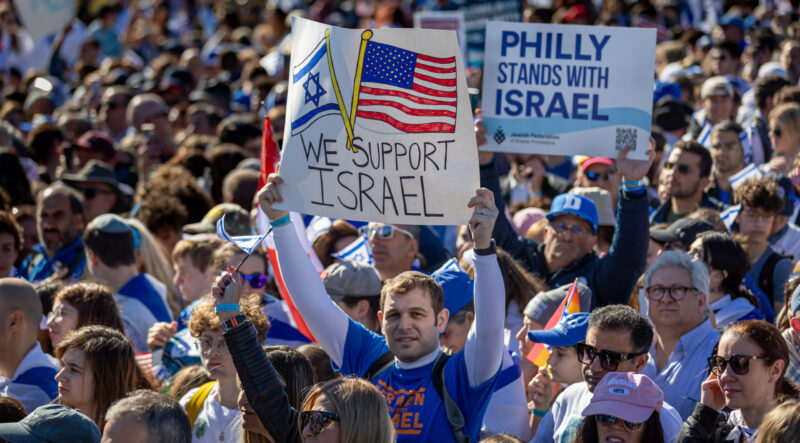
- NORPAC’s annual mission to Washington is bringing 1,000 allies to Capitol Hill to meet with members of Congress. Sens. Ted Cruz (R-TX) and John Fetterman (D-PA) will be speaking to attendees as part of the morning session.
- The Senate Foreign Relations Committee will hold a hearing with Secretary of State Marco Rubio on the State Department’s 2026 budget request. Rubio will also attend a hearing of the Senate Appropriations Committee’s State, Foreign Operations and Related Programs subcommittee on the president’s 2026 budget request for the State Department.
- The Senate Committee on Homeland Security & Governmental Affairs will hold a hearing on the Department of Homeland Security’s 2026 budget request with Homeland Security Secretary Kristi Noem.
- Reps. Chris Smith (R-NJ) and Jim McGovern (D-MA) will co-chair a congressional hearing of the Tom Lantos Human Rights Commission to conduct a global review of antisemitism. Speakers will include Ted Deutch, CEO of the American Jewish Committee; Marina Rosenberg, senior vice president for international affairs at the Anti-Defamation League; Eric Fusfield, director of legislative affairs at B’nai B’rith International; and Stacy Burdett, a consultant on antisemitism response and prevention.
- Tonight, the ADL will host its reception in Washington celebrating Jewish American Heritage Month. The National Museum of American Jewish Military History, along with AJC and Jewish War Veterans of the USA, will host a discussion in Washington, moderated by CNN anchor Wolf Blitzer, with three Jewish-American WWII veterans.
- The Qatar Economic Forum, sponsored by Bloomberg, kicked off in Doha today with an opening address delivered by Qatari Prime Minister Mohammed bin Abdulrahman Al-Thani. Other speakers today include Elon Musk; former CIA Director Gen. David Petraeus; Morgan Ortagus, the U.S. deputy special envoy to the Middle East; Mohammed Saif Al-Sowaidi, the CEO of the Qatar Investment Authority; and Marc Nachmann, global head of asset and wealth management at Goldman Sachs.
- The Middle East Forum 2025 Policy Conference continues today in Washington.
- The World Jewish Congress 17th Plenary Assembly concludes today in Jerusalem.
What You Should Know
A QUICK WORD WITH JI’s Matthew Kassel
As Pittsburgh’s bitterly contested mayoral primary concludes on Tuesday, the election represents the first major front in a broader proxy battle between moderate and progressive Democrats clashing over Israel and antisemitism, which could shape a range of developing contests at the state and federal levels.
The primary pits Mayor Ed Gainey, the progressive first-term incumbent whose record of commentary on Israel’s war in Gaza and handling of antisemitic activity have sparked backlash from Jewish leaders, against Corey O’Connor, a centrist challenger who is touting his long-standing ties to Pittsburgh’s sizable Jewish community and highlighting his support for Israel.
In recent weeks, the race has grown increasingly nasty, turning in part on escalating tensions over Israel’s war with Hamas that have coincided with a glaring uptick in antisemitic incidents. Pittsburgh police said on Monday, for instance, that they were investigating the distribution of antisemitic flyers in the heavily Jewish neighborhood of Squirrel Hill — following high-profile acts of vandalism last year at several Jewish buildings in the city.
While Gainey has condemned antisemitism, he has otherwise drawn criticism for declining to challenge efforts by far-left activists to bring an Israel boycott and divestment referendum to Pittsburgh voters. He has also stirred controversy for signing a joint statement addressing the one-year anniversary of the Oct. 7, 2023, attacks that made no mention of Hamas and used insensitive language that alienated even some of his closest Jewish allies on the far left.
During a candidate forum hosted last month by Pittsburgh’s Jewish Federation, which has publicly expressed disappointment with Gainey’s record on such issues, the mayor defended his approach to the failed ballot measures while acknowledging that his statement had caused offense. “I apologize for those mistakes,” he said, noting that if given the chance to redo the letter, he would first seek input “to discover exactly what’s wrong with the wording.”
Despite his contrition, many Jewish community members remain skeptical of the mayor, whose allies have spread false accusations that national pro-Israel groups such as AIPAC are spending to boost O’Connor, the Allegheny County controller. Last week, meanwhile, supporters of Gainey also circulated a letter in Squirrel Hill alleging that the Israel-Hamas war has been imported into the race as a pretext for “fake accusations of antisemitism” now being “used as a political tool to try to pry Mayor Gainey out of office.”
Jeremy Kazzaz, executive director of the Beacon Coalition, a local Jewish advocacy group whose political arm has donated to O’Connor’s campaign, said that even as most voters have been “focused on the basics” of city governance, “we can’t ignore that antisemitism has cast a shadow over this election.”
“The Jewish community isn’t imagining things,” he told Jewish Insider on Monday. “We’re responding to real, overt bigotry from voices elevated at the center of Mayor Gainey’s campaign.”
For his part, O’Connor, who grew up in Squirrel Hill and whose late father served as mayor, has said his relationship with the local Jewish community instilled in him a commitment to defending Israel and speaking out against antisemitism. In his discussion with the Jewish federation, he drew contrasts with Gainey on key issues, noting, for example, that he “absolutely” would have opposed the Israel divestment proposal.
“You need a mayor,” he argued, “who is going to be vocal to support and fight against antisemitism.”
While earlier polling had shown O’Connor with a wide lead over Gainey, who has struggled to assert himself in his race for reelection, some more recent surveys indicate the embattled mayor has narrowed the gap in the final stretch of the primary. Still, local political observers who spoke with JI predicted that O’Connor — who has outraised Gainey while locking up key endorsements — would ultimately prevail on Tuesday.
The heated race is a particularly vivid microcosm of intra-Democratic conflicts over Middle East policy that are poised to inflect House and Senate races in Illinois and Michigan next year. The gubernatorial primary in New Jersey and the mayoral race in New York City next month have also featured prominent divisions over Israel, now emerging as a top issue in the final weeks of the race.
RIPPLE EFFECT
Will Trump’s visit to UAE’s Abrahamic Family House inspire a regional shift?

Before President Donald Trump departed the Middle East last week, his motorcade made one final stop in Abu Dhabi, United Arab Emirates, before heading to the airport: a visit — the first by a U.S. president — to the Abrahamic Family House, a multifaith complex with Muslim, Christian and Jewish houses of worship. His tour, with stops inside the mosque, church and synagogue, underscored the message of tolerance that he shared in an address at a Saudi investment forum earlier in the week. Trump used the speech to call for Saudi Arabia to normalize ties with Israel, following the lead of the UAE, as well as Bahrain and Morocco. So could the Saudis similarly follow suit by creating an Abrahamic Family House of its own, or something similar to advance religious pluralism? Religious freedom experts tell Jewish Insider’s Gabby Deutch that’s highly unlikely.
Charting a course: “I think you won’t see a version of the Abrahamic Family House in another country. I think what you will see is each country, in their own way, doing similar things in the years to come,” said Johnnie Moore, an evangelical leader who met with MBS in 2018 as part of the first delegation of evangelical leaders to Saudi Arabia. “Obviously in Saudi Arabia, the baseline is different.” As the home of Mecca, the birthplace of Islam, Saudi Arabia has long been viewed as the standard-bearer for the Muslim world. In the UAE — a much smaller nation, where nearly 90% of residents are foreigners there for business purposes or as laborers — Islamic law has never been applied as strictly.
FORWARD FOCUS
Ronald Lauder defends his engagement with Qatar, hails Trump for ‘opening up’ Middle East to U.S.

After visiting Qatar with President Donald Trump last week, newly reelected World Jewish Congress President Ronald Lauder insisted on Monday on the need to engage with the controversial Gulf state to use whatever leverage it has to secure the release of the remaining Israeli hostages and work toward a resolution to the war in Gaza and the Israeli-Palestinian conflict more generally, despite its past support for terrorism and anti-Israel advocacy. Speaking to eJewishPhilanthropy’s Judah Ari Gross on the sidelines of the WJC meeting in Jerusalem, Lauder praised Trump for bringing Middle Eastern countries closer to the United States, which he said would also benefit Israel.
Qatar questions: “What Qatar did – what anyone did — is in the past. We can’t eliminate what was done in the past. The question is, can Trump and the emir, [Tamim bin Hamad Al Thani] — and I know the emir very well — can Trump and the emir turn things around and make it work? That’s the question,” said Lauder, who was reelected for another four-year term as president of the WJC on Monday. Asked if that engagement with Qatar has been effective so far, Lauder refrained from speculating. “I don’t know, but it didn’t hurt,” he said. “What I think that Trump did was open up the entire Middle East to America, and what’s good for America is also good for Israel. That’s the operative message there.”
Read the full story here and sign up for eJewishPhilanthropy’s Your Daily Phil newsletter here.
NOT RUNNING
Illinois Senate primary likely a toss-up, experts say, after Underwood declines to run

Rep. Lauren Underwood (D-IL) said on Monday that she would pass on an anticipated run for the Illinois Senate seat being vacated by Sen. Dick Durbin (D-IL) in 2026, leaving what’s likely to be a three-way race among Lt. Gov. Juliana Stratton and Reps. Raja Krishnamoorthi (D-IL) and Robin Kelly (D-IL), Jewish Insider’s Marc Rod reports.
State of play: Stratton is backed by billionaire Illinois Gov. JB Pritzker, as well as Sen. Tammy Duckworth (D-IL), while Krishnamoorthi has $19 million in the bank for the race and members of the Congressional Black Caucus are backing Kelly. Pritzker could put significant funding behind Stratton’s run and reportedly worked behind the scenes to block Underwood and other candidates from entering the race. Underwood, on CNN, denied that Pritzker had forced her to stay out of the race. A Jewish Democratic strategist, speaking on condition of anonymity to discuss the race candidly, told JI they see the Chicagoland Jewish vote — a sizable community — as largely still up for grabs given that none of the candidates have particularly deep ties to the Jewish community coming into the race. They said Jewish voters will likely take time to evaluate each of the candidates.
MOUNTING PRESSURE
France, U.K., Canada threaten sanctions against Israel

The United Kingdom, France and Canada threatened on Monday to take “concrete actions” and impose sanctions against Israel if it does not change its policies on humanitarian aid and the war in Gaza, as well as settlements in the West Bank. The statement from the three countries came in response to Israel’s announcement that it had begun an escalation in the fighting in Gaza, while allowing in a limited amount of food, 11 weeks after blocking all aid in an attempt to pressure Hamas to free more hostages, Jewish Insider’s Lahav Harkov reports.
What they said: The countries said they “strongly oppose the expansion of Israel’s military operations in Gaza. The level of human suffering is intolerable. Israel’s denial of essential humanitarian assistance to the civilian population is unacceptable and risks breaching International Humanitarian Law.” In addition, they said that the “basic quantity of food” to be allowed into Gaza “is wholly inadequate,” and that Israel must work with United Nations agencies. Israel and the U.S. have been working on an alternative mechanism to distribute aid rather than rely on U.N. agencies, which have not prevented Hamas from pocketing large quantities of aid and in some cases employed Hamas terrorists.
Making waves: Yair Golan, leader of the Israeli left-wing Democrats party, sparked backlash when he said in a radio interview this morning that Israel is on its way to becoming a pariah state, criticizing the war in Gaza: “A sane country does not wage war against civilians, does not kill babies for a hobby, and does not set goals involving the expulsion of populations.” His comments drew condemnation from both coalition and opposition members as well as President Isaac Herzog.
HARVARD IN THE CROSSHAIRS
Senior House Republicans question Harvard over Iran connections

A group of top House Republicans wrote to Harvard University on Monday, questioning the school about alleged work on research funded by the Iranian government, as well as members of the Chinese government, Jewish Insider’s Marc Rod reports. The letter accuses Harvard researchers of working with Chinese academics on research funded by the Iranian National Science Foundation, an entity chartered by the Iranian government and ultimately controlled by the Iranian supreme leader. It states that such work occurred at least four times since 2020, as recently as last year.
Signed on: The letter was signed by Reps. John Moolenaar (R-MI), Tim Walberg (R-MI) and Elise Stefanik (R-NY). Moolenaar is the chair of the Select Committee on the Chinese Communist Party, Walberg chairs the Education and Workforce Committee and Stefanik is the chair of House Republican Leadership.
TAKING THE HELM
Teach Coalition taps Sydney Altfield as national director

Sydney Altfield, a champion of STEM education, has been tapped as national director of Teach Coalition, an Orthodox Union-run organization that advocates for government funding and resources for yeshivas and Jewish day schools, Jewish Insider’s Haley Cohen has learned. She succeeds Maury Litwack, who founded the coalition in 2013 and served as its national director since.
Background: Altfield, who has held various roles with Teach Coalition for the past seven years, most recently served as executive director of its New York state chapter. In that position, she spearheaded STEM funding for private schools in the state and helped establish state security funding programs — two areas she intends to expand on a national level in the new role, which encompasses seven states: New York, New Jersey, Maryland, Florida, Pennsylvania, California and Nevada. “We’re at a very pivotal moment in Jewish day schools where the continuity of the Jewish people relies on Jewish education and having access to such. That also has to come at a quality education,” Altfield told JI in her first interview since being selected for the position. “It’s so important to understand that it’s not just about STEM but it’s about the entire Jewish education being high quality, something that’s accessible for everyone.”
Worthy Reads
What JD Vance Means: The Atlantic’s George Packer profiles Vice President JD Vance and speculates on the significance of his rapid political ascent. “Vance illuminates the larger subject of contemporary America’s character. In another age, his rise might have been taken as proof that the American dream was alive and mostly well. But our age has no simply inspiring and unifying tales, and each chapter of Vance’s success is part of a national failure: the abandonment of American workers under global neoliberalism; the cultural collapse of the working class; the unwinnable forever war; a dominant elite that combines ruthless competition with a rigid orthodoxy of identity; a reaction of populist authoritarianism. What seems like Vance’s tragic wrong turn, the loss of real promise, was probably inevitable — it’s hard to imagine a more hopeful plot.” [TheAtlantic]
Columbia Unbecoming:New York magazine’s Nick Summers catalogues Columbia University’s collapse amid antisemitism and pressure from the Trump administration. “As recently as October 6, 2023 — the day before Hamas attacked Israel — Columbia seemed a juggernaut. After decades of growth, the endowment was a fat $14 billion and buildings named for a new generation of megadonors were rising across 17 acres of new campus. After a global search, the university had selected a cosmopolitan new president, Minouche Shafik of the London School of Economics, to lead it into the future. But since that golden moment, the turmoil has been almost too much to catalogue. Endless protest and counterprotest. Campus lockdowns. Police raids. A president paraded before Congress. Students dragged before secretive discipline panels. One canceled commencement, two presidential resignations, and countless students wondering if ICE is inside their dorms. The strife is ongoing, and the campus is as miserable as ever. Columbia is a broken place.”[NYMag]
The Cuomo Conundrum:Politico’s New York editor Sally Goldenberg explains why former New York Gov. Andrew Cuomo is the odds-on favorite to become the next New York City mayor. “Among Cuomo’s rivals, no one has successfully zeroed in on why he’s so unpopular, or how to chip away at his strengths: Executive experience in a time of uncertainty, universal name recognition when few people are dialed into local politics, a trademark toughness that appeals to Democrats desperate to take on President Donald Trump. The candidates’ anti-Cuomo messages have yet to stick, but they are starting to put money behind them in TV ads and ramping them up on the campaign trail. Lander is calling him corrupt — a reference to his nursing home order during Covid and an attorney general’s report finding he sexually harassed women on his gubernatorial staff. Cuomo denies all wrongdoing and is pursuing aggressive legal recourse.” [Politico]
Desperate Diplomacy in Doha: The Wall Street Journal’s Anat Peled reports on a whirlwind effort by hostage families to meet with President Donald Trump and Qatari Emir Sheikh Tamim bin Hamad Al Thani during Trump’s Middle East tour, as part of a wider global effort to talk to anyone who will listen — and has the power to help. “Tears edged down Idit Ohel’s face as she showed U.S. special envoy Steve Witkoff and a senior Qatari official the video of her son, Alon, being kidnapped by Hamas into Gaza. An aide to the Qatari official, wearing a traditional Arab thawb, slid a box of tissues toward her. The gesture, at a hastily arranged meeting in Doha, encapsulated the awkward position the families of remaining Israeli hostages in Gaza found themselves in last week: They were dependent on a country that harbors Hamas to secure the freedom of loved ones captured in the Oct. 7, 2023, attacks. “It was a sensitive human moment between people where we put politics aside and there were only two human beings,” Ohel said of the encounter. “There was a lot of emotion, empathy and respect in it.” [WSJ]
Word on the Street
The Senate confirmed yesterday real estate developer Charles Kushner, father of Trump’s son-in-law Jared Kushner, to be ambassador to France. Sen. Cory Booker (D-NJ) was the only Democrat to vote in favor…
Senate Minority Leader Chuck Schumer (D-NY) introduced a bill on Monday to prevent foreign planes from being used as part of Air Force One’s fleet, Axios reported…
Democratic Majority for Israel is out with a new digital ad titled “Trojan Horse,” hitting President Donald Trump over his plan to accept a $400 million plane from Qatar. The ad will run on digital platforms in the Washington area…
The Trump administration reportedly first approached Qatar about the possibility of acquiring a Boeing 747 for use as Air Force One, contrary to Trump’s claims of it being offered as a gift…
Speaking at the annual Jerusalem Post conference in New York City on Monday, Special Envoy for Hostage Response Adam Boehler said about a hostage release deal, “I do think we’re closer than we ever were”….
Chabad social media influencer Yossi Farro wrapped tefillin with Boehler and prayed for the immediate and swift release of the hostages…
Also during the conference, New York City Mayor Eric Adams announced the formation of a new New York City-Israel Economic Council to boost business ties. Israel’s efforts on the council will be headed by Economy and Industry Minister Nir Barkat…
Sen. John Fetterman (D-PA) didn’t attend a committee hearing in 2025 until this month, according to a Bloomberg Government analysis…
Rachel Goldberg-Polin and Rep. Elise Stefanik (R-NY) will be speaking at Yeshiva University graduation on Thursday…
Ishan Daya stepped down from the Chicago Fiscal Sustainability Working Group just hours after being appointed and after Jewish Insider’s Gabby Deutch reported on his selection on Friday. Daya sparked backlash after he was filmed ripping down Israeli hostage posters shortly after the Oct. 7 Hamas terror attacks…
Leo Terrell, head of the DOJ Task Force to Combat Antisemitism, and Rabbi Yehuda Kaploun sent a letter yesterday to Francesca Albanese, the United Nations’ special rapporteur on the occupied Palestinian territories, accusing her of alleging that her “alarming campaign of letters targeting institutions that support or invest in the state of Israel” are “defamatory, dangerous, and a flagrant abuse of your office”…
Bloomberg journalist Jason Kao was one of the individuals arrested after storming Columbia University’s Butler Library earlier this month. An NYPD spokesperson confirmed to The Washington Free Beacon that Kao was charged with a crime, suggesting he was not covering the event in his journalistic capacity…
Eden Yadegar spoke to the Columbia Spectator about her experience becoming the face of pro-Israel activism at Columbia University after the Hamas terror attacks. She said, “It felt like I was experiencing, in many ways, a different university after Oct. 7, but I also felt like I was a different person experiencing that university”….
Britain plans to strengthen its powers to target state-sponsored terrorist threats after several Iranian-backed security incidents in recent weeks, U.K. Home Secretary Yvette Cooper said yesterday…
The New York Times spotlights the role of Israel and antisemitism policy in the New York City mayoral race, after candidate Zohran Mamdani rushed to correct reports that he refused to condemn the Holocaust…
A Washington Examiner analysis found that foreign agents working on behalf of Qatar have significantly increased their outreach to right-wing media, from just over 10% of their media engagement between January-November 2024 to more than half since Election Day…
A Haaretz exposé found that a pro-Qatar online influence campaign allegedly crafted by Prime Minister Benjamin Netanyahu’s aides continued even after the Oct. 7 Hamas attacks in Israel and the ensuing war in Gaza…
The Times of Israel interviews Orthodox Jewish musician Lenny Solomon, the subject of a new documentary “The King of Shlock,” which will be screened on Thursday at the DocAviv film festival in Tel Aviv…
Former hostage Omer Shem Tov threw the first pitch at the Boston Red Sox game on Monday during the team’s Jewish Heritage Night at Fenway Park…
Pic of the Day

Israeli-Russian IndyCar driver Robert Shwartzman, 25, on Sunday became the first Indy 500 rookie to win the pole since 1983. He used his win to call for peace in both Israel, where he was born, and Russia, where he was raised. “I just want peace in the world,” Shwartzman said. “I want people to be good, and I don’t want the separation of countries, saying, ‘This is bad country. This is good country.’ There is no bad or good. We’re all human beings, and we just have to support each other.” The Indy 500 will be held on Sunday, Memorial Day weekend.
Birthdays

Born in upstate New York as Michael Scott Bornstein, former Israeli ambassador to the U.S. and then member of the Knesset, Michael Oren turns 70…
CEO at Kings’ Care – A Safe Place, operator of multiple drug and alcohol rehabilitation and treatment centers, Ilene Leiter… Canadian businesswoman and elected official, she served in the Ontario Assembly and in the Canadian House of Commons, Elinor Caplan turns 81… Former member of the New York State Assembly until 2020, representing the 97th Assembly District in Rockland County, Ellen Jaffee turns 81… Former member of the U.S. House of Representatives (D-CT-2) for 20 years, he was born in a DP camp in Germany after World War II, Sam Gejdenson turns 77… Chagrin Falls, Ohio, attorney, Robert Charles Rosenfeld… CEO emeritus of the Jewish Community Relations Council of New York, Michael S. Miller… Seamstress and weaver, Bernice Ann Penn Venable… Retired in 2022 as a federal judge for the Southern District of Texas, she is now a mediator and arbitrator, Judge Nancy Ellen Friedman Atlas turns 76… Five-time Emmy Award-winning producer and writer who has worked on “Saturday Night Live,” PBS’ “Great Performances” and “It’s Garry Shandling’s Show,” Alan Zweibel turns 75… U.S. Sen. Mike Crapo (R-ID) turns 74… Former director of international affairs, policy and planning at the Conference of Presidents, Michael Alan Salberg… Professor at Tulane and former president of the Aspen Institute and CEO of CNN, Walter Isaacson turns 73… Actress and singer, known for her work in musical theater, Judy Kuhn turns 67… CEO and founder of Abrams Media, chief legal analyst for ABC News and the founder of Mediaite, Dan Abrams turns 59… NYC location scout and unit production manager for feature films and television commercials, David Brotsky… Co-founder and CEO of Breitbart News, Larry Solov turns 57… Partner and head of public affairs at Gray Space Strategies, Ami Copeland… French singer and actress, at 13 she became the youngest singer to ever reach No. 1 in the French charts, Elsa Lunghini turns 52… Co-president of Major League Baseball’s Tampa Bay Rays, Matthew Silverman turns 49… Emmy Award-winning singer and songwriter, Rachel Platten turns 44… Manager of privacy issues for Amazon’s public policy team, Philip Justin (PJ) Hoffman… Program officer at the Michigan-based William Davidson Foundation, Vadim Avshalumov… Founder and CEO of Berkeley, California-based Caribou Biosciences, a genome engineering company, Rachel Haurwitz, Ph.D…. Director of federal policy and strategy for the ADL, Lauren D. Wolman… Executive communications leader, Susan Sloan… VP of digital advocacy at McGuireWoods Consulting, Josh Canter… Beauty pageant winner who was awarded the title of Miss Israel 2014, Doron Matalon turns 32… Political consultant, Aylon Berger turns 25… Political activist, he is a survivor of the Marjory Stoneman Douglas High School shooting, Kyle Kashuv turns 24…
With the historic stop, Trump may have opened the door for Saudi Arabia and others to consider similar steps towards religious pluralism

Win McNamee/Getty Images
U.S. President Donald J. Trump tours the synagogue at the Abrahamic Family House during a cultural visit on May 16, 2025, in Abu Dhabi, United Arab Emirates.
Before President Donald Trump departed the Middle East last week, his motorcade made one final stop in Abu Dhabi, United Arab Emirates, before heading to the airport: a visit — the first by a U.S. president — to the Abrahamic Family House, a multifaith complex with Muslim, Christian and Jewish houses of worship.
His tour, with stops inside the mosque, church and synagogue, underscored the message of tolerance that he shared in an address at a Saudi investment forum earlier in the week.
“From the United States’ point of view, that is a signal to everybody he met in the region that week, and to people he didn’t yet meet, that religious freedom and tolerance is absolutely crucial going forward,” Rabbi Abraham Cooper, associate dean and director of global social action at the Simon Wiesenthal Center, told Jewish Insider last week.
Trump had just wrapped up a four-day visit to Saudi Arabia, Qatar and the UAE, and all week he had spoken about the Gulf nations’ efforts at modernizing and moving away from sectarian divisions.
“Before our eyes a new generation of leaders is transcending the ancient conflicts of tired divisions of the past and forging a future where the Middle East is defined by commerce, not chaos; where it exports technology, not terrorism; and where people of different nations, religions and creeds are building cities together, not bombing each other out of existence,” the president said at the forum.
Trump used the speech to call for Saudi Arabia to normalize ties with Israel, following the lead of the UAE, as well as Bahrain and Morocco. So could the Saudis similarly follow suit by creating an Abrahamic Family House of its own, or something similar to advance religious pluralism?
Religious freedom experts say that’s highly unlikely. After all, it is only in recent years that people of other religions have even been able to legally practice their faiths at home, behind closed doors, in Saudi Arabia, part of the wide-ranging reforms implemented by Crown Prince Mohammed bin Salman. But as a monarch with near-unlimited authority as well as near-unlimited resources, MBS’ next move is anyone’s guess — and that pertains to religion, too, even in this deeply religious country where the vast majority of people practice Sunni Islam.
“I think you won’t see a version of the Abrahamic Family House in another country. I think what you will see is each country, in their own way, doing similar things in the years to come,” said Johnnie Moore, an evangelical leader who met with MBS in 2018 as part of the first delegation of evangelical leaders to Saudi Arabia. “Obviously in Saudi Arabia, the baseline is different.”
As the home of Mecca, the birthplace of Islam, Saudi Arabia has long been viewed as the standard-bearer for the Muslim world. In the UAE — a much smaller nation, where nearly 90% of residents are foreigners there for business purposes or as laborers — Islamic law has never been applied as strictly.
“The strategy of letting expatriates worship as they like or other cultural practices that aren’t inherently Islamic looks very different in a country where the majority of those residing in it are expatriates, versus the majority of those residing in it are Arab Muslim,” said Moore.
MBS has made clear his desire to turn Saudi Arabia into a global business and tourism hub. Part of that mission involved his 2016 decision to sharply curtail the powers of the religious police, who for decades had regulated every facet of daily life in the country, in a bid to make the country more appealing to foreigners.
The Muslim World League, a major Islamic NGO, hosted a forum in Riyadh in 2022 for a diverse array of global religious leaders that included Jews, Muslims, evangelicals, Catholics, Orthodox Christians, Buddhists and Hindus. Saudi Arabia has also made efforts in recent years to rid textbooks of negative references to Jews and Christians.
Houda Nonoo, a former Bahraini ambassador to the U.S., touted “the presence of interfaith houses of worship across the GCC [Gulf Cooperation Council]” as “a powerful symbol of coexistence and mutual respect.” The king of Bahrain has promoted religious tolerance in the small island nation, situated between Saudi Arabia and Qatar.
“Building houses of worship for all religions is a meaningful step toward making people of all faiths feel seen, respected and truly welcome,” Nonoo told Jewish Insider last week, declining to specifically comment on whether Saudi Arabia should adopt a similar approach.
Overall, true religious pluralism in Saudi Arabia remains far afield. The State Department has designated Saudi Arabia a “country of particular concern” on matters of international religious freedom since 2004, alongside China, Cuba, Iran, North Korea and Russia, among others.
A U.S. delegation to the country last year departed early when Saudi officials asked Cooper, the then-chair of the U.S. Commission on International Religious Freedom, to remove his yarmulke. The Saudi Embassy in Washington acknowledged the flub, describing the incident as “unfortunate” and “the result of a misunderstanding of internal protocols.”
But despite Saudi Arabia at times facing global censure for such incidents and for other human rights abuses, the country is guaranteed to be a major figure in shaping the changing face of the Middle East, particularly in relation to Israel’s standing in the region.
“Without question, the most important address on this issue about how we move forward on the peace end of things is Saudi Arabia,” said Cooper. “Expect that whatever the Saudis do will have a Saudi, if you will, stempel” — Yiddish for “stamp” — “and imprint. It won’t look like whatever anybody else has done.”
The Jewish philanthropist has met with Qatari leadership several times since Oct. 7

Lev Radin via Getty Images
Ronald Lauder, President of World Jewish Congress speaks during annual Jerusalem Post conference at Gotham Hall. It was the first in-person JP conference in New York following postponements because of the pandemic. (Photo by )
Ronald Lauder, president of the World Jewish Congress and a prolific Jewish philanthropist and GOP donor, appeared among other guests at the Lusail Palace in Doha, Qatar, on Wednesday to greet President Donald Trump and Qatari emir Tamim bin Hamad Al Thani.
Lauder has met with Qatari leadership several times since the Oct. 7, 2023, Hamas attacks on Israel, largely to advocate for the release of hostages held in Gaza.
He led a WJC delegation to Doha shortly after the attack, from Oct. 30 to Nov. 1, 2023, where he “engaged in pivotal discussions with leaders in Qatar” and said he “trust[ed] that the esteemed Arab leaders will dedicate their efforts to saving lives,” according to a WJC statement.
Weeks later during the first ceasefire and hostage-release in the Israel-Gaza war, Lauder expressed his “profound gratitude to the government of Qatar and its leadership, along with the leaders of the United States and Egypt, for their significant role in facilitating” the agreement.
Lauder also met with Qatari Prime Minister Mohammed Al Thani in Paris in September 2024 to advocate for the hostages, a meeting that was attended by Israeli opposition leader Benny Gantz.
Plus, Trump's Gulf tour underscores Israel’s diplomatic disadvantage

White House Press Secretary Karoline Leavitt/X
Saudi Crown Prince Mohammed bin Salman, President Donald Trump and Syrian President Ahmed al-Sharaa meet in Riyadh, May 14th, 2025
Good Wednesday morning.
In today’s Daily Kickoff, we report on President Donald Trump’s meeting earlier today with Syrian President Ahmed al-Sharaa, and analyze the findings of a new poll from the Jewish Voter Resource Center. We also talk to Sen. Katie Britt about recent attacks on Sen. John Fetterman, and spotlight the Zachor Legal Institute’s call for the IRS to investigate a key fiscal sponsor of anti-Israel agitators. Also in today’s Daily Kickoff: Dan Senor, former Vice President Mike Pence and Rabbi Noam Marans.
What We’re Watching
- President Donald Trump continues his Middle East trip today as he flies to Qatar this afternoon. Earlier today, Trump met with Gulf Cooperation Council leaders in Riyadh, Saudi Arabia, including a side meeting with Syrian President Ahmed al-Sharaa. Read more about the meeting between Trump and al-Sharaa here.
- The House Homeland Security Committee is holding a hearing this morning with Homeland Security Secretary Kristi Noem.
- The Department of Justice is holding its 32nd Annual Federal Interagency Holocaust Remembrance Program this morning.
- The Israeli American Council is holding a Yom Ha’atzmaut celebration tonight at the Library of Congress.
What You Should Know
A QUICK WORD WITH JOSH KRaushaar
A new poll commissioned by a Democratic Jewish group suggests that concerns over antisemitism have receded a bit since post-Oct. 7 record levels, with younger voters notably less concerned than their parents and older generations. The survey, conducted by GBAO, also finds the depth of attachment for Israel, while still at high levels, has also dipped somewhat as time has passed since Hamas’ attacks, Jewish Insider Editor-in-Chief Josh Kraushaar writes.
The big toplines from the Jewish Voter Resource Center survey, which polled 800 Jewish voters between April 22 and May 1: Only one-quarter of Jewish voters view President Donald Trump favorably. Among respondents, Democrats hold a commanding 70-22% lead on next year’s generic congressional ballot. Israeli Prime Minister Benjamin Netanyahu’s standing among American Jewish voters is also low, with only 34% viewing him favorably, while 61% see him unfavorably.
Over two-thirds (69%) of Jewish voters profess an attachment to Israel, which is down from 82% a month after Oct. 7 but at a similar level to the years preceding the attack. Nearly two-thirds of Jewish respondents (62%) said they’re very concerned about antisemitism — a historically high number, but a marked dropoff from the 79% who expressed the same sentiment in November 2023. Notably, only 33% of younger Jewish voters ages 18-34 said they’re concerned about antisemitism.
Asked whether right-wing or left-wing antisemitism was a bigger threat, respondents were more divided. Nearly half (47%) said right-wing individuals and groups were more responsible, while 34% viewed left-wing groups as a bigger problem. And Democrats fared relatively poorly on which party is better equipped to handle antisemitism, holding just a seven-point edge (34-27%) over Republicans despite a much greater overall partisan advantage.
The most significant takeaway from the survey is the gaping divide within the Jewish community when it comes to Jewish observance — secular and less observant Jews hold diametrically opposing views on many issues compared to their more observant coreligionists.
For instance, 75% of Orthodox Jewish respondents said they approved of Trump’s job performance, compared to only 18% of Reform Jewish voters. While 69% of Orthodox Jews and 60% of Conservative Jews have a “very strong” attachment to Israel, that number falls to 35% among Reform Jews (and 22% among those unaffiliated).
On domestic policy issues, the gap is similar. Most Orthodox voters (78%) favor eliminating DEI initiatives that receive federal funding, while only 21% of Reform respondents say the same. The poll also found two-thirds of Orthodox Jews backing the president’s original punitive tariffs against China, while just 14% of Reform voters agreed.
The results underscore that one of the biggest challenges in both Israel and the United States’ Jewish community is internal divisions that make it harder to present a united front externally. Those divisions are slowly, but notably, percolating even on issues that once united the Jewish world post-Oct. 7.
ON THE SIDELINES
Trump’s Gulf tour underscores Israel’s diplomatic disadvantage

If there was any doubt about President Donald Trump’s increasing reliance on checkbook diplomacy, and his disapproval of America’s past approach to the Middle East, he left little room for dispute in a keynote address on Tuesday in Saudi Arabia that sharply critiqued “interventionalists” and “neo-cons” while calling for an end to regional wars. The message in Trump’s speech, and the optics of a visit to the Middle East that doesn’t include a stop in Israel, were met with concern by pro-Israel Republicans and hawkish foreign policy experts, who worry that his turbo-charged dealmaking with the oil-rich Gulf nations — cemented this week with trade deals in the hundreds of billions of dollars — puts Israel at a diplomatic disadvantage, Jewish Insider’s Gabby Deutch reports.
Dollar signs: “His approach is obviously completely transactional. If he has a view about the U.S. national interest, that view revolves around financial and commercial interests, and that obviously diminishes the value of the alliance with Israel, which is not primarily financial and commercial,” said Elliott Abrams, a former longtime Republican official who served as Iran envoy in Trump’s first term. “It’s based on values. It’s based on military cooperation. It is based also on high-tech cooperation, but Trump seems to be less interested in that and more interested in the dollar signs.”
Presidential address: “The gleaming marvels of Riyadh and Abu Dhabi were not created by the so-called nation-builders, neo-cons, or liberal nonprofits like those who spent trillions failing to develop [Kabul], Baghdad, so many other cities,” Trump said in a speech on Tuesday at a U.S.-Saudi Arabia investment forum event in Riyadh. “In the end, the so-called nation-builders wrecked far more nations than they built and the interventionalists were intervening in complex societies that they did not even understand themselves. Trump also condemned American presidents who “have been afflicted with the focus that it’s our job to look into the souls of foreign leaders and use U.S. policy to dispense justice for their sins.”
AIRING CONCERNS
More Republicans voice concern about Qatari jet, as Dems pursue blocking efforts

A handful of congressional Republicans voiced fresh concerns on Tuesday about President Donald Trump’s plans to accept a gift of a Qatari luxury jet worth $400 million to join the Air Force One fleet, Jewish Insider’s Marc Rod and Emily Jacobs report. Democrats, meanwhile, stepped up their efforts to block the gift.
Growing worries: Senate Majority Leader John Thune (R-SD), expanding on comments he’d made the previous day, said that there “will be plenty of scrutiny” for the transfer if it occurs. “There are lots of issues around that that I think will attract very serious questions if and when it happens.” But he also downplayed the gift as purely “hypothetical” at this point. Sen. Ted Cruz (R-TX) came out more strongly against the gift, saying, “I’m not a fan of Qatar, I think they have a really disturbing pattern of funding theocratic lunatics who want to murder us, funding Hamas and Hezbollah and that’s a real problem. I also think that the plane poses significant espionage and surveillance problems, so we’ll see how this issue plays out, but I certainly have concerns.”
Bonus: Bloomberg looks at the potential security risks associated with Qatar’s proposed gift of a luxury jet to the Trump administration, citing expert concerns over “opportunities for surveilling, tracking or compromising communications.”
FAIR-WEATHER FRIENDS
Sen. Katie Britt slams Democrats for not defending Fetterman

Sen. Katie Britt (R-AL) is criticizing Senate Democrats for declining to challenge media reports about Sen. John Fetterman’s (D-PA) mental health, attributing their reticence to the Democratic senator’s independent approach to Israel and immigration, and his support for several of President Donald Trump’s Cabinet nominees, Jewish Insider’s Emily Jacobs reports.
Independent streak: Britt, who has grown to be one of Fetterman’s closest personal friends in the Senate since both were elected in 2022, raised concerns about the implications of Senate Democrats remaining silent as one of their own is targeted over his highly publicized mental health struggles during National Mental Health Awareness Month. “John has been a voice for Israel. He has been a voice for the Jewish people. He has been willing to take a look at nominees and approach things in a common-sense way. He understands the need for a secure border and interior enforcement. He was out front on the Laken Riley Act. I would say that part of [Democrats’] silence has to do with his independence,” Britt told JI.
STATE OF THE JEWS
Dan Senor: Jewish day schools, summer camps key to thriving U.S. Jewry

Jewish day schools and summer camps as well as gap years in Israel are some of the strongest contributors of a solid Jewish identity — ones that provide the tools that are needed at this precarious moment to “rebuild American Jewish life” — podcast host and author Dan Senor said on Tuesday night as he delivered the 45th annual State of World Jewry address at the 92NY in Manhattan, Jewish Insider’s Haley Cohen reports for eJewishPhilanthropy.
Jewish giving: “But here’s the uncomfortable truth,” Senor said, pointing to a statistic that of the 33 Jewish individuals on the Forbes 400 list with publicly reported charitable giving, no more than 11% of their giving went to Jewish causes. “I am not suggesting Jewish generosity to the broader civic square come to an end,” Senor said. “But I am arguing that it is time for a recalibration in favor of our community’s needs. We need to invest so that we can look back on this moment decades from now and say: American Jewish life was not the same after that. It was better.”
Read the full story here and sign up for eJewishPhilanthropy’s Your Daily Phil newsletter here.
scoop
Syrian diaspora group’s Capitol Hill conference abruptly canceled amid anti-Israel, Assad regime concerns

A Syrian diaspora conference in a House office building meeting room was abruptly canceled on Monday after a lawmaker raised concerns about the group and its leadership, sources familiar with the situation told Jewish Insider’s Marc Rod.
What happened: A member of Congress reserved the room on the group’s behalf, but that member withdrew their sponsorship on Monday after the event had begun, a source said. Per House policy, the group would have been required to leave the room once it lost that sponsorship. The group in question denied that the event had been canceled or disrupted. In the days before the conference, Rep. Joe Wilson (R-SC) wrote to the chair and ranking member of the Committee on House Administration urging them to intervene to cancel the event, citing concerns about alleged ties to the Assad regime and comments the group’s counsel had shared in support of the Houthis and about Israel.
Bonus: Sen. Lindsey Graham (R-SC), a close ally of President Donald Trump, called for a cautious and deliberate approach to removing sanctions on Syria and emphasized that Congress has a significant oversight role to play, hours after Trump announced in a speech in Riyadh that he plans to lift “all” U.S. sanctions on Syria, Jewish Insider’s Marc Rod reports. Reactions from others on Capitol Hill to the news have been decidedly mixed across both parties.
money matters
Antisemitism watchdog calls for IRS to investigate fiscal sponsor of anti-Israel agitators

The Zachor Legal Institute, a legal think tank in Montana focused on combating antisemitism and boycott campaigns against Israel, is calling on the IRS to review the tax-exempt status of a nonprofit group involved in fundraising for pro-Palestinian activism, claiming its fiscal sponsorship of a radical anti-Zionist organization accused of advocating for political violence may be in violation of federal law, Jewish Insider’s Matthew Kassel reports.
The argument: In a complaint filed Wednesday morning, Marc Greendorfer, the president and co-founder of the Zachor Legal Institute, formally urged the IRS to begin an investigation of the WESPAC Foundation, a nonprofit organization based in White Plains, N.Y., over its ties to Within Our Lifetime, an extreme activist group at the forefront of anti-Israel demonstrations across New York City in the wake of Hamas’ Oct. 7, 2023, attacks. “Through its fiscal sponsorship of Within Our Lifetime, a violent, radical and anti-Israel organization, WESPAC may have violated both the public policy doctrine and the illegality doctrine that the IRS uses to analyze and discern whether a 501(c)(3) charitable organization can maintain their tax-exempt status,” Greendorfer wrote in a letter to Michael Faulkender, the acting commissioner of the IRS, arguing that a “thorough investigation” of the matter “is warranted.”
Worthy Reads
Doha’s Dollars: The Free Press’ Jay Solomon and Frannie Block do a deep dive into Qatar’s efforts to establish footholds across American society. “Qatar has spent almost $100 billion to establish its legitimacy in Congress, American colleges and universities, U.S. newsrooms, think tanks, and corporations. Over the past two decades, it has poured those billions into purchases of American-made weapons and business investments ranging from U.S. real estate to energy plants. It built — and still pays for — the Al Udeid Air Base, even as the American wars in Iraq and Afghanistan have ended. Doha finances research and campuses at prestigious American universities. And its lobbyists have the connections needed to open all the right doors in Washington. Since 2017, it has spent $225 million on lobbying and public-relations efforts in the nation’s capital. … The influence built by Qatar in the U.S. has no modern parallel, The Free Press found, whether compared with large American companies seeking to influence antitrust policy, energy firms trying to win new drilling rights, or other foreign governments aiming to shape U.S. policy—or shield themselves from it. For comparison, Qatar spent three times more in the U.S. than Israel did on lobbyists, public-relations advisers, and other foreign agents in 2021 — and nearly two-thirds as much as China did, according to the government’s latest reports.” [FreePress]
Dealmaker or Wrecker?: The Washington Post’s David Ignatius looks at President Donald Trump’s unconventional approach to foreign policy as he balances multiple conflicts and a trade war with China while in the middle of his first trip abroad. “‘America has no ‘permanent enemies,’ Trump said in his discussion of Iran. That simple statement will reverberate across the region, especially in Israel, which views Iran as a deadly adversary. Israeli anxieties might be eased by Trump’s warning that if Iran didn’t agree to a nuclear deal and make peace, it would face ‘massive maximum pressure.’ Trump’s comments in Saudi Arabia cap a remarkable few weeks in which he has bent policies, including his own, to accommodate what he evidently concluded were limits imposed by global reality. … My takeaway: Trump remains a disrupter and a dealmaker — with big ambitions for ending global conflicts and boosting America’s economy. He can also be a wrecker, as in many of his domestic policies that have savaged universities, law firms, medical research, government agencies and anyone on Trump’s retribution list. But abroad, he appears to have recognized the constraints imposed by the financial markets, the resistance of China and other big trading partners, the danger of wasting money on inconclusive wars, and the inescapable fact of global economic interdependence.” [WashPost]
Full-Court Press: In an essay adapted from a speech he gave at the Notre Dame Kellogg Institute for International Studies, New York Times Publisher A.G. Sulzberger reflects on the role a free press plays in society. “And the press is far from the only American institution that finds itself under pressure. We’re seeing direct efforts to go after government agencies, universities, cultural institutions, research organizations, advocacy groups and law firms. We’re even seeing challenges to the authority of Congress and the courts to serve as a check on executive power. Like all of those institutions, the free press is imperfect. And like all of those institutions, the free press is a load-bearing pillar in a free society. … Let me pause to say plainly that as a champion of independent journalism, I believe our job is to cover political debates, not to join them. We’re not the resistance. We are nobody’s opposition. We’re also nobody’s cheerleader. Our loyalty is to the truth and to a public that deserves to know it.” [NYTimes]
Word on the Street
Iranian officials said that Iranian Foreign Minister Abbas Araghchi proposed a joint nuclear-enrichment venture in its negotiations with the U.S.; a representative for Middle East envoy Steve Witkoff denied the report…
Israeli Prime Minister Benjamin Netanyahu and Witkoff held a meeting on Wednesday in Jerusalem, the second time in three days the two have met…
Speaking at an event hosted by the Buckley Institute, former Vice President Mike Pence expressed “concerns” about the Trump administration’s revocation of Harvard’s tax-exempt status, stating, “What’s good for the goose is good for the gander. If we establish the precedent of taking away tax-exempt status from certain institutions that reflect discriminatory practices or antipathy toward right-wing views, we might find ourselves in an America where subsequent administrations think the same”…
The Trump administration announced it is cutting an additional $450 million in federal grants to Harvard, citing the school’s “pervasive race discrimination and anti-Semitic harassment”…
Former Transportation Secretary Pete Buttigieg said he would “assess” a 2028 presidential run, after declining to mount bids for Senate and governor in Michigan, where he resides…
A legal watchdog group sent a warning letter to Microsoft on Monday alleging that it is violating Title VII of the Civil Rights Act of 1964 by refusing to recognize a Jewish Employee Resource Group, Jewish Insider’s Haley Cohen has learned…
Brownstein Hyatt Farber Schreck hosted a 30th anniversary reception in its new office in Washington; speaking to the dozens of Capitol Hill legislators in attendance — including Senate Minority Leader Chuck Schumer (D-NY), , Chair John Barrasso (R-WY), NRSC Chair Tim Scott (R-SC), Sens. Michael Bennet (D-CO), Mitch McConnell (R-KY), Richard Blumenthal (D-CT), Ted Budd (R-NC), Susan Collins (R-ME), Chris Coons (D-DE), Steve Daines (R-MT), Tammy Duckworth (D-IL), Deb Fischer (R-NE), Kirsten Gillibrand (D-NY), Maggie Hassan (D-NH), John Hickenlooper (D-CO), Ron Johnson (R-WI), Tim Kaine (D-VA), Amy Klobuchar (D-MN), James Lankford (R-OK), Cynthia Lummis (R-WY), Ben Ray Luján (D-NM), Ed Markey (D-MA), David McCormick (R-PA), Jeff Merkley (D-OR), Jerry Moran (R-KS), Alex Padilla (D-CA), Gary Peters (D-MI), Jack Reed (D-RI), Jim Risch (R-ID), Mike Rounds (R-SD), Tina Smith (D-MN), Dan Sullivan (R-AK), Thom Tillis (R-NC) and Sheldon Whitehouse (D-RI); House Minority Leader Hakeem Jeffries (D-NY), Reps. Nancy Pelosi (D-CA), Rosa DeLauro (D-CT), Steny Hoyer (D-MD), Jeff Hurd (R-TX), Lisa McClain (R-MI), Chris Pappas (D-NH), Greg Stanton (D-AZ), Ritchie Torres (D-NY), Rob Wittman (R-VA) and Ann Wagner (R-MO) as well as Hill staff, administration officials, clients and friends of the firm — founder and Chairman Norm Brownstein reflected on the firm’s start “in a small office above the Capital Grille”…
New York City Mayor Eric Adams announced the creation of the city’s Office to Combat Antisemitism, staffed by Executive Director Moshe Davis…
A community garden in the Ridgewood neighborhood of Queens, N.Y., is facing eviction after requiring prospective members to sign a “statement of values” that included opposing Zionism…
In a letter to Rabbi Noam Marans, the American Jewish Committee’s director of interreligious affairs, Pope Leo XIV pledged “to continue and strengthen the Church’s dialogue and cooperation with the Jewish people.” Prominent Jewish Italian journalist Maurizio Molinari commented to Jewish Insider’s Lahav Harkov that the letter shows the new pope’s “deep understanding of the damage caused by his predecessor. … He understands that the very base of the dialogue with the Jews was put at risk” by his predecessor, Pope Francis….
U.K. broadcaster Gary Lineker is again facing criticism after sharing a social media post comparing Israel to a rat…
Workers in Argentina discovered a trove of Nazi-era documents in the basement of the country’s Supreme Court, where the propaganda materials had been kept for eight decades after being seized by the government during a customs search in 1941…
The IDF targeted Hamas leader Mohammad Sinwar in a strike on the European Hospital in southern Gaza yesterday, Jewish Insider’s Danielle Cohen reports…
Israel intercepted Houthi ballistic missile attacks on Tuesday evening and Wednesday morning; the missiles set off sirens in central Israel, including Tel Aviv and Jerusalem…
Natan Sachs, formerly the director of Brookings’ Center for Middle East Policy, is joining the Middle East Institute…
Pic of the Day

Israeli President Isaac Herzog (right) presented German President Frank-Walter Steinmeier with the Israeli Presidential Medal of Honor at a ceremony on Tuesday at the President’s Residence in Jerusalem.
Birthdays

Actress who has appeared in 13 movies, she is the daughter of Steven Spielberg, Sasha Rebecca Spielberg turns 35…
Born in Casablanca and raised in Paris, Midtown NYC hair stylist and owner of La Boîte a Coupe salon, Elie Laurent Delouya turns 77… Physician and social activist, she was the Green Party’s nominee for POTUS in 2012, 2016 and 2024, Jill Stein turns 75… Professor emerita of computer science at Technion, Orna Grumberg turns 73… Dean of UC Berkeley Law School, he is one of the most frequently cited American legal scholars on constitutional law and federal civil procedure, Erwin Chemerinsky turns 72… Los Angeles city attorney from 2013 until 2022, Mike Feuer turns 67… Author of seven international bestsellers on topics such as strategy, power and seduction, Robert Greene turns 66… Head of School at the Gideon Hausner Jewish Day School in Palo Alto, Calif., Daniel L. Lehmann turns 63… Former member of Knesset for the Meretz party and a major general (reserves) in the IDF, he now leads the Democrats party, Yair Golan turns 63… Former ESPN SportsCenter anchor and football sideline reporter, Suzanne Lisa “Suzy” Kolber turns 61… Retired U.S. Air Force lt. colonel, now serving as director of the U.S. Office of Global Shield, Robert Levinson turns 60… CEO of the Jewish Federation of Greater New Haven, she is a former seven-term Connecticut state senator, Gayle Slossberg turns 60… Education program lead of Bloomberg Philanthropies, Howard Wolfson… Record producer, multi-instrumentalist and songwriter, he has won nine Grammy Awards, Greg Kurstin turns 56… Managing partner of Alexandria, Va.-based MVAR Media and a leading strategist in Democratic politics, Jon Vogel… Political director for the Northeast region at AIPAC, Jason Koppel… Emmy Award-winning executive producer at NBC’s “Meet the Press,” David Philip Gelles… Director of media relations and a spokesman at Chabad Lubavitch, Rabbi Mordechai “Motti” Seligson… Chairman, CEO and co-founder of Meta / Facebook, Mark Zuckerberg turns 41… Bloomberg News and Bloomberg Businessweek reporter, Josh Eidelson… Senior managing director of government relations at The Blackstone Group, Alex I. Katz… Associate at O’Melveny & Myers, he is a former track star and then football player at Harvard, Andrew Ezekoye… Former pitcher for Yale and then Team Israel, he is now a senior associate on the Surveyor Capital team at Citadel, Eric Brodkowitz turns 29… Center for the NHL’s New Jersey Devils, he was the first pick in the 2019 NHL Entry Draft and is the son of hockey star Ellen Weinberg-Hughes, Jack Hughes turns 24…
The close Trump ally highlighted Israeli concerns about the new Syrian government and said any sanctions relief should be coordinated with Israel and other allies

Photo by Kevin Dietsch/Getty Images
Sen. Lindsey Graham (R-SC) speaks during a news conference at the U.S. Capitol on July 30, 2021 in Washington, DC.
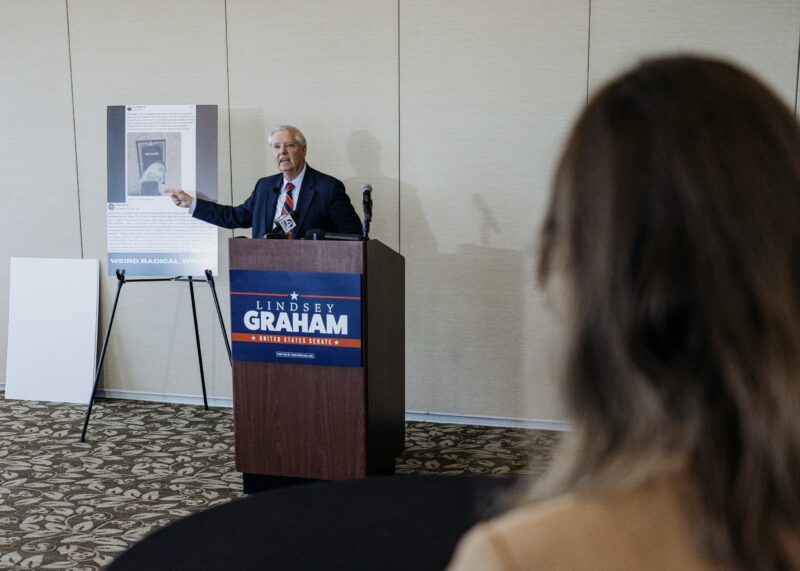
Sen. Lindsey Graham (R-SC), a close ally of President Donald Trump, called for a cautious and deliberate approach to removing sanctions on Syria and emphasized that Congress has a significant oversight role to play, hours after Trump announced he plans to lift “all” U.S. sanctions on Syria.
Graham’s statement on sanctions relief came as he touched down in Turkey for a trip aimed at evaluating the situation in Syria and appeared aimed at pumping the brakes on Trump’s sweeping declaration. Reactions from others on Capitol Hill to the news have been decidedly mixed across both parties.
Graham said that he’s “very inclined to support sanctions relief for Syria under the right conditions,” but also cautioned that the Syrian government took power through force.
“Waiving congressionally passed sanctions is a complicated process. While I would like to empower the new players in Syria, it has to be done in a coordinated fashion with our allies — especially our friends in Israel — so that numerous security concerns can be addressed,” Graham said in the statement.
“This newly formed government in Syria may be a good investment and could be the pathway to unifying Syria, making it a stable part of the region. However, there is a lot that must be learned before making that determination,” he continued. “A stable Syria would be a game changer for the region, but given its past, their progress must be evaluated closely.”
Graham highlighted that Congress has a role to play in any sanctions relief and noted that the administration must submit a report to Congress outlining substantive changes to the situation on the ground in Syria before its designation as a state sponsor of terrorism can be lifted.
“That report has not been received and Congress has the opportunity to review this action if it chooses,” Graham continued. “The designation of Syria as a state sponsor of terrorism has tremendous ramifications apart from the sanctions. I am certain that Congress would need to be informed of changes in conditions placed on Syria and how they have met those conditions before Congress can make an informed decision on whether or not it should approve the change in designation.”
Graham also noted that Israeli officials are “extremely concerned about the state of play in Syria,” and said that he plans to discuss those concerns and keep in close touch with Israeli officials during the trip, “so that we can fully understand the implications of sanctions waivers.”
He noted that attacks on Israel have been launched from Syria in the past. Israel has deployed troops to a buffer zone over the Syrian border and conducted strikes on military infrastructure in the country since the fall of the Assad regime.
Reactions from others on Capitol Hill have been mixed, across both parties.
Sen. Jim Risch (R-ID), the chairman of the Foreign Relations Committee, who had pushed for phased, conditional sanctions relief for Syria, said he deferred to Trump’s decision on the issue without strongly endorsing it. He said he’d discussed the subject with Trump and Secretary of State Marco Rubio prior to Trump’s conversation with Saudi Crown Prince Mohammed Bin Salman.
“It sounded as if they had some negotiations on it. He is the president of the United States and I respect his judgement,” Risch said.
Sen. Jeanne Shaheen (D-NH), the ranking member of the Senate Foreign Relations Committee, who had joined with Risch in calling for conditional sanctions relief, praised Trump’s decision.
“I commend President Trump’s decision to lift all sanctions on Syria,” Shaheen said. “These sanctions succeeded in their original goal of aiding in the downfall of the brutal Assad regime. I welcome their removal now to give the new Syria a chance to develop into a free and prosperous state independent of the malign influence of Russia, Iran and China.”
She said the U.S. should “move expeditiously” to lift sanctions and “increase our engagement with the Syrian authorities” alongside allies and partners.
“Stability and security in the heart of the Middle East will pay dividends for U.S. interests and along Syria’s borders, including for our friends in Israel, Lebanon, Türkiye, Iraq and Jordan,” Shaheen continued. “We must do all we can to ensure Syria continues to move in the direction of democracy, stability and security.”
Sen. Richard Blumenthal (D-CT) fell closer to Graham’s view of the situation, emphasizing that Trump “has to come to Congress” and that sanctions relief should be conditional to achieve concessions from the Syrian government.
“He has no explanation for why he’s just unilaterally surrendering all of this leverage,” Blumenthal said. “For the guy who talks about the art of the deal, he’s gotten nothing for it in the way of any sort of guarantees about what the Syrian government’s going to do.”
He said that whether Congress would repeal the sanctions would depend on what the Syrian government commits to do.
“This regime is basically an unknown — a vast unknown — headed by someone who was regarded as a terrorist until just months ago,” Blumenthal said. “I want some more security guarantees and also other conditions.”
A conservative foreign policy analyst dubbed Trump’s Saudi address similar to Obama’s 2009 ‘apology tour’ in Cairo

Scott Olson/Getty Images
President Donald Trump speaks during a rally at Macomb Community College on April 29, 2025 at Warren, Michigan.
President Donald Trump lambasted “interventionalists” and “neo-cons” who previously led foreign policy discourse in the Republican Party in a speech on Tuesday at a U.S.-Saudi Arabia investment forum event in Riyadh.
“The gleaming marvels of Riyadh and Abu Dhabi were not created by the so-called nation-builders, neo-cons or liberal nonprofits like those who spent trillions failing to develop [Kabul], Baghdad, so many other cities,” Trump said. “In the end, the so-called nation-builders wrecked far more nations than they built and the interventionalists were intervening in complex societies that they did not even understand themselves.”
“They told you how to do it, but they had no idea how to do it themselves,” Trump continued. “Peace, prosperity and progress ultimately came not from a radical rejection of your heritage but rather from embracing your national traditions and embracing that same heritage that you love so dearly.”
Trump also condemned American presidents who “have been afflicted with the focus that it’s our job to look into the souls of foreign leaders and use U.S. policy to dispense justice for their sins” — an apparent condemnation of former President George W. Bush.
He said that it’s “God’s job to sit in judgement, my job to defend America and to promote the fundamental interests of stability, prosperity and peace,” but that he would “never hesitate” to defend the U.S. or its allies.
The remarks were cheered by several notable members of the isolationist wing of the GOP, including Dan Caldwell, a former Pentagon adviser fired for allegedly leaking sensitive information.
A conservative foreign policy analyst compared the speech to President Barack Obama’s “A New Beginning” speech in Cairo in 2009. “It’s his apology tour,” the analyst told Jewish Insider.
“It’s crazy to air your dirty laundry in a place that bore the Al-Qaida hijackers. This is Jeanne Kirkpatrick’s ‘Blame America’ on the right,” the analyst continued, warning that an “Arabist view” appeared to be making its way into the administration “at the expense of Israel,” a trend they said was previously mainly seen among Democrats.
Trump also announced the “cessation” of sanctions against Syria “in order to give them a chance at greatness” and the normalization of relations between the U.S. and Syria. He said that Secretary of State Marco Rubio will be meeting with the Syrian foreign minister this week.
Trump characterized these moves as a favor to Turkish President Recep Tayyip Erdogan and Saudi Crown Prince Mohammed bin Salman.
Lawmakers on both sides of the aisle on Capitol Hill had argued for a targeted, cautious approach to sanctions relief for Syria, in a reversible fashion, in return for measurable progress and results on U.S. priorities. Trump said that “we’re taking them all off.” It was not clear from his remarks if the U.S. would be attaching conditions to that sanctions relief.
The Israeli government has advocated against sanctions relief for the regime out of concerns about the new government’s ties to Islamist extremists.
Addressing the leaders of Iran, Trump said he was willing “to offer them a new path and much better path towards a far better and more hopeful future,” adding that he’s shown he is “willing to end past conflicts and forge new partnerships for a better and more stable world.”
He warned that “if Iran’s leadership rejects this olive branch and continues to attack their neighbors, then we’ll have no choice but to inflict massive maximum pressure, drive Iranian oil exports to zero like I did before … and take all action required to stop the regime from ever having a nuclear weapon.”
Trump also said that the clock is ticking for Iran to accept that offer.
The U.S. president lavished praise on Saudi Arabia and its crown prince for the development the country has seen in recent years. He said it’s his “fervent hope, wish and even my dream that Saudi Arabia … will soon be joining the Abraham Accords.”
“You’ll be greatly honoring me and you’ll be greatly honoring all of those people that have fought so hard for the Middle East, and I really think it’s going to be something special,” Trump said. “But you’ll do it in your own time. That’s what I want, that’s what you want, and that’s the way it’s going to be.”
Trump repeatedly insisted that the Oct. 7, 2023 Hamas attacks on Israel would not have happened had he been president at the time and said that the “people of Gaza deserve a much better future” but that cannot happen as long as the leaders of Gaza continue to pursue violence. He said he wants to see the Gaza war “ended as quickly as possible” and the hostages all returned, a seeming contradiction to Israeli Prime Minister Netanyahu’s plans to expand Israeli operations in Gaza.
He also said that the U.S. “stands ready to help Lebanon create a future of economic development and peace with its neighbors,” adding that its new government provides “the first real chance in decades for a more productive partnership with the United States.”
Regarding the U.S. strikes on the Houthis, Trump said that the U.S. “got what we came for and then we got out,” referring to the U.S. ceasefire with the group. He said that the U.S. “[doesn’t] want them shooting at Saudi Arabia,” but the deal, as publicly outlined, did not contain provisions to protect Israel, Saudi Arabia or any other U.S. partners.
Houthi attacks on Israel have continued since the deal was struck.
He additionally claimed that he had requested a $1 trillion military budget from Congress to ensure “peace through strength,” adding “hopefully, we’ll never have to use any of those weapons.” But top conservative foreign policy leaders on Capitol Hill have said that the administration’s budget request does not actually meet that $1 trillion benchmark and have called the request insufficient.
Trump in Riyadh as checkbook diplomacy reshapes foreign policy

Win McNamee/Getty Images
President Donald Trump and Saudi Crown Prince Mohammed bin Salman interact with officials during a “coffee ceremony” at the Saudi Royal Court on May 13, 2025, in Riyadh, Saudi Arabia.
Good Tuesday morning.
In today’s Daily Kickoff, we look at how economic and business opportunities are overtaking traditional foreign policy on President Donald Trump’s trip to the Middle East, and report on Israeli Prime Minister Benjamin Netanyahu’s call for Israel to “wean” itself off of U.S. military aid. We also talk to Leo Terrell about the Department of Justice’s efforts to address campus antisemitism, and spotlight an Israeli boarding school that works to promote a shared society in a post-Oct. 7 landscape. Also in today’s Daily Kickoff: Edan Alexander, Oskar Schindler and Sen. Jacky Rosen.
What We’re Watching
- President Donald Trump is in Riyadh, Saudi Arabia, today for meetings with senior officials. He met earlier today with Saudi Crown Prince Mohammed bin Salman.
- Also in Riyadh, the Saudi-U.S. Investment Forum kicked off earlier today. Speakers at the daylong summit include Treasury Secretary Scott Bessent, Commerce Secretary Howard Lutnick, the White House’s David Sacks, White House advisor Elon Musk, Palantir’s Alex Karp, Blackstone’s Stephen Schwarzman, Amazon’s Andy Jassy, FIFA President Gianni Infantino, LionTree’s Aryeh Bourkoff, BlackRock’s Larry Fink, Alphabet’s Ruth Porat, BDT & MSD Partners’ Dina Powell McCormick and the Saudi ministers of energy, sports, investment, finance, economy, tourism and housing.
- An Israeli delegation is in Doha, Qatar, today for renewed ceasefire and hostage-release talks.
- In Washington, the Senate Foreign Relations Committee is holding a hearing on East Africa. This afternoon, the Senate Armed Services Committee will hold a hearing on the U.S.’ missile defense budget request.
- At 10:45 a.m. ET, Sen. Mitch McConnell (R-KY) will deliver remarks during the Center for Strategic and International Studies’ Global Security Forum in Washington.
- Sens. Brian Schatz (D-HI), Cory Booker (D-NJ), Chris Coons (D-DE) and Chris Murphy (D-CT) are planning to force a floor vote as soon as today on condemning the potential gift of a Qatari luxury jet to President Donald Trump.
- Dan Senor will deliver 92NY’s annual State of World Jewry address tonight in New York.
What You Should Know
A QUICK WORD WITH Gabby deutch
President Donald Trump arrived in the Middle East today for the first major international trip of his second term, where he’ll visit Saudi Arabia, Qatar and the United Arab Emirates. He traveled to the region just as his administration secured a major diplomatic breakthrough: the release of Edan Alexander, the final living American hostage, from Hamas captivity in Gaza.
But Trump will not be visiting Israel to herald Alexander’s release. There will be no victorious photo shoot with Israeli Prime Minister Benjamin Netanyahu, because all reports indicate that the U.S. secured Alexander’s release without even informing the Israelis about the negotiations. Trump will not be visiting Israel at all, dealing another blow to America’s closest ally in the region at a time when ties appear to be straining between Jerusalem and Washington.
Instead, the president will be meeting with the leader of a country that serves as a chief sponsor of Alexander’s captors — just days after Trump accepted the gift of a $400 million luxury jet from the Qatari royal family to use as Air Force One, which quickly sparked concern from ethics experts, congressional Democrats and critics of the Gulf state, which has close ties to Hamas leaders.
The gift of the Qatari plane may be a harbinger of an administration that prioritizes business deals over national security. No further diplomatic victories are expected. After Trump said last week that he would make a “very, very big announcement” before his trip to the Middle East, many observers thought that news would be related to the region. But a White House spokesperson told Jewish Insider that it was instead referring to a drug-pricing executive order he signed on Monday.
The trip is generating a quiet panic of sorts among members of the pro-Israel and Jewish communal establishment over how the administration’s primary focus on mega dealmaking is eclipsing traditional foreign policy objectives — rendering moot much of the congressional lobbying and advocacy work promoting a strong U.S.-Israel relationship, as well as Israel’s own approach to its relationship with Washington.
A message circulating among insiders this week captures the mood: “All the investment in communal organizations and institutions like Congress are meaningless in this moment and pale in comparison to having a sovereign wealth fund that can get Trump to change his tune on Houthis, Iran, Gaza etc.” (Saudi officials reportedly backed a U.S.-Houthi ceasefire last week, and have been encouraging of U.S. nuclear talks with Iran in an effort to bring more economic stability to the region.)
Indeed, White House officials have said that national security is not expected to be a major part of Trump’s conversations this week. Rather, trade and investment deals are the focus of the visits, along with announcements of defense spending agreements.
In the recent past, a trip like this might have been likely to feature talk of normalization between Saudi Arabia and Israel. Steve Witkoff, Trump’s Middle East envoy, said last week that he expects to be able to announce progress on additional countries joining the Abraham Accords in the next year. But at least publicly, progress on normalization between Israel and Saudi Arabia has stalled.
“It looks like it fell off a cliff,” David Makovsky, a distinguished fellow at The Washington Institute for Near East Policy, told JI.
A report from Reuters indicates the U.S. might give Saudi Arabia what has been one of its primary asks of Washington — support for a civil nuclear program in the Gulf monarchy — without tying it to the demand that Saudi Arabia establish diplomatic ties with Israel, as was previously expected in a deal. The U.S. also recently approved a major arms sale to Riyadh.
“What you’re seeing is that President Trump has an idea of what is in our interest, and that comes first,” Dennis Ross, a former State Department official who worked in both Democratic and Republican administrations, told The Washington Post. “He defines the nature of our interests abroad not through a geopolitical or security context, but an economic, financial and trade frame. I think President Trump might have the view that ‘We give [Israel] $4 billion a year in military assistance. I do plenty to support the Israelis.’”
Leading up to the trip, reports emerged suggesting that Trump is unhappy with Netanyahu’s decision to launch another major offensive in Gaza. This isn’t just a policy disagreement; it’s about Trump’s personal interest in developing the region, according to NBC News, which reported that he thinks further destruction in Gaza will make it harder to rebuild.
Ultimately, it appears that this trip could be a harbinger for the second Trump administration’s approach to the region. With Trump-branded projects being announced in Saudi Arabia and Qatar, a Houthi-U.S. ceasefire secured and a potential Iran nuclear agreement on the horizon, the “art of the deal” is looking like it will leave Israel largely out of the equation.
legal crackdown
Leo Terrell: DOJ plans to use litigation to ‘eliminate antisemitism’

Leo Terrell, senior counsel to the assistant attorney general for civil rights, says he’s undeterred by critics of the Trump administration’s approach to combating antisemitism, arguing that those dissatisfied with its deportation strategy are “trying to justify, in my opinion, the antisemitic behavior” of those individuals. Terrell, who has a career spanning three decades as a civil rights attorney and a conservative media personality, sat down on Monday for his first interview with Jewish Insider since joining the Justice Department earlier this year — at a time when some mainstream Jewish organizations, including the Anti-Defamation League and the American Jewish Committee, have expressed concern that the administration’s approach has violated the due process rights of the individuals being targeted. The Trump administration has argued that non-citizens do not have the same constitutional protections as U.S. citizens, though the Fourteenth Amendment grants due process rights to all people regardless of status.
Due process: “That question is being asked quite often, and I think those people who are raising that issue are trying to justify, in my opinion, the antisemitic behavior,” Terrell said. “If you’re an American citizen, I have due process on a lot of different criminal issues if I’m arrested. I have due process. That term due process needs to be evaluated depending on the status of the individuals who assert it. I will submit to you that individuals who are here on, let’s say, for example, a student visa, who are not American citizens, who are here as a privilege by this country, do not have the same due process rights, do not have the same access to the court system as I do as an American citizen,” he continued, adding, “Your rights depend on your status in this country. You won’t hear that because it’s the truth, it’s not a talking point.”
DOHA DEALINGS
Most Republicans fall in line behind Trump’s defense of accepting Qatari plane

Though President Donald Trump’s plans to accept a lavish jumbo jet from Qatar are raising outrage among Democrats, the move isn’t prompting any notable political shifts in the U.S. views toward the Qatari regime, with some Democrats downplaying the relevance of Qatar’s specific role in the bargain and many Senate Republicans avoiding criticizing Trump or the offered gift, Jewish Insider’s Marc Rod reports.
Mixed reactions: Sen. Rick Scott (R-FL), long an outspoken critic of Qatar, was one of the few Senate Republicans to strongly argue that accepting the plane would be risky, pointing to Qatar’s support for Hamas. But Sen. Ted Budd (R-NC), one of the most vocal critics of Qatar’s relationship with Hamas on the Hill, told JI he’s “sure [the administration has] good legal advice and will follow the law.” On the Democratic side of the aisle, Sen. Brian Schatz (D-HI) plans to force a vote on a resolution objecting to the transfer of the plane. But Schatz told JI that the U.S.-Qatari relationship is not the crux of the issue.
Trump’s defense: The president called the move by Qatar to offer the plane a “very nice gesture” made out of gratitude for U.S. security assistance, in remarks to reporters in the Oval Office during an executive order signing yesterday, Jewish Insider’s Danielle Cohen reports.
RELATIONSHIP RESET
Netanyahu calls to ‘wean’ Israel off U.S. aid amid growing tensions

Israel needs to begin the move towards ending its reliance on U.S. military aid, Israeli Prime Minister Benjamin Netanyahu said in a meeting of the Knesset Foreign Affairs and Defense Committee on Sunday, amid disputes with the Trump administration over a wide range of national security issues. “We receive close to $4 billion for arms. I think we will have to wean ourselves off of American security aid, just as we weaned ourselves off of American economic aid,” Netanyahu said. He added that, just as stopping economic aid helped spur economic growth in Israel, stopping military aid could help the defense sector. The remark was made in the context of talks with the U.S. about the next 10-year aid package for Israel and was unprompted, his spokesman told Jewish Insider’s Lahav Harkov.
Context: Netanyahu previously spoke of phasing out U.S. military aid after his disputes with former President Joe Biden and his administration about delivering arms to Israel last year. The Trump administration removed some of the restrictions, but there are new tensions between Jerusalem and Washington about a long list of diplomatic and security matters. Israel’s defense establishment reportedly prepared plans to attack Iranian nuclear facilities in the coming months, while the Trump administration is now engaged in extensive diplomacy with Iran in hopes of reaching a deal over its nuclear program. The Trump administration is open to working with Saudi Arabia on a civilian nuclear program, something that Israel has had misgivings about and was previously meant to be part of a normalization deal between Jerusalem and Riyadh.
HOPE IN A TIME OF TURMOIL
After Oct. 7, a hub of Jewish-Arab shared society faces its toughest test

“Be the change you want to see in the world.” The famous words, often attributed to Mahatma Gandhi, are scattered among various flags, including Israeli and Palestinian, at the entrance to the offices of the Younited school, nestled within the campus of Givat Haviva, Israel’s oldest and largest institution for Jewish-Arab shared society. Beneath the slogan, a yellow flag flutters in the wind — a quiet but searing reminder of the 58 hostages still held in Gaza. It’s a juxtaposition that captures the tension of the moment: the dream of a peaceful and equitable future, tested by the darkest day in recent Israeli history and the ensuing war in Gaza. On Oct. 7, 2023, as Israel reeled from the horrifying Hamas attacks, Givat Haviva found itself taking on roles that went far beyond its mandate — it became a refuge, a mirror for itself and wider society and a case study in whether hope can endure under siege. Interviews with eight students and five administrators at Givat Haviva’s Younited boarding school paint a portrait of an institution struggling to bridge a divide in Israeli society that often seems unbridgeable, Jewish Insider’s Tamara Zieve reports.
A place of refuge: The day after the onset of the attacks, dozens of people who had fled their homes near the Gaza border turned up at the gates of Givat Haviva. “People just showed up with no clothes — and nothing — and shaking kids,” Michal Sella, the CEO of Givat Haviva, told JI during an interview in her office last month. Givat Haviva opened its doors to the evacuees. Soon after, around 100 Jewish and Arab teenagers returned to their boarding school — followed by 300 Arab students from a seventh–12th grade school located on the campus. At a time of unprecedented communal tension, the school’s leadership faced enormous challenges. “It was seen as a very explosive environment. It was very hard to manage all this, and our goal was for all of them to get along, to be able to share this campus … We worked very hard to keep everything calm, and we were very, very cautious, even doing things that usually we will not do.” Sella recalled.
SCOOP
Judge orders American Muslims for Palestine to disclose financial documents

A Richmond, Va., judge has issued a new court order ruling that a pro-Palestinian advocacy group with alleged ties to Hamas must finally turn over closely guarded financial documents sought in an ongoing investigation brought by Virginia’s attorney general, Jewish Insider’s Matthew Kassel reports.
Legal setback: The decision, issued on Friday, is a major blow for American Muslims for Palestine, a Virginia-based nonprofit group that has drawn a growing number of legal challenges in the aftermath of Hamas’ Oct. 7, 2023, terror attacks and Israel’s ensuing war in Gaza.
SCOOP
House Dems express ‘grave concern’ about de-linking Saudi nuclear deal, normalization

A group of nine Jewish House Democrats wrote to President Donald Trump on Tuesday expressing “grave concerns” about reports that the Trump administration plans to seal a deal on nuclear energy cooperation with Saudi Arabia without Saudi-Israeli normalization, Jewish Insider’s Marc Rod reports.
Nonstarter: “This development would be a dramatic and unacceptable policy change that would drastically hamstring the Middle East peace process and undermine the successful Abraham Accords implemented during the first Trump Administration,” the Democrats’ letter reads. “We firmly believe that any discussion of nuclear talks or defensive treaties must explicitly be tied to the Kingdom’s recognition of Israel and normalization of relations between the two countries.”
Worthy Reads
Sana’a Showdown: The New York Times’ Helene Cooper, Greg Jaffe, Jonathan Swan, Eric Schmitt and Maggie Haberman do a deep dive into the Trump administration’s decision to reach a ceasefire with the Houthis in Yemen. “The sudden declaration of victory over the Houthis demonstrates how some members of the president’s national security team underestimated a group known for its resilience. Gen. Michael E. Kurilla, the head of Central Command, had pressed for a forceful campaign, which the defense secretary and the national security adviser initially supported, according to several officials with knowledge of the discussions. But the Houthis reinforced many of their bunkers and weapons depots throughout the intense bombing. … What’s more, Mr. Trump’s new chairman of the Joint Chiefs of Staff, Gen. Dan Caine, was concerned that an extended campaign against the Houthis would drain military resources away from the Asia-Pacific region. His predecessor, Gen. Charles Q. Brown Jr., shared that view before he was fired in February.” [NYTimes]
Turning on Their Former Boss: In The Wall Street Journal, Jamie Kirchick reacts to a recent smear campaign by former staffers for Sen. John Fetterman (D-PA) targeting the Pennsylvania Democrat. “Conflating Mr. Fetterman’s political evolution with his allegedly declining mental health (dressed up as concern for his well-being) is extremely cynical in light of the debate that ensued after he suffered a stroke during the 2022 Senate campaign. … At the time, progressives castigated anyone who questioned Mr. Fetterman’s fitness for office as an ‘ableist.’ Now, when he’s clearly improved, they claim he’s unfit to serve. Attributing Mr. Fetterman’s political maturation to mental illness is shameful considering the courage it has taken him to speak publicly about his depression. For elected officials especially, it can be difficult to broach such a personal subject. Mr. Fetterman should be commended for discussing it openly. He’s doing for mental health what former First Lady Betty Ford did for addiction, raising awareness about a problem suffered by millions in shame and silence. He is encouraging people to seek professional help. How quickly progressives, usually so careful not to stigmatize people for their mental health, do an about-face when the target of such accusations espouses political views opposing theirs.” [WSJ]
The Trump-Bibi Divide: The Atlantic’s Yair Rosenberg looks at the divergence of opinion between the Israeli public and the Israeli government on how Israel should pursue the release of the remaining 58 hostages. “The release was the result of a back-channel dialogue between the United States and the terrorist group ahead of Donald Trump’s arrival in the region this week. Announcing the news on social media, the president heralded the event not as a one-off, but as a step ‘to put an end to this very brutal war and return ALL living hostages and remains to their loved ones.’ Israel was not involved in the process and, according to Axios, found out about the negotiations only through its intelligence services. Some reports have cast this disconnect as indicative of a chasm between Trump and Israel. But this is a misreading. The divide is not between the president and Israel so much as between the president and Israel’s leader. Most Israelis support what Trump is doing — and oppose Prime Minister Benjamin Netanyahu’s approach to the war in Gaza.” [TheAtlantic]
Word on the Street
The Pentagon is downgrading its bomber fleet in the Indo-Pacific, replacing the B-2 bombers with B-52s, following the implementation of a ceasefire between the U.S. and the Iran-backed Houthis in Yemen…
The Trump administration levied sanctions on three Iranians and an Iranian company tied to Iran’s nuclear weapons program…
The State Department announced a roughly $1.4 billion arms sale to the United Arab Emirates on Monday, days before President Donald Trump is set to arrive in the Gulf nation…
The Wall Street Journal suggests that Trump “surprised and sidelined Israel” in the run-up to his Middle East trip, which does not include a stop in the Jewish state…
The negotiations to free American-Israeli hostage Edan Alexander reportedly originated with Hamas‘ outreach to former Arab Americans for Trump leader Bishara Bahbah…
A sweeping federal tax bill unveiled on Monday as part of Republicans’ budget reconciliation plan includes legislation that would expand the executive branch’s ability to revoke tax exemptions from nonprofits accused of supporting terrorism, a push that was once broadly bipartisan but ran into strong Democratic opposition at the end of the previous Congress, Jewish Insider’s Marc Rod reports…
A group of Senate Democrats led by Sen. Jacky Rosen (D-NV) wrote to President Donald Trump last week criticizing his decision to dismiss multiple members of the United States Holocaust Memorial Council appointed by President Joe Biden, Jewish Insider’s Marc Rod reports…
The Democratic National Committee is moving forward with an effort to void the election of DNC Vice Chairs David Hogg and Malcolm Kenyatta, the latter of whom is a Pennsylvania state representative, following allegations that the original February election was conducted in a flawed manner; Hogg accused the DNC of attacking him for his PAC’s strategy to back primary challengers to older elected Democrats…
Rob Sands, who as Iowa’s state auditor is the only Democrat to hold statewide office, announced his bid for governor following Gov. Kim Reynolds’ announcement that she will not seek a third term; Rep. Randy Feenstra (R-IA) also filed paperwork on Monday to enter the race…
The University of San Francisco has become the latest school to divest from Israel-related companies. The school’s endowment fund will sell off its direct investments in Palantir, L3Harris, GE Aerospace and RTX Corporation by June 1, the university confirmed, Jewish Insider’s Haley Cohen reports…
The former Czech textile factory where Oskar Schindler saved 1,200 Jews reopened as a museum honoring the efforts of Schindler, his wife Emilie and the family that owned the building…
An Iranian government spokesperson said that preparations for Russian President Vladimir Putin to visit Tehran at a still-undetermined date “are underway”…
The Kurdish PKK agreed to end its decades-long conflict against Turkey and dissolve itself, shortly after a call from its leader, Abdullah Ocalan, who is serving a life sentence in Turkey, to do so…
Writer and illustrator Jack Katz, who pioneered the graphic novel, died at 97…
Corporate executive and attorney Robert Shapiro, who popularized the use of aspartame through branding the sugar substitute as NutraSweet, died at 86…
Pic of the Day

Former Israeli American hostage Edan Alexander was reunited with his extended family on Monday night at Ichilov Medical Center in Tel Aviv, hours after being released from captivity in Gaza.
Birthdays
Retired NFL offensive lineman for seven NFL teams, now a regional manager at Rocksolid, Brian de la Puente turns 40…
South African-born attorney, now based in London, Sir Sydney Lipworth QC turns 94… Professor emerita of Yiddish literature at Harvard University, she is presently a distinguished senior fellow at The Tikvah Fund, Ruth Wisse turns 89… Emmy Award-winning film, television and stage actress, Zohra Lampert turns 88… Academy Award-winning actor and producer, Harvey Keitel turns 86… Ophthalmologist in South Florida, Dr. Joel Sandberg turns 82… Former dean of the College of Arts and Sciences at American Jewish University, Samuel Edelman turns 77… Professor of mathematics at Princeton since 1987, he was a winner of a 1991 MacArthur genius fellowship, Sergiu Klainerman turns 75… Former FDA commissioner during the 1990s, then chief scientific officer for COVID-19 response during the Biden administration, David A. Kessler turns 74… Retired editor and columnist for the New York Post, he was also managing editor of The Jerusalem Post, Eric Fettmann turns 72… Chief rabbi of the city of Shoham in central Israel, chairman of the Tzohar organization and rabbi for the Ezra youth movement, Rabbi David Stav turns 65… Founder and former CEO of LRN, a legal research, ethics and compliance management firm, Dov Seidman turns 61… Immediate past chair of JFNA’s National Women’s Philanthropy Board and past chair of the Hartford (Conn.) Federation, Carolyn Gitlin… Retired NFL defensive lineman, he has played for the Raiders and Panthers, Josh Heinrich Taves, aka Josh Heinrich, turns 53… Ice hockey player, she won a gold medal at the 1998 Winter Olympics and a silver medal at the 2002 Winter Olympics, Sara Ann DeCosta turns 48… U.S. senator (R-AR), Tom Cotton turns 48… Chief community and Jewish life officer at The Jewish Federations of North America, Sarah Eisenman… Former Israel director for J Street, then the chief of staff for Israel’s Ministry for Regional Cooperation, Yael Patir… Member of the U.K.’s House of Lords since February, she was previously a member of the House of Commons, Baroness Luciana Berger turns 44… Software entrepreneur, Google project manager, then Facebook engineering lead, and co-founder in 2008 of Asana, Justin Rosenstein turns 42… Israeli rapper, singer, songwriter and actor, known by his stage name Tuna, Itay Zvulun turns 41… Actress, writer, producer and director, best known as the creator, writer and star of the HBO series “Girls,” Lena Dunham turns 39… Hannah Sirdofsky… Co-founder in 2018 of Manna Tree Partners, Gabrielle “Ellie” Rubenstein… Chief of staff and senior program manager at Jigsaw, a unit within Google, Raquel Saxe Gelb… A clinical social work intern in Philadelphia, Bela Galit Krifcher… Graduating from Columbia Law School next Sunday, Dore Lev Feith turns 29… Director of external affairs at the Manhattan Institute, Jesse Martin Arm… Gold medalist for Israel in rhythmic gymnastics at the 2020 Olympics in Tokyo, Linoy Ashram turns 26…
The FBI director said he was unaware why the background check for Ed Martin, nominee to be U.S. attorney for Washington, didn’t include his ties to a known Nazi sympathizer

Kayla Bartkowski/Getty Images
Director of the Federal Bureau of Investigation (FBI) Kash Patel
FBI Director Kash Patel was pressed on Wednesday about the exclusion of Ed Martin’s ties to an alleged Nazi sympathizer in his FBI background check after Martin was nominated by President Donald Trump to be U.S. attorney for Washington, D.C.
Patel faced questions from Rep. Grace Meng (D-NY) while testifying before the House Appropriations Committee about how the FBI background investigation report that was sent to Congress on Martin excluded information on his ties to former Jan. 6 defendant Timothy Hale-Cusanelli, despite the latter’s record of antisemitic public statements and posting photos of himself dressed as Adolf Hitler in 2024. Martin has since apologized for saying Hale-Cusanelli was being “slurred and smeared” by antisemitism allegations and asserts he did not know of his associate’s past comments.
“I’m not familiar with Mr. Martin’s specific BI investigation, but I can tell you how the BIs are done for everybody at the FBI. We have [career staffers] running the entire Inspection Division and HRD component. That has not changed since I’ve been in the seat. And every BI has been held to the same standard by them. And either they pass along the information from their investigations that they cultivate, or they don’t. We do not tell them what to pass on and what not to investigate,” Patel told Meng.
Pressed by Meng on if he believed that type of information would be relevant to a BI report, Patel replied: “That’s up to the field agents, ma’am, I can’t rewrite that for them. They have a way of doing these investigations that I have not inhibited or changed or altered since I got in the seat.”
Later on in the hearing, Rep. Tony Gonzales (R-TX) and Patel agreed on the need to continue supporting the FBI’s Joint Terrorism Task Forces, which bring together federal, state, local and tribal law enforcement agencies for counterterrorism missions, with Patel, who used to be a terrorism prosecutor at the Department of Justice, noting the utility of federal resources to smaller law enforcement operations dealing with terrorism concerns.
“The best cases I ever made as a terrorism prosecutor was on the task force, because we had embedded state and local authorities with federal authorities. State and federal prosecutors working every day together, bringing cases where you could bring cases, because sometimes you couldn’t bring them in state court, and sometimes you can’t bring them in federal court,” Patel said.
The hearing briefly became heated during a tense exchange between Patel and Rep. Madeleine Dean (D-PA), when Dean accused the director of being involved in the recent dismissal of some FBI officials, despite testifying during his confirmation hearing that he had no involvement as a private citizen in any firings at the bureau. It is not clear which officials she was referring to, though Dean alleged that the FBI director had “likely committed perjury” as a result, citing “multiple whistleblowers” who had come forward.
“We should worry more about your lack of candor. You’re accusing me of committing perjury. Tell the American people how I broke the law and committed a felony. Have the audacity to actually put the facts forward instead of lying for political banter so you can have a 20-second donation hit,” Patel retorted.
The president said the terror group had agreed to stop its attacks on international shipping lanes

Anna Moneymaker/Getty Images
President Donald Trump speaks during a meeting with Canadian Prime Minister Mark Carney in the Oval Office at the White House on May 6, 2025 in Washington, DC.
President Donald Trump said on Tuesday that he had called off the U.S. bombing campaign against Houthi targets in Yemen after the terrorist group told the Trump administration this week that “they don’t want to fight anymore.”
Trump made the comments, which he described as “very good news,” while speaking to reporters from the Oval Office ahead of a meeting with Canadian Prime Minister Mark Carney.
“The Houthis have announced that they are not, or they’ve announced to us at least, that they don’t want to fight anymore. They just don’t want to fight, and we will honor that, and we will stop the bombings,” Trump said. “They have capitulated, but more importantly, we will take their word. They say they will not be blowing up ships anymore, and that’s what the purpose of what we were doing.”
The president added that his team had “just found out” about the developments, which he called “very, very positive.”
Israel conducted intensive strikes against the Houthis on Monday and Tuesday after the terror group struck Israel’s Ben Gurion Airport complex over the weekend, injuring six.
Mohammed al-Bukhaiti, a member of the Houthi Political Council, told Bloomberg News that the group may stop attacking U.S. ships if the bombardment stops “but we will definitely continue our operations in support to Gaza” and that Houthi attacks in the Red Sea and against Israel “will not stop regardless of the consequences until the end of the aggression on Gaza and blockade on its people.”
The foreign minister of Oman, Badr bin Hamad Al Busaidi, said in a statement that “recent discussions and contacts conducted by the Sultanate of Oman with the United States and the relevant authorities in Sana’a … have resulted in a ceasefire agreement between the two sides. In the future, neither side will target the other, including American vessels, in the Red Sea and Bab al-Mandab Strait, ensuring freedom of navigation and the smooth flow of international commercial shipping.”
Trump told reporters, “They were not going to have a lot of ships going, as you know, sailing beautifully down the various seas. It wasn’t just the canal, it was out of other places. And I will accept their word, and we are going to stop the bombing of the Houthis effective immediately,” later adding in response to a question about the news, “They don’t want to be bombed anymore. I sort of thought that would happen.”
Trump then turned to Secretary of State Marco Rubio to discuss the change in strategy, who stated, “This was always a freedom of navigation issue. These guys are a band of individuals with advanced weaponry that were threatening global shipping. And the job was to get that to stop, and if it’s going to stop, then we can stop. And so I think it’s an important development.”
Many of the leading Republican alternatives would be a tough sell for moderate-minded Jewish voters in the state

SAMUEL CORUM/AFP via Getty Images
Gov. Brian Kemp (R-GA) speaks during a meeting of the Republican Governors Association at the National Building Museum in Washington, DC, on February 20, 2025.
Georgia Gov. Brian Kemp, one of the most popular officials in the state, announced on Monday he will not challenge Sen. Jon Ossoff (D-GA) when he is up for reelection in 2026, dealing a blow to Senate Republicans, who were hoping his candidacy would have given Republicans an edge in a critical battleground.
Kemp said in a statement on Monday that he had “decided that being on the ballot next year is not the right decision for me and my family.”
“I spoke with President Trump and Senate leadership earlier today and expressed my commitment to work alongside them to ensure we have a strong Republican nominee who can win next November, and ultimately be a conservative voice in the US Senate who will put hardworking Georgians first. I am confident we will be united in that important effort, and I look forward to electing the next generation of leaders up and down the ballot here in the Peach State who will keep our state and nation headed in the right direction in 2026 and beyond,” Kemp said.
National Republicans and top Senate GOP leaders had been lobbying Kemp to consider challenging Ossoff for months, with a recent poll commissioned by the Atlanta Journal-Constitution showing Kemp with a narrow advantage over the Democratic senator.
Without Kemp in the race, the GOP nominee is more likely to appeal to the right-wing activists that play an outsized role in today’s Georgia Republican party. Rep. Marjorie Taylor Greene (R-GA) has been mentioned as a possible candidate in the race. Other potential candidates include: Reps. Mike Collins (R-GA), Rich McCormick (R-GA) and Buddy Carter (R-GA), all of whom are among the most conservative lawmakers in the House.
Secretary of State Brad Raffensperger, a more moderate alternative, has also been mentioned as a potential candidate.
Pro-Israel elements of the Democratic Party expressed an openness to backing Kemp over Ossoff, if the governor ran for the Senate. Ossoff’s vote last year to block military aid to Israel alienated many Jewish voters in the state, and the backlash played a role in his rejection of additional similar measures targeting the Jewish state when they came up for a vote last month.
But Kemp’s decision not to run could help push skeptical Jewish Democrats and independents back toward Ossoff’s column, especially if the Democratic senator works more closely with the Jewish community in the state, which is strongly supportive of Israel.
A spokesperson for the Democratic Senatorial Campaign Committee said in a statement: “Brian Kemp’s decision to not run for Senate in 2026 is yet another embarrassing Republican Senate recruitment failure as they face a building midterm backlash where every GOP candidate will be forced to answer for Trump’s harmful agenda.”
Jewish Insider’s senior congressional correspondent Marc Rod contributed to this report.
The antisemitism report included commitments to partner with an Israeli university, host an annual antisemitism symposium and release a yearly report on the university’s response to Title VI complaints
Andrew Lichtenstein/Corbis via Getty Images
Harvard Yard during finals week, December 13, 2023 in Cambridge, Mass.
Harvard University’s long-awaited dual reports on antisemitism and Islamophobia, released on Tuesday, reveal a campus beset by tension and simmering distrust — as well as a university struggling to handle competing claims of discrimination, animosity and exclusion made by Jewish and Muslim students.
In the 300-page antisemitism report, which was made public amid alumni frustration and pressure from the Trump administration, Harvard commits to partner with an Israeli university; provide additional resources for the study of Hebrew and Judaic studies; host an annual academic symposium on antisemitism; ask the leadership of Sidechat, a social media app that allows college students to post anonymously, to enforce its content moderation policies; and launch a pilot program in the business school addressing contemporary antisemitism.
The authors of the antisemitism report described “severe problems” that Jewish students have faced in the classroom, on social media and through campus protests. The report announced the hiring of an Office for Community Conduct staff member expected to consult on all complaints relating to antisemitism, as well as the release of an annual report on the university’s response to discrimination or harassment based on the Title VI of the Civil Rights Act.
In a letter publicizing the reports, Harvard President Alan Garber called the 2023-2024 academic year, following the Oct. 7 Hamas attacks, “disappointing and painful,” and said the reports “reveal aspects of a charged period in our recent history.” He condemned both antisemitism and Islamophobia, and pledged that the university will take action to counter both forms of hatred.
Many of the recommendations in both the antisemitism and Islamophobia reports are the same: working to create a pluralistic campus environment where differing opinions are respected, committing additional resources to the university’s Title VI office, providing greater halal and kosher food options and shoring up university policy around protests and activism.
But the instances of hate or discrimination that were described by Jewish and Muslim students differ. Often, what one group views as bigotry, the other views as acceptable behavior, or an expression of their freedom of speech.
For instance, a Muslim staff member described Harvard as “embarrassingly, shamefully biased” for shutting down the anti-Israel encampment in Harvard Yard last spring. Yet some Jewish students described “being followed and verbally harassed” as they walked near the encampment.
In the recommendations and commitments made by the antisemitism task force, Harvard pledged to follow the guidance of the International Holocaust Remembrance Alliance’s (IHRA) working definition of antisemitism in its Non-Discrimination and Anti-Bullying Policies. But the authors of the Islamophobia report say the IHRA definition — which identifies some criticism of Israel as antisemitic — “sparked concerns” and created “apprehension that this may suppress pro-Palestinian protest.”
Garber’s letter, and the recommendations issued by the task forces, do not address how the university will act when pulled in different directions by the Jewish and Muslim student populations.
The antisemitism report authors wrote that after more than a year of conducting listening sessions with the university community, it was clear that since Oct. 7, Jewish and Israeli students believed that their “presence had become triggering” to peers and in some cases, faculty. Many Jewish Harvard students were frequently asked to clarify that they were “one of the good ones” by denouncing Israel. The campus climate began to rapidly deteriorate while Hamas’ invasion of southern Israel was still underway, the authors wrote — when 33 Harvard student groups co-signed a letter saying Israel was “entirely responsible” for the terrorist attack.
The recommendations were divided into three areas: strengthening academic and residential life, supporting belonging and promoting respectful dialogue and revising and implementing campus policies, procedures and training.
The report called on department deans to work with faculty to “maintain appropriate focus on course subject matter; ensure students are treated fairly regardless of their political/religious beliefs; promote intellectual openness and respectful dialogue among students; and maintain appropriate professional boundaries in instructional settings by refraining from endorsing or advocating political positions.”
The reports come as Harvard, the world’s wealthiest university, finds itself embroiled in a high-stakes legal battle with the White House. The university is suing the Trump administration in protest of a series of demands issued by President Donald Trump earlier this month, aimed at reforming Harvard’s handling of antisemitism, as well as its governance structure, admissions policies and teaching practices.
The 15-member antisemitism task force’s final set of recommendations were initially expected to be issued last fall, following the release of preliminary recommendations in June, which several Jewish faculty and alumni told Jewish Insider at the time fell short of expectations. The reports were set to be released in early April, according to the Harvard Crimson, but their publication was again delayed as the university came under scrutiny from Trump.
Amid the Trump administration’s funding freeze and ongoing legal battle with Harvard, the Education Department’s Office for Civil Rights instructed the university earlier this month to send the report to the government.
The university has not commented on what led to the delay in issuing the final task force reports.
The president denied shutting down Israeli plans to strike Iran and said he would ‘lead the pack’ on attacking Iran if diplomacy fails

ROBERTO SCHMIDT/AFP via Getty Images
President Donald Trump speaks in the Roosevelt Room of the White House in Washington, DC, on March 3, 2025.
President Donald Trump said he’d be open to meeting directly with Iran’s president or Supreme Leader Ayatollah Ali Khamenei, but also suggested that the U.S. could attack Iran to keep it from acquiring a nuclear weapon, in an interview with Time magazine, released on Friday.
When asked if he would consider such a meeting, the president responded, “Sure.”
Pressed if he is worried Israeli Prime Minister Benjamin Netanyahu could “drag you into a war” with Iran, Trump responded, “No. By the way, he may go into a war. But we’re not getting dragged in.” The president clarified that he did not mean the U.S. wouldn’t join a war if Israel initiates one: “You asked if he’d drag me in, like I’d go in unwillingly. No, I may go in very willingly if we can’t get a deal. If we don’t make a deal, I’ll be leading the pack.”
Trump further denied reports that he had stopped Israel from carrying out plans to strike Iran, but affirmed that he is unsupportive of an attack without attempting negotiations. “It’s not right. I didn’t stop them. But I didn’t make it comfortable for them, because I think we can make a deal without the attack. I hope we can,” he said. “It’s possible we’ll have to attack because Iran will not have a nuclear weapon. But I didn’t make it comfortable for them, but I didn’t say no. Ultimately I was going to leave that choice to them, but I said I would much prefer a deal than bombs being dropped.”
Asked why his administration is revoking visas from and beginning to deport hundreds of foreign students, Trump said, “Tremendous antisemitism at every one of those rallies.” The president said he’s unconcerned about “intimidating students or chilling free speech” through this policy: “They can protest, but they can’t destroy schools like they did with Columbia and others.”
He said he would “look into” having the Department of Justice provide evidence that Tufts University graduate student Rümeysa Öztürk, a Turkish national who was detained by plainclothes federal agents on March 25, has ties to Hamas as the government has alleged, but he’s “not aware of the particular incident.”
On Saudi-Israel normalization, the president said he is confident that Saudi Arabia will join the Abraham Accords, “and by the way, I think it will be full very quickly.”
The lawmakers said Trump is ‘using what is a real crisis as a pretext to attack people and institutions who do not agree with [him]’

Kevin Dietsch/Getty Images
Senate Minority Leader Charles Schumer (D-NY) leaves a Senate briefing on China on February 15, 2023 in Washington, DC.
A group of Jewish Senate Democrats accused President Donald Trump of weaponizing antisemitism as a pretext to withhold funding from and punish colleges and universities, moves they said in a letter on Thursday “undermine the work of combating antisemitism” and ultimately make Jewish students “less safe.”
“We are extremely troubled and disturbed by your broad and extra-legal attacks against universities and higher education institutions as well as members of their communities, which seem to go far beyond combatting antisemitism, using what is a real crisis as a pretext to attack people and institutions who do not agree with you,” the lawmakers, including Senate Minority Leader Chuck Schumer (D-NY), antisemitism task force co-chair Sen. Jacky Rosen (D-NV) and Sens. Richard Blumenthal (D-CT), Adam Schiff (D-CA) and Brian Schatz (D-HI) wrote to the president.
“It has become abundantly clear that for this administration, the stated goal of fighting antisemitism — which is needed now more than ever, and for which we stand ready to work in a bipartisan way on real solution — is simply a means to an end to attack our nation’s universities and public schools and their ability to function as multifaceted and vital institutions of higher learning and to protect free speech and the civil liberties of their students and employees,” they continued.
The letter points to Trump’s attacks on Harvard University, including the freezing of billions of dollars in funding and threats to revoke its tax-exempt status, as the most prominent examples of the administration’s efforts, which they say “go far beyond constructive and necessary efforts” to support Jewish students.
They said the administration instead appears to be trying to change “the way the university functions” and impose significant penalties “in ways wholly unrelated to combating antisemitism.” The lawmakers instead accused Trump of trying to undermine or destroy these colleges under the “guise” of antisemitism.
“We strongly support efforts to ensure universities uphold their duty to protect students from unlawful discrimination and harassment, but we reject your administration’s policies of defunding and punishing universities out of spite, as they actually undermine the work of combating antisemitism,” the letter continues, “ultimately only making Jews less safe by pitting Jewish safety against other communities and undermining the freedoms and democratic norms that have allowed Jewish communities, and so many others, to thrive in the United States.”
The letter poses a series of questions to the administration, requesting answers by the end of April, including how the administration has chosen the institutions it has targeted, the specific charges made against Harvard, how the “totally disproportionate” penalties are being assessed, how the administration is deciding what funding to cut and what its legal basis is for threatening Harvard’s tax-exempt status.
The lawmakers particularly raised concerns about the impact of cuts to medical research funding, which they say will affect all students, including Jewish students, and why Harvard’s medical school has been targeted.
They also asked why the administration has significantly cut funding and resources for the Department of Education’s Office for Civil rights and how it plans to work with schools to implement reforms and protections for Jewish students going forward, in light of those cuts.
The letter further asks whether the administration has consulted “a broad range” of Jewish students and organizations on remedies for antisemitism and how it will ensure that funding cuts don’t hurt Jewish students or those uninvolved in or victimized by antisemitic activity.
They additionally inquired about the revocation of visas of foreign students and deportation proceedings and whether such actions are being taken based “solely on their expressed views and speech, which the administration has identified as antisemitic.” They asked whether the administration believes that the First Amendment applies to non-citizens and whether any deported or detained students have been charged with any crimes.
Democratic pollster Mark Mellman found Trump’s overall approval rating with Jewish voters stands at 24%, while 31% approve his record on antisemitism

Ethan Miller/Getty Images
President Donald Trump is introduced at the Republican Jewish Coalition's Annual Leadership Summit at The Venetian Resort Las Vegas on October 28, 2023 in Las Vegas, Nevada.
More than 7 in 10 American Jews disapprove of President Donald Trump’s job performance, a new poll found, but he is making some inroads with Jewish voters on his handling of antisemitism, compared to his first-term standing.
The poll, administered by Democratic pollster Mark Mellman for the Jewish Electoral Institute (JEI) between April 15-18 and released on Wednesday, found that Trump’s overall approval rating among Jewish voters is at 24%, with 72% disapproving. The results suggest there hasn’t been much of a shift since the election: Trump won 26% of the Jewish vote, according to Mellman’s post-election survey conducted last December.
The poll also found large majorities of the 800 registered American Jewish voters who were surveyed opposing his policies on tariffs, cuts to the federal government, and threats to law firms.
“American Jewish voters are deeply distressed about the direction in which Donald Trump is taking the country and oppose many of his key policies. Indeed, a majority of Jewish voters disapprove of his job performance overall and disapprove of the way Trump is handling antisemitism,” Mellman said.
But on the issue of handling antisemitism in America, Trump receives higher marks from Jewish voters. The poll found 31% of Jewish voters approve of the way he’s dealing with antisemitism, while 56% disapprove. His current rating on antisemitism is markedly better than it was in his first term: When Mellman asked a similar question in JEI’s 2018 poll of Jewish voters, Trump’s disapproval rating on handling antisemitism was much higher (71%).
Among Jews under 30, many of whom have attended college recently or are currently university students, Trump’s numbers are also in better shape. One-third of younger Jewish voters said they approve of Trump’s handling of antisemitism, while just a narrow majority (52%) disapprove.
When asked about one of Trump’s specific policies designed to combat antisemitism, Trump faces broader disapproval. More than 7 in 10 American Jews disapprove of the executive order “allowing the federal government to deport individuals without a court hearing.”
The former ADL director said he is ‘troubled’ by the ‘demonizing’ of immigrants and attacks on universities

Anna Moneymaker/Getty Images
Holocaust survivor and former National Director of the Anti-Defamation League Abraham Foxman delivers remarks during the U.S. Holocaust Memorial Museum's Annual Days of Remembrance ceremony at the U.S. Capitol on April 23, 2025 in Washington, DC.
Abe Foxman, the former Anti-Defamation League national director, offered pointed criticism of the Trump administration in a Holocaust Remembrance Day commemoration at the Capitol on Wednesday.
“As a [Holocaust] survivor, my antenna quivers when I see books being banned, when I see people being abducted in the streets, when I see government trying to dictate what universities should teach and whom they should teach. As a survivor who came to this country as an immigrant, I’m troubled when I hear immigrants and immigration being demonized,” Foxman said, to sustained applause from the audience.
Foxman, who led the ADL for nearly three decades, made the comments while delivering an address at the 2025 Days of Remembrance, which was organized by the U.S. Holocaust Memorial Museum in Washington.
Foxman also praised the Biden administration and the second Trump administration for each committing to addressing antisemitism. “We live in very chaotic times, where our values, our history, our democracy are being tested. As a survivor, I’m horrified at the explosion of antisemitism — global and in the U.S. I’m appreciative of President Biden’s historic initiative on antisemitism and thankful to President Trump’s strong condemnation of antisemitism and his promise to bring back consequences to antisemitic behavior,” Foxman said.
“We look around us and what do we see? Rampant antisemitism on college campuses and in cities worldwide in the aftermath of that horrific terror attack on our cherished Jewish state, Israel. We see social media algorithms that promote extreme views, conspiracy theories,” Foxman continued, adding that “online conspiracy theories are just one click away from antisemitism.”
“We also see forms of antisemitism that seemed unthinkable: Holocaust denial, distortion, civilization, exploitation and even glorification. We look around and see here in America antisemitism on both the far left and far right. The 20th-century history of Nazism and communism should be an alarm bell as to just how dangerous this is, and not just for us Jews, but for all of society, for all who care about democracy, individual freedom and dignity,” he said.
Foxman also noted that the scourge in domestic antisemitism was reminiscent of how Jew hatred worsened for years prior to Adolf Hitler’s rise to power. “Antisemitism [is] not so different from the conspiracy theories that permeated Europe for centuries, long before Hitler was born and helped make the killings of two-thirds of our people possible,” he said.
Commerce Secretary Howard Lutnick also spoke at Wednesday’s reception, where he described the Holocaust as a “failure of humanity” and argued that the evil that perpetrated it was akin to the Sept. 11, 2001, attacks and the Oct. 7, 2023, attacks on Israel.
“The Holocaust was a failure of humanity. But as we all know, no matter how hard we try, that kind of hatred continues to exist, just in many, many other forms. It shows up in different ways, and it shows up at different times,” Lutnick said.
The Oct. 7 attack, Lutnick argued, was “carried out with the same genocidal hatred that fueled Auschwitz, and it’s that same disregard for human life that fueled the Sept. 11 attacks. It’s just the same hate, it just comes at a different time with a different name.”
Becoming emotional, Lutnick vowed “in very, very clear and plain language” that Trump “will never back down from defending the Jewish people, never.”
The president announced ‘very high-level’ negotiations with Iran to dismantle its nuclear weapons program during his Oval Office meeting with Netanyahu

Kevin Dietsch/Getty Images
President Donald Trump (R) speaks alongside Israeli Prime Minister Benjamin Netanyahu with a model of Air Force One on the table, during a meeting in the Oval Office of the White House on April 7, 2025 in Washington, DC.
High-level direct negotiations between the U.S. and Iran will begin on Saturday, President Donald Trump announced in an Oval Office meeting with Israeli Prime Minister Benjamin Netanyahu on Monday.
Netanyahu, who has historically expressed skepticism about the possibility of reaching an effective nuclear deal with Iran, raised the topic, saying that “Iran cannot have a nuclear weapon. If it can be done diplomatically as it was in Libya, that would be a good thing. But if it can’t, we have to ensure it has no nuclear weapons.”
In response, the president said: “We are having direct talks with Iran. It’ll go on Saturday.”
Iran, however, has yet to publicly agree to enter direct talks with the U.S.
”I think everybody agrees that doing a deal would be preferable to doing the obvious,” Trump added, a reference to a possible attack on Iran’s nuclear facilities. “And the obvious is not something I want to be involved with or frankly, that Israel wants to be involved with if they can avoid it.”
Trump said Iran’s nuclear program is “getting to be very dangerous territory.”
Asked the level of the delegation to the nuclear talks, Trump said “high level, very high level … almost the highest level.” He would not say where the talks will take place.
The president’s Middle East envoy, Steve Witkoff, said he had no comment when asked by Jewish Insider on Monday if he would be involved in the negotiations on Saturday.
Iranian state media reported on Tuesday that Iranian Foreign Minister Abbas Araghchi and Witkoff will lead the talks, characterized by Araghchi as “indirect,” in Oman. Omani Foreign Minister Badr al-Busaidi will reportedly serve as the mediator.
The president acknowledged that it’s “a possibility” that Iran is trying to buy time and does not plan to seriously negotiate.
“I think if the talks aren’t successful with Iran, I think Iran is going to be in great danger, and I hate to say it. Great danger,” he said. “Because they can’t have a nuclear weapon. You know, it’s not a complicated formula. Iran cannot have a nuclear weapon, that’s all there is.”
However, Trump stopped short of threatening to bomb Iran, as he did last week.
The president said that if he makes a deal with Iran, “it’ll be different and maybe a lot stronger” than the 2015 Joint Comprehensive Plan of Action.
Deputy Special Envoy Morgan Ortagus said in an interview with Al Arabiya that “what we’re not going to do is get into the Biden trap where you do indirect talks that last for years and the Iranians just string us along. Not happening in this administration.”
“If we’re going to have talks, they need to be quick, they need to be serious about dismantling their nuclear weapons program,” she said. “President Trump wants a peaceful future for both countries, but we’re not going to be extorted like the Biden administration was.”
Ortagus noted that the U.N. Security Council Resolution underpinning the JCPOA, which would allow parties to the deal to snap back all pre-deal sanctions on Iran, expires in October, and that there have long been grounds to bring back those sanctions, because Iran has been violating the terms of the agreement since 2021.
This story was updated at 4 a.m. ET
The president confirmed plans to travel to Saudi Arabia, Qatar and potentially other Gulf states in the coming weeks

Andrew Harnik/Getty Images
President Donald Trump speaks before signing an executive order in the Oval Office of the White House on March 31, 2025 in Washington, DC.
President Donald Trump said on Monday that former U.S. Ambassador to Israel David Friedman, Special Envoy Ric Grenell and a slew of other candidates are interested in the role of U.S. ambassador to the United Nations.
Trump withdrew his nomination of Rep. Elise Stefanik (R-NY) as U.N. ambassador last week.
“We have a lot of good people that want it,” Trump said in remarks to reporters in the Oval Office on Monday. “For the replacement, we have a lot of people that have asked about it, and would like to do it. David Friedman, Ric Grenell, and maybe 30 other people. Everyone loves that position. That’s a star-making position.”
Addressing his decision to withdraw Stefanik’s nomination, Trump cited concerns about the Republicans’ slim margins in the House.
“I just don’t want to take chances where you guys are saying, ‘How is the election going?’” Trump explained. “We have a congressional election that’s a little bit close. I guess the one is in good shape, but the other one is a little bit close. But Randy Fine is a great guy … We want to be careful. And Elise is very popular in her district … I think it’s just security,” he said.
Fine is the Republican candidate in Florida’s 6th Congressional District who is in a surprisingly tight race in tomorrow’s special election to fill former Rep. Mike Waltz’s (R-FL) seat.
Trump also confirmed an upcoming trip — which he said could be next month or “a little bit later” — to the Middle East, expected to be his first trip abroad during his second term. The trip will include visits to Saudi Arabia, Qatar and potentially the United Arab Emirates and other nations in the region.
“I have a very good relationship with the Middle East,” Trump said, heaping praise on Saudi King Salman and Crown Prince Mohamed Bin Salman. “They’ve agreed to spend close to a trillion dollars of money in our American companies.”
Also during the remarks, Trump appeared to foreclose the possibility of Ukrainian membership in NATO, and said “that’s probably the reason the war started, actually,” echoing a Russian talking point on the conflict.
The former Arkansas governor downplayed his support for Israeli annexation of the West Bank, saying he would follow the lead of President Trump

Kevin Dietsch/Getty Images
Former Arkansas Gov. Mike Huckabee, U.S. President Donald Trump's nominee to be ambassador to Israel, testifies during his Senate Foreign Relations Committee confirmation hearing at the Dirksen Senate Office Building on March 25, 2025 in Washington, DC.
Former Arkansas Gov. Mike Huckabee said he would work to support President Donald Trump’s “maximum pressure” campaign to prevent Iran from obtaining a nuclear weapon during his confirmation hearing to be U.S. ambassador to Israel on Tuesday, saying that he believes “it is better to bankrupt them than it is to bomb them.”
Huckabee made the comments before the Senate Foreign Relations Committee after being asked by Sen. Pete Ricketts (R-NE) if he agreed with the president that Iran must be prevented from having a nuclear weapon, pointing to reports that Trump told Iranian Supreme Leader Ayatollah Ali Khamenei in a recent letter on restarting nuclear talks that the Iranian leader would have two months to reach an agreement “or risk severe consequences.”
“I absolutely believe that the president is taking the right course of action. He did it in his first term. The maximum pressure bankrupted the Iranians. It made it impossible for them to fund the Houthis, Hezbollah, Hamas. They didn’t have the money,” Huckabee said.
“When his term ended and President Biden took office, unfortunately they relaxed some of those pressures and the result was Iran had money again. They didn’t use it to help their people, they used it to murder people in Israel through the Houthis, through Hezbollah and through Hamas. I’m grateful to serve a president who recognizes that Iran cannot have a nuclear weapon and that it is better to bankrupt them than it is to bomb them.”
The former governor received a chilly reaction from Democrats on the committee, who pressed him over his past expressions of support for Israeli annexation of the West Bank and opposition to a Palestinian state. Sen. Jacky Rosen (D-NV), pressed Huckabee on how he reconciled his opposition to a two-state solution when the Saudis have conditioned any normalization deal with Israel on Israeli recognition of a Palestinian state.
Huckabee said a “cultural shift” was necessary on the Palestinian side to allow for lasting peace in the region.
“To see people who are raised up with an irrational hatred toward Jewish people, that cannot lead to any level of peaceful coexistence, whether it’s here, there or anywhere else on the planet,” Huckabee told Rosen.
“There can be no peace and two-state solution if there continues to be education from the time a child is five and six years old, living under the Palestinian Authority that says it’s OK, in fact, it’s desirable to murder Jews and to reward them for it.”
Asked again about expanding the Abraham Accords without a commitment from Israel to support a two-state solution, Huckabee replied that this would occur “through the long process of seeing the culture change.”
“There has to be an admission that Israel has a right to exist. There has to be some recognition that there will be a change in the policy of educating children to hate Jews. That does not lead toward a peaceful coexistence anywhere at any time,” he said.
"We're seeing the results of that antisemitism here in our homeland, which is very distressing to me… To see people who are raised up with an irrational toward Jewish people. And that cannot lead to any level of peaceful coexistence, whether it's here, there or anywhere else on… pic.twitter.com/RFeRqUY8CS
— Jewish Insider (@J_Insider) March 25, 2025
Rosen acknowledged that Huckabee “care[s] deeply about the bonds between the United States and Israel. I have no doubt that if confirmed, you will work tirelessly to strengthen the U.S.-Israel relationship, meet Israel’s defense needs and free all the remaining hostages held by Hamas.”
The Nevada senator added that she was concerned, though, about his willingness to work toward maintaining bipartisan support for Israel in Congress and “encourage steps that could one day lead to a durable, lasting peace in the region, that finally provides Israel with long-term security.”
“To have any chance of achieving what I just laid out, Israel cannot turn into a partisan football here on Capitol Hill,” Rosen said.
Huckabee vowed, in response, to maintain equal lines of communication with Democratic and Republican offices.
Sen. Cory Booker (D-NJ) told Huckabee that he believed his top priority as ambassador needed to be getting the remaining hostages home, pointing to New Jersey native Edan Alexander being the last remaining American in Hamas captivity. Asked by Booker what Huckabee thought he could do in his role to help facilitate his constituent’s release, Huckabee replied that getting Alexander home “has to be the first item of business before anything else.”
Multiple Democrats on the committee pressed Huckabee on his long-standing support for Israeli settlement annexation, with Sen. Chris Van Hollen (D-MD) calling him a “big hero of the Jewish settler movement on the West Bank.” While Huckabee acknowledged that he remains a supporter of annexation efforts, he noted that he recognized his role would not be to create policy but to enforce it.
“If confirmed, it’ll be my duty to carry out the president’s policies, not mine. One of the things that I will recognize — an ambassador doesn’t create the policy, he carries the policy of his country and his president,” Huckabee said in response to a question from Sen. Jeff Merkley (D-OR). “I have previously supported it, Judea and Samaria, but it would not be my prerogative to make that the policy of the president.”
Asked by Merkley if he was supportive of forcibly displacing Palestinians from Gaza, Huckabee said no.
Huckabee acknowledged the concerns of Democrats in his opening statement, telling the panel, “I have no illusion that everyone on this committee agrees with President Trump’s policies or his choices for roles in his administration. It is simply my hope that we will be able to engage in a meaningful discussion. I am not here to articulate or defend my own views or policies, but to present myself as one who will respect and represent the president.”
The former governor received a more receptive tone from committee Republicans, who engaged with Huckabee on his long-standing support for Israel.
Sen. John Boozman (R-AR) praised Huckabee in introductory remarks as “the right person to be our representative to Israel at this critical moment, and I’m thankful to President Trump for selecting such a staunch and passionate advocate for the Jewish state.”
“Mike is not only qualified to serve as our ambassador to Israel, but he is uniquely suited for this role given the way he has championed Israel throughout his entire life, including as a steadfast supporter of Israel’s right to exist and defend itself.”
Asked by Sen. Bill Hagerty (R-TN) to share “how important it is to you that the United States stand arm-in-arm with Israel and not show any daylight between ourselves and our ally,” Huckabee replied: “Right now, Israel needs an ally and the Jewish people need to know that they have friends. And I am proud to have the right, as a Christian, to say to the Jews: You are not alone. We will not walk behind you but alongside you.”
If confirmed, Black will take over the International Development Finance Corporation

Screenshot: Truth Social
President Donald Trump nominates Ben Black to lead U.S. IDFC
President Donald Trump announced that he has nominated Ben Black to lead the U.S. International Development Finance Corporation.
If confirmed by the Senate, Black will serve as chief executive officer of the DFC, which acts as the federal government’s primary lender and investor in development projects abroad.
“I am pleased to nominate Benjamin Black to serve as the Chief Executive Officer of the United States International Development Finance Corporation,” Trump wrote on his Truth Social platform late last week. “Ben will use his financial acumen and broad dealmaking expertise to ensure that our Investments around the World benefit our Citizens, and strengthen our Country.”
After noting Black’s professional background, Trump said that his “successful career has spanned the fields of Investing, Law, and Public Policy, and he will draw from this broad experience to deliver historic results for the American People. Ben will demand that WHEN OUR NATION INVESTS, THE UNITED STATES OF AMERICA COMES FIRST.”
Black is a managing director of Fortinbras Enterprises, a credit investment fund, and CEO and director of Osiris Acquisition Corp, another investment firm. He was a term member at the Council on Foreign Relations from 2015 to 2020. Black previously worked at Apollo Global Management, the firm founded by his father Leon Black, and was a senior portfolio manager at Knowledge Universe Holdings.
Black is an alumni of Harvard’s John F. Kennedy School of Government, Harvard Business School and Harvard Law School. He also studied taxation at the New York University School of Law and received his BA in history from the University of Pennsylvania, where he graduated with honors.
The DFC was created during the first Trump administration, the result of the merging of the Overseas Private Investment Corporation and the Development Credit Authority of the United States Agency for International Development (USAID).
‘A visa is not a right but a privilege,’ Rep. Ritchie Torres said about revoking student visas for foreign nationals who support terror

MANDEL NGAN/AFP via Getty Images
President Donald Trump speaks to the press after after signing an executive order in the Oval Office of the White House in Washington, DC on January 31, 2025.
Lawmakers on both sides of the aisle who have been leaders on speaking out against antisemitism and advocating for Israel largely praised the Trump administration’s executive order on antisemitism, issued earlier this week.
The centerpiece of that executive order was a directive that foreign nationals in the United States on student visas should have their visas revoked and be expelled if they express support for terrorist groups like Hamas and Hezbollah.
Sen. Tim Scott (R-SC), who was the lead Senate sponsor of the Antisemitism Awareness Act and other antisemitism legislation last year, praised the executive order as a welcome change of pace from the Biden administration.
“When antisemitism reared its ugly head across our nation, especially on college campuses, following Hamas’ October 7th terror attack on Israel, the previous administration equivocated and looked the other way. I’m thrilled to see clear-eyed, moral leadership has returned to the White House,” Scott said in a statement to Jewish Insider. “I fully support President Trump’s decisive actions to protect the rights and safety of our Jewish brothers and sisters and combat antisemitic hatred in all forms.”
Sen. Ted Cruz (R-TX) told JI that he thought the order was “fantastic. It is exactly what I predicted the Trump administration would do.”
“A foreign student who engages in that conduct should absolutely be deported, so I’m very glad to see the order,” Cruz said.
The Texas senator added that he had come away from conversations with Pam Bondi, Trump’s nominee for attorney general, with the impression that “enforcing Title VI, the civil rights laws, and cutting off funding for universities that allow Jewish students to be harassed and threatened” was “going to be a real priority” for the Department of Justice.
Sen. Jacky Rosen (D-NV), the Democratic co-chair of the Senate Bipartisan Task Force for Combating Antisemitism, praised the order while emphasizing the need for due process protections — a concern shared by some Jewish groups.
“I applaud this Administration for issuing strong guidance to all federal agencies to combat antisemitism. If someone is a material supporter of terrorism and has broken the law, they should absolutely face consequences,” Rosen told JI. “At the same time, we also have to ensure the Trump Administration follows due process and the law when carrying this out.”
Rep. Ritchie Torres (D-NY) expressed strong agreement with the executive order.
“If you’re a student who is here on a visa and you’re breaking laws, committing crimes, and aligning with terrorist organizations that seek the destruction of the United States, you should have your visa revoked,” Torres said. “A visa is not a right but a privilege, and that privilege, once abused, should be revoked.”
Rep. Jared Moskowitz (D-FL) called the executive order “good,” adding, “having a student visa is not a right if you support a terrorist organization.”
Sen. Jim Risch (R-ID), the chair of the Senate Foreign Relations Committee, said that Trump “took an important step … by showing that non-citizen criminals involved in hate speech against Jews following the horrific October 7 attacks in Israel must leave.”
Carlson has platformed critics of Israel and Holocaust deniers in recent months

SAUL LOEB/POOL/AFP via Getty Images
U.S. media personality Tucker Carlson at the inauguration ceremony where President Donald Trump was sworn in as the 47th U.S. President in the U.S. Capitol Rotunda in Washington, DC, on January 20, 2025.
Right-wing talk show host Tucker Carlson appeared to remain seated as President Donald Trump said that “the hostages in the Middle East are coming back home to their families” during his inauguration speech on Monday, a comment that drew a wide and bipartisan standing ovation from a majority of attendees at the Capitol Rotunda ceremony.
Carlson, who received one of the most sought-after seats in Washington to attend the inauguration in the rotunda — which has a limited capacity of about 600 people — drew unusually fierce criticism from several Republican lawmakers over his decision last September to host Darryl Cooper, a Holocaust distortionist who called Winston Churchill the “chief villain” of World War II, on his show.
Three months later, Carlson held another controversial interview with Jeffrey Sachs, the Columbia University professor who, in a lengthy discussion with Carlson, espoused a litany of conspiracy theories about Israel and the broader Middle East.
Carlson and the newly inaugurated Vice President J.D. Vance have a close professional relationship. The former Fox News host lobbied Trump aggressively to choose Vance as his running mate, and the former senator has appeared on his online streaming program.
The conservative legal scholar specifically scrutinizes law schools, which he argues have grown hostile to free speech and inquiry

Legal scholar Ilya Shapiro had a personal run-in with cancel culture in 2022, when a tweet he later admitted was poorly worded sparked an online uproar and allegations of racism, leading to an official investigation by Georgetown University Law Center, where he had been hired to lead the university’s Center for the Constitution.
Months later, the university closed its investigation and cleared Shapiro’s name. But too much damage had been done, Shapiro said, and he resigned just days after formally taking the helm of the center.
Now, three years after he posted the ill-fated tweet that criticized President Joe Biden for promising to name a Black woman to the Supreme Court, Shapiro has many more allies in his criticism of the “illiberal takeover” of higher education and legal education in particular, a problem he describes in his new book, Lawless: The Miseducation of America’s Elite.
The aftermath of the Oct. 7, 2023, Hamas attacks in Israel and the rise in antisemitism that followed at many top American universities proved to be a tipping point, Shapiro argued.
“It raised the issue of the dysfunction and pathologies in our institutions of higher education to a national level,” Shapiro, a senior fellow and director of constitutional studies at the Manhattan Institute, told Jewish Insider in an interview on Thursday.
Shapiro, whose career has been spent in libertarian and conservative institutions, asserts that his critique of legal education today is not about the fact that most law school faculty at the nation’s top universities lean to the left politically. In other words, he insists that his concerns are not just the grievances of someone whose views place him firmly in the minority in the legal sphere.
“I want to emphasize that this is not the decades-long complaint that conservatives have with the hippie takeover of the faculty lounge, if you will,” said Shapiro.
Instead, Shapiro is sounding the alarm about what he fears is the corrupting of the legal profession, a field that is crucial to so many facets of American life, by a culture of silence and groupthink.
“[Law students] are being acculturated into the idea that inquiry is not a high value, that certain topics can’t even be broached, that certain perspectives shouldn’t be raised,” said Shapiro. “It’s antithetical to the idea that you train lawyers to understand the other side of the issues so they can better advocate for their clients.”
“What happens at law schools matters,” Shapiro added, “because lawyers, for good or ill, are overrepresented among our political leaders, among the gatekeepers of our institutions.”
He drew a distinction between why people outside of academia should care about the shift away from nuance and openmindedness at America’s top law schools versus similar challenges in other academic disciplines.
“While it’s sad and unfortunate for the development of human knowledge and such if an English department or a sociology department goes off the rails, the law schools are more directly connected to our public life, so it matters what kind of lawyers are turned out,” Shapiro argued.
He pointed to early career associates pressuring their law firms to take them off cases with certain clients, or firms parting ways with prominent partners who worked on conservative cases — such as former Solicitor General Paul Clement, who in 2022 won a major gun rights case at the Supreme Court but then had to start his own firm when his employer decided it no longer wanted to work on Second Amendment issues.
In his book, Shapiro outlines some high-profile incidents that occurred in recent years at top law schools. In 2022, several student groups at Berkeley Law School said they would not allow any Zionists to give talks to their members, which prompted outrage by Berkeley Law’s dean, Erwin Chemerinsky — who last year faced antisemitic hate from his own students.
“I think a lot of people have come to realize that there really are issues, and it’s not just conservatives whining about this or that,” said Shapiro, who attributes many contemporary challenges on university campuses to Diversity, Equity and Inclusion bureaucracies that have increasing power over many parts of campus life.
As President-elect Donald Trump’s inauguration approaches, some major companies are doing away with their DEI programs, a “vibe shift” that Shapiro says hasn’t yet come to American law schools.
What Shapiro wants to see at law schools is more commitment to showcasing diverse viewpoints, and a recommitment to teaching America’s future lawyers that the legal system, though imperfect, is not broken beyond repair, even as many students now learn that the rule of law in America is “irrevocably spoiled with racism, sexism, inequality, imbalances.” He thinks fixing the problem isn’t actually that hard, if law school administrators can muster the courage to do it.
“This is not rocket science,” said Shapiro. “It’s just a matter of enforcing your own policy and applying common sense and standing up to the mob. But all too few university leaders are willing to do that.”
Shapiro is on a book tour this spring, which includes a speaking gig at Georgetown. He hasn’t been back since his ignominious departure.
The incoming Trump administration’s nominee to be secretary of state is expected to enjoy an easy glide-path to confirmation with overwhelming bipartisan support

Kevin Dietsch/Getty Images
President-elect Donald Trump’s nominee for Secretary of State, Sen. Marco Rubio (R-FL) testifies during his Senate Foreign Relations confirmation hearing at Dirksen Senate Office Building on January 15, 2025 in Washington, DC.
Sen. Marco Rubio (R-FL), the incoming Trump administration’s nominee to be secretary of state, said at his Senate confirmation hearing on Wednesday that President-elect Donald Trump’s administration is open to a new nuclear deal with Iran, under strict conditions.
Over the course of his testimony, Rubio also framed the announcement of a cease-fire between Israel and Gaza and recent losses for Iran and its proxies in the region as creating an opportunity for major steps forward on regional normalization and Israeli-Palestinian peace, condemned the International Criminal Court’s targeting of Israel and spoke forcefully about the need to combat antisemitism globally.
Overall, Rubio’s hearing — businesslike and cordial, focused on details of every region of the globe — marked a striking difference from the heated partisan slug-fests at confirmation hearings for other top Trump nominees this week. Rubio is expected to enjoy an easy glide-path to confirmation with overwhelming bipartisan support.
“My view is that we should be open to any arrangement that allows us to have safety and stability in the region, but one in which we’re clear-eyed,” Rubio said on the subject of Iran’s nuclear program. “Any concessions that we make to the Iranian regime, we should anticipate that they will use, as they have used in the past, to build their weapons systems and to try to restart their sponsorship of Hezbollah and other related entities around the region.”
He described the Iranian regime as at its “weakest point in recent memory, maybe ever,” with its air defenses degraded, its regional partners and proxies undermined and its economy in dire straits.
Secretary of State Nominee @marcorubio appeared at his confirmation hearing today, and discussed Israel, the ICC and Iran, among other issues. The following thread includes some of the highlights:
— Jewish Insider (@J_Insider) January 15, 2025
"How can any nation state on the planet co-exist side-by-side with a group of… pic.twitter.com/8x2Jl5oRab
Rubio said that this could push the Iranian regime in one of two directions: toward negotiations to buy time to rebuild, or toward rapid nuclearization as a method of regime protection.
He said that recent outreach from the regime to European nations, in the context of the expiration of snapback sanctions under the 2015 nuclear deal later this year, indicates that Iran may be leaning toward pursuing negotiations.
He said the U.S. cannot allow “under any circumstances” Iran to become a nuclear weapons state, to continue to sponsor terrorism or have the ability to attack its neighbors and the United States. He also noted that U.S. policy would be shaped by Iran’s yearslong efforts to assassinate Trump and other U.S. officials.
Rubio was careful to repeatedly draw a clear distinction between the Iranian regime of “radical Shia clerics” and the people of Iran, arguing that the gap between the regime and Iranian citizens is perhaps the widest of any country on Earth.
“In no way [are] the clerics who run that country representative of the people of that country and of its history and of the contributions it has made to humanity,” Rubio said.
He also noted that in Iran and other key U.S. adversaries, a “market” has developed for kidnapping and holding American citizens hostage, emphasizing the need for greater awareness about those risks.
Rubio described the cease-fire and hostage-release agreement between Israel and Hamas — announced in the middle of his hearing — as “a foundation to build upon” toward broader regional change, including Israeli-Palestinian peace and regional normalization. He said that the deal, in combination with the cratering of Hezbollah in Lebanon and the fall of the Assad regime, had altered the landscape of the Middle East, potentially opening pathways to renewed normalization and an Israeli-Palestinian peace process.
"I don't know of any nation on earth in which there is a bigger difference between the people and those who govern them than what exists in Iran. And that's a fact that needs to be made repeatedly." pic.twitter.com/cVAx1iUFCU
— Jewish Insider (@J_Insider) January 15, 2025
“There are opportunities now in the Middle East that did not exist 90 days ago,” Rubio said. “There are now factors at play in the Middle East that I think we can build upon and may open the door to extraordinary and historic opportunities, not just to provide for Israel’s security but ultimately begin to confront some of these other factors. But these things are going to be hard work and they’re going to require us to take advantage of those opportunities if they exist.”
Rubio said that the six-week first phase of the deal will be a critical period to build international cooperation to bring stability and new governance into Gaza. He said that both President Joe Biden and Trump deserved credit for working in tandem in the negotiations.
But he also noted that the deal did not ensure the release of all of the hostages, and emphasized that any cease-fire would be short-lived if hostages remain in Hamas captivity.
“Without the hostage situation resolved, this situation will not be resolved. It is the lynchpin,” Rubio said. “Hamas has been severely degraded, but these people, who include a number of American citizens, need to be home as soon as possible, and that will remain a priority in any engagement that we’re involved in.”
Rubio said that potential normalization between Saudi Arabia and Israel would be “one of the most historic developments in the history of the region,” adding that the Saudis and other partners in the Middle East should be part of the post-war stabilization efforts in Gaza and that a normalization agreement would help bring “a level of stability and peace” to the entire region.
He said that a key part of expanding and strengthening the Abraham Accords is ensuring that there are benefits to the countries joining the pact, such as, for Saudi Arabia, high tech investment, economic diversification and security against the mutual Iranian threat. He said the U.S. could help provide security assurances as well.
"Any concessions we make to the Iranian regime we should anticipate that they will use as they have used in the past to rebuild their weapons systems and to try to restart their sponsorship of Hezbollah and other related entities around the region." pic.twitter.com/CjH9BNsJVA
— Jewish Insider (@J_Insider) January 15, 2025
“We’re still going to have some issues with UAE and with Saudi Arabia, but we also have to be pragmatic enough to understand what an enormous achievement it would be if, in fact, you not just get a cease-fire but that leads to the opportunity of a Saudi-Israeli partnership and joint recognition,” Rubio said.
One such issue with the United Arab Emirates that Rubio said the U.S. should raise is Abu Dhabi’s support for a militant group in Sudan that Rubio and the Biden administration have said is commiting genocide. At the same time, he described the UAE as a critical partner to build stability in the Middle East.
On the subject of Israeli-Palestinian peace and a two-state solution, Rubio argued that the “conditions for that have not been in place for some time” — noting that the Palestinian Authority had rejected a Trump administration peace proposal in 2020.
He argued that if Israel had not responded forcefully to the Oct. 7 attack, the country may have faced existential threats from enemies on its various borders.
But Rubio said that there has been a potential “dynamic shift in the region” that has “an historic opportunity, if appropriately structured and pursued, that changes the dynamics of what might be possible.” He emphasized that for Israel, its existential safety is the non-negotiable starting point. If Israeli security can be guaranteed, Rubio said, there may be more opportunities for a peace process.
He said the key question for the Palestinians moving forward will be the future of governance in Gaza. “[Israel] can’t turn it over to people who seek [it’s] destruction … You cannot coexist with armed elements at your border who seek your destruction and evisceration as a state.”
Pressed by Sen. Ted Cruz (R-TX) — who accused the administration of secretly prohibiting Jews in the West Bank from accessing U.S. grants — Rubio committed to ending any waivers to sanctions in Gaza and the West Bank, ending what Cruz described as “discriminatory policies, including the Biden administration’s secret boycott policies” in the territory and ending the Biden administration’s sanctions regime against Israeli settlers accused of inciting violence in the West Bank.
One of the alleged boycotts, through the Development Finance Corporation, does not appear to have been revealed publicly before the hearing.
Senator @tedcruz pressed Senator @marcorubio during his secretary of state confirmation hearing on reversing discriminatory sanctions against Israeli Jews living in Judea and Samaria.
— Jewish Insider (@J_Insider) January 15, 2025
Rubio responded: "I'm confident in saying that President Trump's administration will continue… pic.twitter.com/i4p9mNkwny
He did not address a question from Sen. Chris Van Hollen (D-MD) about whether the Trump administration would oppose potential Israeli annexation of the West Bank.
Addressing the ICC prosecutions targeting Israeli leaders, Rubio said that the court had “done tremendous damage to its global credibility” with the effort, calling the case “completely flawed” and “completely offensive” in drawing equivalency between Israel and Hamas.
“Hamas carried out an atrocious operation. They sent a bunch of savages into Israel with the express and explicit purpose of targeting civilians,” Rubio said. “They deliberately targeted civilians. The ones they didn’t murder, the families they didn’t eviscerate, the people whose skulls they didn’t crack open, they kidnapped, and to this day continue to hold people, innocents that they took.”
He said that Israel cannot be expected to “coexist side-by-side with a group of savages like Hamas. They have to defend their national security and their national interest. And they didn’t target civilians.”
Rubio said that innocent people had been caught up in the war, “but there is a difference between those who in the conduct of armed action deliberately target civilians and those who do as much as they can to avoid civilians being caught up against an enemy that doesn’t wear a uniform, against an enemy that hides in tunnels, against an enemy that hides behind women and children.”
Further, Rubio said the case appeared to be a “test run” for a future case targeting U.S. leaders and military personnel.
Echoing rhetoric from other top Trump nominees, Rubio said that any individuals in the U.S. on visas who express support for Hamas or other terrorist groups should lose their visas and be forced out of the country.
Rubio committed to Sen. Jacky Rosen (D-NV) that the Trump administration would quickly nominate a qualified individual to serve as U.S. special envoy to monitor and combat antisemitism, saying that the nominee “needs to be someone that enjoys broad support across different sectors.”
He also said that the administration would promptly name a deputy envoy to run the office until an envoy is confirmed. Rubio said the antisemitism envoy role is particularly urgent in light of a recent Anti-Defamation League report that showed 60% of people hold some antisemitic views.
“Antisemitism is a unique danger. The suffering that it inflicted on the world historically, but within the last century, is unimaginable and can never be allowed to be repeated, and it’s something that we should make sure we’re constantly speaking out against, and identifying for what it is,” Rubio said. “I think the U.S.’s role in speaking out in that regard is indispensable, and we need to be forceful about it.”
Asked by multiple senators about the incoming administration’s approach to multilateral organizations such as the United Nations, Rubio said that the guiding philosophy for the administration’s engagement with such organizations will be whether engagement with them makes the U.S. safer and more prosperous. He said that no international organizations would be allowed to hold a veto over U.S. security interests.
Any funding to such organizations will require strict examination, Rubio added, suggesting that the administration may pull back funding from some of them.
He further described the U.N. Security Council as having become “almost irrelevant” and “weaponized” against the United States because of the power of Russia and China, which he called two of the top drivers of global conflict.
Rubio also said that international organizations had become “havens” for antisemitism, undermining their credibility.
Rubio characterized the new regime in Syria, led by leaders of an Al-Qaeda offshoot, as “not ideal” but nonetheless “worth exploring.”
“I do think it’s important to respond to this opportunity in Syria,” Rubio said. “It is in the national interest of the United States, if possible, to have a Syria that’s no longer a playground for ISIS, that respects religious minorities … that protects the Kurds and at the same time is not a vehicle through which Iran can spread its terrorism.”
Rubio said that an improved situation in Syria could positively impact Lebanon, Israel, Gaza and the Middle East as a whole. He said Iran and Russia would return to fill the gap in Syria if the U.S. does not “explore these opportunities.”
He described Turkish President Recep Tayyip Erdoğan as an “impediment” to that path forward, and said the Trump administration would communicate immediately to Erdoğan not to move against the Kurds in Syria. He said the U.S. should maintain its support for the Kurdish Syrian Democratic Forces — something Trump sought to pull back in his first administration.
Some Republicans worry the terms of the agreement currently being negotiated could hurt Israel’s ability to defend itself and eliminate future terrorist threats

Amir Levy/Getty Images
Medical workers take out released hostages from an Helicopter at Sheba hospital on November 28, 2023 in Ramat Gan, Israel.
Despite President-elect Donald Trump’s push for a deal to secure the release of the remaining hostages in Gaza before his inauguration, some Republicans are raising concerns that the terms of the agreement currently being negotiated could hurt Israel’s ability to defend itself and eliminate future terrorist threats.
Details are still being finalized on the deal, which could be announced in the coming days, but it includes a 42-day cease-fire between Israel and Hamas that requires the IDF to evacuate from the heavily populated areas of Gaza to the edges of the Gaza Strip. It will also swap dozens of hostages for hundreds of Palestinian terrorists in Israeli prisons, with 30 prisoners released for each civilian hostage and 50 prisoners for each female soldier.
The agreement has been in the works under the outgoing Biden administration, with talks falling apart several times in the last year. Negotiations picked up again after the U.S. election in November, when President Joe Biden, Secretary of State Tony Blinken and National Security Advisor Jake Sullivan kicked their efforts to reach a deal before leaving office into overdrive. The team also began updating Trump and Steve Witkoff, the president-elect’s incoming Middle East envoy, on the talks.
Terms of the deal have not changed since Trump and Witkoff got involved, though the speed at which progress has been made has increased since the president-elect reiterated last week that “all hell will break loose” in the region if Hamas did not return the remaining hostages by the time he was sworn in. “I don’t want to hurt your negotiation,” Trump said to Witkoff before issuing the threat last Tuesday. “If they’re [the hostages] not back by the time I get into office, all hell will break out in the Middle East.”
Behind the scenes, congressional Republicans have begun fretting that Trump could force them to back a deal that involves terms they’ve opposed for over a year. Some lawmakers and senior staffers have privately discussed the issue among themselves, though none of them have taken additional steps beyond engaging with Trump’s transition team about their concerns.
None of the GOP lawmakers who spoke to Jewish Insider for this story praised or defended the terms of the deal as it is currently written. The few GOP lawmakers willing to voice their skepticism publicly pointed to specific details that worried them.
Sen. Thom Tillis (R-NC) said that he was “really in the skeptical column for anything related to Hamas.” Tillis expressed concern that the terror organization was included in negotiations at all.
“I feel like they’re the wrong people to be brokering the deal because, in some respects, that means you’re a part of the future of Gaza. That’s a bad thing,” Tillis told JI.
Sen. John Cornyn (R-TX) said that while he wasn’t read up on the specifics of the deal as it currently stands, he had reservations about some of the terms negotiated under the outgoing administration, pointing to the release of Palestinian terrorists being held in Israeli prisons.
“The Biden administration hasn’t shown itself to be a very effective negotiator, period,” Cornyn told JI. “I’d be concerned that he [Biden] negotiated a bad deal, which would be consistent with everything he’s done the last four years. While I would applaud the release of the hostages, I am concerned that Hamas is incentivized to take more hostages so they can trade them for more prisoners.”
Sen. Rick Scott (R-FL) said that he viewed the release of all remaining hostages and the complete surrender of Hamas as critical components for a deal. “I’d want all the hostages back and I’d want Hamas to drop their weapons,” Scott said of his conditions to support an agreement.
“My attitude is that the way to end this is for Hamas to surrender,” Sen. Pete Ricketts (R-NE) told JI when asked about the deal. “I think it’s up to Israel to decide how this should work. It’s about Israel’s security.”
Sen. Ted Cruz (R-TX) did not criticize the deal directly, but rather argued that the Biden administration’s inability to get the hostages released paired with Trump’s recent threats against Hamas proved that pressuring Israel had prolonged the conflict.
“Everyone knows that Hamas was emboldened to extend their war against Israel, and keep these hostages in unimaginable hell, because Hamas leaders were hoping that the Biden administration would force Israel to capitulate. Everyone also knows that the hostages would not be getting out without President Trump’s threat to unleash hell against Hamas and its patrons,” Cruz told JI in a statement. “The fundamental lesson from the first Trump administration remains just as true today as it was four years ago: The way to secure peace and stability in the Middle East is to stand shoulder-to-shoulder with our Israeli allies.”
Given the opportunity to speak anonymously, most Republicans said they thought the deal needed to be renegotiated or tossed altogether. Two sources told JI that the Trump team had responded to their concerns by arguing that this deal served as the best vehicle to deliver on the president-elect’s promise to get this done by his first day back in office.
“To me the fundamentals of this deal are flawed. My heart goes out to the victims’ families, but what we’re trying to do is to also make sure that we have something that has staying power and gives us certainty that there’s not going to be another tranche of victims,” one Republican senator said. “I’m not sure that we’re there yet. I don’t know that this deal works practically, so regardless of what may occur in the waning hours of the Biden administration, I believe that there are going to be additional requirements for the new administration to impose.”
“If we’re not getting basic concessions like every hostage returned or other guarantees, then what are we getting out of this Biden deal? I don’t see how it is sustainable if Hamas is still in the picture,” another GOP senator told JI.
Those who responded optimistically to the developments largely focused on Trump’s influence in moving the deal along after multiple failed efforts to bring the remaining hostages home. They did not, however, praise the deal itself.
Senate Majority Leader John Thune (R-SD) said that he hadn’t been tracking the most recent developments, “but obviously, any news that suggests we’re coming closer to a resolution in that part of the world would be welcome news.”
Asked if he was confident Trump and Witkoff wouldn’t endorse a deal that hurt Israel, Thune answered affirmatively. “I haven’t followed closely, but I’m aware of some of the conversations that have been engaged in around those issues. Yes, I am confident. I think President Trump and Mr. Witkoff will be very careful to ensure that Israel’s interests are protected and preserved.”
Another GOP senator, speaking on condition of anonymity, told JI, “I’m not worried about Trump accepting a deal that isn’t strong enough for Israel, because I can’t imagine [Israeli Prime Minister Benjamin] Netanyahu would feel that kind of pressure to take a weak deal.”
Sen. John Kennedy (R-LA) says he worried that Biden, Blinken and Sullivan would take any deal as they depart the White House because they were “trying to create their legacy.” Regardless, he said he would get behind an agreement if Trump and Sen. Marco Rubio (R-FL), Trump’s nominee to be secretary of state, gave it their blessing.
“Unless Trump and Rubio sign off on it, I wouldn’t support it. If they can look me in the eye and tell me that this does not hurt Israel’s effort to destroy Hamas and Hezbollah and the Houthi rebels, then I would consider it,” Kennedy told JI.
Kennedy added that any deal must “keep that Philadelphi corridor secure, because that’s how the weapons are getting in. They’re coming in from Egypt.”
A spokesperson for Trump did not respond to JI’s request for comment.
President-elect Trump’s defense secretary nominee said his Christian faith drives his support for Israel and the U.S.-Israel relationship

Andrew Harnik/Getty Images
President-elect Donald Trump's nominee for Secretary of Defense Pete Hegseth speaks during a Senate Armed Services confirmation hearing on Capitol Hill on January 14, 2025 in Washington, DC.
Pete Hegseth, the veteran and Fox News personality turned President-elect Donald Trump’s nominee to be secretary of defense, testified at his Senate confirmation hearing on Tuesday that his Christian faith dictates his commitment to supporting Israel and that he wants to see the U.S. ally kill “every last member of Hamas.”
The hearing provided few more specific details, however, on how the likely next secretary of defense plans to approach the ongoing conflicts in the Middle East, which have seen U.S. troops under fire from and engaged in active strikes on Iranian proxies, or the prospect of more direct conflict between the U.S. and Iran.
After Hegseth was interrupted by several protesters affiliated with the radical group Code Pink, who called him a misogynist and a Christian Zionist while he delivered his opening statement before the Senate Armed Services Committee, Sen. Tom Cotton (R-AR) asked Hegseth to share where he stands on the Jewish state.
“I’m not really sure why that is a bad thing,” Cotton said. “I’m a Christian, I’m a Zionist. Zionism is that the Jewish people deserve a homeland in the ancient holy land where they lived since the dawn of history. Do you consider yourself a Christian Zionist?”
“I am a Christian and I robustly support the State of Israel and its existential defense and the way America comes alongside them as their great ally,” Hegseth replied.
Cotton went on to ask if Hegseth supports Israel in its war to eliminate Hamas. Hegseth replied: “I do. I support Israel in destroying and killing every last member of Hamas.”
"I support Israel in destroying and killing every last member of Hamas.”
— Jewish Insider (@J_Insider) January 15, 2025
Watch more of @SenTomCotton's exchange with @PeteHegseth below and read our full story from @marcrod97 and @emilyfjacobs on his confirmation hearing to be secretary of defense here: https://t.co/b9cuVW4v4R pic.twitter.com/k8EHicax6j
Hegseth also said earlier in the hearing that, in order to properly counter China, the U.S. military will need to focus on “reorienting away from entanglement in the Middle East and reorienting the behemoth that is the Pentagon toward new priorities, specifically the Indo-Pacific.”
He said the Biden administration has failed to sufficiently execute on that goal, which successive administrations said was their priority. “We’re going to start by ensuring the institution understands that, as far as threats abroad, the CCP is front and center, and obviously defending our homeland as well,” Hegseth continued.
Sen. Rick Scott (R-FL), as the hearing was ongoing, expressed confidence to reporters that Hegseth would be confirmed.
“He’s doing a great job,” Scott said. “He’s going to be confirmed as the next secretary of defense and he’s going to do a great job.”
Sen. Joni Ernst (R-IA), once the most prominent Hegseth skeptic on the GOP side, said after the hearing that she was satisfied with his responses and plans to support him. Ernst’s announcement will likely help lock in the support of other Senate Republicans as well.
Hegseth had to navigate choppy political waters under questioning from Democrats on the panel, being pressed on allegations of alcohol abuse, sexual misconduct, financial mismanagement and general inexperience and lack of qualifications for the job. Democrats also challenged him on past comments opposing women in military service; his opposition to diversity programs; his support for pardons for convicted war criminals such as Clint Lorrance, a former Army lieutenant convicted of killing two Afghan civilians; and his claims that the Biden administration had politicized the military.
Several Republicans dedicated their questioning to pushing back on these accusations, leaving the hearing overall light on the specifics of Hegseth’s plans for the Department of Defense or strategic approach to the various conflicts the U.S. faces around the globe.
Sen. Kirsten Gillibrand (D-NY), who focused her questioning on Hegseth’s past comments opposing women taking combat roles in the military, told reporters afterward that she was frustrated she had not been able to ask Hegseth about issues like Iran, Russia and China and other global threats, noting that he had not met privately with rank-and-file Senate Democrats.
Armed Services Committee Chairman Roger Wicker (R-MS) suggested in his opening statement that one of Hegseth’s strengths is his skill as a “top-shelf communicator,” and that Hegseth would be focused on “strategic-level priorities” while he should have “exceptional subordinates who will run the day-to-day affairs” of directing the U.S. military.
Sen. Richard Blumenthal (D-CT), who focused his questioning on Hegseth’s qualifications and allegations of financial mismanagement at veterans’ charities he ran, told reporters, “I think he would be a good communicator, I support his service as spokesperson for the Pentagon, but not as the manager for 3.4 million Americans putting their lives on the line, who deserve someone who will make life-and-death decisions with the kind of experience and expertise that is necessary to protect our nation.”
Blumenthal also alleged that the FBI background check into Hegseth was insufficiently rigorous.
Hegseth also expressed strong opposition during the hearing to counter-extremism programs implemented during the Biden administration, driven by concerns about potential white supremacist and neo-Nazi radicalization and recruitment in military ranks.
The nominee described concerns about right-wing extremism in the armed forces as “a made-up boogeyman,” and accused “leftist leadership” of extremism.
The Anti-Defamation League had supported those programs — which Republicans have said over-played the nature of the threat and sowed division among service members.
Responding to the criticism of Hegseth for being unfaithful to his wife and abusing alcohol, Sen. Markwayne Mullin (R-OK) accused his Democratic colleagues of hypocrisy, pointing out that senators on both sides of the aisle had been drunk at evening votes at the Capitol and had cheated on their wives.
“I think it’s so hypocritical of senators, especially on the other side, to be talking about his qualifications, and yet your qualifications aren’t any better,” Mullin said. “You guys make sure you make a big show and point out the hypocrisy because a man’s made a mistake, and you want to sit there and say that he’s not qualified. Give me a joke. It is so ridiculous that you guys hold yourself as this higher standard. You forget you got a big plank in your eye.”
Former Sen. Norm Coleman (R-MN), who chairs the Republican Jewish Coalition, was one of two witnesses who introduced Hegseth at the hearing, alongside incoming National Security Advisor Rep. Mike Waltz (R-FL).
Trump adds that Israeli Prime Minister Benjamin Netanyahu will listen to him more than President Biden

MANDEL NGAN/AFP via Getty Images
President Donald Trump (L) and Israeli Prime Minister Benjamin Netanyahu shake hands after delivering press statements before an official dinner in Jerusalem on May 22, 2017.
Former President Donald Trump said in an interview released on Sunday that expanding the Abraham Accords would be “an absolute priority” if he wins the election.
“Everyone wants to be in it,” he said in an interview with Al Arabiya, the Saudi-owned news channel, claiming he would have added “12 to 15 countries literally within a period of a year” if he had won the 2020 presidential election. “If I win, that will be an absolute priority,” he added. “It’s peace in the Middle East — we need it.”
Trump also reiterated his controversial claim that Iran would have joined the Accords, which normalized relations between Israel and several Arab neighbors, during a hypothetical second term.
“I make the statement, and it sounds foolish but it’s not foolish — I think even Iran would have been in, because Iran was desperate to make a deal,” he said. “They had no money.”
He declined to elaborate on how he would address Iran’s efforts to create a nuclear weapon while in office, even as he recently suggested he is open to talks with the Islamic Republic about a renewed nuclear deal that he himself ended while in office.
“They won’t acquire it,” he said. “Now they may get it if they get it very quickly. I’m not president, so I won’t have much to do with that.”
Trump also did not discuss whether he would seek to include Saudi Arabia in the Accords, as the Gulf kingdom has indicated that forging diplomatic ties would be contingent on Israel accepting a Palestinian state.
In the interview, focused on Middle East policy, Trump described Saudi Crown Prince Mohammed Bin Salman as a “visionary” and a “great guy” who is “respected all over the world.” He vowed to bolster U.S. ties with Saudi Arabia, saying Vice President Kamala Harris would damage the relationship.
Trump argued that U.S. relations with Israel would be strengthened under his leadership, suggesting that Israeli Prime Minister Benjamin Netanyahu is more receptive to hearing from him than President Joe Biden. “He does listen to me,” Trump said of Netanyahu, speaking after the killing last week of Hamas leader Yahya Sinwar in Gaza.
Trump speculated that many of the hostages still being held by Hamas in Gaza have already been killed. “I’m sure many of them are dead,” he said in the interview. “It’s a very sad thing. What’s going to happen when they find out that there are very few hostages, which is probably what they’re going to find out.”
“Even early on, I think a lot of those hostages were dead,” he added. “It’s not even believable when you think about it, but I think pretty early on, there were a lot that were gone.”
Repeating a claim he has made several times during the campaign, Trump said that Hamas’ Oct. 7 attack would never have occurred if he had been president.
Without elaborating on a plan, he said he would stop the war in Gaza if elected and that he would bring stability to the region. “If I win, we’re going to have peace in the Middle East, and soon,” he said.
Rep. Mike Lawler, a New York Republican, blasted Carlson’s practice of ‘platforming known Holocaust revisionists’

Chip Somodevilla/Getty Images
Tucker Carlson speaks on stage on the fourth day of the Republican National Convention at the Fiserv Forum on July 18, 2024 in Milwaukee, Wisconsin.
As Tucker Carlson faces backlash for airing a friendly interview with a Holocaust revisionist on his online show this week, some prominent Republicans are publicly raising concerns about the far-right pundit’s influential position in former President Donald Trump’s inner circle — as he increasingly imports extreme views and fringe conspiracy theories into party discourse.
In recent months, Carlson has played a key role in assisting Trump’s campaign as an informal adviser. Behind the scenes, he lobbied aggressively for Trump to choose Sen. JD Vance (R-OH) as his running mate — anointing an ideological heir to the MAGA movement. The former Fox News host also helped broker Robert F. Kennedy Jr.’s endorsement of Trump, who last week rewarded the former Democrat with a leadership position on his presidential transition team — unnerving some party members.
In July, Carlson, 55, delivered a major primetime address on the last night of the Republican National Convention in Milwaukee, where he sat with Trump in the former president’s VIP box. Later this month, Carlson is also slated to appear with Vance for a live interview in Pennsylvania, part of a nationwide tour of battleground states in the leadup to the election.
Meanwhile, Carlson, who helms an independent streaming service, has continued to invite a range of controversial figures onto his show, including some guests who have promoted antisemitic conspiracy theories as well as anti-Israel sentiments that he has abstained from challenging. But his decision to host a self-proclaimed podcast historian, Darryl Cooper, who has praised Adolf Hitler and believes Winston Churchill was the “chief villain” of World War II, has drawn unusually fierce criticism from top party members.
In the interview, Cooper diminished the Holocaust by claiming that “millions of prisoners of war” had “ended up dead” in concentration camps, suggesting the Nazis did not have genocidal aims against Jews but were simply “unprepared” for the war, among other false assertions. Dani Dayan, the chairman of Yad Vashem, the World Holocaust Remembrance Center in Jerusalem, said on Wednesday that Carlson and Cooper “engaged in one of the most repugnant Holocaust denial displays of the last years,” calling their discussion “antisemitic, ahistorical” and “an affront to the victims.”
The interview has alarmed leading Jewish Republicans who are frustrated that Carlson would approvingly amplify such views and dismayed by his influence in Trump’s campaign, where he is a close ally of Donald Trump Jr., a key adviser to his father.
While many Republican lawmakers have been reluctant to publicly criticize Carlson, a handful of GOP House members took aim at the commentator on Wednesday, underscoring the shocking nature of his recent interview with Cooper.
“Platforming known Holocaust revisionists is deeply disturbing — during my time in the State Assembly, I worked with Democrats and Republicans to help pass legislation aimed at ensuring all students in New York received proper education on the Holocaust, something Mr. Cooper clearly never had,” Rep. Mike Lawler (R-NY), whose district in New York’s Lower Hudson Valley includes a sizable Jewish constituency, said in a statement to Jewish Insider.
Rep. Don Bacon (R-NE), a Republican facing a tough reelection, said that “Hitler conducted mass genocide against the Jewish people and triggered the most deadly war in human history,” arguing that there is “no whitewashing this evil man’s history.”
“I admired Winston Churchill for galvanizing Great Britain to fight alone after the fall of France and eventually defeating Nazi Germany with the U.S. and USSR,” Bacon added in a statement shared with JI. “Revisionist history on the Holocaust is a lie and does harm in the fight against antisemitism.”
Trump’s rapport with Carlson, who has long been rumored to harbor presidential ambitions of his own, also threatens to jeopardize his campaign’s efforts to make inroads with Jewish voters in key battleground states who have grown disillusioned with the Democratic Party in the wake of Hamas’ Oct. 7 attacks on Israel.
“He seems to have tremendous sway on the campaign and on Donald Trump — and that doesn’t make me happy at all,” Fred Zeidman, a top GOP donor and Republican Jewish Coalition board member who backed Nikki Haley for president, said in an interview with JI on Wednesday. “Tucker Carlson is not leading the Republican Party in the direction of a party that I have been proud to be a member of.”
Eric Levine, a prominent GOP fundraiser who is reluctantly supporting Trump — and has assailed his decision to invite Kennedy, a vaccine skeptic and conspiracy theorist, into the fold — called Carlson “a very troubling person” with “hateful” and “very odd views of the world.” The commentator has espoused “populist, isolationist” sentiments and “antisemitic tropes,” Levine told JI, voicing reservations with his proximity to Trump’s campaign. “I’d rather Tucker Carlson be further away than closer.”
Carlson’s team did not respond to a request for comment from JI, nor did the Trump campaign.
Shabbos Kestenbaum, a Jewish campus activist and erstwhile progressive Democrat who recently turned away from his party over its approach to Israel and antisemitism, delivered a speech at the RNC in July, where he voiced his support for Trump’s policies on anti-Jewish discrimination.
But Kestenbaum, who is scheduled to address the RJC’s annual leadership summit in Las Vegas on Thursday, suggested that he is still uncomfortable with some aspects of Trump’s coalition. “I loudly and publicly walked out of the RNC when Tucker Carlson spoke,” he said in a text message to JI on Wednesday, “and there should be no place for him or his politics of hate and falsity in our political system.”
He said he would continue to “call out far-left and far-right antisemitism” as he sees it.
As Trump draws some heightened scrutiny for his association with Carlson and other figures on the extreme right, there are no signs that the former president is distancing himself from the former Fox News host amid a tightening race with Vice President Kamala Harris.
“I continue to believe that Donald Trump is best served by appealing to the center of the party,” Levine, who is also an RJC board member, explained to JI on Wednesday. “We can hit the Ronald Reagan wing of the party to appeal to Reagan Republicans, moderates, independents, women. I just think that’s a more fertile area for votes, and I would encourage him to focus there and distinguish himself from Kamala Harris on policy.”
But as long as Carlson continues to have Trump’s ear, that hope seems unlikely to be fulfilled. “I wish Donald Trump wasn’t as close to him,” Zeidman said. “We’ve got to get our party back — and that’s not where Tucker Carlson is taking it.”

This week’s “Inside the Newsroom” conversation features former Trump State Department spokesperson Morgan Ortagus talking about her trip to Qatar and its role in the region, and her thoughts on how a second Trump term would approach foreign policy.
Here is a clip from today’s conversation:

Flickr
Rep. Lee Zeldin (R-NY) speaks at the U.S. Institute of Peace in May, 2019.
A second Donald Trump administration would “do even more to strengthen the relationship between the United States and Israel,” Rep. Lee Zeldin (R-NY) said in a pitch to participants at a virtual candidate forum hosted by the Orthodox Union on Wednesday, highlighting the administration’s Mideast policy achievements.
Zeldin praised the Trump administration’s record on Israel, contrasting it with the way the Obama administration handled the U.S.-Israel relationship since he entered Congress in 2015.
“Finally our country was starting to treat Israel like Israel and Iran like Iran, and I do not want to go back to my experience of my first term,” Zeldin, who is running for reelection in New York’s 1st congressional district,, told the group. “I would love to see us build on his progress.”
“Israelis know that President Trump has had their back every step of the way,” Zeldin continued “Just think of the possibilities if President Trump has four more years in office. Because, with President Trump, he does not wake up the next day and look to just move on to the next unrelated battle. When he scores a win, he asks himself and asks his advisors, ‘What else can we do?’ That’s why we’ve had so many successes in strengthening the U.S.-Israel relationship — because the president wakes up the next day saying that he wants to accomplish even more.”
Earlier this week, the OU hosted a conversation with surrogates from former Vice President Joe Biden’s presidential campaign.
In a separate Zoom call hosted by the Biden campaign on Wednesday, Israeli-American mogul Haim Saban said Trump’s moves on Israel were largely symbolic. He compared the Jerusalem embassy move to a “bar mitzvah,” noting that only one country, Guatemala, followed the U.S. lead and moved its embassy to Jerusalem.
Another Central American country, Honduras, is expected to move its embassy from Tel Aviv to Jerusalem before the end of the year, according to a social media post from Honduran President Juan Orlando Hernández last month.
Saban was also skeptical that the president’s withdrawal from the Iran deal had bolstered Israel’s security.
“In the test of results — where are we from a security standpoint — we have Iran opening a new front against Israel from Syria and we have Iran with three times more enriched uranium,” Saban explained. “You draw your own conclusion.”
Saban, who has maintained close ties with Trump’s son-in-law and White House senior advisor Jared Kushner and reportedly helped broker the recent normalization deal between Israel and the United Arab Emirates, suggested that the president was only a participant of a “photo op” and did not deserve credit for the Abraham Accords. “All the credit should really be going here to Jared Kushner and [Mideast peace envoy] Avi Berkowitz, who worked really hard on it,” Saban said.
After staying on the sidelines during the 2020 Democratic presidential primary, Saban, a major Democratic donor and bundler, endorsed Biden in September, hosting a virtual fundraiser in support of the Democratic nominee.
Highlighting Biden’s longstanding support for Israel, Saban said, “The facts speak for themselves. Facts, you know, are a very stubborn thing. Look at the track record. Andall Jews in America [who] care about the U.S.-Israel alliance know that they can sleep peacefully as far as Israel’s security goes under a Biden presidency.”
The former national security advisor reflects on his time in the military and working on Middle East policy across several presidential administrations

Sgt. Mike Pryor/U.S. Army
Former National Security Advisor H.R. McMaster
In a new book looking back at his time in the military and in several presidential administrations, former national security advisor H.R. McMaster expounds on what he thought were “fundamental flaws” in the 2015 nuclear deal with Iran and why he tried to persuade President Donald Trump not to withdraw from the deal.
In Battlegrounds: The Fight to Defend the Free World, released on Tuesday, McMaster called the original JCPOA negotiated by former President Barack Obama “an extreme case of strategic narcissism based on wishful thinking” that led to “self-delusion and, ultimately the deception of the American people.”
Yet, when Trump wanted to make good on his campaign promise to leave the deal, McMaster made clear his opposition to withdrawing from the accord. In the book, McMaster explains that he wanted the U.S. to maintain leverage to punish Iran for its behavior on matters unrelated to the Iranian nuclear program and to get the parties in the agreement to fix the deal’s flaws. McMaster said he also wanted to avoid giving Tehran the opportunity to portray itself as a victim. But as he attempted to work on a comprehensive Iran strategy, McMaster wrote, Trump grew “impatient.”
McMaster details how he intervened in former Secretary of State Rex Tillerson’s efforts to certify the deal in April 2017, and how he successfully lobbied the president to recertify the agreement over the next two 90-day deadlines as required under the 2015 Iran Nuclear Agreement Review Act. “We had created a window of opportunity for our allies to demonstrate the viability of staying in the deal while imposing costs on Iran,” McMaster writes. “That window closed soon after I departed the White House.” A month after McMaster left the administration, Trump announced the U.S. withdrawal from the deal.
The former national security official accuses the Obama administration of ignoring Iran’s behavior in the region and avoiding confrontation in an effort to preserve the accord. According to McMaster, Obama officials “focused on selling the deal rather than subjecting it to scrutiny” by using a “red herring” talking point — the Iraq War — to pose “the false dilemma” of either supporting the deal or going to war with Iran.
McMaster also offers his view on the Israeli-Palestinian conflict and the Trump peace plan announced in early 2020. Trump’s moves on Israel, he writes, “communicated support for Israel, but also removed incentives that might have been crucial in a future agreement.” While he described the rollout of the peace plan as “dead on arrival” due to lack of participation from Palestinian leaders, McMaster posits that the plan itself may at some point “help resurrect the possibility of a two-state solution.”
The book itself is not a tell-all on the Trump administration. McMaster does not write about being excluded from Trump’s meeting with Israeli Prime Minister Benjamin Netanyahu during the president’s trip to Israel, or his disputes with Trump and Jared Kushner. “This is not the book that most people wanted me to write… a tell-all about my experience in the White House to confirm their opinions of Donald Trump,” McMaster writes in his preface. “Although writing such a book might be lucrative, I did not believe that it would be useful or satisfactory for most readers.”
McMaster accuses the Russians and the alt-right movement of leading a campaign against him, under the hashtag #FireMcMaster, because they viewed him as a threat to their agenda of undermining America’s national security. McMaster writes that the attacks against him were “often inconsistent” in nature. “For example, one caricature on social media portrayed me as a puppet of billionaire George Soros and the Rothschild family (both of whom were frequent targets of anti-Semitic conspiracy theories), while articles in the pseudo-media charged me and others on the NSC staff as being ‘anti-Israel’ and soft on Iran,” McMaster recalls.
‘If we don’t win, Israel is in big trouble,’ Trump told participants

President Donald Trump implored American Jewish leaders to back his administration’s efforts to bring peace in the Middle East and support his reelection bid during an annual High Holidays conference call with rabbis and Jewish community leaders on Wednesday afternoon.
“Whatever you can do in terms of November 3rd, it’s going to be very important because if we don’t win, Israel is in big trouble,” Trump told participants on the call, adding that if he loses reelection and Republicans lose control of the Senate, “you are going to lose control of Israel. Israel will never be the same. I don’t know if it can recover from that.”
Trump noted the previous lack of widespread support among Jewish voters for his campaign, saying he was surprised to have only received 25% of the Jewish vote in 2016. “Here I have a son-in-law and a daughter who are Jewish, I have beautiful grandchildren that are Jewish, I have all of these incredible achievements,”” he said. “I’m amazed that it seems to be almost automatically a Democrat vote. President Obama is the worst president, I would say by far, that Israel has ever had in the United States… And yet the Democrats get 75%.”
“I hope you can do better with that,” Trump continued. “I hope you could explain to people what’s going on. We have to get more support from the Jewish people — for Israel… We have to be able, to hopefully, do well on November 3, and I hope you can get everybody out there. Otherwise, everything that we’ve done, I think, could come undone and we wouldn’t like that.”
On the call, White House Senior Advisor Jared Kushner touted the administration’s record. “I can honestly say that there’s been no greater president for the Jewish people in history than Donald Trump,” Kushner said.
Trump ended the call by saying, “We really appreciate you. We love your country also.”
Jewish Voices for Trump, co-chaired by Sheldon and Miriam Adelson, will promote the president’s record on Israel and antisemitism

White House
President Donald Trump’s reelection campaign will launch a Jewish outreach team on Wednesday aimed at promoting the Trump administration’s record on Israel and efforts to combat the rise in antisemitism ahead of the November presidential election.
The group, named Jewish Voices for Trump, will be co-chaired by Las Vegas casino mogul Sheldon Adelson and his wife, Dr. Miriam Adelson, along with Republican Jewish Coalition board member Wayne Berman, former Trump White House aide Boris Epshteyn and Julie Strauss Levin, wife of TV and radio personality Mark Levin.
Trump reportedly scolded Adelson in a phone call last month for not spending enough on his reelection. Adelson “chose not to come back at Trump,” Politico reported. Axios later reported that Adelson has signaled he is poised to spend big to support the president’s reelection.
“President Trump has fought against antisemitism in America and throughout the world while continuing to ensure the long-term success and security of the Jewish state,” Epshteyn, a senior advisor to the Trump campaign, told Jewish Insider. Citing the relocation of the U.S. Embassy from Tel Aviv to Jerusalem, the U.S. withdrawal from the 2015 nuclear deal with Iran and the recently signed peace accords between Israel and the United Arab Emirates and Bahrain, Epshteyn said, “Trump’s record on Israel and the Middle East can be summed up in four words: promises made, promises kept.”
A number of prominent Jewish Republicans sit on the group’s advisory board, including former Mideast peace envoy Jason Greenblatt, Houston-based GOP donor Fred Zeidman, Chairman of the Commission for the Preservation of America’s Heritage Abroad Paul Packer, CEO of Miller Strategies Jeff Miller, Fox Paine & Company CEO Saul Fox, Boca Raton-based investor Marc Goldman, CEO of Hudson Bay Capital Sander Gerber, MizMaa Ventures co-founder Yitz Applbaum, nursing home operator Louis Scheiner, Blackstone’s Eli Miller, Mark Levenson, Dr. Jeffrey Feingold, and Haim Chera, son of the late Stanley Chera, among others.
“Never before have we seen an American president more dedicated to uplifting and protecting the Jewish people at home and around the world,” a Trump campaign official noted about the group’s launch.
In addition to highlighting the administration’s Israel policy and the measures signed by the president to combat antisemitism, the group will also focus on Trump’s economic and trade policies.
Epshteyn stressed that Trump’s record stands in stark contrast to the Democratic Party, which he referred to as the “radical hateful Democrats.”
The ex-White House spokesperson said she and Josh Raffel later became close friends

Gage Skidmore
In Sarah Huckabee Sanders’s new book, Speaking for Myself: Faith, Freedom, and the Fight of Our Lives Inside the Trump White House, the former White House press secretary describes her relationship with her former colleague Josh Raffel, whose White House communications responsibilities included the Israeli-Palestinian file.
“Josh and I hadn’t known each other before starting in the White House. He was a liberal, aggressive, foulmouthed Jew from New York City who had spent most of his career working in Hollywood. I was pretty much his total opposite,” Sanders writes in the book, obtained by Jewish Insider, in a chapter detailing what happened behind the scenes of President Donald Trump’s first visit to Saudi Arabia in 2017.
Raffel, who also served as a spokesperson for Jared Kushner and Ivanka Trump, was senior vice president at Hiltzik Strategies and head of public relations at Blumhouse Productions before joining the Trump administration in 2017. He left the White House in the spring of 2018.
Sanders writes that “despite our differences, I had grown to love Josh. He is one of the funniest people I know, intensely loyal, and probably the most talented communications strategist I’ve ever worked with. Nobody in the White House could work a story better than Josh, and he was always one of the first colleagues I turned to for help on the toughest assignments.”
Raffel told JI that Sanders “is a close friend.”
In the book, Sanders also describes her close relationship with Ivanka. “When I was home sick with strep throat and high fever Ivanka had matzo ball soup sent over from her favorite deli,” she writes.
In an interview with Ami Magazine, Jared Kushner details the moments leading up announcing the Israel-UAE accord, including Avi Berkowitz’s special honor

Avi Berkowitz/White House
White House Mideast peace envoy Avi Berkowitz had the honor of posting President Donald Trump’s tweet announcing a groundbreaking normalization agreement between Israel and the United Arab Emirates last Thursday, White House senior advisor Jared Kushner revealed in an interview published on Wednesday.
“[Deputy Chief of Staff for Communications] Dan Scavino was sitting in the back, and he let Avi push the button,” Kushner detailed in an interview with Ami Magazine, a weekly print-only publication widely read in the Orthodox community. “Avi has been working around the clock, and it’s really an incredible deal. He did a great job, so we all thought it would be an honor for him to do that.”
The presidential tweet came after a 15-minute phone call between Trump, Israeli Prime Minister Benjamin Netanyahu and Emirati Crown Prince Mohammed Bin Zayed. “HUGE breakthrough today! Historic Peace Agreement between our two GREAT friends, Israel and the United Arab Emirates!” A follow up tweet by Trump read.
Kushner shared with the publication what went on behind the scenes in the Oval Office ahead of Trump’s public statement: “We made the call in the Oval Office with a bunch of people on our team who wanted to be there. After we hung up, everyone in the room started to applaud. Then the president stood up and started clapping too, because he realized that we were all clapping for peace. As we were getting ready to bring in the media, we sent out the tweet which was all set up and ready to go. Dan Scavino was sitting in the back and Avi pushed the button. Then we brought the press in and shared what had happened with the world.”
The White House senior advisor noted that this was the first time Trump had given someone from his wider team the permission to tweet out from his account. “The president never lets anyone do it. It’s always either the president or Dan [Scavino],” Kushner noted.
Berkowitz and U.S. Ambassador to Israel David Friedman also spoke to Ami, which featured them on the front cover as “the peacemakers.”
The two seemed to offer differing views on the shelving of Netanyahu’s annexation plan as part of the U.A.E.-Israel accord. “The application of sovereignty to areas of the West Bank is something that our vision for peace accommodates, as we don’t fundamentally disagree with it,” Berkowitz told the magazine. “We believe that for the next few months it’s worthwhile to continue advancing the cause of peace and suspend the discussion about what the application of sovereignty and recognition by the United States would look like. We were in the middle of those discussions, and quite honestly we would still have some work to do should that path be opened up in the future.”
The administration official suggested that Netanyahu “understands the historic achievement” of shifting gears away from his plan to annex parts of the West Bank and take the route of peace with the Arab world and “that for the foreseeable future the Israeli people are going to be excited about following that path.”
Friedman, however, noted that the deal “doesn’t require that the sovereignty efforts that have begun be reversed. They’re just going to be delayed a little bit… We were on the path of support for the application of sovereignty to the settlements, and we were certainly moving along that path, when this opportunity came along. We had the intellectual flexibility to say, ‘Let’s shift gears a bit, because this is better.’”
The ambassador also expressed his dismay at the ongoing political crisis in Israel. “The unity government hasn’t really created the unity I would have hoped for,” Friedman explained. “Jewish unity around the world is important, and Jewish unity within Israel is very important. I think we are still challenged in that regard, and because those political currents are still working their way through the system, those who see political advantages or disadvantages to making strong statements will continue to do so.”
This post has been updated to clarify Ambassador Friedman’s remarks on Israel’s political crisis.
Frontrunner Tony Gonzales is an expert in Middle East policy

Courtesy Gonzales for Congress
Tony Gonzales
Tony Gonzales recently spent two years in Washington, working as a Department of Defense legislative fellow for Sen. Marco Rubio (R-FL). Now, the former Navy master chief petty officer is looking to return to the nation’s capital — as the congressman representing Texas’s 23rd congressional district.
Gonzales, who comes armed with the endorsement of President Donald Trump, is likely to win Tuesday’s runoff against another veteran, Raul Reyes. Gonzales came out on top in the March 3 primary, taking 28% of the vote to Reyes’ 23%. The winner will go up against Gina Ortiz Jones, who handily beat her opponents in the Democratic primary.
Jones narrowly lost her 2018 bid against Rep. Will Hurd (R-TX), who announced last August that he would not be seeking a fourth term. This year, Jones is favored to win in the district that The Cook Political Report rates as “Lean Democratic.”
But Gonzales is up for the challenge, telling Jewish Insider that he can deliver a victory against Jones in November where Reyes cannot. “I have the experience of being on Capitol Hill, drafting legislation, staffing, hearings, doing constituent services,” he said.
Mark Jones, a political science fellow at Rice University’s Baker Institute for Public Policy, agreed that Reyes would be unlikely to win in November.
“Whoever wins [the runoff]… will have a real uphill struggle against Gina Ortiz Jones,” Jones continued. “It’s going to be really tough for Gonzales to win that seat.”
But Gonzales is optimistic that voters in the district, which has flipped between Democratic and Republican control in recent years but was held by Republican Rep. Henry Bonilla for 14 years, will turn out for him in November. He pointed out that he’s a Hispanic candidate running in a majority-Hispanic district, an advantage over Jones.
***
Should he win, Gonzales would bring to Congress a font of Middle East policy expertise. While in the military, he was deployed to Iraq and Afghanistan. And while working for Rubio, he focused on defense, national security and intelligence issues, with a particular focus on the Middle East.
“I spent my entire adult life basically at war,” he said. “A big part of my message is taking care of veterans, on one hand. The other aspect of it is for America to be firm. I believe in peace through strength.”
In 2018, as a national security fellow for the Foundation for Defense of Democracies, Gonzales visited Israel, which he said helped shape his view of the region and understanding of the geopolitical situation.
“I read about the Golan Heights and studied it and I understood its strategic importance,” he said, explaining that seeing the situation on the ground allowed him to realize that the area was more than a military interest. “But when you visit it, the part that is left out is there’s this amazing winery just miles from the Golan Heights. So in my eyes, yeah, of course Israel would never give up that area.”
Julia Schulman, senior director of special projects at FDD, told JI, “Gina and Tony are both members of FDD’s non-partisan national security alumni network. Both are dedicated public servants who were actively engaged in our programming. Both have exciting careers ahead and we look forward to seeing how they continue to serve our country.”
Gonzales said he does not believe the U.S. should dictate any specific peace plan for the region, nor should it dictate whether Israel should be allowed to unilaterally annex portions of the West Bank.
“The Israelis and the Palestinians, I think, should lead the way,” he said. “I think [America’s] role is to bring those [actors] together and open up a dialogue, not necessarily dictate what that peace process should be like.”
He added, however, “my experience in the military has taught me that you really can’t have peace unless you have partners that are willing to have that discussion. So I think it starts there.”
Although Gonzales believes that peace negotiations also are the best way to resolve the U.S. conflict with Iran, he did not support the Obama administration’s nuclear deal with the regime.
“I’d love nothing more than Iran to come to the negotiating table and have a dialogue and a discussion. That’s, I believe, how we solve a long-term solution,” he said. “In the meantime, though, that region of the world views strength through power.”
In this sense, Gonzales said, the Trump administration’s tougher posture toward Iran, including the strike which killed Gen. Qassem Solemaini, has been a net positive.
Gonzales — who was a Navy cryptologist — said Iran, as well as Russia and China, pose major cyber threats to the U.S., including U.S. elections.
“Our greatest [external] adversaries are China, Russia and Iran,” he said. “The number one thing is having the dialogue and saying, ‘Yes, China is trying to impact our elections. Yes, Russia is trying to impact our elections. Yes, Iran and others are trying to impact our elections.’ Why? Because they’re our adversaries. They’re trying to undermine us. And I think just being able to say that is already a win that we don’t have on Capitol Hill.”
***
What was anticipated to be a fairly quiet runoff in southwestern Texas between two military veterans has become the site of a high-stakes clash between major players in the national GOP.
Gonzales has the support of Trump, Hurd and other GOP leaders, while Sen. Ted Cruz (R-TX) broke with the party to support Reyes, boosting him with a massive ad campaign that raised eyebrows at 1600 Pennsylvania Avenue.
And on the eve of the primary, Trump’s campaign sent a strongly worded letter to Reyes’s campaign, admonishing him for using the president’s name and image on a mailer.
“President Trump and his campaign do not support your candidacy in TX-23’s July 14 runoff primary,” Trump campaign executive director Michael Glassner said in the letter, which was first reported by Politico. “Your campaign’s efforts to make voters believe otherwise are deceptive and unfair.”
Reyes’s campaign did not respond to a request for comment.
Jones said Trump’s endorsement helped shore up Gonzales’ campaign by shielding him from Reyes’s claims that he’s too much of an establishment Republican.
“I think Gonzales is going to [win that runoff] pretty easily,” Jones told JI.
But if he doesn’t, Jones predicts the race will drop off the radar of the GOP. “If Reyes wins, I would expect national Republicans to pull the plug on [TX]23,” Jones told JI. “If Reyes wins, [the district] will cease to be a real priority.”

Evan Vucci
President Donald Trump speaks about the mass shootings in El Paso, Texas and Dayton, Ohio, in the Diplomatic Reception Room of the White House, Monday, Aug. 5, 2019, in Washington.
President Donald Trump received an enthusiastic welcome from several hundred members of the Orthodox Jewish community at a re-election fundraiser held at the InterContinental New York Barclay on Tuesday.
Video recordings circulating on social media show the president being greeted by Rabbi Yosef Yitzchak Jacobson, who recited the Hebrew blessing traditionally said upon seeing a king or head of state.
After being greeted with chants of “four more years,” Trump said he will focus his remarks on Israel because “this is a group, I think, if I didn’t talk about Israel, they’d say, ‘What a rotten speech that was.'”
In his remarks, Trump spoke at length about the Jerusalem embassy move and the pressure he got before making the decision. “I gave you, in Jerusalem, the embassy. That was a big deal,” Trump told attendees.
Trump also mocked Israel’s political system in the wake of the last two election outcomes. “What kind of a system is it over there?” he asked. “They are all fighting and fighting. We have different kinds of fights. At least we know who the boss is. They keep having elections and nobody is elected.”
The president boasted that he has “an approval rating of 98 percent” in Israel, and quipped that “if anything happens here” with his impeachment, “I will take a trip over to Israel to run for prime minister there.”
Trump on the flare-up in Gaza: “We’re watching Israel very closely… There are missiles going in and going out. A very bad day… very scary. We are watching it very closely, however. But a lot of bad things are happening today. I mean literally, I wake up and they showed missiles being shot in Israel, and likewise going in the other direction. We have to take care of Israel… We are watching and we are looking out for, really, a great country and with great people. Great people. It’s been misunderstood for a long time. It’s a tiny speck. When you look at these massive empires that it’s surrounded [by]. It’s a tiny speck, and they are almost saying, ‘How can this happen?’ But it happens because they are a great people and they are a very advanced people, and they have a great protector in Donald Trump.”
Speaking of Hillary Clinton, Trump noted, “75 percent of your people voted for her… She would never do anything for Israel.”
Hasidic singer Beri Weber performed during the luncheon.
This post was updated at 11:45 pm
The former NYC mayor predicted that Washington lawyers will 'make a fortune' in legal battles

Jacob Kornbluh
Lev Parnas and Rudy Giuliani visit the burial site of the Lubavitcher rebbe in Queens in November 2018.
President Donald Trump’s personal lawyer Rudy Giuliani seemed to predict his fate and a possible impeachment by the House of Representatives during an event with his indicted associates ― Lev Parnas and Igor Fruman — on the eve of the 2018 midterm elections.
In previously unreported remarks at an event hosted by Dr. Joe Frager, vice president of the National Council of Young Israel in Queens, N.Y., on November 1, 2018, Giuliani foresaw the Democrats starting “a hundred investigations” against the president and predicted that “Washington lawyers will make a fortune.”
“The part of their winning is that the House will go crazy. They will start a hundred investigations” — to which Parnas could be heard agreeing, “Oh, you’re right.” Giuliani continued: “They’ll go overboard. They’ll turn the American people off,” he said, stressing the importance of the Republicans holding onto the Senate majority.
“If we have the Senate, they can’t do permanent damage. They can only make trouble, but they can’t pass a law, they can’t impeach anybody,” Giuliani explained. “They have nothing. They can subpoena people like crazy. Then you go to court and fight them… The Washington lawyers will make a fortune. Yeah. I mean, this would be great. I should open an office in Washington (laughter).”
According to Giuliani, Trump “doesn’t mind the battle. They don’t know what they’re taking on. He’ll destroy them. He’ll absolutely destroy them, and they’ll destroy themselves because the president’s just one person and he’s got one White House that works for him. But they have like probably about a hundred lunatics in the House of Representatives and they’re all going to want the microphone and they’re all going to want to be crazier than the other, and there’s only a certain tolerance the American people have for this.”
The former mayor of New York City called Rep. Maxine Waters (D-CA) — who in a 2017 press conference had suggested possible impeachment — “crazy” and “stupid.”
Also in attendance was Ukrainian Chief Rabbi Moshe Azman, who has been associated with Parnas and Fruman. At the beginning of the event, Parnas introduced Azman as “one of your biggest supporters.”
During Giuliani’s remarks, Parnas chimed in and implored the crowd: “We need to win the midterms. That’s the bottom line. The president can’t do everything on his own, unfortunately.”
Parnas and Fruman were indicted Thursday on campaign finance charges related to their efforts to remove Marie Yovanovitch, the former U.S. ambassador to Ukraine, from her post. They were arrested Wednesday evening at Dulles International Airport as they tried to leave on one-way plane tickets to Vienna. Social media activity over the last two years indicate the duo had socialized with the president and his son, Donald Trump, Jr., and had visited both the White House and Trump’s Mar-a-Lago Club in Florida.
2020 hopeful praises Joint List for backing Gantz as prime minister

Jeremy Hogan/SOPA Images/Sipa USA
South Bend, Indiana Mayor Pete Buttigieg campaigns in Clinton, Iowa on September 24, 2019.
WATERLOO, IOWA — Presidential hopeful Pete Buttigieg accused Donald Trump of taking “U.S. foreign policy steps for the purpose of intervening in Israeli domestic politics” on Monday. Trump has long been a vocal ally and supporter of Prime Minister Benjamin Netanyahu, and touted a potential defense treaty between the United States and Israel days before the recent election.
Speaking to reporters on his campaign bus, Buttigieg said Trump’s last-minute interjection was a “conflation of domestic and international politics.” The mayor of South Bend, Indiana, compared the president floating a potential Israeli treaty to Trump’s appearance with Indian Prime Minister Narendra Modi in Houston on Sunday at a campaign-style rally.
“There’s something deeply unhealthy in many different overlapping ways about [that] kind of conflation of U.S. policy and domestic politics on both sides,” he argued. Buttigieg pointed out that Trump has only contributed to the alliance between the United States and Israel “increasingly coming to be viewed as a partisan issue.”
The Democratic hopeful expressed skepticism that Trump’s remarks last week — appearing to distance himself from Netanyahu — would lead to any change in U.S. policy. “I don’t really find hope in anything this president is doing,” said Buttigieg, “but we’ll see what comes up.” The 2020 hopeful speculated that Trump “wants some level of credibility for whatever peace plan they are going to put out. I’m skeptical but we’ll see what they do or, as the president says ‘we’ll see what happens.’”
Buttigieg also hailed the decision of the Joint List, a coalition of Israeli Arab parties, to back Blue and White leader Benny Gantz as Israel’s next prime minister. “It’s remarkable,” said the South Bend mayor. “I don’t know how that reverberates in terms of the domestic calculations that Gantz has to make, but there is some possibility of growth and unity in that somewhere. I’d like to find out what it actually leads to.”
Former secretary of state says he told the president that Netanyahu was tricking him

State Department
U.S. Secretary of State Rex Tillerson shakes hands with Israeli Prime Minister Benjamin Netanyahu before their working dinner at the U.S. Department of State in Washington, D.C., on February 14, 2017.
Former Secretary of State Rex Tillerson claimed during a campus talk this week that Israeli Prime Minister Benjamin Netanyahu “played” President Donald Trump.
In an interview at the Harvard Kennedy School on Tuesday, the former top diplomat argued that Netanyahu — whom he described as an “extraordinarily skilled” politician — would share “misinformation” in meetings to get the Trump administration on board with his policy goals. “They did that with the president on a couple of occasions, to persuade him that ‘We’re the good guys, they’re the bad guys,’” Tillerson charged.
Tillerson, who clashed with Trump on decisions including moving the U.S. Embassy to Jerusalem and withdrawing from the Iran deal, explained that he “exposed” Netanyahu’s tricks to the president “so he understood: ‘You’ve been played.’”
“It bothers me that an ally that’s that close and important to us would do that to us,” Tillerson added.
Former diplomat says the U.S. should return to the JCPOA and work to ensure Iran is in compliance
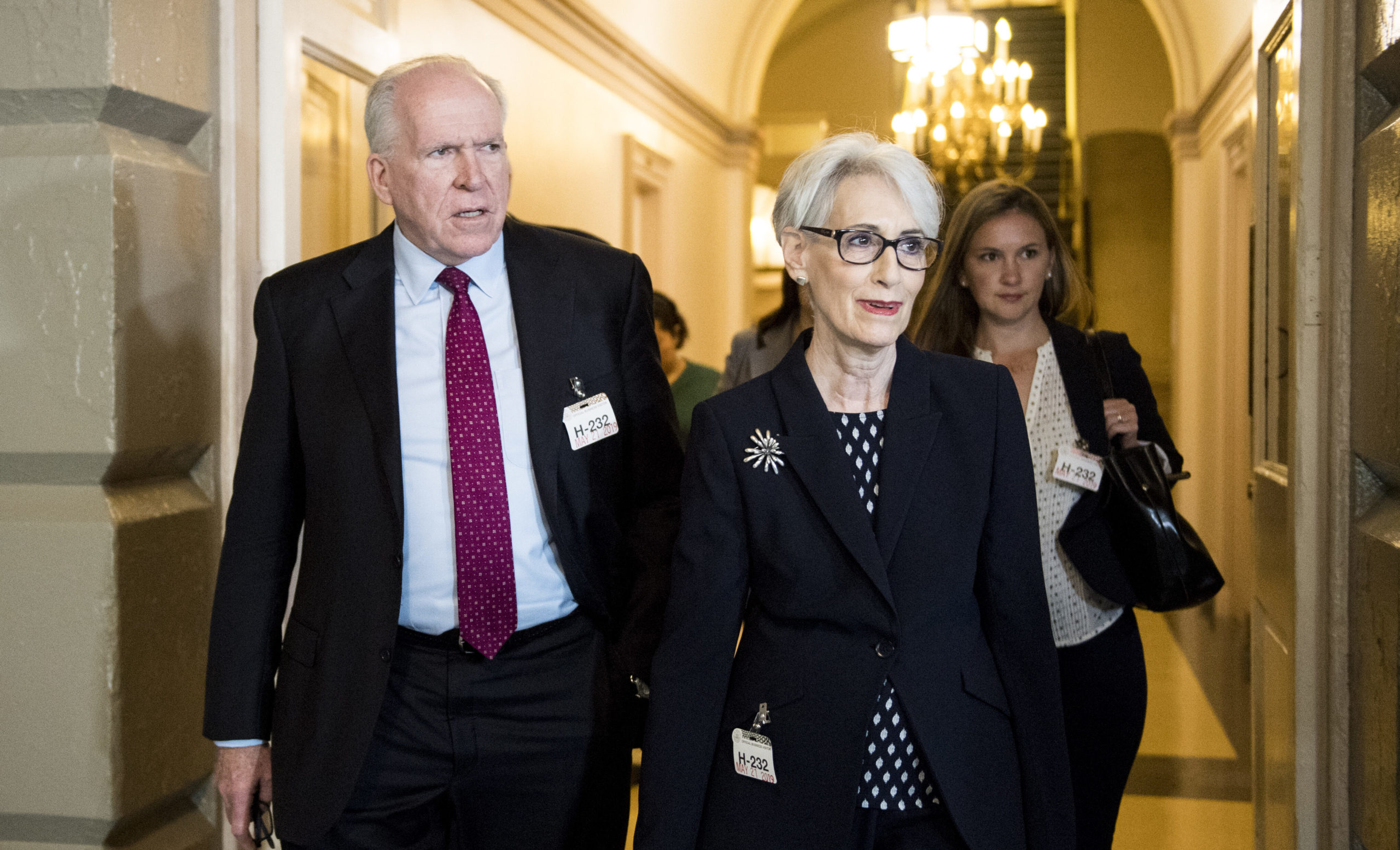
Bill Clark/CQ Roll Call via AP Images
Wendy Sherman, former Under Secretary of State for Political Affairs, and John Brennan, former director of the Central Intelligence Agency, arrive to brief the House Democrats' caucus meeting on Iran in the Capitol on Tuesday, May 21, 2019.
President Donald Trump is reportedly considering easing sanctions on Iran to pave the way for a public meeting with Iranian President Hassan Rouhani in New York at the United Nations General Assembly later this month.
Wendy Sherman, who served as lead negotiator for the Obama administration on the JCPOA, told Jewish Insider on Wednesday that she “would be shocked if Iran agreed to a meeting without some sanctions relief.” According to Sherman, if Trump is serious in offering Tehran some relief, “There are plenty of ways to do this so that everyone’s interests can be met and so that everyone’s face can be saved.”
Bloomberg reported that during an Oval Office meeting on Monday, Treasury Secretary Steve Mnuchin expressed his support for such a move, while then-National Security Advisor John Bolton “forcefully” opposed such a step. On Tuesday, Trump fired Bolton, and Secretary of State Mike Pompeo suggested a meeting with Rouhani is a possibility. The Daily Beast reported on Wednesday that Trump has indicated he is “actively considering” the French plan to grant the Iranian regime a $15 billion credit line if they return to compliance with the 2015 nuclear deal.
Sherman told JI that even if the U.S. relaunches direct negotiations with Iran, it “is a very complicated undertaking. I think what’s most important here is that the president go to a meeting with a strategy; a clear objective and a plan.”
Following that, the former diplomat said, “he will need a team that can follow up, a set of consultations that have happened with our partners and allies, and a really full idea of not only what the first step is, but what the next many steps are. The president, as we know, has gone into some of these meetings thinking that he could simply trust his own instincts and his own impulses and that has never gotten a result good for our national security.”
Sherman claimed that “virtually all” of the 2020 Democratic presidential candidates have said they would return to the 2015 nuclear deal “and I agree with that. Of course, Iran would have to come into full compliance. Likely, we would then, as in all arms control agreements, work for a follow-on agreement.”
Sherman said the conditions of the deal “have changed because of the president’s actions and Iran’s reaction to the president’s actions. The JCPOA remains the essential base but, as a negotiator, you have to take that into account and you have to address where we are.”
Tommy Vietor, Obama’s former National Security Council spokesman, said he believes “Trump should be willing to meet with Rouhani or any other foreign leader. The problem is that Trump is a terrible negotiator. He’s trying to buy a meeting with Rouhani by offering sanctions relief in the hope that it will lead to a negotiation and eventually a deal as strong as the JCPOA. Meanwhile, hard liners in Iran are empowered and our European allies are furious at us for ratcheting up tensions.”
Jason Brodsky, policy director of United Against Nuclear Iran (UANI), told JI that easing sanctions just to meet the Iranian president, “who isn’t its supreme decision-maker, isn’t maximum pressure.” Mark Dubowitz, the CEO of the Foundation for Defense of Democracies, said that Trump appears poised to make “the same mistake President Obama made in 2013 when he relieved the sanctions pressure on Iran to incentivize negotiations that led to the fatally-flawed JCPOA, giving Tehran patient pathways to nuclear weapons. Why President Trump would want to pull an Obama 2.0 is troubling and puzzling.”
Douglas Feith, a former under secretary of Defense for President George W. Bush, said that Trump “deserves credit for the surprising effectiveness of unilateral U.S. sanctions. If Iran wants sanctions relief, it should be willing to alter its behavior substantially. If it does so, some sanctions relief can reasonably be granted.” But, Feith added, “The U.S. should not have to pay Iran anything to come to the table.”
Please log in if you already have a subscription, or subscribe to access the latest updates.
 Continue with Google
 Continue with Apple