




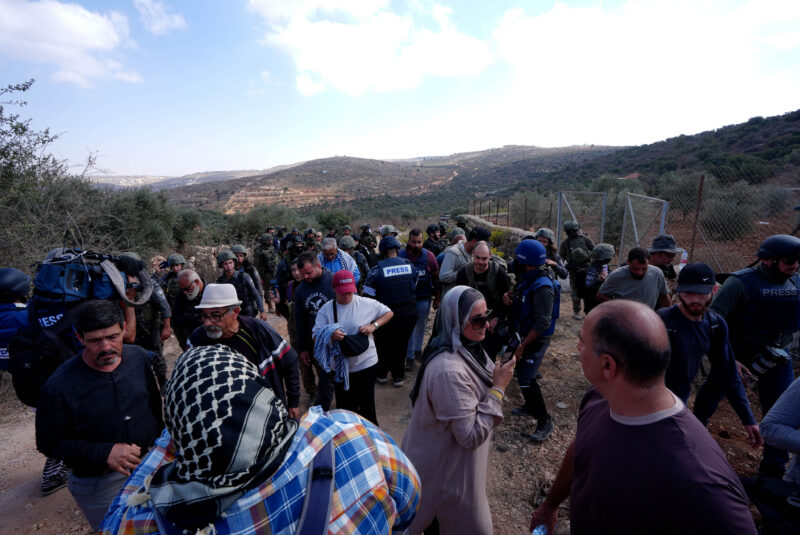
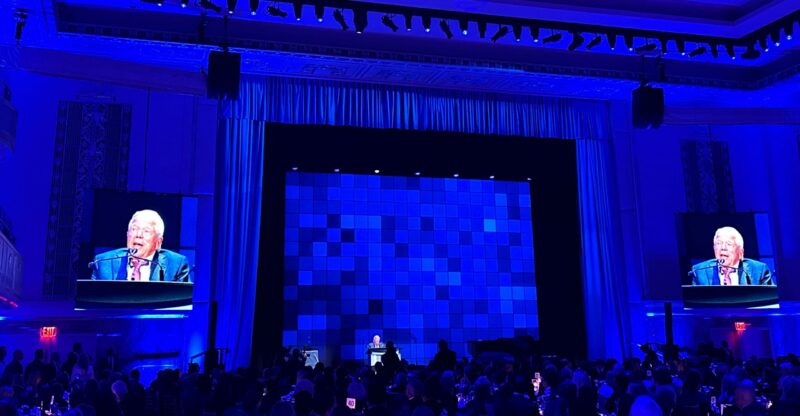
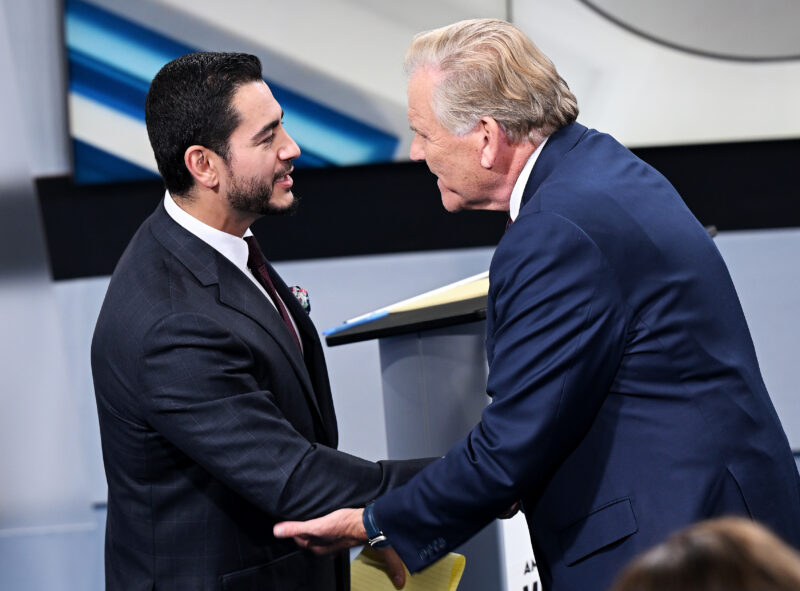


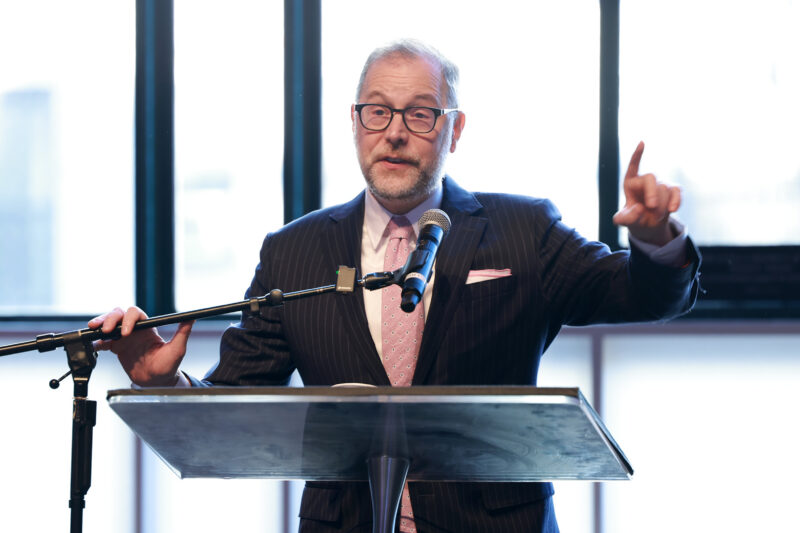
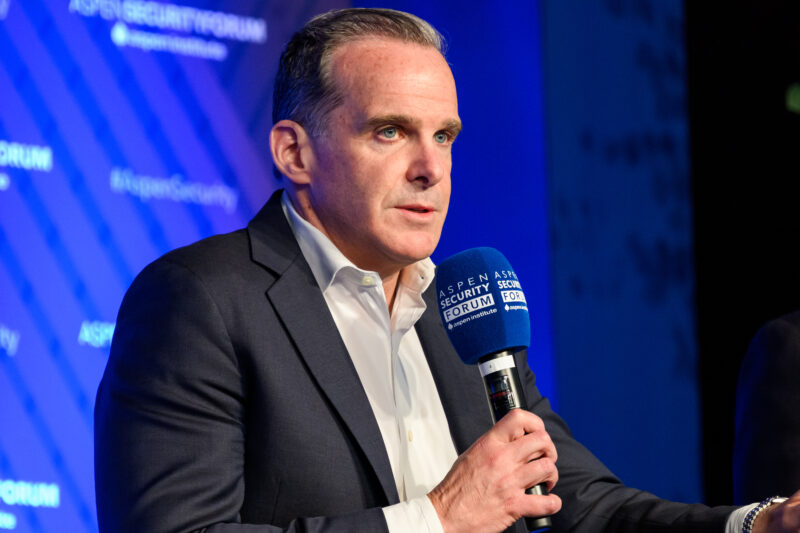
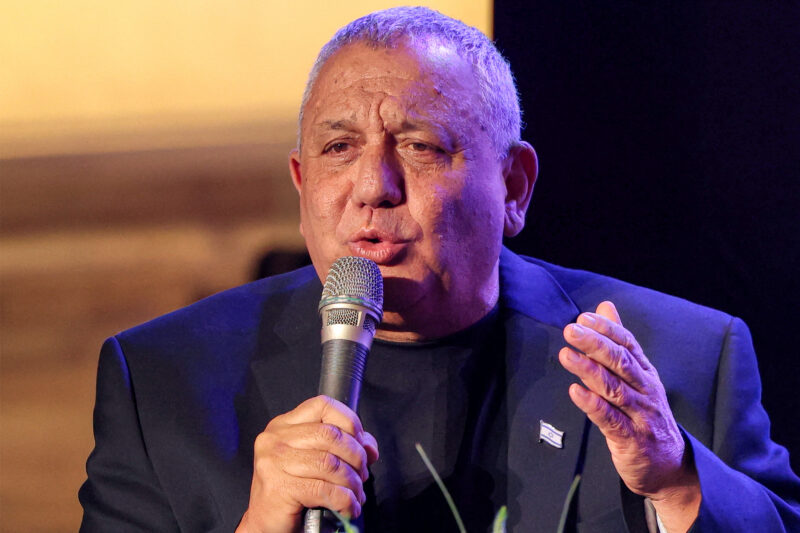


















McGurk disputed Gordon’s account that Israel held up a hostage deal in January 2025, arguing that it was Hamas at fault for delaying the agreement

Tom Williams/CQ-Roll Call, Inc via Getty Images
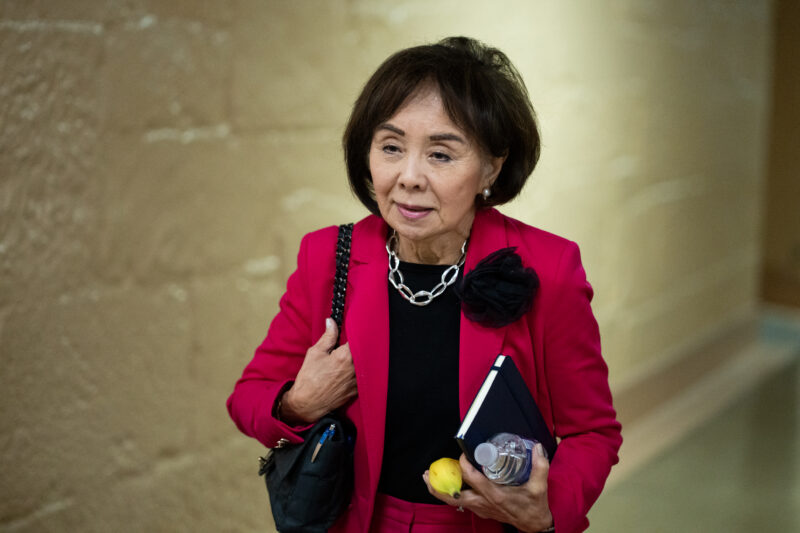
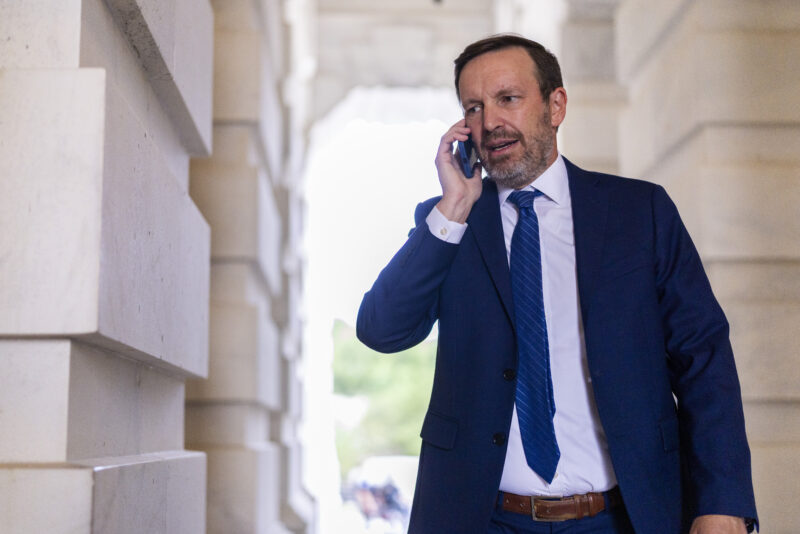
Brett McGurk, then-White House Coordinator for the Middle East and North Africa, arrives to the U.S. Capitol on Thursday, April 18, 2024.


 Add JewishInsider on Google
Brett McGurk, the former Biden administration Middle East coordinator, has strongly disputed claims that Israel caused a delay in securing a hostage deal due to its insistence on maintaining a military presence in key locations in the Gaza Strip. Instead, McGurk argues, it was Hamas that held up the agreement with its maximalist positions, until its position ultimately weakened.
Speaking Thursday at an Atlantic Council event alongside Washington Post columnist David Ignatius about his new book, Brink: Inside the Race to Free the October 7th Hostages, McGurk took aim at recent narratives from some of his former Biden administration colleagues surrounding the agreement.
While McGurk did not name his former colleague explicitly, his remarks directly referenced a social media post last weekend by Phil Gordon, the former national security advisor to then-Vice President Kamala Harris. Gordon had suggested that a deal had finally been achieved in January 2025 because Israel had dropped its insistence on maintaining a military presence in the Philadelphi Corridor and conducting weapons checks in the Netzarim Corridor — implying a deal could have been struck months earlier had Jerusalem compromised sooner.
“I actually, David, had a former colleague who was not in the negotiations recently say the way they got the deal was that Israel dropped demands on [the] Philadelphi Corridor and these other things. Totally not true,” McGurk said. “Hamas accepted things they were not prepared to accept in the summer.”
Under the January agreement, Israeli forces remained in the Philadelphi Corridor for the entirety of Phase One, which provided for the release of 33 hostages. The agreement also included provisions for weapons checks on vehicles moving north through the Netzarim Corridor. McGurk argued that those terms were more favorable to Israel than what had been on the table the previous summer.
McGurk used as an example of Hamas’ intransigence a moment from his book which describes Hamas’ out-of-the-blue demand for 110 life-sentence Palestinian prisoners in exchange for nine ill and wounded civilians as, demonstrating how the terrorist group delayed the negotiation process even in times when Israel had agreed to the terms of a deal and was facing American pressure.
A prominent Jewish Democratic fundraiser in the state said he’s not currently prepared to vote for El-Sayed without changes to the nominee’s stances
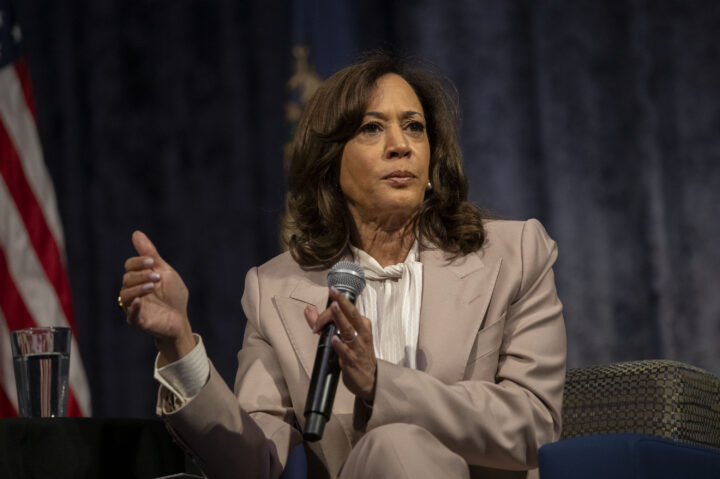
Bill Pugliano/Getty Images
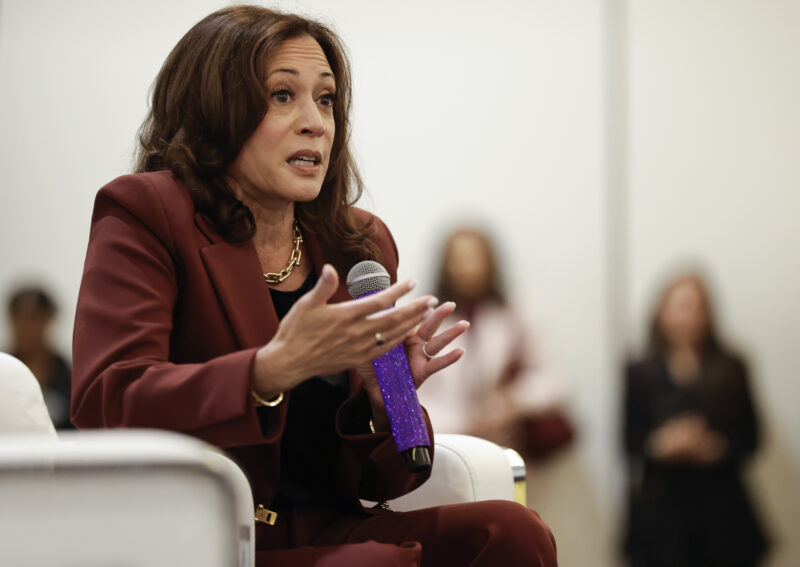
Former Vice President Kamala Harris speaks at the 38th Annual Michigan Democratic Women's Caucus Legacy Luncheon on April 18, 2026 in Detroit, Michigan.
Michigan Jewish leaders on Tuesday urged former Vice President Kamala Harris — who is set to campaign with the party’s Senate nominee, Abdul El-Sayed, in Michigan this week — to appeal to El-Sayed on issues related to antisemitism and Israel.
Meanwhile, one prominent Jewish Democratic leader and fundraiser in the state said that, without seeing significant changes in rhetoric from El-Sayed, he’s not willing to vote for him, even as the state’s Jewish attorney general, Dana Nessel, said this week that she plans to support El-Sayed.
The group of Jewish leaders, writing to Harris under the banner of the Nonnegotiable Michigan campaign, said that they are longtime supporters of her and the Democratic Party, and called on her to press El-Sayed to accept the five demands on Jewish issues and Israel that the Nonnegotiable campaign has presented.
The leaders highlighted Harris’ own history of fighting antisemitism and standing with the Jewish community, including hosting a Hanukkah celebration at the vice president’s residence and working with her Jewish husband, Doug Emhoff, on the national antisemitism strategy.
“As Vice President, you told us plainly that antisemitism ‘must be condemned unequivocally’ — no caveats, no context, no hesitation,” the letter reads. “When you accepted the Democratic nomination –– with many of us in Chicago cheering you on –– you proudly affirmed your commitment to Israel’s sovereignty and safety; you knew that promise did not contradict Palestinian dignity, security, freedom or self-determination, which you called for in the very same breath.”
The leaders said that Harris’ own stance and her understanding of antisemitism is clear, while El-Sayed “has had every opportunity to meet our request to support our basic needs. So far, he has declined even to respond” while employing antisemitic tropes and rejecting Israel’s existence as a Jewish state.
“When you stand beside Dr. El-Sayed on September 22nd, we urge you to call on him to say what he has thus far been unwilling to say: that Jewish safety, including for Zionists, is nonnegotiable,” the leaders said. “That our right to define our own identity is nonnegotiable. That Jewish statehood and self-determination in our ancestral homeland is nonnegotiable. That our full, proud participation in the Democratic Party is nonnegotiable.”
During a press call on Tuesday morning, David Kramer, a prominent Jewish donor and top Democratic official, said he was still uncomfortable supporting El-Sayed unless he agreed to a set of conditions the Jewish community laid out earlier this month. Kramer served as finance chair for Sen. Elissa Slotkin’s (D-MI) 2024 campaign and was campaign chair for Rep. Haley Stevens’ (D-MI) 2026 Senate campaign. He was also a prominent member of the Jewish Democratic effort supporting Harris in Michigan in 2024.
“I was involved with Michigan Jews for Harris. We had a pretty significant group that was, and we were proud to stand with her, and particularly proud of the work that she did with Doug Emhoff to combat antisemitism, and felt that she was a stalwart supporter of our community and the U.S.-Israel relationship,” Kramer told Jewish Insider. “We think that she’s particularly well-suited to raise non-negotiables with Abdul, given her support of our community and her unique understanding of our issues and the need for our security.”
Kramer told reporters that, if El-Sayed does not embrace the five conditions laid out by the Nonnegotiable campaign, “I’m not comfortable, at this point, voting for him.” Other Jewish leaders on the call, largely clergy who said that they were not willing to disclose who they were voting for, stopped short of explicitly making such a commitment.
Cantor Regina Lambert-Hayut added that Harris has a “very particular bird’s-eye view of what it means to be on the receiving end of a constituency feeling unheard or unsupported,” referencing the Uncommitted Campaign — which El-Sayed helped lead in 2024.
That campaign “cost — maybe fully or maybe in part — Democrats the election,” Lambert-Hayut said.
“I feel that she really understands this, and maybe she, someone with her integrity and her wisdom, could help appeal to Dr. El-Sayed to understand that every constituent matters, and to completely ignore the Jewish constituency, especially those of us who want to be able to support him, is something that I hope that she would be able to help him understand better,” she continued.
Rabbi Michael Moskowitz also emphasized that the Nonnegotiable campaign’s message extends beyond El-Sayed and Michigan. “It’s a national message we need to get out there to any candidate to understand how we feel as a Jewish community, and if that our votes count, and they need to help us in the midst of these concerns.”
El-Sayed responded dismissively when pressed on his support for the Uncommitted campaign on Tuesday, ahead of his appearance with Harris, arguing that the campaign was only designed to oppose President Joe Biden, not Harris, though many prominent Uncommitted leaders continued to pressure and protest Harris through the general election.
Kramer’s comment that he is not currently prepared to vote El-Sayed stands in contrast with Nessel, the Democratic AG, who endorsed him on Tuesday. Nessel made the endorsement alongside El-Sayed on the “For the Sake of Argument” podcast hosted by progressive activist Lori Goldman.
Nessel had previously been critical of El-Sayed and the Michigan Democratic Party more broadly, saying that she felt unsafe attending the party convention, but subsequently told Jewish Democrats in the state that they should put the “needs of the world above even our own self-interest and, yes, even our own survival.”
Kramer praised the Michigan Democratic Party and elected officials for their prompt condemnation of an incident last week in which an activist harassed and threatened Stevenson Capitol Hill for her support for Israel.
The activist involved is an officer of the Michigan Democratic Party, but the party is undertaking removal procedures. He also signed onto a letter of Jews supporting El-Sayed’s campaign, though El-Sayed also condemned his actions.
“It’s of great concern when any leader is accosted that way and things are thrown at them that are so damaging and alarming,” Moskowitz said on the press call.
The vice president, answering a question about unease among some on the right over the relationship, argued Trump has been more willing than any president in 40 years to challenge Netanyahu
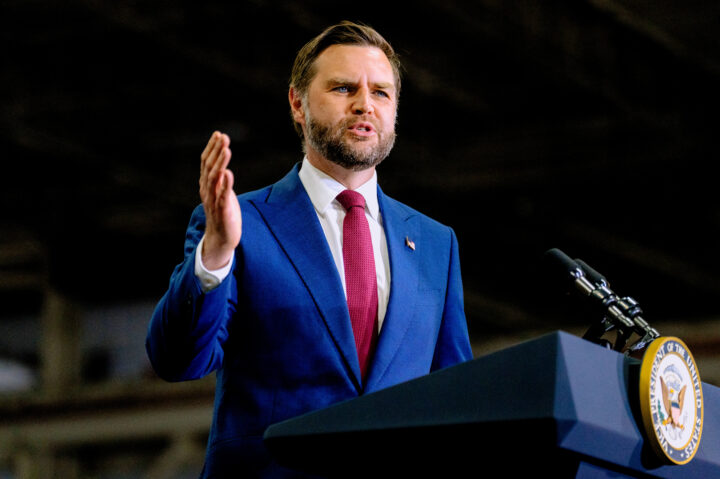
Nic Antaya/Getty Images
Vice President JD Vance speaks during a rally at Universal Contracting and Urban Tree Trimming on August 31, 2026 in Sterling Heights, Michigan.
Vice President JD Vance said on Tuesday that the U.S. must prioritize its own needs and “cannot let our Middle Eastern foreign policy be subservient to the State of Israel,” likening the dynamic to that of NATO during a virtual appearance at the All-In Summit.
Vance made the comments in conversation with “All-In Podcast” co-host Jason Calacanis, saying there are “obviously a lot of important relationships, a lot of important partnerships in NATO, but that doesn’t mean that we’re going to completely make our European foreign policy subservient to NATO in the same way that we cannot let our Middle Eastern foreign policy be subservient to the state of Israel.”
“We’re going to work with people when we work with them,” Vance continued. “We’re going to disagree when we disagree, and we’re going to pursue America’s interests. That’s the only way to have a rational foreign policy.”
The vice president also addressed a question about concerns on the right over the closeness of the U.S.-Israel relationship.
“Obviously Israel has been an important partner when it comes to military technology, when it comes to intelligence sharing, but also sometimes the United States doesn’t always agree with Israel,” Vance said to Calacanis. “And I think that, more than frankly any president in the last 40 years, he has shown a willingness to actually part ways with [Israeli Prime Minister Benjamin] Bibi Netanyahu when he feels like the interests of the American people are different from the interests of the government of Israel.”
At the All-In Summit, Vice President JD Vance said that the U.S. must prioritize its own needs and “cannot let our Middle Eastern foreign policy be subservient to the State of Israel.”
— Jewish Insider (@jewishinsider) September 16, 2026
Read more: https://t.co/8PdN50WnI8 pic.twitter.com/uFpPkhTPDg
Vance added, “I find it a little ironic, Jason, that you have Democrats criticizing Donald Trump for his relationship with Bibi when Donald Trump is the one president of the last 40 years who’s been willing to say, ‘You know what? Yeah, Bibi’s a good partner, but also Bibi and I have a different opinion on this, or Bibi’s wrong about this, or maybe Bibi’s right about this from the perspective of Israel, but the American people need us to go in a different direction.’”
The vice president responded to a question about the dynamic between himself and Secretary of State Marco Rubio, saying that the “funniest media narrative is that somehow Marco and I are like, hyper competitive, and we sit around like thinking about, you know, how we’re going to run for president against each other in 2028.”
Vance noted that the two were scheduled to speak immediately after his virtual appearance at the conference. “He’s a great human being. He’s doing a great job too,” Vance said of Rubio.
The survey, commissioned by the Jewish Voters Resource Center, also shows the vice president with a middling 61% support among Jewish Republicans
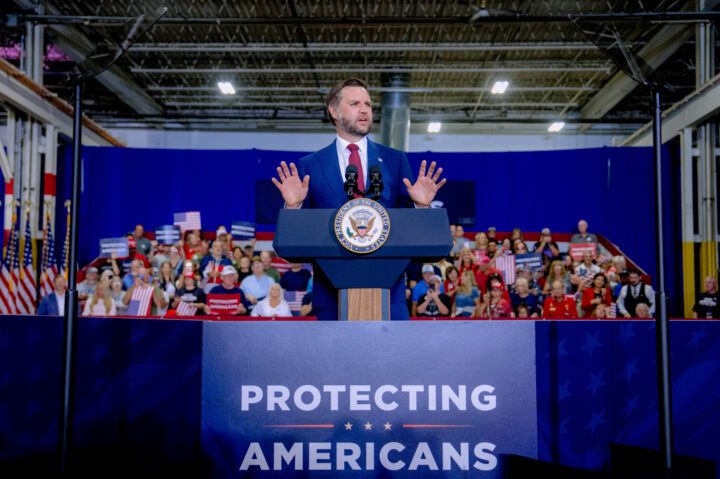
Nic Antaya/Getty Images
Vice President JD Vance speaks during a rally on Aug. 31, 2026 in Sterling Heights, Michigan.
A new poll of Jewish American voters commissioned by the nonpartisan Jewish Voters Resource Center found that Vice President JD Vance is viewed negatively by more than 80% of Jewish voters, including a sizable number of Jewish Republicans.
The poll finds Vance’s favorability rating at only 14% among Jewish voters overall, with 82% viewing him unfavorably. Only 61% of Jewish Republicans view Vance favorably, compared to the 89% of those who view President Donald Trump favorably, and the 93% of Jewish Republicans who hold a favorable view of Secretary of State Marco Rubio.
Overall, Trump’s approval rating among Jewish voters sits at 25%, with three-quarters disapproving of his job performance. Rubio’s overall favorability rating sits at 31%, with 64% viewing him unfavorably.
The poll also finds that Jewish voters overall plan to vote heavily for Democrats for Congress in the midterm elections, despite the rise of far-left anti-Israel elements within the party. It found that 67% of Jewish voters plan to support a Democrat for Congress, compared to 26% who plan to support a Republican. But the poll, conducted by the Democratic pollster GBAO Strategies, did not test specific questions about the Democratic Party’s image.
The survey was conducted between Aug. 26 and Sept. 1 and surveyed 800 self-identified Jewish voters.
At the same time, antisemitism remains a significant concern across the community. 89% of Jewish voters reported being concerned about antisemitism in the United States, including 63% who said they are “very concerned.”
On Israel, 71% of Jewish voters said they remain emotionally attached to the country, demonstrating that a strong majority continues to support Israel’s existence as a safe and secure Jewish state. However, despite that connection, 65% of respondents disapproved of the current Israeli government’s policies regarding the West Bank and Gaza.
The gap illustrates a clear distinction: Jewish voters broadly support Israel, but strongly oppose Israeli Prime Minister Benjamin Netanyahu’s right-wing coalition. Only 27% of respondents held a favorable view of Netanyahu, compared to 67% who viewed him unfavorably.
Still, Israel was not the top issue driving Jewish voters. When asked to name their two highest priorities, 37% named the cost of living and affordability, followed closely by the future of democracy at 36% and antisemitism at 25%.
“As we head into the final two months of the election, Jewish voters are overwhelmingly supporting Democrats for Congress,” said Jim Gerstein, the Democratic pollster who conducted the survey.
“Jews remain emotionally attached to Israel, but they oppose Netanyahu and his policies, and it is a lower-tier voting issue. Democracy, the cost of living, and a deep hostility toward Donald Trump are driving the Jewish vote. It’s particularly striking to see the vast majority expressing concern that Trump will not accept the outcome of the election. For Jewish voters, this is an election about stopping Trump.”
The vice president didn’t address the podcaster’s platforming of antisemitic guests, but noted his differences with Carlson over Trump and the Michigan Senate race
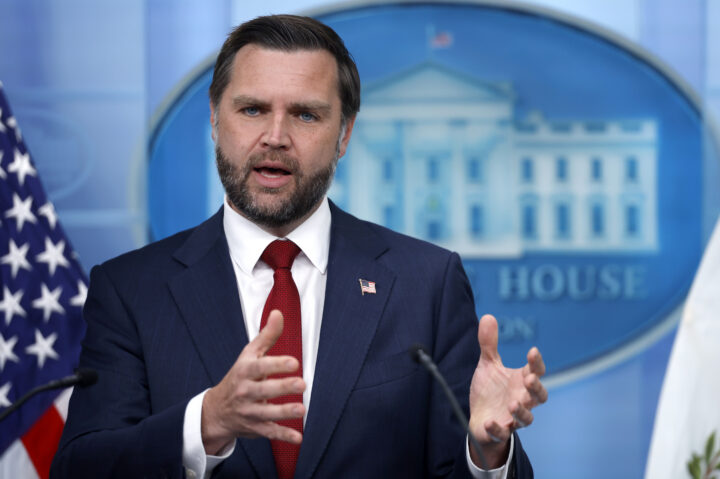
Kevin Dietsch/Getty Images
Vice President JD Vance speaks during a news briefing in the Brady Press Briefing Room at the White House on Sept. 3, 2026 in Washington, DC.
Vice President JD Vance defended his friendship with antisemitic podcaster Tucker Carlson at a White House press briefing on Thursday, saying that he would not “play the game where I throw friends under the bus because I have political disagreements with them.”
Vance made the comments after being asked to respond to the concerns raised by his continued association with the far-right commentator and accusations that he has been “avoiding addressing a lot of these issues,” as Carlson has increasingly used his show to promote antisemitic conspiracy theories and Holocaust denial.
Vice President JD Vance defended his friendship with Tucker Carlson at a White House press briefing, saying that he would not “play the game where I throw friends under the bus because I have political disagreements with them.”
— Jewish Insider (@jewishinsider) September 3, 2026
Read more: https://t.co/GeViZuaJUL pic.twitter.com/r7nYHYBOEe
While Vance criticized Carlson’s attacks on President Donald Trump and his recent comments expressing support for Democratic nominee Abdul El-Sayed over former Rep. Mike Rogers (R-MI) in Michigan’s Senate race, he did not mention Carlson’s extreme rhetoric and views.
“Look, I’m not avoiding addressing anything. Everybody knows that Tucker Carlson and I are friends,” Vance said. “I think it’s very obvious that Tucker has said some things that I disagree with.”
The vice president acknowledged his friendship with Carlson again before urging all Americans to maintain their personal relationships regardless of political disagreements, explaining that his “attitude towards this” was shaped by his and Second Lady Usha Vance’s experience on the campaign trail in 2024.
“I remember when I became the vice presidential nominee, one of the hardest things for me personally is not when people attacked me, but when people attacked my wife, including friends of hers who knew her heart, who knew what a good person she was,” Vance said. “I remember thinking to myself, ‘What a travesty it is that in the United States of America we let political disagreements define who our friends are going to be and not going to be.’ So yeah, Tucker is a friend of mine.”
“Tucker is a friend despite the fact that we disagree on a number of things. And I’m not going to play the game where I throw friends under the bus because I have political disagreements with them. I think that is a terrible place for the United States to go,” he said.
“If you have a disagreement with somebody politically, even over a deeply held issue, you should still be friends with that person, because the whole republic depends on people of different perspectives being able to talk to one another. That’s how I try to live my life, and I encourage everybody else to do the same.”
Confronting a skeptical crowd, the vice president expressed support for Israel and the Jewish community; he wasn’t pressed directly on his past comments and affiliations that have most concerned Jewish Republicans
Nic Antaya/Getty Images
Vice President JD Vance speaks during a rally at Universal Contracting and Urban Tree Trimming on August 31, 2026 in Sterling Heights, Michigan.
LAS VEGAS — Vice President JD Vance stuck to a pro-Israel line and rejected antisemitism in remarks on Monday to the Republican Jewish Coalition, avoiding any new controversies while not being pressed directly about some of his past comments and affiliations, including with Tucker Carlson, that have most concerned Jewish Republicans.
Attendees, with some exceptions, largely said that the speech helped Vance reassure skeptical Jewish and pro-Israel Republicans and boost his support with the RJC crowd ahead of a potential 2028 presidential bid.
Vance, in an off-record conversation with RJC Chairman Norm Coleman, audio and a transcript of which were leaked shortly after his remarks, was asked about a list of antisemitic influencers including Carlson and Nick Fuentes and his decisions about how to engage with those figures. He didn’t directly address Carlson — who he has previously defended as a friend — in his response, instead highlighting differences he sees between figures like Fuentes (who he tagged as antisemitic) and Rogan (who he said wasn’t).
“One area where I really do draw the line is on people who engage in what I call this blood libel attitude. I recognize a lot of people in this room might disagree with things that Tucker Carlson or Megyn Kelly or Joe Rogan has said, but — just to hone in on Fuentes and Rogan, I think these are two very, very different categories of people, both with their reach, but also within the ideas that are in their actual head,” Vance said.
Regarding Rogan, he said that he thinks the best approach is to engage and make his case and try to reach his audience. Fuentes, he said, is a substantively different case who is not worth engaging with given both his neo-Nazi views and his personal attacks on Vance and his family.
“But outside of some pretty bright lines, I try to talk to as many people as I can,” Vance continued.
Vance also highlighted a “growing suspicion” among the under-40 generation of the U.S.-Israel relationship and said that he believes that the best way to make the case for the relationship is to “actually get out there and talk about the ways in which it is in the best interest of the United States of America,” highlighting advanced missile defense technology as one example.
He said that other arguments that may have “made a lot of sense rhetorically 30 or 40 years ago” may not have the same appeal to young people today.
Asked about his past comments that Israeli and U.S. interests don’t always align, the vice president said that Israel is important to U.S. national security and among the U.S.’s most critical alliances, as well as undergirded by a “deeper cultural symbiosis and harmony.”
Vance was not directly asked about his recent comments accusing the Israeli government of conducting influence operations in the U.S. to undermine negotiations with Iran.
Vance suggested that Israel’s focus on the Middle East and the U.S.’s desire to shift away from a two-decade focus on that region is “a natural place in which Israel is going to look at these things slightly differently than the United States of America. … The most important thing is to say that there are alignments of interest across a whole host of issues.”
Towards the end of his remarks, Vance said that he sees antisemitism as having increased primarily as a result of immigration and the “importation of large groups of people who bring their ethnic rivalries” rather than changing sentiments in the American populace.
The vice president emphasized that he and the entire administration “love” the Jewish community and “you will very much always be on the team so long as I have any say in it.”
He argued that antisemitism — or the idea of punishing anyone for their genetics or ancestry, which he referred to as “blood libel” or “blood guilt”— is anathema to his Christian faith. He also highlighted past conversations with conservative activist Charlie Kirk about how antisemitism is “corrosive to the soul.”
“I think the antidote to antisemitism is the rejection of this idea of blood guilt,” Vance continued. “And I would tell any young man who claims to be a Christian that this is super corrosive for the soul.”
Vance said he feels a personal affinity and connection between the Catholic and Jewish religions and sees similarities between the two faiths — noting that he participated in a reading at the Orthodox Jewish wedding of his former chief of staff, Jacob Reses.
Vance, who spent the day on the campaign trail in Michigan with former Rep. Mike Rogers (R-MI), called Rogers “the single most important candidate right now in this midterm election” and El-Sayed “one of the worst disgraces running in the history of the American political process.”
“You don’t see a bunch of innocent Jewish kids who almost lose their lives and empathize with the killer unless you see those people as less than human,” Vance said, referring to El-Sayed’s response to the attack on Temple Israel in West Bloomfield, Mich., in March.
Several RJC board members, all speaking in their personal capacities, and other attendees largely said that Vance’s remarks had helped his case with the Jewish community.
“His sincerity was appreciated, and his comment that the under-40 generation doesn’t have the same emotional or historical attachment to Israel so must be met where they are was correct,” Joshua Katzen, an RJC board member told Jewish Insider. “The audience was relieved.”
Katzen told JI prior to Vance’s speech that the remarks would be an opportunity to alleviate concerns from RJC members, and his remarks earned repeated standing ovations from the crowd.
“I am going to support him,” Yitz Applbaum, another RJC board member, told JI. “He is definitely strong on the U.S.-Israel relationship and totally understands the issues, especially with the youth and how we need to work to do away with antisemitism with people under 40. [That was] a very key part of what he talked about.”
Sander Gerber, also an RJC board member, told JI, “Vice President Vance spoke to an enthusiastic room who understands that the American Jewish community is a core part of the political future of our country. I applaud the VPs statements repudiating antisemitism on the right.”
Bobby Schostak, an RJC board member and former Michigan Republican Party chairman, said that the RJC is “honored to have [Vance] here” and that Vance “made clear his positions … there was nothing concerning to me overall.”
“I think he needs to continue to reach out to us and us to him,” Schostak continued. “We have a good understanding going forward, but I didn’t find anything there, you know, alarming or concerning.”
Stuart Weil, an RJC member from California, told reporters that Vance’s remarks confirmed to him that any potential issues were a result of media distortion of Vance’s record.
“I will gladly support JD Vance as president of the United States,” Weil said. “As a big supporter of Israel, I believe that JD Vance will make a wonderful president. … He just reinforced what I already know.”
Not everyone was won over by Vance’s comments, however, with one attendee expressing disappointment with his failure to repudiate Carlson directly. “He was given the opportunity to call out and separate himself from Tucker. To the disappointment of many, he ducked the Tucker issue altogether,” the attendee told JI.
Schostak also acknowledged that others in the room might not have been satisfied with Vance’s answer.
“He addressed it as the elephant in the room. … I think the way he responded was, ‘It was important to not ignore all factions of opinion,’” Schostak said. “I don’t know how well that was received.”
Radio host Sid Rosenberg, who in remarks before the RJC earlier in the day urged the audience to “give Vance a chance,” said that he was disappointed by Vance’s remarks.
“He was not strong enough on Israel. In fact he referred to Israel as ONE of our best allies. One of?” Rosenberg said on X. “He had a chance to hammer [Carlson] and [Kelly] but instead spent all his time defending [Rogan] over Nick Fuentes. He also blamed immigration for a lot of the antisemitism in our country today. Silly. Look, he’s still better than any Democrat candidate but I don’t think he wowed the STRONG Jews in the room tonight.”
RJC CEO Matt Brooks and other members of the group’s leadership offered strong praise and support for Vance during a press conference following the session.
“Coming into a room that many would say had not necessarily known who JD was and what was in in his heart, or would be coming in skeptical to learn more — I think he really connected very very well with the audience tonight,” Brooks said.
Ari Fleischer, an RJC board member and former White House press secretary, told reporters that Vance “really helped himself tonight” and “answered a lot of the questions that people had about where his heart is.” He added that repeated appearances will help the crowd grow more comfortable.
“Today was not primary day, but I think today was progress day for JD Vance with the Jewish community,” he said.
Vance entered the room facing a divided crowd — with some in the audience skeptical of the vice president given his ties to Carlson, his public criticisms of Israel, his approach to negotiations with Iran and a host of other issues.
Uniformly, RJC board members and Jewish Republican elected officials said that Vance’s appearance at the RJC was a positive sign for him and for the Jewish community and that they were grateful that Vance was coming to address the crowd.
“I was surprised yet pleased to see that he’s coming,” Katzen said ahead of the speech. “I doubt that the vice president is coming to tell us that he thinks that Tucker Carlson’s view of Judaism is correct. He’s not here to tell us that. I have to think that he’s here to build bridges. I wonder how explicit he’ll be in rejecting the antisemites associated with Tucker Carlson.”
He said that Vance “must understand that he’s walking into 750 people who are very skeptical about his support” — largely because he “failed to respond when offered the opportunity” to people who have made antisemitic comments — so RJC members want him to address those concerns.
“I think his remarks can make all the difference,” Katzen said, noting that Secretary of State Marco Rubio’s name received loud applause from the RJC audience, while the same was not true of Vance.
“He can fix that tonight, and I hope he will. I would much rather have the Republican Party choosing between two excellent candidates [in 2028], especially the Jews in the Republican Party,” Katzen said. “I don’t want the Jews to feel like there’s only part of the Republican Party that is a home for them, because the Jews have no home in the Democratic Party.”
He said he would still prefer Vance to any Democrat.
RJC board members who spoke to JI otherwise generally declined to speculate about Vance’s potential presidential ambitions or the 2028 race, arguing that it’s too early to consider that election. Vance was the only anticipated 2028 hopeful who attended the conference.
Board member Eric Levine said ahead of the speech that it’s an “affirmatively good thing” that Vance is speaking to the RJC because it shows that the Jewish community and the U.S.-Israel relationship matter to him — particularly when juxtaposed with the increasing hostility toward Israel on the Democratic side.
Levine said that Vance has been helping President Donald Trump advance his Middle East policy — “and there has been no more pro-Israel president in the history of our country than Donald Trump.”
“Having said that, it’s a fool’s errand to just deny reality,” Levine continued, referring to Vance’s “relationship and association with Tucker Carlson,” who he said is indistinguishable from Nick Fuentes, former Rep. Marjorie Taylor Greene (R-GA), Hasan Piker, New York City Mayor Zohran Mamdani and Democratic Senate candidate Abdul El-Sayed. “So it’s unhelpful to have a relationship with Tucker Carlson, but that’s up for the vice president to navigate.”
He said he didn’t expect a sweeping statement from Vance either in defense or denunciation of Carlson.
Others said they had fewer concerns about the vice president going into the speech, but saw it as an opportunity for the vice president to mend fences with those in the RJC crowd who were concerned.
Schostak said before the event that it was “terrific” and an honor for Vance to appear, and said that it was an opportunity to start a process of strengthening his relationships with members of the RJC and reassuring those who do have concerns.
“This is a process. You’re not going to do everything in 45 minutes, but I think he’s going to show us, honoring us by being here and showing us that he cares about the American Jewish community and its fight against antisemitism and its support and his support for Israel’s right to defend itself and its self-determination,” Schostak said.
He said that the appearance was a “starting point to have those discussions for people that have any doubts or concerns” but he also argued that those concerns are largely based on incomplete comments.
“I think people are hearing things out of context. They’re getting three-hour podcast sections sliced and diced and put into a digital feed,” he said. “And I just think that unless you are hearing in its entirety, it’s hard to draw an honest conclusion.”
Applbaum before the event said he didn’t share the concerns of some other RJC members, but that he hoped the speech would provide an opportunity for Vance to assuage their concerns.
Applbaum emphasized that Vance’s association with Trump and his policies gives him strong credibility and credentials — ”they’re great for Israel, they’re great friends with the Jewish people in Israel.”
Brooks said that the RJC, not Vance’s team, decided to close the event to the press, so that Vance could “talk to the people in the front of the room in a way that wasn’t through the filter of the people on the press risers in the back of the room.”
Brooks and Fleischer downplayed the event’s significance as a stop on the 2028 presidential election trail, emphasizing that the speaker list had been selected with an eye toward the upcoming midterm elections, rather than the next presidential race.
Disclaimer: Yitz Applbaum serves as Jewish Insider’s wine columnist.
The vice president said El-Sayed's comments about the Temple Israel attack reflect 'something evil on the rise in America'
Nic Antaya/Getty Images
Vice President JD Vance speaks during a rally on Aug. 31, 2026 in Sterling Heights, Michigan.
Vice President JD Vance laid into Michigan Democratic Senate nominee Abdul El-Sayed on Monday during a campaign rally held in the state, calling him “very, very evil” and an apologist “for the worst people in the world and America’s enemies all over the globe.”
Speaking at the event in Sterling Heights organized by a pro-Trump super PAC, Vance accused El-Sayed of sympathizing with the assailant who carried out a terrorist attack against a synagogue outside of Detroit in March and associating with the antisemitic Twitch streamer Hasan Piker, who had claimed that America deserved 9/11.
“I realize that there’s something about Abdul El-Sayed that is very, very evil and on the rise in the United States of America today,” Vance said at the rally, where he touted the campaign of former Rep. Mike Rogers (R-MI), El-Sayed’s opponent.
“It’s people who see themselves not as citizens of a common nation fighting for every single person — whether they’re Jewish or Christian, whether they’re white or Black or brown — but see themselves as fighting for one group at the expense of others — and that is how, ladies and gentlemen, you destroy the United States of America,” he added in his speech.
Vance devoted significant attention to the violent terrorist attack targeting Temple Israel, a Reform synagogue in West Bloomfield, which El-Sayed had initially dismissed as representing a broader cycle of violence where “hurt people hurt people,” prompting widespread backlash from Jewish voters in Michigan.
The vice president’s focus on the synagogue attack indicates that El-Sayed’s remarks have reverberated well beyond the sizable Jewish community in the key battleground state.
Vance also said in his remarks he was “honored to be joined by the rabbi and some of the security guards of Temple Israel,” though Jewish Insider was unable to immediately confirm their individual involvement. (A Jewish community leader told JI that he knew of one rabbi who was attending the rally, but did not share a name.)
While El-Sayed voiced regret for his comments in meetings with Jewish Democrats over the weekend, Vance said that his response raised questions about what he is “going to do when he goes to Washington D.C.. when the cameras aren’t on.”
Vance called El-Sayed, who is Muslim, “a man who has sympathy and compassion for people who share his religion, but have nothing for people who don’t.”
“My message to Abdul El-Sayed is: You can pal around with terrorist sympathizers, and you can say that America deserved 9/11, or you could empathize not with the children who were targeted at Temple Israel, but with the attacker,” Vance said, before his comments took a personal turn.
He alluded to a recent social media post in which El-Sayed questioned if Vance would take his wife, Usha, who is Indian American, “back in time” to meet his late grandfather.
“Whatever you want to talk about, Abdul,” he shot back at the event, “keep my wife’s name the hell out of your mouth.”
“Today, you have an opportunity to speak loudly,” he said to the crowd, “and in November you have an opportunity to speak much more loudly against the hatred that is on the rise in the United States of America. Reject Abdul El-Sayed.”
In a statement after the rally, El-Sayed said in response: “Evil is ripping healthcare away from working people in exchange for tax breaks for billionaires. Evil is making people pay more for groceries and gas while pushing for trade wars and actual war. Evil is dividing people for your own gain. Evil is selling out your morals for a little bit of power.
“Michigan is better than being lectured to by sock puppets from Ohio and Florida,” El-Sayed added. “We understand what’s at stake, and Michiganders will show you at the ballot box this November when we send Mike Rogers packing.”
Vance, who has faced skepticism from Jewish conservatives over his refusal to disavow far-right commentator Tucker Carlson as he mulls a 2028 presidential campaign, is slated to address members of the Jewish Republican Coalition in closed-door remarks tonight at its annual summit in Las Vegas.
The keynote address, scheduled for Monday night, comes as some Jewish Republicans have been deeply skeptical of the vice president’s worldview
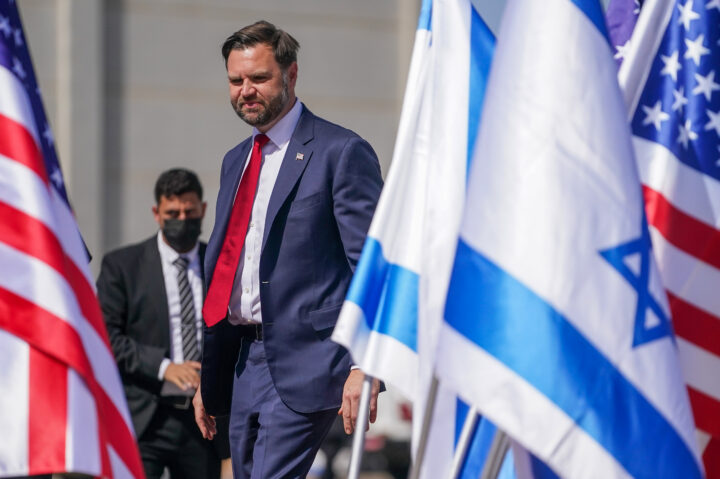
Vice President J.D. Vance arrives at Ben Gurion airport on October 21, 2025 in Tel Aviv, Israel (Photo by Nathan Howard - Pool/Getty Images)
Vice President JD Vance will appear at the Republican Jewish Coalition’s annual leadership summit in Las Vegas, Nevada, to deliver the keynote address at Monday night’s closed-door gala dinner for VIP attendees.
Vance’s address comes as Jewish and pro-Israel Republicans have expressed concern over his critical tone toward Israel and his association with far-right commentator Tucker Carlson, who has hosted numerous antisemitic guests on his podcast over the last two years.
The appearance will be Vance’s first at the RJC’s annual summit since entering public office. Vance attended the three-day confab as a guest in 2021 while running in the GOP primary for his former Senate seat, though he did not deliver remarks at that year’s gathering.
President Donald Trump will be delivering videotaped remarks at the gala dinner on Monday night. Several of the GOP’s top Senate recruits will also be in attendance, including former GOP Rep. Mike Rogers, who’s running against Democrat Abdul El-Sayed in the pivotal Michigan Senate contest. Rep. Mike Collins (R-GA), who’s running against Sen. Jon Ossoff (D-GA), will also be speaking.
The summit has evolved somewhat in recent years as rising antisemitism within the GOP caused intra-party fissures. Carlson’s decision to host neo-Nazi influencer Nick Fuentes for a friendly interview on his podcast in the days leading up to last year’s confab prompted the RJC to make fighting right-wing antisemitism a key focus of the summit, which has historically been centered around celebrating broad GOP support for a strong U.S.-Israel relationship and connecting Republican politicians and candidates with potential donors.
Signs saying “Tucker is not MAGA” were featured at last year’s 2025 summit.
While Vance has condemned antisemitism and argued that it has no place in the GOP, he has said he rejects the notion that Jew hatred is spreading in the conservative movement. He also dismissed the suggestion that the rise in anti-Israel sentiment in the Republican Party was the result of antisemitism.
He said after being heckled over Israel’s war in Gaza at a Turning Point USA event in April that “the humanitarian situation in Gaza was an absolute catastrophe” when Trump began his second term and defended the ceasefire brokered by the president. In a pivot from his tone two years prior, Vance instead criticized the Biden administration for failing to reach a deal to stop the fighting and declined to defend Israel’s conduct in Gaza.
Since the Iran war was launched six months ago, the vice president has led several rounds of direct peace talks with Iran while emphasizing publicly that the administration was looking for a peaceful end to the conflict. He has also largely defended the war in public by noting the efforts to end the conflict.
In June, he issued a scathing public rebuke of Israeli officials who have criticized Trump for approving the memorandum of understanding between the U.S. and Iran, during which he cautioned Israeli skeptics of the deal against “attacking the only powerful ally” it has left and urged them to “wake up and smell the reality of the situation that country is in.”
Plus, Preakness Shabbats no more
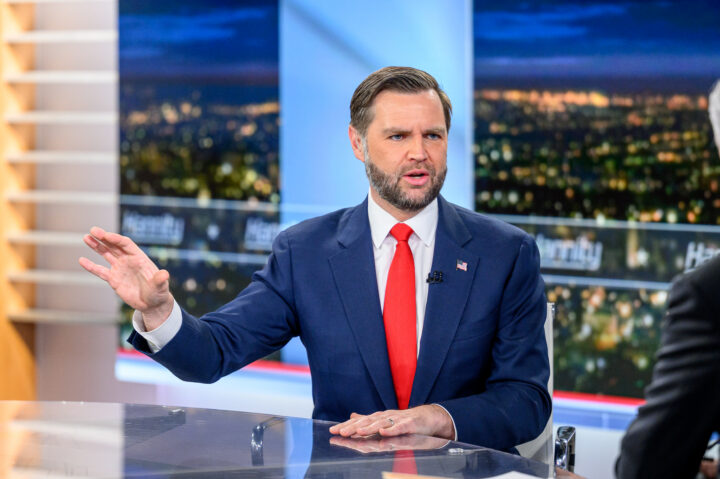
Roy Rochlin/Getty Images
Vice President JD Vance
Good Friday morning.
In today’s Daily Kickoff, we look at the reaction by Jewish conservatives to a fundraiser for Vice President JD Vance hosted by Tucker Carlson ally Omeed Malik, we report on pleas by a group of Jewish staffers at Vox Media to address anti-Israel bias at the company and its subsidiaries that have largely gone unheeded and talk to observant Jews in Baltimore who, following the decision to move the Preakness from Saturday to Sunday, will for the first time be able to attend the annual horse race at Pimlico Race Course. Also in today’s Daily Kickoff: Mary Peltola, Amy-Jill Levine and Alex Luxenberg.
Curated by JI Executive Editor Melissa Weiss, with assists from Danielle Cohen-Kanik and Marc Rod.
For less-distracted reading over the weekend, browse this week’s edition of The Weekly Print, a curated print-friendly PDF featuring a selection of recent Jewish Insider and eJewishPhilanthropy stories, including: X. Print the latest edition here.
Today’s Agenda
President Donald Trump is traveling to Myrtle Beach, S.C., today for an evening rally with Sen. Darline Graham (R-SC) ahead of Tuesday’s runoff that will pit Graham against Rep. Ralph Norman (R-SC). The rally comes days after a debate in which Graham’s answers on foreign policy — in which she acknowledged being “not that informed on national security” — were widely panned, including by GOP operatives.
The USS Abraham Lincoln and the 5,000 servicemembers aboard are en route back to San Diego, having departed their position in the Gulf following a nine-month deployment in the Pacific and the Middle East. The aircraft carrier was relieved earlier this week by the USS George Washington.
One Thing To Know
tucker ties
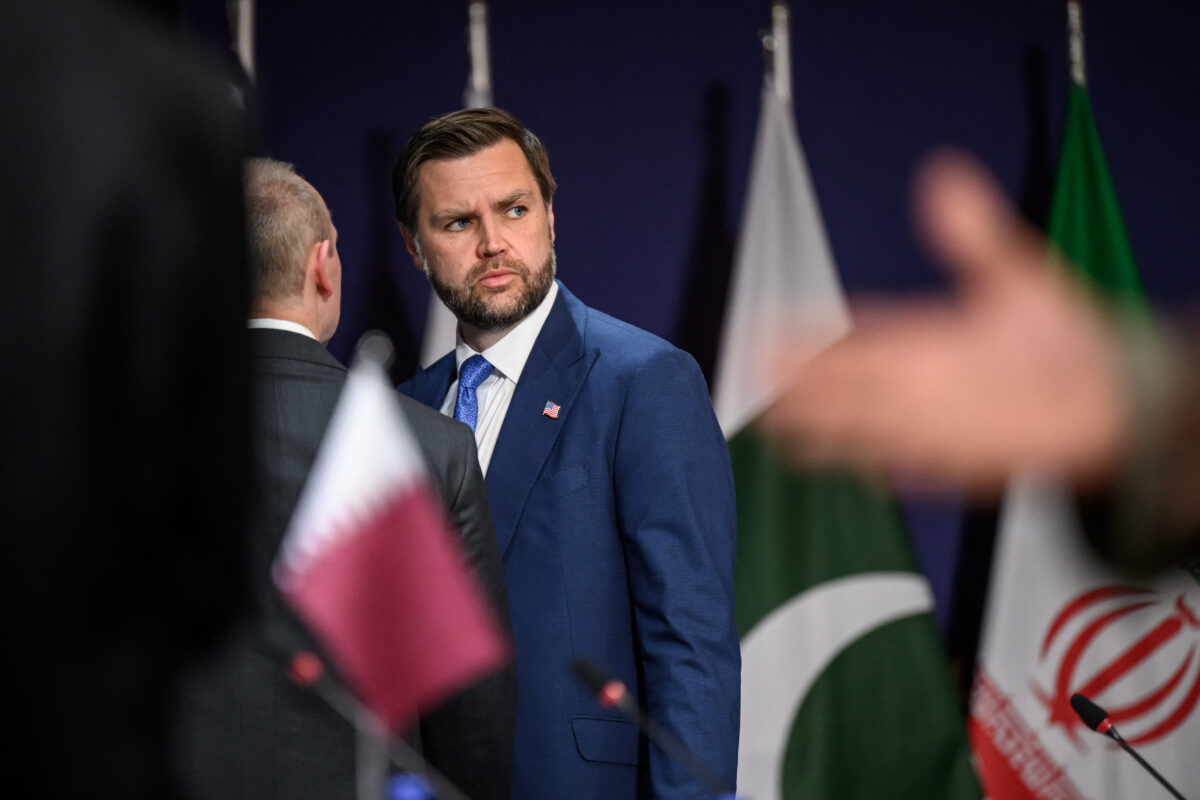
By Matthew Kassel
A fundraiser hosted by Vice President JD Vance in the Hamptons on Wednesday is raising red flags among some Jewish Republicans who continue to harbor concerns over his likely intention to run for president in 2028.
The event, first reported by Axios, was notably held in the home of Omeed Malik, the Iranian American investor who was an important early backer of Tucker Carlson’s media company. The fundraiser highlights Vance’s ongoing ties to Carlson’s network — even as the far-right commentator has faced backlash for his regular promotion of antisemitic conspiracy theories about Jews and Israel.
The event underscores the anxieties among some traditional Republicans who are skeptical of Vance’s indulgence of antisemitic forces on the far right and commitment to a strong relationship with Israel that has long been a key GOP value but is now waning among the party’s younger voters. Jewish conservatives voiced their concerns about the fundraiser on social media as the invitation surfaced online Thursday.
The Big Reads
media moment
Not long after the Oct. 7, 2023, Hamas terror attacks, members of a Jewish employee resource group at Vox Media, known as the Tribe, circulated a lengthy memo alleging several instances of bias against Israel in coverage by New York magazine, which was then a subsidiary, and Vox, the explanatory journalism site, and offering editorial guidance for staffers writing about the attack and ensuing war in Gaza, Jewish Insider’s Matthew Kassel reports. The pleas went unheeded, as New York magazine now faces fresh outside scrutiny from critics who say its recent cover issue, dedicated to celebrating New York City’s burgeoning Middle Eastern cultural scene, erased the Jewish perspective from its narrative, suggesting the Tribe memo likely faded from institutional memory.
NORTHERN EXPOSURE
Alaska’s closely watched Senate race, which will help determine the balance of power in the Senate, is set to pit a consistent — if rarely prominent — Democratic supporter of Israel against a prominent Republican national security hawk. Unlike in some other battleground races, the issue of Israel has rarely come up in the campaign, Jewish Insider’s Marc Rod reports. Though she was a reliable supporter of Israel in the House, even breaking with most Democrats at times, Peltola’s campaign did not provide comment in response to repeated inquiries from JI about whether her stance has changed since leaving the House.
Bonus: The Cook Political Report, which already rated the Alaska Senate race as a “Toss Up,” on Thursday moved the Texas and Iowa Senate races from “Lean Republican” to “Toss Up.”
Ain’t Gonna Race on Saturday
For more than 150 years, Baltimore’s Orthodox Jews have walked to synagogue on Preakness Saturday and listened to the roar of the Pimlico Race Course crowd less than a mile away, never able to join it. That will change next year, following an announcement from Maryland Gov. Wes Moore and the Maryland Jockey Club that the 152nd Preakness Stakes will run Sunday, May 23, 2027, Jewish Insider’s Haley Cohen reports. “Growing up, I would walk to synagogue every Shabbat of Preakness and I’d be able to hear the crowd roaring. I always felt like I was missing out,” Alex Friedman, a member of the Baltimore City Democratic State Central Committee, told JI.
The Rundown
PROGRESSIVE PREVAILS
DEBATE NIGHT
DONOR CLASH
ROAD TO DAMASCUS
On Our Radar
● The Live Briefing. Word on the street, clips, podcasts and quick updates — the items we’re tracking all day in our Live Briefing on the app (on Apple and Android) and website.
A U.S. official said that Palestinian Authority President Mahmoud Abbas will be barred from attending the U.N. General Assembly in New York next month, a year after he was first denied a visa over U.S. claims that the PA had engaged in efforts to undermine peace efforts…
Michigan Democratic congressional nominee Jeremy Moss declined to endorse his party’s Senate nominee, Abdul El-Sayed, in an interview with Slate: “Abdul’s going to have to demonstrate some serious outreach to Oakland County’s Jewish community,” Moss said. The two candidates have “had an ongoing dialogue,” Moss added, as he said Democrats must ensure that “the liberal Jewish community is not politically homeless”…
Our Time NYC, a nonprofit founded by allies of New York City Mayor Zohran Mamdani to back the mayor’s policies, will close down following the departure of all of its staff, nine months after the group launched…
In Newsweek, former White House Middle East envoy Jason Greenblatt lauds Jared Kushner’s diplomatic efforts, noting that Kushner operates “knowing the region’s leaders, and the ground beneath them, better than almost anyone else Washington could send”…
German investigators said they had identified the alleged perpetrator of a 1970 arson attack on a Jewish community center in Munich in which seven Holocaust survivors were killed; the man, who was not named, was a German neo-Nazi who died in 2020…
A researcher testifying before Australia’s royal commission into antisemitism in the country clashed with a commissioner after saying she did not consider Israel to be a “legitimate state” and believed Zionism to be a “violent extremist” movement…
The Israeli government advanced plans to build an additional 1,200 housing units in the West Bank, prompting the U.K., France, Germany, Canada and Italy to condemn the move…
U.S. Ambassador to Israel Mike Huckabee warned against efforts by Israeli settlers to take property owned by Palestinian Americans, telling Reuters such moves constituted “a violation of God’s law” and could be met with U.S. sanctions…
The Catholic Biblical Association of America elected Old and New Testament scholar Amy-Jill Levine, who is Jewish, to serve as the body’s next president; Levine, who previously served as the CBA’s vice president, is the first Jewish person to lead the group…
Meta’s Alex Luxenberg was named the next CEO of Sefaria, eJewishPhilanthropy’s Jay Deitcher reports…
Worthy Reads
Find more Worthy Reads in our Live Briefing via our app (on Apple and Android) and website.
Houthi Havoc: In The New York Times, RAND’s Alexandra Stark posits that the Iran-backed Houthis in Yemen are likely to continue to pose a challenge to Western interests in the region, regardless of the situation between the U.S. and Iran. “Highly attuned to their own interests and pragmatic in the international arena, the Houthis have proved savvy at choosing when to enter or escalate conflicts. … While the United States looks to wind down the war with Iran, the Houthis are threatening to resume their war in Yemen, which would likely draw in Saudi Arabia, menace the global oil trade and keep the region unstable.” [NYTimes]
On Guard in Gotham: In The Wall Street Journal, Queens native Tevi Troy reflects on the increasing threats facing Jewish New Yorkers amid rising antisemitism. “In my weekly teaching visits to New York from Maryland, I choose — for now — to continue taking the subway, going to synagogue, eating at kosher restaurants. But other Jews may make different choices. They may stop being observant, or may stop doing things that identify them as Jewish. They may move to Florida or Texas or out of a Jewish neighborhood. Put all those individual choices together and we lose the things that for more than a century made New York such a Jewish city.” [WSJ]
Wine of the Week

JI wine columnist Yitz Applbaum reviews the Noah Estate Cabernet:
Once a year, a few of us from our Oakland, Calif., synagogue fly somewhere far removed from our weekly routines. This week it was Buenos Aires, Argentina, and I arrived with the ambition to find a great malbec. What came to the table instead was a rack of asado de tira, charred dark at the edges and rendered gold along the bone, with bife de chorizo and matambre behind it. Standing equal to all of it, in the end, was not a malbec but the Noah Cabernet 2023, a wine from the Judean foothills outside Jerusalem.
It is 100% cabernet sauvignon, and it opens with the muskiness of aged tobacco leaf. The mid-palate is deep cherry, dark and unhurried, with tannin enough to cut the fat without ever talking over the meal. The finish, carried on the tango from the next room, is lively and stays with you well after the plates are cleared. A wine for the Shabbat table, and no less at home on a Tuesday night. Pour it alongside short ribs, a rib roast, or anything that has spent hours over coals.
Birthdays

FRIDAY
Irwin Wecker, retired owner of Effective Strategy Consultants, South Florida resident
Ilana Rovner, senior judge on the U.S. Court of Appeals for the 7th Circuit, turns 88
L. Rafael Reif, president of the Massachusetts Institute of Technology until the end of 2022, turns 76
Eric S. Brown, former chief justice of the Ohio Supreme Court, he was the first Jewish chief justice in Ohio history, turns 73
Yossi Dina, Israeli-born pawnbroker and star of the reality television series “Beverly Hills Pawn,” turns 72
Sabina Berman Goldberg, Mexican writer, playwright and journalist, turns 71
Mitchell Rales, businessman and collector of modern and contemporary art, he is the owner of the NFL’s Washington Commanders, turns 70
Jon Tester, former U.S. senator (D-MT), turns 70
Yehiel Lasri, Israeli physician who was a member of the Knesset, he now serves as mayor of Ashdod, turns 69
Jerry Avenaim, photographer best known for his fashion and celebrity images, turns 65
Ido Aharoni, Israeli career diplomat who served for six years as consul general in New York, turns 64
Scott Bessent, secretary of the Treasury, turns 64
Mark Stuart Charendoff, president at Maimonides Fund
Jack Weiss, co-founder of BlueLine Grid, he was previously an assistant U.S. attorney in Los Angeles and a member of the Los Angeles City Council, turns 62
Chavie Kahn, member of the philanthropic leadership group for the UJA-Federation of New York
Ken Mehlman, global head of public affairs at Kohlberg Kravis Roberts-KKR, turns 60
Rachel Hirschberg Light, president of Berger Hirschberg Strategies
Sergey Brin, co-founder of Google, both Bloomberg and Forbes rank him as one of the ten wealthiest people globally, turns 53
Jason Marquis, former MLB pitcher for nine teams, he was the starting pitcher in three of Team Israel’s first four games in the 2017 World Baseball Classic, turns 48
Chesa Boudin, former district attorney of San Francisco, turns 46
Adam Fisher, head coach of the Temple University Owls men’s basketball team, turns 42
Adam Rosenblatt, founding partner of Bold Decision, turns 41
Erica Miller, missions manager for domestic and overseas travel at the Jewish Federation of Greater Philadelphia
David Abadian Heifetz, communications director at Breakthrough Energy
Madeline Fuhrman, pop singer and songwriter, turns 33
Tzippy Baitch, associate editor at Simon & Schuster
Noa Rakel Perugia, an Argov fellow at Reichman University
Lynn Sharon
James Barton
SATURDAY
Morton Dean, Emmy Award-winning television news journalist, formerly the weekend anchor of “CBS Evening News,” turns 91
Margie Berkowitz, former director of Prozdor, the high school program of the Hebrew College in Newton, Mass.
Paul Singer, founder, president, co-CEO and co-chief investment officer of Elliott Management Corporation, turns 82
Joyce Fox, dermatologist in Beverly Hills, Calif.
Eli Capilouto, president of the University of Kentucky since 2011, he traces his heritage to a small Sephardic community on the island of Rhodes, turns 77
Steven Brill, founder of the magazine American Lawyer and the cable channel Court TV (now TruTV), he also co-founded NewsGuard, turns 76
I. Lewis “Scooter” Libby, former chief of staff to VPOTUS Dick Cheney, turns 76
Yitzhak Aharonovich, chairman of Mekorot (Israel’s water company), he was a member of the Knesset for the Yisrael Beiteinu party, turns 76
Mark Gilbert, former MLB outfielder, then investment banker, he was the U.S. ambassador to New Zealand and has served as president of B’nai Torah Congregation in Boca Raton, Fla., turns 70
Adlai W. Wertman, former investment banker who left his job to run a Los Angeles-based homeless service provider, he was also a professor at USC, turns 67
Ofra Strauss, chairwoman of Israel’s Strauss Group, conducting business in 20 countries, turns 66
Jesse Itzler, co-founder of Marquis Jet and part owner of the NBA’s Atlanta Hawks, turns 58
Ed Miller, SVP of political campaigns and strategy at AIPAC, turns 55
Deborah Hochberg, director of strategic partnerships at the Paul E. Singer Foundation
Michael Fragin, senior advisor to the county executive in Nassau County, N.Y.
Craig Greenberg, mayor of Louisville, Ky., since the start of 2023, turns 53
Rachel Saifer Goldman, director of operations at the University of Pennsylvania Hillel
Stuart A. Graiwer, partner in the Century City office of Gibson, Dunn & Crutcher
Shari Dollinger Magnus, co-executive director of Christians United for Israel
Shana Knizhnik, attorney and author, best known for her NYT best-selling book, Notorious R.B.G.: The Life and Times of Ruth Bader Ginsburg, turns 38
Claire Stein-Ross, chief of staff and development director at Protect Borrowers
Ari Stidham, actor known for his role as statistical genius Sylvester Dodd in the television series “Scorpion,” turns 34
Braden Adam Bishop, professional baseball player for nine years, he is now a player agent and he also manages a foundation for families affected by Alzheimer’s, turns 33
SUNDAY
Norman Braman, owner of many car dealerships, art collector and former owner of the Philadelphia Eagles, turns 94
Ron Blomberg, former MLB player, he was the first designated hitter in MLB history and was the manager of the Bet Shemesh Blue Sox in the Israel Baseball League, turns 78
Reuven Amitai-Preiss, director of the Ben-Zvi Institute for the Study of the Jewish Communities of the East, turns 71
David Alexander Wolf, astronaut, medical doctor and electrical engineer, he brought a dreidel, a yad and a small menorah into space, turns 70
Richard Zeskind, retired SVP and general counsel of Eastern Savings Bank in Hunt Valley, Md.
Eitan Cabel, former member of Knesset for 23 years representing the Labor party and Zionist Union party, turns 67
Bracha Radin, owner of A&A Wholesale
Anna Kaplan, first Iranian-American member of the New York State Senate, her term ended in 2022, turns 61
Marc Swatez, CEO of the Jewish Federation of Greater Indianapolis
Elise Rosenstock, jewelry designer
Kimberly Merle Schrier, member of the House of Representatives since 2019 (D-WA), she served as a physician prior to entering politics, turns 58
Errol Damelin, founder and CEO of Wonga, a British financial technology company (one of the first fintechs in the world), turns 57
Jeremy Schaap, ESPN host and one of the network’s longest-tenured personalities, he has won 11 Emmy Awards, turns 57
Rabbi Josh Kohl, teacher at Politz Hebrew Academy in Philadelphia, known by his students as “Rabbi Science”
Lawrence Frank, former NBA head coach (Pistons and Nets), now president of basketball operations for the LA Clippers, turns 56
Craig Silverman, national reporter for ProPublica, turns 49
Mor Katzir, Israeli model, born in Haifa, turns 46
Avigail Goldgraber, managing director in the hospital and healthcare practice of Accenture
Stephen Miller, White House deputy chief of staff for policy and homeland security advisor, turns 41
Isabella Tobias, retired ice dancer who competed for Georgia, Lithuania and Israel, turns 35
Baker was involved in the administration’s recent diplomacy with Iran
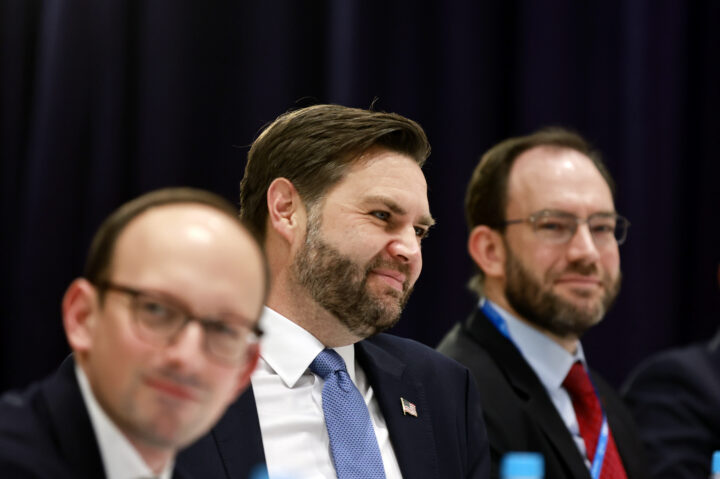
National security adviser Andy Baker (right) appeared alongside Vice President JD Vance in a bilateral meeting with German president Frank-Walter Steinmeier at the 61st Munich Security Conference on February 14, 2025 in Munich, Germany (Photo by Johannes Simon/Getty Images)
Andy Baker, a White House deputy national security advisor and one of Vice President JD Vance’s closest foreign policy aides, is leaving the Trump administration in the coming weeks.
Baker, a former foreign service officer at the State Department, served as Vance’s national security advisor in the White House and in Vance’s Senate office before joining the White House National Security Council this spring. He emerged as a low-profile but influential figure within the Trump administration on foreign policy matters and was directly involved in diplomatic talks with Iran in the aftermath of this year’s war.
Baker served concurrently as White House deputy national security adviser and the vice president’s national security adviser, placing him in Secretary of State Marco Rubio and President Donald Trump’s respective orbits.
Baker was characterized in a Politico profile in February as “a self-described ‘realist’ who is skeptical of traditional American alliances and U.S. military intervention abroad” and said he “aligns with the ‘restrainer’ wing” of the GOP.
News of his departure comes after Cliff Sims was tapped in May to succeed Baker as the vice president’s national security advisor. A source close to Baker told JI that he stayed in the role for months longer than planned to allow for “smooth transitions” for Sims and State Department Counselor Michael Needham, a top Rubio aide who also serves as a White House deputy national security advisor alongside Baker.
Baker, who has young children, is planning to enter the private sector in order to spend more time with his family, a source close to him told JI. Baker is joining America Global Strategies, a political consulting firm run by Robert O’Brien, the White House national security advisor in the first Trump administration, according to a source familiar with the situation.
“This has been an amazing journey,” Baker said in a statement on his departure. “I’m proud of everything we’ve achieved and, of course, am incredibly grateful to the president, vice president, and Secretary Rubio. I’ll never be far away.”
Vance described Baker as “an exceptionally gifted, deeply thoughtful advisor who has served the president and me with distinction. He has been an indispensable member of our administration’s national security team.”
“For the over three years that Andy has been by my side, I’ve always valued his counsel and have been grateful for the difficult work he’s done to ensure the United States is the safest, most secure, and most capable nation on Earth,” the vice president said in a statement.
Rubio said, “Andy has been an invaluable asset and key member of the President’s national security team who has greatly advanced the America First agenda. Andy has been a trusted, loyal, and critical advisor through every success and I wish him nothing but the best in his future endeavors!”
White House Special Envoy Steve Witkoff said in a statement that, “From day one, Andy has worked tirelessly to put America first and get deals done for the President around the world. He’s also a great friend.”
“Andy is a brilliant foreign policy mind and close friend,” Needham said of Baker. “I look forward to continuing to benefit from his insights as he advances America’s interests from the outside.”
Jewish groups have advocated for the Association of Jewish Psychologists to be recognized, as the organization has been under fire over its handling of antisemitism
Graeme Sloan/Sipa via AP Images
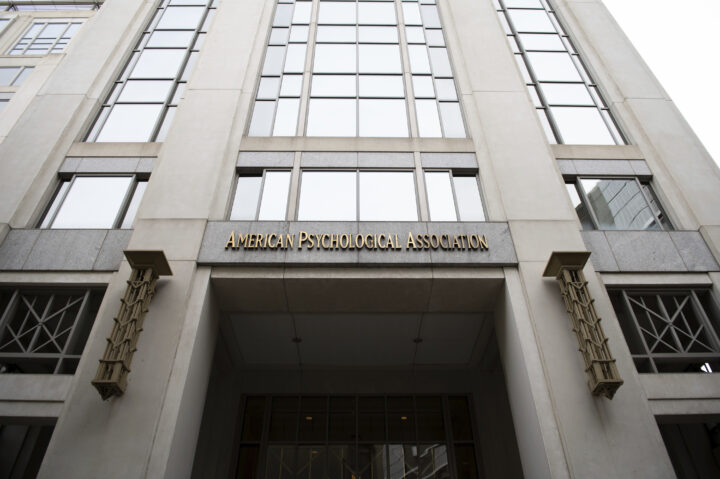
A general view of the American Psychological Association headquarters in Washington, D.C. on April 23, 2020.
The American Psychological Association delayed its vote on Friday to recognize the Association of Jewish Psychologists within its organization, marking the second time this year the organization has postponed the decision to recognize Jewish representation in the organization.
The APA has six official ethnic associations, representing Arab Americans, Black psychologists and Asian-Americans, among other minority groups. Proponents of the proposed Jewish group within the APA argue that Jewish psychologists deserve to be included as well, especially given the rise of antisemitism within the organization.
On Friday, the Anti-Defamation League and the American Jewish Medical Association condemned APA’s decision to postpone the vote again.
“This delay serves no apparent purpose. By denying Jewish psychologists the same representation afforded to other ethnic minority groups, APA is applying a double standard to Jewish identity and acting in direct contravention of APA’s own rules,” the ADL said in a statement.
“The American Jewish Medical Association is alarmed and disappointed by the decision of the APA Council to postpone voting to recognize the AJP as an EPA,” the group, which represents more than 3,000 Jewish medical professionals including psychologists, said in a statement.
The APA has struggled to confront antisemitism in its ranks following the Oct. 7, 2023 terrorist attacks in Israel and ensuing Israel-Hamas war.
The group’s conference last summer featured a panel that described Oct. 7 as attacks on “military targets.” More than 3,500 people signed on an open letter last year that demanded the organization act against what they described as “the serious and systemic problem of antisemitism/anti-Jewish hate” within the APA.
In February 2026, the APA Council of Representatives first voted to defer action on recognizing the Association of Jewish Psychologists within their organization, pushing back the decision to an August vote, despite support from a coalition of Jewish American organizations.
At the time, the APA stated that deferring the vote was meant to give council members time for thorough discussion and deliberation on how best to ensure all voices are heard. The Coalition of National Racial and Ethnic Psychological Associations has opposed the recognition of the Association of Jewish Psychologists as an EPA within the APA, claiming that conflating religion, race and ethnicity “obscures the role of racism,” that “the majority of Jewish Americans in the United States identify as white” and that “Jewish psychologists are not underrepresented within APA.”
A spokesperson for the APA told Jewish Insider that in June, the group’s board of directors endorsed the proposal by the Association of Jewish Psychologists to establish a formal affiliation with the APA Council of Representatives. The path to recognition as an officially recognized ethnic association has historically been a multi-year process for groups that make that request, according to the APA spokesperson.
“Jewish psychologists are a critical and valuable part of our council and our community,” said Wendi Williams, president of APA. “APA is committed to our Jewish members and to confronting antisemitism. We are already working to implement the concrete reforms the APA Board of Directors approved in June — including strengthening oversight, accountability, and member safety. These actions — and our continued commitment to eradicating antisemitism — are now and remain high priorities for the association. We will work diligently in the coming months to continue to advance this process and promote full inclusion of our Jewish members.”
“Professional organizations are strongest when they apply their own rules consistently and fairly,” said Shira Goodman, the ADL’s vice president of public affairs.
“Throughout this process, AJP’s application became entangled in political debates that had nothing to do with the APA’s criteria for Ethnic Psychological Association status. The Council’s responsibility was to evaluate eligibility under its bylaws — not to referee political disagreements or impose ideological litmus tests on a Jewish professional organization.”
‘Without oil, they're nothing,’ the former national security adviser said at the Aspen Security Forum, adding that by cutting it off, the U.S. could ‘turn them into a ‘stan, turn them into a nonentity’
(David Paul Morris/Bloomberg via Getty Images)
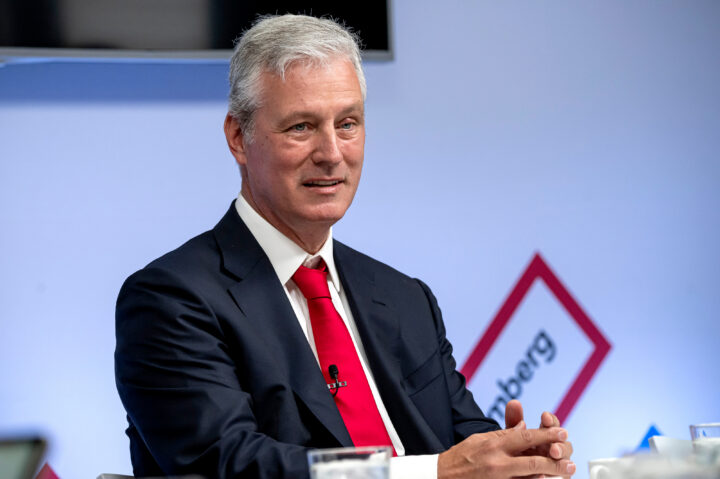
Robert O'Brien, former national security adviser, at an interview during the Republican National Convention (RNC) near the Fiserv Forum in Milwaukee, Wisconsin, US, on Wednesday, July 17, 2024.
ASPEN, Colo. — Robert O’Brien, who served as national security advisor during President Donald Trump’s first term, said on Wednesday that the U.S. should target Iran’s oil infrastructure with the goal of choking off its economy — and predicted that the president is moving in that direction.
The former national security advisor said on a panel at the Aspen Security Forum that Trump had been “very, very generous” with Iran but he believes that Trump’s “patience” with Iran is running thin. The next steps, he predicted, would be for the U.S. to “hit them hard” and “finish the job” by targeting sites connected with Iran’s oil infrastructure, including the facilities at Kharg Island, in order to deprive Iran of its ability to produce and export oil.
“Without oil, they’re nothing. With oil, the regime thinks if they can survive, they can just buy more kit,” O’Brien said. “I think President Trump will finish the job. The Iranians are using the old playbook of extend, pretend and snowball. … They’re dealing with a whole new administration with Donald Trump. They don’t understand it, and I think that they’ll pay a heavy penalty for their lack of understanding.”
The first Trump administration’s strategy of maximum pressure through economic sanctions is “not enough” without strikes on Iran’s oil production, he continued.
O’Brien said that cutting short Iran’s oil exports would be the skeleton key to deafening the regime — cutting off its ability to build missiles, support terrorism or rebuild its nuclear program, and said that the U.S. could “turn them into a ‘stan, turn them into a nonentity” and prevent it from ever rebuilding.
The former national security advisor acknowledged that targeting Iranian oil production would hurt the world economy, but made the case that there are other oil producers that would be able to fill the gap with the right support, including Venezuela, Guyana and Mozambique, along with increased production in the U.S.
Asked after the panel by Jewish Insider about how he views the future of Israel policy among conservatives — and about comments by Vice President JD Vance accusing Israel of running a cover influence campaign to undermine the Iran deal and of having ties to sex offender Jeffrey Epstein — O’Brien insisted that support for Israel among conservatives, including Vance, remains strong.
O’Brien said he hadn’t heard Vance’s comments but called him a “supporter” and “friend of Israel.” He added that Trump is “a very good friend of Israel. President Trump has Jewish grandkids, I mean, so he cares deeply about it. He got the Abraham Accords for us and sent me to Jerusalem many times. And I can tell you, after Oct. 7, he was very concerned about Israel and has remained so ever since. No better friend to Israel than President Trump.”
He argued that recent polling indicates that support for Israel remains strong among Republicans in general, even among young people, and predicted that issues among “some conservatives — or people who claim to be conservatives” will not “hold.”
“Those of us who value the partnership, love our Jewish friends, our Israeli colleagues, just need to be forthright and stand up for Israel,” O’Brien said. “Israel, I’ve always said throughout my career, is a canary in the coal mine. If people are attacking Israel, the next country they’re going to attack is America, and so we need to stand strong with our allies in Israel, stand strong with Jerusalem, and I think it’s going to be a relationship that lasts long into the future.“
Stephen Hadley, who served as national security advisor in the Bush administration, said on the panel that the U.S. “can do better in terms of an outcome” with Iran, urging the administration to “stop chasing after the Iranians for an agreement on the nuclear issue,” adding that the U.S.’ operations have done significant damage to Iran’s nuclear program and can hit Iran again if it attempts to reconstitute the program.
It’s a similar strategy to that outlined by former Secretary of State Condoleezza Rice, also a Bush administration alumnus, a day prior at the Aspen conference.
Hadley said the U.S. should be open to nuclear talks if Iran seeks them out — but with the preconditions of no enrichment and no financial paydays for Iran.
He said that with continued sanctions, facilitation of trade along the Omani side of the Strait of Hormuz, strikes on Iranian capabilities threatening trade in the strait and assistance to countries in the region to diversify their export channels in the longer term, the U.S. could erode Iran’s ability to hold the global economy hostage and reach a stable situation.
“Hopefully, someday an Iranian regime will come forward and decide that their pursuit of nuclear weapons and support for Hezbollah and the like has been a dead end, and they will join the countries in the region to try to build a more prosperous and secure Iran for their people,” Hadley said. “If that happens, great. If it does not happen, the kind of arrangement I think I’ve described will protect our interests, protect the interests of our allies. “
At the same time, he emphasized that regime change through air power alone is likely off the table.
“[Trump] has to be clear that his objectives are consistent with the tools and means he has at his disposal,” Hadley said. “I think that’s a mistake he made in Iran initially when he was talking about regime change.”
Former Undersecretary of Defense Michèle Flournoy, who served under President Barack Obama, praised the U.S.’ Operation Midnight Hammer last June as “very targeted, very specific and very effective” — something few Democrats said at the time.
She contrasted her praise of that operation to the war this year, which she said started with unclear objectives, priorities and strategy, a lack of appreciation of the risks and a failure to appreciate the Iranian regime’s durability.
“I don’t know how this is going to conclude,” Flournoy said. “But the most likely outcome is we’re going to have a new normal. Even if the Strait opens, Iran is still going to have a few drones, a few mines to jerk the chain of the international economy when it’s unhappy.”
She said that, even if one agrees with the objectives of the war, “the way it’s been done has not paid enough attention to managing the risks, having a clear strategy, and ensuring you want to translate the military campaign into political outcomes.”
The VP warned of a ‘very discreet, extremely well-funded campaign’ by Israeli actors who want to see the war extended ‘not towards any objective, but just indefinitely’
Chip Somodevilla/Getty Images
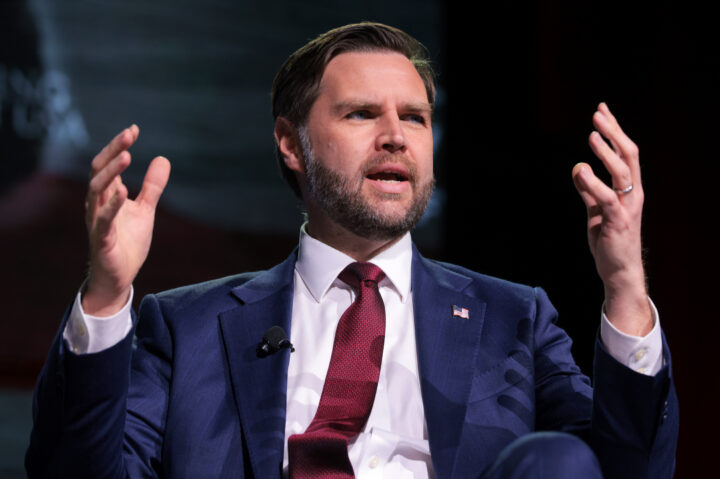
U.S. Vice President JD Vance speaks during a Turning Point USA event at Akins Ford Arena at the Classic Center on April 14, 2026 in Athens, Georgia.
Vice President JD Vance told podcaster Joe Rogan on Wednesday that he is worried American politicians are being swayed by Israeli “influence campaigns.”
In the three-hour interview on “The Joe Rogan Experience,” Vance warned of a “very discreet, extremely well-funded campaign” to derail negotiations between the U.S. and Iran.
“What does bother me is when those operations, those influence campaigns, actually affect American political judgment, because they shouldn’t. Because we should be thinking, What is in the best interest of the United States of America?”
Vice President JD Vance told Joe Rogan he is worried American politicians are being swayed by Israeli “influence campaigns" and warned of a “very discreet, extremely well-funded campaign” to derail negotiations between the U.S. and Iran.
— Jewish Insider (@jewishinsider) July 15, 2026
Read more: https://t.co/yN72h76DSY pic.twitter.com/eAeh8eAJNm
The interview comes after a series of recent statements in which Vance has criticized Israel’s handling of the Iran war. Last month, he issued a rebuke to Israeli leaders critical of President Donald Trump’s decision to negotiate with Iran, urging them against “attacking the only powerful ally” they have left.
“[Israel is] a country of 9 million people. We have 330 million people. And so, of course, they’re going to try to persuade Americans. They’re going to try to move Americans in one direction or another,” Vance told Rogan. He noted that Israel’s efforts to influence American foreign policy are not themselves suspect — “a lot of other countries do [it],” Vance said — but, rather, that American officials will act in ways that do not serve the American public as a result of Israel’s urging.
Vance compared these alleged Israeli efforts to influence campaigns by Qatar and Russia. “It doesn’t bother me that Qatar tries to influence the United States …. I like a lot of the Qataris, just like I like a lot of the Israelis …. It frankly doesn’t even bother me that Russia or some of these other countries do it. It’s just the nature of being a political leader in 2026,” he said.
He also claimed such Israeli influence campaigns are supportive of war for its own sake: “There are some people within their system we know beyond a shadow of a doubt who are manipulating and trying to change American public opinion to keep the war going on indefinitely. Again, not towards any objective, but just indefinitely,” he said.
In the interview, Vance described an ongoing “massive pro-Israel, anti-Israel debate in the United States of America,” and painted himself as the “reasonable moderate” in that conversation. For that reason, Vance said, he has “been accused of being an antisemite.”
“I guess some people say that I’ve insulted the Jewish religion, which is insane. Like, I have a ton of respect for the Jewish religion,” said Vance. But even as he defended himself against charges of antisemitism, he suggested that his accusers need to acknowledge that American political support for Israel is receding.
“I’ve never heard a good, compelling argument for why I’m an antisemite, even though I’ve been accused of being an antisemite by many people. But what I say to these guys is, look at public opinion, look at the way young Republicans versus Republicans over the age of 65 approach this issue,” said Vance. “Right now, Israel is losing the public opinion battle in the United States of America. It is a simple and obvious fact. Donald Trump has said that publicly.”
What he supports instead is a reevaluation of the U.S.-Israel relationship, he said.
“Israel is an ally like France or like the United Kingdom. We’re going to have disagreements with them. We’re going to have agreements with them,” said Vance. “So my approach to this is to say, you know what? When we’re partnered, great, let’s work together. When we’re not, let’s just be honest about it. And for that, people attack me for being an antisemite or anti-Israel, and they don’t see the writing on the wall, that I’m actually just the guy advocating for a normal relationship with a normal country that’s based around shared interests, as opposed to based around something else.”
It’s a position that sounds similar to recent policy positions adopted by J Street, the progressive Israel advocacy group. J Street said in April, when it announced that the U.S. should no longer support any foreign military aid to Israel, that the country should be treated as a “normal ally — not an exception that receives unquestioning, blank check support from the United States.”
Later in the interview, in a lengthy discussion about disgraced financier Jeffrey Epstein, Vance agreed with Rogan’s comments that some have claimed that Epstein may have been connected to the Mossad, Israel’s intelligence service.
“He clearly had connections to the highest levels of American intelligence. He clearly had connections to the highest levels of Israeli intelligence,” said Vance.
The group identified four bills in the House’s online safety push that it felt could play a role in addressing online antisemitism, which were ultimately packaged into the KIDS Act

Getty Images
Illustrative
In a bid to protect Jewish children from rampant antisemitism on the internet, the Jewish Federations of North America is pushing lawmakers to support the KIDS Act, a major bipartisan package of legislation focused on children’s safety online that passed the House late last month by a 267-117 vote.
Omer Yarden-Oppenheim, director of government relations at JFNA, told Jewish Insider that online antisemitism has been a major conversation and challenge for Jewish families, especially since the Oct. 7, 2023, Hamas attacks on Israel. He said the group identified four bills in the House’s online safety push that it felt could play a role in addressing online antisemitism, which were ultimately packaged into the KIDS Act.
“No single bill will solve these challenges right away, but we know that the KIDS Act is a meaningful bipartisan step towards making these platforms safer and more accountable for protecting young users, which includes Jewish users,” Yarden-Oppenheim said.
The four bills include the AWARE Act, which would develop educational resources on the safe and responsible use of AI chatbots; the Protecting a Safe Internet for Minors Act, which would create a public awareness campaign on safe internet use and best practices for minors; the Assessing Safety Tools for Parents and Minors Act, which would assess the effectiveness of existing safety tools; and the Kids Internet Safety Partnership Act, which would help identify online risks to children and develop recommendations for best practices.
The group endorsed the four pieces of legislation when they were first released several months ago and urged local federations to contact their members to support the bills, as well as advocate for them on fly-ins to Washington. Yarden-Oppenheim said he believes that work helped ensure the bills were included in the final KIDS Act package.
“There’s a lack of understanding of a lot of things that are happening online, and for Jewish families it’s the same. Parents feel like maybe they’re losing control a little bit of the things that their kids are being exposed to online,” Yarden-Oppenheim said. “These will give parents [and] educators the tools and more clarity and information on how to deal with these things in the future.”
Yet there’s still plenty of work ahead for supporters of the legislation, as Congress has struggled for years to reach a consensus on children’s online safety legislation, and the Senate and House have been advancing competing versions of the legislation.
“There’s still a meaningful divide on policy and approach between the House and the Senate, but we look forward to working with our partners, and we’ve already had those meetings, and we continue to have them,” Yarden-Oppenheim said. “We need to work with our partners in both chambers to elevate the importance of online safety and the need to ensure that Jewish families remain part of the national conversation, and be a willing partner along the way.”
JFNA and a coalition of other Jewish groups are also making a separate push to address online antisemitism through the Jewish American Security Act, which addresses online antisemitism, campus antisemitism and security threats to Jewish institutions.
Niv Elis, the associate vice president of external communications at JNFA, said that “there’s a huge question” of how society and the country should deal with social media, the internet and AI, and the KIDS Act is “just the tip of the iceberg.”
“What we’re seeing is that this is an excellent entry point to make sure … that the antisemitism piece isn’t left out, and a recognition that the tools that we need to protect the children are going to have extra levels of meaning for Jewish children who are facing different kinds of harm online because they’re not just facing the same bullying as everybody but they’re also facing an additional level through through the antisemitism,” Elis said.
Yarden-Oppenheim added that there are other threats that the Jewish community also aims to counter, including foreign influence, AI deep fakes and other issues that have impacted the Jewish community. The group is working with lawmakers to introduce legislation next year to study how algorithms and other platform features can spread hate, harassment and radicalization.
Both Vance and Rubio will have their work cut out for them as they navigate the coming weeks
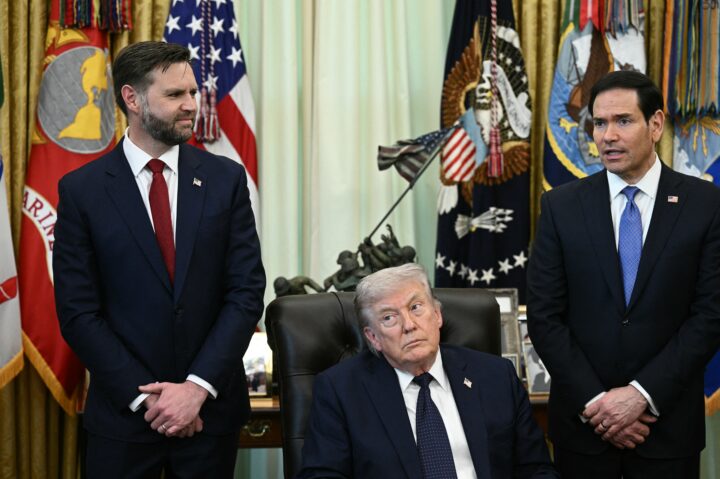
Photo by Brendan SMIALOWSKI / AFP via Getty Images
Vice President JD Vance and President Donald Trump listen to Secretary of State Marco Rubio speak during a meeting with Lebanon Ambassador to the U.S. and Israel Ambassador to the U.S., at the White House in Washington, D.C. on April 23, 2026.
As tensions run high in the Gulf following exchanges of fire between the U.S. and Iran over the weekend, a vastly different security situation is taking shape in Lebanon, with the Trump administration’s top officials — Vice President JD Vance and Secretary of State Marco Rubio — taking responsibility for the respective outcomes.
Vance, who led last week’s negotiations with Iran in Switzerland, said upon his departure from the talks that a “good foundation” had been established between the countries. But that foundation displayed its first cracks just three days later, when Iranian drones fired on a commercial vessel in the Strait of Hormuz, prompting the U.S. to strike Iranian military infrastructure.
The vice president’s tone changed by the weekend, when he said that if Iran had “disagreements about how the MOU is being applied, they can pick up the phone. But violence will be met with violence.” The Iranians skipped technical talks slated for Sunday, saying that the U.S. had not fulfilled the condition of the MOU that would release billions in frozen funds.
Now, officials say that the U.S. and Iranian delegations have agreed to hold fire and will meet in Doha, Qatar, on Tuesday to discuss the status of the Strait of Hormuz.
In Washington, officials are meanwhile celebrating the signing of a framework agreement between Israel and Lebanon that would see Israel scale back its presence in southern Lebanon, creating two “pilot zones” for the Lebanese Armed Forces to administer.
The Foundation for Defense of Democracies’ David Daoud cautioned that the celebration could be premature, telling JI that the fractious nature of Lebanon’s political and religious makeup — as well as Hezbollah’s role in the daily lives of many Lebanese citizens — makes the agreement difficult to implement, even with all the damage the Iranian-backed group has sustained over the last three years.
“Don’t underestimate Hezbollah’s ability to snatch victory from the jaws of defeat,” Daoud said. “I don’t want to overestimate their ability, but this group has proven itself very adaptable over the course of its existence.”
With the agreement signed, the next step will be its implementation. If the LAF is able to administer the pilot zones, there is the possibility of replicating the strategy elsewhere in southern Lebanon. The challenge will be when residents of southern Lebanon — which include Hezbollah members from the area — begin to return to villages south of the Litani River.
In Lebanon, the challenge is not only political will but Beirut’s capacity to address Hezbollah, which is deeply embedded in Lebanese society.
Both Vance and Rubio will have their work cut out for them as they navigate the coming weeks: Vance with continued talks with Iran and the pressure to reopen the Strait of Hormuz, and Rubio with the implementation of an agreement he hailed as the “beginning of the beginning.” Whether they are successful depends more on the actors themselves than the agreements they sign.
Trump designated the Islamic Revolutionary Guard Corps as a terrorist organization during his first term; the group has been tied to plots to assassinate him and other U.S. officials
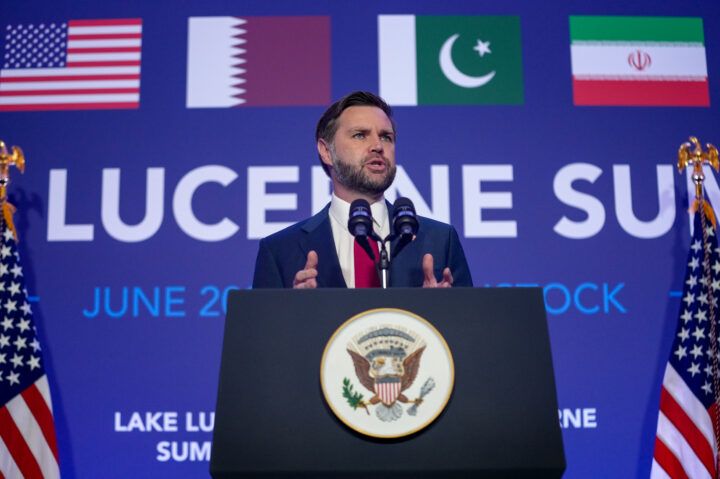
Nathan Howard-Pool/Getty Images
Vice President JD Vance speaks to members of the media at the Buergenstock Resort Lake Lucerne, after the U.S. and Iran held high-level talks at the Lake Lucerne Summit on June 22, 2026 near Stansstad, Switzerland.
Vice President JD Vance said this week that U.S. military officials are working directly with Iran’s Islamic Revolutionary Guard Corps, a U.S.-designated Foreign Terrorist Organization. The vice president made the comments after departing Switzerland following the conclusion of talks with Iran that lasted until Monday.
“One of the things we wanted to come out [of the negotiations]” was a “channel on the Iranian side” to seek conflict resolution, Vance told the outlet UnHerd aboard Air Force Two. “Which we did. They were like, ‘OK, fine, we’ll send somebody from the IRGC to go hang out in Doha with somebody from CENTCOM,’ and that’s how we’re going to settle a lot of these disputes,” he said.
President Donald Trump designated the IRGC an FTO during his first term in 2019 and ordered the strike that killed IRGC Quds Force head Qasem Soleimani in 2020. Announcing the designation, the State Department said the group “has been directly involved in terrorist plotting; its support for terrorism is foundational and institutional, and it has killed U.S. citizens.” The IRGC also “continues to provide financial and other material support” for terror groups including Hezbollah, Kataib Hezbollah, Hamas and Palestinian Islamic Jihad, the statement added.
The group played a central role in Iran’s attacks around the region during the U.S.-Iran war, including an attack on the U.S. Fifth Fleet headquarters in Bahrain earlier this month, and is linked to dozens of recent plots and attacks in Europe. U.S. authorities have also repeatedly alleged IRGC involvement in assassination schemes targeting current and former American officials, including Trump.
Vance said that the Emiratis — “by far the most hawkish, by far the most pro-Israel country in the [Gulf Cooperation Council]” — are also “having conversations with the Iranians that have never happened before, including with the IRGC,” namely about economic incentives to urge Iran to cooperate.
Regarding criticism of the memorandum of understanding reached with Iran, Vance said, “There are many things I don’t like about the comparison to the [2015 Joint Comprehensive Plan of Action], but one of them is that the MOU is a much more generic document than the JCPOA.”
“It really is a foundational document,” he said of the MOU. “Let’s open the strait, let’s stop shooting at each other, and let’s see if we can make a nuclear deal. And from their perspective, it’s, ‘Let’s lift the blockade, let’s stop shooting at each other, and let’s see if there’s a sanctions deal.’ That’s fundamentally where it’s coming from.”
Vance claimed the Iranians are now offering “things radically different from the JCPOA” and “want a fundamentally transformed relationship with the United States and the world.”
Latest reports indicate Ankara still possesses the Russian system that has prevented it from purchasing the F-35s; meanwhile, the White House is also advancing a $700 million sale of jet engines to Turkey
Photo by Andrew Harnik/Getty Images
President Donald Trump delivers remarks during a meeting with President of Turkey Recep Tayyip Erdogan in the Oval Office at the White House on September 25, 2025 in Washington, D.C.
Vice President JD Vance said on Wednesday that the administration is “confirming” Turkey has fulfilled its obligations under U.S. law in order to receive advanced F-35 fighter jets, which Ankara has long sought but has been barred from purchasing since 2020 after it acquired the S-400 air-defense system from Russia.
U.S. law requires the secretaries of state and defense to certify to Congress in writing, prior to any F-35 transfer, that Turkey no longer possesses the S-400 system and has provided credible assurances it will not acquire similar Russian air-defense systems. Latest reports indicate the S-400 system is inactive but still intact in Turkey, which would not fulfill the obligations required under law to lift the sanctions.
Asked in the Oval Office “what needs to happen for the F-35 deal to be finalized,” Vance said, “[Defense Secretary] Pete [Hegseth] and the entire team are reviewing this right now, because there are certain things that we have to certify have happened … in order to comply with American law. The president has asked us to do that. We’re running the traps and confirming that’s happened.”
Vance’s remarks were at odds with Secretary of State Marco Rubio’s comments to the House Foreign Affairs Committee earlier this month, when he said Turkey was still prohibited from acquiring the F-35 jets until it resolved the S-400 issue in a way that complies with U.S. law. “We don’t have that choice because it’s governed by statute,” Rubio said. No certification proving otherwise has been submitted to Congress in the interim.
President Donald Trump, asked about whether he’s considering selling advanced jet engines or F-35s to Turkey, said while sitting next to Vance, “I think so. Look, [Turkish President Recep Tayyip Erdoğan is] a member of NATO. Some people don’t consider him so, but he really is, he’s a strong member of NATO. Yeah, I’m going to probably do something that’s going to make him very happy.” Trump is slated to attend the NATO summit being held in Ankara next month.
The president made similar comments during Erdoğan’s visit to Washington in September, when Trump said he was likely to permit Turkey to purchase F-35s as soon as “the end of the day.”
Rep. Greg Meeks (D-NY), ranking member of the House Foreign Affairs Committee, said the administration told him on Tuesday “it would once again bypass Congressional review” by allowing the Turkish military to purchase more than $700 million of U.S.-made F-110 jet engines. “The State Department did not even attempt to justify its decision,” Meeks said in his statement, adding that the administration failed to provide written rationale, brief Congress or invoke emergency authority in order to proceed with the sale.
The proposed engine sale would likely also face scrutiny under the sanctions and export-control restrictions imposed after Turkey’s acquisition of the S-400 system
Trump credited Turkey’s “very strong military” and praised Erdoğan as “a very good person” in his remarks on Wednesday.
Trump has maintained close ties with the Turkish leader, even as Turkish-Israeli relations have soured. Last year, Erdoğan reportedly said during a mosque visit: “May Allah destroy Zionist Israel in his holy name.”
Trump told reporters on Wednesday that Erdoğan was “a prime candidate to go into the war with Iran — maybe on the Iran side, because he’s not a big fan of Israel,” adding, “I asked him to stay out. He stayed out.“
Plus, NYC first lady snubs Brad Lander on primary day
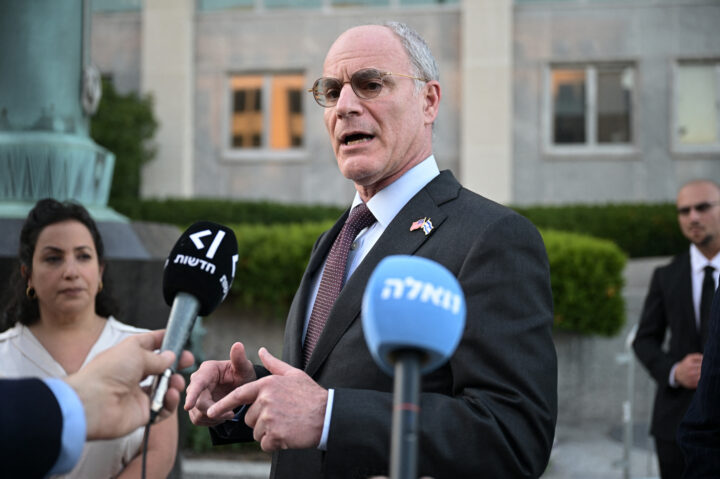
Oliver Contreras / AFP via Getty Images
Israel's Ambassador to the U.S. Yechiel Leiter speaks to reporters after a meeting between Israeli and Lebanese delegations hosted by the United States at the State Department in Washington, DC, on June 3, 2026.
Good Tuesday afternoon.
This P.M. briefing is reserved for our premium subscribers like you — offering a forward-focused read on what we’re tracking now and what’s coming next.
Today’s Daily Overtime was curated by JI U.S. Editor Danielle Cohen-Kanik.
📡On Our Radar
Notable developments and interesting tidbits we’re tracking
The U.S. and Iran continued to offer conflicting accounts of the agreement reached over the weekend: President Donald Trump posted on Truth Social this morning that Iran “fully and completely agreed to highest level Nuclear inspections long into the future,” without which “there would be no further negotiations.” But Iranian Foreign Ministry spokesperson Esmail Baghaei said it was untrue and that the parties had not discussed any nuclear issues.
About Tehran’s denial, Secretary of State Marco Rubio said the U.S. “know[s] what [Iran] agreed to do, and now they’ll either do it or they won’t. And if they do, the process moves forward. And if they don’t, the president will have some decisions to make”…
Trump also said in his post that the funds received by Iran through the deal will go “into escrow, controlled by the U.S.A., and will be used for the purchase of food and medical supplies.” Yet the Treasury Department’s waiver of Iranian oil sanctions contains no such language and the text of the memorandum of understanding says unfrozen Iranian assets “shall be made fully usable” for “any ultimate beneficiary designated by the Central Bank of the Islamic Republic of Iran”…
Meanwhile, Iranian Parliament Speaker Mohammad Bagher Ghalibaf and Foreign Minister Abbas Araghchi were in Muscat speaking with Omani leaders about the Strait of Hormuz: In a joint statement, the parties said their foreign ministries will work towards an agreement on the “future administration” of the strait, the “services that will be provided in this regard and the costs associated with them,” as the Trump administration has repeatedly stated it will not accept any tolls placed on transit through the key waterway…
Iranian President Masoud Pezeshkian was also abroad, meeting in Islamabad with Pakistani Prime Minister Shehbaz Sharif, where Pezeshkian said Iran’s ballistic missile program “will never be” up for negotiation with the U.S…
Jerusalem is publicly expressing concern about the Lebanon deconfliction mechanism established by the U.S. and Iran for the first time, Jewish Insider’s Emily Jacobs reports: At the opening of Israel and Lebanon’s fifth round of direct talks taking place in Washington today, Israeli Ambassador to the U.S. Yechiel Leiter claimed the parties are “heading towards a train wreck.”
Leiter said he’s “concerned the concept of deconfliction is misplaced” because “Israel is not in conflict with Lebanon,” and that Israel had assumed “the central issue was Lebanon and Hezbollah — not the extent to which Iran could restrain Hezbollah. That is not Iran’s role”…
Rubio, arriving in Abu Dhabi, said the U.S.-Iran and Israel-Lebanon tracks “are separate because Lebanon is a sovereign country,” and that the U.S. is “going to negotiate a deal directly with the Lebanese government,” without mentioning Israel.
Rubio also made clear that Iran is responsible for much of the terror activity in the Middle East, striking a different tone than that of Vice President JD Vance, JI’s Danielle Cohen-Kanik reports, after Vance said yesterday the U.S. is counting on Iran to “rein in” Hezbollah…
The Senate passed a war powers resolution this afternoon directing the administration to withdraw U.S. forces from Iran, 50-48, with GOP Sens. Rand Paul (R-KY), Lisa Murkowski (R-AK), Susan Collins (R-ME) and Bill Cassidy (R-LA) voting in favor with Democrats,JI’s Marc Rod reports.
The resolution, now passed by both chambers, came as a concurrent resolution — meaning it will not be submitted to the president and, based on past court precedent, is not seen as carrying the force of law…
A manifesto allegedly left by the gunman behind yesterday’s rampage in Côte-des-Neiges, a heavily Jewish neighborhood in Montreal, repeatedly targeted Jews and Zionists, specifically identifying “influential Zionists” among his intended victims, JI’s Haley Cohen reports…
New York City First Lady Rama Duwaji posted an Instagram story today flashing an “I Voted” sticker and encouraging her followers to support two congressional candidates endorsed by Mayor Zohran Mamdani and the Democratic Socialists of America: Assemblymember Claire Valdez and doctoral candidate Darializa Avila Chevalier. Not receiving a mention was the only Jewish congressional candidate endorsed by her husband: former New York City Comptroller Brad Lander, JI’s Will Bredderman reports…
Ammar Campa-Najjar, a DSA-backed candidate who was recently defeated in his run for a California congressional seat, launched a new PAC called Democratic Majority for America — a counter to Democratic Majority for Israel, which organized against him in the June primary — to support progressive candidates who want to end aid to Israel, Politico reports.
The PAC, which Campa-Najjar said has about $100,000 in cash on hand, has already endorsed California congressional candidate Randy Villegas and far-left Michigan Senate candidate Abdul El-Sayed…
AIPAC’s super PAC, the United Democracy Project, has spent more than $38 million backing candidates this election cycle so far through direct and indirect spending, according to Politico, surpassing the $26 million it spent on the 2022 midterms…
The Blue Square Alliance Against Hate, headed by New England Patriots owner Robert Kraft, announced the formation of its inaugural advisory board, including Bank of America CEO Brian Moynihan, Dentons CEO Kate Barton, Salesforce CEO Marc Benioff, former Secretary of State Condoleezza Rice and Warner Bros. CEO David Zaslav…
⏩ Tomorrow’s Agenda, Today
An early look at tomorrow’s storylines and schedule to keep you a step ahead
Keep an eye on Jewish Insider for primary results from key races in New York and Maryland, as well as a postmortem on New York City Mayor Zohran Mamdani’s ability to wield his political capital in the three congressional races where he endorsed progressive candidates.
President Donald Trump is expected to attend a GOP Senate luncheon as he remains at odds with his party over several legislative efforts and as some Republicans speak out against his efforts to curb Israeli operations against Hezbollah.
In the afternoon, Trump will hold a rally on the National Mall to kick off his Great American State Fair in the lead-up to the country’s 250th anniversary.
Defense Secretary Pete Hegseth is slated to brief House Republicans tomorrow as the Pentagon gears up for a contentious fight over an expected $80 billion supplemental funding request tied largely to the Iran war.
The House Appropriations Committee will mark up the 2027 defense spending bill.
Sen. Jacky Rosen (D-NV) will speak in conversation with Jewish Council for Public Affairs CEO Amy Spitalnick as well as leaders from other religious groups, including the Union for Reform Judaism and Orthodox Union, about the Jewish American Security Act.
Stories You May Have Missed
ACROSS THE POND
Jewish leaders view Andy Burnham as an ally in the fight against antisemitism, but his expected bid for the premiership is renewing scrutiny of his views on Israel and Labour’s post-Corbyn direction
RABBI ROADBLOCK
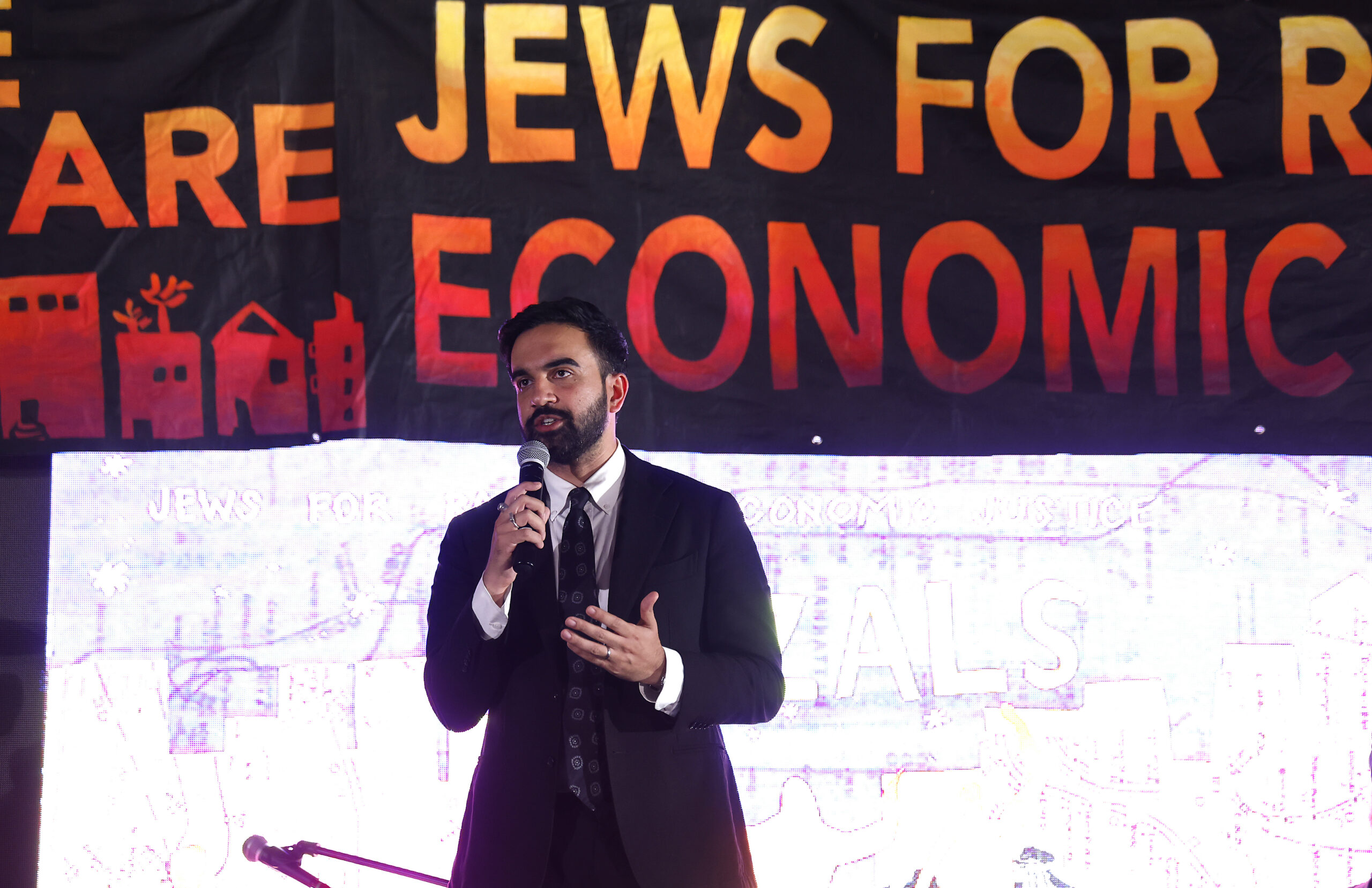
The mayor has inserted himself in the costly fight between Rabbi Stephanie Ruskay and lawyer Eli Northrup, spurning a key Jewish ally in the process
Plus, the White House amplifies Al Jazeera

Jonathan Raa/NurPhoto via Getty Images
The Brent crude oil price chart is displayed on a mobile screen on March 2, 2026.
Good Monday afternoon.
This P.M. briefing is reserved for our premium subscribers like you — offering a forward-focused read on what we’re tracking now and what’s coming next.
Today’s Daily Overtime was curated by JI U.S. Editor Danielle Cohen-Kanik.
📡On Our Radar
Notable developments and interesting tidbits we’re tracking
Three people were killed in a shooting attack today in Côte-des-Neiges, a heavily Jewish neighborhood in Montreal, Jewish Insider’s Haley Cohen and Tamara Zieve report. A civilian, a police officer and the suspect were confirmed dead by Montreal police, while one other police officer was seriously injured but in stable condition. Police said the suspect’s motive is still under investigation. Stay updated on this developing story with JI’s What We’re Watching briefing…
After the U.S. and Iran agreed to create a “deconfliction cell” for military operations in Lebanon during their negotiations yesterday, Vice President JD Vance said at a press conference today that the U.S. will be counting on Iran to “rein in” Hezbollah — without acknowledging that Tehran offers material backing to its proxy in Lebanon, JI’s Matthew Shea reports.
Vance called Hezbollah’s attacks on northern Israel and the IDF’s retaliation “a bit of a chicken and egg problem, that you’ve got a junior guy who fires a drone that didn’t have approval from the high command. Of course Israel has to respond to that,” he acknowledged, “but … we could actually have a better and more peaceful situation if Israel responds in the context of a conversation that’s ongoing between Hezbollah, Lebanon, Israel and other partners in the region”…
Israeli Prime Minister Benjamin Netanyahu appeared to push back on Vance’s framing, saying in a video statement this morning that his directive to the IDF “has not changed: Our fighters in southern Lebanon have full freedom of action to thwart any direct or developing threat to them or to the residents of the north. The IDF has no restrictions on this matter,” he said, while the tenuous ceasefire with Hezbollah appeared to hold today…
Vance also announced Iran had agreed to let U.N. nuclear inspectors back into the country, and President Donald Trump wrote on Truth Social that “everybody is fully aware” Iran will agree to “have Major Weapons Inspections in order to ensure ‘Nuclear Honesty’ long into the future,” but Esmail Baghaei, Iran’s foreign ministry spokesperson, told state media that Iran made “no new commitments” regarding inspections…
Pursuant to the agreement reached between the U.S. and Iran over the weekend, the Treasury Department issued a waiver lifting decades-old U.S. sanctions on Iranian oil for the next 60 days, permitting imports of Iranian oil directly to the U.S. and paying for the goods in U.S. dollars.
Asked this afternoon in the Oval Office if he can ensure that Iran won’t use the funds for military purposes, Trump said, “They’re not supposed to be doing that, so we’ll see, but they’re supposed to use the money to buy food for their people.” AIPAC described the waiver as “broader than the terms detailed in the MOU or what was included in the JCPOA”…
The White House’s “Rapid Response” X account boosted an Al Jazeera video interview about the negotiations with Qatari Prime Minister Sheikh Mohammed bin Abdulrahman Al Thani, calling it “the real story from people actually in the room”…
Avigdor Liberman, head of Israel’s Yisrael Beiteinu party and a leading opponent of Netanyahu, wrote in The Wall Street Journal that the “deal between Washington and Tehran won’t stop Iran from becoming a nuclear power. It will guarantee it.” He called for Jerusalem to “inform Washington that Israel won’t accept any linkage between Iran and Lebanon” and end its reliance on U.S. missile systems, preparing to attack key Iranian infrastructure if Tehran strikes Israel…
Asked about her stance on Israel in a rare nationally televised interview on Fox News today, Sen. Susan Collins (R-ME) said she “remain[s] a very strong supporter of Israel” despite rising hostility to Israel and AIPAC among the American public, which she said “sadly reflects rising antisemitism in our country that” her opponent, Democratic nominee Graham Platner, “certainly is part of.”
“It’s important to recognize that AIPAC is made up of Americans who care deeply about our relationship with Israel. Platner makes it sound like this is some sort of evil foreign influence and that is absolutely wrong,” Collins continued…
New York City Mayor Zohran Mamdani doubled down on his rhetorical assault on AIPAC today, JI’s Will Bredderman reports, after Jewish groups over the weekend criticized his comments about the pro-Israel organization at a rally last week that they argued evoked classic antisemitic tropes.
Mamdani defended naming AIPAC among the “monsters who move dark money” as a reference to a widely known misquote of 20th-century Marxist philosopher Antonio Gramsci, and backed up his argument with statistics from the Hamas-controlled Gaza Health Ministry alleging that the IDF has killed more than 1,000 Palestinians since the ceasefire last fall…
JI’s Christina Sher looks at the state of tomorrow’s Democratic primary for executive of Montgomery County, Md., as all three of the front-runners — County Councilmembers Will Jawando, Andrew Friedson and Evan Glass — have been outspoken against antisemitism, but diverge in their policy positions and views on Israel…
Three men killed in asmall plane crash in Bowie, Md., on Saturday night have been identified as Israeli citizens, JI’s Haley Cohen reports: Yoav Bomrind, 26, David Rabinovitz, 19, and Elad Neidik, 20, boarded the single-engine plane in Ocean City, N.J., for a training flight before it crashed just outside Washington, D.C…
Alan Greenspan — the influential economist who led the Federal Reserve across four presidencies and whose track record guiding economic growth earned him status as an economic “maestro” — died today at 100, JI’s Haley Cohen reports…
⏩ Tomorrow’s Agenda, Today
An early look at tomorrow’s storylines and schedule to keep you a step ahead
Keep an eye on Jewish Insider for a look at how pro-Israel groups’ intervention in the race to replace retiring Rep. Steny Hoyer (D-MD) — where they are supporting state Delegate Adrian Boafo — revealed a more proactive strategy for taking on the left than the one the groups have employed in New York City’s Democratic primaries, as voters in both states head to the polls tomorrow.
Israeli and Lebanese representatives are expected to meet in Washington to continue their direct negotiations, as the U.S. and Iran seek to intervene in ending military operations in Lebanon.
Secretary of State Marco Rubio will embark on a three-day trip to the United Arab Emirates, Kuwait and Bahrain to discuss issues including the memorandum of understanding with Iran and transit through the Strait of Hormuz.
Orthodox Union Advocacy will hold its annual lobbying day on the Hill, including a luncheon with senators from both parties and a speech by Israeli Ambassador to the U.S. Yechiel Leiter.
The Jerusalem News Syndicate’s policy summit continues in Jerusalem with remarks from former Israeli Prime Minister Naftali Bennett, former Defense Minister Benny Gantz, Foreign Minister Gideon Sa’ar, Diaspora Affairs Minister Amichai Chikli, Netanyahu advisor Michael Eisenberg and Magen David Adom President Gilad Erdan.
Stories You May Have Missed
WASHINGTON WATCH
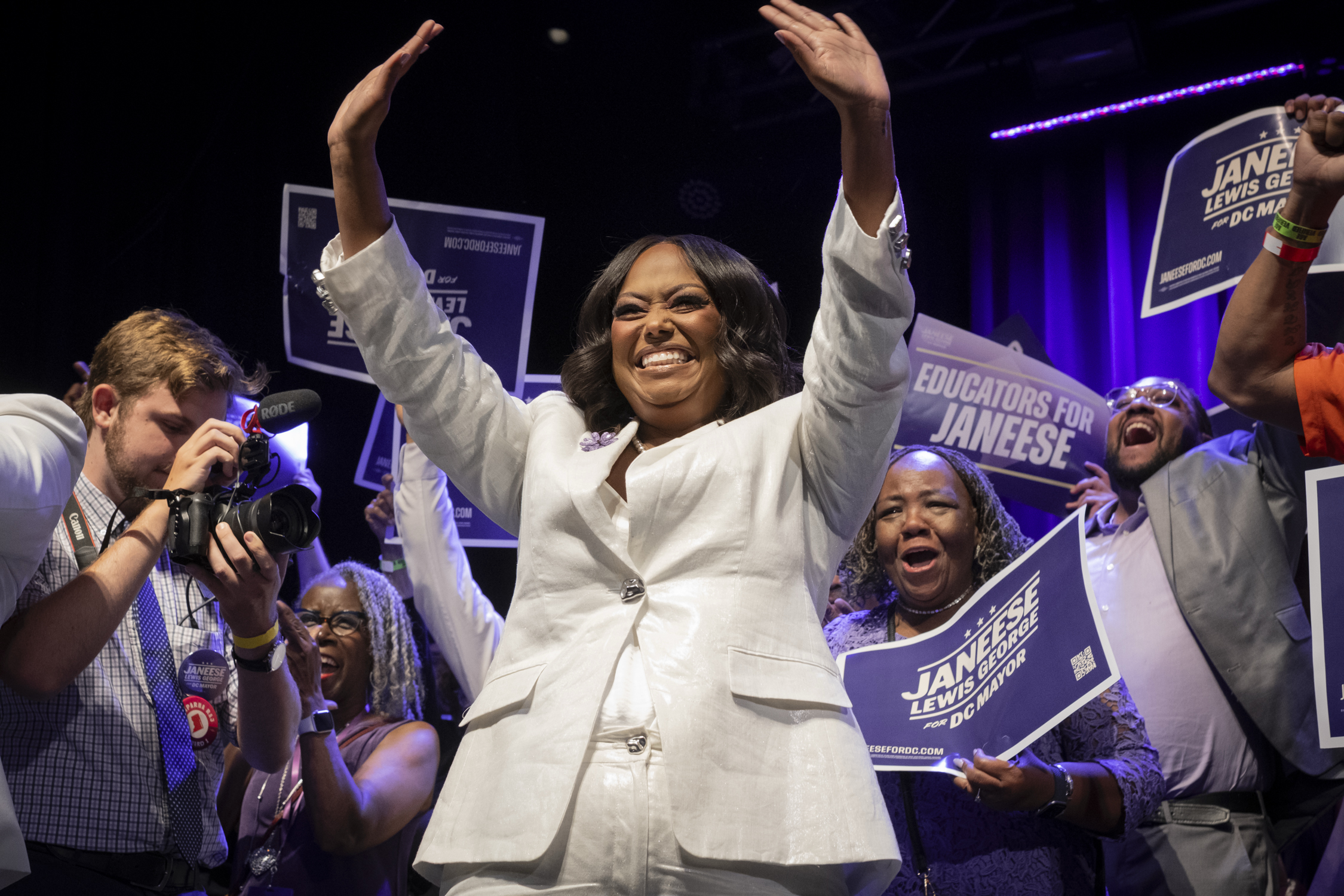
JCRC CEO Ron Halber said he hopes to work with the DSA member, despite his strident criticism of the group, while remaining vigilant
BLAME GAME

Nearly all Israelis surveyed said they believed Tehran was the victor, while 70% rated Trump’s management of the war as a failure or poor
Vance, announcing the deconfliction mechanism established with Iran, said, ‘We could have a better and more peaceful situation if Israel responds in the context of a conversation that’s ongoing between Hezbollah, Lebanon, Israel and other partners in the region’
Nathan Howard-Pool/Getty Images
Vice President JD Vance speaks to members of the media at the Buergenstock Resort Lake Lucerne, after the U.S. and Iran held high-level talks at the Lake Lucerne Summit on June 22, 2026 near Stansstad, Switzerland.
Vice President JD Vance on Monday backed Iran’s participation in bringing about the end of Israel and Hezbollah’s military conflict, calling the terror group’s ongoing strikes and Israel’s response “a chicken and egg problem.”
Vance said at a press conference in Switzerland that the U.S. will be counting on Iran to “rein in” Hezbollah, after the U.S. and Iran agreed to create a “deconfliction cell” for military operations in Lebanon during negotiations on Sunday. The statement announcing the mechanism, released by mediating countries Pakistan and Qatar, did not reference Israel.
When asked if he expected Lebanon to be such a linchpin in negotiations, Vance said, “We want Hezbollah to stop firing at our friends in Israel. We want Israelis to be able to live in peace. We also want to make sure that … when things happen, they don’t spiral into a broader escalation, and so we’ve been, I think, very good at setting up what we’re calling a deconfliction mechanism.”
“Sometimes you’ve got a bit of a chicken and egg problem, that you’ve got a junior guy who fires a drone that didn’t have approval from the high command,” he continued, referring to Hezbollah’s ongoing attacks on northern Israeli towns.
“Of course, Israel has to respond to that, but … we could actually have a better and more peaceful situation if Israel responds in the context of a conversation that’s ongoing between Hezbollah, Lebanon, Israel and other partners in the region.”
Vance added that ongoing negotiations will require close coordination with the U.S.-backed Lebanese Armed Forces and will “also require the Iranians to rein in Hezbollah,” without acknowledging that Iran offers material backing to its proxy in Lebanon.
Reports have indicated that some Lebanese lawmakers have expressed dissatisfaction with the U.S. and Iran including Beirut in their negotiations, as opposed to leaving Lebanon to its separate U.S.-backed track directly with Israel, which is set to continue in Washington this week.
When asked whether the U.S. expects an Israeli withdrawal from Lebanon, Vance demurred, affirming instead that Israel has a “right to self-defense” and that the U.S. wants “Israel’s security to be protected.””
“We want Israel’s security to be protected, and we also want Lebanon’s sovereignty to be protected,” Vance said. “The Israelis have been very clear: they do not have territorial intentions on south Lebanon. The reason they feel they have to be there is because they’re worried about Hezbollah fighters in south Lebanon firing into Israel.”
Vance noted that the U.S. made additional “good progress” in the high-level talks over the weekend, claiming that Tehran has agreed to invite International Atomic Energy Agency inspectors back into the country to monitor its nuclear program.“That is a major milestone for the American people, and the first step in permanently denuclearizing, or permanently ending a nuclear weapons program in Iran,” Vance said at his press conference.
The IAEA inspectors would verify that Iran is only using nuclear material for peaceful purposes, a parameter that Vance noted was “exactly what we asked to happen.”
“In terms of when the nuclear inspectors are going to start … I expect that will happen at the minimum this week, but we think even some of those conversations with the inspectors and with the IAEA could happen as soon as today,” Vance said.
Vance said that talks will proceed on a “technical level” with diplomatic teams in Switzerland continuing negotiations “over the weeks and days to come.”
“The final deal is the house; we set the foundation,” Vance said. “We haven’t built the house, but we’ve laid a successful foundation to get to a good place for the American people. I think it’s important for all of us to appreciate how much was done, but honestly, there is still a lot to do.”
Vance also defended a social media post by President Donald Trump on Sunday, in which the president threatened to “hit Iran very hard again” if it did not “immediately stop” supporting regional proxies. The vice president argued the warning did not derail the diplomatic progress.
“We were negotiating well past one in the morning, so they didn’t walk out, and their technical team is still here working with our technical team as we speak,” Vance said. “What we told the Iranians yesterday is, ‘When you guys engage in what us millennials might call “trash talk,” you can’t expect the president of the United States not to respond and not to correct the record.’”
“So yes, there was a little bit of threatening, there was a little bit of whining, but at the end of the day, the talks continued and we made great progress,” he added.
The vice president acknowledged that some conservatives wrongly blame Israel for too many of America’s problems, but argued that pro-Israel advocates are often too quick to accuse critics of antisemitism
Roy Rochlin/Getty Images
Vice President JD Vance
Vice President JD Vance warned pro-Israel advocates against seeing Israel and the U.S. as always aligned and cautioned against conflating criticism of the Israeli government with antisemitism, saying that “if everything is Jew hatred, then nothing is Jew hatred.”
In an episode of Christian conservative commentator Allie Beth Stuckey’s podcast podcast released on Friday, Vance said that “pro-Israel people in the United States make two critical mistakes. One … is not delineating between America’s interests and Israeli interests, because they’re not always the same.”
“But the second is conflating criticism of a particular government with Jew hatred. Because if everything is Jew hatred, then nothing is Jew hatred,” he continued. “And we have to be very careful not to, you know, in order to serve a certain foreign policy objective, try to criticize somebody as antisemitic when they’re just not.”
Asked by Stuckey if Israel has an “outsized influence in the U.S.,” Vance said, “I certainly think that Israel, like a lot of other countries, tries to influence American politics. I sort of take that as a given. And what I think is that American leaders have to be very careful that when we pursue something, we’re doing it for America’s best interest and not for any other country’s best interest.”
Vance added that the late conservative influencer Charlie Kirk “was very worried about Israeli influence in American politics. He also really disliked antisemitism.”
Stuckey raised the “the obsession that some people have, I would say on the right, with blaming all of their problems on Israel, all of their disagreements with Trump on some secret Israeli influence,” which she said she sees “more prominently on the right than I see the true ‘Israel first’ kind of obsession that you seem to be describing.”
“I see both, and I think both are bad,” Vance responded. But he said he’s “particularly sensitive” to what he views as the elevation of Israel’s interests because he’s “been defending the president’s decision to end the Iran [war], and I find often the arguments are, ‘Well, Israel doesn’t think this is good, therefore it’s bad.’ And my reaction is: Israel’s opinions matter, but fundamentally they are separate.”
“But you’re right. I mean, there are certainly people who take every frustration with the Trump administration, every policy disagreement becomes because of Israel, and that is absolutely wrong. And again, I think that that is one of those things that can bleed into some very dark places,” he continued.
Vance also defended the emerging deal with Iran, prior to departing over the weekend for direct negotiations with Tehran’s representatives in Switzerland. “You do still have terrorist elements within the regime, but you also have pragmatic elements within the regime who are actually affirmatively trying to have a better relationship with the United States,” he said.
Far-left antisemitic streamer Hasan Piker, replying to a video of Vance’s comments about criticism of the Israeli government and antisemitism, wrote on X, “I GOT BANNED FROM THE UK FOR SAYING THIS VERBATIM BTW.”
President Donald Trump, meanwhile, threatened Iran with military force if it doesn’t stop its proxy Hezbollah’s attacks
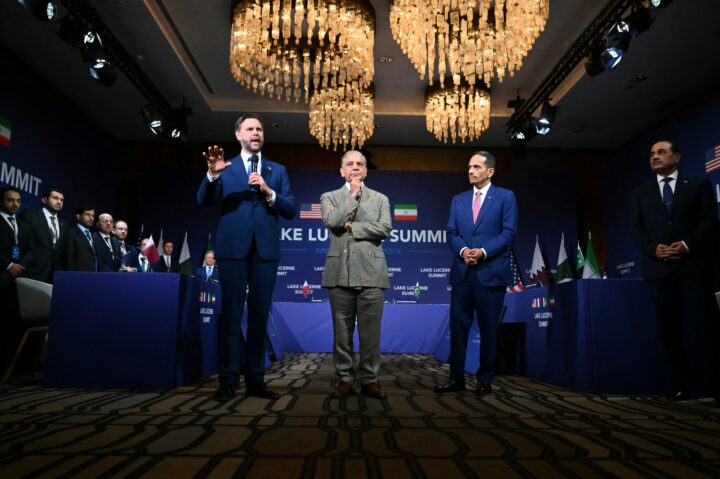
Fabrice COFFRINI / POOL / AFP via Getty Images
US Vice President JD Vance speaks next to Pakistan's Prime Minister Shehbaz Sharif and Qatar's Prime Minister Sheikh Mohammed bin Abdulrahman bin Jassim al-Thani during a quadrilateral meeting between the United States, Iran, Pakistan and Qatar at the Burgenstock luxury hotel complex overlooking Lake Lucerne, Switzerland, on June 21, 2026, as part of high-level talks aimed at advancing a deal to end the Middle East conflict.
Vice President JD Vance, leading the American delegation in diplomatic negotiations this weekend with Iran in Switzerland, told reporters on Sunday that “the United States is willing to fundamentally transform our relationship with [Iran]” if the Islamic Republic’s leadership is willing to give up nuclear weapons and end its backing of terrorist proxies.
“If your leadership is willing to give up being a driver of regional instability, if they are willing to give up nuclear weapons ambitions in the long term, then the United States is willing to fundamentally transform our relationship with that country,” Vance said at a news briefing, according to The New York Times.
Vance described the approach of the U.S. delegation, which he is leading alongside White House Special Envoy Steve Witkoff and Jared Kushner, as offering an “outstretched hand” to the people of Iran.
The Iranian delegation is being led by Foreign Minister Abbas Araghchi and Parliament Speaker Mohammad-Bagher Ghalibaf. The prime ministers of Pakistan and Qatar are serving as mediators.
Vance also downplayed Hezbollah’s continued attacks against Israel, which have prompted Israeli military retaliation in Lebanon. “We’ve seen great progress over the last couple of days in ensuring that the ceasefire holds in Lebanon. These things are always a little bit messy,” Vance said.
But on Sunday morning, as Vance was holding his press conference, President Donald Trump, in a Truth Social post, called on Iran to “immediately stop” its “highly-paid PROXIES in Lebanon from causing trouble.”
“If they don’t, we’ll hit Iran very hard again, just like we did last week, only harder!” Trump wrote.
Plus, Tirana points the finger at Tehran
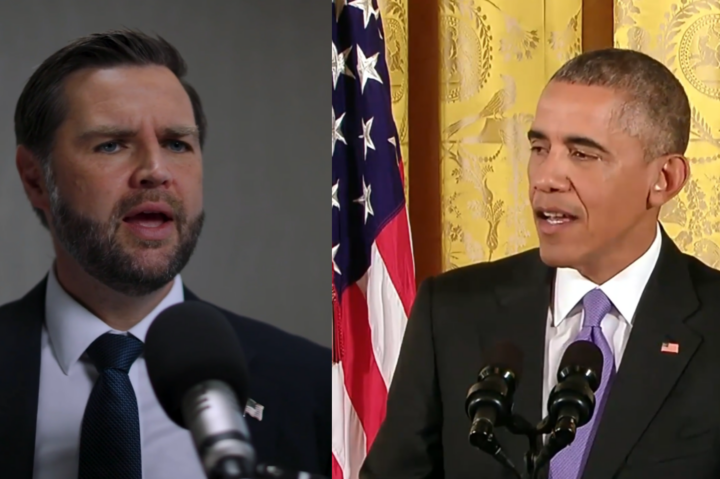
Screenshot
Vice President JD Vance and former President Barack Obama
👋 Good Friday morning!
In today’s Daily Kickoff, we have the latest on the scrapped U.S.-Iran talks that had been slated to begin this weekend in Switzerland and on the overnight attack by Hezbollah, in violation of the just-signed memorandum of understanding, in which four Israeli soldiers were killed. We look at how Vice President JD Vance’s rhetoric around the MOU mirrors how Obama administration officials talked about the 2015 Joint Comprehensive Plan of Action, and look at the divide among Jewish communal groups over the potential merger of the State Department’s antisemitism and Holocaust affairs offices. Also in today’s Daily Kickoff: Albanian Prime Minister Edi Rama, Yoav Gallant and Hillary Clinton.
Today’s Daily Kickoff was curated by JI Executive Editor Melissa Weiss and Israel Editor Tamara Zieve, with an assist from Marc Rod. Have a tip? Email us here.
For less-distracted reading over the weekend, browse this week’s edition of The Weekly Print, a curated print-friendly PDF featuring a selection of recent Jewish Insider and eJewishPhilanthropy stories, including: A Lebanese Zionist’s longshot bid to reshape the Middle East; ‘The single best diaspora experience’: Jewish leaders mark America’s 250th with open letter; and Ivanka Trump unveils Meta initiative to distribute AI glasses to visually impaired veterans. Print the latest edition here.
What We’re Watching
- Four Israeli soldiers were killed in a Hezbollah attack on an IDF tank in southern Lebanon overnight and five others injured in an additional attack in violation of the newly implemented memorandum of understanding, prompting dozens of retaliatory Israeli strikes in the area. The incident, which was the deadliest attack on Israeli troops by Hezbollah in months, came hours after Vice President JD Vance assailed Israeli government officials — one of whom, Finance Minister Bezalel Smotrich, warned that the Iranian-backed group would exploit the diplomacy between Tehran and Washington to attack Israel — for their opposition to the deal. Read more here.
- The escalation comes as Reps. Josh Gottheimer (D-NJ) and Mike Lawler (R-NY) circulate a resolution among lawmakers condemning Hezbollah for its “repeated violations of ceasefire agreements” through its attacks against Israel and calling for the terrorist group to be disarmed, Jewish Insider‘s Marc Rod and Emily Jacobs have learned.
- Vance had been scheduled to travel today to Switzerland, where he was set to begin talks with Iran, following the signing this week of the MOU between the countries. But the trip was scrapped overnight, with a White House spokesperson saying that “the logistics of these negotiations have never been simple or predictable.”
- Elsewhere in Washington, Bill Pulte, the Trump administration’s housing-finance regulator, takes over as interim director of national intelligence today, days after President Donald Trump postponed DNI nominee Jay Clayton’s confirmation hearing, drawing the ire of senators from both sides of the aisle concerned over Pulte’s potential access to classified documents.
- FII Priority Europe wraps up today in Rome. On the main stage yesterday, Albanian Prime Minister Edi Rama blasted Iran for stoking protests in the Balkan nation tied to efforts by Jared Kushner and Ivanka Trump to develop a new real estate project in the country. More below.
- In New York, the Jewish Food Society’s Great Nosh will take place on Sunday on Governors Island.
- The Jewish News Syndicate’s annual policy summit begins on Sunday in Jerusalem.
- Also Sunday, Orthodox Union Advocacy’s annual Attorneys Conference kicks off in Washington.
- We’ll also be keeping an eye on Colombia on Sunday, where far-right attorney Abelardo de la Espriella and far-left activist Iván Cepeda, backed by current President Gustavo Petro, will face off in a presidential runoff. De la Espriella, who has the endorsement of Trump, has also gotten support from Israeli Foreign Minister Gideon Sa’ar, with whom he met last year in Argentina. After the votes from the first round of voting were tallied, Sa’ar posted a photo of the two and congratulated de la Espriella.
What You Should Know
A QUICK WORD WITH GILI COHEN
The long love affair between Israelis and President Donald Trump, on the rocks over the last few weeks as the U.S. and Iran hammered out an end to the war, appears to be over, with humiliations mounting for Jerusalem. “I call all the shots,” not Israeli Prime Minister Benjamin Netanyahu, Trump said earlier this month. More recently, the Israeli leader’s bombing campaign in Beirut was “vicious,” Trump said. And perhaps most humiliating of all, Trump suggested that Syrian President Ahmad al-Sharaa could better take care of Hezbollah than the IDF.
The Israeli public — the spurned lover who once hailed the U.S. president with billboards hung in the center of Tel Aviv reading “Thank you God & Donald Trump” — is not taking it well. Former Israeli Ambassador to the U.S. Michael Herzog told JI, “President Trump, who has been a hero to many Israelis, is now openly criticized from within the Israeli government, including Netanyahu’s close circle.”
And this criticism is not only expressed behind closed doors. Channel 14, the popular right-wing outlet that promotes Netanyahu, has been criticizing Trump resolutely, with some of its anchors publicly cursing Vice President JD Vance and the president’s close advisors, White House Special Envoy Steve Witkoff and Jared Kushner.
It was not always this way. For most of the time since Trump reentered the White House in January 2025, he has been popular in Israel, with polls consistently showing high ratings for the American president.
For Israelis, Trump is the one who brokered the hostage-release agreement with Hamas; Trump is the one who made the strikes in Iran and the bombing of the nuclear enrichment facilities in Fordow and Natanz a reality; and Trump is the one who established the Abraham Accords and is willing to expand them, giving Israelis the chance to sunbathe in the UAE, and perhaps in other countries in the Gulf in the near future. And although some won’t admit it, many Israelis also like his tendency to speak very bluntly, and crudely: a president born in Queens, full of Israeli chutzpah.
NEW DEAL, SAME LYRICS
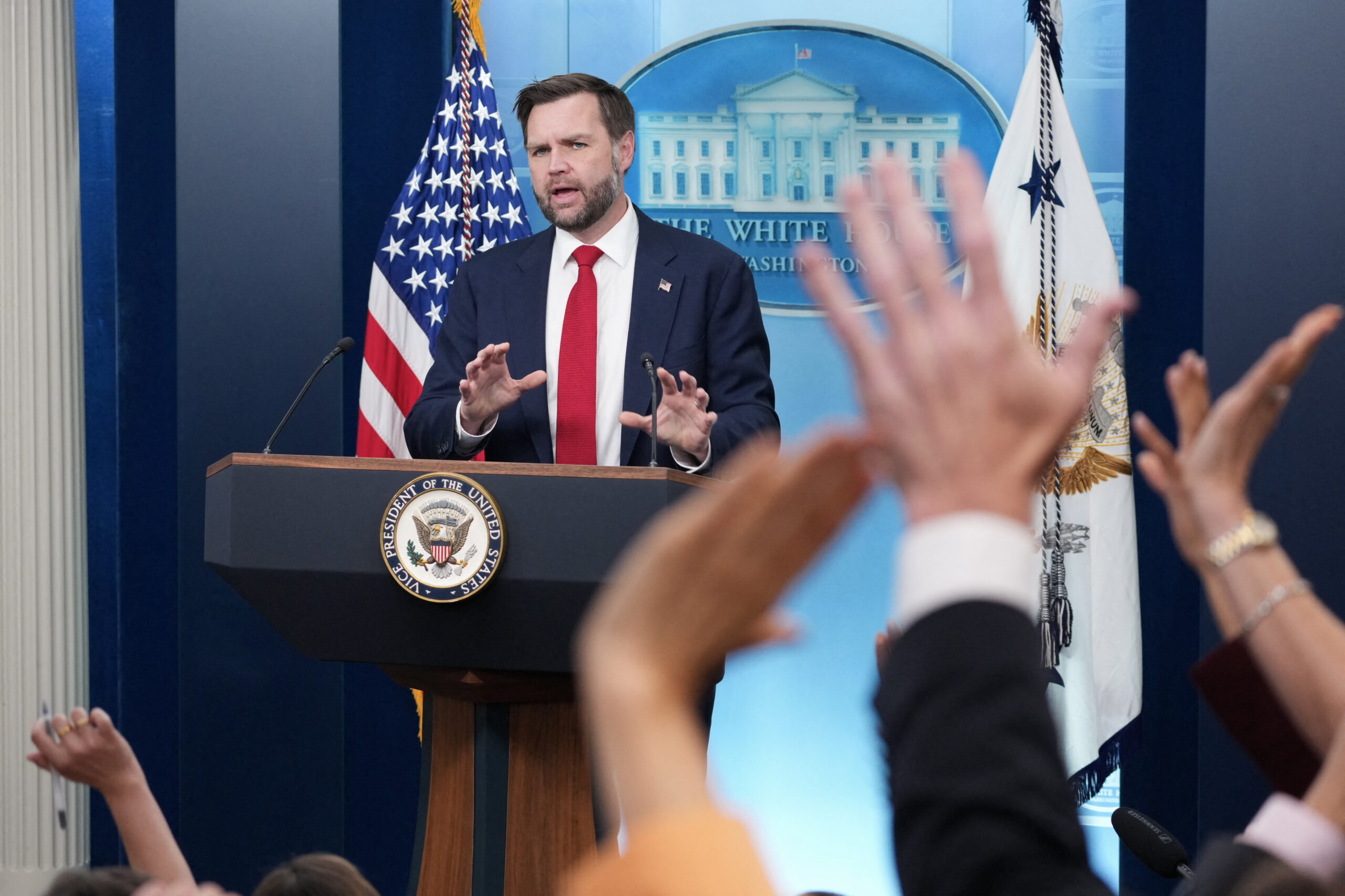
As Vice President JD Vance takes on the role of chief defender of the U.S.-Iran memorandum of understanding and forthcoming talks, he has begun to sound a lot like someone whom the Trump administration has lately spent a lot of time attacking: former President Barack Obama, Jewish Insider’s Gabby Deutch reports. Vance and President Donald Trump have both made clear that they view the MOU as fundamentally different from the 2015 Joint Comprehensive Plan of Action.
Sounds familiar: But as the White House faces criticism from hawkish members of the Republican Party, the language Vance is using to defend the burgeoning deal closely resembles the arguments made by Obama 11 years ago. “If you think this is a bad deal, what is your alternative?” Vance said in an interview this week with New York Times columnist Ross Douthat. Flashback to a 2015 press conference at the White House soon after the JCPOA was announced. “I’m hearing a lot of talking points being repeated about ‘this is a bad deal,’” Obama said. “What I haven’t heard is, what is your preferred alternative?”
Read the full story here and watch a side-by-side video comparison here.
Bonus: In The Washington Post, the Hudson Institute’s Douglas Feith, who served in the George W. Bush administration, posits that Vance’s defense of the agreement resembles “the standard reassurance Western leaders over the past century have offered when they make deals of this kind with bad actors — but it has generally proved hollow.”
DEAL DISCONTENT
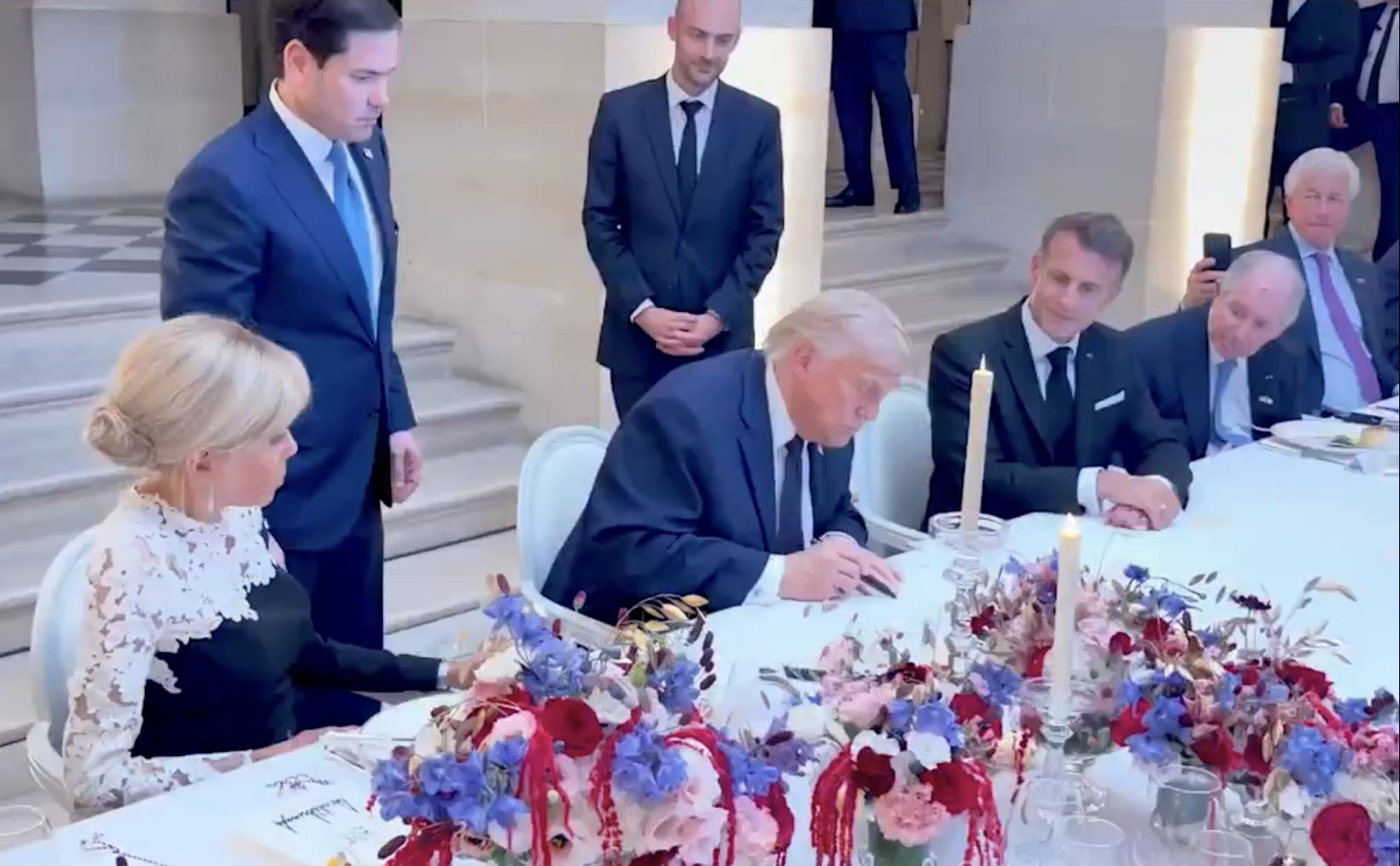
Jewish Republican donors and activists are voicing their strong disappointment with President Donald Trump’s newly announced memorandum of understanding with Iran, which has been met with criticism from GOP lawmakers as well as influential hawkish conservatives, Jewish Insider’s Matthew Kassel reports.
Flagging concerns: In interviews with JI on Thursday, several Jewish conservatives who supported the war expressed misgivings about the deal that reopens the Strait of Hormuz, saying that it had granted too many concessions to a weakened Iran — including waiving sanctions on oil exports — while neglecting to broach the regime’s funding of terror proxies and its ballistic missile arsenal. They also raised concerns that the memorandum of understanding with Tehran had not been favorable to Israel, a U.S. partner in the war, pointing to a term of the preliminary agreement that calls for a permanent end to military operations in Lebanon, where Israel is fighting Hezbollah, a key Iranian ally.
MOU blues: Senate Republicans continued on Thursday to air concerns about the U.S. memorandum of understanding with Iran, in some cases fueled further by Vice President JD Vance’s comments dismissing the effectiveness of U.S. sanctions and lambasting Israeli government officials who have objected to the deal, JI’s Marc Rod and Emily Jacobs report.
TEHRAN STIRRING TIRANA
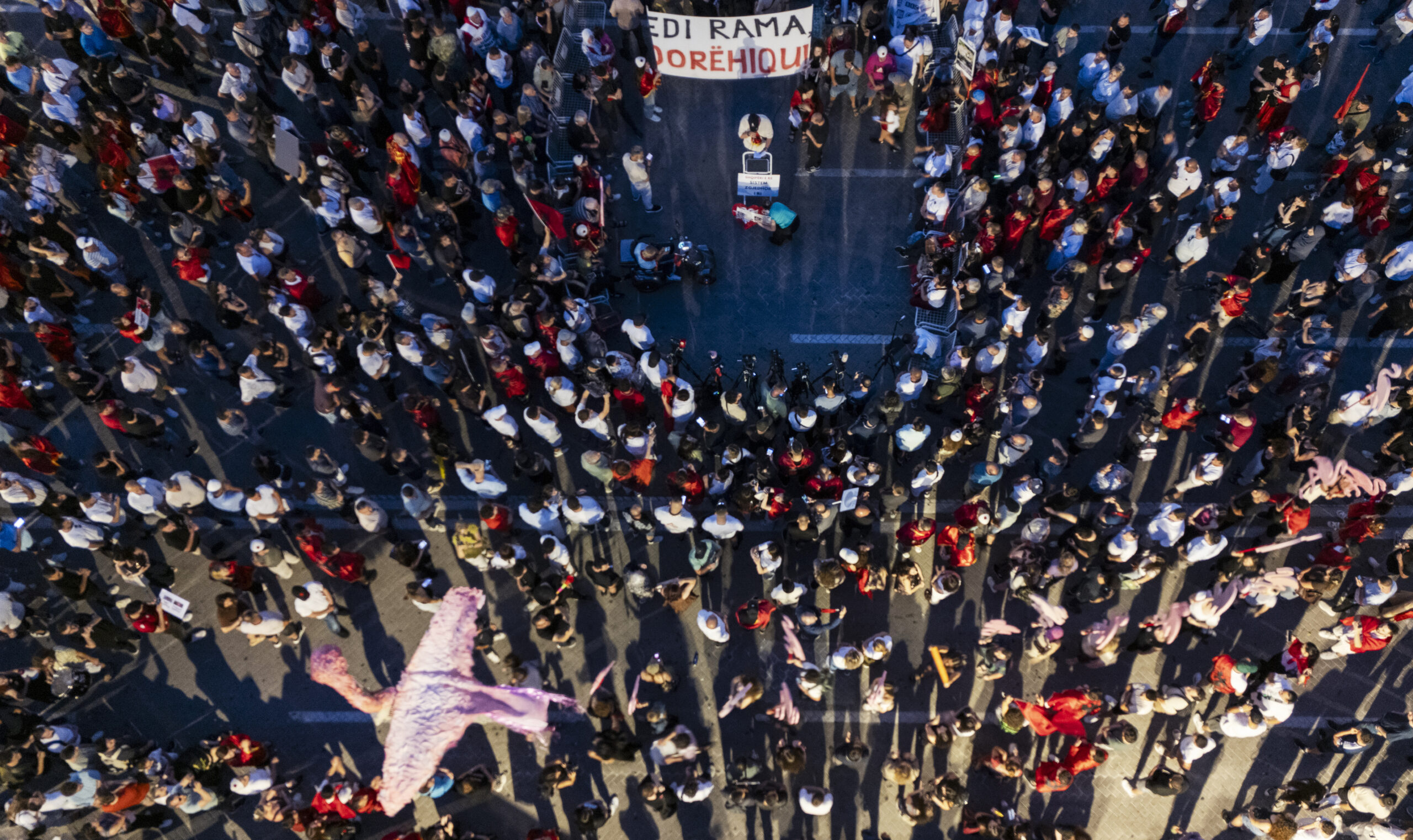
Albanian Prime Minister Edi Rama on Thursday blamed Iran for what he described as “ruthless” cyberattacks, warning that Tehran has sowed unrest and amplified false information about environmental protests over a new luxury development project in the country from President Donald Trump’s daughter Ivanka Trump and son-in-law Jared Kushner, Jewish Insider’s Matthew Shea reports.
Details: The project, which has been preliminarily approved, has not obtained building permits, but has drawn fierce backlash and sparked daily protests from thousands of demonstrators outside Rama’s office due to environmental concerns. “The amount of posts that have been entering there from our enemy, we have only one enemy, which is the [Islamic] Republic of Iran, and they are engaged in three years in a ruthless cyber-attack against Albania,” Rama said. “They [Iran] entered also in this game…freedom of reach is what every regime, through every propaganda, has done to go in every brain and to put the lie in the brain.”
OFFICE SPACE

Jewish communal groups are at loggerheads over the possibility of merging two related but distinct State Department offices: the special envoy to monitor and combat antisemitism and special envoy for Holocaust issues. Some Jewish groups recently sent a letter to Secretary of State Marco Rubio in support of the concept of merging the two offices, while others have sent letters in recent months opposing such a move,Jewish Insider’s Marc Rod reports.
For and against: Proponents of combining the two offices say that doing so consolidates linked issues under the authority of one envoy with ambassador-rank status, while maintaining the work of both offices. Opponents say that combining the two teams would undermine and diminish the work of the Holocaust affairs envoy and risk politicizing critical work on Holocaust restitution. The reexamination of the two roles comes ahead of the expected retirement of Ellen Germain, who has served as special envoy for Holocaust issues since 2021.
PAC CONTRADICTIONS
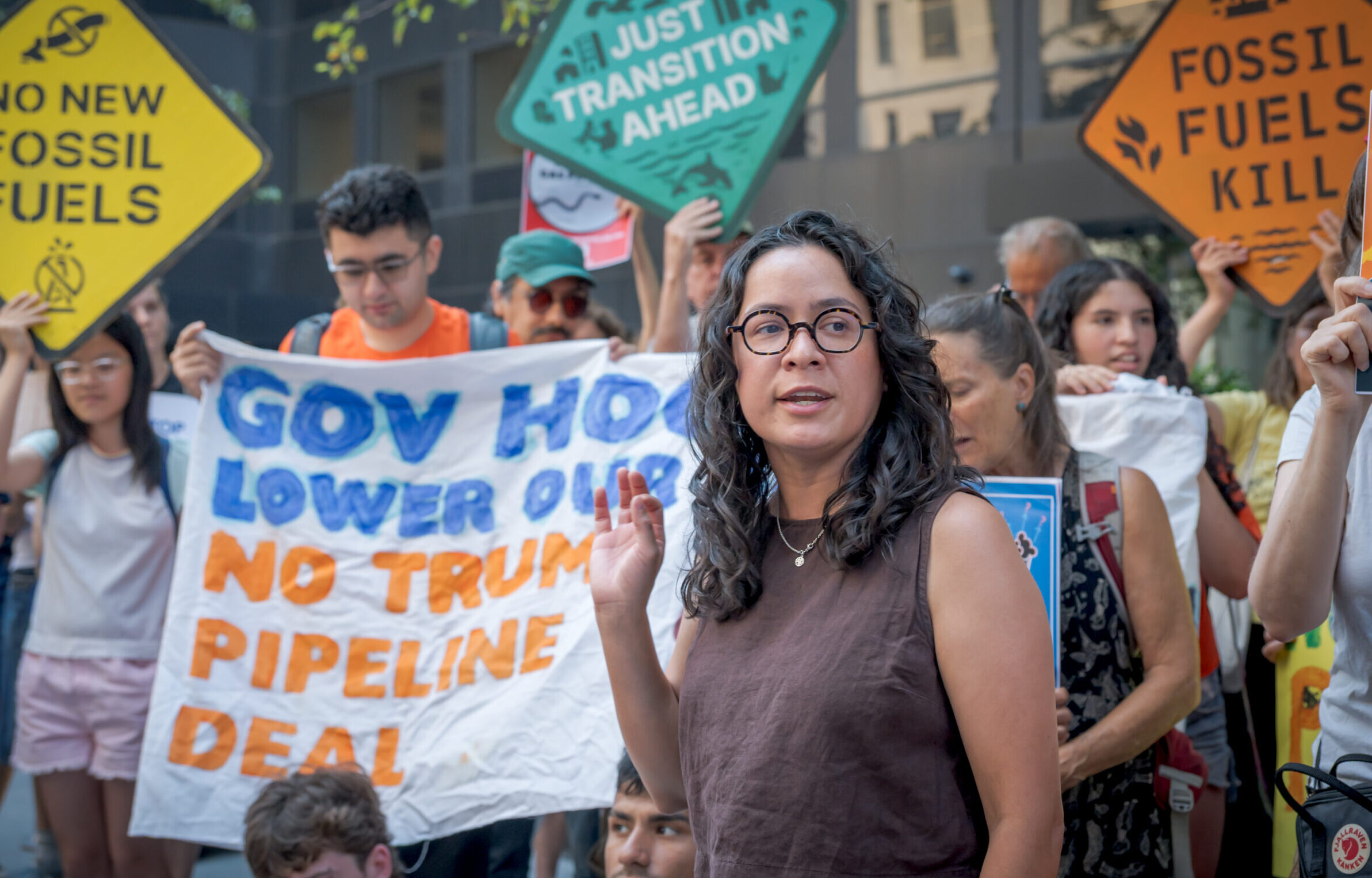
American Priorities, a new super PAC created as a progressive counterweight to pro-Israel spending in Democratic primaries, has drawn scrutiny in recent weeks for accepting contributions from donors who have given to Republicans — even as its allies on the far left have accused AIPAC, a chief rival, of serving as a Trojan horse to advance GOP-linked interests in safe blue districts, Jewish Insider’s Matthew Kassel reports.
Follow the money: Meanwhile, filings show that the anti-Israel group has received $250,000 from a tech executive whose firm is developing AI data centers in New York State. That money has boosted two democratic socialist House candidates in New York City who oppose efforts to expand data centers. Claire Valdez, a state assemblymember running to succeed retiring Rep. Nydia Velazquez (D-NY), and Darializa Avila Chevalier, an anti-Israel activist who is challenging Rep. Adriano Espaillat (D-NY), have benefited from over $2 million in estimated support from American Priorities in the final stretch of their closely contested primaries set for next Tuesday.
OFFSHORE ALLIANCE
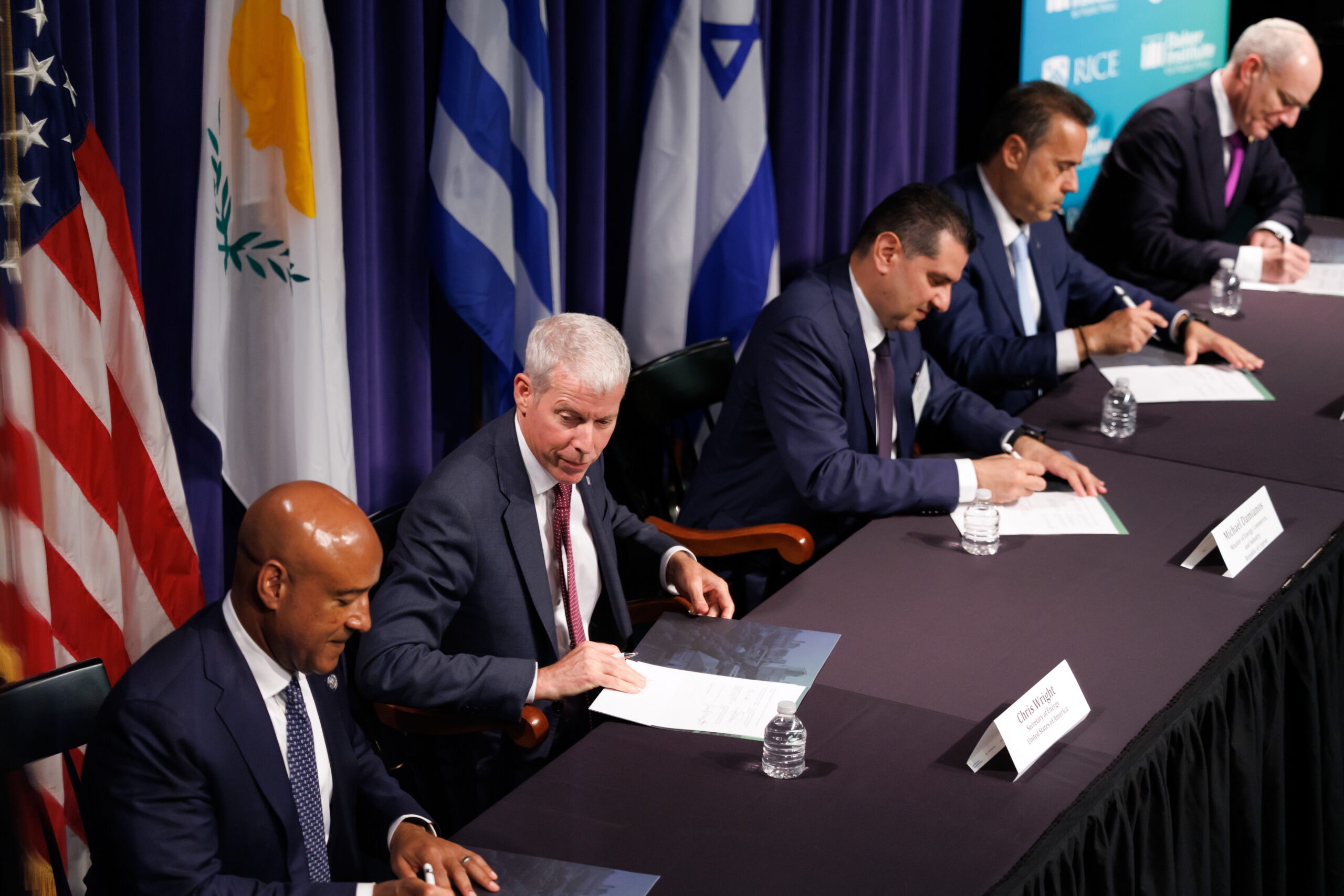
The Department of Energy is leaning on Israel’s offshore gas resources and cybersecurity prowess to help an emerging Eastern Mediterranean energy alliance, with officials telling Jewish Insider’s Matthew Sheathat Israeli participation uniquely “strengthens” the newly formed coalition. Earlier this month, the U.S., Cyprus, Greece and Israel formalized the partnership, announcing the establishment of the Eastern Mediterranean Energy Center (EMEC) on the campus of Rice University in Houston.
Aims: The center will serve as a permanent hub for research, policy dialogue, technical cooperation, and public‑private partnerships focused on infrastructure, investment, emerging technologies, and regional connectivity, according to the department. A spokesperson for the Department of Energy told JI that the agreement was part of a “longstanding effort to deepen cooperation” and that Israel’s involvement in the newly established EMEC partnership is vital to the coalition’s geopolitical objectives.
Worthy Reads
Getting Going in Gaza: In the Financial Times, former Secretary of State Hillary Clinton posits that the West should embrace the Trump administration’s 20-point peace plan for Gaza and the Board of Peace’s efforts in the enclave, arguing that they offer the most viable opportunity for progress. “The gleeful anticipation of failure is not just unhelpful. It is strategically self-defeating. The Board of Peace is an improbable vehicle, and the 20-point plan leaves many legitimate concerns unresolved. Governments will continue to disagree with important elements of both. But diplomacy rarely offers a choice between good options and bad ones. The international community cannot claim concern for Palestinian civilians while refusing to engage with the only mechanism currently capable of shifting conditions on the ground.” [FT]
Wrong on U.S. Aid: In The Free Press, former Israeli Defense Minister Yoav Gallant clarifies the contours of U.S. military aid to Israel. “No matter where you fall on this issue, almost everyone seems to agree on the premise that American support for Israel is a donation, and that the only remaining question is how generous the benefactor should be. But that premise is wrong. It has been wrong for a long time. And because it is wrong, the debate built on top of it misrepresents to the American people what their money has actually been doing for the past half-century. … But U.S. aid to Israel is not charity. American dollars flow into American factories; American assistance frees Israeli capital for innovation; and American forces eventually receive Israeli-developed capabilities refined in real combat.” [FreePress]
Strait Jacket: In The New York Times, Ed Fishman warns that other countries will use Iran’s closure of the Strait of Hormuz as a blueprint for exacting economic and military concessions of their own. “Even if the deal holds, Iran is poised to emerge from the war battered militarily and economically but strengthened strategically, the newly empowered gatekeeper of the world’s most important energy chokepoint. Other countries will take note — and seek their own chokepoints to exploit. … The irony is that Iran’s success at the Strait of Hormuz may set off a different kind of arms race — one in which every country searches for chokepoints to convert into money and power.” [NYTimes]
Wrong Turn for the Left: In The Atlantic, Adam Louis-Klein argues that anti-Zionism runs counter to progressive values. “How can it be that an ideology that has produced repeated acts of discrimination, dispossession, and violence now bears the mantle of progressivism in the West and has been normalized within the Democratic Party? Like Stalinism or the Khmer Rouge, anti-Zionism represents a wrong turn for the left. Anti-Zionism claims to be concerned with rights of minorities, opposition to racism, and universal justice. In truth, though, it has appropriated the language of anti-colonial liberation to justify oppression, transformed anti-racism into a racist accusation, and turned hatred of Israel into a global ritual.” [TheAtlantic]
Word on the Street
U.S. Ambassador to Israel Mike Huckabee responded rhetorically to French Foreign Minister Jean-Noël Barrot’s comments that Israel should halt its attacks on Hezbollah by asking, “Does France get all its info from Hezbollah?” adding that “Ceasefire happens when Hezbollah stops shooting & killing”…
The New York Times spotlights the “last-minute scramble” that produced the memorandum of understanding between the U.S. and Iran; at one point last weekend, the Times reports, President Donald Trump “placed a call to a New York Times reporter to explain the deal, even as, he said, his ‘wonderful family’ was waiting for his birthday dinner to begin”…
Spotted at the opening of the Obama Presidential Center in Chicago on Thursday: Former Presidents Bill Clinton, George W. Bush and Joe Biden; former Secretaries of State Hillary Clinton and Tony Blinken, former Vice President Kamala Harris and Doug Emhoff; Illinois Gov. J.B. Pritzker, former U.S. Ambassadors to Israel Dan Shapiro, Jack Lew and Tom Nides; former Commerce Secretary Penny Pritzker, former U.S. Ambassador to Japan Rahm Emanuel and Karlie Kloss…
J Street is slated to host a virtual briefing for congressional staff on the Trump administration’s memorandum of understanding with Iran featuring former Biden administration special envoy for Iran Rob Malley, who was suspended from his State Department role amid an investigation over his handling of classified materials, Jewish Insider’s Marc Rod reports…
The Associated Press projected Washington, D.C., Councilmember Janeese Lewis George, a democratic socialist, to win the city’s Democratic mayoral primary, shortly after former Councilmember Kenyan McDuffie conceded…
A federal grand jury indicted a Florida man facing hate crime charges over a foiled plot to attack Jewish employees of a pro-Israel nonprofit organization…
Lion Raisins condemned the recent antisemitic and racist behavior by Bruce Lion, one of the company’s heirs, who was arrested last week on charges of making criminal threats targeting a neighbor in his Pacific Palisades, Calif., community who is a rabbi; Lion, who was charged with three felony hate crimes, faces up to nine years in prison if convicted…
The New York Times Magazine does a deep dive into the term “goyslop,” which was popularized as an antisemitic trope by the far right and has increasingly become part of the discourse among the Zoomer generation…
Police in Canada arrested a 19-year-old man in connection with a shooting in March targeting the U.S. consulate in Toronto…
The U.K. government is pledging £1 million to support the Jewish Museum London; U.K. Culture Secretary Lisa Nandy said the funding would go to sharing the “stories, the connections and the understanding that are the basis of a cohesive society and the future of our country”…
U.K. Labour party member Andy Burnham won a special parliamentary election, positioning the Greater Manchester mayor to mount a challenge to Prime Minister Keir Starmer…
The Koum Family Foundation donated $36 million to Los Angeles’ Milken Community School, one of the largest non-Orthodox Jewish day schools in the country, as part of a major capital campaign, eJewishPhilanthropy’s Judah Ari Gross reports…
Shalev Hulio and Sebastian Kurz’s Israeli AI cybersecurity firm Dream, whose technology works to protect governments against cyberattacks, raised $260 million, at a $3 billion valuation, in a private round of funding…
Pic of the Day
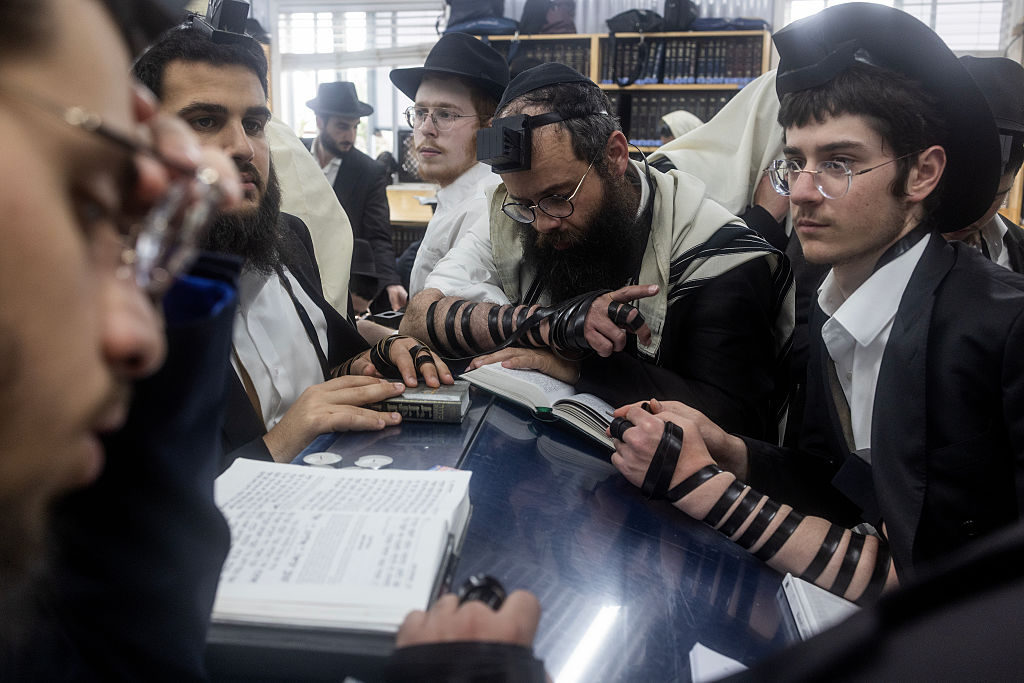
Tens of thousands of people participated in this week’s annual pilgrimage to the grave of the Lubavitcher Rebbe, Menachem Mendel Schneerson, in Queens, N.Y., to mark the 32nd anniversary of his death yesterday.
Birthdays

Singer-songwriter known as Jeryko, Yaniv Hoffman turns 35 on Sunday…
FRIDAY: Attorney, investment banker, film producer and former deputy mayor of NYC, Kenneth Lipper turns 85… Rabbi emeritus of Anshe Emeth Memorial Temple in New Brunswick, N.J., Rabbi Bennett F. Miller… Historian of the Jews in Muslim lands in the modern era, he won the Israel Prize in 2025 for Jewish history, Yaron Tsur turns 78… Retired president and CEO of The Jewish Federation of Greater Los Angeles, he is now the president of American Jewish University, Jay Sanderson turns 69… Inna N. Zalevsky… Former director of communications for Kings Bay Y, Adrienne M. Knoll… Member of the European Jewish Parliament for Latvia, Valery Engel, Ph.D. turns 65… Physician specializing in reproductive endocrinology and infertility, Jessica Rosenberg Brown, MD… Co-founder of Centerview Partners, a boutique investment bank based in NYC, Blair Effron turns 64… Singer-songwriter, actor and television personality, she was a cheerleader for the Los Angeles Lakers at the age of 18, Paula Abdul turns 64… Former member of Knesset for the Zionist Union party, in the 1990s she was an assistant legal advisor to then Prime Minister Yitzhak Rabin, Ayelet Nahmias-Verbin turns 56… Human rights activist and advocate for women and minorities in Iran, Marjan Keypour Greenblatt… Co-founder of nine venture-backed companies in the telecom, high-tech, pharmaceuticals, energy, water and biotechnology industries, Andrew T. Perlman turns 51… Consul general of Israel to the Southeastern United States, Eitan Weiss… Staff writer at The New Yorker, Isaac Chotiner… Director of affinities and major gifts at the Minneapolis Jewish Federation, Tslil Shtulsaft… Founder of JSwipe, a Jewish dating app created in 2014, David Austin Yarus… Retired rhythmic gymnast from Israel who competed in the 2008 (Beijing), 2012 (London) and 2016 (Rio) Olympics, Neta Rivkin turns 35… VP at Jewish Federations of North America, Anna Langer… COO at Lightning Inspiration, Alex Jakubowski… Organization director at Senate Leadership Fund & One Nation, Cydney Couch… Singer, popular on video and streaming services, known as Skye for short, Daniel Skye turns 26… Vice president for education at the American Jewish Committee and director of its Center for Education Advocacy, Laura Shaw Frank…
SATURDAY: Weston, Fla., resident Harold Kurte turns 97… Former member of Knesset for the Meretz party, Ran Cohen turns 89… Owner of Schulman Small Business Services in Atlanta, Alan Schulman… Detroit-based pawnbroker, reality TV star, author and speaker, Leslie “Les” Gold turns 76… Chef, baker and author of eight books, she popularized sourdough and artisan breads in the U.S., Nancy Silverton turns 72… Writer of the “Bully Pulpit” Substack from Booksmart Studios, Bob Garfield turns 71… Former assistant managing editor for politics at NBC News, now an adjunct professor at the University of Florida and FIU, Gregg Birnbaum… Co-founder of Brilliant Detroit (helping children out of poverty) and owner of Riverstone Communities, James Bellinson… Rosh yeshiva at Yeshiva University and rabbi of Congregation Ohr HaTorah in Bergenfield, N.J., Rabbi Zvi Sobolofsky turns 61… Israeli-American screenwriter, film director, writer and producer of 20 films, Boaz Yakin turns 60… Senior legal affairs reporter at Politico, Josh Gerstein… Governor of Pennsylvania, one of three current Jewish governors that are named Josh, Joshua David Shapiro turns 53… U.S. Sen. Eric Stephen Schmitt (R-MO) turns 51… Singer, songwriter and hazzan, he is a co-founder of the band Moshav, Yehuda Solomon turns 49… Senior program director of civic initiatives at The Teagle Foundation, Tamara Mann Tweel, Ph.D…. Israeli author of crime and thriller books that have sold more than 2.5 million copies in more than 20 languages, Mike Omer turns 47… Journalist, blogger and EMT in NYC, formerly editor for Gawker and director of public relations for the Village Voice, Maggie Shnayerson turns 45… EVP of Moxie Strategies, Pearl Gabel… French-Israeli singer and songwriter, Amir Haddad turns 42… Deputy communications director in the Trump 45 White House, now head of corporate affairs at Standard Industries, Josh Raffel… Jennifer Bernstein… Photographer, producer and digital strategist, she is a supervising producer at HardPin, Sara Pearl Kenigsberg… Writer, director, comedian, YouTuber, podcaster and mental health advocate, Allison Beth Raskin turns 37… Team captain of Maccabi Tel Aviv of the Israeli Basketball Premier League and the EuroLeague, John DiBartolomeo turns 35… Chief campus and culture officer at Hillel Ontario, Bev Shimansky Ades… Development Director at Ashkenaz Foundation, Jaime Reich…
SUNDAY: Former member of the U.S. House of Representatives, she is the mother-in-law of Chelsea Clinton, Marjorie Margolies turns 84… Investment banker, he was the U.S. ambassador to El Salvador in the Bush 43 administration, Charles L. Glazer turns 83… Philanthropist, she is vice chair of the Museum of Jewish Heritage, Ingeborg Hanna Rennert… British businessman, co-founder with his brother Charles of advertising agency Saatchi & Saatchi which became the largest in the world, appointed to the House of Lords in 1996, Baron Maurice Saatchi turns 80… U.K. Cabinet minister in both the Thatcher and Major governments, Sir Malcolm Leslie Rifkind turns 80… Retired creditors rights attorney in the Chicago area, David Stephen Miller… Retired senior editor and writer at The Washington Post for 33 years, now chief editor at The Reis Group, Peter Perl… Member of the Knesset since 2013 for the Yesh Atid party, Mickey Levy turns 75… Susan Gutman… CEO of Amir Development Company in Beverly Hills, he is a member of the national council of AIPAC, Keenan L. Wolens… Punk rock singer and songwriter, known as the Gangsta Rabbi, Steve Lieberman turns 68… Washington Institute director and adjunct professor at Johns Hopkins SAIS, David Makovsky turns 66… Pulitzer Prize-winning journalist and author, David L. Marcus… Co-founder and executive editor of Axios since 2016, Mike Allen turns 62… National education writer for The Washington Post, Laura Meckler… Founder and leader of Beautifully Jewish, Tanya Rebecca Singer… Actor, singer and entrepreneur, who now raises awareness about amyotrophic lateral sclerosis, Aaron Scott Lazar turns 50… Yale Law School graduate, journalist and author, Abigail Krauser Shrier turns 48… Public affairs consultant based in Manhattan, Sam Nunberg turns 45… Co-founder and former CEO of Kaggle, a data science platform acquired by Google in 2017, Anthony Goldbloom turns 43… Former member of the Knesset where she was the first-ever Druze woman, she then became a Jewish Agency shlicha to Washington, Gadeer Kamal Mreeh turns 42… Head of Communications for Paramount+, Jacqueline (Jackie) Berkowitz… Chief of staff to the chairman and CEO at Saban Capital Group, Amitai Raziel… Award-winning Israeli classical pianist, Boris Giltburg turns 42… Executive director at Hunter Hillel, Merav Fine Braun… Editor for the global programming team at CNN, Madeleine Morgenstern… Singer-songwriter and actor, known by his mononym Max, Maxwell George Schneider turns 34…
Armed Services Committee chair Roger Wicker broke his silence on Thursday, warning the deal would make Iran’s Obama-era payoff ‘look like a pittance’

Tom Williams/CQ-Roll Call, Inc via Getty Images
Senate Armed Services Committee Chairman Roger Wicker (R-MS) arrives for a confirmation hearing in Dirksen building on Tuesday, May 13, 2025.
Senate Republicans continued on Thursday to air concerns about the U.S. memorandum of understanding with Iran, in some cases fueled further by Vice President JD Vance’s comments dismissing the effectiveness of U.S. sanctions and lambasting Israeli government officials who have objected to the deal.
Sen. Roger Wicker (R-MS) — the chairman of the Senate Committee on Armed Services — issued a statement ripping into the agreement, saying he’s “concerned [it] negotiates away the victories of Operation Epic Fury in ways that are completely out of step with the president’s goals.” Wicker had for days told reporters he was “withholding comment” on the MOU.
He said that, even though the $300 billion reconstruction fund outlined in the deal is not coming from U.S. taxpayer money, it “would make Iran’s payoff under President [Barack] Obama’s 2015 deal look like a pittance by comparison” and that it “would be an error to force Israel to stand down against Hezbollah.”
He said he also opposes any sanctions relief or unfreezing of funds for Iran “in exchange for Iran’s mere agreement to negotiate for another 60 days. The Iranian regime has not renounced its ultimate goal — ‘Death to America, Death to Israel.’ The regime will invest every penny it receives to further that aim.”
But Wicker pointed ultimate blame for the final shape of the deal at the “intermediaries,” rather than Trump himself.
Wicker told reporters he expects to hear from Vance about the deal but that no briefings have yet been arranged or scheduled.
Reiterating a stance he expressed a day prior, Sen. Ted Cruz (R-TX) said, “History demonstrates giving billions of dollars to theocratic lunatics who want to kill you is an exceptionally bad idea. So I hope we don’t do that.”
Asked about the comments by Vance — a potential candidate in the 2028 GOP presidential primary — Cruz, who mounted his own presidential bid a decade ago and is rumored to be considering a 2028 run, said, “I think the vice president can speak for himself.”
Sen. Thom Tillis (R-NC) said that he plans to go through the agreement in detail to compare it to the 2015 Joint Comprehensive Plan of Action because “what we don’t want to do is repeat that mistake.”
Tillis rejected Vance’s comments that sanctions have not been effective. “You’ve seen all kinds of their behavior changes in reaction to sanctions,” Tillis told Jewish Insider. “To suggest it’s not working would suggest that broadly sanctions don’t work, and we all know that that’s just factually incorrect.”
He told JI that “clearly any sanctions that are subject to congressional approval, he needs to come to Congress. Pretty straightforward. They covered that on ‘Schoolhouse Rock.’”
Tillis, who is retiring, also called the deal a “very important moment” for Vance. “It’s definitely a two-edged sword. Coming up short’s probably not good for him, but it could be a great achievement for him.”
Sen. Mike Rounds (R-SD) told JI he hadn’t heard Vance’s comments on sanctions, but he said that “it seems to me that there are billions of dollars that have been held from Iran, which has not gone to terrorist activities, and I think that is a good thing. So, with regard to that, it clearly had an effect. Whether or not it was completely effective is debatable.”
Rounds said he was concerned that Israel was not a party to the negotiations but “there’s an expectation somehow that there would be a limitation on activity going on in Lebanon that we’re not involved with at all, but that Israel is.”
He emphasized that “the Israeli government has a right to defend its people” from the yearslong ongoing attacks from Hezbollah, “and I don’t see that necessarily correctly addressed within this original memorandum. Perhaps there’ll be more meat on it in an actual agreement.”
The senator said he’s unsure whether the Iran Nuclear Agreement Review Act, which blocks the lifting of sanctions or unfreezing of funds for a congressional review period on any deal pertaining to Iran’s nuclear program, would be applicable, or what legislative steps would be involved if it were.
“We need to learn more about what [Trump’s] intent is and how permanent the two parties expect this to be,” Rounds said. “There’s a lot of questions we don’t have answers to yet, but it’s early in the process.”
He raised concerns about how the agreement would be enforced “particularly if you release all of their funds immediately, they’re allowed to do with it whatever they want. In the past, they’ve used that to fund terrorist activities. The first one that comes to mind is Hezbollah, which sits in Lebanon right now and has been attacking Israel relentlessly for years.”
Sen. John Cornyn (R-TX) said that “everything I’ve heard about it causes me concern” and he believes the president agreed to the deal because he was “concerned about the midterm elections and gas prices and blockage of the Strait of Hormuz.”
“This gets that open, but I think he’s had to pay a very deal price to get that done, and I think we should be clear-eyed and realistic that this isn’t going to persuade the Iranian regime to go in peace,” Cornyn, who is retiring after being defeated by a Trump-backed primary challenger, said.
He said that the steps taken by U.S. military operations to degrade Iran’s ballistic missile program and military-industrial base and delay its nuclear program were positive, but “I think we ought to be realistic about where we are. It’s temporary. It’s certainly not a permanent solution.”
Cornyn said he does not believe that Trump was joking when he said on Wednesday that he would blame Vance if the deal goes awry, and that the outcome of the deal might affect Vance’s prospects in the 2028 presidential race.
Cornyn said he expects that Congress, in its oversight role, will be examining the release of sanctions and whether the administration has the ability to lift those sanctions unilaterally.
Sen. Tom Cotton (R-AR), the Senate Intelligence Committee chair who also had not yet commented on the deal, said on Thursday that he has “concerns” over the MOU, warning that “certain aspects of this deal are a step in the wrong direction.”
The Arkansas senator told Fox News’ “The Story with Martha MacCallum” that Trump “deserves enormous credit for making Iran weaker than it’s been in decades, and we need to make sure that we don’t squander the leverage that we’ve built.” Cotton said he wished that the president “had continued with Project Freedom when it was announced a couple months ago.”
He also called on Trump to “use our military to force the Strait open and to keep it open, in addition to reimposing the blockade in the event that “Iran doesn’t keep its end of the bargain.”
Cotton pointed to the immediate lifting of sanctions on Iran’s oil exports, suggesting the funding would go toward malign activities, and raised concerns about the long-term control of the Strait of Hormuz.
“There’s certain parts of this memorandum that are a bit vaguer about Iran’s ability to access up to $100 billion of frozen funds or whether Iran can impose tolls on the Strait of Hormuz after two months,” Cotton said. “We’ll need more explanation there. I hope President Trump won’t allow those things to happen.”
Sen. Joni Ernst (R-IA) said that lawmakers had “very serious problems” with the JCPOA and the administration will need to come explain the deal because “I don’t want to see JCPOA 2.0.”
Sen. Lisa Murkowski (R-AK) told JI that she expects to find out “a lot more about the real details and particulars in these next 30 days.”
The Alaska senator said Congress needs “to make sure that the way that the president and the United States are interpreting this is in sync with how Iran is interpreting this, and I’m not certain yet that we’re at that place.”
Murkowski said “they can’t tell me” how the sanctions relief and reconstruction funding will work “so I certainly have a lot of questions that have yet to be resolved, but I also appreciate that the agreement allows for this next 30 days to work through reaching it.”
Asked about Trump’s suggestion on Wednesday that he wasn’t opposed to Iran possessing ballistic missiles, Murkowski replied, “That wasn’t helpful.”
Murkowski responded affirmatively when pressed on if those types of comments from the president and senior administration officials gave her pause about what the final agreement could look like.
Sen. Jim Justice (R-WV) said that “if we don’t have absolute assurances” that Iran can never obtain a nuclear weapon “then we lose,” though he said that “there’s still work to be done” in further negotiations.
“If it were to come to pass that we still have all kinds of concerns and no assurances and everything else, then it’s not good at all,” Justice said. “We have to have control one way or another” of Iran’s nuclear materials.
He said he couldn’t address disputes with Israel about the deal directly but said “the Israelis have been wonderful allies, and we’re going to stay arm-in-arm with them, period.”
Democrats, meanwhile, continued to lambast the agreement.
Sen. Richard Blumenthal (D-CT) told JI the administration is “desperate” and “flailing” and criticized the exclusion of Israel from the negotiations given that it continues to face attacks from Hezbollah, from which he said it must defend itself.
He said the agreement’s reliance on the U.N. as an enforcement and verification mechanism also hurts Israel.
“How can Israel trust the U.N.? Working with Israel is simply not in their toolkit. With the hundreds of billions of dollars provided, the unfreezing of sanctions immediately, the lifting of the freeze on assets, I don’t know how Republicans who attacked us with the JCPOA are going to handle that,” Blumenthal said. “This is a regime that continues to call the United States ‘the Great Satan.’ I don’t know what they’re thinking.”
And, he argued, the agreement effectively requires nothing of Iran: “I know the vice president’s line has been, ‘They only get the benefit of the bargain if they keep their side of it,’ but there is no side of it for them. They’re under no obligations here. It keeps the status quo for nuclear arms, lifting sanctions, lifting the freeze on assets, the $300 billion dollars.”
Sen. Chris Coons (D-DE) called the deal “appalling, flawed, pathetic failure” but “the inevitable conclusion of a combination of never making the case to the American people, flawed strategic provision, lack of grasp of the regional dynamics. How many ways can I say bad, bad, bad.”
On the issue of sanctions, Coons told JI, “President Trump cut a horrible deal where he is giving to Iran an enormous amount of released assets that have been frozen, sanctions relief that will generate tens of billions, if not hundreds of billions, and this reconstruction fund In combination, this is a massive infusion of cash to the mullahs and the IRGC. History shows the mullahs will not primarily use this money to build health clinics and schools.”
He said that Vance’s criticisms of Israeli officials are part and parcel of his efforts to sell an unsatisfactory agreement.
“I think JD Vance has been tasked with trying to sell a really bad deal and he is being as aggressive as he possibly can in knocking down one of the more obvious critics — a country that has a lot to lose,” he added. “If their opposition to the JCPOA was in any way principled, then they have to criticize a deal that’s worse than the JCPOA.”
Coons pointed responsibility for countering the deal toward Republicans, emphasizing that Iran will use the funding it receives under the deal for malign purposes. The Delaware senator said that there are “some things” Congress can do including conduct oversight of the congressional sanctions that the deal seeks to lift.
Sen. Cory Booker (D-NJ) echoed colleagues in describing the agreement as an “unconditional surrender” by the U.S. ‘because we get nothing from this deal.”
“All the specific benefits go to Iran. We get vague promises for potentially in the future hundreds of billions of dollars,” Booker said. “We’re allowing an extreme, terrorist supporting regime, that’s more extreme than when we began this, that chant ‘Death to America,’ to have more resources to do more things. So this is perhaps one of the biggest presidential blunders and failures in the last 20 years.”
He said that whether Senate Republicans stand firm and refuse to allow the administration to lift sanctions requiring congressional approval “is going to be the big test.”
“Will they just roll over and lay down for him, or will they stand up and provide the kind of checks, balances, oversight, and accountability when it comes to Iran, that they should be doing?” Booker asked. “They have a lot of levers to pull on the Republican side, where they right now control the Senate and control the House.”
He did not address what Democrats plans’ or role might be.
In the House, pro-Israel Democrats are also outraged by the deal and vowed not to support when it comes before Congress, which they said it must under INARA.
Rep. Josh Gottheimer said he is “totally dumbfounded by this agreement, and, like many, in a state of disbelief,” adding that the U.S. “got nothing” and “not one core objective was meaningfully met.”
He predicted that the next phase of the deal will never come about, and said the U.S. is “selling out Israel” and “kowtowing to Hezbollah terrorists, by tying Israel’s hands in Lebanon.”
Rep. Brad Schneider (D-IL) called it a “surrender agreement” and an “unacceptable capitulation without achieving any of our objectives” that will “facilitate the rebuilding” of Iran’s military and support for proxy groups.
“Unless the agreement is changed to actually close and permanently block Iran’s path to nuclear weapons, I will vote against it,” Schneider said.
Plus, Albania blames Iran for stoking Kushner-unrest
Roy Rochlin/Getty Images
Vice President JD Vance
Good Thursday afternoon.
This P.M. briefing is reserved for our premium subscribers like you — offering a forward-focused read on what we’re tracking now and what’s coming next.
Today’s Daily Overtime was curated by Senior National Correspondent Gabby Deutch.
📡On Our Radar
Notable developments and interesting tidbits we’re tracking
As the White House continues to promote the memorandum of understanding that will end the war with Iran and start negotiations between Washington and Tehran, Vice President JD Vance is out with a message that sounds strikingly familiar — at least to anyone who followed former President Barack Obama’s pitch on the 2015 nuclear deal with Iran, Jewish Insider’s Gabby Deutch reports.
“If you think this is a bad deal, what is your alternative?” Vance said in an interview this week with New York Times columnist Ross Douthat.
Obama used nearly identical phrasing at a 2015 White House press conference: “I’m hearing a lot of talking points being repeated about ‘this is a bad deal,’” he said. “What I haven’t heard is, what is your preferred alternative?”
Watch a side-by-side look at Vance and Obama here…
Vance also delivered a tough message to Israeli officials who have criticized the MOU, telling reporters on Thursday that Israel’s government should be careful not to alienate the only friend it has left: President Donald Trump, JI’s Emily Jacobs reports.
“Donald J. Trump is the only head of state in the entire world who is sympathetic to the nation of Israel at this moment in time and he happens to be the head of state of the world’s superpower. If I was in the Cabinet of the Israeli government, I might not be attacking the only powerful ally that I have anywhere left in the entire world,” said Vance…
Trump also had a word of caution for Israeli Prime Minister Benjamin Netanyahu, two days after he said Netanyahu was too “vicious” in his approach to fighting Hezbollah in Lebanon. Asked by a reporter for Israel’s Kan News if he will support Netanyahu in this year’s Israeli elections, Trump said he most likely would, but did not commit.
“I’ll have to look at who’s running, but I like Bibi very much. I would be most likely to endorse him,” said Trump. “He’s doing a very good job, he’s got to be a little bit more rational”…
United Against Nuclear Iran, an advocacy group that rallied opposition to the 2015 Joint Comprehensive Plan of Action, said on Thursday that it “cannot endorse the MoU in its current form”…
AIPAC released a policy memo on Thursday that said the MOU “raises significant questions,” and called on Congress to “play a critical role in ensuring a final deal meets President Trump’s stated objectives for the war”…
In a Thursday speech at the FII Priority summit in Rome, Albanian Prime Minister Edi Rama blamed Iran for “ruthless” cyberattacks against the country, claiming that Tehran has sought to sow unrest about a preliminarily approved luxury development project in the country from Ivanka Trump and Jared Kushner, Trump’s daughter and son-in-law, JI’s Matthew Shea reports…
Janeese Lewis George defeated Kenyan McDuffie in the Democratic primary for mayor of Washington, D.C., with the Associated Press calling the race on Thursday afternoon. Democratic socialist Lewis George leads McDuffie 53% to 36%…
American Priorities, a super PAC created as a progressive counterweight to AIPAC, has received $250,000 from a tech executive whose firm is developing AI data centers in New York State — while boosting two democratic socialist House candidates who oppose efforts to expand data centers, JI’s Matthew Kassel reports…
Rep. Tom Kean Jr. (R-NJ), who has been absent from Congress since March due to an unexplained personal health issue, plans to return to Washington on June 30…
Israel and Syria are expected to resume direct talks soon due to pressure from the U.S., the Israeli network Kan reports…
The FBI announced that it charged San Diego resident Reda Mazen Rida Sabassi with conspiring to provide material support to Hamas after he allegedly raised approximately $600,000 through fraudulent charitable campaigns and funneled a portion to the terrorist organization…
Former Presidents Joe Biden, George W. Bush and Bill Clinton attended the grand opening of the Obama Presidential Center in Chicago on Thursday afternoon.
Guests included a litany of ex-Obama administration staffers, including former White House liaison to the Jewish community Matt Nosanchuk and former U.S. Ambassador to Israel Dan Shapiro, who was spotted chatting with Obama…
⏩ Tomorrow’s Agenda, Today
An early look at tomorrow’s storylines and schedule to keep you a step ahead
Keep an eye on Jewish Insider for a look at how Jewish Republicans are feeling about the U.S.-Iran memorandum of understanding that was signed this week.
Vice President JD Vance plans to travel to Switzerland this weekend for talks with Iran, though the plans are not yet finalized, he told reporters on Thursday.
Bill Pulte, the director of the Federal Housing Finance Agency, will become the acting director of national intelligence on Friday after the confirmation of DNI nominee Jay Clayton was delayed this week at President Donald Trump’s request.
We’ll be monitoring the final days of the heated congressional primary campaigns in New York, where Israel and Gaza remain hot topics for progressive candidates.
We’ll be back in your inbox with the Daily Overtime on Monday. Shabbat Shalom!
Stories You May Have Missed
Transferring responsibilities
The letter urges American Jews to ‘double down’ on civic values as the country marks its 250th
BEHIND THE CURTAIN

Multiple sources identified Scott Stringer as a driving force behind two PACs spending to beat Mayor Zohran Mamdani’s House candidates
Vance borrows from the Obama playbook to argue there is no viable alternative to agreement with Iran
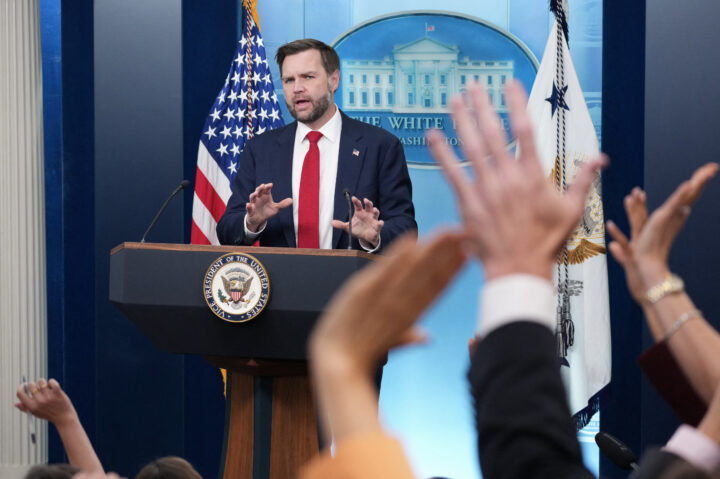
Photo by Ken Cedeno / AFP via Getty Images
Vice President JD Vance takes questions from reporters during a press briefing in the Brady Briefing Room of the White House in Washington, DC, on June 18, 2026.
As Vice President JD Vance takes on the role of chief defender of the U.S.-Iran memorandum of understanding and forthcoming talks, he has begun to sound a lot like someone whom the Trump administration has lately spent a lot of time attacking: former President Barack Obama.
Vance and President Donald Trump have both, in recent days, made clear that they view the MOU — which is set to deliver sanctions relief to Iran as nuclear negotiations get underway — as fundamentally different from, and better than, the 2015 Joint Comprehensive Plan of Action, the nuclear deal signed by Obama. But as the White House faces criticism from hawkish members of the Republican Party, the language Vance is using to defend the burgeoning deal closely resembles the arguments made by Obama 11 years ago.
“If you think this is a bad deal, what is your alternative?” Vance said in an interview this week with New York Times columnist Ross Douthat.
Flashback to a 2015 press conference at the White House soon after the JCPOA was announced.
“I’m hearing a lot of talking points being repeated about ‘this is a bad deal,’” Obama said. “What I haven’t heard is, what is your preferred alternative?”
Both Vance in 2026 and Obama in 2015 argued that the deals negotiated by their respective administrations were better than using military force — or in the case of the Trump deal, continuing to use military force — and that they would lead to a safer world.
“We could drop more bombs. We could destroy more of their country. We could kill the current iteration of their leadership. We know where all of them are. All of those things could happen,” Vance said. “But does that make the American people safer or more prosperous? The president of the United States and I think: No.”
Obama frequently argued similarly.
“If the alternative is that we should bring Iran to heel through military force, then those critics should say so,” he said at the 2015 press conference. “We’ve got a historic chance to pursue a safer and more secure world, an opportunity that may not come again in our lifetimes.”
“None of them have presented to me, or the American people, a better alternative.” -Obama, 2015
— Jewish Insider (@jewishinsider) June 18, 2026
“It’s not just whether this is good or bad, it’s what is the alternative.” -Vance, 2026
As Vice President JD Vance takes on the role of chief defender of the U.S.-Iran MOU and the… pic.twitter.com/TB5bvxINM5
There are substantive differences between the agreements notched by the Obama and Trump administrations, though both share the core assertion that they will not allow Iran to obtain a nuclear weapon.
“The Obama-Iran deal allowed them to generate a stockpile of enriched uranium,” Vance claimed, although the JCPOA required Iran to limit the level to which it enriched uranium, cut its stockpile by 98% and ship the rest of its enriched uranium out of the country. “Our deal ensures that stockpile is destroyed and eliminated, so that’s a very, very big difference, a very important difference for the American people,” Vance said this week. (The text of the 14-point MOU says only that the uranium will be discussed during the forthcoming negotiations.)
But both Vance and Obama, in their roles as salesmen of their administrations’ respective deals, argued that critics simply misunderstand the agreements.
“I just don’t think that people who are criticizing this, one, they’re not actually dealing with the reality of what’s in it, and No. 2, they don’t have an alternative,” Vance said in a podcast interview with Megyn Kelly this week.
Obama told NPR’s Steve Inskeep in 2015 that critics of his deal get the facts wrong.
“I’ve listened to the critics, some of them who announced their opposition before they had even read the bill, or read the agreement. And that is that they will put forward arguments that after a few minutes can be shown as illogical or based on the wrong facts,” said Obama.
Vance challenged critics to come up with a better alternative beyond more fighting.
“What is it that they wanted us to do besides put 300,000 ground troops in Iranian soil, which we were never going to do?” he said to Kelly. “If your alternative is just to drop bombs without any clear goal or any clear American interest implicated, then you’re not making wise decisions on behalf of the American people.”
Former Secretary of State John Kerry argued something similar before Congress in 2015.
“So what’s your plan?” he asked. “Totally go to war?”
The vice president said Trump is "the only head of state in the entire world who is sympathetic to the nation of Israel at this moment in time" and warned Israeli officials not to take that for granted
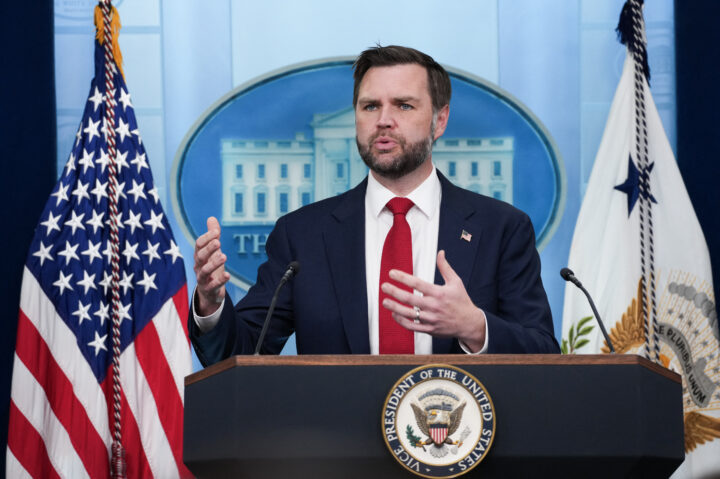
Ken Cedeno / AFP via Getty Images
US Vice President JD Vance speaks during a press briefing in the Brady Briefing Room of the White House in Washington, DC, on June 18, 2026.
Vice President JD Vance on Thursday issued a scathing public rebuke of Israeli officials who have criticized President Donald Trump for approving the memorandum of understanding between the U.S. and Iran, cautioning Israeli skeptics of the deal against “attacking the only powerful ally” it has left and urging them to “wake up and smell the reality of the situation that country is in.”
Vance made the comments as part of his final answer at a White House press briefing regarding the MOU, directing his ire at members of Israeli Prime Minister Benjamin Netanyahu’s Cabinet who have criticized the deal or the president himself. The vice president said he was angered by the harsh commentary, which he credited Netanyahu for not participating in.
“What I will say, and it does bother me, is that you have seen people within Bibi’s Cabinet who have come out and attacked the deal, and in some ways very personally attacked the president of the United States, and I guess my message to them would be twofold,” Vance said. “Number one, Donald J. Trump is the only head of state in the entire world who is sympathetic to the nation of Israel at this moment in time and he happens to be the head of state of the world’s superpower. If I was in the Cabinet of the Israeli government, I might not be attacking the only powerful ally that I have anywhere left in the entire world.”
“The second message I would give to some of those Cabinet members — Bibi, to his credit, has not gone down this path,” Vance continued. “But to some of these Cabinet members in Israel who are attacking the president of the United States, the other thing that I would say is that over the last three months, two-thirds of the defensive weapons that have protected your homeland have been built by American hands and paid for by American tax dollars,” he added.
Vance then said, “The problem for Israel is not Donald J. Trump, and anybody in Israel who thinks their biggest problem is the president of the United States needs to wake up and smell the reality of the situation that country is in.”
The vice president pushed back on comparisons between the MOU and the Joint Comprehensive Plan of Action that the Obama administration signed in 2015, arguing that the Arab world’s reaction to this current effort has been far more positive than its response to former President Barack Obama’s Iran deal.
“There are going to be any number of opinions about the negotiations, about where it’s ultimately going to go, but I tend to think that you should trust the people who know the Iranians the best and who have the most to lose,” Vance said. “What are the Gulf Arab states saying about this deal? What are they saying about this deal compared to the JCPOA in 2015? This is the Obama nuclear deal. Well, back then they hated that deal. They felt like it empowered the Iranians to be bad actors across the region, and of course that’s exactly what happened.”
“What are they saying about the president’s peace deal? They’re saying this is an amazingly transformative thing for the region, because either way we and the broader region win,” he continued. “Iran is weakened, their nuclear program destroyed, their economy in desperate straits, and if they change their behavior, big things are going to happen for Iran and for the world.”
Vance doubled down when asked about Trump’s comments on Wednesday that the U.S. would not forbid Iran from possessing ballistic missiles and downplaying the threat of the regime continuing to have those weapons — despite it being a key goal of the negotiations.
“All the president said yesterday is that of course, countries don’t give up the right of self-defense. Israel doesn’t give up the right of self-defense if Hezbollah fires rockets or drones at Israel,” Vance said.
“The Iranians don’t give up the right of self-defense in their country,” he added. “But we do expect that as part of the final deal, they are not going to be able to build the kind of missiles that can broadly threaten the entire world, and that’s what the president of the United States said yesterday. It’s very simple. You can’t tell a country whether Israel, Iran, they are not allowed to have any self-defense.”
Vance criticized U.S. sanctions against Iran, arguing that the effort to isolate Iran economically has been “fundamentally ineffective” despite it being a core part of Trump’s longstanding maximum-pressure campaign. The vice president said that the sanctions had forced Iran to “move the Iranian financial system to the shadow-banking system” where it was no longer subject to those penalties.
“We didn’t see that as a major concession to the Iranians, frankly,” Vance told reporters, adding that Iran “didn’t see that as a concession to them, because what prevented them from selling oil was not the sanctions.”
He argued that the lifting of sanctions would allow the U.S. to have greater oversight of Iran’s financial activities while defending the Trump administration’s decision to allow Iran to immediately resume selling oil.
“The number one thing is that we actually see where the money moves now because of what we’ve done with the financial sanctions. We actually know where the money is going to move,” he explained. “So we have great confidence that we’re going to be able to see if they try to fund terrorist organizations.”
Still, he reiterated his claim that the MOU does not involve millions in payouts to Iran despite the agreement text stating that the U.S. “undertakes to develop a definitive, mutually agreed reconstruction and economic development plan for the Islamic Republic of Iran valued at a minimum of $300 billion (USD).”
“The United States isn’t giving up a cent of money to Iran, and even the economic benefits, the sanctions relief and so forth that comes along with this bargain, only happens if the Iranians perform,” Vance said. “We have them in an economic chokehold right now that we’re not going to release until they fundamentally change their behavior.”
“I’ve seen skeptics of the deal. People say the Iranians will never change their behavior. Well, maybe that’s true, and if so, they don’t get any of the benefits of the bargain. But isn’t it worth trying?” he continued. “Isn’t it worth seeing whether this incredibly weakened position that the president of the United States has put the Iranians under, whether that motivates them to change their behavior, not just vis-à-vis the West but vis-à-vis the Middle East.”
The vice president also expressed confidence that the Trump administration would be able to lift the sanctions without congressional approval, though he said that White House Legislative Affairs Director James Braid planned “to brief Congress very soon” on the broader terms of the deal.
“There are certain things that require congressional approval. There are certain things that don’t require congressional approval,” he said. “We feel quite confident that we can temporarily lift those sanctions without going to Congress and seeking their approval on that.”
The conservative commentator said Vance has not served the president well in his most direct criticism of the VP’s job performance
Samuel Corum/Getty Images
Ben Shapiro walks the red carpet at the Turning Point USA Inaugural-Eve Ball at the Salamander Hotel on January 19, 2025 in Washington, DC.
Conservative commentator Ben Shapiro criticized Vice President JD Vance on Wednesday, arguing that Vance’s support for the memorandum of understanding between the U.S. and Iran suggested that he was not serving President Donald Trump well.
Shapiro made the comments, which mark his most direct criticism to date of Vance’s approach to Iran, to Fox News’ “The Story with Martha MacCallum”while offering a harsh assessment of the MOU in the hours after the Trump administration released the text of the agreement. He described the deal as “a disaster” and called out the vice president for his role in leading this particular diplomatic effort.
“The president deciding to go into Iran and to hit nuclear facilities in Operation Midnight Hammer and then to go after Iran’s ballistic missile facilities and nuclear facilities, army, navy and air force in this current operation was the signal act of political bravery perhaps of my lifetime,” Shapiro said.
“With that said, this MOU appears to be, just from the text, a disaster that does not achieve any of the actual signal goals that were set by the administration at the beginning,” he continued. “In my opinion, the vice president of the United States, the chief negotiator on this particular project, has not well served the president.”
On his latest podcast episode on Wednesday, Shapiro praised Vance for his appearance on ABC’s “The View” and described him as an “undeniably talented politician,” though he questioned Vance’s decision to appear on Megyn Kelly’s show “to make overtures to Tucker Carlson.”
“Megyn Kelly is a person who has said that the Israelis manipulated the administration into war, who has laughed along to the proposition that the Republican Party is a bunch of Israel-loving pedophiles,” Shapiro said. “This is where the vice president chose to retail the argument.”
Shapiro also disputed Vance’s assertion to Kelly that opponents of the MOU were “promoting endless conflict” in the region. “They don’t have an alternative. If your alternative is just to drop bombs without any clear goal or any clear American interest implicated, then you’re not making wise decisions on behalf of the American people,” Vance said.
“An entire field of strawmen is now burning because this is what we colloquially call a lie. This is a lie,” Shapiro said. “An endless conflict would be, say, a 47-year conflict with an intransigent radical Islamist enemy that wants to destroy America.”
“Some of us have been calling for the president to end this war quickly, like from the beginning,” he continued. “I’ve been saying for literally months that instead of signing onto a useless ceasefire, that we ought to take or bomb Kharg Island, open the Straits with operations like Project Freedom, which the president announced and then unannounced, and then leave overwatch to our allies like Israel and the UAE. That is not an endless war.”
Shapiro went on to detail his objections to the MOU itself in his Fox appearance, arguing that the text of the deal did not address several major sticking points that led to the U.S. launching the war in the first place.
“There were effectively five goals that were set by the administration at the beginning. One was ending the nuclear program, not just nuclear weapons, no nuclear enrichment, zero enrichment. That is not in the deal. Ballistic missiles ended, that is not in the deal,” Shapiro said. “Then you have the support of terrorism, that is not part of the deal, anything that looks like an attempt to end terrorism.”
“A permanent opening of the Strait of Hormuz toll free, not only is that not in the deal, the deal appears to have a provision allowing Iran and Oman to attempt to toll the Straits after 60 days,” he added. “Then finally, the idea that Iran would receive some sort of sanctions relief after all of those things happened. We are already seeing, from day one, relief in their ability to ship oil out of Iran.”
Shapiro expressed bewilderment at Trump’s comments earlier Wednesday suggesting that the U.S. would not forbid Iran from possessing ballistic missiles and downplaying the threat of the regime continuing to have those weapons — despite it being a key goal in entering the conflict. He also responded to Trump’s criticism of Israel’s conduct in its war against Hezbollah, defending the Israelis and pointing to previous statements by the president in support of Israel’s war aims.
“The president today suggested that ballistic missiles should actually continue to be held by the Iranians because the Saudis, our allies, also hold ballistic missiles,” Shapiro said. “The fact is that the president himself has suggested that Israel has a right to defend itself. Ambassador [Mike] Huckabee, our ambassador to Israel, has said that Israel has a right to defend itself. Hezbollah is a terrorist group. It’s not the government of Lebanon, and in fact is opposed to the government of Lebanon. They’ve been firing ordnance over the border at Israel for literally years at this point.”
“The idea that Israel should be held back from defending itself against a terror group that is a proxy army of Iran, because we have some sort of deal over the Strait of Hormuz, is a massive tactical blunder that gives Iran one of the things that Iran actually wants, which is to reconstitute its forward operating base in Lebanon,” he continued. “Anything that allows them to reconstitute their terror army would be a huge regional mistake.”
Sen. Ted Cruz (R-TX) offered a similar take on Wednesday, arguing that Trump was given “some very poor advice on this deal” while declining to go after the vice president by name.
“Giving billions of dollars to theocratic lunatics who want to murder us is not a good idea. Setting up Iran to be in charge of the Strait of Hormuz in perpetuity, and to charge tolls is not in America’s interest, in my view. The Ayatollah should not reap a single penny from the free transit of the seas,” Cruz told reporters. “I think the president, unfortunately, is receiving bad advice once again.”
Asked if he believes the president should not sign the MOU and abandon peace talks, the Texas senator replied: “That’s a decision he’s going to have to make.”
Donald Trump Jr., the president’s son and one of Vance’s closest allies outside the White House, went on to attack Cruz on social media for his criticisms of the agreement.
Trump Jr. accused Cruz of “lying thru [sic] his teeth about the deal,” claiming in a post on X that the U.S. is “not giving them [Iran] a cent and he [Cruz] knows that.” He then alleged Cruz was “using fake news about the peace deal to undermine” the president, which he described as “the opposite of MAGA.”
According to the text of the MOU released on Wednesday, however, the U.S. “undertakes to develop a definitive, mutually agreed reconstruction and economic development plan for the Islamic Republic of Iran valued at a minimum of $300 billion (USD).”
The deal also includes language terminating “all sanctions against the Islamic Republic of Iran — including UN Security Council resolutions, IAEA Board of Governors resolutions, and all unilateral U.S. primary and secondary sanctions.”
Plus, Qatar complicates Israel-VW deal
Photo by Anna Moneymaker/Getty Images
U.S. President Donald Trump is joined by (L-R) U.S. Trade Representative Jamieson Greer, U.S. Commerce Secretary Howard Lutnick, U.S. Secretary of State Marco Rubio and U.S. Treasury Secretary Scott Bessent as he speaks at a press conference during the G7 Leaders' Summit on June 17, 2026 in Evian-les-Bains, France.
Good Wednesday afternoon.
This P.M. briefing is reserved for our premium subscribers like you — offering a forward-focused read on what we’re tracking now and what’s coming next.
Today’s Daily Overtime was curated by Senior National Correspondent Gabby Deutch.
📡On Our Radar
Notable developments and interesting tidbits we’re tracking
After days in which President Donald Trump, Vice President JD Vance and other senior officials boosted the U.S.-Iran memorandum of understanding — and amid calls from Capitol Hill and beyond to make public the agreement’s details — the White House on Wednesday shared the text of the document that the Trump administration said will end the war against Tehran. Jewish Insider’s Emily Jacobs obtained the text of the MOU, which was read aloud to reporters during a call with a senior administration official.
The MOU states that the two nations “and their respective allies in the current war” will permanently end military operations — including against Lebanon, a stipulation that suggests the deal is meant to suspend Israel’s retaliatory strikes against Hezbollah, a provision for which Israel has not yet expressed approval. Iran “reaffirms” in the MOU that it will not “procure or develop nuclear weapons”…
The MOU text also reveals that the U.S. plans to issue a sanctions waiver to Iran so that it can sell oil, a major policy shift away from Trump’s use of sanctions against Iran. If a final deal is reached, the U.S. committed to ending all sanctions on Iran. Trump said earlier in the day at the G7 summit in France that the U.S. will not invest in Iran but would not stop other countries from doing so, JI’s Matthew Shea reports.
One new piece of information Trump shared on Wednesday that was not directly addressed in the MOU: a nuclear deal between Washington and Tehran would not prohibit the Iranians from possessing ballistic missiles, JI’s Matthew Shea reports. “I mean, they have to have some, because other people have some … It doesn’t work that way. And missiles aren’t the problem,” Trump said at the G7.
The agreement does not address Iran’s ballistic missiles or support for terrorist proxies. At the beginning of the war, the Trump administration said eliminating the ballistic missile threat from Iran was a key war aim…
The MOU asserts that a final deal will be negotiated within 60 days, unless both countries agree to extend the deadline. Iran’s naval blockade on the Strait of Hormuz must be lifted within 30 days.
When talking to reporters after landing in Paris this afternoon, Trump said he does not view the 60-day deadline as a hard deadline. “Just as long as they’re behaving, I really don’t care that much,” Trump said.
Vance, not Trump, will be signing the MOU in Switzerland on Friday. “This way if it works out, I’m going to take the credit. If it doesn’t work out, I’m blaming JD,” Trump said during the G7…
Some Republican senators criticized the MOU, with retiring Sen. Bill Cassidy (R-LA) calling it “the worst foreign policy blunder in decades,” JI’s Marc Rod reports…
Dario Amodei and Sam Altman, the CEOs, respectively, of Anthropic and OpenAI, joined Trump and the other G7 leaders for lunch on Wednesday, along with Salesforce CEO Marc Benioff and Google DeepMind CEO Demis Hassabis…
The planned Senate confirmation hearing for Jay Clayton, Trump’s nominee to serve as director of national intelligence, was scuttled on Wednesday morning after a last-minute Truth Social post from the president saying that the hearing would be canceled, prompting frustration from both Republican and Democratic lawmakers, JI’s Marc Rod reports…
As a major shareholder in Volkswagen, Qatar’s sovereign wealth fund is complicating talks between the German automaker and the Israeli state-owned defense company Rafael over Rafael’s intention to buy a plant from Volkswagen to manufacture components for Israel’s Iron Dome missile-defense systems…
The anti-Israel advocacy group TrackAIPAC, which attacks lawmakers who have received support from pro-Israel groups and donors who have supported Israel-related causes, endorsed Rep. Ro Khanna (D-CA), who once was targeted by TrackAIPAC before moving sharply to the left on Israel in recent months…
After eight people were indicted last week for allegedly threatening University of Michigan leaders and their families as part of an anti-Israel pressure campaign, former Michigan Democratic Party Chair Lon Johnson called on the party’s current leadership to review the actions of five of the suspects who were members of the Michigan Democratic Party…
The Department of Health and Human Services’ Office for Civil Rights announced on Wednesday that it is opening an antisemitism investigation into the American Psychological Association, the nation’s largest professional organization for mental health professionals. JI’s Gabby Deutch reported on the APA’s handling of antisemitism last summer…
⏩ Tomorrow’s Agenda, Today
An early look at tomorrow’s storylines and schedule to keep you a step ahead
Keep an eye out in Jewish Insider for a look at how some of the country’s most prominent Jewish communal leaders are marking America’s 250th birthday this July Fourth.
Sen. Joni Ernst (R-IA) will be speaking in the morning at a fireside chat at the Hudson Institute focused on “diplomacy, defense and debt.”
We’ll be monitoring the results of Tuesday’s mayoral primary election in Washington, D.C., which still has not been called, even as Janeese Lewis George leads Kenyan McDuffie 53% to 37%, with 68% of the vote counted.
Stories You May Have Missed
Transferring responsibilities
The move marks a major step in the White House’s efforts to dismantle the Education Department and significantly reduce or distribute its work
TRUST ISSUES

Senators on both sides of the aisle say they’re eager to see the text of the agreement, but the administration has not yet made plans to brief Congress
Signing ceremony set for Friday in Switzerland; Israeli security officials express concern

Christopher Furlong/Getty Images
President Donald Trump holds up an executive order after signing it during an indoor inauguration parade at Capital One Arena on January 20, 2025 in Washington, DC.
The United States and Iran have secured a ceasefire agreement, President Donald Trump announced on Sunday. The deal is slated to immediately freeze regional military actions, and will lift the U.S. naval blockade and restore commercial shipping through the critical Strait of Hormuz after a formal signing ceremony set for Friday in Switzerland.
“The Deal with the Islamic Republic of Iran is now complete,” Trump posted on Truth Social on Sunday. “I hereby fully authorize the toll free opening of the Strait of Hormuz, and, simultaneously herewith, authorize the immediate removal of the United States Naval blockade.” He later clarified the Strait would open after the deal was officially signed on Friday.
Iran’s deputy foreign minister, Kazem Gharibabadi, also told Iranian media that the agreement had been finalized and stressed that Iran’s “commitments will take effect starting Friday.”
The agreement establishes a 60-day ceasefire extension, during which Washington and Tehran are expected to enter technical negotiations on the scope of Iran’s nuclear enrichment program and the dismantling of its highly enriched uranium stockpiles. The cessation of hostilities extends across the entire region, including in Lebanon, according to Pakistani Prime Minister Shehbaz Sharif, who helped mediate the agreement.
“Following intensive talks, we are pleased to announce that the Peace Deal between the United States of America and Islamic Republic of Iran has been REACHED,” Sharif posted on X. He noted that international mediators will facilitate a “series of meetings” and “technical talks” ahead of the signing ceremony.
Sharif’s statement thanked Qatar, Saudi Arabia and Turkey for their roles in the negotiations, but made no mention of Israel, which had fought alongside the U.S. in the conflict with Iran.
The diplomatic breakthrough followed a tense escalation earlier on Sunday that threatened to derail the negotiations. Israeli forces struck Hezbollah targets in Beirut in response to a Hezbollah drone strike on northern Israel, prompting Tehran to warn it would abandon talks and strike against Israel.
Vice President JD Vance said the U.S. was able to deter an Iranian attack on Israel prior to the deal being reached. “After the Israelis struck Beirut, we saw a lot of evidence the Iranians were going to launch a large number of missiles at…them,” Vance said on Fox News. “[Iran] assured us they were not going to respond to the Israelis. They were going to sign the agreement, and get to peace.”
Writing on Truth Social, Trump criticized the Israeli response as an unnecessary escalation against a “meaningless” initial drone strike, and demanded an immediate halt to all military activity in Lebanon. “There should be no more attacks by Israel anywhere in Lebanon, but there should also be no more attacks by any other party, including Hezbollah, against Israel,” he wrote.
Gharibabadi said the Iranian threats against Israel “helped facilitate progress in the negotiations.” Iranian state media reported that Iran called off the attack on Israel because of “last-minute concessions” offered by Trump, including “preserving Lebanon’s territorial integrity” and Israel’s withdrawal from the Lebanese border. The U.S. did not confirm the reported concessions on Lebanon.
Israeli Prime Minister Benjamin Netanyahu has said that the IDF would not follow such a request and that Israel does not consider itself bound to the Lebanon ceasefire under the agreement. It is unclear whether the Trump administration will pressure Jerusalem to comply.
Israeli security officials have reportedly expressed concern with the deal, warning that it could harm Israeli security interests and leave Iran stronger.
Reses, who has worked with Vance since 2021, has been a part of the now-vice president’s inner circle since advising him on his 2022 Senate bid
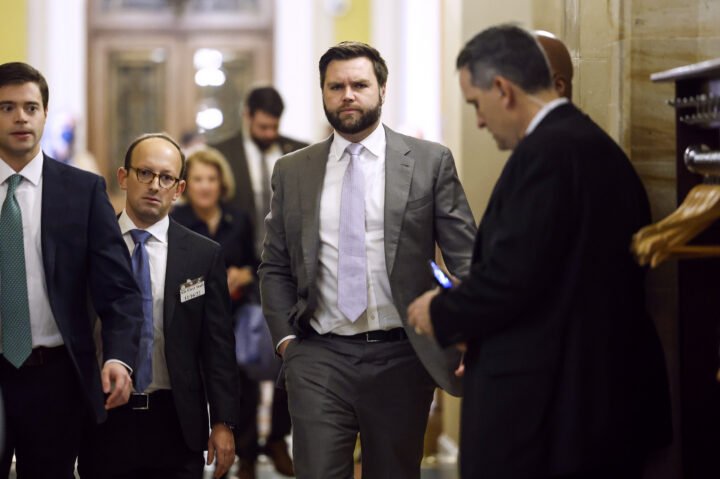
Anna Moneymaker/Getty Images
JD Vance, with advisor Jacob Reses (second from left), arrives to a meeting with Senate Republicans at the U.S. Capitol on November 16, 2022 in Washington, D.C.
Jacob Reses, the longtime chief of staff to Vice President JD Vance, will depart the Trump administration at the end of the summer, a source familiar with the matter confirms to Jewish Insider.
Reses, 35, became a confidante to Vance in 2021, advising the vice president through the heated primary and general election contests for the Ohio Senate seat Vance briefly held before being tapped by President Donald Trump as his running mate in 2024. Vance named Reses his chief of staff immediately after winning the Senate race. Sen. Josh Hawley (R-MO), who had employed Reses as a senior advisor in his Senate office, was among those who encouraged Vance to pick Reses as his chief at the time, according to two sources familiar with the matter.
News of his departure was first reported by NBC News.
Reses has not announced what his next role will be, though he informed the vice president of his plans to leave several months ago, after learning he and his wife were expecting their first child. He married Rachel Altman, the director of outreach at the Foundation for American Innovation, a tech think tank, in January. A source in the vice president’s office suggested to JI that Reses could rejoin the team at some point down the line, but did not elaborate beyond noting that it would come as no surprise if that occurred.
“Jacob’s been by my side for my whole career in public life. I can’t imagine having been on this life-changing journey without him,” Vance said in a statement. “From day one of my time as a senator-elect, I could not have asked for a more loyal and discerning advisor and friend as my chief of staff. I’ll miss him dearly, but he won’t be far, and I plan to keep his counsel close until our paths cross again.”
Other senior Trump administration officials similarly surmised that Reses would remain close.
“Don’t let Jacob fool you – beneath his kind exterior he’s a killer. It’s been a delight to get to know him through the vice president, and our foreign adventures from Israel to Pakistan have been historic,” White House Special Envoy Steve Witkoff said in a statement. “He commands respect in every room he walks into, and I’ve been proud to have him by my side in negotiating some of the toughest deals for the president. We haven’t seen the last of him.”
White House Chief of Staff Susie Wiles said in a statement that Reses “will always be a friend and ally we can all rely upon and I hope will come back often.”
“Jacob has been an important part of our White House leadership team and has served the Vice President with absolute distinction. From diplomacy and war, to complicated matters, to the most minute logistics, there has been no task too big or too small for him to tackle,” Wiles said. “It has been a privilege to have a partner like Jacob in the vice president’s office with such humility, discretion, and loyalty. He will be missed in the halls of the West Wing, but he will always be a friend and ally we can all rely upon and I hope will come back often.”
Acting Attorney General Todd Blanche described Reses as “tough, smart, hardworking, and loyal – the perfect combination to succeed in the Trump White House.”
“I’ll always appreciate his ability to give wise and honest counsel, and you’ll never meet anyone more focused on putting the team first,” Blanche said. “I’m grateful to have had Jacob as a colleague, and while I’m going to miss working with him to advance the president’s agenda, I’m excited to see what he does next.”
Secretary of State Marco Rubio and Treasury Secretary Scott Bessent also praised Reses and said he would be missed in the administration.
“When I met Jacob over dinner shortly before the Republican convention, I had no idea we would be such close partners in the years to come,” Bessent said. “His counsel to me and to the vice president has been invaluable as we have fought to reshore critical industries and rebalance the economy from debt-driven consumption to production, saving, and investment. We will miss him enormously.”
“Jacob has served the vice president and the entire administration with distinction. He understands the moment we’re in and he spent every day fighting to deliver results for the president,” Rubio’s statement read. “His intellect, leadership, and humor will be missed.”
Reses has worked with a number of prominent figures in the MAGA political movement besides Vance and Hawley, such as Tucker Carlson, Stephen Miller, Russell Vought and Michael Needham, as well as Heritage Action, an affiliate of the conservative Heritage Foundation.
Cliff Sims is known inside the White House as a China hawk, but his record on the Middle East is less established
RW/Mediapunch /IPX
Cliff Sims at Good Morning America promotes his new book T'eam of Vipers: My 500 Extraordinary Days in the Trump White House' in New York City on January 28, 2019.
Vice President JD Vance tapped Cliff Sims last month as his national security advisor last month, picking a longtime GOP operative with close relationships across the party’s ideological spectrum on foreign policy.
The hire bolsters Vance’s foreign policy operation at a time when intraparty fissures are widening over the lack of diplomatic or military progress in the war with Iran and the broader question of American engagement abroad.
Sims will be leading Vance’s foreign policy team alongside Andy Baker, one of the vice president’s closest aides and a deputy national security advisor.
Sims is a longtime political ally of President Donald Trump, a friend of several members of the Trump family — including Jared Kushner, Ivanka Trump and Donald Trump Jr. — and has longstanding personal and professional relationships throughout the president’s orbit and in Republican politics.
In addition to being a Vance confidante, Sims, 42, has advised or worked with Trump, former House Speaker Kevin McCarthy (R-CA), and CIA Director John Ratcliffe, most recently serving as chairman of the CIA’s external advisory board.
Sims is known in Republican foreign policy circles as a China hawk. He led several China-related efforts during his tenure as director of message strategy for the White House and deputy director of national intelligence for strategy and communications at the Office of the Director of National Intelligence.
Sims and Ratcliffe co-authored numerous op-eds from late 2021 to early 2022 where the two claimed the Chinese Communist Party poses the greatest threat to U.S. national security.
After serving as deputy director of national intelligence under Ratcliffe in the first Trump administration, Sims was appointed by House Speaker Mike Johnson (R-LA) as a commissioner on the U.S.-China Economic and Security Review Commission in 2024, serving a two-year term. Later that year, he took over as executive director of the Trump 2024 presidential transition, also leading the CIA’s transition process from the Biden administration to the current one.
“Cliff served as one of my deputies when I was DNI and I saw firsthand his exceptional judgment and command of the most sensitive national security matters,” Ratcliffe told JI. “He has been a fearless advocate for President Trump’s foreign policy, and one of my most trusted advisors. Vice President Vance made an outstanding choice in selecting Cliff as a national security advisor.”
Unlike with China, Sims’ views on Middle East policy are not as clear.
Two sources with direct knowledge of his ideology in the region, speaking on condition of anonymity, told Jewish Insider that Sims believes that some issues can be solved through U.S. military action without engaging in extended military intervention, which he opposes.
Both sources said that Sims and Vance are closely aligned on foreign policy, especially regarding China.
One source argued that Sims’ experience in political communications and speechwriting will be an asset for Vance with messaging on the war in Iran amid the ongoing negotiations to pursue a diplomatic resolution to the conflict.
Vance’s decision to tap Sims has been a source of reassurance to some in the pro-Israel community who have been concerned about Vance’s foreign policy worldview and relationships with antisemitic podcasters like Tucker Carlson.
Sims’ hiring won praise from two of the Republican Jewish Coalition’s board members who worked with Sims at the conservative public affairs firm, Watchtower Strategy, that they cofounded last year.
Jeff Miller, a leading Republican lobbyist and the board chair of the U.S. Holocaust Memorial Museum, told JI that Sims “knows the president’s and vice president’s foreign policy inside and out.”
“I’ve seen firsthand his talent and competence and he’s going to be a great asset to the White House, and not just on U.S.-Israel issues, but across the whole national security landscape,” Miller said of Sims.
Dan Conston, former president of the Congressional Leadership Fund, the House GOP super PAC, similarly celebrated Sims joining Vance’s team.
“Cliff has talked often about his support for Israel’s unconditional right to destroy Hamas, particularly after the Oct. 7 attacks, and his belief that Iran must never be allowed to obtain a nuclear weapon,” Conston told JI. “Like the president, Cliff’s always going to put America’s interests first, and where Israel’s interests and U.S. interests align, Israel couldn’t ask for a better friend.”
Before joining the second Trump administration, Sims also ran a strategic advisory firm and served on the board of POLARIS National Security, a nonprofit that supports political candidates who prioritize defense concerns. The group was founded by Morgan Ortagus, who briefly served on White House Special Envoy Steve Witkoff’s team last year before joining U.S. Ambassador to the United Nations Mike Waltz’s staff in New York. Ortagus is a close ally of Sen. Lindsey Graham (R-SC) and other hawkish Republicans.
An Alabama native, Sims is also a lifelong Baptist who participated in Christian missionary work in Europe, Africa, Asia and North and South America. He wrote a book, released in May 2024, using stories about his time in the West Wing and his personal upbringing to offer reflections on how Christian Americans should use their faith as a compass to navigate the current hyper-partisan nature of U.S. politics.
He also is the author of a 2019 tell-all that led to a temporary falling out with the president, in which he detailed how several of Trump’s foreign policy decisions framed parts of his worldview. The book initially sparked the president’s ire despite its positive portrayal of him for exposing the chaotic nature of the first Trump administration, one source told JI.
Sims wrote in the memoir, Team of Vipers: My 500 Extraordinary Days in the Trump White House, that Trump’s unemotional reaction to Palestinian protests in response to his decision to move the U.S. Embassy in Israel to Jerusalem was a significant life lesson, while praising the president’s move.
“The president had done nothing wrong. He had taken a stand and made good on a promise that [former presidents] Clinton, Bush, and Obama had all bailed on. I was proud of what he had done — we all were,” Sims wrote. “But I could not help but feel uncomfortable as he calmly watched a mob carry a stuffed Trump through the streets hanging on a cross.”
“I find it difficult to explain what it feels like to watch that level of hatred being displayed on TV screens all over the world while standing right next to the person at whom the hatred is being directed. And yet the president was the calm in the eye of the storm,” he continued. “I learned something important from the president that day — something that I have tried to make a core operating principle in my life: you have to make peace with being misunderstood.”
Sims came back into the fold and mended his relationship with the president in early 2020, just prior to joining Ratcliffe’s team at ODNI, a source with direct knowledge told JI. Trump agreed to the rapprochement after Kushner and Trump Jr. urged him to consider resolving their dispute and defended Sims’ 2019 tell-all for portraying the president positively.
ADL CEO Jonathan Greenblatt called Foxman, who died on Sunday at 86, 'an iconic Jewish leader who embraced the ideal of an America free from antisemitism and hate'
Anna Moneymaker/Getty Images
Holocaust survivor and former National Director of the Anti-Defamation League Abraham Foxman becomes emotional during the U.S. Holocaust Memorial Museum's Annual Days of Remembrance ceremony at the U.S. Capitol on April 23, 2025 in Washington, DC.
Abraham “Abe” Foxman, a towering figure in Jewish communal life who led the Anti-Defamation League for nearly three decades, and whose personal story as a hidden child during the Holocaust gave him a unique gravitas in dealing with issues of Holocaust memory and anti-Jewish bias, died on Sunday, the ADL confirmed. He was 86.
Foxman was born to Polish Jewish parents in present-day Belarus in 1940. As a toddler, his parents placed him in the care of his Catholic nanny, who had him baptized and raised him in the church. After being reunited with his parents at the end of World War II, the family moved into a displaced persons camp in Austria. In 1950, when he was 10 years old, the family immigrated to the U.S.
His early childhood experiences shaped the trajectory of his life. Foxman joined the ADL in 1965 as a legal assistant, becoming the organization’s national director in 1987, a post he held until his retirement in 2015. He was succeeded by Jonathan Greenblatt, who serves as the group’s CEO.
Foxman was named to the U.S. Holocaust Memorial Museum’s council by President Ronald Reagan in 1987, a role he was reappointed to by Presidents George H. W. Bush, Bill Clinton and Joe Biden. In recent years, Foxman was the only Holocaust survivor to serve on the board, which now includes a number of children and grandchildren of survivors.
Met Council CEO David Greenfield, who met Foxman while serving on the New York City Council, said the longtime ADL head “really shaped modern Jewish leadership today.”
Foxman, Greenfield said, “was the kind of leader that all of us aspire to be. … I really believe he set the standard, and everyone is still chasing that standard. There was only one Abe Foxman.”
In his years at the ADL, Foxman built deep relationships with his staff. Jay Kaiman, the president of the Marcus Foundation, was hired by Foxman to head the group’s operations in the Southeast. That relationship endured long after Kaiman left the organization, he told JI.
“He was my compass,” Kaiman said. “He was invaluable to me as a resource all those years, and he had a lot to offer.” Foxman, Kaiman added, “really was a mentor to so many people.”
After stepping down from the ADL, Foxman remained active in Jewish communal life. “He really did love his work,” Kaiman said, “and he never stopped working, even if he wasn’t the ADL director. He was the epitome of being the professional’s professional.”
Once he was no longer the head of a nonpartisan organization, Foxman began to endorse candidates and policies, while speaking out against the mainstream media’s coverage of Israel and antisemitism. He endorsed Vice President Kamala Harris’ 2024 presidential bid, but became increasingly critical of the Democratic Party’s leftward shift on Israel.
Foxman was also critical at times of Republicans and the Trump administration.
Delivering an address last spring at the Capitol to mark Holocaust Remembrance Day, Foxman said, “As a [Holocaust] survivor, my antenna quivers when I see books being banned, when I see people being abducted in the streets, when I see government trying to dictate what universities should teach and whom they should teach. As a survivor who came to this country as an immigrant, I’m troubled when I hear immigrants and immigration being demonized.”
In the same address, he gave credit to both the Biden administration and the second Trump administration for their commitments to addressing antisemitism.
“What made him so unique was he wasn’t a Democrat or Republican. He called balls and strikes like he saw them,” Greenfield told JI. “He was really one of the few leaders to call out both sides and say, ‘Hey, a pox on both of your houses. You both have increasing levels of antisemitism, to new levels never seen before.’”
Deborah Lipstadt, who served as the Biden administration’s special envoy to monitor and combat antisemitism, knew Foxman for decades. When she was being sued for libel by Holocaust denier David Irving, Foxman was a source of support, she told JI, even bringing a group to the trial in a London court.
She praised Foxman’s lifelong commitment to fighting antisemitism. “We’ve got too many voices that carry with them an agenda,” she said. “His agenda was, ‘I hate the Jew-haters.’ And he had no patience for the Jew-haters: right, left, center. He had no patience for people who use their position for self-aggrandizement.”
Citing record-high levels of antisemitism, Lipstadt called Foxman’s death “a big loss for the Jewish people at a particularly crucial moment.”
“At a time like this, we have very few voices like that that spoke with a personal and professional authority, a personal and professional commitment, and he shall be deeply missed,” Lipstadt said.
Greenblatt said that Foxman was “an iconic Jewish leader who embraced the ideal of an America free from antisemitism and hate and who strongly believed that these scourges could be defeated if good people opposed it.”
“In his storied career, Abe transformed ADL while confronting antisemitism and hate (from both left and right), opposing the global rise in antisemitism, holding world leaders accountable and working to ensure that Israel was Jewish, secure and democratic,” Greenblatt continued.
“Abe’s voice was heard — and listened to — by popes, presidents, and prime ministers, a voice he used wherever Jews were at risk. Abe Foxman spoke on the global stage with moral authority and clarity and was relentlessly dedicated to his pursuit of a world without hate.”
William Daroff, the CEO of the Conference of Presidents of Major American Jewish Organizations, called Foxman “a mentor, a guide, and a towering presence in Jewish communal life” who “showed a generation of leaders that fighting antisemitism demands clarity, courage, and the willingness to stand firm under pressure.”
In a statement, Israeli President Isaac Herzog praised Foxman as a “passionate Zionist, a humanist, and an outspoken, [and] wise friend.”
“Coming into a world at war, the Holocaust shaped Abe’s character and defined his mission: Combating antisemitism and hypocrisy, calling out racism and bias, speaking up for the Jewish people and the Jewish democratic Israel,” Herzog said. “His story, of rising from the ashes, is our story, the story of our people.”
Foxman met his wife, Golda Bauman, while attending Camp Herzl in Webster, Wisc. The couple was engaged in Mexico and married in 1967, the same year he joined the ADL.
He is survived by his wife and two children, Michelle and Ariel.
Carlson claimed Vance is ‘in a tough spot’ as the Iran war is counter to his worldview

Chip Somodevilla/Getty Images
(L-R) Tucker Carlson, Rep. Byron Donalds (R-FL), former President Donald Trump, and Sen. JD Vance (R-OH) appear on the first day of the Republican National Convention at the Fiserv Forum on July 15, 2024 in Milwaukee, Wisconsin.
In a wide-ranging New York Times interview published on Saturday, far-right podcaster Tucker Carlson offered an unusually personal defense of Vice President JD Vance, describing him as a close friend while suggesting he is being undermined by hawkish forces inside the White House amid tensions over the administration’s military actions in Iran.
Carlson, who played a key role in encouraging President Donald Trump to select Vance as his 2024 running mate, said he remains a close supporter of the vice president on a personal level.
“I couldn’t be a bigger fan of him as a man,” Carlson told New York Times podcast host Lulu Garcia-Navarro. He added that Vance is “in a tough spot” because his long-held foreign policy views clash with the administration’s decision to attack Iran in February.
Carlson went on: “I know him well and think so much of him as a person. And it is my guess that, based on his past behavior, that he’s doing everything he can to mitigate what he sees as the ill effects of [the Iran war]. But it’s kind of hard to call the shots when you’re vice president, because that’s not in the Constitution.”
Pressed by Garcia-Navarro when he last spoke to the vice president, Carlson declined to answer. “I don’t know. I mean, I would never characterize that,” he said. “I don’t want to cause him more problems. I would just say I’m not advising. No one’s seeking my counsel. I’m not trying to influence anything. I gave it my best shot. Didn’t work.”
Carlson also took a swipe at Secretary of State Marco Rubio, baselessly alleging that backers of Washington’s top diplomat have been engaging in “nonstop treachery” against Vance. “There are people in the White House who want to hurt JD Vance and have wanted that since the very first day. They were bitter. They wanted Marco Rubio to be the choice as vice president,” Carlson said.
The comments come as Carlson — once a key Trump ally — has publicly broken with the president over Iran policy, describing Trump as being possessed by demonic forces.
Trump, for his part, gave an interview to the New York Post last month calling Carlson a fool and irrelevant to his decision-making. “Tucker’s a low IQ person that has absolutely no idea what’s going on,” the president told the Post. “He calls me all the time; I don’t respond to his calls. I don’t deal with him. I like dealing with smart people, not fools.”
Two thoughts ran through my head. The main one: I’m getting married in six days. I can’t die now. The second: I can’t believe this is happening to me again

Nathan Howard/Getty Images
Guests take cover after a shooting attack took place as President Donald Trump was to speak to attendees of the annual White House Correspondents Association Dinner April 25, 2026 in Washington, DC.
The White House Correspondents’ Dinner began normally enough — a bustle of reporters, administration officials and members of Congress among other A-listers streaming from the packed lobby of the Washington Hilton down into the basement ballroom.
White House Correspondents’ Association President Weija Jiang, a CBS News White House reporter, finished her introductory remarks, and the thousands of guests packed into the ballroom tucked into their salads.
Then, a loud, shattering bang rang out from the other side of the ballroom. Initially, I didn’t think anything of it — I thought someone had dropped a large tray of food (as President Donald Trump said later, he thought the same thing).
Videos and other accounts of the evening indicate that someone from the security staff shouted from the front of the room that guests should get down. I didn’t hear it. My first indication that something was wrong was when I started seeing other guests ducking under the tables and security officers drawing their guns.
I tried to duck under the tablecloth, but no luck — another occupant of the table was already underneath, and there was no room. My heart pounding, I was forced to do my best to stay low — but I was in the backmost row of tables, right by a door, sitting directly in the aisle.
If a shooter came into the ballroom from behind me, I was a sitting duck. I was completely helpless and exposed.
Two thoughts ran through my head. The main one: I’m getting married in six days. I can’t die now. The second: I can’t believe this is happening to me again. (For those readers who are newer to Jewish Insider — I was also on scene for the Jan. 6, 2021, attack on the U.S. Capitol.)
Just a few yards away from me, a Secret Service agent stood, gun drawn, surveying the room. She kept yelling for us to stay down.
Perhaps foolishly, I poked my head above the table. I saw a group of agents in suits, slowly trying to pick their way across the enormous ballroom toward the Cabinet secretaries and other VIPs in the center of the room. Even before the chaos broke out, it had been nearly impossible to traverse the crowded room. Chairs were literally back-to-back, completely blocking the aisles, to say nothing of the people now crouching and lying all over the floor.
It struck me at the time as a fire hazard. Now, it seemed all the more ominous. The most senior officials in the country could easily have been trapped in the line of fire with no real way to escape.
And then I looked up to the head table. The president and the other guests — including Jiang, First Lady Melania Trump, Vice President JD Vance, White House Press Secretary Karoline Leavitt and others — were gone. In their place was a group of Secret Service officers in heavy body armor, assault rifles at the ready, surveying the room.
For a venue chock full of journalists, information was strikingly hard to come by. X, once a reliable source of information in breaking news situations, had nothing. I was left asking my fiancée, who was at home, to send me information, because I could find nothing.
The first indication of the unfolding situation was a White House press pool report email, which said that an apparent shooter was in custody — but the reporter also said he’d seen Health and Human Services Secretary Robert F. Kennedy Jr. limping, which only increased our panic.
The pool report said that the shooter was in custody. My family told me that CNN was reporting that he was dead.
I’m sure we were only on the floor for a few minutes. But with no idea of what was happening, beyond the developing clarity that we’d just heard shots ring out, it felt like an eternity. My colleague, on the ground next to me, was in tears, near hyperventilating. I struggled to comfort her, not knowing what was going on, or if we were safe.
There were no announcements, at least that I heard, made to the group. My first indications that the situation might be safe were when the Secret Service officer nearby holstered her weapon, and when we saw a U.S. senator wandering toward an exit.
But we still had no real idea of what was going on.
Then, a door to the ballroom opened, and guests began to file out, first in a trickle then in a stream, pushing aside curtains that had been set up as security barriers, up the stairs and ultimately out the door of the hotel. Security kept telling us to keep moving, pushing us further and further from the scene.
On the way out, I saw C-SPAN CEO Sam Feist huddling with one of the cable network’s cameramen, positioned next to our table, who had kept filming through the entire event.
We ran into Rep. Jamie Raskin (D-MD) at the exit of the hotel and shook his hand in the glow of the red and blue lights from armored SUVs for top officials still idling in the turnaround at the hotel’s entrance — perhaps the most surreal interaction I’ve had with a member of Congress as we shared our relief that we were all safe.
My colleague and I finally reconnected with her partner, who had been in the upstairs bar, watching the events play out on TV. They embraced tearfully, a simultaneously heartwarming and heartbreaking sight.
We kept walking hurriedly, calling family to let them know we were OK, pushed further and further away from the venue. I was completely lost, teeth starting to chatter and my body shaking from an excess of adrenaline.
Much has been said over the past days about the security at the event — some say it was too lax, some say there was none at all, some describe the event as among the best-secured in the city. There’s a kernel of truth in all of them.
My experience, after having attended three previous dinners, is that security was unchanged from previous years. Entering the event, a block from the hotel, we were asked to flash our tickets, but plenty of people dressed in evening wear are regularly waved through the cordon. Protesters from the group Code Pink hassled guests as they entered the secured zone, having lined up along Connecticut Avenue outside the fenced-off area to chant and wave signs.
At no point during or before the evening were IDs checked. Tickets were assigned and sold by the WHCA to news outlets, rather than to individuals, and it’s up to the outlets to decide how to distribute the tickets. It’s a massive event — thousands of people in attendance. That’s significantly more than could reportedly be accommodated in the planned White House ballroom, which Trump and others have trumpeted as the solution to prevent future incidents like this.
At the top of the hotel’s driveway, we were again asked to present our tickets — either a ticket to the dinner itself, or an emailed invitation to one of the pre-dinner cocktail receptions hosted by various news outlets. With just a ticket or a screenshot of one of those invitations — or as a guest of the hotel, in the case of the shooter — one could gain access to the hotel. The hotel does not shut down for the event and hosts thousands of guests who are unrelated and can come and go as they please.
The ballroom is several floors below the lobby. To get on the escalator downstairs, I again had to flash my ticket to hotel staff. This is, seemingly, the only security checkpoint that did not perform as it was supposed to on Saturday evening. As a guest of the hotel, the shooter would have had access to all other areas of the hotel.
After making my way through a tangle of lines for red carpet photos, I finally came to the metal detectors, staffed by Secret Service and Transportation Security Administration staff.
Bags and pocket items were manually checked by security here — not in an X-ray machine — and I know at least one person who was allowed to proceed through with her bag unopened.
It was near this barrier that the shooter pulled out his weapons, and was ultimately subdued by law enforcement. The gunman did not reach the ballroom and there was seemingly only one injury — a Secret Service agent who was shot in his bulletproof vest and has reportedly since recovered.
The dinner itself is a short flight of stairs below the security checkpoint — the shooter seems to have been tackled at the top of those stairs, based on photos released by the White House, perilously close to the ballroom entrance. But there is also a large atrium area on the upper level, where hundreds of guests pack in for a cocktail reception before doors open to the ballroom, not to mention the long lines that formed as guests were waiting to clear security. If the shooter had decided to open fire a few hours earlier, he would have had no shortage of targets.
One final note: When I finally made it home, I was, perhaps unwisely, scrolling X and saw a quickly proliferating set of conspiracy theories about the night, from both sides of the aisle — it was staged, the entertainer was in on it, security was purposely loosened, and more. I experienced the same in the midst of the Jan. 6 attack. There are few things more surreal, or more infuriating, than seeing people pretend an event you lived through wasn’t real. And there are few things more poisonous to our collective political discourse.
Now, in the wake of at least the third thwarted assassination attempt on this president, we’re all left to grapple with many questions. How could security let this keep happening? And what does this mean for the state of our country and our civic bonds?
The Jewish community has become sadly familiar with politically motivated violence, having faced deadly attacks and attempted attacks across the country. But increasingly, it seems to be a society-wide problem — and one without a clear path back.
Vance has struggled to appease a coalition of anti-war critics on the populist right who feel his alignment with Trump’s foreign policy agenda represents not only a betrayal of their values but also the noninterventionist views he long espoused
Chip Somodevilla/Getty Images
U.S. Vice President JD Vance speaks during a Turning Point USA event at Akins Ford Arena at the Classic Center on April 14, 2026 in Athens, Georgia.
As Vice President JD Vance has recently found himself navigating tenuous negotiations between the United States and Iran, his central role in the talks to end the war is highlighting his own vulnerabilities on the domestic front — where he is facing pushback from the isolationist right that is seen as part of his coalition.
In many ways, Vance’s political troubles recall his predecessor, former Vice President Kamala Harris, who in her 2024 presidential campaign drew fierce protests from far-left activists who objected to former President Joe Biden’s support for Israel amid the war in Gaza.
Harris, who has grown more openly critical of Israel since losing the race and leaving office, strained both to articulate a consistent message on Gaza that would satisfy the far and center left and to distance her campaign from an aging, unpopular president whose approach to Israel, according to her recent memoir, was not fully aligned with her own.
Anti-Israel activists continue to insist, even years after the election, that Harris’ association with Biden while he supported Israel’s war against Hamas cost her votes that contributed to her defeat, while pro-Israel Democrats claim she failed to draw red lines around growing extremism within the party that alienated moderates, and is now inflecting the midterm elections. More recently, the former vice president faced anti-Israel hecklers during a book tour last year.
In recent weeks, Vance, who is widely seen as a top 2028 presidential prospect, has likewise struggled to appease a restive coalition of anti-war critics on the populist right who feel his alignment with President Donald Trump’s robust foreign policy agenda represents not only a betrayal of their values but also the noninterventionist views he himself had long espoused.
Last week, in a disruption reminiscent of Harris’ campaign experience, Vance was notably heckled during a speaking appearance at a Turning Point USA event held at the University of Georgia, where an attendee interrupted his comments to accuse the Trump administration of supporting “genocide” in Gaza and “killing children.”
“If you want to complain about what happened in Gaza, why don’t you complain about Joe Biden and the last administration? We’re the administration that solved that problem,” Vance said in response to the heckler, after defending what he called Trump’s “peace agreement in Gaza.”
He also touted his so far unsuccessful efforts to broker a resolution to the Iran war — about which he reportedly voiced resistance behind the scenes before Trump greenlit the campaign in late February — saying he is pursuing the president’s goal to achieve an ambiguously outlined “grand bargain” on nuclear enrichment.
“The United States had never had meetings at that level with the Iranian government in 49 years,” Vance said at the event, days after returning from talks with Iran in Islamabad where he tried and failed to reach a diplomatic agreement.
The vice president was expected on Tuesday to leave for resumed negotiations in the Pakistani capital as a two-week ceasefire was set to soon expire, but his trip was put on hold and the ceasefire extended, raising questions about the prospect of a swift settlement.
While Vance had sought to keep the war at arm’s length in the initial days after the attack on Iran, his high-profile position in the negotiation process has now forced him to identify more closely with the sort of foreign military conflict he had built his political career on opposing.
As a junior senator from Ohio, Vance even wrote in a January 2023 opinion piece that he was supporting Trump’s reelection campaign because the president “started no wars” in his first four years in the White House.
With Trump’s approval ratings trending downward — and as Republicans fret that the war in Iran as well as rising gasoline prices could undercut their chances of holding the House and Senate in the midterms — much is riding on Vance’s efforts to put an end to the conflict as he lays the groundwork for a potential White House bid.
While polling has shown that Trump’s war aims continue to garner widespread backing within his party, including the MAGA wing, independent voters who were a key part of his winning coalition in 2024 are divided, as are younger voters whom Vance has targeted.
In Georgia last week, Vance seemed to acknowledge disappointment among audience members over the war. “I recognize that young voters do not love the policy we have in the Middle East, OK,” he said. “I understand.”
“I’m not saying you have to agree with me on every issue,” he said at the Turning Point event. “What I am saying is: Don’t get disengaged because you disagree with the administration on one topic. Get more involved, make your voice heard even more. That is how we ultimately take the country back.”
Ahead of 2028, Vance is no doubt hoping that his involvement in the Iran negotiations will help yield a deal that satisfies the president and that he can wave before the far-right base he has continued to indulge, even as it has grown increasingly hostile to Jews and Israel.
Meanwhile, Vance has at the same time made some overtures to pro-Israel Republican donors skeptical of his close relationship with Tucker Carlson, a vocal detractor of Israel whose commentary regularly veers into antisemitic rhetoric that the vice president has ignored or downplayed.
But as Harris’ problems demonstrated two years ago, Vance may ultimately find it is not possible to have it both ways.
Speaking at a Turning Point USA event, Vance said ‘the humanitarian situation in Gaza was an absolute catastrophe’ when Trump entered office last January
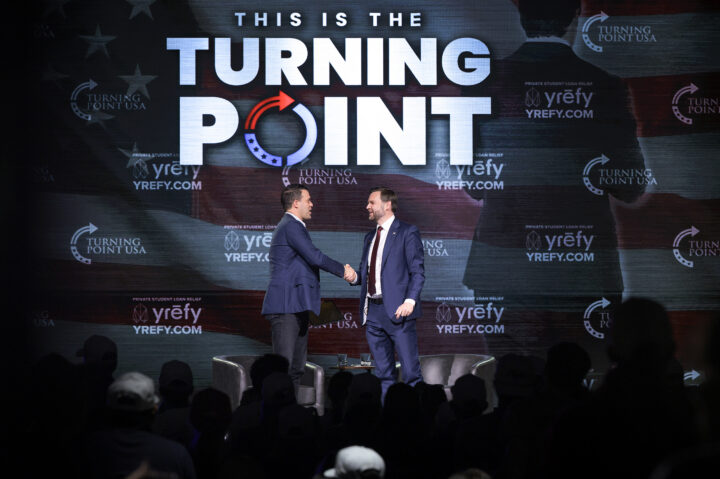
Chip Somodevilla/Getty Images
Vice President JD Vance (R) speaks with Turning Point USA spokesperson Andrew Kolvet during a Turning Point USA event at Akins Ford Arena at the Classic Center on April 14, 2026 in Athens, Georgia.
Heckled over Gaza at a Turning Point USA event on Tuesday evening, Vice President JD Vance claimed that “the humanitarian situation in Gaza was an absolute catastrophe” when Trump returned to office last January and criticized the Biden administration’s handling of the conflict, though he did not defend Israel against the attack.
An attendee at the event at the University of Georgia repeatedly shouted that the Trump administration was supporting “genocide” in Gaza by backing Israel’s war against Hamas.
“You know who’s the person who got a peace agreement in Gaza? Donald J. Trump,” Vance told the heckler. “So if you want to complain about what happened in Gaza, why don’t you complain about Joe Biden and the last administration? We’re the administration that solved that problem.”
“Right now, you see more humanitarian aid coming into Gaza than … any time in the past five years because we have taken that situation seriously,” he continued. “That’s one of the things I’m proud of about our administration, whether it’s there or Thailand and Cambodia, we have consistently tried as much as we can to solve these problems.”
Vance also revealed at the event that Theo Von was one of his favorite podcasters and recommended young people listen to his show — despite the influencer’s record of anti-Israel and antisemitic comments.
Vance made the comments after being asked by a child in the audience during a question and answer period who he looked up to in the conservative movement when he was growing up and which current “influencers” he’d recommend young people listen to.
The vice president responded by pointing to James Dobson, the founder of Focus on the Family, an Evangelical organization aimed at promoting traditional conservative family policies, as an early influence in his life, and encouraged young people to listen to Von, himself and the current hosts of the Charlie Kirk Podcast.
Von has made a series of antisemitic and anti-Israel statements in recent years on his and other podcasts. He claimed to Joe Rogan in a November 2024 appearance on his podcast that Jews control liberal media and “hate White guys.” He referred to neo-Nazi Nick Fuentes as “f***ing brave” during a January episode of his podcast alongside anti-Israel comedian Dave Smith, and warned Israel not to kill him while saying he was “not suicidal” last October amid reports about concerns for his mental health.
Vance has appeared on Von’s podcast before, sitting down for an interview last June where he defended Israel’s handling of the war in Gaza after Von described it as a “genocide.” Trump also appeared on Von’s podcast in August 2024, during his presidential campaign. In May last year, the White House took Von to speak to U.S. troops at a military base in Qatar, ahead of Trump’s address.
The vice president emphasized his support at another point during the event for continuing to engage with Iranian leadership to reach a negotiated settlement to end the fighting and reshape the two countries’ relationship, and said he was going to keep working toward that outcome. Vance said while detailing the status of negotiations between Washington and Tehran that the U.S. has not agreed to a diplomatic settlement to end the conflict because President Donald Trump “really wants a deal where Iran doesn’t have a nuclear weapon.”
“Fundamentally, the president set a policy: Iran cannot have a nuclear weapon, and right now we are negotiating to make sure that very thing happens,” Vance said.
Trump, Vance argued, “doesn’t want to make … a small deal. He wants to make the grand bargain. And what he’s basically offering to Iran is very simple, and frankly, it’s something that no president, I think, has had the ability to offer. He said that, ‘if you’re willing to act like a normal country, we are willing to treat you economically like a normal country.’”
The comments came following reports that U.S. negotiators asked Iran to agree to not enrich uranium for 20 years as part of a peace deal, which Trump told the New York Post on Tuesday he was displeased about.
“I’ve been saying they can’t have nuclear weapons, so I don’t like the 20 years,” Trump told the outlet.
Vance described the president’s offer to improve the U.S.-Iran relationship in exchange for the regime committing to abandoning its efforts to obtain nuclear weapons as a “Trumpian grand bargain” that he was “going to keep on negotiating” toward.
“What’s interesting about this is that we have this ceasefire that’s in place, I think it’s six or seven days old right now. The ceasefire is holding,” Vance said. “And that’s one of the reasons why I’d say, in Pakistan, we made a ton of progress,” he added, referring to his direct talks with Iranian leadership over the weekend.
“The United States had never had meetings at that level with the Iranian government in 49 years, like it’s a meeting that had never before happened, not Democrat, not Republican,” he continued.
Tuesday’s event was originally supposed to feature a conversation between the vice president and Erika Kirk, the widow of Turning Point founder Charlie Kirk and his successor as TPUSA’s CEO. Kirk pulled out of appearing at the event late Tuesday after her security team advised her against appearing due to “very serious threats.” Since her husband’s assassination last September, Kirk has been targeted by far-right conspiracy theorists, led by Candace Owens, claiming that she was involved in the assassination of her husband.
Vance condemned those criticizing Kirk but did not call out Owens or others by name, telling the crowd, “Everybody is attacking her over everything, and they’re lying about her, and it’s one of the most disgraceful things that I’ve ever seen in public life, and I’ve seen a lot of crazy stuff in my life.”
‘The president has a number of other tools at his disposal to ensure’ Iran does not get a nuclear weapon, the VP said on Fox News
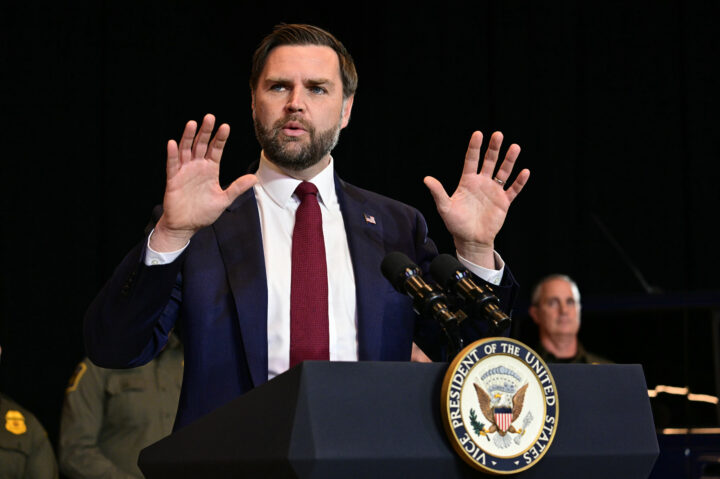
Jim Watson - Pool/Getty Images
U.S. Vice President JD Vance gives remarks following a roundtable discussion with local leaders and community members amid a surge of federal immigration authorities in the area, at Royalston Square on January 22, 2026 in Minneapolis, Minnesota.
A day before U.S.-Iran nuclear talks, Vice President JD Vance urged the Iranian regime on Wednesday to take President Donald Trump’s diplomatic overtures “seriously,” cautioning that the president has “a number of tools at his disposal” to keep the “craziest and worst regime in the world” from acquiring nuclear weapons.
Vance made the comments while appearing on Fox News’ “America’s Newsroom” after being asked about Trump’s comments at the State of the Union on Tuesday night, during which the president underscored his willingness to use force while acknowledging his preference for a diplomatic solution.
“The president has been as crystal clear as he could be: Iran can’t have a nuclear weapon. That would be the ultimate military objective if that’s the route that he chose,” Vance said. “That is what we’re trying to accomplish, as the president said, through the preferred route of diplomacy, but it’s very simple: We have to get to a position where Iran, the largest state sponsor of terrorism in the world, cannot threaten the world with nuclear terrorism.”
“I think most Americans understand that you can’t let the craziest and worst regime in the world have nuclear weapons. That’s what the president is accomplishing, that’s what the president has set as our goal,” he continued. “He’s going to try to accomplish it diplomatically, but as we all know, the president has a number of other tools at his disposal to ensure this doesn’t happen. He’s shown a willingness to use them, and I hope the Iranians take it seriously in their negotiations tomorrow because that’s certainly what the president prefers.”
Asked if that meant the president’s position is that Iranian Supreme Leader Ayatollah Ali Khamenei must be removed, Vance reiterated that the administration is “hopeful that we’re able to come to a good resolution without the military, but if we have to use the military, the president, of course, has that right as well.”
“I think the president ultimately will make the decision about how to ensure Iran does not have a nuclear weapon, but we’re sitting down having another round of diplomatic talks with the Iranians, trying to reach a reasonable settlement, but a reasonable settlement towards what end?” Vance asked. “Iran can’t have a nuclear weapon. It’s very simple. I think the supreme leader and everybody in their system should understand it. We’ve been crystal clear.”
Sen. Lindsey Graham (R-SC), meanwhile, warned on Wednesday that he would not support a Trump administration-brokered deal with Iran that would allow the regime to continue enriching some uranium as part of its nuclear program.
“If media reports are true that there is a consideration of allowing Iran to have very small enrichment of uranium for face-saving purposes: screw that,” Graham wrote on X. “This regime is made up of religious Nazis that are the largest state sponsor of terrorism. The regime has American blood on its hands and they have killed over 30,000 of their citizens simply because they demand the end to their oppression.”
Graham added that he “could care less about efforts to save face for this regime. I would like to see the people of Iran change the regime – it’s long overdue. I hope help is on the way.”
Plus, Witkoff calls for indefinite Iran nuclear deal
Mario Tama/Getty Images
An attendee wears a jacket at an Iowa caucus watch party organized by Metro D.C. Democratic Socialists of America, on February 3, 2020 in Washington, DC.
Good Wednesday afternoon!
This P.M. edition is reserved for our premium subscribers — offering a forward-focused read on what we’re tracking now and what’s coming next.
It’s me again — Danielle Cohen-Kanik, U.S. editor at Jewish Insider and curator, along with assists from my colleagues, of the Daily Overtime. Please don’t hesitate to share your thoughts and feedback by replying to this email.
📡On Our Radar
Notable developments and interesting tidbits we’re tracking
Ahead of the third round of U.S.-Iran negotiations taking place in Geneva tomorrow, Vice President JD Vance told Fox News that President Donald Trump “has a number of other tools at his disposal” besides diplomacy to ensure “the craziest and worst regime in the world” does not obtain nuclear weapons, following on the president’s remarks during last night’s State of the Union calling Iran “the world’s No. 1 sponsor of terror”…
In response to Trump’s comments, where he also said Iran was developing advanced ballistic missiles and had killed 32,000 protesters, Iranian Foreign Ministry spokesperson Esmail Baghaei tied Trump to the “law of propaganda coined by Nazi [chief propagandist] Joseph Goebbels.”
“This is now systematically used by the U.S. administration and the war profiteers encircling it, particularly the genocidal Israeli regime … Whatever they’re alleging in regards to Iran’s nuclear program, Iran’s ballistic missiles, and the number of casualties during January’s unrest is simply the repetition of ‘big lies,’” Baghaei wrote on X…
White House Special Envoy Steve Witkoff, who is leading Iran negotiations alongside Jared Kushner, reportedly told AIPAC members at the group’s summit in Washington yesterday that any deal reached with Iran should not have a “sunset clause,” as the 2015 Joint Comprehensive Plan of Action was criticized for.
“We start with the Iranians with the premise that there is no sunset provision. Whether we get a deal or not, our premise is: you have to behave for the rest of your lives,” Witkoff told the group, according to Axios. He said talks are currently focused only on the nuclear issue, but if they are successful, the administration would look to hold additional talks on Tehran’s missile program and support for terror proxies…
Satellite photos analyzed by the Associated Press appear to show U.S. ships that typically dock in Bahrain as part of the U.S. Navy’s 5th Fleet have moved out to sea. The 5th Fleet similarly scattered its ships during the U.S. strikes in Iran last June…
Dutch airline KLM announced a suspension of flights between its hub in Amsterdam and Israel’s Ben Gurion Airport starting March 1 until further notice, saying in a statement that it is currently “not commercially or operationally feasible for KLM to operate flights to Tel Aviv.” It’s the first airline to pause flights amid the current unrest with Iran…
On the campaign trail, Washington, D.C., mayoral candidate Janeese Lewis George vowed to reject the “Zionist lobby” in a questionnaire seeking the endorsement of the Metro D.C. chapter of the Democratic Socialists of America, Jewish Insider’s Gabby Deutch reports, a category that the DSA said includes AIPAC, Democratic Majority for Israel, Christians United for Israel and J Street.
Referencing her appearance at an event with the Jewish Community Relations Council of Greater Washington in December, Lewis George assured the DSA she “disagree[s] with the JCRC on a number of issues,” including its opposition to describing Israel’s actions in Gaza as a genocide and its “definition of antisemitism that criminalizes dissent, and their attacks on activists.”
Ron Halber, CEO of the JCRC, told JI, “As far as I’m concerned, [the DSA’s questionnaire] is an antisemitic manifesto. They are making the price of their endorsement the social exclusion of Jews”…
Illinois state Sen. Laura Fine, a Democrat running for an open Illinois House seat, unapologetically championed her backing for Israel in a position paper obtained by JI’s Marc Rod, amid attacks from anti-Israel activists and groups over her support for the Jewish state and backing from pro-Israel supporters.
Fine described Israel in the paper as “more than just a strategic ally, it is a beacon of democracy in one of the world’s most volatile regions,” as she and some of her primary opponents, including Evanston Mayor Daniel Biss and far-left activist Kat Abughazaleh, are set to participate in a televised debate tonight…
The U.S.-led Board of Peace released a video today laying out its vision for Gaza. The board’s goal by Year 3 is to fully rebuild the southern Gazan city of Rafah and have Gaza “connected to the world through an Abrahamic gateway, linking it with Egypt, Israel, Jordan, Saudi Arabia, the UAE and extending to India and Europe.” By the board’s 10th year, it said, Gaza will be “self-governed,” without specifying who will oversee the enclave and how Hamas will be removed from power…
Knesset Speaker Amir Ohana awarded Indian Prime Minister Narendra Modi the newly established Medal of the Knesset, the highest honor of the body, after Modi’s address there today. His remarks were warmly received by members of Knesset and Israeli Prime Minister Benjamin Netanyahu, who was also in the chamber…
Following Israel’s recognition of Somaliland’s independence in December, Jerusalem accepted the appointment of Mohamed Hagi as the first Somaliland ambassador to the Jewish state (and its first fully accredited ambassador anywhere in the world). Hagi “was a member of the inner circle of officials who promoted the establishment of relations between Israel and Somaliland,” the Israeli Foreign Ministry said, and vowed that a reciprocal Israeli ambassador “will soon be appointed”…
Former Harvard President Larry Summers will remain on leave from his teaching position at the Ivy League school for the duration of the academic year, at which point he will retire, Harvard announced today, after files released by the Department of Justice showed Summers maintained a relationship with sex trafficker Jeffrey Epstein after the financier had been convicted of prostitution involving a minor…
⏩ Tomorrow’s Agenda, Today
An early look at tomorrow’s storylines and schedule to keep you a step ahead
Keep an eye out in Jewish Insider for a preview of Fox Nation’s new docudrama on King David, offering a dramatic reenactment of the biblical coming-of-age story of the Jewish leader.
White House Special Envoy Steve Witkoff and Jared Kushner will hold discussions with Iranian Foreign Minister Abbas Araghchi in Geneva, mediated by Omani Foreign Minister Badr Albusaidi.
California Jewish groups including the JCRC Bay Area, the Jewish Federation of Los Angeles and Jewish California, which rebranded today from its previous name of JPAC, are hosting a forum for candidates running for governor, as Gov. Gavin Newsom reaches his term limit. Participating candidates include former presidential contender Tom Steyer, Rep. Eric Swalwell (D-CA), San Jose Mayor Matt Mahan and former Los Angeles Mayor Antonio Villaraigosa, all of whom are Democrats, as well as Republican commentator Steve Hilton.
Stories You May Have Missed
PUSHING BACK
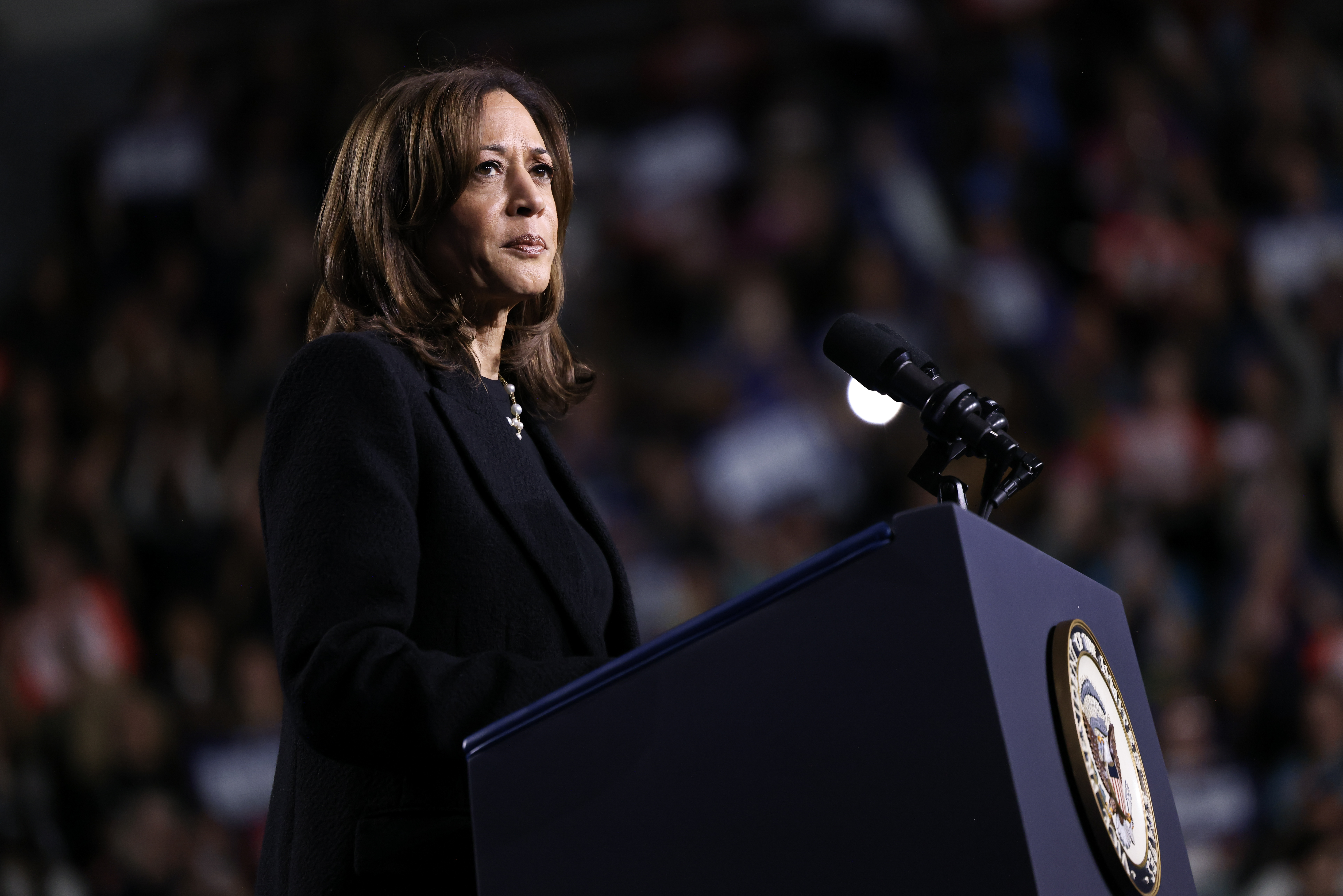
Rep. Jared Moskowitz, representing a swing district: ‘The idea that the vice president lost every swing state because she wasn’t more extreme on this issue is laughable’
CAPPELLO’S CAMPAIGN
The Air Force veteran, who served for six years at the U.S. Embassy in Israel, said Israel should continue to make efforts toward peace
Rep. Jared Moskowitz, representing a swing district: ‘The idea that the vice president lost every swing state because she wasn’t more extreme on this issue is laughable’
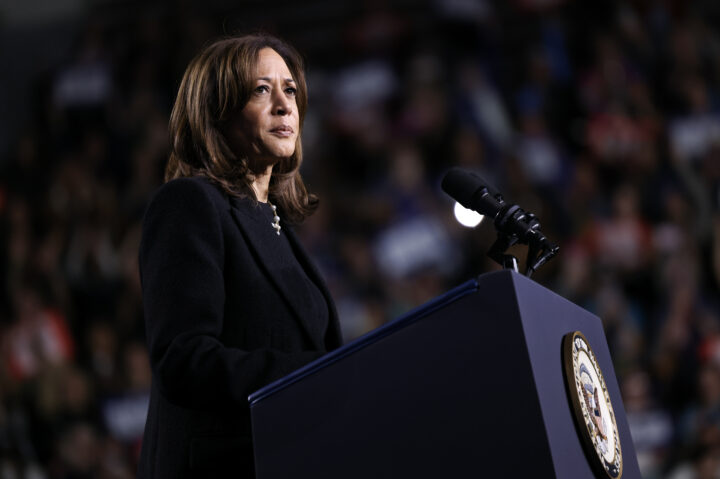
Michael M. Santiago/Getty Images
Vice President Kamala Harris speaks at a campaign rally on November 04, 2024 in Allentown, Pennsylvania.
Moderate congressional Democrats are pushing back against claims from anti-Israel activists, sparked by recriminations over an unreleased Democratic National Committee post-2024 election analysis, that the party’s position on Israel during the war in Gaza was a decisive factor in Vice President Kamala Harris’ election loss.
Speaking to Jewish Insider, the lawmakers rejected the notion that the Biden administration and Harris campaign’s approach to Israel was the decisive factor in the defeat, instead pointing to broader political dynamics.
They also called on the DNC to release the post-election autopsy, expressing confidence that the findings wouldn’t indicate that taking a stronger anti-Israel line would have helped Harris win more votes.
“I don’t think that was the issue in the election. I disagree with that conclusion,” Rep. Brad Schneider (D-IL) told JI. “Israel is our country’s strongest ally in the Middle East, one of the strongest allies in the world, and I can tell you that my colleagues here overwhelmingly support a strong U.S.-Israel relationship.”
Rep. Jared Moskowitz (D-FL) echoed those sentiments, telling JI that “the idea that the vice president lost every swing state because she wasn’t more extreme on this issue is laughable.” He called on Democratic officials to “release the report.”
“I mean, this is ridiculous,” said Moskowitz. “You got Democrats talking about how we should release the report on Epstein … now they should release [the DNC autopsy report].”
Rep. Greg Landsman (D-OH), who represents a swing district in Ohio, also called for transparency, but cautioned against narrowing the post-election analysis to a single issue.
“That’s what the party should do,” Landsman said of releasing the report. “The country, they want us to focus entirely on the voters … which means that it’s going to be about their economic conditions, it’s going to be about their safety, it’s going to be about how we invest in their communities, it’s going to be about how we make their lives better. That’s the winning formula.”
Sen. Richard Blumenthal (D-CT) told JI he had not heard of the autopsy, however, he stated that he questions “the veracity of that report,” adding that he “strongly disagrees” with the assertion that Harris lost due to her stance on Israel.
“There were a number of reasons why she lost,” said Blumenthal. “I have not spoken with anybody associated with the DNC about this report. I have no idea what the report says, but it may be wise to release the report.”
Senior congressional correspondent Marc Rod contributed reporting.
Rep. Jared Moskowitz told JI that Kamala Harris’ team asking Shapiro if he’d ever been an agent for Israel, as Shapiro alleges, is ‘totally insane. I don’t know how else to describe insanity’
Andrew Mordzynski/Icon Sportswire via Getty Images
Pennsylvania Gov. Josh Shapiro looks on during the NASCAR Cup Series at The Great American Getaway 400 on June 22, 2025, at Pocono Raceway.
Several moderate House Democrats said they were concerned and frustrated by Pennsylvania Gov. Josh Shapiro’s account, which emerged over the weekend, of being questioned by Vice President Kamala Harris’ presidential campaign, as part of his vetting as her potential running mate, about whether he had ever been an agent of Israel.
Some progressives have defended the questioning by pointing to a subsequent report that the campaign had asked Minnesota Gov. Tim Walz, the eventual vice presidential nominee, about whether he had served as an agent for China, where he once lived.
But Shapiro, who volunteered on a kibbutz and briefly on an Israeli army base while in high school, also said that the campaign had pressured him to walk back condemnations of antisemitism on college campuses, and emphasized that he took offense to the scope and persistence of the questioning he faced about Israel.
“Totally insane,” Rep. Jared Moskowitz (D-FL) told Jewish Insider. “I don’t know how else to describe insanity. Literally insane.”
Rep. Greg Landsman (D-OH) said the questioning was “concerning” and that he was “glad Josh had the courage to say what happened.”
“Hopefully people will appreciate that you shouldn’t do that. … It’s a longstanding antisemitic trope that we’re all agents of the Israeli government, that we’re all working for this global Jewish cabal. And so that’s problematic,” Landsman, who is Jewish, continued. “Antisemitism is complicated. There’s a lot of pieces to it. They all get very dangerous for us. I do think that people should be open to say, if Jews say it’s antisemitic — even if some say it’s not — let’s just assume it is and be done and not do it.”
Rep. Debbie Wasserman Schultz (D-FL) called the revelations “incredibly disturbing,” while saying she didn’t believe Harris would have approved the line of questioning.
“The process that allowed for those kinds of questions to be asked is disturbing to me. I’ve known Josh Shapiro for a really long time, and I understand how he felt and would have felt the same way,” Wasserman Schultz, a former chair of the Democratic National committee, told JI. “It’s a little bewildering that that would be the kind of question line that they would take, given that Vice President Harris’ husband is Jewish. From what I know and experienced of both she and he, separately and together, that doesn’t seem like a line of questioning that she would have approved of. Hopefully it was a rogue question, rather than something that was sanctioned.”
Rep. Brad Schneider (D-IL) praised Shapiro personally and said he took issue with the questions he faced in the vetting process.
“I’ll give you my reaction to Josh Shapiro: This is someone who knows who he is, he’s confident in his identity and proud of where he comes from and strong in what he believes. I think he gave the right answers, and I think it was wrong that those questions were even raised.”
Rep. Tom Suozzi (D-NY) said that the questioning of Shapiro was not appropriate, calling it “very disturbing” and “unfair.”
Rep. Josh Gottheimer (D-NJ) said in a statement over the weekend that Shapiro’s account was “nothing short of outrageous, and, if true, demand[s] an immediate explanation from the Harris campaign.
“That kind of insinuation and targeting is antisemitism, plain and simple. No one should be judged or discriminated against because of their faith. We must do better,” Gottheimer continued.
Rep. James Walkinshaw (D-VA) said on CNN over the weekend, “If that question was asked of Governor Shapiro, it should have been asked to every other candidate who was vetted.”
Others largely withheld criticism of the Harris campaign.
Rep. Jerry Nadler (D-NY), a co-chair of the Congressional Jewish Caucus, said that it sounded like other potential nominees had also been asked about foreign ties, but described the line of questioning as “bizarre.”
Rep. Brad Sherman (D-CA) withheld judgment when asked about Shapiro’s revelations, telling JI, “It’s obviously very interesting. I don’t know whether the person asking the vetting questions really reflected Kamala Harris’ personal opinions at all, so I’ve got to read more about it.”
Rep. Madeliene Dean (D-PA) said she didn’t want to comment on the situation without having read Shapiro’s book coming out next week, in which he describes the encounter, or having been present for the conversations in question, but said that she has known Shapiro for a long time and praised him as a man of “[faith], family and a belief in the American system.”
Shapiro writes in his new book that the Harris team asked if he had ever been a ‘double agent for Israel’
ANDREW CABALLERO-REYNOLDS/AFP via Getty Images
Pennsylvania Gov. Josh Shapiro (L) greets former Vice President Kamala Harris as she arrives at Pittsburgh International Airport in Pittsburgh, Pennsylvania on September 2, 2024.
In the summer of 2024, when Vice President Kamala Harris was vetting potential running mates for her expedited campaign for president, a senior member of her team asked Pennsylvania Gov. Josh Shapiro whether he had ever been a “double agent for Israel,” Shapiro writes in a new book that will be published later this month. “Was she kidding? I told her how offensive the question was,” Shapiro recounts in the book.
The exchange — which Shapiro describes in an outraged tone — has prompted sharp criticism from Jewish leaders, including some who served in the Biden-Harris administration.
“The more I read about [Shapiro’s] treatment in the vetting process, the more disturbed I become,” Deborah Lipstadt, who served as the State Department’s antisemitism envoy under President Joe Biden, said in a post on X. “These questions were classic antisemitism.”
Shapiro suggests in the book that he was being treated unfairly as a Jewish contender for the role of vice president: “I wondered whether these questions were being posed to just me — the only Jewish guy in the running — or if everyone who had not held a federal office was being grilled about Israel in the same way,” he writes.
Anti-Defamation League CEO Jonathan Greenblatt called the line of questioning “barely veiled bigotry,” and said it is “a textbook invocation of one of the oldest antisemitic canards in politics: the smear of dual loyalty.”
The comments also earned criticism from Rep. Josh Gottheimer (D-NJ), who said in a statement that “that kind of insinuation and targeting is antisemitism, plain and simple. No one should be judged or discriminated against because of their faith.”
Shapiro’s Jewish faith and his support for Israel became the object of criticism among far-left activists, who agitated against his selection as Harris’ running mate. Harris has maintained that antisemitism played no role in her decision not to pick Shapiro.
Shapiro’s account of his interactions with Harris’ campaign suggests that his views on Israel did present a problem for Harris. According to Shapiro, Harris asked him to apologize for comments he had made denouncing the actions of some anti-Israel protesters at the University of Pennsylvania. He refused, writing in his book that he felt Harris wanted him to align “perfectly” with her on all issues.
“It nagged at me that their questions weren’t really about substance,” Shapiro writes. “Rather, they were questioning my ideology, my approach, my world view.”
Abraham Foxman, the former longtime leader of the Anti-Defamation League, called it “very disturbing” that Shapiro was asked about being an Israeli double agent. “Aides focused on Israel to the extent he found it offensive. Something very troubling about our current political culture,” Foxman wrote in a post on X.
Shapiro was not the first Jewish official to face a “double standard” during the vetting process, Aaron Keyak, the Jewish outreach director on Biden’s 2020 campaign who later served as Lipstadt’s deputy at the State Department, said in a statement.
“During my vetting process I faced questions in a classified setting that my fellow non-Jewish political appointees did not,” Keyak said. “These sort of antisemitic questions are anti-American and do not represent the best that the Democratic Party offers. Now and especially during the next Presidential campaign we must demand better.”
Minnesota Gov. Tim Walz, who was chosen as Harris’ running mate, was also asked a question about his own ties to foreign nations. The Harris campaign asked Walz — who had previously lived and worked in China — if he had ever been an agent of China, CNN reported.
The adversarial nature of Harris and Shapiro’s relationship during the 2024 campaign was the source of a great deal of speculation. Harris took aim at Shapiro, too, in a book she published in 2025, writing that before they even met, he was asking questions about furnishing and decorating the Naval Observatory, where the vice president resides, should he be selected.
A spokesperson for Harris did not respond to a request for comment.
This story was updated on Jan. 20 with additional comments.
Vance: ‘One of the great things about the conservative coalition, is that we are, I think, fundamentally rooted in the Christian principles that founded the United States of America’
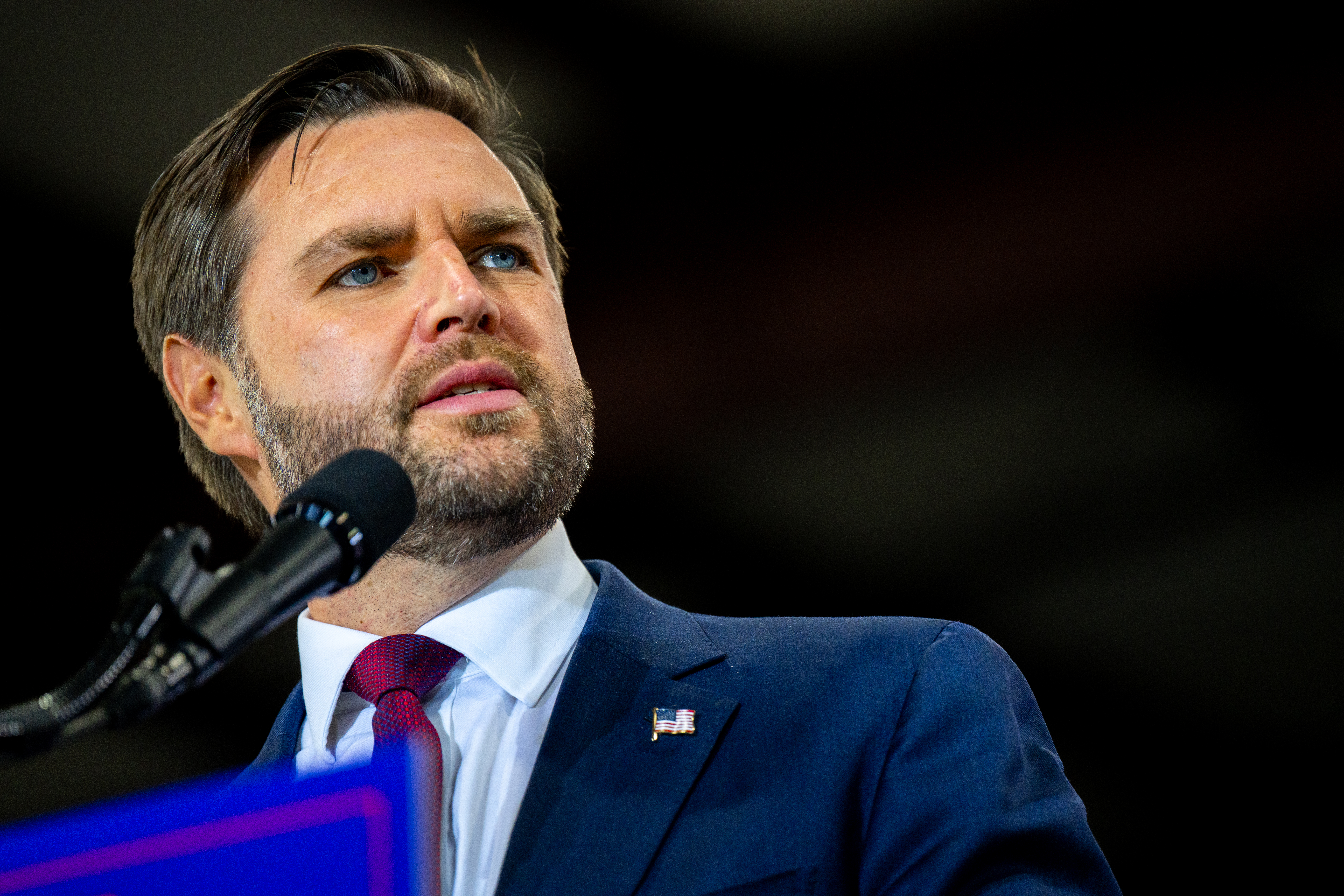
Brandon Bell/Getty Images
Vice President J.D. Vance speaks during a campaign rally at the Elite Jet at Contact Aviation facility on October 24, 2024 in Waterford, Michigan.
Vice President JD Vance, asked about the rise of antisemitism in the conservative movement, said “all forms of ethnic hatred” must be rejected and emphasized that the U.S. is rooted in “Christian principles.”
In an interview released Tuesday, CNN commentator Scott Jennings, on his eponymous podcast, asked the vice president about “certain kinds of views that have been espoused by certain kinds of people” in the conservative movement who “try to drag you into this conversation all the time.”
“Just for the record, does the conservative movement need to warehouse anybody out there espousing antisemitism in any way?” Jennings asked.
“No it doesn’t, Scott,” Vance answered. “I think that we need to reject all forms of ethnic hatred, whether it’s antisemitism, anti-Black hatred, anti-white hatred. I think that’s one of the great things about the conservative coalition, is that we are, I think, fundamentally rooted in the Christian principles that founded the United States of America and one of those very important principles is that we judge people as individuals.”
The vice president continued, “Every person is made in the image of God. You judge them by what they do, not by what ethnic group they belong to and I think that principle is important. It’s something we gotta hold onto in the conservative movement because, God knows, the left abandoned it a long time ago.”
‘I want to make them understand that the friendship between the U.S. and Israel is one of the greatest things for both countries,’ said Shem Tov, who Hamas held hostage in Gaza for 505 days
Jon Kopaloff/Getty Images for Simon Wiesenthal Center
Omer Shem Tov speaks onstage at Beverly Wilshire, A Four Seasons Hotel on October 30, 2025 in Beverly Hills, California.
Turning Point USA’s annual AmericaFest, its first since the killing of its founder and leader Charlie Kirk in September, kicked off on Thursday with prominent names on its four-day agenda, including Vice President JD Vance and House Speaker Mike Johnson (R-LA).
Some speakers, such as Tucker Carlson and Steve Bannon, have spread anti-Israel and even antisemitic messages through their platforms, while others, including Ben Shapiro and Glenn Beck, have been strong advocates for Israel.
Joining them on the program on Friday is Omer Shem Tov, who was held hostage by Hamas in Gaza for 505 days.
Shem Tov, 23, arrived at the Nova Festival near the Gaza border on Oct. 6, 2023, with his friends, siblings Itay and Maya Regev. On the morning of Oct. 7, when they heard gunshots, they attempted to flee, but Hamas terrorists fired on them, loaded them onto a pickup truck and drove them to Gaza. Itay and Maya Regev were freed in the first hostage deal in November 2023, and Shem Tov was moved into tunnels, where he was held in darkness and with little to eat until his release in February of this year.
Since then, Shem Tov has regularly traveled abroad to advocate for the release of the rest of the hostages and speak about Israel and the war.
Shem Tov told Jewish Insider that he’s speaking to TPUSA because “we can see on social media that something is changing on the American right. You can see more and more people coming out with all kinds of antisemitic statements and anti-Israel statements.”
“It’s very concerning, because these are people who vote for Trump, people who are supposed to be good for us,” he added. “This is the time to go to them and explain to them what is really happening in the war and make them understand that the friendship between the U.S. and Israel is one of the greatest things for both countries.”
Shem Tov said it wasn’t until he was freed from Hamas captivity that he became aware of TPUSA and Charlie Kirk’s work. “To see someone who is not Jewish, not directly connected to Israel, go to universities and the largest audiences and fight for Israel was very touching,” Shem Tov said of Kirk. “He did a better job than most Israelis. It was amazing to see him.”
Shem Tov was in the U.S. when Kirk was murdered and said he was “shaken.”
“It’s scary because [public speaking] is what I’m doing now, too, but on the other hand, it should not silence us. We must continue to fight. We have been fighting for our freedom for thousands of years, and we will continue,” he said.
Shem Tov plans to tell the audience at AmericaFest the story of his captivity, in addition to paying tribute to Kirk and discussing the importance of the U.S.-Israel relationship.
Israelis have come to know a story of Shem Tov’s heroism while in captivity, which he repeated for JI.
“During a difficult period [of the captivity], the IDF was right above me. I heard tanks over my head, and even soldiers speaking at night, through the air vents,” he recalled.
“[Hamas terrorists] set up bombs in the building above us and brought the cables underground,” Shem Tov said. “I asked what it was, and they told me. One of [the captors] said that when soldiers get to the house above us — there were cameras, so we could watch — I need to blow up the house.”
“I looked at him, the leader of the tunnel, and I said ‘I won’t do it.’ He looked at me and was in shock that I said no. He said, ‘If you don’t do it, we’ll shoot you in the head.’ I said, ‘So shoot me in the head. I won’t hurt my brothers.’ After that, they abused me,” Shem Tov recounted.
Debates on college campuses pale in comparison to the terror of captivity and the threat of immediate death, so Shem Tov said he is “always ready” for any anti-Israel audience members who may come for him.
“I know the facts,” he said. “If they come with a claim that sounds logical and rational, then I am prepared to debate and bring the truth. I know the truth, I saw it with my own eyes.”
Shem Tov recalled speaking at an event at University of California, Berkeley, where he was disappointed to find a totally supportive audience. He set up a table on campus the next day with an Israeli flag and a sign that read “I was a hostage in Gaza for 505 days, ask me anything.”
“Pro-Palestinian people came up to me with keffiyehs and watermelon pins. I think they were more calm and pleasant because I was a hostage. I told them my story, but I was open to hearing what they had to say. I think I succeeded in changing people’s minds. It was amazing to see,” he said.
Asked about Shem Tov’s address and the mix of pro- and anti-Israel voices appearing at AmericaFest, Turning Point USA spokesman Andrew Kolvet said in a statement to JI, “You can recognize that there is a legitimate foreign policy debate within the right while simultaneously recognizing that abducting young people at a music festival and holding them hostage for 505 days is a horrific evil.”
“Omer’s heroism should absolutely be celebrated, and we pray that the peace in Gaza, made possible by President [Donald] Trump’s strong and steady leadership, proves durable and long-lasting,” Kolvet stated.
Shem Tov said he had no background in public speaking or Israel advocacy before being released from Gaza.
“I wasn’t a good student,” he said. “I would disturb in class and be kicked out a lot. I went to the army, and when I finished, I worked as a waiter to try to make money to go on a big trip, and then I was kidnapped.”
Shem Tov said he is often asked whether it is hard for him to speak so frequently about what he endured as a hostage.
“I do it for the hostages. Up to the very last one. … It’s not over until Ran Gvili” — the final hostage whose body remains in Gaza — “comes home,” he said.
“Second, it’s advocacy for Israel. It’s very important for people to understand what happened on Oct. 7,” he added.
Shem Tov said, “I thank God. God brought me home for a reason and with a story that I can tell so people will be strengthened and to spread light, love and truth. It’s hard, but it is fulfilling to see the change happening with my own eyes.”
“I think I learned to get some gifts from this terrible thing that happened. I learned not to just be sad, but to get up and strengthen others,” he said.
As to the terrorist attack on a Hanukkah celebration in Sydney, Australia, on Sunday in which 15 were killed, Shem Tov said “it really brought me back” to the Nova Festival.
“A month and a half ago, I was there in Bondi Beach. I know the area; I know what it looks like; I know a lot of people there. It was very painful to see that this had to happen to more people,” he said. “We went through this once in Israel. It should have brought a change and made people understand… but here, it’s happening again. It’s scary and painful and disappointing to people who don’t understand that we need to fight terrorism. It’s not fighting for freedom; it’s not resistance.”
Shem Tov expressed appreciation to Jewish communities around the world that advocated for his release.
“It’s a privilege to meet people who I don’t know and didn’t know me, but did whatever they could to pray for me and fight for me, to shout in the streets. … They dedicated so much of themselves and so much time that it is a privilege to look them in the eyes and say thank you,” he said.
Shem Tov added that he salutes all of the IDF soldiers who fought in the war: “I appreciate them so much for fighting, whether in their prayers or in the field.”
The vice president made his remarks at a Breitbart conference on the day of Dick Cheney’s funeral
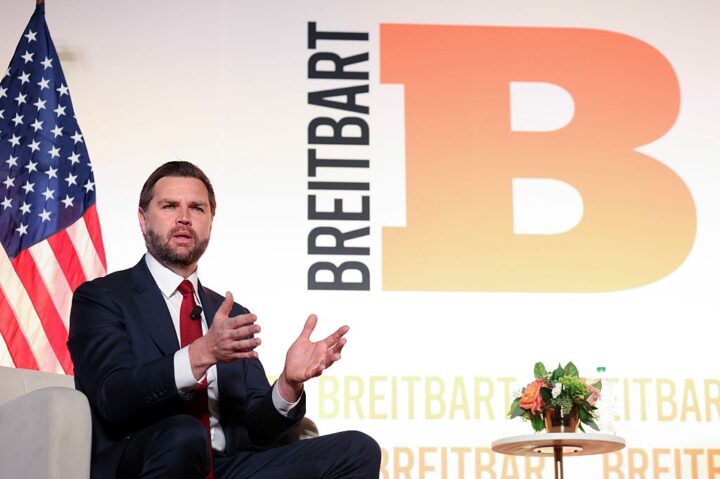
Tasos Katopodis/Getty Images
Vice President JD Vance participates in a fireside chat with Breitbart Washington Bureau Chief Matt Boyle at the Andrew W. Mellon Auditorium on November 20, 2025 in Washington, D,C.
Vice President JD Vance dismissed the suggestion that traditional conservative Republicans would “wrest control” of the GOP from supporters of the MAGA movement after President Donald Trump leaves office and “go back to the Republican Party of 20 years ago.”
Vance made the comments during a conversation with Breitbart News’ Washington bureau chief Matt Boyle on Thursday, in which the two broadly discussed the divisions within the MAGA movement on foreign and economic policy. Both argued that the U.S. was experiencing a “political realignment,” with the Republican Party becoming the party of the working class and Democrats now more aligned with wealthier voters.
“Part of what you see as division in the Republican Party is a consequence of this realignment. We have a new governing coalition. We have a new political coalition. We have people who didn’t used to vote Republican,” Vance said. “Frankly, they have different preferences, sometimes on certain issues, than maybe the Ronald Reagan or George W. Bush Republican Party did. I think the Donald Trump party is a fundamentally new phenomenon in American politics.”
“Some of those divisions you talk about are just the natural outgrowth of the fact that we’ve got a lot of working-class voters who, frankly, don’t care what was Republican orthodoxy 25 years ago, and so they’re pushing the party in a different direction,” the vice president continued.
Boyle pointed out Vance’s mention of former President George W. Bush, and noted that the funeral of former Vice President Dick Cheney, who served under Bush, was taking place that morning.
The vice president replied by offering his condolences to the Cheney family and praised his service to the country, but predicted that such an effort to return the Republican Party to the Bush-Cheney era would fail.
“Whether intentional or not, that was the legacy of the Republican Party that came before Donald J. Trump. I’m glad the president got us away from that Republican Party. It lost. It was also a disaster for the United States of America,” Vance said.
Asked for his thoughts on “how to reunify” the conservative movement amid “some divisions” on domestic and foreign policy matters, Vance said he welcomed the ongoing debates while urging Republicans to not lose sight of the fact that their true opponent is the Democratic Party.
“I think these debates should happen. They should happen on podcasts. They should happen in the media. They should happen on the op-ed pages. It’s totally reasonable for the people who make up this coalition to argue about what our foreign policy should be, what our specific tax policy should be, what our housing policy should be,” Vance explained, adding that the “disagreements that animated” the GOP were “important.”
Still, Vance encouraged conservatives “to remember that we have a lot more in common than we do not in common.”
“My attitude is: Let these debates play out, but don’t let the debates that we’re having internally blind us to the fact that we are up against a radical leftist movement that murdered my friend [Charlie Kirk] a couple of months ago, and that would throw many people in the Trump administration in prison, not for doing anything illegal, but for not following the far-left’s agenda,” Vance said.
“That is the real opponent here: a political movement in this country that has no enemy in principle, that has no agenda for the American people. Their sole obsession is to take down Donald Trump and anybody who’d help Donald Trump govern,” he added. “Focus on the enemy. Have our debates, but focus on the enemy so that we can win in victories that matter to the American people.”
President Donald Trump, called by his Jewish supporters ‘the most pro-Israel president in history,’ won’t lead the party forever. So what will come next?
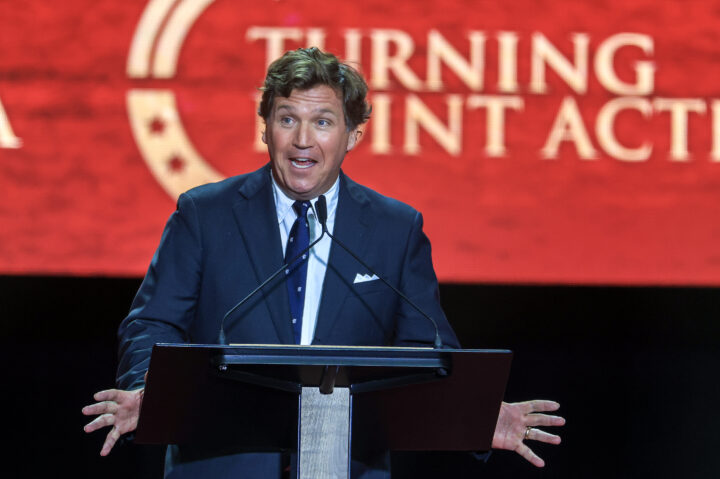
Joe Raedle/Getty Images
Tucker Carlson speaks during the memorial service for political activist Charlie Kirk at State Farm Stadium on September 21, 2025 in Glendale, Arizona.
During a talk at a Turning Point USA event at the University of Mississippi last month, Vice President JD Vance listened carefully as a student took the microphone and asked him a question grounded in antisemitic tropes. Vance took the question at face value, declining to push back.
“I’m a Christian man, and I’m just confused why there’s this notion that we might have owed Israel something, or that they’re our greatest ally,” the questioner began. “I’m just confused why this idea has come around, considering the fact that not only does their religion not agree with ours, but also openly supports the prosecution [sic] of ours.”
The exchange came soon after right-wing podcaster Tucker Carlson hosted neo-Nazi provocateur Nick Fuentes for a decidedly friendly interview, a shocking but not altogether surprising cultural moment that catapulted an intra-party rift into the open: a shift among a small but growing contingent of young conservatives away from Israel and, increasingly, into a conspiratorial worldview that holds the Jewish state — and Jews — responsible for the world’s ills.
The question facing party leaders is just how deeply this perspective has rooted itself among the right and how to deal with it: whether to fight it, accept it or stay quiet and hope it disappears.
Vance’s response at the Turning Point event sparked concern among Jewish conservatives about how a potential future GOP presidential nominee plans to deal with a growing segment of the political right that is not just critical of Israel but of Jews — and why he has been willing to make excuses for the bigotry of some of his supporters. Last month, Vance called criticism of scores of racist and antisemitic messages in Young Republicans group chat “pearl clutching.” And earlier this month, after many conservatives spoke out against Carlson’s interview with Fuentes, Vance decried what he deemed “infighting” calling it “stupid.”
Until Sunday, President Donald Trump had avoided the maelstrom of the last several weeks, which saw the venerable Heritage Foundation devolve into chaos after its president, Kevin Roberts, defended Carlson following the Fuentes interview. But Trump entered the fray for the first time on Sunday when he was asked by a reporter what role Carlson should play in the conservative movement after hosting “antisemite Nick Fuentes” — and responded with praise for Carlson.
“I found him to be good. I mean, he said good things about me over the years. I think he’s good,” Trump said. “You can’t tell him who to interview. I mean, if he wants to interview Nick Fuentes, I don’t know much about him, but if he wants to do it, get the word out. People have to decide.” Trump dined with Fuentes and Kanye West, also an avowed antisemite, at his Mar-a-Lago resort in 2022, though Trump has insisted that he didn’t invite Fuentes, but rather that Fuentes tagged along with West.
Pro-Israel Republicans have generally been willing to dismiss Trump’s connection to Carlson — Trump appeared on Carlson’s podcast during the campaign last year soon after the former Fox News host platformed a well-known Holocaust denier — because of what they describe as Trump’s pro-Israel bona fides.
“It’s a ridiculous conversation to be having, because nobody should doubt where the president stands on this,” Republican Jewish Coalition CEO Matt Brooks told Jewish Insider on Monday. “Donald Trump has zero tolerance when it comes to antisemitism.” Brooks, who is highly critical of Carlson, categorized Trump’s comments as “an omission in his remarks on an airport tarmac.”
Earlier this month, at the RJC conference in Las Vegas, Republican fundraiser Eric Levine told JI that he has concerns about Vance, though he added that those concerns are balanced out by the fact that Trump remains “the most pro-Israel president in the history of the country.”
“I was disappointed in JD Vance’s response, particularly as part of the Trump administration, which is so pro-Israel, so pro-Jewish,” Levine said. “This notion of this outsized influence that Jews have is disturbing, and I would have thought that the vice president could have done a better job, could have been clearer on that point.”
Yet Vance’s rhetoric, coupled with his ties to the more isolationist wing of the Republican Party, has frustrated even some of his Jewish backers, who want to see him do more to disavow the fringe, conspiracist right.
“This [anti-Israel] sensibility has been gaining ground on the right for several years now, and I count myself as one of those who has been warning about it and is worried. But the antisemitic part of it is relatively new,” Peter Berkowitz, who served as a senior State Department official in Trump’s first term, told JI. “It’s high time for those great adepts of social media, President Trump and Vice President Vance, to take to social media and weigh in.”
“I admire and support JD Vance, but his response to that question was disappointing,” said David Brog, a conservative activist who leads the Maccabee Task Force, an organization focused on fighting the Boycott, Divestment and Sanctions movement targeting Israel. “He knows better. He is the vice president of the United States now. He doesn’t need to please the confused young groypers” — a term used by Fuentes’ acolytes to describe themselves. “He needs to step up, lead and teach them the right path forward.”
Andrew Day, an editor at The American Conservative, a magazine identified with more isolationist strains of the right, called Vance “the clear favorite of a growing faction on the right that favors realism and restraint in foreign policy, a faction generally hostile toward Israel,” while noting that his “pro-restraint views have long accommodated sympathy for the Jewish state,” so he won’t entirely alienate pro-Israel Republicans. Vance has written for the magazine, and Carlson sits on its advisory board.
“This [anti-Israel] sensibility has been gaining ground on the right for several years now, and I count myself as one of those who has been warning about it and is worried. But the antisemitic part of it is relatively new,” Peter Berkowitz, who served as a senior State Department official in Trump’s first term, told JI. “It’s high time for those great adepts of social media, President Trump and Vice President Vance, to take to social media and weigh in.”
The White House did not respond to a request for comment, and a spokesperson for Vance declined to comment for this article.
Vance’s sympathy toward a more transgressive younger generation of conservatives is an outgrowth of that contingent’s expansion in the party. How widely that worldview has percolated is not fully known: conservative writer Rod Dreher recently estimated that 30 to 40% of young Republican staffers in Washington “are fans of Nick Fuentes,” while journalist Emily Jashinsky wrote at the conservative website UnHerd that the “number is high, but not nearly as high as 30-40%.”
What is not disputed is that among Gen Z conservatives, old dogmas, like support for Israel, are no longer accepted at face value. In the weeks after TPUSA founder Charlie Kirk’s murder, several well-known figures on the right, particularly in the podcasting sphere where Carlson operates, have attempted to recast Kirk as critical of Israel. In a letter sent to Israeli Prime Minister Benjamin Netanyahu earlier this year, Kirk was clear about the trend lines: “Israel is losing support even in conservative circles. This should be a 5 alarm fire,” he wrote.
But Jewish Republicans see an issue bigger than just a shift away from Israel among some Republicans who are skeptical of American involvement overseas, particularly in the aftermath of the invasion of Iraq two decades ago. They also see an antisemitism problem, in addition to an apathy problem — or, perhaps more accurately, a fear factor — among leaders who are wary of taking on an increasingly radicalized young generation.
“It wouldn’t be accurate to say the right is inherently antisemitic, or that being anti-Israel is endemic on the right,” said Tamara Berens, a conservative writer in Washington who wrote an article in early 2023 outlining the growth of antisemitism on America’s far right. “I think what’s endemic is the platforming and the excusing of antisemitic figures.”
“You’re going to get debates about where America’s long-term interests truly lie and where they don’t, and that’s where I think you get a very hot debate,” said Rusty Reno, editor of First Things, a prominent Christian magazine. “Certainly because of the Gaza war, it became a very heated debate about whether or not the U.S. has an interest in a strong alliance with Israel.”
A June Quinnipiac poll found that 64% of Republicans sympathized more with Israelis than Palestinians — a far higher number than Democrats, but a decrease from November 2023, when 80% of Republicans were more sympathetic to Israel. And that drop in support has come alongside “flirt[ing] with antisemitism,” said Maccabee Task Force’s Brog.
“It’s a new era, certainly when it comes to the conversation about where the guardrails are, if there are any remaining on the broader right,” said Josh Hammer, a conservative activist and lawyer. “There are a lot of young folks on the right who have been infected with varying degrees of this mind virus.”
As the editor of First Things, a prominent Christian magazine, Rusty Reno is aware of the anti-establishment sentiment growing among young conservatives. He attributes much of that to an emerging “consensus that we need to revise and fundamentally rethink our global commitments,” Reno told JI.
“You’re going to get debates about where America’s long-term interests truly lie and where they don’t, and that’s where I think you get a very hot debate,” Reno explained. “Certainly because of the Gaza war, it became a very heated debate about whether or not the U.S. has an interest in a strong alliance with Israel.”
Reno said he believes some of the concern about rising antisemitism has brought about a “hysterical response,” although he acknowledged that it is not “just this internet nonsense.”
“It does exist, and I’ve heard people say things that shocked me in some circles on the right,” Reno said. “It’s difficult for me to interpret in young people the extent to which they say things performatively, to demonstrate to each other their bona fides as not captive to the baby boomer mentality, and how much of it is real, or something I should worry about.”
Even staunch backers of Trump’s agenda now acknowledge that they can no longer ignore the fact that something has begun to shift among some hardcore conservatives.
“I don’t think Republicans should make the same mistake that Democrats made and allow themselves to be eaten by a radical fringe, which inevitably means you start losing elections,” said the Foundation for Defense of Democracies’ Rich Goldberg, who until recently served as a senior advisor at the Department of Interior.
“I do not think that is reflective of the party as a whole, by any stretch of the imagination. I think that it is, with respect to the adults in the room, still fringe,” Sandra Hagee Parker, the chair of Christians United for Israel Action Fund, told JI. “But I think that the issue is that we have to be aware of what’s happening in this young generation and be prepared to respond to that.”
The party now finds itself at a crossroads as Republican leaders consider how to deal with a small but vocal antisemitic fringe.
“I don’t think Republicans should make the same mistake that Democrats made and allow themselves to be eaten by a radical fringe, which inevitably means you start losing elections,” said the Foundation for Defense of Democracies’ Rich Goldberg, who until recently served as a senior advisor at the Department of Interior.
It is certainly not a foregone conclusion that the party will fully cede to that perspective. Sen. Ted Cruz (R-TX) has spoken out sharply against Carlson recently, including in a recent speech calling on his Republican colleagues to criticize the popular podcaster. By going after Carlson, Cruz may be positioning himself for a 2028 presidential run, Axios reported this week.
Trump is in his second term, and the Republican Party — which has been shaped almost exclusively by Trump for the last decade — will eventually have a new figurehead. Whether that is Vance or someone else remains to be seen, with two years before presidential primary season begins. But the fight that is playing out now is not one that Trump will be able to contain forever.
“What these guys are fighting for is not MAGA. It’s fighting for the next thing,” said David Reaboi, who operates a national security communications firm. “They don’t care if he’s MAGA or not. They’re very happy to hand over MAGA at this point.”
Cheney, seen as a particularly powerful vice president, was a key voice in the George W. Bush administration during the War on Terror
AP Photo/Jae C. Hong
Former Vice President Dick Cheney attends a primary election night gathering for his daughter, Rep. Liz Cheney, R-Wyo., Aug. 16, 2022, in Jackson, Wyo.
Former Vice President Dick Cheney, who died Monday, was remembered by former officials and pro-Israel leaders as a supporter of the Jewish state and a strong voice on U.S. national security issues throughout his time in public service.
Cheney, seen as a particularly powerful vice president, was a key voice in the George W. Bush administration during the War on Terror and also served as secretary of defense under President George H.W. Bush, chief of staff to President Gerald Ford and a leader in the House Republican Conference as a representative from Wyoming.
“He was always a big supporter of Israel while he was in the Bush administration but also before, as a congressman and as defense secretary in the first Bush years,” Tevi Troy, a presidential historian who served in the George W. Bush White House, told Jewish Insider, also highlighting the prominent pro-Israel voices with whom Cheney surrounded himself as vice president.
“I was always very impressed by how well-prepared he was, how knowledgeable he was and how focused he was,” Troy continued. “In meetings with President Bush, he usually didn’t say much — because he knew that if he said something, it might color how the room reacted. But he would give his views. He would listen attentively in the meetings and he would give his views to Bush afterwards. … He was revered in the administration, and if he did weigh in on an issue, you knew that he was going to have a lot of sway on that issue. But he also knew what the role of vice president was.”
Troy, reflecting on the dynamics between the president and vice president in several recent administrations, said that Cheney stands out in both his skill and knowledge but also in the fact that he had no ambitions to run for president — which Troy said gave his counsel “more weight.”
“It wasn’t about what his long-term ambitions were, but what he thought was best for the administration and the country,” Troy said.
Danielle Pletka, a distinguished senior fellow at the American Enterprise Institute, said that like other Republicans of his generation, Cheney’s support for Israel deepened in the wake of the 9/11 attacks, as the U.S. and Israel faced a shared threat. She described him as a “great guy” who was “never confused about what was right.”
“I think he recognized that the Middle East that we had nurtured over decades was one that in many ways allowed for the growth of Al-Qaida and he set about helping to change those things,” Pletka said. “People excoriate him for the Iraq War — but I can assure you the people of Iraq don’t excoriate him.”
“At the end of the day, he was always an extremely fierce patriot and did what he thought was best for American interests, and like a lot of conservatives understood very clearly that our friendship and our partnership with Israel was part and parcel of that,” she continued.
Pletka also described Cheney as “very clear-eyed” about the threats the U.S. faced in the Middle East, including from Iran, and that he “believed in seizing opportunities” to disrupt Iran and other adversaries.
“When I think about how Iran was allowed to exploit the situation in Iraq — I know he did his utmost to ensure that we pushed back, often without success in the second half of the Bush administration,” she continued. “When we were losing in Iraq, he was absolutely instrumental in ensuring that the policy got turned around.”
Israeli Ambassador to the U.S. Yechiel Leiter said on X that the “passing of former U.S. Vice President Dick Cheney marks the loss of a great American patriot, a devoted public servant and a dear friend of Israel.”
“His leadership and his belief in the strength of the U.S.-Israel alliance will not be forgotten,” Leiter continued.
The Jewish Federations of North America, in a statement, described Cheney as a “a dedicated public servant who was a friend to the Jewish community and played a significant role in strengthening the strategic partnership between the United States and the State of Israel.”
JFNA said that Cheney “maintained enduring relationships with Jewish communal leaders and institutions, engaging in serious dialogue on matters of global security and the protection of Jewish communities worldwide,” “demonstrated an unwavering commitment to the security of Israel” and helped expand military ties between the U.S. and Israel.
AIPAC said in a statement that Cheney, in his various roles, “worked to strengthen the ties between” the United States and Israel and was “a strong supporter of the U.S.-Israel partnership.”
The Republican Jewish Coalition praised Cheney as “an American patriot and an unwavering friend of Israel and the Jewish community.”
“Vice President Cheney had a substantial role in meeting the greatest challenges our country faced in the last 40 years, including 9/11,” RJC Chairman Norm Coleman and CEO Matt Brooks said. “He understood the threats against the U.S. and the valuable role of U.S. allies, including Israel, in combatting them.”
Sen. Mitch McConnell (R-KY) said that Cheney’s “intellect, experience, and resolve made America safer” throughout his years in government service.
“As grave threats to our security continue to loom, his commitment to American leadership will remain a lesson,” McConnell continued.
In the latter years of his life, Cheney stood staunchly by his daughter, former Rep. Liz Cheney (R-WY), as she emerged as one of the most vocal critics of President Donald Trump in the Republican Party following the Jan. 6, 2021, attack on the U.S. Capitol.
Like his daughter, Cheney endorsed former Vice President Kamala Harris in the 2024 presidential election, describing Trump as a threat to democracy.
The vice president’s comments echo a warning from President Donald Trump that the terror group would face ‘elimination’ if it doesn’t abide by the terms of the ceasefire agreement
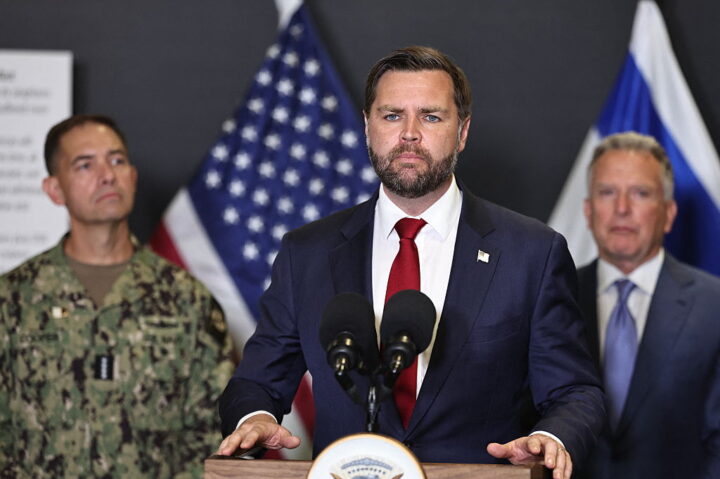
FADEL SENNA/AFP via Getty Images
Vice President JD Vance listens to a question during a press conference following a military briefing at the Civilian Military Coordination Center in southern Israel on October 21, 2025.
Visiting the new U.S.-run Civilian Military Cooperation Center in southern Israel, Vice President JD Vance said on Tuesday that he is “very optimistic” about the advancement of the peace plan, but warned that Hamas must disarm and cooperate with international interlocutors, or else it would be “obliterated.”
The vice president’s comments came shortly after President Donald Trump, in a post on his Truth Social site, threatened Hamas with “elimination” should the terror group continue to carry out violence in Gaza and violate the terms of the peace deal.
“Numerous of our NOW GREAT ALLIES in the Middle East … have explicitly and strongly, with great enthusiasm, informed me that they would welcome the opportunity, at my request, to go into GAZA with a heavy force and ‘straighten out Hamas’ if Hamas continues to act badly, in violation of their agreement with us,” Trump wrote. “There is still hope that Hamas will do what is right. If they do not, an end to Hamas will be FAST, FURIOUS, & BRUTAL!”
The president’s statement, which came hours after Vance touched down in Israel in part to keep the deal on track, underscored his growing impatience and frustration with the terrorist group.
“Hamas has to disarm,” Vance said. “They’re not going to be able to kill their fellow Palestinians. … If Hamas doesn’t cooperate, as the president of the United States said, Hamas will be obliterated.”
“But I’m not going to do what the president of the United States has thus far refused to do, which is put an explicit deadline on it,” the vice president continued, “because a lot of this stuff is difficult … In order for us to give it a chance to succeed, we’ve got to be a little bit flexible.”
Asked about Turkish troops entering Gaza despite the country’s hostility to Israel, Vance said that Israel will have to agree to any foreign troops on the ground. “We’re not going to force anything on our Israeli friends when it comes to foreign troops on their soil, but I think there’s a constructive role for the Turks to play,” he said. “They already played a constructive role.”
As for reconstruction of Gaza, Jared Kushner, who has played a central role in negotiating the end of the war, said that “no reconstruction funds will be going to areas Hamas still controls. … There are considerations in the area the IDF controls to start reconstruction of a new Gaza, in order to give the Palestinians in Gaza a place to go, a place to get jobs, a place to live.”
Vance said that the eventual governing structure of Gaza is still undetermined, as the plan focuses on getting “to a point where both Gazans and our Israeli friends have some measure of security.” After that, he added, “we’ll worry about long term governance.”
“Let’s worry about security, give people food and medicine,” he said.
Vance said that the CMCC’s focus is on repatriating the bodies of the 15 remaining Israeli hostages, but that “it’s not going to happen overnight.”
The administration’s push for Hamas’ disarmament is expected to face hurdles. “On the one hand, Hamas wants to avoid losing the sympathy of Turkey and Qatar and wants to avoid wasting Egypt’s desire for a political settlement that creates Palestinian unity with Hamas support,” said Rob Satloff, executive director at The Washington Institute for Near East Policy. “On the other hand, it is clear that Hamas has no intention of voluntarily giving up the battle against Israel, let alone voluntarily disarming.”
But while Trump threatened that “many countries” will get involved, other nations have been reluctant to send in reinforcements, despite talks of forming an International Stabilization Force, as laid out in the unfinalized second phase of the peace deal.
At the CMCC facility on Tuesday, the vice president noted that the force is still in the process of being formed, but said no American troops will be on the ground in the enclave. There are about 200 U.S. servicemembers at the CMCC in Kiryat Gat, Israel, tasked with coordinating the effort.
Trump himself emphasized that the U.S. will not send troops into Gaza, telling reporters at the White House on Monday that “Israel would go in in two minutes if I asked them to go in … But right now we haven’t said that.”
“Many countries are hesitant to send troops to serve as peacekeepers,” said David May, a senior research analyst at the Foundation for Defense of Democracies. “So, it will be very difficult to find a country able and willing to strike Hamas as punishment.”
Even if Trump is able to get other countries on board to take a more involved role in defanging Hamas in Gaza, May said more firepower does not always mean better results.
“There’s a certain value in threats and provocative language, especially from an unpredictable president,” said May. “But striking Hamas and not killing civilians requires surgical precision — something the Israelis excel in — not the overwhelming force that the United States alone possesses. [At the same time,] Hamas’ violations are mounting, and the terrorist group cannot be allowed to retake Gaza and execute its potential replacements.”
May said a return to fighting would sink any possibility of the current deal developing into full-fledged peace. The Trump administration has sought to avoid a return to hostilities and build on the momentum from phase one. Experts warned the administration is in a precarious position, balancing between keeping the president’s deal stable and preventing Hamas from reasserting power.
“The Trump administration is trying to navigate between these poles,” said Satloff. “Taking advantage of political pressure while avoiding a showdown with Hamas without the Arab, Muslim or international troops to back it up, all the while trying to avoid a collapse of relapse into full-scale Hamas-Israel war that would undermine the president’s great diplomatic achievement.”
The vice president also spoke of the significance of Israel to him as a Christian, sharing plans to visit the Church of the Holy Sepulcher. “I pray that the Prince of Peace,” he said, using a name for Jesus,” can continue to work a miracle in this part of the world.”
The vice president’s visit to Israel marks a pivot point in the Trump administration’s efforts for a post-Hamas Gaza
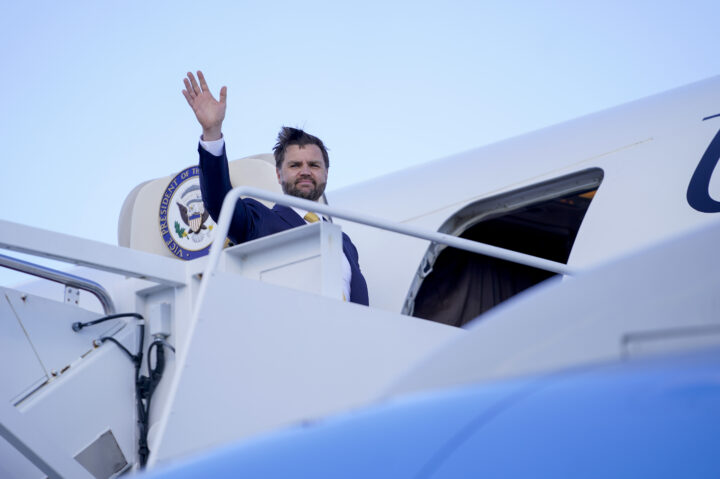
Nathan Howard-Pool/Getty Images
U.S. Vice President JD Vance boards Air Force Two en route to Israel on October 20, 2025 at Joint Base Andrews, Maryland.
Vice President JD Vance landed in Israel on Tuesday with the charge to lead efforts to stabilize the fragile ceasefire in Gaza and assist in the implementation of the second phase of President Donald Trump’s peace deal.
Following the release of the remaining 20 living Israeli hostages from Gaza in exchange for Palestinian prisoners, there was little indication that Hamas would abide by the other elements of Trump’s 20-point plan, which calls on the terrorist group to disarm and cede governance to a technocratic group of Palestinian leaders. In the last week, Hamas began executing Palestinians, clashing with rival groups and reasserting itself as the security and governing force in the Gaza Strip.
Over the weekend, Hamas terrorists shot an anti-tank missile at IDF machinery and killed two soldiers and Israel retaliated with airstrikes in Rafah, further jeopardizing the status of the ceasefire. Israeli Prime Minister Benjamin Netanyahu briefly halted the delivery of humanitarian aid into Gaza, but reversed course following pressure from the Trump administration.
The vice president will now step into the conflict, visiting Israel at an important juncture as the Trump administration looks to avoid another breakdown into renewed hostilities and ensure full compliance with the deal.
“Hamas is going to fire on Israel. Israel’s going to have to respond, of course. There are going to be moments where you have people within Gaza that you’re [not] quite sure what they’re actually doing. But we think it has the best chance for sustainable peace,” Vance told reporters on Sunday, referring to the peace proposal.
The decision to dispatch Vance to Israel is a sign of the Trump administration’s continued engagement in the Middle East after securing the hostage-release deal, according to experts.
“We are in a moment of really intense American engagement and influence that have got us to a stage one that no analyst a month ago would have told you was possible, and so there is a moment of opportunity here,” said John Hannah, a senior fellow at the Jewish Institute for National Security of America. “In order to be sustained, it’s a ceasefire and peace process that is going to require intense and continuous U.S. engagement at the most senior levels.”
While Vance’s foreign policy experience was limited during his time in the Senate, the vice president has remained deeply engaged on issues regarding Israel during the second Trump administration. Hannah said this continued high level involvement will be key to sustaining any peace deal.
David May, a senior research analyst at the Foundation for Defense of Democracies, said deploying Vance shows the significance of this issue to the Trump administration.
“This is a huge legacy item for President Trump, and so trying to make sure that the ceasefire holds is a highly important item for him. They had to send someone of a high profile, and sending the vice president shows that you are serious,” said May.
May said it would be a “huge accomplishment” if Vance is able to keep the ceasefire from collapsing — and secure progress toward other elements of Trump’s peace plan.
“This is now an opportunity for Vance to build on his portfolio and show his vice presidential experience,” said May. “There’s very often vice presidents that sit in the background and don’t do much and don’t have much to show for it. This is an opportunity for him to get in the foreground.”
The key, May says, will be for Vance to leverage the U.S. relationship with Israel and convince Netanyahu’s government to show restraint in responding to Hamas’ provocations.
“In order for the ceasefire not to collapse, the exchanges of fire have to stop. It’s very difficult to get Hamas to stop firing, but if you can get the Israelis to stop responding, or at least to respond less forcefully, then maybe that can lower the temperature a little bit and allow for some of the benefits of the ceasefire to start kicking in,” said May.
But beyond keeping the pause in hostilities afloat, the administration still faces a significant challenge in completely disarming Hamas and removing them from Gaza, a hurdle May says could require further confrontation with the terrorist group.
“I don’t think any power besides maybe the United States or Israel can be trusted and would have the commitment to actually disarming Hamas,” said May. “Unless Hamas is able, or willing, to resume its previous role as being a more religious and cultural and social organization without the same political power or weapons, I don’t foresee a way of implementing the ceasefire without maybe another round of fighting with Israel actually taking out Hamas.”
Vance is slated to stay in Israel until Thursday, according to reports. The vice president will join White House Special Envoy Steve Witkoff and Jared Kushner, both of whom played vital roles in securing the first phase of the deal, who are already in Israel and met on Monday with Netanyahu.
Jonathon Kahn, Columbia's associate dean of community and culture, signed a petition in 2021 accusing Israel of ‘settler colonialism, apartheid and ethnic cleansing’

InSapphoWeTrust / Flickr
Columbia University
Columbia University’s new hire for senior associate dean of community and culture was a signatory of a 2021 letter supporting the Palestinian “indigenous resistance movement” and rejecting the “the fiction of a ‘two-sided conflict.’” He is tasked with leading “meaningful dialogue” in his new position.
Jonathon Kahn signed on to the “Vassar Community Members’ Statement of Solidarity with the Palestinian People” while a professor of religion at Vassar College.
“We affirm that the Palestinian struggle is an indigenous resistance movement confronting settler colonialism, apartheid, and ethnic cleansing, and stand in solidarity with the Palestinian people,” the letter read. It came amid the May 2021 Israel-Hamas conflict, in which at least 13 Israelis were killed by Hamas rocket fire. The open letter also “includes a commitment to academic BDS, which, if put into effect, would restrict the educational opportunities and academic freedom of students and faculty who want to study about or in Israel.”
In his new role at Columbia, Kahn will “build and lead initiatives that cultivate curiosity, civic purpose and meaningful dialogue — facilitating student engagement with faculty outside the classroom, and helping reimagine what a liberal arts and sciences education can be in the next century,” Josef Sorett, dean of Columbia College and vice president for undergraduate education, said in a statement announcing the appointment on Tuesday.
Columbia University did not respond to an inquiry from Jewish Insider asking whether the school was aware of the petition before hiring Kahn.
The senior associate dean of community and culture role is a new position, created in the wake of increased antisemitism that has plagued Columbia’s campus since the Oct. 7, 2023, Hamas terror attacks in Israel.
Kahn, who has no known social media presence, said in a statement sent to the Washington Free Beacon on Wednesday regarding the petition that he is “a Zionist” who “believe[s] deeply in Israel’s right to exist and thrive as a Jewish state” and also “deeply value[s] Palestinian life and Palestinians’ aspirations for statehood.”
“My beliefs are not fully captured in this letter that was authored more than four years ago,” he said. “I didn’t agree with every sentence then, and I still don’t. But I put my name to that letter at a time when I felt in deep disagreement with actions taken by the Israeli government and I wanted to signal my support for the Palestinian civilians who were suffering.”
Kahn’s appointment comes just over a month after Columbia reached a deal with the Trump administration, in which it has to pay a $200 million dollar settlement, to restore some $400 million in federal funding that was cut by the government in March due to the university’s record dealing with antisemitism.
The vice president said the U.S. would welcome direct dialogue with Iran ‘about how we move this thing forward’

(Photo by Andrew Spear/Getty Images)
Vice President JD Vance, shown here at a Fox News town hall with Bret Baier and Martha MacCallum in November 2022, appeared with Baier on Monday night.
When Fox News anchor Bret Baier scored a primetime interview with Vice President J.D. Vance for Monday evening, he likely hoped that Vance would have news to share with him. Instead, Baier was the one to break the news to Vance that President Donald Trump had brokered a ceasefire deal between Israel and Iran, which Trump announced in a post on Truth Social moments before Vance went on air.
“That’s good news that the president was able to get that across the finish line,” Vance told Baier, noting that he was aware those conversations were happening as he left the White House to head to the Fox News studio.
“I knew that he was working the phones as I was on the way over here, so I knew exactly what we were going to do,” Vance said on “Special Report,” after acknowledging that the statement Trump posted on Truth Social was different from a draft that Vance had viewed hours earlier.
“And look, I love that about this presidency and this administration, because he’s always working. He doesn’t say, you know, ‘The vice president’s going to do an interview, so I’m going to stop doing anything.’ He says, you know, ‘We’re going to do the American people’s business.’”
Trump said on Monday night that Israel and Iran had agreed to bring what he called the “12 day war” to an end, with the promise that both sides “will remain PEACEFUL and RESPECTFUL.” He did not say if there would be any binding promises on either side.
Before Iran fired missiles at an American military base in Qatar on Monday, Iran telegraphed to the U.S. that it planned to attack in a symbolic measure. That message was delivered through an intermediary, but Vance said the U.S. would welcome direct dialogue with Iran “about how we move this thing forward.”
Vance has advocated for a more restrained approach to U.S. intervention abroad, including with respect to Iran. But on Fox News, he telegraphed his support for Trump’s actions, which he said “obliterated the Iranian nuclear program.”
“The president has been very clear, and I’ve always agreed with the president, that Iran can’t have a nuclear weapon,” said Vance. “You try to run the diplomatic process as much as you possibly can. When the president decided that wasn’t going to work, he took the action that he had to take. Now we’re in a new phase. That action was successful.”
Vance deflected when asked if he knew where all of Iran’s highly enriched uranium was located, amid reports that the Iranians had removed a large quantity of uranium enriched to 60% from the underground Fordow site ahead of the U.S. strikes on the compound this weekend.
“I think that’s actually not the question before us. The question before us is, Can Iran enrich the uranium to a weapons-grade level, and can they convert that fuel to a nuclear weapon?” Vance responded. “We know that they cannot build a nuclear weapon.”
He reiterated that the U.S. “destroyed” their “ability to enrich uranium,” calling it a “mission success” in Trump’s goal to stop Iran from building a nuclear weapon. Vance warned that the U.S. military stands in the way of Iran following through on its goal of building a nuclear weapon.
“If Iran is desperate to build a nuclear weapon in the future, then they’re going to have to deal with a very, very powerful American military,” said Vance.
Vance said that the U.S. military’s mission is not regime change, and that Trump’s Sunday post expressing support for regime change was a message to the Iranian people to make a choice about it, which is “between the Iranian people and the regime.”
“What the president is saying very clearly, Bret, is, if the Iranian people want to do something about their own leadership, that’s up to the Iranian people. What the American national security interest is here is very simple: It’s to destroy the nuclear program. That’s what we’ve done, and now that the 12-day war appears to be effectively over, we have an opportunity, I think, to restart a real peace process,” said Vance.
The vice president said the U.S. made the decision to strike Iran after assessing it was only using negotiations as a stalling tactic

Screenshot/NBC News
Vice President JD Vance speaks on NBC News' "Meet the Press" on June 22, 2025.
Vice President JD Vance emphasized that the United States is “not at war with Iran” but instead “at war with Iran’s nuclear program,” in an interview with NBC News’ “Meet the Press” Sunday.
Vance also denied that the U.S. is seeking regime change in Iran but is instead seeking peace with a non-nuclear Iran. He said it’s up to Israel whether it wants to take its own action to kill Iran’s supreme leader, Ayatollah Ali Khamenei.
“Our expectation is we’re going to learn a lot about what the Iranians want to do, how they want to proceed over the next 24 hours,” the vice president said. “The president has said he wants, now, to engage in a diplomatic process. But if the Iranians are not going to play ball here, they didn’t leave as many options as it pertains to last night, and they won’t leave as many options in the future.”
He said that if Iran continues its nuclear program, continues to fund international terrorism and attacks U.S. forces, “it will be met with overwhelming force,” but it has the opportunity to rejoin the international community if it changes course.
“What would make sense is for them to come to the negotiating table, to actually give up their nuclear weapons program over the long term,” he reiterated. “And, again, if they’re willing to do that, they’re going to find a willing partner in the United States of America.”
He said the U.S. only took action after it became clear Iran was “stonewalling” in talks and was not serious about negotiations, instead using them as a tactic to build out their nuclear program. “Diplomacy never was given a real chance by the Iranians,” Vance said.
He said that Iran had “stopped negotiating in good faith” and that was “the real catalyst” for the U.S. strikes. Vance said the administration came to the conclusion that talks were stagnant in mid-May.
Vance added that the U.S. had a “limited window” in which to strike Fordow, and that such an operation may not have been feasible in six months.
Asked about the possibility of Iran closing the Strait of Hormuz, a key waterway for the international oil trade, Vance said that such a decision would be “suicidal” for Iran. The Iranian parliament voted Sunday to close the waterway, but that decision will have to be approved by others in the regime.
“Their entire economy runs through the Strait of Hormuz. If they want to destroy their own economy and cause disruptions in the world, I think that would be their decision,” Vance said. “But why would they do that? I don’t think it makes any sense.”
Vance, who has been aligned with the “restrainer” foreign policy camp within the GOP wary of American military interventions, defended Trump’s actions from those critical that the strikes could lead the U.S. to get enmeshed in a protracted conflict in the Middle East once again.
”The difference is that back then, we had dumb presidents, and now we have a president who actually knows how to accomplish America’s national security objectives. So this is not going to be some long, drawn-out thing,” Vance said.
He said the U.S. has “no interest in boots on the ground.”
Vance emphasized on ABC News’ “This Week” that allowing Iran to achieve a nuclear weapon would not have generated peace in the Middle East.
“We can achieve peace much more fully than if we sort of sit on our hands and hope that somehow, if the Iranians get a nuclear weapon, they’re going to be more peaceful,” the vice president said. “That is a stupid approach, and the president rejected it.”
Vance asserted on “Meet the Press” that the raid had “substantially delayed” the regime’s ability to build nuclear weapons by “many, many years.”
“I’m not going to get into sensitive intelligence about what we’ve seen on the ground there in Iran, but we’ve seen a lot, and I feel very confident that we’ve substantially delayed their development of a nuclear weapon, and that was the goal of this attack,” Vance said. The vice president’s comments match an initial assessment provided by Pentagon leaders Sunday morning.
Vance added on “This Week” that the U.S. will have to “work in the coming weeks to ensure” that Iran’s stockpiles of highly enriched uranium are addressed.
“One of the things that we’re going to have conversations with the Iranians about. But what we know is they no longer have the capacity to turn that stockpile of highly enriched uranium to weapons grade uranium, and that was really the goal here,” Vance said, emphasizing that Iran’s enrichment capacity was the primary U.S. target.
“We’re now going to have a serious conversation about how to get rid of Iran’s nuclear weapons program permanently, meaning they have to choose not to have a nuclear weapons program, and they have to give this thing up,” Vance continued.
With congressional Democrats, and a small group of Republicans, denouncing the strikes as lacking the proper congressional authorization, Vance argued on “Meet the Press” that the president has the authority to “act to prevent proliferation of weapons of mass destruction.”
“The idea that this was outside of presidential authority, I think any real serious legal person would tell you that’s not true,” Vance said.
Asked about previous U.S. intelligence assessments that Iran was not actively building a nuclear weapon, Vance said, “There’s of course an open question about whether they were weeks away, whether they were months away. But they were way too close to a nuclear weapon for the comfort of the president of the United States, which is why he took this action.”
He said that the final decision had been made based on American, not Israeli, intelligence, and that U.S. intelligence concluded Iran was not interested in serious negotiations.
The vice president also defended Middle East envoy Steve Witkoff as ‘a guy with a heart who's trying to prevent the killing'

Kevin Dietsch/Getty Images
Vice President JD Vance delivers remarks to the Munich Leaders Meeting, hosted by the Munich Security Conference, at the Willard Hotel on May 07, 2025 in Washington, DC.
Vice President JD Vance defended Israel against an accusation of genocide from podcaster Theo Von on Saturday, but said “this whole debate” around the Israel-Hamas war “has caused us to lose our humanity.”
Speaking on the comedian’s podcast, Vance called the images coming out of Gaza “very heartbreaking” and said the administration is trying to “solve two problems here.” The first, he said, is that “you’ve got innocent people, innocent Palestinians and innocent Israeli hostages, by the way, who are like caught up in this terrible violence that’s happening as we speak. OK? And we’re trying to get as much aid and as much support into people as humanly possible.”
The second, Vance said, is that “Israel’s attacked by this terrible terrorist organization … So I think what we’re trying to do in the Trump administration with that situation is to get to a peaceful resolution.”
He laid out his vision of that resolution: “You’ve got to give Israel confidence that Hamas is never going to attack them and kill a bunch of civilians. And then you’ve got to get as much aid and support into these innocent Palestinians as possible, because in some ways, they’re caught in the middle of this thing too.”
Vance opined that “one thing that I don’t love about the whole Israel-Palestinian debate is, I think it kind of degrades our humanity a little bit. Because I’ve seen people on the left, mostly on the left, who will … completely ignore that all these innocent Israelis were killed in this terrorist attack. And you have some people, usually on the right, who will completely ignore that there are, like, kids who are caught up in this violence.” He continued, “And I think it’s why the president has been — you know, I call him the president of peace — it’s why he cares about solving this problem. Because the longer this goes on, the more suffering, the more death. So we’re trying to solve it as much as we can.”
Vance described Middle East envoy Steve Witkoff as “a Jewish guy, very pro-Israel. He’s done more to try to bring this conflict to a close than anybody. And you sometimes have people who say that they’re pro-Israel who attack Steve for not being pro-Israel enough. And I think it’s totally bogus. I see this guy operate every single day. … He’s a Jewish guy who believes in the purpose of the State of Israel. He also is a guy with a heart who’s trying to prevent the killing. … When I talk about, ‘this whole debate has caused us to lose our humanity,’ I think of the people who are constantly going after Steve.”
Von characterized the conflict as a genocide, saying, “We’re seeing all these videos of people, like, picking up pieces of their children and it’s the sickest thing I think that’s ever been televised. … It feels like a massacre, and it feels like, you know, I’ve called it a genocide.” Von said the U.S. is “complicit” in the conflict “because we help fund military stuff, you know, and that’s where it’s, like, as a regular guy, you’re like, ‘Well, I’m paying these taxes, and they’re going towards this.’”
“Do I think it’s a genocide? No,” Vance replied. “Because I don’t think that the Israelis are purposely trying to go in and murder every Palestinian. I don’t think that’s what they’re doing. I think they got hit hard. And I think they’re trying to sort of destroy this terrorist organization. And war is hell, and that is true.”
But Vance criticized some on the right for a lack of empathy for Palestinians: “I mean, I’ve seen people on my side of the political aisle … who will see these videos of these innocent Palestinian kids and say, ‘Oh, well, they had it coming to them.’ No, no. If you have a soul, your heart should break when you see a little kid who’s suffering, which is why we have the policy that we have, which is we’re trying to stop, eliminate the conflict, eliminate the source of the conflict, so that we can actually bring some peace and some some humanitarian assistance in to people.”
Members of the community described the senator as an advocate for Israel

American Federation of Government Employees
Sen. Tammy Duckworth (D-IL)
With the Democratic National Convention just weeks away, speculation over Joe Biden’s running mate selection has hit a fever pitch. Biden told reporters on Tuesday that he’ll likely announce his pick next week, and one name reportedly on the shortlist is Illinois Sen. Tammy Duckworth (D-IL).
Members of Chicago’s Jewish community largely described Duckworth — a former Army combat helicopter pilot who lost both legs in Iraq — as a popular and well-respected senator who has a strong relationship with the local Jewish community.
“Senator Duckworth has been a great friend to the Jewish community and a champion on the issues they care about, from helping the widow, orphan and stranger, to ensuring a safe and secure Israel as a democratic, Jewish state,” Rep. Brad Schneider (D-IL), who is Jewish, told Jewish Insider.
Steve Sheffey, a Democratic activist in Chicago, echoed Schneider’s sentiments.
“She’s been absolutely outstanding on issues of concern to the Jewish community,” Sheffey told JI. “She’s very supportive of a strong U.S.-Israel relationship, she’s open, she’s got a great voting record on Israel.”
Alan Solow, a national co-chair of the 2012 Obama-Biden reelection campaign and the former chair of the Conference of Presidents of Major American Jewish Organizations, told JI that Duckworth’s relationship with the Jewish community has been harmonious.
“There have been no issues,” Solow said. “It’s been what one would expect in a state like Illinois, where we have a tradition of political leaders here hav[ing] strong, affirmative relationships with the Jewish community, and she’s done the same thing.”
Lauren Beth Gash, a former member of the Illinois House of Representatives and the vice chair of the Illinois Democratic Party, said she has known Duckworth for more than 15 years, since Duckworth’s first run for office. In 2006, Duckworth was the Democratic nominee in the race to replace retiring Rep. Henry Hyde (R-IL), but lost 51-49 to Peter Roskam, then a state senator.
“One of the reasons that I have supported Tammy is because she truly shares our values and the value of tikkun olam,” Gash told JI. “Personally, I feel as an American Jew that she is the kind of leader we can trust to fight for Israel, and that matters to me.”
Duckworth is largely in line with the Democratic mainstream on Israel — she supports a two-state solution, backed the JCPOA nuclear agreement with Iran, opposes BDS and supports continued U.S. military aid to Israel.
In the House, Duckworth co-sponsored a resolution condemning antisemitism and comparisons between Israel and Nazi Germany, as well as a bill providing resources to social services agencies to assist Holocaust survivors.
Recently, Duckworth has been vocal in her opposition to Israel’s potential unilateral annexation of parts of the West Bank. She signed a letter, along with 18 other Democratic senators, criticizing annexation as a “dramatic reversal of decades of shared understandings between the United States, Israel, the Palestinians and the international community.” She also co-sponsored a Senate resolution that said annexation would “jeopardize prospects for a two-state solution.”
Local supporters described Duckworth as well-informed about issues relating to Israel and the U.S. Jewish community.
“I’ve personally talked to her about Israel, and I have no doubt that she understands the issue and that she’s a good friend of both the Jewish community and the pro-Israel community,” Sheffey said.
Gash agreed, noting that Duckworth’s military service has given her a particularly keen understanding of Israel’s security needs.
“When you listen to her give a speech or just talk, you can tell that it’s real, and you can tell that she shares our values, and you can tell that it comes from a deep place of caring and concern, and not just someone who’s just running for office,” she said. “Tammy is the real deal, and that’s not as common as I’d like to to be.”
Gash told JI that Duckworth speaks frequently to local Jewish organizations, as well as national groups including J Street and AIPAC. Duckworth’s positions have earned her an endorsement from J Street PAC.
“The J Street Chicago chapter is proud to have a very strong relationship with Senator Duckworth and her staff,” J Street’s Midwest Regional Director Sam Berkman said in an email to JI. “The Senator has proven herself time and again to be a true friend of the pro-Israel, pro-peace movement.”
Duckworth has received criticism, however, from Republicans in the state.
“There’s a lot of fluff around her in the media, and most of that is because of the story of her service and sacrifice, which is all honorable, but if you actually were to put her on a national stage and have scrutiny, it would not go well for Biden in my view,” a GOP operative from Illinois told JI.
“On issues in the Jewish community [she’s been] absent or on the wrong side,” the Republican added, pointing to her opposition to annexation and endorsement from J Street.
While the Democrats who spoke to JI avoided endorsing any individual as Biden’s running mate, they agreed that Duckworth would be a strong choice.
“If Vice President Biden selected Senator Duckworth, I would enthusiastically support that,” said Solow — who added that he knows most of the individuals who are reported to be in consideration. “I’m sure she would do an excellent job if she were called upon to assume the duties of the presidency,” he added.

Then-Vice President Biden meets with Prime Minister Benjamin Netanyahu in Jerusalem on January 13, 2014. (U.S. Embassy)
In a Rosh Hashanah statement first obtained by Jewish Insider, former Vice President Joe Biden reaffirmed his “unshakable commitment to the Jewish and democratic State of Israel.”
The former vice president had a strong pro-Israel voting record during his 36-year tenure in the Senate and served as an emissary from the Obama Administration to the pro-Israel community during the lead up to the Iran deal.
In the holiday greeting, Biden also made note of the antisemitic attacks at synagogues in Pittsburgh, Pennsylvania and Poway, California. “This last year was marked by horrific tragedies, but it was defined by the strength and resilience of the Jewish community,” said the former vice president.
The Democratic presidential hopeful, whose campaign has centered around what he sees as the unique threat to American values posed by Donald Trump’s presidency, tied Jewish values to that basic theme.
“As our first president declared unequivocally to the Hebrew Congregation of Newport, Rhode Island: ‘the Government of the United States gives to bigotry no sanction, to persecution no assistance.’ At a moment when that basic premise is being questioned by too many here at home and around the world, when we are in a battle for the very soul of this nation, the mission of Tikkun Olam bears renewed urgency,” wrote Biden.
The full statement is below:
On behalf of Jill and myself and the entire Biden family, Shanah Tovah to all celebrating the Jewish High Holidays. This time of year offers a moment to pause and reflect on all that has passed, to consider the new year of possibilities that lies ahead, and to reaffirm the values that unite family, friends, and all who strive to spark justice in the world.
This last year was marked by horrific tragedies, but it was defined by the strength and resilience of the Jewish community. In the wake of Pittsburgh and Poway, Americans across the country–Jewish and non-Jewish alike–challenged ourselves to reach for our highest ideals and recommit to fighting hatred wherever in the world we find it.
As our first president declared unequivocally to the Hebrew Congregation of Newport, Rhode Island: “the Government of the United States gives to bigotry no sanction, to persecution no assistance.”
At a moment when that basic premise is being questioned by too many here at home and around the world, when we are in a battle for the very soul of this nation, the mission of Tikkun Olam bears renewed urgency. This is a time to reawaken to our moral responsibilities, change our ways, and renew our commitments to our faith and fundamental values. We must come together and care for one another. In the year ahead, we must reconfirm our deepest-held democratic values and the idea that the American Dream is big enough for all of us.
Those shared values are also what unite us with the people of Israel and ground our unshakable commitment to the Jewish and democratic State of Israel–and to a future that is both peaceful and secure.
To everyone in the Jewish community, We wish you a very happy, healthy, and sweet New Year. May the sound of the shofar call each of us to do justice, impart kindness, and walk humbly with our God in the year ahead.
Please log in if you already have a subscription, or subscribe to access the latest updates.
 Continue with Google
 Continue with Apple