































Robert O’Brien: U.S. should target Kharg Island and other Iranian oil infrastructure
‘Without oil, they're nothing,’ the former national security adviser said at the Aspen Security Forum, adding that by cutting it off, the U.S. could ‘turn them into a ‘stan, turn them into a nonentity’
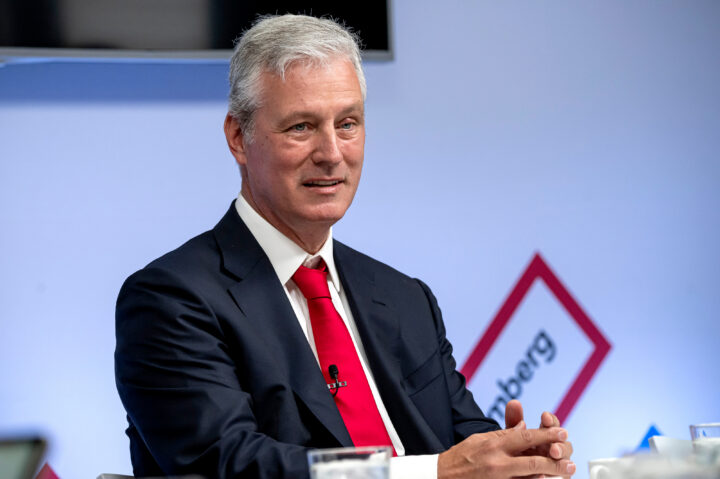
(David Paul Morris/Bloomberg via Getty Images)
Robert O'Brien, former national security adviser, at an interview during the Republican National Convention (RNC) near the Fiserv Forum in Milwaukee, Wisconsin, US, on Wednesday, July 17, 2024.


 Add JewishInsider on Google
ASPEN, Colo. — Robert O’Brien, who served as national security advisor during President Donald Trump’s first term, said on Wednesday that the U.S. should target Iran’s oil infrastructure with the goal of choking off its economy — and predicted that the president is moving in that direction.
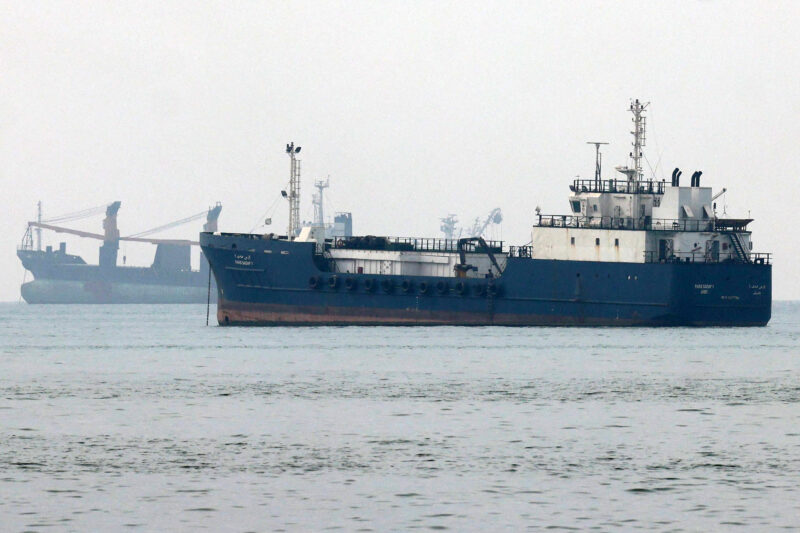
The former national security advisor said on a panel at the Aspen Security Forum that Trump had been “very, very generous” with Iran but he believes that Trump’s “patience” with Iran is running thin. The next steps, he predicted, would be for the U.S. to “hit them hard” and “finish the job” by targeting sites connected with Iran’s oil infrastructure, including the facilities at Kharg Island, in order to deprive Iran of its ability to produce and export oil.
“Without oil, they’re nothing. With oil, the regime thinks if they can survive, they can just buy more kit,” O’Brien said. “I think President Trump will finish the job. The Iranians are using the old playbook of extend, pretend and snowball. … They’re dealing with a whole new administration with Donald Trump. They don’t understand it, and I think that they’ll pay a heavy penalty for their lack of understanding.”
The first Trump administration’s strategy of maximum pressure through economic sanctions is “not enough” without strikes on Iran’s oil production, he continued.
O’Brien said that cutting short Iran’s oil exports would be the skeleton key to deafening the regime — cutting off its ability to build missiles, support terrorism or rebuild its nuclear program, and said that the U.S. could “turn them into a ‘stan, turn them into a nonentity” and prevent it from ever rebuilding.
The former national security advisor acknowledged that targeting Iranian oil production would hurt the world economy, but made the case that there are other oil producers that would be able to fill the gap with the right support, including Venezuela, Guyana and Mozambique, along with increased production in the U.S.
Asked after the panel by Jewish Insider about how he views the future of Israel policy among conservatives — and about comments by Vice President JD Vance accusing Israel of running a cover influence campaign to undermine the Iran deal and of having ties to sex offender Jeffrey Epstein — O’Brien insisted that support for Israel among conservatives, including Vance, remains strong.
O’Brien said he hadn’t heard Vance’s comments but called him a “supporter” and “friend of Israel.” He added that Trump is “a very good friend of Israel. President Trump has Jewish grandkids, I mean, so he cares deeply about it. He got the Abraham Accords for us and sent me to Jerusalem many times. And I can tell you, after Oct. 7, he was very concerned about Israel and has remained so ever since. No better friend to Israel than President Trump.”
He argued that recent polling indicates that support for Israel remains strong among Republicans in general, even among young people, and predicted that issues among “some conservatives — or people who claim to be conservatives” will not “hold.”
“Those of us who value the partnership, love our Jewish friends, our Israeli colleagues, just need to be forthright and stand up for Israel,” O’Brien said. “Israel, I’ve always said throughout my career, is a canary in the coal mine. If people are attacking Israel, the next country they’re going to attack is America, and so we need to stand strong with our allies in Israel, stand strong with Jerusalem, and I think it’s going to be a relationship that lasts long into the future.“
Stephen Hadley, who served as national security advisor in the Bush administration, said on the panel that the U.S. “can do better in terms of an outcome” with Iran, urging the administration to “stop chasing after the Iranians for an agreement on the nuclear issue,” adding that the U.S.’ operations have done significant damage to Iran’s nuclear program and can hit Iran again if it attempts to reconstitute the program.
It’s a similar strategy to that outlined by former Secretary of State Condoleezza Rice, also a Bush administration alumnus, a day prior at the Aspen conference.
Hadley said the U.S. should be open to nuclear talks if Iran seeks them out — but with the preconditions of no enrichment and no financial paydays for Iran.
He said that with continued sanctions, facilitation of trade along the Omani side of the Strait of Hormuz, strikes on Iranian capabilities threatening trade in the strait and assistance to countries in the region to diversify their export channels in the longer term, the U.S. could erode Iran’s ability to hold the global economy hostage and reach a stable situation.
“Hopefully, someday an Iranian regime will come forward and decide that their pursuit of nuclear weapons and support for Hezbollah and the like has been a dead end, and they will join the countries in the region to try to build a more prosperous and secure Iran for their people,” Hadley said. “If that happens, great. If it does not happen, the kind of arrangement I think I’ve described will protect our interests, protect the interests of our allies. “
At the same time, he emphasized that regime change through air power alone is likely off the table.
“[Trump] has to be clear that his objectives are consistent with the tools and means he has at his disposal,” Hadley said. “I think that’s a mistake he made in Iran initially when he was talking about regime change.”
Former Undersecretary of Defense Michèle Flournoy, who served under President Barack Obama, praised the U.S.’ Operation Midnight Hammer last June as “very targeted, very specific and very effective” — something few Democrats said at the time.
She contrasted her praise of that operation to the war this year, which she said started with unclear objectives, priorities and strategy, a lack of appreciation of the risks and a failure to appreciate the Iranian regime’s durability.
“I don’t know how this is going to conclude,” Flournoy said. “But the most likely outcome is we’re going to have a new normal. Even if the Strait opens, Iran is still going to have a few drones, a few mines to jerk the chain of the international economy when it’s unhappy.”
She said that, even if one agrees with the objectives of the war, “the way it’s been done has not paid enough attention to managing the risks, having a clear strategy, and ensuring you want to translate the military campaign into political outcomes.”
More Stories
CAMPAIGN BLITZ
AIPAC’s super PAC wades into Michigan Senate race

BREAKING POINT
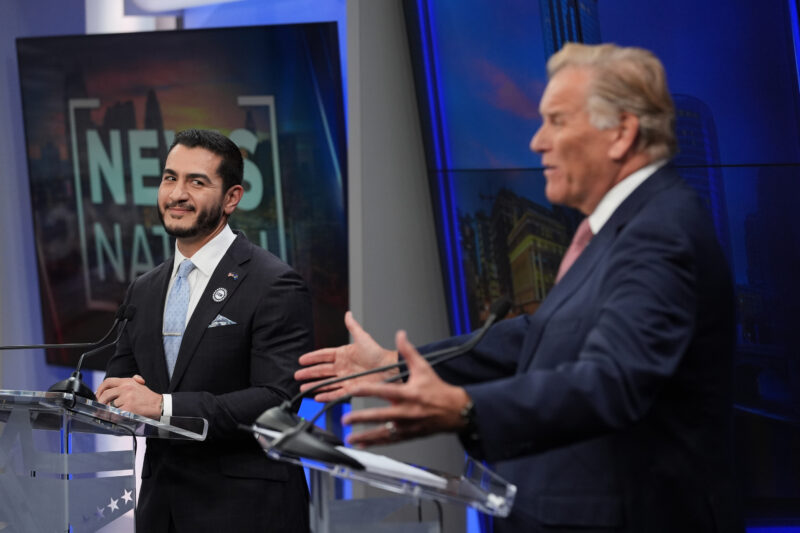
For some Jewish Democrats, Michigan’s debate was the ‘final straw’ for El-Sayed
Daily Overtime
Jewish leaders press Miliband on U.K. antisemitism

SCOOP
Rep. Lawler urges Treasury to reopen investigation into Swiss bank’s Nazi ties
SHARING A STAGE
Top N.J. Dem recruit campaigned alongside New Jersey mayor accused of antisemitism
EXCLUSIVE
Colorado senators introduce bill to expand federal security grant program
Please log in if you already have a subscription, or subscribe to access the latest updates.
 Continue with Google
 Continue with Apple