














































































Democrats hope to ride a historic Senate wave, but face several speed bumps
Because of Trump’s low job approval rating, widespread economic anxiety and opposition to the Iran war, Democrats are well-positioned to ride the political backlash into a House majority
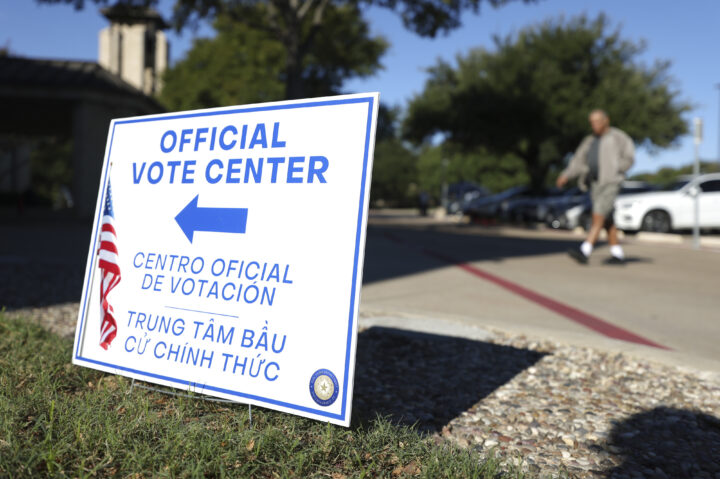
(Chitose Suzuki/The Dallas Morning News via Getty Images)
A voter walks to the polling location at Northway Christian Church during the first day of early voting for the Nov. 3 midterm elections, Monday, Oct. 19, 2026 in Dallas.


 Add JewishInsider on Google
The battle for the Senate majority is going down to the wire, and the outcome will be determined by two major questions.
How successful will Democrats be in picking off GOP-held seats in deeply red states, including several (such as Kansas and Texas), which haven’t elected a Democrat in a Senate race in decades?
And will Republicans be able to score a surprise in Maine, Michigan or Minnesota, where left-wing Democratic nominees are badly underperforming but are being bolstered by the very favorable national Democratic environment?
Because of President Donald Trump’s low job approval rating, widespread economic anxiety and opposition to the Iran war, Democrats are well-positioned to ride the political backlash into a House majority. If polls are to be believed, the Senate is looking increasingly winnable, as well.
But for Democrats to win the Senate, they’ll need to win at least two red states that Trump won by double digits in the 2024 presidential election. The roster of possible pickup opportunities is expanding, with Kansas and South Carolina now looking highly competitive, joining the expected battlegrounds of Ohio, Alaska, Iowa and Texas.
While all those races look potentially winnable, Trump’s margin of victory in those states in the 2024 presidential election was formidable. Democrats lost Ohio by 11 points — the closest race of the red-state bunch — and are facing an even bigger deficit in the other battlegrounds. In our hyperpartisan times, it will require a critical mass of Republicans to cross over to support the Democratic nominee.
Typically in wave elections, most of the tossup races all fall in one direction. But given how hard it’s been for Democrats to win on red-state turf, we may see a different dynamic in 2026.
The math for a Democratic Senate majority gets even tougher if Republicans manage to hang on in Maine, where Sen. Susan Collins (R-ME) has a long record of winning in tough environments and outrunning the polls, and in Michigan, where Abdul El-Sayed’s unapologetically far-left campaign is alienating moderates, and putting a seat in play that should’ve been a Democratic lock.
(Michele Tafoya’s GOP Senate campaign against left-wing Lt. Gov. Peggy Flanagan is also unexpectedly close; the Cook Political Report changed its rating of the race this week to Lean Democrat from Likely Democrat.)
Even if just one of those purple and blue state races ends up in GOP hands, it would increase the number of seats Democrats would need to win on much more conservative turf.
Conventional wisdom suggests that Democrats are now favored to win back the Senate majority. But to do so, they’ll have to defy history — both in winning red states they haven’t won in many years while winning swing states with unusually weak nominees. If they accomplish both, it would truly be a historic accomplishment — and a sign of a massive political wave.
More Stories

LOOKING AHEAD
Jewish Federations of North America confronts ‘challenge and opportunity’ of a much-changed Congress

WORDS OF WARNING
Karl Rove says JD Vance ‘should not be president’ over Israel, Middle East stance

Daily Overtime
Trump says military action against Iran ‘quite unlikely’

NOT IN MY TOWN
Shapiro blasts antisemitic bike rally targeting Philly Jewish businesses

suozzi says
Suozzi: Trump needs to bring Congress, allies in on Iran war discussions

DOHA DIPLOMACY
Trump touts ‘positive momentum’ toward ending Iran war after meeting Qatari PM
Please log in if you already have a subscription, or subscribe to access the latest updates.
 Continue with Google

 Continue with Apple