


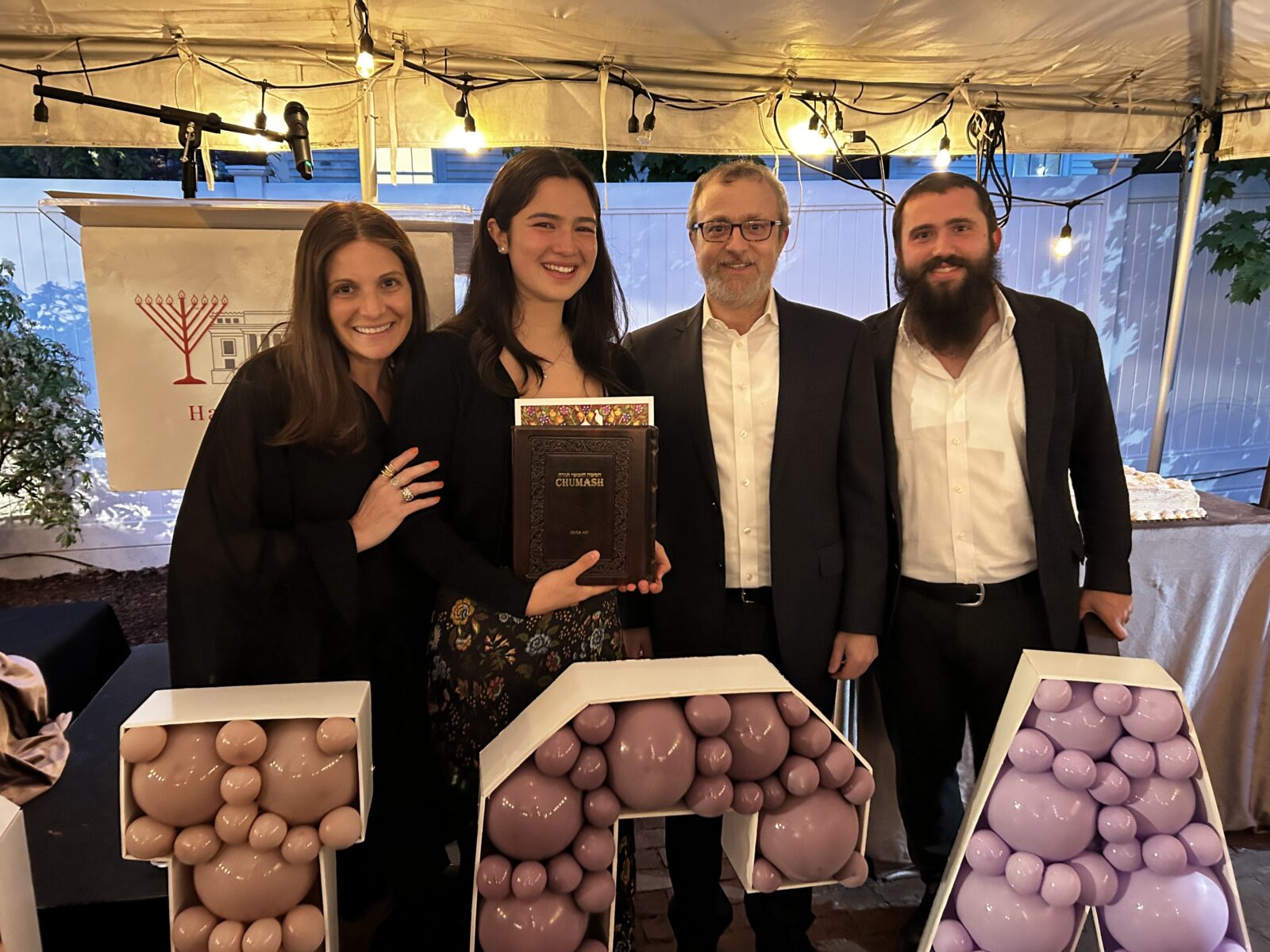
(Courtesy Erica Ho)
The freshmen on Oct. 7, 2023, who became Jewish leaders in the terror attacks’ aftermath
Three students who arrived on campus weeks before the attacks describe how the past three years reshaped their Jewish identities, through religious observance, community and activism


 Add JewishInsider on Google
Seven months after Hamas’ Oct. 7, 2023, attacks in Israel, Erica Ho stood beneath a Chabad tent on Harvard’s campus and became a bat mitzvah on her 20th birthday.
Growing up in Albuquerque, N.M., with a Chinese father and Jewish mother, Ho lived miles away from the nearest synagogue and felt disconnected from the local Jewish community. When she arrived at Harvard in September 2023 — never having celebrated a bat mitzvah — she described herself as “technically Jewish.”
For Ho and other members of the college class that arrived on campus just weeks before Oct. 7 — most of whom are now seniors — the three years since have become a defining chapter of their Jewish lives.
As the third anniversary of Oct. 7 approached, Jewish Insider spoke with three Jewish students who entered college weeks before the attacks, expecting the next four years to be defined by the ordinary milestones of young adulthood.
Instead, on campuses from Cambridge to Los Angeles to Washington, D.C., the historic rise in antisemitism and protests over Israel that followed the attacks and the ensuing war in Gaza thrust students into Jewish communities and political fights they had not expected to join — reshaping their college experiences and, in some cases, their plans for life after graduation.
According to Jewish Federations of North America data, college students are a key driver in the nationwide rise of Jewish engagement since the fall of 2023, which the group has dubbed “the surge,” even as reported antisemitic incidents on campuses have also surged.
For Ho, an environmental science and economics major, the transformation began almost immediately after the attacks. A week after Oct. 7, Harvard Chabad held its annual “Shabbat 1,000” dinner, bringing hundreds of students together at a moment when many were unsure whether it was safe to gather publicly as Jews. Ho remembers weighing the risks before deciding to attend.
“There’s a camp that was, ‘This is not the event to sit out,’” she recalled. “If there’s anything to do right now, it’s to gather and show Jewish people are resilient.”
Ho had not come to Harvard looking for a Jewish community. But in the months that followed, she became increasingly involved with Chabad, joining its board as a sophomore and participating in weekly Torah learning. In May 2024, she celebrated her 20th birthday by becoming a bat mitzvah on the Cambridge campus — an experience she describes as a commitment to Judaism for the rest of her life.
Her experience was distinct from that of many Jewish students who came to Harvard with a strong sense of Jewish identity. Because Ho is half Chinese and does not consider herself visibly Jewish, she said she did not personally experience much of the antisemitism that roiled the Ivy League campus and made other students seek out Jewish spaces for safety. Instead, she was drawn in by what she saw as a newfound confidence and solidarity within the Jewish community.
“I think what Chabad, and other Jewish campus communities, did a good job of after Oct. 7 was not retreating into hiding,” she told JI. “I remember there being a huge amount of support and vocalism.” That atmosphere, she said, made Jewish spaces feel “much more vibrant” — and helped give her the confidence to claim an identity she had once barely felt connected to, one she wants to continue pursuing post-graduation.
For Delilah Hirshland, a history and political science major at the University of California, Los Angeles, her path into activism began not with a Jewish gathering but with the shock that came from learning that people she had just met in her first weeks of college justified the attacks on Israel, bringing about a desire to surround herself with like-minded peers instead.
“Oct. 7 happened at the end of my second week here. For those first two weeks before, I spent a lot of time getting to know people in my dorm and people in my majors — very much in the humanities sphere,” she told JI. “After the attacks, the people I had met started to post things saying that Hamas was justified. It was shocking for me. It quickly threw me into this world of Israel activism and Jewish life.”
Hirshland serves as co-president of UCLA’s Students Supporting Israel chapter. “SSI, Hillel events and Jewish life in general have been my main support system over these years,” she said.
“I don’t think I would be involved in Jewish life and Israel advocacy if the attacks didn’t happen. I think about that a lot. I personally became more conscious of my identity and of my beliefs,” Hirshland said, noting that she also saw a shift in the school administration’s attitude towards pro-Israel students.
“At first, they were hesitant to publicly take our side — especially later in freshman year with the encampments. Our new chancellor [Julio Frenk] is very supportive of us,” said Hirshland.
For Jacob Intrator, Oct. 7 and its aftermath ultimately changed the course of his college career, and what comes next.
Intrator arrived at Georgia Tech in fall 2023 with little connection to Jewish campus life. But after Oct. 7, he began reconsidering what he wanted from college and ultimately transferred to Georgetown, a Catholic university where he said, ironically, he found what he had been missing: a Jewish community and, amid increasingly intense battles over Israel, a cause he felt compelled to fight for.
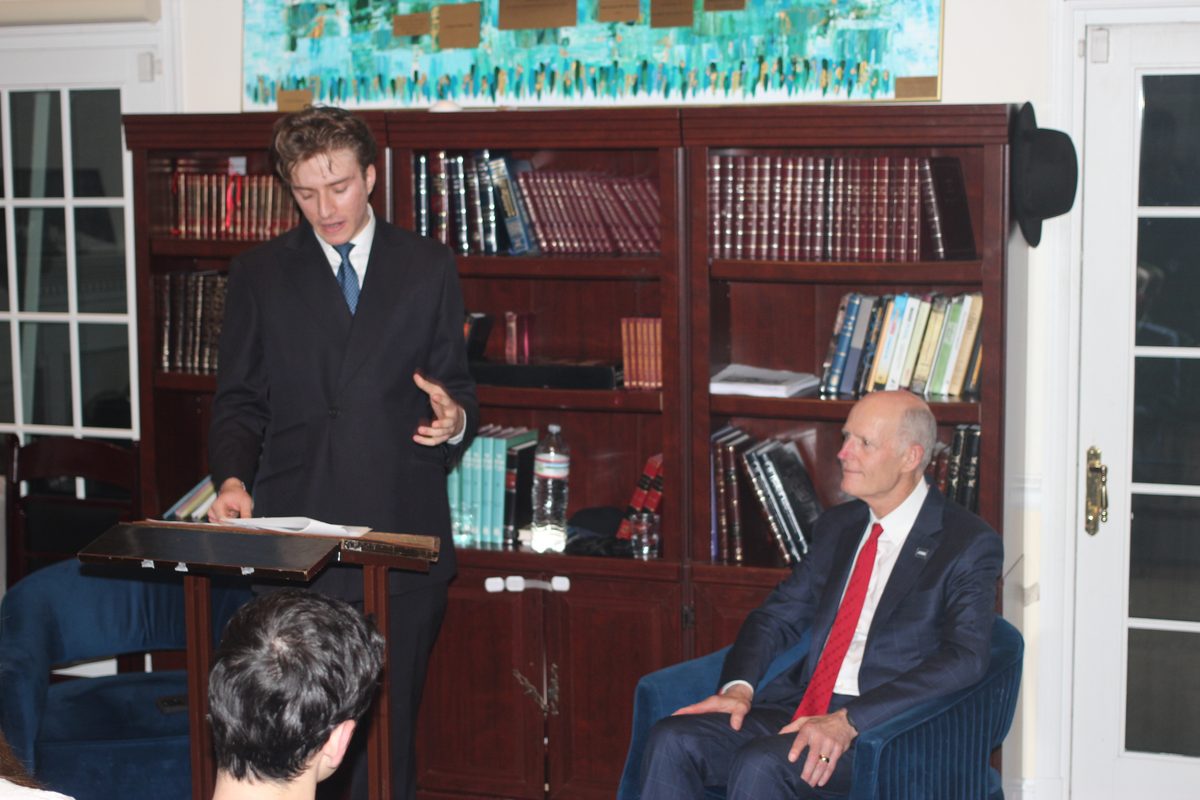
When he arrived at Georgetown in spring 2025, a student government referendum calling for the university to divest from Israel became an early challenge. Intrator, then new to the campus, organized against the referendum, writing to administrators that the measure had been passed in violation of student government rules. The letter attracted the support of members of Congress and ultimately helped spur the university to reject the referendum.
But Intrator didn’t stop there. He became president of the campus chapter of Students Supporting Israel, then ran a slate of candidates for student government, arguing that students who opposed the referendum needed a voice in the body that had passed it. The slate won, and Intrator became vice speaker of student government.
“[My advocacy] really only originated once I got to Georgetown,” Intrator, a government and economics major, told JI. “I saw more passion for pro-Israel politics here, but I’ve also seen a lot of hatred for it, and a lot more antisemitism than I had ever seen before. Unlike when I was at Georgia Tech, here I saw it as my duty to fight for Israel.”
“At Georgia Tech, I was studying engineering. My life now is quite a reversal,” he continued.
Intrator is considering a future in politics, motivated in part by what he sees as a need for younger voices to engage in debates over Israel and antisemitism.
“After I graduate, I have an interest in getting involved in politics outside of college. When you look at polls, you see the numbers in which young Americans are turning against Israel and in many ways against the Jewish people. People complain about having 60-year-old politicians lecturing the 30-year-old generation. They want younger people who understand the problems they have. That’s animating my involvement in politics,” he said.
“I want to be a voice and a platform for my generation.”
For all three students, Oct. 7 became a defining moment in their college careers. The aftermath became about more than responding to a moment of crisis: It pushed them to define their Jewish identities in ways they had not anticipated when they arrived on campus — whether through religious observance, Jewish community or political activism — suggesting that for a generation of Jewish students, the campus upheaval of the last three years may have lasting consequences far after graduation.
Their experiences are part of a broad shift that Rabbi Hirschy Zarchi, who leads Harvard Chabad, has watched unfold on his campus and others since Oct. 7. Students who arrived with varying levels of connection to Judaism, he said, have emerged with a stronger sense of Jewish identity and responsibility.
“In this challenging period for our people and the world, I observed young people deepen their Jewish identity and belonging, and double down on their Jewish pride and responsibility,” Zarchi told JI. “The Jewish future will be led by the young, courageous leaders who have emerged at this time.”


Please log in if you already have a subscription, or subscribe to access the latest updates.
 Continue with Google

 Continue with Apple