

































Republicans doubt Iran will follow through on nuclear commitments
Senators on both sides of the aisle say they’re eager to see the text of the agreement, but the administration has not yet made plans to brief Congress
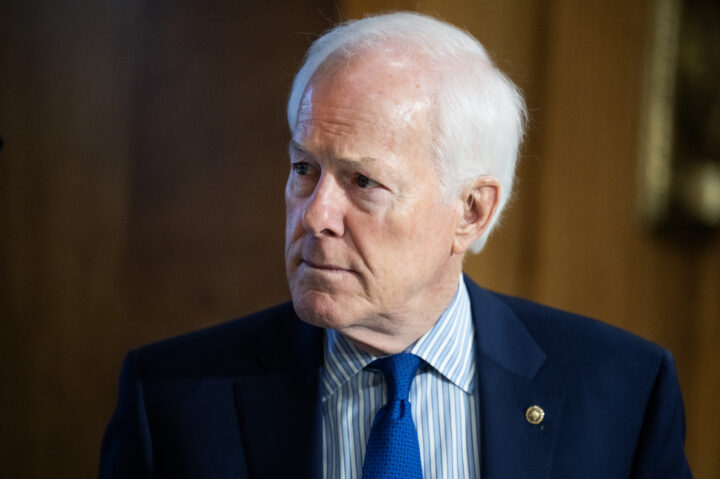
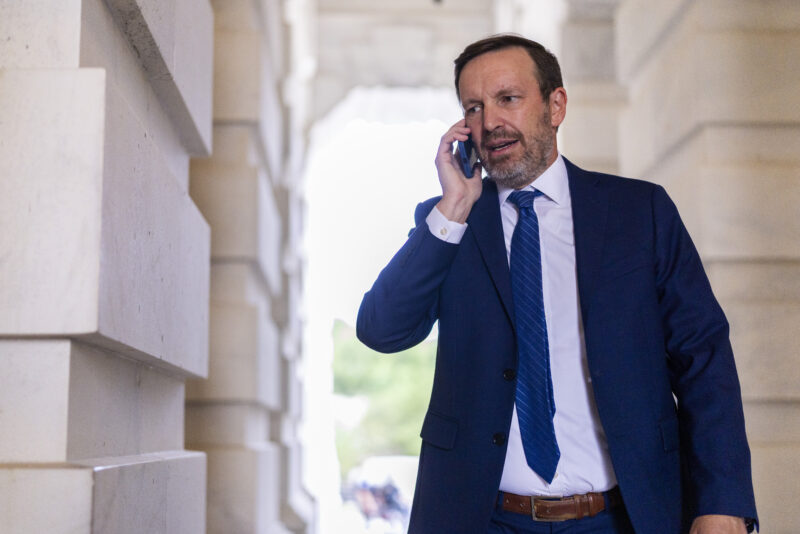
Tom Williams/CQ-Roll Call, Inc via Getty Images
Sen. John Cornyn (R-TX) attends the Senate Foreign Relations Committee hearing titled "Arms Control and Transforming International Security Functions at the State Department," in Dirksen building on Tuesday, March 24, 2026.


 Add JewishInsider on Google
Republican senators said on Tuesday that they’re skeptical that Iran will hold to any commitments it has made or may make in negotiations with the U.S., and urged the administration to release the terms of the memorandum of understanding announced on Sunday.
The administration has not yet communicated any specific plans to brief Congress on the deal.
“Rather than an end to the activities in Iran, I think it’s more of an intermission,” Sen. John Cornyn (R-TX) told reporters. “We still haven’t seen what the documents look like, and regardless of what they look like, I don’t think you can trust the Iranian regime.”
Cornyn added, “I need to see the writing — I need to see the print. But I don’t believe that the regime will abide by it.”
Sen. Thom Tillis (R-NC) emphasized that the U.S. has been in similar positions with Iran before, and that they have not resulted in a viable long-term agreement. He told Jewish Insider that he thinks it’s “generous to call it a deal, it sounds like it’s a deal in progress … and if we’re making progress, that’s good.”
But he said that it’s hard for him to assess an agreement “that we only get described in broad strokes.”
He said he would also be uncomfortable with any arrangement that provided Iran with a financial windfall. Multiple outlets reported Tuesday afternoon that the MOU includes financial incentives for Iran, including lifting various sanctions.
“I’m worried only because at least some of our decisions seem to be affected by the short-term economic impact [of the war], and that’s not a good decision,” Tillis said. “Talking about some of the money that Iran’s going to start receiving. … If all of the sudden we’re pulling back some of the things that were in place even before the operation, I’ve got a real concern because they’re a totalitarian regime.”
He told JI that the U.S.’s current posture and negotiations with Iran make it appear that “we’re willing to accept a totalitarian regime, and so the question is, how does this agreement match up against the original objectives of this initiative” as laid out by the administration at the beginning of the war.
Tillis added that Trump should explain to the country the national security interests and necessities of the U.S. operations against Iran, and that some short-term economic harm might be a consequence of that.
“That should be the case to the American people, and then you stay strong, versus have a sub-optimal or bad deal that actually enriches the very people that you were focused on trying to take out,” Tillis said. “Now that we’re here, you can’t all of a sudden say that because people are really frustrated with gas prices, that the nuclear threat in Iran is a manageable risk, because that is 180 degrees away from the predicate for going in there to begin with.”
Tillis said that the final deal should be made public, or at least shown to members in a classified setting — though he said he was skeptical there was much substance in the page-and-a-half document described by Vice President JD Vance, given its length.
He also reiterated comments from Monday that any final agreement should be subject to ratification by Congress, as the only way to ensure that such a deal would last.
“Trump could have a real foreign policy legacy but he’s been poorly influenced because he’s just so insecure. I’ve never seen anything like it. His conviction is his own popularity, his own attention, his own credit. It hurts my heart a little,” another Republican senator told JI. “I just was hoping that the second term he wouldn’t do what he’s done, and that is to make it all about himself like his first term.”
“I don’t know what’s in [the MOU],” the senator added. “Don’t trust any senator who says they know what’s in the deal. They don’t know. I mean, none of us know, not really.”
Sen. John Kennedy (R-LA) told JI the agreement “looks to me like it’s a deal to make a deal.”
“The only facts I know today are that the blockades on both sides have been lifted. We’re supposed to negotiate more over [60] days,” Kennedy continued. “The Iranian government Iran lies like fish swim. I have no idea, and neither does anyone else, whether they will make concessions. The other thing I know is that Iran is immeasurably weaker today than it was a year ago.”
He added that he does not expect that the “religious zealots” in Iran have “had an epiphany” and will give up their nuclear program.
Kennedy said he’s “sure” the text of the deal will be released this week. In the interim, “If you don’t know [what’s in it], you should shut up, and none of us … know what’s in it. I think we ought to wait and see what’s in it first,” Kennedy continued.
Asked about reports that Iran would be receiving up-front sanctions relief as part of the MOU, Sen. Rick Scott (R-FL) said, “I’d be surprised, I haven’t seen that. I think we’re all in the position we’d like to see the MOU. Unless there’s something in there that they’ve already changed their ways, I don’t know how you’d be entitled to sanctions relief.”
“I think we’d all like to see it,” Scott reiterated, when asked whether he was concerned the administration hasn’t released the text yet. “Then we’d be able to answer questions on specifics.”
Though some Senate Republicans are eager to see the agreement, there do not yet appear to be any specific plans to brief them on it. Senate Majority Leader John Thune (R-SD) told JI on Tuesday that he was not yet aware of any plans for the administration to brief Congress on the contents of the MOU between the U.S. and Iran, as lawmakers continue to call for transparency on the agreement.
“Not that I’m aware of yet. [I’m] going to find that out,” Thune told JI, when asked whether the administration had notified him of plans to brief lawmakers.
On the other hand, Sen. Pete Ricketts (R-NE), said, “The administration probably has a reason for doing what they’re doing. I don’t know what it is, have not been briefed. We’ll all find out on Friday, and then I expect a briefing after that.”
Sen. Eric Schmitt (R-MO) likewise said his understanding is that the text of the agreement will be released after the formal signing ceremony on Friday.
Democrats have also been critical of the administration for failing to release the text of the MOU, and described it as a bad deal — though many say they support an end to the conflict anyway.
“He has not released text, but we know one thing about this president: if he had a great deal, he’d be jumping up and down, and doing a press event with the text. The fact that he announced the deal, got on a plane, left the country, and is now letting JD Vance explain it tells you everything you need to know,” Sen. Chris Coons (D-DE) told JI.
He said he doesn’t expect the administration to come to “consult, brief or include us” in any capacity, including under the Iran Nuclear Agreement Review Act.
“They should have come to us, consulted us, briefed us and explained to the American people what their objectives were at the outset, but I don’t expect their conduct to be any different at the conclusion, if there is one. This is such an internally flawed arrangement that it seems to be inevitable that it will fall apart in a matter of weeks,” Coons continued.
“Trump must hold a classified meeting on his so-called ‘understanding’ with Iran. He must brief all of Congress,” Senate Minority Leader Chuck Schumer (D-NY) said. “He must inform the American people and make the ‘understanding’ public. … Americans need to know how and when this war will truly end.”
Sen. Tim Kaine (D-VA) said that if the deal touches on Iran’s nuclear program, the administration legally has to submit the agreement to Congress, but if the current deal does not include specific commitments on the nuclear program, it may not need to be submitted.
“We’ll know on Friday, and at that point, when it’s all out on the table, I probably have more to say,” Kaine said, declining to comment on potential concessions in the deal until it has been publicized.
More Stories
meeting minutes
Huckabee met secretly with Netanyahu’s top rival, Gadi Eisenkot

CAMPAIGN BLITZ
AIPAC’s super PAC wades into Michigan Senate race
ACCUSATION AFTERMATH
El-Sayed denies Muslim Brotherhood ties after Rogers debate claim
ON DEFENSE
El-Sayed dismisses half-sister’s comments about family’s Muslim Brotherhood ties as ‘hearsay’
PEACH STATE POLITICS
Ossoff defers to ICC on Israel genocide accusations, but says IDF violated int’l law

CONTROVERSIAL COCKTAIL
Busboys and Poets CEO Andy Shallal adds ‘Free Palestine’ drink to menu, alienating Jewish patrons
Please log in if you already have a subscription, or subscribe to access the latest updates.
 Continue with Google
 Continue with Apple